Another cancerversary!

Eleven years ago today I was told that I had stage 4 colon cancer. Thankfully, a biopsy proved that diagnosis inaccurate or I probably wouldn’t be here to tell you about it today. According to the Canadian Cancer Society, the 5-year survival rate for colon cancer that has spread from its original location to distant parts of the body is 11%.

What I do have is neuroendocrine cancer (NETS), a slow-growing cancer that originated in my colon, more specifically in the cecum which is part of the colon. By the time it was diagnosed, I had been experiencing vague symptoms for several years. In fact, I was told that I’d probably had it for 7 to 10 years. At diagnosis, it had already spread to lymph nodes and my liver. Accurate stats and information about survival rates aren’t as readily available for neuroendocrine cancer because it isn’t as well-known or well-documented as many of the more common varieties, but I don’t really need to know those numbers. I just need to know how I’m doing right now and I found that out last week.

In response to my oncologist’s, “How are you?” as he entered the examining room, I replied, “I’m good.” Glancing at the notes in his hand, he enthusiastically responded, “Yes, yes you are!”

I wasn’t as exuberant about the results of the previous week’s CT scan as he appeared to be. I had hoped to hear that March’s TheraSphere treatment had completely annihilated the largest tumour on my liver. In fact, it had only shrunk by about 20%. The doctor hastened to remind me that shrinkage is always a good thing. That, combined with the facts that I’m not experiencing any symptoms and that the scan also showed “no progression of disease” is actually very good news!

I’ll have another CT and more lab work done in November, but in the meantime I’ve got lots of living to do. In addition to the many ways that I’ve found to stay active and busy in retirement, I’ve also become more active in patient advocacy over the past year. As a member of the CNETS (Canadian Neuroendocrine Tumour Society) Advocacy Advisory Board, I’m working with other patients and caregivers from across the country to try to increase awareness of our disease, shorten the pathway to diagnosis, advocate for equal access to treatment for patients across the country, and promote research into newer and better treatments. I’m also involved in meetings with a group of patients and health professionals around the world as part of an initiative by Ipsen, the pharmaceutical company that produces the medication that I’m injected with every 28 days, to try to improve the patient experience.

That reminds me of another recent change. Hubby is now giving me that monthly injection which frees us up to take it with us when we travel instead of having to be at home to wait for the nurse’s visit. A cancer diagnosis is life changing for a partner or caregiver as well as for the patient, so this is really his cancerversary too. We aren’t doing anything special to celebrate, but we’re thankful for another year of relatively good health; another year of life!


Ribbon Symbol

Clothe me in peace, hope, and inner strength

This will not be a fashion post in the traditional sense. I won’t be showing you an outfit today or giving any style advice. I’ve held off on writing an update about my health since undergoing the TheraSphere treatment on my liver on March 11 because I needed time to wrestle with what’s been happening. Time to figure out how to “wear” the latest news.

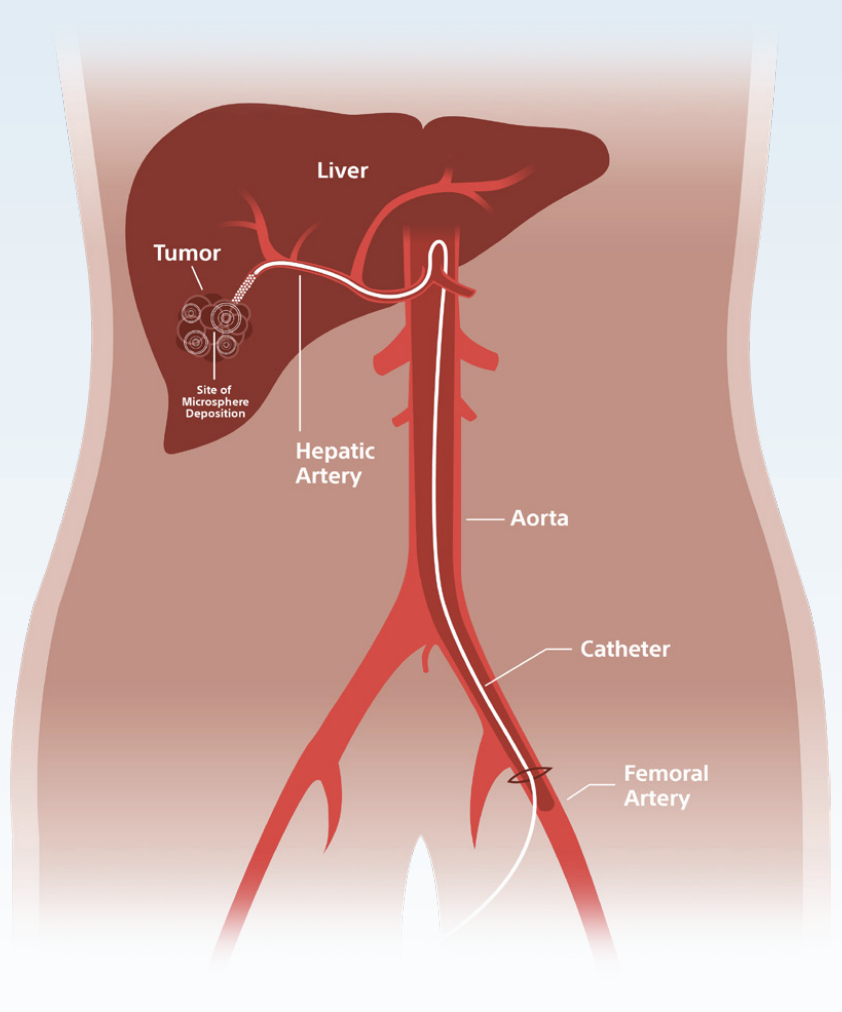
The treatment itself went very well. I was in and out of the hospital in approximately eight hours and walked away feeling pretty good. A CT scan following the treatment showed that the vast majority of the radioactive microspheres that were injected during the treatment had been deposited on target at the site of the largest tumour on my liver while a minimal amount had reached a second smaller tumour and surrounding tissue. This was exactly what was hoped for. 

Had that been all that the scan showed, I would have weathered the post treatment fatigue and mild nausea with ease, but unfortunately, it also showed a nodule elsewhere in my abdomen that has grown significantly since a previous scan five months ago. That raises concerns that the cancer has spread. Knowing the importance of being proactive and advocating for myself, I contacted my specialist’s office as soon as I read the scan report and was able to have a phone consult with her earlier this week. She is going to refer my case to the medical oncology team asking them to review my file and make recommendations. 

So how do I deal with all of this? 

I feel a bit like I did at the beginning of this journey over 10 years ago. Once again, I’m facing a huge unknown. At that time, I prayed for strength to walk this pathway with grace and I continue to ask for that. In my morning prayer time this week, I’ve been meditating on a snippet of scripture from 2 Peter 2:19. “… a man is slave to whatever has mastered him.” Whatever happens, I do not want to become a slave to fear! 

428687383_10168379011675307_73446089108254976_n

You may remember that my one word for 2024 is hope. This beautiful graphic, which I found on Rare Disease Day, perfectly combines my word with the zebra ribbon representing rare diseases and more specifically, neuroendocrine cancer (NETS) which, though no longer considered rare, is definitely not well-known. Though the pathway may become rough, I am not giving up hope!  

Clothe me in peace, hope, and inner strength.

Let that be my style! 

A World Cancer Day update

World-Cancer-Day-2024-1-1

When I posted a World Cancer Day graphic on Facebook this morning and mentioned that I’m currently waiting for a treatment to destroy a tumour on my liver, the outpouring of support from people near and far was immediate and heartwarming. I was also asked recently whether this was related to my original cancer or something new. In response, I decided that today would be a good day to share an update on what’s been happening in my ongoing battle with cancer.

For those of you who may be new to the blog, I was diagnosed with neuroendocrine cancer (NETS) in 2013. The primary tumour was in my cecum (a pouch at the beginning of the large intestine that the appendix is connected to) and, as is very common with NETS, it had already spread to lymph nodes and my liver. A series of radioactive treatments (PRRT) resulted in some shrinkage and stability that lasted until about 17 months ago when we started to notice gradual changes in my regular lab results and scans. As neuroendocrine cancer is usually a slow-growing disease, we took a cautious approach. We started monitoring more often and eventually changed the medication that I receive by injection every 28 days. Unfortunately, that didn’t have the desired result.

The last time I wrote an update on the blog was back on November 10, NET Cancer Day. At that time, it was clear that the tumours that had been basically dormant for several years, or at least the largest one which is on my liver, were growing and producing an excess of hormones again. I was waiting for the tumour board at the Cross Cancer Institute to discuss my case and make their recommendations.

Shortly after that, I was referred to the Interventional Radiology department at the University Hospital and my NET specialist told me that I would undergo a radiofrequency ablation, a fairly non-invasive procedure that would destroy the cancer cells without damaging much of the surrounding tissue. I was all for that. Let’s zap that tumour, I thought! As it turns out, however, at 5 cm (2 inches) my tumour is too large for that procedure to be successful. Instead, I’ll be undergoing a transarterial radioembolization, also known as a TheraSphere treatment. (I love words, but as a cancer patient, I’ve learned a lot of big ones that I wish I’d never had to hear!)

The treatment is a minimally invasive procedure that deposits millions of glass microspheres, each about one-third the width of a human hair, containing a radioactive isotope (Y-90) inside the blood vessels that supply a tumour. This blocks the blood supply to the cancer cells and delivers a high dose of radiation to the tumour. The treatment will destroy a significant portion of my liver, but thankfully, it has the amazing capacity to regenerate itself after damage.

Three weeks ago, I had a work-up which was basically a trial run. As will happen in the actual treatment, a catheter was inserted through the femoral artery in my groin and guided via x-ray to the hepatic artery supplying my liver. Mapping and measurements of the blood vessels feeding the tumour were done and then a contrast was injected and various images taken to ensure that the Y-90 would stay in my liver and not travel anywhere else in my body. During this entire time, which took several hours, and for four hours afterward, I had to lie on my back without raising my head or moving my right leg. It was a long and somewhat grueling day and after almost eleven hours, I was very happy to walk out of the hospital with no ill effects. I may not be quite as fortunate after the real deal. I’ve been told that common side effects include abdominal discomfort, nausea, and fatigue for a week or two afterward, but it will be worth it if it successfully destroys the tumour!

I was initially told that the treatment would take place two to five weeks after the work-up, but three weeks later, I haven’t been given a treatment date yet. Wheels often move very slowly in the medical world and waiting is something that patients have to get used to. It never seems to get any easier though!

To those of you who suggested in your very kind responses on Facebook this morning that you would be praying for me, I very much appreciate it. While I am enormously thankful to live in a part of the world where I have access to state of the art medical care at no personal expense, and I have a body of amazing doctors taking care of me, I know that God is ultimately my healer and it is He who holds my future. I continue to put my hope in Him!

Screenshot 2024-02-04 at 2.54.31 PM

Image: TheraSphere Patient Info – Boston Scientific