 Our culture has long bombarded us with unrealistic, unattainable and deeply problematic images of women. Pornography objectifies women and gives men a warped idea of love, sex, and relationship while advertising aimed at women creates poor self-image and leads to unhealthy behaviours including eating disorders. Sadly, social media has followed suit with online lives portraying unrealistic perfection in all walks of life including body image.
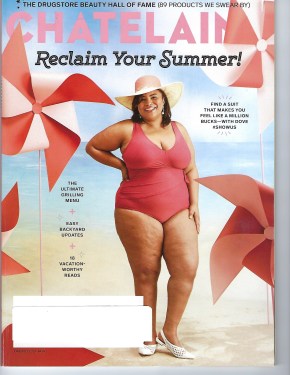
Last week as I sat in my doctor’s waiting room, I picked up a magazine that reminded me of a post I wrote last year about a company that chose to use real women with “imperfect” bodies, women with visible stretch marks and cellulite, as models. The current issue of popular Canadian women’s magazine, Chatelaine, is a swimsuit edition with a difference. Unlike the annual Sports Illustrated Swimsuit Edition, which could legitimately be classified as soft porn, Chatelaine chose to use only unretouched photos of all the women who appeared in the latest issue, including those shown in the swimsuit feature. I admire the seven “Everywoman” models who were willing to be photographed in swimwear knowing that they would appear in print exactly as they really are.
Unfortunately, there are other women who are part of the problem. I realize that many of those who appear in porn are not there by choice. In fact, many of them are the victims of human trafficking, but that’s not true of those, including supermodels and female athletes, who have appeared in Sports Illustrated. When a male athlete appears on the cover, he’s dressed in performance gear, but a female athlete appears scantily clad. Why is that? Simply because, unlike the other issues of the magazine, the Swimsuit Edition isn’t about celebrating sport and it certainly isn’t about honouring women. It’s about making money. Plain and simple. That issue alone accounts for 10% of Sports Illustrated’s overall revenue. One out of every ten dollars comes from people paying to see nearly naked women. Are their bodies beautiful? Of course, they appear to be, but they aren’t genuine. Just like most of what we see in magazines, they’re taken by professional photographers using strategic lighting and filters and then edited to remove every imperfection. That’s why, according to the Dove Project #ShowUs, 70% of women don’t feel represented in the images that they see every day in media and advertising.
I truly appreciate the fashion bloggers that I follow who take their own photos or recruit friends or husbands to act as their photographers and who don’t then retouch the photos before publishing them. I’m committed to doing the same; to being authentic.
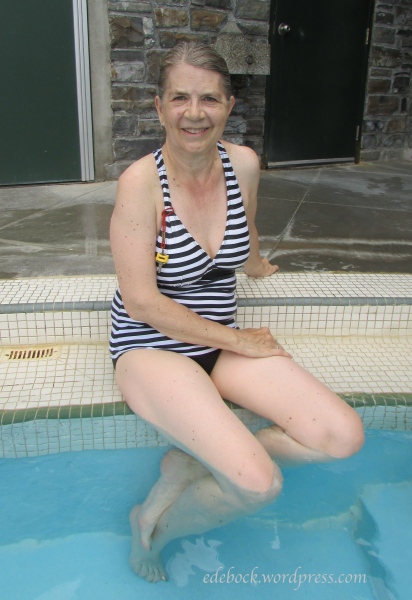
So, here are a couple of my own makeup free and totally unretouched swimsuit photos taken at Banff Upper Hot Springs earlier this week on a special outing with our oldest grandson.

I know I’m pale, but that’s the real me, especially this summer when we’ve had so little sun!




 Following Augustine