Second Hand September

Logo by SamThe fashion industry’s carbon footprint is enormous and has grown even more apparent with the rapid rise of fast fashion over the past few years. It now accounts for more carbon emissions globally than those emitted by all international flights and maritime shipping combined. In addition, approximately 10 million tons of clothes are sent to landfills every year. Second Hand September, a campaign introduced by Oxfam in 2019, has inspired thousands of people in the UK to begin thinking more sustainably by buying only second-hand clothes during the month of September. 

This year, I’ve decided to try taking Second Hand September one step further. I’m challenging myself to wear only second-hand clothing for the entire month! 

I’m going to follow the same rules as I did for last November’s “six Items or less challenge”. Underwear, socks, and pyjamas will not be included. I always purchase those items new. Outerwear, footwear, and accessories will also be exempt. Though I do have second-hand items in each of those categories and will try to make good use of them throughout the month, I won’t restrict myself only to those. 

Though my closet contains many more than six second-hand items, I suspect that this challenge might actually be the more difficult of the two. In selecting six items to wear for 30 days, I was able to be very intentional about choosing a colour palette that could easily be mixed and matched to create many different looks, pieces that could be dressed up or down, and pieces that worked well for layering. This time, I find myself working with a much more random mix of items. Most of those are quite casual and I have at least two events this month, including a concert tomorrow evening, that might require a bit of polish. I’ll also have church every Sunday. September is a shoulder season here in Canada and the weather throughout the month will likely range from hot and dry to chilly and wet. To make this work, I’ll likely be pulling second-hand pieces from both my summer and winter wardrobes.   

Have I bitten off more than I can chew? Only time will tell. Throughout the month, I’ll be sharing my experience and showing you some of the outfits that I create with my Second Hand September wardrobe, so stay tuned! 

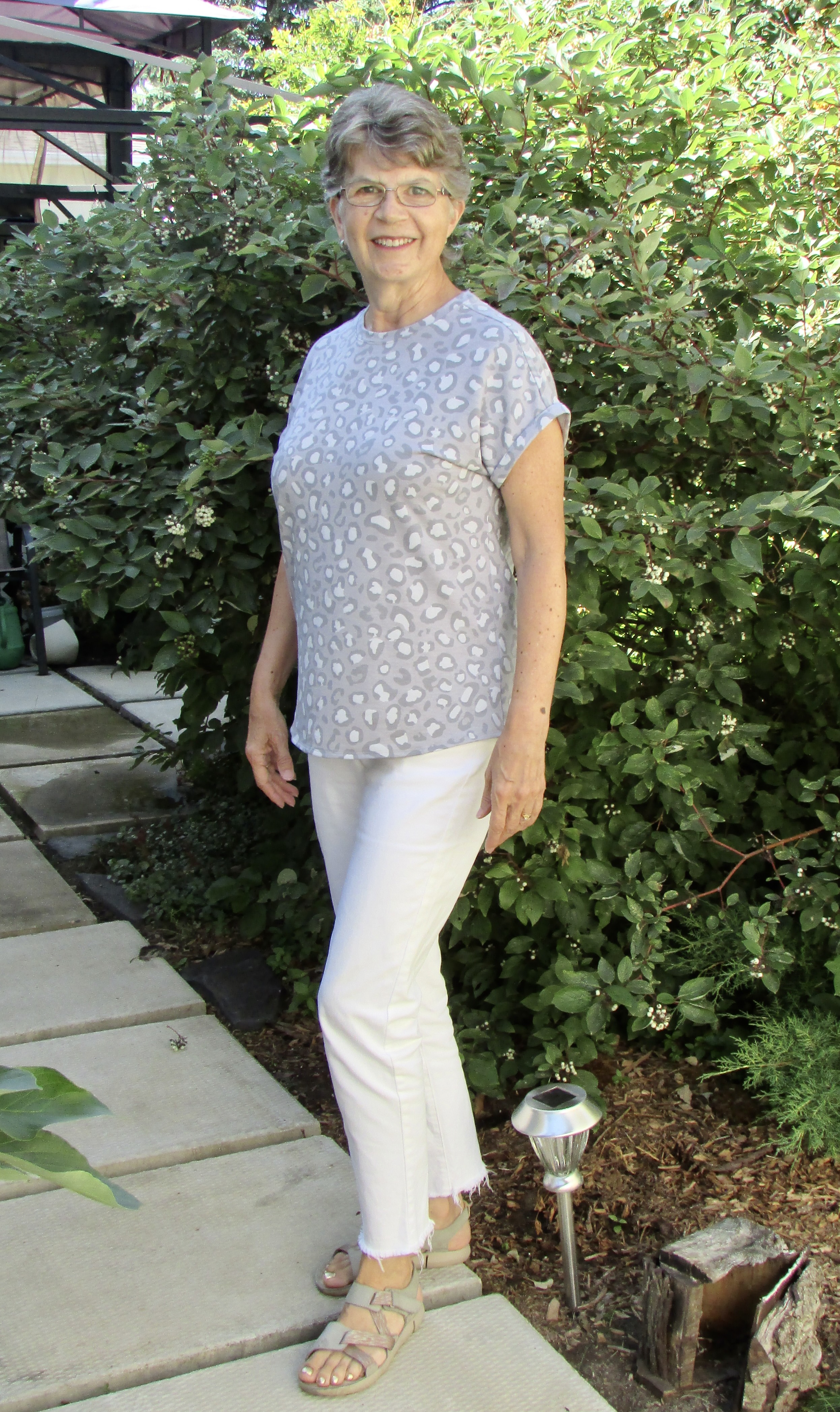
To start things off, here’s what I wore yesterday for the first day of the challenge. I think it has a coastal grandmother feel to it. 
IMG_4440

I’ve had the white frayed hem jeans for three years. They first appeared on the blog here. Thankfully, the archaic “don’t wear white after Labour Day” rule has long been abandoned and while I don’t wear these jeans in the depth of our Canadian winter, I’ll certainly continue wearing them throughout September. The Clarks sandals were a lucky find earlier this summer and the loose and comfortable light grey animal print tee is a new-to-me acquisition. Thanks to regular sales at our local thrift stores, the entire outfit, cost me less than $10!

In closing, I would be remiss not to acknowledge those of you who responded to last week’s post asking for your input about what you’d like to see on the blog. I will be working at incorporating some of your ideas into future posts. 


Mending and alterations… making old new again

Logo by SamLong before I took the required Home Economics class in grade 8, my mother had already taught me the basics of sewing. Before I made the requisite Home Ec apron, I’d already sewn a skirt with a fitted waistband and a zipper. I’ve had my own sewing machine since I was 18 and there was a time when I made many of my own clothes. I even sewed my own wedding dress! It’s been years since I did that much sewing, but the skills that my mother taught me still come in handy from time to time.

Spring or fall, when I do my seasonal closet switch, is the perfect time to do any small repairs that have been overlooked or neglected during the previous season. Mending clothing is an ancient practice that needs to be revived if we want to work toward more sustainable wardrobes and lessen our impact on the environment. In a culture of disposability upheld by the fast fashion industry, mending is a slow fashion practice that focuses on care and re-wear. It rejects the idea that new is always better. While some mending jobs are quite simple, others are more complicated. Replacing a zipper, for example, might be something that you can do yourself, but if not, a tailor can do it for you and add life to a garment that you already own.

Alterations, whether you’re able to do them yourself or pay someone to do them for you, can often make an ill-fitting garment look like it was made for you. Tailoring is excellent for those times when you find great clothes on sale that just need a little tweaking. It can also help you build a sustainable wardrobe by purchasing quality second-hand items and having them altered to fit. It’s often hard to find the perfect size in a thrift store, but tailoring opens up many possibilities. A good rule of thumb when choosing a size is to go with what fits the widest part of your body. From there, a tailor can make all the necessary adjustments to make the piece look perfect on you. Just make sure that you take the price of tailoring into account whenever you purchase something that will need to be altered.

Alterations can be as simple as taking up a hem or adding a hidden snap to the front of a blouse that gapes or they can be as complicated as taking in a waistband or adding vents to a jacket. This week, I did a simple alteration that gave new life to an older top that I haven’t worn for quite awhile. Four years ago when I bought it, I knew that bell sleeves were a trend that wouldn’t last, but it was on sale for less than $20 and I thought even then that someday I’d probably alter the sleeves.

Before…

img_5508 2

After…

IMG_3934

A simple change from bell to three-quarter sleeves gave the top a much more current look and now I’ll start wearing it again!

What to do with worn out clothes

LogoAfter a full month of wearing only six items from my closet, I have thoroughly enjoyed getting dressed this week! In fact, I’ve worn something different every single day!

As promised last week, I also went through my closet, tried on a lot of things, and put aside a few to be donated. I usually do this twice a year when I switch my closet from summer to winter and then back again in the spring, but after a month of not missing some of the items in my closet I knew that a few more could probably be moved out.

This exercise led me to think about the different things that can be done with clothing that we no longer want or need. Often, the obvious answer is to donate them or consign them so that they can be enjoyed by someone else, but what about those items, including sheets and towels, that are too worn out to be donated?

A conservative estimate is that clothing and textiles make up 5 to 7% of what occupies landfills globally. Many believe that this figure is closer to 12%. The average American citizen reportedly throws away 70 pounds (31.75 kg) of clothing and other textiles each year. The figures are probably similar in other first world countries. I’ve never weighed my wardrobe, but 70 pounds of clothing sounds like an awful lot to me! What can we do to keep this fabric waste out of the landfill?

Here are a few ideas:

  1. Cut them up to use for cleaning rags. Towels and sweatshirts are particularly good for this purpose.
  2. Some thrift stores do accept worn out fabric that can be cut up and sold as industrial rags.
  3. Take advantage of the H&M Garment Collecting programme. Simply bag any unwanted clothes or textiles, by any brand, and in any condition, then take them into an H&M store and hand them to a cashier. In return, you will receive a thank you voucher to use toward a purchase. Anything that is still wearable will be sold second-hand. Textiles that are no longer suitable to be worn will be turned into other products and those that can’t be used in any other way will be shredded into textile fibres that are often used as insulating material. Several other brands including The North Face, Zara, Patagonia, Levi’s, and Uniqlo have similar programs. 
  4. Check with a local animal shelter. Many will take old towels, sheets, and other soft or fuzzy fabrics to use for bedding.
  5. Compost natural fibres. Remove attachments such as buttons and zippers, then shred the fabric finely and add it to your compost alongside fresher, wetter material such as vegetable peelings or garden cuttings to help it break down faster. Find more information about how to to this properly here.
  6. Purchase an unstuffed pouf style hassock such as the one pictured below and fill it with old bedsheets, towels, and clothing. Again, remove any attachments like buttons and zippers that might poke through the cover. If you’re like me, it might take half a lifetime to fill a hassock, but you can do the same thing on a smaller scale by filling  an unstuffed throw cushion.

Screen Shot 2021-12-07 at 8.57.55 PM

Unstuffed pouf from Amazon.ca

Do you have any ideas to add to this list? What do you do with old, worn out clothing?

More about the six

LogoFacebook comments in response to last week’s post about my self-imposed “six items or less” challenge ranged from “I could absolutely NOT do this!” to “I’ve been living in the same set of clothing since I retired.”

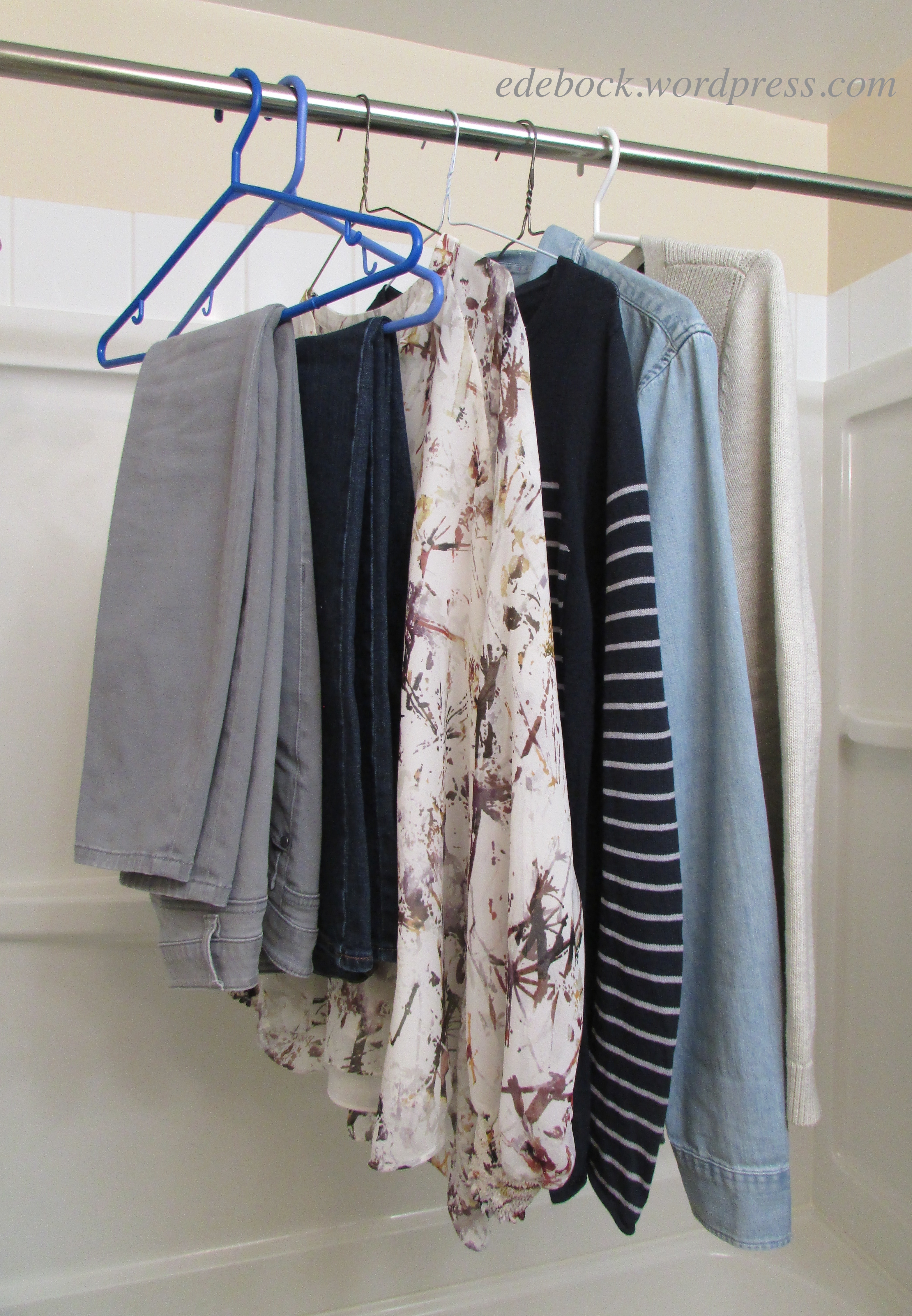
Today, after one full week, I thought I’d share a bit more about each of the six pieces that I’m wearing for the duration of the one month challenge. None are new and they’ve all appeared on the blog at one time or another in the past. First, let’s take another look at the photo…

IMG_3313

From left to right:

  1. Grey skinny jeans  –  cabi  –  purchased new in fall 2018  –  made in China
  2. Dark wash jeans  –  Old Navy  –  gifted in early 2018  –  made in China
  3. Patterned blouse  –  cabi  –  thrifted in fall 2020  –  made in China
  4. Navy striped pullover  –  cabi  –  purchased new in fall 2017  –  made in China
  5. Denim shirt  –  Uniqlo  –  purchased new in early 2021  –  made in Bangladesh
  6. Cardigan  –  cabi  –  purchased new in late 2016  –  made in China

It wasn’t until I’d carefully chosen all six pieces that I realized that four of them were cabi! In addition to the fact that I simply have a lot of cabi, I think that there are a couple of other good reasons for that. First of all, cabi intentionally produces clothing that coordinates well with previous and future seasons. This makes building a cohesive wardrobe very easy. Second, cabi clothing is good quality. It lasts! I suspect that many fast fashion pieces that are sold today wouldn’t hold up to a month of steady wear and washing. Instead, they fall apart after a few wearings and end up in the landfill.

As someone who is attempting to be an ethical shopper, I was also surprised and somewhat alarmed to see that five of the six items were made in China! While shopping in Superstore last week, I passed up a super cute pair of leopard print sneakers. The deciding factor, in addition to not really needing them, was the fact that they were made in China. Having lived in that country for several months, I’m conflicted about buying anything that is produced there. I know that the majority of the population is extremely poor and that garment factories provide much needed employment, but I also know that the conditions in many of them are abhorrent. Men and women work in unsafe surroundings 10 to 12 hours a day, 360+ days a year for a mere pittance. In addition, there are political reasons for boycotting Chinese products. I see China as a threat to Canadian security and although the two Michaels were released in September, it’s clear that they were held for almost three years on trumped up charges in retaliation for Canada’s arrest of Chinese high-tech executive Meng Wanzhou. That’s simply not a country I want to support with my fashion dollars!

My justification for having five made in China items on the list of six is threefold. First, two of them were thrifted or gifted. My intention is to try to avoid purchasing new items that are made in China. Second, the new items were purchased prior to 2019 when I made a commitment to begin shopping more ethically. And third, four of the five items are cabi. I’ve been assured by two independent cabi stylists that their products are made in socially and environmentally responsible factories. In spite of that, I was happy to see that my most recent cabi purchase, which you’ll see on the blog later this winter, was made in Vietnam. I suspect that this means that cabi, like many other companies, is moving their factories out of China, not for political reasons, but because the cost of production there has risen significantly and other locations in Asia are more cost efficient. In any case, I’ll feel better about buying cabi in the future if it’s made elsewhere.

And now, before I close, here are a couple of the outfits that I wore this week. On Tuesday, when I went to my weekly Bible study and ran some errands, I layered the denim shirt over the patterned blouse and paired them with the grey skinny jeans. I dressed the outfit up with my newest boots and a necklace, both thrifted.

IMG_3321

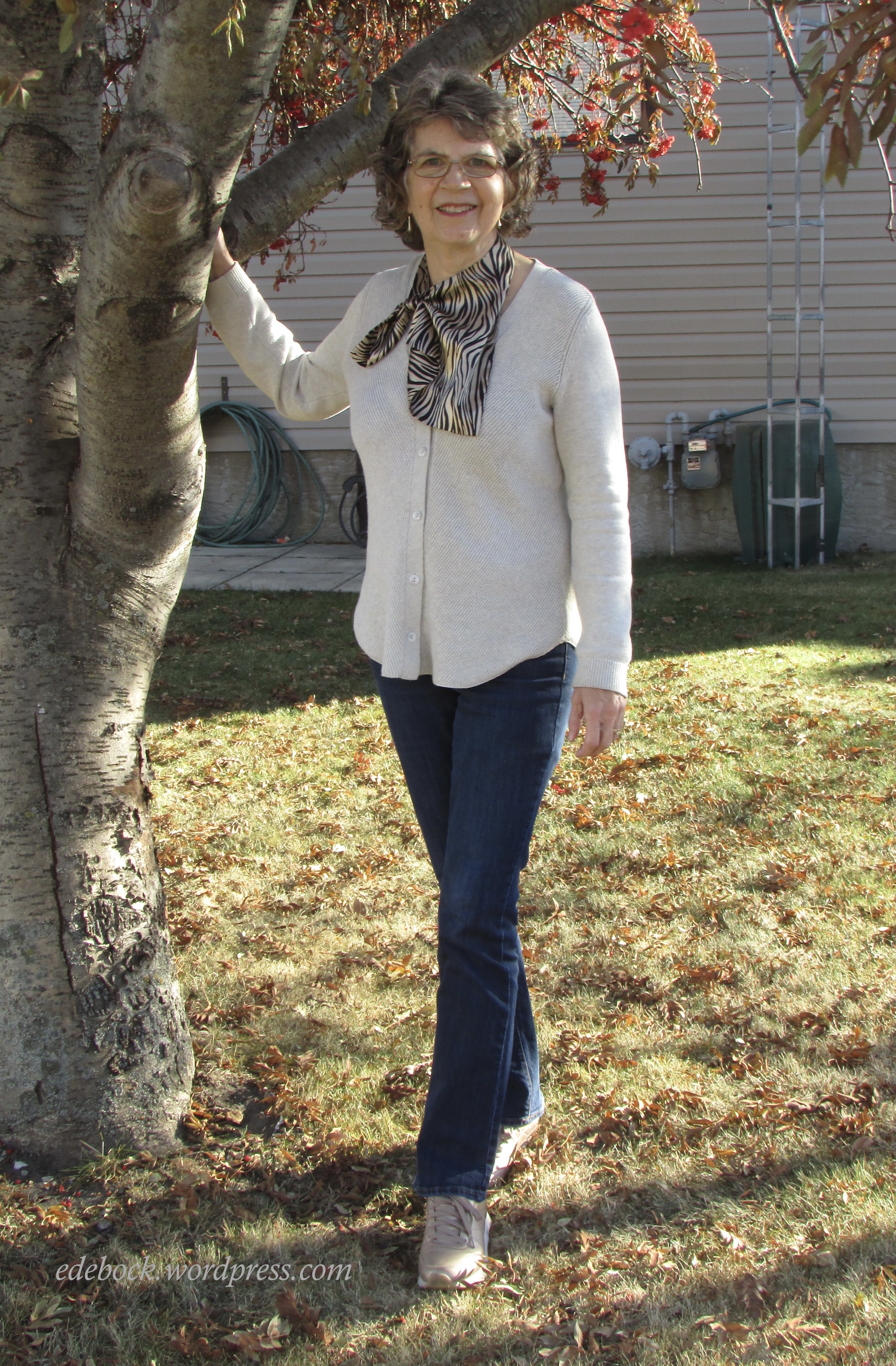
Though I’ve never worn the cardigan this way before, I knew when I decided to include it as one of the six that I would probably try buttoning it up and wearing it with a scarf. When you only have six items to work with, you have to be creative!

IMG_3337

I wore it this way on Wednesday. We bowled in the morning, so I needed something that was comfortable and easy to move in. This Wednesday was also NET Cancer Day and since the zebra is our symbol, I wanted to wear a touch of zebra stripes that day. Interestingly, I purchased the scarf in a shop on Russian Street in Dalian, China when we lived there, but it was actually made in Taiwan! According to the somewhat sketchy instructions that came with it, it can be worn ten different ways, but I’ve yet to figure out most of them.

I don’t know if you can tell, but I was freezing during the taking of these pictures! The temperature was barely above 0ºC (32ºF), but as you can see, we don’t have any snow yet, so we decided to take advantage of that and squeeze in a couple more outdoor shoots.

15 fashion stats

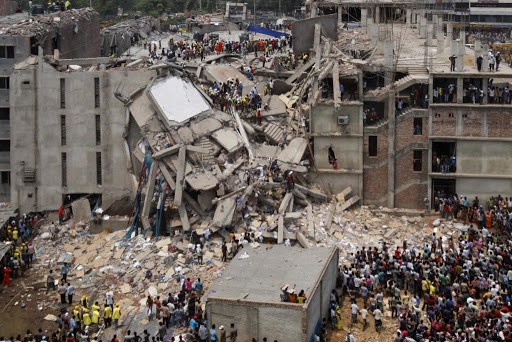
LogoTomorrow is the 8th anniversary of the collapse of the eight-storey Rana Plaza building in Dhaka, Bangladesh that housed five garment factories. More than 1,100 workers lost their lives that day and thousands more were injured. It was, to date, the worst industrial incident to hit the garment industry. The disaster drew attention to the human cost behind the clothes we wear and also inspired more people to start thinking about the broader topic of sustainability in the fashion industry.
unnamed

Here, in no particular order, are 15 statistics about the fashion industry.

  • 97% of the clothing sold in America is made overseas.
  • Garment workers are often forced to work 14 to 16 hours a day, 7 days a week in buildings with no ventilation.
  • 75% to 85% of the world’s garment workers are women and they are amongst the lowest paid workers in the world.
  • American women aged 35 to 44 spend an average of $960 on clothes each year, the highest among all age groups.
  • On average, an article of clothing in a woman’s closet is worn only seven times before being discarded.
  • The average American throws away approximately 81.5 pounds of clothing every year.
  • Approximately 10 million tons of clothes are sent to landfills every year.
  • Less than 11% of fashion brands have implemented recycling strategies for their products.
  • The fashion industry is responsible for 8% to 10% of carbon emissions globally, more than those emitted by all international flights and maritime shipping combined.
  • Solvents and dyes used in the manufacturing of clothing are responsible for 20% of the world’s industrial water pollution.
  • About 1,800 gallons of water are needed to produce the cotton in one pair jeans, and 400 gallons to produce the cotton in a shirt.
  • 23% of all chemicals produced in the world are used in the textile industry.
  • Nearly 70 million barrels of oil are used each year to make polyester fibre which is the most commonly used fibre in our clothing.
  • Polyester fibre takes more than 200 years to decompose.
  • Today, 400% more clothing is produced than 20 years ago.

I think that you’ll agree that many of these facts are disturbing. We all wear clothes, so in a sense, we’re all responsible. The hard question is what are we going to do about it? Do we care enough to do anything at all?

Thankfully, there is some good news on this front. A recent survey of 2,000 respondents from the US and the UK revealed that more than half want the fashion industry to be more sustainable and many are willing to pay more for sustainable clothing. Younger consumers in particular are seriously concerned with social and environmental causes. As they increasingly back up their beliefs with their shopping habits, countless brands are responding by doing their bit to transform the fashion industry for the better. We can also do our part by buying fewer, better quality items and wearing them longer. They may cost more to purchase, but their extended life will make them a more affordable option in the long run.

Wearable milk?

LogoI learn so much from my readers! The idea for today’s post came from one of my most recent followers, new blogger, Dhwani Ghandi, of Style Green With Dee

The fashion industry is known to be one of the world’s worst polluters. According to the United Nations, it is responsible for producing 20% of global waste-water and 10% of carbon emissions, more than that of international flights and maritime shipping combined. Clearly, there is an urgent need for more sustainable, eco-friendly alternatives. Could milk protein (casein) be one of them? 

The idea isn’t a new one. In fact, fabric made from sour milk was developed as a substitute for wool in resource-starved Italy in the 1930s and was used in many clothing and household items in America and Europe during the ’30s and ’40s. It was far from perfect, however. Chemicals such as formaldehyde were used to strength the fabric and it wasn’t as soft or durable as wool. As a result, it fell into obscurity when less expensive, more resistant synthetic options such as nylon became available. 

Today, milk fibre is once again gaining interest as manufacturers and consumers look for alternatives to synthetic fabrics. Most milk fibres today are blended with the chemical binder acrylonitrile, which is also used to make acrylic, but there are some small producers in Europe who claim that their fabrics are 100% chemical-free. At this point, they have a limited market due to cost. Milk fibre is much more expensive than polyester to produce, but cheaper than other luxury fibres like silk. 

So what is casein or milk fibre fabric like? Apparently, it is glossy and luxurious in appearance, feels much like silk, absorbs moisture well, and is antibacterial and antifungal. It blends well with other fabrics such as cotton, bamboo, and modal. What’s not to like? 

I have to wonder though, if solving one problem would cause or contribute to another. Apparently, the dairy industry worldwide dumps millions of tons of milk every year. It would be wonderful to see that go to good use in fabric production. Would it be enough, however, or would dairy herds have to be increased in order to meet the demand? It takes approximately 15 kg (33 lb) of milk to produce 1 kg (2.2 lb) of milk fibre. The amount of land and water required to raise additional cows, the unethical treatment of factory-farmed animals, and pollution caused by manure entering waterways are all factors that would have to be taken into consideration. And then there are those cow farts putting methane gas into the atmosphere! 

Who knows though? It may be a novel idea now, but maybe someday we’ll all be wearing sour milk! 


Thrifting again

LogoCleaning out the storage room as well as trying to make more space on our bookshelves has resulted in me taking two loads to the local thrift store recently. Of course, I can’t just drop things off without taking a look around! As a result, for a total of just $7, I added three items to my wardrobe last week. Today, let’s take a look at why I chose each one.
Since finding my little packet of colour swatches, I’ve been looking at my closet with a critical eye and realizing that I need to work on returning to the colours that suit me best. That means no more black worn anywhere near my face unless I can add something, such as a scarf, in a colour that doesn’t wash me out. While I can wear a light dove grey, I’ve really overloaded the closet with greys of every shade and I need to steer away from that colour for awhile. Colour was definitely my main focus as I looked through the racks of second-hand clothing.

IMG_0728

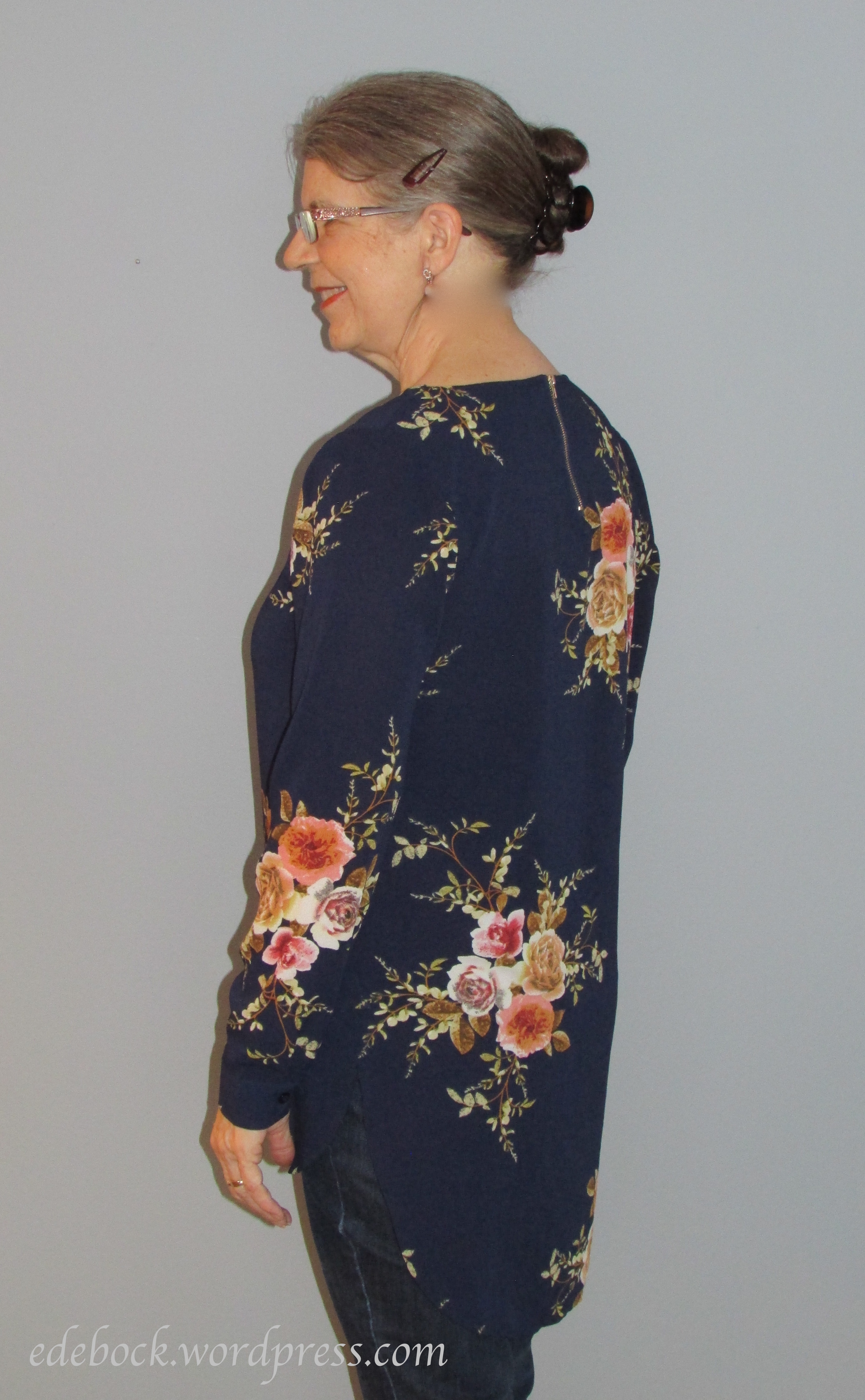
Navy is a universal colour and for me, a much more flattering background for this blouse’s large floral design than black would be. Even the peachy and rust tones in the roses are part of my Spring palette.

The top ticked lots of other boxes as well. In spite of the fact that it’s a small and I usually wear medium, the fit is absolutely perfect. Even the sleeves are long enough which is often a problem for me. That’s one of my tips for second-hand shopping. Don’t limit your search to the size you usually wear. If something catches your eye and looks like a possibility, try it on. I love the shirttail hem that hangs longer at the back. Though I’m wearing it with jeans, it will also provide plenty of coverage with leggings. Lastly, this will be a great piece for travel. The lightweight polyester crepe won’t take up much space in a suitcase, is hand washable, dries very quickly, and doesn’t wrinkle.

IMG_0746

As I looked over my closet, I noticed a distinct lack of green. The greens shown in my little packet of swatches are a pale pastel, a brighter lime green, and a shade that I would probably call emerald. Muddier tones like moss and khaki green are more often included in a Fall palette, but some colour analysts also recommend them for people with my Spring complexion. Since Springs and Falls both have warm undertones to our skin, we can more easily get away with wearing colours from one another’s palettes.

IMG_0748

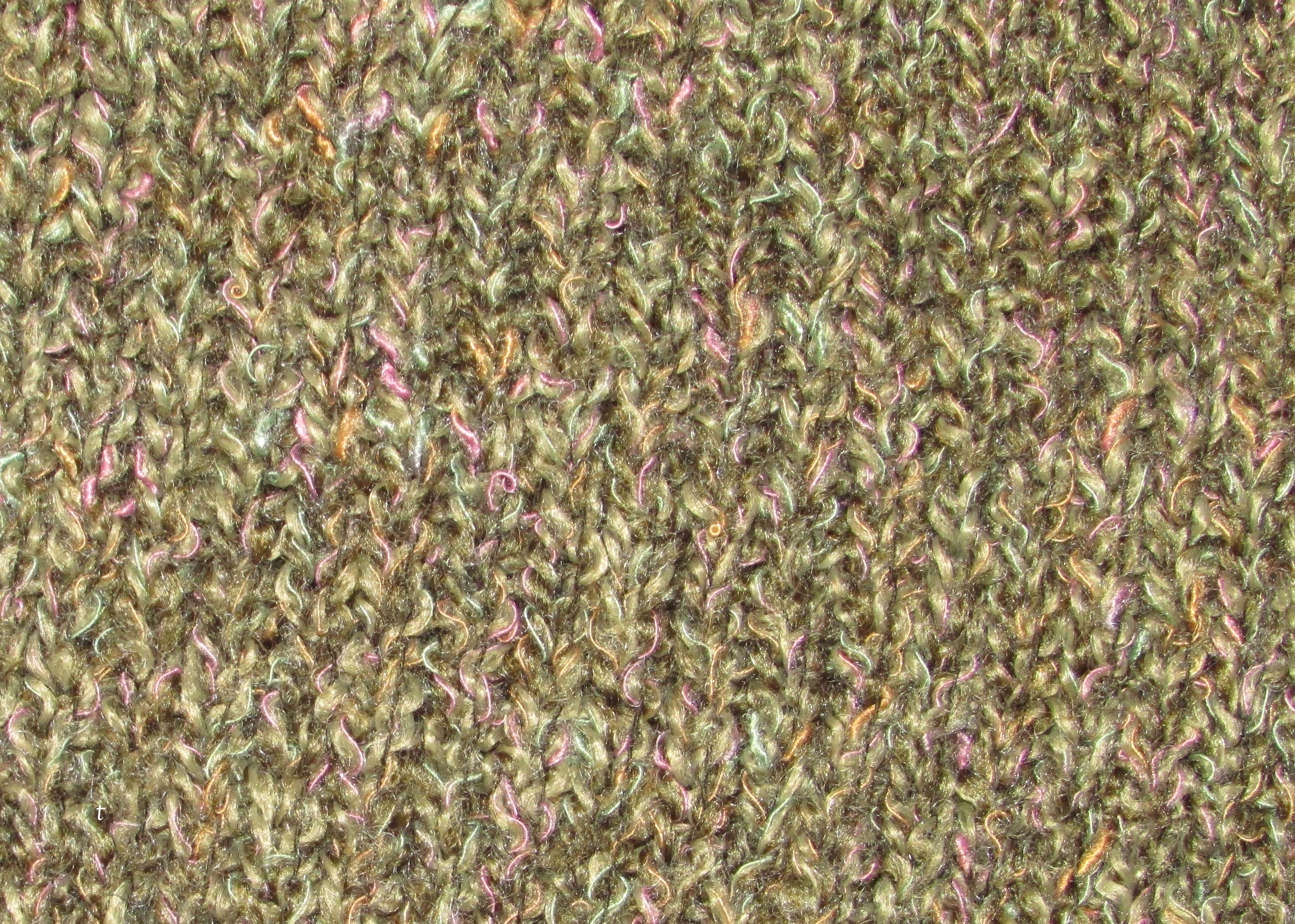
Cozy sweaters are an essential part of my winter wardrobe. This soft acrylic knit is lightweight and comfortable and provides just the right level of warmth at this time of year. The V neck is flattering and the attached mock cami makes getting dressed super simple. Though you can’t see it in the photo, the back of the neck is high adding to the cozy warm feeling on a chilly winter morning. Again, the fit is perfect; body skimming but not tight enough to show off any bulgy bits. Closer examination reveals that, though predominantly green, the knit is actually a mixture of many warm colours.

IMG_0760

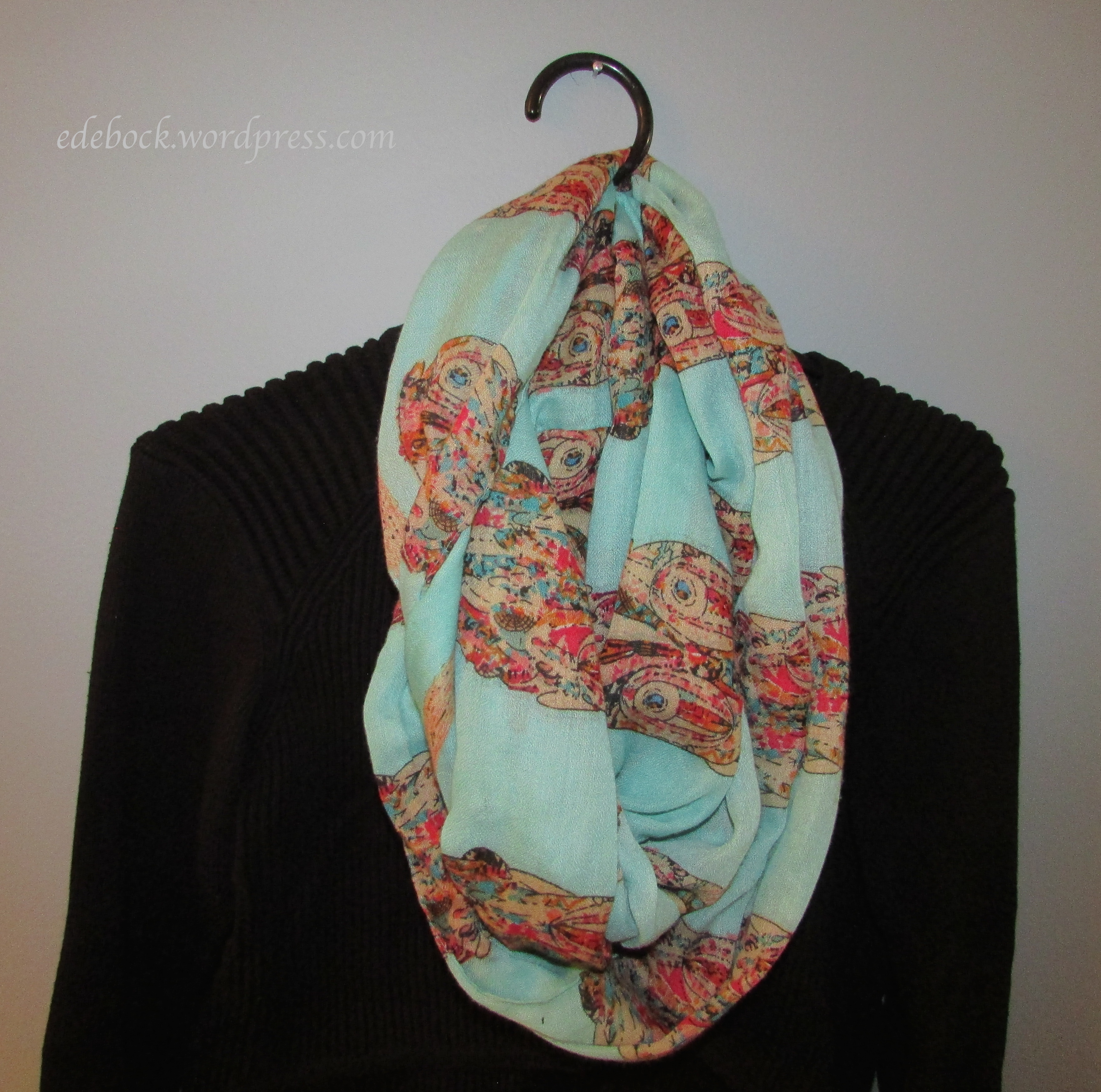
I was at the counter ready to pay for my other purchases when this eternity scarf called my name from a nearby display.

IMG_0761

My photographer wasn’t home when I was finishing up this post, but you can easily see how I can use a scarf like this one to add colour close to my face when I wear a black sweater or top. The turquoise background is one of my Spring colours as are the shades in the repeating pattern which, on closer inspection, turned out to be an owl.

IMG_0764

Earlier this week, while doing some research on the most eco-friendly fabrics available, I read that wearing recycled clothing is the most sustainable way to dress, so if you’re concerned about the environment, why not join me and go thrift store shopping!

And the winner is…

LogoIn the weeks leading up to Christmas, Susan Street, who writes the fashion blog, SusanAfter60.com, offered her readers a number of generous giveaways including a Nordgreen watch bundle. Imagine my delight to learn that I was the winner!

The timing was perfect. Though many depend on their cell phones to tell them what time it is, I’m a bit old school and can’t imagine life without a watch on my wrist. I love the Citizen Eco Drive watch that I received as a retirement gift twelve years ago. It’s powered by light and never needs a new battery, but living in Canada where daylight hours are short at this time of year and the cold weather generally calls for long sleeves, it hasn’t been getting enough light to keep it charged. This didn’t seem to be a problem when it was newer, but this winter I often get up in the morning to find that it stopped overnight and needs to sit under a bright light for awhile to wake up. I had been thinking about putting a new battery into an older watch that I bought shortly before I retired and starting to wear it again, but then I received Susan’s email!

I was able to go online to the Nordgreen website and build my own watch bundle. The first step was choosing which model I wanted. I liked the simplicity of the Native dial.

Screen Shot 2020-01-10 at 1.59.04 PM

Next, I chose the size of the watch case. The choices ranged from 32 to 42 mm. My wrists are not very big, so I chose the smallest. Step three was selecting the case colour; silver, gold, rose gold, or gun metal. My retirement watch is a combination of silver and gold and my older one is gold, so I chose silver. Step four was choosing the colour of the dial; white, black, or navy. I like a dark watch face, my retirement watch is black, and I wear a lot of navy, so I chose navy for my new one. The final step was choosing the straps. Not one, but three! I chose silver mesh, navy leather, and dove grey leather. Vegan leather is also available. A super simple and convenient quick release system makes it easy to change the straps without any tools.

IMG_0700

The package arrived this week all the way from Copenhagen. Nordgreen is a Danish company started by Pascar and Vasilij who are, according to the website, “two lifelong friends, watch enthusiasts, and born-and-bred Danes on a mission to deliver true Scandinavian design and lifestyle to everyone.” The Nordgreen name represents both their Nordic identity and their focus on sustainability. Nordgreen partners with three global NGOs to create tangible change in the fields of health, education, and the environment. As a customer purchasing a watch or a bundle, you would have the opportunity to choose which cause you’d like to support. For me, I think that would be as difficult as choosing from all the watch options! As a retired teacher I’d probably settle on giving one month of education to a child in India. It’s also worthwhile noting that Nordgreen offers free shipping and returns worldwide. 

IMG_0709

I’ll still be wearing my retirement watch some of the time and I might just put a battery in the other one as well, but you’ll definitely see me wearing my new Nordgreen watch on the blog often. Accessories, including watches, add finishing touches to our outfits and this one fits my personal style very well.

Thank you, Susan! 

Nordgreen has generously offered a 15% discount to Following Augustine readers. Use the code ELAINE15 to receive yours.


Environmentally conscious shopping

LogoIncreasing interest in sustainability, climate concerns, and other environmental issues is having a significant impact on the fashion industry which is said to be responsible for 8 to 10 percent of global carbon emissions, more than all international flights and maritime shipping combined! It’s also a huge consumer of water. It takes approximately 1800 gallons to grow enough cotton to produce just one pair of blue jeans!

The industry has been increasingly coming under attack for what is known as fast fashion. Fast fashion, or disposable clothing as I like to call it, refers to a phenomenon that sees retailers introducing new products as often as multiple times a week. Garments are manufactured quickly and inexpensively allowing consumers to fill their wardrobes with trendy styles without spending a great deal to do so. These clothes are usually characterized by shoddy workmanship and low quality fabrics and quickly end up in the landfill.

Fast fashion’s target market, young, style-conscious shoppers on a budget, are also among those most concerned about the health of the planet. As environmental consciousness increases, their buying habits are changing. Dwindling sales forced fast fashion chain Forever 21 into bankruptcy at the end of September and is resulting in the closure of up to 350 stores internationally including all 44 locations across Canada. Some see this as signalling the end of an era in shopping.

One of the noticeable effects of this shift is a change in attitude toward second-hand clothing. The stigma that was once associated with wearing someone else’s hand-me-downs is rapidly disappearing. Now it’s the environmentally conscious thing to do!

If you’ve been reading my blog for very long, you know that I’ve been an avid thrift store shopper for years. I much prefer smaller not-for-profit stores to ones like Value Village where the prices are higher and very little of the revenue goes to charity. Most of my second-hand clothing comes from two small volunteer run shops, one in the town where I live and the other just a few kilometres away. Here I’m wearing a couple of recent purchases.

IMG_0458

When I put my tall winter boots away last spring, I knew that they were nearing the end of their life, but I was hoping to get one more season out of them. The first time I wore them this winter, however, my feet got wet! Clearly they needed to be replaced, but the closest shoe store is an hour away. I decided to check out our local thrift store and luck was with me! I snagged this like-new pair for just four dollars! They’re even dark brown, one of this seasons most popular colours. I bought the cardigan for three dollars.

IMG_0460

I’m wearing the two thrifted items with the comfy corduroy pants that have been a workhorse in my wardrobe for several years, a sleeveless V-neck top recently purchased at Cleo, and a black pearl necklace from a previous cabi season. No fast fashion for this frugal fashionista!

For 18 tips on successful thrift store shopping, check out this post.