The Rule of 5… could you do it?

Throughout 2024, two of the bloggers that I regularly follow reported on their attempts to follow the Rule of 5. What’s that, you ask?

The vast overproduction of clothing by the fashion industry is responsible for almost 10% of greenhouse gas emissions worldwide. In 2022, Berlin’s Hot or Cool Institute determined that in order to meet the internationally agreed upon goal of limiting global warming to 1.5ºC, we should purchase no more than 5 new garments a year. That led to the Rule of 5.

Here’s how it works:

  1. Buy no more than 5 new items during the calendar year.
  2. Socks, tights, underwear, and nightclothes don’t count.
  3. Shoes, boots, and accessories DO count.
  4. Second-hand shopping is allowed, but don’t go overboard.
  5. Gifts count. (This is to prevent cheating by having someone else buy for you!)

I haven’t actually participated in the Rule of 5, but looking back I discovered that I inadvertently met the goal in 2023 before I’d even heard of it! I didn’t do as well last year, buying 8 items that would count. The bloggers that I follow didn’t meet the goal either, but they both agreed that trying had changed their shopping habits and made them much more intentional about what they bought. I’d consider that success.

Although the idea has merit, I haven’t committed to the Rule of 5 for this year either. I will continue to keep track of my purchases though and see how close I come. So far, 7 weeks into the year, I’ve only purchased one item, a colourful necklace that cost less than $10 at a tiny shop in the bus station in Xalapa, Mexico. The anchor and cross symbols are very meaningful to me, but if I’d been committed to the Rule of 5, I probably wouldn’t have bought it.

So, what do you think? Would you ever try the Rule of 5? Do you think you could do it?

Fashion Revolution Week

Logo by SamFashion Revolution is a not-for-profit global movement that was founded by British fashion designers Orsola de Castro and Carry Somers following the collapse of the Rana Plaza garment factory in Bangladesh on April 24, 2013 that killed 1,134 people and injured another 2,500. Fashion Revolution campaigns for a clean, safe, fair, transparent and accountable fashion industry; one that that conserves and restores the environment and values people over growth and profit. Over the past ten years, it has grown to become the world’s largest fashion activism movement, mobilizing citizens, brands and policymakers through research, education and advocacy. Every year, they organize Fashion Revolution Week in April, but this year’s campaign is marking a decade of active campaigning with ten days of action running from April 15 to 24.

433469133_424161200263956_5310705543677909198_n

I don’t consider myself a fashion activist, but I do believe that everyone has a part to play in building a fashion industry that puts people and the planet first. Until our our clothing is made in safe, clean, and fair ways, we’re all part of the problem.

Those of us who live in North America have little choice but to buy clothes that are produced overseas and it’s virtually impossible to find out whether they are made in sweatshops where workers are exploited and forced to work in unsafe conditions or manufactured in socially and environmentally responsible factories. So, what can we do? How can we be part of the solution instead of the problem?

Overconsumption has become a huge problem. Apparently, the number of clothes that the average consumer purchased between 2000 and 2014 increased by 60 percent and those clothes tended to kept about only half as long as in the past. Individually, we can do our part by buying less and choosing quality over quantity. After all, how much do we really need hanging in our closets? At least one of the fashion bloggers that I follow has committed to The Rule of 5, planning to buying no more than five new fashion items this year. She’s decided to explore second-hand shopping which, as you know, is one of my favourite ways to add to my wardrobe.

427688654_401397839206959_3748741648498203248_n

Another way that we can take action is to extend the life of our clothing by learning to mend, repair, and upcycle. In cities around the world Fashion Revolution activists are planning to come together in public spaces tomorrow to work on personal mending projects while drawing attention to the goals of the movement. That reminds me that I still have two pieces set aside from my recent closet cull waiting for some simple upcycling. Though I won’t be doing it in a public place, perhaps that should be my Fashion Revolution Week project.

More stripes for spring

Logo by SamWhen I was young, we were told that wearing horizontal stripes would make us look fat, while vertical stripes would make us look taller and thinner. It turns out that that fashion advice was totally wrong. According the the Helmholtz illusion, horizontal stripes won’t make you look fatter. In fact, they may even make you look thinner!

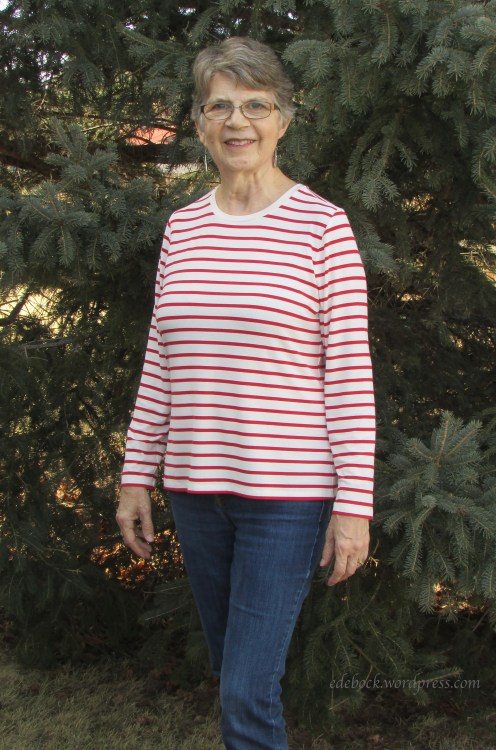
Regardless of whether they make me look fatter or thinner, I have always liked horizontal stripes. While I specifically went into Reitmans looking for the sweater that I showed you last week, this top was on sale and I decided to buy it too.

IMG_6683

I was intrigued by the stretchy ribbed knit fabric. Very soft and lightweight, it’s made of “EcoCozy” biodegradable fibres which are apparently made from certified sustainable wood pulp from sustainably-managed and renewable plantations. I think it will be especially good for this transition season. Our days are not truly warm yet, but no longer freezing cold. I probably could have gone down one size, but I wanted it to be body skimming as opposed to clingy.

IMG_6664

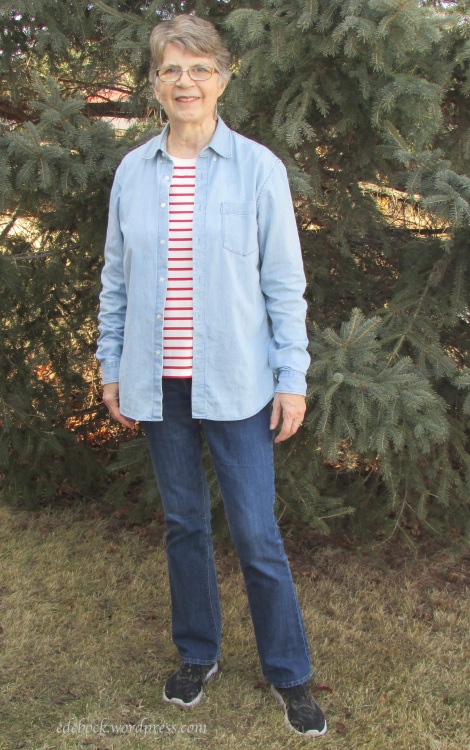
The pop of red is a nice addition to my wardrobe and the very light cream looks much better on me than pure white would. The top can easily be dressed up or down depending on what I choose as a third piece. Here I’m wearing it under my faded denim shirt from Uniqlo, but it could also be worn with a jean jacket, a dressier sweater or a blazer. 

It sure was nice to be able to take this week’s photos outdoors even if there were still patches of snow lying around!

The dark side of sequins and synthetics

Logo by SamI’ve never been one to wear sequins or glitter. They’re a bit too flashy for me, but I was alarmed when I recently read how devastating they are for the environment. Made of plastic with a shiny metallic coating, they’re non-biodegradable and will sit in the landfill for hundreds of years, possibly shedding harmful micro plastics into the soil.

As often happens, reading that fact led me down a number of other rabbit trails. I discovered that ancient sequins, made of gold, have been unearthed in archeological sites from Pakistan to Egypt including heaps of them scattered in King Tut’s tomb and sewn in flower shapes on his ceremonial robe. I also learned about modern day attempts to produce sequins that are biodegradable. So far, however, those haven’t been able to withstand heat and moisture making them unsuitable for use on clothing. Perhaps someday though.

All of this led me to wonder about the biodegradability of the kinds of fabric that we commonly wear. Here’s what I learned about how long it takes for different fibres to decompose:

Cotton:  1 week to 5 months. Denim, which is a much hardier cotton, takes 10 to 12 months.

Linen:  as little as 2 weeks

Hemp:  2 weeks

Wool:  3 to 4 months

Bamboo:  4 to 6 months

Silk:  1 to 4 years

Nylon:  30 to 40 years

Polyester:  20 to 200 years

Spandex:  up to 200 years

Acrylic:  200 years

Clearly, natural fabrics are better for the environment. Not only do they decompose much more quickly, but they also require much less processing to turn them into fabric in the first place. Did you know that they’re also better for you? Natural fibres are soft, strong, breathable, and don’t irritate sensitive skin.

So, am I planning to go all-natural and stop wearing synthetic fabrics? Probably not. That would be pretty difficult to do, but as one who wants to shop ethically, one thing I will continue to do is to shop second-hand and keep those synthetic fabrics out of the landfill longer. And I probably won’t be wearing any sequins!

il_1588xN.4502393344_g72s

Repurposing… sustainability at it’s best

Logo by SamWe are a wasteful society, but it hasn’t always been that way. There was a time when women especially were so much more resourceful than we are today. They had no choice. As a young widow in the latter years of the Great Depression, my grandmother raised two teenage daughters on a shoestring. She learned to reuse and repurpose out of necessity. Clothing that was outgrown or worn out didn’t go to waste. As a child, I remember hand braided rag rugs on the floors throughout her tiny house and I loved examining the multicoloured squares that made up the quilts on the beds in her spare room.

A regular reader who is also a personal friend shared a great example of repurposing with me recently. The garment was originally a top that belonged to her mother-in-law. When she had worn it until she couldn’t  stand to wear it any longer, she realized that the fabric still had plenty of wear in it. Obviously creative and handy with a sewing machine, she turned it into a dress for one of her granddaughters. Now it’s been passed down to a younger granddaughter, my friend’s 5 year old.

9018157433891706275

When she sent me the photo of the dress, she also sent a message dictated by her daughter. Here’s some of what little Lizzy had to say…

Did you see the picture of my dress? It is really nice. I wear it all the time and my grandma used to wear it and it was a shirt. Then my cousin was wearing it first. A dress was made for her out of my grandma’s shirt. I like it because I like to play Cinderella in it. Cinderella is a nice game to play, a really nice game. I love playing Cinderella. Oh, I like my dress. It has swirls and little dots around it and it’s so great. The end.

Yes, Lizzy, it really is great and it’s also an example of sustainability at its best.

As the cost of living continues to climb, perhaps more of us will need to be like Lizzy’s grandma. Maybe we’ll need to resurrect some of the repurposing skills that carried our foremothers through difficult times. In addition to protecting our pocketbooks, we’d also be taking valuable steps toward passing on a better world to future generations.

Another second-hand find

Logo by SamWhen our daughter and her three children were here for a visit last week, we did what we usually do when she’s here. We checked out the two local thrift stores. I don’t know who enjoys these outings more, Mom, Gram, or the almost 13-year-old granddaughter! She was very happy to find a colourful sweatshirt and a great pair of shoes.

I came home with three tops including the one that I’m showing you today.

IMG_5491

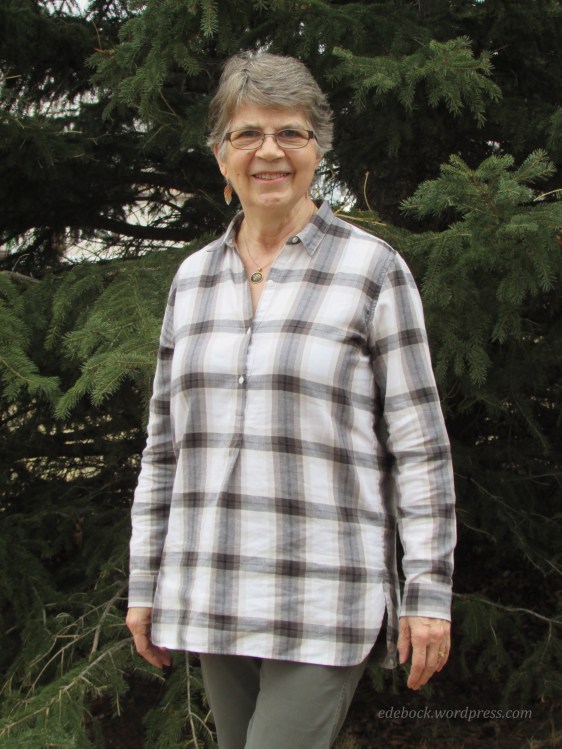
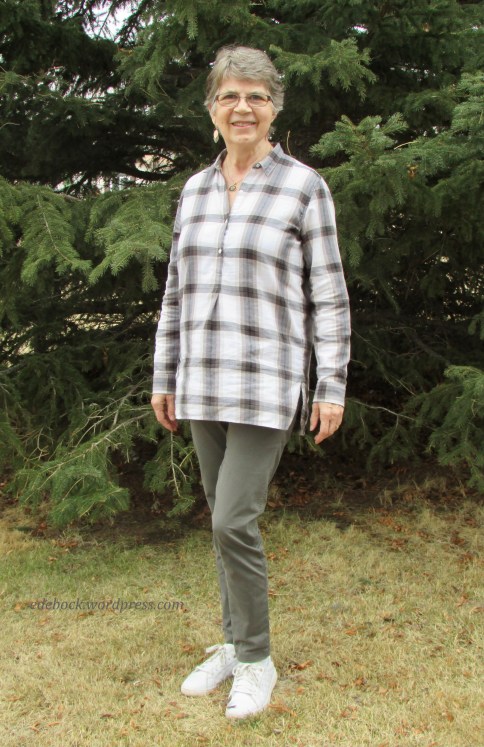
The comfortable cotton shirt from Gap is perfect for this shoulder season when winter finally seems to be on the way out, but days are still quite cool. I love the warm neutral colours and the slightly oversized fit. Though you probably can’t see it in the photos, tiny threads of metallic gold run through the darkest bands elevating the casual look without being overly fancy.

IMG_5490

Though the shirt would go just as well with jeans or leggings, I’m wearing it with a pair of dark olive chinos that have been in my spring/summer wardrobe for the past three years. I haven’t actually done my seasonal closet switch yet, but I did pull this pair out of storage as they’re a good transitional piece for this in-between time of year.

So why does our family enjoy second-hand shopping so much? For me, in addition to the fact that it’s a bit like going on a treasure hunt, there are three very distinct advantages.

  1.  Location. I live in a very small rural community. With the exception of the two thrift stores, the closest place to shop for clothing is an hour away. The thrift stores are local and support our small communities. Both are run by volunteers and the proceeds go to local churches and organizations.
  2. Price. Similar shirts to the one that I’m featuring today sell on the Gap website for about $85, but I paid $2! I can afford to pay full price and buy new, but why would I when I can find quality clothes for so much less?
  3. Sustainability. The environmental impact of the clothing industry is monumental. Fashion is responsible for approximately 10% of human-caused greenhouse gas emissions and 20% of global wastewater. It uses more energy than the aviation and shipping sectors combined. Shopping second-hand helps protect the environment and reduces the need to use natural resources to make new clothes. Again, what’s not to like about that?

IMG_5493

Make your closet more eco-friendly

Tips for creating and maintaining a sustainable wardrobe

Logo by SamTo begin with, what is a sustainable wardrobe? In a nutshell, it’s one that reduces the impact that your clothes have on the planet. Adopting sustainable practices improves the quality of our lives, protects the environment, and preserves natural resources for future generations. So where do we start?

I’d recommend doing some research and trying to find sustainable and ethical clothing brands and purchasing only those, but I know how challenging it can be to find accurate information. Choosing sustainable fabrics is also easier said than done, so what’s an ordinary person to do? Here are some simple affordable steps that we can all take to dress more sustainably:

5303cf89c82d3a46d85205a6f0dc1c86

Buy less

The most sustainable anything is the one you already own. Instead of shopping, look for new ways to wear what’s already hanging in your closet. 

Quality over quantity

Instead of chasing trends and buying numerous pieces of poor quality clothing every season, avoid fast fashion altogether and invest in a few good quality pieces that will last. There’s no question that buying higher quality clothes will cost more initially, but they’ll outlast cheaper, less eco-friendly options, greatly reducing the cost per wear

The 30 wears test

I was shocked to read on the Wear Me 30 Times website that the average woman keeps a piece of clothing in her wardrobe for only 5 weeks! In my opinion, that’s inexcusable! Wear Me 30 Times is a slow-fashion initiative focused on supporting conscious consumption and increasing awareness of the problem of waste in the fashion industry. The principle is very simple. Before purchasing something, if you can honestly say that you’ll wear it a minimum 30 times (and hopefully more often), then go ahead and buy it. There are exceptions, of course. The dress you buy to wear to your son’s wedding or your 40th anniversary celebration might not pass the 30 wears test and that’s okay, but even on those occasions try to invest in something with longevity that you’ll be able to wear again. 

Shop second-hand

If you’ve been following my blog for very long, you know that I love thrift store shopping! Not only is it a great way to welcome sustainability into your wardrobe, but it’s fun. It’s like going on a treasure hunt, never knowing what you’ll find. If you’re new to this, you can find 18 tips for successful second-hand shopping here

Look for recycled fabric

Check labels. You may be surprised to find clothing or accessories made from plastic bottles or sweaters made of pre-used wool. Some brands are even making vegan leather out of pineapple rinds and apple peels!

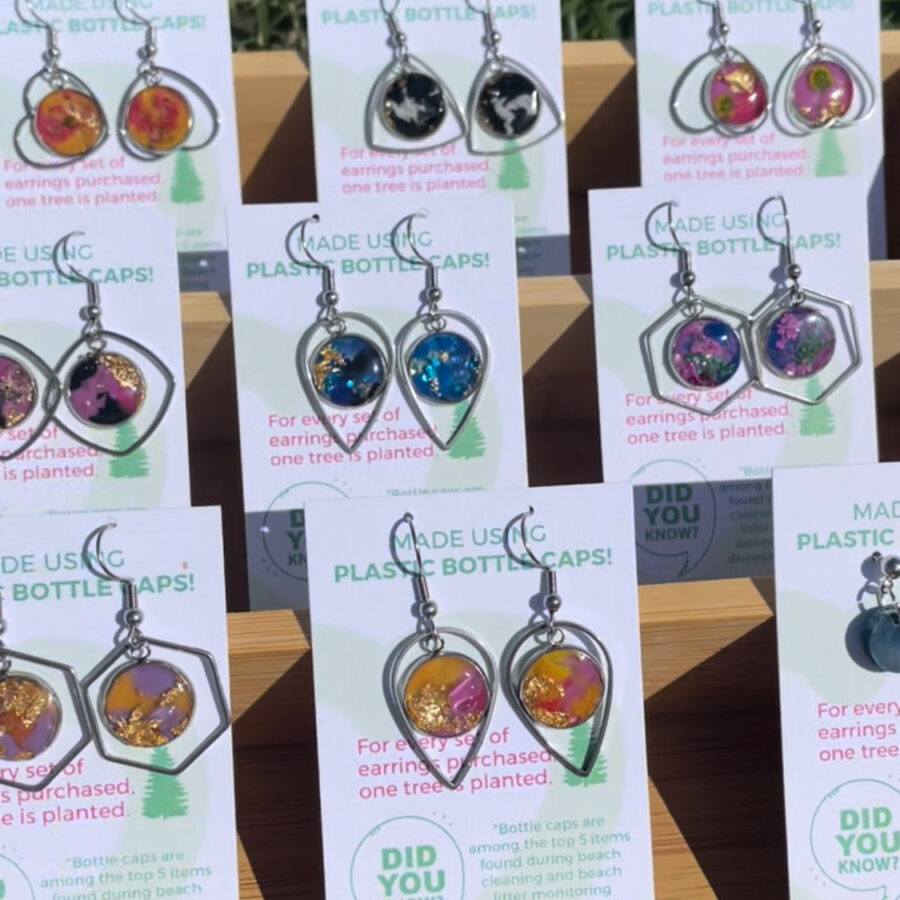
I have to give a shout-out here to Karyn, one of my former students and founder of Repurposed Plastic. Earrings from plastic bottle caps! Brilliant!

IMG_8665-900x900

Follow good laundry practices

First and foremost in this category, as mentioned in last week’s post, don’t wash clothes that aren’t dirty! With the exception of socks, underwear and workout wear, you should be able to wear an item at least three times before putting it in the laundry. Not only does washing less often save water and electricity, but it also helps your clothes last longer. Make your laundry routine even more sustainable by using eco-friendly laundry products. Wash in cold water, don’t overfill the machine, and when possible, air dry your clothes. 

Mend and repair

Prolong the life of your quality clothing by learning how to mend. It’s not as difficult as it might sound and there are lots of online articles and videos available to help. If the job is beyond your skill level, consider finding a tailor who can do it for you. Most dry cleaners also offer mending services. Taking shoes and boots to a repair shop for resoling is a cost-effective way to prolong their life while keeping perfectly good uppers out of the landfill.

Do you have any tips to add? Have you found any sustainable clothing brands that you can recommend? 

Happy Saint Patricks Day Background.

Those darned socks!

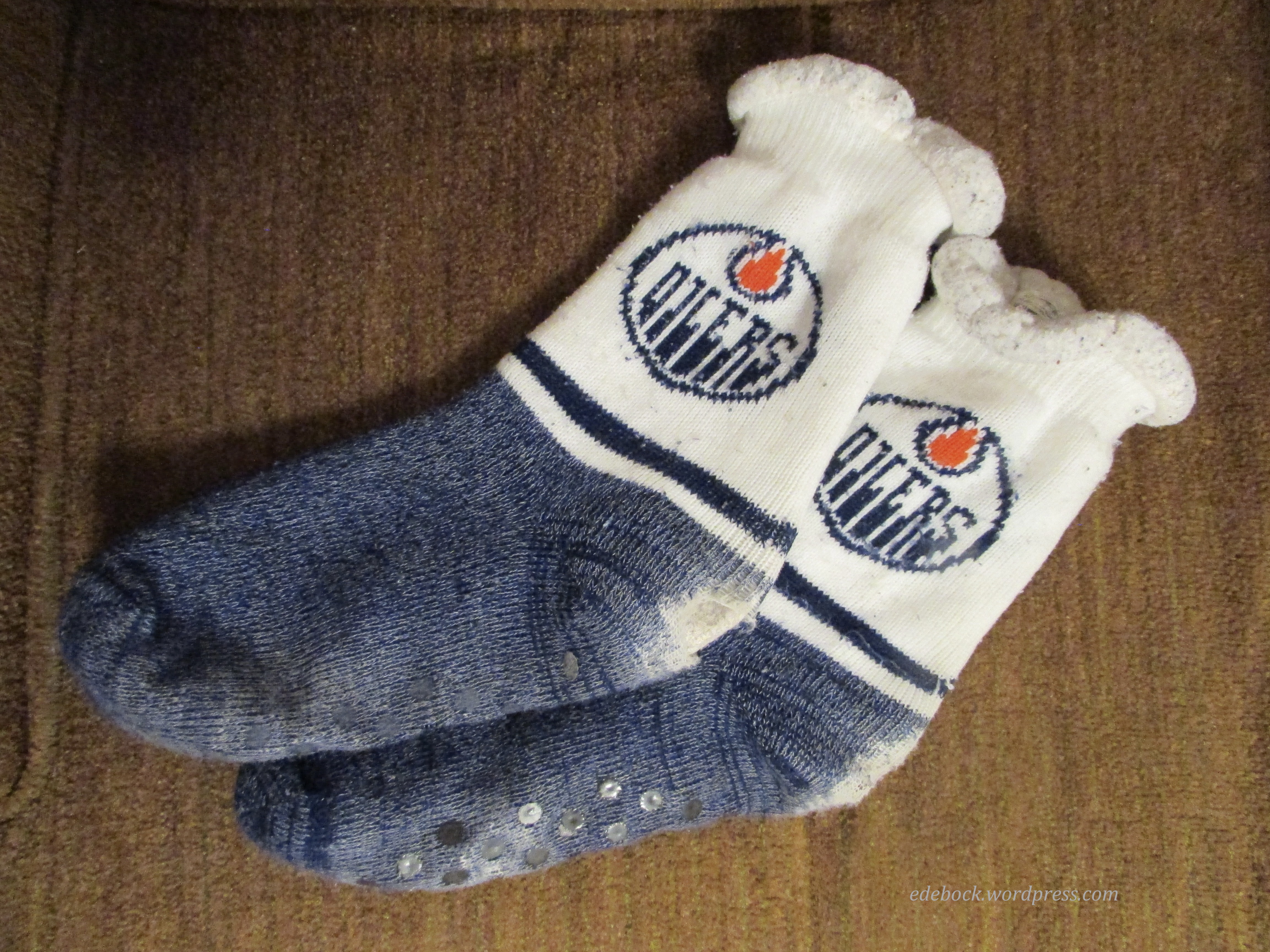
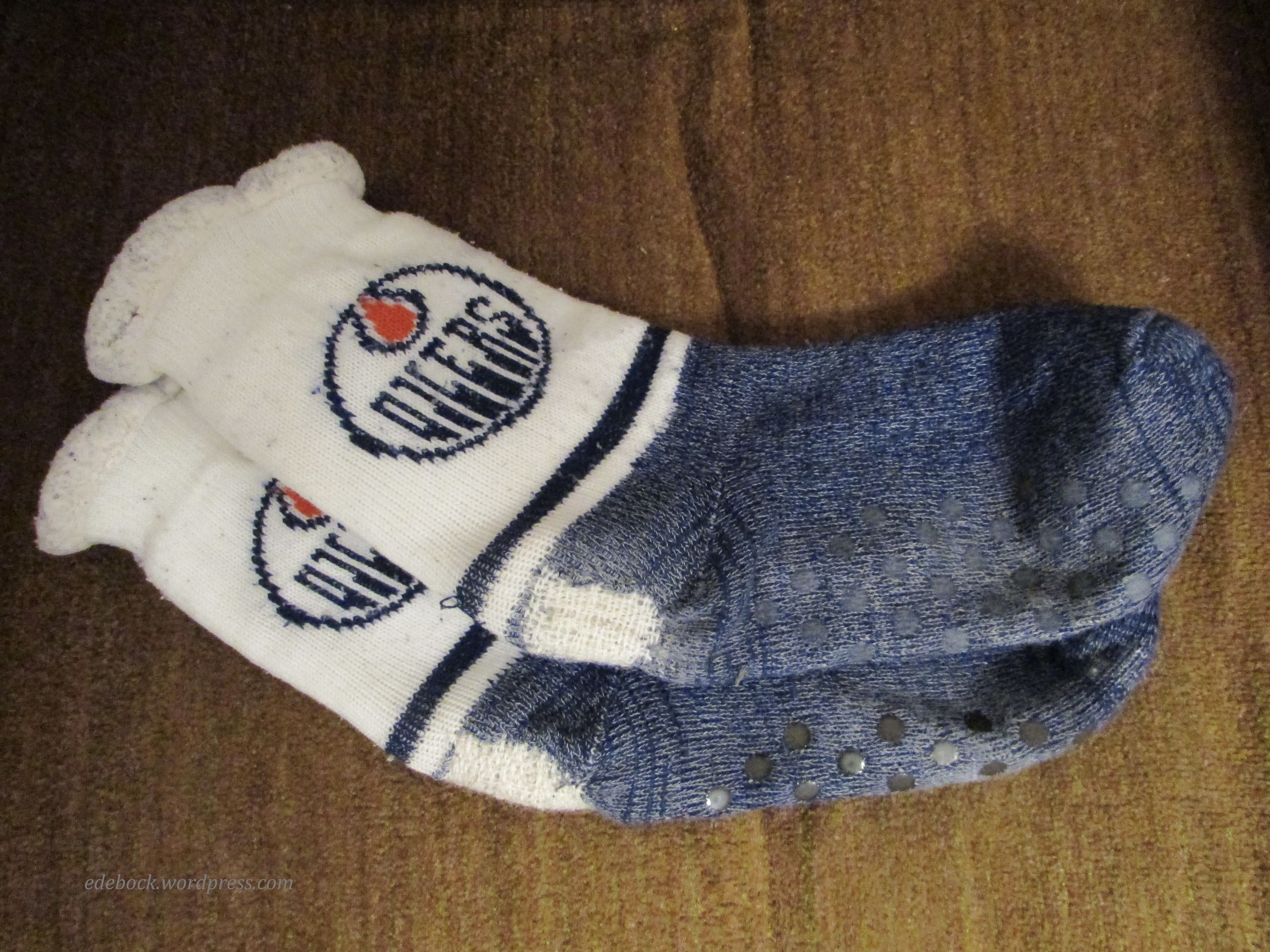
Logo by SamWe hadn’t been married very long when hubby was shocked to discover that I had no intention of darning his holey socks. He grew up in poverty and darning socks was something his mother did out of necessity. We were both teaching school, however, and could afford to buy new socks when our old ones wore out. After more than 46 years of marriage, however, I recently darned a pair of sock slippers that he uses when we travel. Not only did I want to extend the lifespan of something that he loves, but mending and darning, once second nature to homemakers, are making a comeback as a way to participate in sustainable fashion.

IMG_5004 2

I’ve done lots of sewing and needlecraft in the past, but since darning was something new for me, I first had to figure out how to do it. You can learn almost anything from YouTube, so I started by watching this very helpful video.

I don’t have a darning egg. In fact, until I decided to tackle this project, I didn’t even know that such a thing existed! Always one to improvise when necessary, I found that an empty olive jar did the trick. Next, I dug into my old crafting supplies and found some yarn. I would have used blue to match the soles of the socks, but I didn’t have any, so I made do with what I had.

After just one false start, I figured out what I was doing and the first part of the process went fairly smoothly. I was even beginning to think that this darning thing was pretty easy.

IMG_5007

The next part was more challenging though and I’m sure the end result isn’t as neat and tidy as it would have been if my late mother-in-law had done it. I’m satisfied though and so is hubby. I just hope he doesn’t think this means that I’m going to start darning all his holey socks because that’s definitely not going to happen!

IMG_5010 2

Where does donated clothing go?

Logo by SamWhether I like to admit it or not, fall has arrived in my part of the world. Days are cooler, nights are frosty, and leaves are changing colour. The time has come for many of us to go through our closets and decide what to keep for next summer and what we won’t wear again. Bagging up those unwanted items and dropping them off at a second-hand store might be the end of them as far as we’re concerned. It might even seem like the generous thing to do, but what actually happens to all that donated clothing?

As I mentioned in a previous post, most thrift stores are only able to sell a small fraction of what is donated. The reality is that over the years I have taken many items to our local second-hand shop. I’ve seen some of them hanging on the racks, but not once have I ever seen someone in our small town wearing one of them. Where did they go?

If your gently used garment isn’t sold within as little as three or four weeks in some shops, it might end up as carpet padding, insulation, or a rag in an auto body shop. That’s not necessarily a bad thing. Recycling textiles keeps material out of landfills and incinerators and reduces the need for virgin fibres by extending the life of existing ones.

Second-hand clothes that don’t sell in Canada, Europe and the US and that don’t end up in textile recycling facilities are often exported. The US alone sends roughly 700 000 tons of used clothing overseas annually. Again, this might sound like a benevolent thing to do, but it’s the middlemen who profit most from this practice and in many developing countries, it has had a devastating impact on local clothing industries. In Kenya, for example, where second-hand imports can be sold for a fraction of the cost of new locally produced items, the textile industry has been virtually wiped out by our “generosity”. The garment industry in that country, which employed half a million workers a few decades ago, now engages only tens of thousands. In 2016, the East African Community (EAC) agreed to a complete ban on imported clothing that was supposed to go into effect in 2019, but leaders backed down and rescinded the ban under pressure from the Trump administration.

Regardless of how much extra life our cast off clothing gets in those countries, the textiles themselves usually end their life there. Most developing countries don’t yet have even basic collection and recycling programs. Often, there isn’t even municipal waste management in place. Ultimately, what is left of our donated clothing often ends up being burned or dumped in environmentally sensitive areas that are considered wasteland.

So, what can we do to be more responsible consumers?

  1. Buy less. We buy too much stuff and then want our excess to somehow be good for the world. It simply doesn’t work that way!
  2. Shop second-hand.
  3. When buying new, look for garments that contain recycled content to ensure that we create demand for recycled textiles.
  4. Avoid fast fashion. Buy better, more durable clothing.
  5. Learn to extend the life of a garment by mending or upcycling.

With just one week left in my Second Hand September challenge, I will admit that I’m getting tired of limiting myself to only wearing second-hand clothes, but I’m determined to make it to the end of the month! Here are a couple of the outfits that I wore this week.

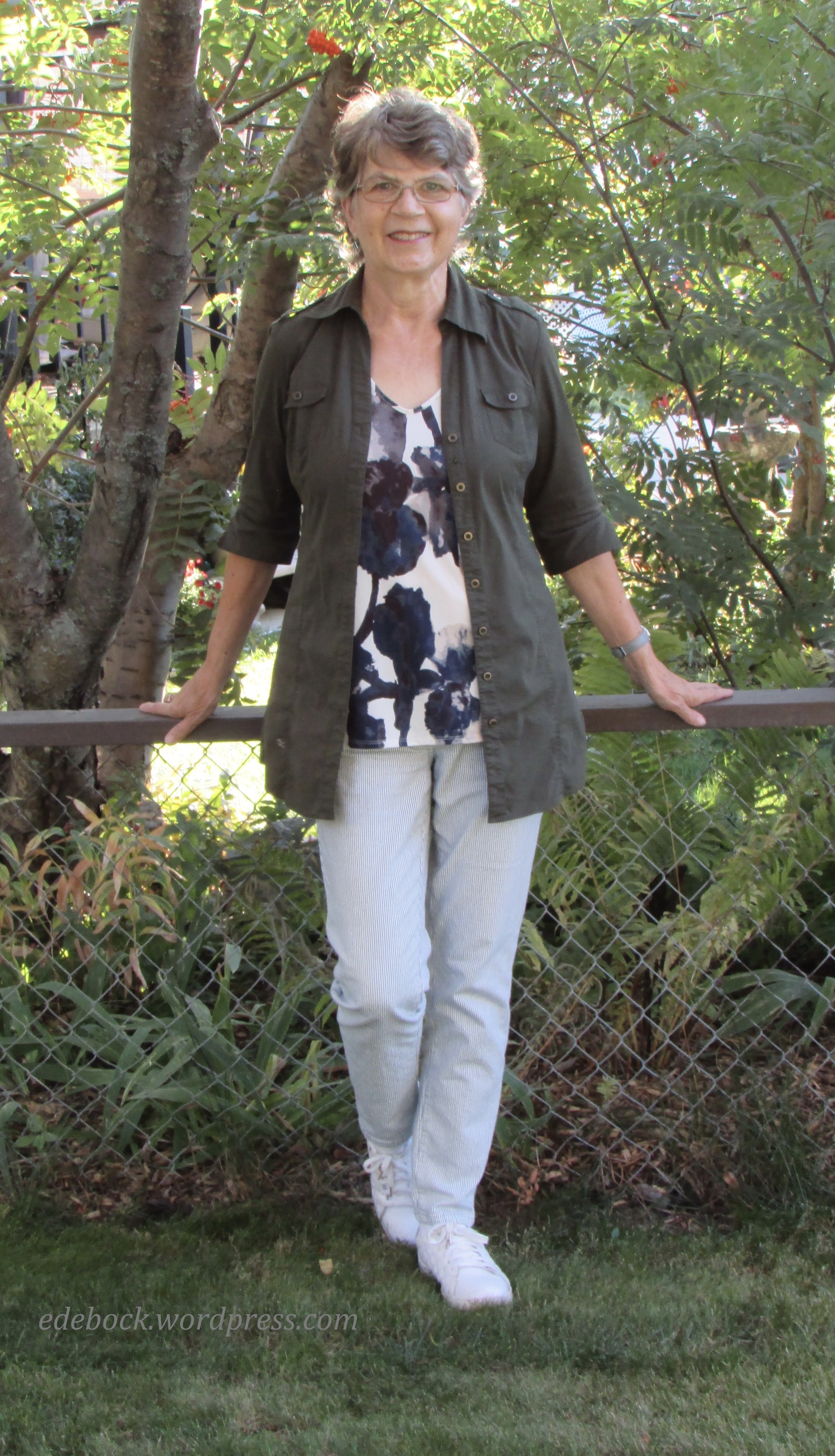
When I left for church on Sunday morning, it was too chilly to wear the sleeveless dress without something over it, so I pulled out the very versatile olive shirt that first appeared on the blog here. More than three years after finding it in our local thrift store, I still enjoy wearing it and have found it very useful this month. Even the shoes in this outfit are second-hand.

IMG_4602

There’s that olive shirt again! The lightweight jeans that I found in one of our local second-hand stores recently look light blue or grey in the photo, but if you zoom in you can probably see that they’re actually a blue and white pinstripe. I discovered that this month’s limited wardrobe didn’t include many tops with sleeves that went well with them. When I headed off to a morning appointment, I needed a third piece over the sleeveless shell to add some warmth and finish the outfit. Thankfully, olive is a neutral colour and goes with just about everything!

6 myths about second-hand shopping busted!

Over a week into my Second Hand September challenge it’s going well. Today I thought I’d look at some of the most common myths or misconceptions about second-hand shopping.

1.  Thrift stores are only for poor people. 

In reality, most thrift stores exist to raise money for local charities and organizations, not to cater to a certain economic class. Many of us who buy second-hand can afford to buy new, but choose to reuse for a variety of reasons. Shopping second-hand is a sustainable practice that helps preserve resources and cuts waste by keeping usable clothing out of the landfill. It’s also fun; a bit like going on a treasure hunt!

Some argue that when those of us who can afford to buy new shop second-hand, we are taking from those in need. If you’ve ever had the opportunity to look behind the scenes at a thrift store, you know that that’s not true. There is definitely more than enough for everyone! Most thrift stores are only able to sell a small percentage of what is donated. The excess is often sent to women’s shelters, shipped abroad to be re-sold in third world countries (which is not necessarily a good thing… perhaps a topic for a future blog post), cut up and sold as industrial rags, or sent to textile recycling facilities where they are reprocessed into other useful products.

2.  Thrift stores are dirty. 

They may not be able to afford the nicest spaces with the best lighting and may not have fancy window displays, but well-run second-hand stores, like other businesses, try to keep their premises clean and their inventory presentable. Some people think that because the clothes are used, they must be dirty, but that’s generally a false assumption. Most clothing is washed before it’s donated and some second-hand stores have laundry facilities on-site to deal with those items haven’t been. Personally, however, I always wash second-hand items before I wear them because I don’t know where they’ve been and how they’ve been handled. Since I prefer unscented laundry detergent, I also like to remove any odours that might linger.

3.  Second-hand stores are disorganized. 

While some may be more difficult to navigate than others, most second-hand stores are organized in a similar manner to other shops with separate areas for men’s, women’s, and children’s clothing. Within each category, clothes are usually separated by type (tops, pants, dresses, etc) and further arranged according to size.

4.  Second-hand stores only sell cheap, low-end brands. 

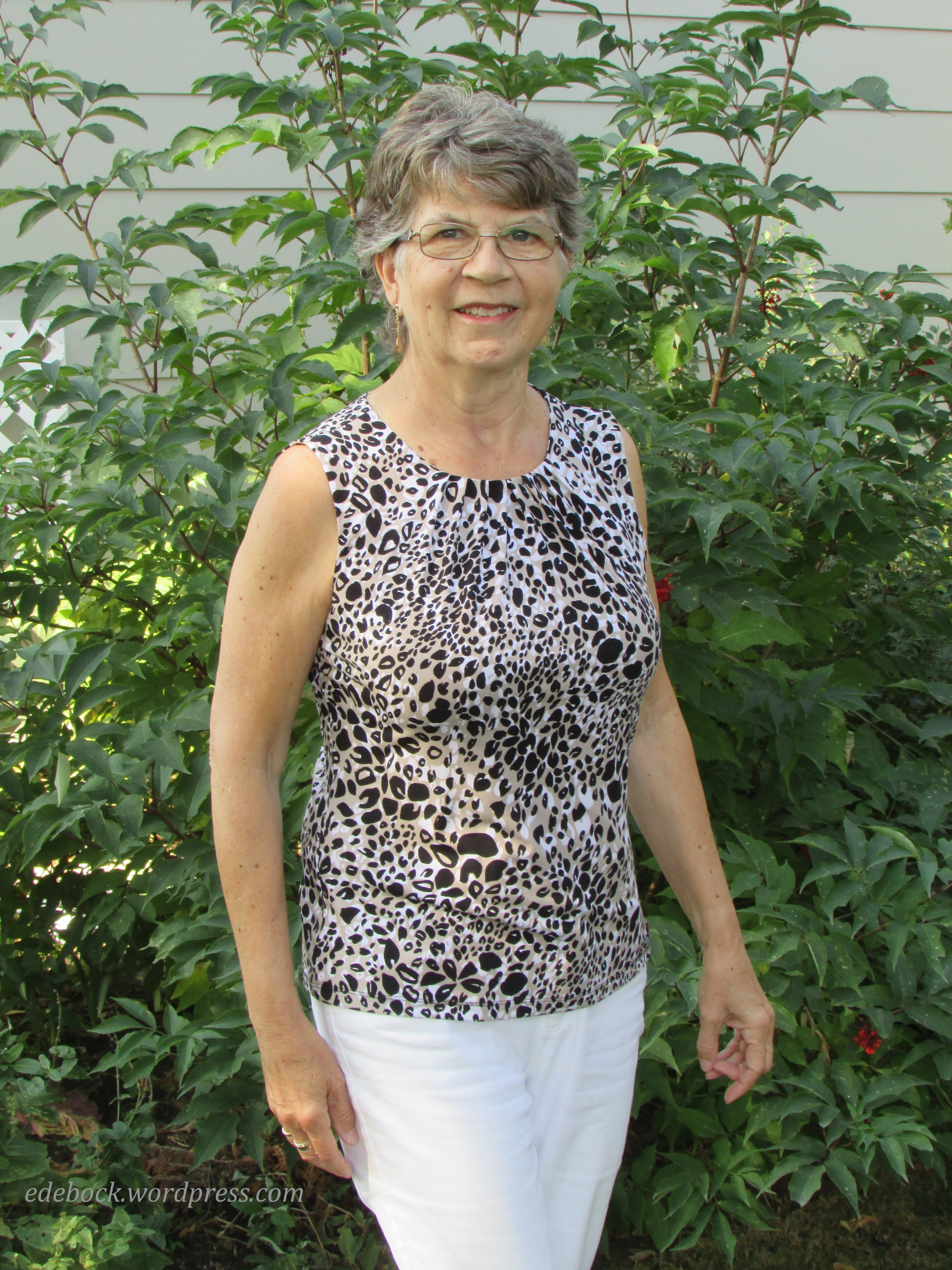
If you take the time to hunt carefully, you can sometimes find name-brand, designer, or even luxury goods in thrift stores. One of my most recent finds was this animal print top from Calvin Klein.
IMG_4474

If high-end fashion is what you’re looking for though, you might want to check out consignment stores. Prices are generally higher and selection smaller, but they tend to be very selective in what they accept for sale.

5.  Clothes sold in second-hand stores are in bad shape. 

Clothes are sorted and inspected for quality before going onto the shelves. Those that are badly worn are disposed of, cut up and sold as rags, or recycled. Most of the clothing that reaches the sales floor has already stood the test of time. Any shrinkage or fading that might occur has already happened. Occasionally, however, brand new items are donated.
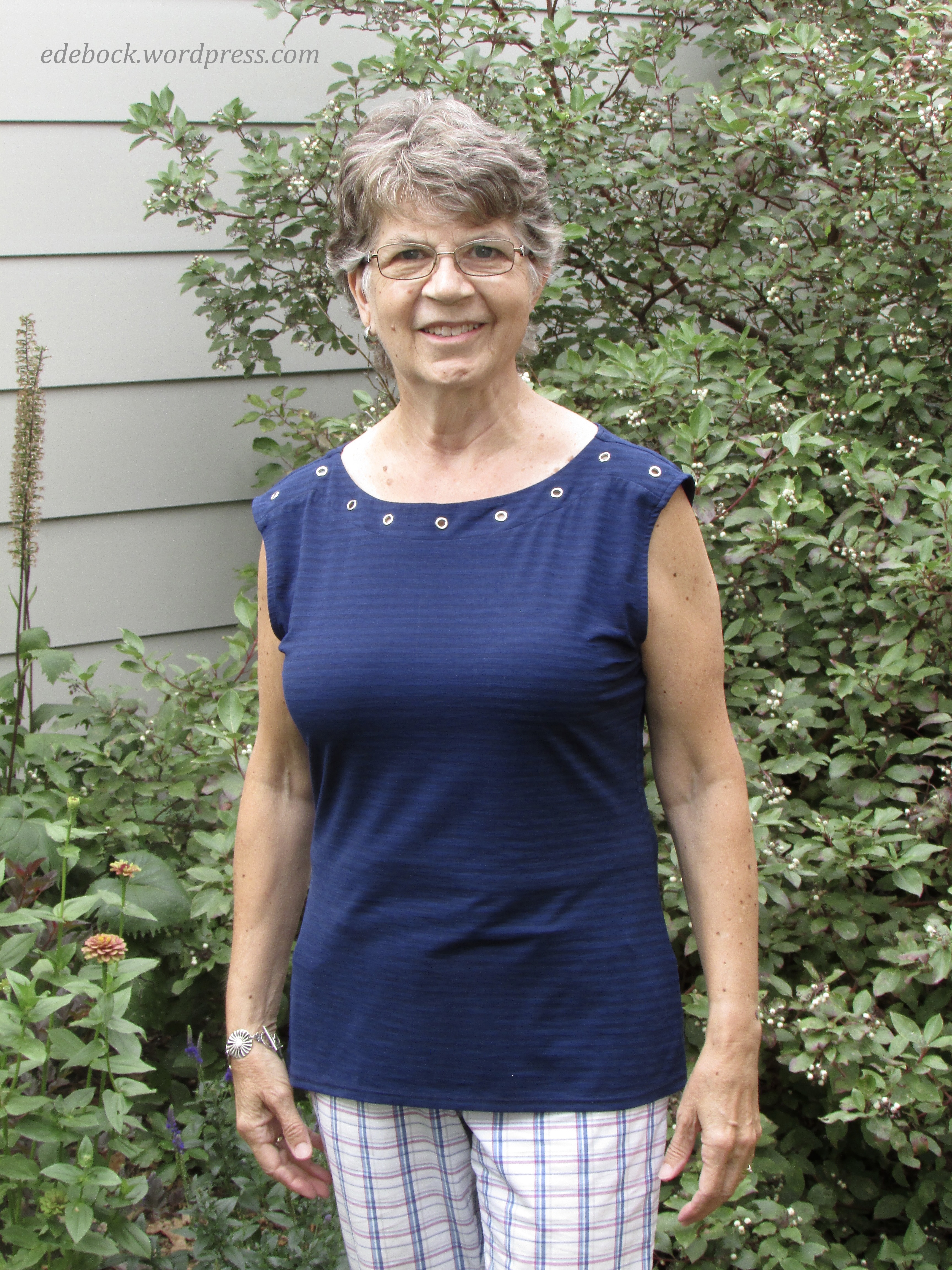
IMG_4492

The top I’m wearing in this picture still had the original tags on it when I bought it! It’s from Laura, one of my favourite Canadian women’s fashion brands. If memory serves me correctly, the original price was $69 and I bought it for less than $5!

6.  Clothes in second-hand stores are out of style. 

Thrift stores carry a mix of old and new and a wide variety of styles all in one place. You can easily go modern, retro, or vintage! They’re a great place to find pieces that fit your personal style rather than what the fashion industry dictates as on-trend for a particular season. They’re also a great source of timeless pieces that form the backbone of a good wardrobe.

Logo by Sam

So, if you’ve been averse to shopping for second-hand clothing for any of these reasons, perhaps it’s time to rethink that position and give it a try. Shopping second-hand helps support charitable causes, is good for the environment, and can save you a ton of money!

Here are two second-hand outfits that I wore this week that included the tops shown above. As you can see, the white jeans are getting lots of use this month, but it’s also been warm enough for shorts and capris. I’m hanging onto the last days of summer for as long as I can!