What elegance is not

LogoFor the past year and probably longer, my most read blog post has been one that I wrote in September 2020 entitled 50 characteristics of an elegant woman. Every time I look at my stats and see it at the top of the list, I can’t help wondering why. I know that if you google “characteristics of an elegant woman” it’s one of the first items that pops up, but why are so many people looking for information about elegance? Is it something that’s lacking in our world today?  

The dictionary defines elegance as the “quality of being graceful and attractive in appearance or manner”. Elegance is so much more than what we look like or how we dress. It’s the whole package, inside and out. 

438342-Yves-Saint-Laurent-Quote-Without-elegance-of-the-heart-there-is-no

Since this is a topic that is obviously of interest, I thought I’d dive into it a bit deeper today and look at what elegance is not. I love the quote above, but it was also Yves Saint Laurent who said, “We must never confuse elegance with snobbery.” Elegance can’t be bought. A mean-spirited woman in expensive clothes and impeccable makeup isn’t elegant. She’s simply a well-dressed nasty person.

While elegance might sound like an old-fashioned concept, it isn’t only for the elderly or a practice from a bygone era. It’s something that every woman of any age can aspire to.

Perhaps you were brought up with the myth that elegance means conforming and keeping quiet. Not so! As I said in my previous post, an elegant woman isn’t loud or obnoxious, but she graciously and calmly stands up for what she believes in. She isn’t contentious, but at the same time, she isn’t a doormat. Elegance is not weakness! 

While I was writing this, 1 Corinthians, the “love chapter” from the Bible that’s often read at weddings, kept coming to mind, particularly verses 4 and 5. 

“Love is patient, love is kind. It does not envy, it does not boast, it is not proud. It does not dishonour others, it is not self-seeking, it is not easily angered, it keeps no record of wrongs. 

Everything that is said about love could also be said about elegance! Elegance is patient, it doesn’t envy, it doesn’t boast, it isn’t proud, it doesn’t dishonour others, it’s not self-seeking, it’s not easily angered, and it doesn’t keep a record of wrongs. 

One of the areas where I see a distinct absence of elegance in today’s world is social media. An elegant woman puts her cell phone aside and gives her full attention to the people she’s with. When she’s alone, she doesn’t spend endless hours scrolling on Facebook and getting caught up in pointless debates. She’s careful about what she posts online and doesn’t use social media for self-promotion. 

Elegance isn’t about perfection. It’s about being comfortable with who you are, knowing your limitations, growing from past experiences, and not worrying about the things you can’t control. 

audrey-hepburn-quotes1


Not really a fashion post

logo-by-samI expected the blog to be quieter than usual over the summer months. In fact, I warned you about that at the end of this post back in June. I didn’t expect it to be totally silent for the past three weeks though! The fact that we’ve only been home for a total of six days during that time has had much to do with that, but there’s also been the thought that I don’t want to write and post simply for the sake of writing and posting. I don’t want to contribute to the “noise” of social media unless I actually have something worth saying.

When I introduced Fashion Friday back in March of 2016, I wondered how long I’d be able to keep it going. How soon would I run out of things to write about? More than eight years later, I’m actually surprised that it’s lasted this long! While I’m not ready to retire the topic yet, I do admit that I’m finding it more and more difficult to come up with new and interesting content. This might mean some changes to the blog in coming months, but at the moment that’s just something I’m mulling over. In the meantime, there will be a real Fashion Friday post next week that will look at some trends for fall.

One thing I tend to steer away from on the blog is politics. As a Canadian, I’m watching from the sidelines as the campaign south of our border unfolds, but I realize that its outcome affects all of us. We’re part of a global community.

I was especially inspired by former first lady Michelle Obama’s emotional, but fiery speech at the DNC in Chicago on Tuesday. If you haven’t watched her speech, it’s well worth tuning in for the entire 20 minutes here. Hope is indeed making a comeback! Hope is my one word for 2024 and for me it has been an especially meaningful one.

While this isn’t really a fashion post, I must make mention of the stunning outfit that Michelle Obama chose for her speech. There was clearly symbolism in the futuristic design of the midnight blue MONSE Resort 2025 Crisscross Jacket and Tuxedo Pant as she spoke about hope for the future of her nation.  “In 77 days, we have the power to turn our country away from the fear, division, and smallness of the past. We have the power to marry our hope with our action.”

sxyX6sYMXDbSRuBydoKQHD-1280-80.png

The last ten

When I sat down to write this evening, my initial plan had been to start working on this Friday’s fashion post, but something else has been weighing on my mind and I decided to go in that direction instead. I’ve written about the Christian and social media before, but tonight that’s where I found myself going again.

I’ve been using Facebook since December 2007. We were about to leave for a year-long teaching assignment in Japan and our daughter insisted that I had to have Facebook as a way of staying in touch. In fact, she actually created my account and chose my first password and profile picture! She was right. In those days, Facebook was a great way to connect with friends and family. We enjoyed exchanging news and posting photos of our families and our daily lives. I even reconnected with a few people that I had completely lost touch with over the years.

Over time, however, Facebook has morphed into something very different than it was in those early days. I don’t mind the proliferation of ads on my Newsfeed because I realize that very little in life is free and someone has to pay for this platform. No, it’s not the ads that bother me, it’s the negativity, the anger, and the misinformation. Gone are the days when people annoyed one another or flirted with one another by “poking” each other on Facebook. Now, many use social media to lash out at one another or to hurl insults at those who disagree with them. Instead of sharing our lives, we try to prove each other wrong.

So, what does the Christian do? Can we be salt and light on social media or would we be better to avoid it altogether? These were the questions that I was wrestling with in late January when I learned of a free 10-day challenge called Instagram for Jesus. Offered by an online women’s ministry called Well-Watered Women, the challenge is simply a series of 10 short emails designed to help users of Facebook, Instagram, Twitter, or TikTok examine their motives for using social media and the potential that it holds, as well as set life-giving boundaries. If this sounds like something that might be of interest to you, check it out and sign up here.

If I had to choose the one thing that impacted me most from the 10 short messages, it was this recommendation from Day 8, “Scroll through your last ten posts, and ask yourself what a follower would know about you through those images and words. Consider opportunities to shift that understanding to a clearer image of what it means to walk as a sinner saved by grace.” Even if you’re not a Christ-follower, that first sentence is worth considering. What do your last ten posts tell the world about you? Is that the image you want to portray? If you are a believer, is this how you’re called to represent Christ to the world? If not, what are you going to do about it? For me, the simple practice of looking at my last ten posts, which I’ve been doing from time to time since completing the challenge in February, has been an excellent way to ensure that I’m being the kind of online presence that I want to be. 

Shot of an unrecognizable young woman working on her laptop at home

So much anger!

We’re living in a very angry world, or so it seems to me. Everywhere we look, whether in person or on social media, people seem to be protesting or venting their anger. First it was the shutdowns, then masks, and now the prospect of a vaccine that isn’t even available yet.

Calgary-COVID-protest-Nov-28-20204

Calgary, November 28, 2020 – Global

What is really behind all this anger? It’s clearly a response to what’s going on in the world around us, but why so much anger? Why are so many people lashing out at one another and at those in positions of authority? I think it’s much more than being asked to wear a little piece of fabric over their mouth and nose or the thought of having to have an injection.

There are many different emotions that might result in anger, but anxiety, sadness, fear, frustration, disappointment, and worry are some of the most common triggers and who amongst us hasn’t experienced some of those feelings in recent months? Add to that the fact that we feel like we’ve lost control of our lives. Things that we’ve always taken for granted, like spending time with family, have been taken away. For many, the things that they’ve trusted in, things that have given them a sense of security, have also been swept away. Some have lost jobs, others have had to close businesses. Some are still working, but feeling isolated at home. In addition to all of this, with the incredible amount of false information and fear mongering being spread by irresponsible “news” sources and keyboard warriors, it should be no surprise that undiscerning people are being sucked into the swirling maelstrom of fear and anger that surrounds us. The virus is everywhere. There isn’t even anywhere we can go to escape!

Unfortunately, anger is one of the most divisive and destructive forces on the planet. It’s a poison that spreads with astonishing speed; faster perhaps than Covid itself. It turns crowds into mobs, inflicts deep wounds, and crushes the human spirit. Plus, it does absolutely nothing to alleviate the crisis that we all find ourselves in.

Anger itself isn’t the problem; it’s what you do with it. First of all, let’s look at what NOT to do.

Don’t be a spreader! Don’t spread the virus, don’t spread misinformation, and don’t spread anger.

Don’t spread the virus. Whether or not you fully agree with the measures that have been recommended or mandated in your area, suck it up and cooperate. Wear the mask, stay 6 feet (2 metres) from other people, and whenever possible, stay home. We’re all in this together. The sooner we really start working together to limit its spread, the sooner we’ll have any hope of reclaiming some of the things that we’ve lost. 

Don’t spread false information. The internet is awash with misinformation, much of it deliberately intended to mislead and to stir up fear and anger. Don’t add to the noise! Check your facts before passing something on. Chances are that your neighbour down the street or your friend from high school doesn’t know as much about epidemiology as the experts do. The lack of respect and support for doctors, scientists, and other health professionals during this pandemic is nothing short of astonishing. There is plenty of evidence to show that masks do make a difference and no, they aren’t harmful to your health. There are very, very few people who have legitimate reasons for not being able to wear one and those people should be staying home because they clearly have other issues that put them at high risk. Yes, the vaccines have been fast tracked, but that doesn’t necessarily mean that they’re dangerous. They’ve been through the same rigorous testing as any other vaccines, but because of the urgency of the present situation, they weren’t allowed to bog down in bureaucratic red tape the way things usually do.  

Don’t spread your anger. Denying that you’re angry or keeping it bottled up inside isn’t healthy, but taking it out on an unsuspecting cashier who’s simply attempting to do her job in trying circumstances doesn’t make the situation better. Neither does waving a protest sign or ranting on social media. 

So what CAN we do with our anger? What SHOULD we do? 

  • Think before you speak, post or repost.
  • Find constructive ways to express your concerns clearly and directly to the right people without trying to hurt or control anyone. This might include asking questions in an attempt to seek out the truth and understand the reasons behind measures that are being recommended or mandated.
  • Take a break. That might mean taking a self-imposed time out from social media or getting outside for some fresh air and exercise.  
  • Practice relaxation. Listen to music, write in a journal, do a few yoga poses or some deep breathing exercises… whatever works for you.
  • Pray. Pray for wisdom, understanding, and grace. Pray for those in positions of authority who are daily faced with making incredibly difficult decisions. 
  • Do something positive for someone else. Instead of writing that Facebook rant, why not write a note of encouragement to someone? Instead of attending a protest rally, look for an opportunity to volunteer in your community. 
  • Know when to seek help. If your anger feels out of control, reach out to a mental health professional. 

I’m as eager as the next person to see this pandemic come to an end, but I’m equally anxious to see us pull together and rise above the overwhelming flood of anger that threatens to crush us all. 

Are you anti pantie?

I’ve started seeing more and more articles posted on social media with titles like this one. Medical Doctor Warns that “Bacterial Pneumonias Are on the Rise” from Mask Wearing. What these articles actually talk about is the danger of wearing contaminated face masks; either repeatedly wearing the same disposable mask or wearing a cloth mask without changing and washing it regularly.

Interestingly, I’ve never seen anyone post an article warning us to stop wearing underwear! What? What does that have to do with anything? Quite a lot, actually.

Davidson Hamer, infectious disease specialist and professor of global health and medicine at Boston University, says that while there have actually been no documented cases of masks leading to fungal or bacterial infections of the upper airway or the lower airway as in pneumonia, bacterial growth could possibly occur if someone wore a mask that was contaminated. “Theoretically, it could happen, but it’s highly unlikely with just typical mask use.” Anne Monroe, an internal medicine physician and epidemiologist at George Washington University’s Milken Institute School of Public Health agrees “In terms of mask use, it is important to follow general sanitation guidelines,” she says.

Exactly the same thing is true of underwear. For both men and women, failing to wear clean underwear every day can be problematic. For those of us with vaginas, moisture build up in the nether regions is normal. It’s common knowledge that lack of cleanliness in this area can lead to rashes and infection. While men may not be quite as susceptible, they too can get yeast and urinary tract infections.

So why are people advocating that we stop wearing facial masks, but not that we stop wearing underwear? The articles that I’ve seen are often posted by anti maskers, those who would have us stop wearing facial coverings altogether as opposed to simply following good hygiene. In other words, they’d have us throw the baby out with the bathwater! My question for them would be, are you also anti pantie?

Just treat your mask like your underwear. Wear a clean one every day!

Screen Shot 2020-10-27 at 3.52.49 PM

Facebook, not Factbook!

facebook-thumbs-guardian-express

In my opinion, Facebook is a perfect example of a good thing gone very wrong. Facebook was launched on February 4, 2004 by Mark Zukerberg and his three college roommates as a social media platform meant to connect Harvard University students with one another. By the next day, over 1000 students had registered and by the end of that year, membership was open to nearly every university in the US and Canada. In September 2006, Facebook became available to anyone over the age of 13 with an email address and it rapidly ballooned into one of the most significant social media companies in history. By July 2015 half the world’s internet users were using Facebook.

On the surface, a social networking service open to everyone sounds like a wonderful idea, but people being people, it quickly morphed into something much uglier. ‘Everyone’ includes a lot of awful people who like nothing more than using the internet to be awful to as large an audience as possible. Online abuse and hate speech quickly became major issues that Facebook was ill-equipped to deal with. In no time, what was meant as a way for people to share their lives and photos with friends and family became flooded with fake news, propaganda, and false information on any and all subjects. This is particularly concerning considering the mind boggling fact that a study from the Pew Research Centre, also conducted in July 2015, found that 63% of Americans on the site were getting their news from Facebook!

Screen Shot 2020-08-10 at 11.41.42 AM

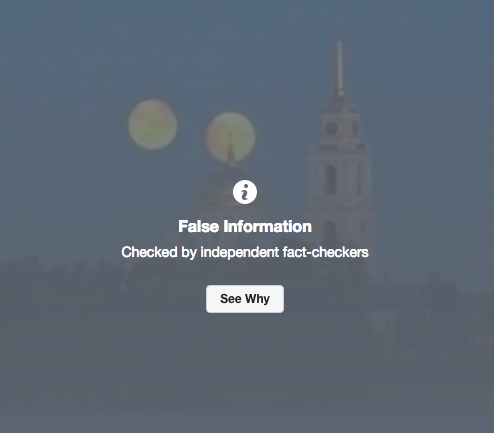
Facebook now works with third-party fact-checkers to try to identify and limit false news and I’m beginning to see more of these notifications, but so far, they’re only managing to catch the tip of the iceberg. It would help a great deal if people would do their own fact checking, but it’s a lot easier to just hit the share button than it is to do the work involved in making sure that something is accurate. The teacher in me always wants to point people toward the truth, but sadly, this sometimes gets me in trouble with those who don’t actually care if what they’re sharing is true as long as it fits their particular bias.

While there are many who are simply naive or gullible and who unintentionally share false information, there are others who are very purposeful about it. They are deliberate, sophisticated in their methods, and very devious. Take this recent post, for example.

117086856_10158958329000016_7096568034737799281_o It looks legit, but it’s not. Notice that it gives sources below the graphs. They’re blurry which makes them difficult to read and they don’t actually link to the sources given, but more grievous is the fact that if a person actually checks those sites, they discover that the numbers on the graphs don’t line up with the figures that they give! Someone has gone to a great deal of effort to create a false graphic that serves their agenda, but doesn’t provide facts.

So, in light of all this, why do I still use Facebook? I use it for the purpose that it was originally created. As frustrating as it can be, it’s still a useful communication tool. The chat feature was absolutely invaluable during the many years that we dealt with the needs and care of my very elderly parents from a distance. It allowed family members scattered across North America to participate in an ongoing discussion about life and death issues and to come to some very important decisions. It also allows me to participate in the day to day lives of my grown children and grandchildren who all live some distance away. I’ve used Facebook to reconnect with some important people from my past and to keep in touch with friends in faraway places like Japan, Mexico, China, and Saipan. As a neuroendocrine cancer patient living in a rural location where I don’t have access to an in-person support group, the Facebook patient groups that I belong to have been excellent sources of information and encouragement. Linking my blog to Facebook also allows it to reach a wider audience than it would otherwise.

So what can we, who still want to use Facebook, but who care about truth, do to ensure that we don’t contribute to the spread of false information? The American Friends Service Committee (AFSC) came up with a simple four step acronym that I think is worth sharing. SCEP: Source, Confirm, Evidence, Pause.

  1. Consider the Source. Is it from an independent news source that is likely to use fact-checkers and editors to verify a writer’s claims or is it from a website with a stated political aim?
  2. Google to Confirm. Is the story being reported by more than one site or author? If you can find it in other credible sources, it has a better chance of being legit.
  3. Assess the Evidence. A solid news story will be supported by strong evidence: verified documents, peer-reviewed research and sound studies, and direct quotes from named, not anonymous, sources.
  4. Pause. Instead of instantly liking or sharing a post that hits home, pause and consider. Is the article likely real? What do I hope will happen if I share it?

Be SCEPtical! It’s Facebook, not Factbook.


The power of the written word

The Bible has a lot to say about how we ought to use our words. The book of Proverbs is full of wise sayings about the power of the tongue.

The one who has knowledge uses words with restraint, and whoever has understanding is even-tempered. Even fools are thought wise if they keep silent, and discerning if they hold their tongues.  Proverbs 17:27-28
The words of the reckless pierce like swords, but the tongue of the wise brings healing.  Proverbs 12:18

feather-pen-vector-546939It was English novelist and playwright Edward Bulwer-Lytton who, in 1839, wrote “The pen is mightier than the sword.”
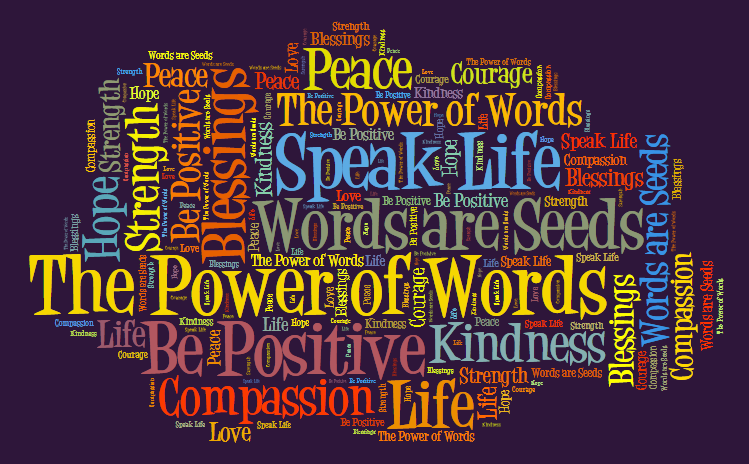
Today, when most of us are holed up at home waiting out the Covid-19 pandemic, the written word is being used more than ever. We FaceTime and we Zoom, but we also use written platforms like Facebook and Twitter to connect with one another.

For some of us, writing is our preferred method of communication. We find it easy, but others may struggle to express themselves clearly. Without the visual and auditory clues that go along with face-to-face communication, misunderstandings can happen very easily. We definitely need to cut one another a bit of slack.

For example, a friend recently responded to something that I said on Facebook with a comment that could easily have been taken in two completely different ways. I had no way of knowing whether it was written in jest or meant to be extremely hurtful. If we had been talking face-to-face, I would have been able to tell based on her body language, facial expression, volume, and/or tone of voice. To tell you the truth, I still don’t know what her actual intent was, but because I know her and I don’t think of her as a mean person, I gave her the benefit of the doubt and assumed that, even if it fell a bit flat, her response was meant to be funny. Had I concluded that she was being nasty and responded in kind, I could have easily destroyed a relationship!

I love a good online conversation where people can express their views, have them heard, and willingly listen to the views of others. Unfortunately, however, what could have been a meaningful dialogue often becomes nothing more than a battle of words. Why is that? What can we do to prevent hurt feelings and misunderstandings? I have a few suggestions. If you have others, please add them to the comment section below.

  1. If you disagree with something that someone else has written, don’t react immediately. Take time to think about it first. Is there any truth in what they’ve written? Did they actually mean what you thought they meant? If you’re not sure, ask for clarification instead of immediately going on the defensive.
  2. Avoid getting sucked into arguments. Sadly, some people are willing to go toe-to-toe online in ways they’d never dream of doing face-to-face.
  3. Understand that your sense of humour isn’t universal and that, without cues like facial expressions and tone of voice, what is intended to be funny might not come across that way.
  4. Don’t comment on someone’s spelling or grammar. Sometimes the English teacher in me wants to take a red pen to the screen, but this is just plain rude! It’s also a tactic that’s often used by commenters who simply want to belittle someone they disagree with.
  5. Edit your responses before you post them. (There’s that English teacher again!) Read over what you’ve written. Does it actually say what you want it to say? Is it clear or could it be open to more than one interpretation?
  6. Distinguish between fact and opinion. Just as we should all know the difference between a news article and an editorial, we need to be clear when we’re the writer. If you’re declaring something to be a fact, be prepared to back it up. If it’s opinion, say so and remember that everyone is entitled to have one even if it’s different from yours. What a boring world it would be if we all agreed on everything!
  7. Remember, posting online is the same as speaking in public. If you don’t want something to come back and bite you, don’t say it online!
  8. Don’t be that person who always has to have the last word.
  9. Don’t drink and tweet! If you’re impaired in any way, whether it be from lack of sleep, a fight with your partner, or one too many drinks, you run the risk of saying something that you’ll regret. Resist the urge and wait until you’re in a better frame of mind.

A new, updated look

Yes, you’re in the right place! I decided awhile ago that it was time to give Following Augustine a new, updated look and I’ve been tinkering with it for awhile to get it just right. Thankfully, WordPress made it easy.

The first and most important step was choosing a new theme which is the overall design. That might sound simple, but WordPress has hundreds, perhaps thousands, to choose from! After looking at quite a few of them, I settled on this one called “Hemingway Rewritten.” Of course, as an English major, that led my mind down a rabbit trail! I knew who Hemingway was, of course, and had read his work many years ago, but what was it about his style that prompted Swedish designer, Anders Norén, to use his name for a blog theme?

Hemingway’s writing style is simple, direct, and unadorned, probably influenced by his early career in journalism. I believe that it was this minimalistic style that inspired Norén to use his name for a blog theme with a clean, uncluttered look; a look that was exactly what I wanted for Following Augustine.

It was very important to me to choose a look that was not only visually appealing, but easy for you to read. I chose a font and a background colour that are meant to be easy on the eye. I refuse to read blogs with white print on black backgrounds. They’re simply too hard on my eyes. I didn’t want a stark white page either, and so I chose a subtle blue.

Have you ever noticed how many major social media platforms use various shades of blue? Facebook, Twitter, LinkedIn, Skype all use blue, a calming, relaxing colour. As a background, it tends to disappear rather than distracting the eye. Blue also represents communication which definitely makes sense for a blog!

And now, I want your opinion. Do you think I was successful in coming up with a simple, attractive, and easy to read format? Do you have any suggestions for improvement? After all, the blog is for you, the reader!

Abracadabra – the Christian and social media

We spent the final week of our recent vacation with over one thousand other people at Camp Harmattan, a Church of the Nazarene camp in the valley of the Little Red Deer River. While there, I attended an afternoon session that continues to resonate with me. The topic was the Christian and social media.

We talked about whether or not we, as Christians, should be using social media and whether this is a topic that the church needs to address. I think the answer to both questions is a resounding YES!

We cannot/should not/dare not hide our heads in the sand and avoid the world around us. The Old Testament tells the story of Queen Esther who, when her people faced extermination by the Babylonians, was told by her cousin, who urged her to speak to her husband on their behalf, “Who knows but that you have come to royal position for such a time as this.” (Esther 4:14 – italics mine) We, too, have been born for such a time as this. Our place in history is not random or some accident of fate. I firmly believe that God intended each one of us to be here on earth at this exact time. In other words, we were meant to be living in the age of social media and if that’s the case, we ought to use it, but we ought to use it well.

The Bible, particularly the book of Proverbs, has much to say about how we communicate. “Reckless words pierce like a sword, but the tongue of the wise brings healing.” (Proverbs 12:18) The same might be said of the keyboard.

Though the origin of the magician’s incantation, abracadabra, is uncertain, it is thought to derive from early Aramaic or Hebrew. The Hebrew word bara means “create”, while dabar means “word” or “speak”. Together they become abracadabara, literally meaning “I create as I speak” or “I speak therefore I create”.

When we use social media, what do our words create? How do they shape the people we interact with? Whether written or spoken, our words have the power to tear down or to build up, to encourage or to destroy.

It isn’t a matter of whether we, as Christians, should use social media, but rather a matter of how. Colossians 5:6 reminds us to “Let your conversation be always full of grace”. Before we post or respond, we need to consider the possible effect of what we write. What will our words create? Will they result in conflict, pain or discouragement? Or will they be a blessing? We also need to keep in mind that the written word, which lacks the non-verbal cues of face to face conversation, such as tone of voice and facial expression, can be more easily misunderstood. What we intend to communicate and what the reader understands may be two very different things.

We should also be very careful about what we repost. Before we do, we need to ask ourselves some very important questions. How reliable is the source? What are its biases and underlying convictions? What is the motivation or purpose behind the post and why do we want to share it? Very often, we should also take the time to do some fact checking to ensure that it’s actually true.

Our session on social media also touched on its addictive nature and some of the negative effects that it can have on our lives. While there’s no official medical recognition of social networking addiction as a disease or disorder, it has become the subject of much discussion and research and some studies seem to indicate that it is as addictive as nicotine. Some suggest that spending excess time on social media networks can even trigger anxiety, depression and ironically, isolation from others. Perhaps social media addiction might simply be defined as spending so much time using Facebook, Twitter and other forms of social networking that it interferes with other aspects of daily life such as careers and relationships.

Extensive use of social media also has the tendency to place a person at the centre of their own universe. As Christians, we definitely want to guard against becoming so caught up in the “selfie” world that we find ourselves constantly wondering or checking to see how we are being admired and followed by those in our social media circles. Instead, we want to use social media to strengthen relationships and connections and to have a positive impact on our world.

Just remember, abracadabra! Our words are powerful!

powerofwords

Having the last word

I love to engage in online discussions, but when they deteriorate into pointless arguments or worse yet, absolute rudeness, I bow out. One of my pet peeves is people who always have to have the last word. Don’t they realize that having the last word isn’t the same as winning?

I have seen great discussions on Facebook and other social media end in hurt feelings and broken friendships and I’ve seen people try so hard to prove how right they are that they end up making themselves look stupid. It’s just not worth it!

As Kenny Rogers sings in his hit song, The Gambler,

You’ve got to know when to hold ’em
Know when to fold ’em
Know when to walk away
And know when to run!

I admit that I like to be right too, but I’m deliberately practicing the discipline of not having to have the last word.

As a Christian, part of my mission is to be Christ-like in what I say and do, so I’ve been looking at His example. Jesus didn’t have to deal with social media, where people often say things that they might not say face-to-face, but the principle is the same. He often said things that were controversial or misunderstood, but when He was confronted, He didn’t engage in long-winded debates. He often spoke the truth and then simply walked away. Even when He stood before Pontius Pilate and his life was on the line, He made no reply to the accusations of the chief priests and the elders. (Matthew 27:12-14)

last word