Choosing the right walking shoes

Screenshot 2024-05-09 at 7.40.11 PMAfter writing about my 150 day walking challenge earlier this week and encouraging you to consider joining me, I thought that this would be a good time for a post about how to choose the right walking shoes. If you’re walking in comfy, but well-worn sneakers, you might want to consider investing in a new pair that are dedicated to walking.

The American Podiatric Medical Association recommends replacing your walking shoes every 600 to 800 miles (approximately 950 to 1300 km). Some experts advise replacing them even more often, so be sure to check yours from time to time. If they’re becoming worn or have lost cushioning, it’s time for a new pair. Brand-new, well-fitting walking shoes might even put a bit more spring in your step and encourage you to walk a little farther.

Because feet come in various shapes and sizes, it’s impossible to recommend a specific style or brand that would suit everyone, but there are some tips that can help you find a pair that are right for you. First of all, shop late in the day. Our feet tend to expand a little throughout the day, so it’s best to try on shoes when they’ve swelled a bit. Also think about what kind of socks you’ll wear on your walks. The thickness of your socks will affect how the shoes fit, so take them shopping with you. If you wear orthotics, be sure to take those too. 

Comfort and fit go hand in hand and are by far the most important factors to consider when choosing the right walking shoes. Choose a shoe that is lightweight and breathable. You want it to fit snuggly at the heel and through to the middle of your foot, but it shouldn’t crowd your toes. The toe box should have enough wiggle room for your toes to splay out a bit, but not too much. Make sure that there’s a finger’s width or about half an inch between the end of your longest toe and the front of the shoe. Don’t hesitate to try on several different brands and styles to find the one that is right for you. 

The insole of a good walking shoe should cushion each step and it should feel like it’s adequately supporting the arch of your foot. Look for a uniform level of cushioning, rather than a higher heel cushion. The outer sole should provide adequate traction. 

Check the shoe for flexibility and stability. Hold it by the heel and bend the toe upward. It should bend at the ball of the foot. Grasp it at the heel and toe, then twist. You should feel moderate resistance. 

Finally, take a walk around the store before you decide to buy to ensure that the shoes you choose fit well and are completely comfortable. The old idea that shoes need to be broken in doesn’t apply to walking shoes. 

Good quality athletic shoes can be expensive, but your feet are worth it. You are worth it! Consider these shoes an investment in your well-being. Then get out there and enjoy walking!  
Always try it on

Logo by SamAt this time of year, as we wait for spring to finally arrive here on the prairie, I grow very weary of my winter wardrobe. As a result, I recently picked up a couple of new-to-me tunics at our local thrift stores to add a bit of variety to my end of season closet. I shared one of them with you last week and today I’m featuring the other one.

IMG_5471

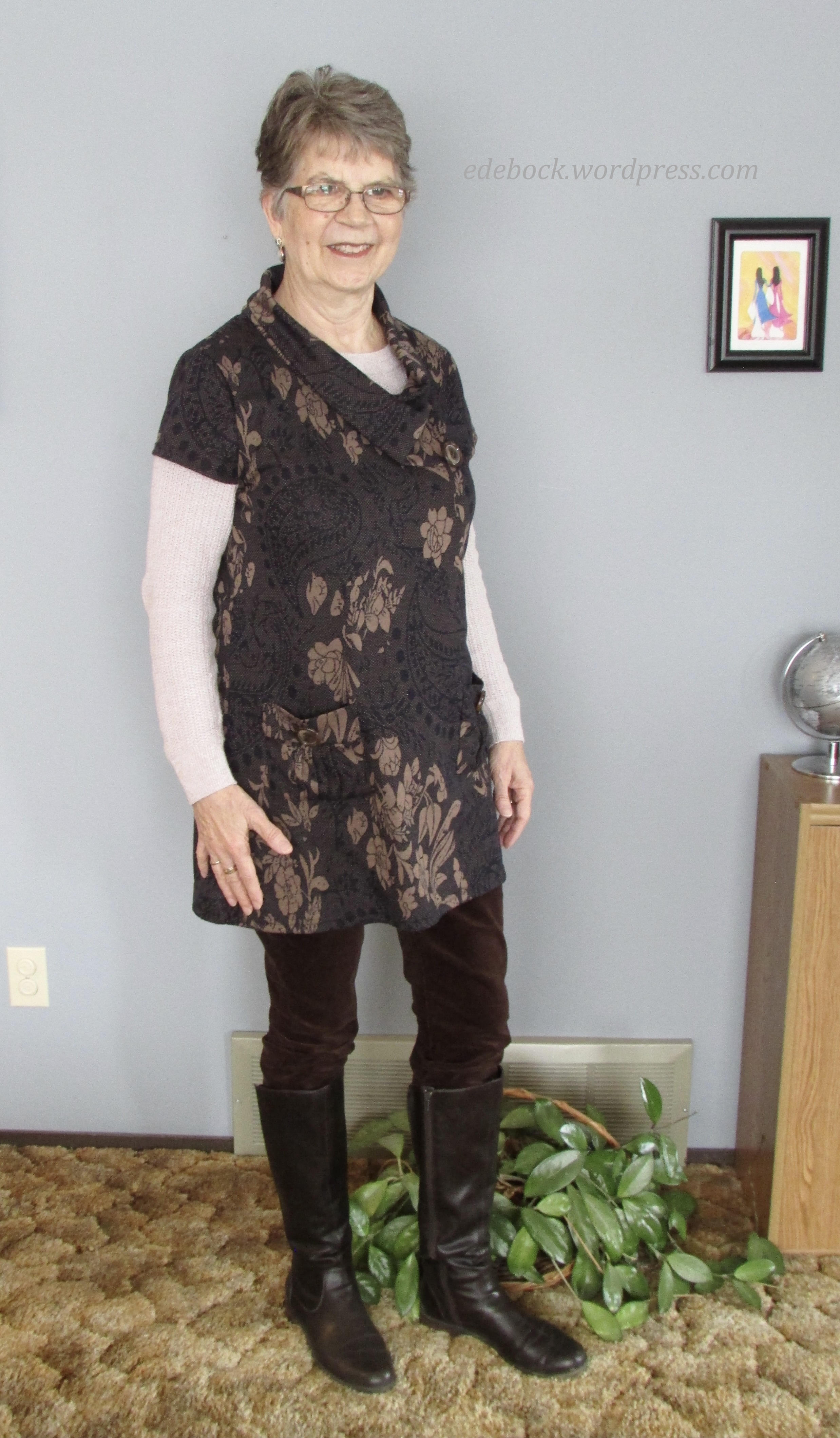
Two of the tips for successful thrift store shopping that I shared with you in this post are “try everything on” and “don’t limit your search to the size you usually wear.” Following my own advice definitely paid off this time. When I checked the label, I was surprised to see that the tunic was an extra large. It didn’t look that big, so knowing that size isn’t consistent from one brand to another, I decided to try it on anyway. I usually wear a medium, sometimes a large, but never XL. Never, until now, that is!

As I headed for the dressing room, I was skeptical about whether or not I’d be bringing this garment home with me, but I knew that at this time of year, I’d want to wear it over something with sleeves. I was pleased to find that, while it fit fairly loosely, it didn’t look too oversized.

IMG_5482

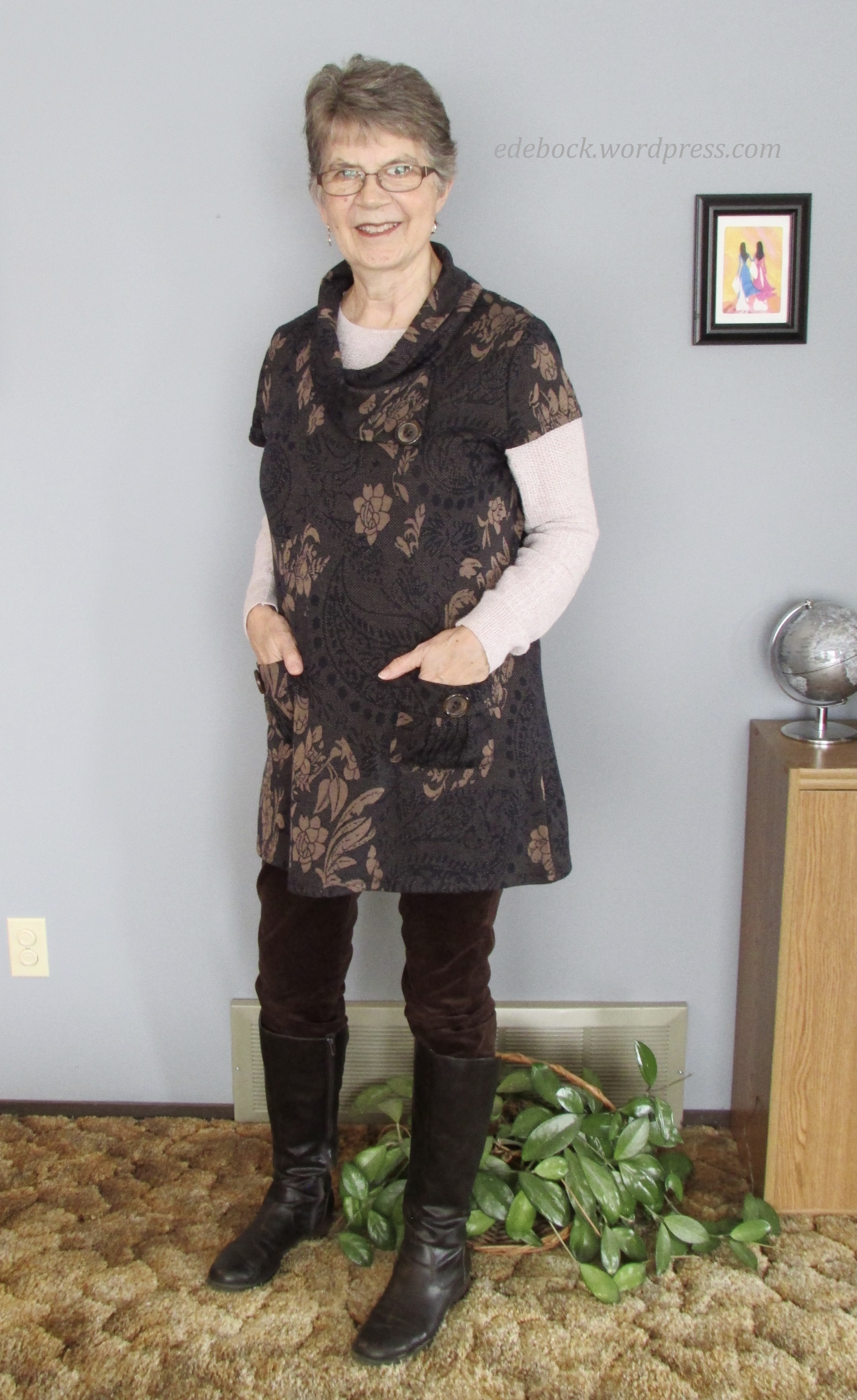
Here I’m wearing the tunic over a lightweight sweater, my dark brown button front skinnies from cabi’s Fall 2022 collection, and my tall brown boots, all pieces that have appeared on the blog before. The pants are the only item that I purchased brand new!

I recently read several comments on a British fashion blog from readers who absolutely hate the colour brown and would never wear it. They all agreed that their loathing of the colour originated in childhood when they had to wear drab brown school uniforms. Thankfully, I didn’t have that experience. In fact, my memory of brown is quite different. Although she often wore brighter colours, brown was my mother’s favourite colour. She would have loved today’s outfit! Isn’t it interesting how early associations affect our fashion choices later in life?

IMG_5476

I’m not sure if this tunic will stay in my wardrobe long term or not, but I’m glad I tried it on and brought it home. For a whopping $2.50, it’s added something new to my late winter/early spring wardrobe and the three large buttons on the cowl collar and the pockets are worth more than that!

What is vanity sizing?

Logo by SamI can remember when I wore size 12 or 14, but now I shop for size 6 or 8. Did I find the secret to successful weight loss? Am I actually that much smaller than I used to be? On the contrary, I now weigh approximately 20 pounds more than I did in my younger years. My drop in clothing size has nothing to do with me getting smaller and everything to do with something called vanity sizing.

Vanity sizing, or size inflation, is the phenomenon of ready-to-wear clothing of a certain size becoming bigger over time. Apparently, putting smaller sizes on larger clothes boosts the self-esteem of customers and encourages them to purchase more. As a result, brands have gradually shifted their metrics to make shoppers feel thinner. So much so, in fact, that a women’s size 12 in 1958 is now a size 6! In 1967, teenage fashion model, Twiggy, wore size 8. Today a girl the size that she was then (bust 31″, waist 23.5″, hips 32.5″) would wear size 00. This is definitely something to keep in mind if you shop for vintage clothing.

New Yorker Vanity Sizing Cartoon

Source: The New Yorker

A recent CBC Marketplace investigation found that the waist sizes of jeans are commonly bigger by an inch or more than what the label advertises. One brand was off by a whopping 6 inches! I can attest to the fact that this is true of men’s jeans as well as women’s. Hubby recently bought a new pair and the waistband is exactly two inches bigger than what the label says.

Another aspect of vanity sizing that is even more confusing is inconsistency between brands. Some deliberately skew their sizes, based on the idea that people might feel better if the tag on the clothing says a size or two smaller than they wear in other brands. Again, it’s all about trying to increase sales.

While customers like vanity sizing because it makes them feel better about themselves and retailers like it because it boosts their sales, it has become a significant problem with the increase in online shopping. Billions of dollars worth of apparel is now purchased online each year and an estimated 40% of that is returned because of sizing issues. That’s a hassle for shoppers, a nightmare for retailers who are stuck covering the cost of “free” returns, and as I wrote about here, it’s estimated that more than 25% of those returns end up in the landfill!

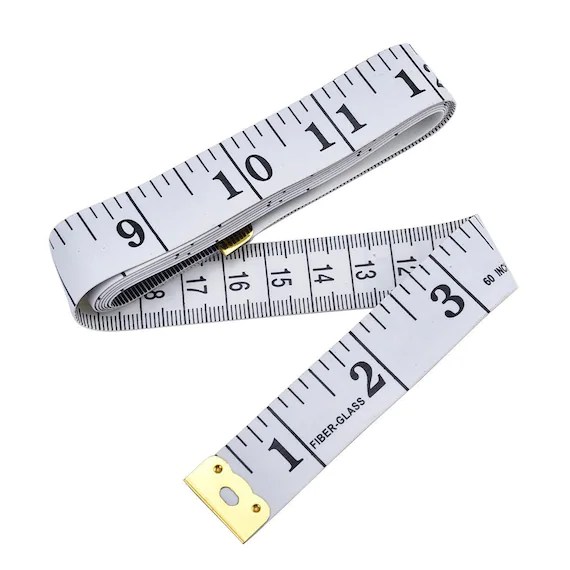
With all of this in mind, how can you avoid the complication that vanity sizing adds to shopping online? Use a measuring tape! Know your bust, waist, and hip measurements and check the brand’s size chart. Though these charts can provide valuable insight into which size to order, they aren’t always completely accurate, so also pay attention to what other customers say about sizing in their reviews. Finally, in case you still end up with something that doesn’t fit, be sure to check the retailer’s return policy before placing your order.

il_570xN.1032033842_cny7

I can’t help wondering how much further vanity sizing can go. I used to laugh at the concept of size 0, but the way things are going perhaps someday we’ll see labels with negative numbers on them!