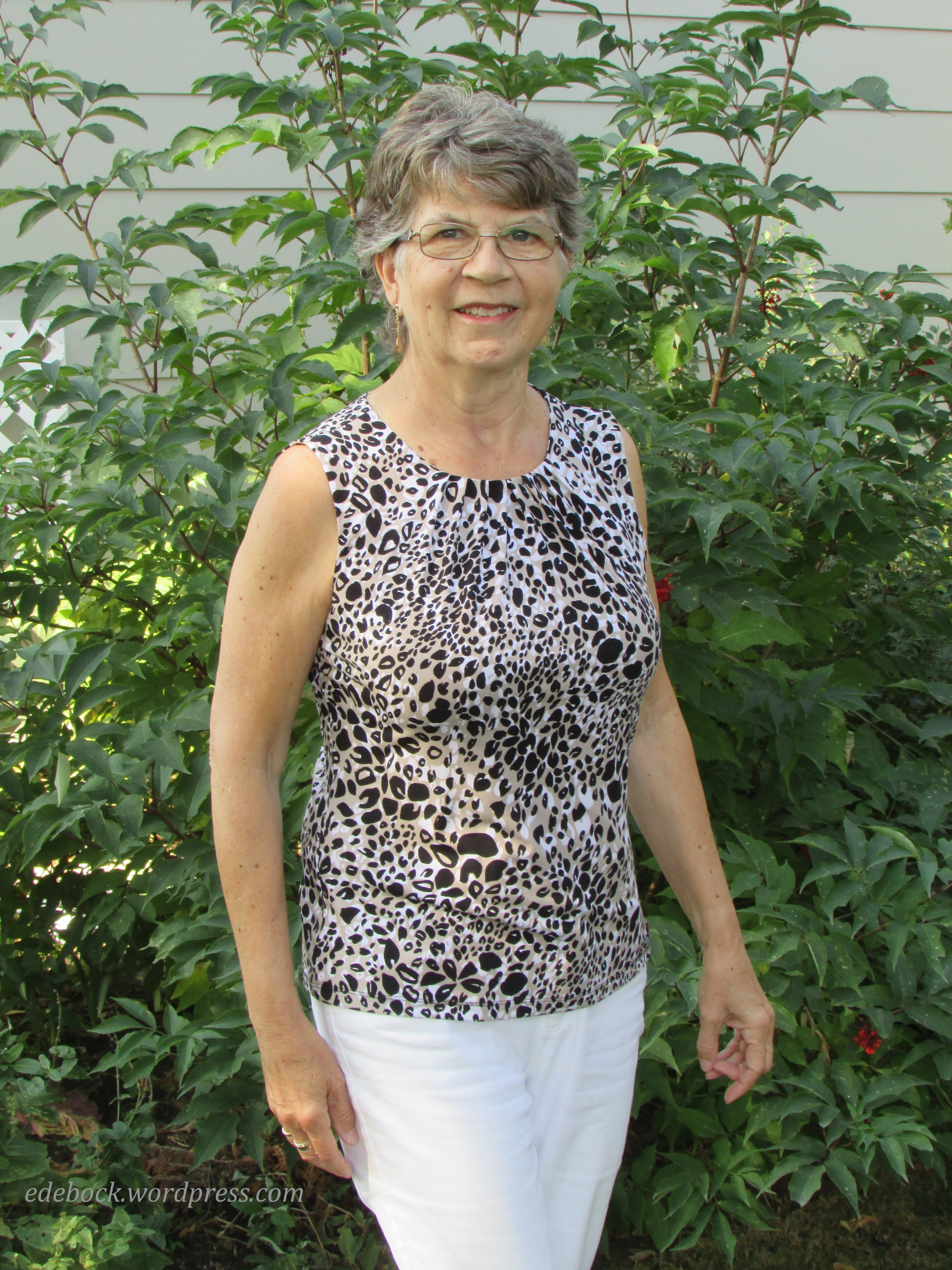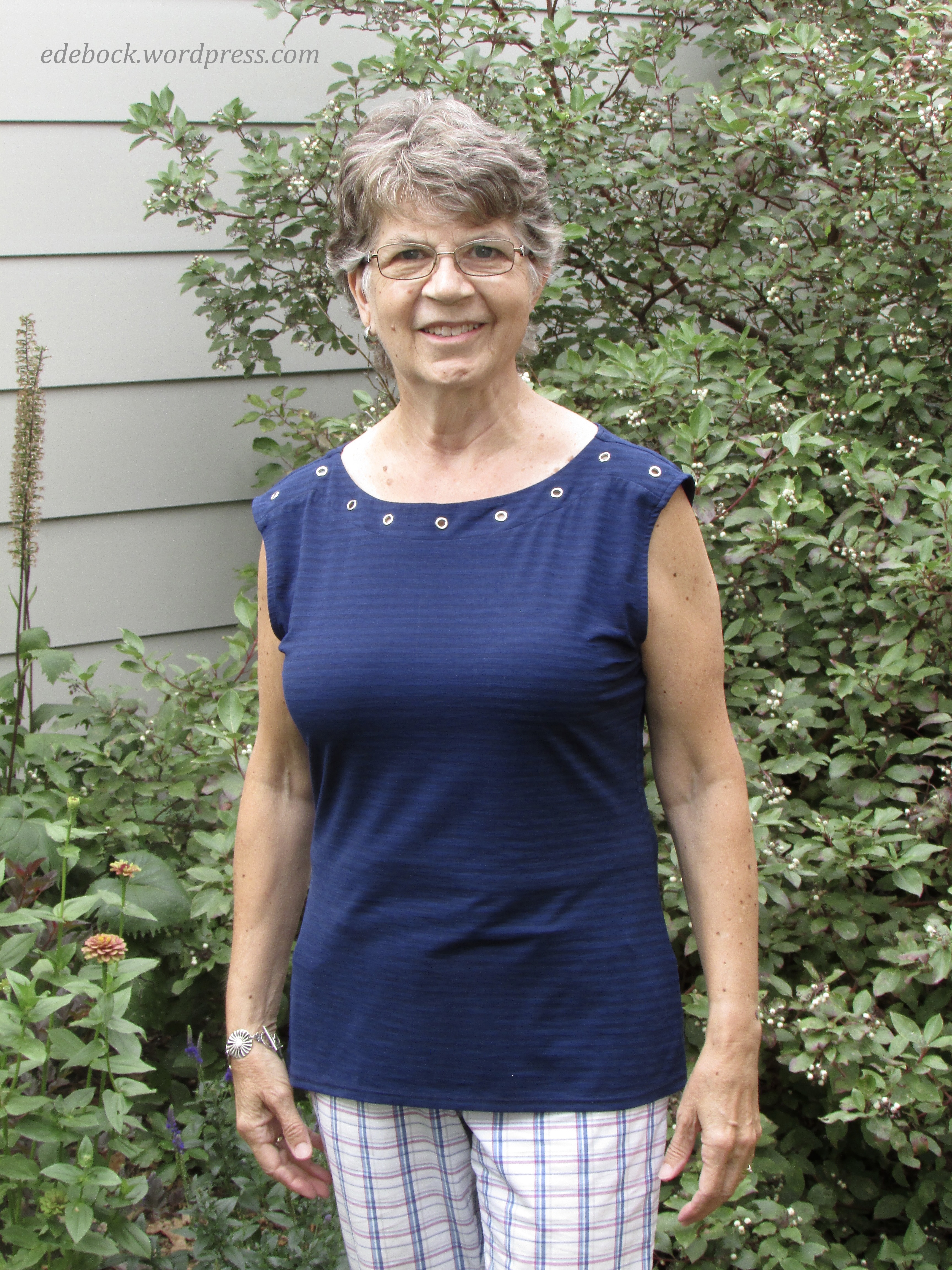
2023 fashion shopping review

Logo by SamAt the beginning of 2018, following the example of one of my favourite bloggers, Sue Burpee of High Heels in the Wilderness, I started keeping a list of all my fashion purchases including clothing, accessories, and footwear. I was interested in finding out more about my spending habits and I wanted to be more intentional about wardrobe development. In addition, I wanted to become a more ethical shopper. I’ve continued this practice every year since and at the end of each year I publish a fashion shopping review analyzing my purchases and setting some goals for the next year.

What surprises me most when I look at this year’s list is how short it is. I only bought 17 items! That’s less than half as many as most other years. Of those, 12 were thrifted and only 5 purchased new. I spent a total of $395.50 (CAD), again less than half what I’ve spent most other years. Research shows that some women spend that much every month!

So, what did I get for less than $400?

  • 2 pairs of pants
  • 7 tops
  • 1 vintage jacket
  • 1 vest
  • 1 scarf
  • 1 swimsuit (which hasn’t actually been worn yet, though I hope to remedy that soon)
  • 1 swimsuit cover up (also not worn yet)
  • 1 pair of earrings
  • 1 necklace
  • 1 pair of sandals

The last item on that list was by far the most expensive. At $175 my Ecco walking sandals were worth every cent. I love thrift store shopping, but good quality footwear is something that I’m willing to spend a significant amount of money on. I consider it an investment in healthy feet.

IMG_5497

Trying to shop ethically is complicated and how successful I’ve been is always very difficult to assess. One of my fashion shopping goals in recent years has been to avoid buying items, especially new ones, that were made in China. I loved living and teaching there, but these days Canada-China relations are chilly at best. Conditions for many factory workers in that country are abhorrent and human rights are being increasingly eroded. It’s a personal choice, but I prefer not to support China if I can avoid it. One of the items that I bought new in 2023 and several of the second-hand ones were made in China and others were made in Vietnam and Cambodia. It’s virtually impossible to find out whether they were made in sweatshops where workers are exploited and forced to work in unsafe conditions or manufactured in socially and environmentally responsible factories. Unfortunately, since the vast majority of fashion manufacturing takes place overseas, those of us who live in North America have little choice but to buy clothing made in these countries.

Until recently, thrift store shopping was lauded as being ethical and sustainable, but now that’s a topic that’s up for debate. I still feel that it’s often a better option than buying new, but I plan on writing a post about this early in the new year, so I won’t go into it here.

Having done this exercise for the past six years has definitely made a difference to how I shop. I’ve become much more intentional, making fewer impulse buys and limiting them to things that I love and pieces that go well with what I already own. My goal for the coming year will simply be to continue in this vein. Some new blue jeans will probably be on my shopping list as a couple of pairs of old favourites are starting to show their age. I’d like to try a pair of wide-legged ones while they’re in style. I also need some new capri pants for summer as most of mine are quite worn. The worst ones didn’t make the cut when I did my seasonal closet switch in the fall.

And now, in addition to the sandals shown above, here are a few of my favourite fashion purchases from the past year. They’ve all appeared on the blog before.

IMG_6301

When winter rolled around again, I was very happy to start wearing the dark brown button fly cords from cabi again. Purchased in a season end sale last January, they’re a little dressier than my jeans.
IMG_5491

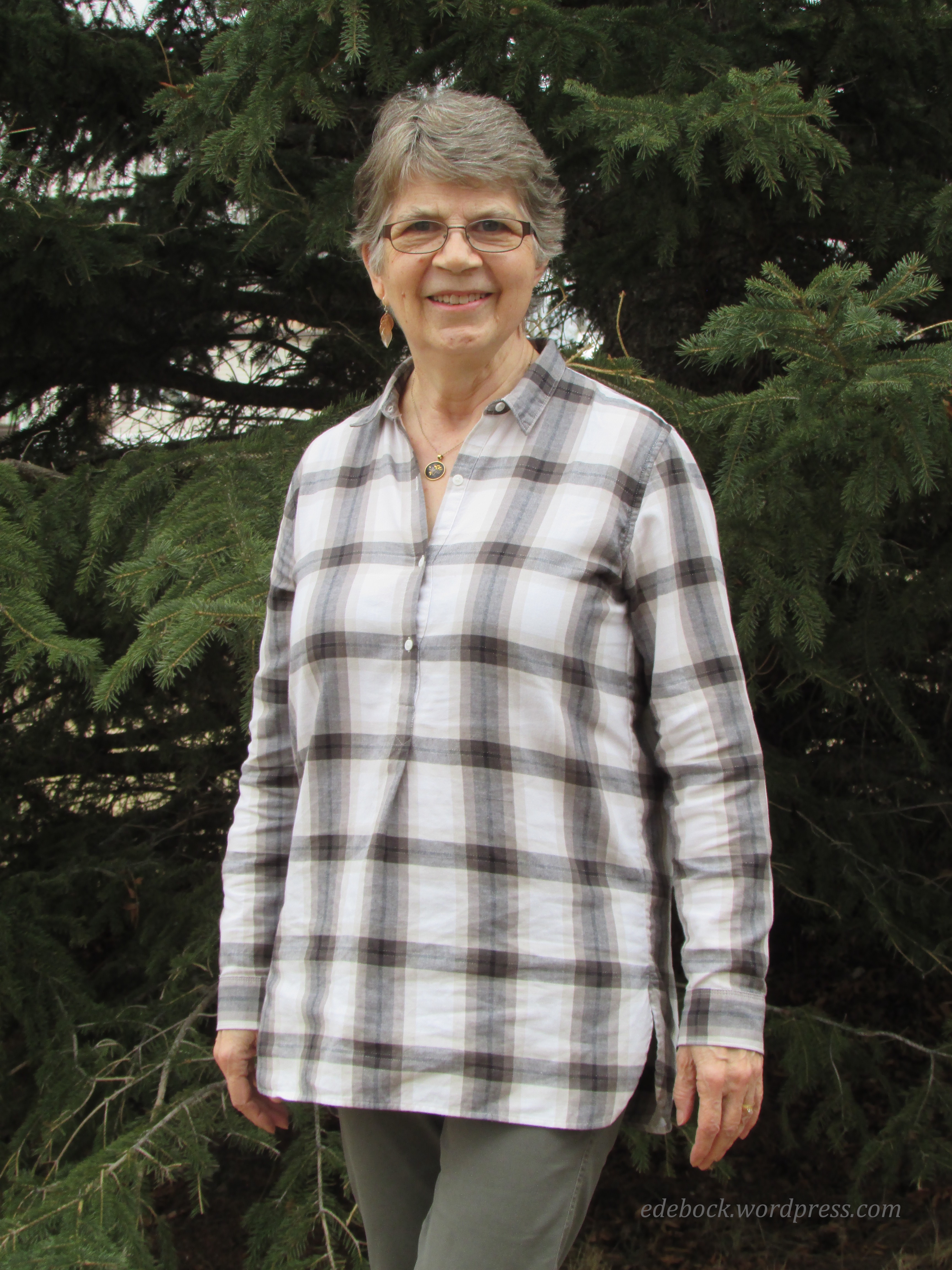
The neutral plaid shirt, originally from Gap, was an excellent second-hand purchase that only cost me $2! 

IMG_5738 2

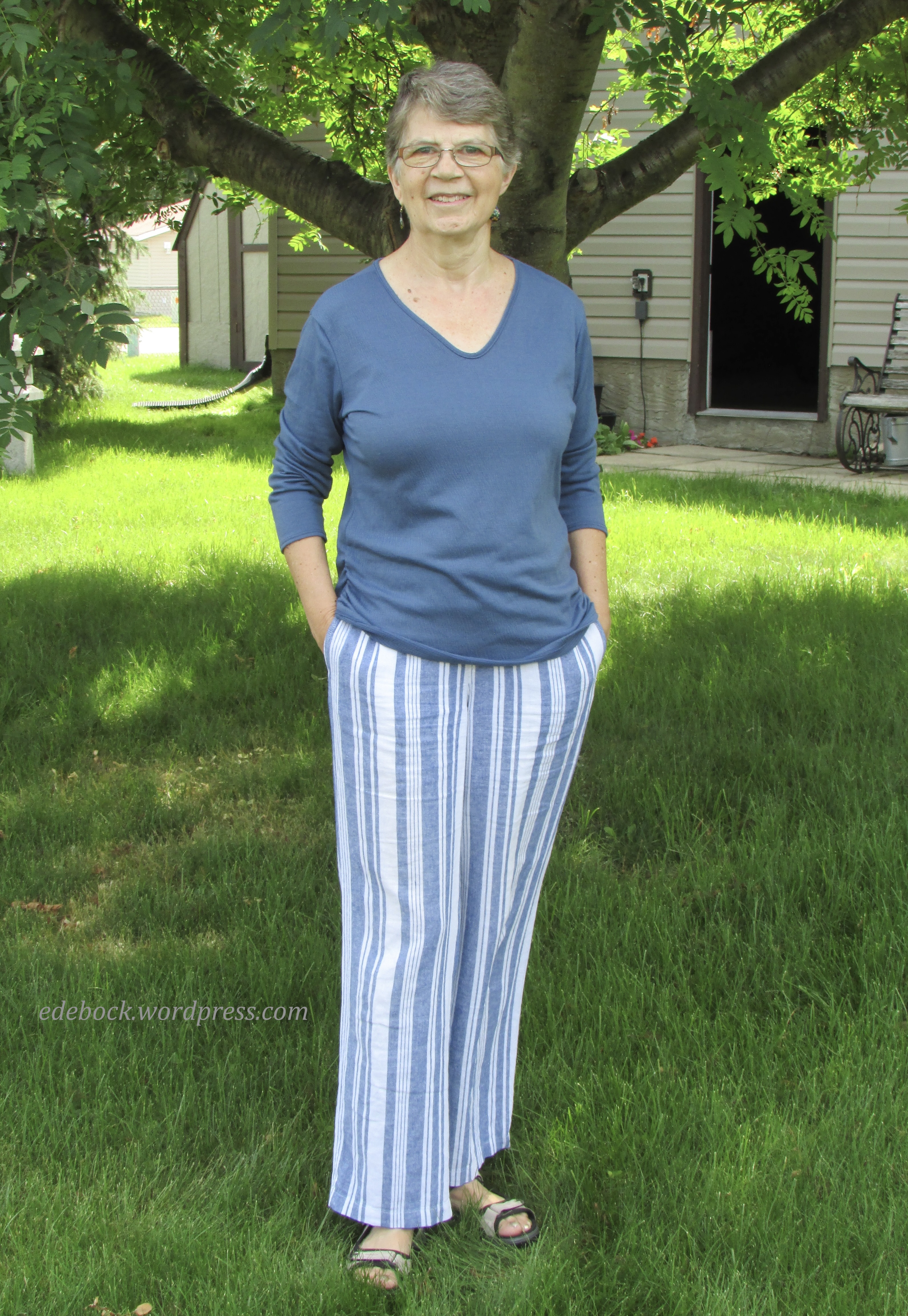
As comfortable as pjs, these striped linen blend pants were a great addition to my summer wardrobe. They were also thrifted.  

IMG_6095 2

Finally, I was very fortunate to find this sleeveless top from cabi’s Fall 2018 Collection in our local thrift store in September. I don’t know where it had been hiding for the past five years, but it looked as if it had never been worn!

And now, with with just two days left in 2023, I want to take a moment to wish you and yours a very Happy New Year!

Uniqlo comes to Southgate

Logo by SamI fell in love with Uniqlo on our first visit to Japan in 2005. The popular Japanese fashion retailer is known for innovative yet functional apparel as well as high-quality, reasonably priced, easy-to-wear basics for men, women, and children. When we lived in Japan in 2008-2009, it was a short bicycle ride from our apartment to the closest Uniqlo store and later, in 2013, when we spent a semester in Dalian, China we were delighted to find Uniqlo a short bus ride from home!

From one store in Hiroshima in 1984, the chain has spread across Asia and around the world. The first store in Canada opened in Toronto’s Eaton Centre in September 2016, but that’s still a very long way from my home in Alberta! In October of the following year, a Uniqlo store opened in Vancouver just a few kilometres from where my father was living at the time. Every visit to that city included a stop at Uniqlo! Then, in September 2019, Uniqlo finally came to Alberta! A week ago today, Edmonton’s second Uniqlo store opened in Southgate Mall and we were there!

IMG_6256

The chain has been very strategic in choosing new locations and if the number of people crowding the aisles last Friday morning was any indication, they’ve made another good choice.

Like the more than 2400 stores worldwide, Uniqlo’s newest store will carry business attire, leisurewear, intimate apparel, and some accessories. With winter’s sudden arrival in our part of the world, customers might be particularly interested in the brand’s HEATTECH line made of innovative fabric that absorbs body heat and stores it in air pockets deep within the fibres to keep the wearer warm. For additional winter comfort, the brand also offers cashmere sweaters, extra fine merino garments, fleece jackets, and a variety of ultra light down outerwear all suitable for our cold climate.

My favourite Uniqlo purchase has been the Ultra Light Down Vest which I’ve had for several years. The 2023 version of this Uniqlo staple is slightly shorter and boxier than the one that I have, but otherwise the same.

IMG_6245

Last week, I left the store with just one new item, the HEATTECH Lined Padded Scarf a cozy neck warmer that folds into it’s own little pocket for easy carrying. For someone who feels the cold as I do, I know that it’s going to be another favourite!

IMG_6258

PLEASE NOTE: This is not a sponsored post. I am not a brand ambassador for Uniqlo (although I probably wouldn’t say no if they asked!) I simply like the brand and want to share it with you. 

Styling a vintage tapestry jacket

Screenshot 2023-08-24 at 5.01.09 PMI’m never ready for summer to end, but fall is definitely in the air! One thing that always makes the seasonal transition easier to bear is looking forward to wearing some of my fall and winter favourites that have been in storage for the past few months. Having something new (or new to me) to wear also adds excitement. After all, I’m sure we all remember the feeling of having something new to wear on the first day of school and, since I spent my entire career in the classroom, I had a lot of those first days!

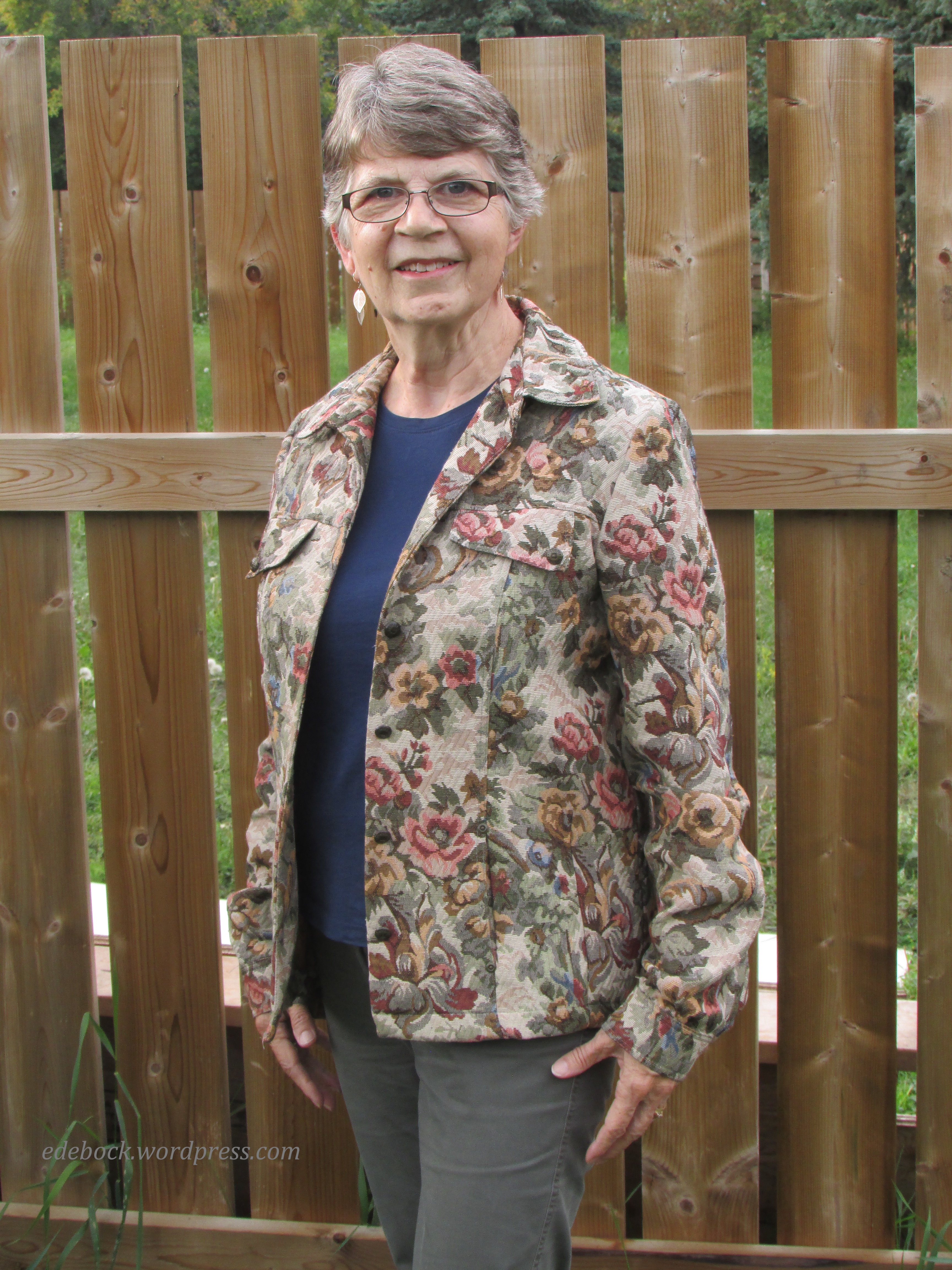
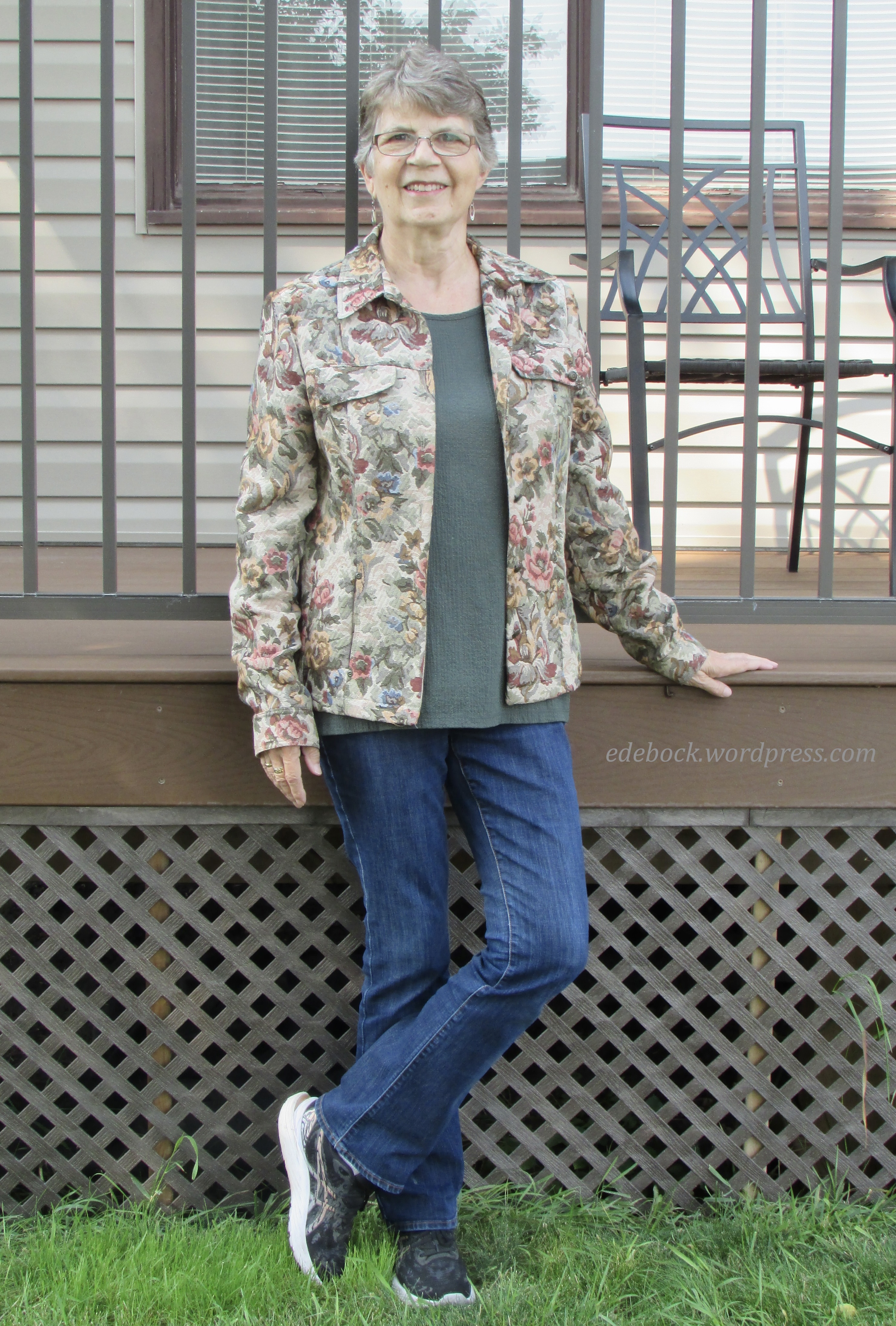
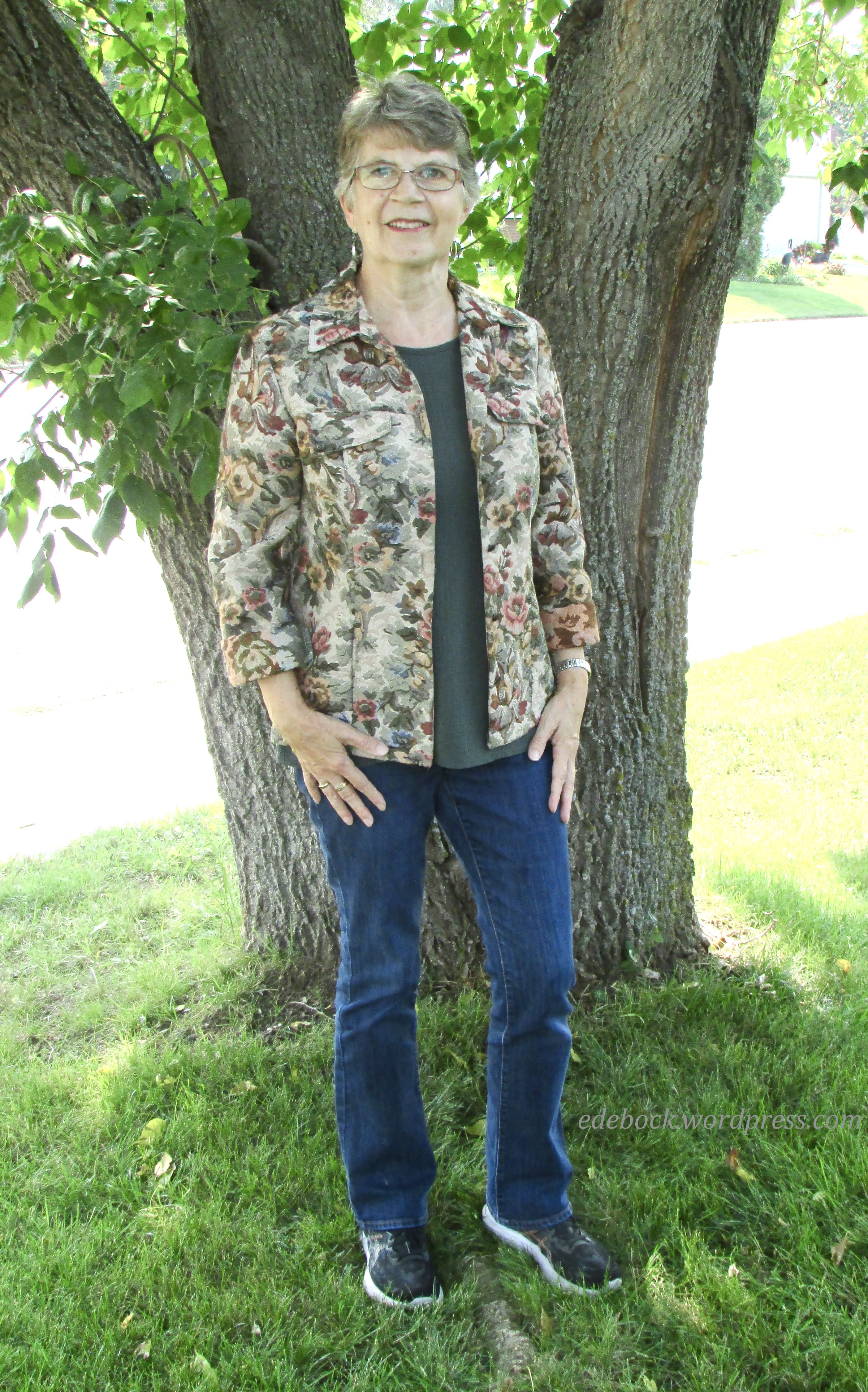
Today I’m going to share a new for fall item that has been hanging in my closet since an early summer trip to a thrift store with my daughter. I haven’t actually worn it anywhere yet, but with the weather changing, I pulled it out earlier this week and started shopping my closet for ways to wear it.

IMG_5976

If you’re old enough, you probably remember the tapestry vests and jackets that were popular back in the 90s. I had a couple of the vests and now that I see vests coming back into vogue, I kind of wish that I’d kept them, but I never had a tapestry jacket.

Who cares that I’m 30 years late to the party; I love it and I’m very much looking forward to wearing it this fall! Clothing and accessories are considered vintage once they’re at least 20 years old, and in 2023 it seems that vintage fashion is gaining in popularity everywhere. Vintage is a great way to express individuality and it’s so much better for the planet than buying new. Cost can vary a lot. Prices for jackets similar to mine range from $30 CAD to over $160 on Etsy. I was fortunate to find mine in a second-hand store for $14.50. 

The key to wearing vintage and not looking like you’re wearing a costume is to add one vintage piece to an otherwise contemporary outfit as I’ve done in today’s photos. Another idea is to look for vintage pieces in classic styles. My vintage jacket in a different fabric would fit right in with today’s looks.

IMG_5993

So, how did I put today’s looks together. Since the jacket is a multi-coloured, stand-out piece, I paired it with basic solid-colour pieces. In the first photo above, I’m wearing it with a navy Uniqlo t-shirt and dark olive chino’s from Mark’s. Both pieces are several years old. Immediately above, I’ve switched out the chinos for a favourite pair of dark wash jeans from Old Navy, also several years old. Below, I’m wearing the same jeans with an olive green top that I bought second-hand about a year ago. 

IMG_6015

There are many shades of pink, rust, green, brown, beige, peach, grey, and even a few bits of blue in the tapestry, so it would be easy to wear this jacket with many other colours. I can also give it a modern twist by rolling the sleeves.

IMG_6019

Wide-leg pants

Logo by SamWhen we were visiting last weekend, our daughter had some things to drop off at a thrift store. Of course, that also meant stopping to shop! After all, she is her mother’s daughter and she knows the value and fun of second-hand shopping.

Wide-leg pants, one of last year’s biggest trends, are still very much in style this year. I’ve tried on several pairs, but until last Saturday I hadn’t found any that I really liked. Then I spotted these ones!

IMG_5738 2

As my daughter pointed out, the vertical stripes give the pants an elongated, slimming look which is likely what makes them more attractive to me than a solid colour might have been. Made of a soft linen/rayon blend, they look like linen, but drape like rayon. They’re as comfortable as a pair of pyjama pants and have a casual coastal grandmother vibe, another trend from last year that hasn’t disappeared yet and isn’t likely to any time soon.

IMG_5746

For me, an added bonus is the fact that these pants have no metal anywhere. That means that I can wear them for my MRI and CT scans today instead of changing into hideous hospital pyjamas!

Another second-hand find

Logo by SamWhen our daughter and her three children were here for a visit last week, we did what we usually do when she’s here. We checked out the two local thrift stores. I don’t know who enjoys these outings more, Mom, Gram, or the almost 13-year-old granddaughter! She was very happy to find a colourful sweatshirt and a great pair of shoes.

I came home with three tops including the one that I’m showing you today.

IMG_5491

The comfortable cotton shirt from Gap is perfect for this shoulder season when winter finally seems to be on the way out, but days are still quite cool. I love the warm neutral colours and the slightly oversized fit. Though you probably can’t see it in the photos, tiny threads of metallic gold run through the darkest bands elevating the casual look without being overly fancy.

IMG_5490

Though the shirt would go just as well with jeans or leggings, I’m wearing it with a pair of dark olive chinos that have been in my spring/summer wardrobe for the past three years. I haven’t actually done my seasonal closet switch yet, but I did pull this pair out of storage as they’re a good transitional piece for this in-between time of year.

So why does our family enjoy second-hand shopping so much? For me, in addition to the fact that it’s a bit like going on a treasure hunt, there are three very distinct advantages.

  1.  Location. I live in a very small rural community. With the exception of the two thrift stores, the closest place to shop for clothing is an hour away. The thrift stores are local and support our small communities. Both are run by volunteers and the proceeds go to local churches and organizations.
  2. Price. Similar shirts to the one that I’m featuring today sell on the Gap website for about $85, but I paid $2! I can afford to pay full price and buy new, but why would I when I can find quality clothes for so much less?
  3. Sustainability. The environmental impact of the clothing industry is monumental. Fashion is responsible for approximately 10% of human-caused greenhouse gas emissions and 20% of global wastewater. It uses more energy than the aviation and shipping sectors combined. Shopping second-hand helps protect the environment and reduces the need to use natural resources to make new clothes. Again, what’s not to like about that?

IMG_5493

Always try it on

Logo by SamAt this time of year, as we wait for spring to finally arrive here on the prairie, I grow very weary of my winter wardrobe. As a result, I recently picked up a couple of new-to-me tunics at our local thrift stores to add a bit of variety to my end of season closet. I shared one of them with you last week and today I’m featuring the other one.

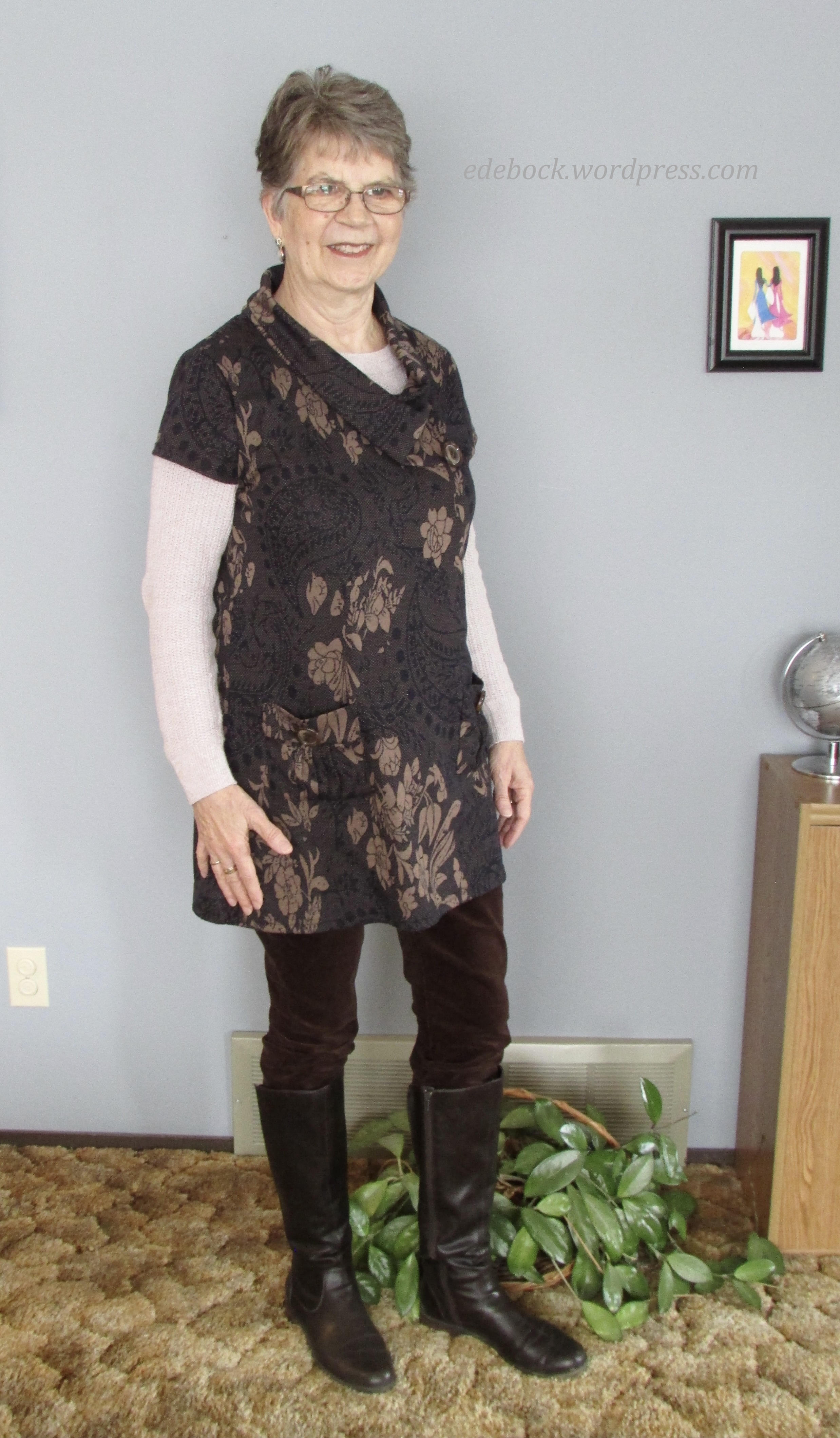
IMG_5471

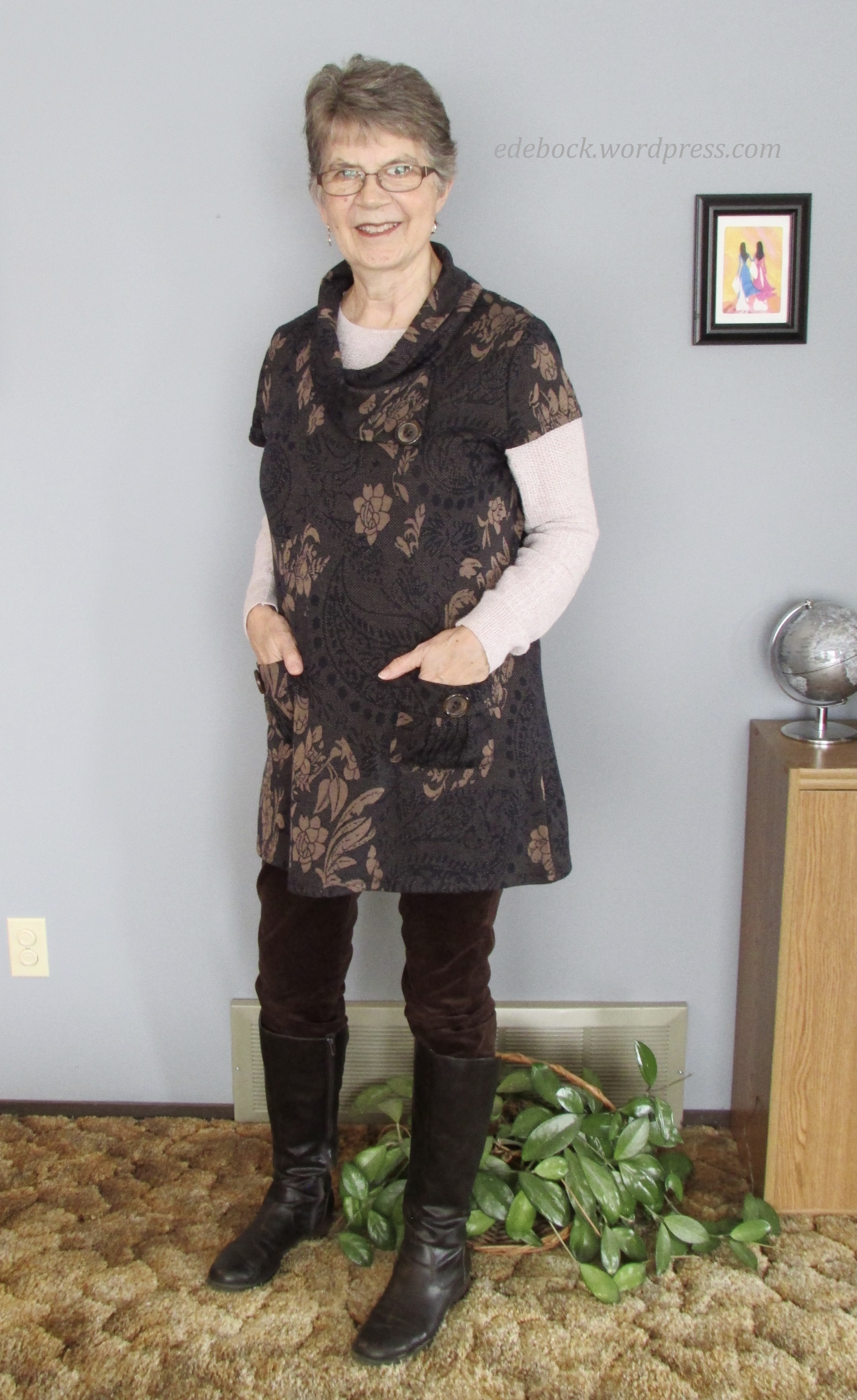
Two of the tips for successful thrift store shopping that I shared with you in this post are “try everything on” and “don’t limit your search to the size you usually wear.” Following my own advice definitely paid off this time. When I checked the label, I was surprised to see that the tunic was an extra large. It didn’t look that big, so knowing that size isn’t consistent from one brand to another, I decided to try it on anyway. I usually wear a medium, sometimes a large, but never XL. Never, until now, that is!

As I headed for the dressing room, I was skeptical about whether or not I’d be bringing this garment home with me, but I knew that at this time of year, I’d want to wear it over something with sleeves. I was pleased to find that, while it fit fairly loosely, it didn’t look too oversized.

IMG_5482

Here I’m wearing the tunic over a lightweight sweater, my dark brown button front skinnies from cabi’s Fall 2022 collection, and my tall brown boots, all pieces that have appeared on the blog before. The pants are the only item that I purchased brand new!

I recently read several comments on a British fashion blog from readers who absolutely hate the colour brown and would never wear it. They all agreed that their loathing of the colour originated in childhood when they had to wear drab brown school uniforms. Thankfully, I didn’t have that experience. In fact, my memory of brown is quite different. Although she often wore brighter colours, brown was my mother’s favourite colour. She would have loved today’s outfit! Isn’t it interesting how early associations affect our fashion choices later in life?

IMG_5476

I’m not sure if this tunic will stay in my wardrobe long term or not, but I’m glad I tried it on and brought it home. For a whopping $2.50, it’s added something new to my late winter/early spring wardrobe and the three large buttons on the cowl collar and the pockets are worth more than that!

Make your closet more eco-friendly

Tips for creating and maintaining a sustainable wardrobe

Logo by SamTo begin with, what is a sustainable wardrobe? In a nutshell, it’s one that reduces the impact that your clothes have on the planet. Adopting sustainable practices improves the quality of our lives, protects the environment, and preserves natural resources for future generations. So where do we start?

I’d recommend doing some research and trying to find sustainable and ethical clothing brands and purchasing only those, but I know how challenging it can be to find accurate information. Choosing sustainable fabrics is also easier said than done, so what’s an ordinary person to do? Here are some simple affordable steps that we can all take to dress more sustainably:

5303cf89c82d3a46d85205a6f0dc1c86

Buy less

The most sustainable anything is the one you already own. Instead of shopping, look for new ways to wear what’s already hanging in your closet. 

Quality over quantity

Instead of chasing trends and buying numerous pieces of poor quality clothing every season, avoid fast fashion altogether and invest in a few good quality pieces that will last. There’s no question that buying higher quality clothes will cost more initially, but they’ll outlast cheaper, less eco-friendly options, greatly reducing the cost per wear

The 30 wears test

I was shocked to read on the Wear Me 30 Times website that the average woman keeps a piece of clothing in her wardrobe for only 5 weeks! In my opinion, that’s inexcusable! Wear Me 30 Times is a slow-fashion initiative focused on supporting conscious consumption and increasing awareness of the problem of waste in the fashion industry. The principle is very simple. Before purchasing something, if you can honestly say that you’ll wear it a minimum 30 times (and hopefully more often), then go ahead and buy it. There are exceptions, of course. The dress you buy to wear to your son’s wedding or your 40th anniversary celebration might not pass the 30 wears test and that’s okay, but even on those occasions try to invest in something with longevity that you’ll be able to wear again. 

Shop second-hand

If you’ve been following my blog for very long, you know that I love thrift store shopping! Not only is it a great way to welcome sustainability into your wardrobe, but it’s fun. It’s like going on a treasure hunt, never knowing what you’ll find. If you’re new to this, you can find 18 tips for successful second-hand shopping here

Look for recycled fabric

Check labels. You may be surprised to find clothing or accessories made from plastic bottles or sweaters made of pre-used wool. Some brands are even making vegan leather out of pineapple rinds and apple peels!

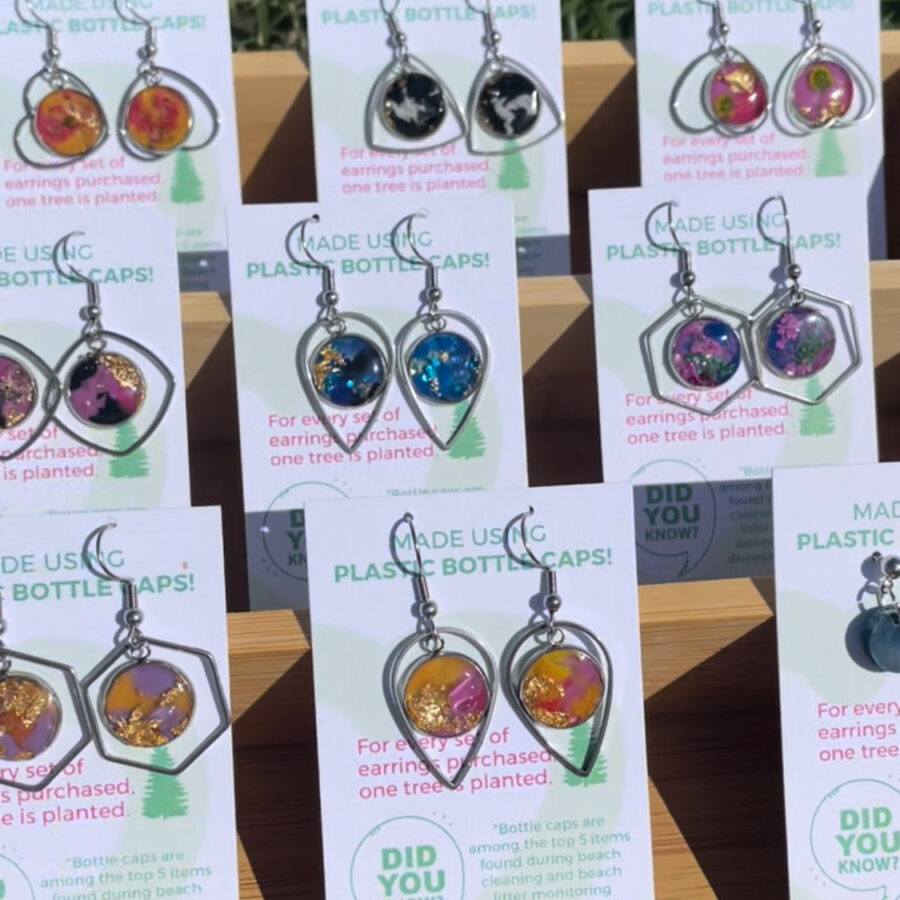
I have to give a shout-out here to Karyn, one of my former students and founder of Repurposed Plastic. Earrings from plastic bottle caps! Brilliant!

IMG_8665-900x900

Follow good laundry practices

First and foremost in this category, as mentioned in last week’s post, don’t wash clothes that aren’t dirty! With the exception of socks, underwear and workout wear, you should be able to wear an item at least three times before putting it in the laundry. Not only does washing less often save water and electricity, but it also helps your clothes last longer. Make your laundry routine even more sustainable by using eco-friendly laundry products. Wash in cold water, don’t overfill the machine, and when possible, air dry your clothes. 

Mend and repair

Prolong the life of your quality clothing by learning how to mend. It’s not as difficult as it might sound and there are lots of online articles and videos available to help. If the job is beyond your skill level, consider finding a tailor who can do it for you. Most dry cleaners also offer mending services. Taking shoes and boots to a repair shop for resoling is a cost-effective way to prolong their life while keeping perfectly good uppers out of the landfill.

Do you have any tips to add? Have you found any sustainable clothing brands that you can recommend? 

Happy Saint Patricks Day Background.

2022 fashion shopping review

Logo by SamOnce again, I kept a list of all the clothing, footwear, and accessories that I bought over the past year so that I could analyze my shopping habits and establish some goals for next year. I started doing this a few years ago because I wanted to be more intentional about wardrobe development and because I wanted to focus on becoming a more ethical shopper. I think it’s helped. There are definitely a few impulse buys on this year’s list, but the majority were planned purchases or items that filled specific needs.

Let’s begin by looking at a few stats.

  • I bought a total of 43 items
    • 31 garments
    • 9 accessories
    • 3 pairs of footwear
  • 21 items were thrifted and 22 bought new
  • I paid full price for 14 items
  • I spent a total of $819.87 CAD or an average of $68.32 a month
  • The most expensive item that I purchased was a purse that I paid full price for ($79.99)

This analysis alone was a good exercise for me as I discovered that I bought 15 more items and spent $237.49 more than I did the previous year! Considering the fact that it’s estimated that most North American women purchase an average of approximately 70 items of clothing annually spending somewhere between $1800 and $4800, I think I’d still qualify as a frugal fashionista, but why such a significant increase in purchases and spending since last year? With pandemic restrictions lifted, I spent more time shopping, but the biggest reason is that this was a wardrobe basics rebuilding year.

In addition to a 6 pack of underwear (I counted that as one purchase), I bought 2 pairs of pyjama pants, 1 pyjama top, and 6 bras. The bras alone cost a total of $295.60, more than one-third of this year’s fashion spending. I didn’t actually need all 6 of them, but I absolutely hate bra shopping. When, after a great deal of frustration, I finally found two styles that fit beautifully, I bought extras and put two of them away for the future.

When it comes to ethical shopping, I definitely slipped up in 2022. One of my fashion shopping goals in recent years has been to avoid buying items that were made in China. I loved my time living and teaching there in 2013, but I know that the conditions for many factory workers in that country are abhorrent and that human rights are being increasingly eroded. I also consider China a threat to Canada, so I see these as good reasons to avoid purchasing items made in that country. I’m not proud of the fact that I failed in this area this year. Almost 25% of my fashion purchases were produced in China. 😦 My only consolation is the fact that the half of those items were thrifted which is, at least, an ethical way to shop.

Another of my goals for 2022 was to add more colour to my wardrobe. While I did try a couple of different colours that were new to me, I still found myself gravitating to my favourite blues and warm neutrals and I’ve decided that I’m okay with that.

What was the most surprising thing about my fashion shopping this year? I DIDN’T BUY ANY SHOES! None! Not a single pair! My three footwear purchases were tall black boots and sandals, both thrifted, as well as a pair of slippers that I use for travel. My shoe purchases have been far fewer and much more intentional since Payless ShoeSource closed all their North American stores in 2019. I seldom passed one of those stores without at least going in to browse and I often ended up buying something.

My goals for 2023 are simple.

  • I will continue to be intentional about my purchases, limiting impulse buys to a few items that I love and that will go well with what I already own.
  • I’ll continue to experiment with new ways to wear what I already have.
  • I’ll buy fewer new items that were made in China.
  • I’ll continue tracking my purchases.
  • As long as I don’t run out of ideas, I’ll continue writing a Fashion Friday post each week.
  • And I might even buy a pair of shoes! 😂

Now for a few of my favourite fashion purchases of 2022. They’ve all appeared on the blog before.

IMG_4827

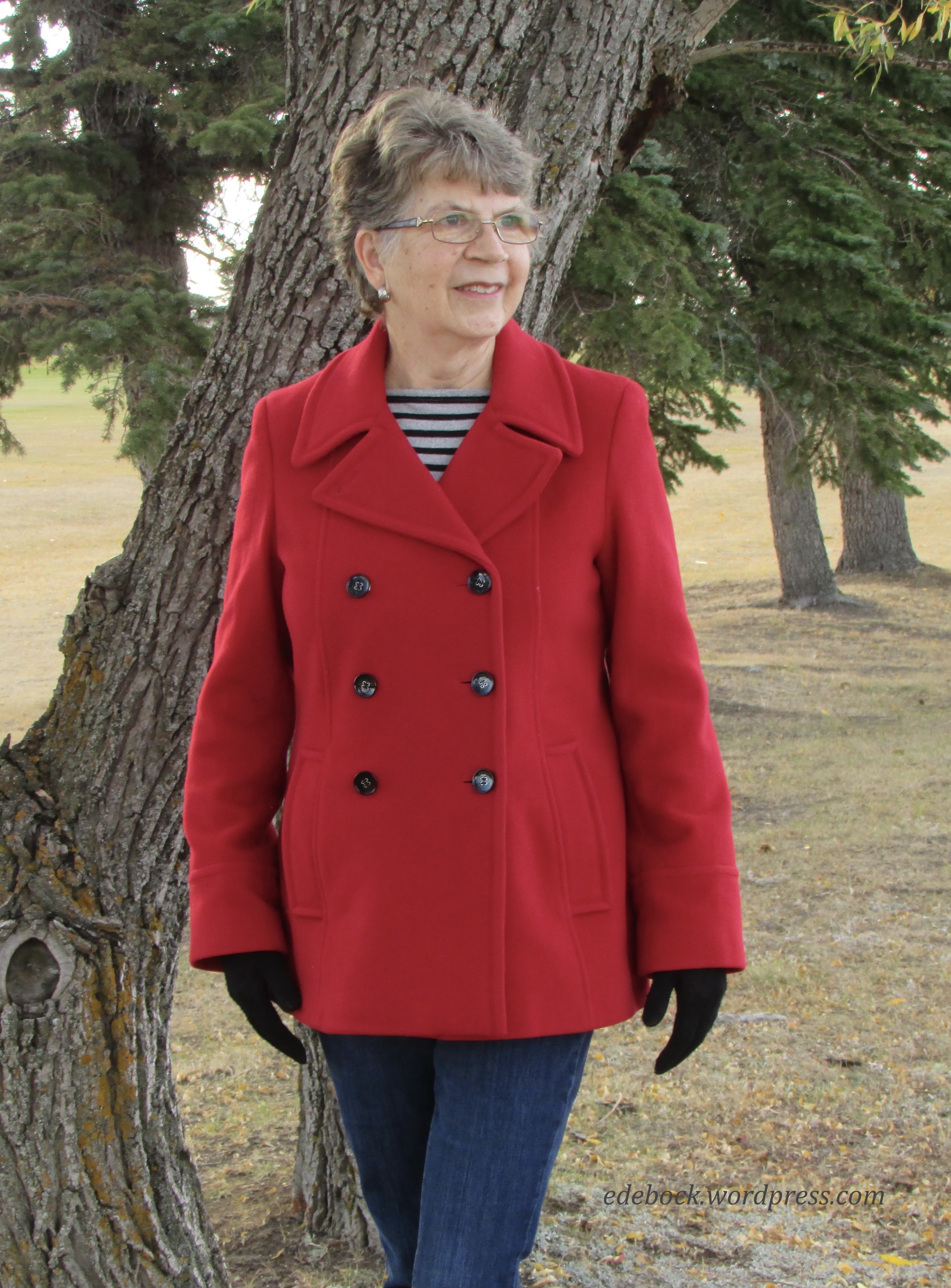
The red Calvin Klein jacket that I bought for $7 at a local thrift store in October is a hands down winner!

IMG_4440

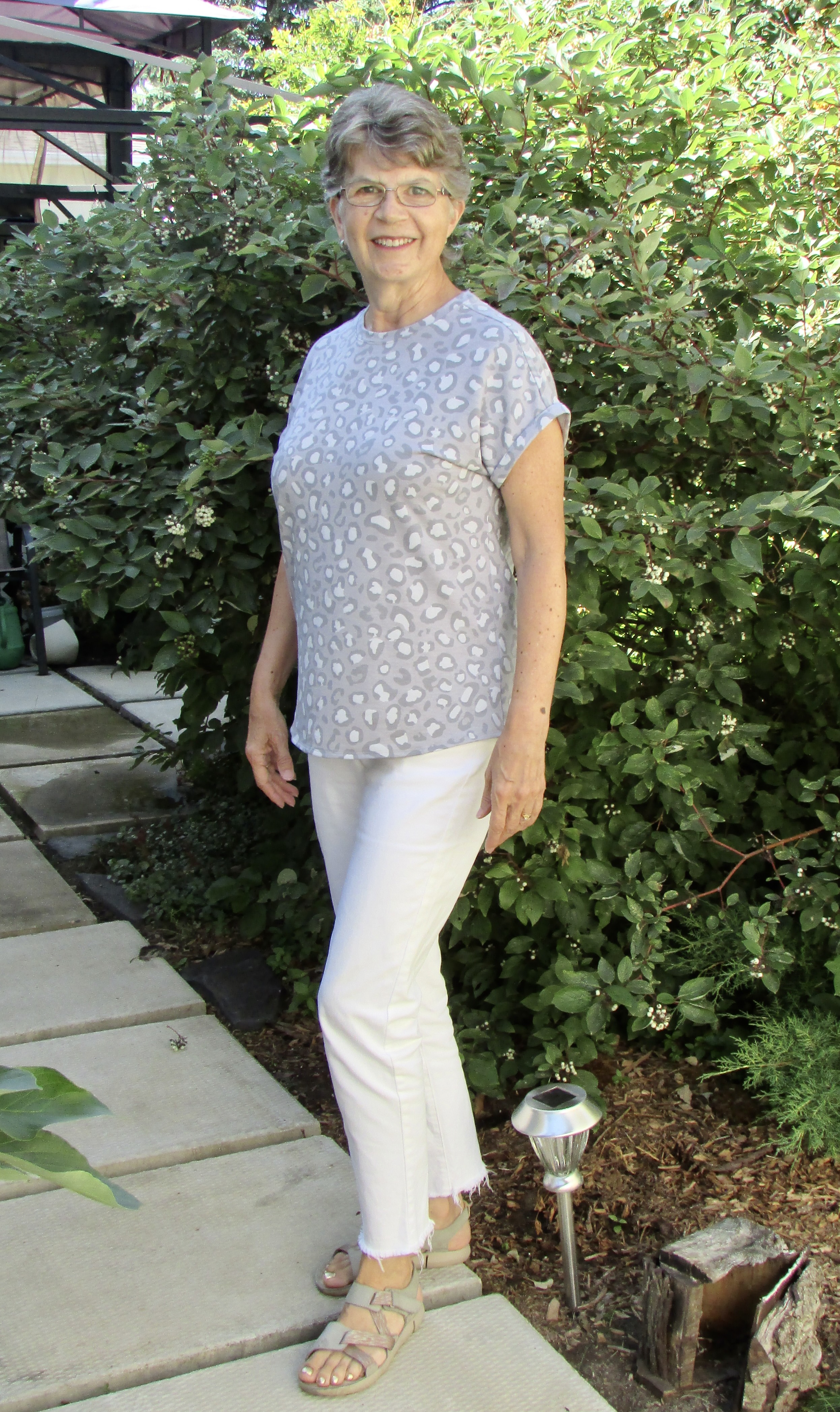
The grey animal print t-shirt and the Clarks sandals, also both purchased second-hand, were great additions to my summer wardrobe.

IMG_4348 2

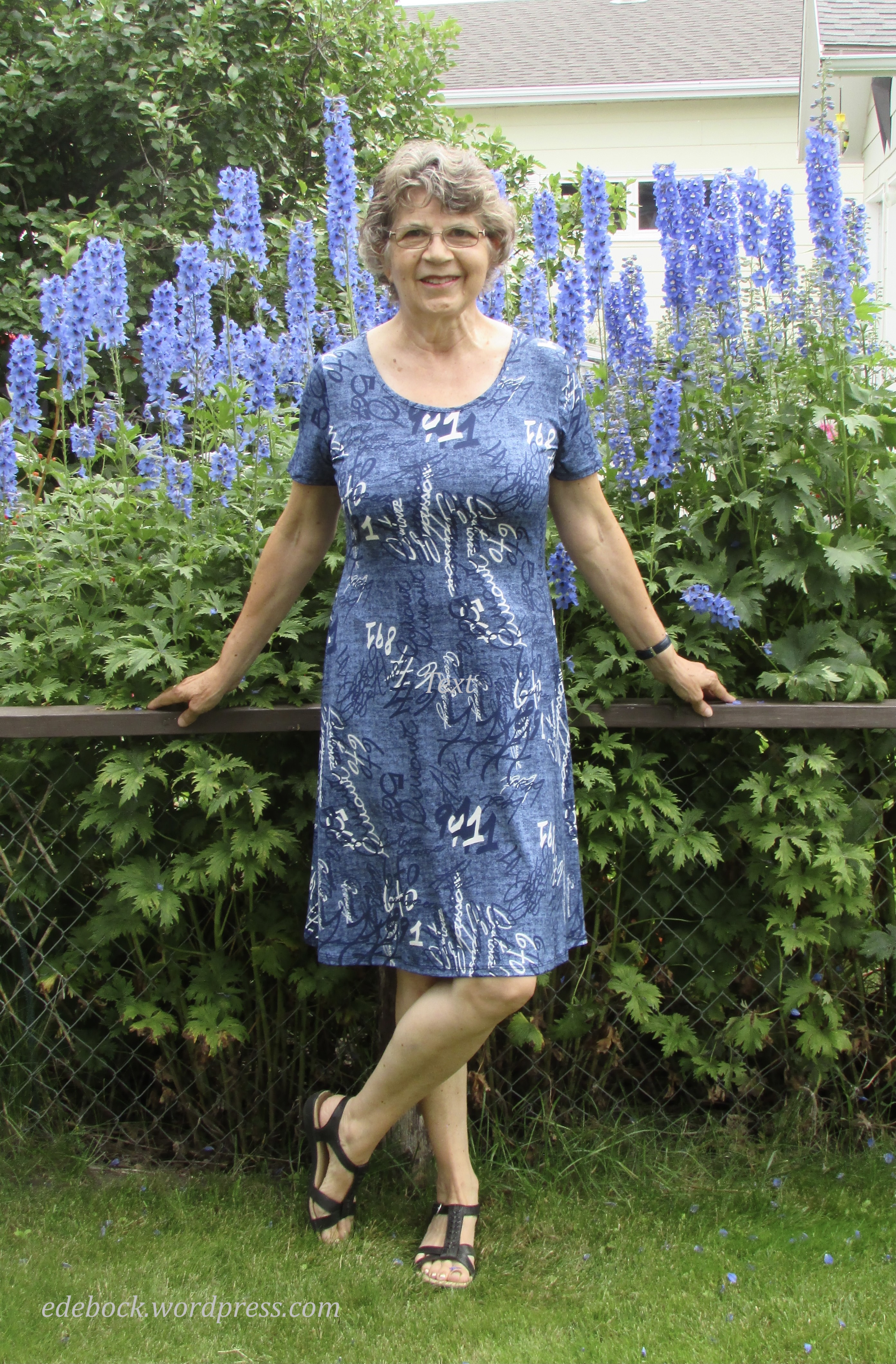
This dress was an impulse buy that I’ll never regret.

IMG_3842

Then there’s the hat that I bought on a chilly April morning in Victoria. Not only is it a fond reminder of our trip, but I love wearing it.

And now, with with less than 48 hours left in 2022, I want to take a moment to wish you and yours a very Happy New Year!

What is vanity sizing?

Logo by SamI can remember when I wore size 12 or 14, but now I shop for size 6 or 8. Did I find the secret to successful weight loss? Am I actually that much smaller than I used to be? On the contrary, I now weigh approximately 20 pounds more than I did in my younger years. My drop in clothing size has nothing to do with me getting smaller and everything to do with something called vanity sizing.

Vanity sizing, or size inflation, is the phenomenon of ready-to-wear clothing of a certain size becoming bigger over time. Apparently, putting smaller sizes on larger clothes boosts the self-esteem of customers and encourages them to purchase more. As a result, brands have gradually shifted their metrics to make shoppers feel thinner. So much so, in fact, that a women’s size 12 in 1958 is now a size 6! In 1967, teenage fashion model, Twiggy, wore size 8. Today a girl the size that she was then (bust 31″, waist 23.5″, hips 32.5″) would wear size 00. This is definitely something to keep in mind if you shop for vintage clothing.

New Yorker Vanity Sizing Cartoon

Source: The New Yorker

A recent CBC Marketplace investigation found that the waist sizes of jeans are commonly bigger by an inch or more than what the label advertises. One brand was off by a whopping 6 inches! I can attest to the fact that this is true of men’s jeans as well as women’s. Hubby recently bought a new pair and the waistband is exactly two inches bigger than what the label says.

Another aspect of vanity sizing that is even more confusing is inconsistency between brands. Some deliberately skew their sizes, based on the idea that people might feel better if the tag on the clothing says a size or two smaller than they wear in other brands. Again, it’s all about trying to increase sales.

While customers like vanity sizing because it makes them feel better about themselves and retailers like it because it boosts their sales, it has become a significant problem with the increase in online shopping. Billions of dollars worth of apparel is now purchased online each year and an estimated 40% of that is returned because of sizing issues. That’s a hassle for shoppers, a nightmare for retailers who are stuck covering the cost of “free” returns, and as I wrote about here, it’s estimated that more than 25% of those returns end up in the landfill!

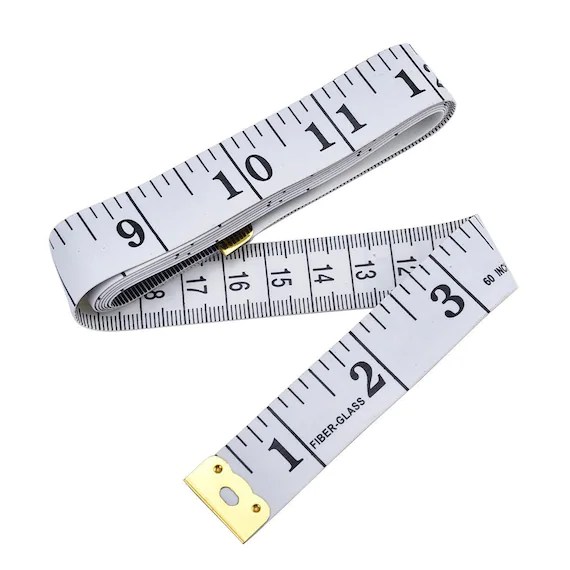
With all of this in mind, how can you avoid the complication that vanity sizing adds to shopping online? Use a measuring tape! Know your bust, waist, and hip measurements and check the brand’s size chart. Though these charts can provide valuable insight into which size to order, they aren’t always completely accurate, so also pay attention to what other customers say about sizing in their reviews. Finally, in case you still end up with something that doesn’t fit, be sure to check the retailer’s return policy before placing your order.

il_570xN.1032033842_cny7

I can’t help wondering how much further vanity sizing can go. I used to laugh at the concept of size 0, but the way things are going perhaps someday we’ll see labels with negative numbers on them!

6 myths about second-hand shopping busted!

Over a week into my Second Hand September challenge it’s going well. Today I thought I’d look at some of the most common myths or misconceptions about second-hand shopping.

1.  Thrift stores are only for poor people. 

In reality, most thrift stores exist to raise money for local charities and organizations, not to cater to a certain economic class. Many of us who buy second-hand can afford to buy new, but choose to reuse for a variety of reasons. Shopping second-hand is a sustainable practice that helps preserve resources and cuts waste by keeping usable clothing out of the landfill. It’s also fun; a bit like going on a treasure hunt!

Some argue that when those of us who can afford to buy new shop second-hand, we are taking from those in need. If you’ve ever had the opportunity to look behind the scenes at a thrift store, you know that that’s not true. There is definitely more than enough for everyone! Most thrift stores are only able to sell a small percentage of what is donated. The excess is often sent to women’s shelters, shipped abroad to be re-sold in third world countries (which is not necessarily a good thing… perhaps a topic for a future blog post), cut up and sold as industrial rags, or sent to textile recycling facilities where they are reprocessed into other useful products.

2.  Thrift stores are dirty. 

They may not be able to afford the nicest spaces with the best lighting and may not have fancy window displays, but well-run second-hand stores, like other businesses, try to keep their premises clean and their inventory presentable. Some people think that because the clothes are used, they must be dirty, but that’s generally a false assumption. Most clothing is washed before it’s donated and some second-hand stores have laundry facilities on-site to deal with those items haven’t been. Personally, however, I always wash second-hand items before I wear them because I don’t know where they’ve been and how they’ve been handled. Since I prefer unscented laundry detergent, I also like to remove any odours that might linger.

3.  Second-hand stores are disorganized. 

While some may be more difficult to navigate than others, most second-hand stores are organized in a similar manner to other shops with separate areas for men’s, women’s, and children’s clothing. Within each category, clothes are usually separated by type (tops, pants, dresses, etc) and further arranged according to size.

4.  Second-hand stores only sell cheap, low-end brands. 

If you take the time to hunt carefully, you can sometimes find name-brand, designer, or even luxury goods in thrift stores. One of my most recent finds was this animal print top from Calvin Klein.

IMG_4474

If high-end fashion is what you’re looking for though, you might want to check out consignment stores. Prices are generally higher and selection smaller, but they tend to be very selective in what they accept for sale.

5.  Clothes sold in second-hand stores are in bad shape. 

Clothes are sorted and inspected for quality before going onto the shelves. Those that are badly worn are disposed of, cut up and sold as rags, or recycled. Most of the clothing that reaches the sales floor has already stood the test of time. Any shrinkage or fading that might occur has already happened. Occasionally, however, brand new items are donated.

IMG_4492

The top I’m wearing in this picture still had the original tags on it when I bought it! It’s from Laura, one of my favourite Canadian women’s fashion brands. If memory serves me correctly, the original price was $69 and I bought it for less than $5!

6.  Clothes in second-hand stores are out of style. 

Thrift stores carry a mix of old and new and a wide variety of styles all in one place. You can easily go modern, retro, or vintage! They’re a great place to find pieces that fit your personal style rather than what the fashion industry dictates as on-trend for a particular season. They’re also a great source of timeless pieces that form the backbone of a good wardrobe.

Logo by Sam

So, if you’ve been averse to shopping for second-hand clothing for any of these reasons, perhaps it’s time to rethink that position and give it a try. Shopping second-hand helps support charitable causes, is good for the environment, and can save you a ton of money!

Here are two second-hand outfits that I wore this week that included the tops shown above. As you can see, the white jeans are getting lots of use this month, but it’s also been warm enough for shorts and capris. I’m hanging onto the last days of summer for as long as I can!