A vintage thrift store find

Fashion Friday is back today!

Out for a walk one day last week, I decided to stop in at the local thrift store and look what I found!

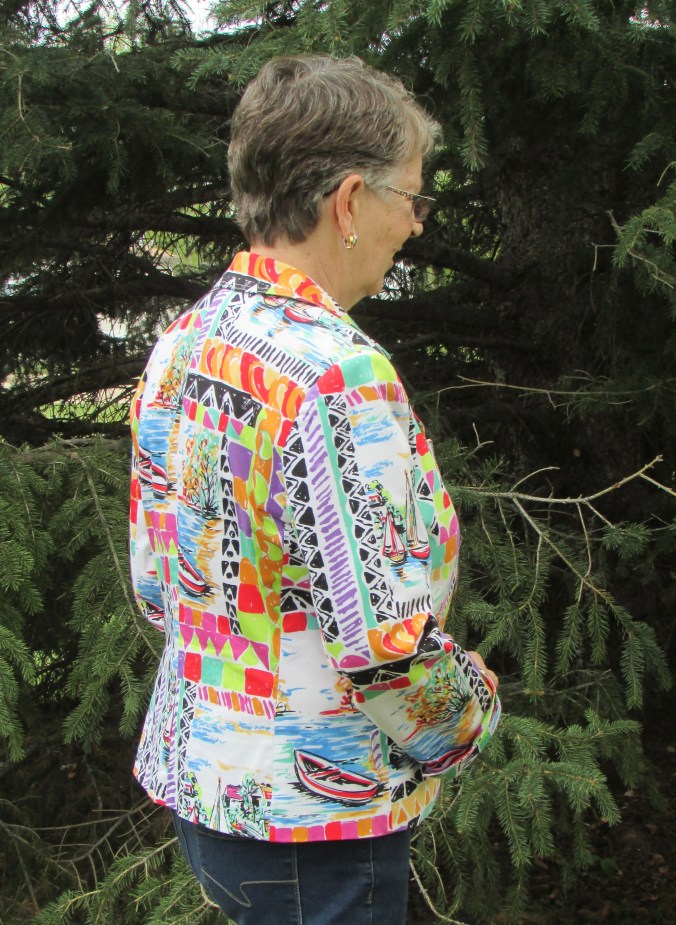
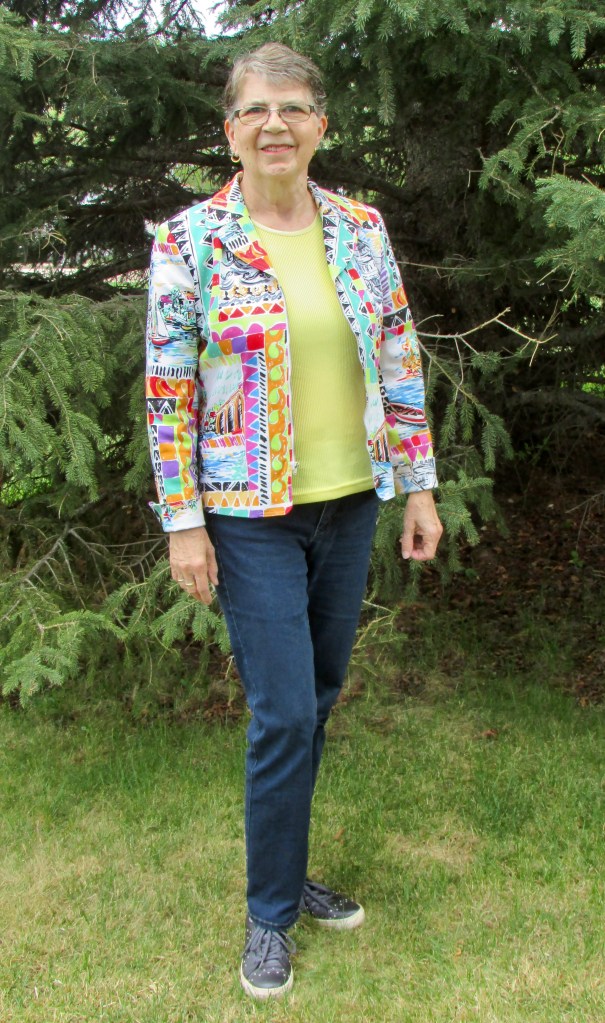
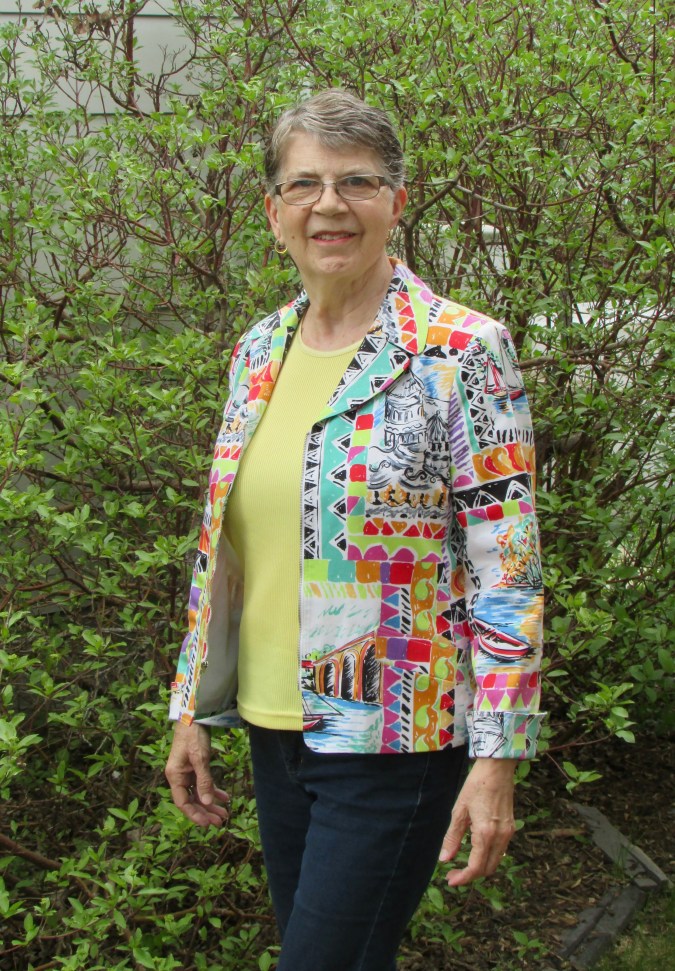
Although my wardrobe is largely made up of neutrals, the colourful vintage jacket immediately caught my attention and the sleeveless yellow top worked perfectly with it. I didn’t have my Spring colour swatches with me, but I knew immediately that these were Spring colours. Look how many of them are represented on my swatches.

Typically, clothing is considered vintage if it’s at least 20 years old. Three things tell me that my jacket was probably made in the 1980s meaning that it would definitely qualify.

  1. It has shoulder pads which peaked in popularity in the 80s, but since they’re presently making a comeback my jacket might be right in style again soon!
  2. Neon colours were also all the rage in the 80s.
  3. It’s size 12 and I haven’t worn size 12 since, well probably the 80s! The fact that I usually wear size 8 now doesn’t mean that I’ve shrunk though. Over the years, so-called vanity sizing has changed what the numbers on clothing mean. As North American women have grown physically larger, brands have shifted their metrics to make shoppers feel skinnier – so much so that a women’s size 12 in 1958 is now a size 6.

Regardless of what the number on the tag says, the jacket fit perfectly. I particularly like the way that it nips in a bit at the waist giving my boyish body a slightly more feminine shape.

The tag also tells me that the jacket should be dry cleaned, but since it’s made of 97% cotton, I didn’t think that was necessary. I always wash thrifted clothes before I wear them, so I put the jacket in a mesh laundry bag, put it through my washing machine’s hand wash cycle, hung it to dry, and ironed it with a warm iron. It came out looking perfect.

For today’s photos, I’ve styled the yellow top and the jacket with a pair of dark wash jeans, but I can also visualize them with white jeans. With all those bright colours in it, the jacket is very versatile. For a dressier look, I think it would look quite stunning over a column of black. Perhaps I’ll try that next!

My latest thrift store finds

logo-by-samAs you’re no doubt aware by now, I love thrift store shopping. In addition to the fact that it’s a bit like going on a treasure hunt, there are several other advantages. I can afford to pay full price for my clothes, but my opportunities to shop are limited by the fact that I live in a very small rural community. Two small thrift stores are the only places to shop for clothing locally. The cost per wear is, of course, much lower when I buy second-hand and I also like the fact that, in my own small way, I’m helping reduce the enormous impact that the fashion industry has on the environment.

Thrifting can be a great way to add unique pieces or to fill gaps in your wardrobe, but I cringe whenever I see a blogger or a YouTuber bragging about her thrift store “hauls”. Excess of any kind bothers me. A bargain isn’t a bargain unless you’re actually going to use it and I can’t imagine anyone actually wearing everything in some of those hauls. I often leave a thrift store empty-handed, but once in awhile I find something that’s just right for me. Today I’m going to share my last two second-hand finds with you.

IMG_7723

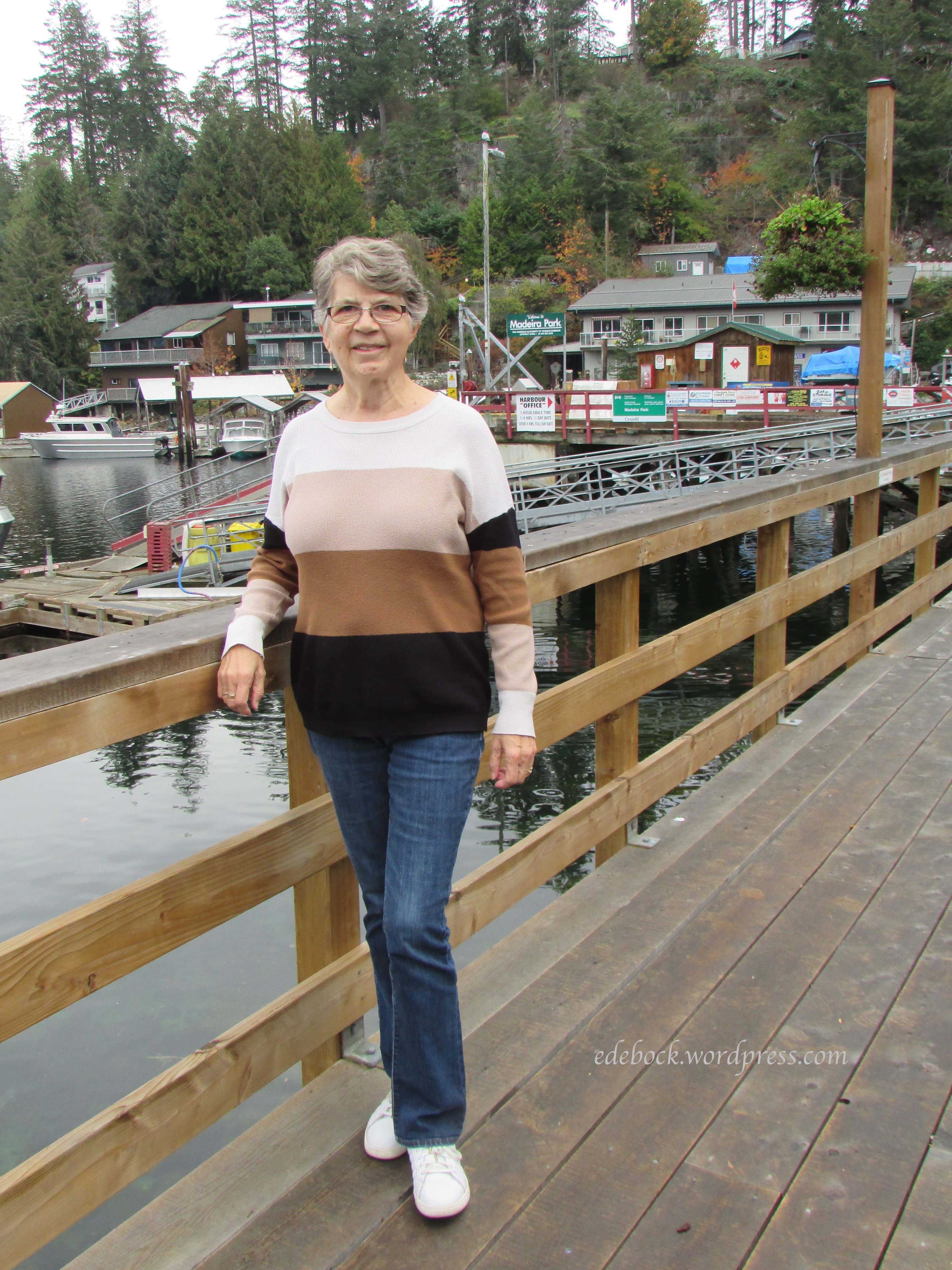
The casual, comfy tunic shirt from Old Navy has been a good addition to my fall wardrobe. The fabric, although 99% cotton, has a linen-like feel and the soft tan with multicoloured flecks throughout works well with my complexion.

When thrift store shopping, you might have to wade through some very outdated pieces to find what you’re looking for, but it’s possible to look up-to-date or even on trend wearing second-hand clothes. For example, brown is one of the hottest fashion colours for fall/winter 2024 and stripes are also on trend. There’s nothing out of date about my latest find which went with me on our recent trip to the coast.

IMG_7704

I probably wouldn’t have bought the sweater new because it was made in China. That’s a personal choice, but one of my fashion shopping goals in recent years has been to avoid buying items, especially new ones, that were made in a country that is so well-known for exploiting it’s factory workers.

IMG_7700

In case you’re wondering, the final two photos were taken in the tiny community of Madiera Park on British Columbia’s Sunshine Coast. The other one was taken yesterday in my own backyard. At 14ºC (57ºF) and sunny, it was unseasonably warm for the first week of November in Alberta, but I’m afraid that we’ll soon be taking all my fashion post photos indoors again!

Fashion Revolution Week

Logo by SamFashion Revolution is a not-for-profit global movement that was founded by British fashion designers Orsola de Castro and Carry Somers following the collapse of the Rana Plaza garment factory in Bangladesh on April 24, 2013 that killed 1,134 people and injured another 2,500. Fashion Revolution campaigns for a clean, safe, fair, transparent and accountable fashion industry; one that that conserves and restores the environment and values people over growth and profit. Over the past ten years, it has grown to become the world’s largest fashion activism movement, mobilizing citizens, brands and policymakers through research, education and advocacy. Every year, they organize Fashion Revolution Week in April, but this year’s campaign is marking a decade of active campaigning with ten days of action running from April 15 to 24.

433469133_424161200263956_5310705543677909198_n

I don’t consider myself a fashion activist, but I do believe that everyone has a part to play in building a fashion industry that puts people and the planet first. Until our our clothing is made in safe, clean, and fair ways, we’re all part of the problem.

Those of us who live in North America have little choice but to buy clothes that are produced overseas and it’s virtually impossible to find out whether they are made in sweatshops where workers are exploited and forced to work in unsafe conditions or manufactured in socially and environmentally responsible factories. So, what can we do? How can we be part of the solution instead of the problem?

Overconsumption has become a huge problem. Apparently, the number of clothes that the average consumer purchased between 2000 and 2014 increased by 60 percent and those clothes tended to kept about only half as long as in the past. Individually, we can do our part by buying less and choosing quality over quantity. After all, how much do we really need hanging in our closets? At least one of the fashion bloggers that I follow has committed to The Rule of 5, planning to buying no more than five new fashion items this year. She’s decided to explore second-hand shopping which, as you know, is one of my favourite ways to add to my wardrobe.

427688654_401397839206959_3748741648498203248_n

Another way that we can take action is to extend the life of our clothing by learning to mend, repair, and upcycle. In cities around the world Fashion Revolution activists are planning to come together in public spaces tomorrow to work on personal mending projects while drawing attention to the goals of the movement. That reminds me that I still have two pieces set aside from my recent closet cull waiting for some simple upcycling. Though I won’t be doing it in a public place, perhaps that should be my Fashion Revolution Week project.

One top, several looks

Logo by SamI didn’t do a post about what I packed for our recent trip to Mexico, but regardless of where you’re going or for how long, the key to packing successfully is to choose pieces that coordinate well with one another so that they can be combined in different ways. One easy way to do that is to choose a limited colour palette. For our recent trip, I chose mainly blues and neutrals.

Today, I’m going to show you several ways that I wore one top with other pieces from my suitcase. The photos were taken in our hotel room as I didn’t want to climb up and down Mount Dunamar (our nickname for the 60 stairs from ground level to our fourth storey room) in between outfits.

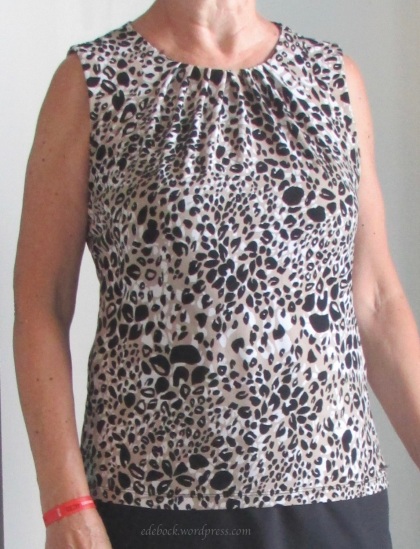
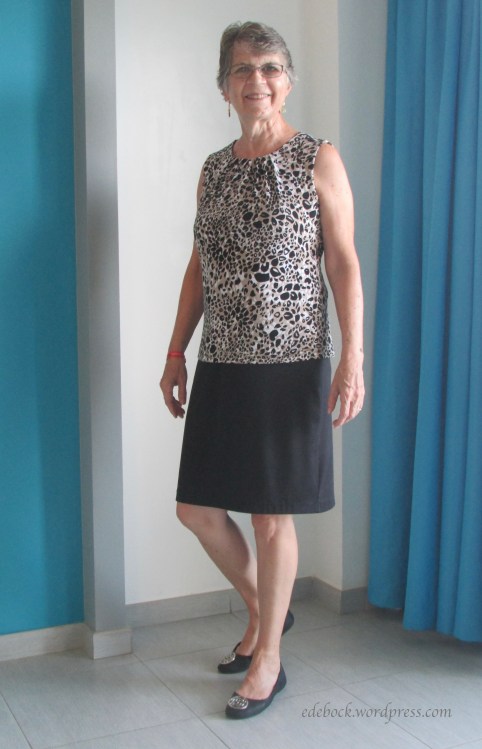
First, let’s look at the Calvin Klein top that I bought second-hand at one of our local thrift shops in the summer of 2022. Simple and sleeveless with a gathered neckline, it can easily be dressed up or down. The timeless animal print pattern in black, white, and beige coordinates well with other neutrals.

IMG_6559 copy

For a casual daytime look, I wore the top with a pair of white shorts.

IMG_6543

To go for dinner, I wore it over a little black sheath dress that I’ve probably had for 30 years or more. It originally came with a separate chiffon overlay, but all I remember about that piece is that it was predominantly red. That’s how long it’s been gone from my closet! The little black dress is perfect for travel because it doesn’t wrinkle, hardly takes up any space in a suitcase, and while I probably wouldn’t wear it alone, it can be worn with so many other things. 

IMG_6560

The wide-legged pants in the next few photos didn’t actually go to Mexico in my suitcase, but they did come home with me. I fell in love with them in the resort gift shop. When I discovered that they were made in Mexico and that they were on sale for more than 75% off their original price, I knew they were meant to be mine. Since a general rule of thumb is that a fuller shape on the bottom looks best with a more fitted top, they paired well with the animal print top, but my dilemma was whether or not to to tuck it in. I rarely tuck my tops in because I think that that emphasizes the fact that I don’t have a very feminine waistline, but I liked the interesting waistband and wanted to show it off. 

I decided to step outside my comfort zone and wear the outfit to dinner with the top tucked in. Which look do you like better? 

The pants are very lightweight, totally unsuitable for winter in Alberta, so they’re now in storage with the rest of my warm weather clothes, but I’m looking forward to wearing them again when summer returns. The top is one of those pieces that stays in my closet year round though because it can easily be worn under a cardigan or jacket. 

Is thrifting ethical or not?

Logo by SamIf you’ve been following my blog for long, you know that many of my clothes come from second-hand stores, not because I can’t afford to buy new, but because I love thrifting and because one of my fashion goals is to be a more ethical shopper. The benefits of second-hand fashion are undeniable. Instead of going to the landfill, clothing that is no longer wanted finds new life in someone else’s closet. Textiles are reused and the harmful environmental impacts that result from producing new garments are reduced. Sadly, however, thrifting is not without ethical concerns.

One of the most common criticisms of thrift store shopping is related to supply and demand. If people like me, who can afford to buy our clothes new, instead choose to shop second-hand, will there be enough for those those in need? While this fear of “stealing from the poor” may be a good-hearted concern, it doesn’t accurately portray the situation. In reality, because we are such an affluent society, most second-hand stores receive far more in donations than they can possibly sell. The sad reality of thrifting is that while some of the clothes that go unsold are donated to women’s shelters and other charitable organizations, a large percentage end up in landfills or are shipped to third world countries.

While there is little danger of second-hand stores not having enough stock to meet the needs of low-income customers, thrifting as a fashion choice among the more well-to-do has led to a different problem. The “gentrification” of thrift stores, as this trend has become known, has led to some second-hand stores raising their prices making it more difficult for those who are in need to access clothing that they can afford. I do the vast majority of my thrift store shopping at two small shops in my local area where prices have been kept very low, but I have definitely noticed an increase in prices in the larger city stores that I visit occasionally. For example, three of the thrifted items that I bought in the past year were purchased in city second-hand stores for between $7.00 and $14.99. They would have cost $2.50 each at one of the shops in our small rural community.

The most valid criticism of thrift store shopping, however, is not directed at those of us who purchase clothing to add to or fill gaps in our own wardrobes. It zeroes in on those who frequently buy far more than they can reasonably use so that they can feature their “hauls” on TikTok and YouTube and on those entrepreneurial thrifters who buy quality items at thrift store prices and then resell them for more on popular apps like thredUp. For some, thrifting has become a lucrative business, but how ethical is it to buy donated items at not for profit shops like Goodwill and use them to turn a profit?

So, the question remains: Is thrifting truly an ethical way to shop or not? Personally, I think it is, especially if you live in an area where there is a high volume of second-hand clothing available. Thrifting is the recycling of the fashion world, but being an ethical thrifter requires mindfulness and discipline. It requires shopping with your practical needs in mind and not falling into the trap of overconsumption simply because the prices are so low. As a conscious shopper, you might also ask how you can strengthen or support the industry. This might look like volunteering your time and/or donating your own gently worn clothes to continue the cycle.

2023 fashion shopping review

Logo by SamAt the beginning of 2018, following the example of one of my favourite bloggers, Sue Burpee of High Heels in the Wilderness, I started keeping a list of all my fashion purchases including clothing, accessories, and footwear. I was interested in finding out more about my spending habits and I wanted to be more intentional about wardrobe development. In addition, I wanted to become a more ethical shopper. I’ve continued this practice every year since and at the end of each year I publish a fashion shopping review analyzing my purchases and setting some goals for the next year.

What surprises me most when I look at this year’s list is how short it is. I only bought 17 items! That’s less than half as many as most other years. Of those, 12 were thrifted and only 5 purchased new. I spent a total of $395.50 (CAD), again less than half what I’ve spent most other years. Research shows that some women spend that much every month!

So, what did I get for less than $400?

  • 2 pairs of pants
  • 7 tops
  • 1 vintage jacket
  • 1 vest
  • 1 scarf
  • 1 swimsuit (which hasn’t actually been worn yet, though I hope to remedy that soon)
  • 1 swimsuit cover up (also not worn yet)
  • 1 pair of earrings
  • 1 necklace
  • 1 pair of sandals

The last item on that list was by far the most expensive. At $175 my Ecco walking sandals were worth every cent. I love thrift store shopping, but good quality footwear is something that I’m willing to spend a significant amount of money on. I consider it an investment in healthy feet.

IMG_5497

Trying to shop ethically is complicated and how successful I’ve been is always very difficult to assess. One of my fashion shopping goals in recent years has been to avoid buying items, especially new ones, that were made in China. I loved living and teaching there, but these days Canada-China relations are chilly at best. Conditions for many factory workers in that country are abhorrent and human rights are being increasingly eroded. It’s a personal choice, but I prefer not to support China if I can avoid it. One of the items that I bought new in 2023 and several of the second-hand ones were made in China and others were made in Vietnam and Cambodia. It’s virtually impossible to find out whether they were made in sweatshops where workers are exploited and forced to work in unsafe conditions or manufactured in socially and environmentally responsible factories. Unfortunately, since the vast majority of fashion manufacturing takes place overseas, those of us who live in North America have little choice but to buy clothing made in these countries.

Until recently, thrift store shopping was lauded as being ethical and sustainable, but now that’s a topic that’s up for debate. I still feel that it’s often a better option than buying new, but I plan on writing a post about this early in the new year, so I won’t go into it here.

Having done this exercise for the past six years has definitely made a difference to how I shop. I’ve become much more intentional, making fewer impulse buys and limiting them to things that I love and pieces that go well with what I already own. My goal for the coming year will simply be to continue in this vein. Some new blue jeans will probably be on my shopping list as a couple of pairs of old favourites are starting to show their age. I’d like to try a pair of wide-legged ones while they’re in style. I also need some new capri pants for summer as most of mine are quite worn. The worst ones didn’t make the cut when I did my seasonal closet switch in the fall.

And now, in addition to the sandals shown above, here are a few of my favourite fashion purchases from the past year. They’ve all appeared on the blog before.

IMG_6301

When winter rolled around again, I was very happy to start wearing the dark brown button fly cords from cabi again. Purchased in a season end sale last January, they’re a little dressier than my jeans.
IMG_5491

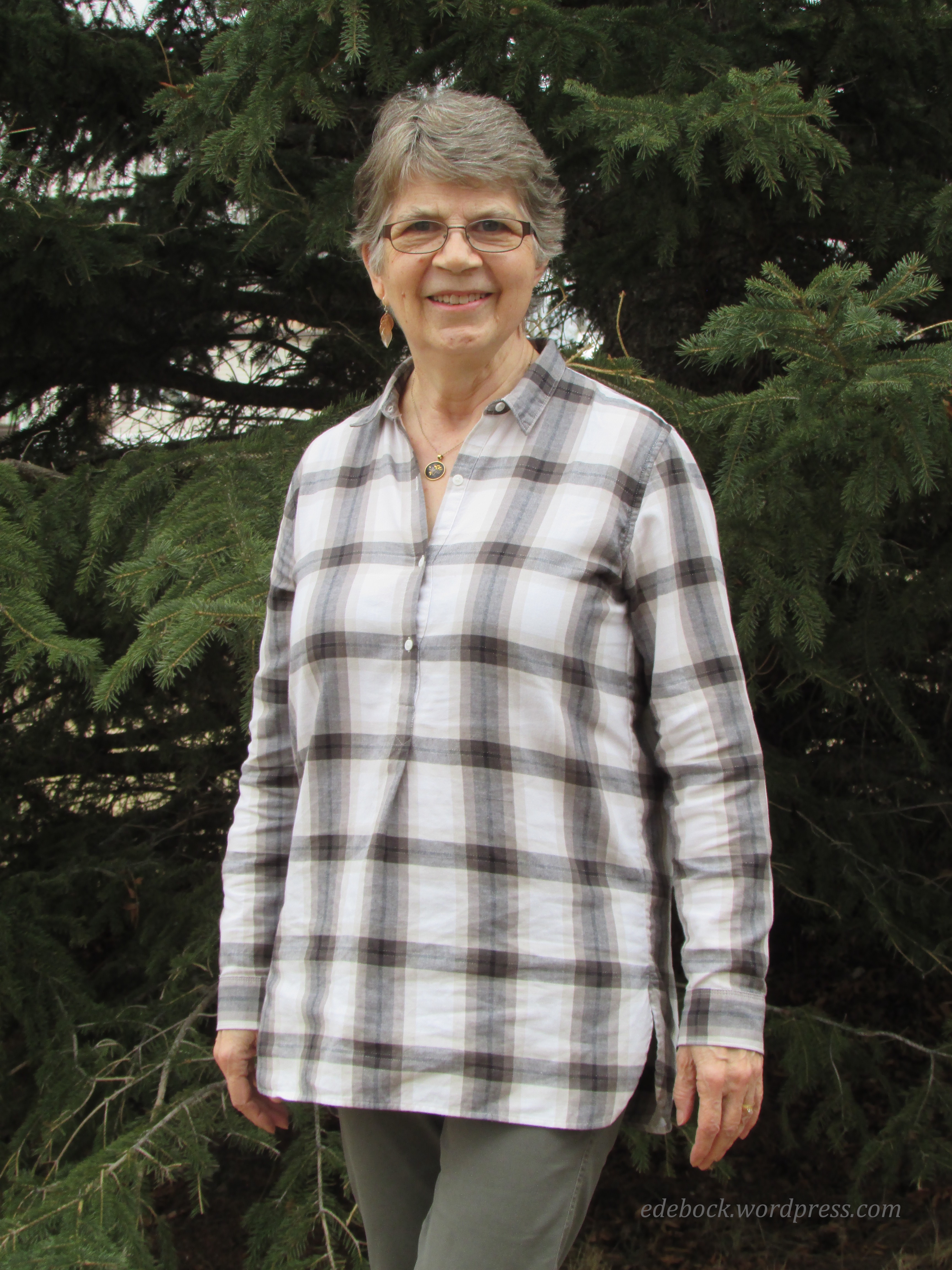
The neutral plaid shirt, originally from Gap, was an excellent second-hand purchase that only cost me $2! 

IMG_5738 2

As comfortable as pjs, these striped linen blend pants were a great addition to my summer wardrobe. They were also thrifted.  

IMG_6095 2

Finally, I was very fortunate to find this sleeveless top from cabi’s Fall 2018 Collection in our local thrift store in September. I don’t know where it had been hiding for the past five years, but it looked as if it had never been worn!

And now, with with just two days left in 2023, I want to take a moment to wish you and yours a very Happy New Year!
An on-trend inVESTment

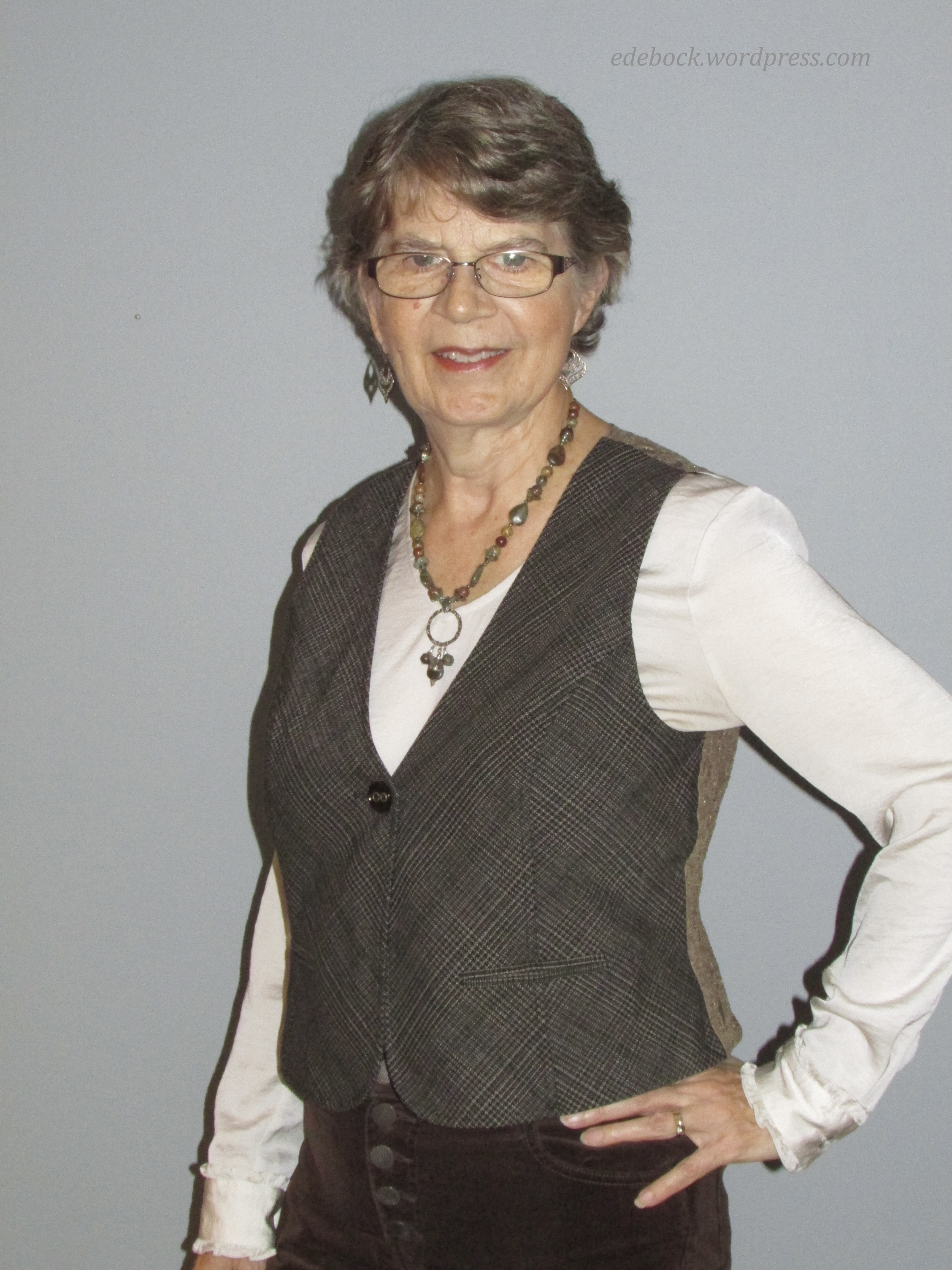
I’ve always loved the tailored look of a menswear inspired vest (or waistcoat), so I was delighted to see them back on-trend for fall/winter 2023. When I found this one in our small town thrift store for just $2.50, I was thrilled! 

IMG_6292 2

In addition to being a versatile layering piece, it ticked another box for me. I usually wear longer tops, but I’ve been wanting to try the cropped length that’s so popular this season. 

I knew immediately that I wanted to style the vest with the same cabi blouse that you saw in this post two weeks ago, my dark brown button fly corduroy pants also from cabi, and my tall brown boots. I’m sure it will look equally good with jeans and I look forward to trying it with several other items from my closet.

IMG_6301

I love the boy meets girl, masculine/feminine contrast between the tweed look front and the lace on the back. 

Another plus is that the vest will take up almost no space in a suitcase should I decide to take it traveling.

IMG_6310

In addition to the vest, the blouse, boots, and necklace shown today were all thrifted. 

Logo

Changing seasons

Logo by SamThe seasonal closet switch that I mentioned last week actually happened this week. Almost. I did leave a few pairs of summer pants in the closet in case we get some more warm days, but the shorts have all been put away. Most of my summer tops are now in storage too, although I do leave a few sleeveless tops in my closet year round as I’ll wear them under jackets and sweaters during the colder months.

These twice a year seasonal switchovers are an excellent time to evaluate and decide what to keep and what to get rid of. As I put the new season’s clothes into the closet, I turn all the hangers around. Then, when I wear an item, I turn its hanger back the right way. At the end of the season, if an item is still hanging backwards, it’s a clear signal that I need to consider whether or not to keep it. This year there were several spring/summer items that I hadn’t worn, but I didn’t feel ready to let go of some of them yet, so I separated them from the others in storage. I’ll reevaluate in the spring and decide then whether to keep them for another season or not. I did get rid of a few things though. Two pairs of capris that were too worn out to keep or to pass on to anyone else went out with yesterday’s garbage and a few other pieces are destined for the second-hand store. Bringing the new season’s clothes back into circulation almost feels like having something new to wear. There were even a few pieces in my fall/winter wardrobe that I’d forgotten all about over the summer!

But how do we dress for this “wear a sweater in the morning and regret it in the afternoon” shoulder season without constantly changing clothes? After all, the temperature can be barely above freezing in the morning, above 20ºC (68ºF) in the afternoon, and chilly again as soon as the sun starts to go down.

As always, layering is the key.

In this example, my base layer consists of a sleeveless top and a pair of mid weight chinos. In the morning, I added warm socks, sneakers, and a cardigan. In the afternoon, I shed the socks and sweater, rolled up the cuffs of my pants, and switched out the sneakers for a comfortable pair of flats.

Everything I’m wearing in these photos has been in my wardrobe for at least three years and has appeared on the blog before except the sleeveless top which is new to me. It was part of the cabi Fall 2018 collection. I have no idea where it’s been hiding for the past five years, but when I found it in our local thrift store recently, it looked like it had never been worn. It originally sold for $99 CAD and I bought it for $2.50! Is it any wonder that I love thrift store shopping?

IMG_6095 2

And, totally off the topic of today’s post, you may remember that on May 1st, I challenged myself to walk and/or hike 350 kilometres by the end of October. I’m excited to report that I crossed the imaginary finish line yesterday afternoon, a full month early!

Styling a vintage tapestry jacket

Screenshot 2023-08-24 at 5.01.09 PMI’m never ready for summer to end, but fall is definitely in the air! One thing that always makes the seasonal transition easier to bear is looking forward to wearing some of my fall and winter favourites that have been in storage for the past few months. Having something new (or new to me) to wear also adds excitement. After all, I’m sure we all remember the feeling of having something new to wear on the first day of school and, since I spent my entire career in the classroom, I had a lot of those first days!
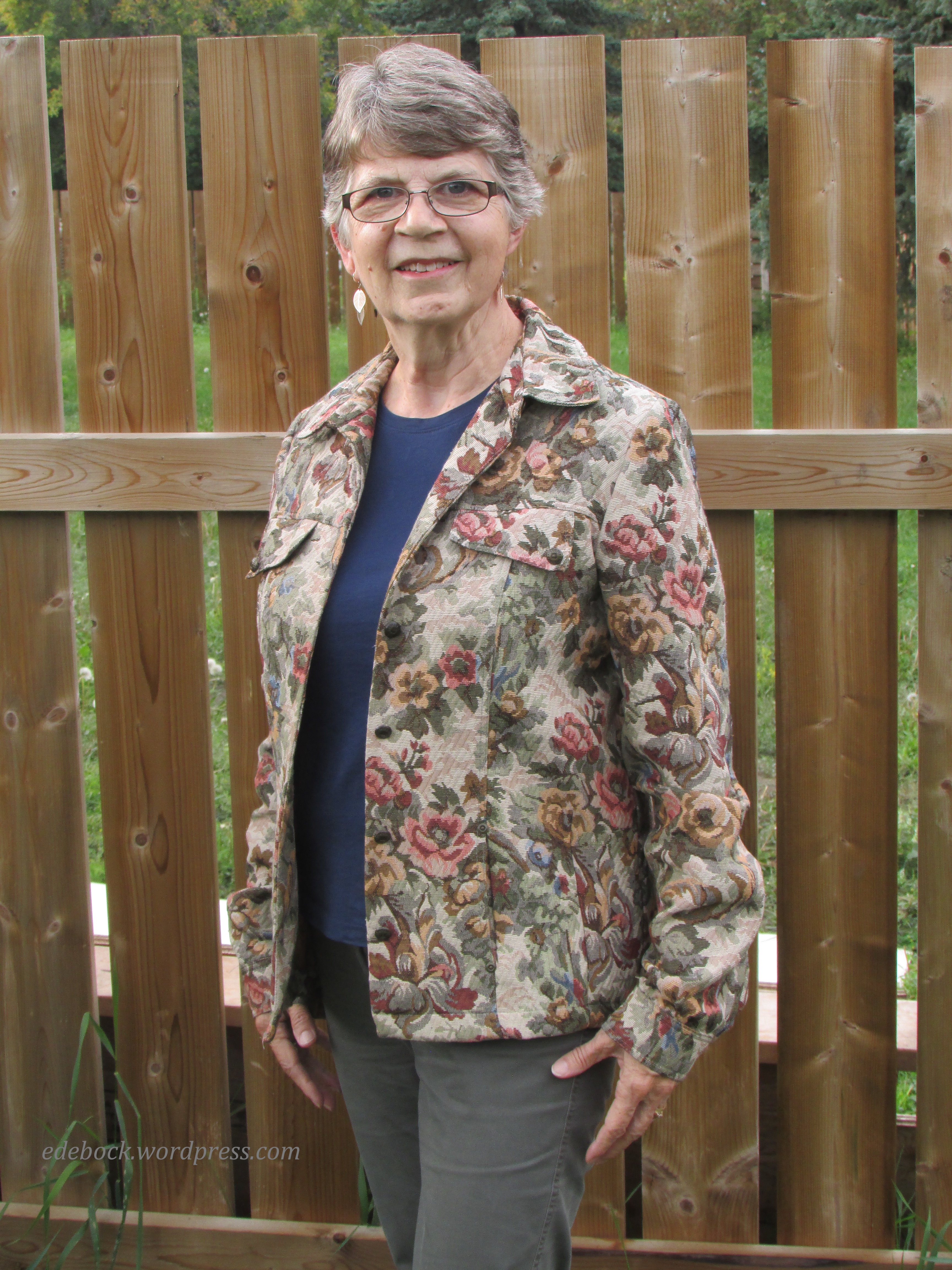
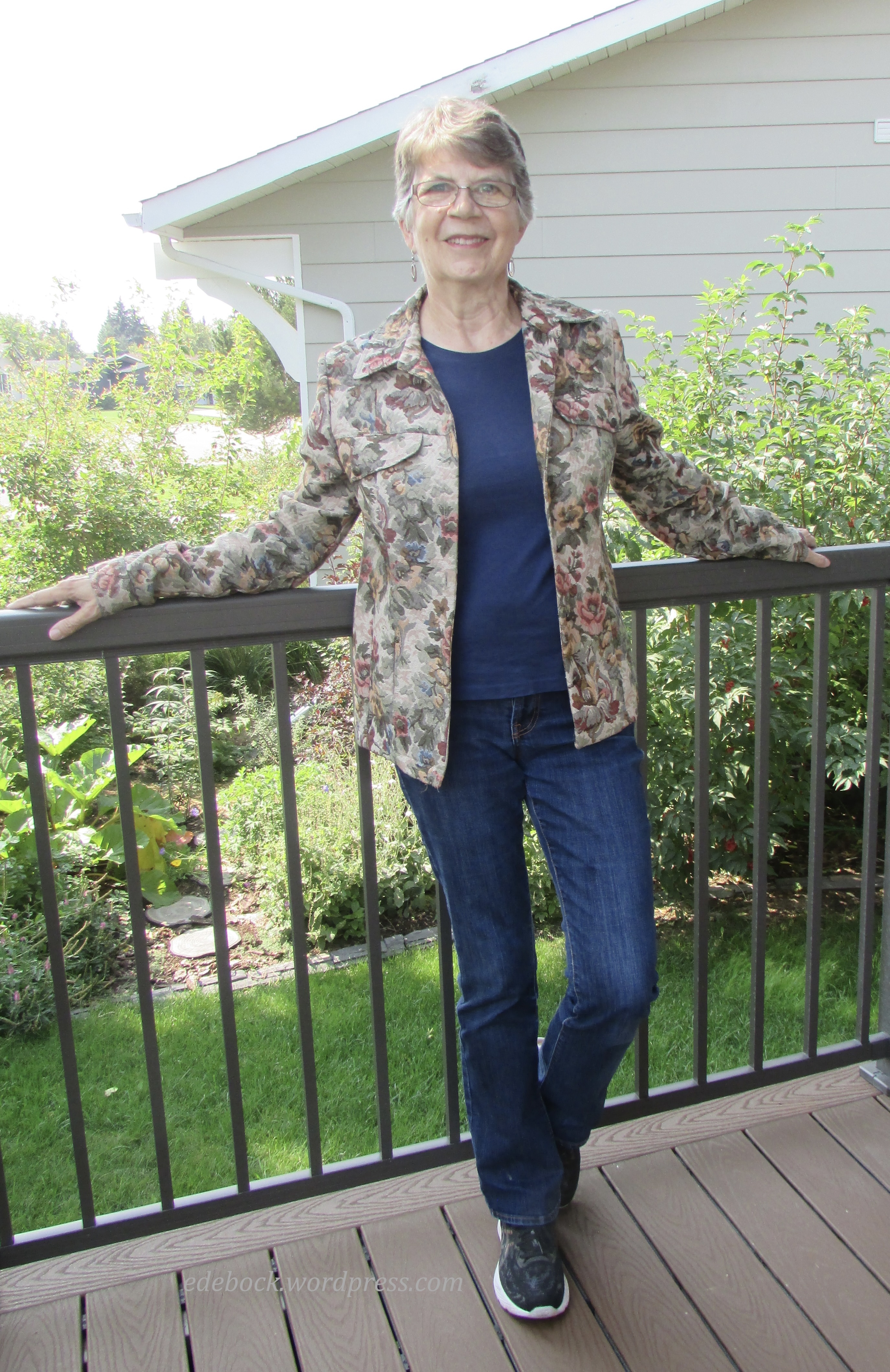
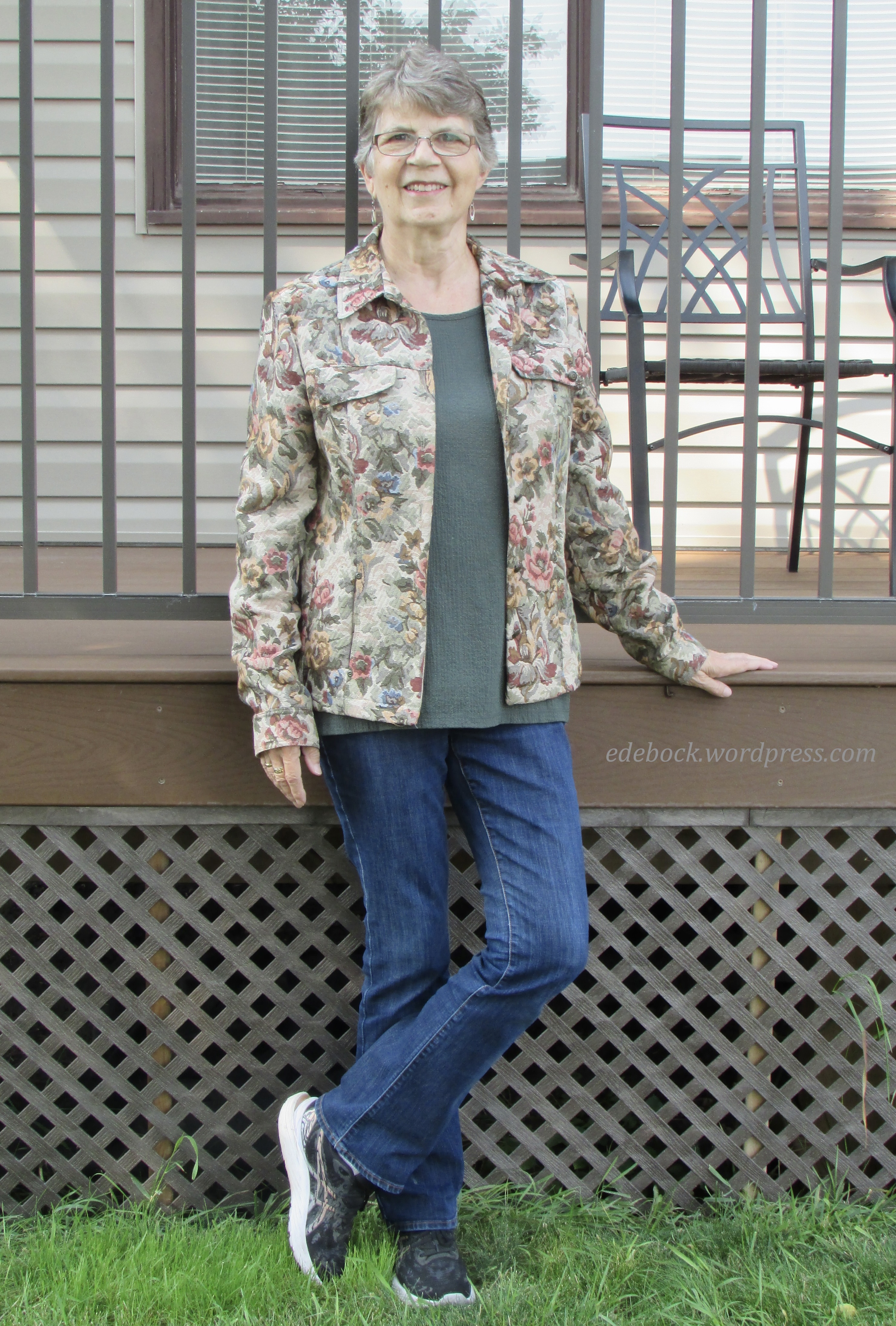
Today I’m going to share a new for fall item that has been hanging in my closet since an early summer trip to a thrift store with my daughter. I haven’t actually worn it anywhere yet, but with the weather changing, I pulled it out earlier this week and started shopping my closet for ways to wear it.

IMG_5976

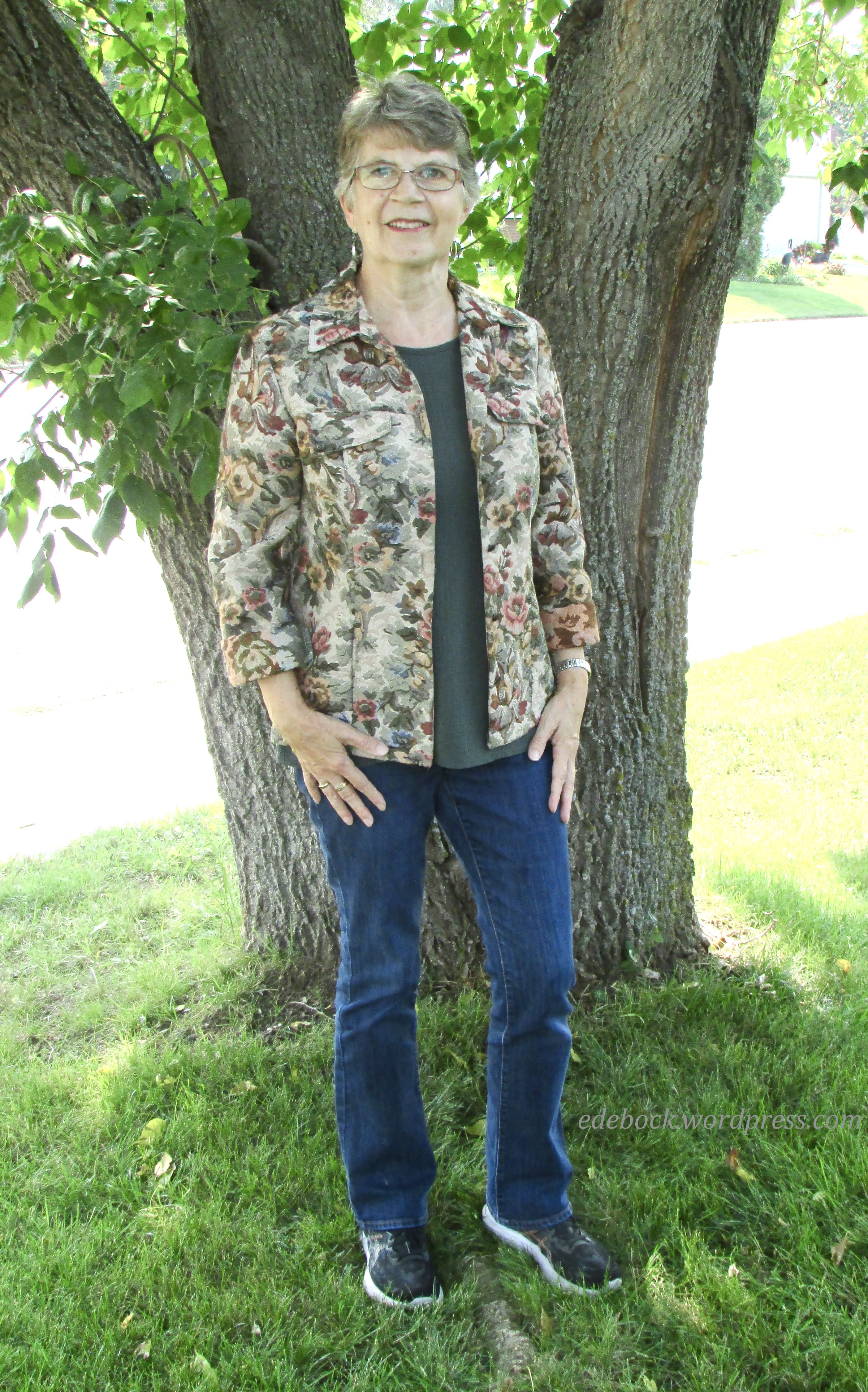
If you’re old enough, you probably remember the tapestry vests and jackets that were popular back in the 90s. I had a couple of the vests and now that I see vests coming back into vogue, I kind of wish that I’d kept them, but I never had a tapestry jacket.

Who cares that I’m 30 years late to the party; I love it and I’m very much looking forward to wearing it this fall! Clothing and accessories are considered vintage once they’re at least 20 years old, and in 2023 it seems that vintage fashion is gaining in popularity everywhere. Vintage is a great way to express individuality and it’s so much better for the planet than buying new. Cost can vary a lot. Prices for jackets similar to mine range from $30 CAD to over $160 on Etsy. I was fortunate to find mine in a second-hand store for $14.50. 

The key to wearing vintage and not looking like you’re wearing a costume is to add one vintage piece to an otherwise contemporary outfit as I’ve done in today’s photos. Another idea is to look for vintage pieces in classic styles. My vintage jacket in a different fabric would fit right in with today’s looks.

IMG_5993

So, how did I put today’s looks together. Since the jacket is a multi-coloured, stand-out piece, I paired it with basic solid-colour pieces. In the first photo above, I’m wearing it with a navy Uniqlo t-shirt and dark olive chino’s from Mark’s. Both pieces are several years old. Immediately above, I’ve switched out the chinos for a favourite pair of dark wash jeans from Old Navy, also several years old. Below, I’m wearing the same jeans with an olive green top that I bought second-hand about a year ago. 

IMG_6015

There are many shades of pink, rust, green, brown, beige, peach, grey, and even a few bits of blue in the tapestry, so it would be easy to wear this jacket with many other colours. I can also give it a modern twist by rolling the sleeves.

IMG_6019

Wide-leg pants

Logo by SamWhen we were visiting last weekend, our daughter had some things to drop off at a thrift store. Of course, that also meant stopping to shop! After all, she is her mother’s daughter and she knows the value and fun of second-hand shopping.

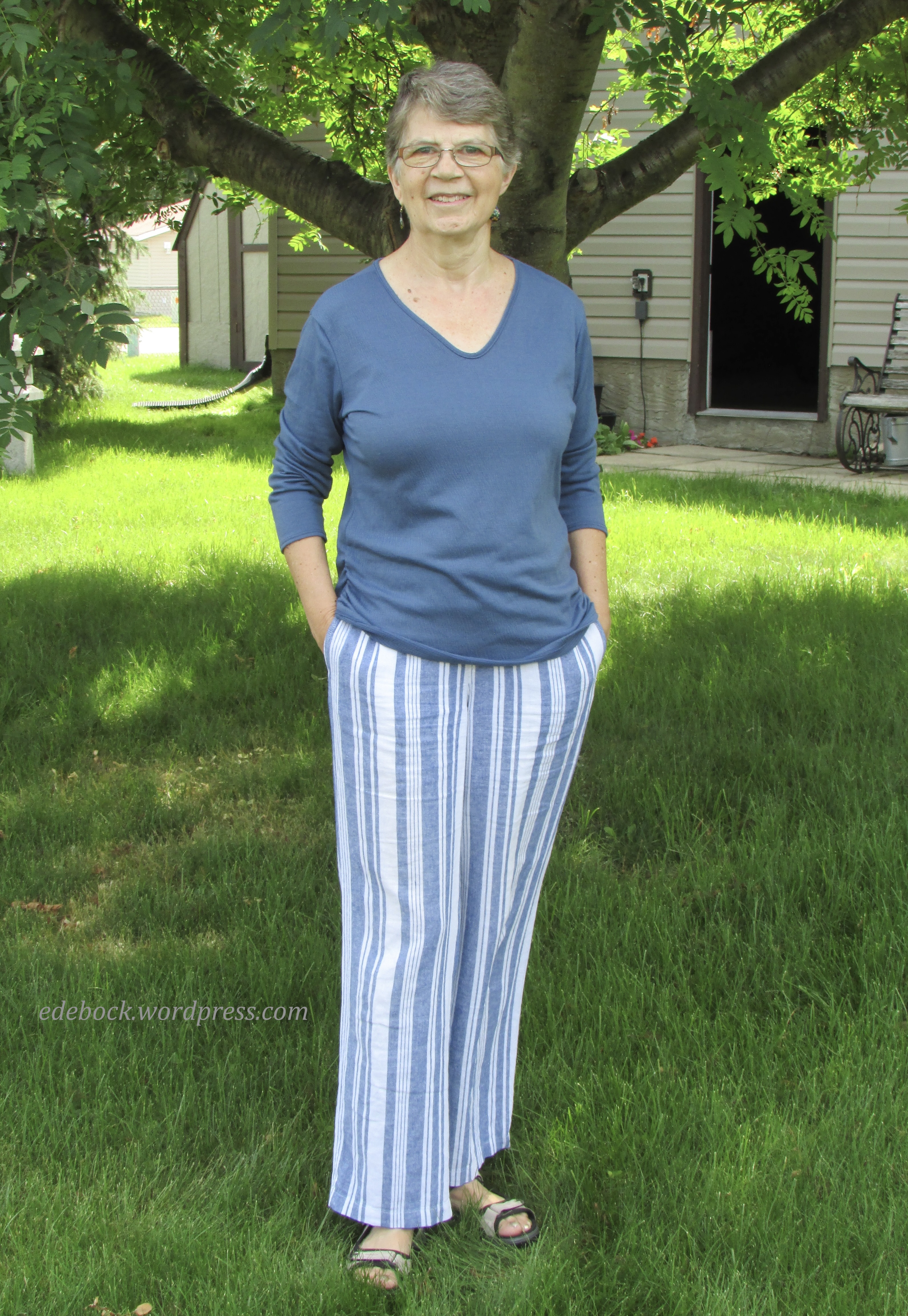
Wide-leg pants, one of last year’s biggest trends, are still very much in style this year. I’ve tried on several pairs, but until last Saturday I hadn’t found any that I really liked. Then I spotted these ones!

IMG_5738 2

As my daughter pointed out, the vertical stripes give the pants an elongated, slimming look which is likely what makes them more attractive to me than a solid colour might have been. Made of a soft linen/rayon blend, they look like linen, but drape like rayon. They’re as comfortable as a pair of pyjama pants and have a casual coastal grandmother vibe, another trend from last year that hasn’t disappeared yet and isn’t likely to any time soon.

IMG_5746

For me, an added bonus is the fact that these pants have no metal anywhere. That means that I can wear them for my MRI and CT scans today instead of changing into hideous hospital pyjamas!