The most important things

I had a different idea in mind for this week’s post, but then I read something that caused me to pause and think about the important things in life. The truly important things.

If I were to ask many people what’s most important in life, their answers would probably include things like family, good health, happiness, financial or job security, and a safe place to live. Depending on their circumstances, they might even say enough to eat or clean drinking water. These are, after all, very important. In fact, it was some of these things that first came to mind when I started asking myself what’s most important in life, but then I thought of something else.

When Jesus was asked which commandment was most important, He replied, “‘Love the Lord your God with all your heart and with all your soul and with all your mind.’ This is the first and greatest commandment. And the second is like it: ‘Love your neighbour as yourself.'” 

My faith, my personal relationship with God, is the most important thing in my life because it’s the only thing of eternal value, but it was actually Christ’s second statement that I was thinking about when I sat down to write this post. “Love your neighbour as yourself.” The Bible actually has a lot to say about how we treat one another. In fact, the “golden rule” that we were taught as children actually comes directly out of Scripture. Luke 6:31 says, “Do to others as you would have them do to you.”

So why have I been thinking about the importance of how we treat one another? In Canada and the US, at least, and perhaps other parts of the world as well, we have become very polarized people. We are sharply divided along political lines. No sooner had Canadians drawn together in response to threats from our southern neighbour than our own federal election tore us apart again. As I feared would happen, we went from “elbows up” unity to attacking one another for our political views. Nowhere was worse than on social media where people tend to say things they wouldn’t say in person.

Politics is important, but is it the most important thing? Is it worth losing friendships over? Surely each of us is entitled to have our own opinion and to express it without condemnation. Can’t we disagree, but still treat one another with respect or must we vilify those who don’t see eye to eye with us?  After all, while we might not agree on which party is the right one to govern or which leader is the most competent, we all want the same things. We all want what’s best for our country, our families, and ourselves.

Perhaps the most important things in life aren’t things at all. Perhaps our character, who we are and how we treat others, is much more important.

When the church disappoints

building-simple-flat-black-white-icon-logo-vector-castle-church_653669-14312

This topic has been weighing heavily on my heart for the past couple of days. I don’t know whether I’ll be able to do it justice or not, but since writing is the best way I know to process heavy things and I need to get this off my chest, I’ll give it my best.

I know I’m not the only one feeling completely disheartened by the results of this week’s election in the US. There is no question that we are living in difficult times. What disturbs me most and what has prompted me to write this post is the fact that the election was won with the support of so many so-called evangelical Christians.

There was a time when I might have used that term to describe myself, but I no longer do. Don’t get me wrong. I’m not abandoning my faith. I’m still a Christian although the term that I prefer is Christ-follower. I will not, however, call myself an evangelical Christian. There is no way that I can possibly identify with the overwhelming number of evangelicals who bow down in adoration to a convicted felon, a racist, a misogynist, a liar. How is it that they can possibly believe that God is pleased with their choice? How can they have been so deceived?

Scripture tells us that, as Christians, we are to be “the pleasing aroma of Christ” (2 Corinthians 2:15-16), but frankly, something smells really bad right now!

The Christian church has a long history of going wrong. From the slaughter of Jews and the destruction of their communities during the Crusades to the devastating effect of church-run residential schools on our Indigenous population in the past century, the church has missed the mark in big ways and small.

There’s a common saying amongst believers that the reason there are no perfect churches is that there are no perfect people. That’s true, of course. The church is a collection of sinners, of failures, of flawed human beings, but I think that sometimes we like to use that truth to excuse the inexcusable.

I know that I’m painting the church with a broad brush here. Certainly there are individual congregations or individuals within congregations that are as disappointed as I am with the outcome of the recent election. So how do we respond? What do we do when the church disappoints?

Do we bail out? Do we turn our backs on the church and walk away? Hebrews 10:24-25 advises us to “consider how we may spur one another on toward love and good deeds, not giving up meeting together, as some are in the habit of doing, but encouraging one another“. If there’s ever a time when we need encouragement, it’s now!  So no, I don’t advise abandoning the church altogether. We’re living in a post Christian era. Clearly the recent election outcome is just one more sign that society is moving farther and farther away from the teachings of Jesus. Whether it’s in a formal church setting or some other kind of gathering, we need one another.

Personally, I will pray and I will continue to nurture my own relationship with Christ, the all-sufficient one. After all, the church is not the saviour of the world and whether or not he would agree, the president-elect isn’t either. That is solely Jesus’ role.

Colossians 3:15 tells us to “let the peace of Christ rule in your hearts, since as members of one body you were called to peace. And be thankful.” (italics are mine) We can fight our disappointment with gratitude remembering that even in the midst of a world that seems so wrong, we have much to be thankful for.

And finally, let’s not give in to fear. One of my favourite verses, Isaiah 41:10, says, “So do not fear, for I am with you; do not be dismayed, for I am your God. I will strengthen you and help you; I will uphold you with my righteous right hand.”

As the Jim Bailey song says, “I don’t know what the future holds, but I know who holds the future”. In days that seem dark, that gives me a glimmer of hope.

What elegance is not

LogoFor the past year and probably longer, my most read blog post has been one that I wrote in September 2020 entitled 50 characteristics of an elegant woman. Every time I look at my stats and see it at the top of the list, I can’t help wondering why. I know that if you google “characteristics of an elegant woman” it’s one of the first items that pops up, but why are so many people looking for information about elegance? Is it something that’s lacking in our world today?  

The dictionary defines elegance as the “quality of being graceful and attractive in appearance or manner”. Elegance is so much more than what we look like or how we dress. It’s the whole package, inside and out. 

438342-Yves-Saint-Laurent-Quote-Without-elegance-of-the-heart-there-is-no

Since this is a topic that is obviously of interest, I thought I’d dive into it a bit deeper today and look at what elegance is not. I love the quote above, but it was also Yves Saint Laurent who said, “We must never confuse elegance with snobbery.” Elegance can’t be bought. A mean-spirited woman in expensive clothes and impeccable makeup isn’t elegant. She’s simply a well-dressed nasty person.

While elegance might sound like an old-fashioned concept, it isn’t only for the elderly or a practice from a bygone era. It’s something that every woman of any age can aspire to.

Perhaps you were brought up with the myth that elegance means conforming and keeping quiet. Not so! As I said in my previous post, an elegant woman isn’t loud or obnoxious, but she graciously and calmly stands up for what she believes in. She isn’t contentious, but at the same time, she isn’t a doormat. Elegance is not weakness! 

While I was writing this, 1 Corinthians, the “love chapter” from the Bible that’s often read at weddings, kept coming to mind, particularly verses 4 and 5. 

“Love is patient, love is kind. It does not envy, it does not boast, it is not proud. It does not dishonour others, it is not self-seeking, it is not easily angered, it keeps no record of wrongs. 

Everything that is said about love could also be said about elegance! Elegance is patient, it doesn’t envy, it doesn’t boast, it isn’t proud, it doesn’t dishonour others, it’s not self-seeking, it’s not easily angered, and it doesn’t keep a record of wrongs. 

One of the areas where I see a distinct absence of elegance in today’s world is social media. An elegant woman puts her cell phone aside and gives her full attention to the people she’s with. When she’s alone, she doesn’t spend endless hours scrolling on Facebook and getting caught up in pointless debates. She’s careful about what she posts online and doesn’t use social media for self-promotion. 

Elegance isn’t about perfection. It’s about being comfortable with who you are, knowing your limitations, growing from past experiences, and not worrying about the things you can’t control. 

audrey-hepburn-quotes1


Clothe me in peace, hope, and inner strength

This will not be a fashion post in the traditional sense. I won’t be showing you an outfit today or giving any style advice. I’ve held off on writing an update about my health since undergoing the TheraSphere treatment on my liver on March 11 because I needed time to wrestle with what’s been happening. Time to figure out how to “wear” the latest news.

The treatment itself went very well. I was in and out of the hospital in approximately eight hours and walked away feeling pretty good. A CT scan following the treatment showed that the vast majority of the radioactive microspheres that were injected during the treatment had been deposited on target at the site of the largest tumour on my liver while a minimal amount had reached a second smaller tumour and surrounding tissue. This was exactly what was hoped for. 

Had that been all that the scan showed, I would have weathered the post treatment fatigue and mild nausea with ease, but unfortunately, it also showed a nodule elsewhere in my abdomen that has grown significantly since a previous scan five months ago. That raises concerns that the cancer has spread. Knowing the importance of being proactive and advocating for myself, I contacted my specialist’s office as soon as I read the scan report and was able to have a phone consult with her earlier this week. She is going to refer my case to the medical oncology team asking them to review my file and make recommendations. 

So how do I deal with all of this? 

I feel a bit like I did at the beginning of this journey over 10 years ago. Once again, I’m facing a huge unknown. At that time, I prayed for strength to walk this pathway with grace and I continue to ask for that. In my morning prayer time this week, I’ve been meditating on a snippet of scripture from 2 Peter 2:19. “… a man is slave to whatever has mastered him.” Whatever happens, I do not want to become a slave to fear! 

428687383_10168379011675307_73446089108254976_n

You may remember that my one word for 2024 is hope. This beautiful graphic, which I found on Rare Disease Day, perfectly combines my word with the zebra ribbon representing rare diseases and more specifically, neuroendocrine cancer (NETS) which, though no longer considered rare, is definitely not well-known. Though the pathway may become rough, I am not giving up hope!  

Clothe me in peace, hope, and inner strength.

Let that be my style! 

I’m a Christian feminist

I’m a Christian feminist. Yes, there is such a thing and no, that f word isn’t an obscenity.

The label may not be a familiar one, but Christian feminism predates well known secular feminists and activists including Simone de Beauvoir, Betty Friedan, and Gloria Steinem. There is, in fact, a long history of Christian women devoting themselves to fighting for the status of women, and the right of women to vote, to own property, and to defend themselves in a court of law against rape and domestic abuse. Women like Nellie McClung who, based on her understanding of God’s intention for creation, together with Emily Murphy, Henrietta Muir Edwards, Irene Parlby and Louise McKinney, launched a legal challenge that would pave the way for women to be declared “persons” under law and to participate equally in all aspects of life in Canada. Thankfully, theirs is a rich tradition of pro-life feminism that continues today.

Within the Christian church, there are two schools of thought regarding the roles of men and women. Complementarians believe that men and women, though equal in worth, are meant to have distinctly different roles. Egalitarians, while agreeing that men and women are equal in worth, believe there should be no gender restrictions on what roles they can fulfill. Marriage and ministry are the primary points of disagreement between the two viewpoints.

When we first married, I was a baby Christian. I tried to be the submissive wife that my husband had been taught was his due simply because he was born with a Y chromosome and an extra appendage. It didn’t work. He wasn’t a good leader and, truth be told, I wasn’t a good follower. All the while, I wondered why God would want me to submit to a sinful man. Then I realized that He didn’t. We were meant to be partners, submitting to one another (Ephesians 5:21) with God as the head of our household.

But what about Ephesians 5:22-24 and Colossians 3:18, verses that exhort wives to submit to their husbands? We can’t simply ignore portions of scripture because they make us uncomfortable or dismiss the parts we don’t like. Sometimes we have to grapple with scripture. We have to understand the context and the time in which the words were written. We have to dig deep and seek to understand the principles being taught and then figure out how to apply them in our time and place.

“It’s dangerous to cherry-pick a few stand-alone verses, particularly when they are used as a weapon to silence and intimidate, effectively benching half the church… We can’t read letters written to specific people with specific situations in mind in a specific context and then apply them, broad-brush, to the whole of humanity or the church or even our own small selves.”  Sarah Bessey, Jesus Feminist

These select verses telling wives to submit to their husbands line up with the Greco-Roman household codes that were part of Pax Romana law at the time and in the place that the apostle Paul was writing his epistles. They were the law of the land at that time and, as in Romans 13:1-2, Paul is telling his readers that “everyone must submit himself to the governing authorities.”

Interestingly, just four verses after Colossians 3:18 instructs women to submit to their husbands, verse 22 tells slaves to obey their earthly masters. While wives must submit is a core teaching in most Christian churches today, no one takes that verse literally and suggests that slavery is actually a godly practice. I jokingly respond that if I have to submit to my husband, I also want my slave!

In addition to slavery, which is never actually prohibited in the Bible, the church has rightfully done away with many Biblical practices including polygamy, the buying and selling of daughters, stoning, the requirement that baby boys be circumcised, and many other ancient practices that were once culturally acceptable. Gender inequality is just one more example of an injustice that we need to let go of.

Nowhere in the Bible does it suggest that any of the gifts of the Spirt, which include teaching, pastoring, prophecy, evangelism and leadership (Romans 12, Ephesians 4, 1 Corinthians 12), are gender specific and yet many Christian churches today exclude women from these roles. Sadly, in spite of the fact that there are numerous examples of women leading, teaching, ministering, and prophesying in scripture, patriarchy is alive and well in many churches today. This is clearly contrary to Acts 2:18 which says “Even on my servants, both men and women, I will pour out my Spirit in those days, and they will prophesy.” Paul himself says in Galatians 3:28 “There is neither Jew nor Greek, slave nor free, male nor female, for you are all one in Christ Jesus.”

I served on the board of our previous church for seven years, but in our present church I would not be allowed to because I’m a woman. I’m okay with me not being on the board, but I’m not okay with half the church being denied full opportunity to use their God-given gifts simply by virtue of being female and I’m not okay with a church board not having the benefit of the female perspective. The very first chapter of the very first book of the Bible makes it abundantly clear that God created male and female in His image and gave THEM dominion over all that He had made.

According to Genesis, God did create Adam first, but He also said, “It is not good for the man to be alone. I will make a helper suitable for him.” The original word translated in English Bibles as helper or helpmeet is ezer, a word used twenty-one times in the Old Testament: twice in Genesis for the woman, three times for nations that Israel appealed to for military aid, and sixteen times for God Himself as Israel’s helper! God created His daughters to be ezers, strong and resourceful partners for His sons. He also makes it clear that in relationship, they are to become one. That’s partnership, not patriarchy! When a woman is held back, hushed up, minimized or lessened in any way, she is not free to walk in the fullness that God intended for her as His image bearer, His ezer.

“When half the church holds back – whether by choice or because we have no choice – everybody loses and our mission suffers setbacks.” Carolyn Custis James, Half the Church

So what do I make of 1 Corinthians 14:35 which says “If they want to inquire about something, they should ask their own husbands at home; for it is disgraceful for a woman to speak in the church.”? Again, if we were to delve into the historical context for this verse, we would find that it was written in direct response to disruptions that were occurring in the Corinthian church at that time. The underlying principle is not that women 2000 years later should be forbidden from speaking in church, but that a church service ought to be orderly, not chaotic, a topic that Paul actually begins to address at the beginning of chapter 11.

And what about 1 Timothy 2:12 “I do not permit a woman to teach or have authority over a man; she must be silent.”? Again, Paul’s restriction was given in the context of a personal letter to Timothy giving advice about a specific issue concerning false teaching that had arisen in the church at Ephesus. There is no suggestion that he was establishing church policy for all time. Neither is there any mention of this in the rest of Paul’s writings or elsewhere in the Bible. As has already been mentioned, there are clear examples elsewhere in scripture of women teaching, prophesying, and taking leadership roles.

So why do I, a Christian feminist, stay in a male-dominated church? First of all, there aren’t a lot of options in our small community. Fortunately, however, there are ways that I can use my spiritual gifts of teaching and faith within the confines of a patriarchal setting and I’ve always been comfortable worshipping with genuine believers who don’t see eye to eye with me on all matters. I also believe that God has placed me behind enemy lines, so to speak, for a reason. Though it likely won’t happen in my lifetime, I can pray for change and speak for justice for the women of the future. I may not be allowed to preach from the pulpit, which I don’t feel called to do anyway, but I can speak the truth, as I know it, when opportunity presents itself and I can certainly preach it from my keyboard!

For further reading on this topic, I highly recommend:

  1. Half the Church: Recapturing God’s Global Vision for Women, Carolyn Custis James
  2. Jesus Feminist: An Invitation to Revisit the Bible’s View of Women, Sarah Bessey
  3. The Making of Biblical Womanhood: How the Subjugation of Women Became Gospel Truth, Beth Allison Barr
  4. A Year of Biblical Womanhood, Rachel Held Evans

This is, of course, a controversial topic. I invite dialogue in the comment section, but I also insist that it remain a safe and respectful place for the expression of differing viewpoints and experiences.


International Women’s Day 2021

images

Today is International Women’s Day. It saddens me that we should even need to set aside a day to focus on women’s rights, to remind the world that women deserve equality. It was never meant to be this way. 

I’ve been focusing a lot on what the Bible has to say about womanhood in recent weeks as I’ve started leading a ladies Bible study on women of the Bible. The very first statement about women in the Bible comes in the first chapter of Genesis. Verses 27-31 say: 

So God created mankind in his own image, in the image of God he created them; male and female he created them. God blessed them and said to them, “Be fruitful and increase in number; fill the earth and subdue it. Rule over the fish in the sea and the birds in the sky and over every living creature that moves on the ground.” Then God said, “I give you every seed-bearing plant on the face of the whole earth and every tree that has fruit with seed in it. They will be yours for food. And to all the beasts of the earth and all the birds in the sky and all the creatures that move along the ground—everything that has the breath of life in it—I give every green plant for food.” And it was so. God saw all that he had made, and it was very good. 

Do you see what I see? First of all, we’re told that God created men and women in His own image! Both were meant to be His image bearers. Second, He gave both of them dominion over and responsibility for His creation. It was a joint assignment. God did not give men dominion over women! That was never His intention. And finally, God saw all that He had made, and it was very good. His plan was equality for men and women and it was very good

In chapter 2 of Genesis we’re given a more detailed creation story. Verse 18 says, “The Lord God said, “It is not good for the man to be alone. I will make a helper suitable for him.” The King James Version of the Bible uses the words help meet to describe the woman’s role. “Meet” is an archaic adjective meaning suitable or proper, so the phrase simply means a suitable helper. Perhaps this is where the idea that men should dominate came from, but that was never God’s intent. In the original language, the word translated as helper or help meet was ezer. Ezer is a word that appears 21 times in the Old Testament; twice in Genesis for the woman, 3 times for nations to whom Israel appealed for military aid, and 16 times to refer to God as Israel’s helper, their shield and defence. It was used consistently in a military context. That hardly brings to mind a meek or subservient helper! Perhaps strong helper would be a better translation. 

Sadly, God’s plan for a partnership between men and women didn’t play out in human history. It didn’t take long for the relationship to deteriorate to the point where women were simply possessions of their fathers or husbands, barely a step above their livestock. Their primary role was to serve the men in their lives and to produce sons to carry on their husband’s family line. 

These may be radical thoughts for a woman who attends a patriarchal church, but I’ve always been a bit of a rebel and women’s issues have been a passion of mine for a very long time. The reality is that we need to do much more than set aside one day a year to draw attention to the plight of women worldwide. It is something that needs to be addressed 365 days of the year! 

As long as there are places on this planet where parents sell their daughters because they can’t afford to feed them, where girls walk an average of 6 kilometres a day to collect clean water for their households, where they are denied education, where they are forced to undergo female genital mutilation and/or forced into child marriage, we must do more than celebrate the social, economic, cultural, and political achievements of women on International Women’s Day. It’s easy to turn a blind eye to the atrocities inflicted on women in foreign lands when they aren’t happening in our own backyard, but there are women living in abject poverty in Canada, the United States, and other developed countries. Objectifying and exploiting women is still alive and well in our culture. Violence against women is still prevalent. Human trafficking happens in our own neighbourhoods.  

Though the situation may have improved over the years, women have yet to achieve equality in the workplace. As a current example, women are at the forefront of the battle against Covid-19 as front-line and health sector workers, scientists, doctors and caregivers, yet according to a UN report, they get paid 11 percent less globally than their male counterparts!  

What, then, can we do to press for progress for women? First of all, we need to educate ourselves, to look beyond our comfortable lives and become aware of what the issues are and which reputable organizations are working to change them. If you’re serious about wanting to have an impact on the lives of women around the world, I would suggest that you begin by reading Half the Sky: Turning Oppression into Opportunity for Women Worldwide, by Pulitzer Prize winning journalists Nicholas D. Kristof and Sheryl WuDunn. This book was a life changer for me. Kristof and WuDunn are upfront and clear; they hope to recruit their readers to get involved, to become a part of a movement to emancipate and empower women by helping provide the economic resources that can help transform their lives.  Half the Sky not only inspires the reader to get involved, it gives many suggestions how.

It was after reading Half the Sky that I began making micro loans to women in third world countries through Kiva, the world’s first online micro-lending platform. It’s one small step, but it’s something I can do. Kiva is a non-profit organization that allows a person to lend as little as $25 to a specific low-income entrepreneur in one of 77 countries around the world. When a loan is repaid, the money can be withdrawn or used to fund a new loan. I choose to lend to women with children at home. All too often, money in the hands of men goes to alcohol and prostitution but in the hands of women, it nurtures children, feeds families and promotes education.

It’s International Women’s Day. What will you do? 

Banner-image-8

What fashion is NOT

LogoI’m noticing a common theme amongst the fashion bloggers that I follow and I completely identify. As the pandemic drags on and on, we’re finding it increasingly difficult to come up with new and interesting content. I refer to Following Augustine as a “lifestyle, travel, and fashion” blog, but when life is mostly stay-at-home, travel has been non-existent for almost a year, and I’ve only shopped for absolute essentials, what do I write about? I’ve been depending on my own closet for most of these weekly fashion features, trying to come up with new ways to wear old pieces, but I’m rapidly running out of ideas!

In preparation for a weekly study that I lead, I’ve spent quite a bit of time lately looking at what the Bible has to say about women, so I’m going to draw on that for today’s post. 1 Peter 3:3-4a says, “Your beauty should not come from outward adornment, such as elaborate hairstyles and the wearing of gold jewelry or fine clothes. Rather, it should be that of your inner self, the unfading beauty of a gentle and quiet spirit.” Does that mean that a Christian woman shouldn’t concern herself with style, dress in fine clothes, wear jewelry, use make-up, or write a fashion blog. Not at all! 

When looking at the Bible for guidance we need to ask ourselves what the timeless principles behind the scriptures are and how we can stay true to them in our day and age. First century Israel was under Roman rule. It was the practice of the upper class Roman women to flaunt their position by wearing elaborate hairstyles adorned with genuine jewels. They intentionally used their clothing and jewelry to set themselves apart from the lower class women. I believe that it was this attitude that the apostle Peter was warning against.  

46777e2aa293da928de45001227531de

Wall painting from the Vila San Marco, Stabiae, 1st century

I’ve written before about the 3Cs, the things I want my wardrobe to say about me. When I look in the mirror, I want what I’m wearing to say classy, confident, and comfortable. I could add to that casual and creative. I do NOT want my wardrobe to say that I think I’m better than anyone else! Fashion is not, or should not be, a competition! 

I actually had no idea where this post was going when I started writing it, but perhaps I’ll just leave you with this thought.

129944384_236449687835181_6603705724580703289_o

One Word for 2021

For the past few years I’ve chosen one word to inspire or guide me in the coming year as well as a scripture verse to go along with it. There’s actually a whole #OneWord365 movement on the internet urging members to choose a word to focus on every day, all year long; a word that sums up who they want to be or how they want to live.

My one word for 2020 was Bold. I wanted the boldness of the early disciples who shared their faith in spite of great opposition. I wanted the courage to confront injustice and stand up for the downtrodden. I wanted to boldly speak up for what I believed in or knew to be true. That led me to my one word for 2021.

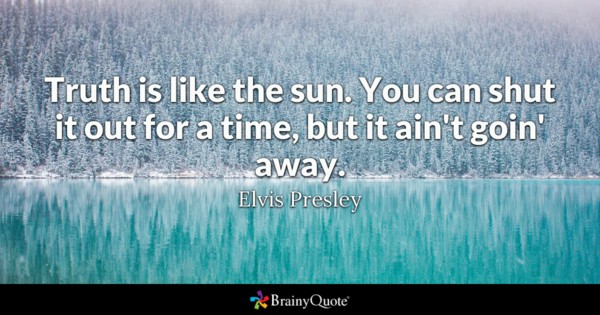
Truth

The dictionary defines truth as that which is in accordance with fact or reality.

There seems to be very little of that going around these days! In fact, fake news, propaganda, and false information seem to spread faster than Covid-19! I have an insatiable desire to grow in wisdom, knowledge, and understanding; to know the truth about anything that affects my life. Perhaps it’s simply a reaction to having been the victim of lies and deception in the past, but I abhor falsehood of any kind.   

When I see something online that I’m unsure about or that doesn’t sound right to me, I check the facts and, in accordance with my desire to speak the truth with boldness, I often post my findings in the form of a comment or a link. This hasn’t always been popular. In fact, one acquaintance called me the “resident fact checker” in an online discussion. She clearly didn’t mean it as a compliment, but I fail to see how seeking and speaking the truth could be anything but good! Thankfully, others have expressed appreciation either online or in person and I’ve even been approached a couple of times by people looking for help in checking the validity of something they’ve read or been told. 

We live in a day of relativism; the idea that you can have your truth and I can have mine. That isn’t actually truth at all; that’s belief or opinion. Unfortunately, belief doesn’t create fact. Truth is independent of belief. Being able to discern between fact and opinion, between news and editorial, between truth and belief, is a very important skill.  American politician, sociologist, and diplomat, Daniel Patrick Moynihan, was quoted as saying, “Everyone is entitled to his own opinion, but not his own facts.” 

Accepting that absolute truth exists is an essential foundation of Christianity. God was very clear in the Bible that what He revealed was truth. In John 14:6, Jesus declared, “I am the way and the truth and the life. No one comes to the Father except through me.” That’s either true or it isn’t. It can’t be true for some and not for others. 

There are many other Bible verses about truth, so choosing one to accompany my one word for 2021 was challenging. I finally settled on 2 Timothy 2:15, “Do your best to present yourself to God as one approved, a worker who does not need to be ashamed and who correctly handles the word of truth.”

That’s what I want to focus on in 2021, correctly handling the truth. Not just Biblical truth, but all truth. 

Have you ever chosen a word to inspire or guide you in a new year? What would your word for 2021 be?

truth

The Four

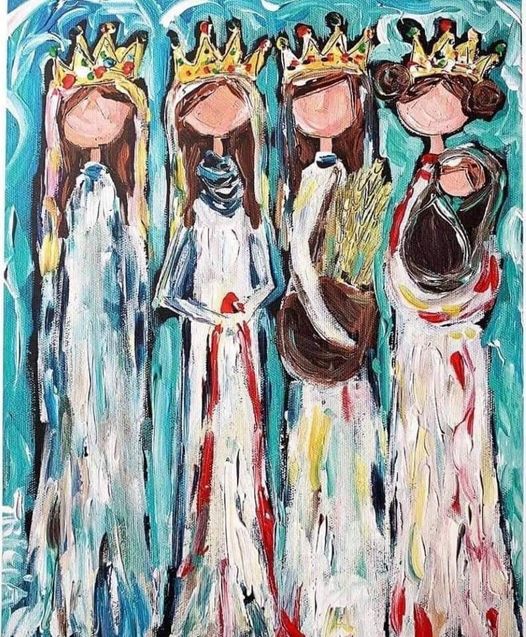
Occasionally a piece of art speaks to my heart. That was certainly true of The Four by American artist, Tricia Robinson, when I saw it for the first time yesterday. 

The Four - Tricia Robinson art

No, I wasn’t in an art gallery! Covid restrictions continue to keep me locked up at home. I actually saw the painting on Facebook! It was the vibrant colours and the simplicity of the figures that first caught my attention, but the artist’s description gave it much deeper meaning.

These four women: Tamar, Rahab, Ruth and Bathsheba have something in common. They are grandmothers in Jesus’ family tree! Grandmothers! Some had affairs, were prostitutes, lied and were truly not the starry eyed perfect princesses.

But God chose them, used them…. These four broken women. 

And that’s why I gave them crowns. A symbol of grace and love from our Creator and Redeemer.

Christian author, Ann Voskamp, wrote this on her blog

Four broken ­women—​­
women who felt like outsiders,
like ­has-​­beens,
like ­never-​­beens.

Women who were weary
of being taken advantage of, 

of being unnoticed
and uncherished
and unappreciated;

women who didn’t fit in, 
who didn’t know how to keep going, 
what to believe, 
where to ­go—​­
women who had thought about giving up.

And Jesus claims exactly these who are
wandering
and wondering
and wounded
and worn out as
His.

These four women can be found in the pages of the Old Testament and all are part of the genealogy of Jesus found in the first chapter of the book of Matthew. Widowed at a young age and rejected by her second husband who also suffered an early death, Tamar, was left husbandless and without children. In her culture that made her worthless. Taking matters into her own hands, through an act of deception, she bore twin sons by her father-in-law who later admitted that “she is more righteous than I.” After Israel’s 40 years of wandering in the wilderness, spies were sent into the land of Canaan and found lodging with a prostitute named Rahab. After risking her life to hide them, Rahab asked that her life and the lives of her family be spared when the Israelites invaded. In the painting, she can be seen holding the scarlet cord that she was told to tie in the window of her home to mark it. Everyone inside the house would be spared. Another young widow, Ruth, left her homeland and her pagan gods to follow her aging mother-in-law back to her homeland where she would be a foreigner and an object of curiosity. She worked tirelessly gleaning in the fields at harvest time to provide for them until she was noticed by the landowner and became his wife. She eventually became the great grandmother of King David. Bathsheba suffered untold grief when the king, in an attempt to cover up an act of lust that resulted in an unplanned pregnancy, arranged to have her first husband murdered and then took her as his own wife. I can only imagine how much worse her grief became when the child of that union died. Her second son became the great King Solomon.

Yes, these were imperfect, broken women; women who’s lives didn’t go the way of little girls’ dreams, but they are also women who were cherished by God. I can identify. When I saw the painting and understood it’s meaning, I wanted to order a print to hang in my den, my room of prayer. Unfortunately, the artist doesn’t ship to Canada, so I will have to be satisfied with having it on my computer desktop where I can look at it often and be reminded that though, I too, am somewhat flawed and have been damaged by the trials of life, I am a beloved daughter of the one true God!

Kintsugi… broken made beautiful

product-jpeg-500x500

“We have this treasure in jars of clay to show that this all-surpassing power is from God and not from us.”   2 Corinthians 4:7

When I read this verse in my morning devotions today, my mind went in several different directions. It immediately brought to mind a couple of verses from the Old Testament book of Isaiah.

“You, Lord, are our Father. We are the clay, you are the potter; we are all the work of your hand.”   Isaiah 64:8

and

Shall what is formed say to the one who formed it, ‘You did not make me’? Can the pot say to the potter, ‘You know nothing’”?   Isaiah 29:16

We are all vessels shaped by God’s hands for His purpose, not our own.

Next, my mind went to the value of a clay pot. Many are plain on the outside and made for ordinary everyday purposes. They might not look like they have much value, but from earliest times people the world over have survived in the harshest of circumstances because they had simple clay pots to carry life giving water. We ought to be like those jars carrying life to those around us.

women-providing-water_

Finally, I was reminded of the centuries old Japanese art of kintsugi. or “golden joinery.” Life is hard and sometimes our jars of clay are chipped, cracked, or broken, but God is not only the potter; he is also the master of kintsugi!

daa394a7fdce830f2628ee54246ee38b

Kintsugi is a method of repairing broken pottery using lacquer mixed with gold, silver or platinum. Rather than trying to hide the brokenness, it becomes part of the beauty of the piece. The process often enhances the value of the item as each mended piece is completely unique.

In a similar manner, when we bring our brokenness to God, He doesn’t reject or discard us. Instead, where we see only ugliness, he sees potential and the possibility of creating something new and beautiful. He takes our broken pieces and carefully puts them back together so that even though the cracks and scars might still be visible, they become part of our beauty. Through His loving grace and mercy, he forgives our failures and heals our hurts. When His gold fills our cracks, we are made stronger and more beautiful and His power and glory are seen in us. We simply need to put our broken lives into the hands of the master of kintsugi and trust Him to put us back together!

bowl-1