Make your closet more eco-friendly

Tips for creating and maintaining a sustainable wardrobe

Logo by SamTo begin with, what is a sustainable wardrobe? In a nutshell, it’s one that reduces the impact that your clothes have on the planet. Adopting sustainable practices improves the quality of our lives, protects the environment, and preserves natural resources for future generations. So where do we start?

I’d recommend doing some research and trying to find sustainable and ethical clothing brands and purchasing only those, but I know how challenging it can be to find accurate information. Choosing sustainable fabrics is also easier said than done, so what’s an ordinary person to do? Here are some simple affordable steps that we can all take to dress more sustainably:

5303cf89c82d3a46d85205a6f0dc1c86

Buy less

The most sustainable anything is the one you already own. Instead of shopping, look for new ways to wear what’s already hanging in your closet. 

Quality over quantity

Instead of chasing trends and buying numerous pieces of poor quality clothing every season, avoid fast fashion altogether and invest in a few good quality pieces that will last. There’s no question that buying higher quality clothes will cost more initially, but they’ll outlast cheaper, less eco-friendly options, greatly reducing the cost per wear

The 30 wears test

I was shocked to read on the Wear Me 30 Times website that the average woman keeps a piece of clothing in her wardrobe for only 5 weeks! In my opinion, that’s inexcusable! Wear Me 30 Times is a slow-fashion initiative focused on supporting conscious consumption and increasing awareness of the problem of waste in the fashion industry. The principle is very simple. Before purchasing something, if you can honestly say that you’ll wear it a minimum 30 times (and hopefully more often), then go ahead and buy it. There are exceptions, of course. The dress you buy to wear to your son’s wedding or your 40th anniversary celebration might not pass the 30 wears test and that’s okay, but even on those occasions try to invest in something with longevity that you’ll be able to wear again. 

Shop second-hand

If you’ve been following my blog for very long, you know that I love thrift store shopping! Not only is it a great way to welcome sustainability into your wardrobe, but it’s fun. It’s like going on a treasure hunt, never knowing what you’ll find. If you’re new to this, you can find 18 tips for successful second-hand shopping here

Look for recycled fabric

Check labels. You may be surprised to find clothing or accessories made from plastic bottles or sweaters made of pre-used wool. Some brands are even making vegan leather out of pineapple rinds and apple peels!

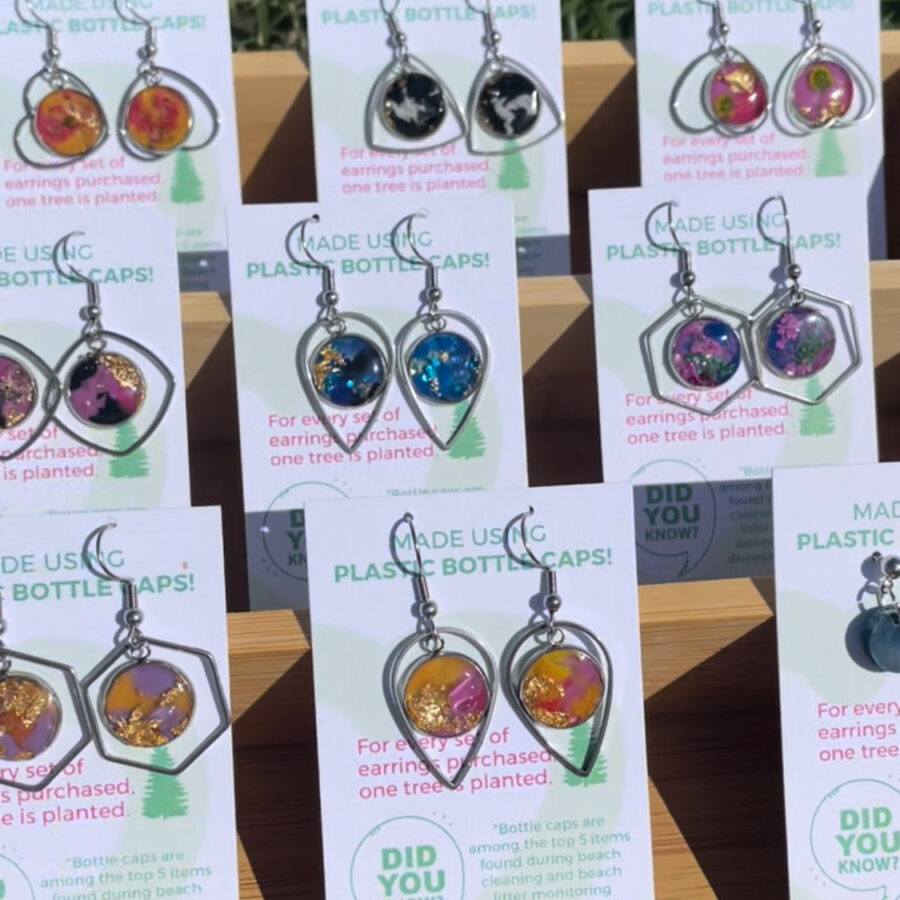
I have to give a shout-out here to Karyn, one of my former students and founder of Repurposed Plastic. Earrings from plastic bottle caps! Brilliant!
IMG_8665-900x900

Follow good laundry practices

First and foremost in this category, as mentioned in last week’s post, don’t wash clothes that aren’t dirty! With the exception of socks, underwear and workout wear, you should be able to wear an item at least three times before putting it in the laundry. Not only does washing less often save water and electricity, but it also helps your clothes last longer. Make your laundry routine even more sustainable by using eco-friendly laundry products. Wash in cold water, don’t overfill the machine, and when possible, air dry your clothes. 

Mend and repair

Prolong the life of your quality clothing by learning how to mend. It’s not as difficult as it might sound and there are lots of online articles and videos available to help. If the job is beyond your skill level, consider finding a tailor who can do it for you. Most dry cleaners also offer mending services. Taking shoes and boots to a repair shop for resoling is a cost-effective way to prolong their life while keeping perfectly good uppers out of the landfill.

Do you have any tips to add? Have you found any sustainable clothing brands that you can recommend? 

Happy Saint Patricks Day Background.

What to do with worn out clothes

LogoAfter a full month of wearing only six items from my closet, I have thoroughly enjoyed getting dressed this week! In fact, I’ve worn something different every single day!

As promised last week, I also went through my closet, tried on a lot of things, and put aside a few to be donated. I usually do this twice a year when I switch my closet from summer to winter and then back again in the spring, but after a month of not missing some of the items in my closet I knew that a few more could probably be moved out.

This exercise led me to think about the different things that can be done with clothing that we no longer want or need. Often, the obvious answer is to donate them or consign them so that they can be enjoyed by someone else, but what about those items, including sheets and towels, that are too worn out to be donated?

A conservative estimate is that clothing and textiles make up 5 to 7% of what occupies landfills globally. Many believe that this figure is closer to 12%. The average American citizen reportedly throws away 70 pounds (31.75 kg) of clothing and other textiles each year. The figures are probably similar in other first world countries. I’ve never weighed my wardrobe, but 70 pounds of clothing sounds like an awful lot to me! What can we do to keep this fabric waste out of the landfill?

Here are a few ideas:

  1. Cut them up to use for cleaning rags. Towels and sweatshirts are particularly good for this purpose.
  2. Some thrift stores do accept worn out fabric that can be cut up and sold as industrial rags.
  3. Take advantage of the H&M Garment Collecting programme. Simply bag any unwanted clothes or textiles, by any brand, and in any condition, then take them into an H&M store and hand them to a cashier. In return, you will receive a thank you voucher to use toward a purchase. Anything that is still wearable will be sold second-hand. Textiles that are no longer suitable to be worn will be turned into other products and those that can’t be used in any other way will be shredded into textile fibres that are often used as insulating material. Several other brands including The North Face, Zara, Patagonia, Levi’s, and Uniqlo have similar programs. 
  4. Check with a local animal shelter. Many will take old towels, sheets, and other soft or fuzzy fabrics to use for bedding.
  5. Compost natural fibres. Remove attachments such as buttons and zippers, then shred the fabric finely and add it to your compost alongside fresher, wetter material such as vegetable peelings or garden cuttings to help it break down faster. Find more information about how to to this properly here.
  6. Purchase an unstuffed pouf style hassock such as the one pictured below and fill it with old bedsheets, towels, and clothing. Again, remove any attachments like buttons and zippers that might poke through the cover. If you’re like me, it might take half a lifetime to fill a hassock, but you can do the same thing on a smaller scale by filling  an unstuffed throw cushion.

Screen Shot 2021-12-07 at 8.57.55 PM

Unstuffed pouf from Amazon.ca

Do you have any ideas to add to this list? What do you do with old, worn out clothing?

Performing a stuffectomy

The same creative gal who originated Awesomeday introduced me to a new word this week: stuffectomy. In English, the suffix ectomy means to remove. A tonsillectomy is the surgical removal of the tonsils, a lumpectomy is the removal of a lump, and so on. A stuffectomy is, therefore, the removal of stuff!

For the past while, I’ve been performing a major stuffectomy. I started about a month ago by cleaning, reorganizing and getting rid of stuff from our basement storage room. The last time I performed such an extensive cutting out of stuff was four years ago when we were preparing to move to Japan for a year. In the three years since we’ve been back, clutter had once again taken over and the problem had spread to other parts of the basement. I’m currently working on the little room that was my office when I was still teaching school. It’s going to be a playroom for the grandchildren when I’m finished but I’m afraid that this phase of the stuffectomy operation is going slowly. Almost everything that was stored in that room has to come out and I have to find another place for anything that I decide to keep. Like a doctor cutting out cancerous tissue, I need to be aggressive!

I love getting rid of stuff but I hate to see anything go to waste. The question is always what should I do with it? I don’t want to clutter up my kid’s homes with my cast off stuff but several items did find their way to my daughter’s house this past weekend. Her children really don’t need more toys but they were delighted with the box full of stuffed animals that were Mommy’s when she was a little girl!

One of our three weight benches was dropped off at our youngest son’s place on Wednesday. We haven’t stopped lifting weights but we’ve had to adapt our exercise program to accommodate our aging knees and no longer need the third bench. It will be put to better use by Nathan and his roommates.

Lots of things have gone to the Good As New shop, the thrift store run by four local churches. The big challenge has been not buying more stuff while I’m there dropping things off!

I’ve even managed to sell a few items. I belong to a local Buy and Sell group on Facebook that has more than 1000 members and so far, everything I’ve posted has sold! It’s kind of like an ongoing multi-family garage sale but so much easier. I won’t get rich on the proceeds but a few extra dollars never hurt anyone!

As much as possible, things that can’t be reused have been recycled. We dropped an old computer, a couple of outdated monitors and a broken printer off at Centra Cam’s recycling centre in Camrose earlier this week. Centra Cam is a non-profit organization that assists people with developmental disabilities by providing them with training and skill development enabling them to reach their full potential and enjoy increased independence. It’s a pretty neat feeling knowing that my cast off stuff can play a bit part in something like that!

Alas, while I sit here writing this post nothing is happening in the basement so I’d better sign off and get back to performing the stuffectomy!

First stage finished - the storage room has seldom looked this good!

Shoes, shoes, shoes

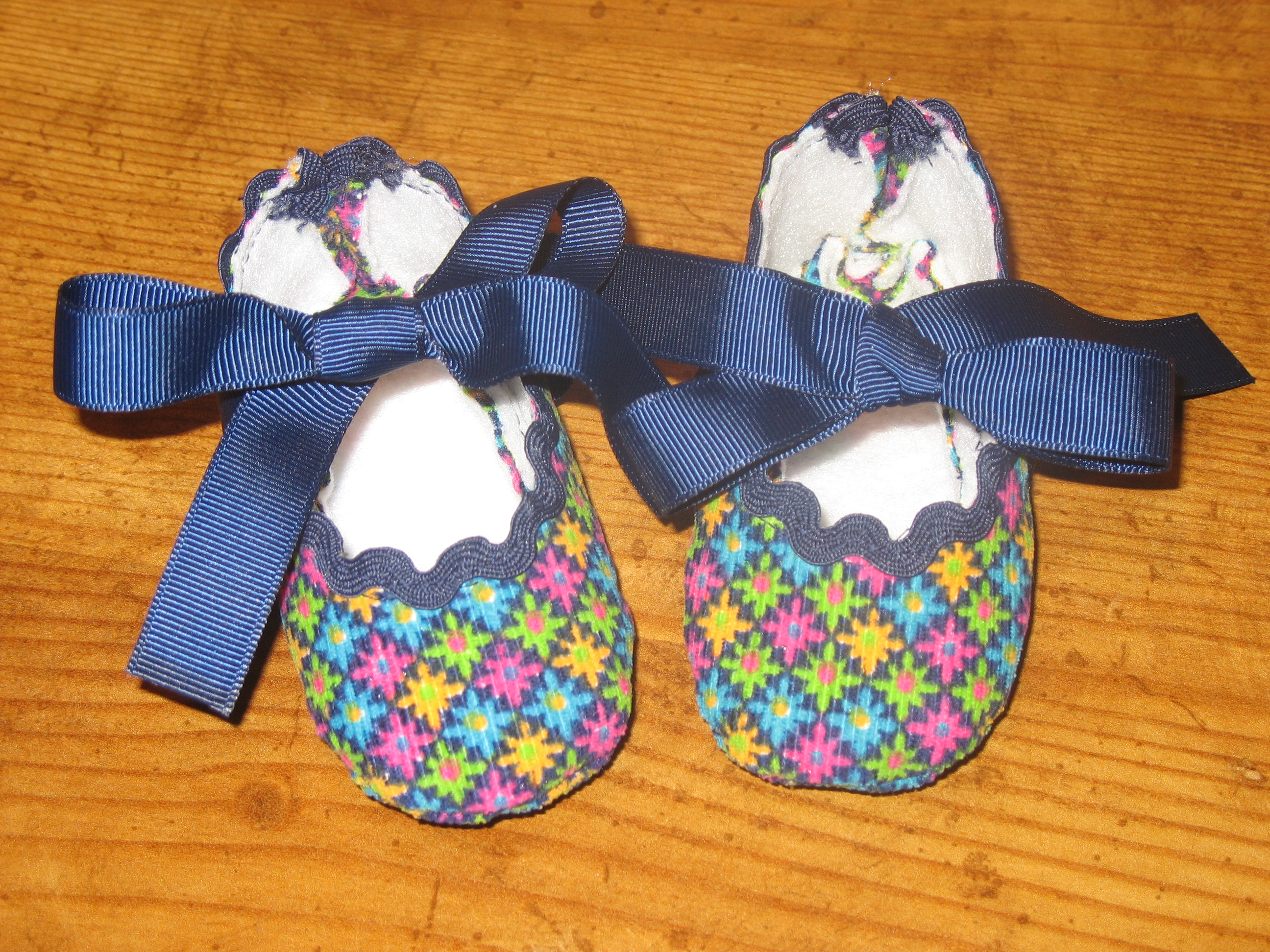
If you’ve been reading my blog for very long, you probably saw my post about making baby shoes back in October. As I predicted back then, the first pair which I made for my granddaughter, Jami-Lee, definitely wasn’t the last. Before that pair had even been delivered to Calgary, Buck and Chrissy came to visit and, of course, I had to make a pair for their wee daughter, Joanna.

Jami-Lee's

JoJo's

I gave the  next pair, the tiniest ones that I’ve made so far, to our son and daughter-in-law for Christmas. They’re expecting their second son in February.

These two pairs, made today, are going to Japan with us. They’re for two of the newest members of the Hope Church family, both born to friends of ours in recent months.

With the exception of Jami-Lee’s, all these little shoes have been made of recycled fabric. After all, most worn out blue jeans still have lots of usable fabric in them. Even the straps on the last two pairs are recycled. In their former life, they were the handles on a little shopping bag! I don’t remember for sure but I think it came from La Senza.