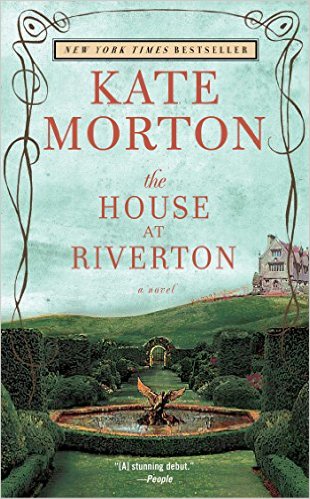
The House at Riverton

If you, like me, are grieving the cancellation of TV’s popular drama series, Downton Abbey, then have I got a book for you!

Riverton

Originally released in her native Australia as The Shifting Fog, The House at Riverton was author, Kate Morton’s, debut novel. Described on the back cover as “the captivating story of an aristocratic family, a glorious English estate, a mysterious death and a way of life that vanished forever”, the story is set in England between the two great wars. Told in flashback by 98-year-old Grace, who was employed at Riverton, first as a housemaid and later as lady’s maid to the family’s eldest daughter, I found it a captivating read. The time period and master/servant relationships were so very reminiscent of Downton Abbey!

I’m not generally a fan of mysteries, but this one is more than a simple who-done-it and kept my attention to the end. In addition to providing a window into a fascinating time in history, The House at Riverton explores topics like memory and long held secrets, the devastation of war, and the end of an era.

Since The Shifting Fog was released in 2006, Kate Morton has published four more novels. I picked up The House at Riverton and two of the others, The Forgotten Garden and The Distant Hours, at a garage sale this spring thinking that they would make great summer reading. So  far, I haven’t been disappointed. We’ll be camping for the next couple of weeks and the other will be going with me.

What are you reading this summer? 

Five at a time!

I love books and I’m an avid reader but with the exception of my Bible, I rarely read more than one book at a time. Though it probably happened back in my university days when textbooks and research papers were the bane of my life, I don’t ever remember reading five at a time before or since! Such an occasion seemed worthy of a blog post especially since I’ve been thinking about following the lead of fellow blogger, Kari Ann, who posted “Five Things Friday” on her Outside Air blog last week.

So what am I reading and why so many books at once?

Bible

In addition to using a daily devotional booklet that takes me all over the Bible, I’m almost always somewhere in the middle of reading the scriptures from Genesis through to Revelation. For this purpose, I like to use a chronological Bible, one that puts the stories of scripture into the actual order that they happened. I find it so much easier to understand the big picture that way. I’ve read through my New International Version chronological text several times, but this time I chose the New King James Version Chronological Study Bible. I’m not a fan of daily reading plans that take you through the Bible in one year. To me, reading the Bible is not a ritual or a race. I like to immerse myself in the scriptures, seeking to understand what they’re saying to me about how I ought to live my life. I’ve read the entire Bible in less than a year, but most often it takes me considerably longer. With its illustrations, fascinating background and daily life notes, timelines, maps and charts to help bring the cultures and people of biblical times alive, this one could take me two years and that’s okay.

7 ways

I’m not going to air our dirty laundry here, but Richard and I have hit a rough patch in our marriage. To be entirely honest, it’s actually more like we’ve fallen into a sinkhole or gone careening off a cliff, but long term marriages are like that sometimes and we’re working on it. Since we’re both academically minded, we tend to turn to books for help at times like this. He went to a Promise Keepers conference last weekend and came home with this one, 7 Ways to Be Her Hero by Doug Fields. He read it in a couple of sittings so I thought it must be worth looking at. It’s written for men by a man, but Fields acknowledges that “some women will sneak around and read it (and will most definitely get something out of it).” The book, which he originally wanted to call How Not to Suck as a Husband, is written in colloquial man-speak that is fun and easy to read. It’s definitely not a textbook! I read eight of its ten chapters in one sitting last night and all I can say is that I’d like to give it back to my husband and tell him to read it again, memorize it and put it into practice. It’s that good!

Love & Respect

This is another one that I’m hoping might help us through the rough patch. Based on more than three decades of counselling, as well as scientific and biblical research, Love & Respect by Dr. Emerson Eggerich is based on the premise that a wife’s greatest need is to feel loved while a husband needs to feel respected. We’ve decided to go through this one together, reading and discussing one chapter a day. It definitely isn’t as fun and engaging as 7 Ways and we’ve only read the first two chapters so it’s a bit too early to pass judgment but I think it does make some good points and it’s already provided a good jumping off spot for discussion.

Outlaw

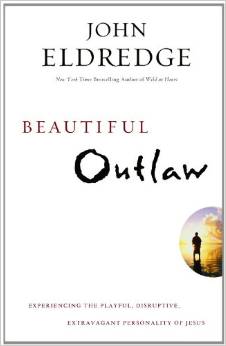
This is another one that we’re reading together along with two other couples that we meet with for a weekly time of prayer and Bible study. Sadly, it’s been a huge disappointment. John Eldredge is probably best known for his first book, Wild at Heart: Discovering the Secret of a Man’s Soul. I have to wonder if he wrote Beautiful Outlaw simply hoping to cash in on the success of the earlier book. He attempts to introduce the reader to the real Jesus by squashing typical stereotypes and focusing on what he calls Jesus’ playful, disruptive, and extravagant personality. He spends most of the first three chapters dwelling on Jesus’ playfulness. While I expect that our Lord did have a playful, exuberant side, I don’t think that a single one of the scriptures that Eldredge uses points to that. In addition, as one of our group so aptly put it, he could have said everything in the first three chapters in three sentences. As a group, we’ve decided to read and discuss two or three chapters a week instead of just one so that we can get through it sooner and move onto something else. My assessment of this one is that it’s just fluff!

Rainbow

And finally, book #5, the novel that I’m reading for sheer enjoyment. When our small town librarian saw me looking over the shelf of recently acquired books, she pointed to The Dark Side of the Rainbow by Caren Powell and told me to try that one. “I thought of you when I bar coded it,” she said. “It looked like an Elaine book.” She knows what I like to read and hasn’t steered me wrong yet. According to editor, Ann Westlake, “The Dark Side of the Rainbow tells of Nelson Mandela’s South Africa – a country struggling with racism, fear and determination.” She calls it “a wonderful, endearing blend of characters, scenery and history.” I’m still in the early pages so I’m just getting to know those characters but I can hardly wait to dig deeper. Caren Powell lived in South Africa for 38 years during the apartheid era and the changeover to democracy. She and her husband owned a farm there and much of the detail in the book was drawn from her personal experiences.

It’s unusual for me to have so many books on the go at once but tonight’s choice is easy. I’m going to read the last two chapters of 7 Ways and then escape to The Dark Side of the Rainbow!

International Literacy Day 2014

Right now, you are doing something that one in five people on the face of this planet cannot do!

As one who values my ability to read above most other skills, I find that an appalling statistic! According to the World Literacy Foundation, an estimated 67 million children around the world do not have access to primary school education! Equally disturbing is the fact that almost two-thirds of the world’s illiterate adults are women. Given that statistic, it’s hardly surprising to learn that the majority of the world’s poor are also female.

Today is International Literacy Day, a day for shedding light on the desperate need to ensure that all people have the opportunity to learn to read and write. Education is a basic human right, but one that many people are denied, particularly in parts of Asia and sub-Saharan Africa. The problem is not restricted to underdeveloped parts of the world, however. Literacy rates in Canada are high, around 97 per cent, but what does that really mean? While they may have basic decoding skills, the most recent literacy study by Statistics Canada shows that millions of Canadians do not have the literacy skills they need to keep pace with the escalating demands of our society and economy. A whopping 48% of Canadian adults over the age of 16, many of them new immigrants, have low literacy skills that do not adequately equip them for the workforce. The situation is similar in the US.

But what can we do? How can you and I overcome such an enormous global issue? That’s where the Starfish Story comes in (adapted from The Star Thrower by Loren Eiseley).

howtohelp_starfish_story

We cannot solve the world’s literacy problem, but we can make a difference for one or two.

Picture 2
This is Marie. My husband and I have been sponsoring her through New Missions, a small organization operating in Haiti and the Dominican Republic, since she was in primary school. She now attends high school and dreams of becoming a nurse. For approximately one dollar a day, we provide her with the opportunity to go to school in Haiti where only 2% of the children finish high school and about 40% of the adult population is illiterate. She also receives a hot meal at school each day as well as regular health check-ups and medical care when it’s needed. There are many similar organizations, including World Vision, that offer you the opportunity to provide a child with the chance to go to school. Perhaps that child could be your starfish!

I also choose to give Kiva loans to impoverished women in third world countries who are helping support their families and educate their children. By investing in women’s lives, society as a whole benefits because women typically reinvest 90% of their income back into their families. In so doing, they break the cycle of illiteracy and help lift their families out of poverty.

Closer to home, encouraging literacy is as simple as reading to a child! Fill your home with books and let the children in your life see you enjoying the gift of reading.

IMG_4301

What are you reading?

“The more that you read, the more things you will know. The more you learn, the more places you’ll go.”

Dr. Suess

I’ve been an avid reader for as long as I can remember. Bookstores and libraries are two of my favourite places but when I was recently asked who my favourite author is, I couldn’t answer. I had to be honest and say that I don’t have one. There are simply too many to choose from!

As I’ve mentioned in previous posts, my favourite novel is The Bridges of Madison County by Robert James Waller and the nonfiction book that has impacted me most is Half the Sky: Turning Oppression Into Opportunity For Women Worldwide by Nicholas D. Kristoff and Sheryl WuDunn.

As Dr. Suess so wisely mentions, books can take us places we might never go. I’m presently in the middle of reading Behind the Beautiful Forevers by Pulitzer Prize winning reporter, Katherine Boo, which has carried me into the slums of present day Mumbai, India. Next on my list is The Know-It-All: One Man’s Humble Quest to Become the Smartest Person in the World by A.J. Jacobs. Recommended by my blogging friend, Donloree, the book chronicles Jackson’s experience reading the Encyclopaedia Britannica from A to Z!

My taste in reading is somewhat eclectic and perhaps a bit academic. I don’t care for fantasy, mysteries or thrillers. I’m not averse to romance but I don’t like what I call “fluff” (syrupy, predictable, “happy ever after” stories) nor do I care for the highly erotic. Fifty Shades of Grey is not on my reading list. Though our bookshelves contain a very sizable collection of westerns, those are Richard’s and I’ve never had a desire to read them.

So what do I like to read? First on my list would probably be realistic fiction, true to life human interest stories like the book I’m presently reading. I also enjoy historical fiction, stories that take me back in time. Biographies, autobiographies and other non-fiction books that introduce me to the lives of interesting people in interesting places are also high on my list.

Though I’ll never read the entire Encyclopaedia Britannica, I have read the Bible from cover to cover several times. I consider it the essential guidebook for this journey called life and I read from it almost every day. For reading purposes, I much prefer a chronological Bible that puts the historical narrative in the order that it happened. The version that I’m currently reading is a New King James chronological study Bible that contains lots of notes, articles, timelines and other graphics that give insight into the life and customs of Bible times. They contain information on everything from agriculture to architecture, food and drink to government, and marriage and family to science and worship. I’m thinking that it’s going to take me a long time to get through this one but it’s definitely fascinating.

As a teenager, I went through a science fiction phase but that genre no longer captures my interest and as a long time teacher of upper elementary school, I’ve read a lot of juvenile fiction, some of it very good. Perhaps some of my most entertaining reading these days is sharing children’s books with my grandchildren!

I was disappointed to discover that though I had plenty of time to read while recovering from last month’s surgery, for the first couple of weeks I wasn’t able to focus well enough to escape into a good book! The after effects of seven hours of anesthetic plus the amount of pain medication that I was using left my poor head a bit addled! Fortunately, that has worn off and I’m reading again. We’re off to Edmonton to start my radiation treatments the day after tomorrow and I’ll be taking several books with me.

What do you like to read? Do you have a favourite author?


Banned Books Week

It seems that there is a day, a week or a month for almost everything these days. October is Breast Cancer Awareness Month in Canada and the US. October 1 was International Day of Older Persons as well as World Vegetarian Day. Tomorrow is World Teachers’ Day. Though some of these are well publicized, most come and go unnoticed by the majority of us. I wouldn’t have known that this was Banned Books Week had my online friend, Sarah, who is both a librarian and originator of the Awesomeday movement, not mentioned it on Facebook today.

As an avid reader, that definitely caught my attention and I began to do a bit of digging. I was absolutely astonished at what I discovered! Though the practice of governments banning books in Canada and the United States is a thing of the past and there are no books currently banned by either country, specific titles are frequently challenged and sometimes banned by individual school jurisdictions and public libraries.

I was flabbergasted by the books that have been challenged and in some cases, banned. Here are just a few that are considered controversial and are often banned in American schools:

Pulitzer Prize winning To Kill a Mockingbird by Harper Lee which addresses issues of class,  courage, compassion and gender roles in the American South during the Great Depression has been challenged over the years for its use of profanity and racial slurs. Thankfully, not everyone agrees. In fact, in 2006, British librarians ranked the book ahead of the Bible as one “every adult should read before they die”.

Mark Twain’s Adventures of Huckleberry Finn, another American classic, is one of the most frequently banned books in American schools because Twain used the word “nigger” throughout. Surely teachers of American literature can be trusted to explain the reason behind the word; that Twain was trying to reveal the plight of the slave in America and that he was using the vernacular of the time.

Lord of the Flies by Nobel Prize winning author, William Golding, tells the story of a group of British schoolboys stranded on an uninhabited island who try to govern themselves with disastrous results. In 2005, the novel was chosen by Time magazine as one of the 100 best English language novels published between 1923 and 2005 but it is often criticized and in many cases banned from schools because of its use of profanity, sexuality, racial slurs and violence. It is perhaps the book I remember most vividly from high school English class more than 40 years ago. It’s not a pleasant read but do we learn and grow if we read nothing but entertaining fluff?

The Diary of a Young Girl by Anne Frank, the ever-hopeful true story of a young teenager who eventually died in the Holocaust has been banned for being “too depressing”. Unbelievable!

I was perhaps most shocked to find Katherine Paterson’s novel, Bridge to Terabithia, on several lists of most commonly challenged and banned books! As a teacher, I had absolutely no qualms about reading this beautiful book about two lonely children who create a magical forest kingdom to my upper elementary school students year after year. The inspiration for the book, in which one of the main characters dies, came from a tragic event in the author’s own experience when a close friend of her son’s was struck by lightning and died. Death is a reality, even for children, and this book handles it exquisitely.

I could go on and on about books that have been banned from schools but I literally had to laugh out loud over a few of the children’s books that have at one time or another been challenged or banned from public libraries. Librarians must roll their eyes at some of the criticisms parents bring forth!

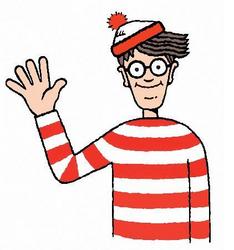
Believe it or not, in at least one location, the first Where’s Waldo book was banned because in one of the drawings a beach is shown where a woman lying on the sand has part of a breast exposed! This in a nation where pornographic magazines are readily available on news stands! Imagine someone poring over the thousands and thousands of tiny characters featured in a Waldo book and singling out this one “offensive” character! I would have needed a magnifying glass to see her!

Then there’s I Have to Go! by beloved children’s writer, Robert Munsch. What parent hasn’t bundled a tiny tot into a snowsuit or a car seat with a five point harness only to have them announce almost immediately, “I have to go PEE!” If that’s offensive, we might as well ban Thomas’ Snowsuit too. After all, aren’t the teacher and the principal cross-dressers?

I can’t even begin to imagine why anyone would object to Al Perkin’s Hand, Hand, Fingers, Thumb! The story line is a little thin (okay, non-existent) but young children love the madcap band of dancing, prancing monkeys and the book’s rhythmic cadence. I think I might still have a copy of it in the bookshelf in the basement.

Certainly it is the responsibility of every parent to be aware of what their children are reading and in some cases, even to limit those choices. There are books that I’d rather not see on a library shelf and books that I choose not to read. There are books that probably aren’t worth the paper they’re printed on or the time and brain cells required to read them but, as honorary chairman of this year’s Banned Book Week, Bill Moyers, has been quoted as saying, “censorship is an enemy of the truth”. The more widely read we are, the better we will know and understand the world we live in and the people we share this planet with.