Book of the month – June 2023

346298825_796475711644640_3455810401975110479_n

A Life Without Water

Marci Bolden

51358755After reading Rohinton Mistry’s A Fine Balance, a 713 page novel about life in India in the 1970s and 80s, and then Timothy Keller’s The Reason for God: Belief in an Age of Skepticism, I was looking for something light to read! Something frivolous and entertaining.

While A Life Without Water was a quick, easy read it wasn’t quite what I expected. Instead, it dealt with a number of serious issues including divorce, alcoholism, loss of a child, and terminal illness. It’s also a book about forgiveness and about finding peace in the midst of heartbreak.

Carol Denman is a recent widow, still dealing with the loss of her second husband, when the ex-husband that she hasn’t seen in more than 20 years barges back into her life. John Bowman is very sick and while he can, he has some amends to make and promises to fulfill. In order to do so, he needs his ex-wife’s help. His presence turns her life upside down and forces her to confront long suppressed feelings of anger, resentment, and grief. The fact that she goes along with the request that he makes of her seems rather unrealistic to me, but it does make for a good story. If you’re given to tears, you might want to have a few tissues on hand!

While A Life Without Water can be read as a standalone, it is the first in a series of three. A Life Without Flowers and A Life Without Regret continue Carol’s story.

Book of the month – May 2023

When it came time to write this month’s book post, I couldn’t decide which of two historical novels I wanted to feature, so I took the easy way out and wrote about them both!

The Letter Home

Rachael English

hbg-title-9781472264701-63.jpgRachael English is a novelist and a presenter on Ireland’s most popular radio programme, Morning Ireland. In her most recent novel, inspired by true events, the lives of three remarkable women are interwoven across time.

While back home in County Clare on Ireland’s west coast, Jessie Daly, whose life has recently fallen apart, agrees to help an old friend research what happened in that area during the terrible famine of the 1840s. Meanwhile in Boston, lawyer Kaitlin Wilson, after suffering a tragedy of her own, decides to research her family history. She knows only that her ancestors left Ireland for Boston in the 19th century. Separated by an ocean, and totally unknown to one another, the two women are drawn into the remarkable story of a brave young mother named Bridget Moloney and the terrible suffering that she and her little daughter, Norah, endured during the famine.

Even on a busy weekend celebrating the birthdays of two of my grandchildren, I had a hard time putting this book down! Perhaps I connected so strongly with the story because I’ve recently been sorting through a box of old family photos, inherited from my mother, and trying to correctly label them before the identities of the people in them are forever lost in the mists of time. Like Jessie and Kaitlin, I’ve taken to the internet to find out more about these ancestors of mine and their lives, but perhaps that should be a story for a different post!

If you enjoy historical fiction or genealogy is your thing, this is definitely a book for you. I enjoyed it so much that I’ve now loaded one of English’s earlier novels, The American Girl, onto my Kindle for future reading.

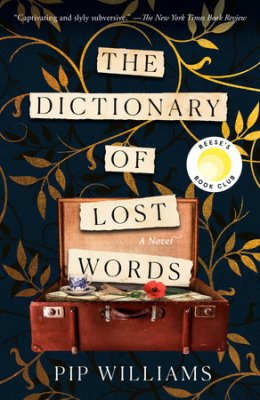
The Dictionary of Lost Words

Pip Williams9781984820747

Knowing that I’m a lover of words and a strong advocate of equal rights for women, my daughter recommended that I read this one. Australian novelist, Pip Williams, masterfully weaves a fictional story into and around the true historical events and people involved in compiling the first edition of the Oxford English Dictionary in the late 1800s and early 1900s.

The only child of a widowed father, Esme spends her early childhood in the Scriptorium, a converted garden shed in Oxford where her father and a team of dedicated lexicographers collect and compile words for the dictionary. From her place under the sorting table she collects stray word slips dropped or discarded by the men and hides them in a small trunk that she labels “The Dictionary of Lost Words”. As she grows up, she begins to realize that not all words are considered appropriate for inclusion in the dictionary, particularly words pertaining to the experiences of women and common folk; words that were considered coarse or vulgar, spoken but not usually written. And so she begins her own collection of words by seeking out the lower-class, less educated people and listening to their everyday speech.

A book about words might sound dreadfully boring to some, but The Book of Lost Words is much more than that. The years during which the Oxford English Dictionary was being compiled coincided with the women’s suffrage movement in England as well as World War I and both have a part to play in the story. More than just a book about words, it’s a book about love, loss, the roles of women, the meaning of service, and a book that asks the important question, whose words matter?

Book of the month – April 2023

From the Ashes

Jesse Thistle

9781982101213This month’s book was a difficult read because of the content, but at the same time, it was difficult to put down!

Abandoned at the age of 3, Jesse Thistle and his two older brothers were taken into care by the Saskatchewan Children’s Aid Society. After a short time in foster care, they were raised by their paternal grandparents in Brampton, Ontario. In his teens, struggling with the effects of generational trauma and loss as well as his identity as an Indigenous youth, Jesse succumbed to a self-destructive cycle of drug and alcohol addiction and petty crime that eventually led to a decade of homelessness.

Finally, realizing that he was going to die if he didn’t turn his life around, Jesse entered Harvest House, a residential rehab centre and began his healing journey. Today he is a husband, a father, an assistant professor at York University, and is working on his PhD. Once a high school dropout, he won a Governor General’s Academic Medal in 2016 and is a Pierre Elliot Trudeau Foundation Scholar and a Vanier Scholar. He is also the author of the Definition of Indigenous Homelessness in Canada, published through the Canadian Observatory on Homelessness.

It was never Jesse’s intention to write a memoir. The fourth step in his addiction recovery program involved writing a “fearless moral inventory” as part of making sense of all that had happened to him. In 2016, the Toronto Star published a profile of him that led to Simon & Schuster approaching him about a potential book deal. Fleshing out that original moral inventory became the book in which, through both poetry and prose, he details devastatingly painful scenes with brutal honesty and bluntness. It is, at times, a gut-wrenching read, but it is also a story of resilience and hope. As I read it, I couldn’t help thinking of all the other Jesses living on our streets and in our prisons. Every one of them has a story, but not all will end well.

One such story is that of Jesse’s father.

cyril--sonny--thistle-1-6084909-1664221809142

Cyril “Sonny” Thistle, who was born April 3, 1954, was last seen in 1981 in Brampton, Ontario, near McLaughlin Road and Queen Street East. At the time he went missing, he was described as having a fair complexion, light brown hair, a thick moustache, and a gap between his top two front teeth. He was 26 years old.

The Thistle family has been trying to locate Sonny for several years, without any success. Jesse and his brothers desperately want to know what happened to their father.

Anyone with information on Thistle is asked to contact investigators at 905-453-2121 ext. 2233. Anonymous information may also be submitted by calling Peel Crime Stoppers at 1-800-222-TIPS (8477) or by visiting www.peelcrimestoppers.ca.

Book of the month – March 2023

308788398_793743698620103_4237945045776654649_n


When the Moon is Low

Nadia Hashimi

9780062369611-lNadia Hashimi’s second adult novel is the gripping story of a mother and her children fleeing Afghanistan after the brutal murder of her husband by the Taliban. Their one hope is to find refuge with her sister’s family in London, England. It’s also the story of Fereiba’s teenage son, Saleem, who becomes separated from the family as they make their perilous journey into Iran, Turkey and across Europe. 

Released in 2015, this international bestseller is a riveting story of hardship, desperation, and harrowing escapes. It’s also coming-of-age story as Saleem learns to navigate the dark world of human trafficking and squalid refugee camps on his own while desperately trying to reunite with his family. I found it completely engrossing and hard to put down! 

Like her first novel, The Pearl That Broke Its Shell, and her more recent ones, A House Without Windows and Sparks Like Stars, When the Moon is Low is a work of fiction based on reality. Hashimi was born in New York to Afghani parents who emigrated in the early 1970s before the Soviet invasion and the rise of the Taliban, but she draws on the experiences of family members and others who shared the details of their sometimes heartbreaking journeys with her.

In addition to her four adult novels, Hashimi has written two novels for young readers, The Sky at Our Feet and One Half from the East, that also deal with life in modern-day Afghanistan and those who have had to flee. 

All of Hashimi’s novels give the reader a glimpse into the lives of Afghan girls and women, but When the Moon is Low also opens our eyes to the perilous journeys of the ever increasing number of refugees from a variety of backgrounds who have flooded Europe in recent years and their harrowing attempts to find asylum. It is a story of both the kindness of strangers and the harsh realities of persecution.

Nadia Hashimi is a pediatrician, the mother of four children, and a former Democratic congressional candidate for the United States House of Representatives. How she finds time in such a busy life to write, I have no idea, but I’m very glad that she does! 

Book of the month – February 2023

Before we left for Mexico, I loaded a series of four books by Pulitzer Prize winning author, Elizabeth Strout, onto my Kindle.

My Name is Lucy Barton

Elizabeth Strout

image-assetThe first book in the series, My Name is Lucy Barton, reads like a memoir to such an extent that when I finished it, I actually researched the author to find out whether or not it was autobiographical. Though there are parallels, particularly in the facts that, like Strout, Lucy Barton is a writer and both were raised in rural areas somewhat isolated from other children, the similarities end there.

When Lucy Barton spends several weeks in hospital recuperating from what should have been a simple operation, her mother, who she has not seen or spoken with for several years comes to visit. As they chat, Lucy dredges up memories from her childhood in rural Illinois; memories of growing up in abject poverty, spending the first years of her life living with her family in a one room garage, being abused by her father who suffered from PTSD as the result of his time in World War II, being told by her classmates that “your family stinks” and sitting alone in a classroom to do her homework long after everyone else had left because it was better than being at home.

Exquisitely told in the first person, this is a story of coming to terms with family trauma. Though there is much that Lucy and her mother can’t or don’t discuss, it also becomes a story of reconciliation and love between mother and daughter.

The second book in the series, Anything is Possible, isn’t really a sequel. Instead, it’s a series of connected short stories about the people of the fictional town of Amgash, Illinois where Lucy Barton grew up. Lucy, herself, appears in only one of these stories when, after being absent for seventeen years, she returns to visit the siblings she left behind. The third book, Oh William!, continues the story of her life and explores her relationship, both past and present, with her first husband, William. The final book, Lucy by the Sea, which I started reading on the plane on the way home from Mexico yesterday and haven’t finished yet, might be my favourite. Perhaps that’s because the characters have become so familiar to me or maybe it’s because the topic is so timely. When the pandemic hit New York, the city that became Lucy’s home after she left Amgash, William convinces her to escape with him to an isolated house on the coast of Maine. Not taking the threat as seriously as he does, she reluctantly agrees thinking that she’ll be there only a week or two. Weeks soon stretch into months, but I can’t tell you how the story ends because I haven’t got there yet!

Elizabeth Strout describes her writing style as that of “an embroiderer”. “I will pick it up and embroider a little green line, and come back later and embroider a leaf or something… I always write by scenes, and I never write anything from beginning to end.” In the end, however, she presents the reader with a complete and complex story written in a confiding conversational tone that creates a feeling of intimacy between character and reader. I can hardly wait to read more of her books!

Book of the month – January 2023

For several months I’ve been thinking about adding another regular feature to the blog and the beginning of a new year seems like the right time to do just that. I’ve always loved reading. As far back as I can remember, libraries and bookstores have been amongst my favourite places and I’ve almost always had a book on the go.

302476890_5349670708483334_3045306630262168656_n

From now on, at the beginning of each new month, I plan to feature one of the books that I read during the previous month. Hopefully you’ll also share what you’ve been reading in the comment section and this can become a conversation. Before I introduce this month’s book though, let me share a bit about what I like to read.

I read a mix of fiction and non-fiction. Though I occasionally enjoy what I refer to as a bit of fluff, I generally prefer a book with a bit more meat to it. That’s why, though many of the non-fiction books that I read are of the Christian variety, I don’t read many Christian novels. I find the majority of them too sweet and unrealistic; too happy ever after. I enjoy reading memoirs and novels about life in other times and places, especially novels that shed light on the lives of women. Over the past few months, I’ve read several historical novels set during World War II. Not stories about the war itself, but about the lives of the people affected by it. January’s book of the month is one of those.

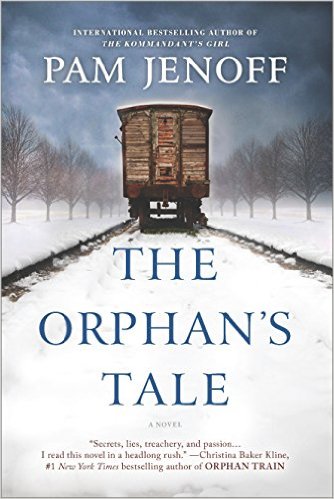
The Orphan’s Tale

Pam Jenoff

orphanstale

The Orphan’s Tale is the second of Jenoff’s novels that I’ve read in recent months. The first was her more recent book, The Lost Girls of Paris. 

Jenoff has degrees in history and international affairs. Her experience working at the Pentagon and as a diplomat for the US State Department covering Holocaust issues in Poland, provide her with the background necessary to bring the events of World War II and Nazi Germany to life. She once described The Orphan’s Tale as the most difficult novel that she’d written because of the very dark subject matter and the fact that it’s based partly on true events. 

The summary inside the front cover flap introduces the story this way

A powerful novel of friendship set in a traveling circus during World War II, The Orphan’s Tale introduces two extraordinary women and their harrowing stories of sacrifice and survival. 

After being disowned by her parents for becoming pregnant by a Nazi soldier and being forced to give up her baby, sixteen-year-old Noa finds work cleaning a small rural train station. When she discovers dozens of Jewish infants in a boxcar destined for a concentration camp, she is reminded of her own child and impulsively snatches one of the babies. Fleeing into the snowy night, she almost succumbs to the bitter cold, but is rescued by members of a traveling circus residing nearby. Finding refuge with them, she meets Astrid, an older star of the show who is assigned the task of teaching Noa to perform on the flying trapeze. Rivals at first, the two learn to see past their differences and soon forge a powerful bond. Their story unfolds with moments of suspense, terror, and heartbreak but also flashes of joy. 

I don’t want to give away too much, but I will say that I found The Orphan’s Tale difficult to put down! It’s a beautifully told story about the power of friendship even in the harshest of circumstances and it led me to ponder the question, what really makes us family?

Are you a book lover too? What kind of books do you like to read? What have you been reading lately?

The Good Women of China

Do you ever finish reading a book and think that perhaps you should start over and read it again; that there was simply too much to absorb the first time through? The Good Women of China: Hidden Voices was such a book for me, not because it was enjoyable or entertaining, but because it was moving and at the same time very disturbing.

9781400030804

From 1989 to 1997, the author, Xinran, hosted a radio call-in show, “Words on the Night Breeze” during which she invited Chinese women to speak about their lives. Broadcast every evening, the show became famous throughout the country for its unflinching portrayal of what it meant to be a woman in China. From the hundreds of women who phoned in to share their stories of forced marriages, Communist Party indoctrination, persecution and imprisonment, extreme poverty, shocking cruelty, and incredible endurance, Xinran chose fifteen, including her own, to share in the book which was only written after she left China. “At that time in China, I might have gone to prison for writing a book like this.” she wrote in the closing paragraph.

When we lived in China for a short time a few years ago, I remember how shocked some of my college age students were to learn how old I was. They told me that Chinese women my age looked much older. Knowing that life in China had been hard, I wasn’t completely surprised, but I started looking at the elderly women on the street and in the market more closely. I wondered how much older than me they actually were and what their lives had been like. Until I read The Good Women of China, however, could not have imagined what many them probably endured.

Xinran is six years younger than I am. Many of the women she writes about are my contemporaries. Their stories are powerful, gripping, and anguished accounts of inhumane treatment, sexual exploitation, torture, rape, hunger, and death often at the hands of Chairman Mao’s Red Guards during the Cultural Revolution of 1966 to 1976. All the while, I was going to school, starting my career, getting married, and enjoying a life of freedom completely oblivious to what was going on half a world away.

Later, during the 1990s and early 2000s, I had the privilege of being ESL tutor to an elderly Chinese gentleman. Ling Cong Xin, better known as Sunny Ling to his Canadian friends, came to Canada with his wife in 1987 to live with their daughter and her family. After we had been meeting together for quite some time, I tried to convince him that he ought to record his memories and experiences. At first, he was very reluctant to do so, but eventually he asked if I would help and so began one of the most exciting projects that I have ever had the privilege to be involved in. I recall Sunny speaking with contempt about the soldiers of the Imperial Japanese Army forcing women and girls in occupied territories including China to be their sex slaves or “comfort women” before and during World War II, but he never spoke of Chinese girls being repeatedly raped by their own countrymen during the Cultural Revolution. Sunny was a highly educated man who had at one time been an official in the Nationalist government. During the Cultural Revolution, many of China’s intellectuals were imprisoned or, like Sunny, forced to leave the cities and take menial jobs in the countryside. When we reached this point in his story he began to claim that his memory was failing him and our project came to an end. I believe that reliving the memories simply became more than he could bear. Like Xinran, he also expressed a genuine fear that if some of the things he told me about were ever published, the Chinese government might make life difficult for his relatives who still lived in that country. After reading The Good Women of China, I can’t help wishing that Sunny’s wife had spoken English and that I’d also had the opportunity to hear her story.

“These are stories that must be read. The lives of these anonymous women are so moving that when I finished reading their stories I felt my soul had been altered.”    Amy Tan

“Mao said ‘Women hold up half of heaven.’ Sadly, this remarkable book demonstrates that he was wrong. Women in China actually hold up half of hell. Xinran has written the first realistic portrayal of women in China. Read it, and weep.”   Jan Wong

Blind date with a book

Screen Shot 2018-02-02 at 5.58.15 PM

To celebrate Valentines Day, the Killam Municipal Library, just up the road from us, decided to play matchmaker. “Going out on a blind date is a lot like opening up a new book – you never know what kind of experience you are going to have!” announced the library website.

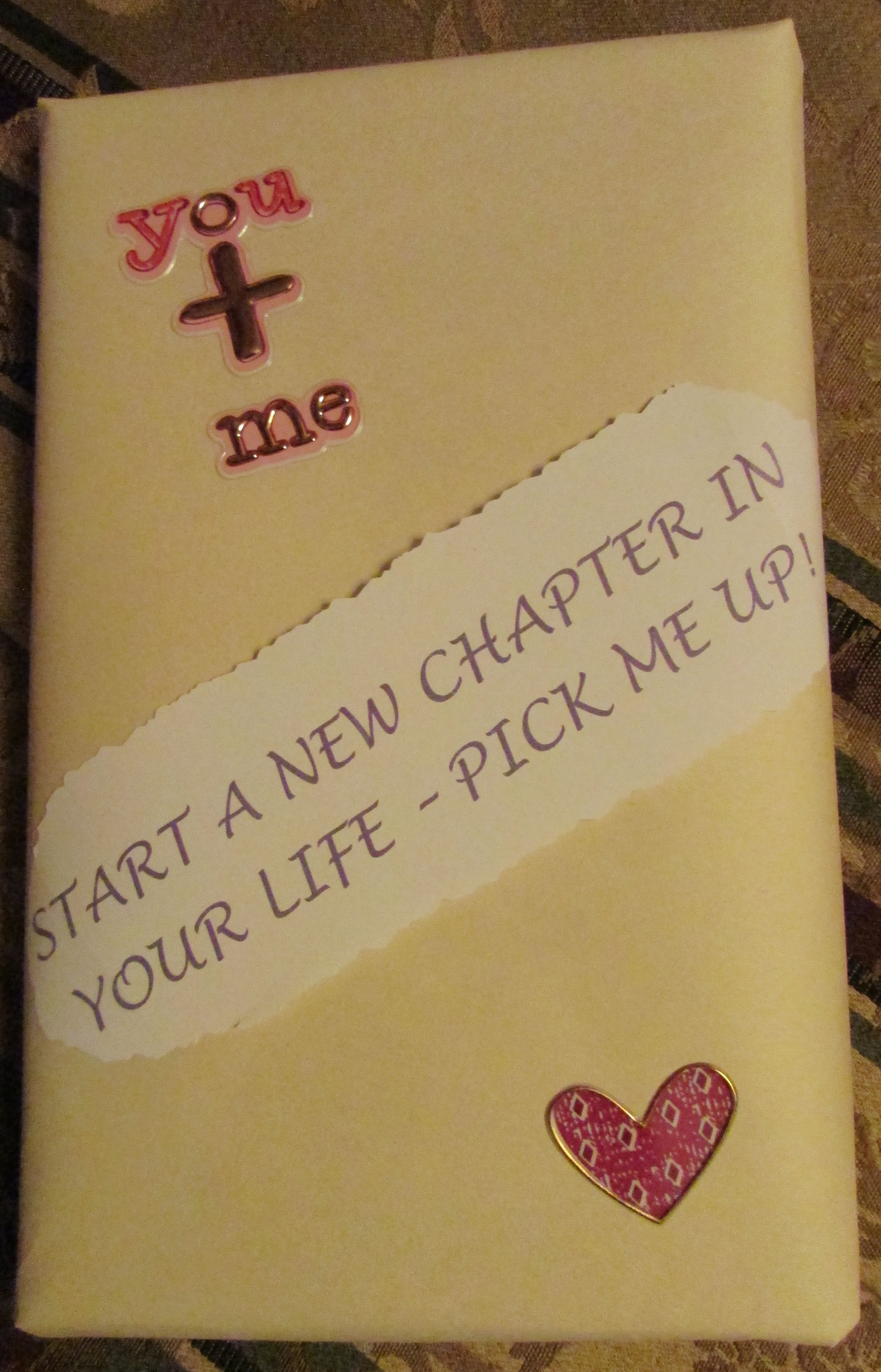
I’ve never been on a blind date, but I decided to give this one a try. After all, it fit rather well with my New Year’s resolution. I stopped by the library during the first week of February and chose this one from a selection of similarly wrapped packages.

IMG_5430

Filled with anticipation, I hastened home and I quickly unwrapped my “date”. It definitely wasn’t love at first sight! In fact, my initial response was disappointment. Kind of like imagining someone tall, dark and handsome, then opening the door to find a date who, at first glance, isn’t really attractive at all.

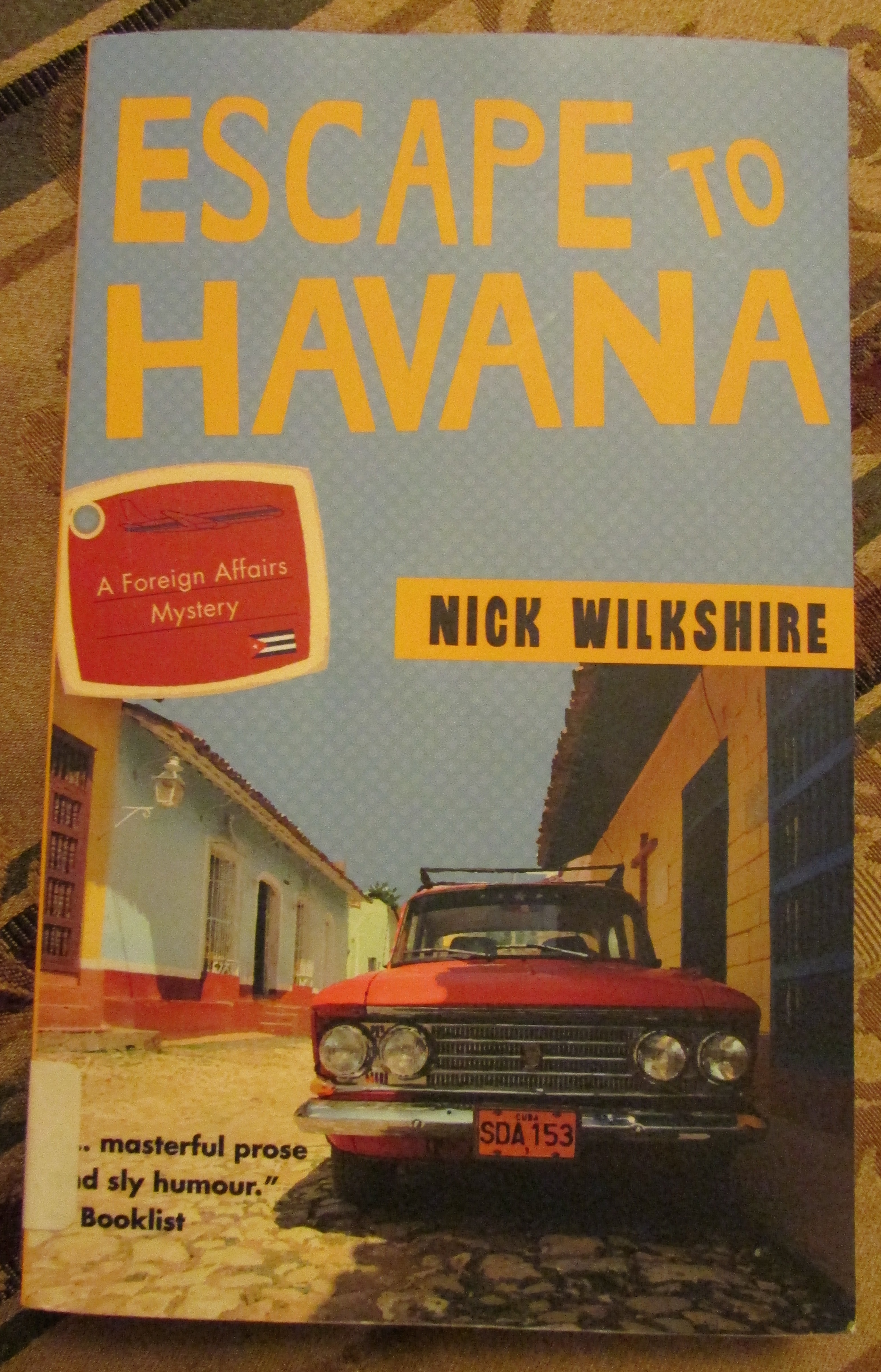
Escape to Havana, Nick Wilkshire

The idea of escaping to an exotic locale intrigued me, of course, but a quick look at the cover told me that the book was a mystery, not a genre that I’m particularly fond of. In fairness, though, I felt that I had to give my blind date a chance and so I began to read.

I didn’t realize it at the time, but the message on the outside of my package was a clue to what was inside. “Start a new chapter in your life,” it said. Main character, Charlie Hillier, is a Canadian bureaucrat whose marriage has just fallen apart in a very public way. When the chance to start over by accepting a posting to the Canadian embassy in Havana comes up, he jumps at the opportunity to escape the embarrassment and get as far away from his ex-wife and his dead end job at Foreign Affairs headquarters in Ottawa as he can.

Originally from St. John’s, Newfoundland, Nick Wilkshire is a lawyer living in Ottawa. Escape to Havana, published in 2016 is the first book in his Foreign Affairs Mystery series.

In spite of my initial apprehension, my date turned out to be fun. Escape to Havana is a light, but entertaining read. I’m not sure that an avid mystery fan would find it very satisfying, especially the rather far-fetched ending, but I enjoyed Wilkshire’s easy writing style and his sense of humour. He did a masterful job of bringing Havana to life. From the oppressive heat and humidity to the dilapidated buildings and ancient vehicles to the wonderful food, he gives his reader a real sense of modern day Cuba.

Would I go on another “blind date with a book”? As in real life, I would prefer to know who I’m going out with, but this was a fun experience, so yes, I probably would. For those who are really keen about the idea, there’s Blind Date with a Book.com. Subscribers receive a “blind date” once a month for six months based their favourite styles and genres. Me, I’ll just wait to see if the Killam Library does this again in the future.

Along with my “date”, there was a Rate Your Date form included in my packet. Everyone who returns the form with their book before February 28 will be entered in a draw. My “date” has gone back to the library and my fingers are crossed!


I resolved…

I quit making New Years resolutions many years ago because I found that by doing so I was simply setting myself up for failure. Last year, however, I resolved to read at least two books every month because I knew that I was wasting too much time online. I felt that reading, which I’ve always thoroughly enjoyed, would be a valuable and measurable alternative.

So, how did I do?

In order to monitor my success, I kept a month by month list of all the books I read in 2017. While I marginally exceeded my goal for the year by reading 26 books in all, there were some months when I read more than two and others where I finished none or only one.

More importantly, did reading cut down on my online time?  

I’m really not sure. I use the internet for a wide variety of purposes including reading the news, communicating with friends and family around the world, editing, and of course, writing my blog. I consider all of those to be valuable ways to use my time, but it’s the time that I was spending repeatedly checking my email accounts, Facebook and my blog stats that I wanted to cut down on. Unfortunately, that’s difficult to measure and I still find myself doing it more often than I feel I ought to.

What am I going to do about it?

Once again, I resolve to read a minimum of two books EVERY month in 2018. I’m also going to try some new authors and different genres. Any suggestions? What do you enjoy reading?

I read a good mix of novels, non-fiction, and autobiographical books in 2017 and I would like to do that again. Australian novelist, Kate Morton, is the only author that I read more than one book by (The Distant Hours, The Secret Keeper, and The Lake House). I’ve always enjoyed memoirs and autobiographies. Over the past year, I thoroughly enjoyed The Last Foundling by Tom H. Mackenzie and My Secret Sister by Helen Edwards and Jenny Lee Smith, but the one that surprised me most was Changing My Mind by Margaret Trudeau. I clearly remember the day in March 1971 when she surprised the world by marrying our popular prime minister, Pierre Ellliott Trudeau, who was 29 years her senior, and the years of turmoil that followed. The book is an honest and courageous telling of her lifelong battle with mental illness and gave me a greater understanding of bipolar disorder.

Have you read any good books lately?

I resolve…

I don’t usually make New Year’s resolutions. Resolving to make dramatic changes with a flip of the calendar usually does nothing more than set people up for frustration and failure. It’s often said that it takes 21 days to make or break a habit, but that’s simply a common myth. According to a study published in the European Journal of Social Psychology it actually takes an average of 66 days before a new behavior becomes automatic. In other words, if you keep your New Year’s resolution until at least March 7, it has a good chance of sticking, but how many diets and exercise programs are abandoned long before that?

funny-new-years-resolutions-someecards

In spite of knowing this, I’ve decided to make one resolution this year. I’m not happy with the amount of time that I spend on the internet and I plan to do something about it. I often wonder what my retirement would have looked like if it had happened before the advent of the internet. Quite different, I’m sure. It’s not that the hours I spend online are all a waste of time. I use the internet for a wide variety of purposes including reading the news, communicating with friends and family around the world, editing, mentoring, and of course, writing my blog, but how many times a day do I really need to check emails, Facebook and my blog stats and what could I be doing instead?

I could simply resolve to spend less time on the net, but that’s a vague and unmeasurable goal. I don’t even know how much time I spend online now, so how would I know if I was being successful? And what do I want to do instead? Back in my teaching days, I learned all about SMART goals – Specific, Measurable, Achievable, Realistic and Time-based or Trackable. With that in mind, in 2017,     I resolve to read at least two books every month. 

I love reading. I always have, but that’s one thing that’s suffered as I’ve gradually started spending more and more time online. I’m sure that I could quite easily read more than two books a month, but I don’t want to set myself up for failure nor do I want this to be a gruelling exercise. I simply want to make better, more enjoyable use of some of my time. I’ve already picked out the first three books that I plan to read, two novels and one non-fiction. I also have a list of several other books to begin ordering in through our provincial interlibrary loan system.

Now, what about you? Do you make New Year’s resolutions? If so, why not share one or more of yours in the comments section.

images