The most important things

I had a different idea in mind for this week’s post, but then I read something that caused me to pause and think about the important things in life. The truly important things.

If I were to ask many people what’s most important in life, their answers would probably include things like family, good health, happiness, financial or job security, and a safe place to live. Depending on their circumstances, they might even say enough to eat or clean drinking water. These are, after all, very important. In fact, it was some of these things that first came to mind when I started asking myself what’s most important in life, but then I thought of something else.

When Jesus was asked which commandment was most important, He replied, “‘Love the Lord your God with all your heart and with all your soul and with all your mind.’ This is the first and greatest commandment. And the second is like it: ‘Love your neighbour as yourself.'” 

My faith, my personal relationship with God, is the most important thing in my life because it’s the only thing of eternal value, but it was actually Christ’s second statement that I was thinking about when I sat down to write this post. “Love your neighbour as yourself.” The Bible actually has a lot to say about how we treat one another. In fact, the “golden rule” that we were taught as children actually comes directly out of Scripture. Luke 6:31 says, “Do to others as you would have them do to you.”

So why have I been thinking about the importance of how we treat one another? In Canada and the US, at least, and perhaps other parts of the world as well, we have become very polarized people. We are sharply divided along political lines. No sooner had Canadians drawn together in response to threats from our southern neighbour than our own federal election tore us apart again. As I feared would happen, we went from “elbows up” unity to attacking one another for our political views. Nowhere was worse than on social media where people tend to say things they wouldn’t say in person.

Politics is important, but is it the most important thing? Is it worth losing friendships over? Surely each of us is entitled to have our own opinion and to express it without condemnation. Can’t we disagree, but still treat one another with respect or must we vilify those who don’t see eye to eye with us?  After all, while we might not agree on which party is the right one to govern or which leader is the most competent, we all want the same things. We all want what’s best for our country, our families, and ourselves.

Perhaps the most important things in life aren’t things at all. Perhaps our character, who we are and how we treat others, is much more important.

Elbows up, Canada!

“Elbows up!” has become a rallying cry for Canadians as we face looming threats from south of our border, but what does it mean? Where did it come from? The phrase actually had its origin in hockey which seems entirely appropriate for a nation so obsessed with the sport.

Canadian-born Gordie Howe, also known as Mr. Hockey, actually had a second nickname: Mr. Elbows. Humble, generous and gentlemanly off the ice, he was known for wielding his elbows like weapons when he was battling for the puck. It’s such an enduring part of the Gordie Howe legend that a bronze statue outside Saskatoon’s SaskTel Centre portrays the hometown hero with his left elbow held high, as if fending off an invisible opponent.

In these days of punishing tariffs on Canadian exports and repeated gibes from the American president about becoming the 51st state, Gordie Howe would seem to be a good example of what it means to be Canadian. We are known worldwide for our unfailing politeness. We open doors for strangers and if you bump into us, we apologize, but clearly, when we’re threatened from outside, we respond with elbows up!

At protests across the country, Canadians have chanted the phrase and held their placards high. #ElbowsUp has been appearing all over social media, as both a call to stand against the threats and a warning to our neighbours that although Canadians might be polite, we’re not pushovers. We’re a bit like siblings on the playground. We might squabble amongst ourselves, but let an outsider threaten one of us and we come together in solidarity!

Now that we are facing a federal election, my fear is that our polarized views on who should lead the country in this current battle will divide us again. More than ever, during these unprecedented times, we need to remain unified. We need to stand together shoulder to shoulder with our elbows up. I pray that regardless of which party comes out on top and which leader is chosen, we will do exactly that.

Elbows up, Canada! 

Strong and free!

The Canadian shopping conundrum

For the most part, I try to avoid mentioning politics on the blog, but as a Canadian I can’t sit by and say nothing when our closest neighbour, ally, and trade partner decides to become a bully and starts threatening our sovereignty. There might not be a lot that I can do about the situation, but I can’t do nothing. There’s too much at stake!
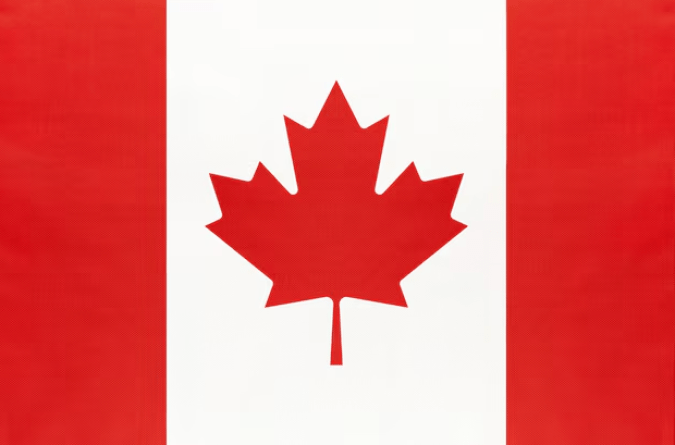
If there’s one thing that the present crisis has done, it has drawn Canadians together. We are seeing a kind of collective nationalism that goes far beyond cheering for the right hockey team. Canada is not for sale! We are not interested in becoming the 51st state and thousands of us are saying so with every grocery item we buy. Since money seems to be what the individuals behind the bullying understand best, I have joined an informal movement of fellow Canadians in boycotting products made in the United States. It’s first and foremost a shop Canadian movement, but beyond that, it’s about buying anything except American.

It’s not easy. Grocery shopping takes a lot longer these days as we squint at the small print on labels and try to figure out where the products we’re used to buying come from. Sometimes, as in the case of Campbell’s soups and some Kellogg’s cereals, the label reads “Product of USA” and we put the item back on the shelf, but it’s not always that straightforward. There’s “Made in Canada” which means that at least 51% of the total cost of the product’s creation had to have occurred in Canada. “Product of Canada” indicates that at least 98% of the total cost was incurred in Canada. But then there’s “Made in Canada with imported ingredients” or “Made in Canada from domestic and imported ingredients” with no indication where those imported ingredients came from. There’s also “Imported for _______” but again, nothing to say where the item is imported from.

I tried to do a bit of “investigative journalism” in preparation for writing this post and to help with my personal shopping decisions, but I wasn’t very successful. I already knew from reading the labels that Green Giant frozen vegetables are grown and packaged in Canada, but that the packaging is printed in the United States. When I emailed the company to ask why the printing wasn’t done in Canada, I received a very generic sounding response telling me that Green Giant is a brand that originated in the United States and that it has facilities in both Canada and the US, but that didn’t answer my question. Probing a bit further, I received a second reply assuring me that the company is proud to source their vegetables from farmers in Alberta, Ontario, and Quebec, but still no answer to my original question.

The label on my Kraft Peanut Butter jar says nothing about where it was made, but the KraftHeinz website told me that it was “proudly prepared in Canada”. While there’s a limited amount of peanut farming in southern Ontario, I know that it doesn’t produce enough to provide thousands of Canadian households with peanut butter. When I emailed KraftHeinz to ask where the peanuts are imported from, I was told all about how peanut butter is prepared and packaged and assured that “all ingredients used in Kraft products comply with our rigorous food safety standards” but after inquiring more than once, I still wasn’t told where the peanuts come from. I finally wrote, “I can only assume that your reluctance to give me this information is due to the fact that they are American grown and you realize that I, like many Canadians, am refusing to buy American products due to the fact that our closest neighbour and trade partner is now threatening our sovereignty. If I am wrong about this, please let me know.” I received no response to that, so Kraft Peanut Butter will no longer be on my grocery list. I had a very similar experience with Mondelēz International when I tried to find out where Triscuit crackers are imported from. 

Finding fresh produce is especially problematic in a country with long winters and a very short growing season, but I’ve been able to buy Canadian grown potatoes and carrots as well as tomatoes, lettuce, cucumbers, peppers, and mushrooms. I’ve been enjoying bananas from Guatemala and blueberries from both Mexico and Peru, but the only nice looking oranges that I’ve been able to find were grown in California, so they stayed in the store.

Of course, boycotting American products goes far beyond the grocery store. My favourite toothpaste is made in Mexico, but it’s a product of Colgate-Palmolive, a huge U.S. corporation, so where do we draw the line? The flouride gel that I’ve had to use every day since I lost one of my parotid glands to cancer over ten years ago, is made in Canada, but my skin care products, shampoo, and conditioner are all imported from the States. Obviously, I’ll have to look for other brands to try. I’ve already found a replacement for the Tide laundry detergent that I’ve used for years. I’ll be trying Canadian-made Tru Earth laundry strips.

Shopping ethically is further complicated for me by the fact that I try to avoid buying products from China which is notorious for its human rights abuses. Given the present situation, however, if forced to choose, I would probably buy a Chinese product over an American one.

Before I close, I want to assure my American readers that I fully understand that many of you are as dismayed as I am about what is happening in your country and our hearts go out to you at this difficult time. We also know that the tariffs that your leader is threatening to impose will be as hard on you as consumers as they are on us.

When the church disappoints

building-simple-flat-black-white-icon-logo-vector-castle-church_653669-14312

This topic has been weighing heavily on my heart for the past couple of days. I don’t know whether I’ll be able to do it justice or not, but since writing is the best way I know to process heavy things and I need to get this off my chest, I’ll give it my best.

I know I’m not the only one feeling completely disheartened by the results of this week’s election in the US. There is no question that we are living in difficult times. What disturbs me most and what has prompted me to write this post is the fact that the election was won with the support of so many so-called evangelical Christians.

There was a time when I might have used that term to describe myself, but I no longer do. Don’t get me wrong. I’m not abandoning my faith. I’m still a Christian although the term that I prefer is Christ-follower. I will not, however, call myself an evangelical Christian. There is no way that I can possibly identify with the overwhelming number of evangelicals who bow down in adoration to a convicted felon, a racist, a misogynist, a liar. How is it that they can possibly believe that God is pleased with their choice? How can they have been so deceived?

Scripture tells us that, as Christians, we are to be “the pleasing aroma of Christ” (2 Corinthians 2:15-16), but frankly, something smells really bad right now!

The Christian church has a long history of going wrong. From the slaughter of Jews and the destruction of their communities during the Crusades to the devastating effect of church-run residential schools on our Indigenous population in the past century, the church has missed the mark in big ways and small.

There’s a common saying amongst believers that the reason there are no perfect churches is that there are no perfect people. That’s true, of course. The church is a collection of sinners, of failures, of flawed human beings, but I think that sometimes we like to use that truth to excuse the inexcusable.

I know that I’m painting the church with a broad brush here. Certainly there are individual congregations or individuals within congregations that are as disappointed as I am with the outcome of the recent election. So how do we respond? What do we do when the church disappoints?

Do we bail out? Do we turn our backs on the church and walk away? Hebrews 10:24-25 advises us to “consider how we may spur one another on toward love and good deeds, not giving up meeting together, as some are in the habit of doing, but encouraging one another“. If there’s ever a time when we need encouragement, it’s now!  So no, I don’t advise abandoning the church altogether. We’re living in a post Christian era. Clearly the recent election outcome is just one more sign that society is moving farther and farther away from the teachings of Jesus. Whether it’s in a formal church setting or some other kind of gathering, we need one another.

Personally, I will pray and I will continue to nurture my own relationship with Christ, the all-sufficient one. After all, the church is not the saviour of the world and whether or not he would agree, the president-elect isn’t either. That is solely Jesus’ role.

Colossians 3:15 tells us to “let the peace of Christ rule in your hearts, since as members of one body you were called to peace. And be thankful.” (italics are mine) We can fight our disappointment with gratitude remembering that even in the midst of a world that seems so wrong, we have much to be thankful for.

And finally, let’s not give in to fear. One of my favourite verses, Isaiah 41:10, says, “So do not fear, for I am with you; do not be dismayed, for I am your God. I will strengthen you and help you; I will uphold you with my righteous right hand.”

As the Jim Bailey song says, “I don’t know what the future holds, but I know who holds the future”. In days that seem dark, that gives me a glimmer of hope.

Not really a fashion post

logo-by-samI expected the blog to be quieter than usual over the summer months. In fact, I warned you about that at the end of this post back in June. I didn’t expect it to be totally silent for the past three weeks though! The fact that we’ve only been home for a total of six days during that time has had much to do with that, but there’s also been the thought that I don’t want to write and post simply for the sake of writing and posting. I don’t want to contribute to the “noise” of social media unless I actually have something worth saying.

When I introduced Fashion Friday back in March of 2016, I wondered how long I’d be able to keep it going. How soon would I run out of things to write about? More than eight years later, I’m actually surprised that it’s lasted this long! While I’m not ready to retire the topic yet, I do admit that I’m finding it more and more difficult to come up with new and interesting content. This might mean some changes to the blog in coming months, but at the moment that’s just something I’m mulling over. In the meantime, there will be a real Fashion Friday post next week that will look at some trends for fall.

One thing I tend to steer away from on the blog is politics. As a Canadian, I’m watching from the sidelines as the campaign south of our border unfolds, but I realize that its outcome affects all of us. We’re part of a global community.

I was especially inspired by former first lady Michelle Obama’s emotional, but fiery speech at the DNC in Chicago on Tuesday. If you haven’t watched her speech, it’s well worth tuning in for the entire 20 minutes here. Hope is indeed making a comeback! Hope is my one word for 2024 and for me it has been an especially meaningful one.

While this isn’t really a fashion post, I must make mention of the stunning outfit that Michelle Obama chose for her speech. There was clearly symbolism in the futuristic design of the midnight blue MONSE Resort 2025 Crisscross Jacket and Tuxedo Pant as she spoke about hope for the future of her nation.  “In 77 days, we have the power to turn our country away from the fear, division, and smallness of the past. We have the power to marry our hope with our action.”

sxyX6sYMXDbSRuBydoKQHD-1280-80.png

Rubbish!

LogoAs a Canadian, I admit that I know nothing about Australian politics, but I do know that being a politician in any country isn’t easy. They can’t please everyone and their personal lives are constantly under scrutiny. I also know that being a female politician is even harder and I greatly admire South Australian MP Nicolle Flint for the way that she stood up to a journalist’s comments about her clothes this week.

Before we look at that, let’s take a look at how she dresses for her role. In my opinion, she looks classy, professional, and approachable. This is her Facebook profile picture.

nicolle flint

And here’s a montage of photos, also from her Facebook page. She most often chooses a basic column of black with a brightly coloured jacket.

In his Sunday newspaper column, radio host Peter Goers wrote, “Nicolle wears pearl earrings and a pearly smile. She favours a vast wardrobe of blazers, coats and tight, black, ankle-freezing trousers and stiletto heels. She presents herself in her own newsletter 23 times as a fashion plate. She has blazers and coats in black, blue, pink, red, beige, green, white, cream, floral and two in grey.” Would he have made similar comments about a male politician’s shirt colour, the width of his tie, or the shoes he wore? I think not. Though not as extreme as having her office vandalized with the word “prostitute”, being called a “skank”, or dealing with a male stalker, all part of Flint’s experience since entering politics, Goers’ comments are clearly sexist and inappropriate.

A politician needs to be thick-skinned, but no one should have to put up with this kind of disrespect simply because she’s a woman. By all means, comment on how well she does or doesn’t represent her constituents. Criticize her performance as a politician and her policies, but unless she dresses completely inappropriately or immodestly, not her wardrobe!

A video of a Flint wearing a garbage bag to protest what she refers to as “rubbish” comments on her clothes has gone viral and drawn support from across the political spectrum. If you haven’t already seen it, watch it here. I hope you enjoy it as much as I did!

I wish I looked that good in a garbage bag!

Choosing a leader

I appreciate the many responses to my last post and particularly those who chose to share it on social media. It appears that I managed to put into words what many people have been feeling. The following post may also be considered a bit controversial and I hope it will be as well received.

I don’t consider myself to be a particularly political person, but with a federal election less than three weeks away here in Canada, I definitely take an interest and occasionally express an opinion on Facebook. In recent weeks, though I managed to avoid saying anything at all about the blackface incidents, I’ve been criticized more than once for posts alluding to what I consider to be flaws in our present Prime Minister’s character. Some people have referred to this as mudslinging or political bashing. “Let’s just focus on the issues,” they say. 

While I agree that it’s important to know what each party and its leader stand for, I don’t put a great deal of faith in campaign promises. Their purpose is to garner votes and at best I think we ought to call them proposals. A recent analysis of 353 pre-election promises made by the Liberals in 2015 indicates that by March of this year Trudeau’s government had entirely followed through on only about 50 per cent of its pledges.

We may not agree on all the issues or the directions that we’d like our leaders to take, but I hope that we can agree that it’s of utmost importance to have a man or woman of character at the helm. Unfortunately, as we look around the world at the corruption and scandals involving many of our political leaders, it would seem to me that voters haven’t been giving character enough consideration.

I like what American author, John C Maxwell, says about leadership, “A leader is one who knows the way, goes the way, and shows the way.”

With all this in mind, I googled “qualities of a good leader” and discovered dozens of lists. At the top of many of them was honesty and integrity and I would certainly put these two traits at the top of my list. Although they are very closely linked, there’s actually a distinction between the two. According to the dictionary, honesty means “truthfulness, sincerity, or frankness; freedom from deceit or fraud” while integrity is “adherence to moral and ethical principles; soundness of moral character.” Sadly, I think that there are a number of world leaders, including our own, who fail to measure up in the areas of truthfulness and moral character.

Another quality of a good leader that was high on many lists was good communicator. Though a few listed good listening skills separately, I would include that as part of being a good communicator. I would love to have a national leader who was capable of speaking publicly without scattering “um” and “uh” liberally (pun intended) throughout every speech, but even more important would be one who truly listened to the voices and hearts of the people.

Confidence and humility were also high on most lists. Unfortunately, far too often, confidence and arrogance seem to go hand in hand instead. That certainly seems to be the case with our present national leader as well as the one to the south.

Though there are many other character traits that make a good leader, the last one that I’ll mention here is accountability, the willingness to accept responsibility for or account for one’s actions. Oh my, wouldn’t it be nice to see that in our next political leader!

So, fellow Canadians, on October 21 get out and vote, but please look beyond the issues and the campaign promises to the character of the individual party leaders as well as the candidates running in your local constituencies.

Canadian-election-2019

Image: Chatelaine magazine


The China conundrum

LogoIf I was to empty my closet of every item that was made in China, there wouldn’t be much left. 70% of the clothing, shoes, and accessories that I’ve purchased in the last year and a half (since I started keeping track) were made in China. None were made here in Canada. Why is this a problem, or is it?

As I’ve mentioned before, I want to be an ethical shopper, but it isn’t easy. Until now, my concern with purchasing items that were made in China has been the fact that it’s very difficult, often impossible, to determine whether or not they were manufactured in factories that are socially and environmentally responsible or sweatshops where workers are exploited and forced to work in unsafe conditions. Quite a few of my clothes are purchased through direct sales as opposed to retail environments. In those cases, the stylists or vendors have assured me that they sell only ethically produced garments. I hope they’re right, but I haven’t found any way to verify that and having lived in China for a short while, I know that you can’t always believe what they tell the rest of the world.

Now I have another concern. Following Augustine isn’t meant to be a political blog, but Canada is increasingly at odds with China and I have to ask myself, should that affect my spending habits? Should I avoid purchasing more items that are made in China?

For those of you who are not Canadian or who haven’t been following the news, here’s a bit of background information. On December 1, Meng Wanzhou, an executive with the giant tech company, Huawei, was arrested in Canada at the request of U.S. authorities who want to try her on fraud charges. She’s currently under house arrest in one of her mansions in Vancouver awaiting extradition to the U.S. China immediately warned of repercussions and there have been a number of those. Days after Meng’s arrest China responded by detaining two Canadians and sentencing another to death. The men have not been allowed access to family members or lawyers while in custody. Since then, China has placed trade bans on key Canadian products including canola. On Tuesday of this week, the country announced that it would halt all meat exports from Canada. Our country is one of the world’s largest agricultural producers and our farmers depend on exports. Needless to say they are hit hard by these developments and some are urging Canadians to stop purchasing Chinese goods.

So, back to fashion. Obviously, I’m not going to stop wearing the items that I already have, but should I refuse to buy anything else that’s made in China? I’m sure that I, one lone Canadian, won’t make any difference in the big political picture, but should I support a country like China with my clothing dollars? That’s a very tough question!

What do you think? I’d love to hear your opinion.

First glimpses of Paris

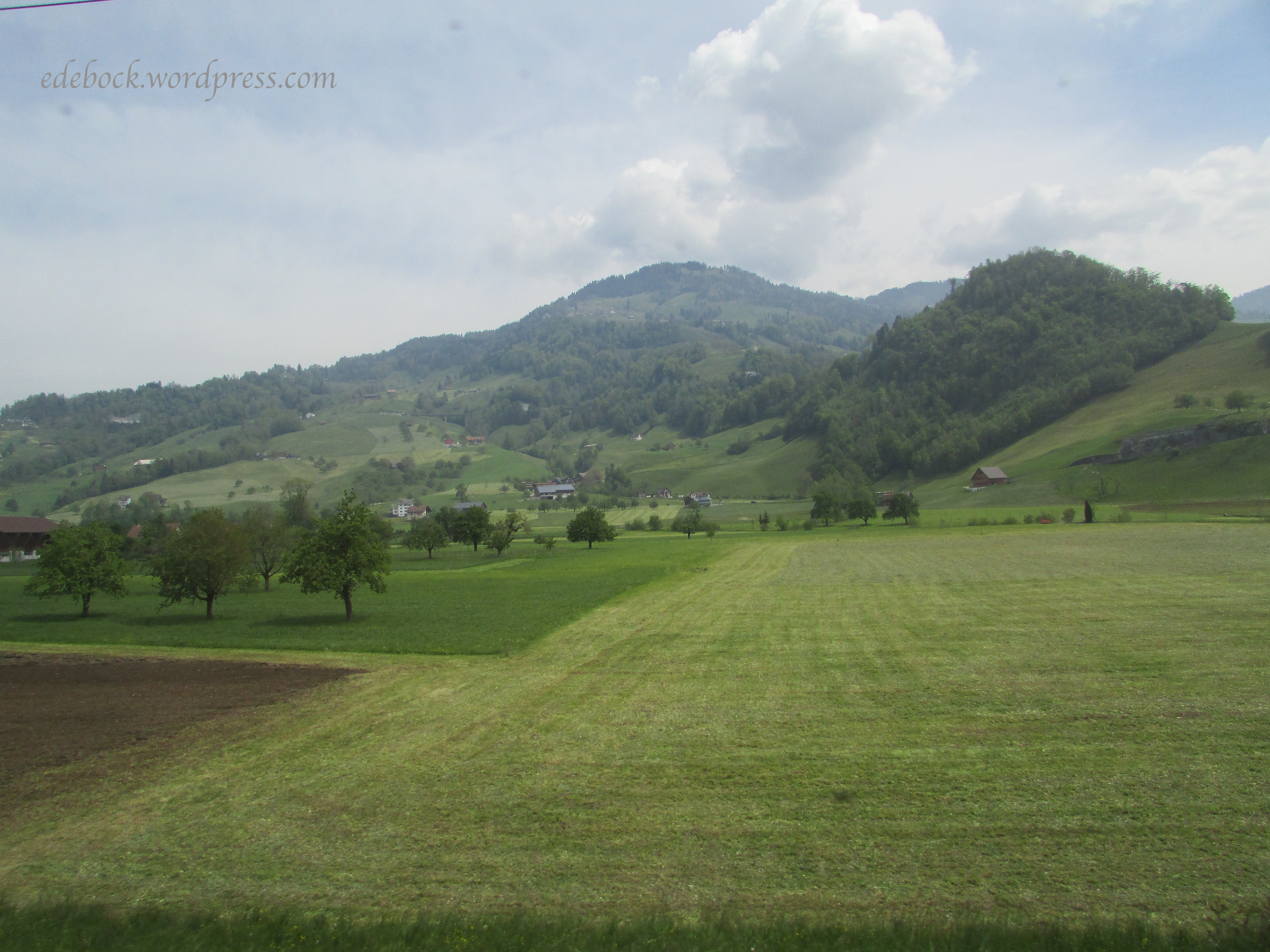
We spent most of Friday on the train traveling from Milan to Paris with a quick stop to change trains in Zurich. Yes, we were in Switzerland, but not for long! It was difficult to get decent photos from the window of the train, but here are a couple that turned out well.

IMG_8365 - Version 2

IMG_8367

By the time we arrived in Paris and found our way to our hotel via the metro, the day was nearly over and we were tired. We enjoyed a delicious dinner at a little restaurant just down the block from our hotel, but our first real glimpses of Paris would wait until we’d had a good night’s sleep!

We spent most of the day yesterday getting an overview of the city and seeing some of its most famous sights via the Big Bus Hop On, Hop Off tour. The commentary was excellent and gave us lots of interesting background information.

We first hopped off close to Notre Dame Cathedral. It’s inaccessible, of course, as a result of the devastating fire of April 15th that left the city in shock. Though it isn’t what it once was and it will likely be several years before restoration is complete and it’s open to the public again, it’s still a very impressive structure.

IMG_8404

IMG_8414

We managed to get ourselves a bit lost and ended up on the wrong side of the river to hop back on our bus, but getting lost just means you have to find yourself again and you might just see something unexpected and interesting along the way! Parisians are friendly and helpful, so it didn’t take long for us to get our bearings and find our way back to the bus stop.

We hopped off again at the Arc de Triomphe, another one of Paris’ most famous monuments and took the obligatory photographs.

IMG_8418

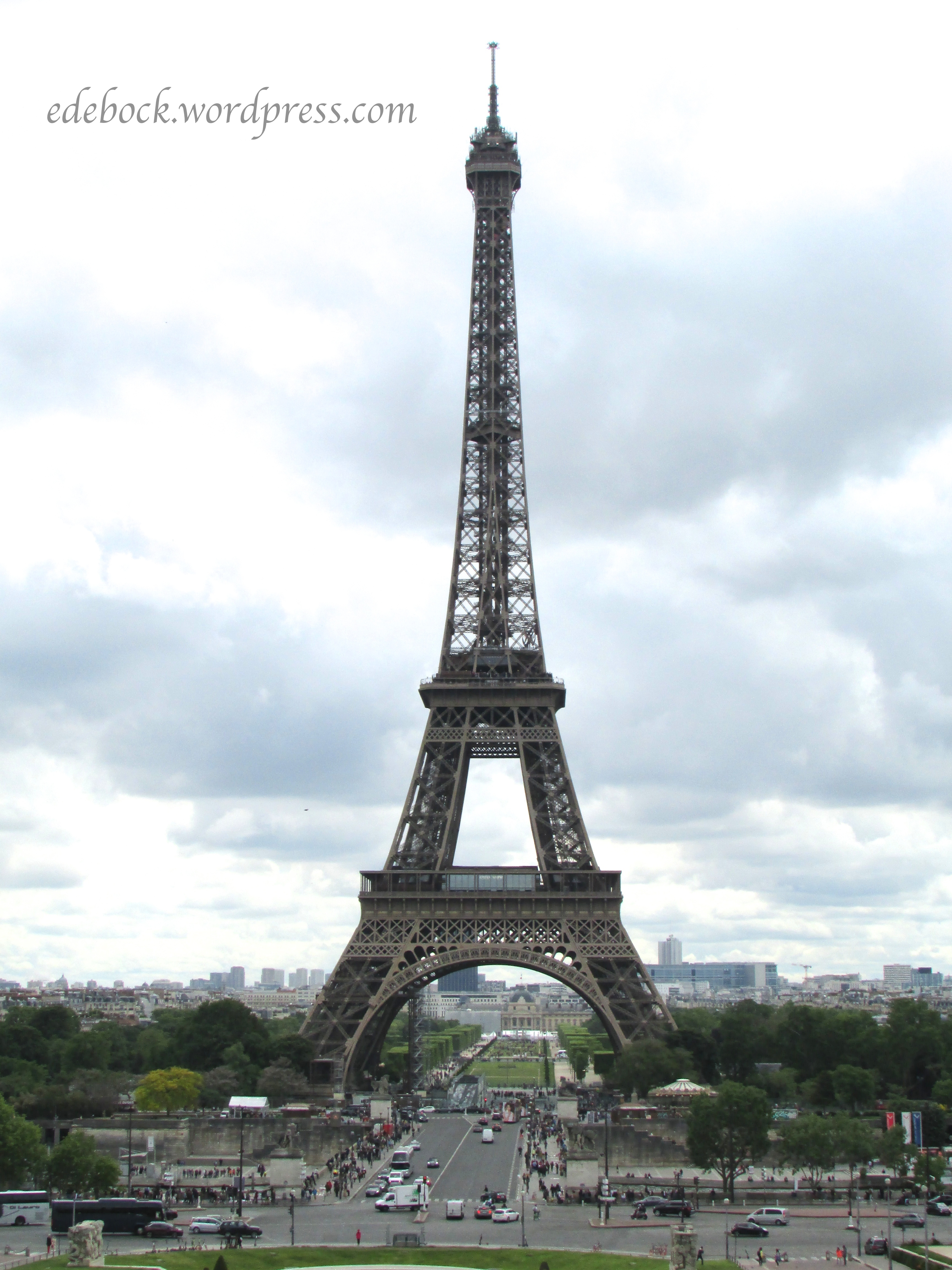
At the Trocadero, just across the Seine from the Eiffel Tower, we left the bus again. After taking in the view we enjoyed lunch at a nearby sidewalk cafe before rejoining the bus tour and continuing on.

IMG_8431

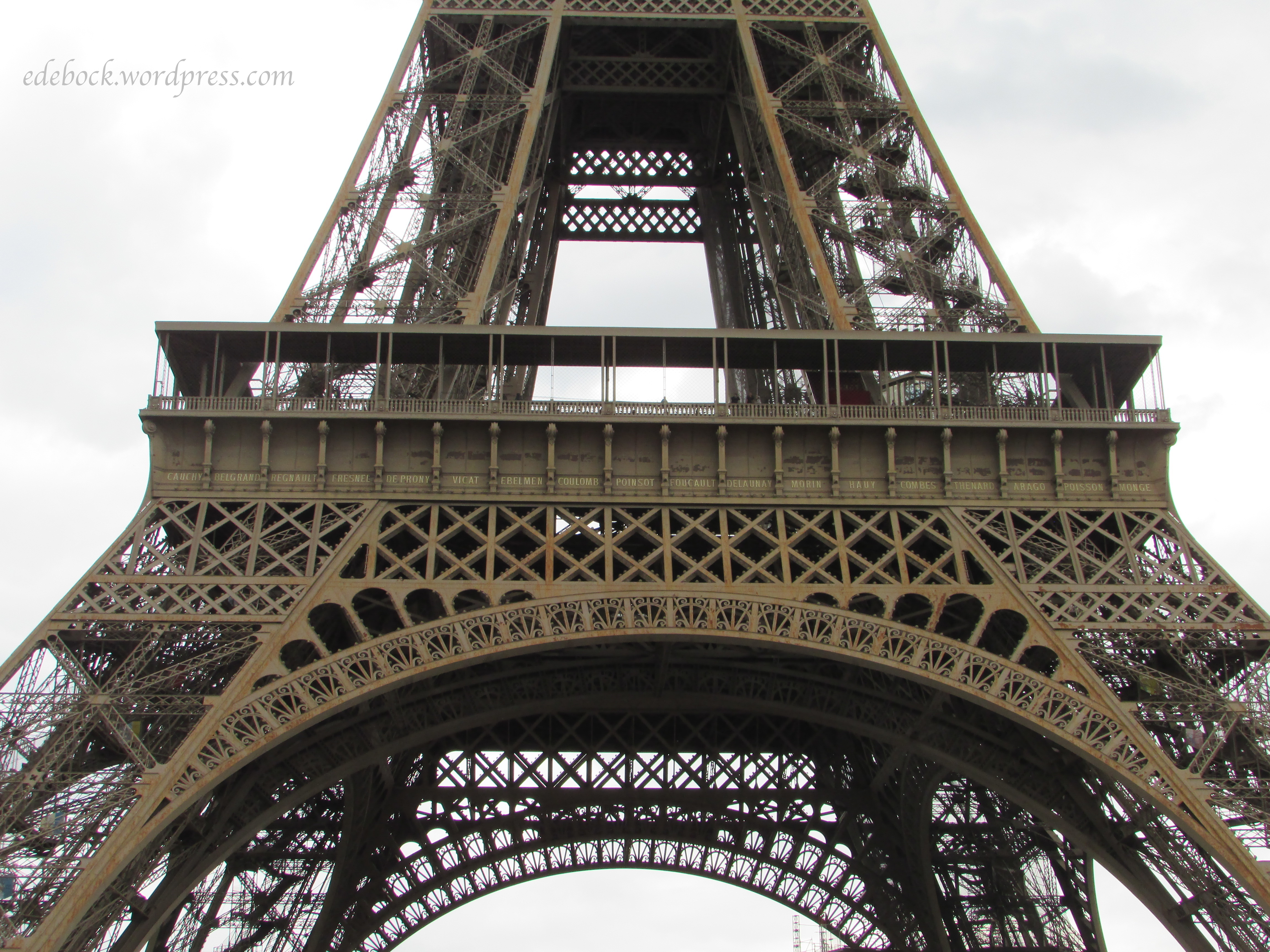
Of course, we had to get off the bus again for more photos closer to the tower!

The Eiffel Tower was built for the 1889 World’s Fair. When it was inaugurated, it was the tallest building in the world. Amazingly, the original plan was to allow it to stand for 20 years and then tear it down! Only the fact that it could be used as a telecommunications tower saved it from destruction. Apparently two and a half million rivets were used in its construction. That’s not at all difficult to believe when you take a close look at it!

IMG_8452

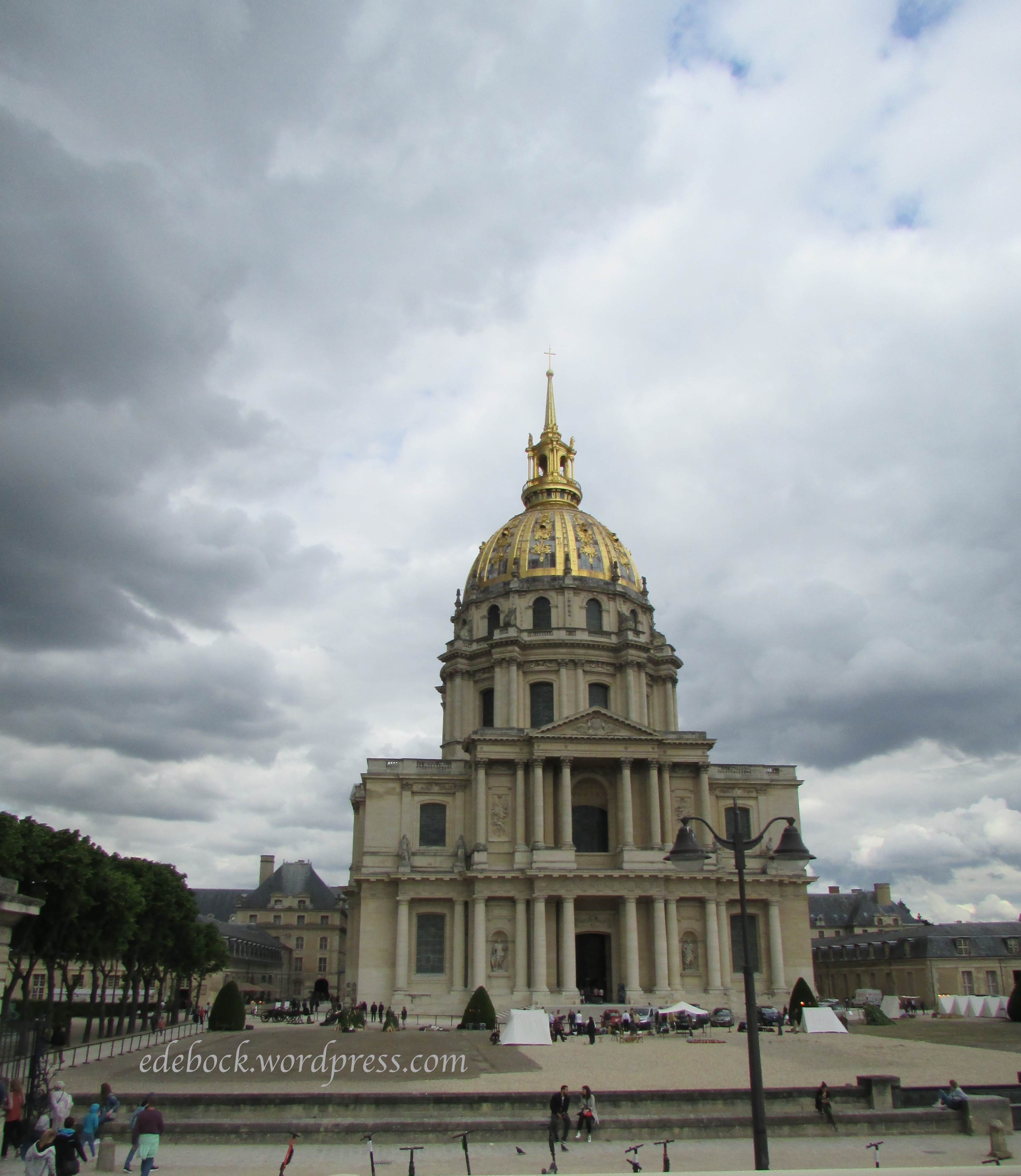
I took the next photo of the church at Les Invalides, Napoleon Bonaparte’s final resting place, from the bus. Its glittering golden dome is an unmissable landmark in the Parisian landscape. I love the sky in this shot!

IMG_8457

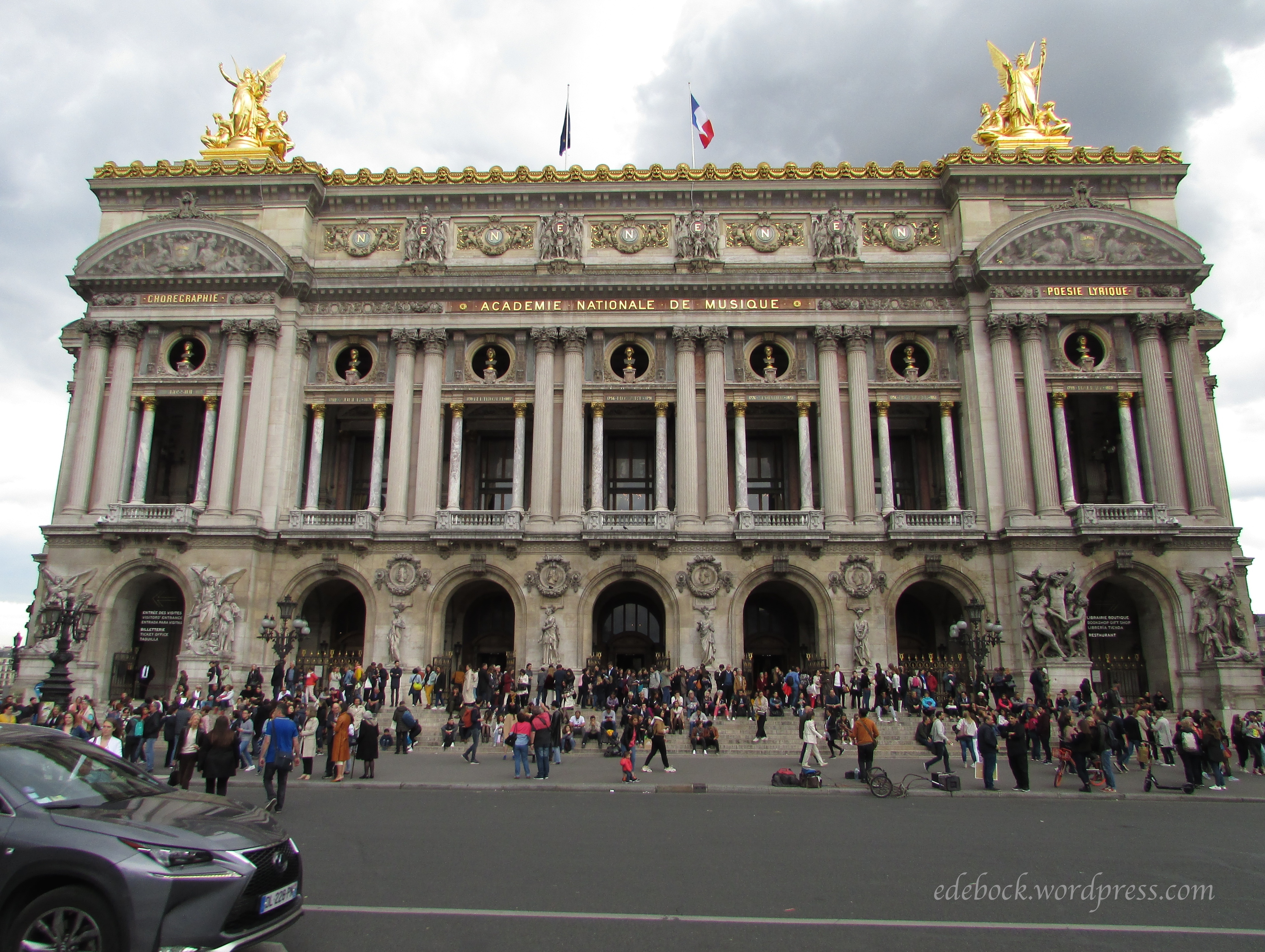
We next hopped off the bus at the Palais Garnier, probably the most famous opera house in the world and the setting of Gaston Leroux’s 1910 novel, The Phantom of the Opera.

IMG_8471

Our bus route was altered somewhat yesterday and we were unable to visit a couple of the areas that are usually included because of the “yellow jacket” protesters, so called because of the fluorescent vests that they wear. Yesterday marked six months of weekly protests against President Emmanuel Macron’s policies. We didn’t see any of the protesters or the destruction that they have caused, but we certainly saw a strong police presence when we got close to the parts of the city where they were gathered. For the most part though, Paris seems to be going on with life as usual. Apparently, tourism is down, but there were certainly lots of us hopping off and on the Big Buses yesterday!


High heels? Yes or no?

LogoThere are very few topics that could be tagged Fashion, Health, and Politics, but today’s post will focus on one of them. I have very few positive things to say about our provincial government, but I do commend them for one recent decision. On January 1, 2019, changes to the Occupational Health and Safety Code will take effect banning mandatory footwear rules that pose health and safety risks to Alberta workers, particularly those in the hospitality industry.
“Mandatory high heel policies that can put workers at risks for slips, trips and falls and can become a workplace hazard are no longer acceptable,” Alberta Labour Minister Christina Gray announced recently. “We’re doing this after hearing from so many Albertans and workers who have had detrimental effects to having to work an eight-hour shift in high heels.” The new ruling isn’t about banning high heels; it’s about giving women the choice of whether to wear them or not.

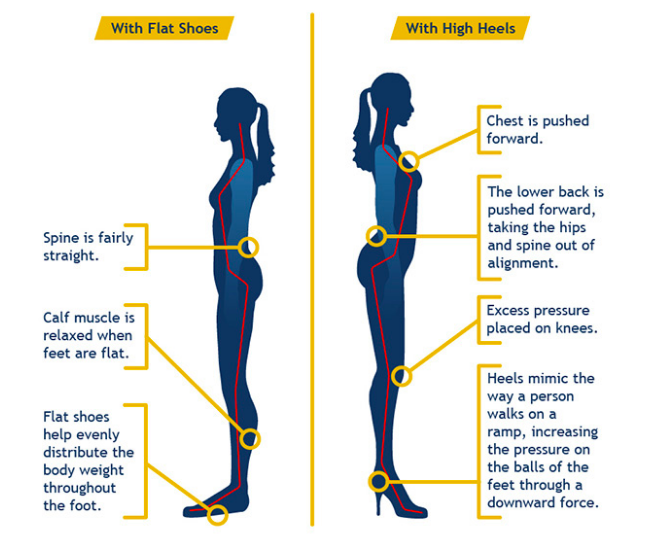
Since I’m significantly taller than my husband and I’ve always put comfort ahead of appearance, I seldom wear anything higher than a kitten heel. After reading about the toll that wearing high heels regularly can have on the spine, hips, knees, ankles and feet, I’m glad that I never got into the habit. Take a look at this graphic from the Florida Hospital Medical Group Spine Health Institute to see what I’m referring to.

Screen Shot 2018-12-05 at 9.15.41 PMLooking at the two profiles, it’s easy to see why men in particular tend to favour women in high heels, but is the increase in sex appeal worth the damage that they cause?

Studies have shown that by limiting the natural motion of the foot during walking, high heels can cause increased stress on the knees and may even contribute to osteoarthritis later in life. Similarly, if high heels are worn constantly, the spine’s ability to absorb shock can result in continued back pain. The vertebrae of the lower back may be compressed and back muscles over stressed. Wearing high heels too frequently can also cause the calf muscle to stiffen and the Achilles tendon to shorten which can actually make wearing flatter shoes uncomfortable. By putting a great deal of pressure on the ball of the foot and forcing the toes into a small toe box, high heels can cause or worsen many foot problems including corns, hammertoe, bunions, Morton’s neuroma and plantar fasciitis.

Does all this mean that women should never wear high heels? Not at all. Worn in moderation, for special occasions as opposed to every day, they are unlikely to cause any long-term physical health problems. So wear them to your upcoming Christmas parties if you like, just don’t wear them to work every day. On the other hand, there are so many cute flats available these days that you might not want to wear them at all!

corporate-heels-or-flats-for-womens