 I wish there wasn’t a need for NET Cancer Day and that I didn’t feel compelled to write about it again this year, but there is and I do. Those of you who have been reading the blog for very long might think that I’m starting to sound like a broken record, but it’s just so important for people to become more aware of this frequently misdiagnosed cancer.
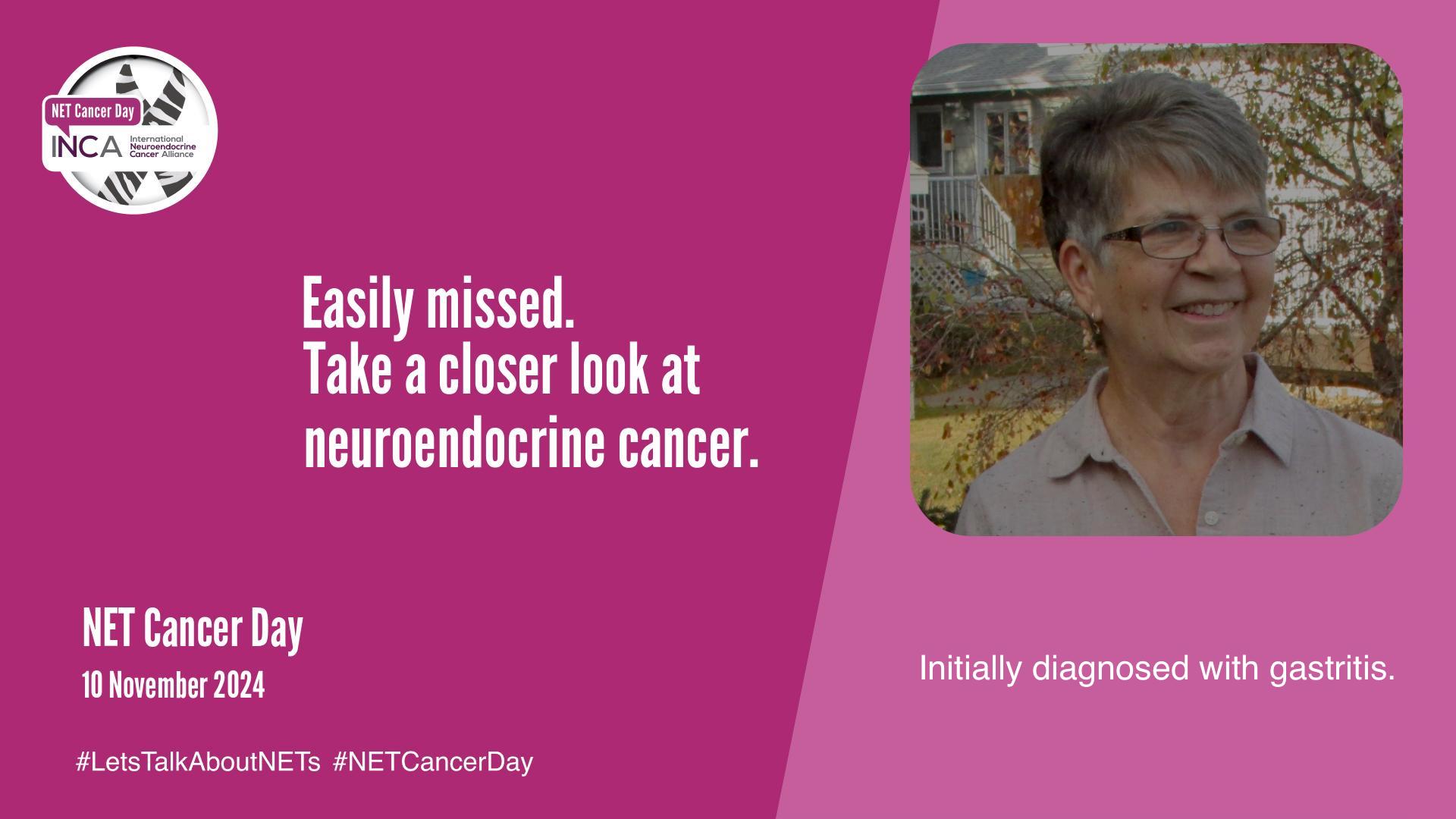
The incidence of neuroendocrine tumours (NETs) is on the rise and symptom awareness is key to earlier diagnosis and ultimately to better outcomes. Last year’s campaign slogan “Easily missed: Take a closer look at neuroendocrine cancer” was such a vital one that the NET Cancer Day campaign is reaffirming that message by using it again this year. More common than brain, ovarian or cervical cancer, neuroendocrine cancer continues to be frequently missed and misdiagnosed.
Globally, it takes an average of 5 years from initial symptoms to actual diagnosis; longer in North America. In my case, doctors estimate that I had had the disease for 7 to 10 years before it was diagnosed and based on symptoms, I’m sure they’re right. By then the cancer had already spread to distant parts of my body. Like many, many other NETs patients, my cancer was Stage 4 and no longer curable. Clearly, a greater awareness of NETs amongst the global community and especially the medical profession is needed.
The NET Cancer Day campaign has traditionally been focused on highlighting the common symptoms that are often interpreted as other conditions, but can also be signs of neuroendocrine cancer. These include facial flushing, abdominal pain, digestive problems, diarrhea, rapid heartbeat, chest pain, shortness of breath, wheezing, coughing, and/or persistent fatigue. People with NETs are often misdiagnosed with more common conditions such as anxiety, menopause, Irritable Bowel Syndrome, gastritis, or asthma.
I’m not able to give you an update on my own health today as I’m presently waiting for the results of lab work that was done this past week and I’ll be going for CT scans again on Wednesday. Instead, I’ll tell you a bit more about what I’ve been involved in since last NET Cancer Day.
Since very early in my cancer journey, The Canadian Neuroendocrine Tumour Society (CNETS) has been a valuable source of information and support. When the opportunity to get involved as a volunteer member of a newly forming patient advocacy advisory board came to my attention, I knew immediately that that was something I wanted to do. It was time for me to start giving back.
After meeting in Montreal in April for an “advocacy bootcamp” with a prominent Canadian health advocate and policy consultant, we came away with a list of priorities and tactics in the areas of education and awareness, treatment and diagnostic access, and research. With two other members of the board, I’ve been working on a graphic representation of both the current and the ideal pathways to diagnosis for neuroendocrine patients in Canada which we hope to use to inform patients, medical practitioners, and health authorities. This fall, we were fortunate to have our project approved for funding by the International Neuroendocrine Cancer Alliance (INCA) which is allowing us to work with a patient-led consultancy group out of Germany to take our initial work to a higher, more professional level.
Over the past few months, in addition to the advocacy board work, I’ve also been involved in an initiative with Ipsen, the pharmaceutical company that produces the medication that I’m injected with every 28 days, to improve the patient experience with that drug.
These are baby steps in the overall work that needs to be done to improve diagnosis and treatment of neuroendocrine cancer, but I’m happy to be doing what I can to raise awareness and move the work forward.

 In an era when online meetings have become the norm for many people, I’m about four years late to the party with this week’s topic, but as a retiree, it’s one that I haven’t had to deal with until quite recently. Of course, I was chatting online with family and friends long before Covid shut the world down and forced us to begin interacting virtually, but those were informal chats. I could have worn pyjamas and no one would have cared!
 Following Augustine