Simple skin care

What’s the one thing that every human being wears every single day? Their skin, of course! Unlike our clothing, we can’t buy a new skin when the old one starts to show signs of wear and tear. An effective skin care routine is the only way to protect this most important “garment” and keep it looking and feeling its best.

There are a myriad of products available, but skin care doesn’t have to be complicated. The important thing is to choose the right products for your skin type… oily, dry, or combination… and then use them consistently.

My daily routine involves just three products; a cleanser, a day lotion, and a night cream. Morning skin care should focus on prevention and protection, so I simply wash my face, neck, and decolletage with warm water and apply a moisturizing day lotion with SPF. Nighttime is about cleansing and repair, so that’s when I wash with the cleanser before applying my night cream. When I was younger my face was oilier and I also used a toner, but as skin tends to get drier with age, I eventually found that I didn’t need it anymore.

I’ve been using Olay products for years and have always been happy with them, but unfortunately they’re made in the United States. In light of the current president’s reprehensible behaviour toward my country, I felt the need to find an affordable made in Canada alternative. Yesterday I spent over an hour in a very informative free online consultation with a Beauty Advisor from Marcelle, a company that has been caring for Canadian skin for 150 years. While the products are available in most London Drugs and Shoppers Drug Marts as well as Walmart, I plan on placing an online order to take advantage of the International Women’s Day sale that’s on until March 16. Once I’ve used the products for awhile, I’ll let you know what I think.

I would be remiss if I didn’t also mention sunscreen. As much as I love sunshine, it isn’t friendly to our skin. In fact, in spite of the fact that I’ve always been diligent about using sunscreen when I spend time outdoors, I’m presently healing from a treatment of liquid nitrogen to a spot under my right eye where the rays of the sun, intensified by the lens of my glasses, did some damage. Unfortunately, I’m also going to have to search for a replacement for my favourite sunscreen as it, like so many other things, is produced in the States. I’d better do that soon before the last of the snow disappears from the golf course and the hiking trails!

Not a fashion post

I don’t have a Fashion Friday post for you today. Hubby and I spent a few days this week camping, hiking, and kayaking in one of our favourite locations, Big Knife Provincial Park. Though less than an hour from home, we had no internet or cell phone service. It was a total and wonderful disconnect from technology and from the cares of the world.

IMG_5606

People enjoy camping for many different reasons. For me, I love the solitude; the opportunity to get away from the busyness of day to day life and reconnect with nature. Sitting in camp reading a book, I heard nothing but the whisper of the breeze in the trees, the buzzing of insects, and the music of birdsong.  Occasionally the chatter of a squirrel or, in the evening, a distant chorus of coyotes, interrupted the quiet. From time to time, I enjoyed looking up from my book and watching a pair of small woodpeckers (yellow-bellied sapsuckers) industriously pecking away at a nearby tree. Working from morning til night, they’ll eventually kill the tree, but others will grow up to take its place. That’s the way of nature.

We spent part of each day hiking, exploring every trail in the park. I was thankful for the 60+ km that we walked last month, a good start toward accomplishing my goal of 350 km by the end of October. Our legs were more than ready to tackle the trails even in the extreme heat that our province has been experiencing recently.

IMG_5613

In places, stands of wolf willow (more commonly referred to as silver willow here because of the silvery colour of its leaves) were in bloom giving off the strong musky-sweet scent that is such a an unmistakable characteristic of the prairie at this time of year.

Because we were in bear country, we carried bear spray and kept the bear bell dangling from our backpack jingling. Unfortunately, that meant that we were less likely to see other wildlife, but we did see one deer and we were almost back to camp on one of our hikes when a beaver slipped soundlessly across the path right in front of us! If we’d been any closer, we probably would have tripped over it! In both cases, the animals moved too quickly for me to get a photo.
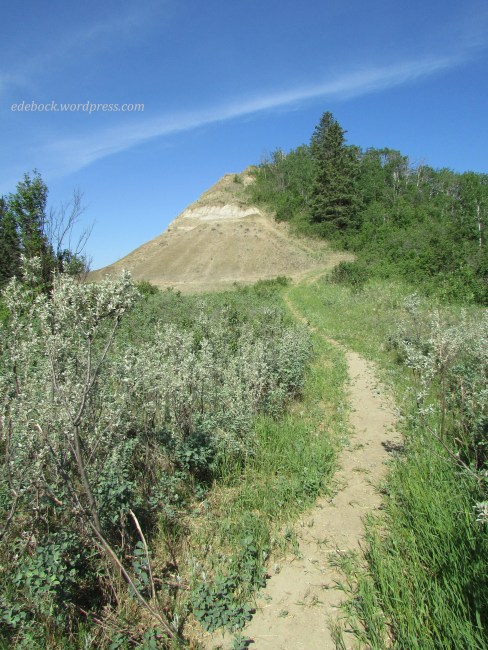
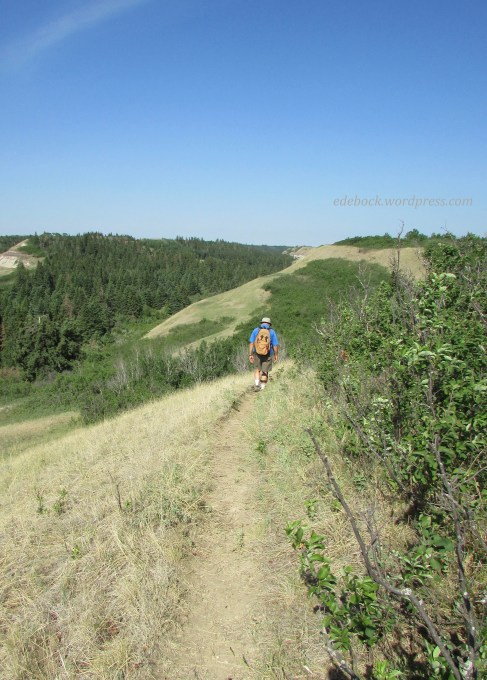
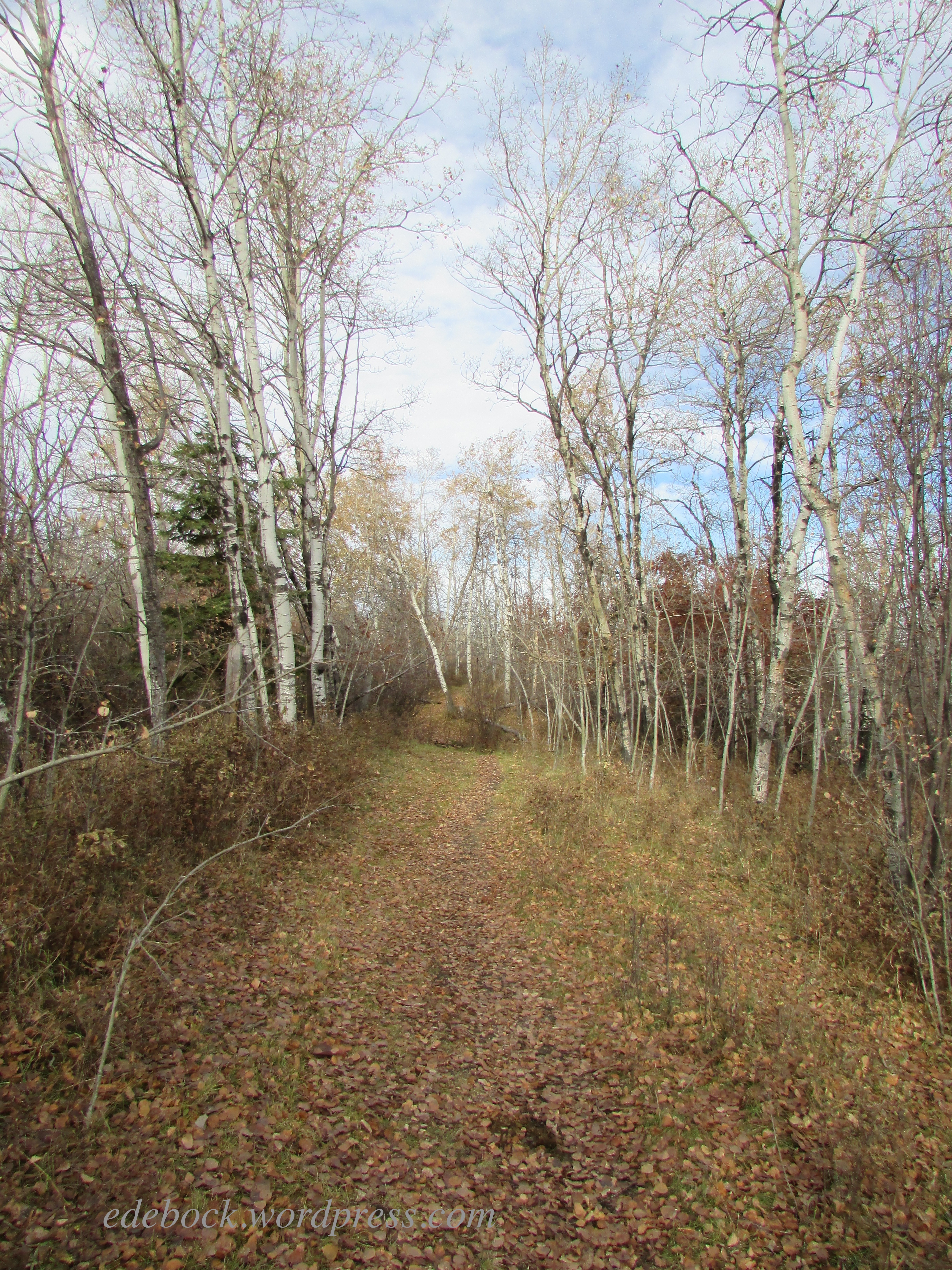
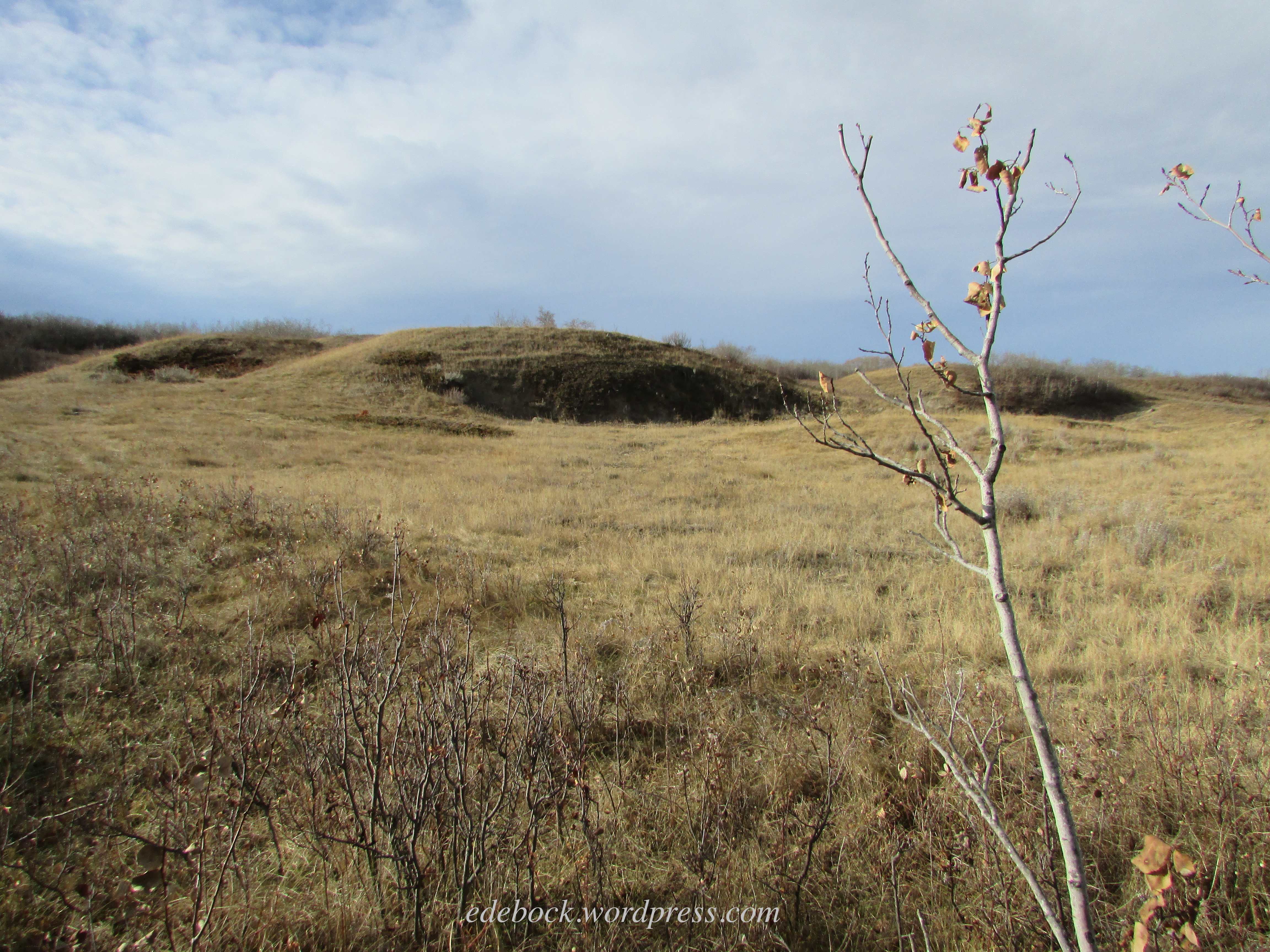
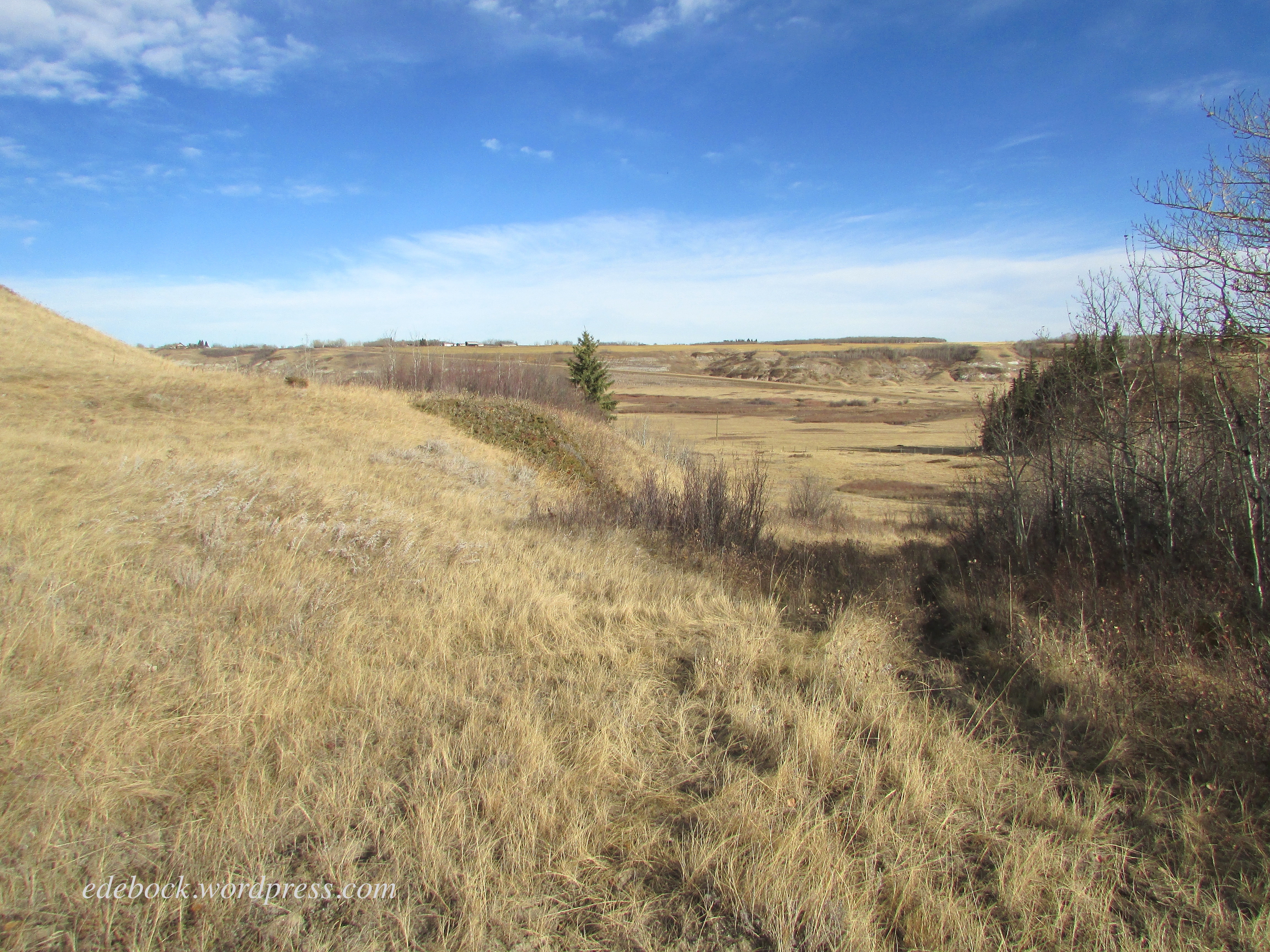
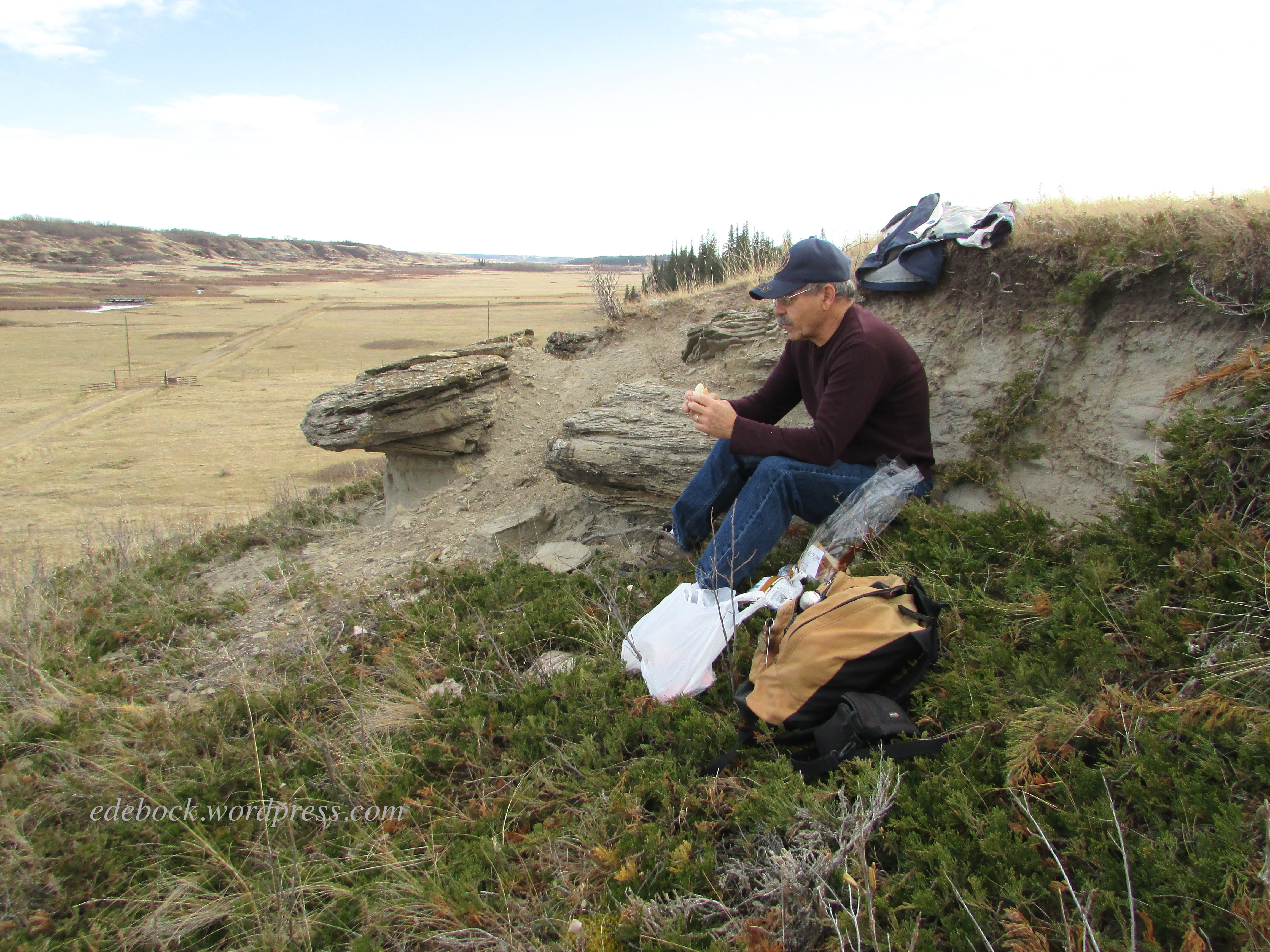
We saved our shortest, but most strenuous hike for our final morning. Leaving the marked paths, we followed a narrow trail that we first found several years ago. Though you can’t see the upper part of the trail in this photo, it follows the edge of the tree line all the way to the top of the hill then continues for some distance along the top of a ridge. In the second photo, I’m looking back.

IMG_5615

IMG_5619

IMG_5618

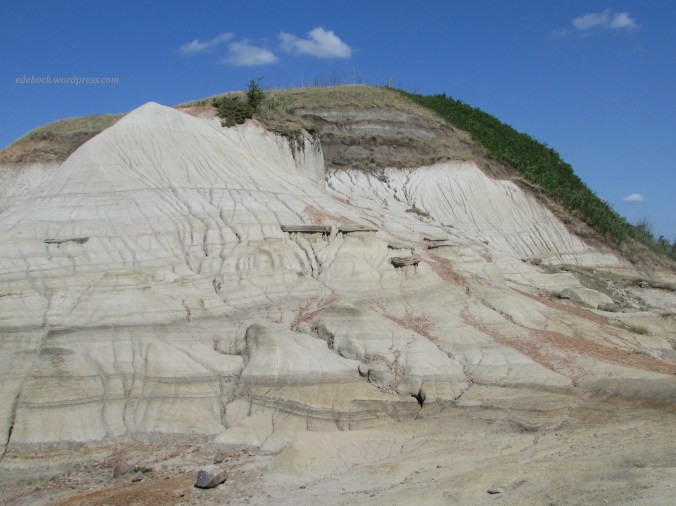
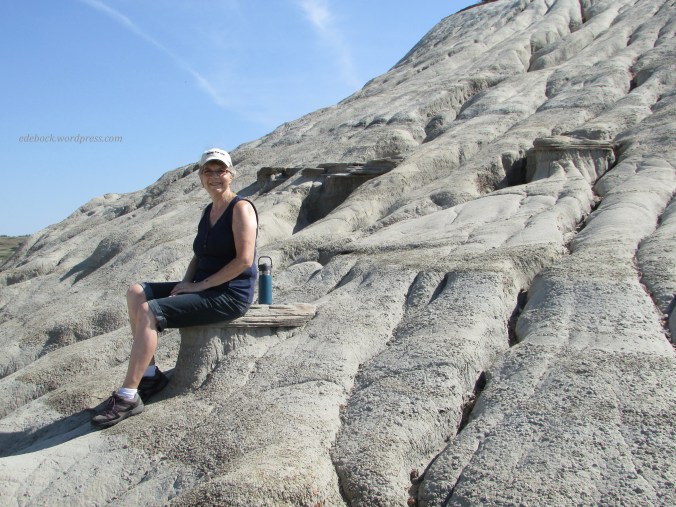
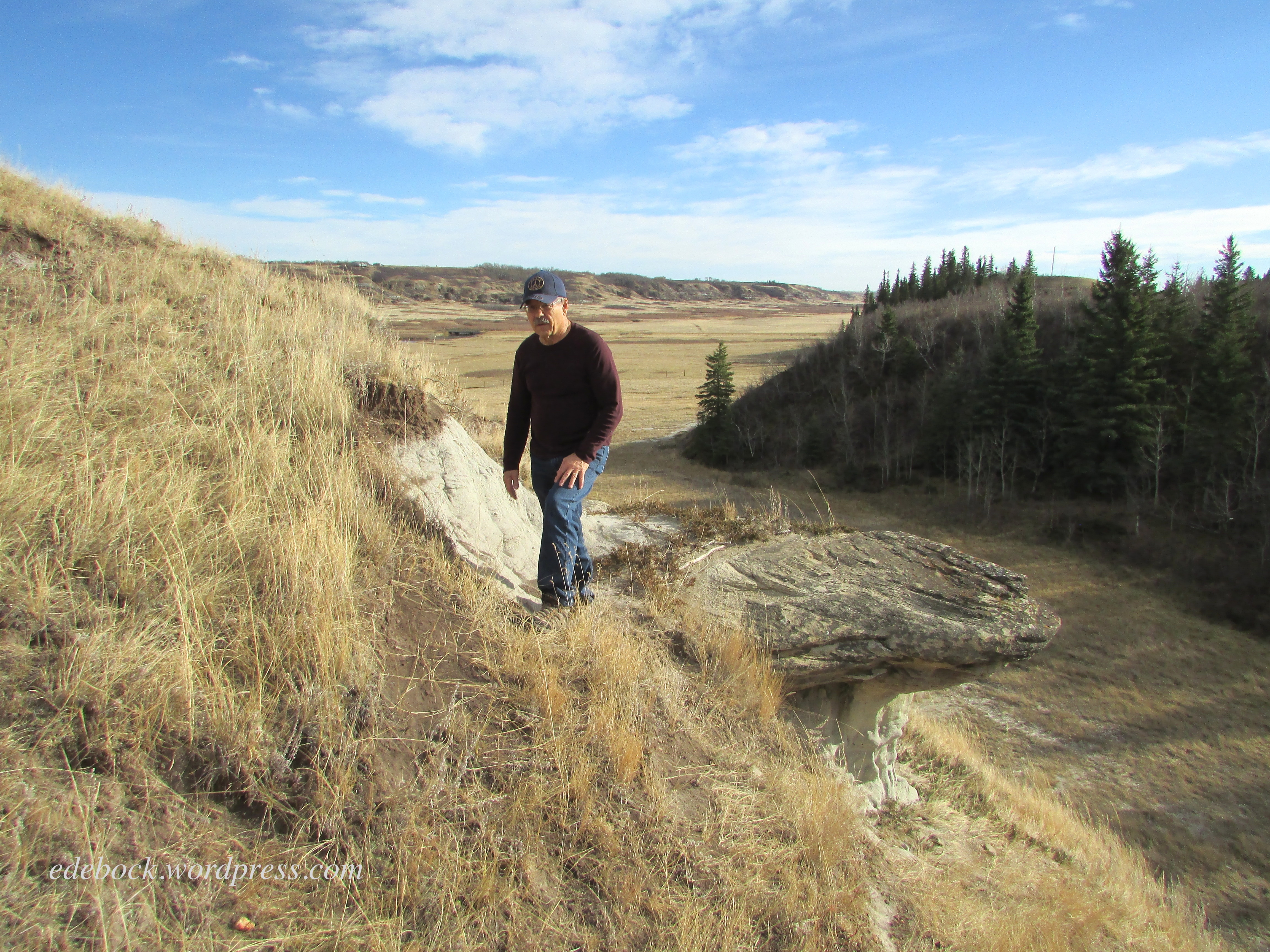
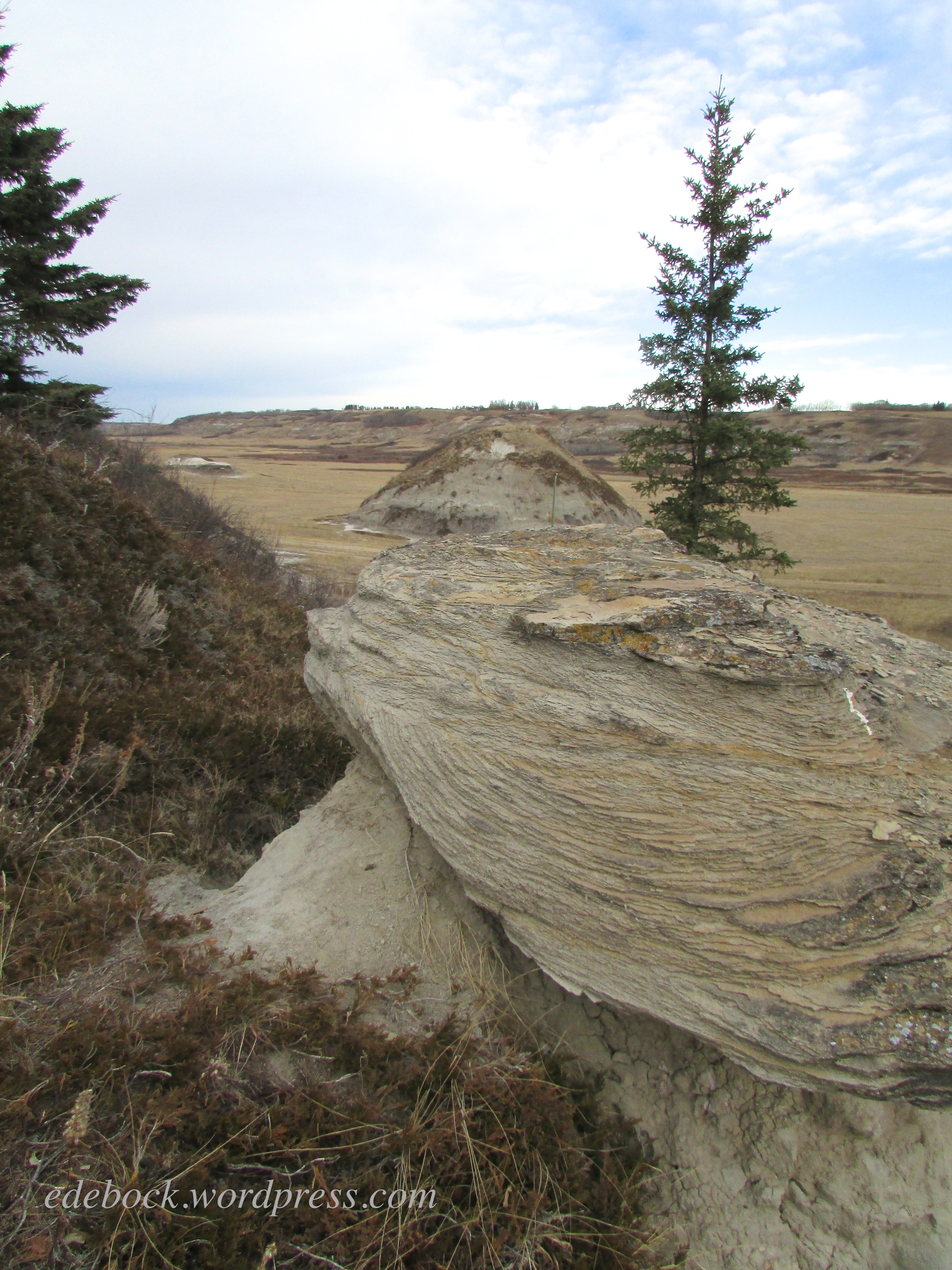
The trail led us to the hoodoos, a geological formation found throughout the Canadian badlands. Formed by erosion, a hoodoo is a pillar of soft sandstone with a capstone of harder, denser rock. This area is also accessible from one of the easier marked trails.

IMG_5628

IMG_5631

Not a fashion photo! 😄

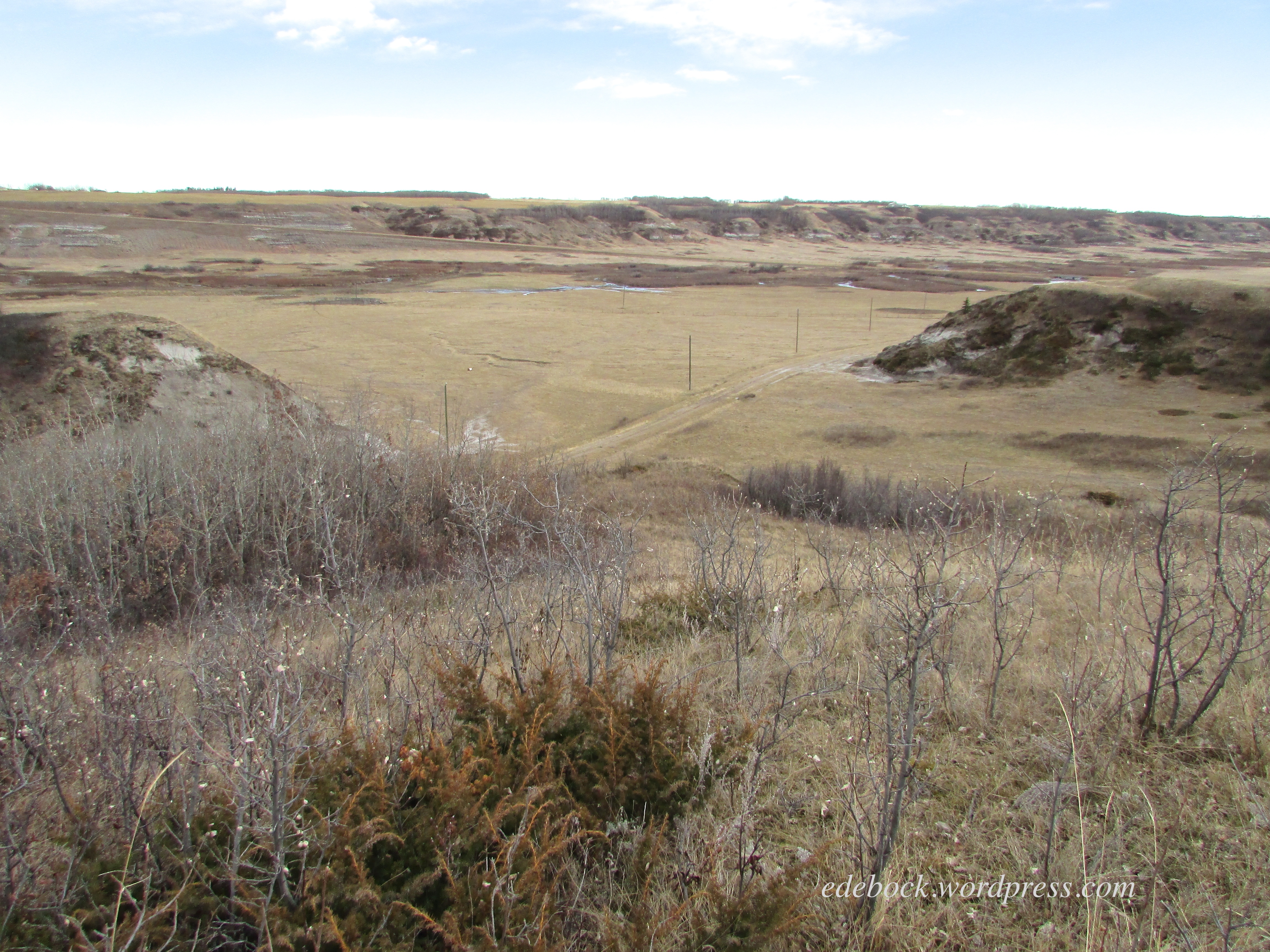
From the bluff above the hoodoos we had an amazing view of the meandering river below. Looking at the photo, it’s easy to see why we can paddle for a long time and not go very far as the crow flies! Our first time out on the water this trip, which was also the first time we had the kayak out this year, we paddled for over two hours. By the last half hour, I could feel the burn of muscles not used enough over the long winter months and started making promises to myself about dusting off the hand weights in the basement and starting to use them again!

IMG_5640

Fashion Friday could be a little hit and miss over the summer months as we hope to spend more time on similar excursions, but I’ll try to post something at least once a week, fashion or otherwise.

Kayaking, hiking, and bridge building

We kayaked to Saskatchewan yesterday. That might sound like an amazing feat, but only until I tell you that we were camping on the Alberta side of Dillberry Lake which straddles the Alberta/Saskatchewan border. We were across the provincial boundary within 5 minutes of leaving the boat launch!

Camping, hiking, and kayaking are my favourite summertime activities and we chose Dillberry Lake Provincial Park for a short getaway this week because there we could enjoy all three. Though it’s less than two hours from home, we hadn’t been there since the early 1980s! The lake was much smaller than we remembered and we were able to paddle all the way around it in less than an hour.

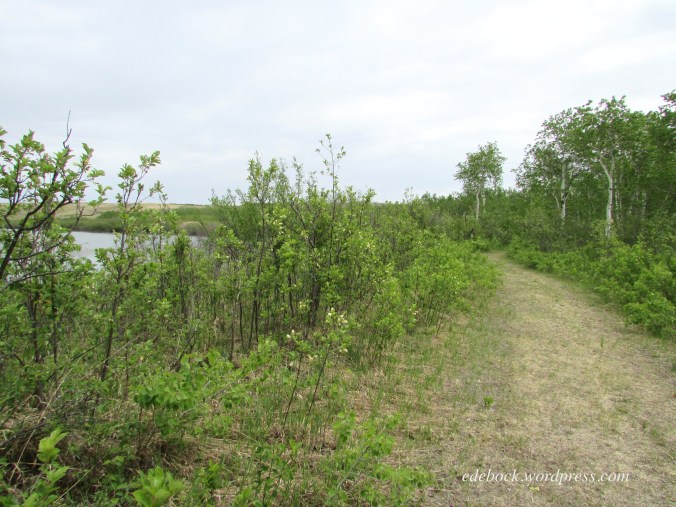
We spent several hours out on the hiking trails the day before though. The “knob and kettle” topography of the area consists of hummocky mounds (the knobs) and water-filled depressions (the kettles) that form a series of small lakes. We hiked the entire trail system (8.93 km) which is made up of several loops alongside and around some of these lakes. With the exception of bazillions of birds, butterflies, and dragonflies, we didn’t see any wildlife, but we saw plenty of evidence along the trail to suggest that they were there.

IMG_2466

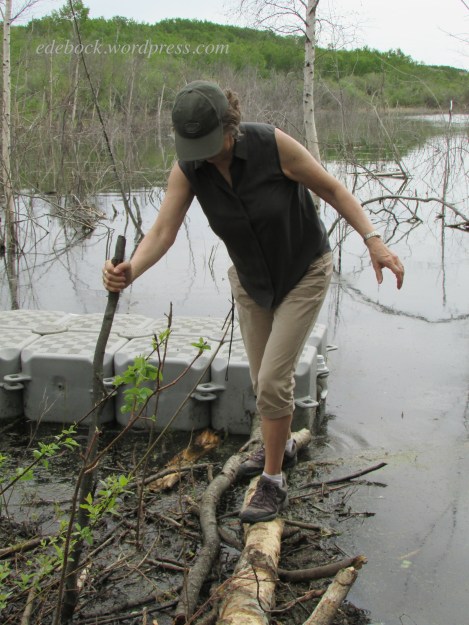
At one point, where a tiny wooden bridge should have taken us across the water exiting one of the lakes, industrious beaver had built a dam and flooded the trail. A temporary floating bridge had been brought in to enable hikers to cross, but clearly that wasn’t enough. Would we have to turn back?

IMG_2471

IMG_2472

IMG_2475

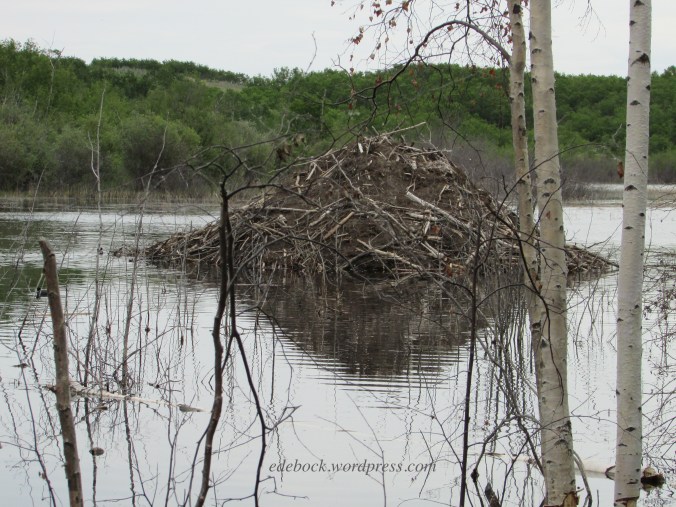
Where there’s a will, there’s usually a way. With a little temporary bridge building on Richard’s part, we were soon on our way again! The beaver had built themselves a fine home in the flooded end of the lake.

IMG_2481

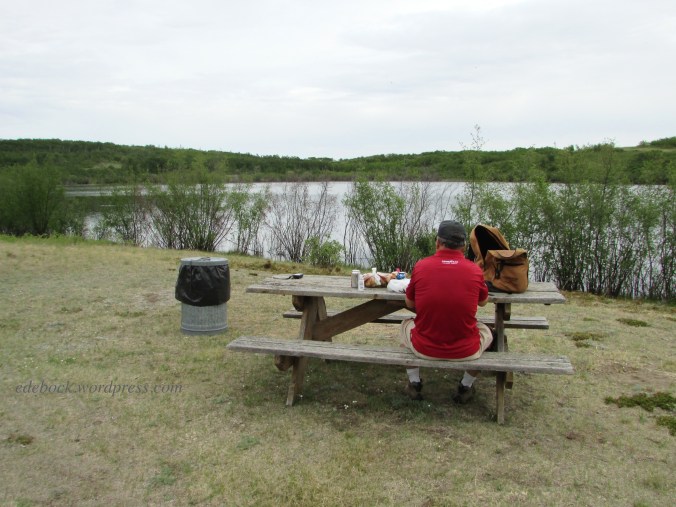
A little further along, we ate our picnic lunch at a lovely rest spot overlooking one of the lakes.

IMG_2483

We were back on the trails for a short jaunt this morning before packing up to come home. This time we saw two majestic moose at fairly short range, but unfortunately neither one waited around long enough to have it’s picture taken!

Hiking in November!

We usually have snow to stay by the end of October, but as we all know by now, 2020 is a rule breaker! Though we had some unusually cold weather and a few flurries in the latter half of October, when we turned the calendar page to November, the weather took an amazing turn. The average daytime temperature at this time of year is barely above 0ºC (32ºF), so when the forecast said that today’s high would be 18ºC (64ºF), we decided to go hiking! Hiking in central Alberta in November? Unheard of!

This morning, we headed for the village of Donalda, about an hour from home. The last time we hiked in that area was over five years ago. It was already 18ºC when we arrived and we hadn’t been hiking long when we started peeling off layers!

IMG_1801

We started off following the woodland trail that leaves from one corner of the village. With all the leaves on the ground and the trees bare, there was a peaceful beauty about the place. Before long, we passed through a gate that took us onto 129 acres of private land that’s used for grazing cattle. Signs tell hikers that they’re welcome to explore anywhere within the area. We had the option of staying on the trail along the rim of the massive coulee, the northernmost part of the Canadian Badlands, but instead we turned toward the valley and wandered wherever our feet took us. Up, down, and around the bluffs we went seeking out interesting formations and views.

IMG_1806

Though there weren’t any cattle grazing in the area, we had to watch our step as there was plenty of evidence that they had been there! We did see some deer. 

IMG_1808

IMG_1811

The weather is so warm this week that the golf course, which has been closed since October 12, has reopened with golfers playing on temporary greens. Richard had Platelet Rich Plasma (PRP) injections in both his shoulders a week ago to promote healing of some old sports injuries, so he can’t do much with his arms right now. Golfing is out, but he certainly could hike!

IMG_1812

I have no idea how far we hiked, but we were out for about three hours. We enjoyed a picnic lunch overlooking the valley.  

IMG_1817

IMG_1818

Eventually, we rejoined the woodland trail at it’s far end and made our way back to our starting point. Along the way, we passed this unusual sign on a fence post. We have no idea what it was trying to tell us, but it seemed very appropriate for this most unusual November day!

IMG_1821

Winter at its best

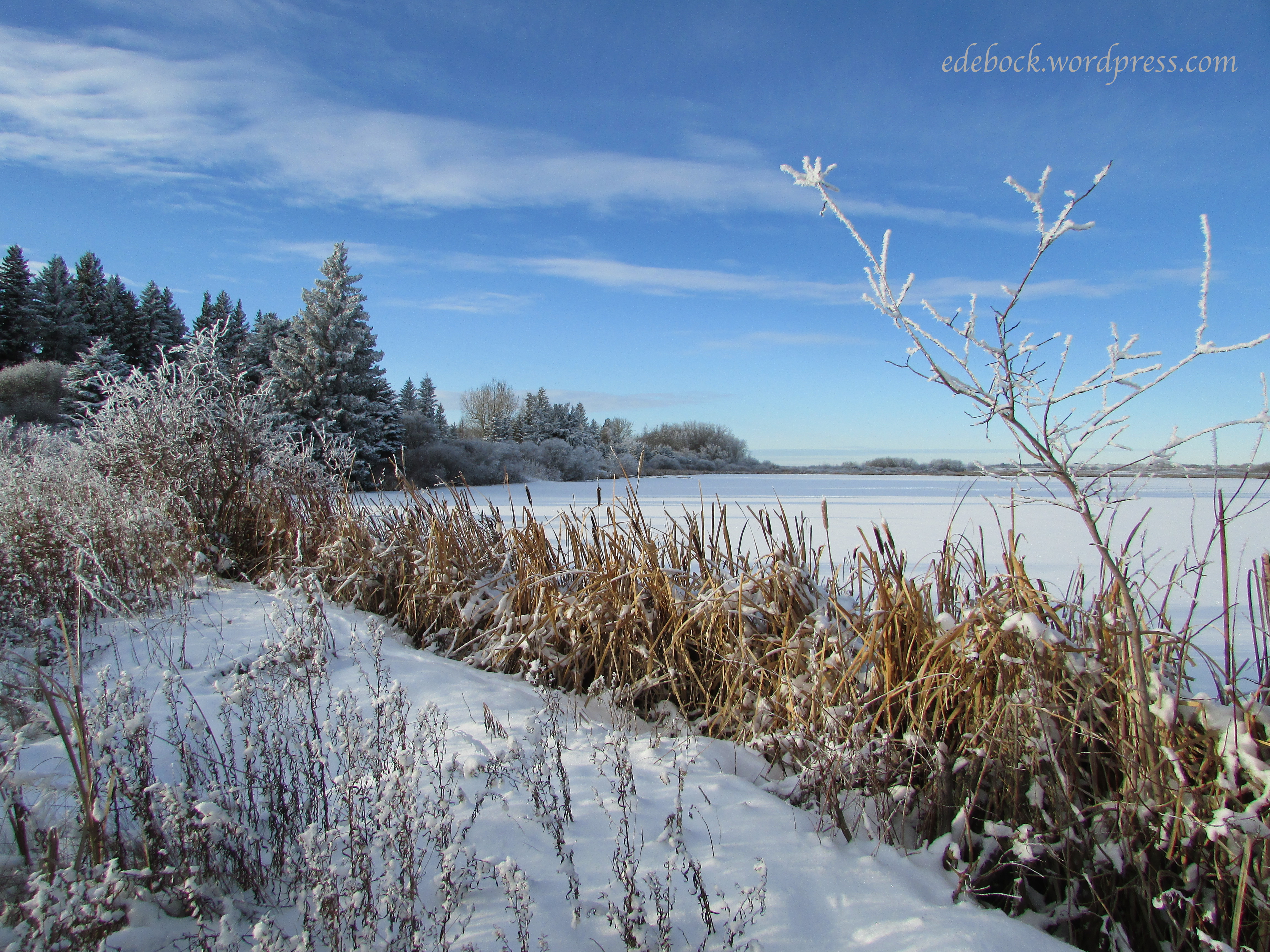
Winter is not my favourite season, but sometimes it’s spectacularly beautiful here on the Canadian prairie.

IMG_0501

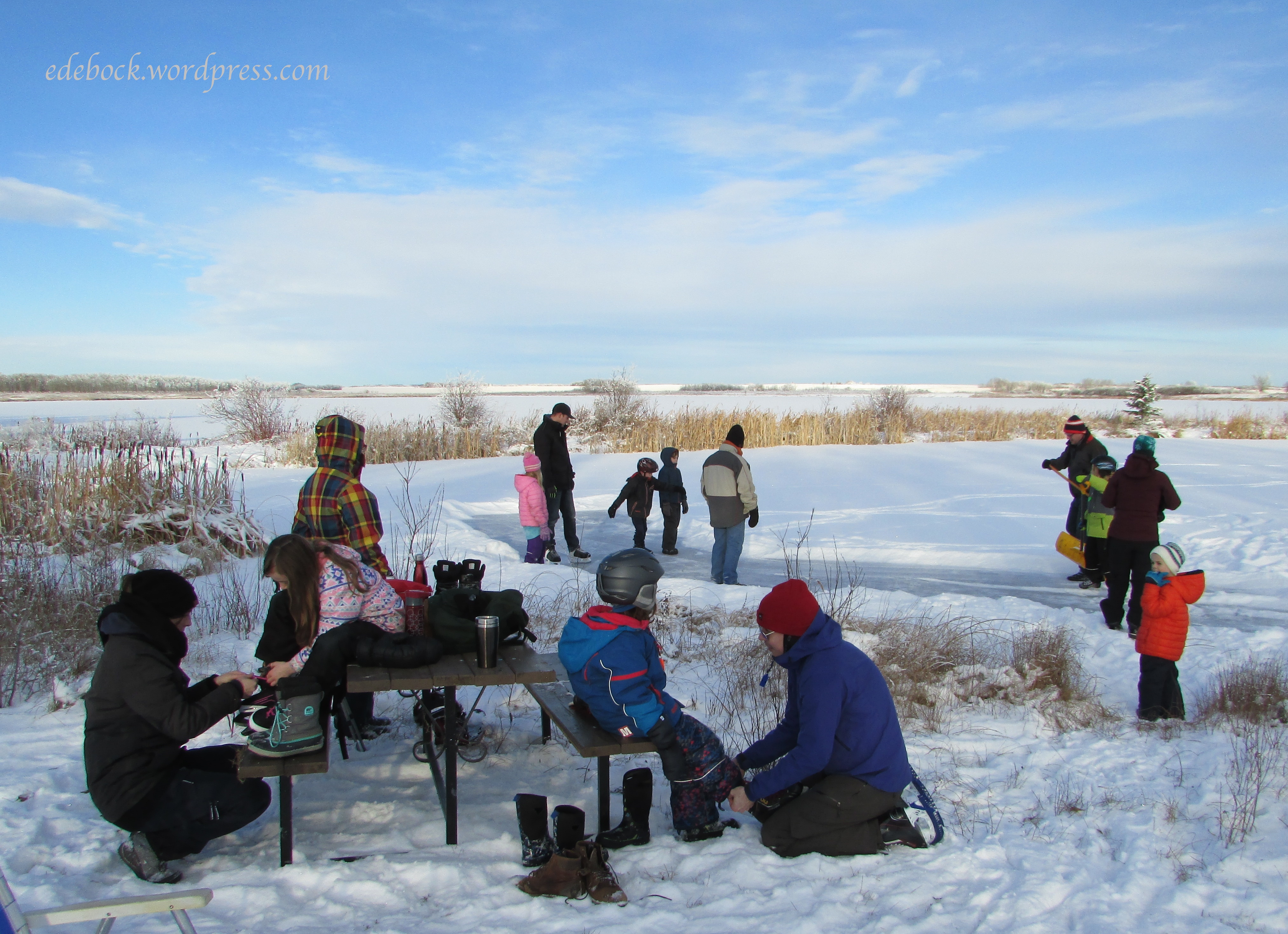
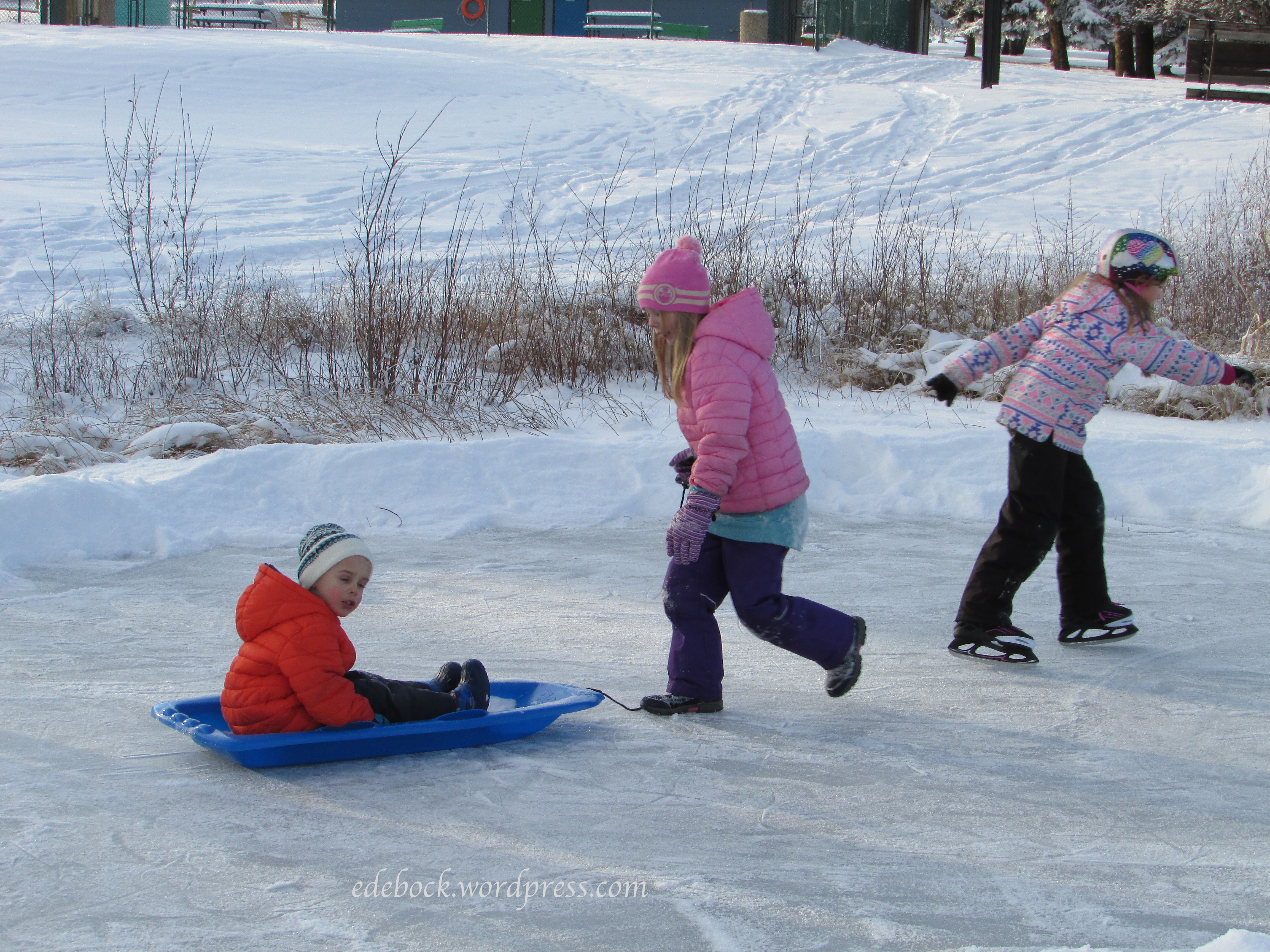
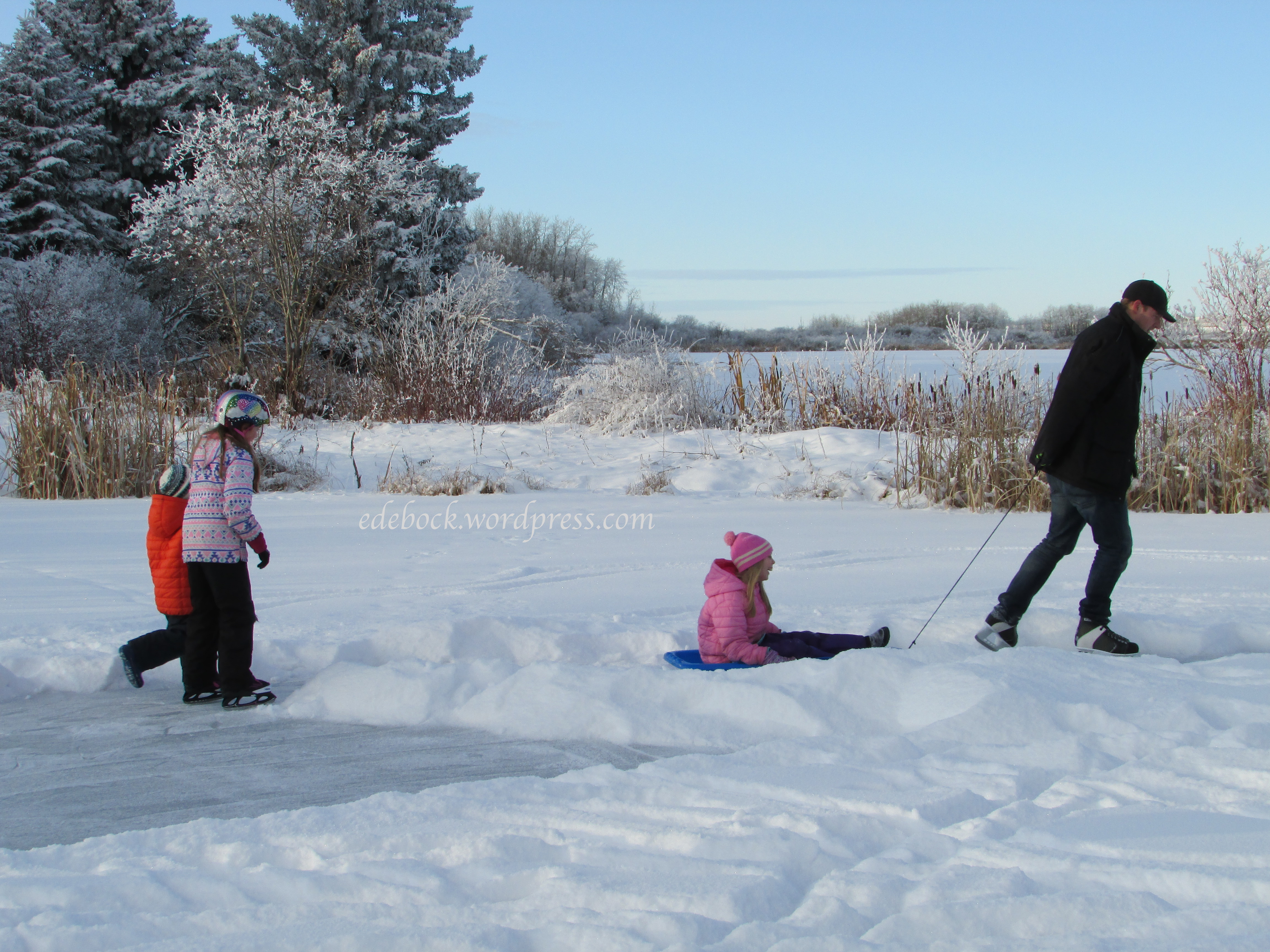
With a houseful of grandchildren for the past week, we were very thankful for sunshine, mild daytime temperatures, and fresh powdery snow that made outdoor activities not only possible, but a great deal of fun.

With shovels and brooms, a skating rink was cleared on a pond just outside town.

IMG_0497

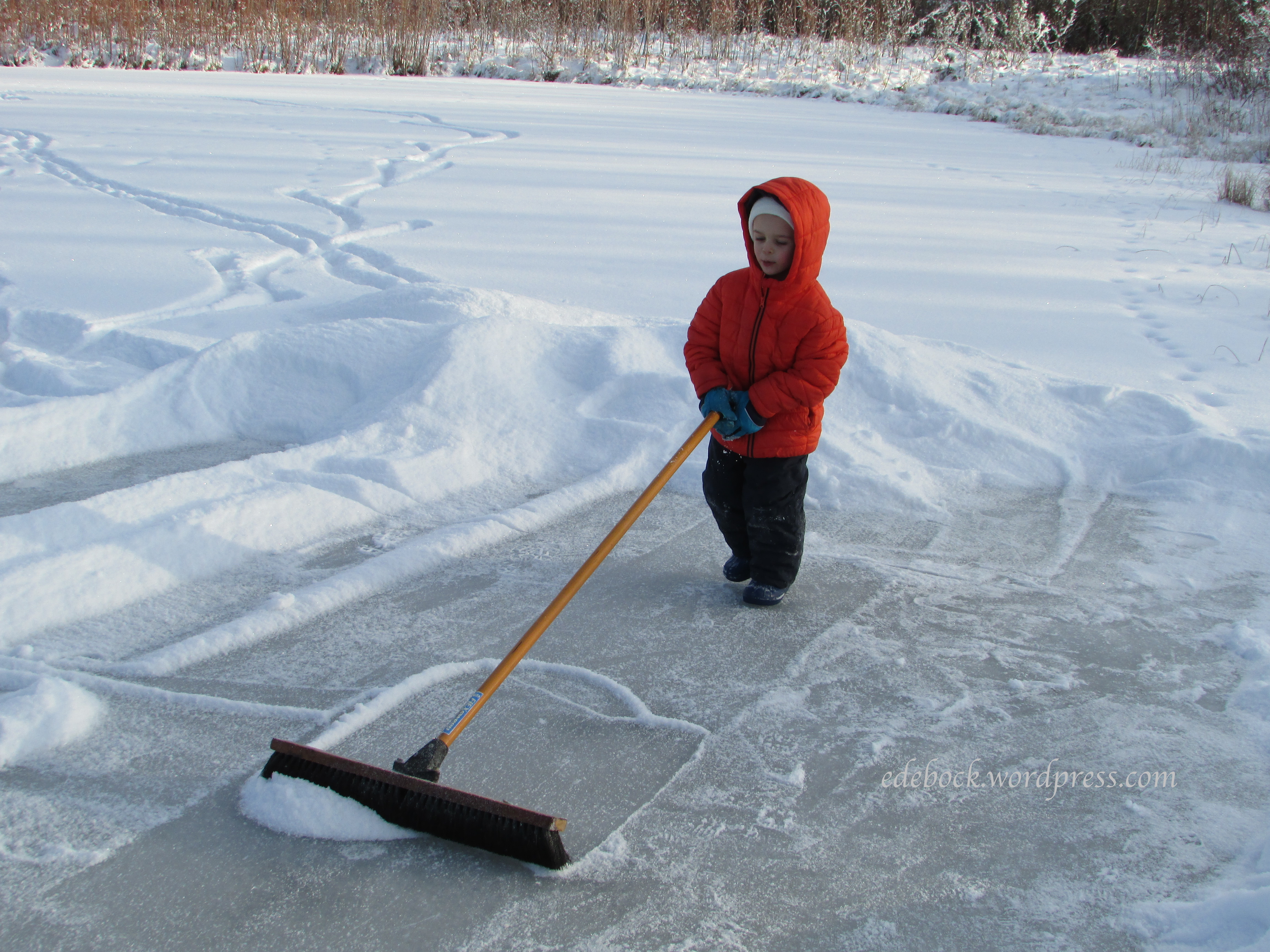
Even the littlest one helped out.

IMG_0498

IMG_0522

IMG_0520

Many hours were spent tobogganing on a hill just three blocks from the house.

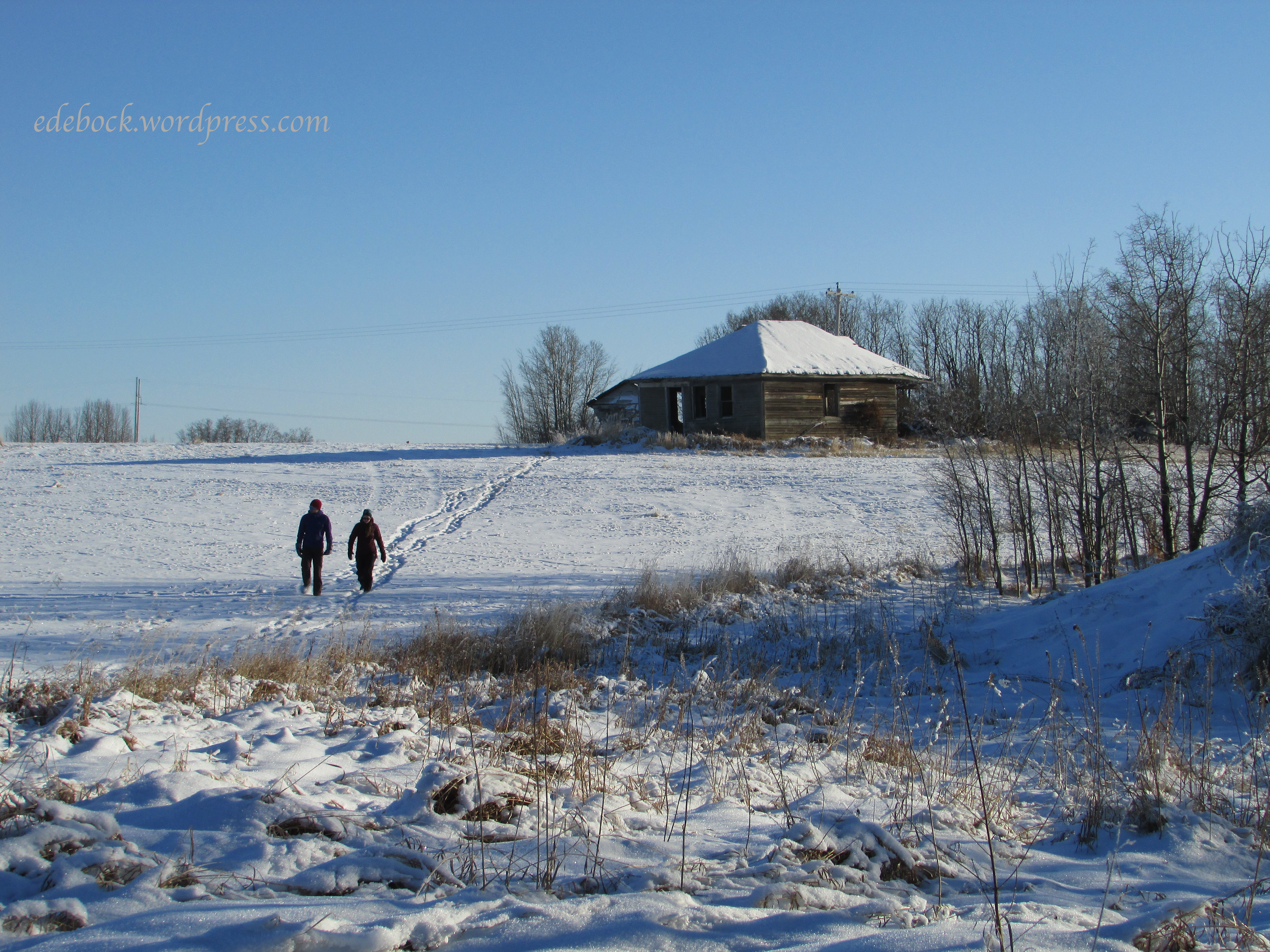
By late this morning, most of the family had packed up and left for home. Only our two Vancouver grandsons and their parents remained. If you’ve been following my blog for very long, you may remember how much I enjoy exploring the old abandoned buildings that are scattered across the prairie. Until today, that was a summertime activity, but when I discovered that 8-year-old Nate shares my passion for old abandoned houses, a plan was hatched and off we went to find a few.

Our first stop was an old farmstead a few kilometres from town.

IMG_0577

IMG_0578

IMG_0600

The last time we were there, the old shed was still standing, but not anymore.

When the sun is shining, there’s beauty even in decay.

IMG_0575

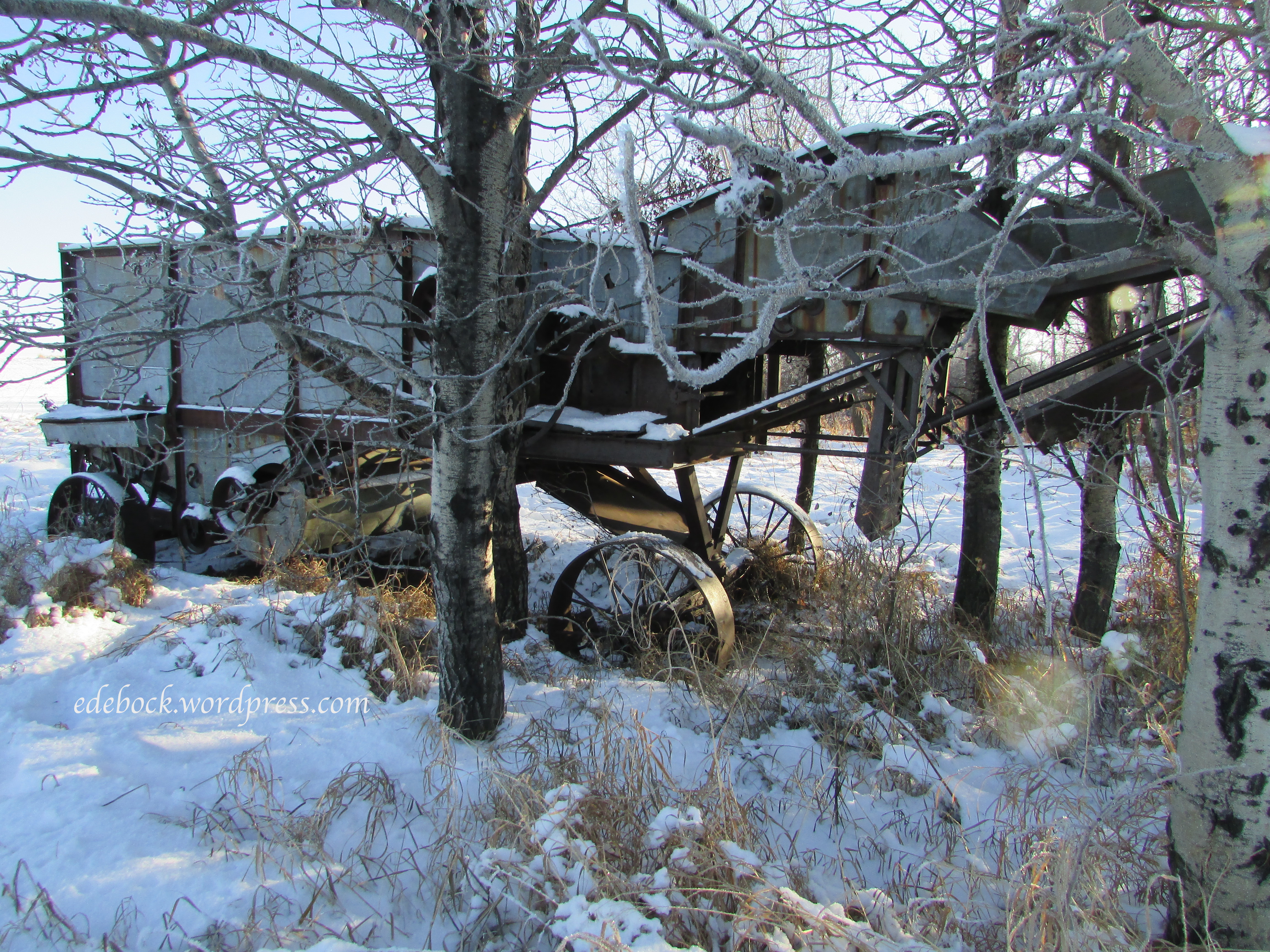
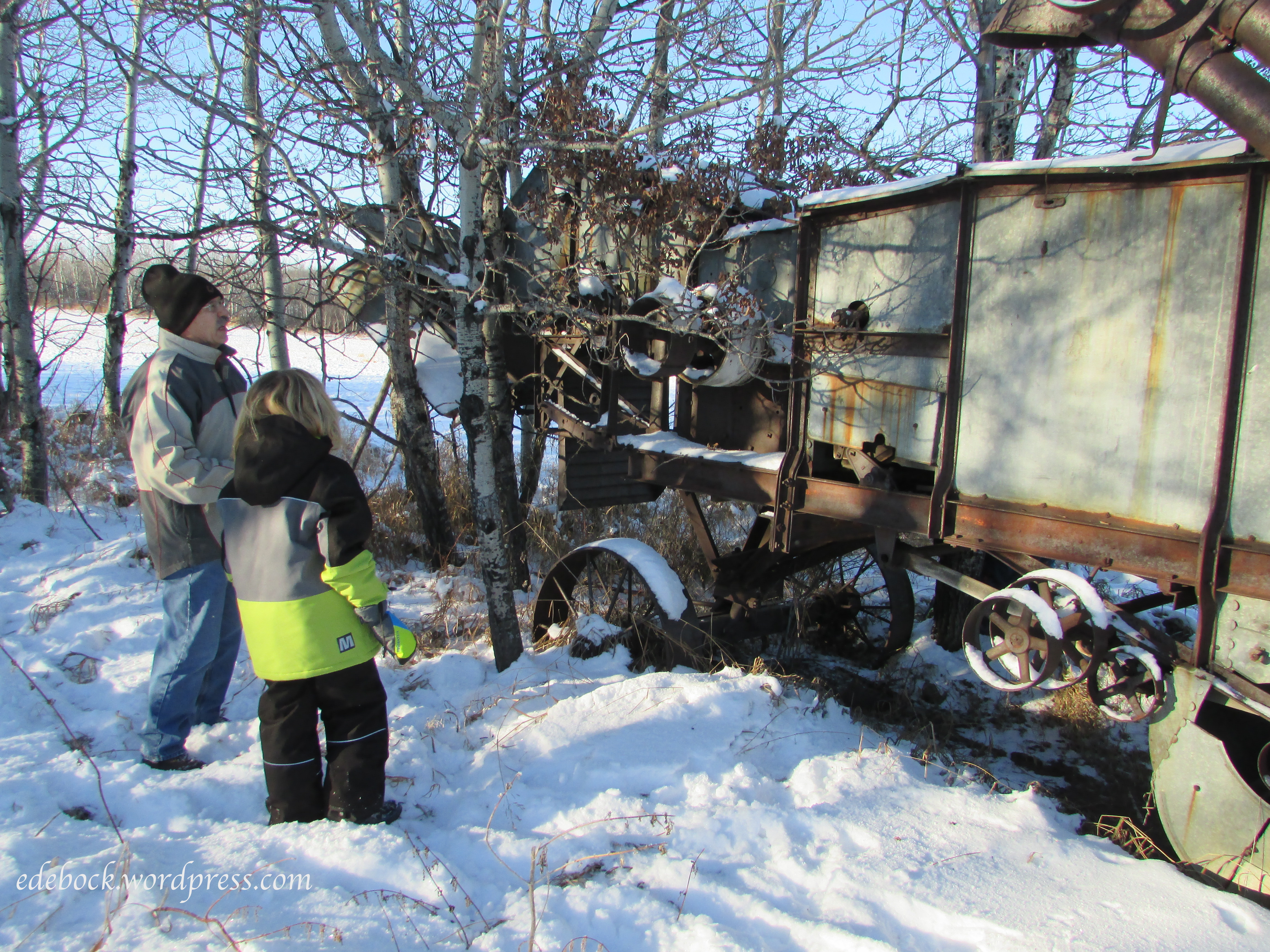
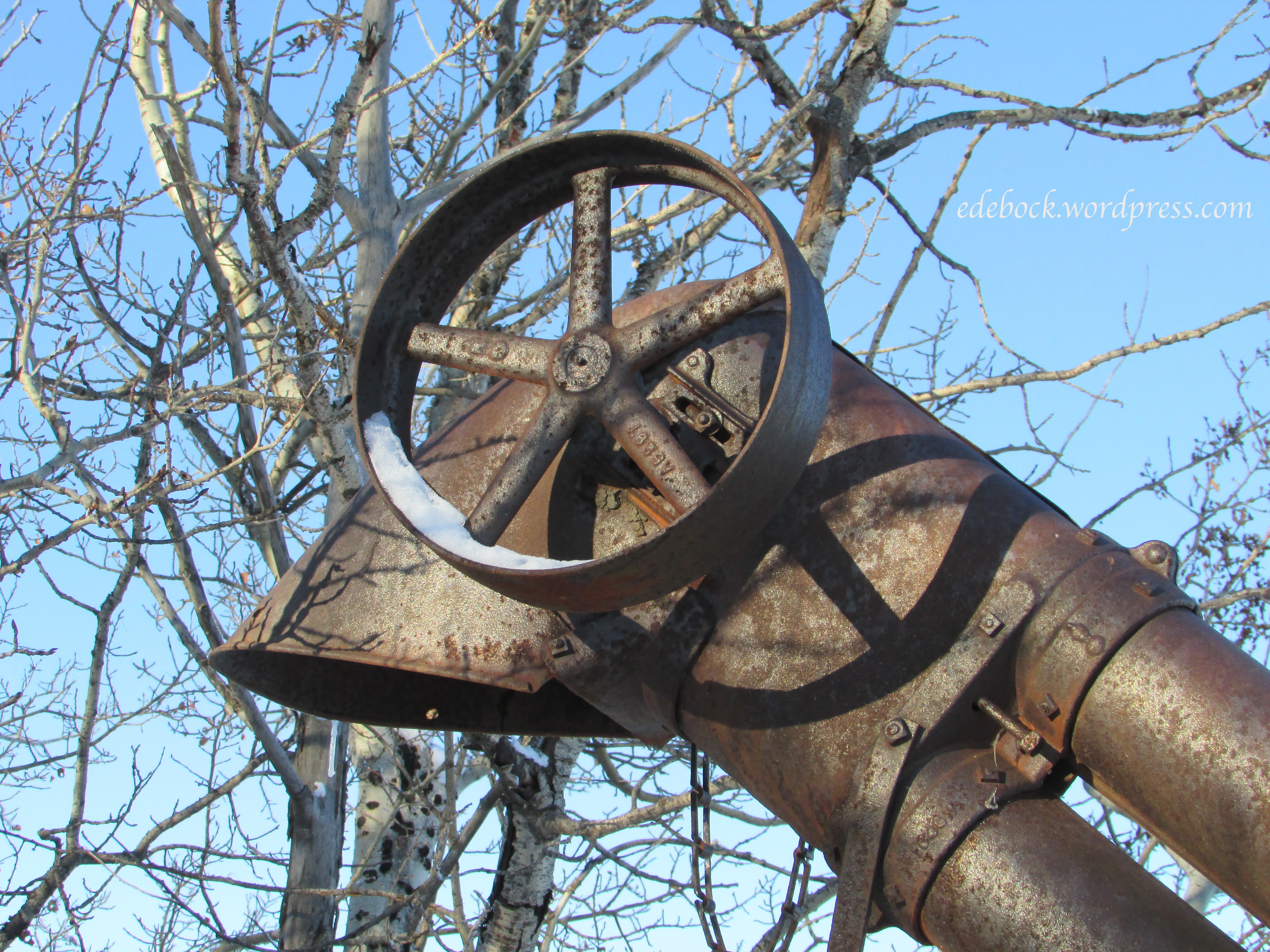
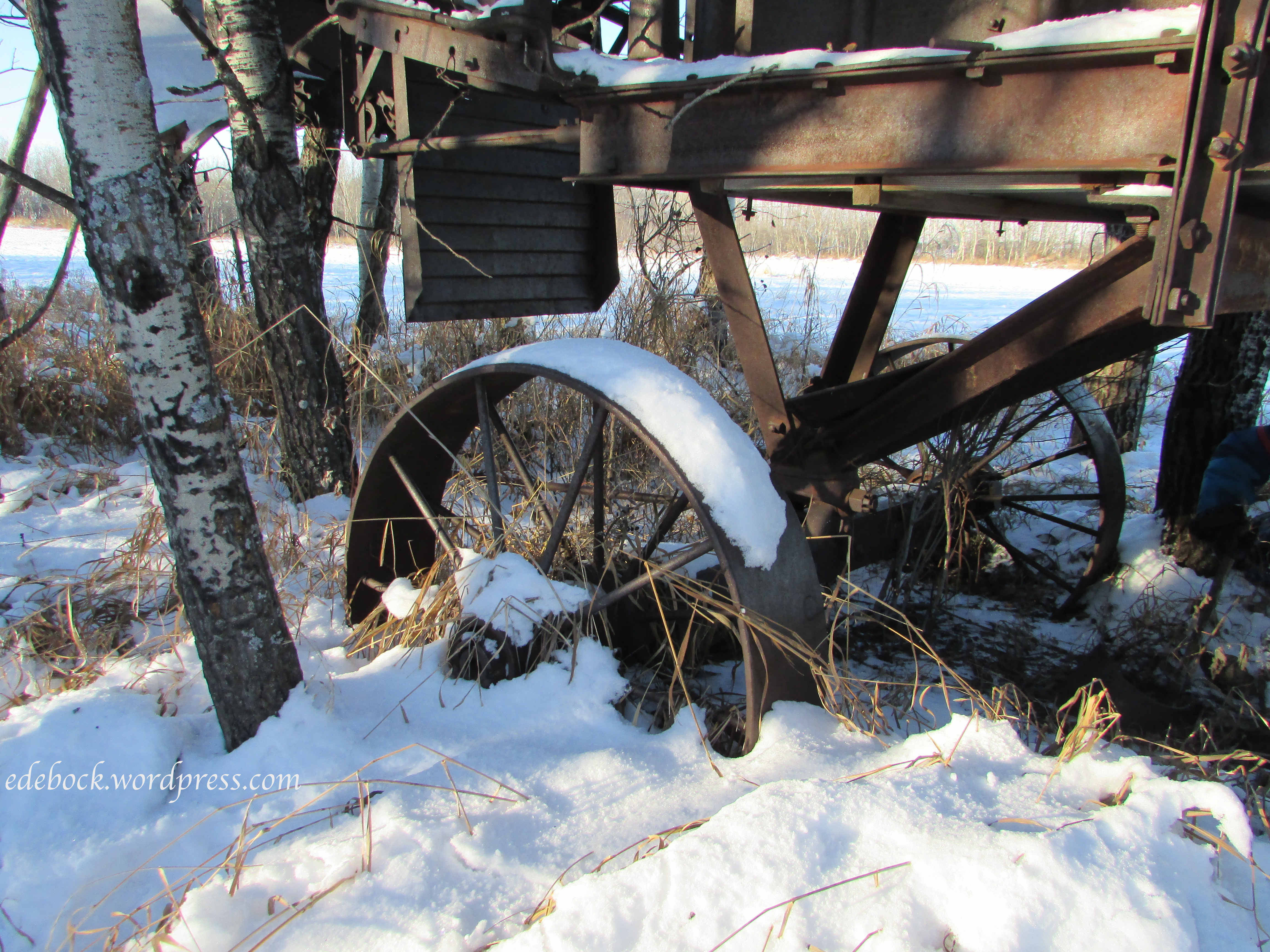
Next, we walked down the field to check out the old threshing machine in the edge of the trees.

IMG_0589

IMG_0598

IMG_0591

IMG_0592

IMG_0593

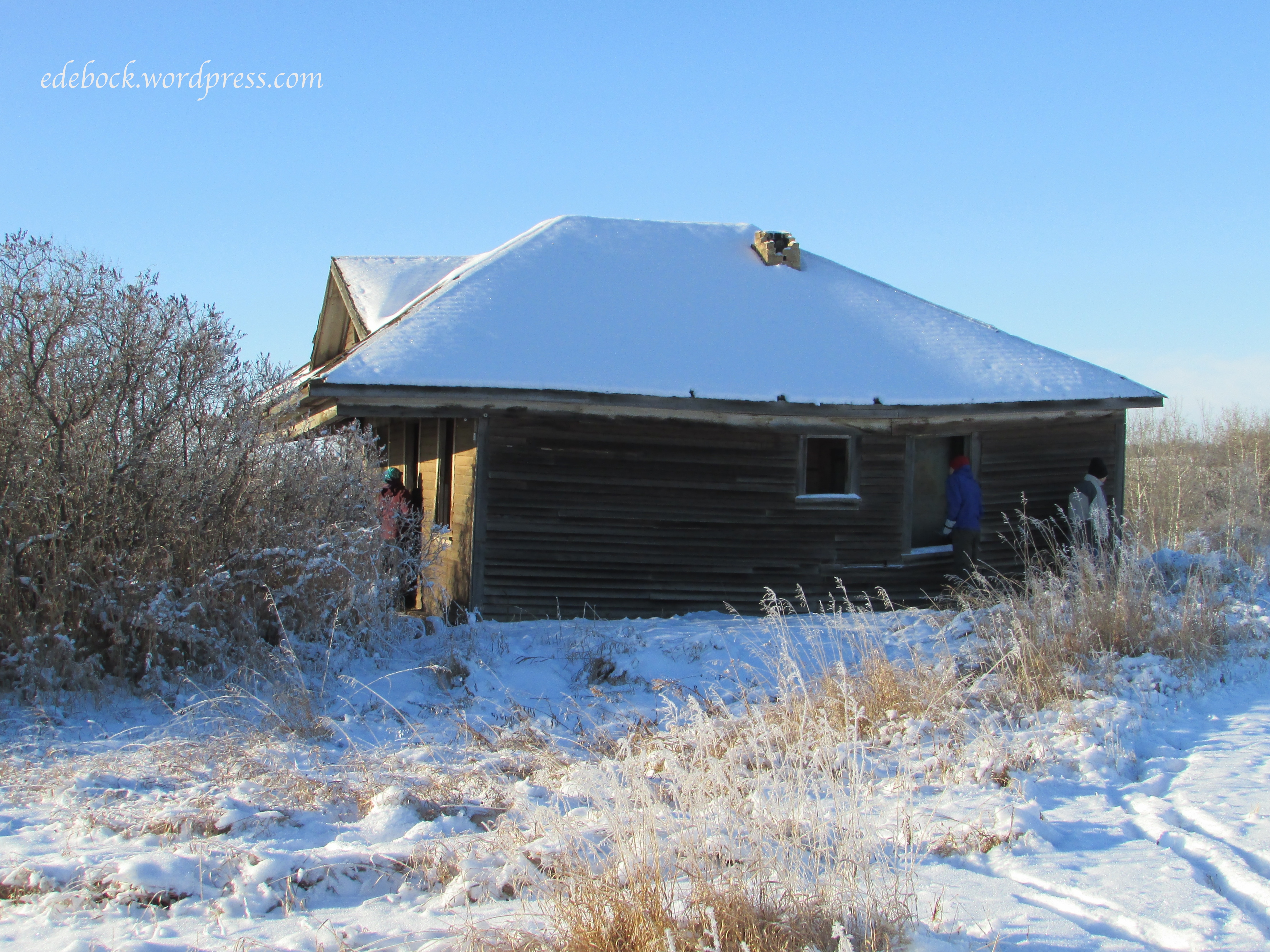
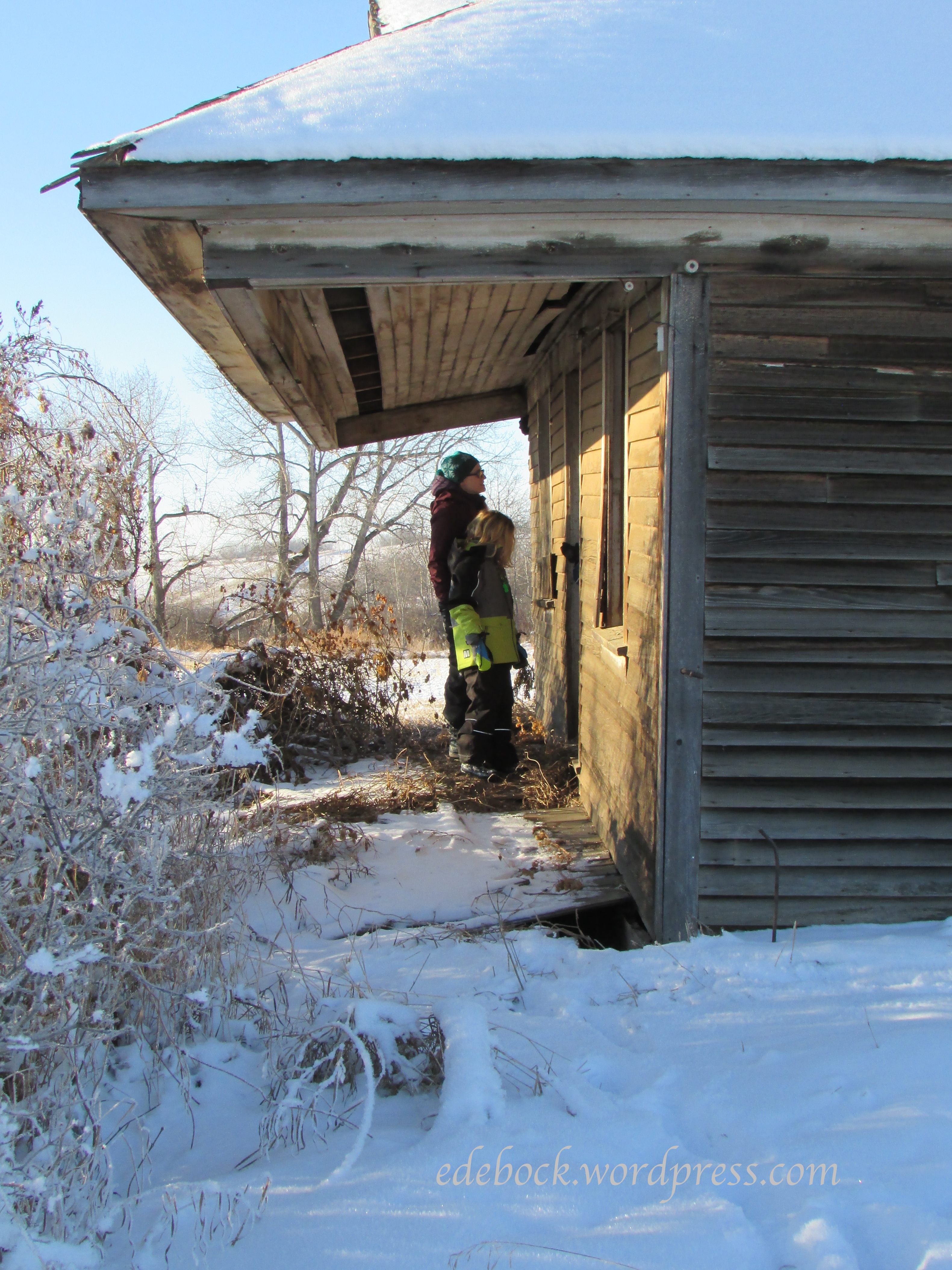
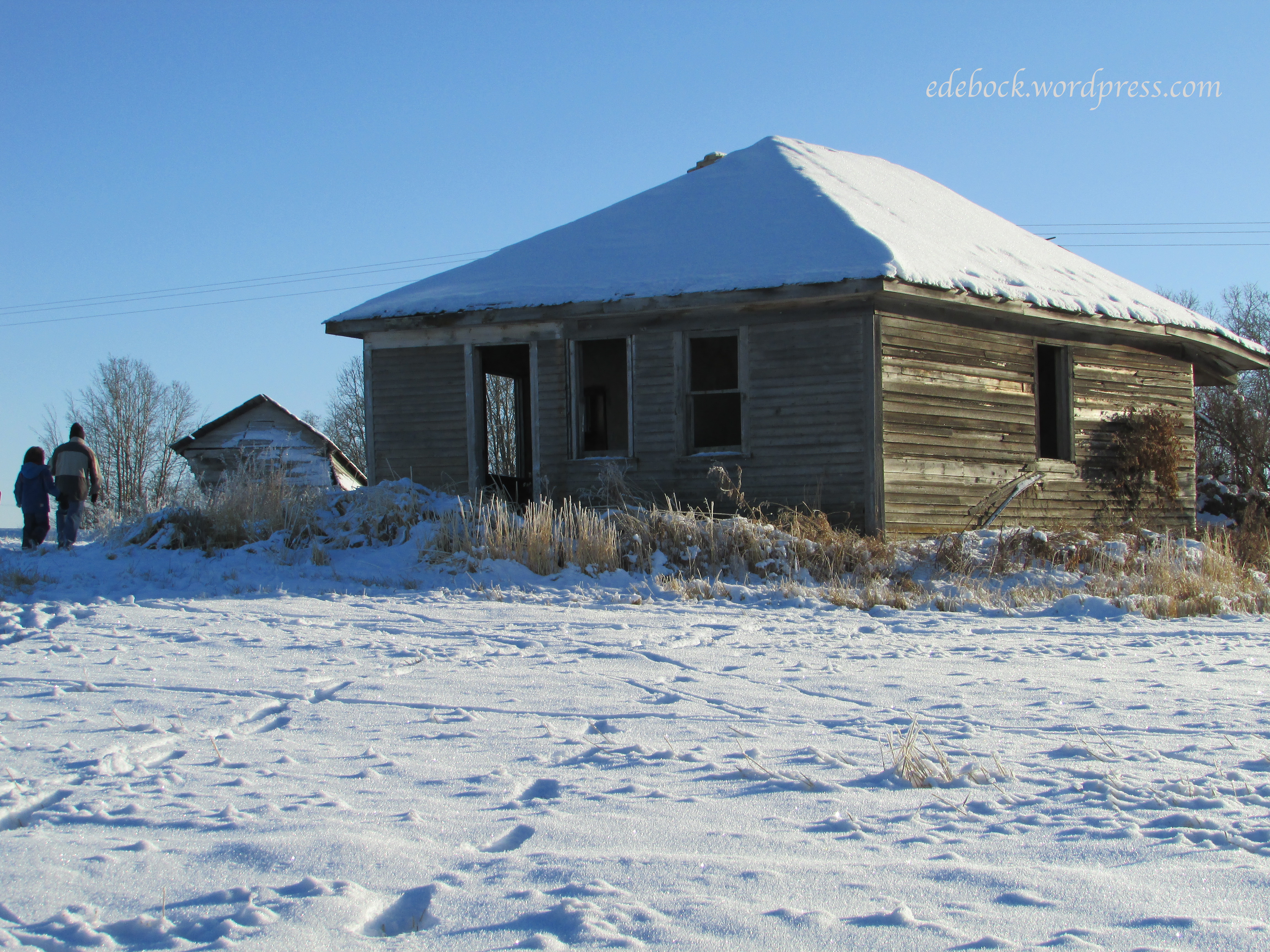
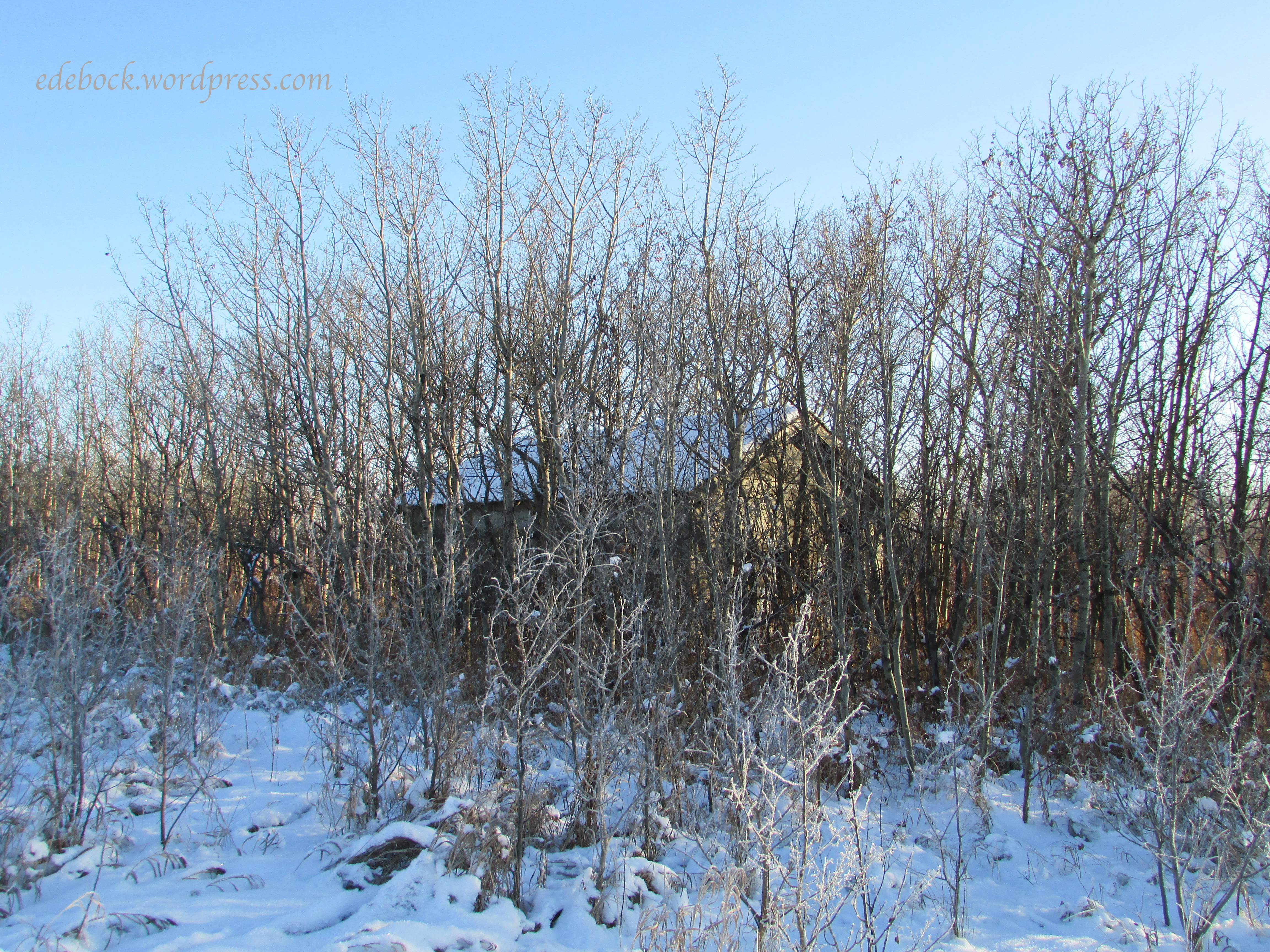
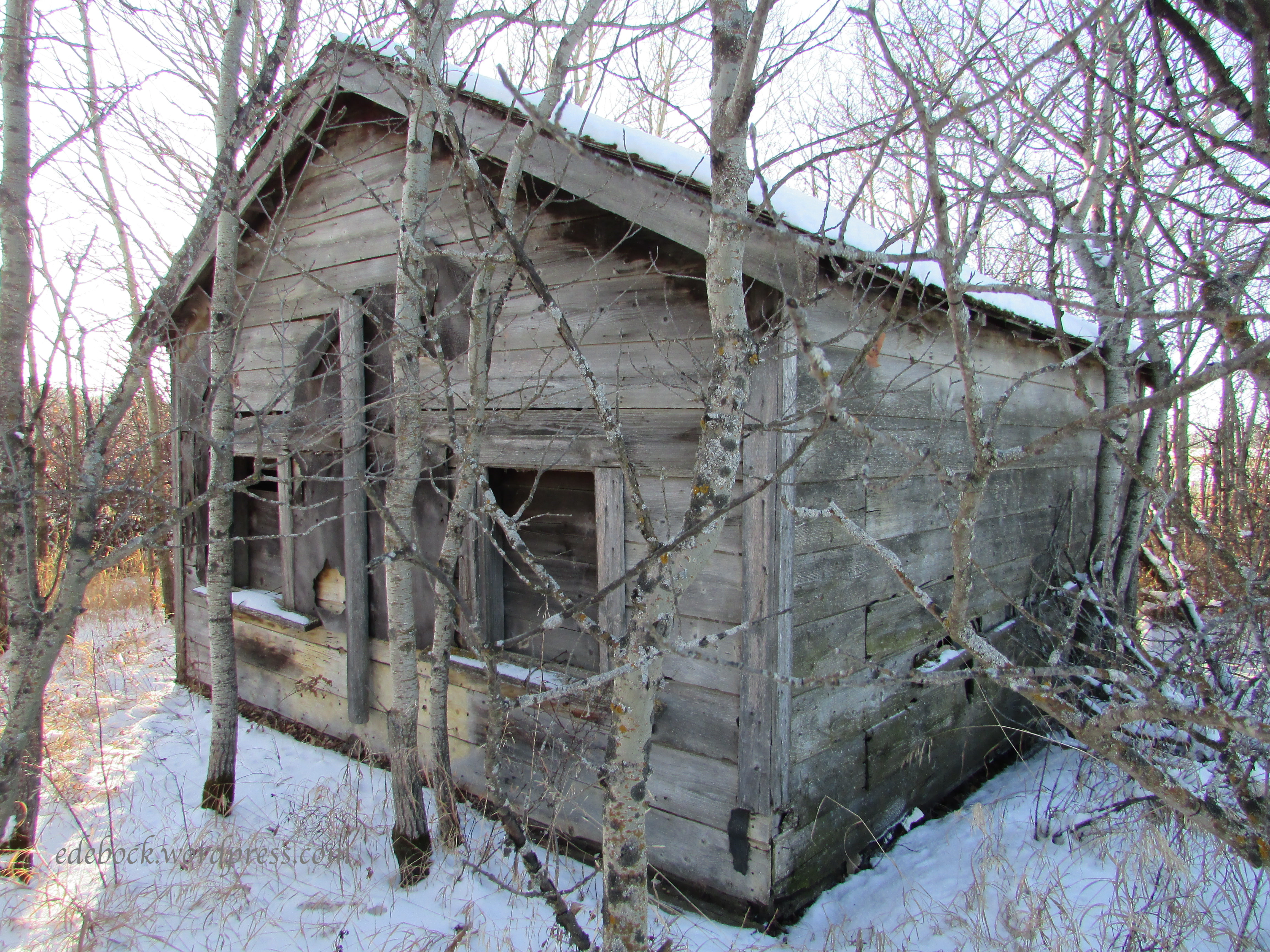
Sharp-eyed Nate spotted this tiny one room house beside the road not far from the old farmstead. I’m sure we’ve driven by it many times without ever noticing it. In the summer it would be completely hidden by leaves on the trees.

IMG_0610

IMG_0604

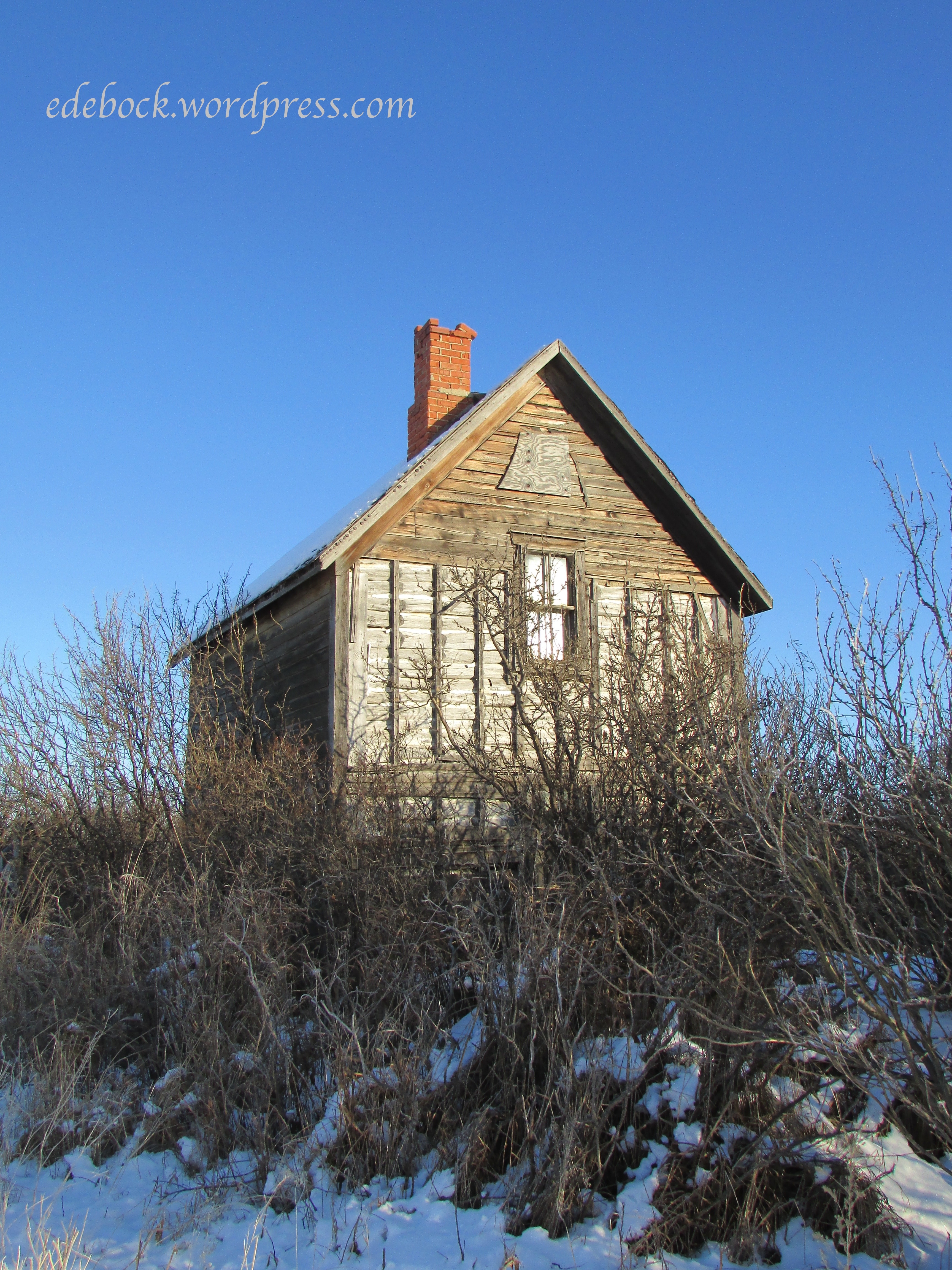
A little further down the road we spotted another old house that we’d never noticed before. We had to walk across a snowy field of canola stubble to check it out.

IMG_0611

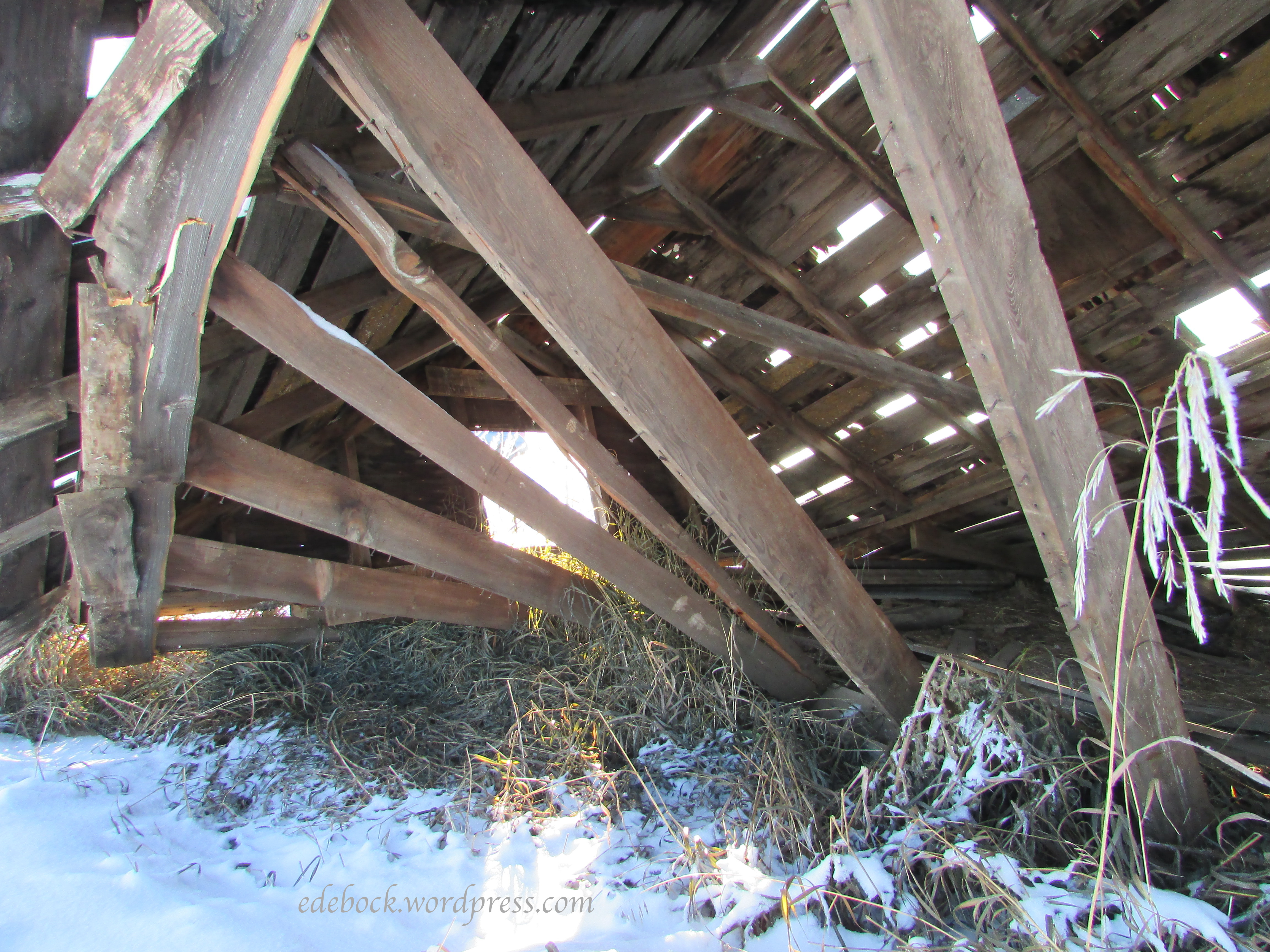
Two stories tall with a cellar below, it would have been quite a place in its day. It’s a very solid structure built of logs overlaid with wooden slats. With doors and windows still intact and shredded curtains hanging in some of the windows, it’s in better shape than many of the old buildings we’ve found. Peeking through the kitchen window we spotted a calendar on the wall dated September 1963. Presumably that’s when it’s last residents moved out. I couldn’t help wondering why they left a sink full of dishes behind! If only these old walls could talk. What stories they would tell!

If winter was always this beautiful and this much fun, I might not mind it so much! The last of the family leaves tomorrow morning though and the forecast is calling for much colder temperatures a week or so from now. We haven’t made any plans for a winter getaway to warmer climes, but it might soon be time to look for a last minute deal!

Solitude

IMG_5153

Richard and I spent the past couple of days doing three of the things that we most enjoy at this time of year… camping, hiking and geocaching.

Big Knife Provincial Park, located in central east Alberta where Big Knife Creek flows into the Battle River, is less than an hour from home for us. Like many locations on the Canadian prairie, it takes it’s name from our native history. Two hundred years ago, the Blackfoot and Cree who inhabited the area were bitter enemies. According to legend, Big Man, a Cree, and Knife, a Blackfoot, fought near the banks of the creek, which at this time of year is little more than a muddy breeding ground for mosquitoes. Apparently both warriors died in the battle.

Though the campground and day use areas are probably somewhat busier on weekends and during the height of the summer, the park was almost empty while we were there providing us the peace and solitude we were looking for. We spent several hours on Wednesday tramping the River Flats trail system and yesterday we hiked the Highland trails. Though my stamina isn’t quite what I’m used to it being and we stopped to rest more often than we might have in the past, I was impressed that I could quite easily hike for several hours a day without completely wearing out.

The trails were far from challenging, mostly level and grass covered. With the sun shining overhead, tiny wildflowers strewn along our path, butterflies flitting around our ankles, birds singing in the nearby trees, and the sweet musky scent of the silver willow bushes wafting on the breeze, walking was a delight. We did do a bit of “real” hiking though, first leaving the River Flats trails to get a close-up view of the nearby hoodoos, then deciding to climb a steep hill and follow a narrow animal track along the top of a bluff that would have scared me out of my wits a few years ago before I overcame my fear of heights.

IMG_5151

IMG_5157

IMG_5166

IMG_5170

Only one of the eleven geocaches hidden throughout the park eluded us. It was suppose to be at the end of that narrow animal track, though the cacher who placed it recommended coming at it from the other direction. We searched a wide area around the given coordinates but came up empty handed. The view was spectacular though and the trek well worth it.

IMG_5171

There’s a cache up there somewhere… maybe

Not all of the caches were out on the trails. Shortly before dusk, we spotted a beaver in the water’s edge munching on a stick while we were searching for the one that’s hidden not too far from the boat launch. I couldn’t get close enough to get a good photo, but we stood and watched him until he quietly slid into the water and swam away.

IMG_5177

Storm brewing

I love the solitude of nature; no TV, no telephone, and no internet, but I also love the conveniences of modern day camping. On Wednesday night, a storm blew in bringing much needed rain to the surrounding countryside but we were snug and warm in our trailer bed as the thunder crashed and lightning flashed. It had blown over long before morning came and oh, how well I slept!

Looking for gnomes

After spending the past three weeks caring for my aging parents, we’ve moved across town to our son and daughter-in-law’s for a few days before we head for home. I’m mentally and emotionally worn out and nervous about leaving Mom and Dad on their own and it hasn’t helped that it’s been grey and rainy the entire time that we’ve been in Vancouver. Fun with our grandsons is just the medicine I need at the moment and what could be more delightful than a walk in the woods to look for gnomes?

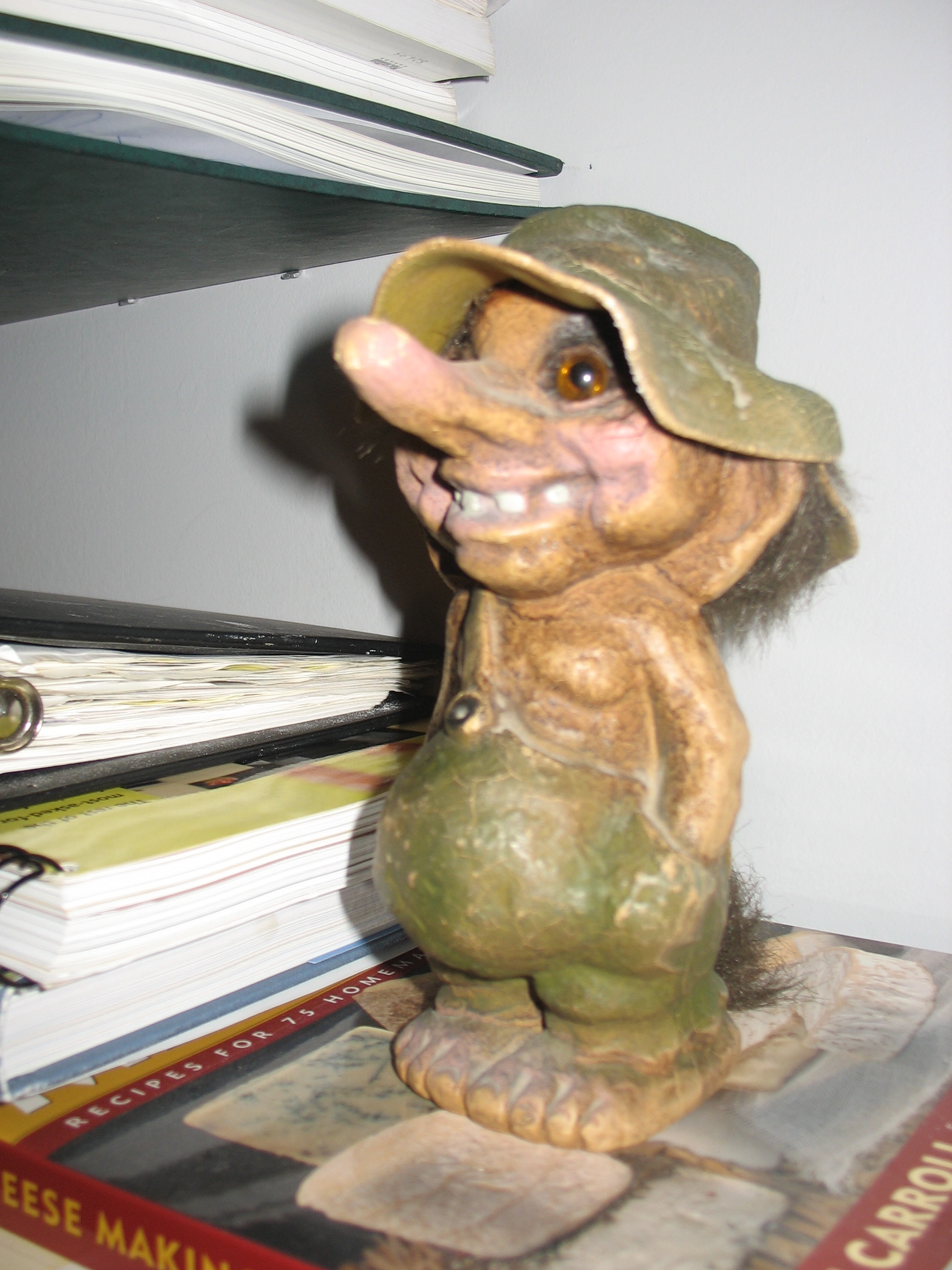
Twenty-three years ago, when our son, Matt, was in fourth grade, we shared our home with a Norwegian exchange student. Bjorn came to us bearing unique and interesting gifts for each member of the family. The boys received Norwegian trolls about 6 inches tall with mischievous, grinning faces. In recent months, Matthew’s troll took up residence on a shelf in the kitchen of his home. That led to questions from inquisitive 3-year-old Sam and prompted a discussion about gnomes. Searches of the nearby forest followed to see if any of these dwarfish creatures could be found. Yesterday we were invited to go along on one of these adventures!

Could there be a gnome in here?

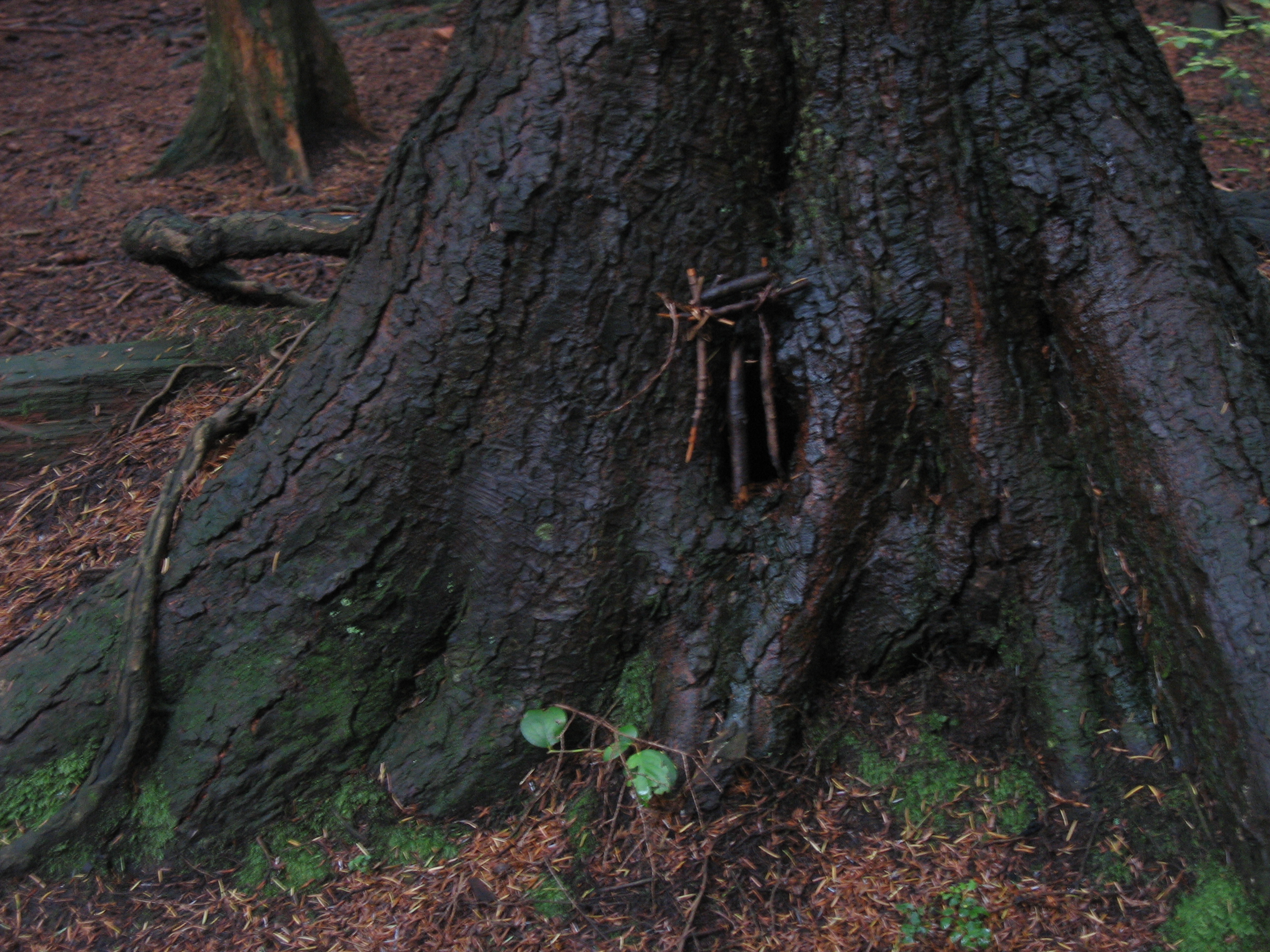
Or here?

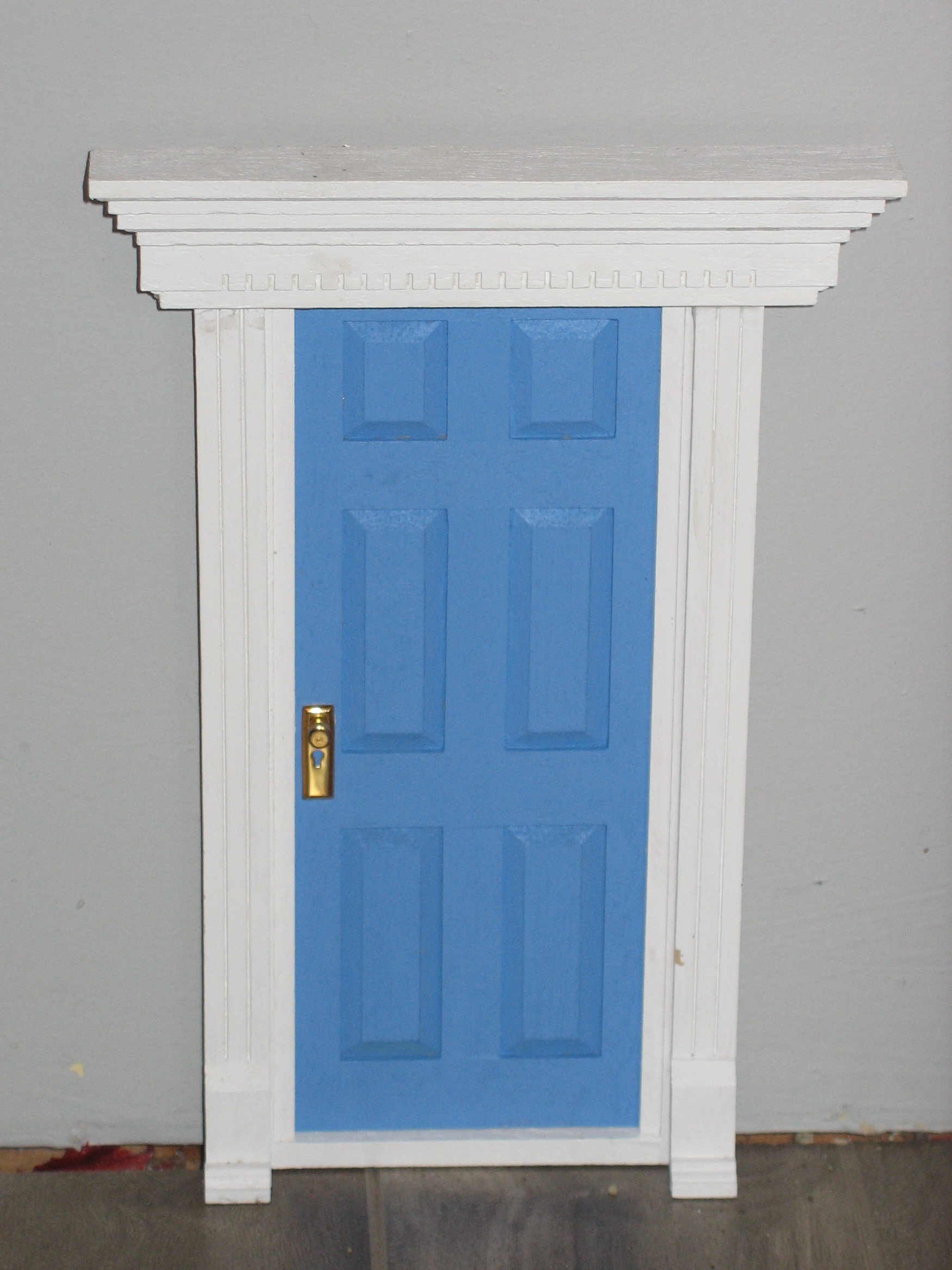
Though we didn’t see any, there must have been one living under this tree because Mommy “found” a teeny, tiny gold key that fits perfectly into the lock of the tiny gnome door that she and Daddy recently installed on the outer wall of the family room! The plan is to put the key back where it was found so that the gnomes can come to visit if they want to.


Robin claims that she had absolutely nothing to do with the little gnome gate that we found deeper in the woods. Perhaps, the little people are protecting their food stores from squirrels or maybe they have treasure hidden here!

Our grandsons, Sam and little brother Nate, are fortunate to live just a couple of blocks from the forest and very blessed to have parents who nurture and encourage their active imaginations. Way to go, Matt and Robin!

Getting back on the horse

I suspect that the person who coined the saying “When you fall off the horse, you have to get back on” meant right away, not 35 years later!

I didn’t actually fall off the last time I was on a horse but it was quite a ride. Early in the spring of 1977, less than a year after we were married, Richard and I were visiting his parents’ farm when we decided to take the horses, Moose and Ginger, out for a ride. They hadn’t been ridden all winter. We rode up into the hills behind the house and all went well until we turned the horses toward home. That’s when Moose, with Richard aboard, decided to pull out all the stops and head back down the muddy trail at a full gallop! Moose came by his name honestly. He was a giant of a horse and stubborn as well. There was nothing Richard could do to slow him down. When Ginger, usually a calm and gentle mare, saw Moose take off, she decided to follow suit. I was an inexperienced rider; a city girl who’d married into a farming family. I clung to the saddle horn, determined that I was not going to fall off that horse and make a complete fool of myself. Down the trail we flew with mud flying everywhere. To this day I remember the thoughts running through my mind. I couldn’t remember whether or not we’d closed the gate at the bottom of the hill. If we had, what would the horses do when they got there? I was certain that if Ginger came to a sudden stop, I’d be launched into the air and would land as a broken heap somewhere on the other side of the fence! Fortunately, the gate was open and the horses slowed to a stop as they entered the yard. I slid off and walked gingerly back to the house covered in mud but with my pride intact. I had not fallen off the horse!

It wasn’t the wild ride that kept me from ever mounting a horse again. Over the next few years, pregnancies and babies kept my feet on solid ground when I was visiting my inlaws. Time slipped by and eventually there weren’t horses at the farm anymore. The opportunity to ride just didn’t present itself again.

This summer, as we travelled into BC’s Chilcotin ranching country, I decided that the time had come to get back on a horse. I wanted to go for a trail ride and though Richard was less than enthusiastic about the idea, he agreed to go with me and to fork over the high price that they charge tourists for such activities. Unfortunately, however, the day we’d chosen was a dismal rainy one. That’s when my wise husband came up with a much better suggestion. “If you really want to get back on a horse,” he said. “Why don’t you ask Sheryl to take you riding?”

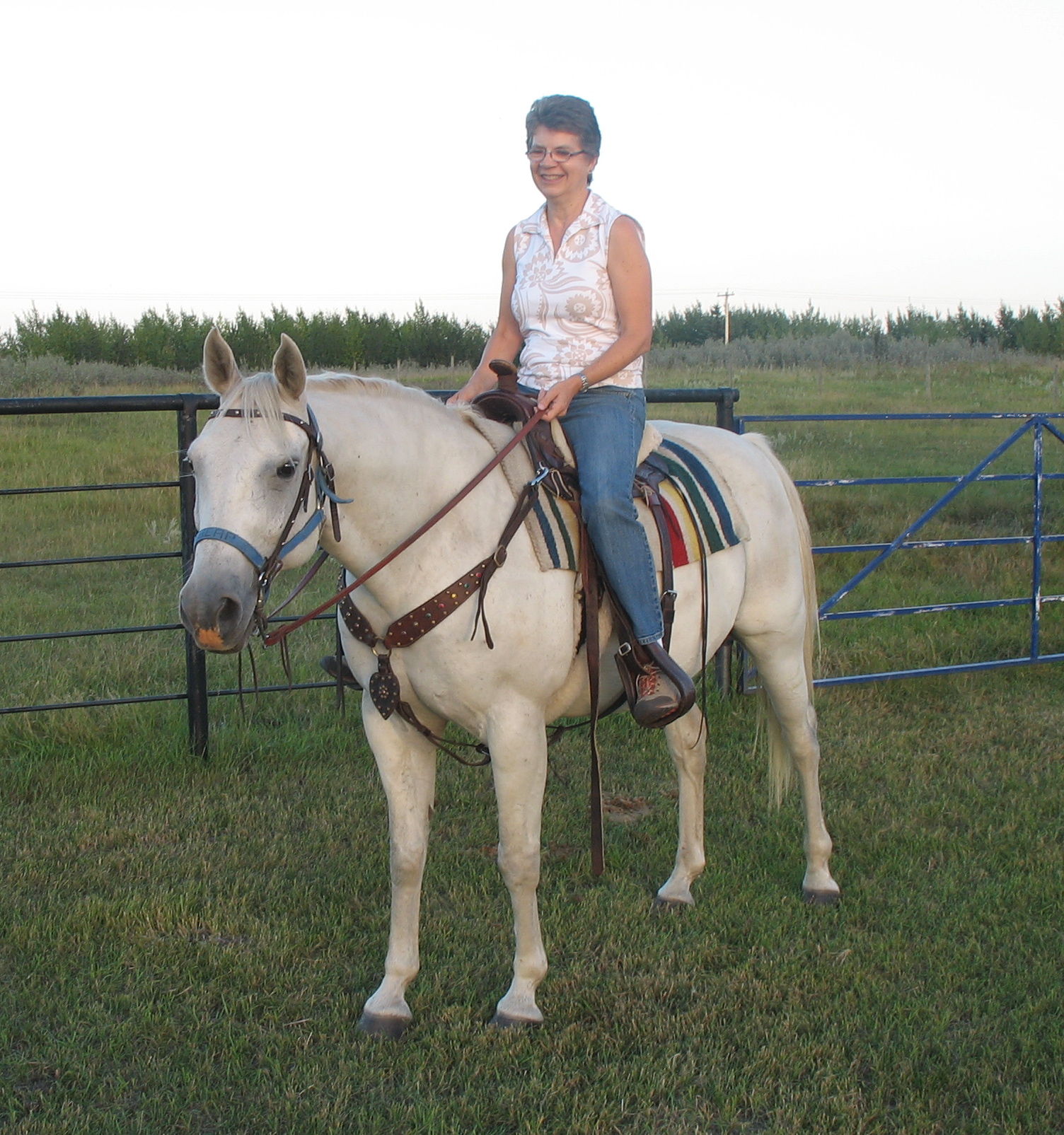
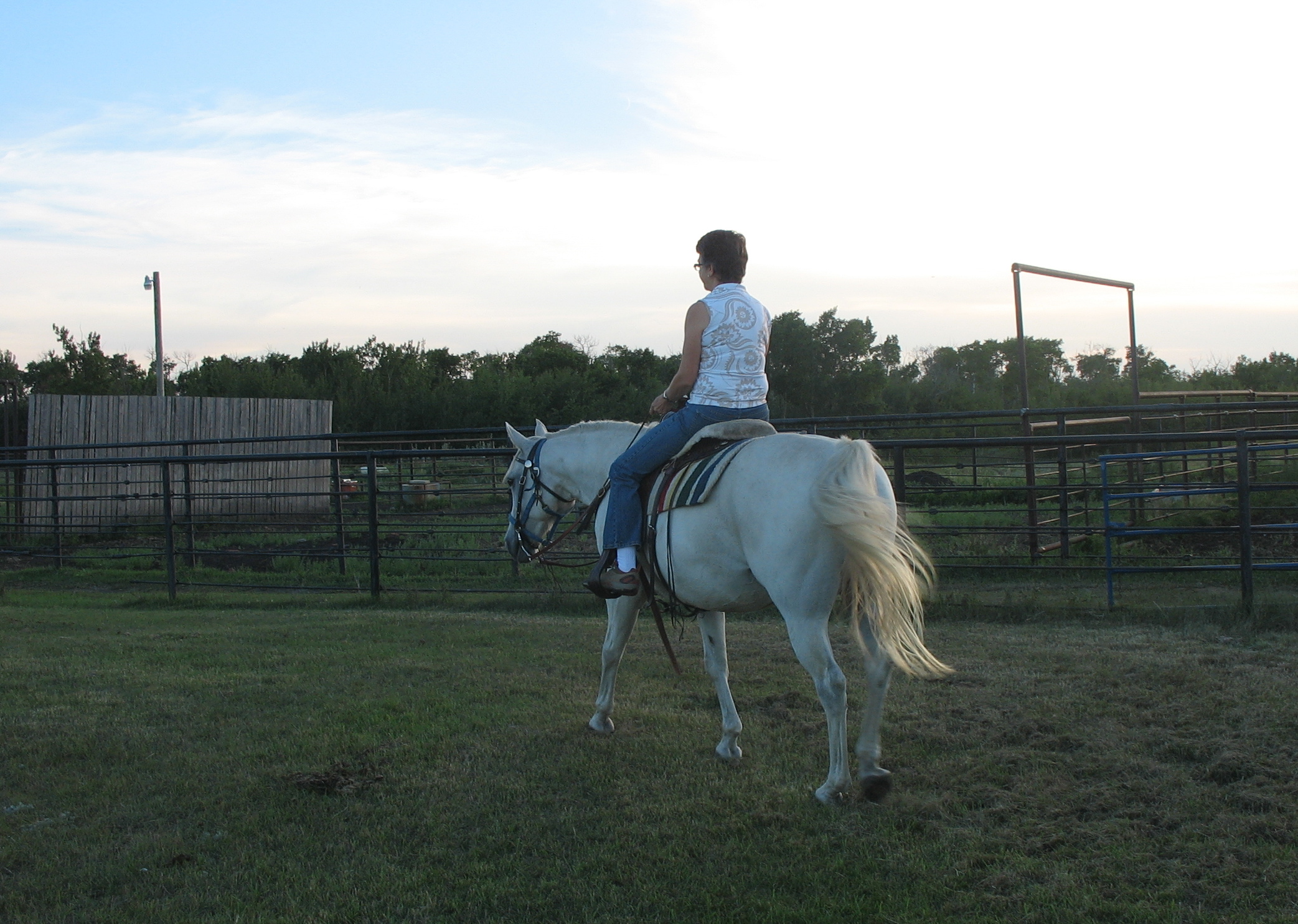
Sheryl is a long-time friend who loves riding and has her own horses. Knowing that I might not actually ask her, Richard did it for me and Sheryl readily agreed. She and I are co-leading of a group of children at Vacation Bible School this week and when this morning’s activities were over she suggested that we go riding this evening.  She and her husband, Trevor, own a hobby farm not far from town. They have quite a bit of bush and pasture land that is crisscrossed with riding trails. As the sun dropped below the horizon and cooler air replaced the heat of the day, we enjoyed a peaceful ride and a great visit. It was like going for a hike without any of the effort! As the evening came to an end, I told Sheryl that I’d love to do it again sometime. I’d just better not wait 35 years this time!


Riding Willow, a gentle horse of mostly Arabian descent.


Thank you, Sheryl!

Memories remade

I don’t think many tourists go to Anahim Lake, BC. I’m sure that even fewer go a second time. There’s not much about the remote community of 360, located 316 km (198 miles) west of Williams Lake, to attract visitors. With its scattered homes and rough unpaved roads, it’s really quite sad looking.

Someone taking the BC Ferries Discovery Coast Passage between Port Hardy on Vancouver Island and Bella Coola on the mainland, might stop there for gas (142.9/litre when we were there). Others might come for the year-round outdoor adventure opportunities in nearby Tweedsmuir Provincial Park and the surrounding area; activities including fishing, canoeing, hiking, horseback riding, and bird watching in the summer or cross-country skiing and snowmobiling in the winter but they wouldn’t find meals or accommodation available at Anahim Lake.

When we decided to leave the trailer in Williams Lake and take a day trip to the west, we didn’t know how far we’d go but as the day progressed Anahim Lake became our destination, our turn around point. I remembered nothing of the community itself from my first visit on a family vacation in the mid 1960s. What I did remember was attending the Anahim Lake rodeo, still an annual event. For a horse mad city girl, a genuine small town rodeo was big excitement! Huge!

Ever since my mother’s diagnosis with Alzheimer’s disease, memory and how it works has fascinated me. Over the years as I’ve thought back on childhood trips through central BC, I remembered the wide open rolling ranchland of the Chilcotin region. As we drove out to Anahim Lake this summer, I was surprised to see much less of that than I expected to. Much of our time was spent driving through forest. Logging trucks with heavy loads lumbered past us all day long but I remembered nothing of that. I suspect that that’s because I was growing up at the coast surrounded by forest and forestry. It wasn’t unusual. It didn’t stand out. Ranching, however, was something brand new and interesting. At that point in my life, I’d never been to the prairies and had never seen vast expanses of wide open land.

I did remember bumping over cattle guards and sharing the road with cows and horses. That hasn’t changed. You definitely know you’re in ranching country when open range livestock have the right of way and you stop beside the highway to wait while a lone cowgirl drives a herd of cattle down the road!

I loved the rustic fences that are still in use throughout the area.

Gold rush glimpses

From Vancouver to Barkerville, BC is about 750 km (466 miles), a distance that we’d often travel in a day but this summer it took us more than a week! No, we didn’t have car trouble or any other misadventures; we simply took our time and enjoyed the sights. Rather than taking the most direct route home from Vancouver the way we usually do, we decided to follow BC’s historic gold rush trail and we were in no hurry. What a great way to travel!

Billy Barker’s discovery of gold on Williams Creek in 1862 triggered a stampede of thousands of miners to the area. Travelling the Cariboo Waggon Road, their trip through steep canyons,  raging rivers and high mountain passes was a long and arduous one. Many of today’s highways follow that trail and along the way many remnants of their journey remain for today’s traveller to explore.

   credit

Searching for geocaches led us to many sites that we might otherwise have missed… Cemeteries like this one just outside the historic community of Yale where graves date back to the 1860s, some 40 years before the part of Canada that we call home was settled.

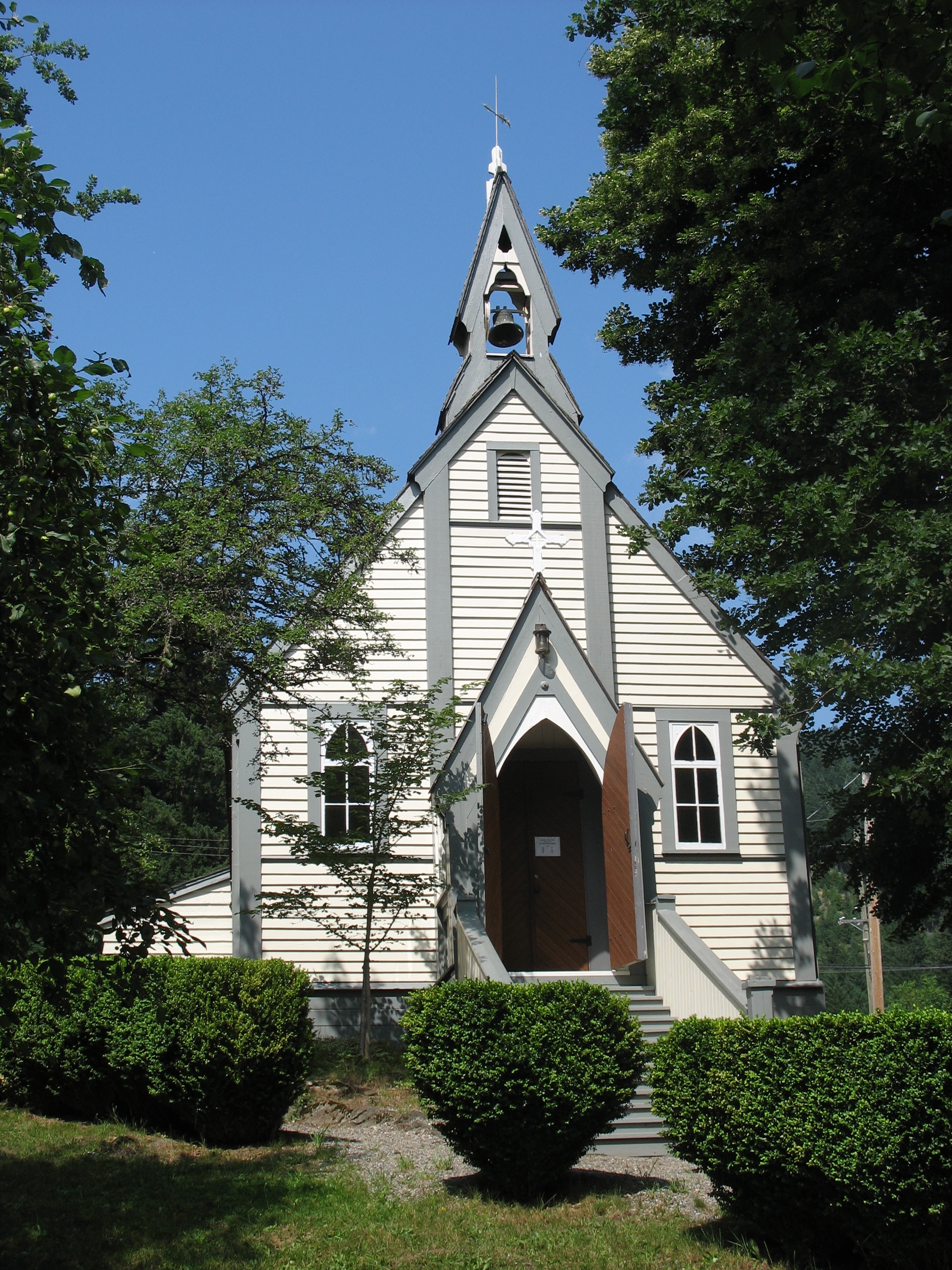
And churches like St. John the Divine Anglican, also in Yale, which was built in 1863 and is the oldest church in BC that still stands on its original foundation.

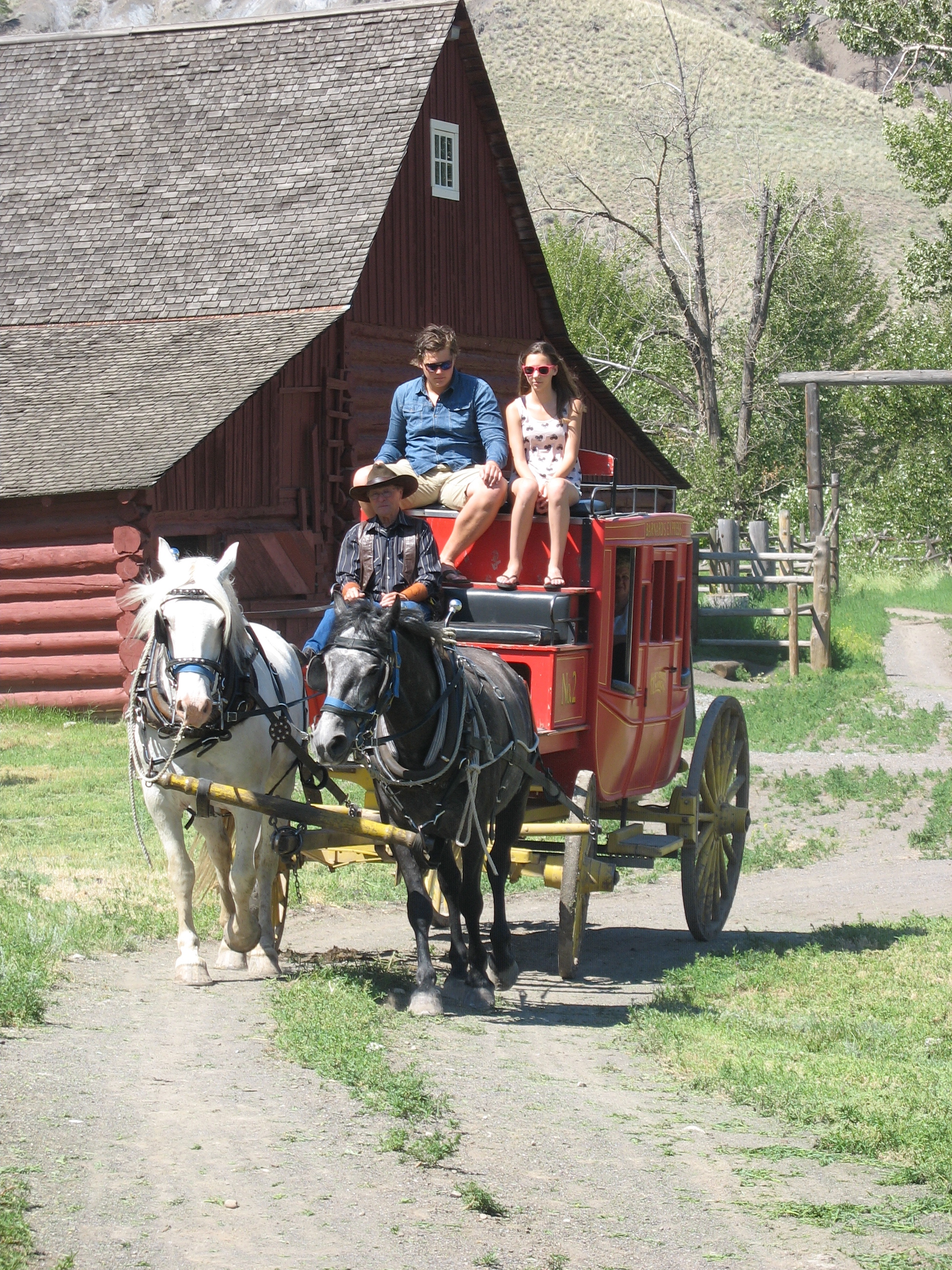
The early 1860s saw the construction of a series of roadhouses along the banks of the Fraser and Thompson rivers. Usually within a day’s ride of each other, these were places where weary travellers on their way to the gold fields further north could rest for the night, have a meal, and water and feed their horses. At historic Hat Creek Ranch between Cache Creek and Clinton, the location of one of these roadhouses, the buildings stand as they did in 1901 but some were built as early as 1860. We spent an afternoon there exploring the exhibits and even riding an old time stagecoach!

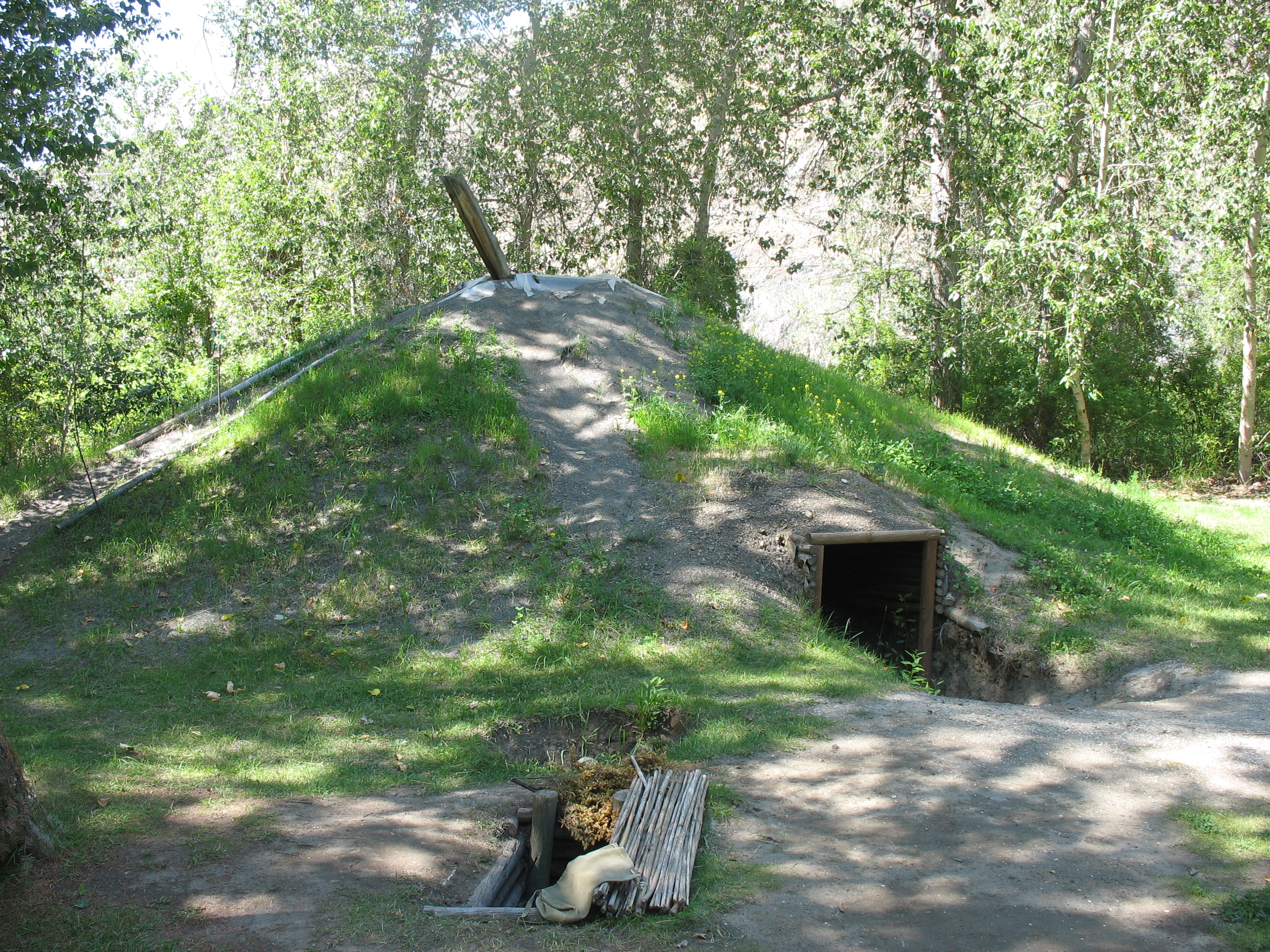
Next to Hat Creek Ranch is the very interesting Stucwtewsemc (Sluck-TOW-uhsen) Native Interpretation Site where we were able to see how the original occupants of the area lived. I have studied both the coastal and the plains natives quite extensively but I knew virtually nothing about these people who lived between the two. I found the kekuli lodge, or pithouse, particularly interesting. Built half underground and half above, a typical kekuli housed between 25 and 30 family members, from grandparents down to grandchildren, throughout the winter months.

With so much to see and do along the way, some days we didn’t travel very far at all. When we left a campground in the morning, we often had no idea what that day would hold or where we’d sleep that night. For example, one day we travelled only 112 km (70 miles) from Clinton to Lac La Hache Provincial Park but along the way we found six geocaches, hiked to the Mount Begbie fire lookout tower named after the swashbuckling chief justice who established law and order on the BC frontier during gold rush days, and played 18 holes of golf on the beautiful 108 Mile Resort course. I’d call that a productive day, wouldn’t you?

Now that we’re home and have internet access again, there’s much more to share including our visit to Barkerville itself but I’ll save that for future posts.