Shopping for a dress, a cautionary tale

LogoWhen we received a wedding invitation this week I immediately decided that I would be shopping for a new dress. It’s been absolutely ages since I’ve bought one or had a good reason to. The wedding isn’t until next spring so I have plenty of time to find the right one, but just for fun, I decided to do a quick search of a few of my favourite fashion retailers to see what was out there. 

At this point, I don’t have a specific style, colour, or fabric in mind. All I know for sure is that the dress needs to be suitable for a wedding, I want to feel fabulous in it, and I want to be able to wear it for other occasions in the future. In my initial search, I only found two that stood out to me, both from Laura Canada

Glitter Capelet Midi Dress

Wrap-Style Shimmering Dress

As I said, I wasn’t looking for a particular colour, but it’s obvious that Marine, as Laura calls the dark navy, appeals to me! I wonder though, is it too dark for a spring wedding? It does have the advantage of also being suitable for winter occasions. 

Of course, as soon as I started looking at dresses online, ads began showing up everywhere… on my Facebook feed and even when I was trying to read the news. Right now, while I’m just browsing and considering what I might want to buy, that’s not a bad thing as it gives me lots of possibilities to think about. 

I actually fell in love with the look of this one that popped up almost immediately. 
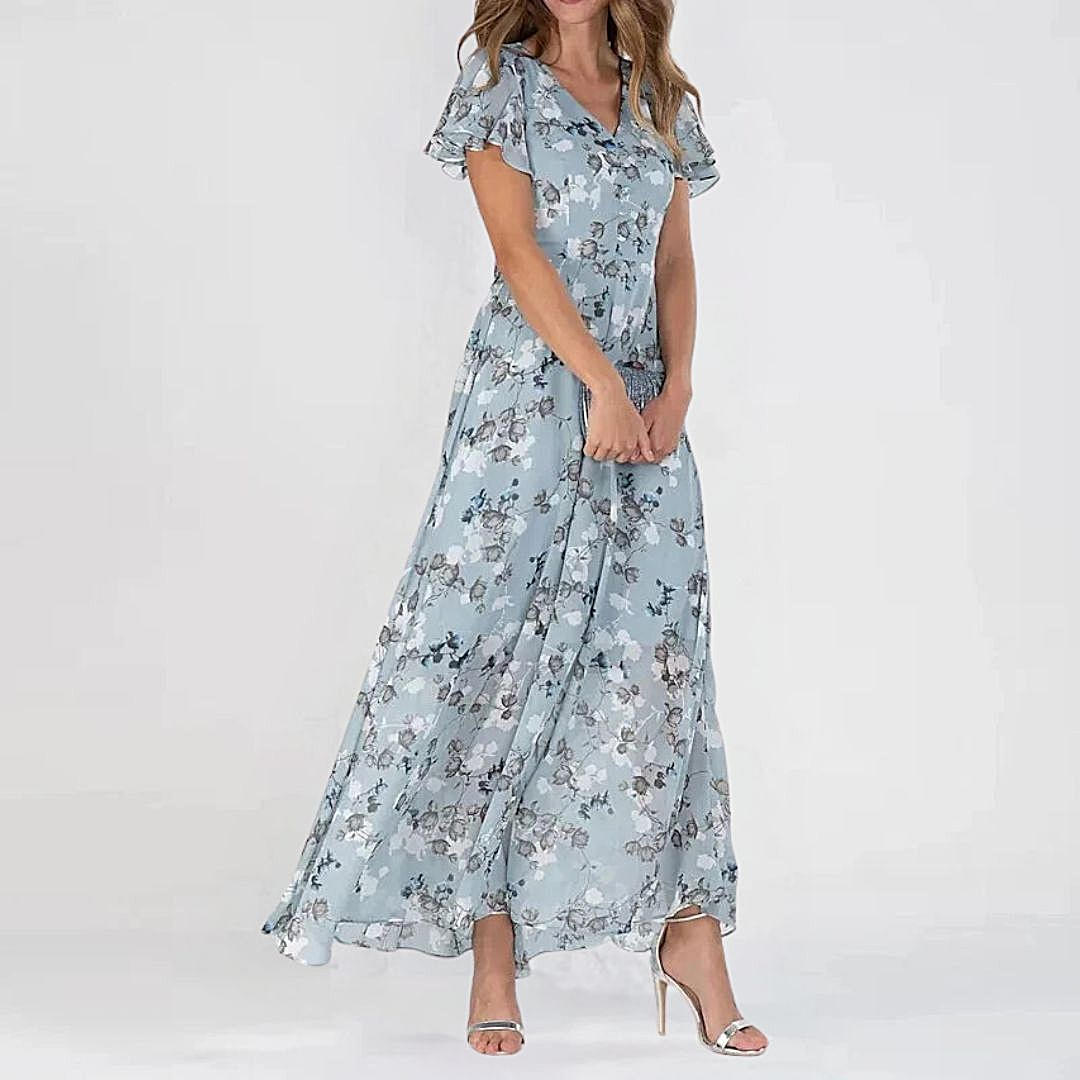
450026565_120210057351900458_147997768935658999_n

If I was an impulsive shopper, I might have ordered it, but I’m not and I won’t. The seller was one I’d never heard of and the website was pretty sketchy looking which is why I’m not sharing a link with you. There were just too many red flags. 

  • prices that were too good to be true
  • “sale ends today” pressure to buy immediately
  • lack of information about the company
  • lack of a phone number, physical address, or live chat option
  • no independent reviews of the company or their products
  • lack of detailed information about the product such as what kind of fabric the dress is made of

If that wasn’t enough, I knew that something was very wrong when the identical picture showed up the next day on a similar looking website with an entirely different name! The internet is definitely buyer beware territory and when I do buy my dress, it will probably be in person. 

What is vanity sizing?

Logo by SamI can remember when I wore size 12 or 14, but now I shop for size 6 or 8. Did I find the secret to successful weight loss? Am I actually that much smaller than I used to be? On the contrary, I now weigh approximately 20 pounds more than I did in my younger years. My drop in clothing size has nothing to do with me getting smaller and everything to do with something called vanity sizing.

Vanity sizing, or size inflation, is the phenomenon of ready-to-wear clothing of a certain size becoming bigger over time. Apparently, putting smaller sizes on larger clothes boosts the self-esteem of customers and encourages them to purchase more. As a result, brands have gradually shifted their metrics to make shoppers feel thinner. So much so, in fact, that a women’s size 12 in 1958 is now a size 6! In 1967, teenage fashion model, Twiggy, wore size 8. Today a girl the size that she was then (bust 31″, waist 23.5″, hips 32.5″) would wear size 00. This is definitely something to keep in mind if you shop for vintage clothing.

New Yorker Vanity Sizing Cartoon

Source: The New Yorker

A recent CBC Marketplace investigation found that the waist sizes of jeans are commonly bigger by an inch or more than what the label advertises. One brand was off by a whopping 6 inches! I can attest to the fact that this is true of men’s jeans as well as women’s. Hubby recently bought a new pair and the waistband is exactly two inches bigger than what the label says.

Another aspect of vanity sizing that is even more confusing is inconsistency between brands. Some deliberately skew their sizes, based on the idea that people might feel better if the tag on the clothing says a size or two smaller than they wear in other brands. Again, it’s all about trying to increase sales.

While customers like vanity sizing because it makes them feel better about themselves and retailers like it because it boosts their sales, it has become a significant problem with the increase in online shopping. Billions of dollars worth of apparel is now purchased online each year and an estimated 40% of that is returned because of sizing issues. That’s a hassle for shoppers, a nightmare for retailers who are stuck covering the cost of “free” returns, and as I wrote about here, it’s estimated that more than 25% of those returns end up in the landfill!

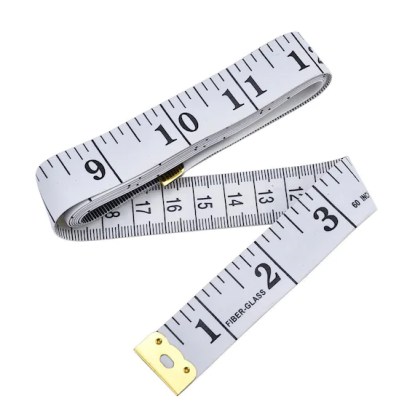
With all of this in mind, how can you avoid the complication that vanity sizing adds to shopping online? Use a measuring tape! Know your bust, waist, and hip measurements and check the brand’s size chart. Though these charts can provide valuable insight into which size to order, they aren’t always completely accurate, so also pay attention to what other customers say about sizing in their reviews. Finally, in case you still end up with something that doesn’t fit, be sure to check the retailer’s return policy before placing your order.

il_570xN.1032033842_cny7

I can’t help wondering how much further vanity sizing can go. I used to laugh at the concept of size 0, but the way things are going perhaps someday we’ll see labels with negative numbers on them!

What happens to your returns?

LogoIn last Friday’s post, I shared some of the reasons why I prefer shopping for clothes in person rather than online. Today, I want to discuss what I consider to be another very big strike against online shopping.

Do you know what happens to the items that you return? In far too many cases, they end up in the landfill! That’s right! It’s estimated that more than 25% of all returns go into the garbage! I was shocked and appalled when a reader brought this to my attention.

landfill-879437_960_720

In a time when people are doing more than ever before to protect the environment, consumers usually don’t realize that their online shopping habits could be undoing a lot of the good that they are doing in other areas. While it might be convenient to order a pair of jeans in two or three different sizes, keep the one that fits, and return the others, most people would probably think twice about doing that if they knew that the pairs they are returning might end up in the garbage.

So why is this happening? It’s all about money, of course. It costs companies more to employ the people required to check returns for damage and, in the case of clothing, to re-press and repackage each item than it does to simply incinerate them or throw them in the dumpster. Not only does the environment suffer, but we, the consumers, end up paying more for products because retailers have to increase their prices to recoup their losses.

So how big is this problem? In Canada alone, we are returning $46 billion worth of goods every year. In the US, over 4 billion pounds of brand new returned apparel end up in the landfills annually. That’s approximately the equivalent to every family in the country throwing one laundry load of clothing in the garbage every year. This dirty little secret isn’t exclusively an online shopping problem. About 5 to 10 percent of in-store purchases are returned, but that rises to 15 to 40 percent for purchases made online. Clothing and shoes bought online typically have the highest rates with 30 to 40 percent returned.

If I wasn’t already committed to shopping in person, I definitely would be after looking into this! I learn a lot from my readers, so please keep the comments coming. 🙂

Online or brick and mortar?

LogoOnline shopping has grown in popularity over the past few years, but Covid-19 has taken it to a whole new level. Here in Canada, e-commerce giant, Amazon, uses the postal system to ship parcels. For the past couple of months, Canada Post has been handling volume comparable to the usual Christmas rush. I’ve made a couple of orders myself, but when it comes to clothing, I’m definitely a brick and mortar shopper even though I live in a teeny, tiny town that doesn’t boast a single clothing store!

There are several reasons why I prefer to shop in conventional stores. First of all, I like to actually see the garment that I’m considering buying, feel the fabric, and examine the workmanship. I can’t do that looking at an image on my computer screen.

ob_a5395d_tips-to-save-money-while-buying-clothe 2

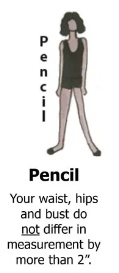
Fit is another important reason why I choose to shop in person. Size charts and customerScreen Shot 2020-06-03 at 2.00.26 PM reviews are helpful, but nothing beats trying the garment on and standing in front of a three way mirror. I could probably do quite well ordering tops online, but pants are my nemesis. I’m tall and thin with a very boyish figure, sometimes referred to as a pencil body type. Made for more curvy girls, pants that fit my waist often bag at the hips. I usually have to try on several pairs to find the ones that fit me well and flatter my body type.

Shoes are another item that I would have a very hard time buying online (except for this pair that I had already tried on in store). My feet are very narrow, so again, finding ones that fit well sometimes involves trying on several pairs.

I realize that online purchases can be returned and that many companies seek to make that process as simple as possible, but it’s still a hassle and there’s often additional cost involved. The fact that our town doesn’t have a drop off point for any of the  courier services adds further complication. I do wonder how often someone ends up keeping a garment that would have been returned to the rack if they had picked it up in a brick and mortar store. Chances are those items don’t get worn very often if at all.

There’s also an emotional and social aspect to personal shopping that’s absent when purchasing online. While setting aside time and actually going to the store requires more effort, the personal attention of trained customer service staff often enhances the experience and, of course, in-store shopping can also be shared with friends. Finally, there’s the luxury of walking out of a store with exactly what you want and not having to wait for delivery.

As pandemic restrictions gradually lift, we’re likely going to see long-term changes to the shopping landscape. Sadly, some retailers, especially those that were already struggling financially, may disappear entirely and others may move to an online presence only. Hopefully, however, there will always be a place for in-store shopping!

Do you prefer to shop in person or online? If you shop online, do you have any tips that you can share?