Celebrating survival!

2020-logo-color_New

Today, the first Sunday of June, is National Cancer Survivors Day, an annual, worldwide celebration of life set aside to honour the millions of people worldwide who are living with and beyond cancer and to raise awareness of the challenges that they face.

Major advances in cancer prevention, early detection, and treatment have resulted in longer survival, but a cancer diagnosis can leave a host of problems in its wake. Physical, financial, and emotional hardships often persist for years after diagnosis and treatment. Depending on where they live, survivors often contend with rapidly rising drug costs, inadequate insurance coverage, difficulty finding or keeping employment, and a lack of understanding from family and friends. Despite these difficulties, cancer survivors can live active, productive, inspiring lives.

So what is a survivor? To many, the term ‘cancer survivor’ suggests a person who has beaten their cancer; perhaps one who has been cancer free for several years, but I like the definition used by the National Cancer Survivors Day Foundation. “A ‘survivor’ is anyone living with a history of cancer – from the moment of diagnosis through the remainder of life.”

In other words, I am a survivor! In fact, I’m a three times survivor.

hello-im-a-survivor

I live with cancer every day. Unless a cure is found for neuroendocrine cancer (NETS) within my lifetime or God performs a miracle on my behalf, I will never be cancer free. People have a hard time grasping the idea of a chronic cancer. The usual assumption is that patients either die of their disease or they are cured, thereby becoming cancer survivors, but I look at my situation differently. I may eventually die of my cancer or I may die with it, but either way, I am a survivor! Fortunately my NETS is stable at this point and it doesn’t significantly impact my day to day life. I’ve had all the PRRT treatments that I can have, but a monthly injection given here in my home by a visiting nurse seems to be keeping things under control. I had my 87th of these “butt darts” just over a week ago.

I’m also a cancer survivor in the more tradition sense, as in one who had the disease, but is now free of it. As many of you know, seven months after my NETS diagnosis, I was diagnosed with a second, completely unrelated cancer that was removed surgically. Six weeks of radiation followed and, since that time, there has been no recurrence.

Cancer number three, most likely caused by the radiation that I received for the other two, was discovered in my thyroid almost exactly a year ago. Though it’s not a particularly aggressive form of cancer, it’s the one that concerns me the most right now. I was supposed to see my specialist two months ago and have an ultrasound to determine whether or not the cancer is growing. Thanks to Covid-19, that didn’t happen and it’s been eight months since my thyroid was last looked at. Though my specialist still isn’t seeing patients except in emergency situations, I decided to do a bit of self-advocating and his office is now in the process of trying to arrange for me to have an ultrasound done in a hospital closer to home in a small city that has only had one Covid-19 patient.

Yes, in spite of all this, I am a survivor! Survivors are people from all walks of life, of all ethnicities and income levels. They’re children, moms, dads, and grandparents. They may be your coworkers, friends, and loved ones. Traditionally, National Cancer Survivors Day celebrations have included parades, carnivals, health fairs, awareness walks, candle-lighting ceremonies, and other community events. This year, due to Covid-19 restrictions, the celebrations may be somewhat more subdued, but life with and after cancer goes on and it ought to be about more than just surviving. It ought to be about living well and that’s always something to celebrate!


What’s my risk factor?

Before I even begin this post, especially for those who haven’t been here before, let me emphasize that I have absolutely no medical training. I am simply a neuroendocrine cancer (NETS) patient seeking answers and doing the best I can to weather the very unusual days that we all find ourselves in.

Screen Shot 2020-03-21 at 7.17.10 PM

Does my cancer and the PRRT treatments that I’ve received mean that I’m at higher risk of contracting COVID-19 than the general population? Not as far as I know. The reality, as I understand it, is that no one has immunity to this virus. It’s a brand new disease that our bodies have never encountered before; never had an opportunity to develop antibodies to. That’s why I’m doing what I think everyone should be doing. I’m not hiding out in fear, but I’m hunkering down at home and only going out for necessities such as food and medications.

When we hear about those people who are most vulnerable to COVID-19, this refers to those who may be at higher risk for more serious complications IF they contract the disease. That’s why it’s so important for all of us to do our part in helping prevent these populations from getting the COVID-19 virus in the first place. Am I one of the vulnerable ones? Certainly, my age puts me at higher risk than those who are younger, but I haven’t been able to find any information regarding NETS and COVID-19. In reality, such information probably doesn’t exist. At least, not yet.

So, what are those risk factors? 

  • An older adult  –  Recent figures show that more than 50% of the patients who have been admitted to an ICU with the disease and 80% of those who have died were over the age of 65. At 67, I’m at the low end of that population, but still within the high risk category.
  • People who have serious underlying medical conditions such as:
    • Heart disease  –  Not me!
    • Diabetes  –  I have been diagnosed as pre diabetic, but maintaining a careful, well disciplined diet has kept my blood sugar well regulated, so I doubt that this would put me at high risk.
    • High blood pressure  –  Experts indicate that if a person’s blood pressure is under control and they don’t have other risk factors, they probably aren’t at any greater peril than the general population. I’ve been on hypertension medication for several years and it’s been keeping my blood pressure under control but, of course, I do have other risk factors.
    • Chronic respiratory diseases  –  No again!
    • Cancer  –  This one raises lots of questions for me. Cancer is such a broad category. The word actually refers to any of the 200 different diseases, affecting many parts of the body, that are characterized by the uncontrolled growth of cells that invade and damage the body’s normal tissues. Do all of them put a person at higher risk for COVID-19 complications? I doubt it, but what about the 3 completely unrelated cancers that I’ve been diagnosed with since August 2013? That’s right, 3! As I mentioned above, I haven’t been able to find any information about NETS and COVID-19, but what about my untreated thyroid cancer? At present, there has been no indication that thyroid conditions place a person at jeopardy.
  • People who have a compromised immune system from a medical condition or treatment (e.g. chemotherapy)  –  In spite of having or having had 3 different cancers over the past 6 1/2 years, I’ve never had chemotherapy, but I haven’t been able to find any information on how PRRT affects the immune system, so once again, I’m left with questions.

The immune system is the body’s natural defence system. Unfortunately, there isn’t a simple questionnaire that will tell you how strong yours is. There are, however, several signs that you might have a weakened immune system:

  • Stress  –  Stress decreases the body’s lymphocytes, the white blood cells that help fight off infection. Thankfully, my life is relatively free of stress these days. For the most part, I think I can say with the apostle Paul, “I have learned to be content whatever the circumstances.”  Philippians 4:11b
  • Frequent colds or infections  –  I’ve had two colds this winter; one mild and one nasty. That’s more than I usually get, but I recovered from both in a reasonable length of time and I don’t remember the last time I’ve needed an antibiotic for an infection.
  • Frequent diarrhea or constipation  –  Diarrhea was one of the most obvious symptoms of my NETS cancer before it was diagnosed. Now medications tend to cause the opposite problem, but I can’t blame that on my immune system.
  • Wounds are slow to heal  –  I don’t think so. I haven’t had any serious wounds in recent years, but minor ones heal just fine.
  • Fatigue  –  When your immune system struggles, so does your energy level, but for the most part mine is good. My father passed away in the wee hours of March 1. I got almost no sleep that night and I definitely discovered that pulling an all-nighter in my 60s isn’t as easy as it was in my 20s! The week that followed was pretty exhausting too, but three weeks later, I’ve bounced back and feel completely rested. That seems to speak well of my immune system.

I do know, however, from regular blood tests, that my hemoglobin tends to be slightly on the low side which would make me somewhat vulnerable to infection and disease. On the other hand, I do all the right things to keep my immune system as healthy as I can. I don’t smoke, I eat a healthy diet, I maintain a healthy weight, I exercise regularly, I drink alcohol only in moderation, I get adequate sleep, I try to minimize stress, and I even wash my hands frequently!

So, what is my risk factor? I can only give a somewhat educated guess. Since I live in a sparsely populated area and I’m staying home most of the time, I’d say that my risk of getting COVID-19 is quite low. On the other hand, IF I do get it, my risk of suffering complications is probably moderately high.

Am I worried? No, but I’m definitely taking all the recommended precautions. I hope you are too!

Fine, thanks!

It’s been quite awhile since I posted an update about my health. That’s because there really hasn’t been anything new to report. For someone with two kinds of cancer, that’s actually a very good thing, but I know that there are those of you who want to know what’s going on, so here’s the latest.

It’s already been over six months since I had my final PRRT treatment. Other than monthly injections of Sandostatin that are mainly meant to control symptoms, I’m not presently receiving any treatment for my neuroendocrine tumours (NETs). That’s a bit disconcerting, especially when more than one fellow zebra that I’ve come to recognize through a Facebook support group has succumbed to the disease in recent months. It’s really hard when one of those announcements shows up in my news feed.

On the other hand, I’m feeling 100% healthy, so most days it’s easy to ignore the fact that there are things lurking inside me that shouldn’t be there and that could begin to grow or spread at any time. I’m blessed to be able to live a full and productive life. I’m lifting weights again this winter and I’ve recently dusted off the treadmill and started using it again. If anything, I’m feeling better and stronger than I did six months ago.

A week before Christmas, I was in Edmonton for CT scans and blood work to find out if I’m really as healthy as I feel and yesterday we met with the doctor to get the results. Sometimes I suffer from a few days of scanxiety before an appointment like this one, but this time I felt completely at ease. I just kept reminding myself that God promised to take care of me over six years ago when I was first diagnosed and He has been faithfully doing that ever since. There’s no better place for me to be than in His hands.

When we sat down with the doctor yesterday all I really needed to hear was one word. Stable! Nothing has changed. No growth, no spread! Nothing to worry about. So, unless I begin to experience symptoms (which I haven’t since treatment began), we go through the same routine six months from now and hopefully receive the same good news again… and again… and again.

The CT scans reveal very little about my thyroid cancer which is entirely different and unrelated to my NETs. For news about that one I’ll have to wait until early April when I see that doctor again and he uses ultrasound to take a closer look and measure whether or not there’s been any change.

In the meantime, when you see me and ask, “How are you?” if I answer, “Fine, thanks!” that’s because I really am!

174103009.1

Canada’s going black and white for NET Cancer Day!

November 10 is World NET Cancer Day, a day set aside to raise awareness of neuroendocrine cancer, the uncommon disease that I’ve been fighting for the past six years. It’s our day to be heard by decision makers, health professionals and the general public. In addition to raising awareness, we want to encourage more funds for research, treatments, and patient support; and to advocate for equal access to care and treatment for NETS patients around the world.

ncd-logo-new

Zebra stripes symbolize how this rare cancer can go undetected for many years. Medical students are taught when hearing hoofbeats, to think of horses, not zebras. Neuroendocrine tumours are difficult to diagnose. Though they are the fastest growing class of cancers worldwide, their symptoms are usually vague and similar to more common health problems.  Many family doctors have never encountered a NETs patient. When presented with symptoms like stomach pain and diarrhea, they naturally think of things like Irritable Bowel Syndrome, Crohn’s Disease or lactose intolerance. They think of horses, not zebras. As a result, NETs is frequently misdiagnosed.

unnamed

It would appear, however, that through the tireless efforts of NETs patients and advocates, we’re beginning to be heard. This year on November 10, the following landmarks across Canada are lighting up in black and white for NET Cancer Day!

  • City Hall  –  Vancouver, British Columbia
  • High Level Bridge  –  Edmonton, Alberta
  • Calgary Tower  –  Calgary, Alberta
  • City Hall  –  Lethbridge, Alberta
  • CN Tower  –  Toronto, Ontario
  • City Hall Towers  –  Toronto, Ontario
  • Niagara Falls  –  Niagara Falls, Ontario
  • Hamilton Signature Sign  –  Hamilton, Ontario
  • Tower of Olympic Stadium (Parc Olympique)  –  Montreal, Quebec

If you’re near one of these locations on Sunday, I hope you’ll stop, take a photo, and post it on social media with the hashtag #LetsTalkAboutNETs @cnetscanada. Every bit of exposure helps raise awareness and may contribute to someone getting a quicker diagnosis.


Crazy (old) sock lady

LogoI’m a long-legged 5’8″ tall. For much of my life I worried about finding pants that were long enough to ensure that my socks didn’t show. Then along came ankle length cropped pants. Suddenly everyone’s ankles were showing. It took me awhile to warm up to the trend, but it really has made life easier for me.

I usually wear white sports socks with my jeans and other casual pants and black socks when I want a somewhat dressier look, but when I was cleaning out my drawers recently I realized that I’ve gradually accumulated a fairly sizeable collection of patterned socks. There are certainly much more colourful and fanciful pairs available, usually worn by gals who are several decades younger than me, but once in awhile it’s fun to look down and see something funkier than plain old black or white.

Some of my patterned socks, like these two weather themed pairs, are quite subtle. I’ve obviously worn the snowflake ones on the left a lot as they’re almost worn out. You can begin to see my gold toenail polish shining through!

These are definitely bolder! Both pairs were gifts from my daughter-in-law. There’s a story behind the zebra print pair on the left that make them very special to me. Robin is a long distance cyclist. She rides with a club that expects members to be able to ride at a minimum speed of 23 km/hr for at least 50 km and has taken part in many longer races and fundraising rides. If you’ve been reading my blog for very long, you know that I have neuroendocrine cancer (NETS) and that the zebra is our symbol. Robin wore the zebra socks for the first leg of a 2 day fundraising ride for cancer and then gave them to me (freshly washed, of course!)

IMG_0302

While zebra stripes hold special significance to me as a NETS patient, the giant panda is my favourite animal. Apparently Santa Claus knows that as this pair was in my Christmas stocking last year.

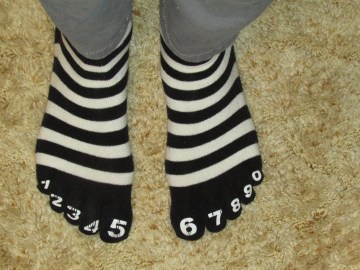
When we lived in Japan, I discovered that I love wearing toe socks which are very popular there. I brought several pairs home with me. I don’t wear them very often only because they’re a bit of a bother to put on, but once on they’re warm and comfortable. We were in Japan to teach English and I specifically bought this pair to wear to my Saturday morning preschool classes. Teachers and students alike take their shoes off before entering the classroom, so these were perfect for my little ones who were learning to count in English. They loved them!

IMG_0303

I didn’t realize until I started preparing for this post that almost all my patterned socks are in shades of black, white, and grey. Clearly, if I’m going to become a crazy (old) sock lady, I’ll have to invest in some coloured ones!

What about you? Do you wear patterned or brightly coloured socks? Would you?

Zebra stripes, more than just a fashion trend

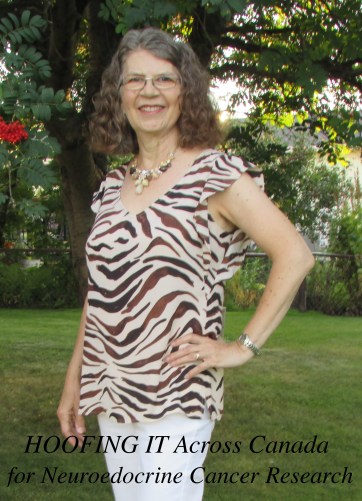
LogoIn August 2013, I was diagnosed with neuroendocrine cancer (NETS). In August of this year, I attended a cabi party and treated myself to a zebra print top from the Fall 2019 Uniquely Us Collection. Those might seem like two completely unrelated random facts, but they aren’t.

IMG_0060

The zebra is the symbol of neuroendocrine cancer. Neuroendocrine tumours are difficult to diagnose. The symptoms are usually vague and similar to more common health problems. Many family doctors have never encountered a NETS patient. When presented with symptoms like stomach pain and diarrhea, they naturally think of things like Irritable Bowel Syndrome, Crohn’s Disease or lactose intolerance. Flushing, especially in women of a certain age, makes them think menopause, not cancer. Medical students are taught “when hearing hoofbeats, think of horses, not zebras.” Neuroendocrine tumours are rare and therefore they are considered to be zebras.

Some NETS patients and advocates think the zebra symbol is foolish, that it trivializes the grave nature of our disease, and would like to see us stop using it. I disagree. I think we need to take advantage of every opportunity to draw attention to our cause and if that includes zebra stripes, I’m all for it!

Since my diagnosis, I’ve noticed zebra stripes everywhere! As I mentioned in last Friday’s post on trends for fall 2019, the zebra motif is particularly popular this season, but animal prints never go out of style and the zebra has been around for a long time. I’ve seen zebra t-shirts, zebra leggings, zebra jeans, zebra pjs, and zebra bras. I’ve also seen zebra handbags, zebra luggage, and even a zebra golf bag.

I remember trying on a darling zebra dress a couple of years ago, but I didn’t buy it. Like most zebra garments, its stark black and white pattern wasn’t flattering on me. With my pale Spring complexion, I look better in warmer tones. That’s why my new cabi top is so perfect. With its creamy vanilla background and chocolate ganache stripes (doesn’t that sound yummy?) it’s perfect for me.

With soft flutter sleeves, the top is a good stand alone piece for the occasional warm summery day that we enjoy at this time of year, but worn under sweaters and jackets, it will transition well into fall and winter. When worn alone, underarm insets provide good armhole coverage. While the neckline isn’t immodestly low, it leaves enough décolletage exposed to nicely frame a statement necklace. The top looks great tucked in, worn loose, or belted.

IMG_0086

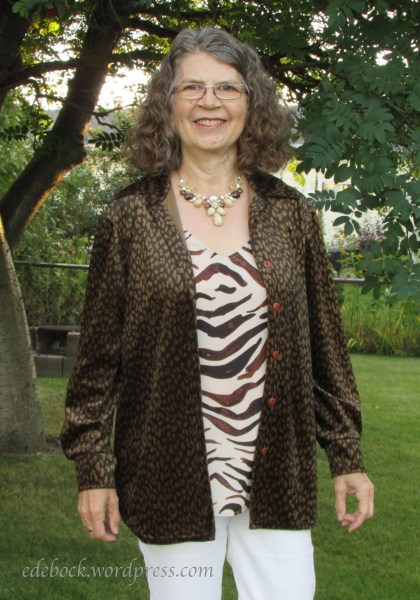
I even tried mixing animal prints. Because both prints are within the same colour family, I think it works!

IMG_0102

For today’s photo shoot, I wore my DIY frayed white jeans. Later in the season, I’ll pair the zebra top with darker pants or skirt, but obviously I don’t adhere to the antiquated don’t wear white after Labour Day rule!

And what am I wearing on my feet, you ask? A pair of flip flops that I bought for $5 at Walmart’s end of season clearance sale. They perfectly match my golden summertime toes!

IMG_0115


Forgiveness and gratitude

I had my final PRRT treatment (also called radioisotope therapy) today. I’ve been injected with potent radioactive material at Edmonton’s Cross Cancer Institute fourteen times; MIBG twice and then Lutetium twelve times as part of a clinical trial. The clinic staff and other patients seemed to think that reaching this milestone was pretty exciting. In one sense, I guess it was, but it also feels a bit like stepping off a cliff! My neuroendocrine cancer (NETs) has been stable for almost six years, the entire time that I’ve been undergoing treatment. The tumours have not grown or spread. In fact, earlier on there was even some indication that they might be shrinking. I’m happy not to have to go through any more of these treatments and the week of radioactive seclusion that follows each one, but the stepping off a cliff sensation comes from the fact that I’ve now exhausted the best treatment option available. The human body can only withstand so much radioactivity. Even if the government agreed to fund more treatments, the doctors wouldn’t advise them for me. The plan from here on in is to simply monitor my cancer with blood work, CT scans, and clinic visits every six months. Considering the fact that NETs is incurable, that’s a bit unnerving. (I will continue to receive the monthly injections of Sandostatin that control symptoms and may have some effect on the tumours themselves.)

The Cross Cancer Institute is set up to administer PRRT treatments to three patients at a time. We sit together, each of us in a comfortable recliner, in a room set aside for this purpose. The process takes approximately four hours, so naturally we visit and share our cancer stories. I’ve never been with the same patient twice, so that’s quite a few stories over the past few years and each one is unique.

Today I shared the treatment room with a retired school teacher from Victoria, BC and a retired school administrator from a community much closer to my own. How unusual and how interesting that three retired educators ended up in that room together! Our conversation quickly came around to the fact that while we don’t choose many of the circumstances of our lives, including cancer, we do choose how we respond to them. Then the retired principal, an upbeat and cheerful man, made a comment that really resonated with me. He said that he believes that there are two keys to living a happy, successful life: forgiveness and gratitude.

That thought stuck with me throughout the remainder of the day. It’s definitely very true for me. I won’t go into detail, but I have had much to forgive, and in spite of that, I’m the first to admit that I also have much to be grateful for.

After pondering for awhile, I googled “forgiveness and gratitude” and was surprised to find many articles linking the two. Even more surprising to me was the fact that these weren’t Christian or religious writings. The fact that forgiveness and gratitude are positive psychological characteristics that are connected to well-being seemed to be a common theme. Both terms are complex and neither is easy to define.

Forgiveness is a conscious choice or decision to let go of anger, fear, self-pity, resentment, bitterness, hostility, and even hatred resulting from something someone has done to us or something that we’ve done ourselves and to replace those emotions with more positive ones such as peace, love, and joy. Forgiving a person doesn’t excuse what they did. It isn’t really about them at all; it’s about setting ourselves free. It releases us from the negative consequences of unforgiveness which may include anxiety, depression, and even physical symptoms of stress. It liberates us from a cycle of negativity and anger and allows us to open our hearts to gratitude, happiness, and love. I’ve heard it said that unforgiveness is like drinking poison and hoping it will kill the other person. 

Gratitude is a feeling of thankful appreciation for people, circumstances, and situations in life. Grateful individuals feel a sense of abundance, appreciate the simple pleasures of life, and recognize the contribution others make to their well-being.

Forgiveness is probably the more difficult of these two human virtues to put into action, but until we do, I think we’ll find it difficult to experience and express true gratitude. Professor Robert Emmons at the University of California, Davis, suggests that attitude change often follows behaviour change. By expressing gratitude that we may not necessarily feel through simple gestures like smiling and saying thank you, we may actually begin to feel it. The same is true of forgiveness. We may not feel like forgiving a person, but if we choose to act as if we have, we may eventually find that our resentment has faded away and we will, in fact, have forgiven them.

So, what does all this have to do with living with cancer? Obviously my cancers are no one’s fault. Not mine, not anyone else’s. However, if I was still living with unforgiveness, I doubt I’d have the emotional energy I need to deal with the ups and downs of this journey. And what about gratitude? Am I thankful for cancer? Absolutely not! That being said, however, I have so many things to be thankful for! In spite of having just been diagnosed with a third completely unrelated cancer, I feel healthy! I can eat almost anything I want, I can travel, hike, and even do a rope course with my grandchildren! I have an amazing circle of friends, family, and prayer warriors around the world loving me and supporting me and I have a faith that gives me “peace that passes understanding.” Philippians 4:7

Am I the courageous hero that people often tell me I am? No, I’m not, but as we concluded in our treatment room today, I can choose how I respond to my circumstances and I choose to be hopeful and positive. I choose to get on with life even if I feel a bit like I stepped off a cliff today.

Screen Shot 2019-06-18 at 10.10.23 PM

source: clipartfest.com

Give thanks to the Lord, for he is good. His love endures forever.  Psalm 136:1

Be kind and compassionate to one another, forgiving each other, just as in Christ God forgave you.  Ephesians 4:32


Cancer times 3!

One of the great things about our recent trip to Europe was the fact that for three and a half weeks I was just a Canadian tourist enjoying the sights. I had no medical appointments during that time and no one who saw me would have guessed that I’ve been fighting a little known, incurable cancer for almost six years.

Unfortunately, life isn’t always like that. Less than 24 hours after stepping back onto Canadian soil, I had a needle biopsy of my thyroid. I was visiting family in Vancouver when a call came from the doctor’s office. “He wants to see you,” I was told. I knew immediately that the news wasn’t going to be good. Dr W is a very busy man and he wouldn’t ask to see me without good reason, especially when he knows that I live two hours outside the city.

Since I’m having what will likely be my final PRRT treatment tomorrow morning followed by scans the next day to see if there has been any change to my neuroendocrine cancer (NETs) in the past six months and I’ll also be meeting with those doctors to discuss future treatment options, I convinced Dr W’s receptionist to have him call me. I wanted to know what else I was up against before that discussion took place.

The suspicious looking nodule in my thyroid is indeed another cancer, the third completely unrelated cancer in the past six years. Cancer number two which was located in my left parotid (salivary) gland was diagnosed seven months after the NETs cancer. It was removed surgically followed by six weeks of radiation.

At this point, I don’t even know what this new cancer is called, but Dr W hastened to assure me that it isn’t aggressive and that it is, in fact, quite common in people over the age of 65. Many live their entire lifetime without even knowing they have it. Apparently common practice is simply to monitor it, but since we already know that mine is growing, it may require more than that. I’ll be seeing Dr W next month to discuss options.

My first cancer diagnosis came as as a complete shock and the second one almost as much so. At that point, I didn’t know that second cancers have been reported to occur in 10 to 20% of patients with neuroendocrine cancer. I have no idea what the incidence of third cancers is, but I’m guessing that I’m not the first one to travel this road.

I do know that I’m not stressing out over it. I’m resting in the “peace that passes understanding” (Philippians 4:7). The Lord promised to take care of me at the beginning of this journey and I’m pretty sure He’s still on the job!

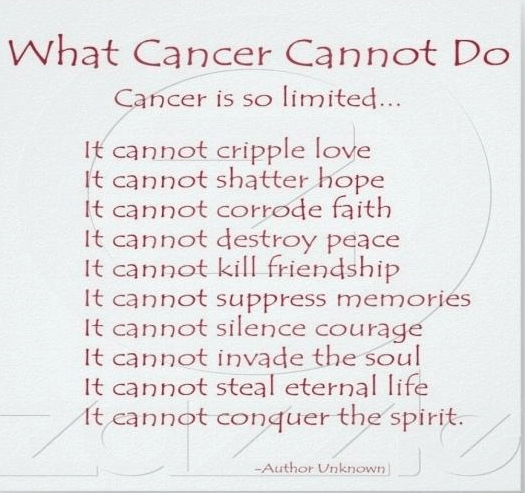
At the same time, this might be a good time to remind myself once again what cancer cannot do.

Screen Shot 2019-06-16 at 4.38.20 PM

Milestones

I’m not sure how it happened so quickly, but our youngest grandson will be 5 tomorrow!

IMG_7176

We spent this past weekend in Calgary for an early birthday celebration. On Friday, while Mommy and Daddy were working and big brother and sister were at school, we took him on a lunch date to his favourite restaurant, a McDonald’s with a great Playplace where he burned off a ton of energy after eating his meal.

IMG_7189 - Version 2

It was a weekend full of fun… sledding, skating, colouring, playing multiple board games and hide and seek, and in the early hours of the morning, a tiny boy crawling into bed with me! I’ve long referred to Simon as my velcro boy because whenever I’m around he attaches himself to me like glue. I thought that that might begin to change as he grew older, but so far it hasn’t and I’m definitely not in any hurry for it to!

Turning 5 is a milestone of sorts. Over the coming year, Simon will leave the preschool stage behind and take another step toward becoming a “big kid”. He’ll go to Kindergarten in the fall.

Simon’s birthday is also a milestone for me. In late August of 2013, when I was first told that I had cancer, Melaina was 10 or 11 weeks pregnant. Before we knew what kind of cancer I had, what sort of treatments I might be facing, or what the outcome might be, I prayed very specifically that I would live to see and hold that baby. It was pure joy to be in the delivery room on March 13, 2014 when he arrived and to have the honour of cutting the umbilical cord (his Daddy was there too, but he’s squeamish about such things and was more than happy to have me do it)! I am extremely grateful to still be here to see Simon turn 5 and to enjoy all the fun of being his Gram!

IMG_7215

Thankfully, recent CT scans have shown that my condition continues to be stable. I’ll be having another, and most likely my final, PRRT treatment in June. We have no idea what will come next, but there’s every reason to believe that I’ll be around to see Simon and my other grandchildren celebrate many more birthdays!

Radioactive again

10991307_10153055708750915_6654881605691342497_nI had my 11th PRRT treatment on Monday and once again I’m too radioactive to be in close contact with other people. For a week following each treatment I spend most of my time at home. I sleep in the guest room, have my own bathroom, and stay at least a few feet away from Richard at all times.

There’s nothing funny about cancer and high doses of radiation, but sometimes you just have to laugh. I pose a particularly high risk to pregnant women and children, but since there’s no chance of running into any of them at our weekly senior’s bowling league, I played yesterday but sat apart from the rest of the bowlers. There were some who knew exactly why, but others who were curious. One jovial fellow, noticing that I was sitting alone, commented, “I see you’re sitting back there with all your friends!” I hope he didn’t feel bad when he found out why I was keeping my distance. I thought his comment was funny! Then there are invariably questions about whether or not I glow in the dark! (I don’t) One friend laughed and said I must be a night light! I told him that that must be the reason that I’m not allowed to sleep with Richard! The glow would keep him awake.

In all seriousness though, I have scans the morning after each treatment to determine whether or not there has been any change to my tumours. In the past, I’ve been able to sit down with a doctor immediately afterward to discuss the results, but this time was different. Dr Sandy McEwan, head of the clinical trial that I’ve been part of since 2014 and the driving force behind bringing state of the art NET cancer treatment to Edmonton, has left the program. While I’m sad for myself and the rest of his patients, I’m happy for him that he has been able to relocate to Toronto where he will be closer to family. I knew a couple of years ago when he proudly told me that he’d become a grandpa that that day might come! His departure means that there isn’t time for the remaining doctor to meet with every patient both before their treatment and after their scans. That meant that this time I came home not knowing what they showed. While I was still able to laugh yesterday, the question was there in the back of my mind. Was this the time that the news would be bad?

Thankfully, I wasn’t kept wondering very long. I chatted with one of the program nurses this morning and once again I heard that word that I’ve come to love; stable! There has been no change! Praise the Lord!