The colours of cancer

BreastCancerAwarenessPinkRibbonOctober is Breast Cancer Awareness Month and the world around us is turning pink. Professional football players wear pink booties and gloves, NASCAR drivers dress in pink and drive pink cars, and restaurants serve up pink drinks and even pink burgers! In October anything pink sells; everything from pink vacuum cleaners to pink tools and coveralls. Don’t get me wrong; I have nothing against increasing awareness of the disease that is one of the leading causes of death for Canadian women. It took the life of one of my dearest friends just over nine years ago, but I’m fully behind the “Think before you pink” movement that strives to draw attention to the fact that all is not what it appears to be in the world of pink.

Samantha King is the author of Pink Ribbons, Inc., a 2006 book that examined how breast cancer has become a dream come true for some companies that want to bask in the glow of corporate do-gooding. An associate professor of kinesiology and health studies at Queen’s University in Kingston, King helped popularize the term “pinkwashing” to describe campaigns that flaunt the ubiquitous pink ribbon but have negligible effects on the realities of breast cancer. Some companies use pink ribbon related marketing to increase sales while contributing only a tiny fraction of the proceeds to the cause, or use pinkwashing to improve their public image while manufacturing products that may, in fact, be carcinogenic.

Any company can put pink ribbons on its products. When purchasing cancer awareness products, be a savvy shopper. Check the label or tag and ensure that a percentage of the purchase price is actually going to a recognizable foundation or non-profit organization. Oftentimes, making a direct donation to your favourite cancer charity is actually a better way to go.

Is pink the only colour of cancer though? Absolutely not! In fact, there are awareness ribbons in practically every colour imaginable, each one representing a different cancer. Ovarian cancer is teal, uterine cancer peach, liver cancer emerald green and colon cancer dark blue. Prostate cancer is light blue, testicular cancer orchid, leukemia orange and mesothelioma royal blue.

And what of my cancers? Head and neck cancers are burgundy and white, but that one is gone, hopefully for good. This is the ribbon that I wear:

zebra ribbon

The zebra stripe represents neuroendocrine (NETS) and carcinoid cancers. It’s not surprising that we zebras don’t get as much attention as those pink people do. After all, there aren’t very many of us. In Canada, specific numbers for neuroendocrine cancer are not even reported separately, but in the US there are an estimated 8000 new cases each year. Compared to the approximately 294 500 new cases of breast cancer that are expected to be diagnosed in that country in 2015, that’s a very tiny number, but we need awareness too. There are family doctors who have never heard of neuroendocrine cancer. They have no idea what it is, how it’s treated or that it’s incurable. A locum filling in at our local hospital actually questioned whether I had cancer at all!

NETS not pink

Blogs devoted to NET cancer awareness:
https://ronnyallan.wordpress.com

http://walkingwithjane.org

Hope and a future!

It’s been awhile since I wrote an update about my battle with cancer which is, in itself, an indication that things have been going well. There really hasn’t been much to report which is a good thing! Yesterday, we sat down with one of my specialists to discuss the results of recent CT and PET scans. Though we weren’t expecting anything dire, I think we both walked out of his office feeling like a load had been lifted off our shoulders. Yes, the news was that good!

As many of you are aware, I have dealt with two completely separate and unrelated cancers over the past two years. The first good news was that there is absolutely no sign of the acinic cell cancer that was removed surgically and treated with radiation last summer. I have routine follow-up appointments with both the surgeon and the radiation oncologist next week, but I’m certain that they’re going to tell me that everything is fine.

We already knew that my primary neuroendocrine tumour, which is located in my colon, has been shrinking as a result of the radioisotope (Lutetium) treatments that I’ve been having. Yesterday we learned that the other four tumours, three on my liver and one in a lymph node, have not changed in size since diagnosis. That’s a glass half full / half empty kind of statement. While it would be nice to hear that they too are shrinking, the fact that they have not grown and that there are no new ones is actually very good news.

Another indication that the disease is stable, that my tumours are essentially dormant now, is hormone production. Neuroendocrine tumours (NETS) produce serotonin, a hormone that we all have in our bodies. Serotonin is sometimes referred to as one of the happiness hormones because a deficit may to lead to depression, but an excess secreted by neuroendocrine tumours results in carcinoid syndrome which, as in my case, results in symptoms that include abdominal cramping and diarrhea, skin flushing, and periods of rapid heart rate. It can also lead to heart disease and other complications. A 24 hour urine test is used to measure the amount of serotonin in the body. I don’t yet understand exactly what the numbers mean, but I was told yesterday that my level at diagnosis was 150. A year ago, it was down to 69 and now, it’s 42. Apparently, normal is around 40. That would indicate that my tumours are no longer actively producing serotonin which is definitely good news!

So what does all this mean for the future? There is no cure for NETS. Even if my tumours were to disappear completely which happens very rarely, I would not be considered cured, but I am now entering a maintenance phase. For the next two years, I will receive a Lutetium treatment every six months instead of every 9 to 12 weeks as has happened so far. Then, if things continue to go well, we’ll go to a treatment every nine months. Yesterday was the first time we were even told of that possibility!

“I know the plans I have for you, declares the Lord, plans to prosper you and not to harm you, plans to give you hope and a future.”  Jeremiah 29:11

Yesterday was definitely a day that gave us hope and a day that gave me greater confidence of a future here on this side of heaven! The battle isn’t over, in fact it never will be, but for now it’s getting easier and that’s enough for me!

Born To Be Wild

Painting

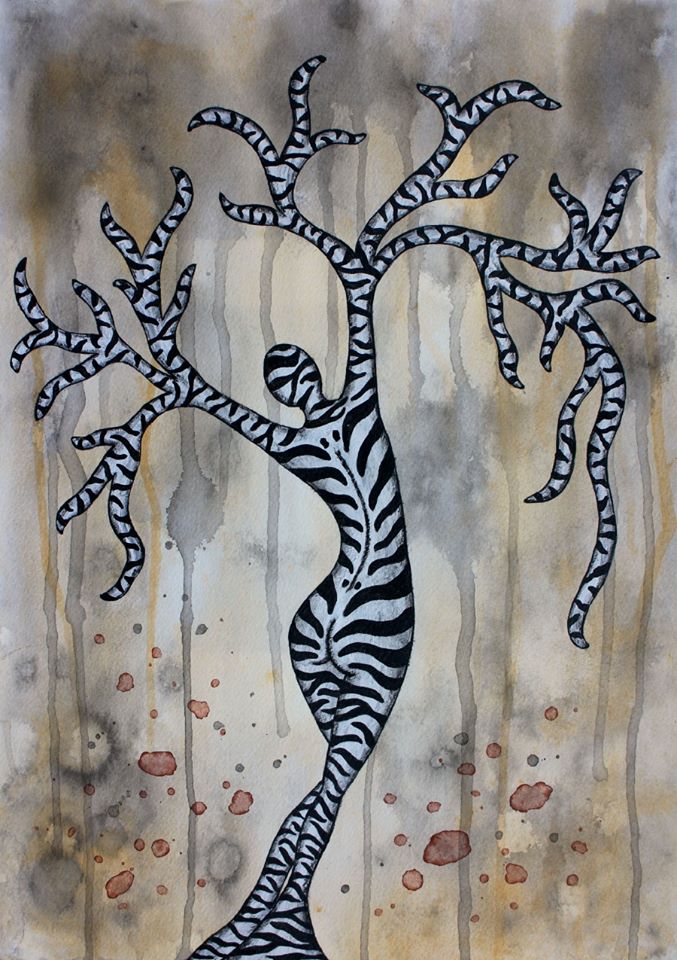
I saw the painting Born To Be Wild by Norwegian artist, Sylvia Sotuyo, for the first time the day before yesterday on the NET Cancer Day Facebook page and it immediately spoke to me in a way that art seldom does. I looked at it over and over again, each time asking myself what it is about that figure that inspires me so. I even posted it as my Facebook profile picture. Why? Because I see it as a picture of me! I may not look like this to you and it isn’t what I see in the mirror, but I know it’s me!

I contacted the artist and she graciously gave me permission to share her painting here and to try to explain what it means to me, but first, let me share her description of it:

The dynamic human tree represents the strength and stamina of the tree, combined with the power and intelligence of the human being. The human tree stands proudly, well grounded to earth, and reaches towards the sky to achieve all it`s hopes and dreams…

I, too, see it as a symbol of strength and hope, but I see other things that the artist may not have had in mind. First of all, the zebra is the symbol of neuroendocrine tumours (NETS), the incurable cancer that I was diagnosed with almost two years ago. Neuroendocrine tumours are difficult to diagnose. The symptoms are usually vague and similar to more common health problems. Many family doctors have never encountered a NETS patient. When presented with symptoms like stomach pain and diarrhea, they naturally think of things like Irritable Bowel Syndrome, Crohn’s Disease or lactose intolerance. Medical students are taught “when hearing hoofbeats, think of horses, not zebras.” Neuroendocrine tumours are very rare and therefore they are considered to be zebras.

Since my diagnosis, I’ve noticed zebra stripes everywhere! In recent years, the fashion world has been inundated with animal prints and the zebra is definitely a popular motif. I’ve seen zebra t-shirts, zebra leggings, zebra pjs and even zebra bras. I’ve tried on zebra jeans and a sexy looking zebra dress, but I didn’t buy either one. I’ve also seen zebra handbags and zebra luggage. One of the ladies I occasionally play golf with has a zebra golf bag. Obviously, it was the zebra stripes on the figure in Sotuya’s painting that prompted the NET Cancer Day organization to post it on their Facebook page and that initially caught my eye, but there’s more than that to my fascination with it.

Like the tree, I’m more firmly rooted to one place than I was before my diagnosis. I receive a monthly injection to alleviate the symptoms mentioned above that has to be administered by a specially trained nurse. Fortunately, I can arrange to have the injection given anywhere in Canada. In fact, plans are already in place for me to have my next one in Vancouver, but arranging to have it given outside the country would be much more complicated. There likely won’t be any more long term stints teaching English or doing missionary work overseas in my future.

I’m also firmly rooted in my faith, however. It’s my absolute confidence that my life is in God’s hands that gives me the freedom and joy that I see represented by the outstretched arms or branches of the figure in the painting. I see strength and purpose in those arms as well as exuberance.

The figure is also graceful, possessing an elegance that I would like to think is true of me. I often pray that I might be a woman of grace, one who doesn’t allow the circumstances of life to define who I am. When I was diagnosed with cancer, I fervently prayed that God would enable me to endure whatever lay ahead with grace.

As the title of the painting implies, there’s also a wildness in her. I, too, am a little bit wild at heart. It’s not a loud or out of control sort of wildness, but I believe in living life to the fullest and I’m always ready to try something new. I don’t like to follow the crowd and I don’t always see eye to eye with the people who love me. I speak my mind, but I don’t fly off the handle. I love nothing more than a hike in the wilderness or a walk on a beach and just because I’m in my 60s doesn’t mean I can’t climb a tree! Yes, I’m a little bit wild; a little bit unconventional and I think this is a picture of me!

Painting

You can see other examples of Sylvia Sotuyo’s work and even purchase prints here.

The best thing about pain

I’ve often said that the best thing about pain is how good it feels when it stops! Yesterday was my first completely pain free day in the last three weeks and so far, today is going just as well.

Though I didn’t realize it at first, I was suffering a nasty reaction to the cancer treatment that I received on April 14th. The first few days after the treatment were fine; just the normal tiredness that I’d experienced after each of the previous ones. Then, I woke at about 3:30 one morning with excruciating stomach pain. I had no idea what was going on and neither did my family doctor. He ordered an x-ray and when that came back looking normal, he suggested an enema to ensure that there was no blockage anywhere. For a little while, I felt a bit better, but soon the fire in my belly was back. Pain filled days and sleepless nights followed, eventually prompting me to phone the cancer clinic and describe my symptoms to Brent, the nurse who coordinates the team that provides my care.

“I hate to tell you this, but I’m pretty sure we did that to you,” he told me!

Gee, thanks Brent!

Discovering that what I was experiencing was actually a fairly common reaction, especially in patients with dead and dying tumour cells in their system (that’s definitely the good part!) didn’t lessen the pain at all, but it did give me peace of mind. Brent also assured me that I should soon begin to feel better. Apparently, this kind of reaction usually occurs within a two week window following treatment and I was nearing the end of that. We discussed the fact that the lining of my stomach and intestines was likely badly inflamed and I made the decision to eat a very bland diet of apple juice, applesauce, toast, crackers, tea and broth for a few days to give my insides a chance to rest and heal. That seemed to help and sure enough, right at the two week point, things improved significantly. I was even well enough to spend a few days in Calgary celebrating two very special birthdays. Our granddaughter, Jami-Lee, had her fifth birthday on April 28 and her brother, Drew, turned seven on May 1.

IMG_5123   IMG_5109

I continued to experience intermittent pain until two days ago, but that too seems to have finally passed. Obviously, all of this has made it impossible for me to begin following the dietary and exercise recommendations related to my recent pre diabetes diagnosis. I had no choice but to put that on hold until I got this under control, but I’m eating well again and I’ve just returned from a brisk 20 minute walk. That’s a far cry from the recommended 30 minutes five times a week, but it’s a start. I also felt well enough to play my first round of golf of the season yesterday!

My real hope in all of this is that the treatment has been as hard on my tumours as it has been on the rest of me! We’ll know more about that when I go for CT and PET scans on July 24. These will provide the baseline for my next phase of therapy which won’t involve another treatment until sometime in the fall. I’m very thankful for that too! If I was facing another one in just a few weeks, as I have done until now, I think I’d be tempted to slink away and hide in a deep, dark cave!

Instead, I’m going to enjoy the summer… sunshine, camping, golfing, geocaching, time with family… !

Milestone!

I reached a medical milestone today!

Yesterday, I completed my initial round of four radioisotope treatments and this morning’s scans showed that my primary neuroendocrine tumour (located in my colon) is shrinking! The other four tumours appear not to have grown and there are no new ones. As a result, my cancer treatment will now go into a maintenance phase. I will continue to be treated with Lutetium-Octreotate, but instead of a treatment every nine to twelve weeks, I will now have one every six months!

While I was sitting on my hospital bed yesterday afternoon while the Lutetium was being administered via IV drip, I flipped open my new issue of Chatelaine magazine and was in for a surprise. When I read “Crashing the Cancer Club”, Jenny Charlesworth’s story of surviving cervical cancer, in the March 2015 issue, I immediately responded with a letter to the editor via email. I’d completely forgotten about that until I saw my letter in print yesterday! Here’s what it said:

Thank you for pointing out, in “Crashing the Cancer Club,” that every cancer story is different and that each of us who has cancer, or who has had it in the past, is a survivor in our own right. Since August 2013 (a misprint in the magazine says 2014), I have been diagnosed with two different cancers. One was removed by surgery followed by radiation; but the other is a rare, slow-growing cancer for which there is no cure. People have a hard time grasping the idea of a chronic cancer. The usual assumption is that patients either die of their disease or are cured, thereby becoming cancer survivors. I’ve learned to look at my situation differently. I may die of my cancer or I may die with it, but either way, I am a survivor.

It may sound silly, but I was encouraged by my own words. Written two months ago, they reminded me that though mine is an incurable disease and, barring a miracle of God, I will have it for the rest of my life, I am indeed a survivor!

Reaching today’s milestone was a great reminder of that!


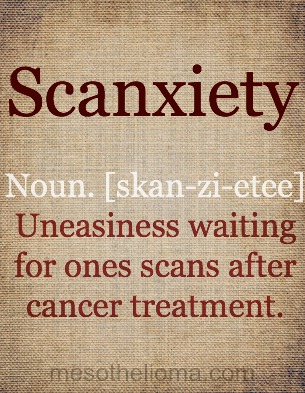
Scanxiety

Since being diagnosed with cancer almost 18 months ago, I’ve learned a lot of words that I, a self-professed word nerd, would rather not have had to know. Words like neuroendocrine tumour (I have five of them lurking inside of me) and carcinoid syndrome (a group of symptoms linked to the excess hormones released by the type of neuroendocrine tumour that I have). I could bore you with several others but the word that best describes my life the past few weeks is scanxiety.

Scanxiety

Scan + Anxiety = Scanxiety

Though my cancer is incurable, I go for a treatment about once every ten to twelve weeks that is designed to keep it from growing and spreading. I am injected with Lutetium-177, a radioactive therapy that adheres to specific receptor cells in my tumours and destroys them. The morning after each treatment, I have a full body scan that shows us exactly what has been happening with the disease since the previous treatment. Fortunately, I don’t have to wait long for the results. I meet with a doctor immediately afterward to view the pictures and talk about what they show.

For the most part, I’ve been at peace and have approached each treatment and scan without a lot of anxiety but this time was different. Since my last treatment in mid November, I’ve been experiencing intermittent stomach pains. They’re short-lived, lasting only a few minutes. It’s easy to second guess every ache or twinge and wonder if it’s related to the cancer but this was more than that. Stomach pain is one of the most common symptoms of carcinoid syndrome and one I’d experienced prior to diagnosis. I began to wonder if this was a sign that the cancer was growing or spreading.

Worry often begins as a little thing but it seems to feed on itself. Soon I was carrying a heavy burden of anxiety. It continued to grow until I was quite sure that I would hear bad news when I went for this week’s treatment and scan.

Then, on Tuesday night as I was brushing my teeth and preparing for bed, I heard the Lord say, “It’s going to be okay!” Oh, it wasn’t a booming voice thundering through the ceiling of our tiny ensuite bathroom. It wasn’t an audible voice at all but it might as well have been. I knew without a doubt that it was God speaking to my heart. He even said it several times. “It’s going to be okay!” I walked out of the bathroom feeling like the world had been lifted off my shoulders, crawled into bed and had a great sleep. Then, the next morning, I climbed out of bed, picked up the heavy load of anxiety and put it squarely back on my shoulders!

As we drove to Edmonton for my treatment and throughout the hours that followed, I tried to tell myself that everything was going to be okay, but I kept hearing the other voice, the one that said, “Are you sure it was God that you heard? It wasn’t God, it was only your own wishful thinking! You were right in the first place; the news is going to be bad!” Foolishly, I listened and my anxiety grew.

I was thankful for the visits that kept me sane that evening. First, an acquaintance from years gone by that I’ve recently reconnected with. We could have talked for hours! Then, my dear hubby who has walked every step of this cancer journey with me. I was also thankful that the treatment had made me tired enough to sleep.

The next morning, I prayed for the entire half hour or so that I was being scanned and then it was time to find out which voice I should have listened to. I walked into the consultation room where Dr. Sandy McEwan, head of the neuroendocrine tumour clinic at the Cross Cancer Institute, and Dr. Dean Ruether, leader of the provincial endocrine tumour program, sat waiting with smiles on their faces and I heard the words I’d been longing to hear, “Everything’s okay! There’s been no change.”

My cancer is stable! I can relax until mid April when we go through the whole thing again, hopefully without as much scanxiety! Oh, there are still the stomach pains to deal with but I’m even wondering if they will subside now that the burden of anxiety has been lifted. I’m going to be monitoring their frequency and intensity for the next few weeks to see if they’re actually lessening, as I think they may have been. If not, the solution might be as simple as increasing my monthly dose of Sandostatin which controls the carcinoid symptoms or as complicated as surgery to remove the primary tumour from my colon.

For now, I’m simply going to relax and give thanks to the One whose voice I should have listened to!

Days of praise!

I have much to praise God for this week!

Under normal circumstances, I wouldn’t consider a visit to the dentist a big deal. There was a time, after a traumatic experience in a dentist’s chair when I was eleven or twelve, that going to the dentist was frightening but that’s in the distant past and hasn’t been an issue for a long time. No, the reason for Tuesday’s apprehension was different. For the past several months, I’ve been experiencing severe jaw pain when I eat. It appears to have been brought on by a combination of last spring and summer’s surgery and radiation treatments and accumulated stress. I’d been warned that radiation, in particular, would likely cause stiffening of the muscles in my jaw. When I started seeing a physiotherapist in early October, I could only open my mouth 26 mm (average is 50) and the pain when I ate was, at times, almost unbearable. Over the next few weeks of regular exercise, I regained quite a bit of flexibility and can now open my mouth about 35 mm. The pain has lessened but it hasn’t gone away. I was very concerned about whether or not I’d be able to keep my mouth open wide enough and long enough to have my teeth cleaned and checked and how much that would hurt. Unfortunately, however, I couldn’t postpone the appointment.

Until I had my parotid gland removed and my other saliva glands were compromised by radiation, I had no idea what an important role saliva plays in tooth protection. Now that my saliva production has been permanently reduced, I’m especially vulnerable to tooth decay and for at least the first year following radiation, in addition to brushing my teeth after every meal and giving myself daily fluoride treatments, I’ve been advised to see my dentist every four months. Tuesday’s was the first of these check-ups and I feared what the results might be.

As it turns out, I had nothing to worry about. Under the gentle care of my hygienist and dentist, the appointment went amazingly well. No pain and no cavities! As I said, I have much to be thankful for this week but that’s just the beginning!

The following morning, long before daylight, we set out on the two and a half hour drive to the city for my second Lutetium treatment at the Cross Cancer Institute. There were a few snowflakes in the air but the roads were clear and the drive uneventful; definitely another thing to be thankful for at this time of year in Alberta! I was admitted for an overnight stay and the treatment went ahead resulting in nothing more than a slightly queasy stomach that didn’t last very long.

After a reasonably decent sleep considering the fact that I was in a narrow hospital bed, I was up early on Thursday morning for my follow-up scan, the one that would tell us what’s been happening to my neuroendocrine tumours since September’s treatment. One of the things that I appreciate most about this process is that, unlike most medical procedures, I’m given the results immediately afterward. No anxious waiting for 2 or 3 weeks to hear back from the doctors.

And the news? That’s the biggest thing I have to be thankful for! There has been absolutely no change! The cancer has not grown or spread! It continues to be stable. I may have pain when I’m eating but in the overall scheme of things, that seems pretty insignificant. I have much to praise God for and I sincerely thank those of you who have been praying for me!

My next treatment will be on Feb. 11.

Finally!

Yesterday I FINALLY had the cancer treatment that my doctors wanted to give me a year ago! Thankfully, mine is a slow-growing, chronic cancer or I doubt I’d be here to tell the tale.

When my neuroendocrine tumours (NETS) were diagnosed last September, the doctors at the Cross Cancer Institute in Edmonton would have preferred to start me on a radioisotope therapy, known as Lutetium-Octreotate, that they had been using very effectively since 2010. Unfortunately, shortly before that time, the government had cut off funding for that treatment citing a need for more evidence of its safety and effectiveness. That necessitated the setting up of a clinical trial, a very time-consuming process.

Unlike many NETS patients, my tumours were equally receptive to a second, similar treatment, so rather than waiting for Lutetium to become available again, I received injections of mIBG in November and January. It wasn’t long after that that my second cancer was diagnosed and treating it became a higher priority. My NETS was put on the back burner while I underwent surgery and radiation to rid me of the acinic cell carcinoma in my salivary gland. In fact, my neuroendocrine tumours weren’t looked at again until a CT scan was done in late July. Dealing with a second cancer was bad enough but not knowing what was going on with the first one was equally disconcerting.

While all of that was happening, the Lutetium-Octreotate clinical trial was finally approved and as of yesterday, I’m finally a participant. So, what does that mean? I don’t feel like a guinea pig because the treatment isn’t a brand new, untried one. Having heard the success stories from Dr. MacEwan, chair of the Oncology Department at the University of Alberta and head of the Nuclear Medicine Therapy/Neuroendocrine Tumour Clinic at the Cross Cancer Institute, a man who I trust completely, I have no doubt that it is both safe and effective. Simply put, participating in the clinical trial is the only way that I can access the treatment that Dr. MacEwan feels is the best one for me so it’s clearly a no brainer. I will remain in the study for up to seven years and will be followed up for another year after that. Data that’s gathered along the way will be retained for 25 years and will hopefully be used to improve patient care over the long term.

For me, there are several advantages to taking Lutetium instead of mIBG. From Dr. MacEwan’s point of view, the fact that it will probably be less harmful to my bone marrow was the deciding point, but I’m happiest about the difference in the precautions that I have to take after each treatment. They’ll still leave me radioactive but the effect of that radioactivity isn’t as far reaching. I didn’t have to stay shut away in the lead lined room after yesterday’s injection and Richard was allowed to visit me. Instead of being in virtual seclusion for two weeks afterward, now it will only be one week and the restrictions within that week are much less limiting. Following an mIBG treatment, I had to stay at least 10 feet away from Richard for all but 3 hours a day. For those 3 hours we were allowed to be just 3 feet apart! I still have to have my own bedroom and my own bathroom for the next week but we can be 3 feet apart at any time which definitely makes life easier. I’m also more free to mix with other people as long as I keep a bit of distance between us and I’m careful to stay away from pregnant women and children under the age of 12. Though there’s still the need for several blood tests between treatments, there will also be periods of several weeks when I’m not required to have any blood work done. I definitely see a winter holiday in our future!

I was told that I’d be very tired for the first week after each treatment but I really haven’t felt tired today at all. I suspect that that might have something to do with the exciting news that we received following this morning’s post treatment scans. They confirmed what July’s CT scan appeared to show. In the 7 months since my last mIBG treatment, my neuroendocrine tumours have remained absolutely stable. There are no new growths and the existing ones have not grown! In addition to that news, the scans also showed very clearly that the cancer in my face is completely gone. We were already quite sure of that but seeing it on the screen was absolutely wonderful!

Now I think I can FINALLY breathe a sigh of relief and begin to live a somewhat more normal life again. I still have cancer. In fact, without a miracle, I always will have, but I also have high hopes that the year ahead won’t be quite as crazy as the one we’ve just come through!

One year later…

It’s hard to believe that a whole year has passed since I heard the fateful news. 365 days of living with cancer have gone by already!

The first days were the scariest when we didn’t yet know what kind of cancer it was and the process of finding out seemed ever so slow. Eventually, we learned that I have neuroendocrine tumours, a very slow growing chronic cancer that often responds well to treatment, and we breathed a small sigh of relief.

There have been dark and disappointing days, especially the day in late March when we learned that I had a second, completely unrelated cancer. That led to seven hours of surgery and six weeks of radiation. There’s still plenty of healing to be done and some long term repercussions but for the most part, I think we’ve put the second cancer behind us and I’ll soon resume treatment for the first one.

Though we’ve spent a lot of time away from home, our gypsy tendencies have been severely curtailed this year.  We’ve spent many days on the road driving back and forth to Edmonton for tests, scans, biopsies and treatments but we haven’t been outside Canada at all. We did renew our passports though and we opted for Canada’s new ten year ones in hopes that my wandering days aren’t over yet.

I often wonder if there will ever be a day when it doesn’t cross my mind that I have cancer. It would be so easy to feel sorry for myself and to focus on the negatives but I refuse to do that! Cancer has changed our lives significantly and we continue to live with lots of unknowns but life goes on and we have much to be thankful for.

I’m ever so thankful for my loving husband who has been by my side every step of the way patiently chauffeuring me to appointments, meeting with doctors and sharing the good days and the bad. We’ve also been absolutely overwhelmed by the prayerful support we’ve received from around the world. I know that that has sustained me through the ups and downs of the past year and that it will continue to do so in the days that lie ahead.

So now, as I move ahead into my second year of life with cancer, completely cognizant of the fact that many people don’t get that privilege, I’m determined to continue living life to the fullest!

Mesothelioma Awareness – Speaking out against a dreadful wrong!

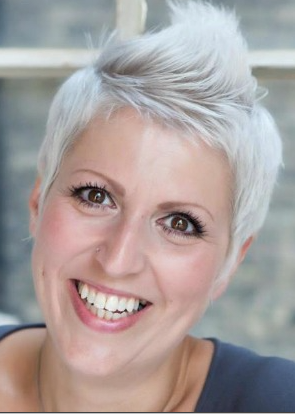
Picture 2This is the first time I’ve written a blog post on request. When Heather Von St. James contacted me and I looked into the reason behind her appeal, I knew it was something I had to do! With her shock of silver hair and vibrant smile, Heather looks like the picture of health, but that hasn’t always been the case. At 36 years of age, just 3 1/2 months after the birth of her only child, she was diagnosed with cancer and given 15 months to live. That was in November of 2005. Miraculously, over eight years later, she is alive and well and has dedicated herself to increasing awareness of mesothelioma, her particular kind of cancer.

I really don’t like the word cancer; not just because of the fear that is so closely associated with it, but because it is such vague and nebulous term. Cancer is not just one disease, but many. It is a term that is used to describe any disease in which abnormal cells divide without control and are able to invade other tissues. There are over 200 kinds of cancer!

Like my neuroendocrine tumours (NETS), mesothelioma is a rare cancer that is difficult to diagnose because, in the early stages, it can be easily mistaken for other illnesses. Symptoms are all too often ignored or dismissed by people who are inclined to attribute them to common every day ailments. That’s where the similarity ends, however. While NETS is a slow growing chronic cancer, mesothelioma is aggressive and deadly. The cause of neuroendocrine tumours is unknown but this is also not the case with mesothelioma. Not only is the cause known, it is preventable!

The only known cause of mesothelioma is exposure to asbestos. Heather never worked with asbestos, but her father did. Secondhand exposure as a child was enough to make her sick decades later. Because of the disease’s latency period of 30 to 50 years, it often doesn’t show up until long after exposure.

After reading Heather’s plea for help in spreading the word about mesothelioma and reading up on the disease, I wondered how the situation here in Canada compared to the U.S. where she resides. I was shocked to discover that, after climbing steadily over the past two decades, Canada’s mesothelioma rate is now one of the highest in the world!

Our country’s first asbestos mine opened in 1879. During the late 1800s and early 1900s, an increasing number of mines took advantage of the large asbestos deposits found in Quebec, Newfoundland, British Columbia and the Yukon. Manufacturers began to produce a variety of asbestos-containing products that would be used in Canada and worldwide. While the asbestos industry boomed and mine owners and company executives got rich, workers got sick, suffered from breathing difficulties, coughed up blood and died! Canadian mortality rates among miners were studied as early as the 1920s and evidence exists to show that asbestos company executives withheld negative reports from both their employees and the public. By the 1970s, doctors had declared Canada’s asbestos mining towns to be among the most dangerous places in the world to live, with rates of mesothelioma and other asbestos related diseases increasing. Asbestos opponents and those weary of seeing Canada’s mesothelioma rate rise celebrated in 2011 when  last two remaining mines closed but, because of the renovation and demolition of the country’s aging buildings that used asbestos as insulation, the mesothelioma rate has been rising among construction and maintenance workers. Canada has long resisted a universal ban of asbestos as proposed by the World Health Organization (WHO) and  continues to be a major exporter of asbestos to many countries who do not monitor asbestos exposure or regulate its use.

Is it any wonder that Heather asks us to join our voices with hers in speaking up against such an obvious wrong? For more information on mesothelioma and to read Heather’s story in her own words, visit the Mesothelioma Cancer Alliance.