When the Body Says No: The Cost of Hidden Stress
Gabor Maté, MD
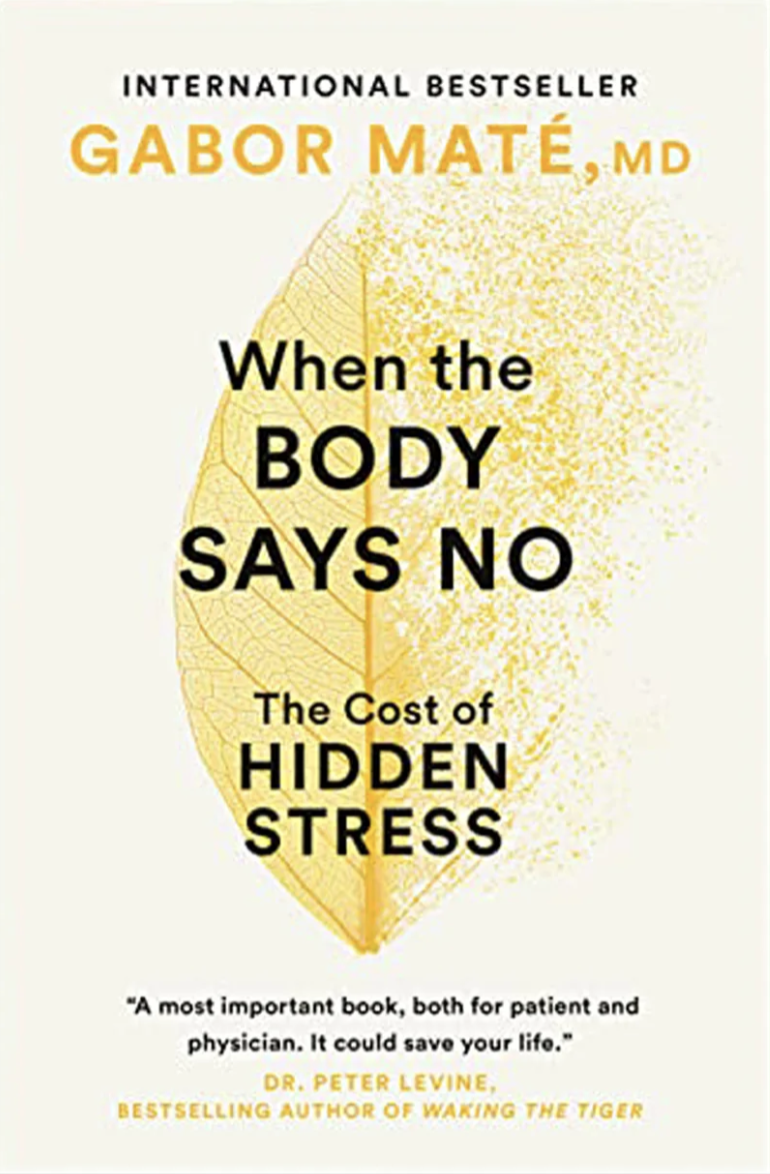 In this international bestseller, renowned mental health expert and speaker, Dr. Gabor Maté, provides insight into the critical role that stress and emotions play in the development of many common diseases.
Although written for a general audience, When the Body Says No definitely wouldn’t be everybody’s cup of tea. It’s like reading a textbook, but my daughter and I both read it recently and when I discovered that another friend was also reading it, I decided that it might appeal to more of you and that it would be worth reviewing here.
Dr. Maté has experience as a family practitioner and a palliative care physician and has also worked with the addicted men and women of Vancouver’s Downtown Eastside. He weaves together scientific research, numerous case histories, and his own insights and experience to explain the relationship between psychological stress and the onset of chronic illnesses including arthritis, cancer, diabetes, multiple sclerosis, Alzheimer’s disease, and heart disease. While I don’t agree with everything he says and he definitely needs to update the section on prostate cancer (the book was published in 2003 ), a lot of it makes very good sense.
What I liked best was the fact that Dr. Maté validated what I have believed for years; that the stress I endured prior to and especially during the early decades of our marriage and the anger that I suppressed during those years contributed to my present health conditions. In fact, the author would probably say that they caused my cancers. As he says, all of us probably have within our bodies the occasional rogue cell that could multiply and become cancer. In most cases, the body has the resources to destroy those cells before they spread, but chronic stress and repressed anger reduce the body’s ability to do that and magnify the risk of developing the disease.
In the final chapter of the book, Dr. Maté addresses what he calls the seven A’s of healing: acceptance, awareness, anger, autonomy, attachment, assertion, and affirmation. He believes that pursuing these will help us grow into emotional competence and empower us to be our own health advocates.
Note: This book was published in the US under the title When the Body Says No: Exploring the Stress-Disease Connection.

 Following Augustine