International Women’s Day and Kiva

Tomorrow, March 8, is International Women’s Day, a day set aside to celebrate the social, economic, cultural and political achievements of women. It also serves as a reminder that there is still a lot of work to be done to empower women and achieve gender equality, especially in developing countries where they are at greater risk of prejudice and gender-based violence. Women’s rights have come a long way since the first International Women’s Day in 1911 but we still have a long way to go!

Although different countries and different organizations have chosen differing themes for International Women’s Day 2023, they all revolve around the idea of equality and equity for women. Equality means giving all people equal access to rights and opportunities while equity refers to allocating resources based on the needs of individuals without bias or discrimination. That’s where Kiva comes in and why I’m choosing to focus on this non-profit micro-lending organization on International Women’s Day this year.

It’s all well and good to talk about the rights of women and the need for gender equality, but unless we’re willing to actually do something, that’s all it is. Talk doesn’t change anything! Change requires action, so what can you do? How can you make a difference?

graphic-gender-equity-1-billion-women-unbanked_2xLet’s begin by looking at some startling facts. Research shows that women typically invest a higher proportion of their earnings in their families and communities than men do, but in order to do so they need access to the full range of credit, banking and financial services. 740 million women worldwide, however, have little or no access to financial services. Because so many women are excluded from accessing financial assistance, it’s difficult for them to start businesses, pursue higher education, or improve their livelihood. Kiva aims to change that! Since 2017, the number of unbanked women has dropped by 24%. If this trend were to continue, the number of women without access to financial services could reach zero in less than 20 years!
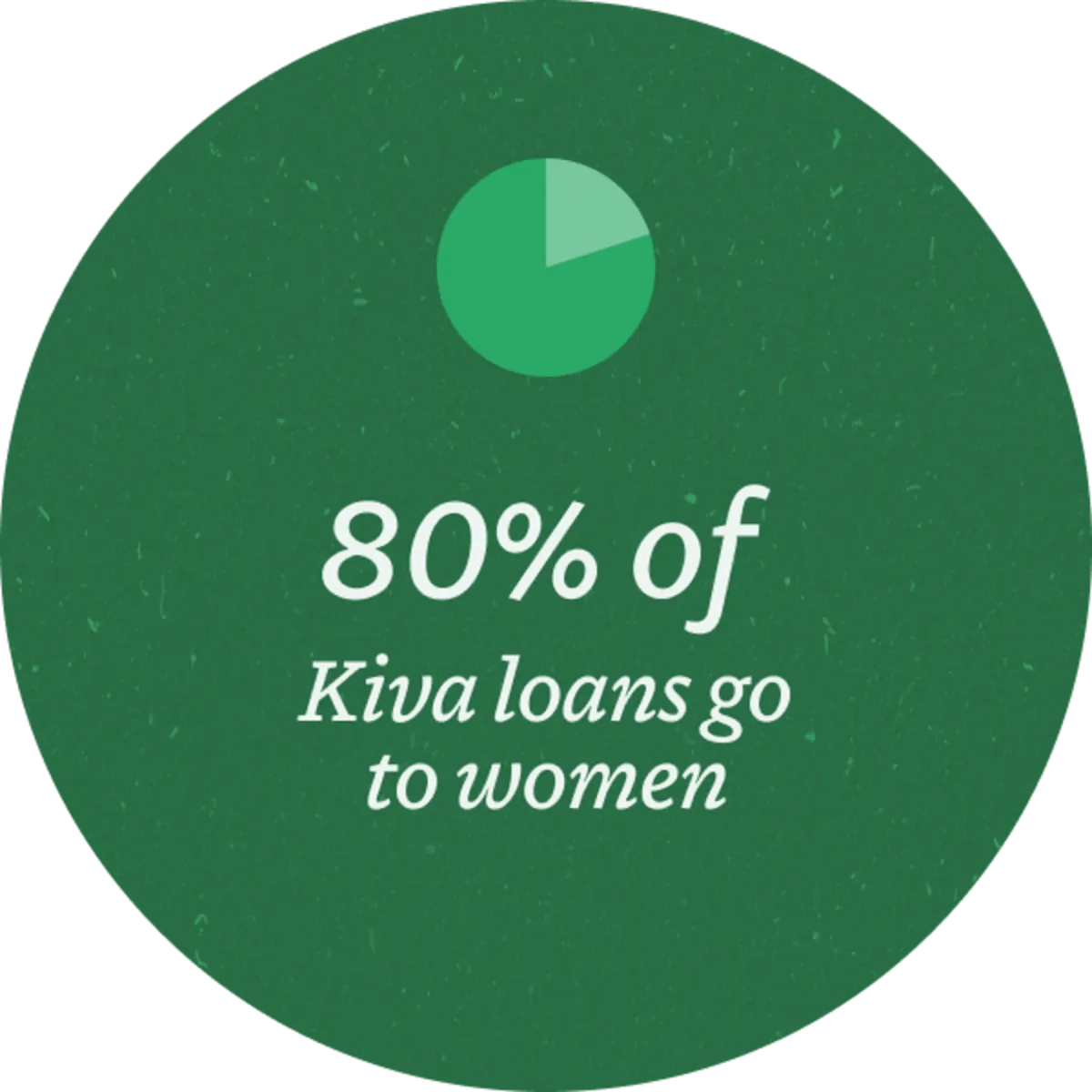
More than 80% of Kiva loans go to women, women who have historically been denied access to traditional banking services. Kivagraphic-kiva-8-percent-loans-go-to-women-1_2x loans enable them to become financially stable, resilient, and self-reliant, allowing them to better support and protect themselves and their families from abuse, violence, and financial dependence.
So, why not celebrate International Women’s Day 2023 by making a loan to a woman in one of the 70+ countries on 5 continents served by Kiva? It’s easy, it costs as little as $25, and it makes a difference! 

If you’re not familiar with Kiva, here’s how it works. Click here to choose a woman or group of women to support. Lend $25 or more to help crowdfund the full loan amount. As the borrower earns an income and begins to repay her loan, you and the other lenders who helped fund her loan are repaid. These funds go directly into your Kiva account. When your account reaches $25 again, you can relend those same dollars to support another borrower! It’s truly the gift that keeps on giving!

Since I made my first two loans in March of 2010, I’ve helped fund 83 loans in 31 countries. Though Kiva provides loans to both men and women, I choose to lend to women who are borrowing money to purchase specific items that they will use to generate income to help them support their families and educate their children. Over the years, I’ve invested in a variety of livestock, seeds and fertilizer, numerous sewing machines, fishing equipment, hairdressing tools, restaurant stoves and refrigerators, a mill for grinding corn, heavy duty washing machines, a portable food stall, and probably a few other items. I also helped renovate some rental properties earlier this year.

To mark International Women’s Day, I decided to make another loan this week. Since my Kiva account was standing at less than $2 (I always relend as soon as it reaches $25) that involved topping it up, but I was more than happy to put my money where my mouth is as the old saying goes. Just think of the difference that we could make for women worldwide if we each invested just $25!

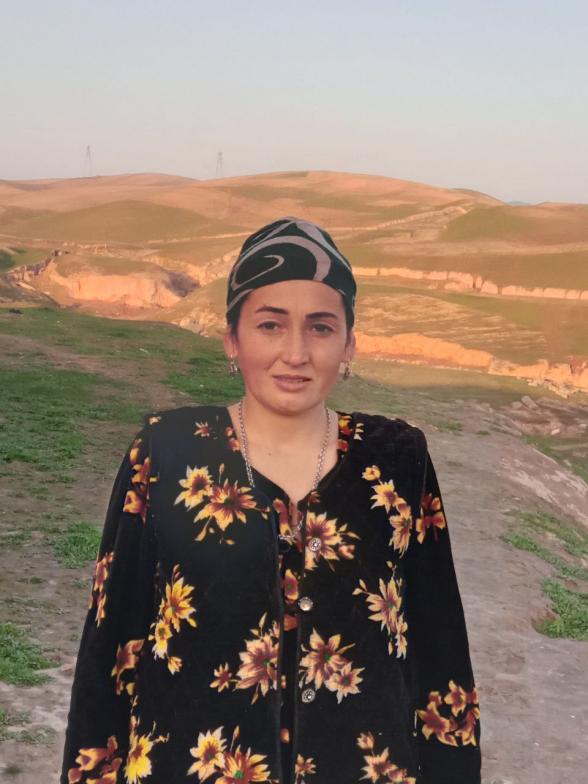
After reading through several loan descriptions, I found the one I wanted to help fund this time. Shamsiya is a 28-year-old mother of 5 children living in Tajikistan. She recently learned to sew women’s clothing and was seeking a loan to buy a sewing machine and supplies to start her own business.

fc8f6d9a81972e7a598e8ecb9c1d364b

bannerlong

images

What are you doing to make a difference this International Women’s Day? Please let us know in the comment section below.

A new job!

My father, who died a year ago at almost 97 years old, always said of retirement that there is no end of things that you can do as long as you don’t need to be paid for them. I’m blessed to be able to follow in his footsteps. While we aren’t wealthy by any means, we are comfortable enough financially not to need to work. In the first few years of retirement, we did take paying jobs teaching English in Japan for a year and then China for several months. Since then, we’ve kept busy as volunteers in several capacities. In fact, at 68, I have just finished training for a brand new volunteer position that I’m very excited about!

I’ve often mentioned Kiva on the blog before. Kiva is a non-profit organization that allows a person to lend as little as $25 to a specific low-income entrepreneur in one of 77 countries around the world. When a loan is repaid, the money can be withdrawn or used to fund a new loan. Since making my first loan 11 years ago, I’ve been able to make 60 more by simply recycling the same money over and over again. When I learned that there was a need for volunteer editors, I realized that this might be an opportunity to put my skills into action and help in another way.

kivaloans-450x200

An average of about 16,000 loan profiles are posted on the Kiva website every month. Each one needs to be carefully edited to ensure that it complies with Kiva policies, that the borrower’s privacy is maintained, that details are consistent, and that the language is understandable to lenders while retaining, as much as possible, the voice of the original text. Kiva relies on over 400 volunteers, each editing approximately 40 loan descriptions a month, to complete this enormous task. That’s my new job! I’ve joined Kiva’s Review and Translation Program as a volunteer editor! 

It was back in July of last year that I first expressed an interest in volunteering. My name was added to a wait list and I was told that I would hear from Kiva staff when they were ready to bring on new volunteer editors, probably much later in the year. In late November, I was asked to submit my resumé and complete an official application that included a brief loan review exercise. In early December, I was invited to take an editing test. Kiva works with a barebones staff and, like everyone else, they’ve been somewhat hindered by Covid slowdowns, so the wheels ground slowly, but at the beginning of February I was notified that my application was approved. At the beginning of March I started training and now I’m finally an active Kiva editor! I edited my first loan yesterday. The borrower was a farmer in Uganda who requested a loan to buy more cattle to fatten and resell.

Volunteer editors are split into teams each led by a volunteer team leader. I was assigned to a group called The Write Stuff which I find very fitting as writing has always been my passion! Kiva asks for a commitment of a minimum of 2 hours a week for at least 6 months, but I foresee being able to do this for a much longer period.

If you’re interested in making a loan, just click on the banner to the right.

images

The Heart of cabi Foundation

LogoIf you’ve been reading my blog for very long, you know that I wear a lot of cabi. There are many reasons for that and one of them is definitely the Heart of cabi Foundation.  ❤
The mission of the foundation is to encourage and empower women in need around the world. This is accomplished in several ways. For each new stylist who joins the company, cabi funds a small business loan in her name for a woman entrepreneur in a developing country. They do this in partnership with Opportunity International, a nonprofit organization that works to end global poverty by creating and sustaining jobs. To date, 15 232 loans have been funded in 62 countries around the world. To learn more about this program and to meet some of the women who have benefitted from it, watch the short video at the end of this post.

❤  The Heart of cabi Foundation is also very actively involved in domestic giving primarily through disaster relief efforts. When disaster hits a community, the foundation partners with local cabi stylists to plan clothing distribution events for women who have lost their homes. Clothing also goes to other groups of women in need including those escaping domestic violence or rescued from human trafficking and those transitioning from homelessness. To date, $54 million USD in clothing has been distributed.

Thankfully, you don’t have to be a cabi stylist to contribute to this worthy cause. Every woman who places a cabi order is given the option of rounding her order total up to the nearest dollar. It may only be a few cents, but together these cents become dollars that empower women who are working to create better futures for themselves, their families, and their communities. In addition, the net proceeds from the sale of one item in each season’s collection helps fund The Heart of cabi Foundation.  ❤

Every season since I was introduced to cabi, I’d look at the Heart of cabi selection, try it on, and think about buying it, but for one reason or another it was never quite right for me. Until this season, that is!

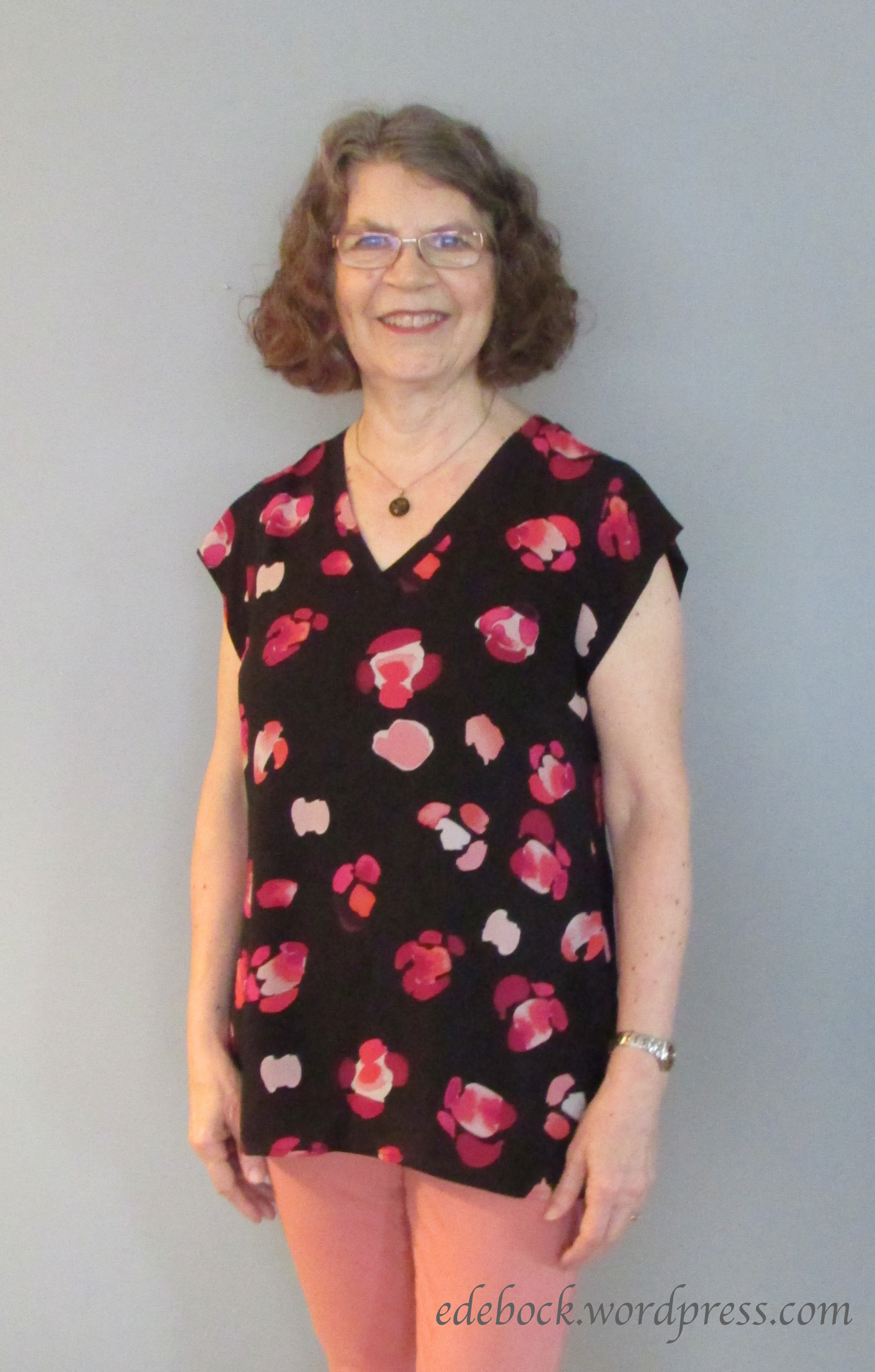
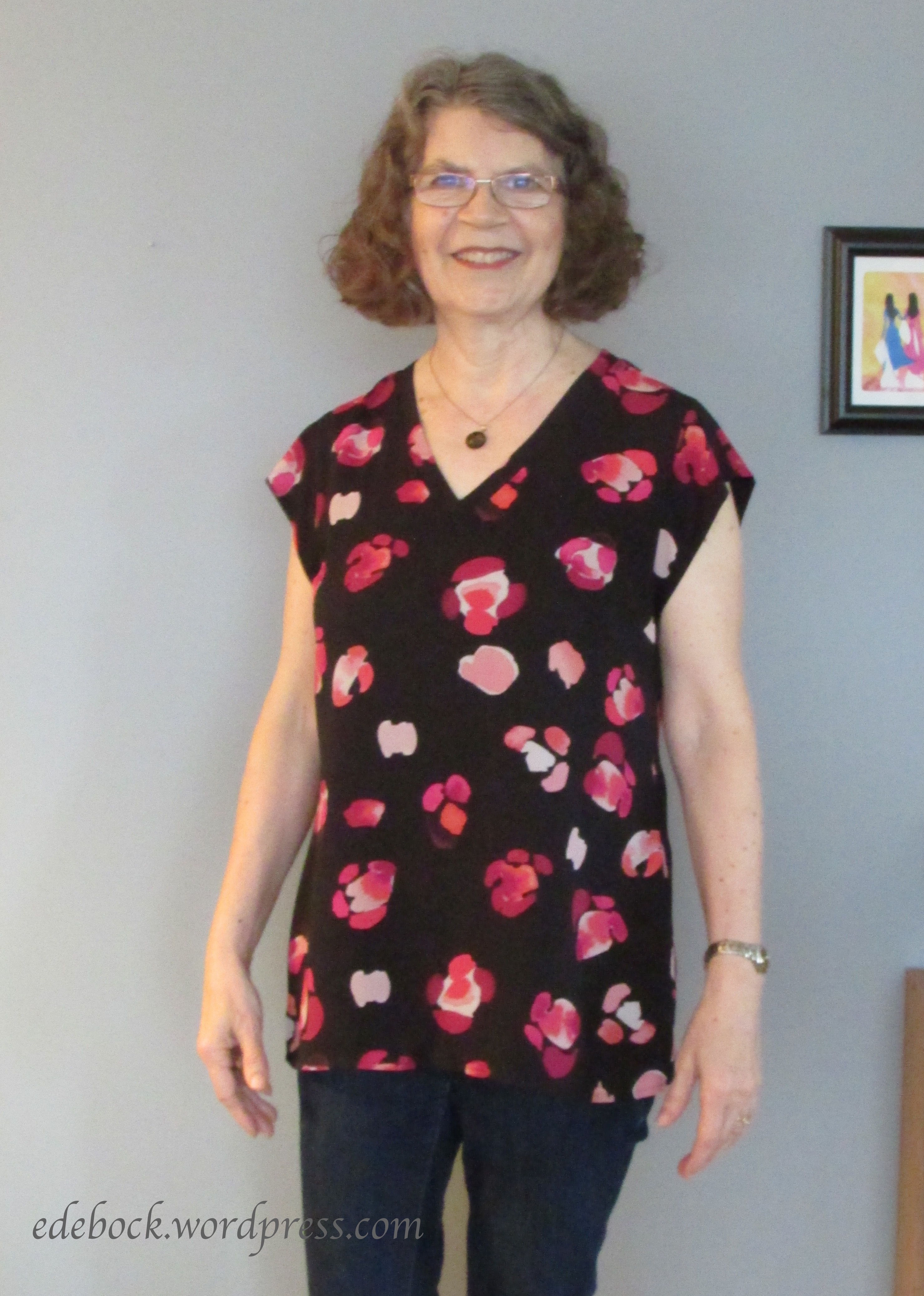
This season’s Heart of cabi piece is the Petal Blouse. The moment I tried it on, I loved it!

IMG_7242

Smooth and lightweight, this body-skimming polyester blouse drapes beautifully and is so comfortable! Although it’s part of the Spring 2019 collection, like many other cabi garments, the Petal Blouse will act as an all-season piece for me. Until the weather warms up, it adds a pop of colour under a sweater or a jacket.

The cardigan on the left is also from cabi, several seasons ago. Cabi is made to last and the sweater has been a workhorse in my wardrobe.

Once summer comes, there are many ways that I can wear the Petal Blouse. There’s the front tuck, the side tuck, and I even like it belted.

Though each cabi garment comes in only one colour or pattern, cabi is committed to ensuring that each piece coordinates with clothing from at least three seasons before and three seasons after making it easy to build a well coordinated, versatile wardrobe. Here I’m wearing my new Petal Blouse with my Brick Dust Skinnies from Spring 2018. It also pairs well with red and burgundy.

IMG_7274

Though most of my spending this year is going to travel, not clothing, I look at this piece as a donation. I’m always happy to support a company with a heart! Besides, it will tuck very easily into the teeny tiny suitcase that I’ll be packing about five weeks from now!                                                                                                ❤

Disclaimer: This is not a sponsored post. I have not been compensated in any way and the words are entirely my own.

International Women’s Day 2018

Tomorrow, March 8, is International Women’s Day 2018. This year’s theme is #PressForProgress with an emphasis on pressing for progress on gender parity. The International Women’s Day website presents a strong call-to-action and gives many specific suggestions. Here are some that caught my attention:

  • question assumptions about women
  • challenge statements that limit women
  • always use inclusive language
  • work to remove barriers to women’s progress
  • buy from retailers who position women in positive ways
  • assume women want opportunities until declined
  • select women as spokespeople and leaders
  • support visible women
  • supportively call-out inappropriate behaviour
  • be a role model for equality
  • ensure credit is given for women’s contributions
  • celebrate women role models and their journeys
  • support awards showcasing women’s success

While these are all well and good, I question whether or not the “international” in International Women’s Day is being forgotten. I question whether these actions will make much difference to our sisters in parts of the world where girls are still forced to undergo female genital mutilation. Will they help the estimated 21 million unwanted girls in India, who often get less nourishment and schooling than their brothers? Will they help the 29 women recently arrested in Iran for protesting the obligatory Muslim headscarf by taking theirs off in public? Will they help the thousands of girls and women in Africa and Asia who walk an average of 6 kilometres a day to collect clean water for their households? Will they do anything for those who are the victims of human trafficking?

I’m not saying that life is perfect for women in the first world. The #MeToo movement has made it abundantly clear that we need to confront the widespread issue of sexual assault and harassment and there is no doubt that we need to continue addressing the issue of equal pay for equal work, but compared to women in much of the world, most of us have it pretty easy.

What, then, can we do to press for progress for women whose lives are so much more difficult than ours? First of all, we need to educate ourselves, to look beyond our comfortable lives and become aware of what the issues are and which reputable organizations are working to change them. If you’re serious about wanting to have an impact on the lives of women around the world, I would suggest that you begin by reading Half the Sky: Turning Oppression into Opportunity for Women Worldwide, by Pulitzer Prize winning journalists Nicholas D. Kristof and Sheryl WuDunn. Kristof and WuDunn are upfront and clear; they hope to recruit their readers to get involved, to become a part of a movement to emancipate and empower women by helping provide the economic resources that can help transform brothel slaves into businesswomen. All too often, money in the hands of men goes to alcohol and prostitution but in the hands of women, it nurtures children, feeds families and promotes education. Half the Sky not only inspires the reader to get involved, it gives many suggestions how.

It was after reading Half the Sky that I began making micro loans to women in third world countries through Kiva, the world’s first online micro-lending platform. Kiva is a non-profit organization that allows a person to lend as little as $25 to a specific low-income entrepreneur in one of 83 countries around the world. When a loan is repaid, the money can be withdrawn or used to fund a new loan. Since making my first loan eight years ago, I have made a total of 44 loans to women in 19 different countries. To watch Kiva’s 59 second video marking International Women’s Day, click here.

What will you do to press for progress this International Women’s Day?

IWD-PressforProgress-social

Christmas shopping dilemma solved!

Have you finished your Christmas shopping yet or are you still trying to figure out what to get for that impossible to buy for person on your list? You know the one; the person who seems to have everything already and who, when they actually want or need something, goes out and buys it for themselves. Gift cards have helped alleviate some of that last minute Christmas shopping angst, but perhaps that solution seems a bit impersonal to you. Are shopping days rapidly disappearing while you fret over what to do?

Perhaps I have the perfect solution!

Why not give them a Kiva Card? With a Kiva Card, your loved one can help a third world artisan buy supplies, a farmer purchase equipment, a student continue their education… the possibilities are endless!

I’ve written about Kiva before, but this is a great time to plug one of my favourite charities again, especially since it might help someone with the last minute Christmas shopping blues. Kiva is a non-profit organization that allows a person to lend as little as $25 to a specific low-income entrepreneur in one of more than 80 countries around the world. Each time the borrower makes a payment on the loan, a portion of that payment is deposited back in the lender’s Kiva account and they receive an email notifying them of their updated balance. That money can be withdrawn at any time but instead, as soon as most lenders have recovered their $25, they search the Kiva database and choose another borrower to lend it to. That way the initial investment truly becomes the gift that keeps on giving!

I originally invested $100 in Kiva in early 2010 and added another $25 in 2012. By lending and relending, I’ve now helped fund 38 loans to entrepreneurs in 19 different countries. I’ve invested in livestock, solar panels, a flour mill, several sewing machines, a food cart, stoves,  refrigerators, a freezer, restaurant furniture, and the list goes on.

Purchasing a Kiva Card is easy. Simply click here. You can choose to print the card yourself or have it emailed or sent to your loved one via snail mail (although it may be too late to have it delivered in time for Christmas that way). You can add a personal message and when the recipient receives your gift, they can choose who to support. When their loans are repaid, they can use those funds again and again to continue making a greater impact long after Christmas has passed.

If you’re interested in becoming a Kiva lender yourself, visit kiva.org or click on the banner in the sidebar.

kiva_121x64

International Literacy Day 2014

Right now, you are doing something that one in five people on the face of this planet cannot do!

As one who values my ability to read above most other skills, I find that an appalling statistic! According to the World Literacy Foundation, an estimated 67 million children around the world do not have access to primary school education! Equally disturbing is the fact that almost two-thirds of the world’s illiterate adults are women. Given that statistic, it’s hardly surprising to learn that the majority of the world’s poor are also female.

Today is International Literacy Day, a day for shedding light on the desperate need to ensure that all people have the opportunity to learn to read and write. Education is a basic human right, but one that many people are denied, particularly in parts of Asia and sub-Saharan Africa. The problem is not restricted to underdeveloped parts of the world, however. Literacy rates in Canada are high, around 97 per cent, but what does that really mean? While they may have basic decoding skills, the most recent literacy study by Statistics Canada shows that millions of Canadians do not have the literacy skills they need to keep pace with the escalating demands of our society and economy. A whopping 48% of Canadian adults over the age of 16, many of them new immigrants, have low literacy skills that do not adequately equip them for the workforce. The situation is similar in the US.

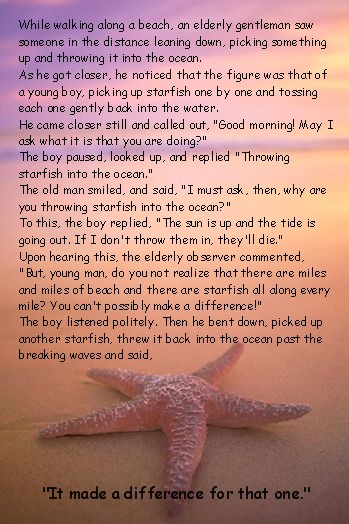
But what can we do? How can you and I overcome such an enormous global issue? That’s where the Starfish Story comes in (adapted from The Star Thrower by Loren Eiseley).

howtohelp_starfish_story

We cannot solve the world’s literacy problem, but we can make a difference for one or two.

Picture 2
This is Marie. My husband and I have been sponsoring her through New Missions, a small organization operating in Haiti and the Dominican Republic, since she was in primary school. She now attends high school and dreams of becoming a nurse. For approximately one dollar a day, we provide her with the opportunity to go to school in Haiti where only 2% of the children finish high school and about 40% of the adult population is illiterate. She also receives a hot meal at school each day as well as regular health check-ups and medical care when it’s needed. There are many similar organizations, including World Vision, that offer you the opportunity to provide a child with the chance to go to school. Perhaps that child could be your starfish!

I also choose to give Kiva loans to impoverished women in third world countries who are helping support their families and educate their children. By investing in women’s lives, society as a whole benefits because women typically reinvest 90% of their income back into their families. In so doing, they break the cycle of illiteracy and help lift their families out of poverty.

Closer to home, encouraging literacy is as simple as reading to a child! Fill your home with books and let the children in your life see you enjoying the gift of reading.

IMG_4301

One in a million!

I received an email this morning telling me that I’m one in a million!

“Kiva just hit the 1 MILLION lender mark! You are now officially one in a million inspiring changemakers, pioneers, and poverty fighters! We can’t thank you enough for helping Kiva get to this point.”

Since I don’t want every post I write to be about living with cancer, perhaps it’s time for another one about this amazing organization. I first learned about Kiva in 2010 when I read the eye opening book, Half the Sky: Turning Oppression into Opportunity for Women Worldwide, by Nicholas D. Kristof and Sheryl WuDunn. Kiva is a non-profit organization that allows a person to lend as little as $25 to a specific low-income entrepreneur in one of 72 countries around the world. Though Kiva provides loans to both men and women, I choose to lend to women who are borrowing money to purchase specific items that they will use to generate income to help them support their families and educate their children.

Since March 2010 when I made my first loan to Rann Sar, a Cambodian mother of four who wanted to purchase two cows to begin a breeding program, I have invested in a variety of livestock, numerous sewing machines, some hairdressing tools, two restaurant refrigerators, two stoves and a portable food stall like the ones we saw on the streets in China. But how can $25 purchase a cow or a stove? It can’t. Many lenders pool their resources to fund each loan.

Over the past three and a half years, I have made a total of 22 loans but I’ve only invested $125. How is that possible? As each borrower makes a monthly payment on her loan, my share of that payment is deposited in my Kiva account and I receive an email notifying me of my updated balance. I could withdraw the money at any time but instead, as soon as my balance reaches $25, I search the Kiva database and choose another woman to lend to. I can’t begin to tell you how excited that makes me! This truly is the gift that keeps on giving.

I recently heard it said that people around the world are praying for things that we take for granted. That really impacted me. We are so blessed and we take so much for granted. With Thanksgiving just around the corner (this weekend in Canada and next month in the US), perhaps this is the perfect time to think about helping someone else achieve their dream, feed their family or send their children to school. It’s as easy as clicking on the logo below or the Kiva banner in my sidebar and investing $25!

kiva_121x64

Coming to terms with 60

I absolutely loved being 40. By then I’d lived through some of the best and the worst that life has to offer and figured that I’d learned a few things along the way. I had a past filled with memories and lifelong friends and I had a future to look forward to. 40 was a fabulous midway point!

50 was great too! By the time that birthday rolled around, I was looking forward to early retirement and all the adventures that would follow. My fifties have included everything from climbing Mount Fuji to travelling the length of Vietnam on overnight buses to flying over the jungle of Costa Rica on a zipline!

I really haven’t enjoyed being 59 though because 60 has been hanging over my head all year! I want to embrace the next decade with the same enthusiasm that I greeted my 40s and 50s with but it hasn’t come as easily. 60 is such a big number! No longer can I fool myself into thinking that I’m still young. In fact, middle aged is a stretch unless I truly expect to live to be 120!

You’d think that I would have adjusted to being 59 pretty quickly. Immediately after my birthday, we spent several days with my parents. My mother who suffers from Alzheimer’s disease is obsessed with people’s ages.

“How old are you?” she’d ask.
“Fifty-nine,” I’d reply.
“How old are you?” she’d ask again a few minutes later.
“Fifty-nine,” I’d say again.
Over and over and over again.
“I’m fifty-nine.” “I’m fifty-nine.” “I’m fifty-nine.”
It didn’t really help.

Now 60 is just over a month away and I’ve been thinking about ways to celebrate; ways that might make the transition easier. One of the things that I’m passionate about is making micro-finance loans through Kiva; loans that give a hand up to women who are less fortunate than I am. Last night I invested another $25 in Kiva and gave myself an early birthday present.

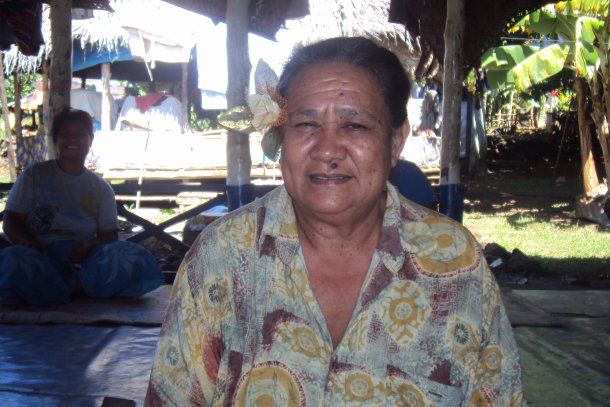
Most of the women that I’ve given loans to have been younger than I am because loaning to mothers with children in their care has been one of my priorities but this time I decided to look for a woman who was 60. Kiva doesn’t list borrowers according to age so finding her took awhile. I scanned the long list of women in need, looking at each thumbnail photo for one who looked like she might be 60. Sadly, I clicked on many well worn faces only to find that they were much younger. I was reminded again how fortunate I am to have had the life I’ve had. Finally, after searching through many profiles, there she was. Sofai!  My loan will enable her to purchase chemicals, sprayers, shovels and fertilizers for her small taro plantation on the Pacific island of Samoa.

Sofai

Over the next few weeks, I’m going to be looking for other ways to celebrate my “coming of age”. I’m not sure what they might be.

Any suggestions?