Mexico City’s Palacio de Bellas Artes

We’re home from Mexico now, but we’re living in the middle of a construction zone while renovations continue in our house. Considering how much trouble I had just finding a pair of pants to wear our first morning home, I’m nowhere near ready to consider writing a fashion post just yet. I do have one more travel post to share with you though.

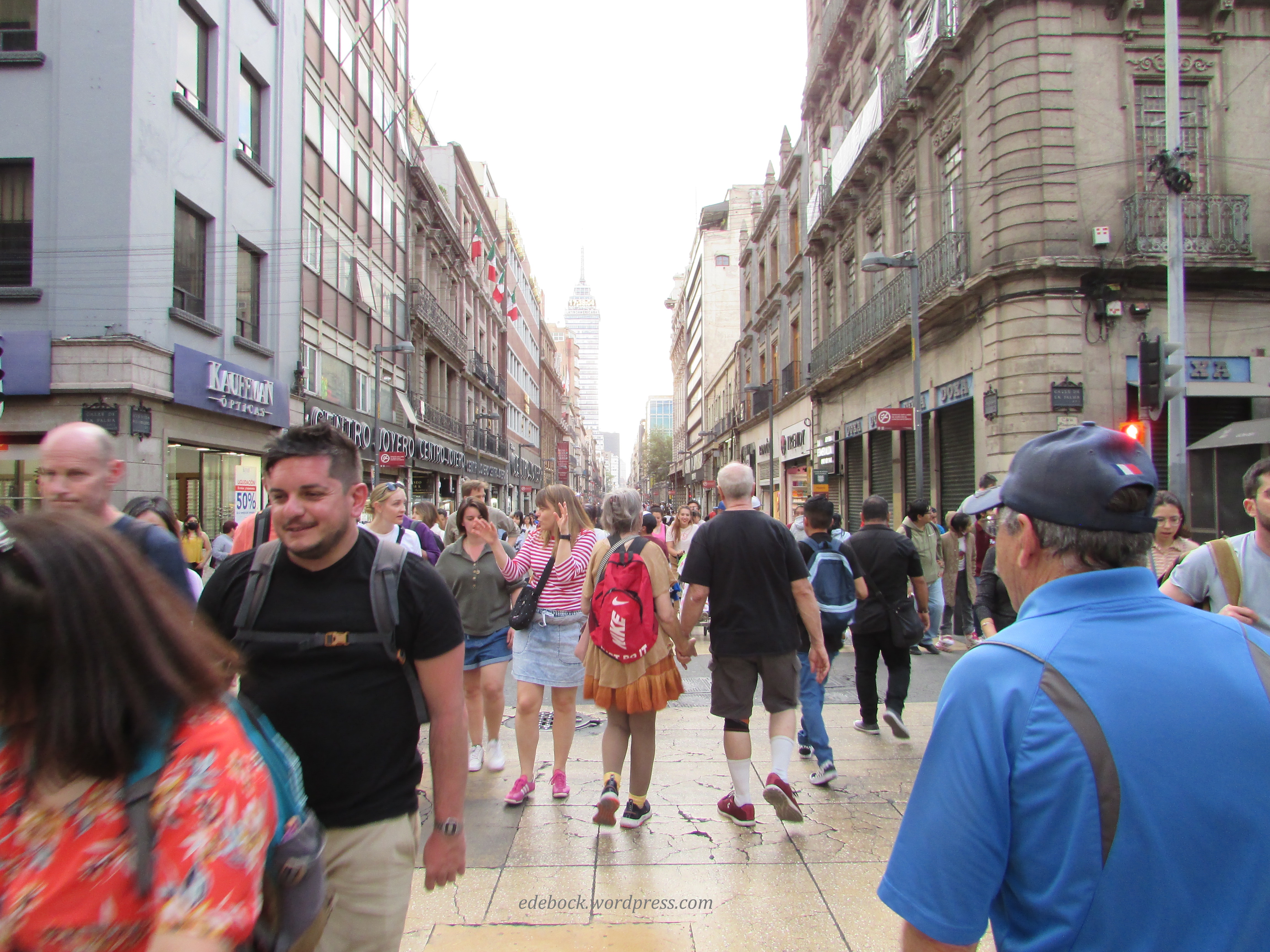
After checking into our hotel in Mexico City’s Centro Historico, we made our way to Francisco I. Madero Street, the busy pedestrian street that we have enjoyed on previous visits. Always busy, it was even more crowded than usual on a sunny Sunday afternoon!
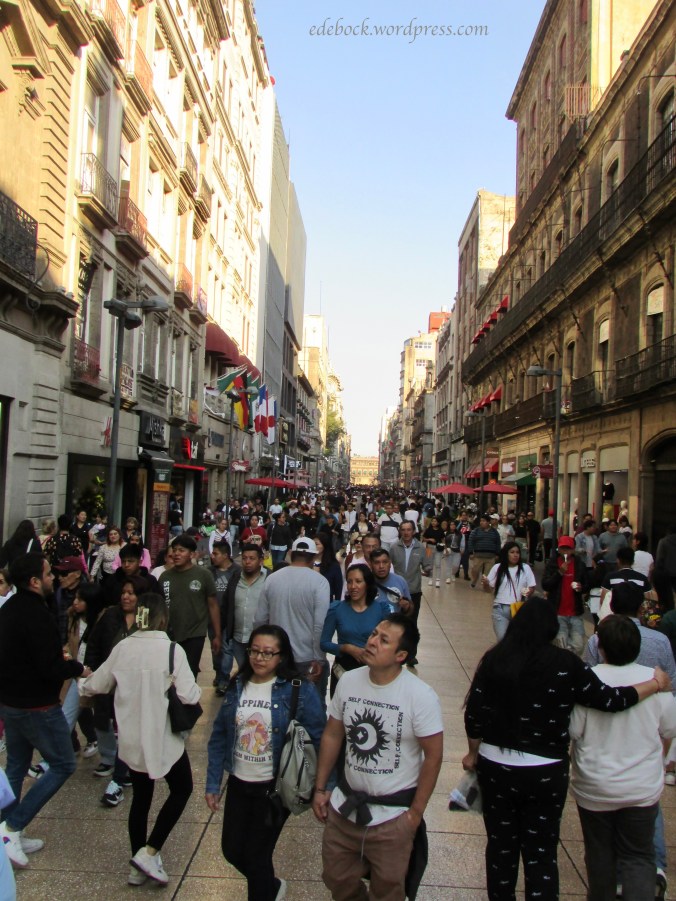
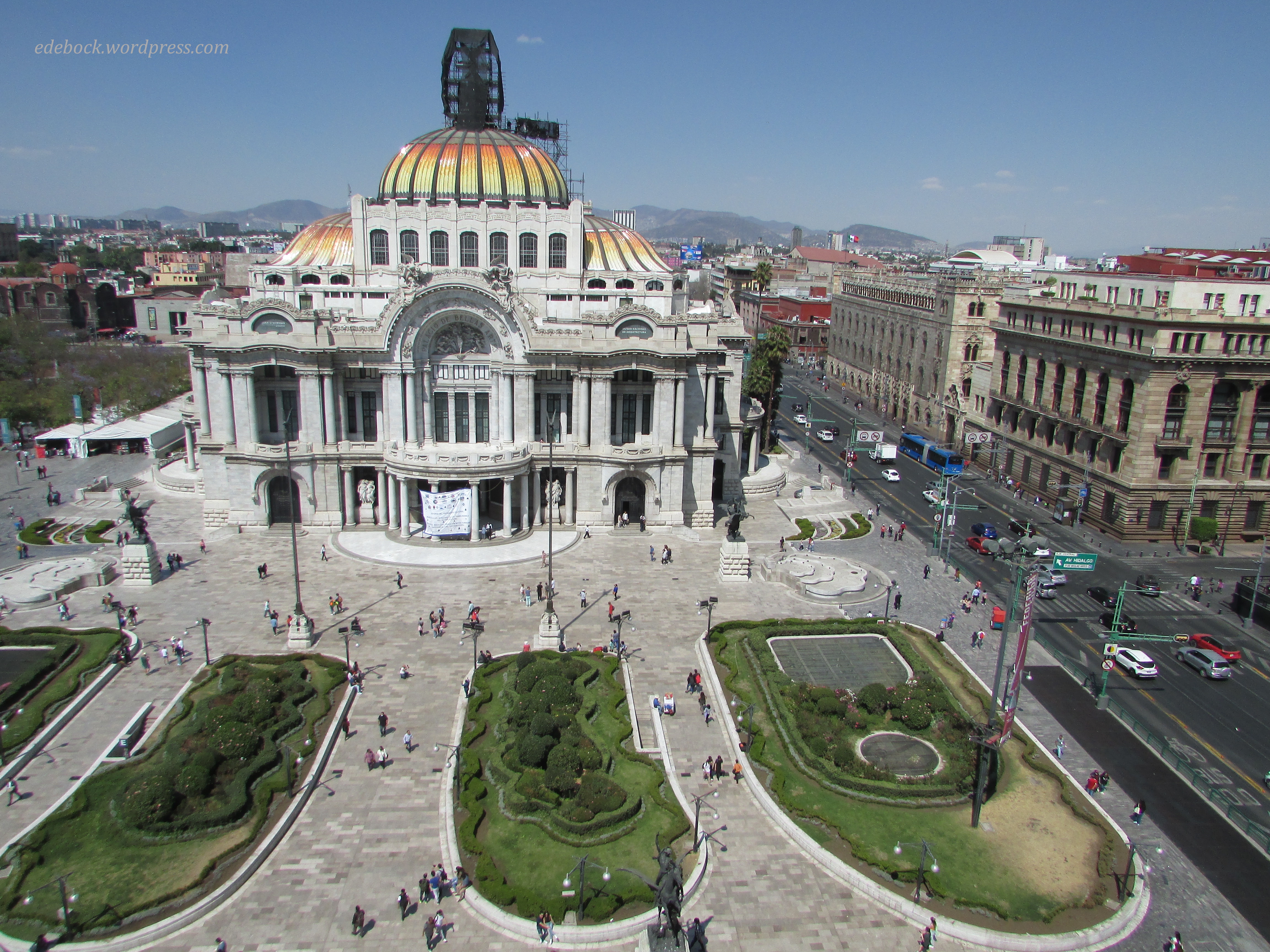
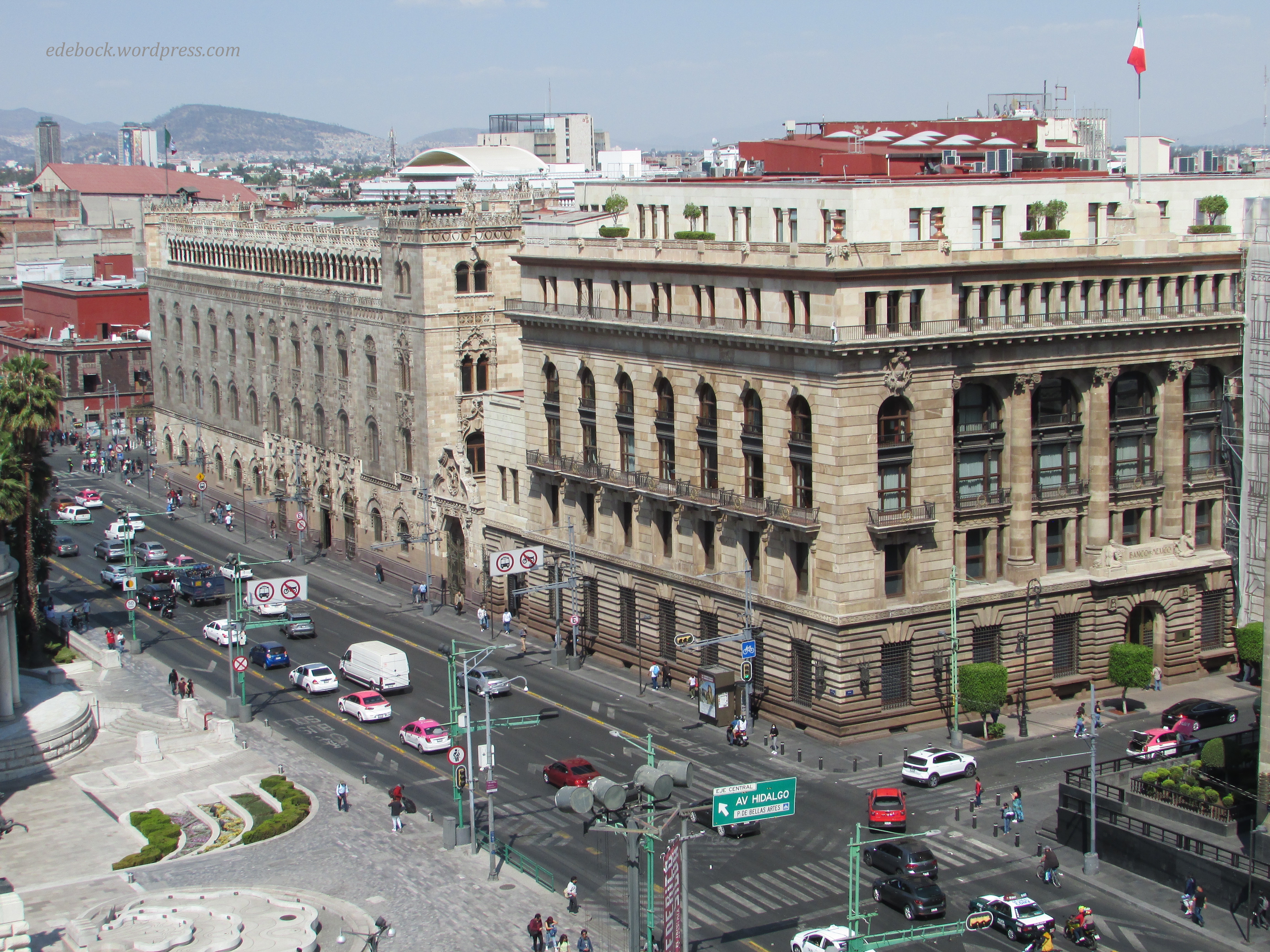
Our destination, the Palacio de Bellas Artes (Palace of Fine Arts), was at the far end of the street. Two years ago, we enjoyed this spectacular view of the prominent cultural centre from the balcony of the 8th floor coffee shop in the Sears department store directly across the street.
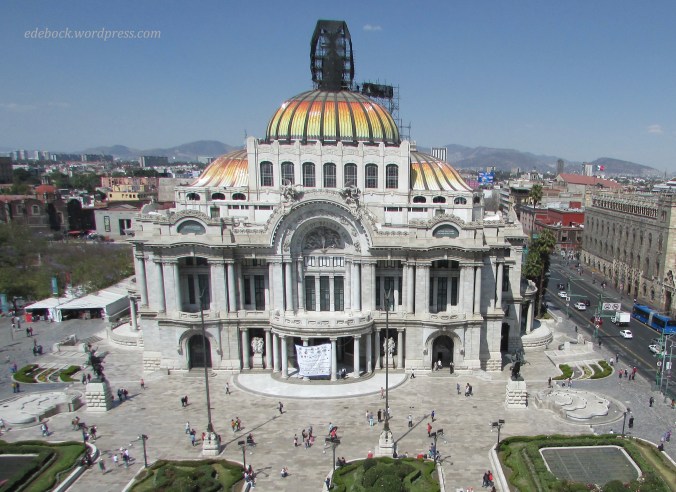
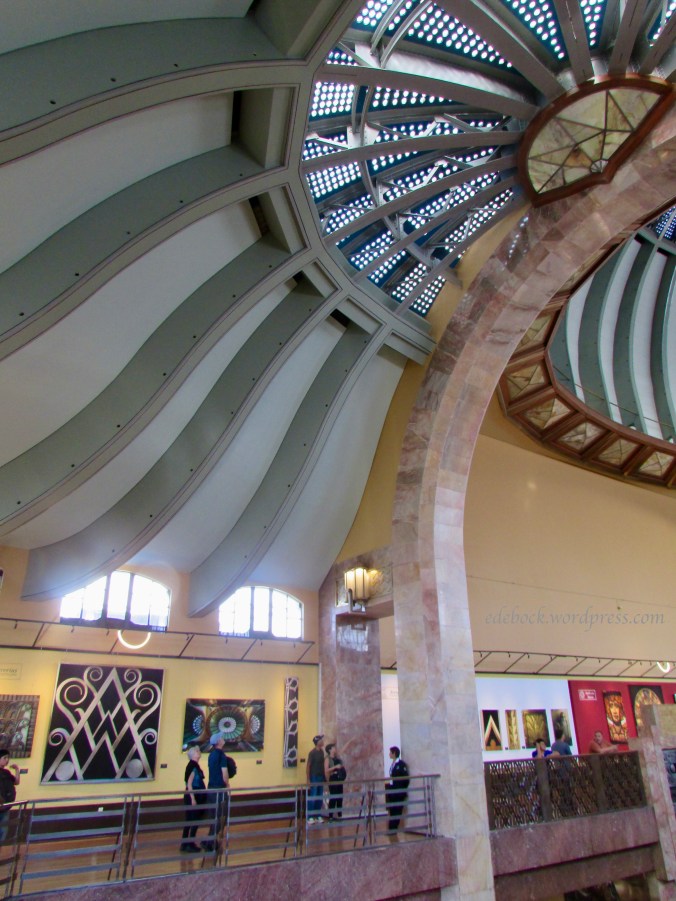
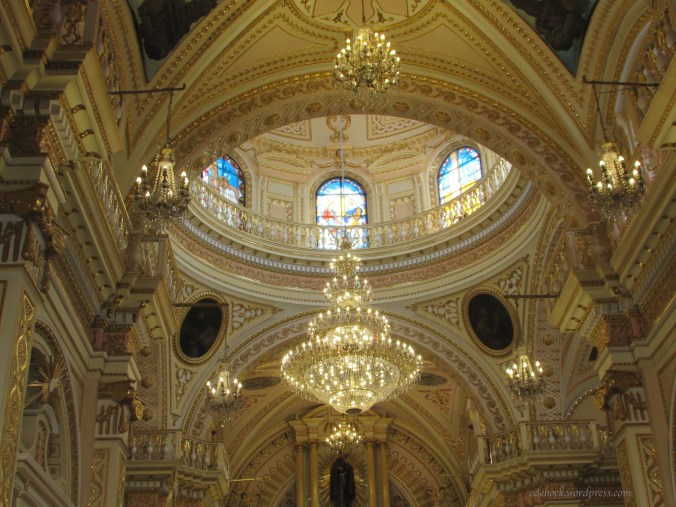
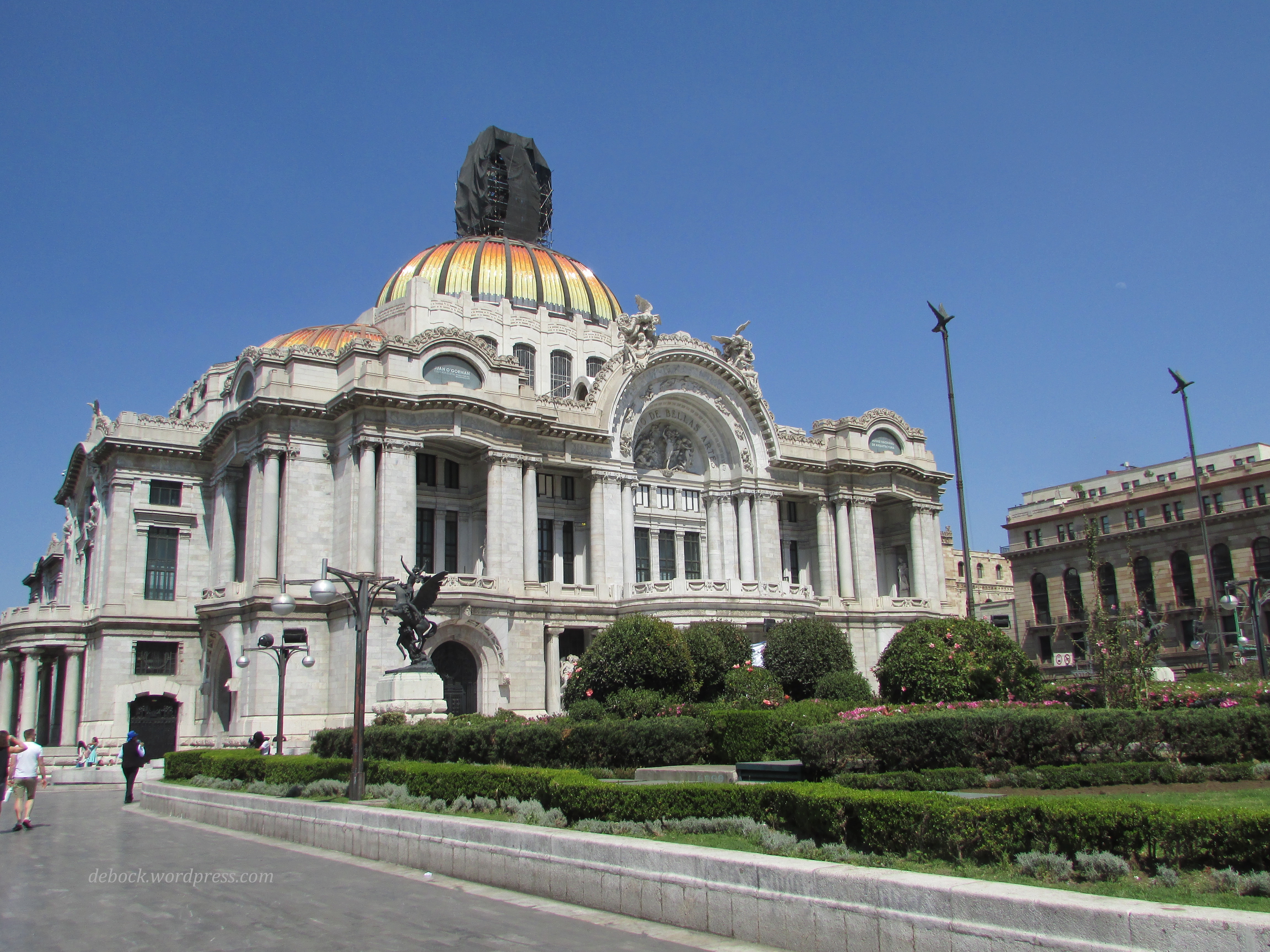
Unfortunately, on that occasion, the Palacio de Bellas Artes was closed, but this time I was determined to see the inside. It definitely didn’t disappoint. While I enjoyed seeing some of the art work on display, it was the building itself that amazed me!
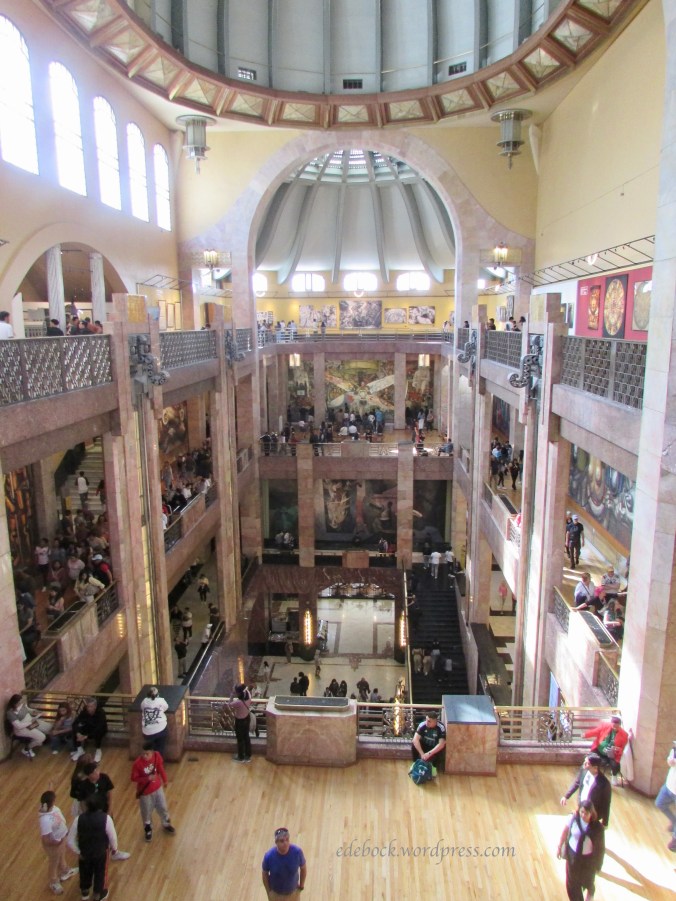
This photo was taken from the centre of the main floor looking up into the domes.

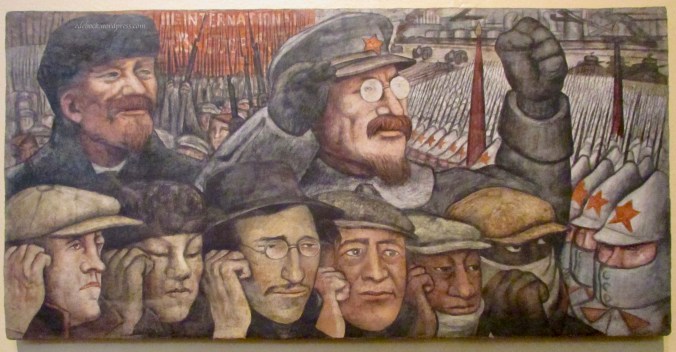
As far as the art work was concerned, it was the murals by famed Mexican artist, Diego Rivera, that I liked best. The first two panels shown here are part of his Carnival of Mexican Life series.

This one, painted in 1933 is called Russian Revolution or Third International.
I wasn’t able to get a photo of his entire The Man Who Controls The Universe mural partly because of the large tour group standing in front of it, but also because of the sheer magnitude of the piece which was painted specifically for the Palacio de Bellas Artes. It’s actually a replica of the original work which was painted in the lobby of the Rockefeller Center in New York City. The inclusion of Lenin’s face led to the destruction of the controversial piece.

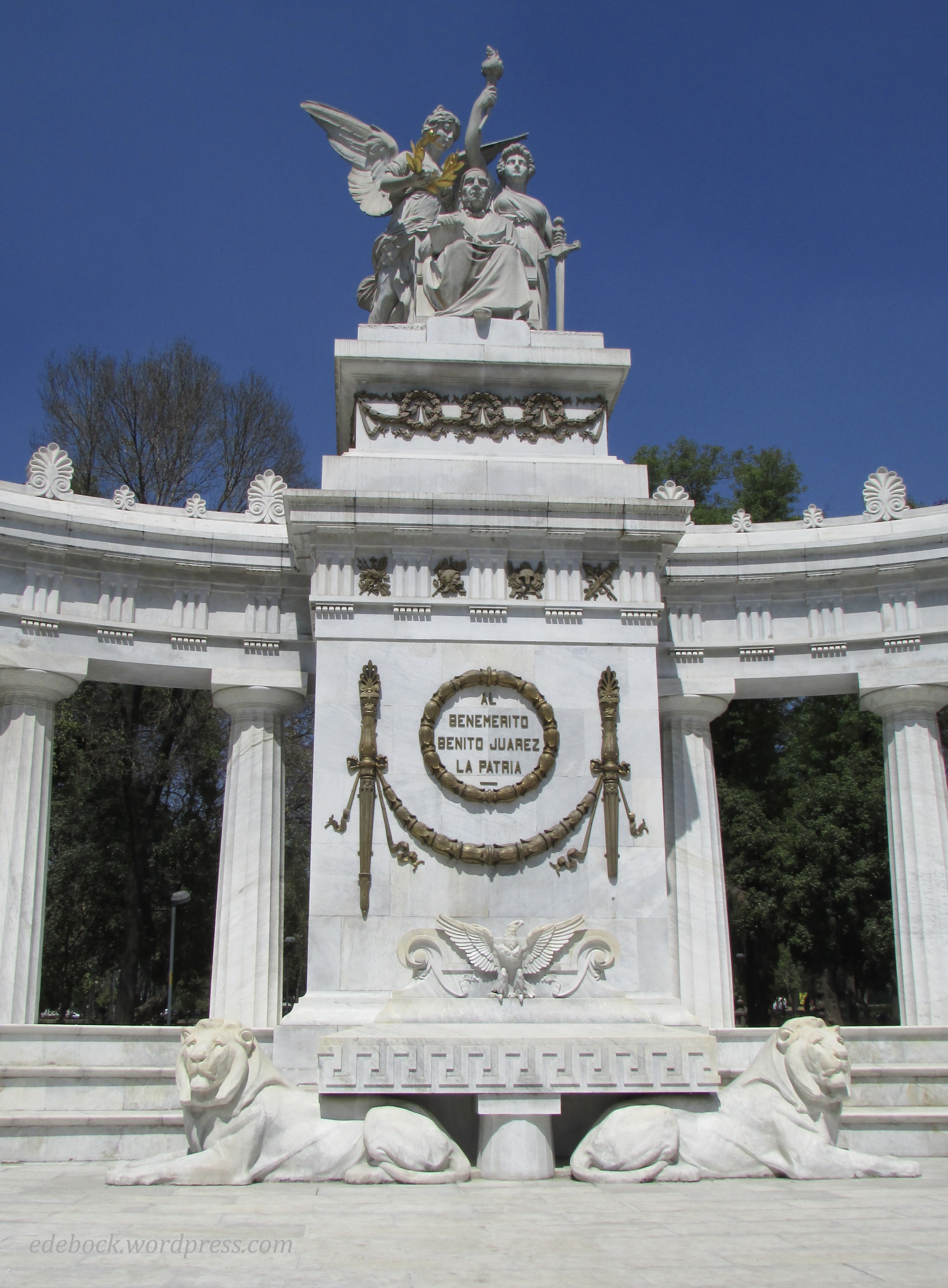
Back outside, we also enjoyed the art on the exterior of the beautiful building.

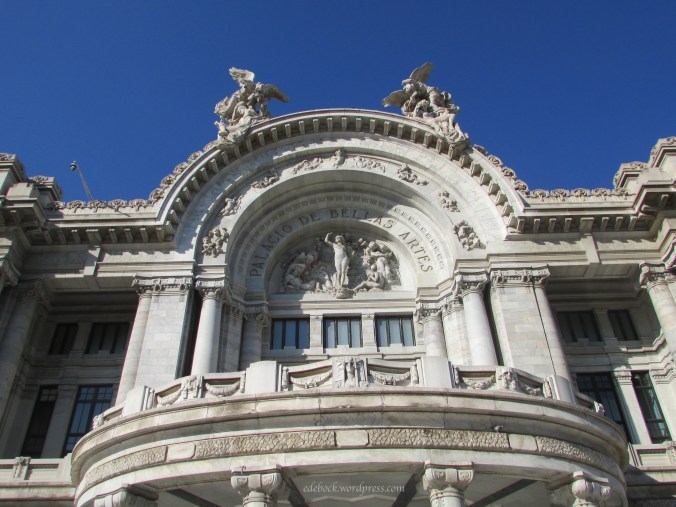
In addition to the art museum housed in the front portion of the enormous marble structure, the Palacio is also home to Mexico’s largest concert hall. Unfortunately, that part wasn’t open while we were there.
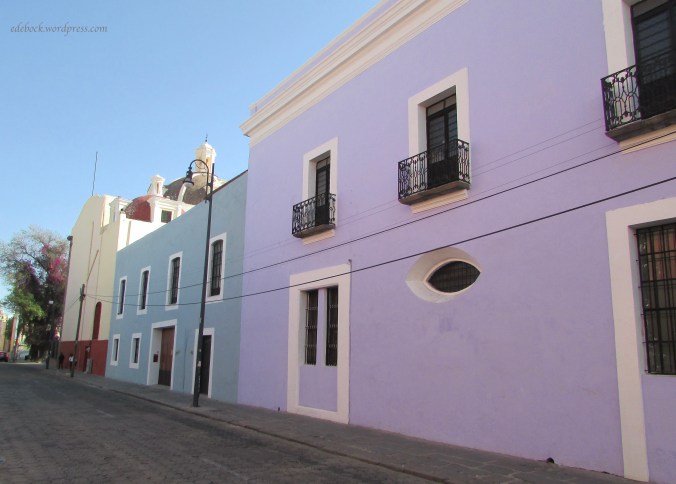
Exploring Puebla’s Centro Historico

With friends who are permanent residents of Mexico, hubby and I spent a couple of days this past week enjoying the colourful Centro Historico district of Puebla, the country’s fifth largest city by population.  Come take a walk with me as I share some of what we saw.

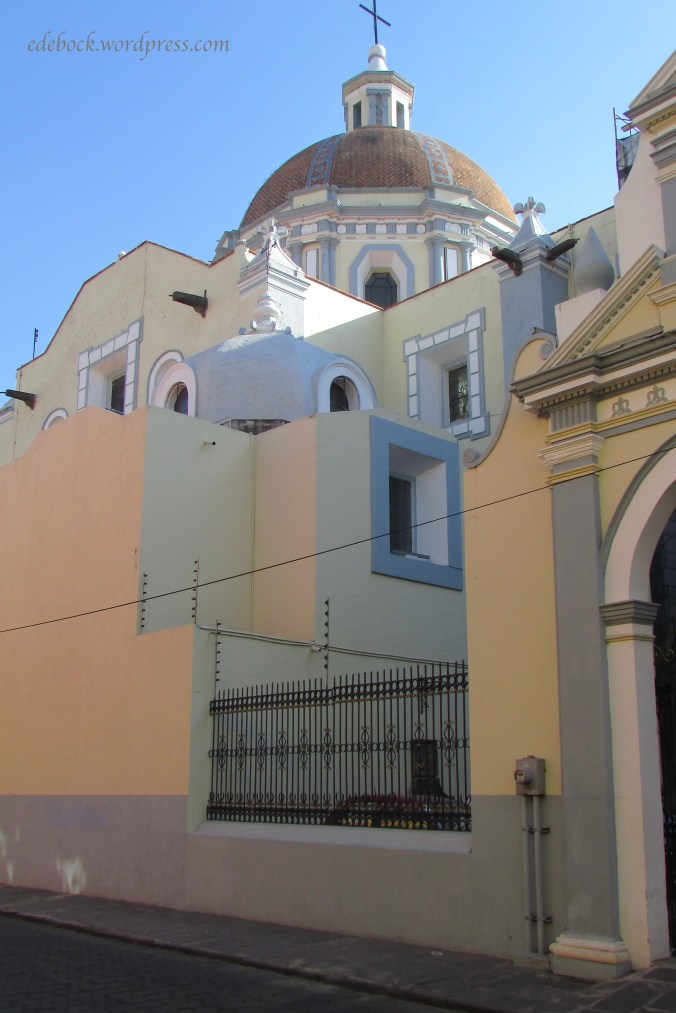
Everywhere I turned, I was amazed by the architecture. Look at all the interesting shapes!

Tiles, or azulejos, are used to decorate many buildings inside and out.

And beautifully carved wooden doors add to the beauty of many buildings.

Of course, flowers in January add to that beauty!

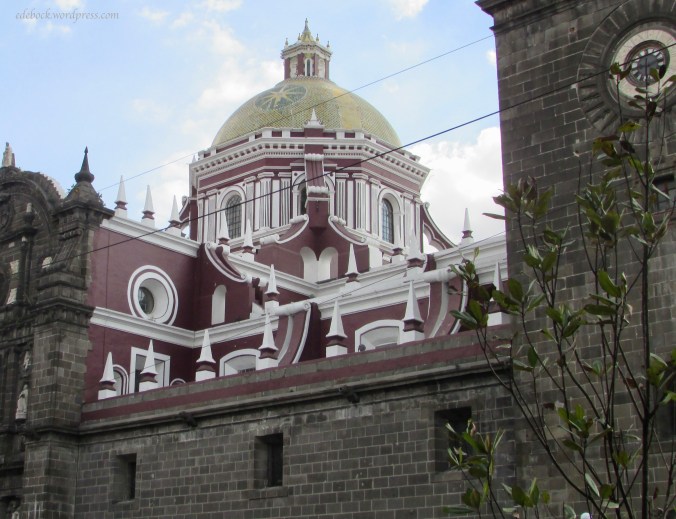
The impressive 16th-century Catedral de Puebla occupies an entire city block in the centre of the district.  

Across the avenue to one side of the cathedral is the Biblioteca Palafoxiana. Founded in 1646, it is recognized by UNESCO as the first and oldest public library in the Americas. It has more than 45,000 books and manuscripts, ranging from the 15th to the 20th century.

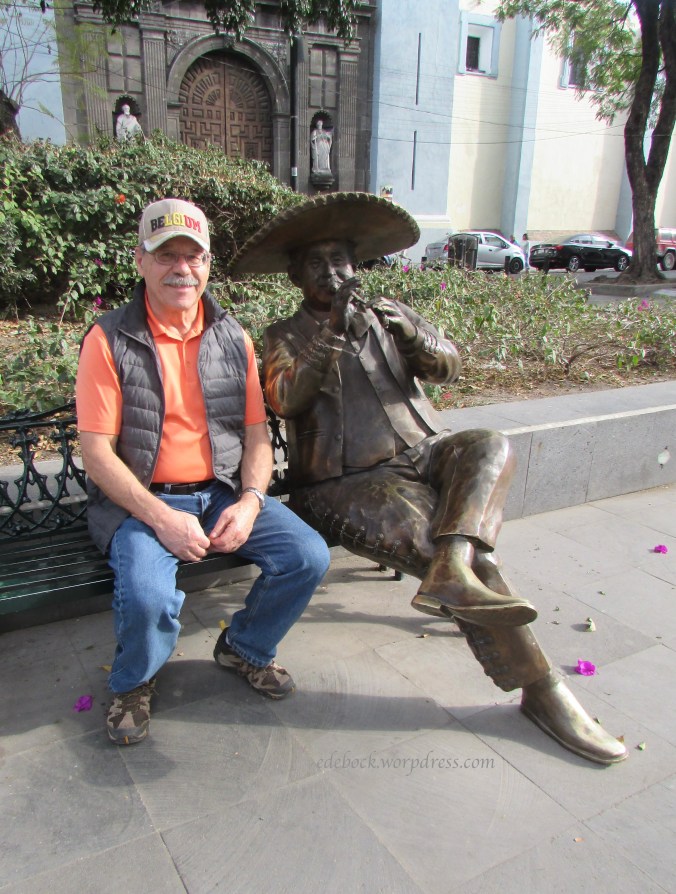
This is just a taste of what there is to be seen and experienced in the historic centre of Puebla. There is, of course, the zócalo, a public square/park that’s found in the centre of almost every Mexican city or town, as well as several other parks. Hubby made a friend in one of the smaller ones! 

There are also upscale eateries and small “hole in the wall” places that serve delicious Mexican dishes as well as many, many shops and market stalls.

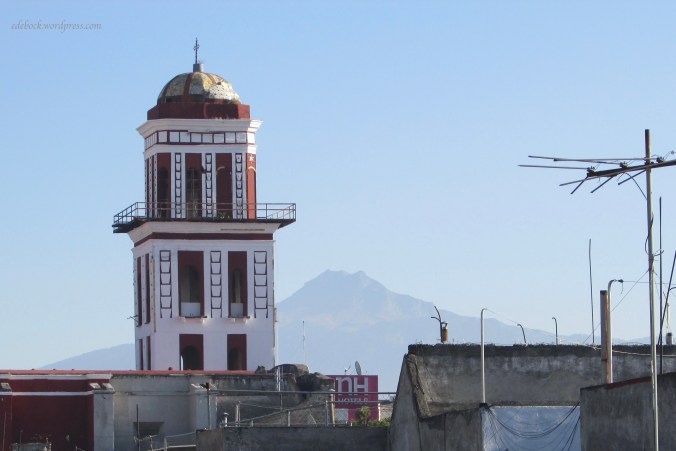
And finally, that’s a view from the rooftop patio of our Airbnb. That’s Popocatépetl (El Popo) in the background, the 18,000-foot-high active volcano that stands about 70 km (45 miles) from Puebla.


The Great Pyramid of Cholula

Tlachihualtepetl or the Great Pyramid of Cholula, the largest pyramid known to exist in the world today, isn’t in Egypt. It’s actually located in the city of Cholula, just a few kilometres west of Puebla, Mexico. Significantly shorter than Egypt’s Great Pyramid of Giza, it is much wider, covering an area measuring at least 300 by 315 metres. Partially hidden beneath what looks like a natural hill with the beautiful Iglesia de Nuestra Señora de los Remedios (Our Lady of Remedies Church) at the top, it’s actually a huge archaeological site. 

After our visit, the hardest part about writing this post was deciding which and how many of the 80+ photos that I took to include!


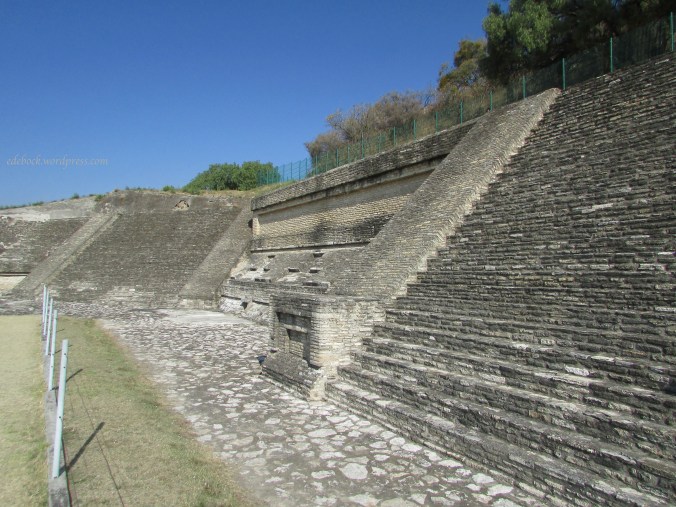
Unlike the Egyptian pyramids, the Great Pyramid of Cholula was built in stages beginning in the 3rd century BC and continuing through to the 9th century AD. As the ancient inhabitants of the area built on top of or modified previous structures the pyramid gradually took shape.

The earliest structures on the site were constructed of stones and adobe blocks made of clay, straw, and other plant material mixed with water. These were covered with a layer of stucco made of lime and sand. Over time, of course, the adobe broke down and nature took over. Legend also has it that when news of Spanish invaders arrived in the early 1500s, locals completely camouflaged the pyramid with mud and greenery to save the sacred place from being completely destroyed. What has been excavated and  is visible now is just a fraction of what lies under the hill. Archaeologists have dug about 8 km of tunnels into the pyramid. Unfortunately, the 800 metres that are sometimes open to the public were not when we were there, but what we saw above ground was astounding.  

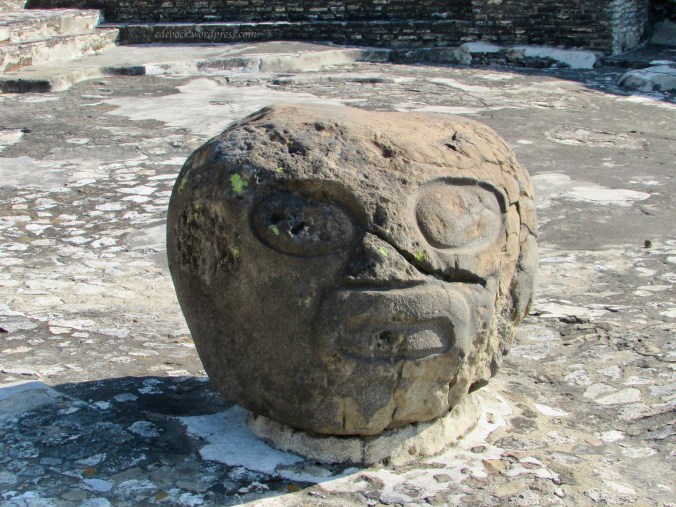
The different phases of the pyramid were built by ancient Mesoamerican civilizations including the Olmecs, Toltecs and Cholutecs. Though much smaller, this large head reminded me of the colossal Olmec heads dating back to at least 900 BC that we saw in the Museo de Antropología in Xalapa on a previous visit to Mexico in 2019. 

The pyramid is thought to have had deep religious and ceremonial significance to the groups that held it at various times throughout history. Around its base and inside its walls, over 400 skeletons have been found. Disturbingly, many of these were the remains of children thought to have been sacrificed on the altar shown below during times of drought. It was believed that when they died they would carry messages to the rain god pleading for water for their people. 

The interior of this altar contained the remains of two people and the remains of eight others, including children, were found under its base. 

On a lighter note, how would you like to climb these stairs? 

While most of the site is cordoned off and we couldn’t have attempted those stairs if we had wanted to, this flight of 50+ narrow stone steps was accessible, so of course we had to climb them! 


Hanging onto the rope that’s firmly attached to the side, I made my way up. While the views from the ledge at the top were worth the climb, I soon discovered that there isn’t any other way down and wondered how I was going to manage the descent. Inching my way to the edge, I sat down and clinging to the rope, I made my way down on my butt! Thankfully, only hubby and our friends were there as witnesses!

As if that climb wasn’t enough, we also decided to take the steep walkway all the way to the top of the hill to see the church. Recognizing the religious significance of the pyramid mound, the Spanish chose to construct the Catholic church on top of it as a way of replacing the pagan cult of the past. It was constructed between May 1574 and August 1575 and consecrated on March 25, 1629.

On our way up the hill, we followed a procession playing music and carrying an almost life-sized statue of a saint. Gathering just outside the sanctuary, they waited until the priest came out and blessed them with a sprinkling of holy water before they entered the already full church and a service began. At that point, we were able to stand just outside the door and see some of the church’s beautiful interior. 

Centro Histórico, Mexico City

We packed a lot into our final day in Mexico. Much of what we saw and experienced was within walking distance of our hotel in the Centro Histórico, the heart of Mexico City. Come walk with me and I’ll show you some of what we saw.

IMG_5433

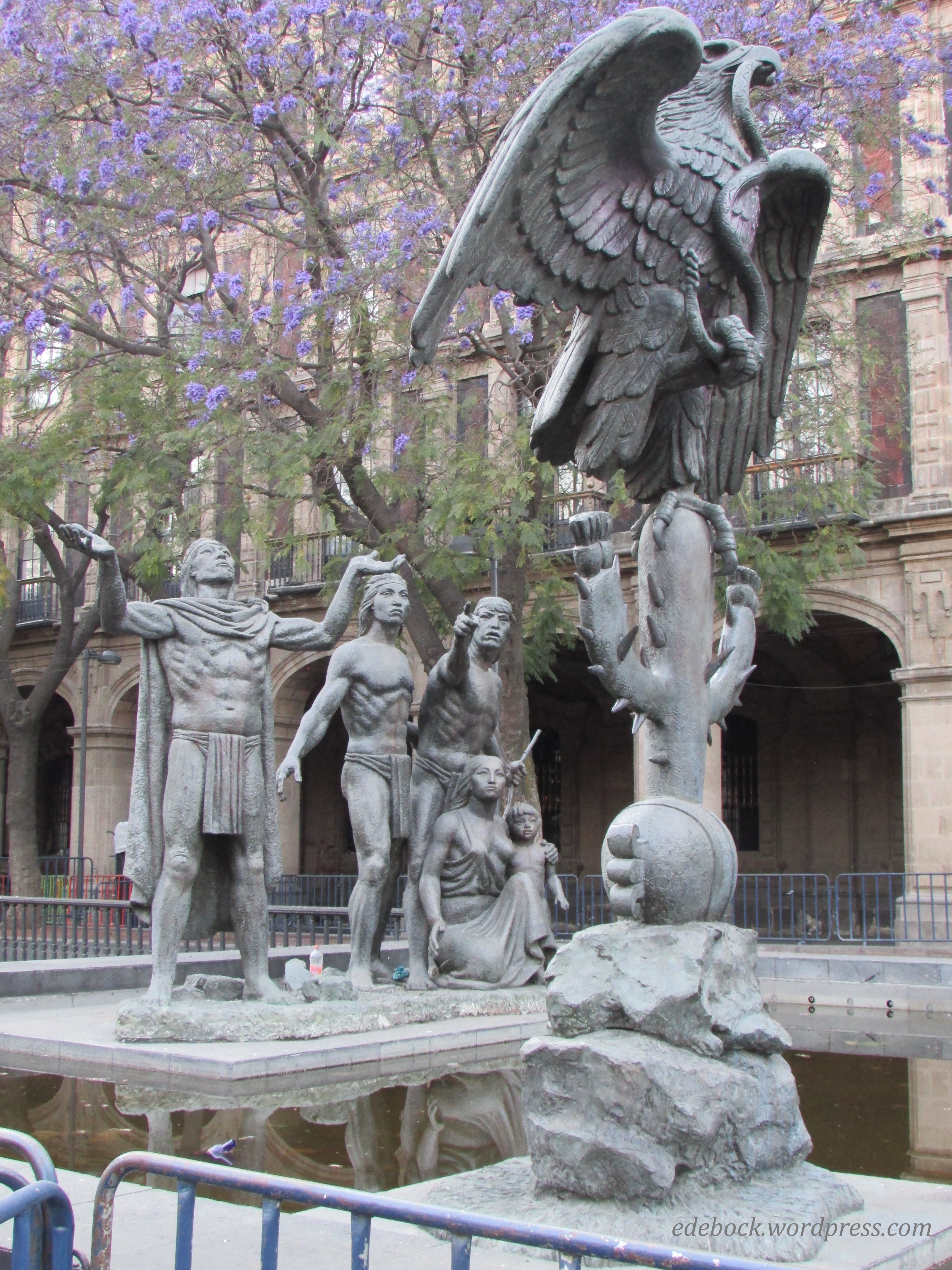
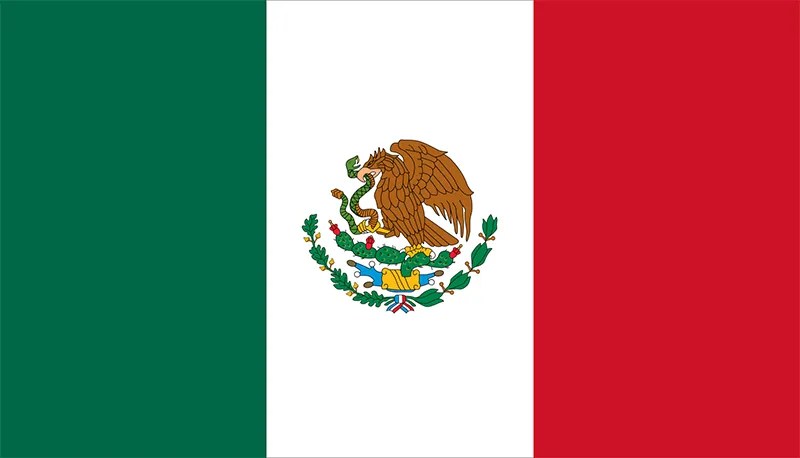
These statues of a wandering group of nomads discovering an eagle perched on a cactus and eating a snake tell the legend of the founding of the Aztec capital, Tenochtitlan. The image of an eagle eating a snake atop a prickly pear cactus also forms part of the coat of arms that is seen in the centre of the Mexican flag. 

Flag-Mexico

Cathedral

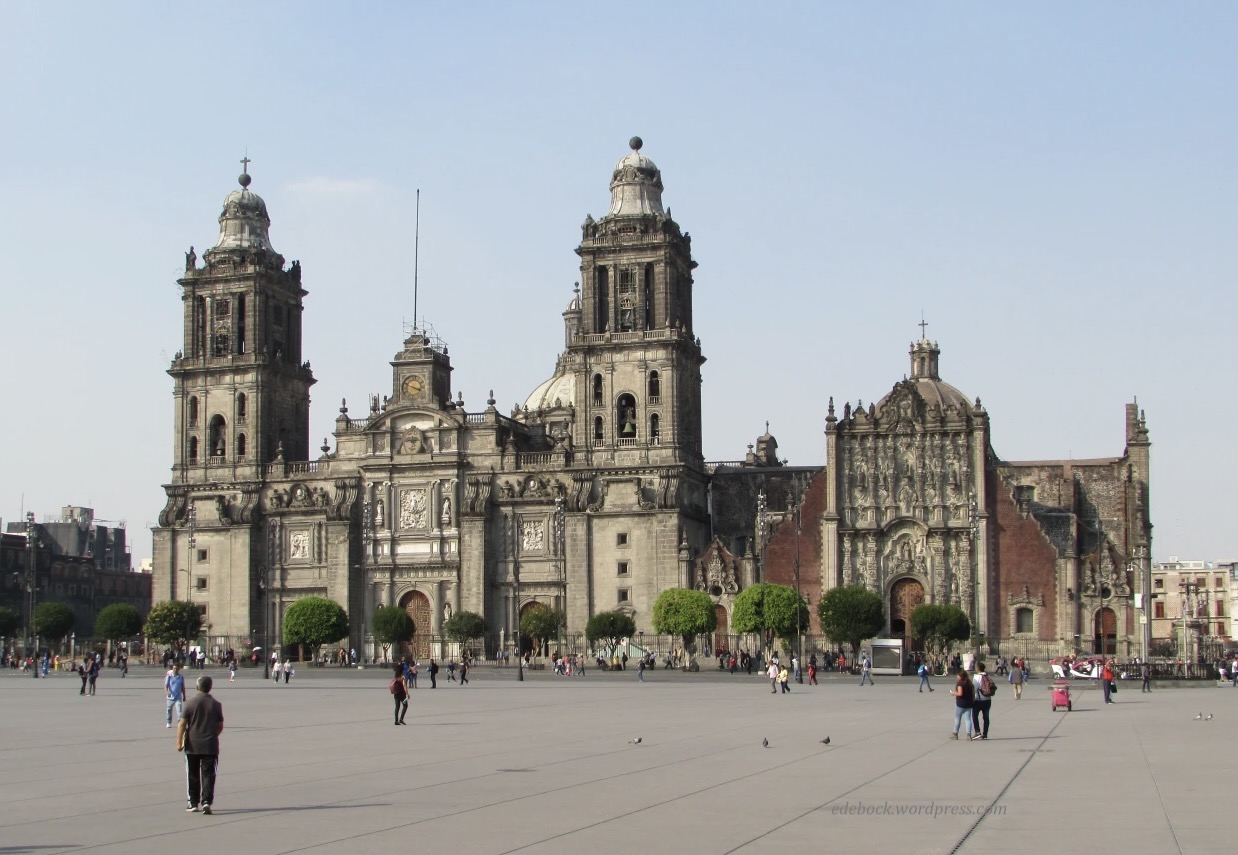
The Metropolitan Cathedral of the Assumption of the Most Blessed Virgin Mary into Heaven, better known as the Catedral Metropolitana, overlooks the Zócalo, a huge city square and is built over what was once part of the Aztec Templo Mayor.

From there, we’ll walk down busy pedestrian-only Avenida Francisco I. Madero which is lined with shops, restaurants, and amazing architecture.

IMG_5325

IMG_5328

IMG_5349

IMG_5330

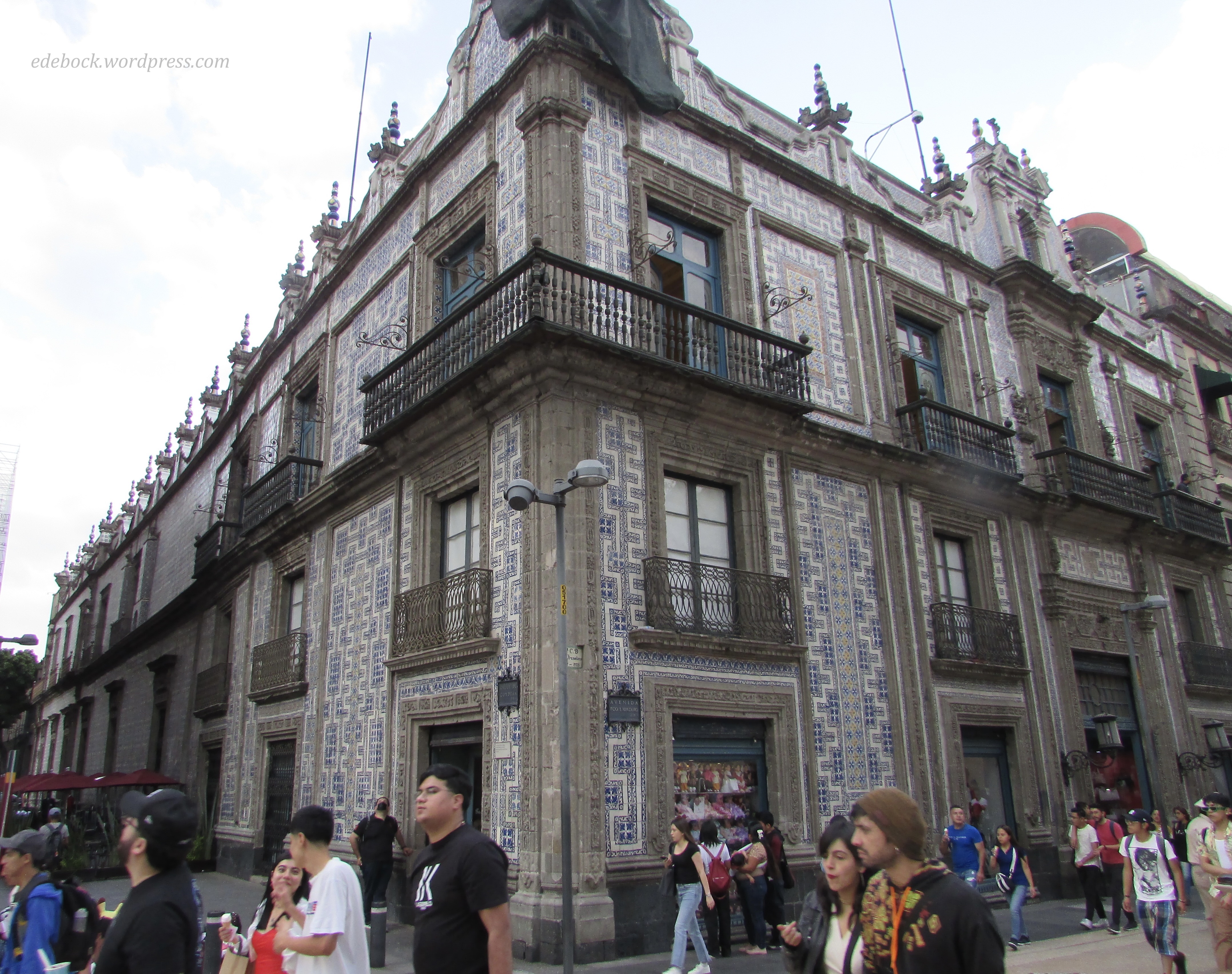
Here, covered on three sides by blue and white Talavera tiles from Puebla, is the famous Casa de los Azulejos (House of Tiles), an 18th-century Baroque palace built by the Count of the Valle de Orizaba family. 

IMG_5337

At the end of the pedestrian avenue, we come to the stunning Palacio de Bellas Artes (Palace of Fine Arts), a prominent cultural center that hosts notable events in music, dance, theatre, opera and literature and holds important exhibitions of painting, sculpture and photography. Unfortunately, most museums and cultural centres in Mexico City are closed on Mondays, so we weren’t able to see the inside. Perhaps on our next visit! 

IMG_5394

A patio coffee shop on the eighth floor of the Sears department store (yes, Sears is still alive and well in Mexico) offered spectacular views of the Palacio des Belle Artes and much of the city beyond. 

IMG_5398

Directly across the street from the Palacio des Belles Artes are the Palacio de Correos (Main Post Office) and Banco de Mexico (Bank of Mexico).

IMG_5399

IMG_5345

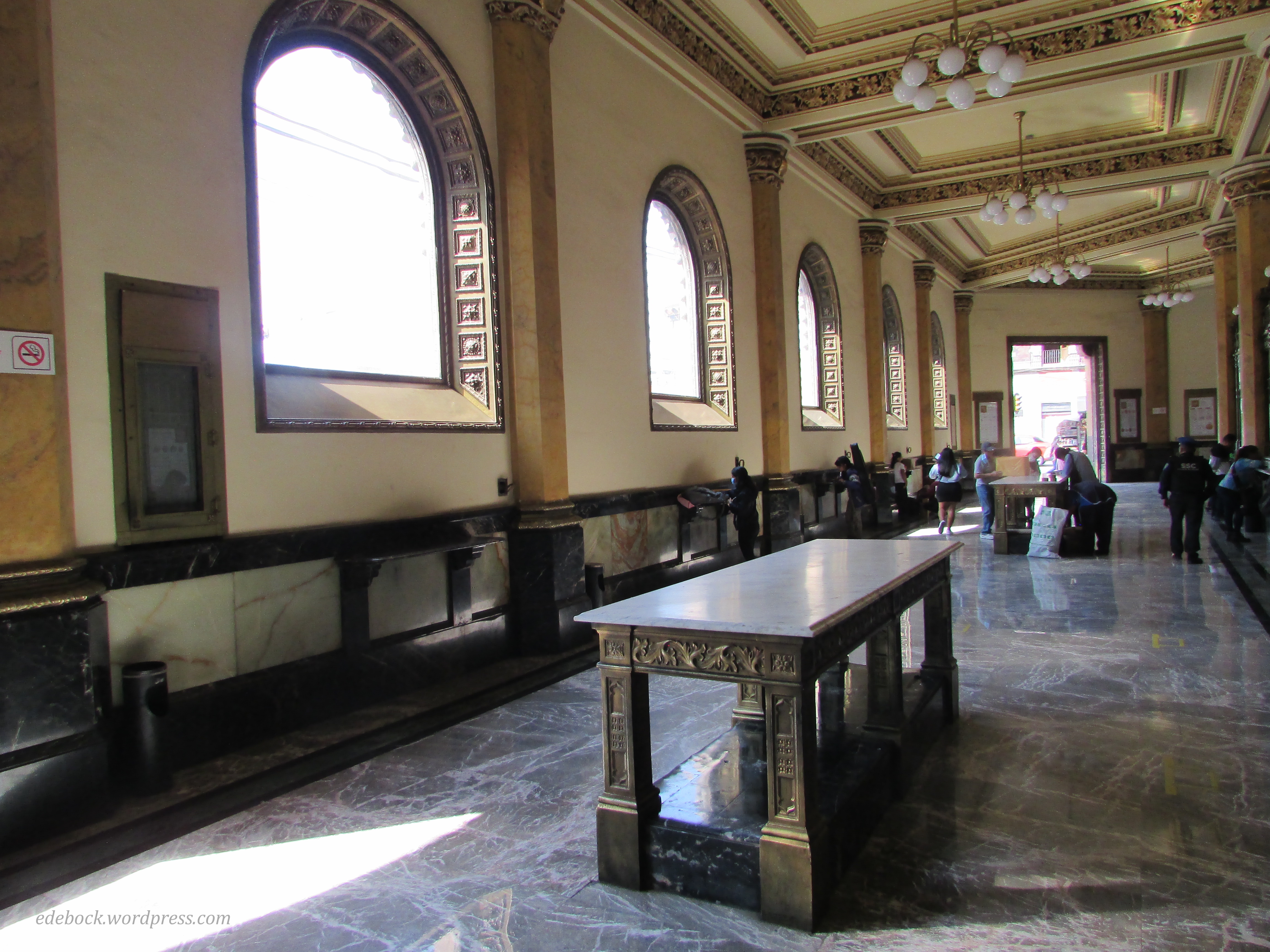
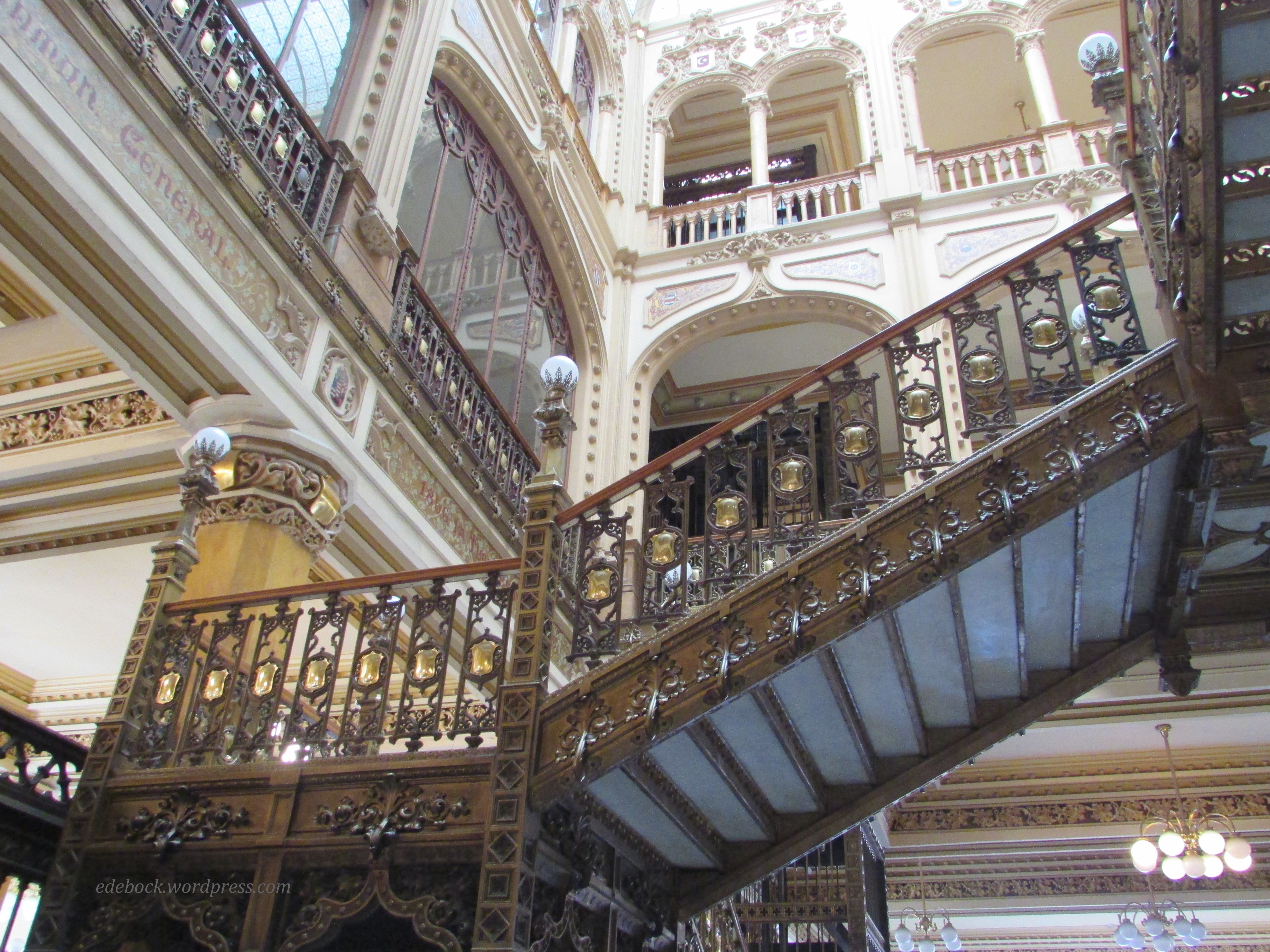
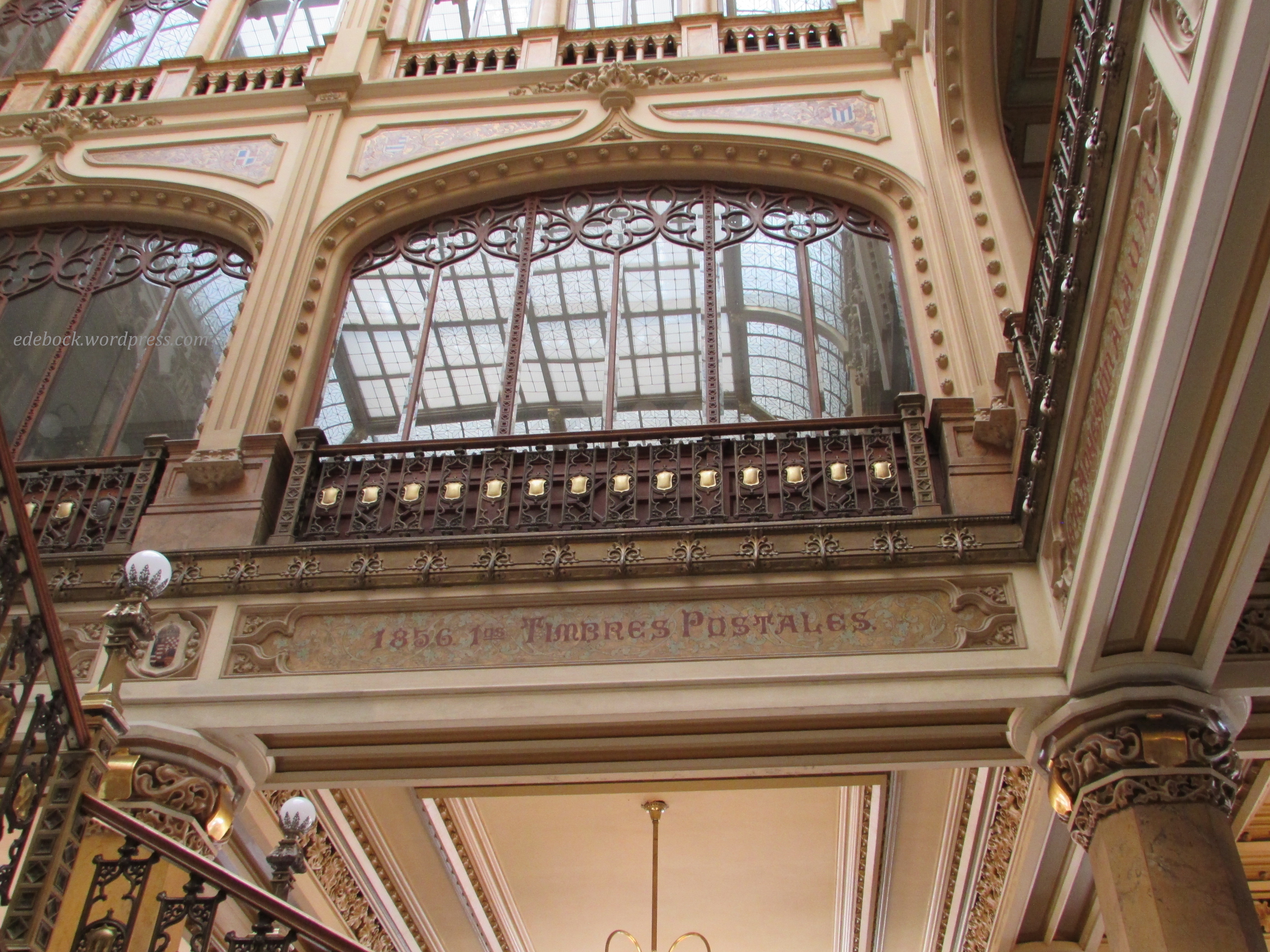
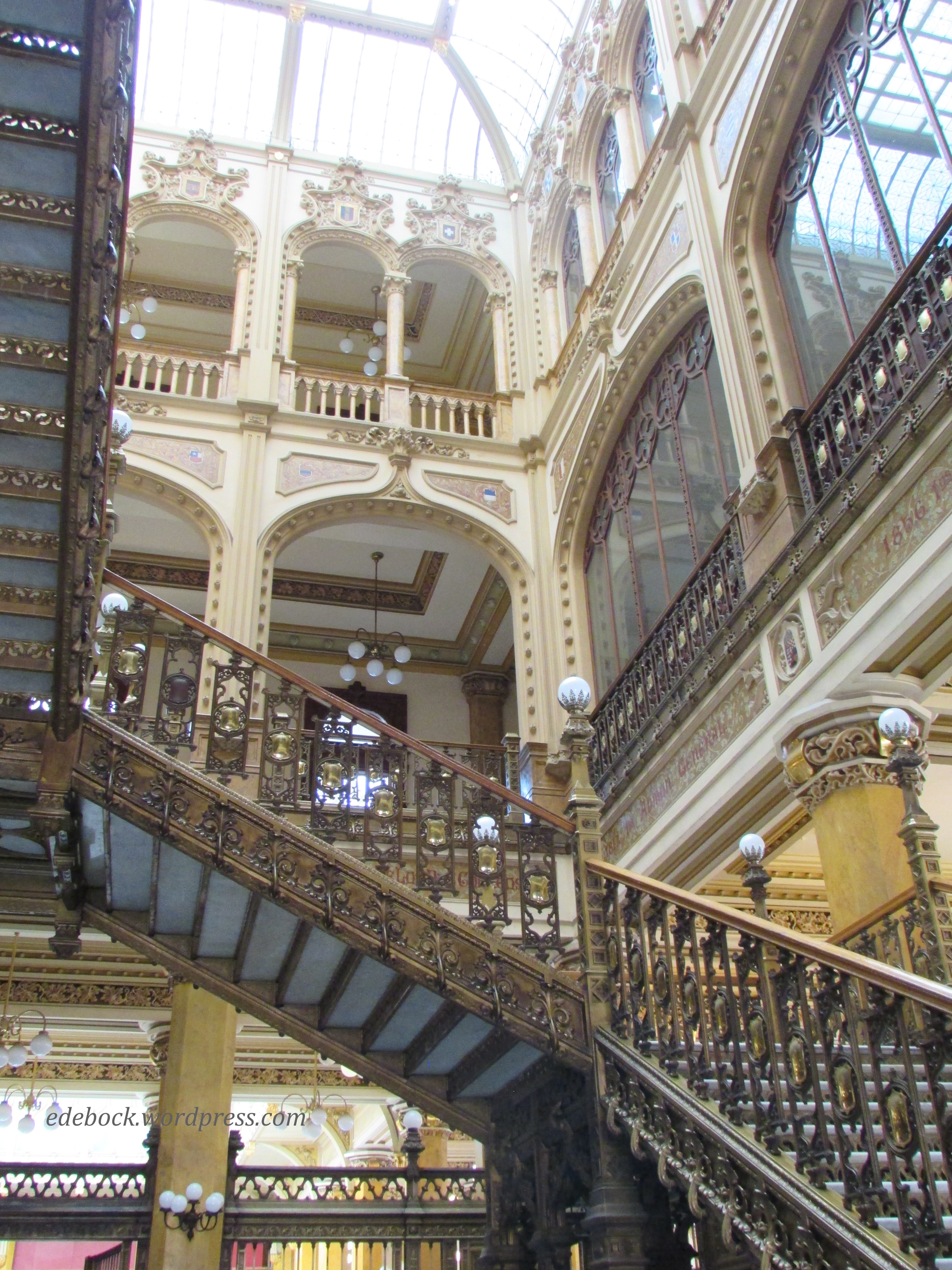
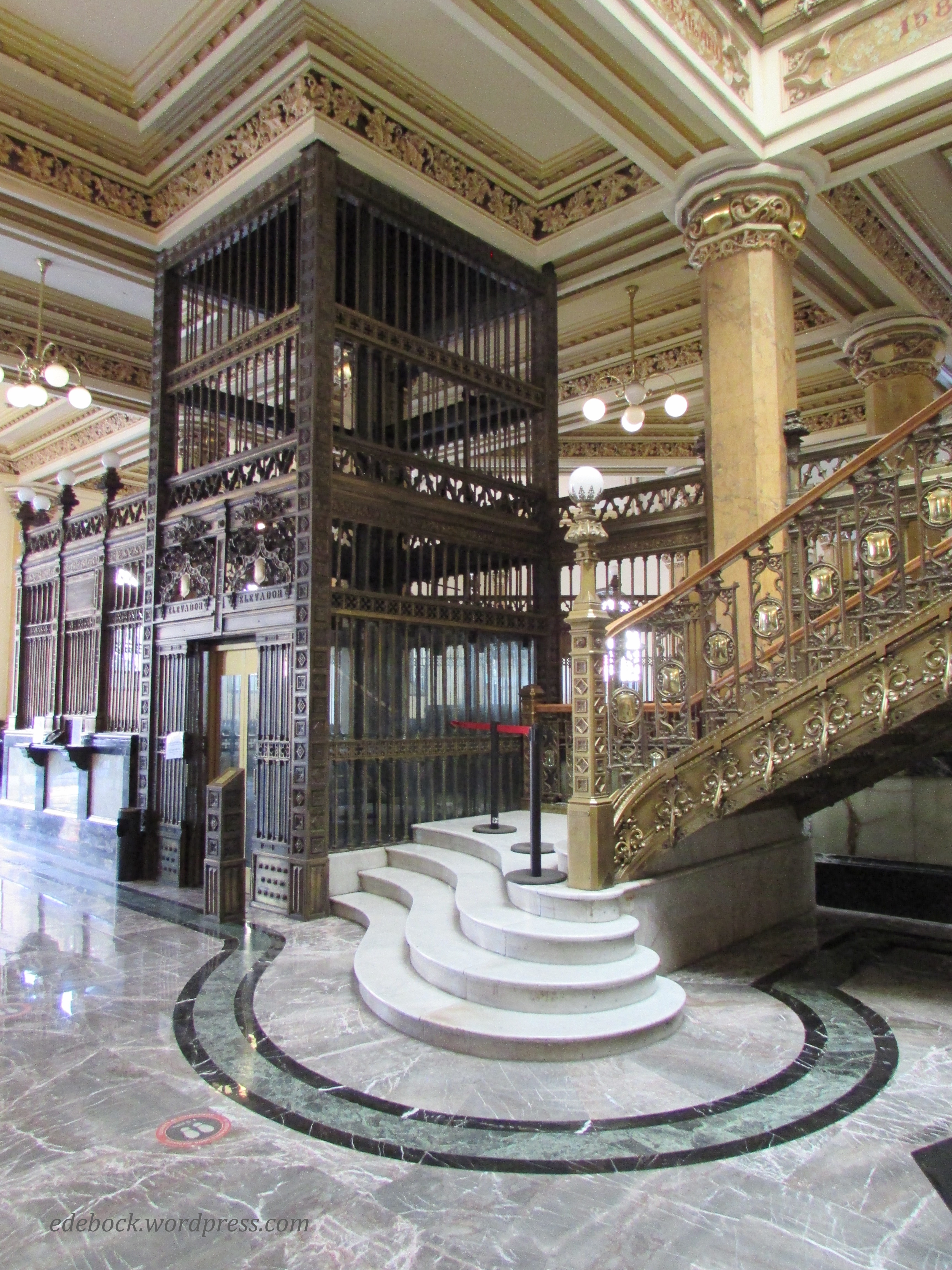
If you’re ever in Mexico City, the interior of the Post Office is definitely a must see! Absolutely stunning, it took five years to build and has been in continuous operation since it opened in 1907.

IMG_5406

IMG_5417

IMG_5416

IMG_5414

IMG_5420

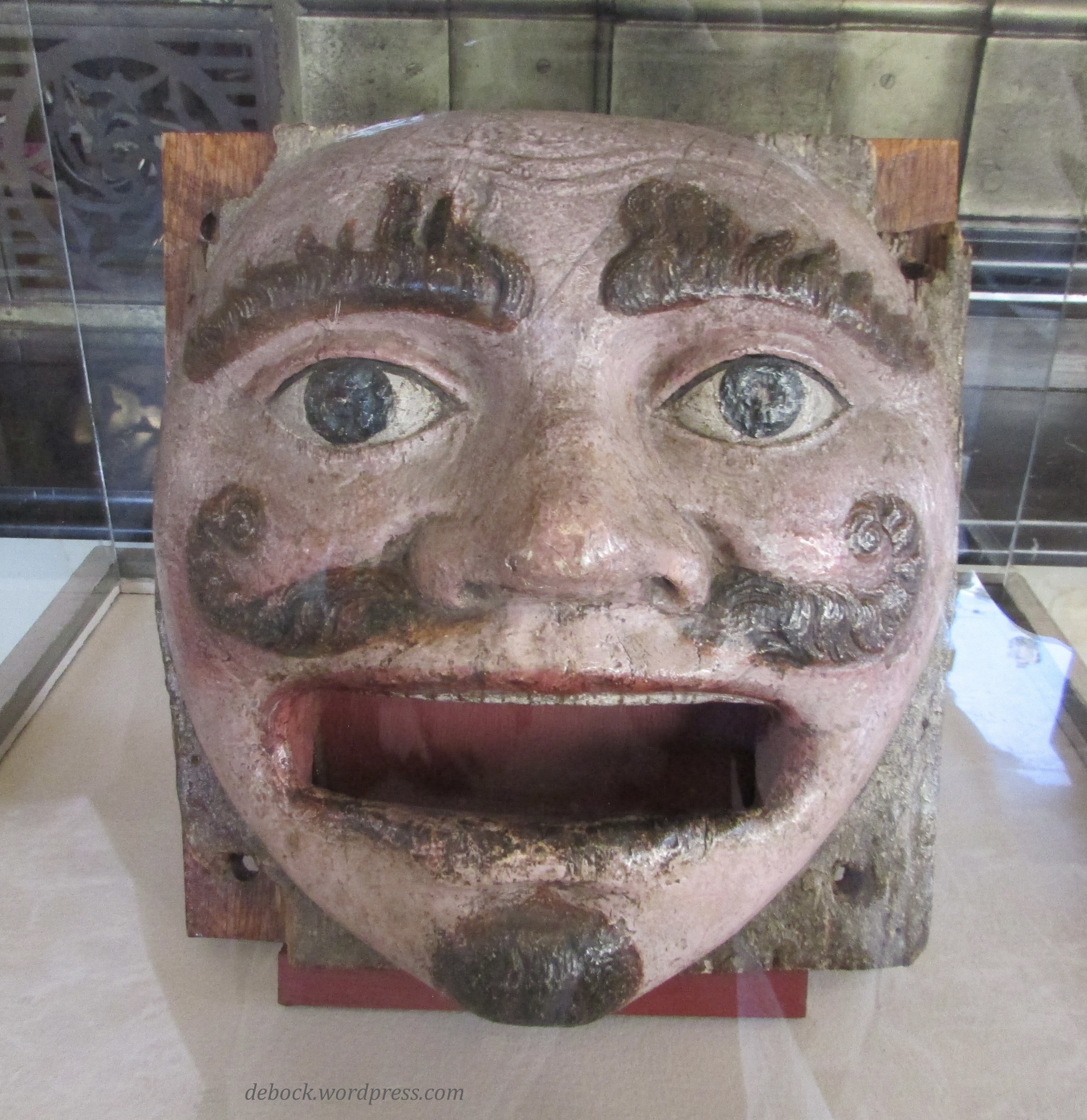
Unfortunately, the antique elevator, though fully operational, wasn’t open to the public. In addition to being an active post office, the building houses a bookstore and a small free museum of postal artifacts. Believe it or not, this handsome fellow is an ancient mailbox! Letters passed through his mouth to be collected and sent to their destination. 

IMG_5425

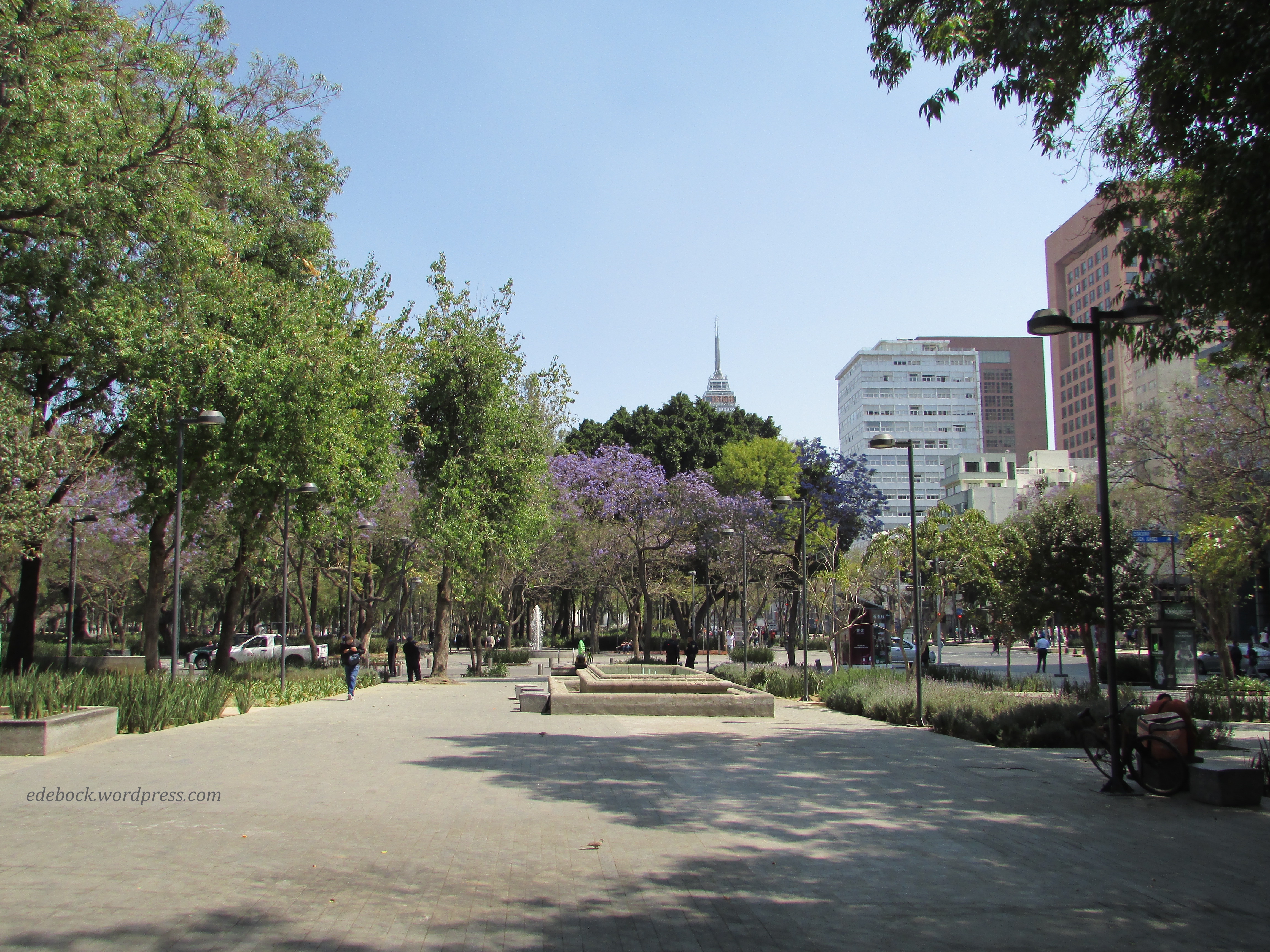
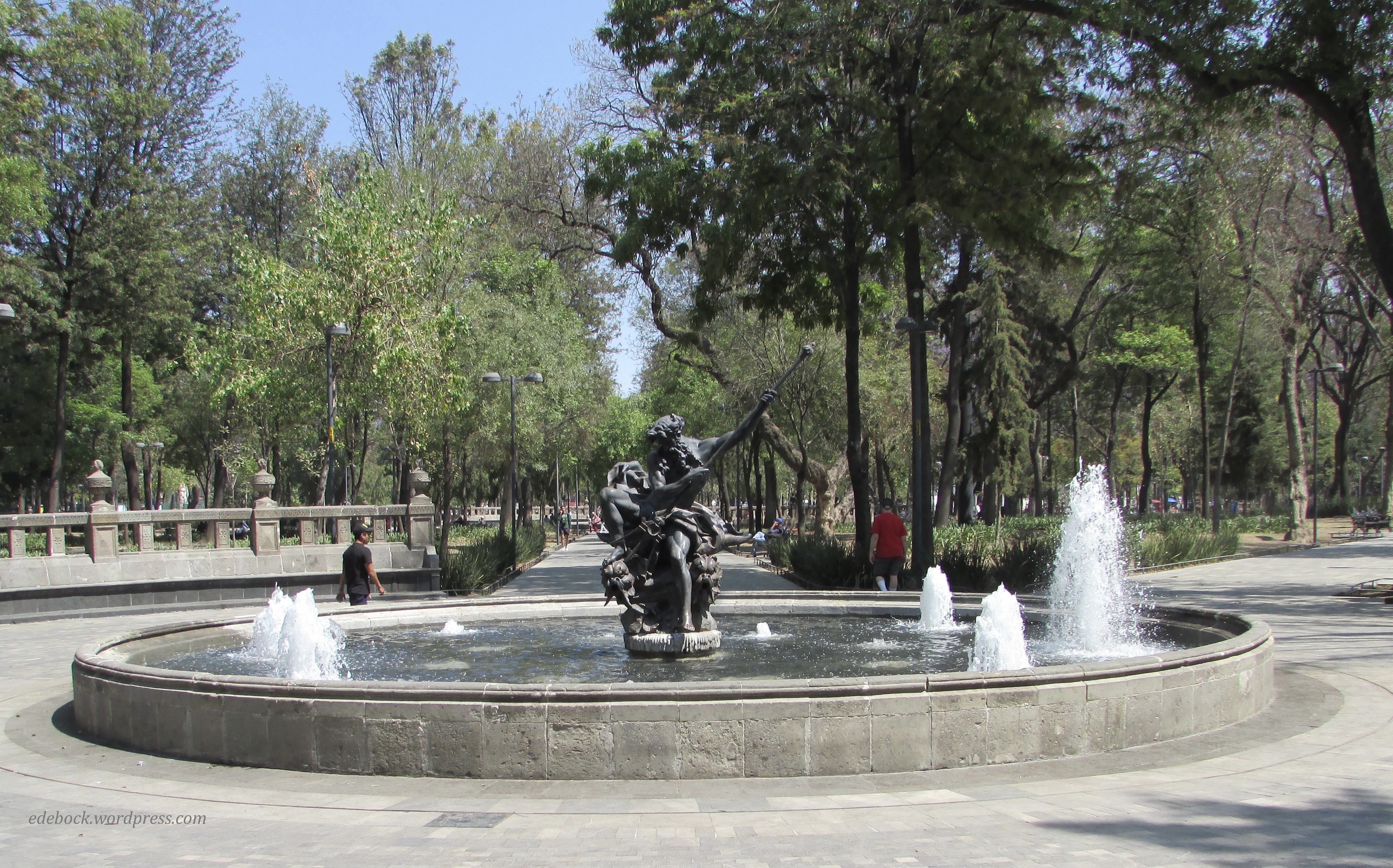
Beyond the Palacio des Belles Artes is beautiful Parque Alameda. What was once an Aztec marketplace is now one of the city’s primary green spaces complete with fountains and statues. Created in 1592, it is the oldest public park in the Americas. 

IMG_5372

IMG_5379

IMG_5381

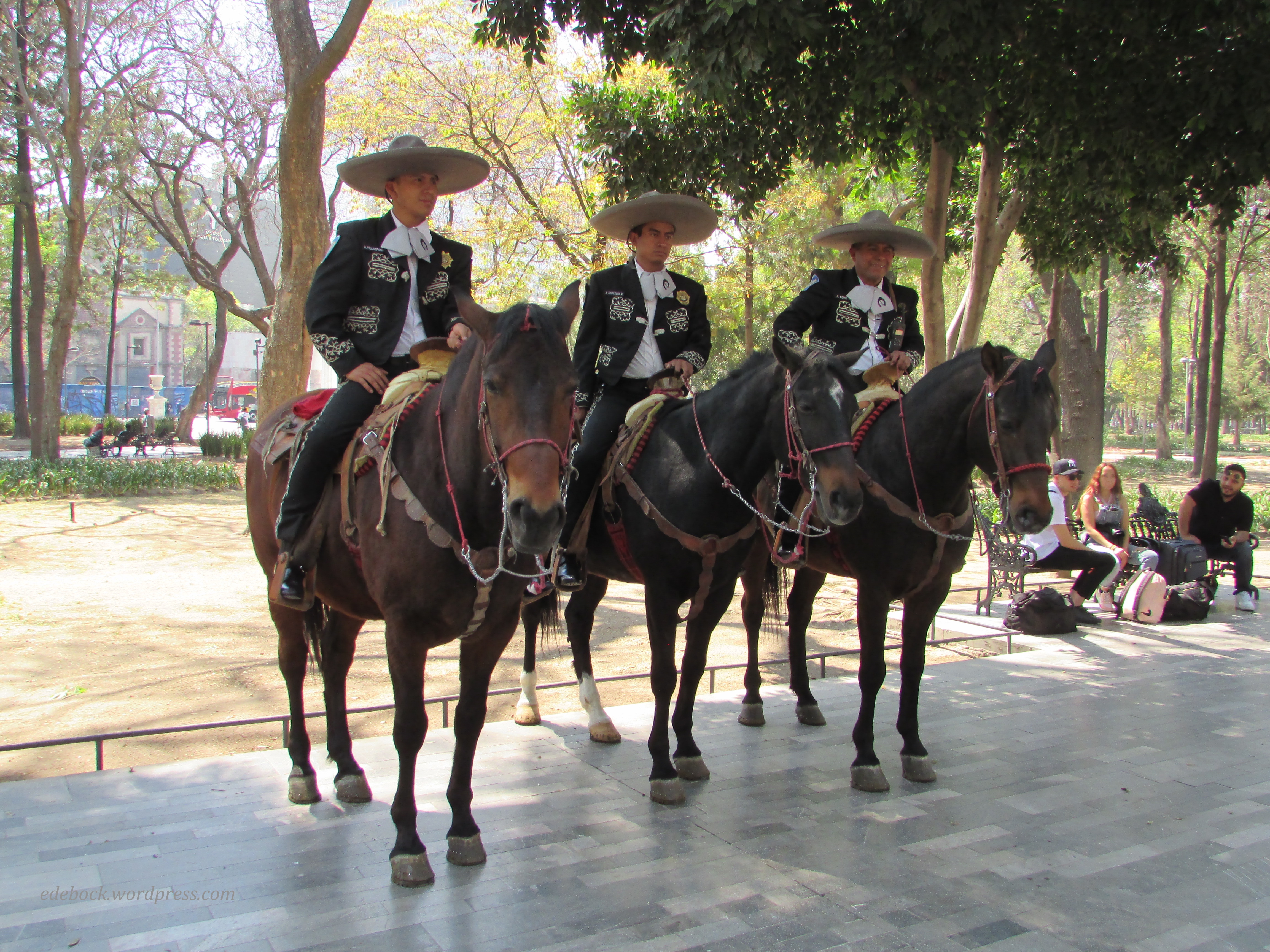
It was in the park that three mounted police officers on horseback donned their sombreros and agreed to have their photo taken. 

IMG_5386

That completes our “walking tour” of Centro Histórico and our most recent trip to Mexico. Now we’re back home in Canada, the land that every Mexican we met referred to as “mucho frio!” (very cold!) I would agree. In fact, I would call it “demasiado frio!” (too cold!).

Templo Mayor, Mexico City

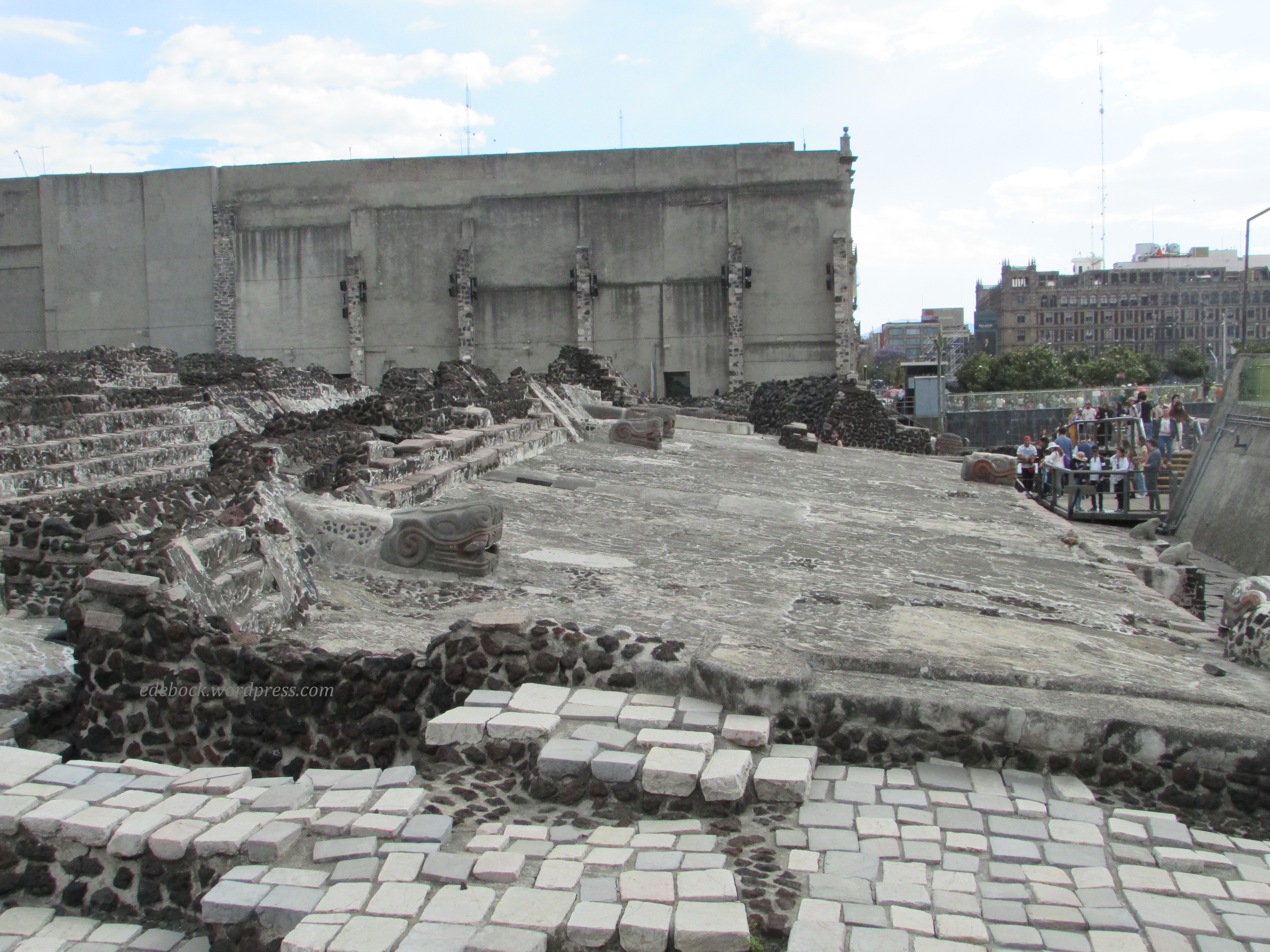
When hubby and I spent half a day in Mexico City four years ago, we glimpsed the ruins of Templo Mayor, the Aztec “Great Temple” from street level, but this time we wanted to get a closer look. Just a ten minute walk from our hotel in the Centro Histórico district, the temple once dominated the central sector of the Aztec capital, Tenochtitlan. Destroyed following the Spanish Conquest, many of its stones were used in the construction of the imposing Metropolitan Cathedral of the Assumption of the Most Blessed Virgin Mary into Heaven. The remainder of the ruins gradually disappeared beneath, first a garbage dump, and later 19th century colonial buildings. It wasn’t until 1978 when electrical workers happened upon an 8-tonne stone-disc carving of the Aztec goddess, Coyolxauhqui,  that the decision was made to demolish those colonial buildings and begin the excavation which continues today. A fenced pathway allows visitors to walk through the site and see close up what remains of the structures that once stood on the site.

IMG_5216

IMG_5215

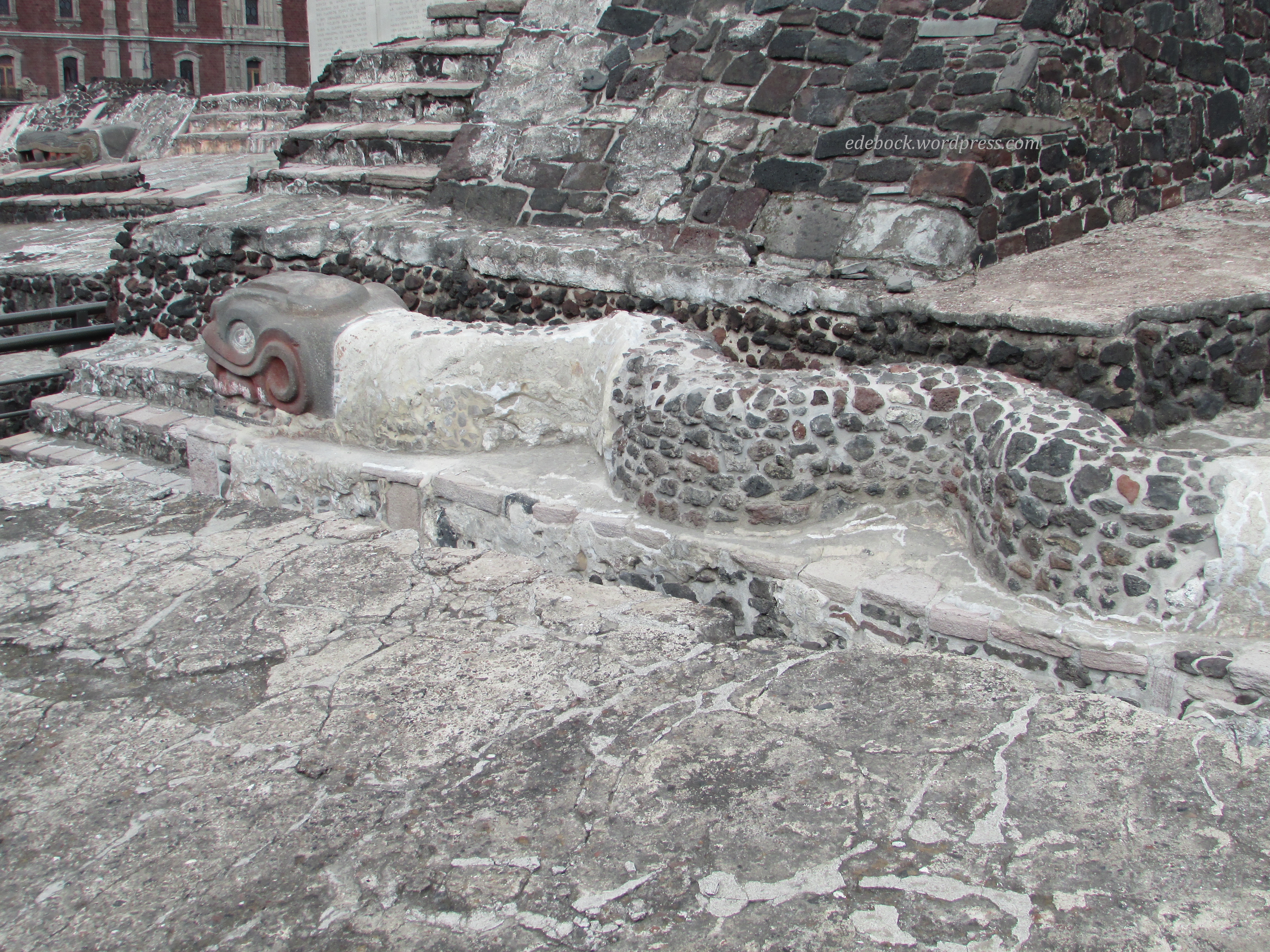
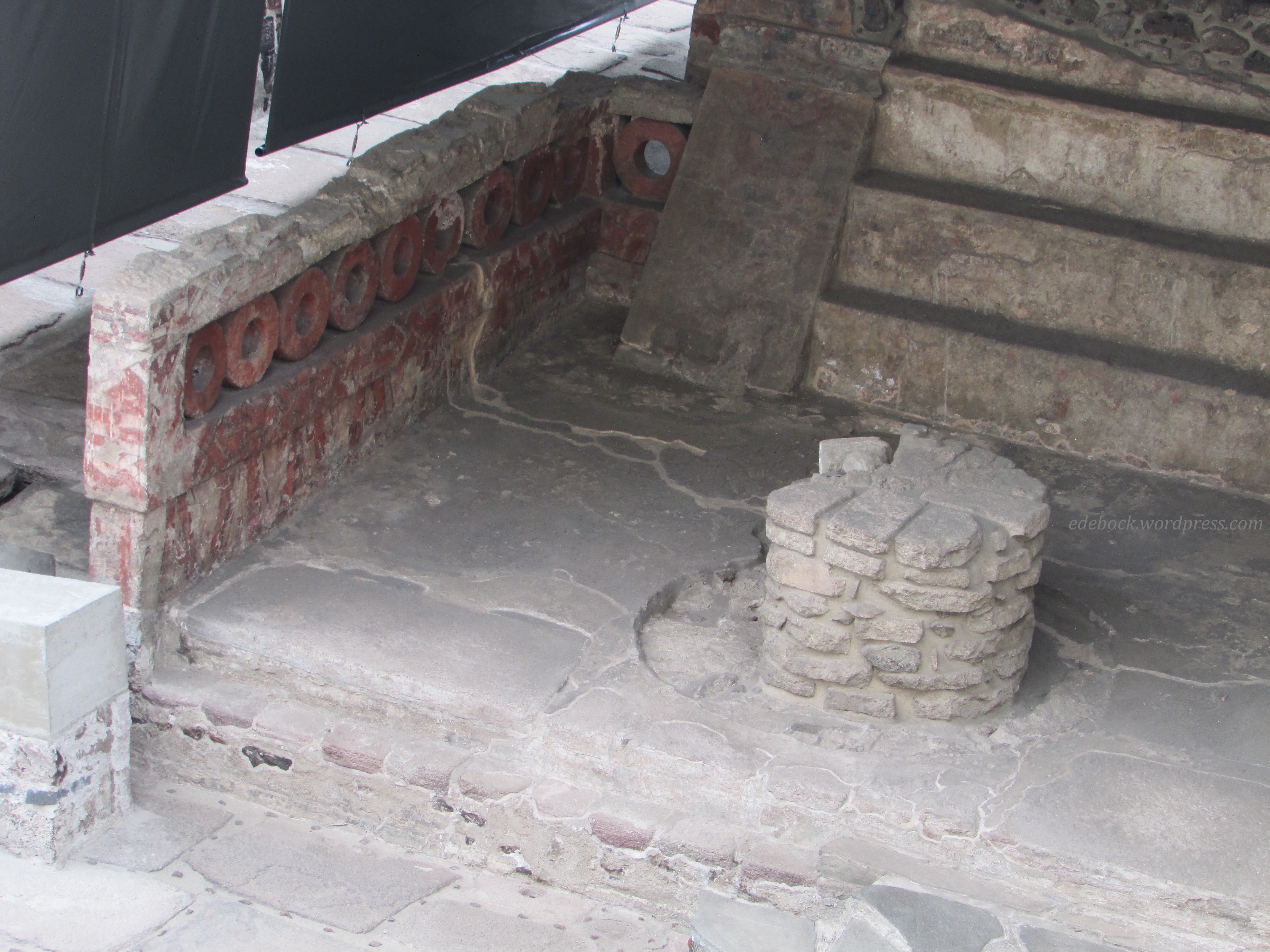
Amazingly, some pieces, including two giant undulating serpents, have retained some of their original colour through the centuries.

IMG_5217

IMG_5223

Over the years, the Great Temple underwent many changes and expansions. The main platform and part of the stairway of the great pyramid that was constructed during the reign of Moctezuma I from 1440 to 1469 have been conserved.

IMG_5227

Though not as big or as detailed, these stone figures reminded me a bit of the terracotta warriors that we saw in Xian, China.

IMG_5229

Tláloc, the rain god was worshipped by the early Mesoamerican people. This brightly painted chac-mool figure holding a basin was located on the platform of a temple dedicated to Tláloc. Dating back to approximately 1350 AD, it is the oldest piece that has been found at the Great Temple thus far.

IMG_5240

IMG_5252

Making our way around the Templo Mayor complex, we came to what was known as the House of the Eagles.

IMG_5261

This is the best preserved portion of the temple area where we can see the stairways, porticos, and individual rooms.

IMG_5265

IMG_5271

In the next photo, you can see the present day cathedral in the background. At 60 metres high, it is only 15 metres higher than the ancient temple at the time of the conquest in 1521. I’m sure that the circular structure in the foreground had a different purpose in ancient times, but today people toss coins into it and I presume make wishes as they do so. As I tossed my coin into the centre circle, my wish was that I would have the opportunity to return to Mexico again in the future!

IMG_5289

In addition to the ruins, the Templo Mayor complex includes a four storey indoor museum that houses many artifacts found at the site. Unlike the outdoor portion, however, there is no English signage inside and since we were short on time, we only briefly checked out the first floor. I’ll finish this post with a few of the pieces that we saw there.

Dressing for the hot Mexican sun

Logo by SamI wasn’t sure if there would be a Fashion Friday post this week as I’ve been focusing on enjoying our time in Mexico and sharing some of the sights with you, but here’s a quick “what I wore” post. We’ve had a couple of cooler, wetter days, but for the most part the daytime temperatures have been in the high 20ºs Celsius (high 70ºs and low 80ºs F). At at least one point earlier this week, the temperature discrepancy between here and home was more than 50ºC! Needless to say, I’ve been enjoying wearing my summer clothes.

IMG_5172

For Tuesday’s outing to Xico, I wore a thrifted Calvin Klein top and a comfortable pair of light cotton capris that I’ve had for several years.

IMG_5192

The following afternoon, Richard and I went for a long walk around Coatepec. Here I’m enjoying a relaxing rest in Miguel Hidalgo Park in the centre of town. Named for a Catholic priest and revolutionary during the Mexican War of Independence who is generally recognized as the Father of the Nation, the park is a popular gathering place any time of day or evening. In the photo, I’m wearing a cabi top from several seasons ago and the one pair of shorts that I’m very glad I tucked into my little carry-on suitcase. The sandals in both photos are the Clarks that I bought almost brand new at one of our local thrift stores last summer.

Perhaps the most important thing that I’ve been wearing though is a good sunscreen to protect my fair skin from the bright Mexican sun!

Xico

Like Coatepec, nearby Xico has been designated a Pueblo Magico (Magic Town), for maintaining its original architecture, culture, folklore, and/or history. Recognized by the Mexican government for their “magical” qualities, these towns have been selected as some of the most beautiful places in the country to visit.

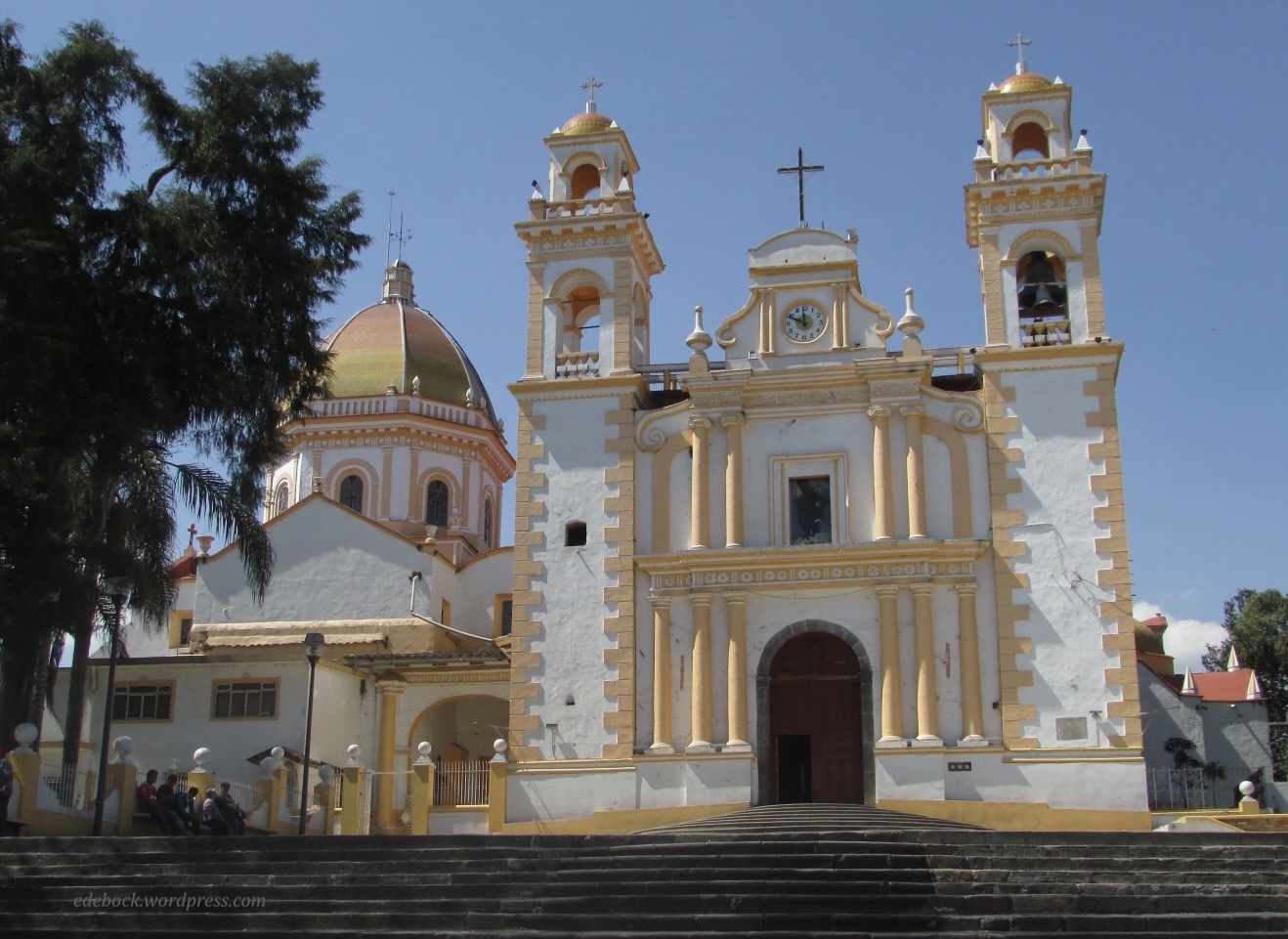
Last time we went to Xico, six years ago, road reconstruction was underway in the downtown core. Though we enjoyed a lovely lunch on an outdoor patio, we weren’t able to explore as much of the area as we did yesterday. Once again, we had the taxi from Coatepec drop us off by the beautiful Santa María Magdalena church in the centre of town.

img_3604

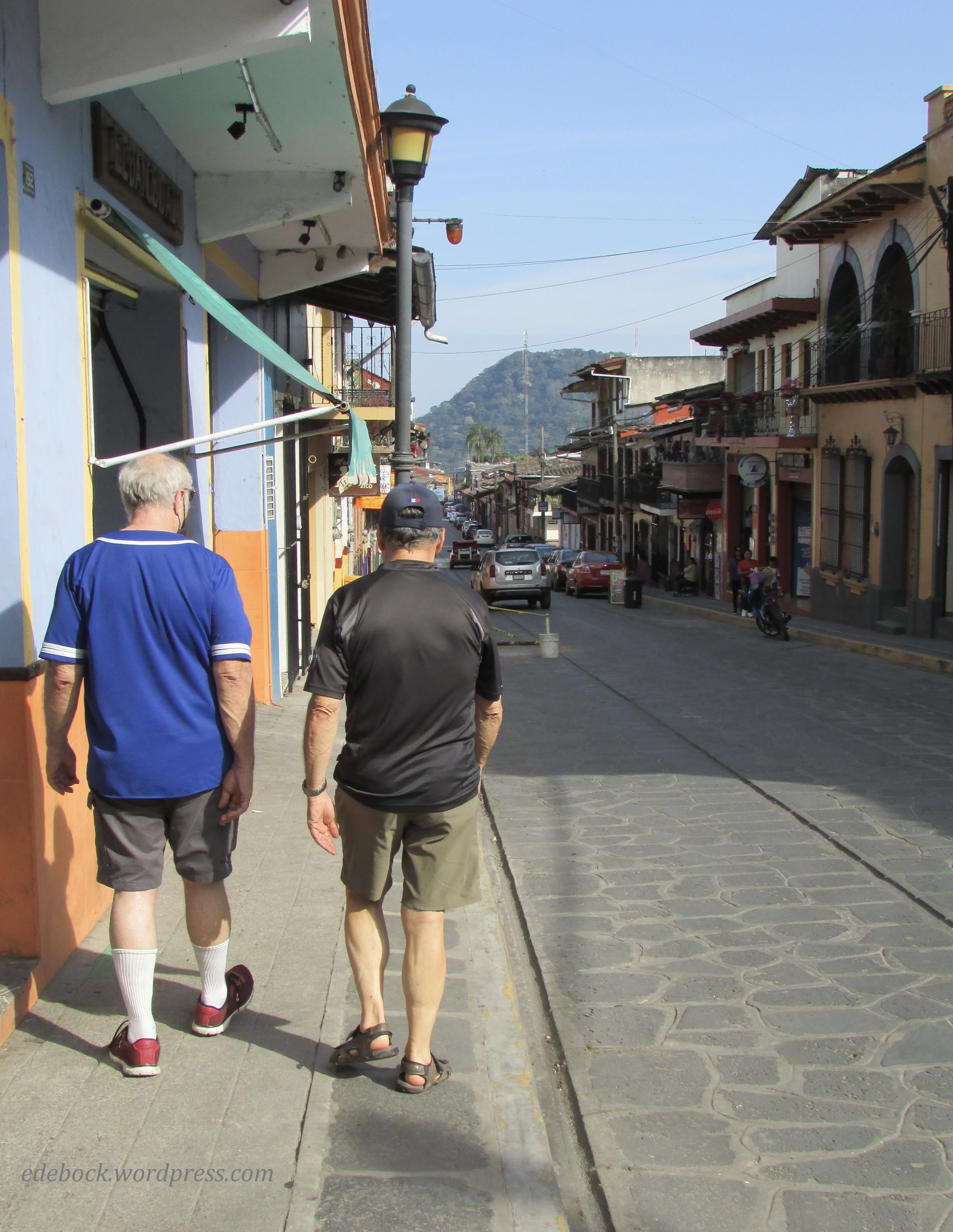
From there, we explored on foot. Come take a walk with us. There’s the two Richard’s leading the way.

IMG_5147

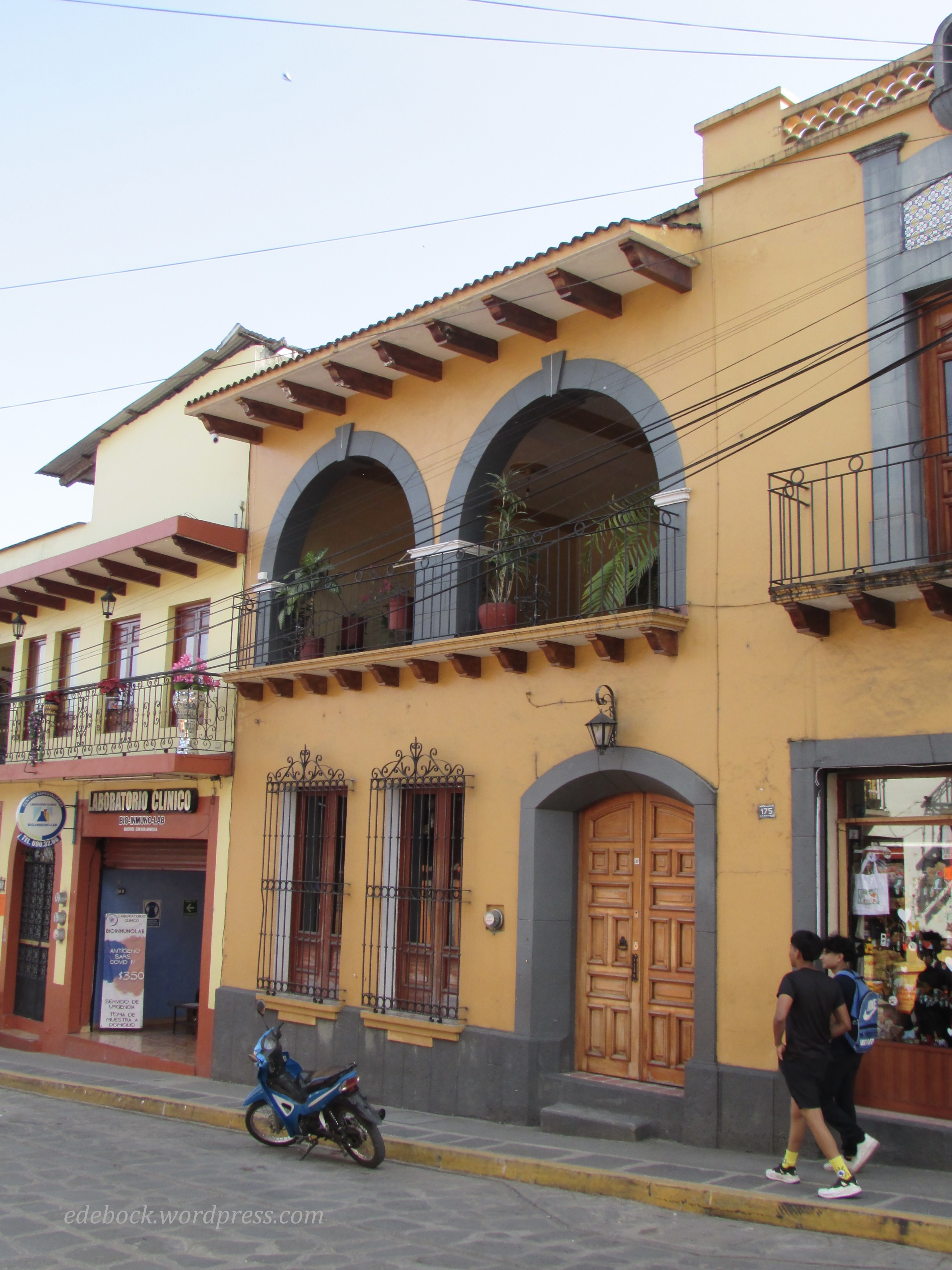
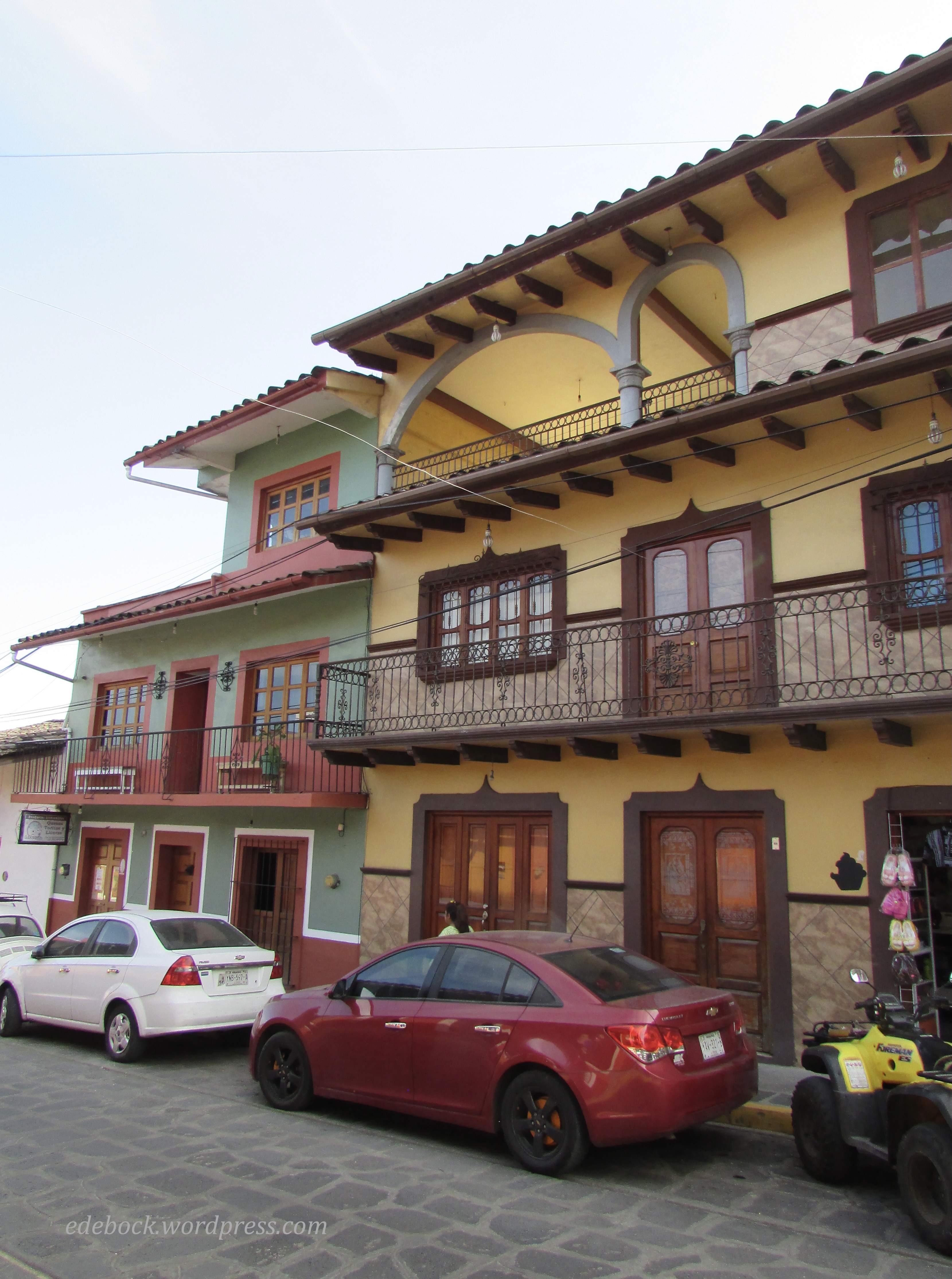
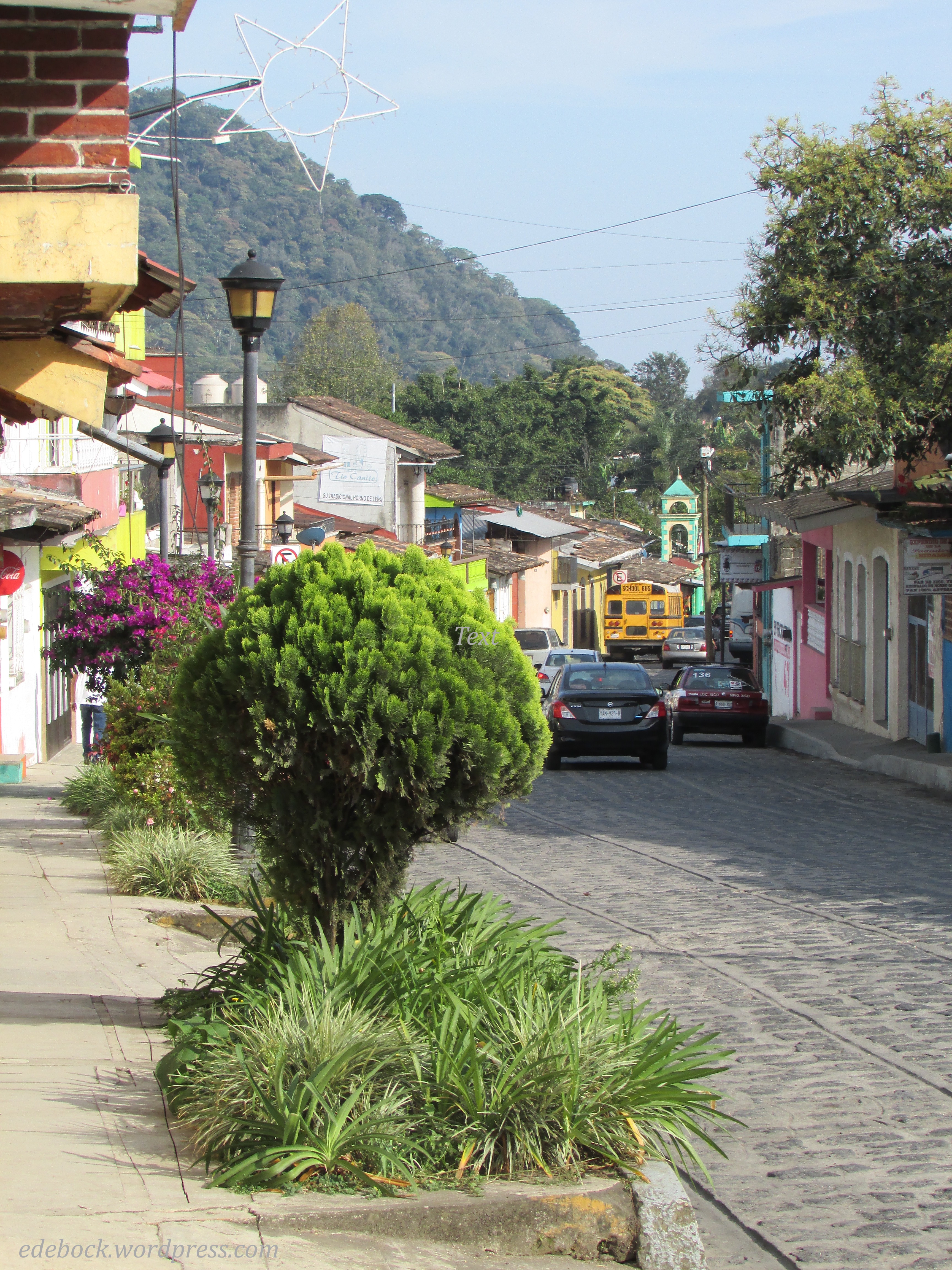
I absolutely love the colours and the old colonial architecture.

IMG_5148

IMG_5149

IMG_5159

IMG_5166

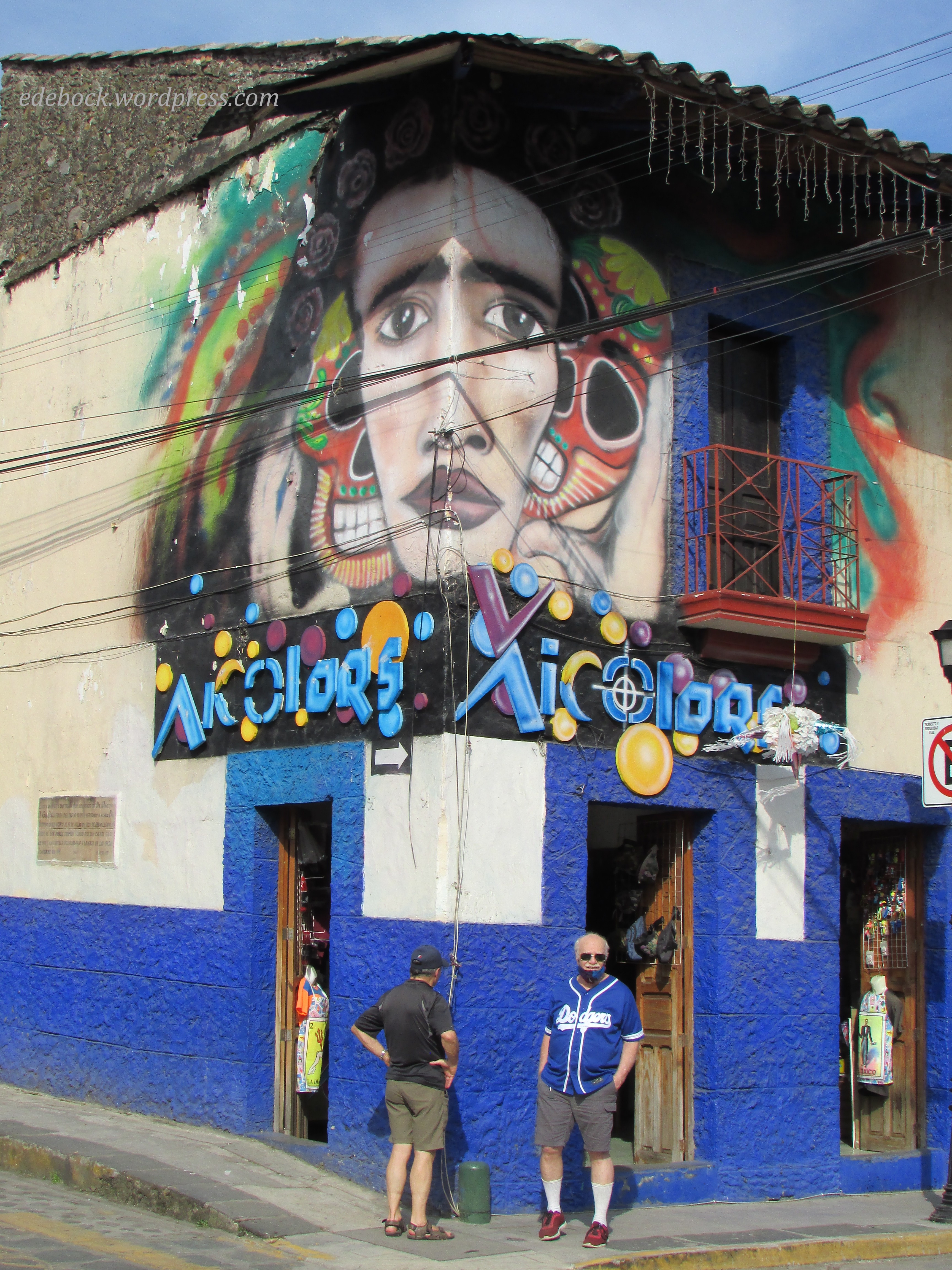
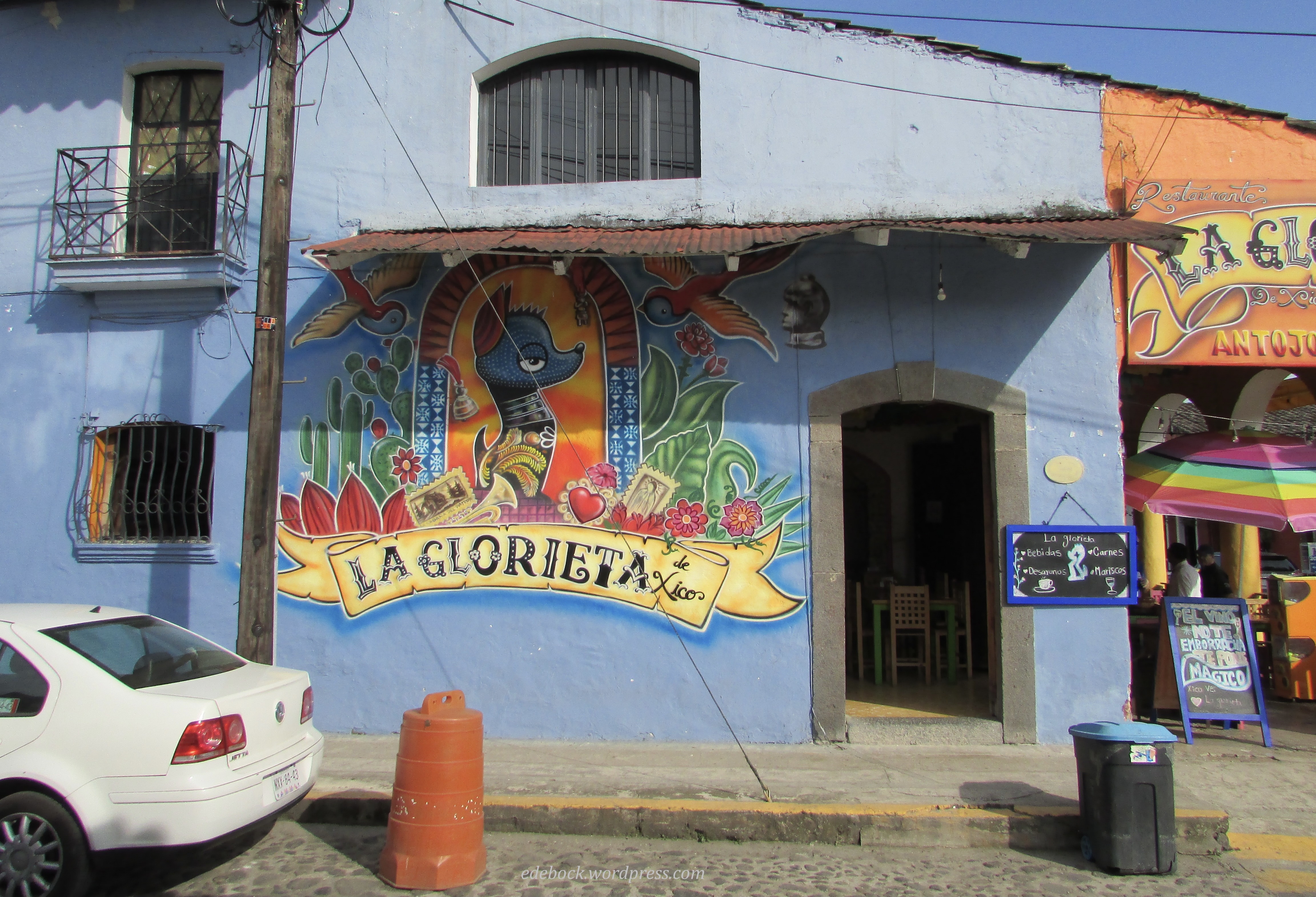
As in Coatepec, I was intrigued by the murals that we saw along the way. This one actually wraps itself around the corner of the upper storey of a building.

IMG_5152

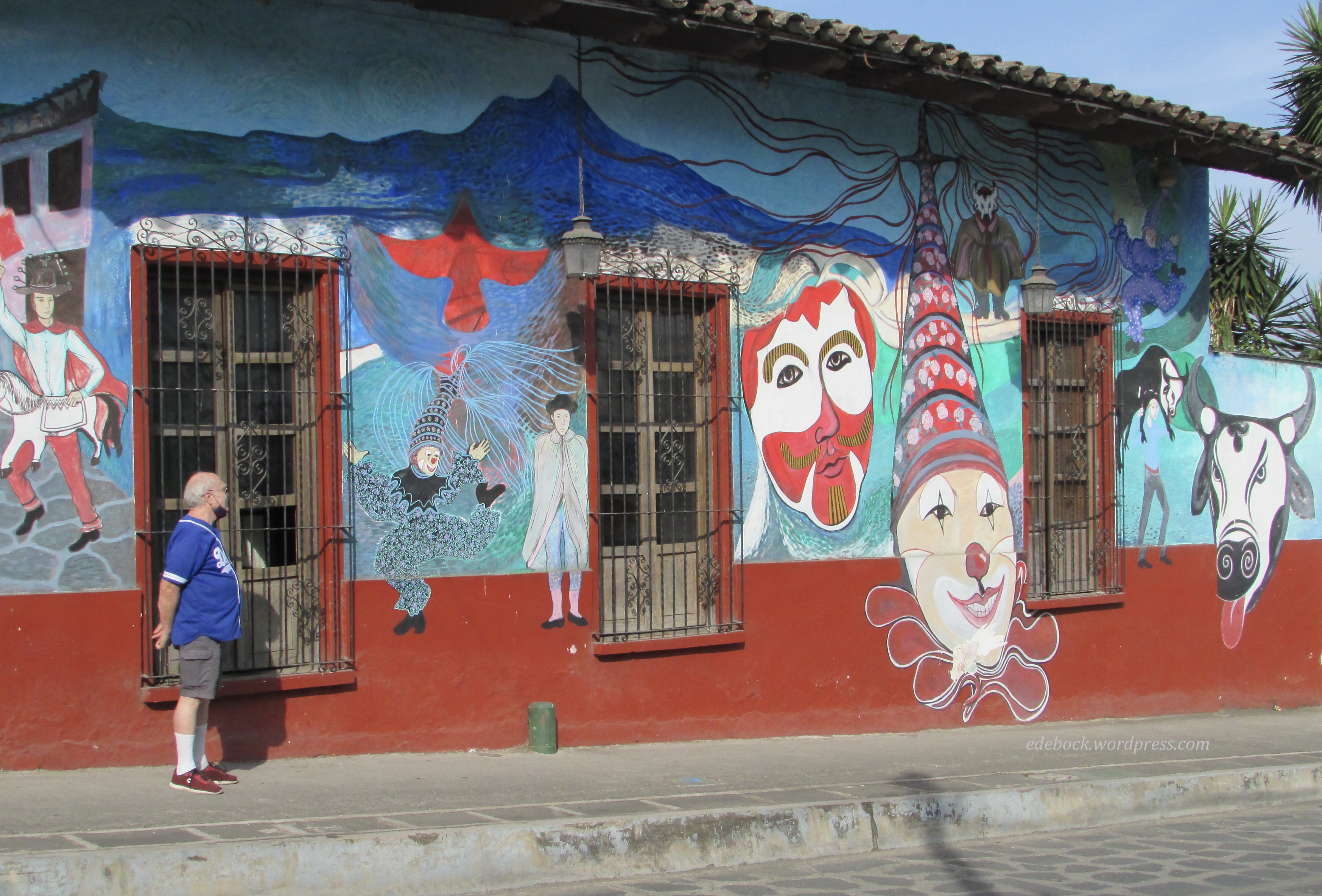
This one adorns the outside of the restaurant where we ate last time we were in Xico.

IMG_5155

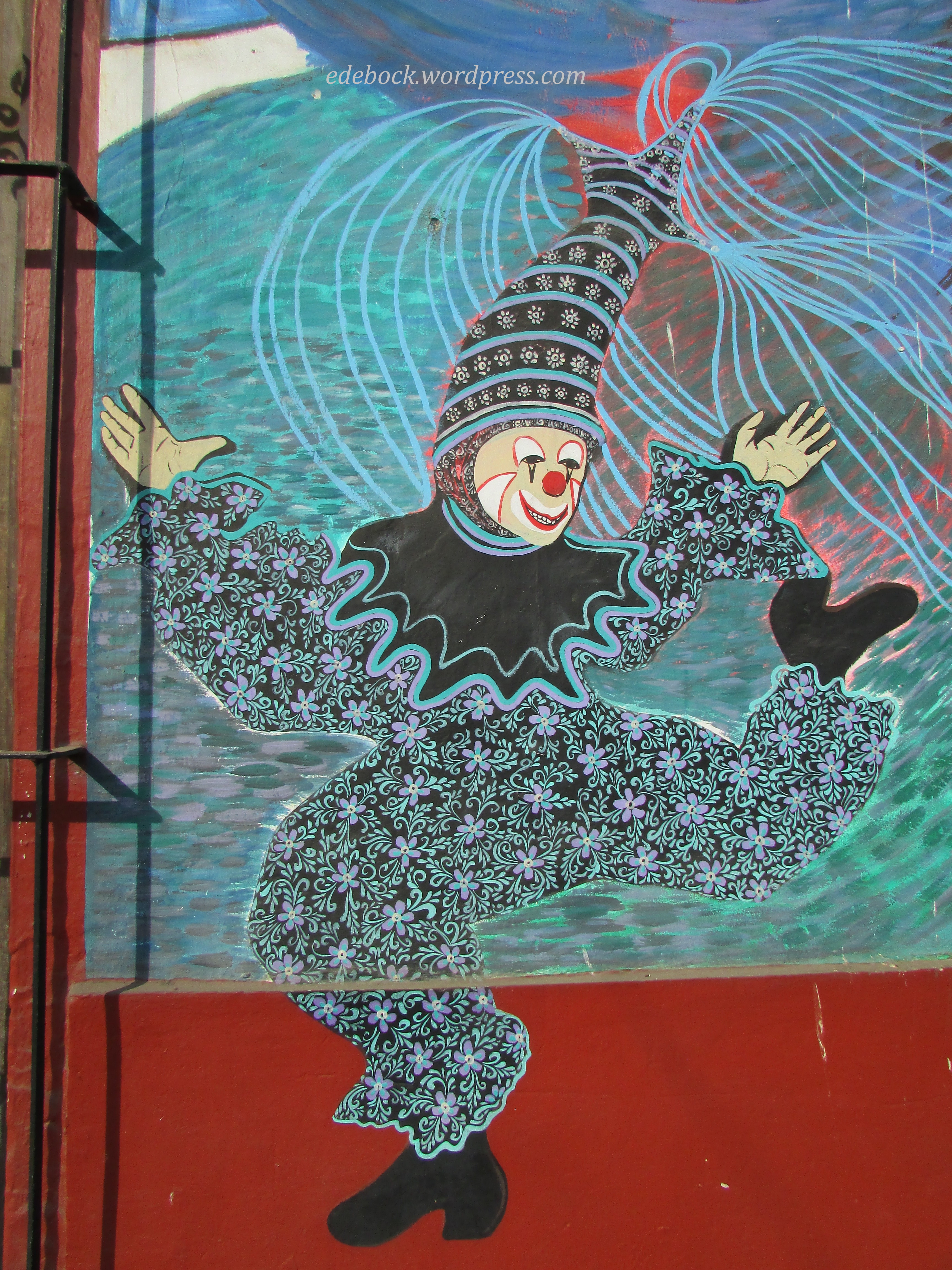
I couldn’t even capture all of this mural in a photo. I especially liked all the detail on the happy little payato (clown).

IMG_5161

IMG_5162

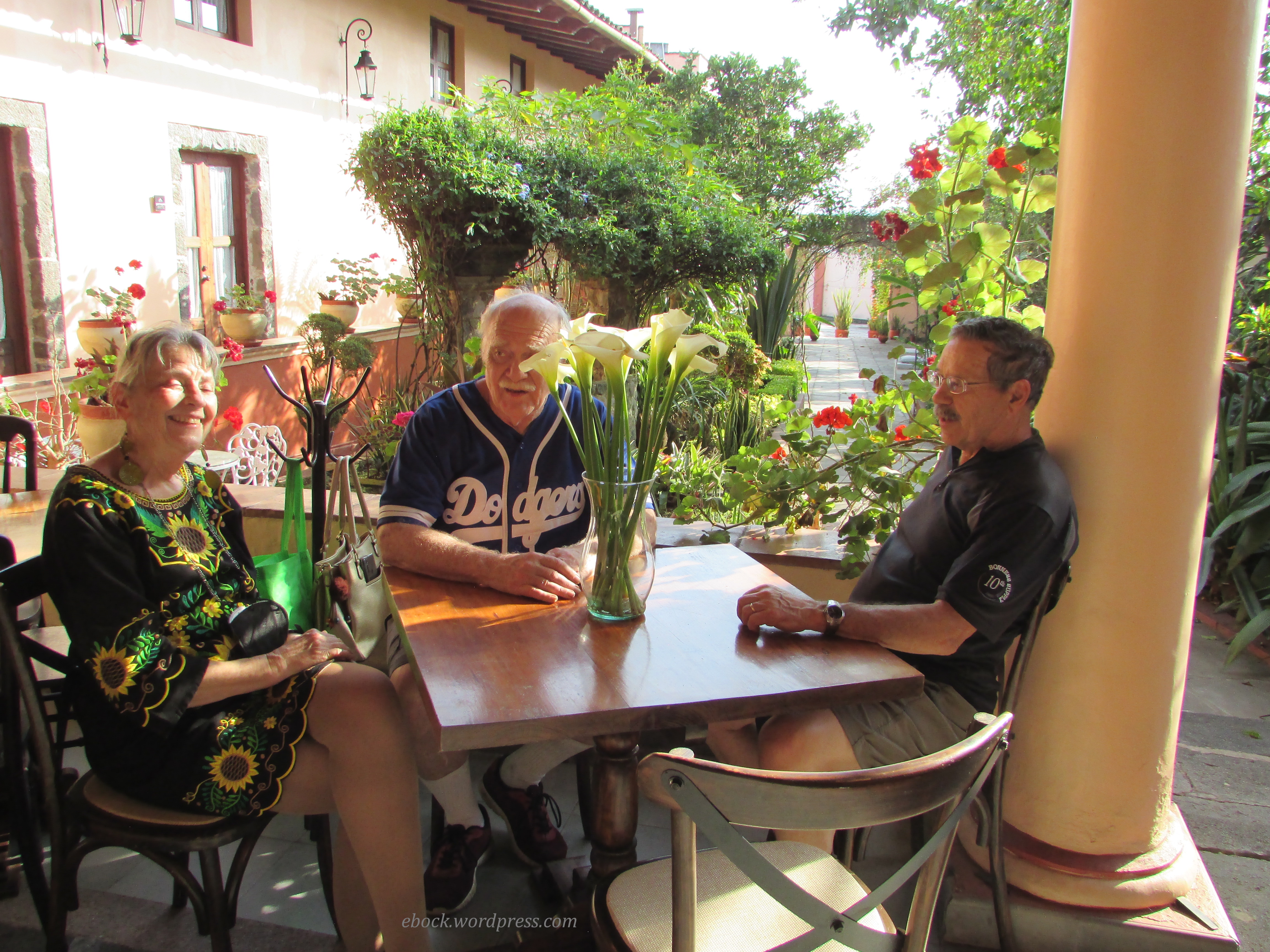
After our walk, we stopped for coffee overlooking the courtyard of the beautiful Las Magdalenas Boutique Hotel. I completely abandoned my coffee free, diabetic diet and indulged in a tall and very delicious frappuccino moka topped with a mountain of whipped cream! Hopefully all the walking somewhat made up for such an extravagance!

IMG_5168

IMG_5176

The murals of Coatepec

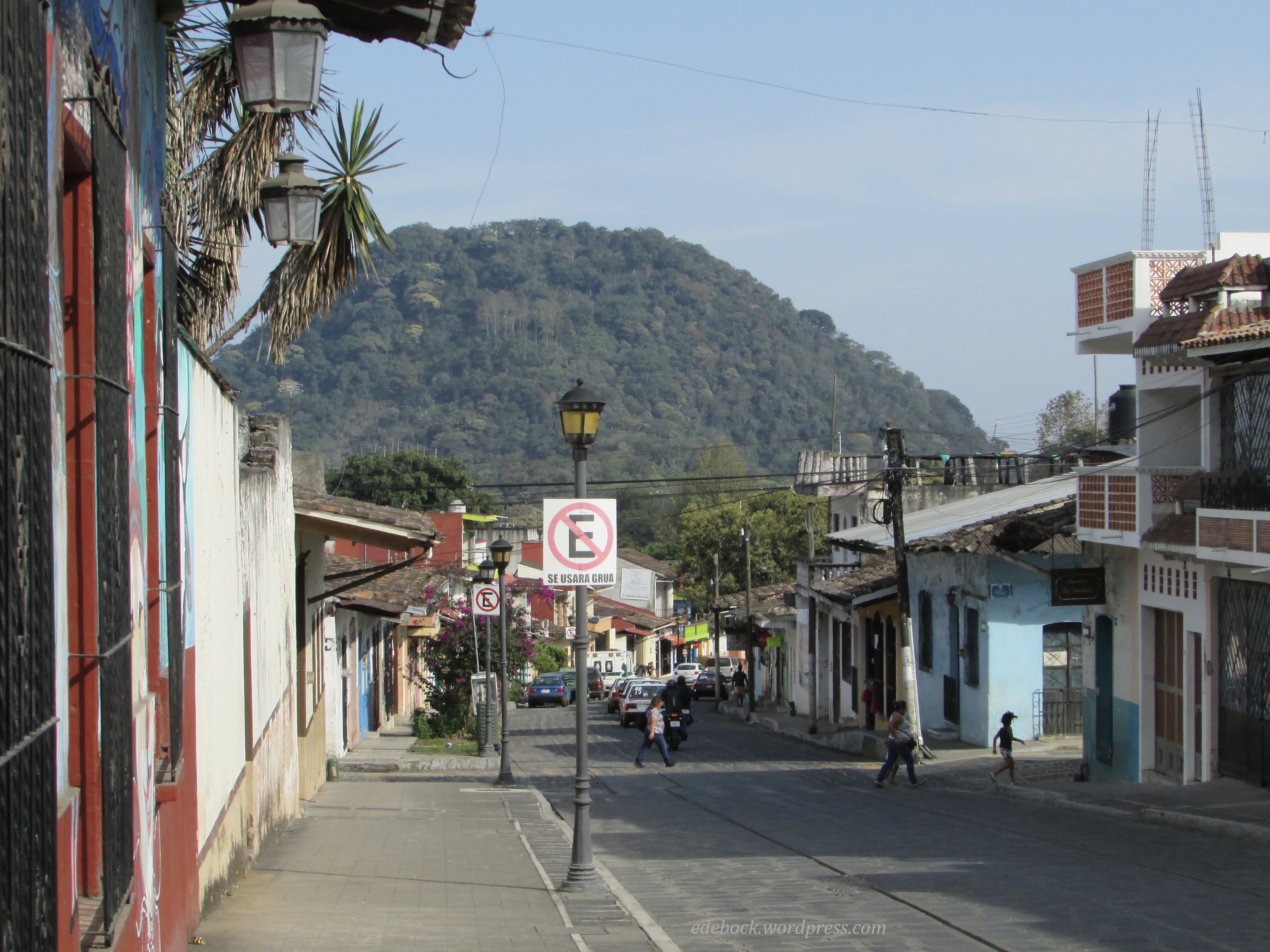
Each time we come to Coatepec, Mexico to visit our friends who live here I fall in love with the vibrant colours again. Maybe that has something to do with coming from a place that is covered with snow for many months of the year and where buildings tend to be mostly neutral in colour.

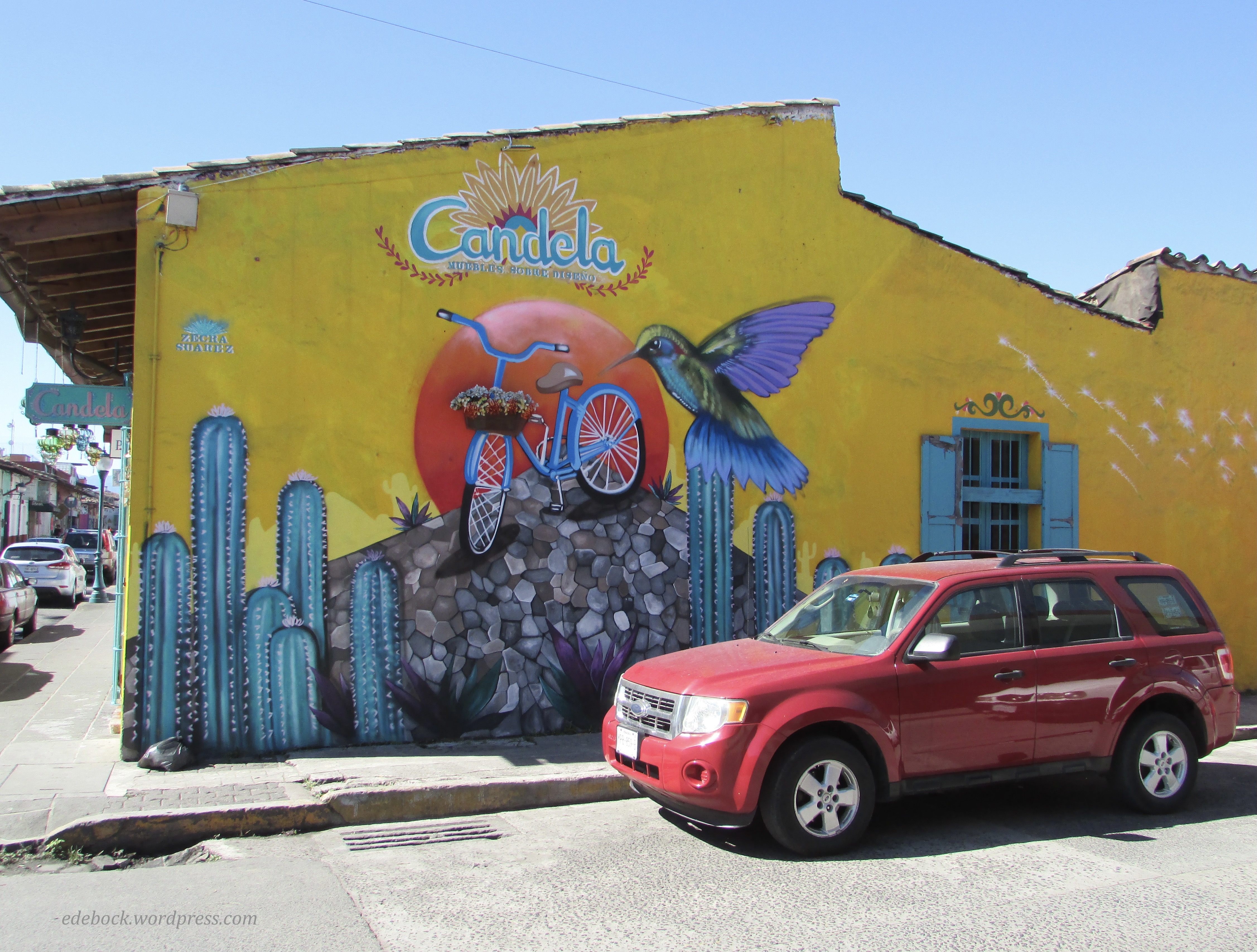
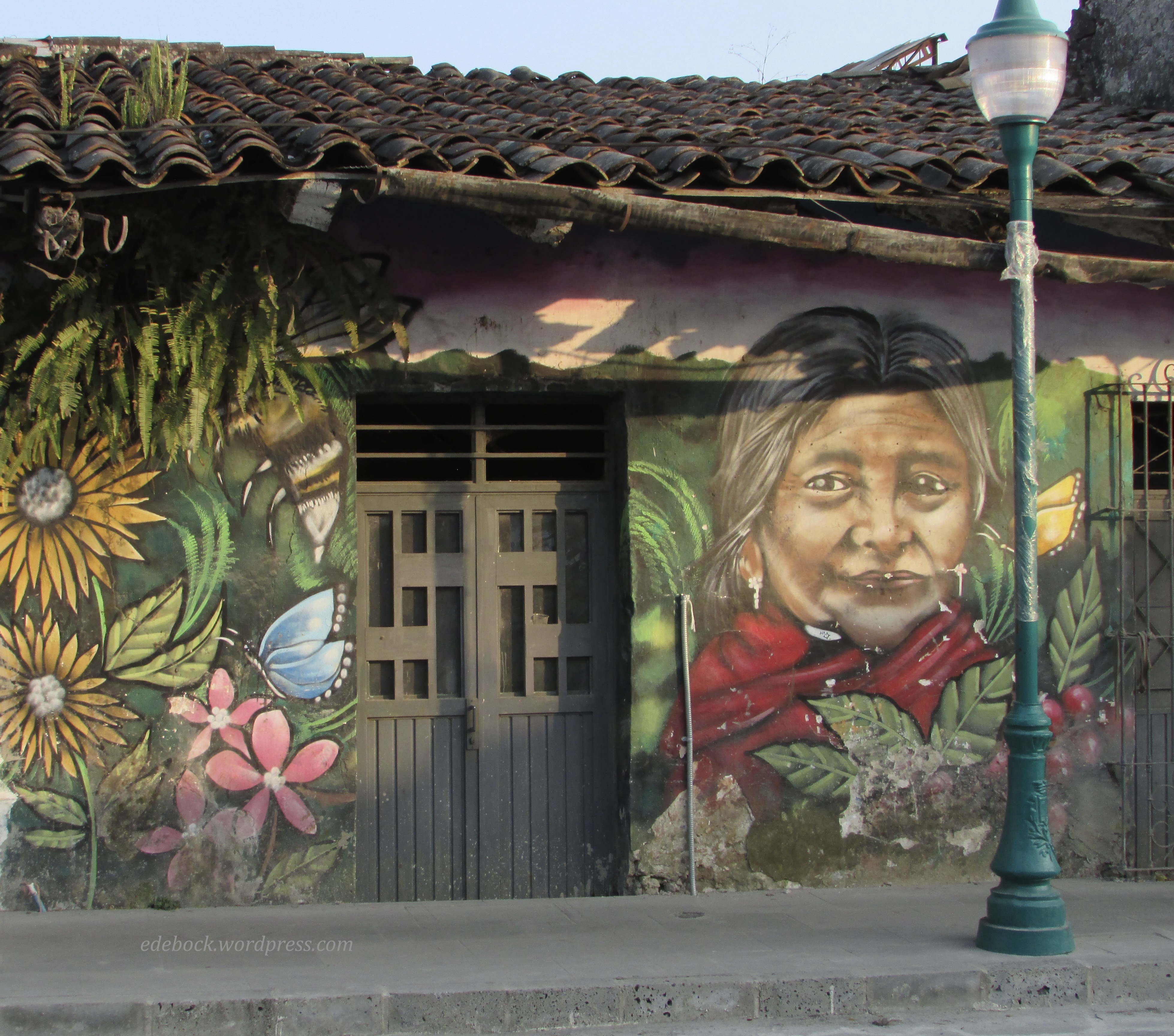
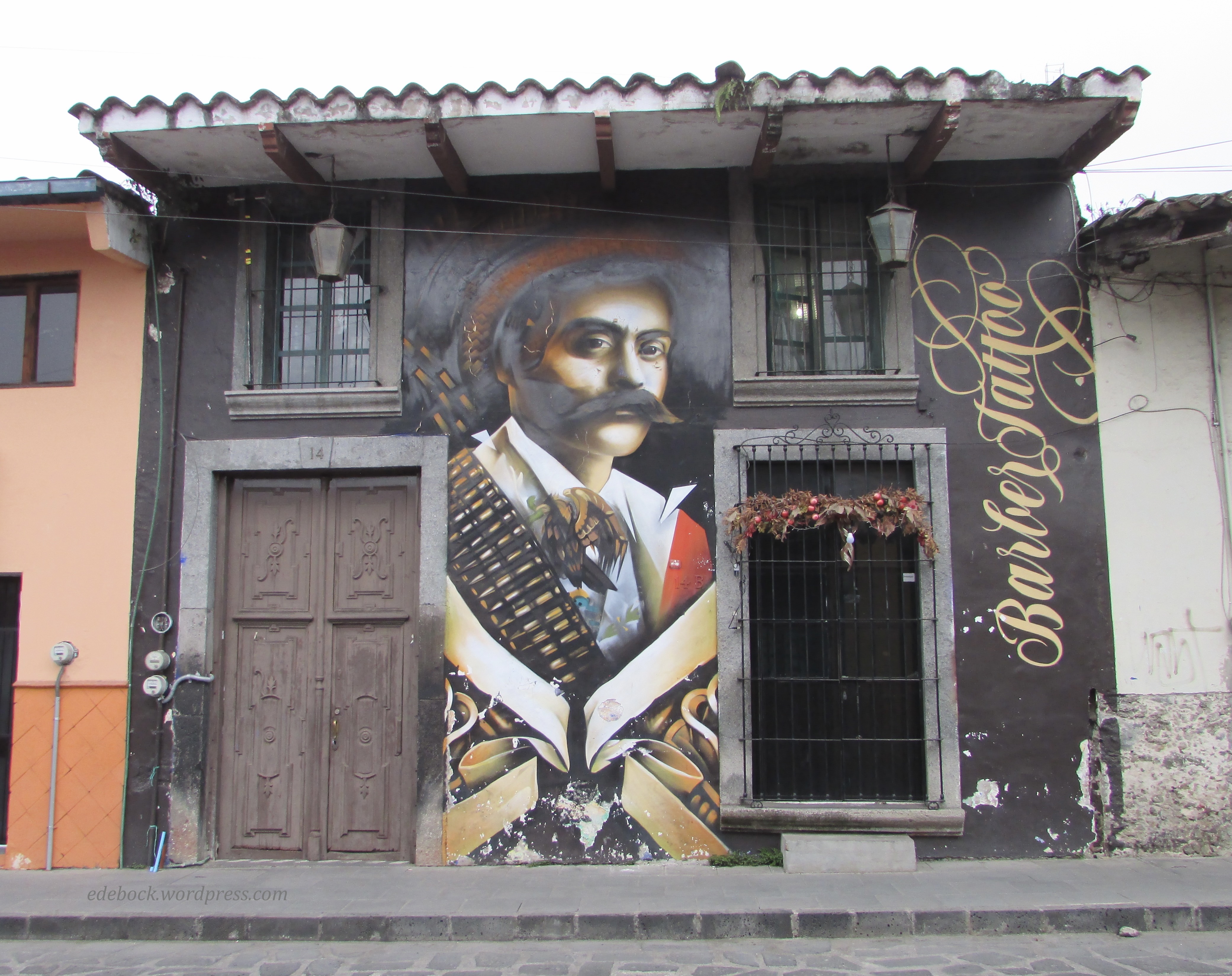
This visit, it’s the murals that have really caught my attention and so I thought I’d share a few of them with you. All of these are within walking distance of our friends’ house. The first is one of my favourites.

IMG_5102

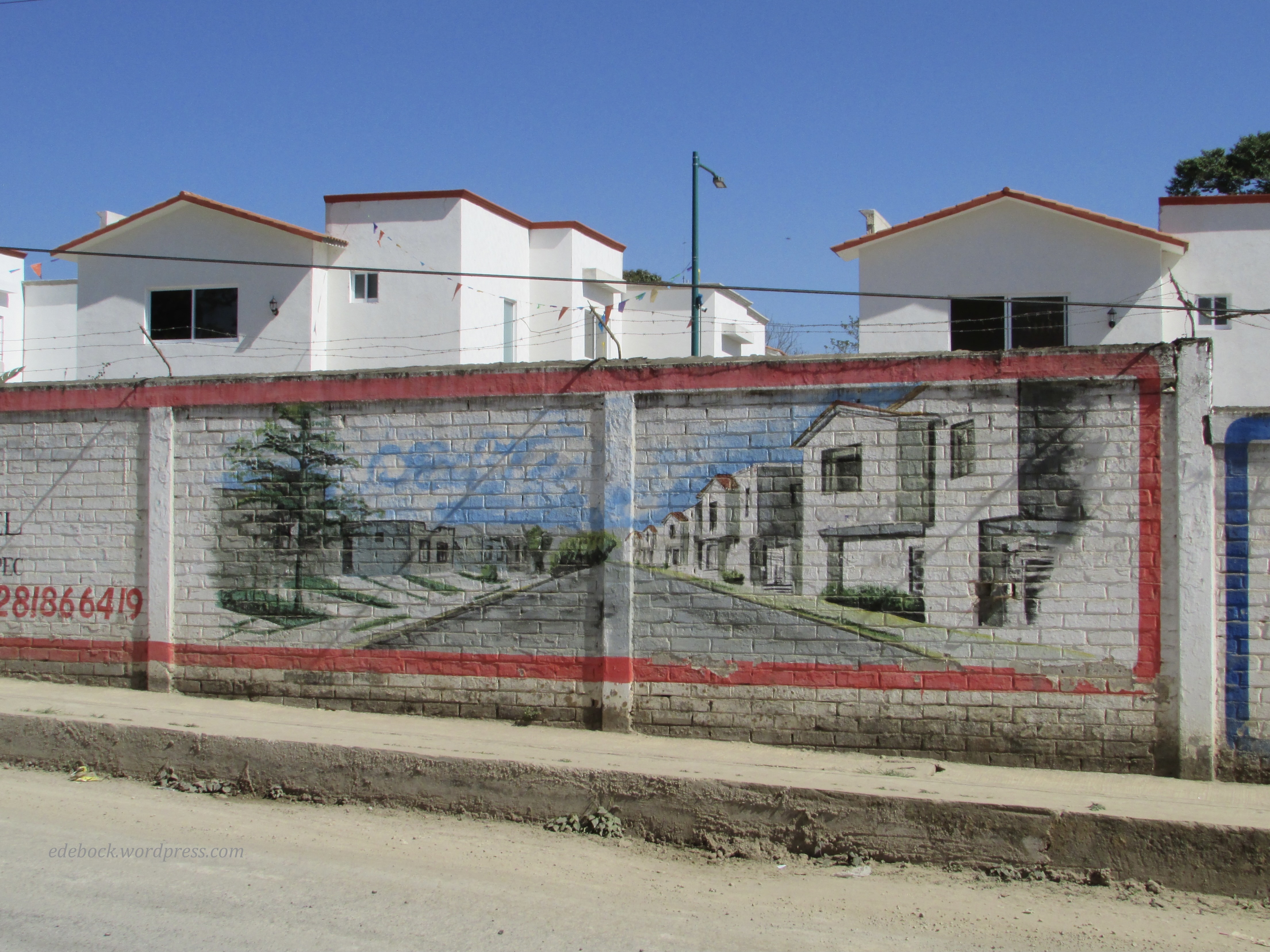
I’m guessing that the next one is real estate advertising, but I’m not sure. It’s located at the end of the street where we’re staying.

IMG_5123

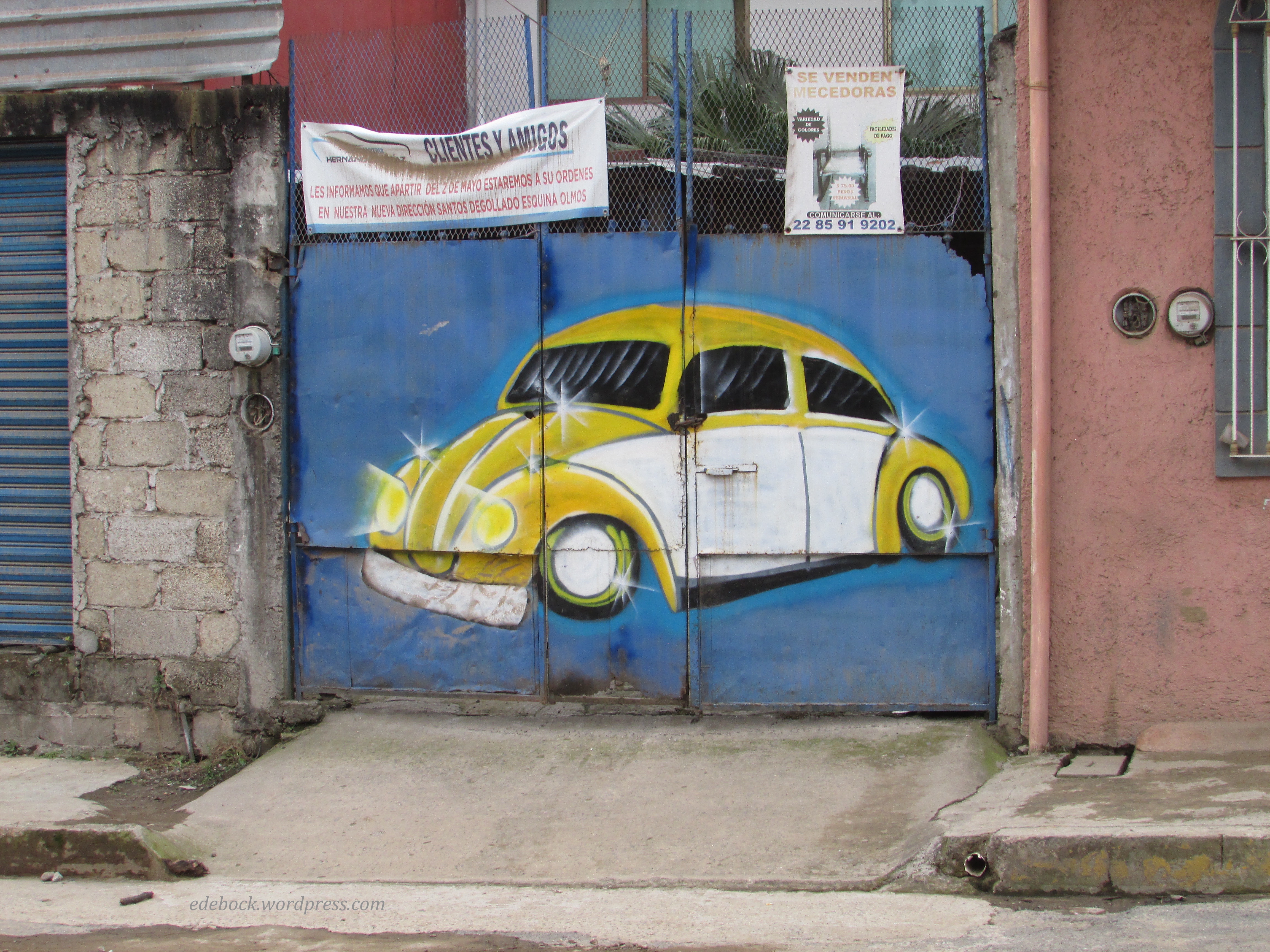
This gate, just down the hill from here, is very fitting for Coatepec as I’m sure there are more old style Volkswagen Beetles here than anywhere I’ve ever been! I like the way that the artist made the handle of the gate look like it was the door handle on the vehicle.

IMG_5130

I don’t know who the people in the next two murals are, but I think they’re gorgeous.

IMG_5124

IMG_5136

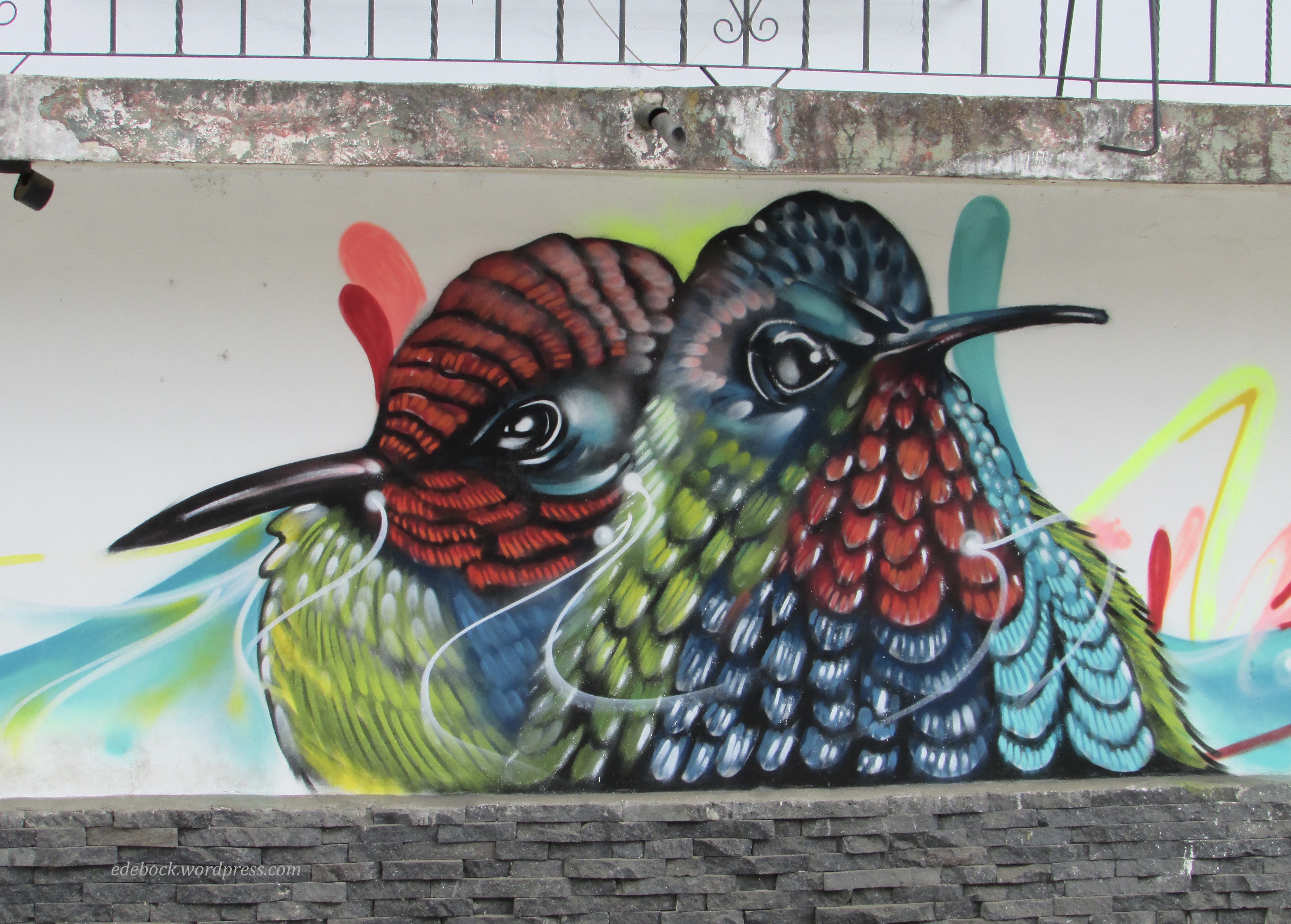
These birds caught my eye on a walk down to the centre of town today.

IMG_5135 2

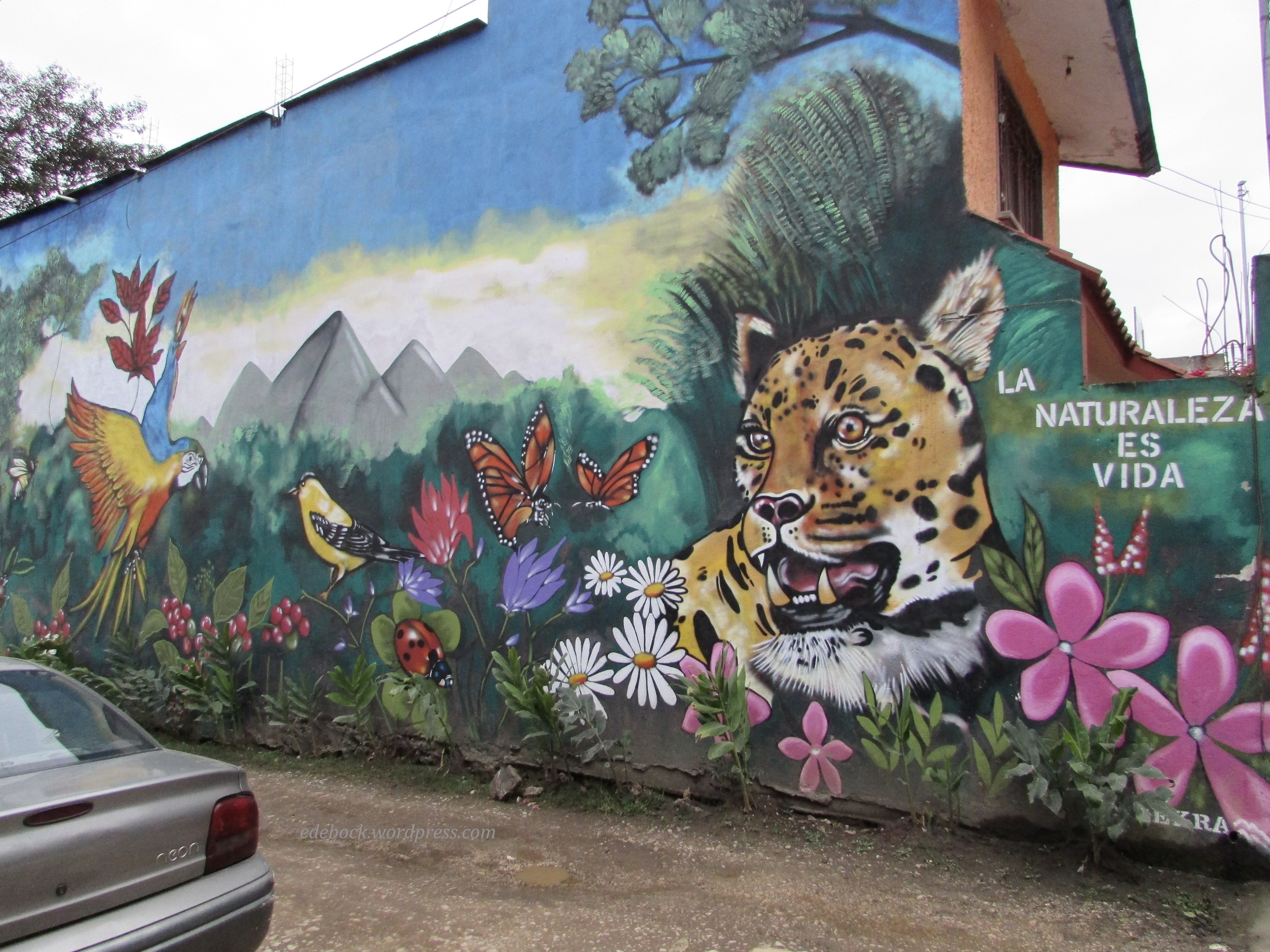
And finally, here’s another of my favourites. I can’t believe the amount of work that must have gone into this one which is located on the side of a building at the entrance to a small alley. The caption “La Naturaleza es Vida” means “nature is life”.

IMG_5133

I’m going to continue photographing murals as I come across them. Perhaps I’ll even find enough for another post!

Reunion!

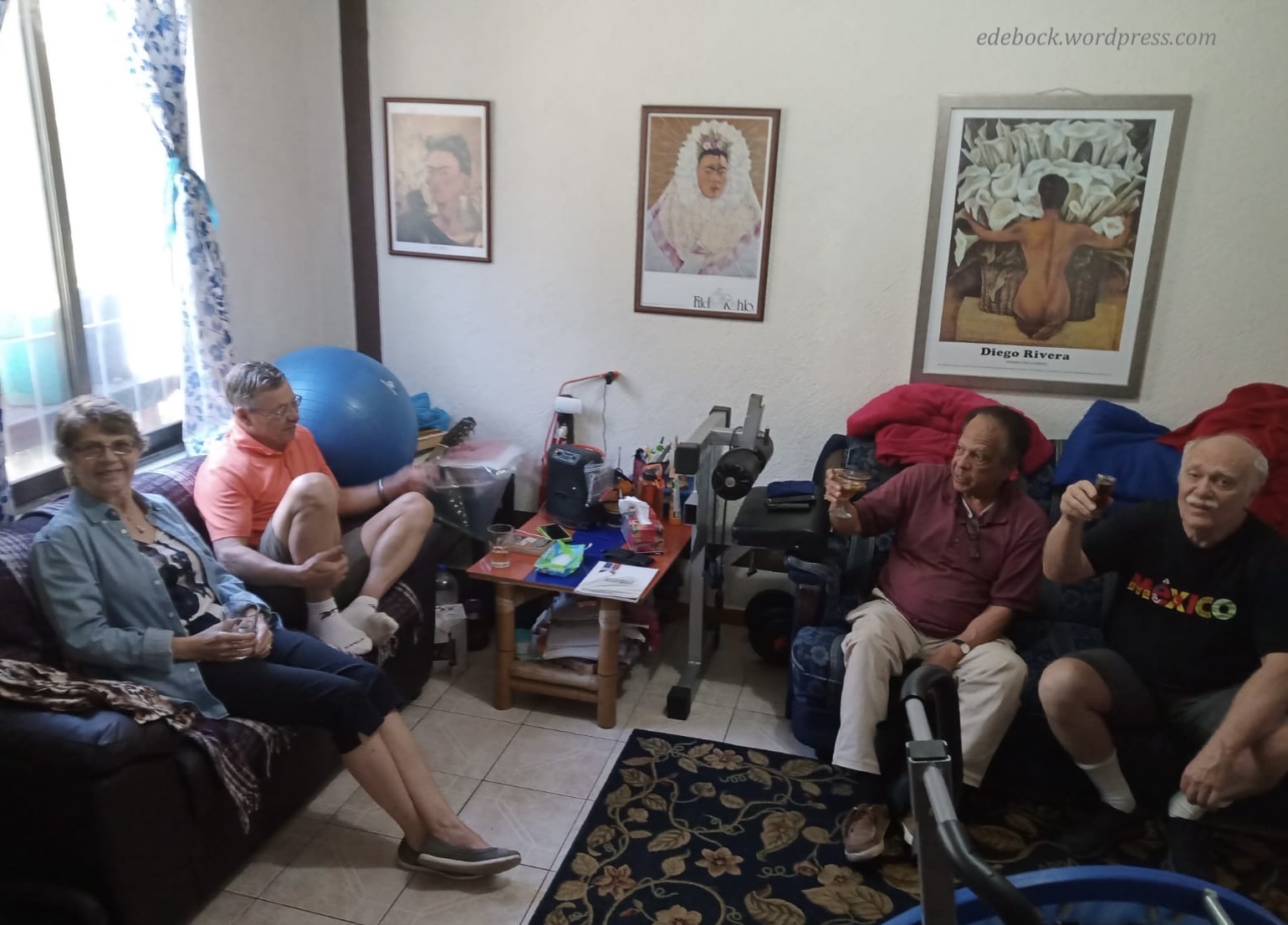
Ten years ago this month, hubby and I arrived in Dalian, China where we were to spend the next semester teaching English at Liaoning Normal University. There were six of us on the native English speaking staff and this week four of us were together again for the first time since we completed our contract there.
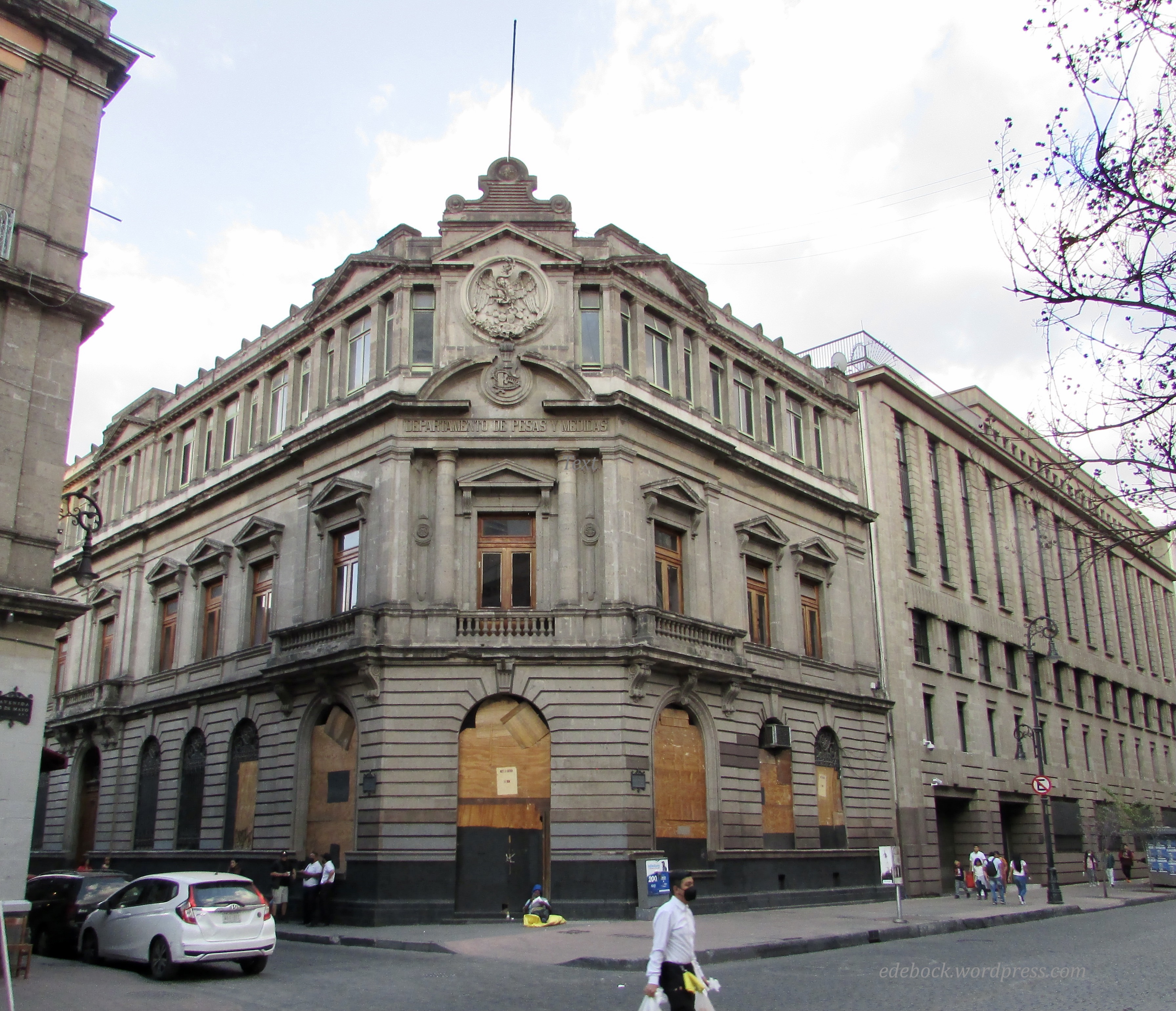
Richard M (yes, there were two Richards on our staff of six) and his wife, Colleen, who was with him in China are Americans who, after spending a few years living in China, Cambodia, and then Vietnam, have retired to Coatepec, Mexico. They are close to our age and were the only other couple amongst the teaching staff, so we spent a lot of time together in China, even climbing the Great Wall together. This is our third visit to their home here.
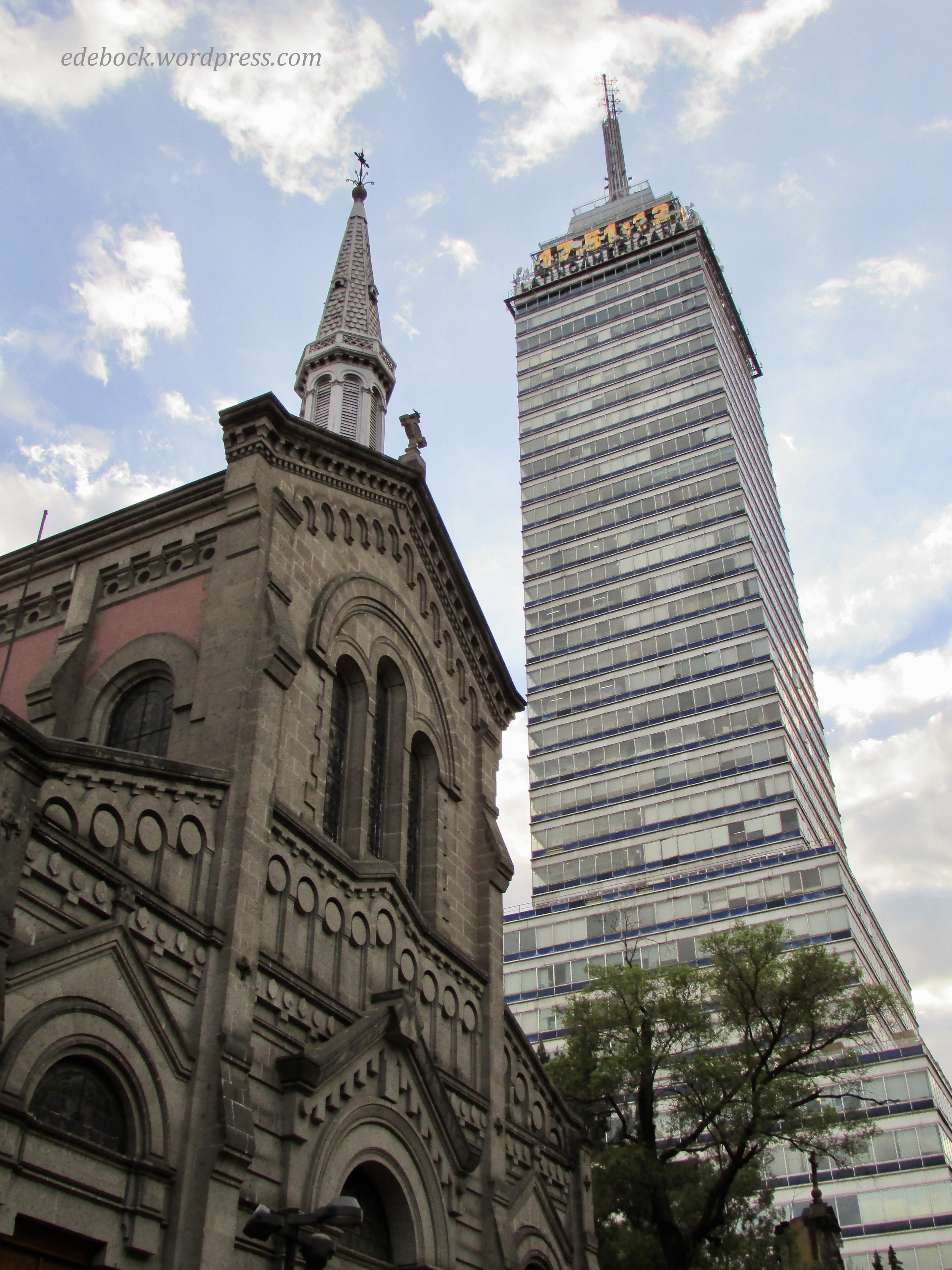
Cliff, also an American expat, was our lead teacher in Dalian and after also living in various locations in Asia, he retired to Xalapa, a larger city just 15 km from here. He arrived shortly after our last visit to the area four years ago.
On Tuesday, Cliff came out to Richard and Colleen’s and what a reunion that was! The afternoon was spent reminiscing, laughing together, looking at the yearbook that Cliff had so thoughtfully brought with him, and enjoying a delicious seafood meal prepared by Richard M.

330769949_524914976193679_3477744324364519691_n 2

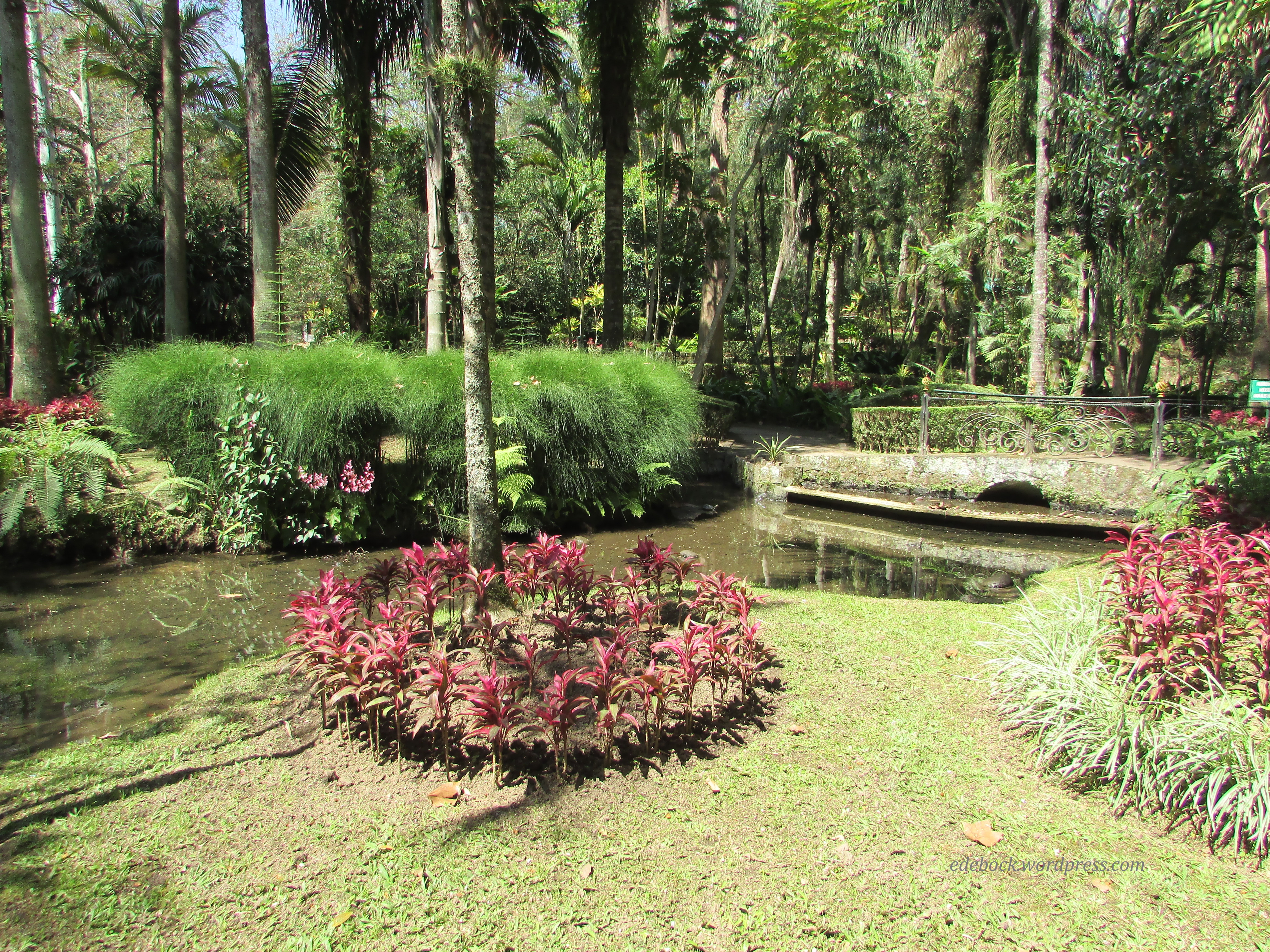
Then yesterday, the four of us met Cliff at Parque de los Tecajetes, a beautiful jungle-like park in Xalapa. Though not a huge park, it was easy to forget that we were in the middle of a city.

IMG_5107

IMG_5120

IMG_5112

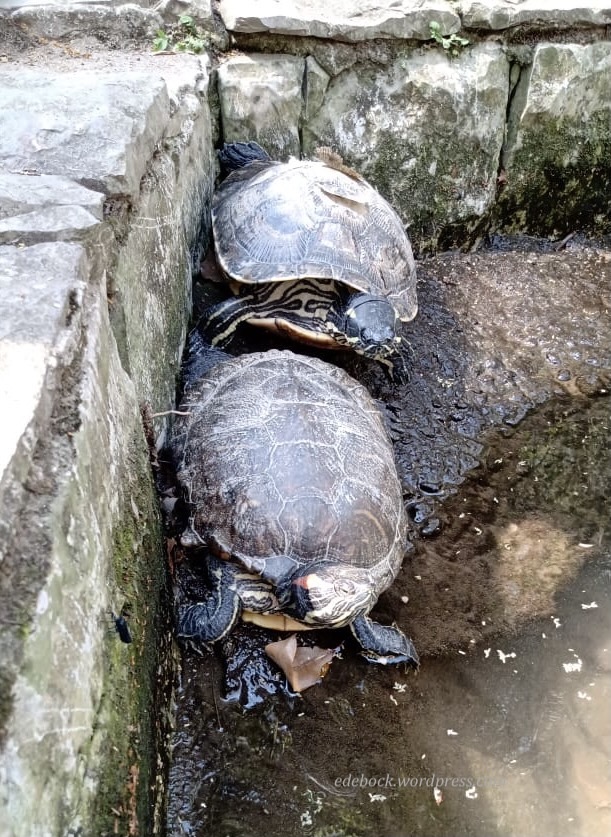
Although you can’t see any in the photo above, the pond was home to many koi. If you look closely though, you’ll see a couple of the resident turtles of which there were many. Here are two others sunning themselves in a sheltered nook.

330930255_1037080877136128_6051597872879838923_n

The egret and the greckle seemed to be posing for me!

And, of course, there were flowers! Flowers in February always amaze me.

IMG_5116

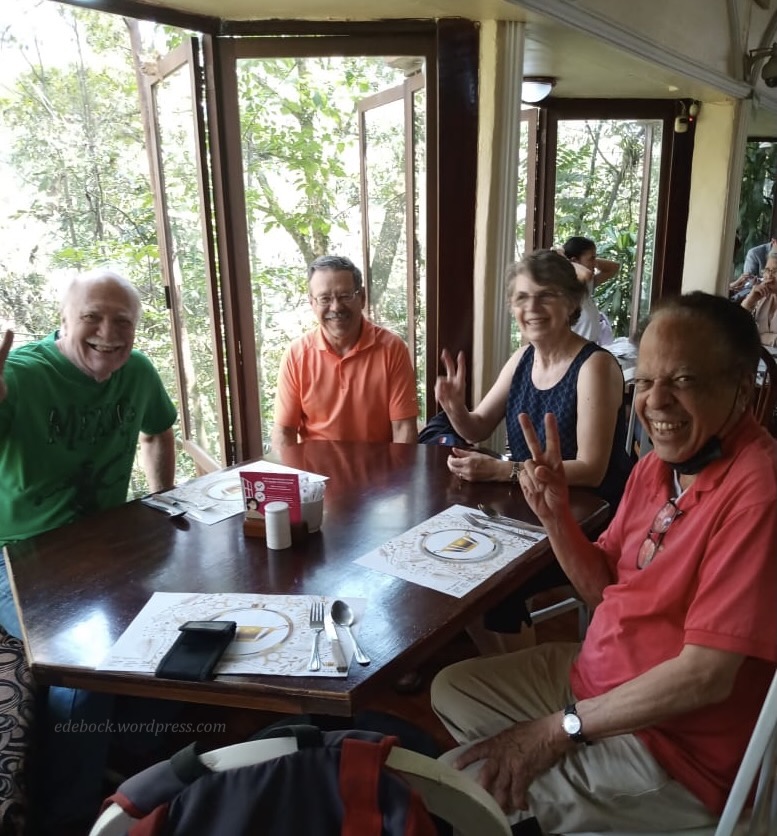
After enjoying a stroll, we had a delicious lunch together in La Estancia de los Tecajetes, a beautiful traditional Mexican restaurant overlooking the park.
330828408_976298353334814_614864196562220575_n

That’s Richard M, Richard D, myself, and Cliff. Thanks to Colleen for taking this and a couple of the other photos.

Packing again!

For the first time in almost four years, we’ve purchased tickets, made our plans, and I’m busy packing our suitcases! This will be our first flight since Covid, but our third trip to visit friends who live in Coatepec, a typical Mexican town located in the highlands about four hours east of Mexico City. On both previous trips, we checked a large suitcase, but this time we’re going carry-on only. Everything we need for two and a half weeks has to fit into our two tiny suitcases, my purse, and hubby’s small backpack.

First, let’s take a look at what I was hoping would fit in my suitcase. The photo and list below also include what I’ll be wearing on the plane.

IMG_5086

Packing list:

  • 1 pair of jeans
  • 2 pairs lightweight long pants
  • 2 pairs capris
  • 1 pair leggings
  • 1 camisole
  • 7 tops – 3 long sleeved, 1 with 3/4 length sleeves, 3 sleeveless
  • 1 dress
  • 1 dressy black jacket
  • 1 ultra light down vest
  • 1 lightweight hoodie
  • 1 light jacket
  • 1 hat
  • 1 pair sandals
  • 3 pairs shoes
  • sleepwear, underwear, and socks

You’ll probably notice that this isn’t what a typical tourist would pack for their trip to a Mexican beach resort. That’s because Coatepec isn’t a tourist destination and doesn’t have a beach. At approximately 1200 metres above sea level, the weather is pleasant, but not always hot. It cools off significantly at night and the houses don’t have central heating so we need to be prepared to dress accordingly. Although I don’t actually expect to have an opportunity to use it, I did decide to tuck a swimsuit into the bottom of my suitcase just in case! I really don’t like to leave home without one. At the last minute, when I saw that there was enough space, I also decided to squeeze in a pair of shorts.

There are two keys to successfully packing light. The first is coordinating colours. As you can see from the photo, I’ve chosen a simple colour palette and pieces that will easily mix and match to create numerous different outfits. The second key is layering. For example, the dress is very lightweight. It can be worn alone or with the little black jacket. For a chillier evening out, it can even be worn over the black leggings. The light blue denim shirt on the bottom of the pile above can be worn alone or as a third piece over any of the sleeveless tops. Depending on the weather, the hoodie, down vest, and jacket can each be worn individually or I can layer them as I will be doing when we board the plane in sub zero temperatures.

Another trick to successful packing is utilizing space wisely. Can you see hubby’s sandals, a pair of my shoes, spare eyeglasses for each of us, and two pairs of socks in this photo? I can!

IMG_5088

Many travellers swear that you can fit more into your suitcase by rolling everything instead of folding, but that hasn’t been my experience. I prefer to fold basics like pants and tops, but I roll a lot of the other items. I’ve also never used packing cubes.

Our clothes pretty much fill the tiny carry-on suitcases. My laptop (a lightweight 13 inch MacBook Air), my camera, cords, chargers, our toiletries, and our prescription medications will be in hubby’s backpack. We’ll also tuck in a few paperback books for him which he’ll leave behind when he finishes reading them. That will give us a bit of extra space if we need it on the way home. I’ve loaded five books onto my Kindle which takes up hardly any room in my travel purse.

Hopefully I haven’t forgotten anything, but if I have, there are stores in Coatepec!