Art to wear

LogoI grew up on the Pacific coast of Canada with a deep appreciation for the art of the Indigenous people of that area. Four years ago, I shared the story of the beautiful hummingbird ring made by Haisla artist, Hollie Bear Bartlett, that hubby gave me for Christmas.

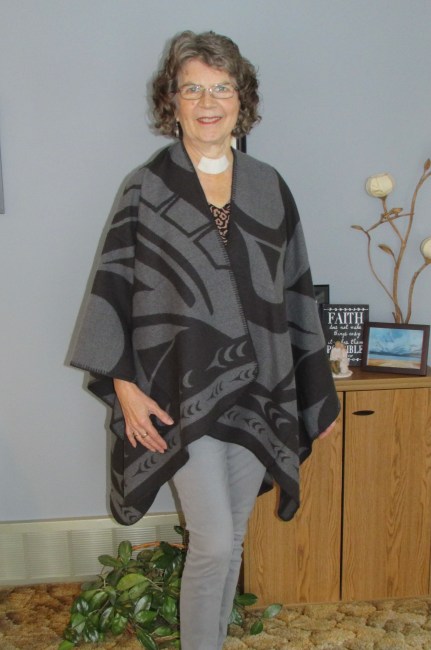
This Christmas, I received some more wearable Pacific coast art!
IMG_3493

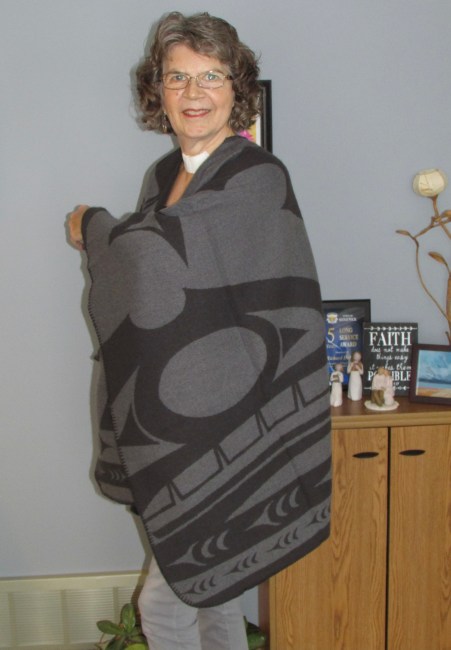
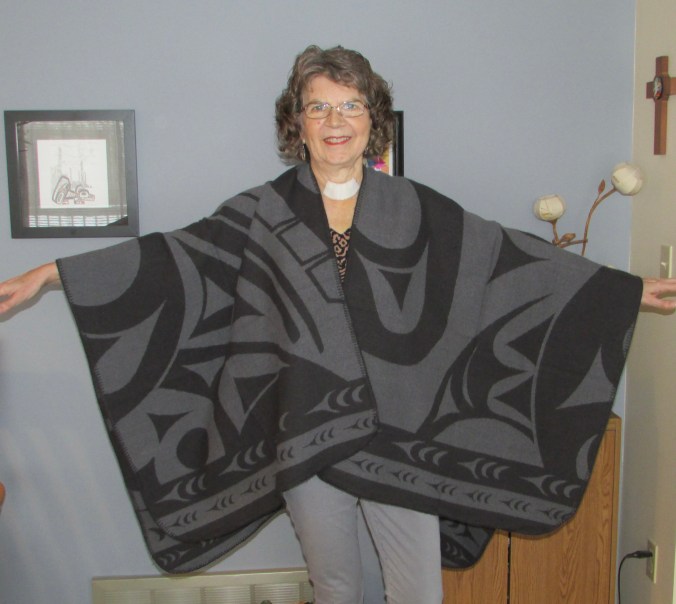
The cozy, reversible wrap, was a gift from the Vancouver branch of our family; our oldest son, his wife, and their two sons. A product of Native Northwest, it features the work of Coast Salish artist, Doug Horne. You can probably see the whale motif best in this photo. Look for the rounded head, the toothy mouth, and the blowhole on top.
IMG_3498

In the stories of the Northwest Coast, the killer whale, or orca, is associated with strength, dignity, prosperity, and longevity.

IMG_3503

100% of the art featured on Native Northwest products is designed by Indigenous artists and used with their consent. Artist names and cultural affiliations are acknowledged on all packaging and the artists are paid in fees and royalties.

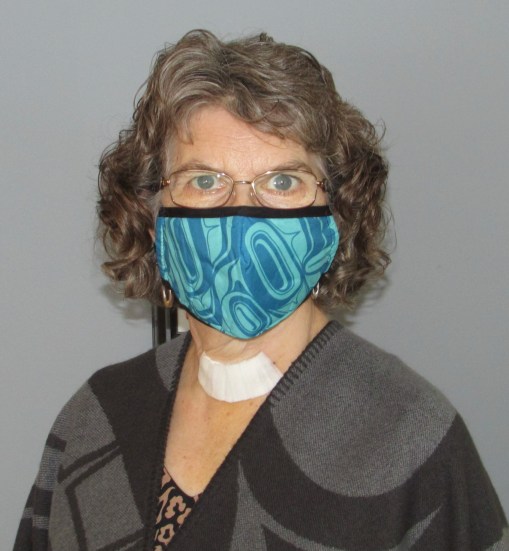
In addition to my beautiful wrap, hubby and I received two Native Northwest masks from another family member. Here, I’m wearing the eagle design by Haida artist, Roger Smith. Eagles are associated with guidance, hope, healing, and the pursuit of freedom.
IMG_3507

IMG_3509

You can easily see the tentacles on Ernest Swanson’s octopus on the mask on the right. Swanson comes from a long line of established Haida artists. The octopus is respected in the Northwest coast culture for its ability to adapt to change. The raven mask on the left, by well-known Tsimshian artist, Roy Henry Vickers, is one that I purchased when we were in Vancouver in October. It was produced by Oscardo, another company that partners with Canadian and Indigenous artists and pays royalties for each product sold. The raven is an important figure in Northwest coast art and mythology. Known as a trickster, he has the power to transform both himself and other beings. He can even change animate to inanimate, and vice versa. Hopefully, when I wear the mask, he transforms Covid into something harmless!
IMG_3495

Perhaps this is a good time to talk about the difference between cultural appropriation and cultural appreciation. Cultural appropriation involves adopting an element of another culture without respect for its meaning or significance or with the purpose of exploiting the culture for personal gain. Appreciation, on the other hand, involves a desire to learn about another culture in order to broaden one’s perspective and understanding. It also involves fair compensation and giving credit where credit is due. That’s why it’s so important to me to learn the meaning behind the symbols that appear on my wearable art and why I appreciate the fact that companies like Native Northwest and Oscardo credit the artists and pay royalties for their work.

If you’re interested in knowing more about the stories behind the symbols and creatures that appear in the art of the Pacific Northwest, the book Understanding Northwest Coast Art by Cheryl Shearar is an excellent resource.

So much anger!

We’re living in a very angry world, or so it seems to me. Everywhere we look, whether in person or on social media, people seem to be protesting or venting their anger. First it was the shutdowns, then masks, and now the prospect of a vaccine that isn’t even available yet.

Calgary-COVID-protest-Nov-28-20204

Calgary, November 28, 2020 – Global

What is really behind all this anger? It’s clearly a response to what’s going on in the world around us, but why so much anger? Why are so many people lashing out at one another and at those in positions of authority? I think it’s much more than being asked to wear a little piece of fabric over their mouth and nose or the thought of having to have an injection.

There are many different emotions that might result in anger, but anxiety, sadness, fear, frustration, disappointment, and worry are some of the most common triggers and who amongst us hasn’t experienced some of those feelings in recent months? Add to that the fact that we feel like we’ve lost control of our lives. Things that we’ve always taken for granted, like spending time with family, have been taken away. For many, the things that they’ve trusted in, things that have given them a sense of security, have also been swept away. Some have lost jobs, others have had to close businesses. Some are still working, but feeling isolated at home. In addition to all of this, with the incredible amount of false information and fear mongering being spread by irresponsible “news” sources and keyboard warriors, it should be no surprise that undiscerning people are being sucked into the swirling maelstrom of fear and anger that surrounds us. The virus is everywhere. There isn’t even anywhere we can go to escape!

Unfortunately, anger is one of the most divisive and destructive forces on the planet. It’s a poison that spreads with astonishing speed; faster perhaps than Covid itself. It turns crowds into mobs, inflicts deep wounds, and crushes the human spirit. Plus, it does absolutely nothing to alleviate the crisis that we all find ourselves in.

Anger itself isn’t the problem; it’s what you do with it. First of all, let’s look at what NOT to do.

Don’t be a spreader! Don’t spread the virus, don’t spread misinformation, and don’t spread anger.

Don’t spread the virus. Whether or not you fully agree with the measures that have been recommended or mandated in your area, suck it up and cooperate. Wear the mask, stay 6 feet (2 metres) from other people, and whenever possible, stay home. We’re all in this together. The sooner we really start working together to limit its spread, the sooner we’ll have any hope of reclaiming some of the things that we’ve lost. 

Don’t spread false information. The internet is awash with misinformation, much of it deliberately intended to mislead and to stir up fear and anger. Don’t add to the noise! Check your facts before passing something on. Chances are that your neighbour down the street or your friend from high school doesn’t know as much about epidemiology as the experts do. The lack of respect and support for doctors, scientists, and other health professionals during this pandemic is nothing short of astonishing. There is plenty of evidence to show that masks do make a difference and no, they aren’t harmful to your health. There are very, very few people who have legitimate reasons for not being able to wear one and those people should be staying home because they clearly have other issues that put them at high risk. Yes, the vaccines have been fast tracked, but that doesn’t necessarily mean that they’re dangerous. They’ve been through the same rigorous testing as any other vaccines, but because of the urgency of the present situation, they weren’t allowed to bog down in bureaucratic red tape the way things usually do.  

Don’t spread your anger. Denying that you’re angry or keeping it bottled up inside isn’t healthy, but taking it out on an unsuspecting cashier who’s simply attempting to do her job in trying circumstances doesn’t make the situation better. Neither does waving a protest sign or ranting on social media. 

So what CAN we do with our anger? What SHOULD we do? 

  • Think before you speak, post or repost.
  • Find constructive ways to express your concerns clearly and directly to the right people without trying to hurt or control anyone. This might include asking questions in an attempt to seek out the truth and understand the reasons behind measures that are being recommended or mandated.
  • Take a break. That might mean taking a self-imposed time out from social media or getting outside for some fresh air and exercise.  
  • Practice relaxation. Listen to music, write in a journal, do a few yoga poses or some deep breathing exercises… whatever works for you.
  • Pray. Pray for wisdom, understanding, and grace. Pray for those in positions of authority who are daily faced with making incredibly difficult decisions. 
  • Do something positive for someone else. Instead of writing that Facebook rant, why not write a note of encouragement to someone? Instead of attending a protest rally, look for an opportunity to volunteer in your community. 
  • Know when to seek help. If your anger feels out of control, reach out to a mental health professional. 

I’m as eager as the next person to see this pandemic come to an end, but I’m equally anxious to see us pull together and rise above the overwhelming flood of anger that threatens to crush us all. 

Are you anti pantie?

I’ve started seeing more and more articles posted on social media with titles like this one. Medical Doctor Warns that “Bacterial Pneumonias Are on the Rise” from Mask Wearing. What these articles actually talk about is the danger of wearing contaminated face masks; either repeatedly wearing the same disposable mask or wearing a cloth mask without changing and washing it regularly.

Interestingly, I’ve never seen anyone post an article warning us to stop wearing underwear! What? What does that have to do with anything? Quite a lot, actually.

Davidson Hamer, infectious disease specialist and professor of global health and medicine at Boston University, says that while there have actually been no documented cases of masks leading to fungal or bacterial infections of the upper airway or the lower airway as in pneumonia, bacterial growth could possibly occur if someone wore a mask that was contaminated. “Theoretically, it could happen, but it’s highly unlikely with just typical mask use.” Anne Monroe, an internal medicine physician and epidemiologist at George Washington University’s Milken Institute School of Public Health agrees “In terms of mask use, it is important to follow general sanitation guidelines,” she says.

Exactly the same thing is true of underwear. For both men and women, failing to wear clean underwear every day can be problematic. For those of us with vaginas, moisture build up in the nether regions is normal. It’s common knowledge that lack of cleanliness in this area can lead to rashes and infection. While men may not be quite as susceptible, they too can get yeast and urinary tract infections.

So why are people advocating that we stop wearing facial masks, but not that we stop wearing underwear? The articles that I’ve seen are often posted by anti maskers, those who would have us stop wearing facial coverings altogether as opposed to simply following good hygiene. In other words, they’d have us throw the baby out with the bathwater! My question for them would be, are you also anti pantie?

Just treat your mask like your underwear. Wear a clean one every day!

Screen Shot 2020-10-27 at 3.52.49 PM

How to stay cool while wearing a mask

LogoWhether we think they’re necessary, absolute foolishness, or an infringement on our rights and freedoms, it appears that face masks are here to stay at least for the foreseeable future. More and more municipalities and establishments are making them mandatory. Since that’s the case, the next question to ask might be how can we wear them most comfortably, especially in the heat of summer. Here are a few tips that might help.
  1. Choose the right mask. Tightly woven, but breathable fabrics such as cotton or bamboo are the best choice for comfort in hot weather. The thin, usually blue, disposable masks that many people wear aren’t as breathable so they tend to be hotter. The downside to cotton masks is that they absorb more moisture and may become damp, so it’s a good idea to have more than one with you on a hot day. A damp mask isn’t only uncomfortable, it’s less effective at blocking the virus. If you’re going to be wearing a mask outdoors, also consider colour. A lighter colour will be cooler than a dark one.
  2. Make sure it fits properly. A mask should fit securely, but be roomy enough that it doesn’t interfere with breathing.  
  3. Avoid the hottest part of the day. When possible, run errands first thing in the morning or in the evening.
  4. Go makeup free. Dermatologists recommend wearing masks over clean, lightly moisturized skin. Sweat won’t evaporate under a mask. Mixed with makeup or oily skin care products, it collects and clogs pores leading to what has been dubbed “maskne” (mask + acne). If you’re going to be wearing a mask outdoors for an extended period of time, do use a lightweight sunscreen or a moisturizer with SPF.
  5. Stay hydrated. Drinking plenty of water is always important in hot weather, but even more so when wearing a mask. It’s fine to remove your mask to take a drink, but do it when you’re a safe distance from other people and only handle it by the elastic loops or ties.

IMG_1335

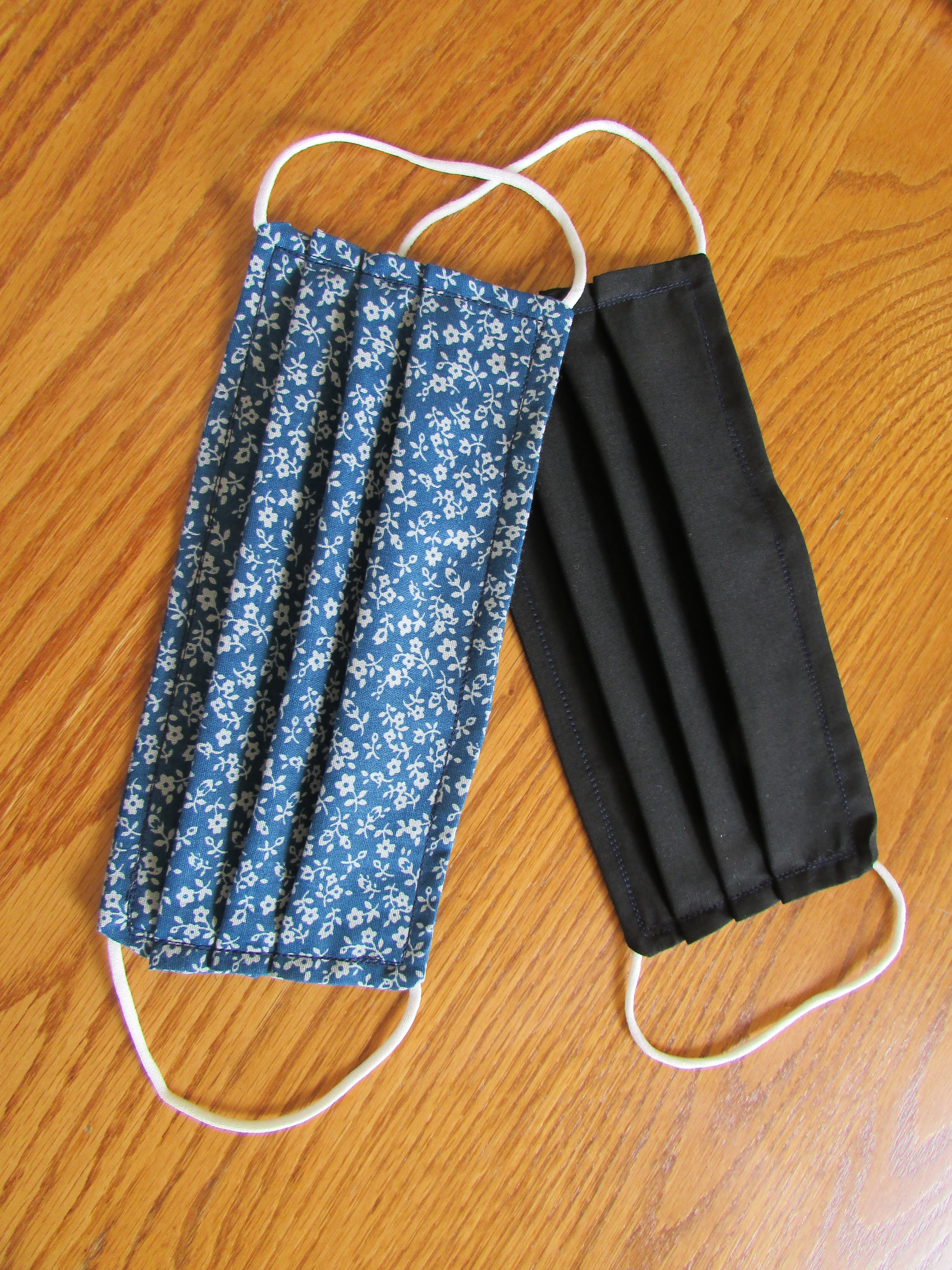
If you have a sewing machine and basic sewing skills, making your own masks is simple and a great way to use up fabric scraps. There are many excellent tutorials online. I made these two this week using this one.


Just wear the mask!

I’ve avoided wading into the wearing of masks fray because I know that it’s controversial and has the potential to erupt into another nasty conversation on Facebook similar to the one provoked by my “redneck thinking” post back in April, but I can’t stay silent any longer. I am absolutely mind boggled that this is even an area of debate! Are people so stressed and so unhappy these days that they will jump at any reason to protest?

In an attempt to understand this controversy, we need to back up several months. In the very early days of the Covid-19 pandemic, public health officials thought that the virus was primarily transmitted by people touching contaminated surfaces and then their faces. Frequent hand washing, the use of hand sanitizers, and refraining from touching your face were thought to be the best ways to prevent its spread. At first, both the World Health Organization (WHO) and the Centers for Disease Control and Prevention (CDC) said that wearing masks was unnecessary. As time progressed, however, and more was learned about this new virus, it became clear that this early thinking was inaccurate. Instead, researchers now realize that Covid-19 is primarily spread by inhaling virus-laden droplets expelled by an infected person. As time passed and studies were conducted, it also became clear that people can transmit the virus before they begin to experience symptoms and, in fact, that some people who remain asymptomatic are actually contagious. These factors explain the more recent recommendation that people wear masks in public, especially in situations where it’s difficult to maintain distance between one another. Perhaps changing advice midstream led to confusion and fuelled the anti mask movement, but I think that there are also other reasons why it’s become necessary for many businesses and municipalities to make wearing masks in public spaces mandatory.

Denial is clearly at the root of some people’s refusal. In spite of all the information to the contrary, there are still those who refuse to accept the severity of this worldwide plague. Conspiracy theories abound and negative voices question the research and the data that it presents.

At the individual level, some people protest that their personal rights and freedoms are being infringed upon when they’re told that they must cover their mouths and noses. They selfishly choose to put personal comfort above the welfare of others. We all know that wearing a mask isn’t particularly comfortable. If you’re a glasses wearer, as I am, there’s the added frustration of fogged up lenses, although I’ve discovered that folding a Kleenex (tissue) into a strip and placing it across the bridge of my nose under the top edge of the mask helps a lot. I don’t like wearing a mask any more than anyone else does, but I wear one because I don’t walk this planet alone and I don’t want to take a chance on unknowingly passing a deadly virus to someone else, particularly one of the more vulnerable amongst us. As my specialist put it so succinctly when we discussed the topic at my appointment yesterday, “In our culture, too many people think only about their rights and freedoms while forgetting that we also have responsibilities.” In Genesis 4:1-12 and elsewhere throughout scripture, God answers the question, “Am I my brother’s keeper?” with a resounding YES! Jesus said that the greatest commandment is to “Love the Lord your God with all your heart and with all your soul and with all your mind.” The second is to “Love your neighbour as yourself.” In the days of Covid-19, loving your neighbour often involves wearing a mask!

Some of the excuses that I’ve heard for not wearing masks are absolutely ludicrous.

  • Wearing masks causes oxygen deprivation or carbon dioxide poisoning or similarly, rebreathing dirty moist air will make me sick. In reality, the fibres that cloth and surgical type masks are made from aren’t dense enough to block the exchange of gases and air can also get in around the edges. The only time that this excuse might be considered legitimate would be during strenuous exercise. If this is a concern, exercise outdoors instead of in a gym and maintain distance from people who aren’t part of your household or “bubble”.
  • The mask prevents communication. Sound passes easily through masks! This is only a legitimate concern for those who are hearing impaired and who depend on lip reading. Masks with clear panels are available for those who interact regularly with someone for whom this is an actual problem.
  • Masks hide our beautiful smiles. The world will survive without your beautiful smile until this pandemic eventually comes to an end!

And then there’s the one that I’ve seen circulating around on Facebook since our province announced that masks will be required in schools for students from grade 4 to 12. Masks make children unidentifiable and assist in human trafficking! Now that’s really grasping at straws! There is absolutely no question that human trafficking is an incredibly heinous crime and far more prevalent that most people are aware of or willing to admit, but to make the wearing of masks about human trafficking is a ridiculous stretch and an insult to intelligence.

Perhaps living in Asian countries where wearing a mask when you have a simple sniffle has long been a common courtesy has influenced my thinking on this topic, but I’m truly astonished by the tempest that this has created here in North America. As more businesses and municipalities make masks mandatory, the furor increases, but there’s really one simple answer for those who don’t want to comply. If you choose not to wear a mask, stay home!

download

Function over fashion?

LogoMy friend, Kari, left an excellent comment on last Friday’s post that immediately triggered an idea for this week. She wrote, “When I choose clothes to go out these days I more often choose for comfort and function over fashion, but what makes my clothing functional has changed. I now think about things like if I can take a layer off to remove a layer of contamination after opening doors with my hip, elbow or touching a public surface. Will the sleeves be in the way for frequent hand washing? Will my hairstyle or headband keep my hair from getting in my face so I don’t have to touch my face to sweep it away?” All very valid considerations during the unusual days that we find ourselves in.

Apart from the Covid-19 pandemic, however, there are other times when it makes sense to consider function over fashion. Function was certainly a primary consideration in January when I bought new running shoes for walking on the treadmill.

Every now and then, a trend comes along that really doesn’t make sense functionally. Take the bell sleeves that were so popular a couple of years ago. The look was definitely fashionable, but not very functional. Unless the sleeves were short or three-quarter length, those bells were terribly impractical. I avoided the look for quite awhile because I didn’t want my sleeves dragging in my dinner and I certainly didn’t want to set them on fire when I was cooking! I eventually broke down and bought this top which is still hanging in my closet.

img_5508

I love the colour and the print and when I bought it I thought that once the trend had passed, I could remove the bells and be left with much more practical 3/4 length sleeves. Come to think of it, that might be a simple project to tackle while I continue sheltering at home.

Then there was the very popular cold shoulder look.

I never did buy one of those. For me, they’re a perfect example of fashion taking precedence over function. In my opinion, the purpose of a long sleeved top or sweater is to keep the wearer warm. I tend to feel chilly even when other people don’t, so why in the world would I want to leave my bare shoulders out in the cold? I’d be so uncomfortable!

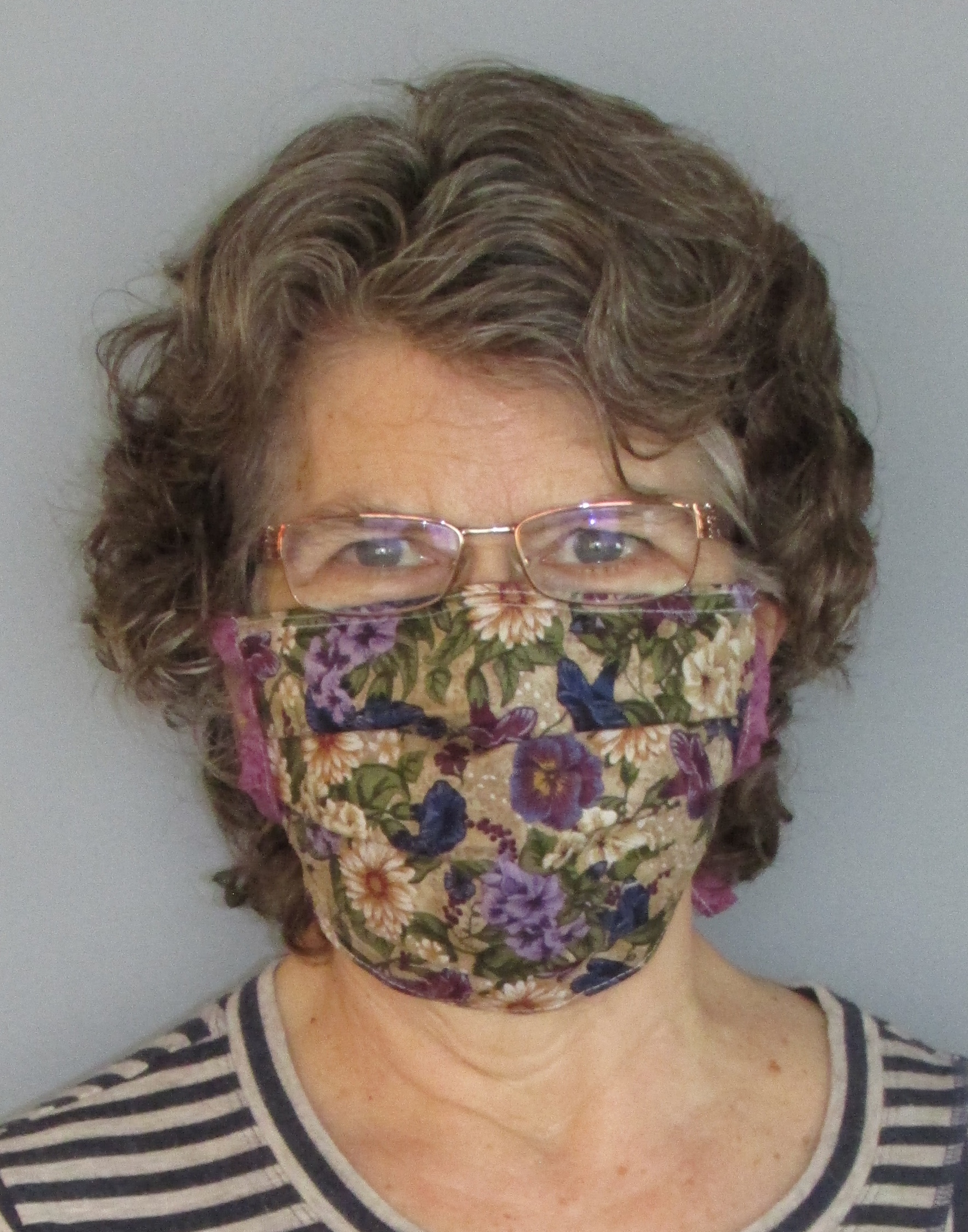
With Covid-19, a new fashion item has entered the scene. Face masks started out as purely functional and very plain in appearance, but as people started making their own, they quickly became the latest in urban chic. This one was made by the mother of a friend of mine. Definitely not my best look, but very functional!

IMG_1015 - Version 2

Who would have thought that this is what we’d be wearing in spring 2020!