How to care for sweaters

logo-by-samI hate being cold, so it seems that my style uniform this winter has become a pair of jeans or corduroy pants and a pullover sweater, or a jumper as it’s known in some parts of the world. A style uniform is simply a combination of clothing that you know you can always rely on and feel comfortable wearing.

Since I’m wearing them so much of the time, sweater care has been on my mind and today I’m going to share a few tips for keeping your sweaters going strong.

Washing 

Begin by reading the care label. Most will advise hand washing in cold or lukewarm water as hot water may cause the fibres to shrink or the sweater to become misshapen. I’m very thankful that my washer has a gentle hand wash cycle, but if you do wash by hand, avoid wringing or twisting as this is also hard on the fibres and might stretch the sweater out of shape. When washing by machine, turn the sweater inside out to help reduce pilling and place it in a mesh laundry bag so that it doesn’t catch on anything. If your sweater is wool, use a mild, wool-specific detergent. Personally, I wouldn’t buy a sweater that needs to be dry cleaned.

Drying 

If washed by hand, begin by laying the sweater out on a dry towel and rolling it to squeeze out excess water. This step isn’t usually necessary if the sweater is machine washed. To dry, lay the sweater flat on a drying rack or another towel and gently reshape if needed.

Removing pills

Pills are the tiny balls of fluff that often form on the surface of knitted fabrics regardless of how carefully you wash them. DO NOT try to pull these off. Simply run an inexpensive fabric shaver over the affected areas as needed. This is the one I use.

Storage

There are two options for storing your sweaters; folding and hanging. Folded sweaters can be piled neatly in drawers on on shelves. If you simply hang a sweater on a hanger the way you would a shirt, gravity will stretch the sweater and leave those nasty little hanger bumps at the shoulders. Instead, I’m going to show you two options for hanging your sweaters that will avoid these problems.

Method #1

Step 1:  Lay sweater flat and fold in half lining up the sleeves.
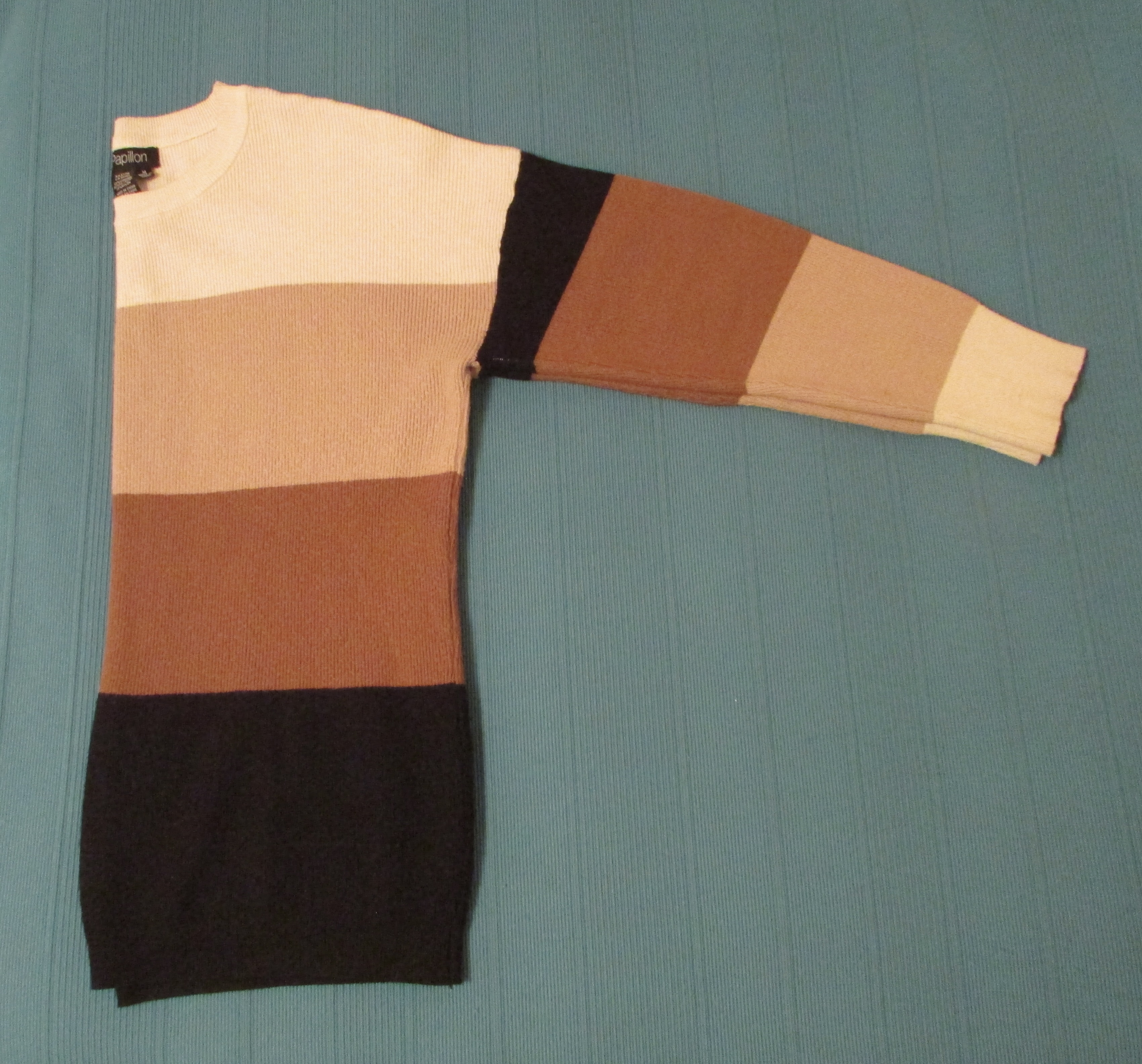
IMG_7767

Step 2:  Position hanger as shown so that the hook lies between the arm and body of the sweater.

IMG_7768

Step 3:  Wrap the sleeves over one shoulder of the hanger.
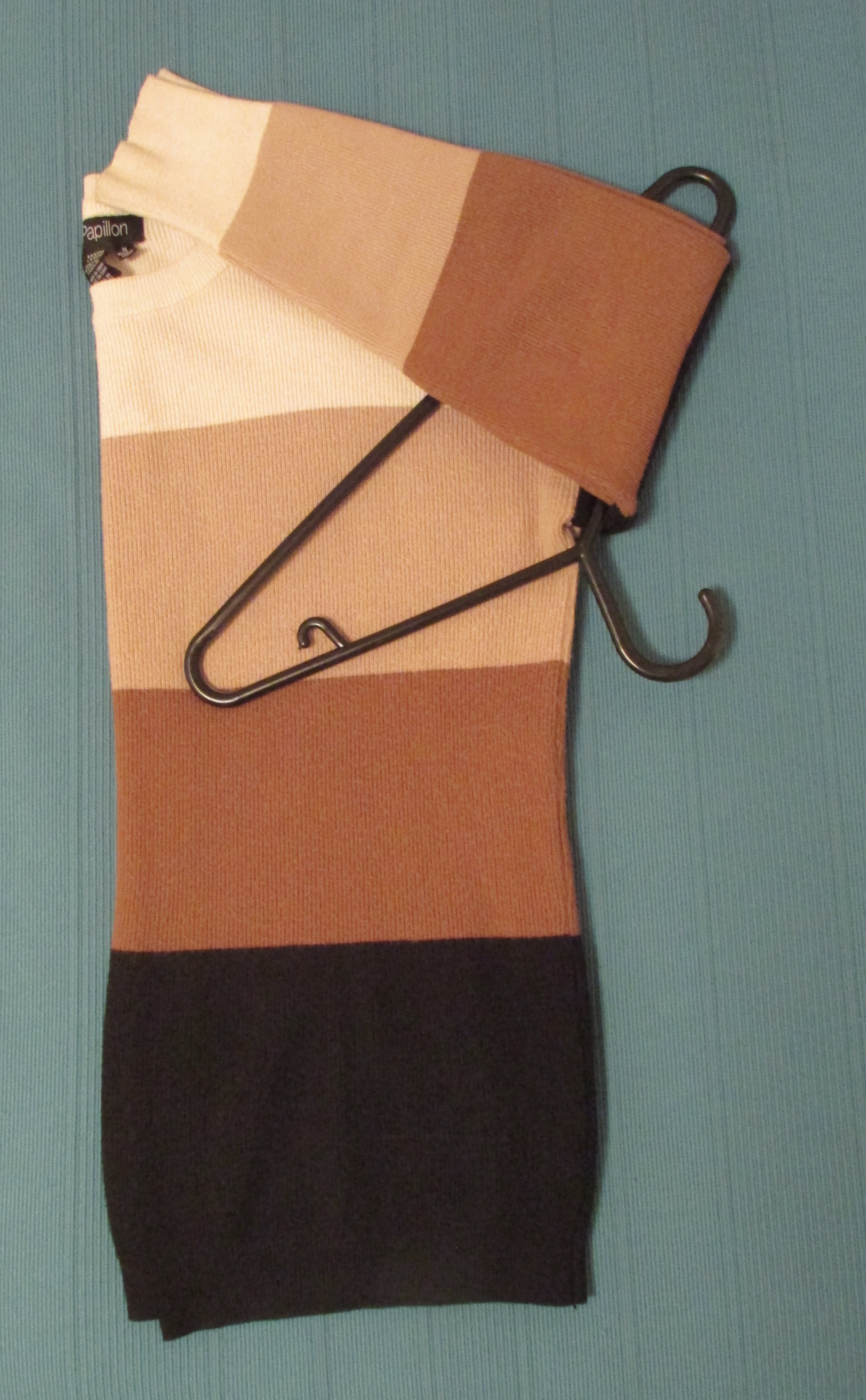
IMG_7769

Step 4:  Wrap the body of the sweater over the other side of the hanger.
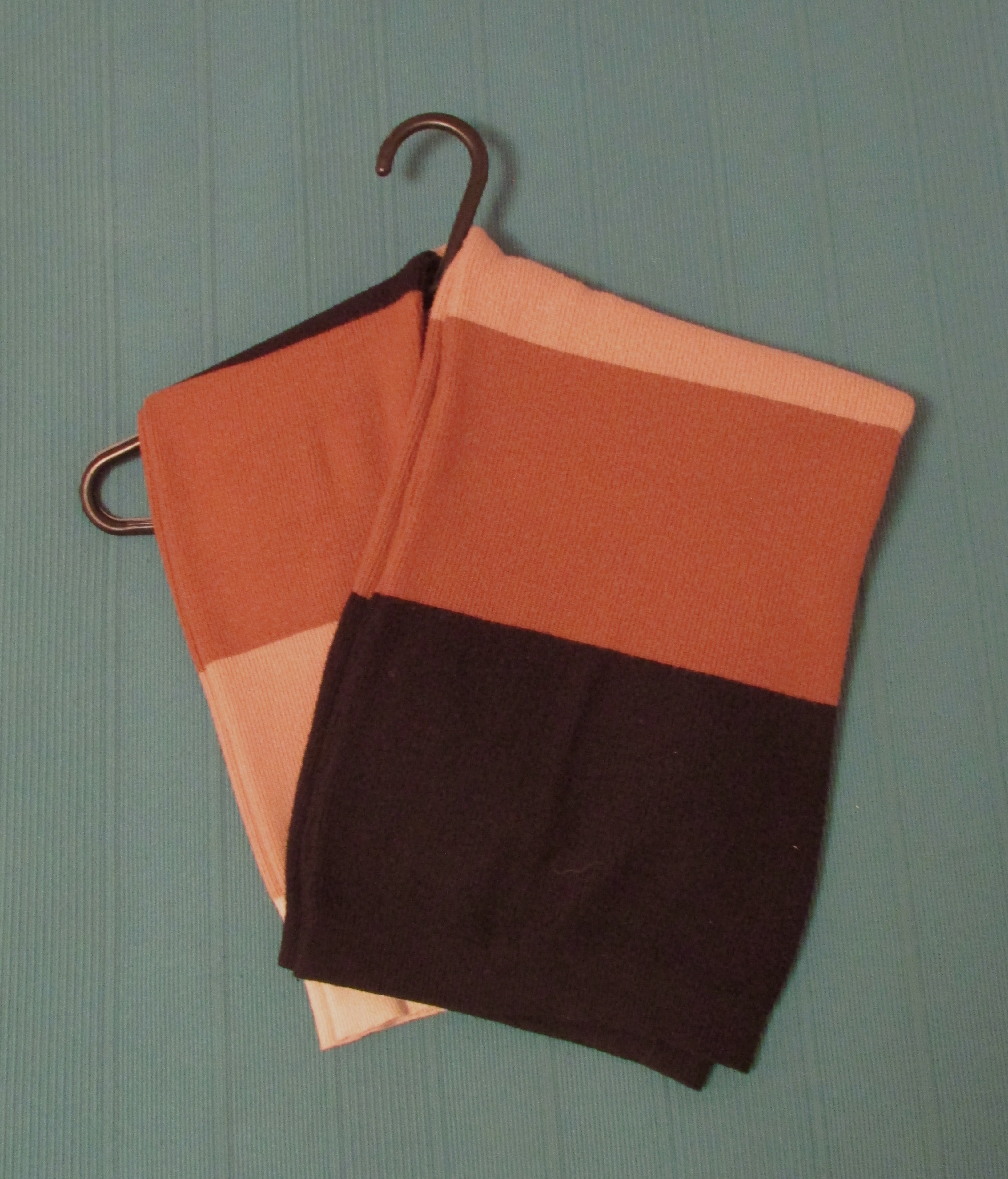
IMG_7771

Method #2

Step 1:  Same as above.

IMG_7767

Step 2:  Fold sleeves across the body of the sweater.

IMG_7772

Step 3:  Slide folded sweater over the crossbar of hanger with sleeves inside.

IMG_7773

Personally, I prefer the second method. It’s simple, neat and tidy, and there’s no chance of the sweater slipping off the hanger.

Following these tips should keep your sweaters looking good season after season.

Make your closet more eco-friendly

Tips for creating and maintaining a sustainable wardrobe

Logo by SamTo begin with, what is a sustainable wardrobe? In a nutshell, it’s one that reduces the impact that your clothes have on the planet. Adopting sustainable practices improves the quality of our lives, protects the environment, and preserves natural resources for future generations. So where do we start?
I’d recommend doing some research and trying to find sustainable and ethical clothing brands and purchasing only those, but I know how challenging it can be to find accurate information. Choosing sustainable fabrics is also easier said than done, so what’s an ordinary person to do? Here are some simple affordable steps that we can all take to dress more sustainably:

5303cf89c82d3a46d85205a6f0dc1c86

Buy less

The most sustainable anything is the one you already own. Instead of shopping, look for new ways to wear what’s already hanging in your closet. 

Quality over quantity

Instead of chasing trends and buying numerous pieces of poor quality clothing every season, avoid fast fashion altogether and invest in a few good quality pieces that will last. There’s no question that buying higher quality clothes will cost more initially, but they’ll outlast cheaper, less eco-friendly options, greatly reducing the cost per wear

The 30 wears test

I was shocked to read on the Wear Me 30 Times website that the average woman keeps a piece of clothing in her wardrobe for only 5 weeks! In my opinion, that’s inexcusable! Wear Me 30 Times is a slow-fashion initiative focused on supporting conscious consumption and increasing awareness of the problem of waste in the fashion industry. The principle is very simple. Before purchasing something, if you can honestly say that you’ll wear it a minimum 30 times (and hopefully more often), then go ahead and buy it. There are exceptions, of course. The dress you buy to wear to your son’s wedding or your 40th anniversary celebration might not pass the 30 wears test and that’s okay, but even on those occasions try to invest in something with longevity that you’ll be able to wear again. 

Shop second-hand

If you’ve been following my blog for very long, you know that I love thrift store shopping! Not only is it a great way to welcome sustainability into your wardrobe, but it’s fun. It’s like going on a treasure hunt, never knowing what you’ll find. If you’re new to this, you can find 18 tips for successful second-hand shopping here

Look for recycled fabric

Check labels. You may be surprised to find clothing or accessories made from plastic bottles or sweaters made of pre-used wool. Some brands are even making vegan leather out of pineapple rinds and apple peels!

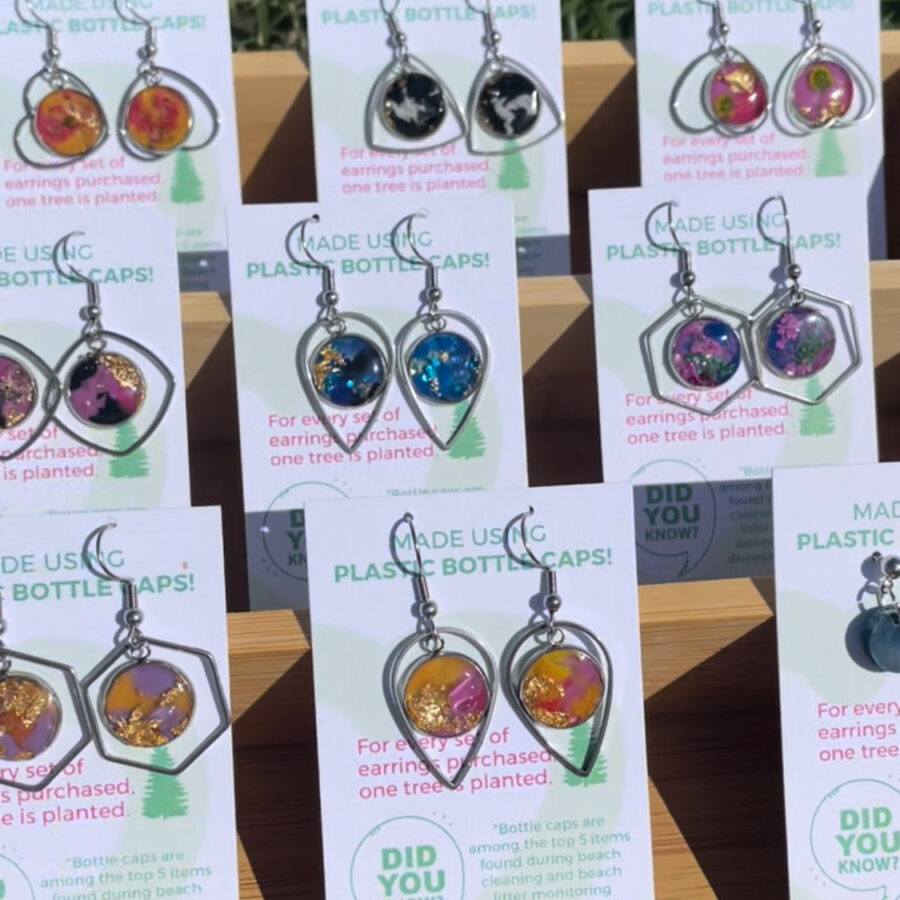
I have to give a shout-out here to Karyn, one of my former students and founder of Repurposed Plastic. Earrings from plastic bottle caps! Brilliant!

IMG_8665-900x900

Follow good laundry practices

First and foremost in this category, as mentioned in last week’s post, don’t wash clothes that aren’t dirty! With the exception of socks, underwear and workout wear, you should be able to wear an item at least three times before putting it in the laundry. Not only does washing less often save water and electricity, but it also helps your clothes last longer. Make your laundry routine even more sustainable by using eco-friendly laundry products. Wash in cold water, don’t overfill the machine, and when possible, air dry your clothes. 

Mend and repair

Prolong the life of your quality clothing by learning how to mend. It’s not as difficult as it might sound and there are lots of online articles and videos available to help. If the job is beyond your skill level, consider finding a tailor who can do it for you. Most dry cleaners also offer mending services. Taking shoes and boots to a repair shop for resoling is a cost-effective way to prolong their life while keeping perfectly good uppers out of the landfill.

Do you have any tips to add? Have you found any sustainable clothing brands that you can recommend? 

Happy Saint Patricks Day Background.

Thinking about laundry

Logo by SamOver 40 years ago, when we bought our house, one of the things I loved about it was its main floor laundry. The older I get, the more I appreciate not having to carry laundry up and down the stairs! Laundry has been part of history since humans started wearing clothes and it’s one of those household tasks that never seems to be finished! 

Here’s an interesting bit of laundry trivia… astronauts on the International Space Station wear their clothes until they can’t stand the stench then throw them in the trash. Along with other garbage, the discarded clothing is loaded onto cargo ships that generally burn up on reentry into the earth’s atmosphere. That might sound like a great solution to the never-ending laundry problem, but most of us actually want our clothes to last. Thankfully, how we do our laundry can ensure that our clothing lasts longer, help protect the environment, and even save us money!

Read the labels.

The first step in doing the laundry should happen in the clothing store. Read the labels and only buy if you’re prepared to follow the washing instructions. Personally, I very rarely buy anything that requires dry cleaning. I developed that habit in my early days of teaching school when chalk dust was the bane of every teacher’s existence. I also wanted to be able to teach a messy art class, kneel beside a student’s desk, or play with the children on the playground without having to send my clothes to the dry cleaners. With experience, however, you learn that in spite of what the labels say, some fabrics don’t actually require dry cleaning. For example, the label on this polyester top from Calvin Klein says that it should be dry cleaned, but synthetic fabrics like polyester actually wash very well. I simply launder the top using the hand wash cycle and hang it to dry to ensure that it keeps its shape.

img_4474

Treat stains.

The first rule in treating stains is to do it as quickly as possible. Stain removal pens are a great innovation. You might even want to  carry one in your purse or keep it in your desk drawer to deal with mishaps when they happen. Additional stain removal treatment might also be required before tossing the item into the laundry. This stain removal guide includes a comprehensive list of stain makers and how to deal with each of them. Once you’ve washed the item, recheck to ensure that the stain is gone. It will be much harder to remove once it’s gone through the dryer.

Wash less often.

No one wants to stink, but overwashing clothes wears them out and causes them to fade more quickly. It also wastes water and electricity. With the exception of socks, underwear and workout wear, you can likely wear an item at least 3 times before putting it in the laundry.

Don’t overload the washer.

Washing a full load rather than just a few items definitely helps conserve water, but cramming the washer full of clothes is actually detrimental. Not only do the clothes not get as clean as they ought to, but they rub together so much that it can actually be harmful to the fabric.

Turn the temperature down.

90% of the energy used to wash a load of clothes goes into heating the water! Not only does washing in cold water save electricity but it helps prevent the fibres from breaking down. It also prevents shrinkage or stretching and helps keep colours from running and fading. Don’t worry about your clothes not getting clean. Most modern detergents are designed to work well in cold water.

Extremely high dryer heat can also be damaging to clothes.

Skip the softener. 

Fabric conditioners add a lot of unnecessary chemicals and fragrances to your clothes and also coat the fibres with a waxy residue that can lead to fading and fibre breakdown. I haven’t used fabric softener or dryer sheets for years and my laundry hasn’t suffered for it.

Wash inside out.

Keep jeans and strong colours from fading and printed t-shirts from cracking by washing them inside out.

Hand wash delicate items.

Hand washing delicate garments helps them last longer. This is especially easy if your washer has a hand wash cycle! Simply place the items in mesh bags to keep them from rubbing against one another and being damaged, then let the machine do the work.

Air dry.

When we lived in Asia, we did as all our neighbours did and hung our laundry to dry. Here in Canada, I’m happy to have and use a dryer, but I still hang a lot of my clothes. Heat breaks down the elasticity in garments, causing unwanted stretching, and also contributes to shrinkage. Since pant length has always been an issue for me and I don’t want to lose even a cm, I hang all my pants to dry.

depositphotos_22198035-stock-photo-colorful-clothes-in-laundry-basket

Sustainable fashion addresses the entire process by which clothing is produced, consumed, cared for and disposed of. We can all do our part to reduce the impact of the clothing industry on the environment by not only purchasing sustainably produced clothing, but by following good laundry practices.

Do you have any tips to add to the ones given here?

Six items or less

LogoFor me, today is Day 1 of a self-imposed fashion fast. For the next 30 days, I will wear only six items from my closet. That’s right! Just six! 
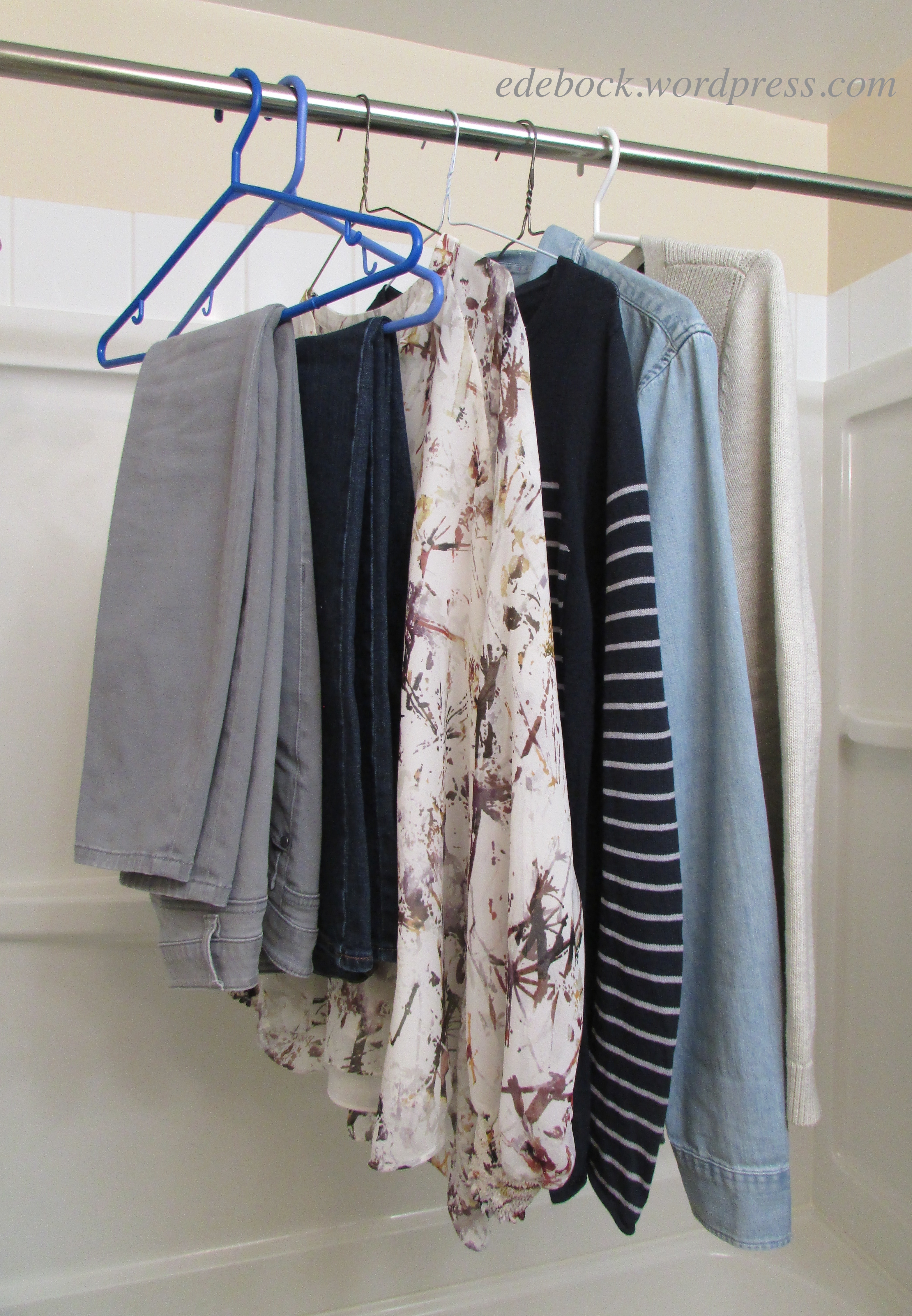
Why would I do such a crazy sounding thing, you ask. Well, first of all, because I love a challenge and secondly, because I hope to learn something from the exercise. 

The idea of a “six items or less” challenge is not a new one. In fact, they’ve been around for a decade or more. I’m not sure where the idea originated, but as early as 2015 and perhaps before that, a not-for-profit organization in the UK called Labour Behind the Label has been promoting an annual six items for six weeks fundraising challenge. Participants select six items of clothing from their wardrobes and pledge to wear only those pieces every day for six weeks while collectively raising funds to support Labour Behind the Label’s efforts to improve conditions and empower workers in the global garment industry. The annual challenge takes place during the season of Lent, a period of fasting and penance for many Catholics and other Christians. For many, that seemed a suitable time for a fashion fast. 

While there has been no single dictating thought or reason behind similar challenges, most of which are one month in duration, those who have participated have often done so to promote mindful consumption. In addition to the reasons that I gave above, I see value in seriously considering what we purchase and why as well as what effect those purchases have on the environment and the people who make them. Last time I walked through a mall, I had this challenge in mind and I was overwhelmed by the number of clothing stores, particularly for women. The options available to us are staggering! We have so much while so many in the world have so little. Perhaps this exercise will also be an opportunity for me to discover how little I really need and to see how creative I can be with what I have. 

The rules for all of these challenges have been essentially the same. Thankfully, underwear, socks, pyjamas, workout wear, coats, and footwear are not included in the six items and unlimited accessories are allowed. Though some challenges also include a rule forbidding participants from shopping for clothing for themselves during the challenge, I’m not sure if I’ll stick to that one. Living where I do, I don’t have many opportunities to shop and we do have some Christmas shopping left to do. If I happen across something that fits a gap in my wardrobe while we’re doing that, I might buy it, but I promise not to wear it until the challenge is over. 

So how did I select the six items that I will wear exclusively for the next 30 days? After much thought, this was my criteria:

  • must be able to mix and match to create many different looks 
  • requires a coordinated colour palette
  • must be pieces that I love wearing
  • must be able to layer
  • must be versatile, able to dress up or down
  • must be able to create at least one somewhat dressy outfit in case of a funeral or other unexpected event

 I decided to use a 3-2-1 formula: 3 tops, 2 pants, 1 cardigan. I realize that I have an advantage over many in that I’m retired and don’t have to think about a work wardrobe. My choices would have been somewhat different if I were still teaching. Also, since Covid is still raging around us, we aren’t going out a lot which will also make the challenge easier than it might otherwise have been. 

And now, for the big reveal, here is what I will be wearing for the next month. 

IMG_3313

I wonder how many people will even notice? 

My biggest concern going into the challenge is laundry. While all of these garments are machine washable (some on the hand wash cycle), the denim shirt is the only piece that I put in the dryer. The others are hung or laid flat to dry. To help with the laundry concern, some of these challenges do allow duplicates of the same item as long as they are exactly the same colour. I doubt that that comes into play very often though because most of us don’t have identical items hanging in our closets. I do, however, have a second pair of the dark wash jeans. If I find myself without pants to wear, I will put them into rotation, but it almost seems like cheating so I’ll try to avoid having to do that. 

Over the month, I plan to document my experience and share a bit more about the pieces that I chose, so stay tuned for more about “six items or less” in the coming weeks! 


Climbing Cerro de las Culebras

Richard M and Colleen use a laundry service here in Coatepec. For approximately $1.40 CAD per 2 kilograms of laundry, you drop it off one morning and pick it up the next afternoon washed, dried and neatly folded! When Colleen and I were on our way to pick up the laundry yesterday she pointed out a green hill in the distance. On top was a bright yellow circular tower of some sort with a cross its side. I immediately wondered if there was a trail leading up to it.

A quick internet search was all it took to discover that Cerro de las Culebras (Snake Hill) and the lookout tower on its top are easily accessible from the centre of town. This morning was warm and sunny, so after a hearty breakfast the four of us set out to find the trailhead and climb to the top. Forty-five minutes later we were at the bottom of a series of steep cobbled steps leading up the hillside.

img_3677

img_3678

The lush greenery on either side made it a beautiful climb and soon we began to catch glimpses of the town spread out below.

img_3679img_3681

Before we knew it, we were at the top where the lookout tower with a white statue of Christ at its top stands in the middle of a grassy clearing. The views of Coatepec and the surrounding mountains were spectacular. In the distance, we could even see the snow covered peak of Pico de Orizaba, Mexico’s highest mountain and a dormant volcano that last erupted between 1545 and 1566. It is the third highest mountain in North America and the world’s second highest dormant volcano, behind only Kilimanjaro in Africa.

img_3692

img_3690-version-2

img_3686

img_3687-version-2

If you can’t spot Pico De Orizaba in this photo, I’ve circled it in the next one which was taken from the top of the observation tower.

img_3697

img_3701

How often do you wash your bras?

logoAccording to a survey published in the most recent issue of Chatelaine magazine, 90% of the 1029 Canadian women questioned had washed their bras in the past week. That definitely left me wondering about the other 10%! It also prompted me to wonder how often we ought to wash our bras and whether I wash mine more often than I need to.
This is not a topic that I ever thought I’d find myself writing about, but I did a little digging and here’s what I discovered.

Lexie Sachs, a product analyst in the Good Housekeeping Institute’s textiles lab pointed out that how often you ought to wash your bra really depends on how active you are. “Every few wears should be sufficient, but it does depend on your activity level,” she explained. “For instance, if you’re outside on a humid day and end up sweating a lot, you’ll want to wash your bra sooner.” That seems like a no brainer to me.

Dr. Joshua Zeichner, a New York based dermatologist and director of cosmetic and clinical research at Mount Sinai Hospital, says that while there are no steadfast rules, you should ideally be washing your bra after every two or three wears. If you go a week or longer, he says, “you’ll really have an accumulation of dirt, oil, sweat, and bacteria.”

According to Mary Begovic Johnson, a senior scientific communications manager at Procter & Gamble, three wears is the limit. She says that a general rule of thumb is that the closer something is to your body the more frequently you should wash it. “Since bras are in intimate contact with your body we recommend washing them after three wears at the most, more often if you perspire heavily.”

Phew! Apparently I’m right in line with the experts as I almost always wash a bra after wearing it three times.

Perhaps just as important as how often we wash our bras, however, is how we wash them. I admit that during my younger years, especially when I was busy raising children and teaching school, I threw mine in the washer along with everything else. I did hang them to dry, however, as the heat of the dryer will wear out the elastic in no time. It wasn’t until I moved to Japan for a year that I started caring for my bras more tenderly. Compared to most Japanese women, I’m an Amazon. I knew that the likelihood of me finding bras to fit in that country was slight, so mine had to last the year. Consequently, I washed them by hand. Once I saw how well they lasted, I never went back to throwing them in the machine again. If you wear an underwire bra, hand washing also prevents the wire from escaping and getting caught in the drum which could lead to a costly repair bill.

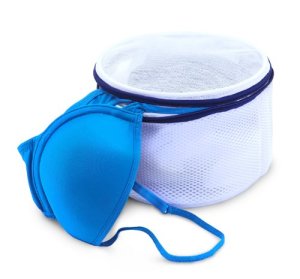
bra-bagIf time is an issue, however, or you simply hate hand washing, most most modern washers have a gentle cycle or even a hand washables cycle. Just pick up a mesh bra bag, like this one from Woolite, to cushion the bra and stop it from twisting and losing its shape, as well as from snagging other laundry items. Also, don’t forget to reshape your bras before you hang them or lie them flat to dry.

So, how often do you wash your bras or is that too personal a question? Do you hand wash them or put them in the machine? Inquiring minds want to know!