Judith Viorst: Embracing age with style

After writing about heavier topics the past couple of Fridays, I wanted to write something lighter this week and I really felt like it was time for another fashion related post. Earlier in the week, I was still thinking about what to write when Pam Lutrell shared a link to an article on her blog, Over50Feeling40, that caught my attention.

If you’re like me, you might be familiar with the children’s book, Alexander and the Terrible, Horrible, No Good, Very Bad Day, but what I didn’t know was that the author, Judith Viorst, has published at least 50 books, many for children, but some for older readers. In fact, I didn’t really know anything about Viorst until I read the article, At 94, I’m Still Worth Looking At.

It was fun to read about her “looks” throughout the years. There was her Greenwich Village Girl look in her 20s followed by her With-It Mommy look in her 30s. Later came her Hat Lady years when she seldom went out without a hat from her vast collection. Hats, she says, flattered her face, drew attention away from her aging body, and hid her hair on bad hair days. I can identify with that! Now 94, she says she’s not finished finding new looks yet. Her newest look is Tattooed Grandma. No, she hasn’t gone under the needle. Instead, she wears a temporary tattoo of a rose on the side of her neck, slightly below her right ear. Each tattoo lasts about a week.
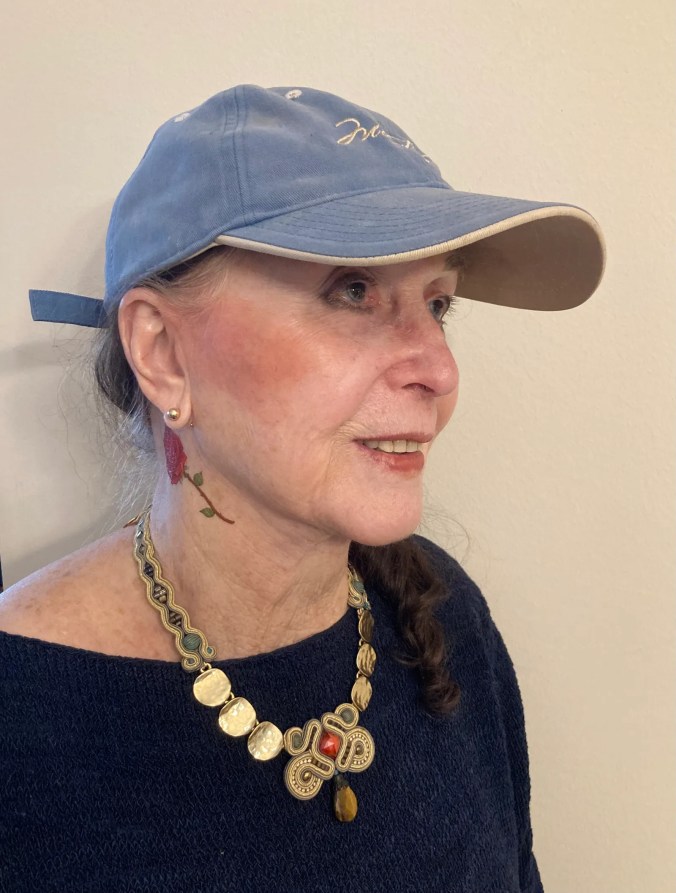
I hope I look half as good if I live to be 94!

But what really resonated with me was what Viorst had to say about aging and invisibility, something I’ve written about before on the blog. She asks, “Why does it feel so important to be seen? Aren’t there more meaningful things to think about, to read about, to do?” She writes about people who feel that attention to looks will “obscure and distract us from what is truly significant”. In response she writes, “But the people I love the most embrace what’s playful and fun as well as what’s profound. Celebrate as well as cogitate. And are willing to discuss, without apology, both eyeliner and the meaning of the universe.”

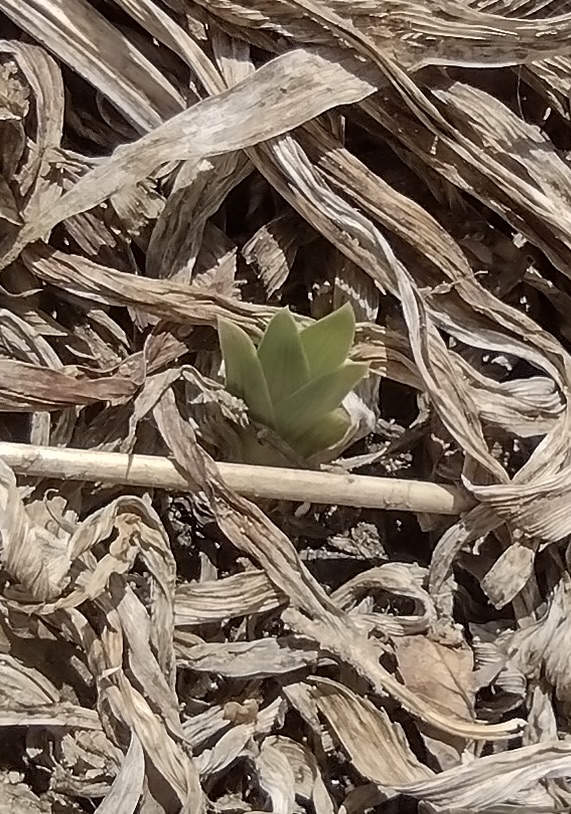
I love that! In times like these when the world seems upside down and sometimes tragedy hits close to home, regardless of our age, let’s not forget to embrace both the serious and the fun side of life. Right now, I’m looking for joy in the little things. In the coming of spring. In the tiny green shoots coming up in the garden beneath my kitchen window and the teeny, tiny buds forming on the trees.
Fighting invisibility with fashion

Logo by SamIf you haven’t read the first two instalments of this series about age related invisibility or Invisible Woman Syndrome, you can find them here and here. Today we’ll bring the series to a close by looking at how style can help us be more visible.
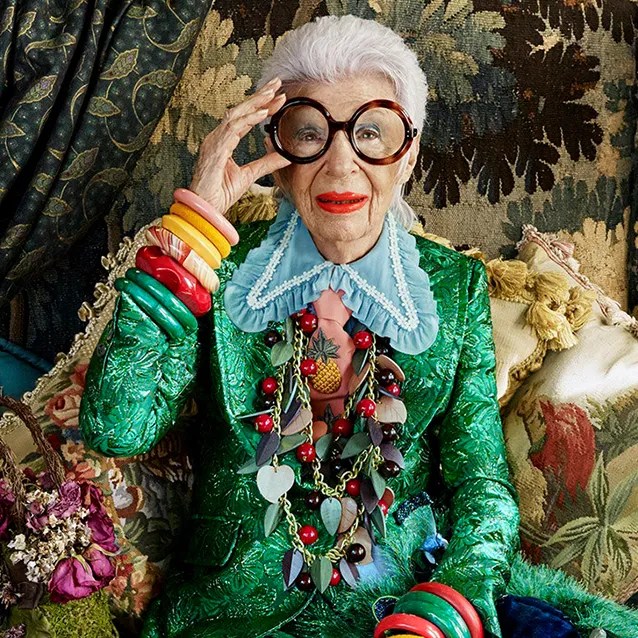
We could dress like 101-year-old style icon, Iris Apfel, but that might not be our best option!

Iris_Apfel_638x638_V1

Instead, let’s begin by thinking about style adjectives. What do you want your appearance to say about you? I’m sure you wouldn’t pick words like old, tired, or boring. No! Instead, we want to tell the world around us that we are current, confident, approachable, and comfortable with who we are. So, how do we do that?

Notice that I didn’t include words like young, youthful, or trendy. We want to be noticed for who we are, not for trying to be something we’re not. Those of us who’ve been around for 50 years or more are never going to be young again, nor do most of us want to be, but great style is possible no matter how old you are. Pay attention to trends, but add them to your wardrobe judiciously. Stay abreast of what’s modern, fresh, and relevant, but consider adding bits that are on-trend to an otherwise classic wardrobe.

Vibrant, visible women ignore so-called fashion rules and dismiss antiquated ideas of what’s “age-appropriate”. Instead, wear what makes you feel confident and present. Wear what makes your heart sing! When you do that, you’ll walk into a room with a bounce in your step and your head held high and people will notice. Being visible is about more than what you wear; it’s about attitude!

Don’t be afraid to wear colour. Neutrals might form the core of your wardrobe, but you don’t want to look drab. Even a small pop of colour can add interest and visibility to an outfit. Just make sure that you know which colours suit your skin tone and wear those close to your face.

Play with accessories. A statement necklace, an interesting bracelet, a colourful scarf, or a unique handbag will help you stand out.

Finally, wear a smile! It’s an inexpensive fashion accessory that’s available to everyone! Research has actually shown that people who smile regularly appear more confident and are more likely to be approached by others.

smile

And it doesn’t cost a cent!

You don’t have to be invisible

In yesterday’s post, I mentioned that 7 out of 10 women feel that they become invisible as they get older. Personally, however, that hasn’t been my experience, so I’ve been asking myself why. Why, at 70, don’t I feel invisible?

In spite of the fact that I’m naturally an introvert, I’ve learned to live my life out loud. Writing the blog has helped a lot with that. I’ve also taken to heart my father’s teaching that there’s no end of interesting things to do in retirement as long as you don’t need to be paid. I live a busy and productive life. 

Positive vibrant women aren’t invisible, but remaining visible as we age does require energy and intention. Here are some tips that might help:

  • Be interested and interesting. 
  • Live audaciously. Don’t be afraid to step out of your comfort zone and try something new.  
  • Stay actively involved in life.
  • Be curious. Ask questions and continue learning.
  • The world is constantly changing, but try to keep up! Even if you don’t use all of the latest technology, keep moving forward and don’t live in the past. 
  • Reading or watching the news can be depressing, but you need to know what’s going on and be able to discuss it.
  • Show an interest in people of all ages.
  • Maintain connection with interesting people; people who “see you”, who hear and respect you, who inspire you, and who value your input.
  • Be positive and engaging. Initiate conversation with those who don’t seem to notice you.
  • Learn to be upfront about what you want or need. Speaking up and making yourself heard comes easier for those who are extroverts, but we can all do it and the more you try the easier it will become.

Although women tend to experience age related invisibility more often and at a younger age than men do, these suggestions apply equally to both genders. No one should accept being made to feel inconsequential!

blog-invisible-3

In tomorrow’s Fashion Friday post I plan to bring this series to an end by looking at visibility and style. I hope you’ll join me.

Do you feel invisible?

“One’s reward for marching through the decades is a gradual process of erasure.”                                  The Book of Lost Names, Kristin Harmel

If you’re an older woman, whatever you define that to be, have you ever been made to feel invisible? Maybe you’ve been overlooked for a project or a promotion at work. Maybe you’ve felt unseen when you entered a restaurant, a garage, or another place of business. Perhaps you’ve been ignored while younger customers received all the attention from shop attendants. Maybe you’ve felt invisible at a social or family event. If you’ve ever felt this way, you’re not alone! There’s even a name for it, Invisible Woman Syndrome.

A survey by Gransnet, a busy social networking site for people over 50, revealed that 7 out of 10 women feel that they become invisible as they get older, beginning as young as age 52. Nearly two-thirds believe that older women tend to be more invisible than men of the same age. Nearly two-fifths of the respondents said that younger people have patronized them as they’ve gotten older and a quarter said that if they’re out with a younger person, people tend to talk to the younger person rather than to them.

Many of these women are well educated and have interesting careers. They may be well traveled and involved in a variety of worthwhile activities, so why are they made to feel invisible? What is it about an older woman that society finds unpalatable? Why does she lose relevance as her body ages?

Unfortunately, age discrimination is real, especially for women, but it’s more than that. Ageism walks hand in hand with sexism. Older men are often seen as powerful and distinguished; their grey hair a sign of knowledge and experience. Women, on the other hand, often feel pressured to appear younger than they are in order to be taken seriously.

Personally, I’ve really only noticed the onset of age related invisibility in one area. I no longer have to put up with the unwanted and sometimes inappropriate sexual attention from men that seems to go along with being a younger woman. I see that as positive, but it doesn’t work in favour of those older women without partners who are interested in dating and forging relationships with members of the opposite sex. Too often, they go unseen while older men look instead at women who are twenty years younger.

So, do we simply accept being invisible? Short of jumping up and down and screaming, “CAN’T YOU SEE ME?” what can we do to be more visible? In order to keep this post from becoming too long, that will be the topic of tomorrow’s post. In the meantime, though, I’d really like to hear your thoughts about this topic. What has your experience been? If you don’t feel comfortable sharing here, please feel free to email me at elainedebock@gmail.com.

Screen Shot 2022-10-16 at 4.36.48 PM

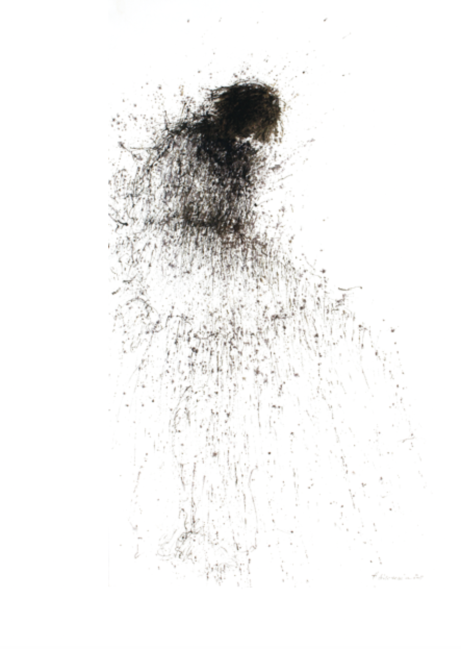
Artwork by Hanna Sidorowicz