International Women’s Day and Kiva

Tomorrow, March 8, is International Women’s Day, a day set aside to celebrate the social, economic, cultural and political achievements of women. It also serves as a reminder that there is still a lot of work to be done to empower women and achieve gender equality, especially in developing countries where they are at greater risk of prejudice and gender-based violence. Women’s rights have come a long way since the first International Women’s Day in 1911 but we still have a long way to go!

Although different countries and different organizations have chosen differing themes for International Women’s Day 2023, they all revolve around the idea of equality and equity for women. Equality means giving all people equal access to rights and opportunities while equity refers to allocating resources based on the needs of individuals without bias or discrimination. That’s where Kiva comes in and why I’m choosing to focus on this non-profit micro-lending organization on International Women’s Day this year.

It’s all well and good to talk about the rights of women and the need for gender equality, but unless we’re willing to actually do something, that’s all it is. Talk doesn’t change anything! Change requires action, so what can you do? How can you make a difference?

graphic-gender-equity-1-billion-women-unbanked_2xLet’s begin by looking at some startling facts. Research shows that women typically invest a higher proportion of their earnings in their families and communities than men do, but in order to do so they need access to the full range of credit, banking and financial services. 740 million women worldwide, however, have little or no access to financial services. Because so many women are excluded from accessing financial assistance, it’s difficult for them to start businesses, pursue higher education, or improve their livelihood. Kiva aims to change that! Since 2017, the number of unbanked women has dropped by 24%. If this trend were to continue, the number of women without access to financial services could reach zero in less than 20 years!
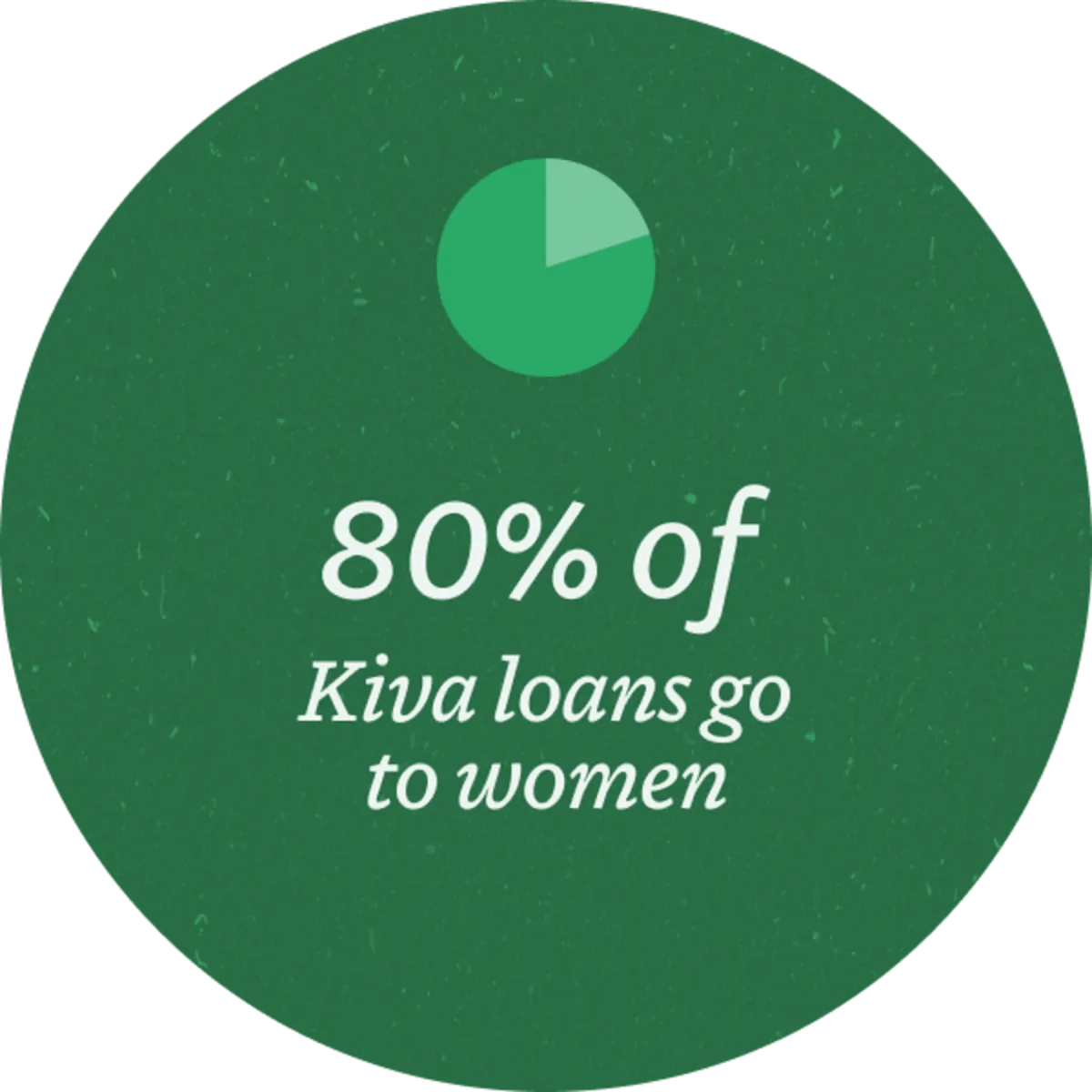
More than 80% of Kiva loans go to women, women who have historically been denied access to traditional banking services. Kivagraphic-kiva-8-percent-loans-go-to-women-1_2x loans enable them to become financially stable, resilient, and self-reliant, allowing them to better support and protect themselves and their families from abuse, violence, and financial dependence.
So, why not celebrate International Women’s Day 2023 by making a loan to a woman in one of the 70+ countries on 5 continents served by Kiva? It’s easy, it costs as little as $25, and it makes a difference! 

If you’re not familiar with Kiva, here’s how it works. Click here to choose a woman or group of women to support. Lend $25 or more to help crowdfund the full loan amount. As the borrower earns an income and begins to repay her loan, you and the other lenders who helped fund her loan are repaid. These funds go directly into your Kiva account. When your account reaches $25 again, you can relend those same dollars to support another borrower! It’s truly the gift that keeps on giving!

Since I made my first two loans in March of 2010, I’ve helped fund 83 loans in 31 countries. Though Kiva provides loans to both men and women, I choose to lend to women who are borrowing money to purchase specific items that they will use to generate income to help them support their families and educate their children. Over the years, I’ve invested in a variety of livestock, seeds and fertilizer, numerous sewing machines, fishing equipment, hairdressing tools, restaurant stoves and refrigerators, a mill for grinding corn, heavy duty washing machines, a portable food stall, and probably a few other items. I also helped renovate some rental properties earlier this year.

To mark International Women’s Day, I decided to make another loan this week. Since my Kiva account was standing at less than $2 (I always relend as soon as it reaches $25) that involved topping it up, but I was more than happy to put my money where my mouth is as the old saying goes. Just think of the difference that we could make for women worldwide if we each invested just $25!

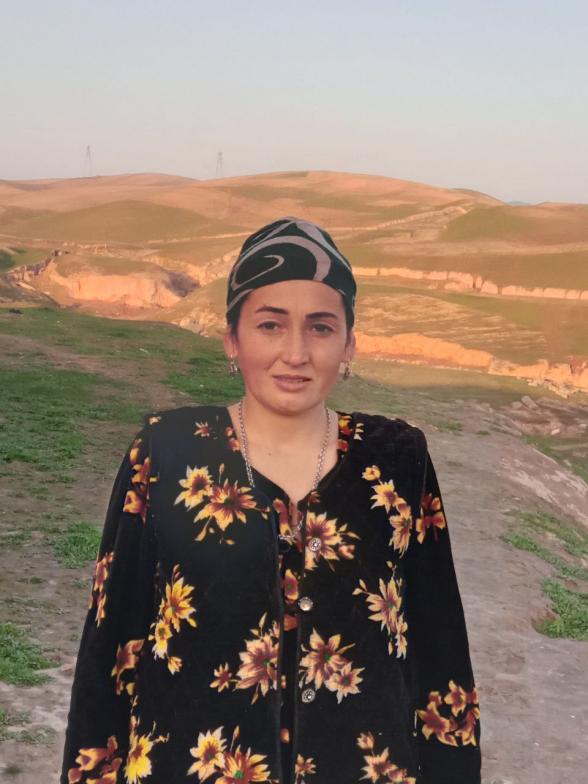
After reading through several loan descriptions, I found the one I wanted to help fund this time. Shamsiya is a 28-year-old mother of 5 children living in Tajikistan. She recently learned to sew women’s clothing and was seeking a loan to buy a sewing machine and supplies to start her own business.

fc8f6d9a81972e7a598e8ecb9c1d364b

bannerlong

images

What are you doing to make a difference this International Women’s Day? Please let us know in the comment section below.

International Women’s Day – Break The Bias

Tomorrow is International Women’s Day. It saddens me that we should even need to set aside a day to focus on women’s rights, to remind the world that women deserve equality. The reality, however, is that we need to do much more than simply dedicating one day a year to drawing attention to the plight of women worldwide. This needs to be addressed 365 days of the year!

The theme of International Women’s Day 2022 is #BreakTheBias. We are urged to:

Imagine a gender equal world.

A world free of bias, stereotypes, and discrimination.

A world that is diverse, equitable, and inclusive.

A world where difference is valued and celebrated.

In reality, we need to do more than just imagine that world. We need to be aware that gender bias, discrimination and stereotyping exist and actively call them out each and every time we see them. Whether deliberate or unconscious, gender bias makes it difficult for women to move ahead. Even in the developed countries of the world, disparity continues to exist in the workplace, in education, and in health care.

Globally, most women are employed in lower-wage occupations and lower paid industries than men. They are underrepresented in corporations in general and the percentage of women decreases with each step up the corporate ladder. In 2016, only 3 of the 100 highest paid CEOs in Canada were women.

A 2015 UN Human Rights report raised concerns about “the persisting inequalities between women and men” in Canada including the “high level of pay gap.” Five years later, in 2020, Statistics Canada reported that on an average, full-time working women earned 76.8 cents for every dollar made by men. The gap is even wider for women who are Indigenous, members of other visible minorities, newcomers, or living with a disability. The situation is similar in other first world nations. In the UK, for example, women earn an average of 18% less than men.

Gender bias in education is much more subtle in the western world than in countries like Pakistan where over 50% of girls receive no formal education and South Sudan where that number is closer to 75%. Here in Canada, in spite of the fact that 56% of post secondary students are female, women continue to be underrepresented in STEM majors (science, technology, engineering, and mathematics). In spite of the fact that, on average, they don’t outperform girls in high school math or physics, there continues to be a perception that boys are naturally more adept in these areas. This is the kind of stereotype that we need to call out!

Bias also affects the quality of health care that women receive. Too often, doctors view men with chronic pain as “brave” or “stoic” while women are seen as “emotional” or even “hysterical”. Her pain is much more likely to be treated as the symptom of a mental health condition, rather than a physical one.

Important biological differences between the sexes can influence how diseases, drugs, and other therapies affect people, but medical research has often been limited to male participants. They are considered better test subjects because they don’t have menstrual cycles and can’t become pregnant! This lack of inclusivity has led to gaps in knowledge that are detrimental to women’s health.

Lastly, traditional attitudes by which women are regarded as subordinate to men continue to perpetuate widespread abuse. Gender-based violence happens in all communities, cultures, and faith groups, and at every age and every income level, but some women are at higher risk than others. More than 40% of all Canadian women have experienced some form of intimate partner violence, but this number rises to 60% for Indigenous women. Every 6 days a woman in Canada is killed by her intimate partner. The homicide rate for women who identify as Indigenous is more than 5 times higher than that of all other women. Immigrant women are more vulnerable to domestic abuse often due to economic dependence, language barrier, and a lack of knowledge about community resources. In addition, when incidents of abuse within visible minority groups are reported, they are often taken less seriously by the criminal law system and the perpetrators routinely receive less harsh punishments. Younger women and women with disabilities are at much higher risk of experiencing violence. According to a 2019 report from Statistics Canada, 30% of all women over the age of 15 report the they have been assaulted sexually compared to 8% of men. The actual number is, of course, much higher as many incidents are never reported. 69% of all those who experience incidents of cybercrime are women.

On International Women’s Day and always, we need men and women to advocate for equality for all. Together, we can break the bias!

IMG_3619

Around the world, people are crossing their arms in the International Women’s Day #BreakTheBias pose to show solidarity. Why not join the movement? Post your photo on social media using #IWD2022 and #BreakTheBias to encourage other people to commit to working toward a more inclusive world for all.

Images: internationalwomensday.com

International Women’s Day 2021

images

Today is International Women’s Day. It saddens me that we should even need to set aside a day to focus on women’s rights, to remind the world that women deserve equality. It was never meant to be this way. 

I’ve been focusing a lot on what the Bible has to say about womanhood in recent weeks as I’ve started leading a ladies Bible study on women of the Bible. The very first statement about women in the Bible comes in the first chapter of Genesis. Verses 27-31 say: 

So God created mankind in his own image, in the image of God he created them; male and female he created them. God blessed them and said to them, “Be fruitful and increase in number; fill the earth and subdue it. Rule over the fish in the sea and the birds in the sky and over every living creature that moves on the ground.” Then God said, “I give you every seed-bearing plant on the face of the whole earth and every tree that has fruit with seed in it. They will be yours for food. And to all the beasts of the earth and all the birds in the sky and all the creatures that move along the ground—everything that has the breath of life in it—I give every green plant for food.” And it was so. God saw all that he had made, and it was very good. 

Do you see what I see? First of all, we’re told that God created men and women in His own image! Both were meant to be His image bearers. Second, He gave both of them dominion over and responsibility for His creation. It was a joint assignment. God did not give men dominion over women! That was never His intention. And finally, God saw all that He had made, and it was very good. His plan was equality for men and women and it was very good

In chapter 2 of Genesis we’re given a more detailed creation story. Verse 18 says, “The Lord God said, “It is not good for the man to be alone. I will make a helper suitable for him.” The King James Version of the Bible uses the words help meet to describe the woman’s role. “Meet” is an archaic adjective meaning suitable or proper, so the phrase simply means a suitable helper. Perhaps this is where the idea that men should dominate came from, but that was never God’s intent. In the original language, the word translated as helper or help meet was ezer. Ezer is a word that appears 21 times in the Old Testament; twice in Genesis for the woman, 3 times for nations to whom Israel appealed for military aid, and 16 times to refer to God as Israel’s helper, their shield and defence. It was used consistently in a military context. That hardly brings to mind a meek or subservient helper! Perhaps strong helper would be a better translation. 

Sadly, God’s plan for a partnership between men and women didn’t play out in human history. It didn’t take long for the relationship to deteriorate to the point where women were simply possessions of their fathers or husbands, barely a step above their livestock. Their primary role was to serve the men in their lives and to produce sons to carry on their husband’s family line. 

These may be radical thoughts for a woman who attends a patriarchal church, but I’ve always been a bit of a rebel and women’s issues have been a passion of mine for a very long time. The reality is that we need to do much more than set aside one day a year to draw attention to the plight of women worldwide. It is something that needs to be addressed 365 days of the year! 

As long as there are places on this planet where parents sell their daughters because they can’t afford to feed them, where girls walk an average of 6 kilometres a day to collect clean water for their households, where they are denied education, where they are forced to undergo female genital mutilation and/or forced into child marriage, we must do more than celebrate the social, economic, cultural, and political achievements of women on International Women’s Day. It’s easy to turn a blind eye to the atrocities inflicted on women in foreign lands when they aren’t happening in our own backyard, but there are women living in abject poverty in Canada, the United States, and other developed countries. Objectifying and exploiting women is still alive and well in our culture. Violence against women is still prevalent. Human trafficking happens in our own neighbourhoods.  

Though the situation may have improved over the years, women have yet to achieve equality in the workplace. As a current example, women are at the forefront of the battle against Covid-19 as front-line and health sector workers, scientists, doctors and caregivers, yet according to a UN report, they get paid 11 percent less globally than their male counterparts!  

What, then, can we do to press for progress for women? First of all, we need to educate ourselves, to look beyond our comfortable lives and become aware of what the issues are and which reputable organizations are working to change them. If you’re serious about wanting to have an impact on the lives of women around the world, I would suggest that you begin by reading Half the Sky: Turning Oppression into Opportunity for Women Worldwide, by Pulitzer Prize winning journalists Nicholas D. Kristof and Sheryl WuDunn. This book was a life changer for me. Kristof and WuDunn are upfront and clear; they hope to recruit their readers to get involved, to become a part of a movement to emancipate and empower women by helping provide the economic resources that can help transform their lives.  Half the Sky not only inspires the reader to get involved, it gives many suggestions how.

It was after reading Half the Sky that I began making micro loans to women in third world countries through Kiva, the world’s first online micro-lending platform. It’s one small step, but it’s something I can do. Kiva is a non-profit organization that allows a person to lend as little as $25 to a specific low-income entrepreneur in one of 77 countries around the world. When a loan is repaid, the money can be withdrawn or used to fund a new loan. I choose to lend to women with children at home. All too often, money in the hands of men goes to alcohol and prostitution but in the hands of women, it nurtures children, feeds families and promotes education.

It’s International Women’s Day. What will you do? 

Banner-image-8

We’re not decorations!

Logo

In the wake of International Women’s Day, I came across a couple of quotes that made me stop and think. More than a decade ago, blogger Erin McKean, writer of A Dress A Day, wrote:

You Don’t Have to Be Pretty. You don’t owe prettiness to anyone. Not to your boyfriend/spouse/partner, not to your co-workers, especially not to random men on the street. You don’t owe it to your mother, you don’t owe it to your children, you don’t owe it to civilization in general. Prettiness is not a rent you pay for occupying a space marked “female”.

Then, on March 8, International Women’s Day, Susan B. of une femme d’un certain âge wrote:

You don’t owe it to the world to look taller and thinner. You don’t owe it to the world to look younger or more conventionally attractive. You only owe it to yourself to be authentic, to wear what feels right. 

Profound!

Why do we, as women, feel the need to conform to some preconceived image of beauty? Negative body image, often fuelled by media and advertising, contributes to eating disorders, depression, anxiety, relationship problems, substance abuse, and a variety of other health issues. It’s time for us as women to say no more. We are NOT decorations!

There is nothing wrong with wanting to be pretty, but the question I would ask is why? Why do you want to look or dress a certain way? Is it to please yourself or someone else?

Whether your approach to fashion tends toward minimalism like this look from Jessture by Jessica Hu,

Jessture-e1477617267799

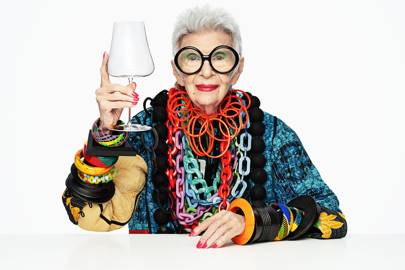
is colourful and eclectic like Iris Apfel’s,

stem

or falls somewhere in between, discover your unique style and feel true to who you are. It’s so much more important to be happy and healthy than to fit someone else’s idea of pretty, sexy, or alluring. After all, you’re a person of immeasurable value, not a decoration!

International Women’s Day 2018

Tomorrow, March 8, is International Women’s Day 2018. This year’s theme is #PressForProgress with an emphasis on pressing for progress on gender parity. The International Women’s Day website presents a strong call-to-action and gives many specific suggestions. Here are some that caught my attention:

  • question assumptions about women
  • challenge statements that limit women
  • always use inclusive language
  • work to remove barriers to women’s progress
  • buy from retailers who position women in positive ways
  • assume women want opportunities until declined
  • select women as spokespeople and leaders
  • support visible women
  • supportively call-out inappropriate behaviour
  • be a role model for equality
  • ensure credit is given for women’s contributions
  • celebrate women role models and their journeys
  • support awards showcasing women’s success

While these are all well and good, I question whether or not the “international” in International Women’s Day is being forgotten. I question whether these actions will make much difference to our sisters in parts of the world where girls are still forced to undergo female genital mutilation. Will they help the estimated 21 million unwanted girls in India, who often get less nourishment and schooling than their brothers? Will they help the 29 women recently arrested in Iran for protesting the obligatory Muslim headscarf by taking theirs off in public? Will they help the thousands of girls and women in Africa and Asia who walk an average of 6 kilometres a day to collect clean water for their households? Will they do anything for those who are the victims of human trafficking?

I’m not saying that life is perfect for women in the first world. The #MeToo movement has made it abundantly clear that we need to confront the widespread issue of sexual assault and harassment and there is no doubt that we need to continue addressing the issue of equal pay for equal work, but compared to women in much of the world, most of us have it pretty easy.

What, then, can we do to press for progress for women whose lives are so much more difficult than ours? First of all, we need to educate ourselves, to look beyond our comfortable lives and become aware of what the issues are and which reputable organizations are working to change them. If you’re serious about wanting to have an impact on the lives of women around the world, I would suggest that you begin by reading Half the Sky: Turning Oppression into Opportunity for Women Worldwide, by Pulitzer Prize winning journalists Nicholas D. Kristof and Sheryl WuDunn. Kristof and WuDunn are upfront and clear; they hope to recruit their readers to get involved, to become a part of a movement to emancipate and empower women by helping provide the economic resources that can help transform brothel slaves into businesswomen. All too often, money in the hands of men goes to alcohol and prostitution but in the hands of women, it nurtures children, feeds families and promotes education. Half the Sky not only inspires the reader to get involved, it gives many suggestions how.

It was after reading Half the Sky that I began making micro loans to women in third world countries through Kiva, the world’s first online micro-lending platform. Kiva is a non-profit organization that allows a person to lend as little as $25 to a specific low-income entrepreneur in one of 83 countries around the world. When a loan is repaid, the money can be withdrawn or used to fund a new loan. Since making my first loan eight years ago, I have made a total of 44 loans to women in 19 different countries. To watch Kiva’s 59 second video marking International Women’s Day, click here.

What will you do to press for progress this International Women’s Day?

IWD-PressforProgress-social

International Women’s Day 2016

Yesterday, March 8th, was International Women’s Day. My search for something relevant to write about led me to a headline that caught my interest:

Ditch the sexualized dress codes, Ontario employers told

Compared to many of the issues and abuses such as poverty, female genital mutilation, and child marriage, that women in other parts of the world face,  being required to wear sexy, cleavage-baring outfits or heels to work is definitely a first world problem, but one that I’m happy to see being addressed.

The Ontario Human Rights Commission has told that province’s employers to stop demanding that their workers dress provocatively as a condition of employment. Requiring female staff, most often restaurant and night club servers, to adhere to a sexualized dress code that frequently includes tight skirts, low-cut tops and high heels is discriminatory and, according to US research, leaves them vulnerable to a higher than normal rate of sexual harassment.

Those in the industry claim that dressing in a sexualized manner garners greater tips. That may be true, but isn’t that a rather sad statement about our culture? Should a restaurant server have to sell her body to make a living? Personally, I would rather eat at an establishment that builds its reputation on quality food and excellent service and I tip accordingly.

Hooters is, of course, the first to come to mind. It built an empire on its young, attractive and scantily clad waitresses. With their tank tops, short shorts, tights and socks, at least they get to wear comfortable shoes!

hootersgirls-1024x682

photo:  http://www.hooters.ca

Some employers insist that servers, who are on their feet all day, must wear heels. According to the Earls communication manager, that company recommends wearing heels “to reduce safety hazards.” A heel or wedge is preferred because apparently ballet flats don’t offer enough protection against stepping on glass. That’s a feeble excuse if I ever heard one! She also claims that heels provide more support, but the American Osteopathic Association would disagree. According to their website, “statistics show that high heels are one of the biggest factors leading to foot problems in women, with up to a third suffering permanent problems as a result of prolonged wear. Over time, wearing high heels can shorten the muscles in your calves and in your back, leading to pain and muscle spasms.” I have nothing against women choosing to wear heels, but to require it of someone who is on her feet day in day out puts her long term health in jeopardy.

It was the comments on the articles about this issue that disturbed me most, however. Over and over again, I read responses like this one:

” If women go to Moxie’s or Hooters to work they know they will have to flaunt their equipment. Unbelievable how women would complain knowing full-well going into the job what it’s all about.”

and

“This is a free country, Women have the choice to  accept or decline employment at businesses that require revealing uniforms.”

Tell that to the many young women who are working in these places to put themselves through school or feed their children. How many options do many of them have, especially in today’s economy?

Obviously objectifying and exploiting women is still alive and well in our culture.


International Women’s Day 2015

Tomorrow, March 8, is a day set aside to celebrate the economic, political and social achievements of women past, present and future. Women’s rights have come a long way since the first International Women’s Day in 1911 but we still have a long way to go. This year’s theme is ‘Make It Happen’, a slogan aimed at encouraging effective action for advancing the rights and treatment of women. We need to make it happen in those workplaces where women still earn less than men, in countries where women are regularly sexually abused and forced into marriage, and for girls who are still denied an education or forced to undergo female genital mutilation.

makeithappen

I couldn’t help laughing at the tongue in cheek parody of the lists that women are given to prevent rape that has been circulating on the internet today. At the same time, I felt guilty for laughing. I realize that rape is never a laughing matter but sadly, there are still those who believe that women are to blame for their own abuse.

Rape prevention

I was absolutely incensed when I read this week’s news reports about one of the men convicted in a 2012 gang rape and murder case in Delhi, India. In an interview from jail, 26-year-old Mukesh Singh said that women who went out at night had only themselves to blame if they attracted the attention of gangs of male molesters. “A girl is far more responsible for rape than a boy,” he said.

Singh also claimed that had the 23-year-old victim and her male friend, who were returning from an evening at the cinema, not tried to fight back, the gang would not have inflicted the savage beating from which she died two weeks later. Describing the killing as an “accident” he said, “When being raped, she shouldn’t fight back. She should just be silent and allow the rape. Then they’d have dropped her off after ’doing her’.”

Equally appalling was this comment made by one of the lawyers in the case. “If my daughter or sister engaged in pre-marital activities and disgraced herself and allowed herself to lose face and character by doing such things, I would most certainly take this sort of sister or daughter to my farmhouse, and in front of my entire family, I would put petrol on her and set her alight.”

I wish I could say that things like this were unique to India, but that’s far from the truth and as long as my granddaughter is growing up in a world where any man, anywhere thinks it’s okay to rape a woman, we need to do more than celebrate the achievements of women; we need to ‘Make It Happen’. I am neither a man hater or a radical feminist but I dream of a world where every child has the right to an education and every woman feels safe.