World Cancer Day 2025: United by Unique

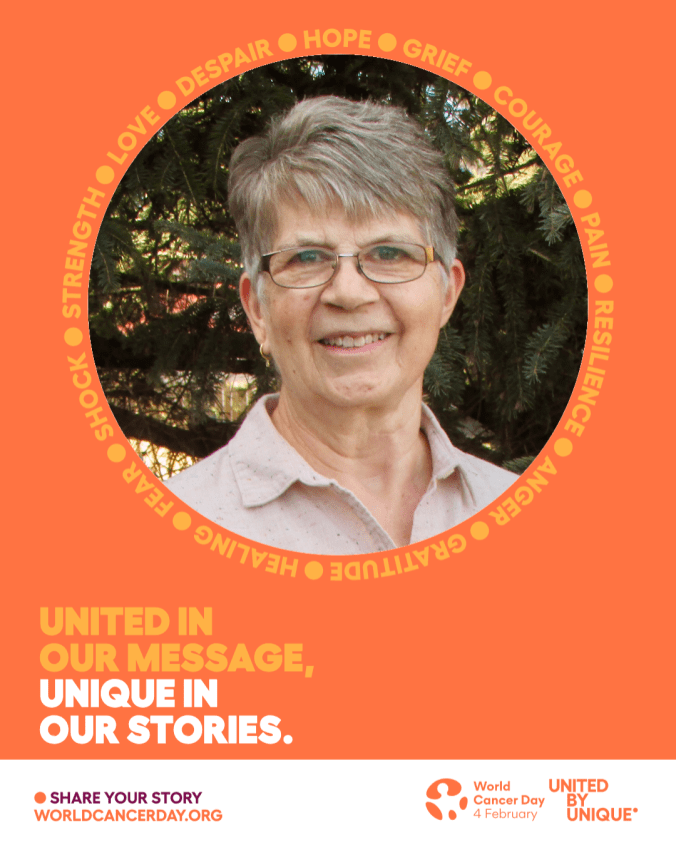
February 4 is World Cancer Day. There are more than 200 different kinds of cancer and every patient’s experience is different. That’s why the new World Cancer Day theme, United by Unique, resonates so strongly with me. While each of our stories is unique, we are united in our message and in our desire to raise awareness and see progress made in fighting this dreadful disease. 

The emphasis of the 3-year United by Unique campaign that kicks off today will be people-centred care. Behind every diagnosis lies a unique human story. These are stories of grief, pain, healing, resilience, love and so much more. A people-centred approach to care that listens to patients’ stories and fully responds to each individual’s unique needs with compassion and empathy will lead to the best possible outcomes.  

People living with cancer don’t always feel heard, seen, or understood. They are often bewildered, feeling isolated and voiceless at a time when they’re also learning to navigate an unfamiliar and confusing health care system and dealing with the emotional highs and lows of cancer diagnosis, treatment, or recovery. That’s why the first year of this campaign will focus on telling our unique stories.

I feel very fortunate to receive my cancer care at the Cross Cancer Institute in Edmonton, Alberta, Canada, a facility where it is common practice to look beyond the patient to the person as a whole and to consider the impact of their cancer on all aspects of their life. When I go for appointments, I’m routinely handed a clipboard with a questionnaire that delves into not only the physical symptoms that I might be experiencing, but also the psychosocial ones. The CCI offers a wide range of supportive services that go far beyond the patient’s physical well-being. The health care team there includes professionals in psychology, social work, spiritual care, nursing, and psychiatry and available services include individual, couple, and family counselling; professionally-led support groups; and practical supports for financial and other basic needs. While the need for these supports has not been part of my unique story thus far, I’m glad to know that they’re available should I ever need them and I wish that that was true for patients everywhere.  

I have been invited to share my unique patient story at a Canadian Neuroendocrine Tumour Society (CNETS) conference in May. The big challenge is going to be condensing the approximately 20 years from initial symptoms to present day into a 10 minute talk that educates, encourages, and inspires those in attendance, especially those who are in the early days of their journey and who need to know that it’s possible to live long and live well in spite of their diagnosis. 

United in our goals, unique in our needs.

Book of the month – September 2024

Hope for the Best, Plan for the Rest

Dr. Sammy Winemaker and Dr. Hsien Seow

Screenshot 2024-09-09 at 11.49.03 AMBeing diagnosed with a life-changing illness can be completely overwhelming. In Hope for the Best, Plan for the Rest, Drs. Sammy Winemaker and Hsien Seow offer a valuable guide to help patients and families deal with their new reality. Combining their decades of palliative care research and experience caring for seriously ill patients and harnessing the advice of thousands of patients, they offer 7 keys for navigating a life-changing diagnosis. With real-life stories, tips, and exercises, these compassionate experts empower patients with practical tools to help them successfully navigate the health care system with knowledge and confidence.

The 7 Keys:

  1. Walk Two Roads. Hope for the best, and plan for the rest. Toggle between being realistic and being hopeful.
  2. Zoom Out. Understand the big picture of your illness and what might lie ahead.
  3. Know Your Style. Review your past patterns for insights into how you will journey through your illness. Identify your coping strategies and your ways of processing information.
  4. Customize Your Order. Communicate your wishes, values, and beliefs to help tailor your care plan to your preferences.
  5. Anticipate Ripple Effects. Recognize that those caring for you will also need to be supported.
  6. Connect the Dots. Play a central role in coordinating your care (or identify someone who can).
  7. Invite Yourself. Speak up. Initiate conversations about what to expect and advocate for yourself.

These 7 keys are not steps or stages to be followed in a particular order, but are meant to be blended together and used as needed. After devoting one chapter to each of the keys, the writers wrap up with a chapter entitled Putting It All Together and then two final chapters that deal in more detail with the late and end stages of disease and the actual process of dying. They caution their readers to read those two chapters only if they feel comfortable doing so. The book would be a complete and helpful tool without them, but personally I found both chapters informative and reassuring.

This book, published in 2023, wasn’t available ten years earlier when I received my first cancer diagnosis. Looking back, I think that over time I implemented most of the keys either intuitively or through bits and pieces of advice that I received along the way, but how much better it would have been to have a book like this one to guide my way. It’s a book about hope (my one word for 2024) in the face of uncertainty. It’s about living well, being fully informed, and getting the best care available. It’s about being a whole person and not just a patient. It’s a call for patient-led, patient-centred health care.

International Women’s Day – Break The Bias

Tomorrow is International Women’s Day. It saddens me that we should even need to set aside a day to focus on women’s rights, to remind the world that women deserve equality. The reality, however, is that we need to do much more than simply dedicating one day a year to drawing attention to the plight of women worldwide. This needs to be addressed 365 days of the year!

The theme of International Women’s Day 2022 is #BreakTheBias. We are urged to:

Imagine a gender equal world.

A world free of bias, stereotypes, and discrimination.

A world that is diverse, equitable, and inclusive.

A world where difference is valued and celebrated.

In reality, we need to do more than just imagine that world. We need to be aware that gender bias, discrimination and stereotyping exist and actively call them out each and every time we see them. Whether deliberate or unconscious, gender bias makes it difficult for women to move ahead. Even in the developed countries of the world, disparity continues to exist in the workplace, in education, and in health care.

Globally, most women are employed in lower-wage occupations and lower paid industries than men. They are underrepresented in corporations in general and the percentage of women decreases with each step up the corporate ladder. In 2016, only 3 of the 100 highest paid CEOs in Canada were women.

A 2015 UN Human Rights report raised concerns about “the persisting inequalities between women and men” in Canada including the “high level of pay gap.” Five years later, in 2020, Statistics Canada reported that on an average, full-time working women earned 76.8 cents for every dollar made by men. The gap is even wider for women who are Indigenous, members of other visible minorities, newcomers, or living with a disability. The situation is similar in other first world nations. In the UK, for example, women earn an average of 18% less than men.

Gender bias in education is much more subtle in the western world than in countries like Pakistan where over 50% of girls receive no formal education and South Sudan where that number is closer to 75%. Here in Canada, in spite of the fact that 56% of post secondary students are female, women continue to be underrepresented in STEM majors (science, technology, engineering, and mathematics). In spite of the fact that, on average, they don’t outperform girls in high school math or physics, there continues to be a perception that boys are naturally more adept in these areas. This is the kind of stereotype that we need to call out!

Bias also affects the quality of health care that women receive. Too often, doctors view men with chronic pain as “brave” or “stoic” while women are seen as “emotional” or even “hysterical”. Her pain is much more likely to be treated as the symptom of a mental health condition, rather than a physical one.

Important biological differences between the sexes can influence how diseases, drugs, and other therapies affect people, but medical research has often been limited to male participants. They are considered better test subjects because they don’t have menstrual cycles and can’t become pregnant! This lack of inclusivity has led to gaps in knowledge that are detrimental to women’s health.

Lastly, traditional attitudes by which women are regarded as subordinate to men continue to perpetuate widespread abuse. Gender-based violence happens in all communities, cultures, and faith groups, and at every age and every income level, but some women are at higher risk than others. More than 40% of all Canadian women have experienced some form of intimate partner violence, but this number rises to 60% for Indigenous women. Every 6 days a woman in Canada is killed by her intimate partner. The homicide rate for women who identify as Indigenous is more than 5 times higher than that of all other women. Immigrant women are more vulnerable to domestic abuse often due to economic dependence, language barrier, and a lack of knowledge about community resources. In addition, when incidents of abuse within visible minority groups are reported, they are often taken less seriously by the criminal law system and the perpetrators routinely receive less harsh punishments. Younger women and women with disabilities are at much higher risk of experiencing violence. According to a 2019 report from Statistics Canada, 30% of all women over the age of 15 report the they have been assaulted sexually compared to 8% of men. The actual number is, of course, much higher as many incidents are never reported. 69% of all those who experience incidents of cybercrime are women.

On International Women’s Day and always, we need men and women to advocate for equality for all. Together, we can break the bias!

IMG_3619

Around the world, people are crossing their arms in the International Women’s Day #BreakTheBias pose to show solidarity. Why not join the movement? Post your photo on social media using #IWD2022 and #BreakTheBias to encourage other people to commit to working toward a more inclusive world for all.

Images: internationalwomensday.com

100 butt darts!

Every 28 days, without fail, a visiting nurse pulls up in front of our house and comes in to give me an injection of Sandostatin LAR. Today was the 100th of those butt darts!

185522421_4133815289994653_3767392803849794568_n

Sandostatin LAR is a long-acting treatment meant to reduce or eliminate the symptoms associated with neuroendocrine cancer (NETS) and for me it has been an absolute life changer! No longer do I live with the stomach pains and diarrhea that plagued me off and on for several years prior to diagnosis. Though the effect of Sandostatin on tumour size, rate of growth, and development of metastases has not yet been determined, it is thought that it might also be of benefit in those areas.

Sandostatin comes as a powder and a diluent solution that must be mixed and administered according to very precise instructions which is why I haven’t been taught to inject it myself. Once the diluent is added to the powder, it must be allowed to stand for a minimum of 2 minutes and not more than 5 to ensure that the powder is fully saturated. Then, after gently shaking the syringe for about 30 seconds to ensure that the powder is completely suspended, the nurse has to administer it without delay to avoid sedimentation. Even following these guidelines carefully and using a fairly large needle (19 gauge), it sometimes plugs. On those occasions, she has to quickly change the needle and try again. On a couple of occasions it has taken 4 jabs to get the medication into me! My 100 butt darts has actually involved about 130 pokes altogether.

In addition to the benefits that the drug offers, getting it into me and not wasting it is of vital importance because every one of those butt darts costs $2358.52 CAD! In other words, over the past almost 8 years, we have pumped more than $235,000 into my posterior! You could buy a nice house in our small town for that much.

This is where I’m really glad to be Canadian. I pick up the Sandostatin at my local pharmacy every 4 weeks and don’t pay a cent! The cost is fully covered by the government and that includes the cost of having the nurse come to my home. A Mobile Administration Program even enables me to have my injection administered by a trained nurse anywhere else in Canada. A simple phone call is all it takes to make the arrangements. I have to take the medication, which has to be refrigerated, with me but I’ve found that an insulated lunch bag and a mini freezer pack do the job as long as I can put it in a fridge overnight. So far, I’ve had butt darts administered at all 3 of my children’s homes. Arranging to have it done outside the country would be more complicated and isn’t something I’ve tried at this point.

So, is getting my monthly Sandostatin a pain in the butt? Not really. As a child, I was terrified of needles, but I lost that fear a long time ago. Only once in awhile does really hurt going in. Today was one of those occasions, but it went in on the first try, so I’m not complaining! The injection site often feels bruised for a couple of days and a lump often forms that gradually dissipates over the next few weeks, but these minor inconveniences are well worth it when I consider the benefits. So, 100 butt darts down and here’s hoping that I can have 100 more! Or 200. Or more!

Pendants for a Cause

LogoOne of the things that I enjoy about blogging is connecting with readers and other bloggers around the world. This week, I “met” Dr. Phoebe Chi, an internal medicine and public health physician and author, when she liked last Friday’s post and began following my blog.

In September of this year, after hearing about the devastation in the Bahamas caused by Hurricane Dorian, Phoebe wanted to do something. She was aware of the dire need for medical care and resources, but even with her formal training as a physician, she felt helpless to do anything to meet these needs.

With nothing but a few small pieces of sea glass, a pair of pliers, an assortment of wires, and a deep desire to give hope and help to those whose lives had been devastated, Phoebe decided to put her artistic skills to work and Pendants for a Cause was born!

frameseaglass-1

For the first month, all proceeds from the sale of the necklaces were donated to help meet the emergency health needs of Hurricane Dorian victims. Once those needs were met, the focus of Pendants for a Cause changed to another passion of Dr. Chi’s. Proceeds now go toward helping children around the world with heart conditions get the life-saving surgeries they need.

All Pendants for a Cause are available here. I think the wire wrapped necklaces are my favourites. I absolutely love these two.

Sea glass comes in every colour imaginable and some of Phoebe’s pendants are personalized with tiny charms. Perhaps it’s time to do some Christmas shopping!

In addition to necklaces, there are also earrings to choose from.

As one who loves to wander a beach looking for bits of glass that have been softened by the sea, I wondered how Phoebe was able to find enough to continue producing her jewelry. She told me that she has two sources. Most of her pieces are genuine, bought from a friend who lives in Italy. “She literally has a beach in her backyard that is full of them,” said Phoebe. I must admit that I’m terribly envious! The round pieces, used to make earrings like the ones shown on the left above, are cultured glass produced in a tumbler and purchased from a distributor.

img_8292

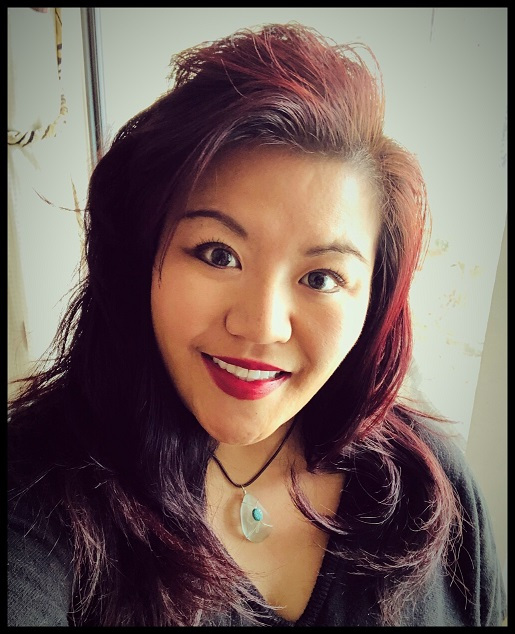
Dr. Phoebe Chi wearing one of her own creations.


Disclaimer: This is not a sponsored post. I have not been compensated in any way. Information and photographs provided by Pendants for a Cause.

Happy Birthday, Canada!

Can150intro

As Canada celebrates it’s 150th birthday today, I can’t help but reflect how blessed I am to have been born in such a country.

Canada is a country of amazing diversity. We have oceans (3 of them!), mountains, forests, and wide open prairies. We have an abundance of natural resources and unlike much of the world, we have pure, clean drinking water.

With the exception of our First Nations and Inuit people, we are all descendants of newcomers to this land; people who came dreaming of a better life and who were willing to work hard to achieve it. We still see that in our recent waves of immigrants and refugees. We are truly an international country. In fact, one in five Canadians is foreign born! Learning to live together in spite of our differences isn’t always easy and many people have mixed feelings about topics like immigration and integration, but we pull together when times are tough, we help one another, and we do it with pride because that’s what being Canadian is all about. We are known for our kindness and generosity, our open mindedness, and our optimism.

According to the 2016 Global Peace Index, Canada ranks among the ten safest countries in the world. Though I don’t think too highly of the man-child that we elected as our present Prime Minister or the policies put forth by his government, I don’t have to look very far beyond our borders to see so much worse.

For me, especially in recent years, one of the greatest benefits of being Canadian is our publicly funded health care. I have absolutely no idea how much my care has cost since I was diagnosed with first one cancer and then another, but I have no doubt that by now I’m a million dollar girl! Amazingly, it hasn’t cost me a cent! Even the money we spend on gas, meals and parking for our many trips to the city for tests, appointments and treatments is tax deductible.

Print

Our taxes are high. In fact, most Canadians pay close to 50% of their incomes in taxes of one kind or another, but in addition to world class health care, we get a lot for our tax dollars. We tend to take the twelve years of free public education available to every Canadian for granted, not to mention other social programs such as unemployment insurance and old age pensions.

Sure, we do have long, cold winters, but I try not to think about that at this time of year!

Happy Birthday, Canada!


In everything give thanks

I almost hesitate to post anything today because I’m feeling rather cranky! My surgery went well last Wednesday so what do I have to complain about? Just the fact that my head feels like it’s been used as a soccer ball and a sore throat/earache kept me awake most of the night.

Feeling the way I do this morning, it would be easy to give in to whining and feeling sorry for myself but this is one of those days when I need to remind myself that scripture says

images

The little word in  at the beginning of that verse is the reason that I can give thanks today. If it asked me to give thanks for everything, I’m quite certain I couldn’t do it. I certainly couldn’t give thanks for cancer and though I recognize how fortunate I am to live where universal and excellent health care is available, I’m not thankful that I had to have surgery at all, but even in  these circumstances, there is much to be thankful for.

I’m thankful for my hubby who patiently puts up with my restlessness at night and crankiness by day! In some ways, the surgery was harder on him than it was on me. I was out cold, totally unaware of what was going on, but as the hours ticked by, he was the one who was waiting for the surgeon’s call to tell him that things had gone well. I’m thankful for a surgeon who worked patiently and carefully for seven hours straight to remove all the cancer yet leave my facial nerves intact. Thanks to his meticulous effort, my left eye is fully functional and I’m left with nothing more than a crooked smile which will likely improve significantly once the massive swelling subsides and healing takes place. I’m also thankful for the wonderful friends and neighbours who have been showering us with meals; pots of homemade soup, fresh buns and other soft foods that I can handle. We are so blessed!

But do you know what else I’m thankful for today? I’m thankful for the guys who invented the drinking straw!  After seven hours with a breathing tube down my throat, it is SORE and it seems to be taking a long time to heal! Drinking lots of fluids helps but that’s hard to do when your bottom lip doesn’t work right!

Apparently, the first drinking straws were used more than 5000 years ago! The oldest one in existence, a gold tube inlaid with precious blue lapis lazuli, was found by archeologists exploring an ancient Sumerian tomb that was dated 3,000 B.C. On the other side of the globe, Argentinian natives long used similar wooden or metal devices, known as bombillas, to strain and drink their tea. Our humble paper and plastic straws had their beginnings in the U.S. In the 1880s, using rye grass as straws had become popular but their tendency to become mushy when wet and the grassy flavour that they added to beverages, made them somewhat unsatisfactory. It was Marvin C. Stone who came up with the idea of making one from paper. He started by winding paper around a pencil to make a thin tube, then slid the pencil out and applied glue to hold it together. He later built a machine that would coat the outside of the paper with wax. He patented his invention on January 3rd, 1888. In 1937, Joseph Friedman, created the first bendable straw, the type I’m using today.

Come to think of it, I’m even thankful for silly history lessons like this one that provide distraction from my present discomfort and crankiness!

What are you thankful for today?