Last day in Germany

Today was our last day in Germany. As much as I’ve enjoyed the last week, I’m tired with a capital T and I’m ready to go home. Even though it was just over three weeks, it seems like forever ago that we set out on this big adventure.

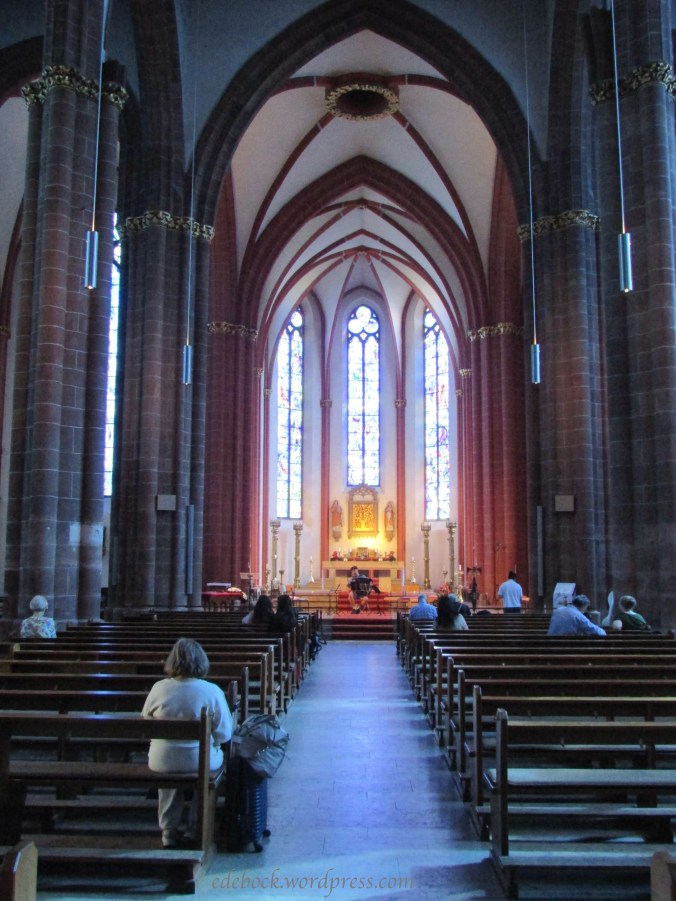
We walked a lot again today, but at a very leisurely pace. It was 31ºC (88ºF) this afternoon and we had plenty of time to see Mainzer Alstadt, the old town centre of Mainz. There are many historic churches throughout the city, but three stand out and are worth a mention here. Because of the narrow, crowded streets, it isn’t always easy to get good photos of the exteriors, but I’ll share the interiors of the two that we were in today.

St. Stephan’s is located high on a hill overlooking the old town. We arrived just as the doors were being opened and were delighted to find a musical performance happening inside. The acoustics, as is true in so many of these old stone churches, were amazing.
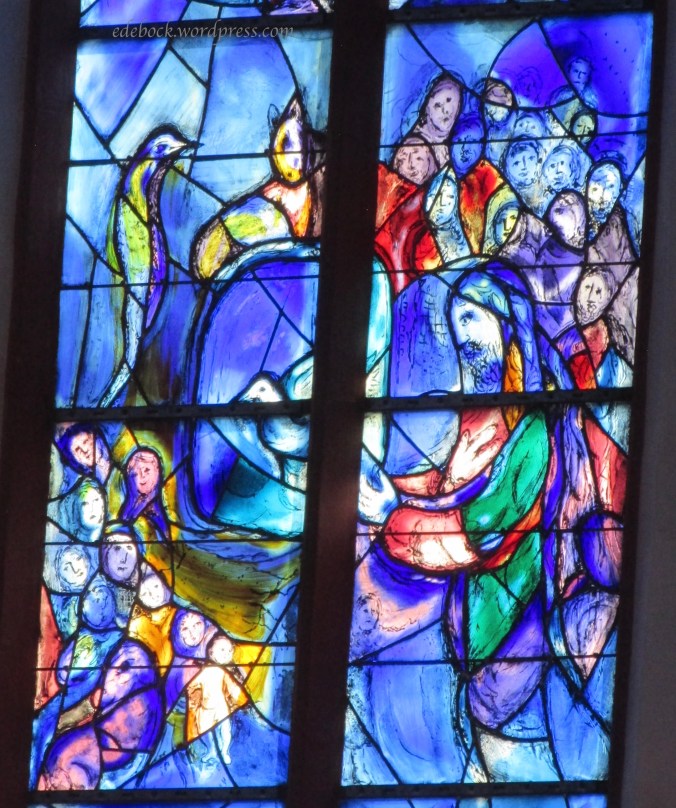
St.Stephan’s is known for it’s brilliant blue stain glass windows created by Jewish artist Marc Chagall (1887 – 1985). They cast a mystical light throughout the interior of the church and reminded me of flowing water.

Only the three long panels at the front of the church contain figures like these ones.
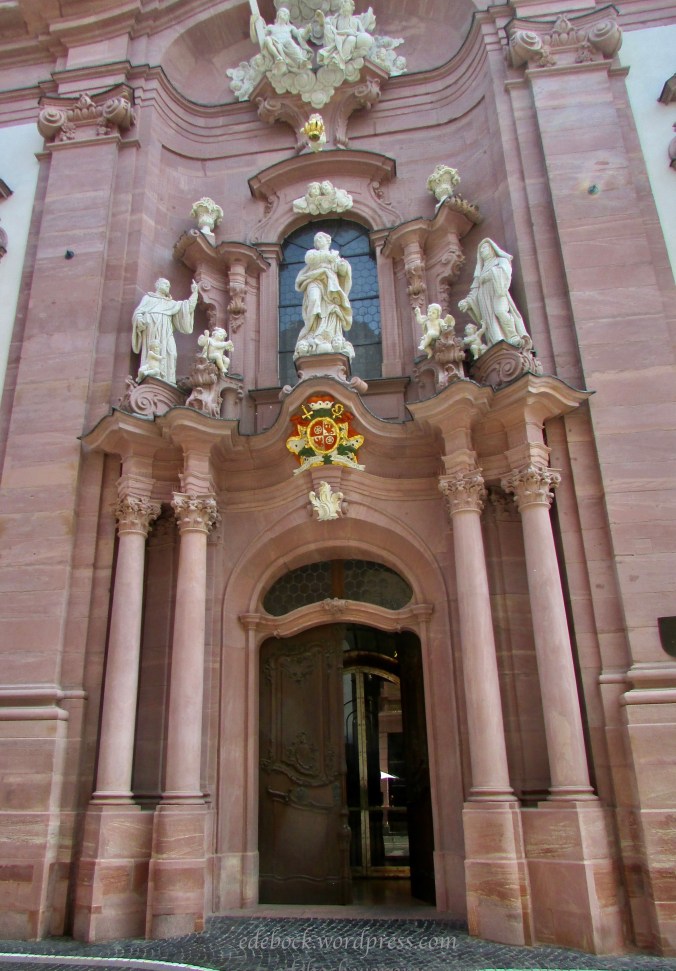
Even though my blog takes it’s name from one of my ancestors, not St. Augustine, the church that bears his name was something I had to see. St. Augustine Church is tucked into a narrow pedestrian street.

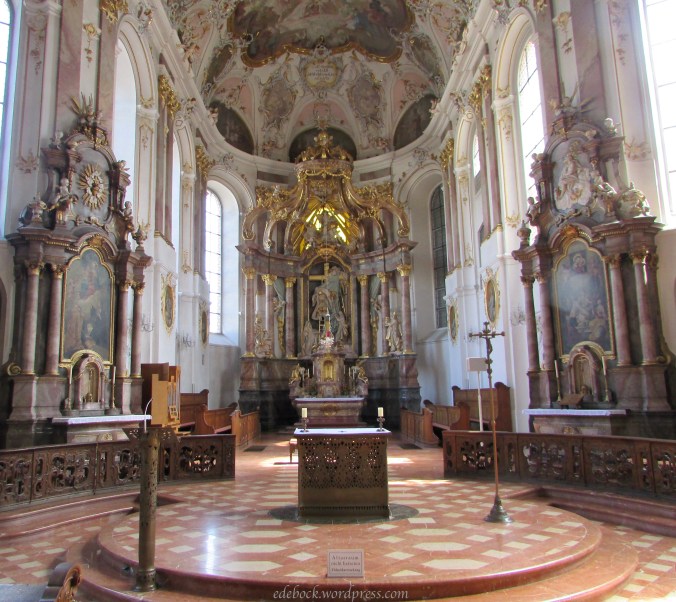
The inside is absolutely spectacular. I have trouble wrapping my head around so much money being spent on a place of worship in a world where people go hungry, but at the same time, I can’t help but appreciate the beauty.
By far the most imposing structure in the old section of Mainz is the enormous St. Martin’s Cathedral. Photos simply don’t capture how massive the 1000 year old structure is.

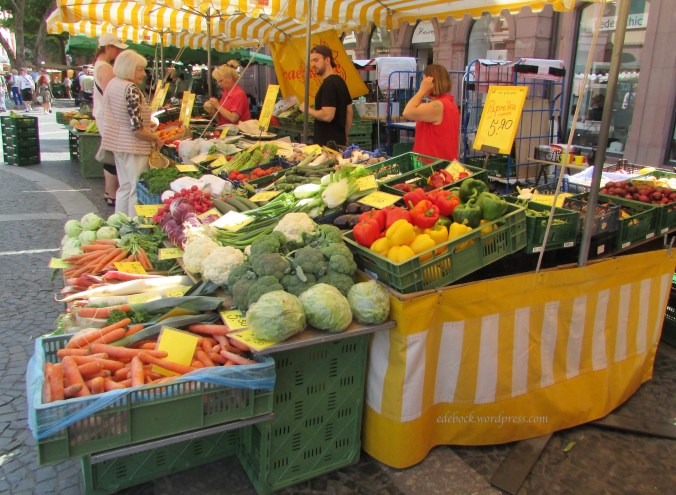
Friday is market day in the main square next to the cathedral and if I lived in Mainz, this is where I’d be doing my weekly grocery shop. Fruit, vegetables, cheese, meat, baked goods, eggs, honey, wine, and even flowers can all be found in the giant outdoor market. It reminded me of shopping in Mexico and in China when we lived there.
After our stroll around the old town and through the market, we returned to the nearby river and walked along the promenade again.
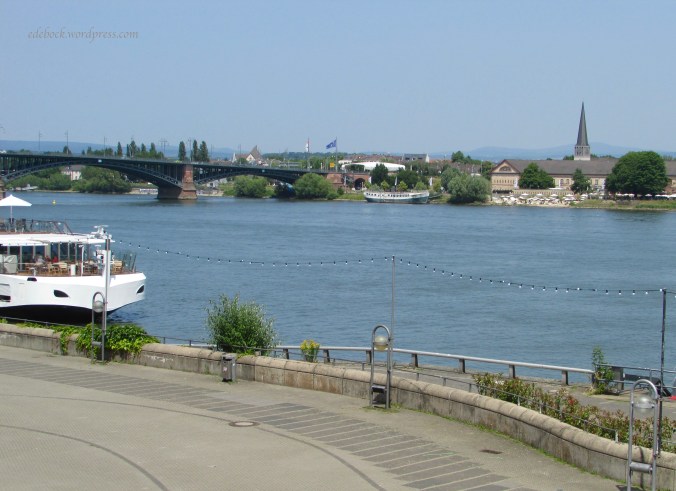
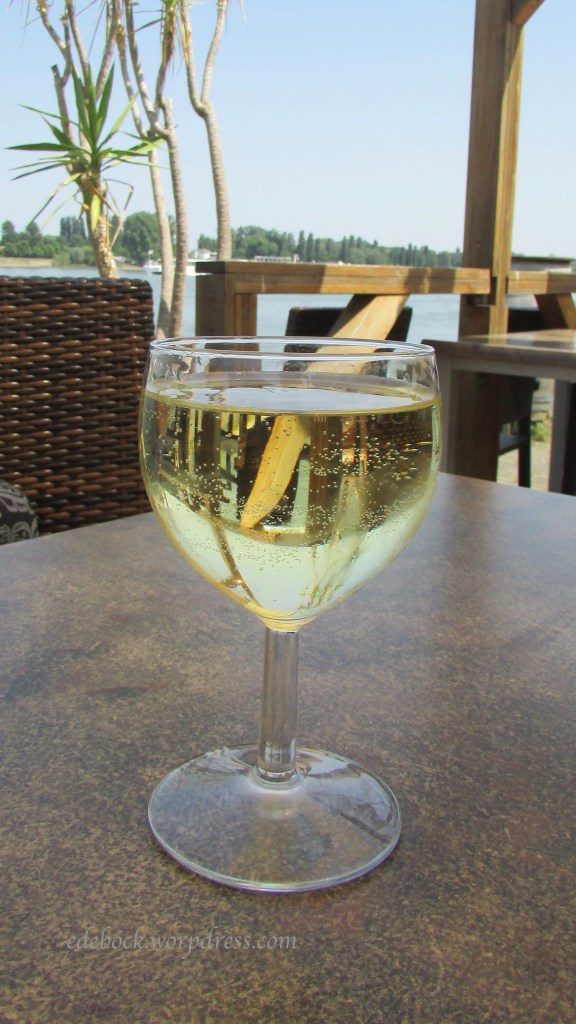
Embedded in the largest wine-growing region in Germany, Mainz is known as the country’s wine capital, so we ended our self-guided tour with a glass of wine by the Rhine!

Now our suitcases are packed and we’re ready to leave. We’ll catch a train to the Frankfurt airport early tomorrow morning and fly out at noon. The blog will probably be silent for a few days while I recover from jet lag and get back into routine, but we have more travel plans for later this summer , so don’t go away!
We made it to Mainz!

We had a bit of misadventure on the way to our final destination for this trip this morning. We were supposed to change trains in Ludwigshafen, but somehow missed our stop. We were the only passengers to get off at the next stop, a small deserted station with no one on duty to provide assistance. Thankfully, a kind gentleman who spoke perfect English (a rare thing in this part of Germany) happened to be passing by and stopped to ask if we needed help. Since we knew that we’d be too late getting back to Ludwigshafen to make our connection to Mainz, he suggested that we go back two more stops to Mannheim, a much bigger centre where we’d have a better chance of catching a different train to Mainz. That worked perfectly and we were only about an hour later arriving than originally planned. In the words of Shakespeare, “all’s well that ends well!”

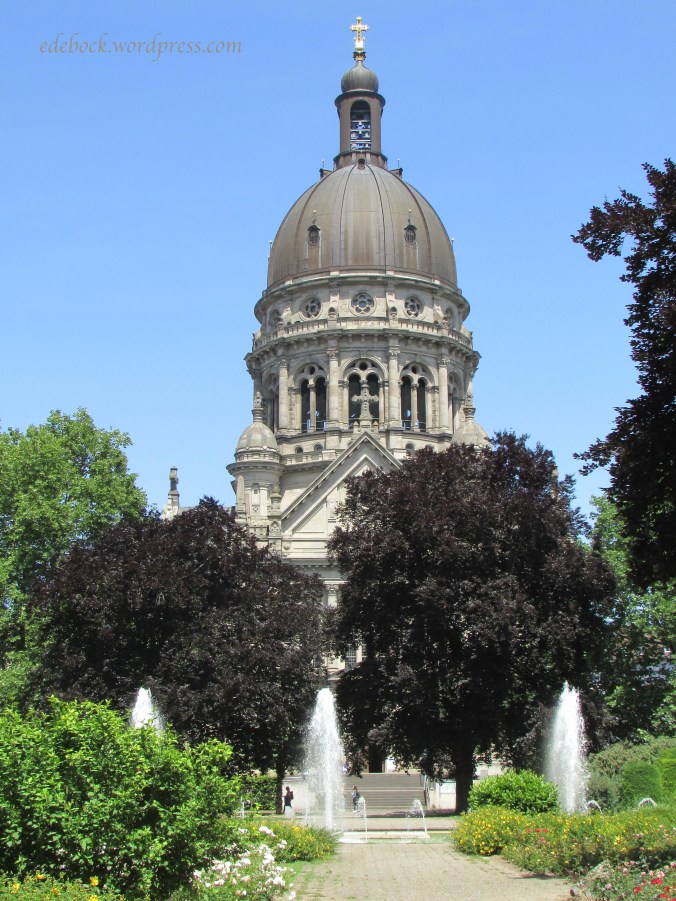
Our hotel here in Mainz is directly across from the train station. After checking in, we walked about 15 minutes to the riverfront promenade. On the way, we passed Christuskirche (Christ Church), a prominent Protestant landmark. Built between 1897 and 1903, it was destroyed during World War II, and rebuilt between 1952 and 1954.

After walking the riverfront promenade and dipping our feet in the Rhine River, we headed for the Gutenberg Museum.

We haven’t spent a lot of time in museums on this trip, but one that is devoted to the history of books, printing, and writing captured my interest and I was particularly interested in seeing the Gutenberg Bibles. The Gutenberg Bible was the first European book published on a printing press using moveable metal type. Only 49 of the approximately 180 that were printed right here in Mainz in the mid 1400s have survived and the museum owns two of them. Well, technically, one and a half. The huge Bibles were printed in two volumes, Old Testament and New Testament. Previously owned by the British Baronet Shuckburgh, the complete two-volume Bible was added to the museum’s collection in 1978. The second Bible, which was previously owned by the Solms-Laubach family, is incomplete, with only the second volume surviving.

The Bibles were only printed in black ink as two or more colours would have been too expensive and time-consuming. Spaces for coloured ornamentation were left empty and the books handed over to an illumination workshop. As a result, each surviving edition is different in its ornamentation.

Heidelberg Castle and the Philosopher’s Walk

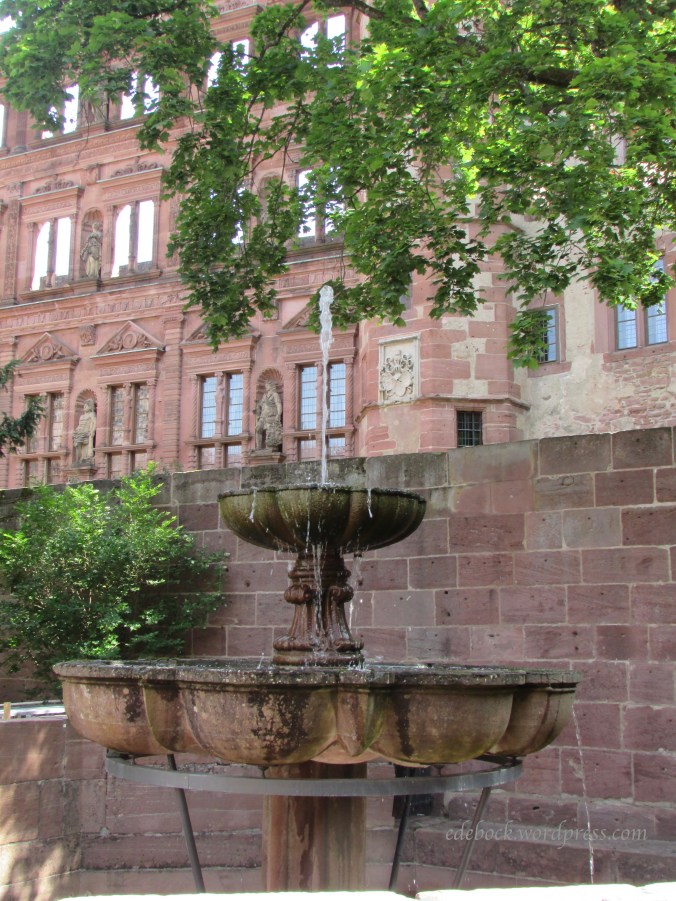
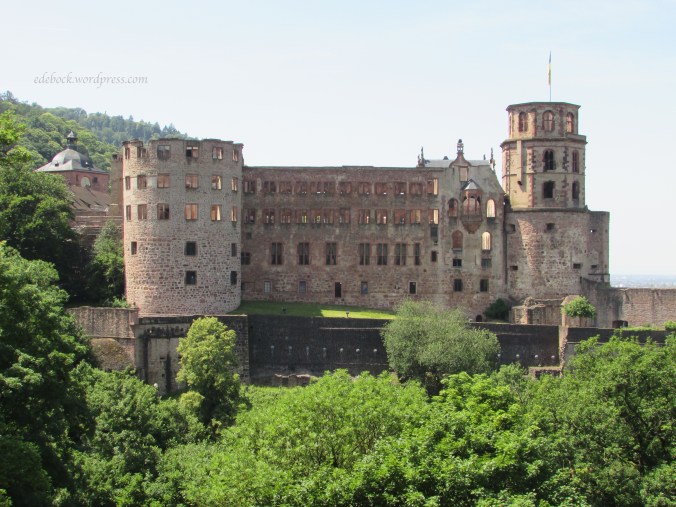
Every year, the ruins of Heidelberg Castle attract approximately one million visitors from around the world making it by far the most visited site in the area. This morning, we caught a bus in front of our hotel and then rode the funicular up the north side of Königstuhl hill to the imposing structure that overlooks the city’s Old Town. An hour long English tour with a delightful and extremely knowledgeable guide was an excellent way to begin exploring the site. He managed to fit hundreds of years of history into a very short time!

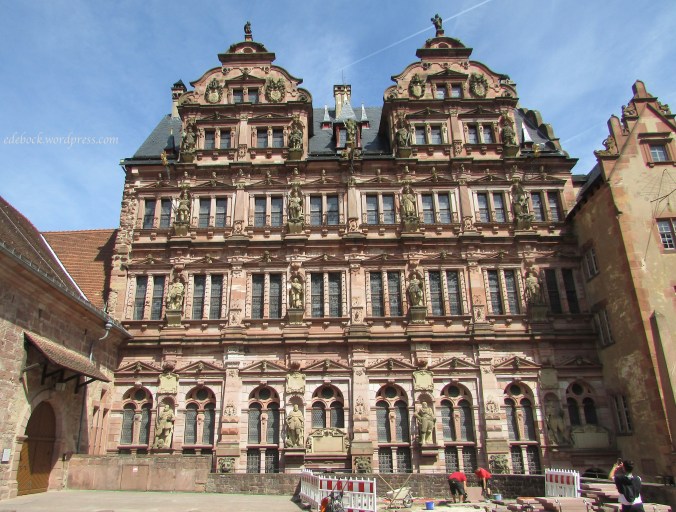
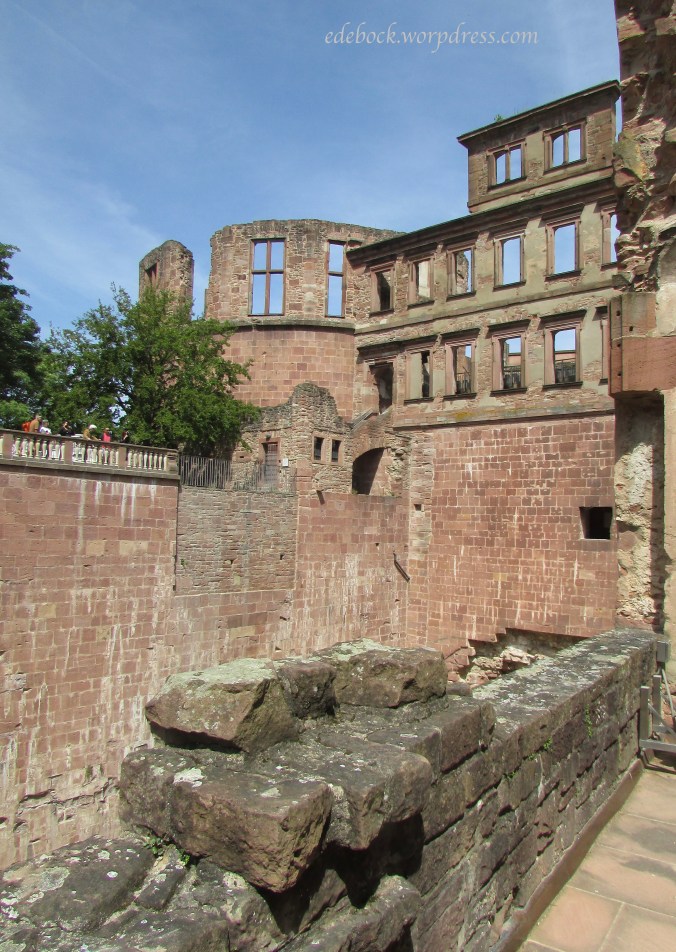
The earliest castle structure dated back to the 13th century, but in the 1600s when it became home to Prince-Elector Friedrich V and his wife, Elizabeth Stuart, daughter of King James I of England, it underwent major expansion and became one of the grandest palaces of the Renaissance period. In the late 17th century, it was repeatedly attacked and severely damaged by the French. Later, the local populace began to rebuild it, but in 1794, two devastating lightning strikes caused further damage and the once majestic residence was almost completely burned out. Citizens of Heidelberg used stones from the ruins to build their homes until Count Charles de Graimberg began an effort in 1800 to conserve what remained. Had he not done that, there might not be much left for visitors to enjoy today!  

In addition to all that he added to the castle, Friedrich V commissioned a great garden to be built on the hillside above the castle. Gunpowder was used to carve out terraces to accommodate ornamental flower beds, labyrinths, pergolas, and water features. While the gardens were never completed, the area provides visitors today with amazing views of the castle and the town below. 

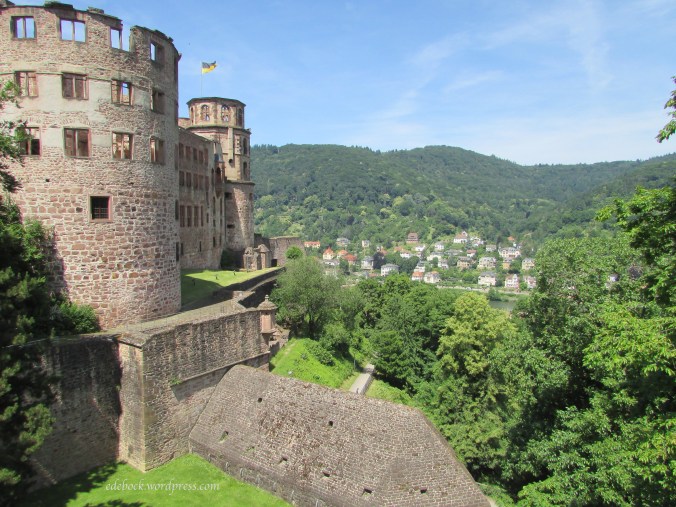
A walk on the once fortified wall in front of the castle also offers spectacular views of the Old Town. The prominent building in the top left quadrant of the second photo is the Church of the Holy Spirit. Constructed between 1398 and 1441, it’s still in use today over 600 years later!

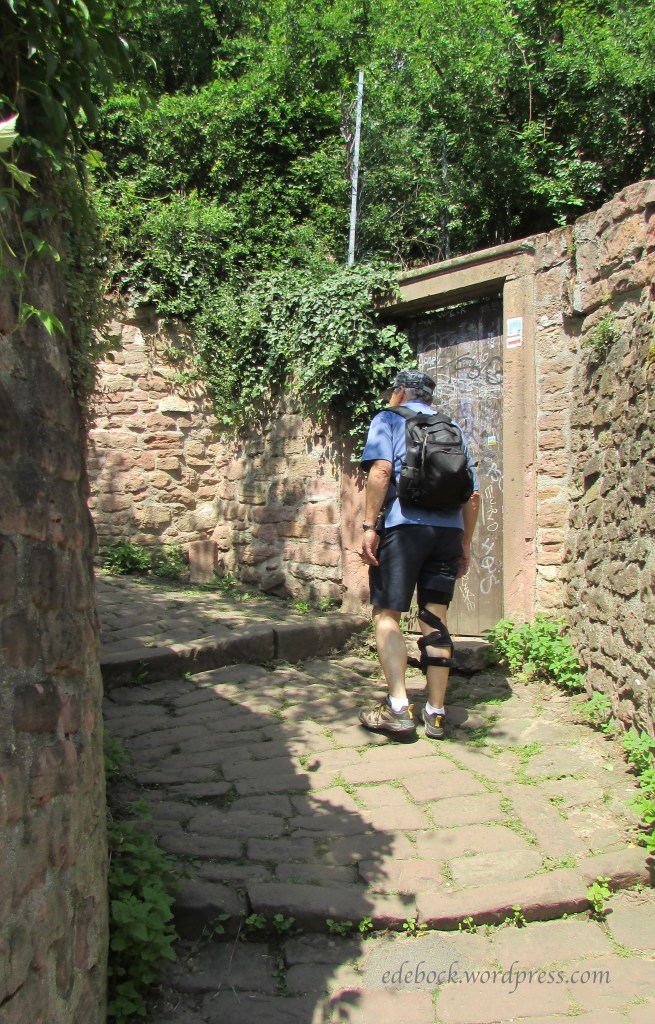
After exploring the castle and its grounds, we took the funicular back down the hill and walked through town to the Old Bridge. Hubby wasn’t too keen about climbing the steep hillside on the other side of the river to the Philosopher’s Walk, given that name during the 18th century because of the many Heidelberg professors and philosophers who enjoyed the path for its solitude, natural beauty, and great views. Perhaps I should have listened to him, but it was on my list of things to do in Heidelberg and I didn’t want to miss it. Although I’d been warned, the climb was longer and steeper than I had imagined! Once we reached the path, we only walked a fairly short segment of it, but the views of the river and the town below were worth it. 

Exploring Old Heidelberg

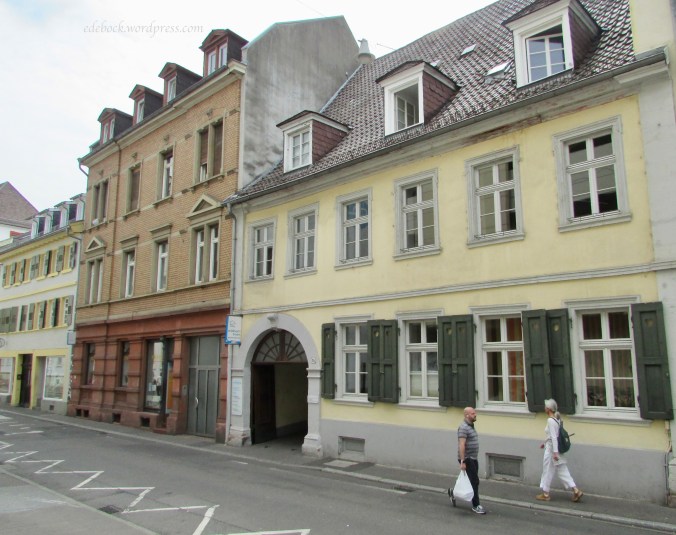
My first impression of Heidelberg was that it’s cleaner and quieter than Frankfurt. It’s also much smaller. There’s less English on signs, maps, and menus which makes me wish I’d managed to keep up my high school German! It’s also much more historically authentic because, unlike Frankfurt, it was almost completely spared during World War II. Since it wasn’t an industrial centre or a transport hub, it wasn’t a target for Allied bombing.

We arrived by train shortly before noon yesterday, dropped our suitcases at our hotel, and headed for the Altstadt (Old Town) where we enjoyed wandering the narrow streets.

We saw several ancient churches including St. Peter’s, the oldest church in the city. Parts of the tower date back to the 12th century.

The Alstadt is also home to Heidelberg University, the oldest university in Germany. The building on the right in the next photo is the University Museum.

One building of particular interest is the former student prison, used to detain unruly students from 1778 to 1914! Part of the stone interior is now a shop selling university t-shirts, hats, and other memorabilia.

The imposing Rathaus, or City Hall, with the fountain of Hercules in front, overlooks Market Square and has appeared as it does today since 1701.

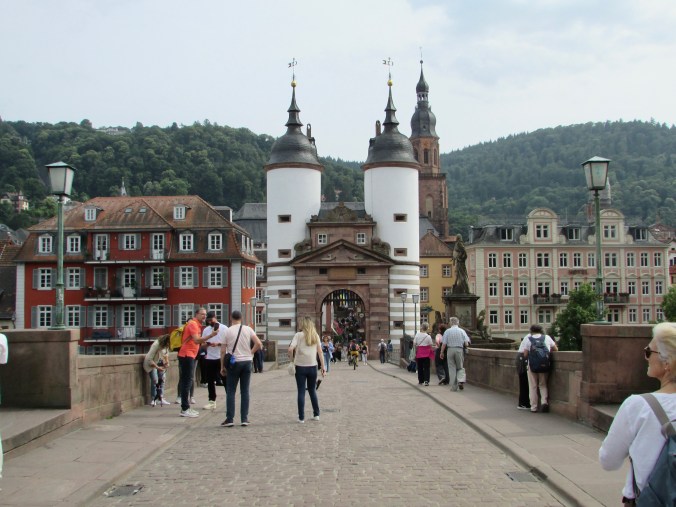
A short walk from the Market Square took us to the Old Bridge across the Neckar River.

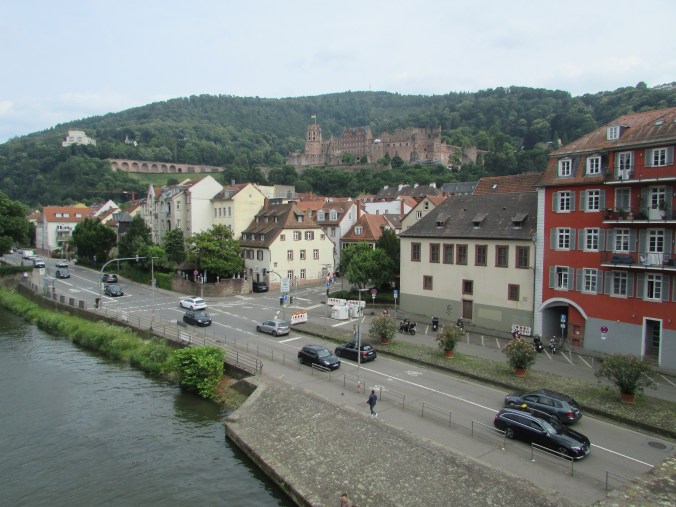
The bridge offers a great view of Heidelberg Castle on the hillside above town. We’ll be exploring that today!

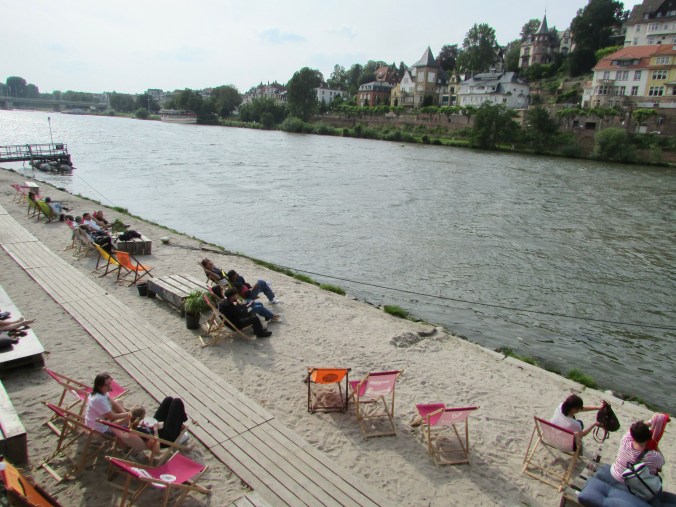
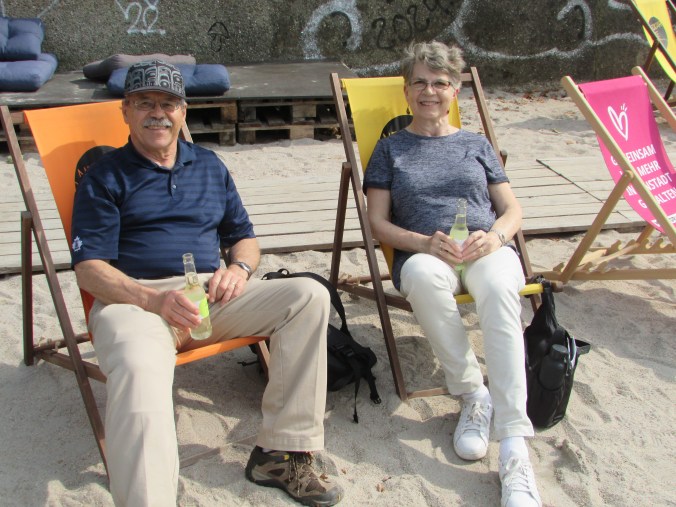
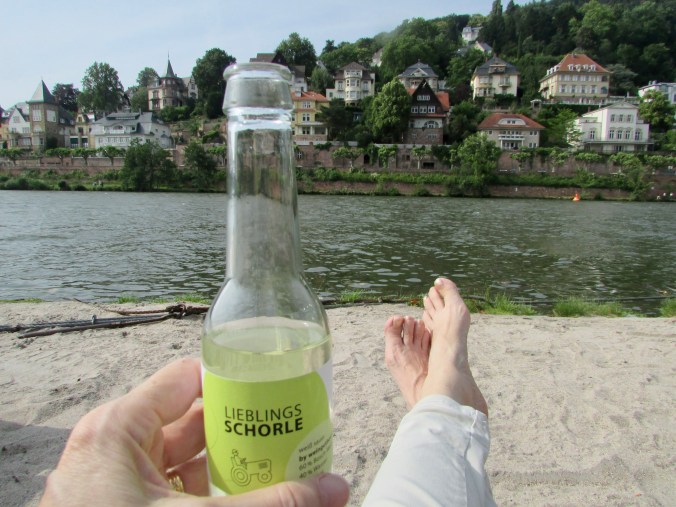
Walking  back along the river toward our hotel, we discovered a bit of serendipity. Looking over the balustrade, we spotted a short stretch of white sand complete with beach chairs and a kiosk selling beverages. Our tired feet took us down the stairs to investigate further and we ended up taking a wonderful and unexpected break there!

I can’t begin to imagine how many miles we’ve put on these feet over the past few days, but they were very happy to take a break! We’ve always said that walking is the best way to see a city and it’s moments like this one that we’d miss if we always depended on transit to get around.

We are going to take a bus to the castle this morning though as it would involve retracing a lot of the steps that we took yesterday and our legs could use the rest!

Frankfurt Am Main

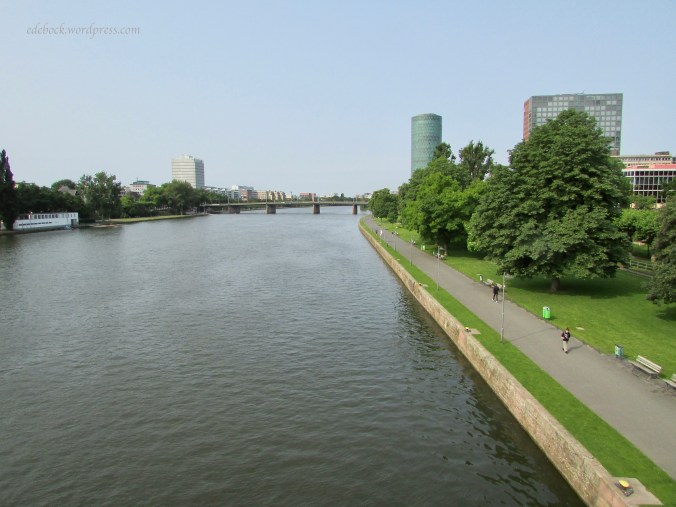
Although we commonly refer to it as Frankfurt, the city’s full name is Frankfurt Am Main which means “Frankfurt on the Main” (pronounced mine). The Main River, the longest tributary of the Rhine, figured prominently in our day today.

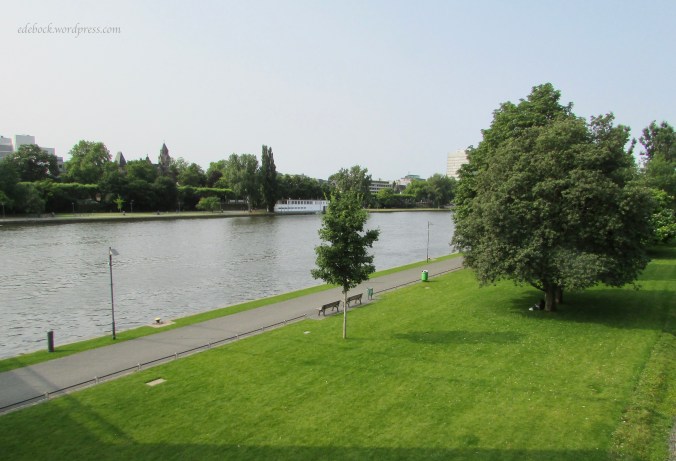
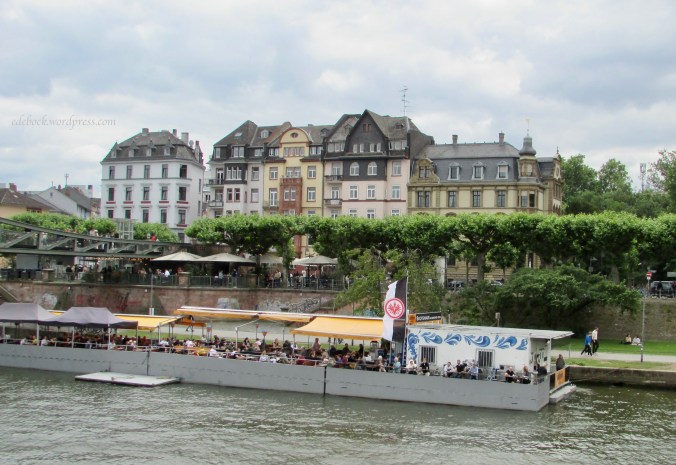
We love the way that the city has preserved green spaces along both sides of the river and we’ve spent some time walking by the water each day since our arrival.

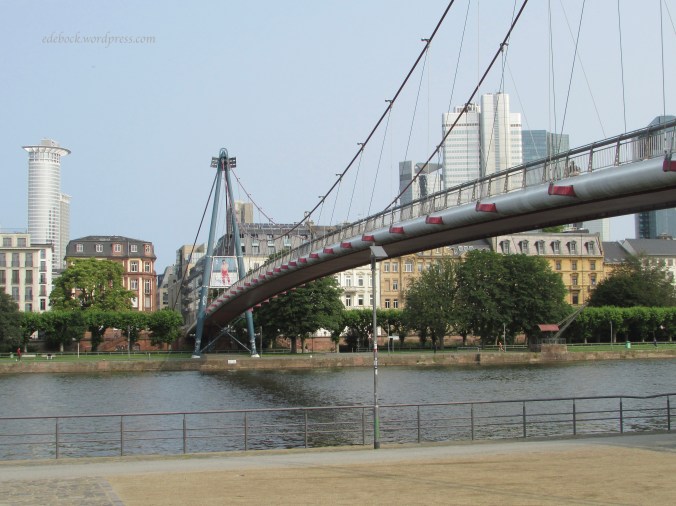
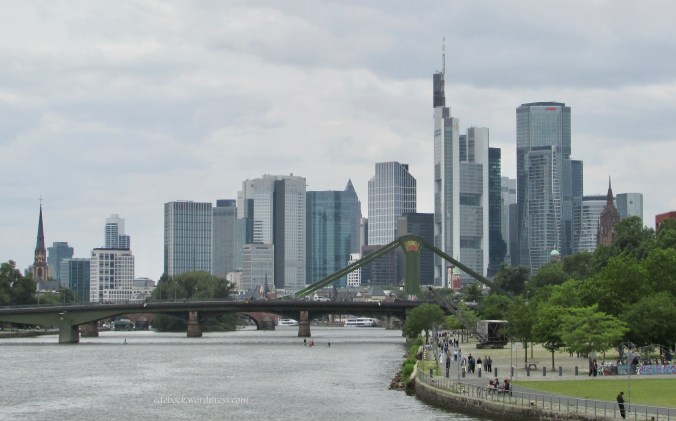
This morning, we walked about a kilometre from our hotel to Hobeinsteg, a suspension bridge built in 1990 that is one of two footbridges that span the river.

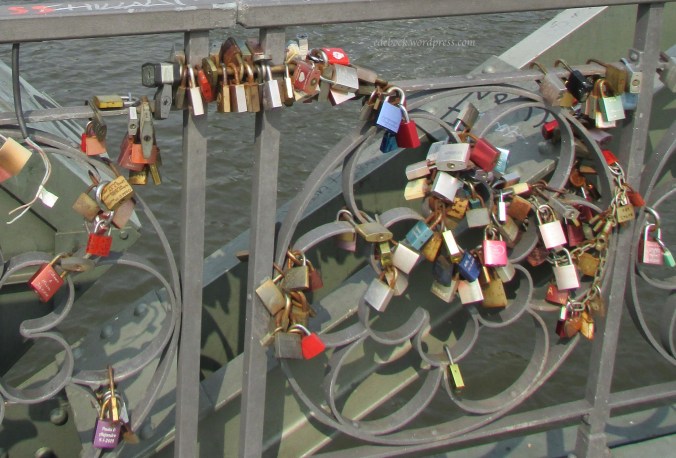
After crossing, we enjoyed a leisurely stroll along the south side of the river eventually crossing back over on Eiserner Steg, the other much older pedestrian bridge that is famous for the thousands of locks of love that adorn its iron rails.

We had hoped to spend some time in Kleinmarkthalle, a huge indoor market featuring more than 60 stalls selling fruit, vegetables, meat, fish, cheese, baked goods, and international delicacies, but when we arrived, we discovered that it was closed. That’s when we realized that today is a holiday in Germany! It wasn’t until we returned to the hotel and I checked online that we learned that it’s Whit Monday or Pentecost Monday which is celebrated the day after Pentecost.

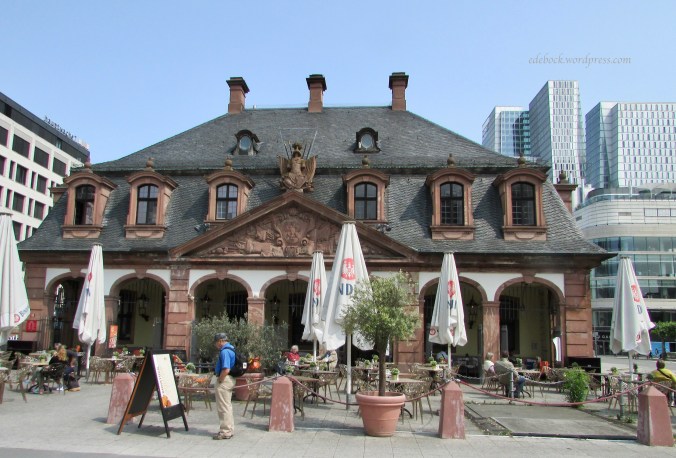
Since we couldn’t visit the market, we took a look at our tourist information to find out what else of interest might be in the area and discovered that Hauptwache was less than half a kilometre away. Built in 1730 as Frankfurt’s main guardhouse or police station, the baroque-style building is now a popular café where we enjoyed lunch at an outdoor table in the sun.

Walking just a little further, we spotted something that absolutely had to be checked out. I almost expected to see Rapunzel at one of the tower windows!

Upon investingating, we discovered that the 47 metre (154 feet) high Eschenheimer Turm, erected in the early 1400s, was the northern tower of the wall that surrounded the then fortified town of Frankfurt Am Main.

Returning to the river, we embarked on a 100 minute cruise with the Primus Line. After all the walking we’ve been doing, it was very nice to sit and watch the city glide by.

Exploring Frankfurt

Our time in ministry came to an end late Friday night and we headed for the nearest airport almost immediately afterward. Saying goodbye was hard, but flights in and out of that part of the world all seem to go at bizarre hours of the night. We arrived in Frankfurt, Germany early Saturday morning tired in mind and body, but buoyed in spirit by all that we had been experiencing.

Since we had to fly through Frankfurt, it only made sense to the wanderer in me to spend some time exploring a bit of Germany before we head for home. After making our way through passport control, grabbing a quick breakfast at the airport, and figuring out how to catch the train into the city, we located our hotel just around the corner from the central station. As it was several hours before our room would be ready, we left our two little suitcases (yes, we’re traveling carry-on only again) in a locker in the lobby and set off on foot to explore our surroundings.

Approximately 25% of Frankfurt’s population are immigrants who don’t hold a German passport and another 10% are naturalized German citizens. Along with recent refugees from Ukraine, the city is home to a vast number of Syrian asylum seekers as well as expats from many other locations around the world. The multi-cultural nature of the city was clearly evident as we explored the area near our hotel. In fact, we had a hard time finding a traditional German meal!

Later, we walked some more to see the Old Opera House which was constructed during the 19th century, destroyed during World War II, and rebuilt in 1981.

After a good night’s sleep and a hearty breakfast in a restaurant in the corner of the train station, our feet hit the pavement again and we headed for historic Alstadt (Old Town) about 1.6 km (1 mile) from our hotel. It was a cool, cloudy day with occasional light showers, so my photos aren’t as clear and bright as they might otherwise have been, but I took almost 100 and will share just a few of them here.

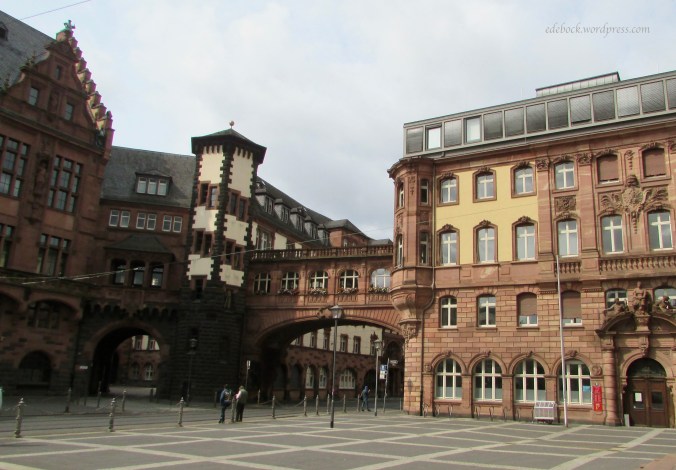
We entered the area through the arched bridge that connects the north and south buildings that make up the Altes Rathaus or Old Town Hall.

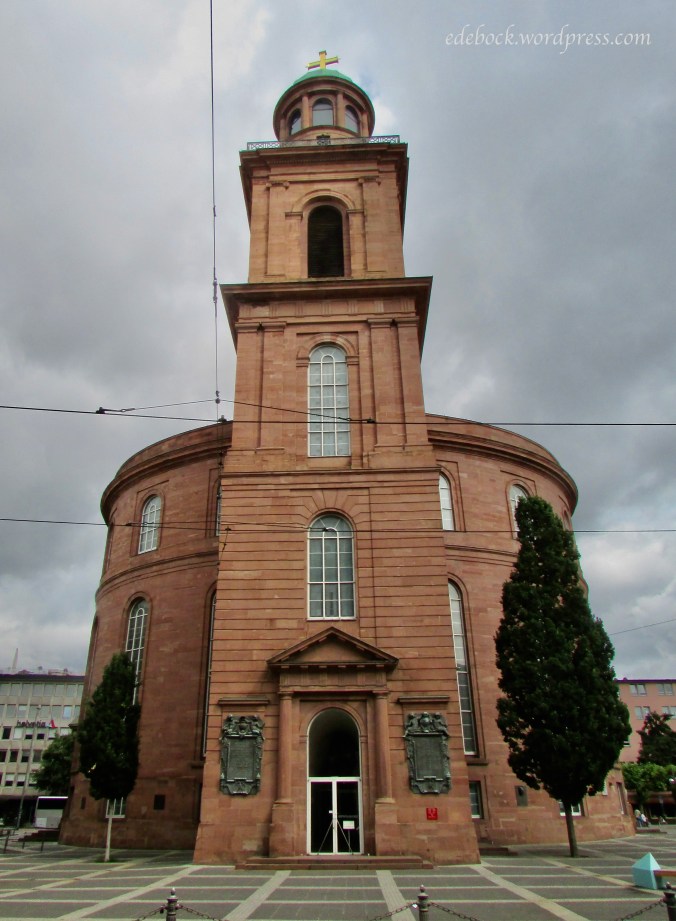
St. Paul’s Church, consecrated in 1833, was the seat of the first freely elected German parliament and is now used by the City of Frankfurt as a special events venue.

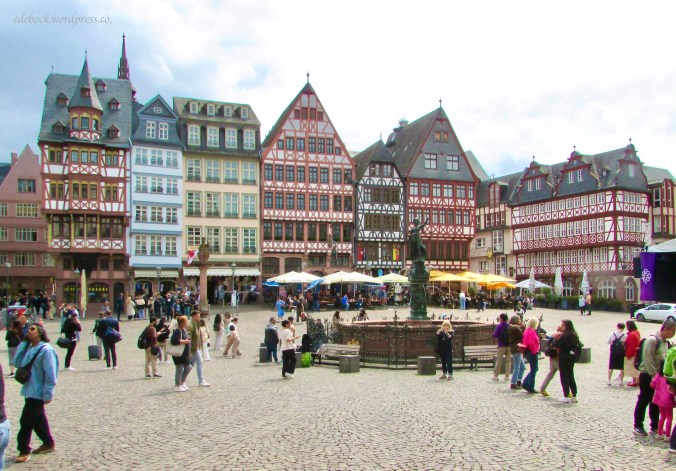
A two minute walk took us to colourful Römerberg Square, a post war reconstruction of the old city plaza that was used for hundreds of years to hold markets, fairs, tournaments, festivals, and even executions.

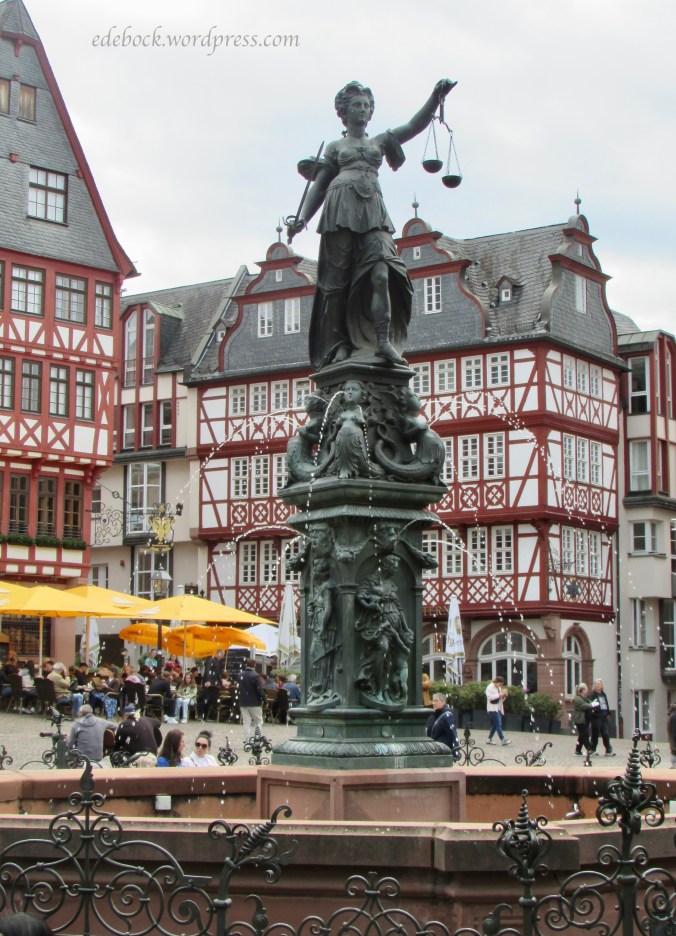
The Fountain of Justice stands at the centre of the square.

With its three gabled roof, the 15th century Town Hall or Römer dominates one side of the square.

Römerberg Square is also home to a monument that might be easily overlooked by many visitors as they focus on the colourful historic buildings surrounding them. Set into the pavement, the large memorial plaque reads “At this place on May 10, 1933 National Socialist students burnt books by authors, scientists and publicists.” Records show that these Nazi sympathizers burned more than 25,000 books that were deemed to be “un-German.” A quote by German-Jewish writer Heinrich Heine stating, “That was just the beginning. Where one burns books, in the end, people are burnt as well.” encircles the memorial.

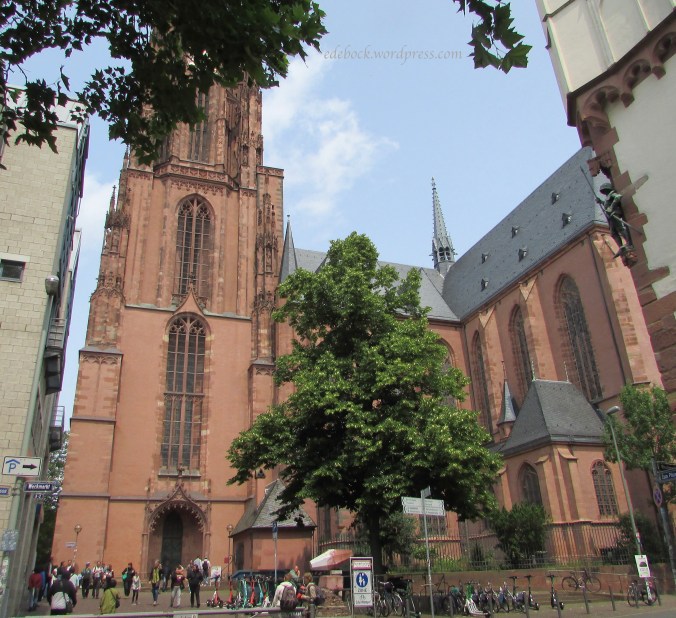
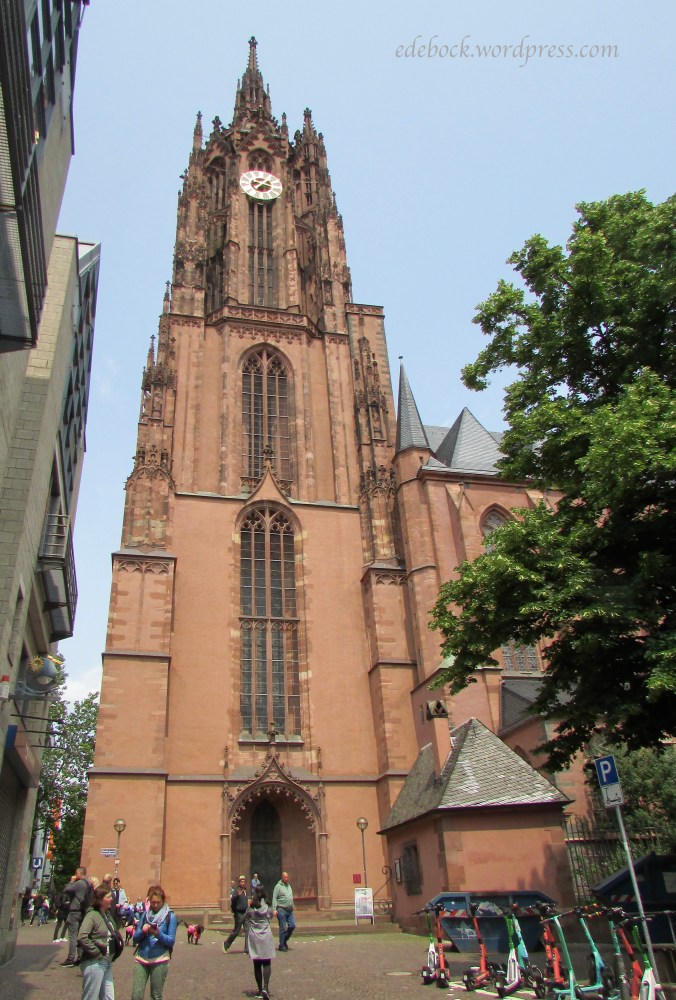
Nearby, the gothic style Frankfurt Cathedral, dedicated to St. Bartholomew, is the largest religious building in the city. It’s so big, in fact, that I couldn’t find a good vantage point to fit it all in a photo!

The 95 metre (312 feet) tall cathedral tower is by far the most magnificent part of the structure.

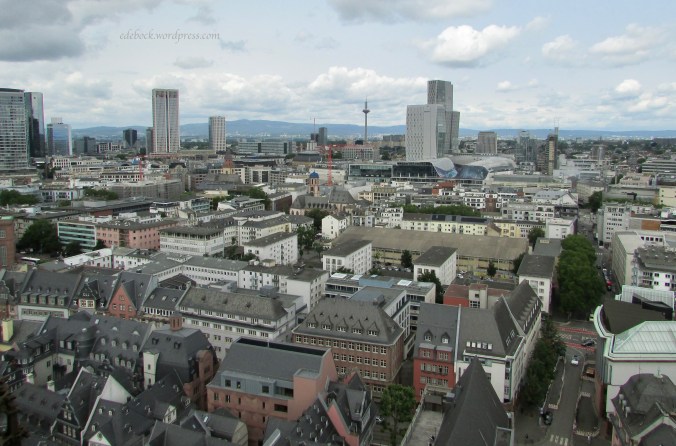
328 stairs took us to the top for some spectacular views of the city! Is it any wonder that our legs are telling us that they’ve been overworked?

Now I’d best get some sleep as we intend to put on many more miles tomorrow!