Hidden gems

In addition to world renowned sites like some of the ones in Jasper and Banff National Parks, Canada is home to many hidden gems usually known only to local people. We also found some of those on our recent travels.

After saying good-bye to our son and his family and leaving the mountain parks behind, we spent another week in the nearby foothills where we camped at Bottrel, Alberta with our daughter’s family. There’s actually nothing at Bottrel except a general store and a small unserviced campground, but we heard about it because our son-in-law’s mother lives nearby.

The campground is only 40 minutes from our daughter’s home in northeast Calgary. As soon as we’d set up camp on the bank of the lovely little creek that runs through the campground, we drove into the city to pick up Drew, our oldest grandson, who enjoyed two days of camping with Gram and Grandpa before the rest of the family was able to join us.

One of the things that we wanted to do during that time was introduce Drew to kayaking, but the creek was too small for that and we didn’t know of any lakes in the area. Richard spoke to the storekeeper, who also runs the campground, and learned of a small fishing lake nearby that’s known only to the locals. The highlight of our outing to Winchell Lake was the rare opportunity to watch a loon and her chick close up!

IMG_5018 - Version 2

About 20 minutes from the campground, on our way into Calgary, we had also passed signs for Big Hill Springs Provincial Park. A quick online search revealed that its 2.3 km (1.4 miles) hiking trail with an elevation gain of only 20 metres (66 feet) was popular with young families. Not intending to do the hike until the rest of the family joined us, we decided to take a drive over to the park just to check it out. Drew was so enthusiastic, however, that we ended up hiking the entire trail that day! Of course, as little boys are inclined to do, he put in a few more steps than we did!

IMG_5000

Later in the week, we packed a picnic lunch and returned with the rest of the family. With Drew as our guide, we did the hike again.

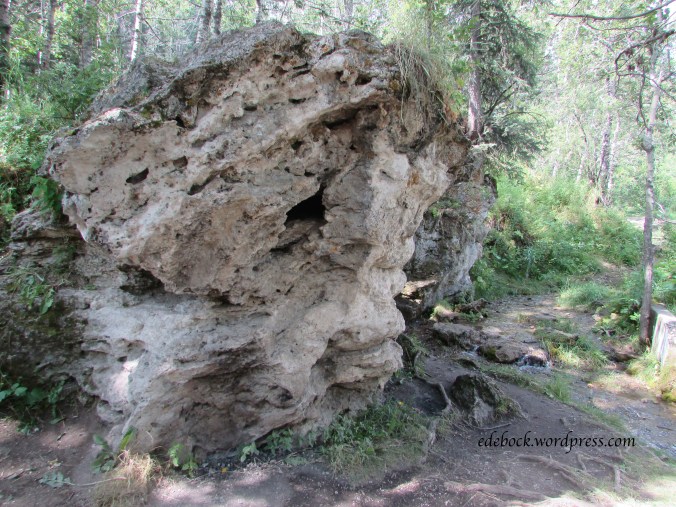
An interesting geological feature in this small park, which is located in a beautiful coulee, are the mounds of unusual rock called tufa (too-fah). Apparently tufa forms when water, rich in calcium and carbonate, emerges from the ground. As it comes to the surface, it releases carbon dioxide into the air and forms outcroppings of calcium carbonate rock.
IMG_5026

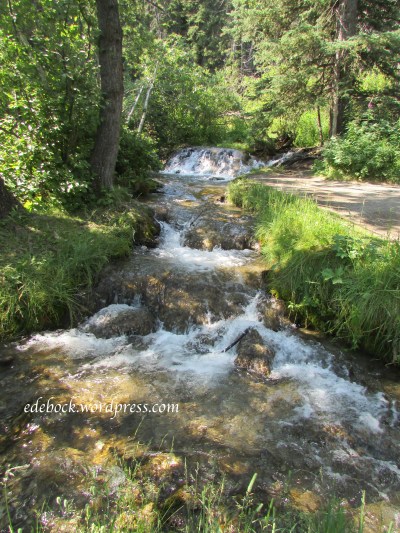
The first part of the hike was particularly pretty following a stream with lots of little waterfalls.
IMG_4998

IMG_4997

IMG_5001

IMG_5039

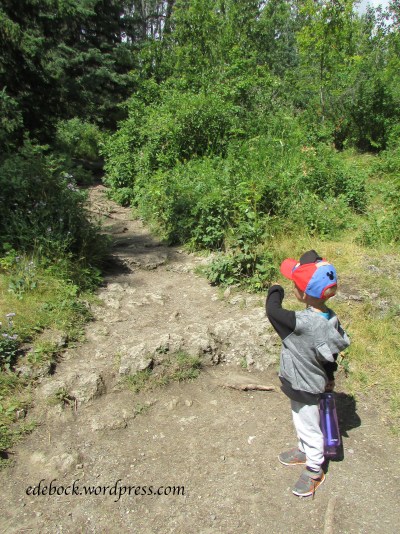
I believe this was 3-year-old Simon’s first hike, but he was very keen to go!
IMG_5035

hiking

Later in the afternoon, back at the campground, the creek was a great place to cool off!

IMG_5066

Two great hikes in Jasper National Park

As part of Canada’s 150th anniversary celebration, the country offered free Parks Canada passes to every Canadian and every visitor from around the world who requested one, giving each of us free admission to national parks, national historic sites and national marine conservation areas across the country. We put our pass to good use when we spent a week camping in Jasper and Banff National Parks with our son Matt, daughter-in-law Robin, and grandsons Sam and Nate, who were enjoying their first family vacation in the Beatrice, a newly restored and much loved family heirloom.

Like most mountain parks, both Jasper and Banff abound with hiking trails of varying lengths and degrees of difficulty. While at Jasper, we took advantage of two of these.

Valley of the Five Lakes

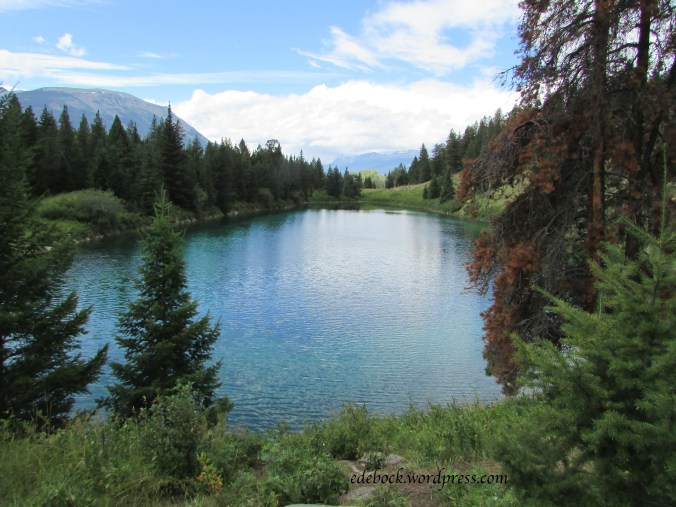
We chose this trail on the recommendation of my aunt who has lived in Jasper since 1953 and who continued to hike into her late 80s. The 4.5 km loop, located about 9 km south of Jasper, was an excellent choice. With only 66 m elevation change it was an easy hike for all of us.

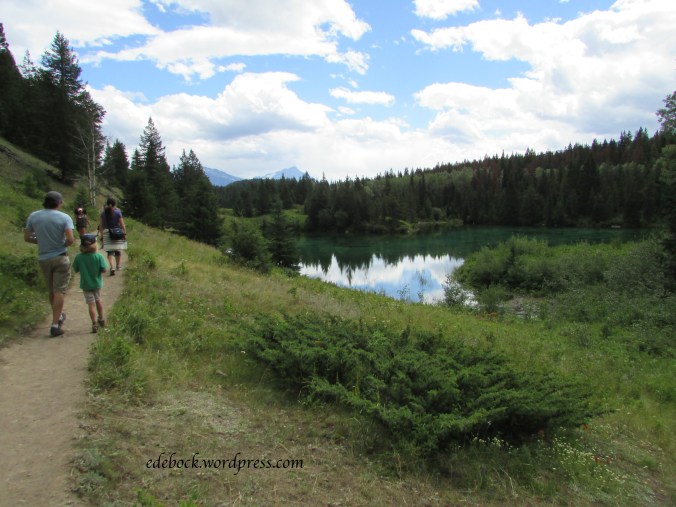
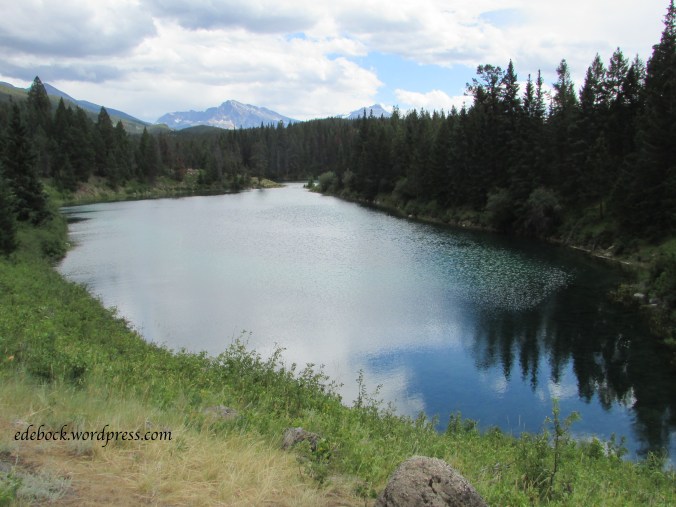
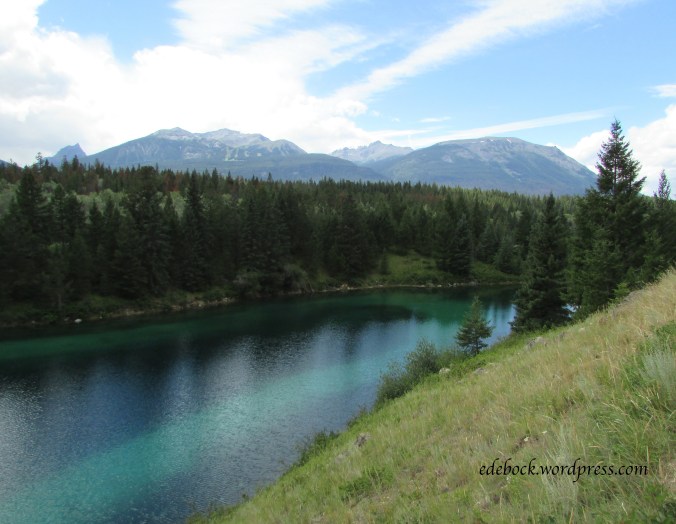
The loop takes in all five small lakes, each a different shade of blue or green, but all strikingly beautiful.

First Lake

First Lake

Second Lake

IMG_4812

Second Lake

Third Lake (and in my opinion, the most beautiful)

Third Lake

IMG_4830

IMG_4832

Isn’t that just stunning?

Fourth Lake

Fourth Lake

Fifth Lake

Fifth Lake

While bears are known to frequent the Five Lakes area, especially in berry season, we saw only this frisky little chipmunk who was happy to pose for a photo.

IMG_4828

Maligne Canyon

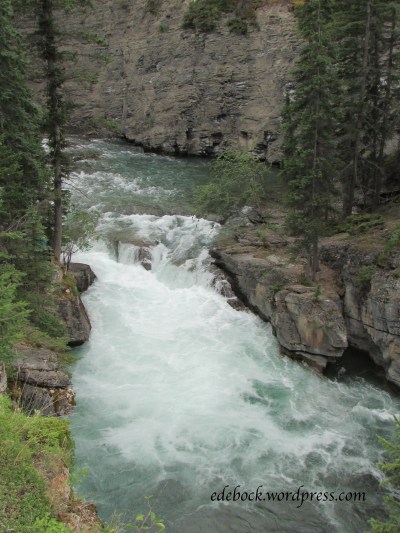
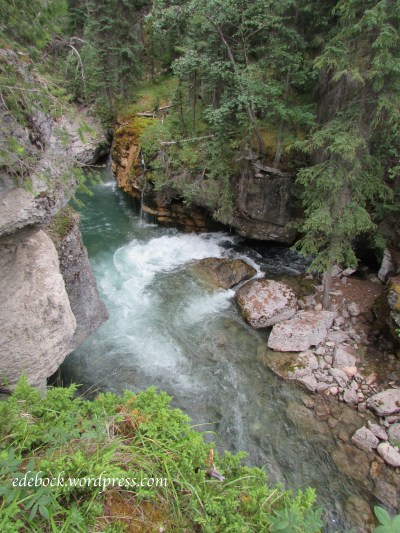
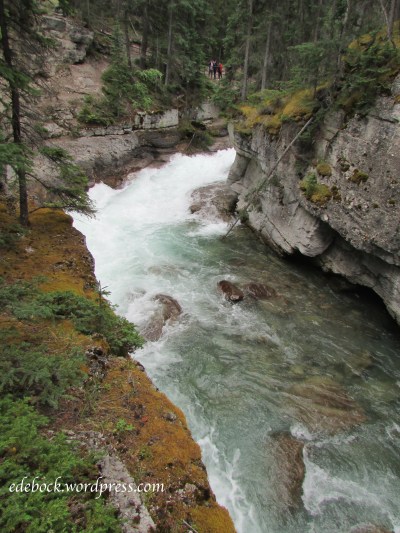
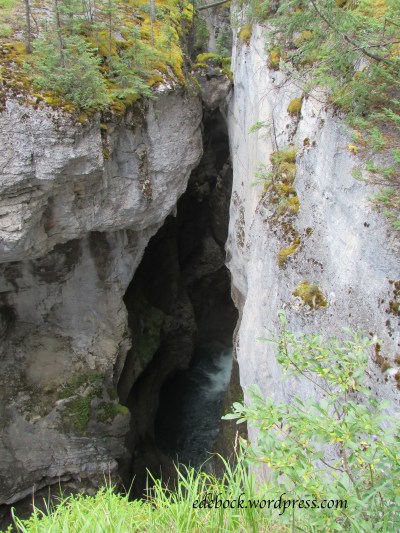
With a depth of more than 50 metres at some points, Maligne Canyon is one of the deepest in the Canadian Rockies and certainly one of the most spectacular. For our second hike in the Jasper area, we started at the 5th bridge and hiked up the canyon trail to the teahouse at the upper end.

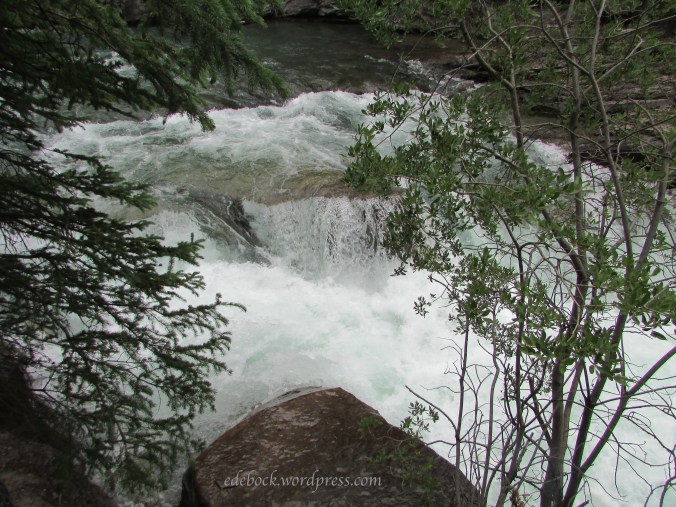
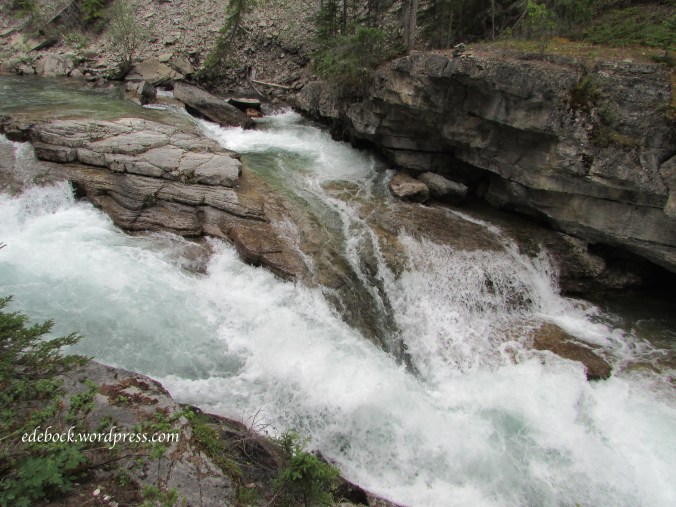
When I first looked at my photos, I was disappointed. Somehow they just didn’t capture the magnitude of what we’d seen. Then I realized that it was the thunderous sound of the water churning through the deep, rocky canyon that was missing! Use your imagination as you follow us up the trail and try to imagine what it sounded like as the canyon walls narrowed and the rushing water echoed below.

IMG_4860

IMG_4864

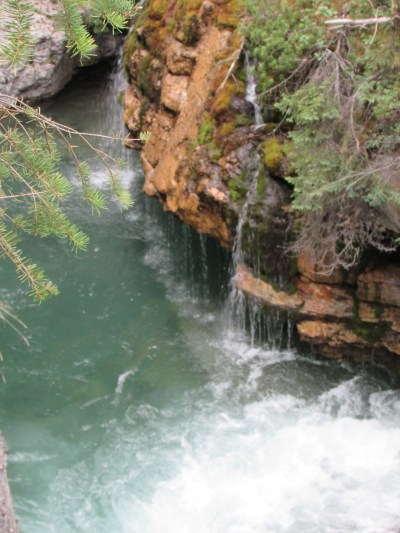
Where does all that water come from? Located in the Maligne valley, Medicine Lake is formed by the Maligne River. One of the interpretive signs along the hiking trail compares Medicine Lake to a “giant leaky bathtub.” Water from the lake drains into what is thought to be the largest inaccessible cave system in the world and resurfaces downstream through springs along the canyon walls.

IMG_4869

IMG_4874

IMG_4875

The power of the moving water becomes evident when you look at the shapes of the rocky canyon walls that have been whittled away over eons.

IMG_4871

IMG_4873

IMG_4876

In some places, rocks and sand swirling around in the turbulent water wear potholes in the canyon floor or walls. Over time, as the canyon wears deeper these potholes, or bowls as we called them, are left above the water level, reminders of a previous time. You can see a pothole still being formed near the centre of this picture.

IMG_4879

Another interesting feature is the chockstone. Chockstones are giant boulders that have become wedged across portions of the canyon which narrows to only two metres at the top in some places. Over time, erosion slowly reduces the size of the chockstones until they eventually tumble to the canyon floor. There is a chockstone with moss and trees growing on it near the top of this photo.

IMG_4882

The promise of dozens of fossils preserved in the rock beneath our feet was an incentive to keep our young grandsons going as we climbed the last portion of the trail which is a bit steep. They became very good at spotting these reminders that this was once a very different looking world and enjoyed making rubbings of several of them.

IMG_4888

IMG_4889

Though this hike isn’t a long one, if you go, allow yourself lots of time as there are so many interesting things to see and photos to take!

There are many trails in the canyon area and rather than retracing our steps the entire distance, we took a higher trail from the 4th bridge back to the 5th. Though we were above the canyon walls and further from the thundering water, the views were beautiful.

IMG_4892

IMG_4895

IMG_4896