NET Cancer Day 2025

Once again, today is NET Cancer Day. November 10th is a day set aside to increase awareness of neuroendocrine cancer and to promote improved diagnostics, treatments, care, and research, but for those of us who live with the disease, every day is NET Cancer Day.

Here are a few alarming facts that point out why a day like today is vital:

  • Over 90% of all NET patients are incorrectly diagnosed and initially treated for the wrong disease!
  • The average time from onset of symptoms to correct diagnosis often exceeds 5 years!
  • Over 50% of NET patients are already at stage 3 or 4 when diagnosed!
  • Many primary care physicians are unfamiliar with NETS and some still falsely believe that it isn’t even cancer!

These are just some of the reasons that I have become involved in patient advocacy over the past couple of years. Once considered a rare disease, NETS has become the fastest growing class of cancer worldwide. Although the reasons for this aren’t fully understood, it’s likely due to increasing awareness and better diagnostics.

In addition to my role as a member of the CNETS (Canadian Neuroendocrine Tumour Society) Advocacy Advisory Board, I’ve become actively involved in trying to improve the patient experience in a number of other ways. I had the opportunity to participate as a patient representative in an Ipsen project to design an injection toolkit to make the experience easier for patients who are newly prescribed the medication that I receive every 28 days. Ipsen is the pharmaceutical company that produces the drug.

Also, if you’ve been reading my blog you know that I participated in this summer’s CNETS “Hoofing It” fundraiser. With the generous support of many, including some of you who read the blog, we managed to raise over $40,000 for NET cancer research here in Canada. An additional bonus for me was the fact that the “hoofing it” that I committed to as part of this initiative got me out walking almost every day. Now that the campaign is over and the weather has turned cold, daily walking has become a habit and I’ve dusted off the treadmill in the basement so that I can keep it up over the winter!

Another big opportunity came my way earlier this year when I was asked to co-lead the CNETS Alberta patient support group that meets online once a month. This really was a big step for me as I’d never been part of a support group before! Every month I hear stories from patients who were initially misdiagnosed, who feel confused or unheard, whose symptoms have been minimized or dismissed as all in their head, who feel lost trying to navigate the health care system, or who don’t know how to advocate for themselves. More than ever, I’ve come to realize how badly we need to continue raising awareness and promoting better diagnostics, treatments, care, and research. One day a year just isn’t enough!

And now, on a more personal note, you may remember that in my 12 year cancerversary post at the end of August, I mentioned the latest tumour on my liver. A week from today, on November 17th, I’ll be having a CT guided ablation to destroy it. A needle-like probe will be inserted through my abdomen and into the tumour where it will deliver microwave energy to kill the cancer. This is done as a day procedure, but I’ll be required to stay in the city overnight in case of complications. I’m not sure what the recovery will entail, but hopefully I’ll be back on the treadmill before long!

 

My 12 year cancerversary!

Yesterday was my 12th cancerversary. Twelve years have passed since I heard those dreadful words, “It’s cancer and it has already spread.” At the time, that sounded like a death sentence, but two weeks later we learned that I have neuroendocrine cancer (NETS) which, while not curable, can be treated and usually grows more slowly than most other cancers.

One of the things that I learned early on was how important it is for patients to advocate for themselves. Last Friday proved that point. When I saw my oncologist in mid July to discuss the results of my latest CT scan which showed that a small tumour on my liver had started to grow, he referred me back to the interventional radiology specialist who did my radioembolization in March of last year. He expected that I would hear something within a couple of weeks, but when we returned from our recent trip, more than a month had passed and I’d heard nothing. On Friday morning, I called and left a message asking for confirmation that the referral had been received and, if possible, an update on what was happening. In less than half an hour, I had an appointment to see the doctor during her noon hour on Monday! I can’t help wondering how long I would have had to wait if I hadn’t called.

We actually had to wait quite awhile to see the doctor on Monday because she was tied up in a procedure that took much longer than expected. When we finally got in, she did an ultrasound and wasn’t able to find the tumour. Unfortunately, that doesn’t mean that it isn’t there. It simply means that it’s in a location that isn’t easy to see. After discussing the fact that the tumour is quite small and that I don’t have any symptoms, we decided on a tentative treatment plan, but we aren’t actually going to do anything until after my next CT scan on September 26. This battle is really a balancing act. We don’t want to treat too soon because that can limit what we might be able to do in the future, but we also don’t want to wait too long and let the tumour get too large.

After twelve years of living with this, I’ve become much more comfortable with waiting. Rather than worrying about what might or might not be happening inside me or about what the future might hold, I’m simply going to go on living my best life right now!

Image: Surya Ali Zaidan

If you would like to help, I’m still fundraising for neuroendocrine cancer research. Click here to visit my fundraising page. Although I’m nearing my $1200 goal ($100 for each of the 12 years that I’ve been fighting this disease) the campaign is still far short of what we need to fund research grants for the coming year. We could really use your help!

Traveling again: family time

Prior to yesterday’s post, the blog had been silent for three weeks. That’s because I was traveling again! For much of that time, I didn’t have internet access and when I did, I was too busy to write about what I was doing. Now that I’m home again, I’m looking forward to reliving some of those experiences as I share them with you.

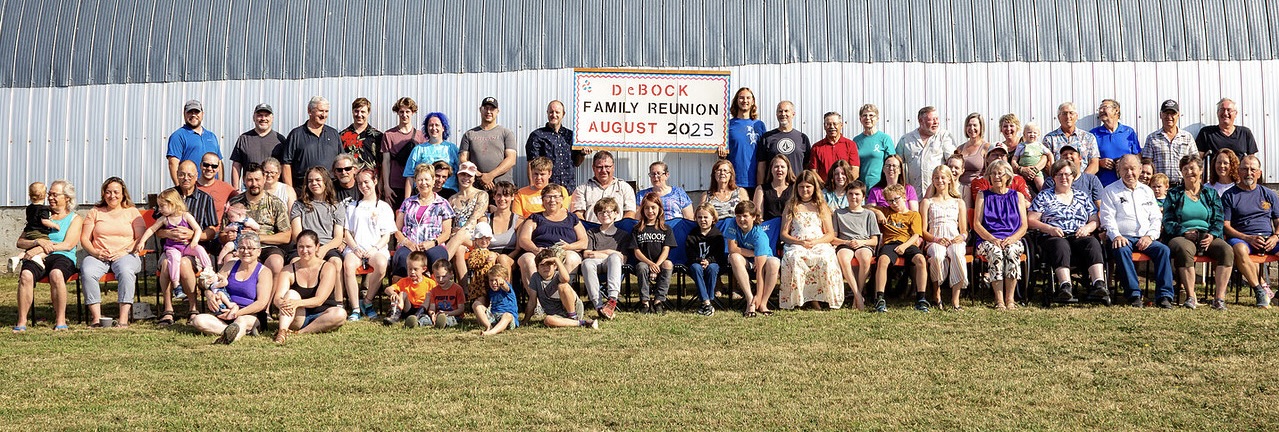
Our most recent trip was really three in one and, as such, was definitely the most difficult one I’ve ever had to pack for. It started with a family reunion at the beginning of August. Over 70 of hubby’s relatives gathered at his youngest brother’s farm for a fun-filled long weekend.

It was a time of visiting, catching up, food, games, campfires, and even some shenanigans!

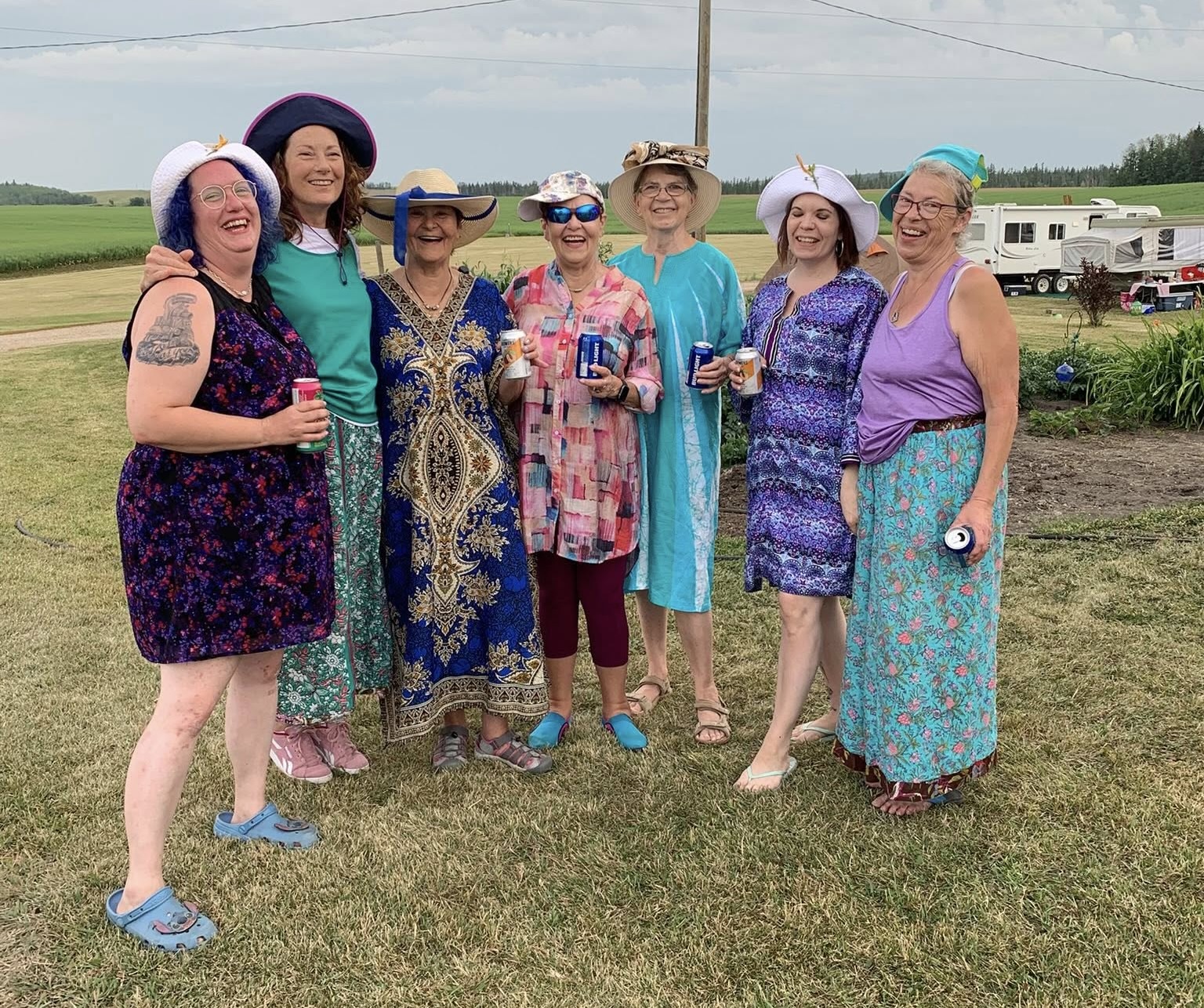
When one of the brothers went a little overboard teasing his younger sister about the bright caftans and wide brimmed hat that she wore to protect herself from the sun, a bunch of us gals decided to join her! In spite of our wacky outfits, I love this selfie of my daughter and I.

It was especially fun to watch the children. Second and third cousins, many who’d never met before, quickly became fast friends. Within minutes of arriving, our 11-year-old autistic grandson was part of a “cult” with creative code names like “Walmart Shopping Bag” and “Ikea Dining Table”! On a hot afternoon, a rousing game of Human Battleship with water balloons morphed into a giant water fight. A visit to the nearby cemetery to place refurbished headstones on old family graves was a more sombre moment and I was very moved by the response to a silent auction to raise funds for neuroendocrine cancer and Parkinson’s disease research. Half the proceeds put me within $100 of my Hoofing It fundraiser goal.

Like most of the crowd, we stayed in our trailer during the reunion, but then we left it at the farm and picked it up again after the second and third parts of our vacation which included a road trip to Vancouver and an Alaskan cruise. That’s why packing was such a conundrum! I could easily pack for any one of the three, but making the transition from trailer to road trip to cruise was a challenge even for someone with as much packing experience as I have!

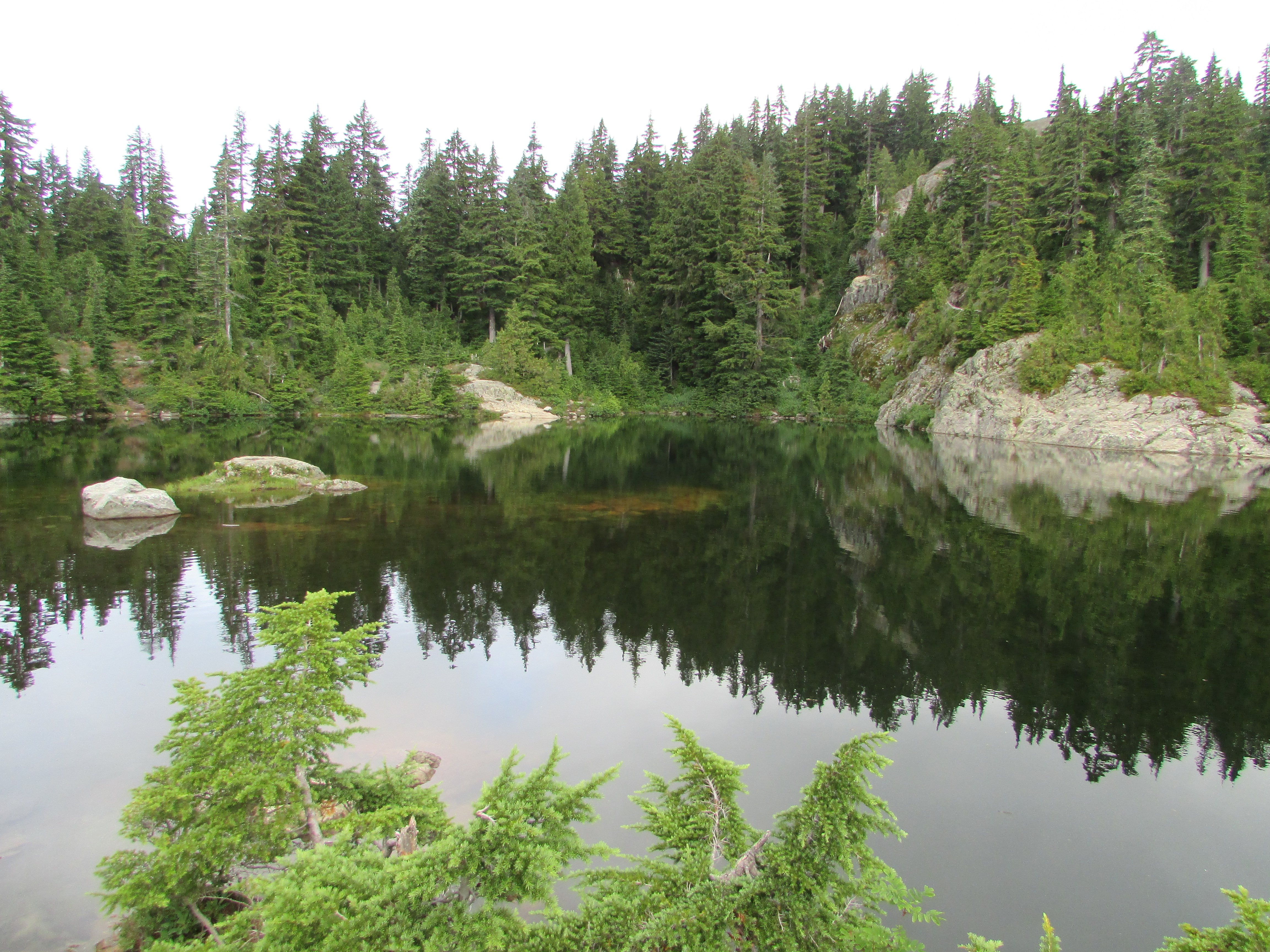
The trip to Vancouver was also about family. It was the first time since our father passed away at the beginning of March 2020, less than a week before the Covid pandemic shut the world down, that all three of my siblings and I were able to be in Vancouver at the same time. In his younger years, Dad was an avid mountaineer and mountains were his passion, so it only seemed fitting that his final resting place be on one of the mountains overlooking the city where he was born and spent much of his life. On the morning of August 9, nine family members hiked the short, but fairly steep trail to beautiful Mystery Lake and selected a secluded spot nearby to finally lay his ashes to rest. 

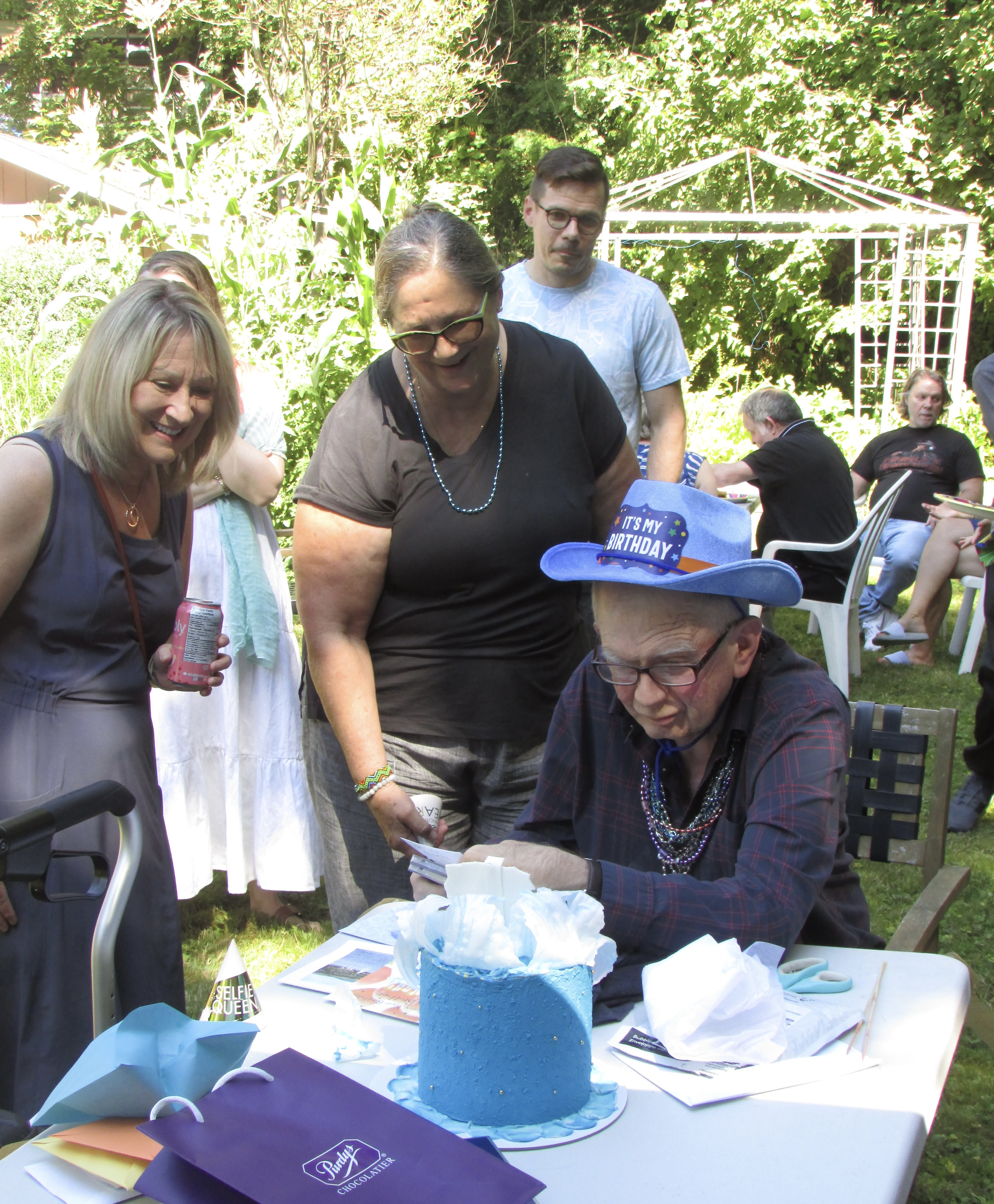
The following day we celebrated my beloved older brother’s 75th birthday. Surrounded by family, friends, and caregivers, Donald was the man of the hour! 

To read Donald’s story, visit this post that I wrote more than a decade ago. It was later published in the Community Living Society’s quarterly publication, The Communicator. 

Part three of our trip was the Alaska cruise. In order to keep this post from becoming too long and because I’m still sorting through the 300+ photos that I took on that portion of the trip, I’ll share it in a separate post (or maybe even more than one) within the next few days. 

No one fights cancer alone

My cancer is on the move again and so am I. It’s been 5 years since I last participated in the annual CNETS (Canadian Neuroendocrine Tumour Society) Hoofing It fundraiser and I’m late to the party this year, but I’ve decided to get involved again.

It’s been 12 years since I was diagnosed with stage 4 neuroendocrine cancer (NETs). Once the shock of learning that I had a cancer that I’d never heard of and that I’d be living with it for the rest of my life wore off, it became important to me to do what I could to help raise awareness of this little known disease and to support fundraising efforts for research, better treatments, and patient support. If it wasn’t for the research that organizations like CNETS fund, I probably wouldn’t be here today, so this is definitely something that’s very close to my heart!

I don’t think I’ve mentioned it on the blog before, but several months ago I became co-lead of the CNETS Alberta Patient Support Group that meets online once a month. Every month I hear from patients and caregivers whose lives have been turned upside down by this disease. Some are newly diagnosed and looking for answers. Others have been battling this for longer than I have and some are ready to give up hope.

After 16 months of stability following the radioembolization treatment that I had in March of last year, my cancer is growing again. Another tumour on my liver has started to increase in size and I’m waiting to find out how we’re going to treat it. At this point, my other tumours continue to remain stable and the cancer hasn’t spread to any new locations, but this is definitely beginning to feel a bit like a game of Whack-a-Mole! We haven’t exhausted all the possible treatment options yet, but this new development has reminded me how important it is that research into new treatments continues to move forward.

In past Hoofing It fundraisers, participants kept track of how many kilometres they walked, hiked, biked, or paddled, but not all patients are physically capable of doing those things. This year points are being assigned for a wider variety of physical activities. I’m not concerned about earning points though. My goal is simply to walk or hike at least 5 days a week until the end of September & to raise a minimum of $1200.

The walking part is easy. I was already doing that before we went to Europe, but since arriving home last month, I’ve been a bit lazy. Hopefully participating in this endeavour will provide the motivation I need to keep moving.

The $1200 is where you come in! As my new t-shirt says, no one fights cancer alone. I’m hoping that I can persuade you to visit my fundraising page here and make a donation. No amount is too small! Every cent received by CNETS during this campaign will go directly to neuroendocrine cancer research. We need to know what causes this disease, we need more and better treatments, and we need to find a cure!

When is an accessory not just an accessory?

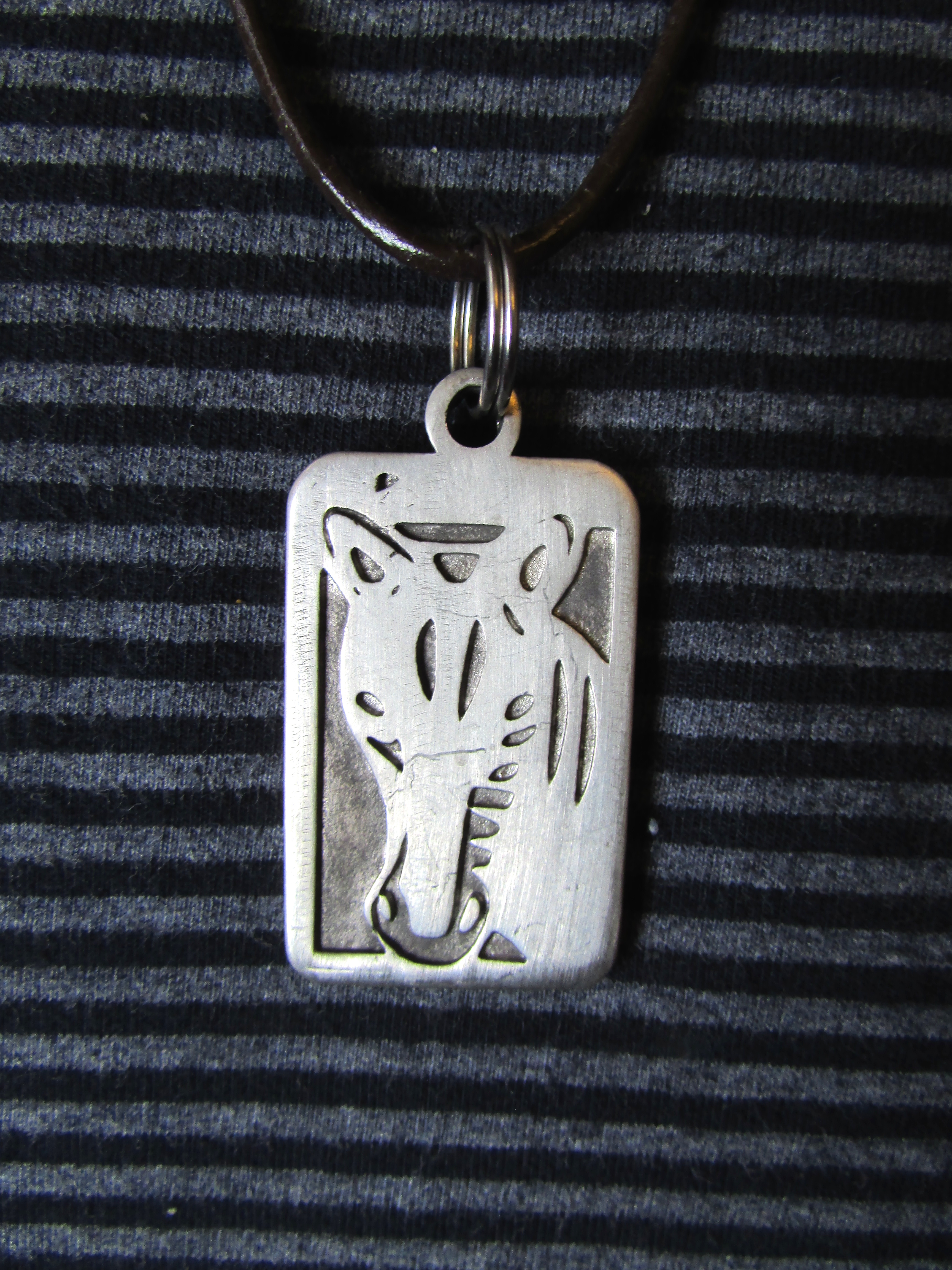
LogoAccessories are the finishing touches that can take an outfit from drab to dramatic. They also add versatility to your wardrobe enabling you to create many different looks with the same basic outfit. Accessories are also an opportunity to express your personal style, taste, and preferences, but sometimes they are even more than that. Sometimes an accessory has special meaning or significance to the person who wears it. That’s definitely the case with my new hand-crafted zebra pendant!
IMG_3007

As many of you are already aware, the zebra is a symbol of neuroendocrine cancer (NETS), the cancer that I’ve been living with for the past eight years. In medical school, doctors are taught “when you hear hoofbeats, think horses, not zebras”. NETS was previously considered rare and therefore, a zebra. However, with increasing awareness and quicker diagnosis, neuroendocrine cancers are proving not to be as rare as once thought. Another reason that the Canadian Neuroendocrine Tumour Society (CNETS) chose and continues to use the zebra as their mascot is the fact that every zebra has its own pattern of stripes. Just as each patient and their needs are unique, no two zebras are exactly alike.

Committed to improving the quality of life and the survival rate for NETS cancer patients across Canada, every year CNETS funds research initiatives that will have a direct and meaningful impact on their lives. As a little-known cancer, it falls upon patients to raise much of the money for this ongoing work.

Screen Shot 2021-09-15 at 2.45.32 PMAl Gillis is a neuroendocrine cancer patient who came up with a unique idea for both increasing awareness and raising funds; a beautiful one-of-a-kind pewter pendant/keyfob featuring the CNETS zebra logo. Made entirely of donated materials and using only volunteer labour, the first distribution sold out in less one day! I was fortunate to nab one of those. Now, a second batch is in stock and going fast. If you’re interested in purchasing one and supporting this important endeavour click here, but don’t hesitate too long or you’ll be waiting for Al and his crew to make more!
You might also be interested in watching this video in which Al demonstrates and explains how the pendants (which can also be used as keyfobs) are made. I found it quite fascinating.

Do you have any accessories that are especially meaningful to you? Please tell us about one or more of them in the comments section below. 


Walking challenge update #1

This is just a quick post to update you on the walking challenge that I wrote about in this post on May 2nd. My plan was to walk (or hike) 300 kilometres in the five months leading up to our 45th wedding anniversary on October 2nd. The anniversary actually has nothing to do with the challenge other than giving me a good end date to aim for! I wrote about my plan because knowing that I’ll be reporting my progress on the blog makes me accountable. It gets me off the couch and out the door on days when I really don’t feel like walking! 

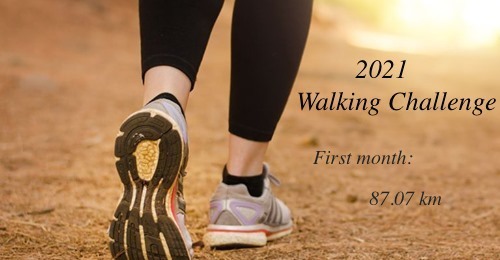
So, how have I done so far? In order to meet my goal, I need to walk at least 60 km a month. For my American readers, that’s approximately 37.3 miles. In the past month, walking 6 days a week, I’ve actually covered 87.07 km! 

Walking challenge

Most of my walking so far has been on the streets of our small town, but I also explored some of the Hardisty Nature Trails and this week we’ve been camping at Dillberry Lake Provincial Park where we did a short 2.3 km hike on Monday evening and then hiked 8.93 km on Tuesday. With a small group of friends I also took part in a 5 km fundraising walk for multiple sclerosis on Sunday. Together we raised over $2500! 

One thing that I’ve discovered in the past month is that I need to invest in a new pair of walking shoes. So far, I’ve been wearing old ones that don’t have much life left in them. I do have my trusty Merrell hiking shoes, but I don’t want to wear them out walking the streets of town. I could also use the ASICS running shoes that I bought last year specifically for the treadmill, but I want to save them for indoor use. Hopefully by the time I update again a month from now, I’ll be able to show you some new shoes as well as reporting another 60 km or more. 


Overcoat overload

LogoOur beautiful fall weather is rapidly disappearing and winter is on the horizon. It’s time to begin bringing out winter coats and boots. As I thought about doing that, I decided that this week would be a good time to purge my wardrobe of some of the jackets and coats that have been taking up closet space and not being worn. I decided to take a similar approach to my scarf edit of a few weeks ago.  
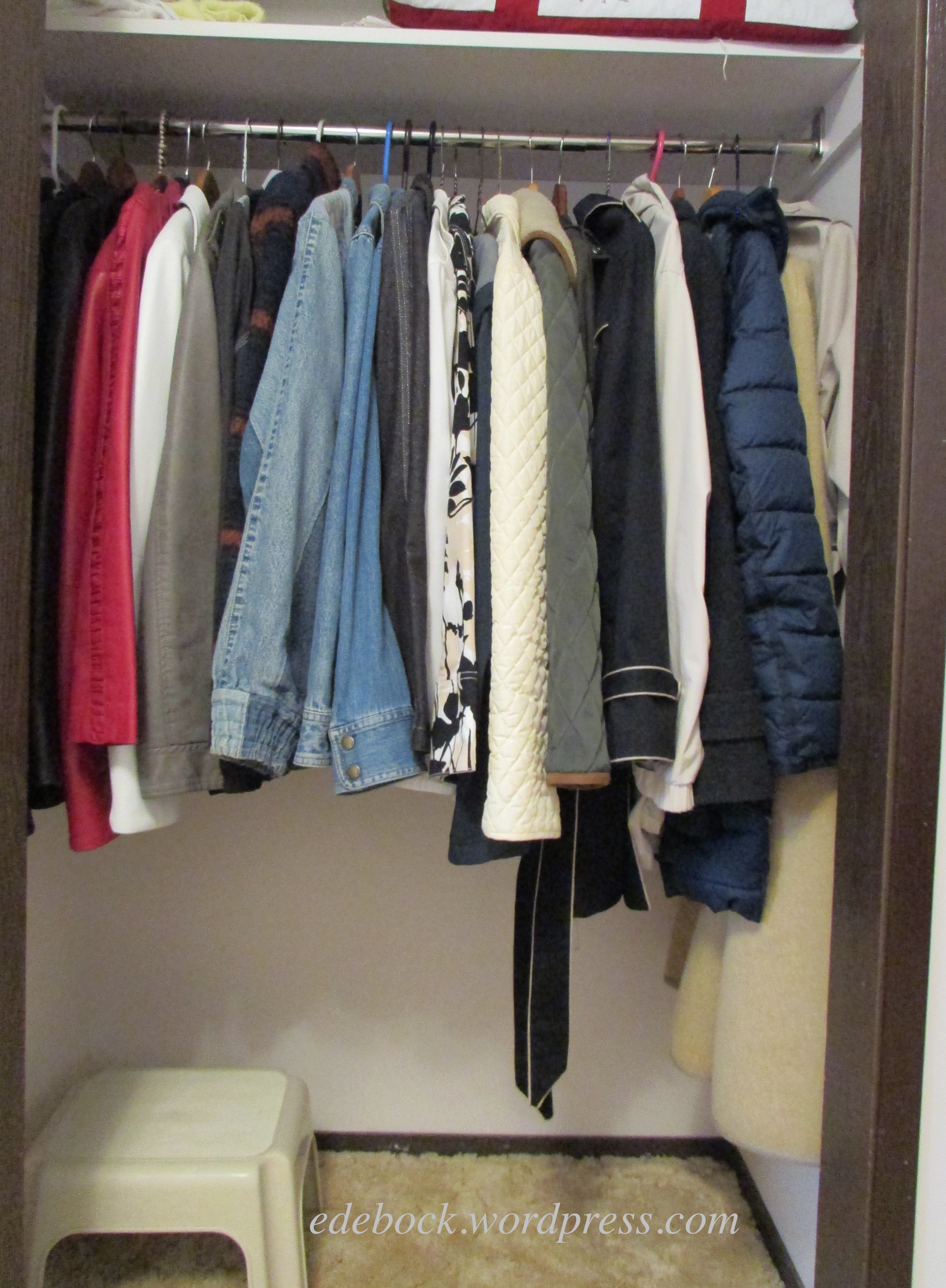
I started by rounding up all my coats and jackets from various closets around the house and hanging them in one place, the guest room closet. There were 25 of them. Yes, 25! Even with four distinct seasons, no woman needs 25 coats! 

IMG_1641

The next step was the easiest. Pulling out the coats and jackets that I wear regularly, I moved the fall and winter ones to the hall closet and those that I only use in the warmer seasons to the hanging rack in the basement storage room. I also pulled out the jean jackets that I wear from time to time throughout the year and moved them to a different closet.

Next came the much more difficult task of deciding what to do with the 13 items that remained. I’m not as disciplined as I’d like to be when it comes to getting rid of things which is why I ended up with 25 coats and jackets in the first place!

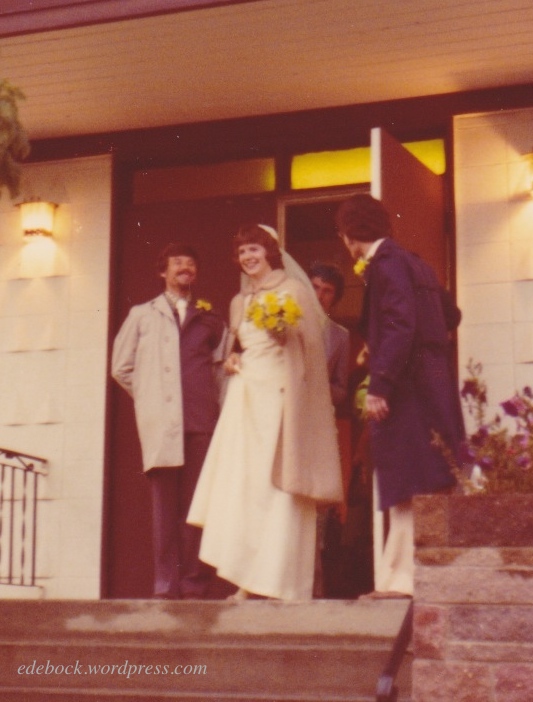
Two items were put aside to keep for sentimental reasons. The first, a vintage reversible wool cape, originally belonged to my mother. Forty-four years ago, on a blustery October day much like today, I wore it over my wedding dress. Thirty years later, my daughter wore it over hers on a stormy mid December day. Though I’ve only worn it a handful of times, it has become a family heirloom and I won’t be parting with it. Since capes are very much on trend this fall, I moved it to the front closet where I might remember to wear it this year.

Scan copy 11

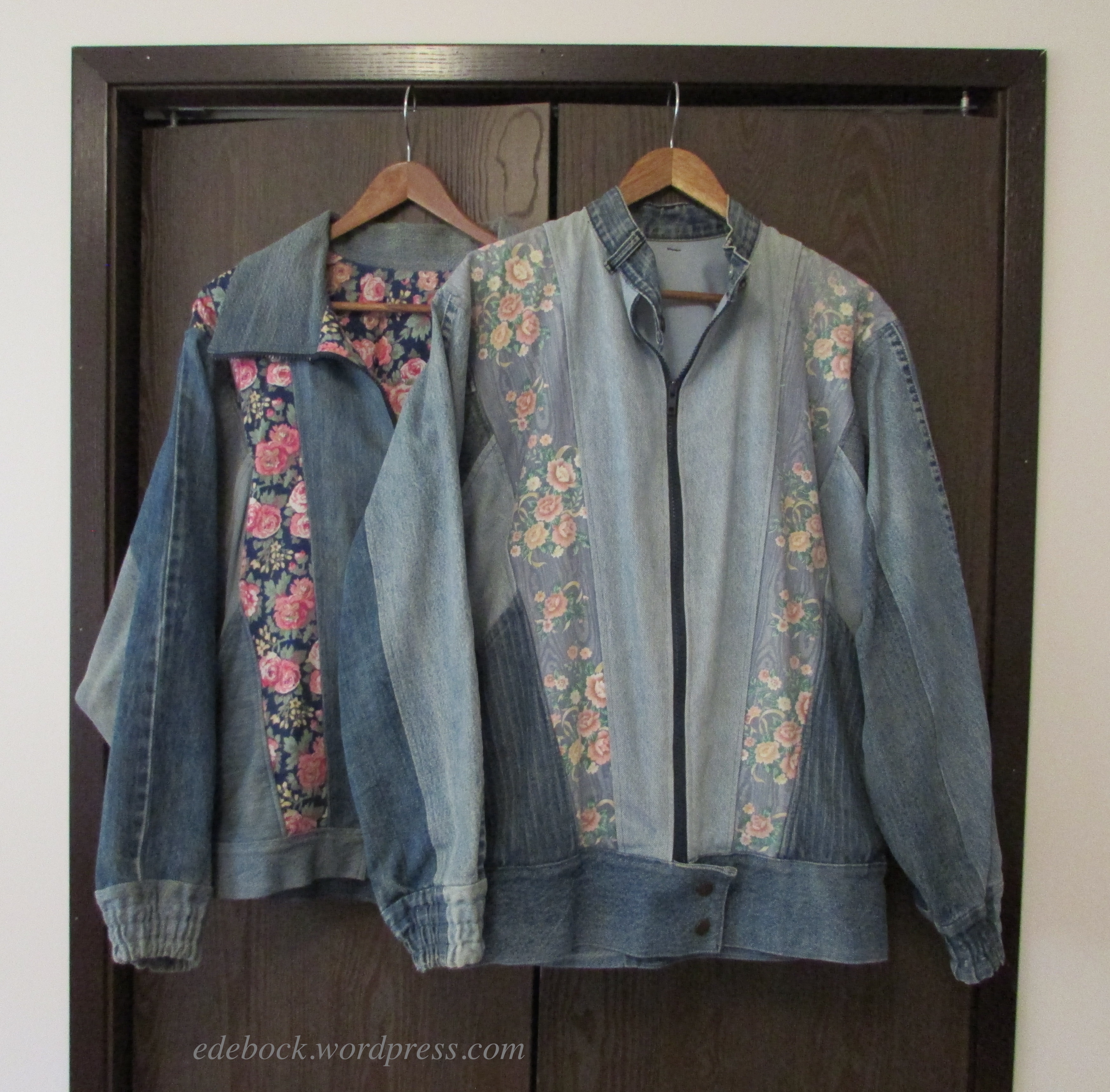
The second item that I’m keeping for strictly sentimental reasons is a patchwork jacket that I made for myself from recycled jeans a long time ago. I made a similar one for my very dear friend, Joan. When she lost her valiant battle with breast cancer in 2006, Joan’s husband returned it to me and the two jackets have been hanging side by side in our storage room ever since. Mine has been returned to that spot and they will stay there, a reminder of an enduring friendship that was cut short far too soon. 

IMG_1644

That left me with 11 coats and jackets to decide what to do with, but I hadn’t got rid of any yet! The next step was to try each one on, stand in front of the mirror, and ask myself, “Does this fit well?” “Is the colour right for me?” “Do I love it?” and probably most important, “How likely am I to ever wear this again?” At that point, the donate pile began to grow quickly!

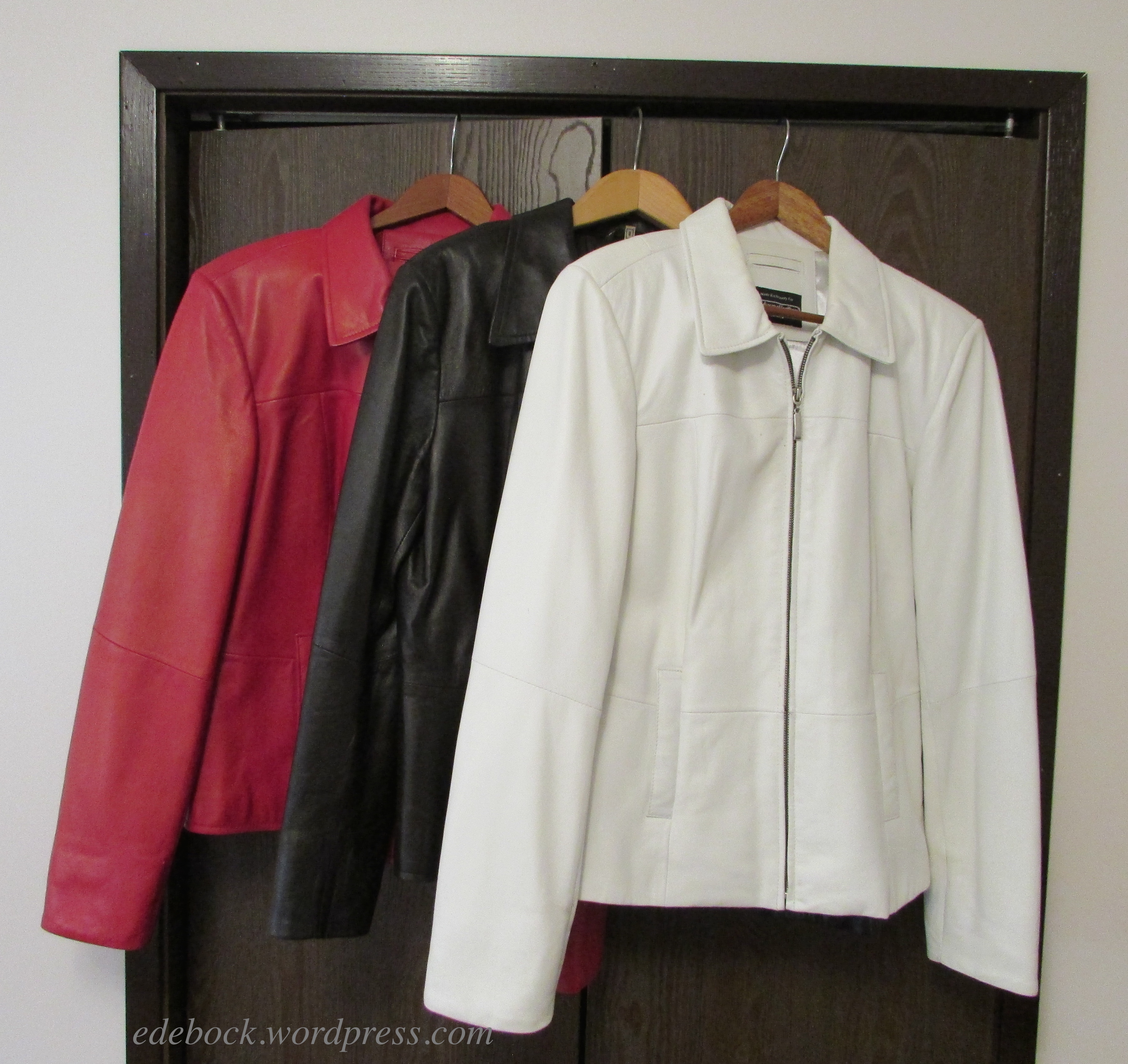
Soon I was down to just three jackets hanging in the closet; three beautiful leather jackets that originally belonged to my very generous sister-in-law, Sue. She often shares with me when she cleans out her own closets. I’ve had the jackets for quite awhile and don’t expect to wear them again, but I hesitate to drop them off at the thrift store with the rest of my donate items because I know that that they’ll be sold for far less than they’re worth. I thought about trying to sell them on one of the buy and sell sites that I belong to on Facebook, but I don’t really want to profit from them, especially when I didn’t buy them in the first place. Then I had an idea. After consulting with Sue, who gave her enthusiastic approval, I’ve decided to sell the jackets and donate the proceeds to neuroendocrine cancer (NETS) research. The recent CNETS HOOFING IT Across Canada fundraiser that I took part in fell a little short of our $100 000 goal, so every bit that we patients can add will help! 

IMG_1647

HOOFED IT!

Over a three day period while camping at Miquelon Lake Provincial Park this past week, Richard and I hiked a total of 23.9 km, pushing me to within just 2 km of my final HOOFING IT Across Canada goal. This evening, under dark cloudy skies that look like they were about to let go and pour rain, I crossed my self-imposed finish line! Since July 1st, I’ve HOOFED IT 179.5 kilometres (111.5 miles). That’s 2.5 km more than the distance from our front door to the Cross Cancer Institute in Edmonton where I receive all my neuroendocrine (NET) cancer care.

If you’ve been reading my blog or following me on Facebook this summer, you know that I’ve been taking part in the CNETS Canada campaign to raise funds for NET cancer research. The goal was for participants to rack up 5514 km, the distance from Newfoundland and Labrador to the Yukon, by walking, hiking, kayaking, swimming, cycling, roller-blading, or any other forward moving activity that they could think of. We did that in spades, criss-crossing Canada almost five times!

Fundraising has been a bigger and vastly more important challenge. This evening, we’re sitting at just over $73,000, but approximately $20,000 of that has come in over the past ten days! For that reason, the deadline for making donations has been extended to September 25. With an extra two and a half weeks, we’re hopeful that we can bring in the final $27,000 necessary to continue funding critically needed neuroendocrine cancer research.

The need for research and awareness was brought home to me again this afternoon when I spent some time chatting online with a NET patient in another Canadian province who was diagnosed in May of this year. She’s been seen by an oncologist and has had surgery, but she hasn’t been referred to a NET specialist. She hadn’t even heard of Sandostatin, the injection that I’ve been receiving every 28 days since diagnosis. It’s been the workhorse medication for neuroendocrine cancer patients for the past 30 years, but her oncologist may never have encountered a NET patient before and may have little or no idea how to treat it. Sadly, this is a common occurrence for NET cancer patients!

Today, with so much attention being directed toward COVID related research (and rightly so) a relatively unknown cancer like ours can easily get overlooked. With many people facing financial difficulties, it’s not easy to keep asking for donations, but let me do it one more time. If you haven’t already and you’re able to give even a small donation, please visit my fundraising page and help us reach our goal. Every dollar counts!

My final goal

Just a quick HOOFING IT Across Canada post today as I have grandchildren here and don’t intend to spend much time sitting at the computer! With just two weeks left in the fundraising campaign for neuroendocrine (NET) cancer research, I have walked 136.56 km and raised $1595 in donations. If you’ve been following my progress, you know that I originally set 100 km as my walking/hiking goal. When I accomplished that before the middle of this month, I decided to add another 50 km to my distance. Now, with that goal in sight, I’ve decided to push myself a little bit further.

The distance by road from my front door to the Cross Cancer Institute in Edmonton, Alberta is 177 km. That’s where I receive all my NET cancer care, so 177 km seems like a very meaningful goal to pursue. It might be a bit of a stretch, but I CAN DO IT!

I also passed my fundraising goal of $1500 in early August. It hasn’t grown a lot since then, but I would dearly love to see a few more donations come in. I’m still in the top ten fundraisers and would love to hold onto that position, but much more important is the need for funds to continue research into this unusual cancer. It will be 7 years tomorrow since I started this journey and while there’s been progress made, we still know nothing about what causes NET cancer and have a very long way to go to find better treatments and ultimately a cure.

The overall goal for the HOOFING IT Across Canada campaign is $100,000. This afternoon we’re sitting at just under $54,000, so we still have a long way to go! You can help by visiting my fundraising page and adding to my total. Thank you so much for being with me on this journey!

287226b0-bda3-11ea-a9f0-2d2856e5b296

HOOFED IT 100 km!

dancing-netty-zebra-net-cancer-dayThere’s no doubt that the HOOFING IT Across Canada fundraising campaign has helped give purpose to my summer; this very weird summer when a family reunion, special birthday celebration, travel, and even scattering my father’s ashes in his beloved mountains all went out the window with Covid-19.

Prior to the campaign, I set two goals for myself. Between July 1st and September 7th, I would walk or hike 100 km and raise a minimum of $1500 in donations for neuroendocrine cancer (NETS) research. I knew that I’d have no problem HOOFING IT 100 km, but I originally thought that $1000 was perhaps a more reasonable fundraising goal. My husband had other ideas. “Go big!” he urged me, so $1500 it was. This week, I accomplished both these goals! In fact, the $1500 was in the bag before I HOOFED my final kilometres today!

With a little over three weeks left in the campaign, I’m not going to quit now. Instead, I’m going to push myself to walk another 50 km and increase my fundraising goal to $2000. My total presently sits at $1570, so I’m going to need some help!

Perhaps this is a good time to explain a bit about this cancer that killed Steve Jobs, Aretha Franklin, and more recently, actor Irrfan Khan, and why research funds are so badly needed. NETS is currently being diagnosed more frequently than ever before, but no one knows why or what causes it. Despite vast improvements in diagnostic techniques, it continues to be difficult to diagnose because symptoms are often vague and are also typical of hundreds of other more common diseases. As with any cancer, early diagnosis is the first step toward successful treatment and better outcomes, but patients commonly make many visits to the doctor over several years before an actual diagnosis is made. I probably had NETS for 7 to 10 years before it was detected and, of course, by that time it had spread. This is pretty typical. Thankfully neuroendocrine tumours tend to grow slowly and a person can live a long time even with advanced disease. Time equals hope; hope that new and better treatments will be found. That requires research and research requires dollars!

That’s why the Canadian neuroendocrine cancer community has collectively walked, run, hiked, biked, kayaked, canoed, and even stand-up paddleboarded over 17,000 km this summer and raised over $45,000. That falls a long way short of our $100,000 goal though.

I greatly appreciate those who have already made donations. If you haven’t and you’re able to, please visit my fundraising page here. No amount is too small!