 To upcycle is to recycle or reuse something in such a way that the resulting product is of higher quality or value than the original. Upcycling clothing involves taking old or unwanted garments and turning them into something new and unique. Technically, my Fashion Revolution Week projects might better be referred to as minor alterations as opposed to upcycling, but whatever we choose to call them, the result is two items of clothing that I hadn’t worn for a long time are now back in circulation.

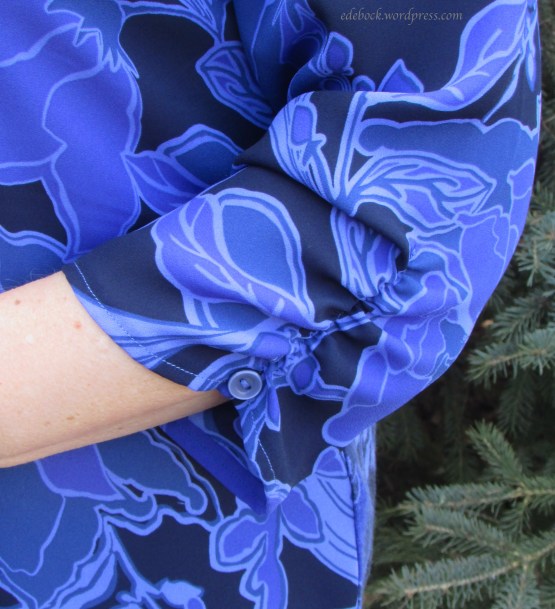
The first was this blouse that I bought about six years ago. It originally had bell sleeves, a trend that I didn’t expect to last very long. I loved the colour and the fit though, and since it was on sale for less than $20, I decided to buy it anyway. I knew that I could easily remove the bells at a later date. I did that a couple of years ago and started to wear it again, but that didn’t last. When I did my recent closet cull, I was going to add it to the donate pile, but I tried it on again and discovered that I still really liked the colour and the fit. So, why wasn’t I wearing it? What was it that caused me to leave it hanging in the closet? The sleeves still weren’t right. The length was awkward and they made my wrists look even skinnier than they really are. I could have tried shortening them a little more, but I wasn’t sure that that would help. Instead, I decided to try my hand at ruching, a sewing technique that I’d never tried before. I took a look at this tutorial first and it didn’t look too difficult.

I added a decorative button to each sleeve and I’m happy with the results.
The second item was this denim shirt from cabi’s Fall 2016 Collection. I wore it quite a bit in the past and have always liked everything about it except the ties. I never knew quite what to do with them.
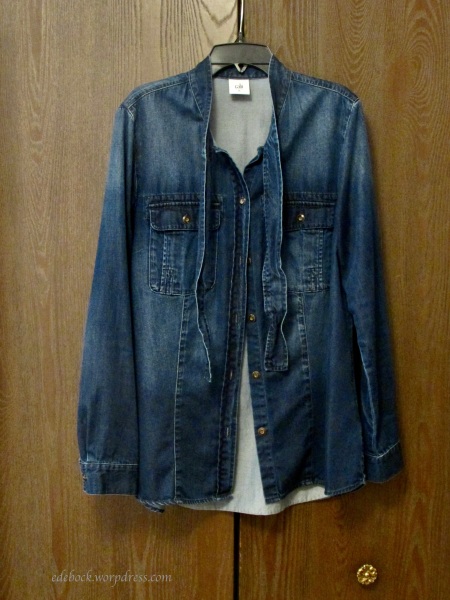
The collar and ties were all one piece of fabric, but it shouldn’t be too difficult to cut them off and turn the edges under to form a stand-up collar, I thought.

No more silly ties and again, I’m very happy with the results!

And now it’s time to go back to my closet and start switching over to my spring/summer wardrobe!



 Following Augustine