Revisiting Powell River: a nostalgic journey

The past couple of days in Powell River, the BC coastal town where I was born and spent the first ten years of my life, have been a wonderful time of revisiting and reminiscing. One of my favourite things as a child was riding the ferries and after all these years, that hasn’t changed.

IMG_7608

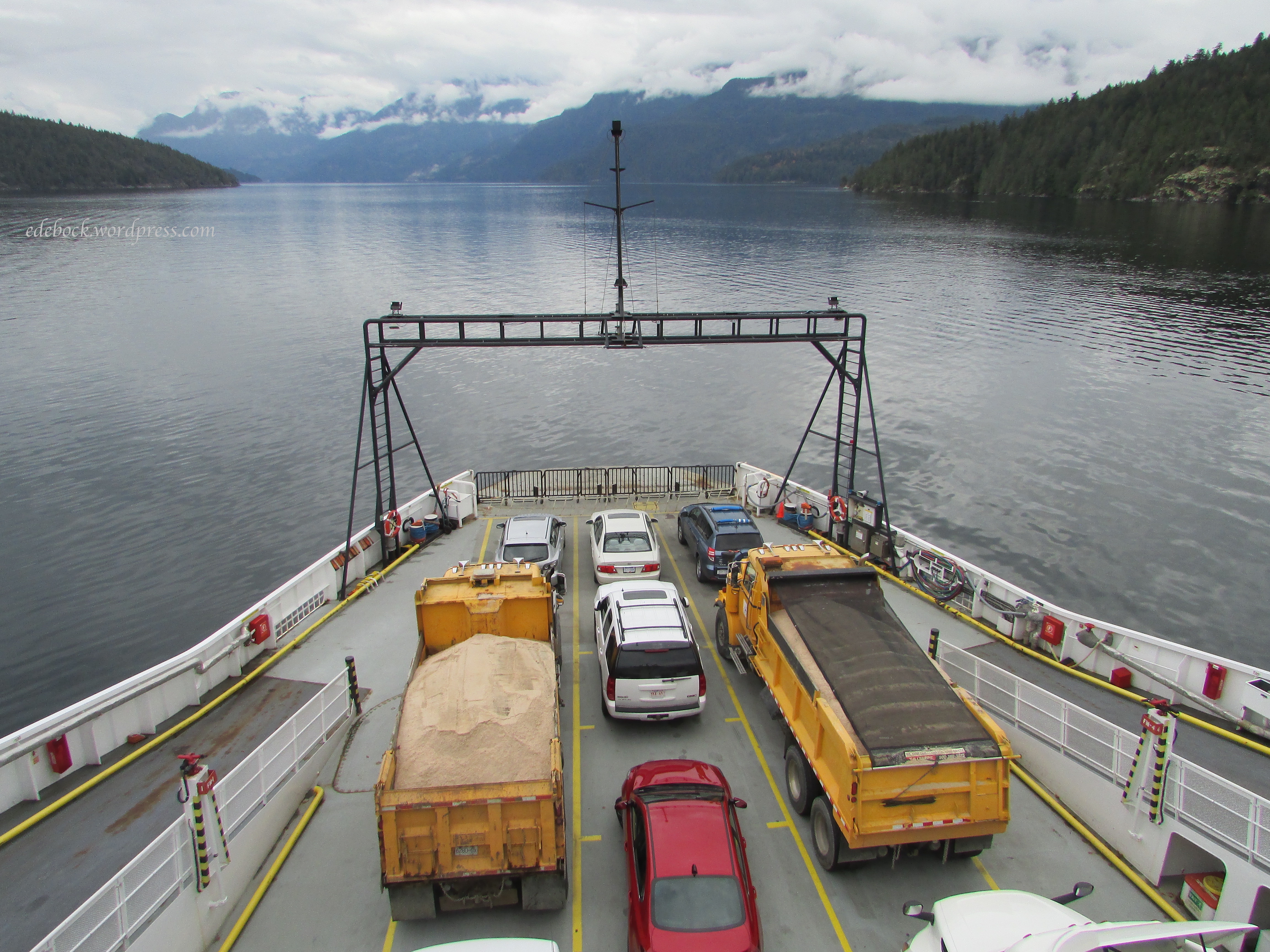
That’s the one that took us from Earl’s Cove to Saltery Bay on the last leg of our trip and there’s our white SUV sandwiched between two big trucks as we make the 50 minute crossing.
IMG_7609

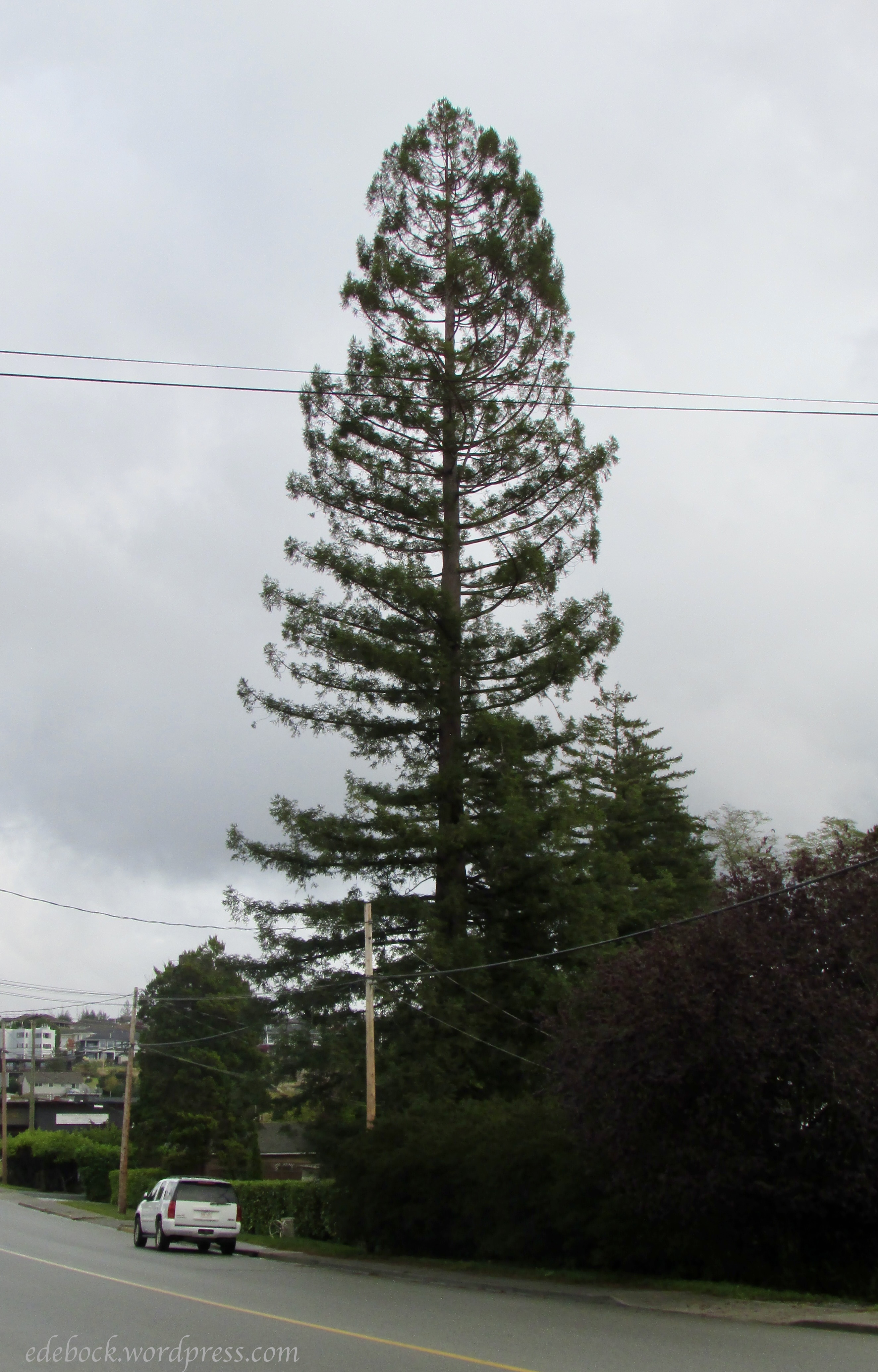
When we arrived in town, we immediately drove up the hill to check on the one remaining piece of family history in town, the giant California redwood that my grandmother planted from seed in the early 1940s. It stands in the corner of the yard that was hers and continues to thrive in its unusual location. Back in 2019, I contacted the Powell River weekly newspaper and they published this excellent article about it.
IMG_7615

There’s our vehicle again to give you an idea of how big the tree actually is!

The little house that my grandfather built in the 1930s is still standing, but I’m sure my grandmother, an avid gardener, would be as horrified as I was at the condition of the yard. She lived in that house until she passed away in late 1980 and I spent many, many happy hours there.

IMG_7689

My childhood home is still standing too, but it’s been completely transformed since we lived in it. When we moved in in 1955, it was a modest family home with two bedrooms and one bathroom, a completely unfinished upper storey, and a partially dirt basement. Later, as the family expanded, my father added two additional bedrooms and a half bath upstairs. Now for sale, it’s advertised as a “stunning 5 bed 4 bath character home” with a walk out basement and an attached bachelor suite and if you happen to have an extra $1.5 million to spend, it could by yours! While I wouldn’t even recognize it as the same house from the ocean side, this view from the street still looks very familiar.

IMG_7622

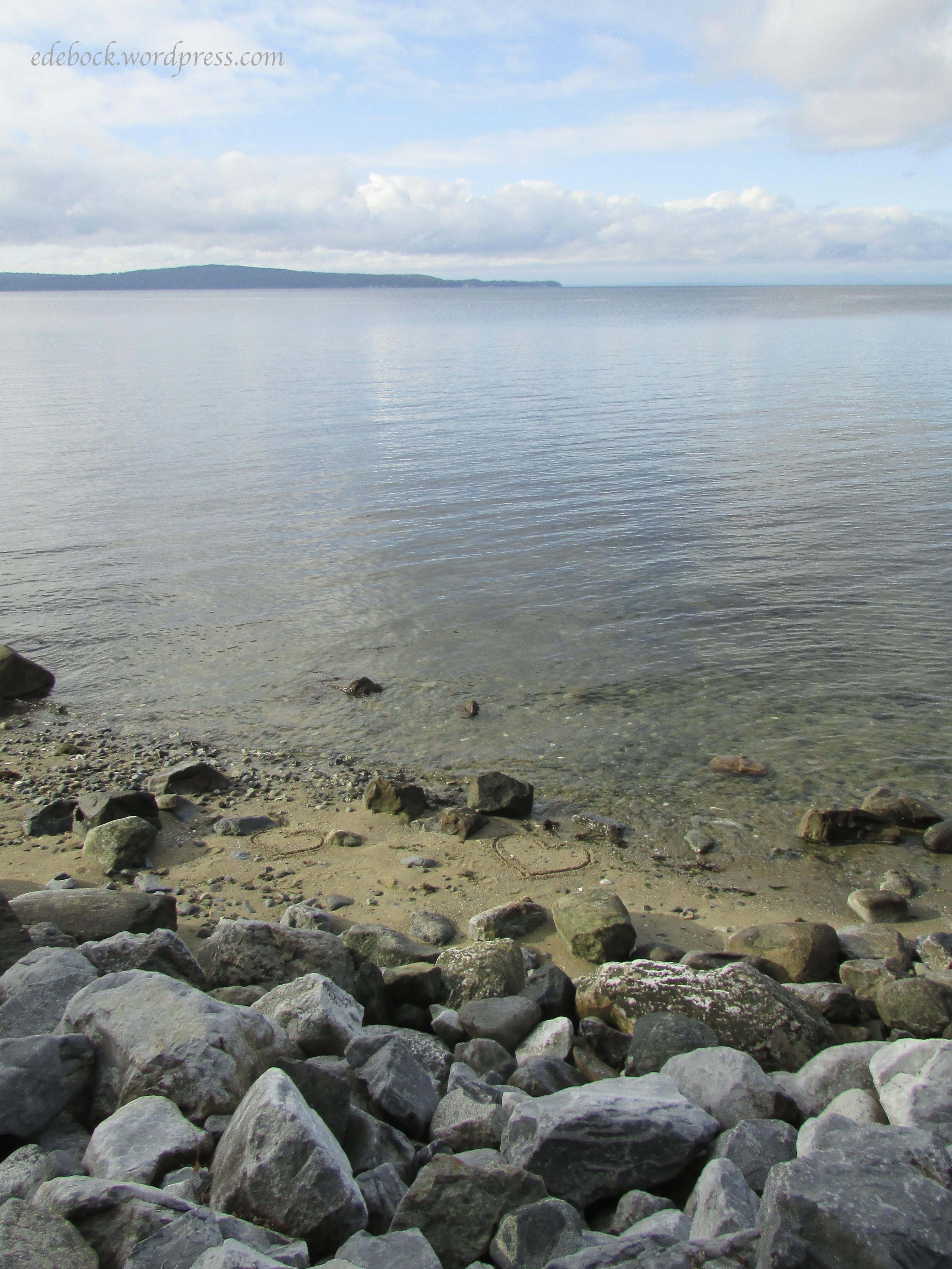
Living on the waterfront, I could hear the waves from my bedroom at night and the beach was my playground. On this visit, we walked the 2.7 km (out and back) Seawalk that is a new addition since our days in PR.

IMG_20241024_111755042_HDR 2

IMG_7666

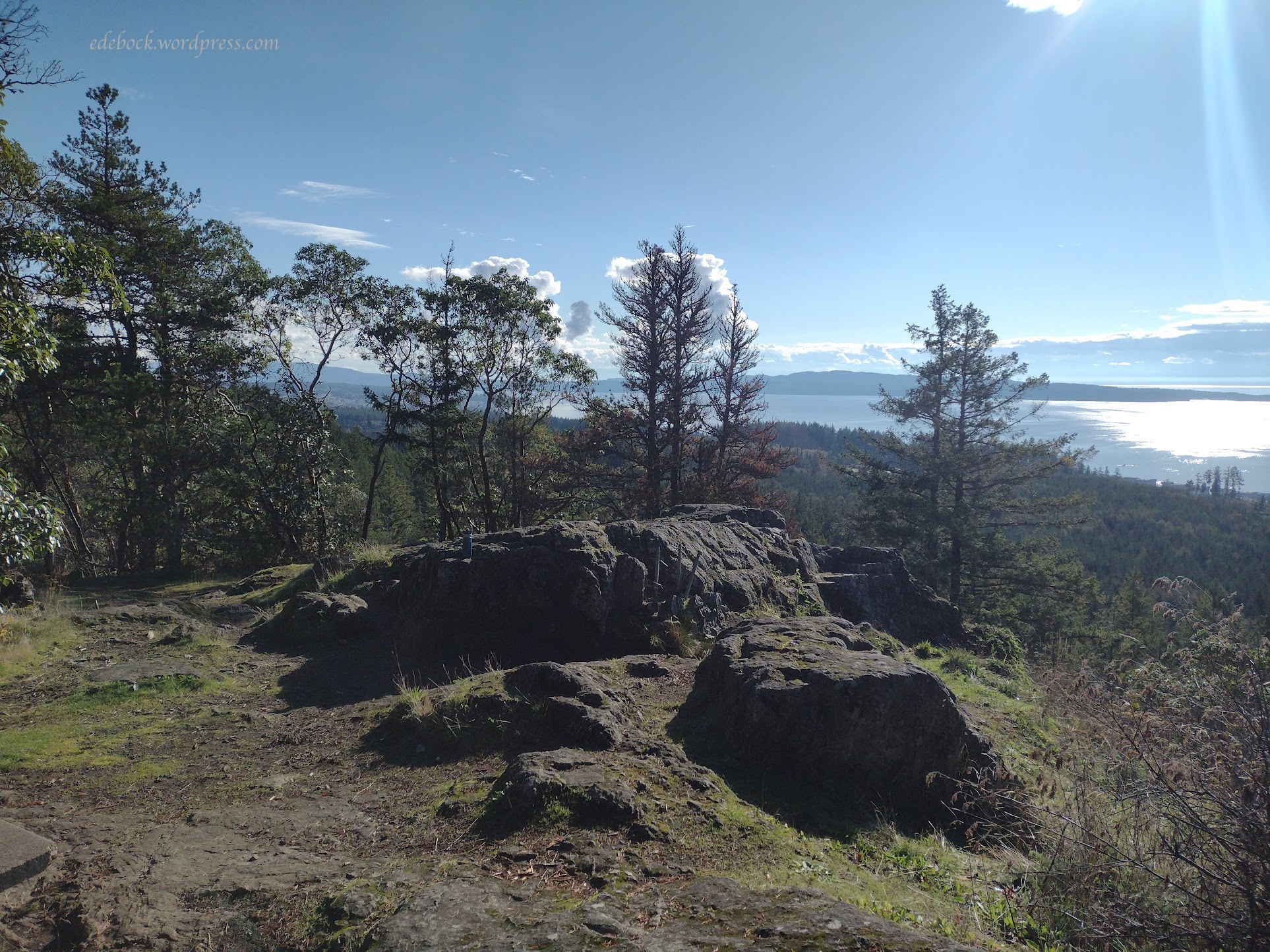
I remember my father telling the tale of climbing Valentine Mountain with his two preschool children (my older brother and I) on Father’s Day 1955 and, in his words, when we got home his wife “felt like having a baby”. My sister was born later that day! I also remember that in his younger days, Dad, an avid mountaineer, would climb the mountain with a pack filled with 40 pounds of magazines on his back to stay in shape. With these family stories in mind, I decided that on this trip, hubby and I would climb Valentine Mountain. It’s actually a short, but steep hike up to a rocky bluff with a beautiful view. The final part of the climb is a made up of steep stone steps.

IMG_20241023_145158711_BURST000_COVER

IMG_7652

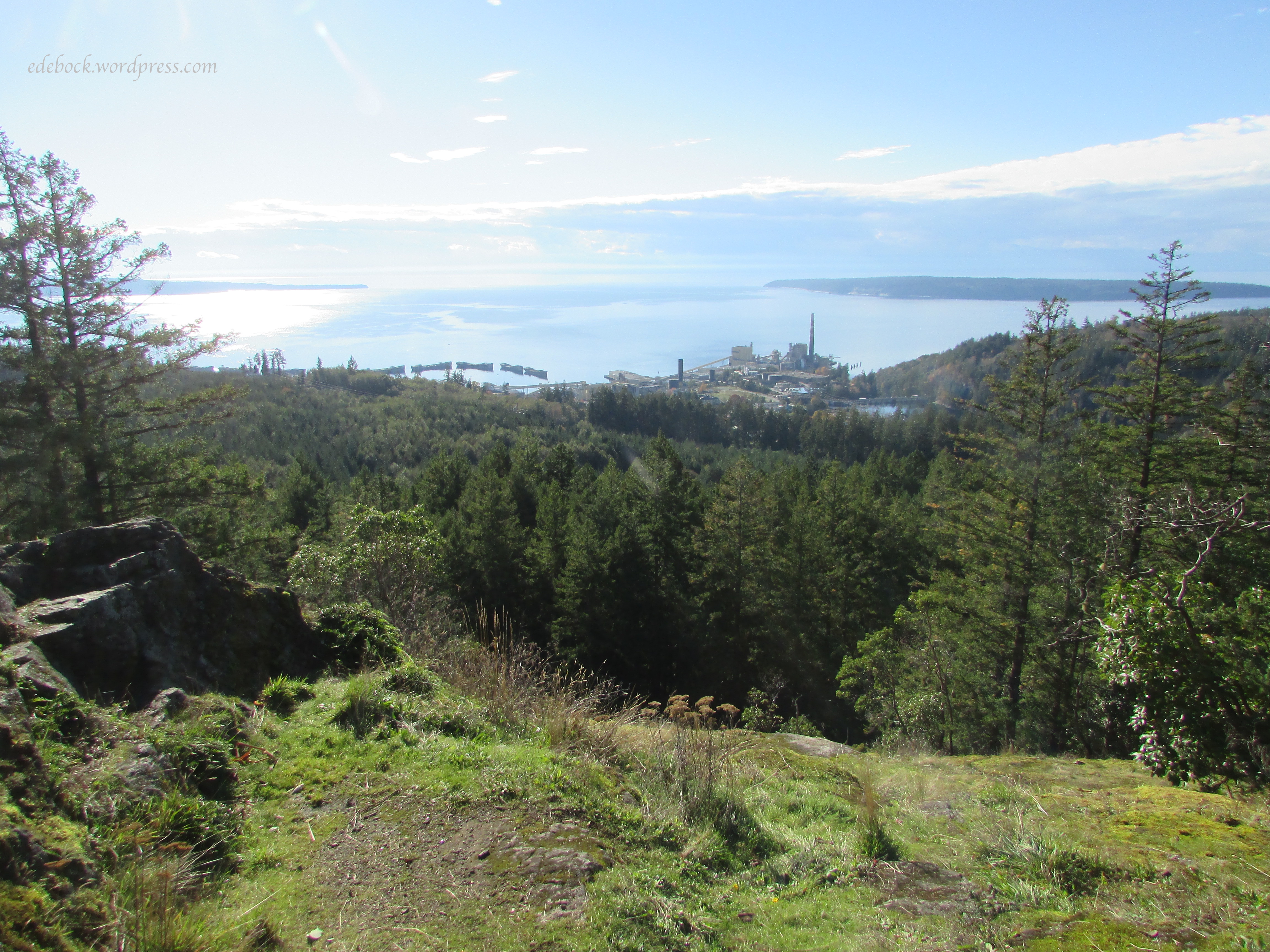
The panoramic view from the top includes the old pulp and paper mill which was originally Powell River’s sole reason for being as well as a breakwater made of WWII merchant marine vessels.

IMG_7653

The mill, now closed, played a very big role in our family history. The grandfather that I never knew because he died in his 30s worked in the mill and my beloved Grandpa, the man my grandmother married when I was 7, was a millwright there for his entire working life. During WWII, when women filled roles left vacant by men who’d gone to war, my mother also worked in the mill and later, my father was employed as an engineer by the company.

While in Powell River, we’ve been staying in a beautiful airbnb with an ocean view. Each evening, we’d watch the sun set and then go out for dinner.
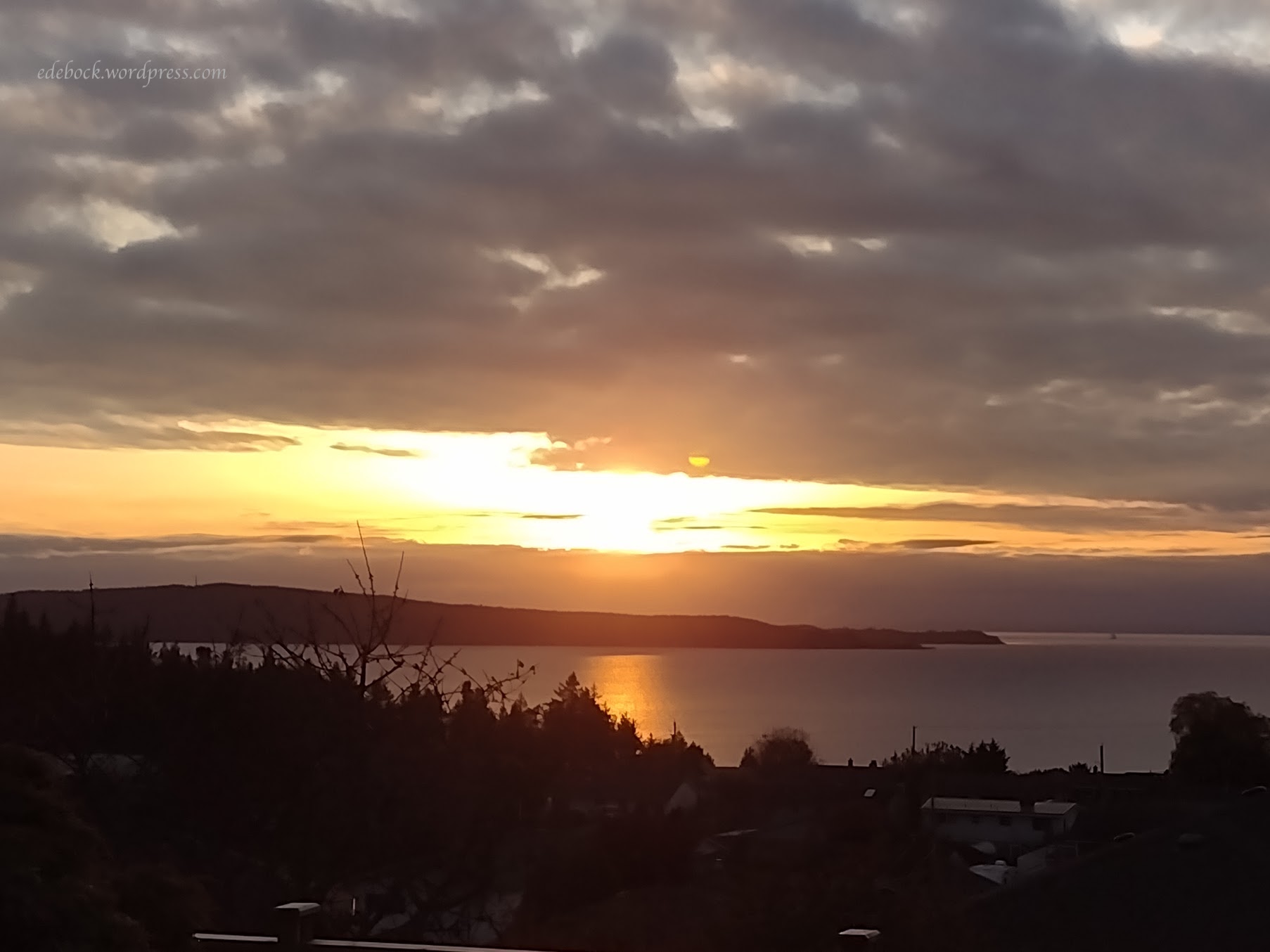
IMG_20241024_174930796

We were halfway through dinner the first evening when I realized that the restaurant we were eating in was probably originally the movie theatre where I’d seen the 1959 film, The Shaggy Dog, with a group of neighbourhood kids. The waitress confirmed my suspicion. Then this evening, we ate in a bistro that is housed in what was always called the beer parlour when I was a child. I remember that back then it had two separate entrances. The signs over the doors said “Men” and “Women and Escorts”. My grandmother spoke of it as if it was a terrible place. I’m sure the ambiance has changed significantly since then!

Tomorrow, we’ll say goodbye to Powell River and return to Vancouver. There won’t be a fashion post this week, but I do plan to write a couple more about our time here. In the meantime, I hope you’ve enjoyed this rambling bit of reminiscing.

IMG_7661

Book of the Month – August 2024

Forgiveness: A Gift from My Grandparents

Mark Sakamoto

Screenshot 2024-08-30 at 12.24.18 PMIn this compelling family memoir, Canadian lawyer Mark Sakamoto writes about his grandparents’ harrowing experiences during World War II. In so doing, he shares with us one of the ugliest and most shameful parts of our country’s history, the forced evacuation of Japanese Canadians from the coastal areas of British Columbia.

The author’s paternal grandparents, Hideo and Mitsue Sakamoto, both Canadian citizens born in Canada, were living and working in Vancouver when the war broke out. They were forced from their home and relocated to a sugar beet farm in southern Alberta where they lived in a crudely converted chicken coop and worked like slaves. They lost their possessions, their community, and their freedom and when the war was over, the government of Canada reimbursed them $25.65, less than 2% of the value of their lost possessions and wages. 

While the Sakamotos were eking out an existence in southern Alberta, the author’s maternal grandfather, Ralph MacLean, experienced a very different war. A young soldier from eastern Canada’s Magdalen Islands, he was shipped out to Hong Kong where he was captured by the Japanese army. Spending the remainder of the war in prisoner of war camps, he enduring illness, abuse, and degradation at the hands of his captors. Barely surviving, he was released at the end of the war and returned to Canada where he found work in Medicine Hat, Alberta.  

A generation later, Ralph and his wife come face to face with Hideo and Mitsue when their daughter falls in love with the Sakamoto’s son. It is a testament to both sides when they are able to put aside the past, choose to forgive, and become friends. 

In the final third of the book, the author focuses on his own life’s story, particularly the trauma that he experienced after his parents’ marriage ends, his mother remarries a violent man, and her life descends into the depths of alcohol and drug addiction. The theme of forgiveness ties the story together, however; forgiveness learned from his grandparents. 

I would caution those who are interested in historical accuracy that the book does contain a few errors related to geography and timing that should have been caught by the editor, but keep in mind that the writer was depending on his grandparents’ memories and telling their story rather than basing his book on historical research. 

Forgiveness: A Gift from My Grandparents won the Canada Reads 2018 award and a stage adaptation by Hiroko Kanagawa played in live theatres across Canada in 2022-2023. I vaguely remember hearing about it then and now I wish that I had purchased tickets and made the effort to travel to the city for a performance. 


Has Covid changed how you dress?

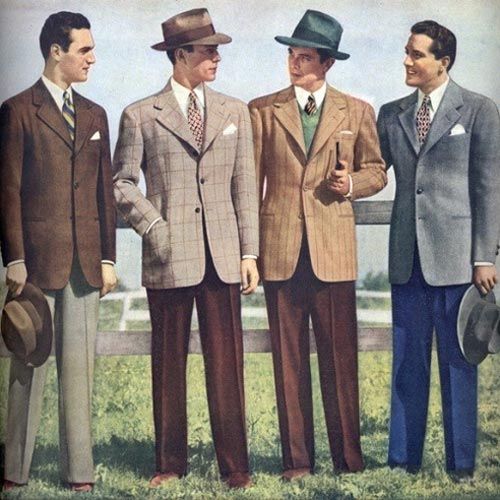
LogoMy mother was 17 when WWII broke out on September 1, 1939 and 23 when it ended six years later. I remember her telling me about how fashions changed during the war. Shortages and efforts to conserve precious materials for the war effort brought about shorter hemlines and more streamlined silhouettes in women’s suits and dresses. Decorative elements disappeared, resulting in a more classic style. For men, single-breasted suits replaced double-breasted, lapels narrowed, and trousers were no longer made with cuffs. There were even restrictions on the number of pockets a garment could have. 
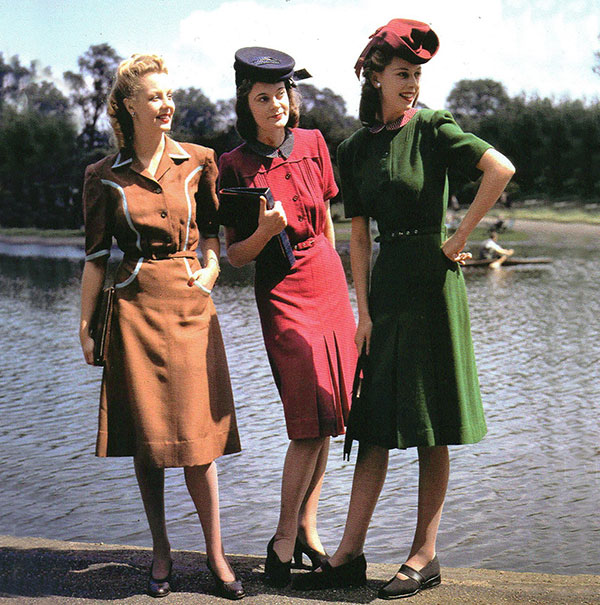
WW2-Dresses-1943-Designer-Norman-Hartnell-Photo-James-Jarche

e198b87ca8295ac7b4d3b8cbb23f51c5

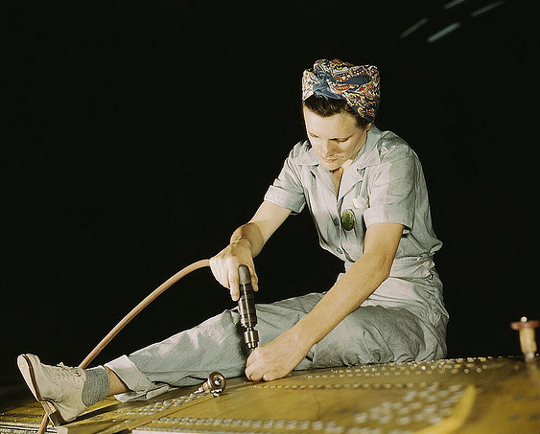
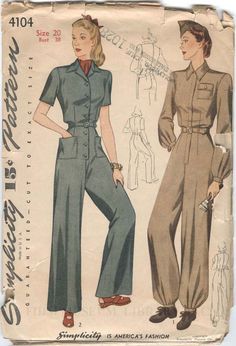
With many of the men away at war, women were called upon to replace them in the work force. My mother left school and went to work in a paper mill. Pants became a staple of women working in factories. Once they discovered the comfort and convenience of wearing pants, they were reluctant to give them up when the war ended. This resulted in a permanent change in fashion. I don’t remember my grandmother ever wearing pants, even to work in the garden, but pants were very definitely part of my Mom’s wardrobe for the rest of her life. 

1940s-pants-2 2

Scan

Mom dressed for the mill

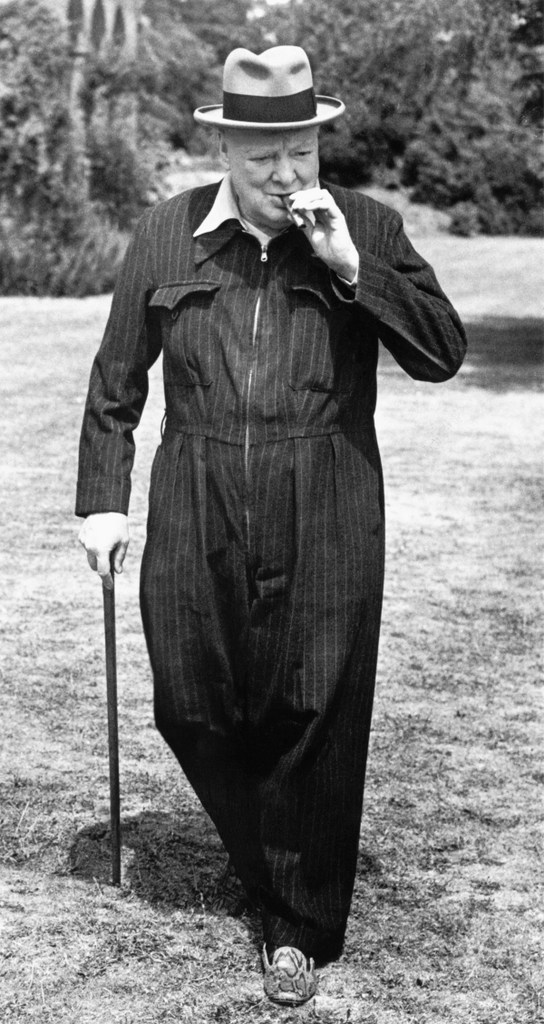
Until I started doing research for this post, I didn’t realize that jumpsuits (or boilersuits as they’re called in the UK) which seem to come and go as ladies fashion to this day, had their roots in a very practical item that originated during WWII. Known at that time as a “siren suit”, this one piece garment could be hastily pulled on over pyjamas or a nightgown when the siren blew and the wearer had to escape to an air raid shelter. 

sirn suit

Even Winston Churchill had a siren suit!

Churchill_Romper_Suit_and_Siren_Suit_pinstripe

We aren’t living in wartime, nor do we face the deprivation that our parents and grandparents faced during those difficult days, but the past fourteen months have been a time of unprecedented upheaval and whether we like it or not, Covid will result in cultural change. Fashion is a potent reflection of a period in time and it’s interesting to think about how our current situation is changing how we dress. 

I have one friend who has already been informed that she will continue to work from home even after the pandemic is over and I know of several others who are expecting the same thing. Brands and retailers have seen a huge shift in the kind of clothing that people are purchasing. While many of us simply aren’t shopping at all except for essentials, sales of comfort-wear items, such as sweatpants and leggings, have increased. The question now is whether this turn toward casual, easy-to-wear clothing will persist once life returns to something closer to normal.

Has Covid changed the way you dress? If so, do you think this will be a permanent change? Is there something you look forward to buying and wearing once the pandemic is over? 

Backroads of Belgium

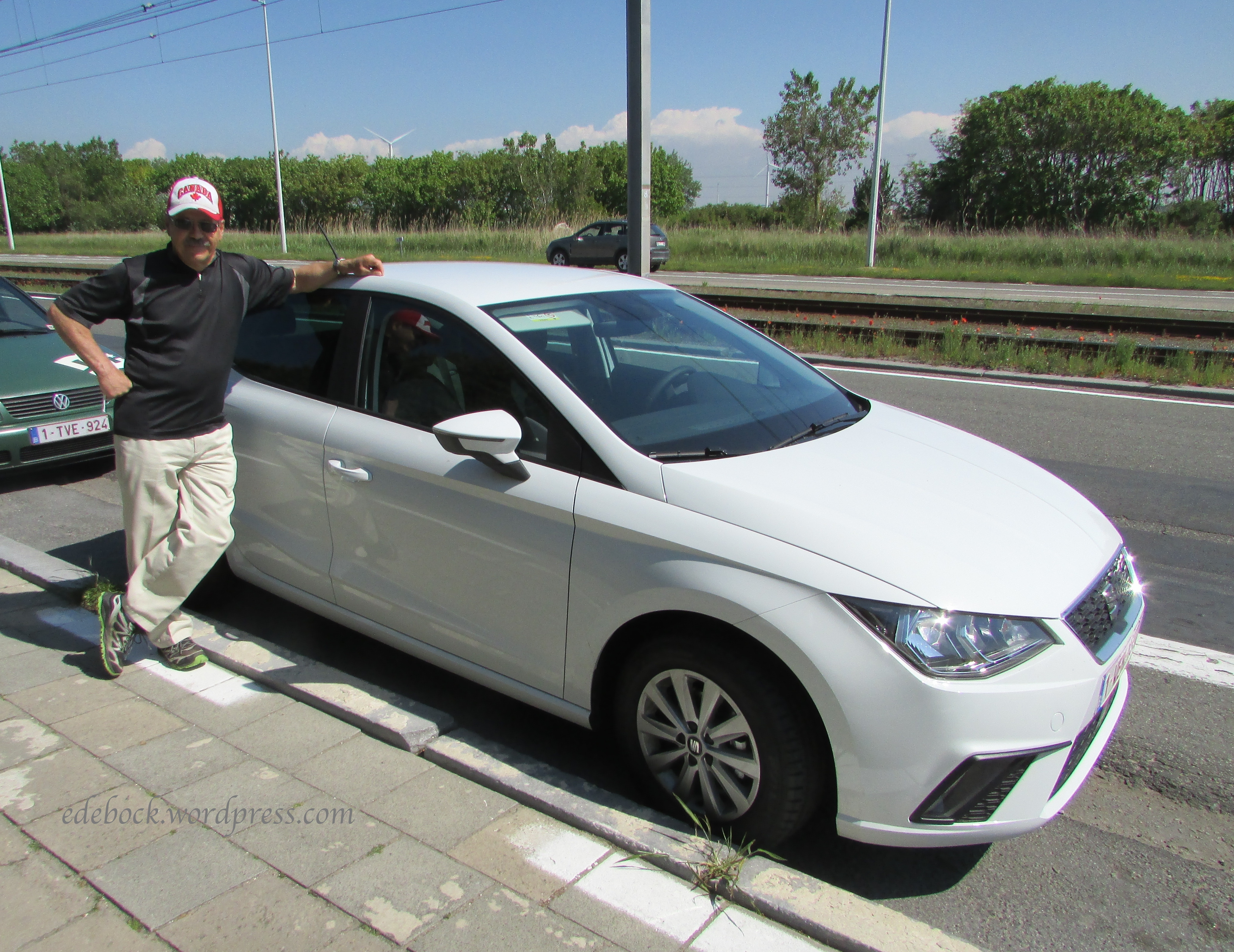
At nine o’clock on Saturday morning the taxi dropped us off at the Avis car rental office in Bruges, Belgium where we picked up our wheels for the day, a brand new SEAT Ibiza with only 61 km on it!

IMG_9247

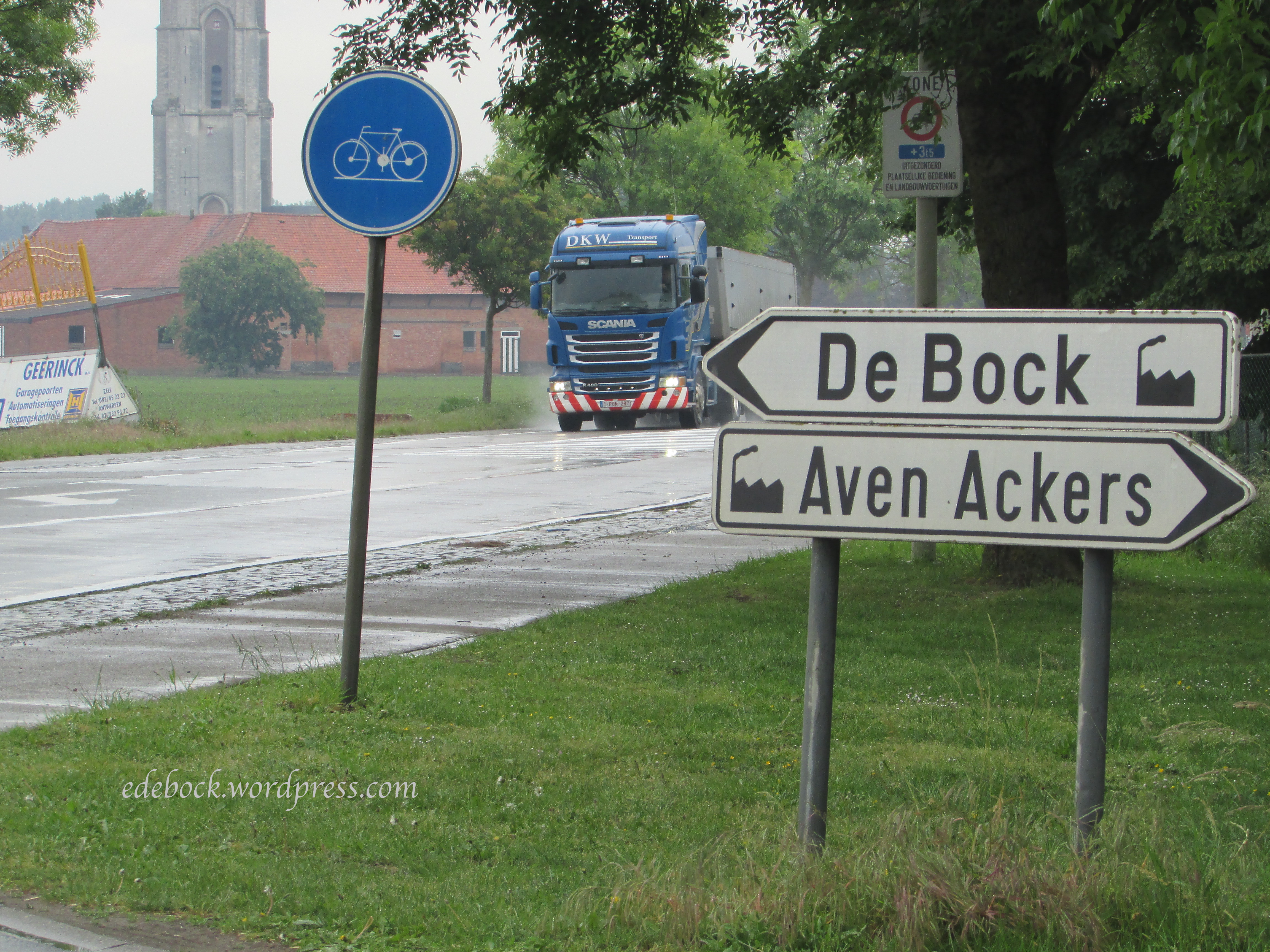
Sticking to smaller highways and backroads, we set off across country to the small community of Verrebroek, not far from Antwerp. It was from Verrebroek that Richard’s great grandfather, Joseph Leopold DeBock, emigrated to America as a young man. Here’s the very first thing we saw when we pulled into town!

IMG_9196

A bit of online research prior to our trip had taught me that there were large De Bock businesses in the area, but unfortunately they’re closed on Saturdays or we would have dropped in to say hello. Interestingly, the North American branches of the family that descended from Joseph Leopold spell DeBock without a space between the e and B while in Belgium it’s spelled with a space. We assume that, as often happened in the past, immigration officials probably made an error in recording Joseph’s surname when he arrived in the country.

We visited the Verrebroek cemetery and found a number of De Bock graves. Clearly, there must be an older cemetery somewhere in the area, but everyone we talked to directed us to the one we visited. One of the oldest graves there belonged to Leopold De Bock who was born in 1883 and died in 1960, no doubt a relative.

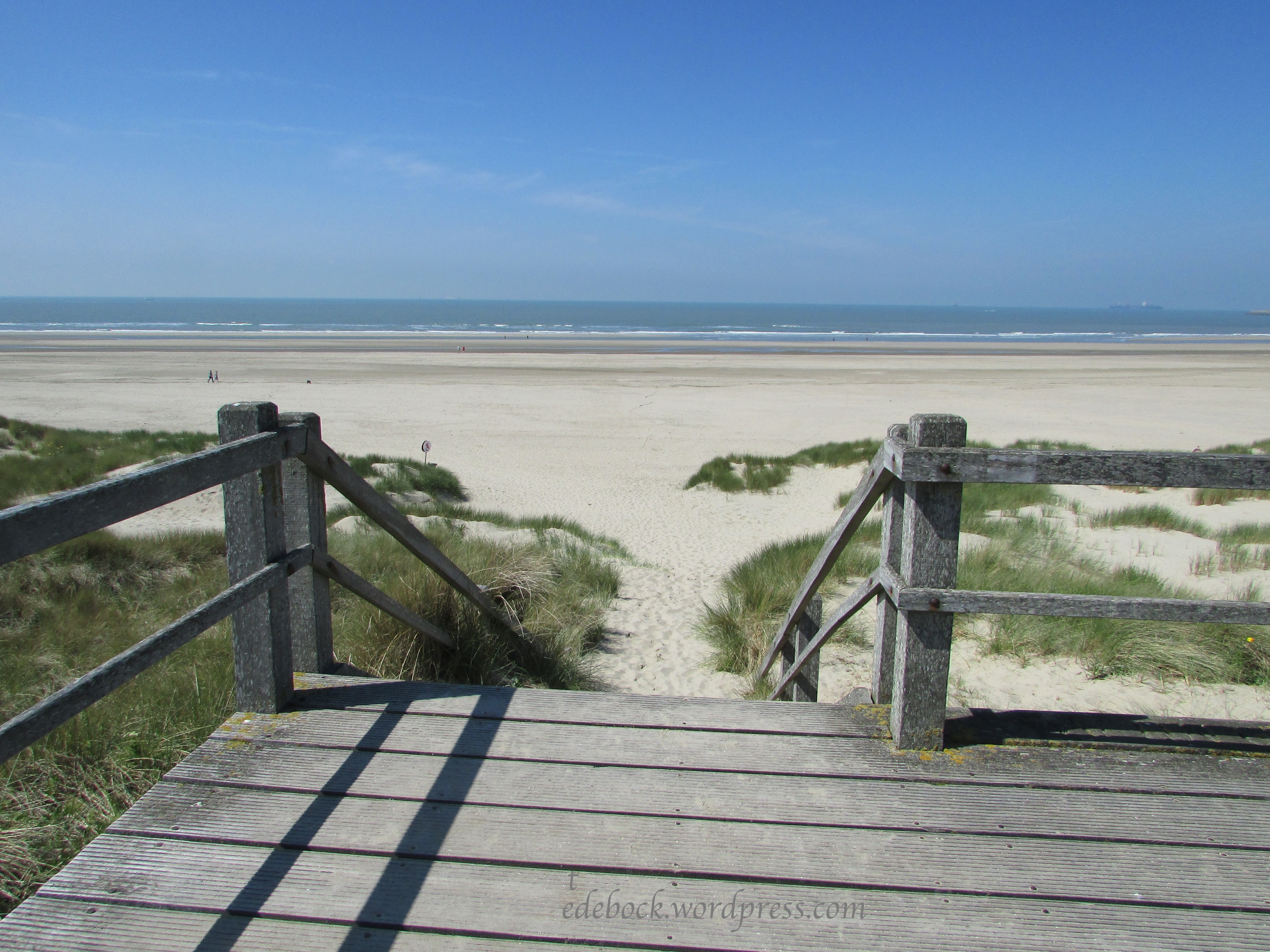
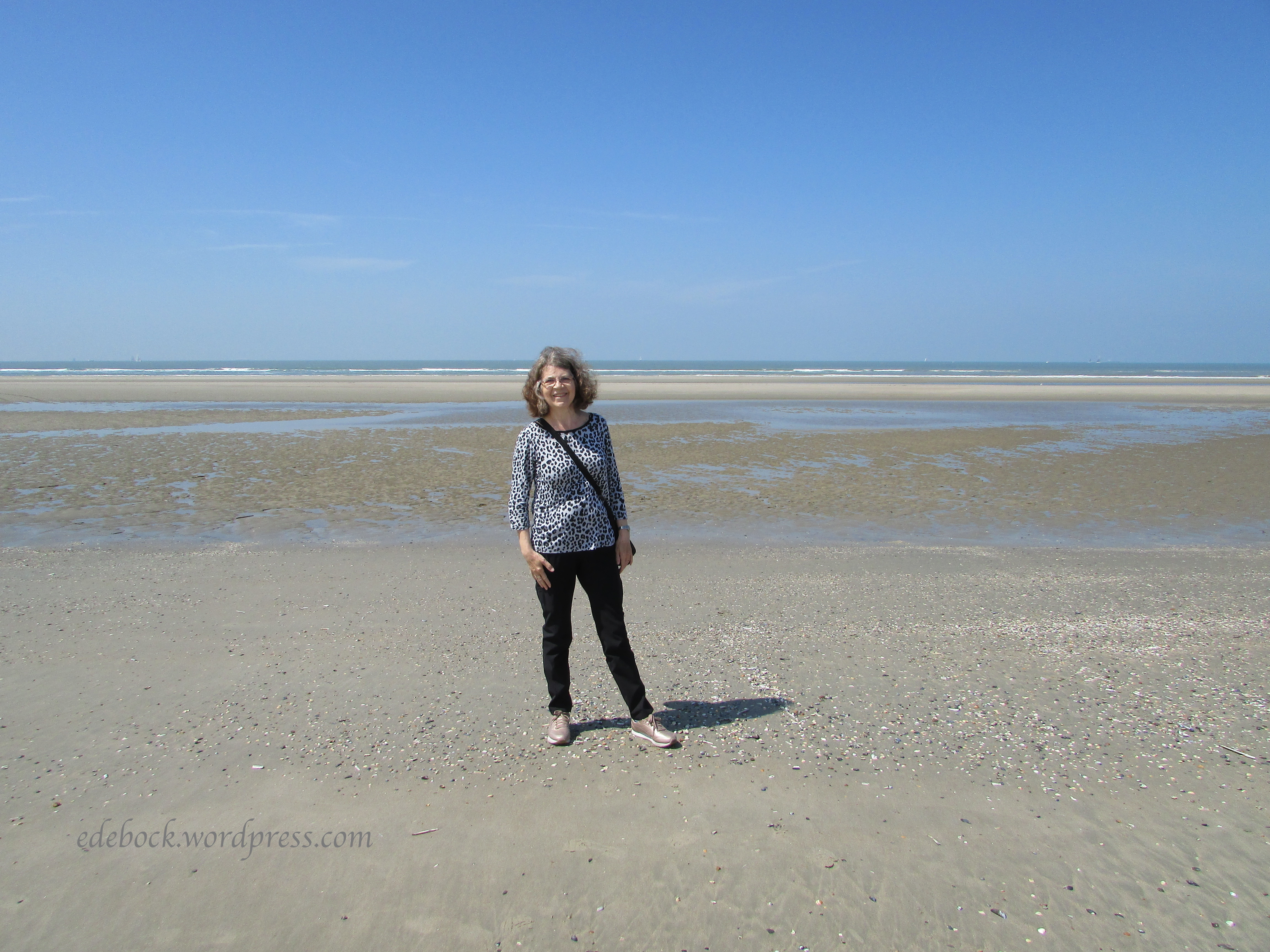
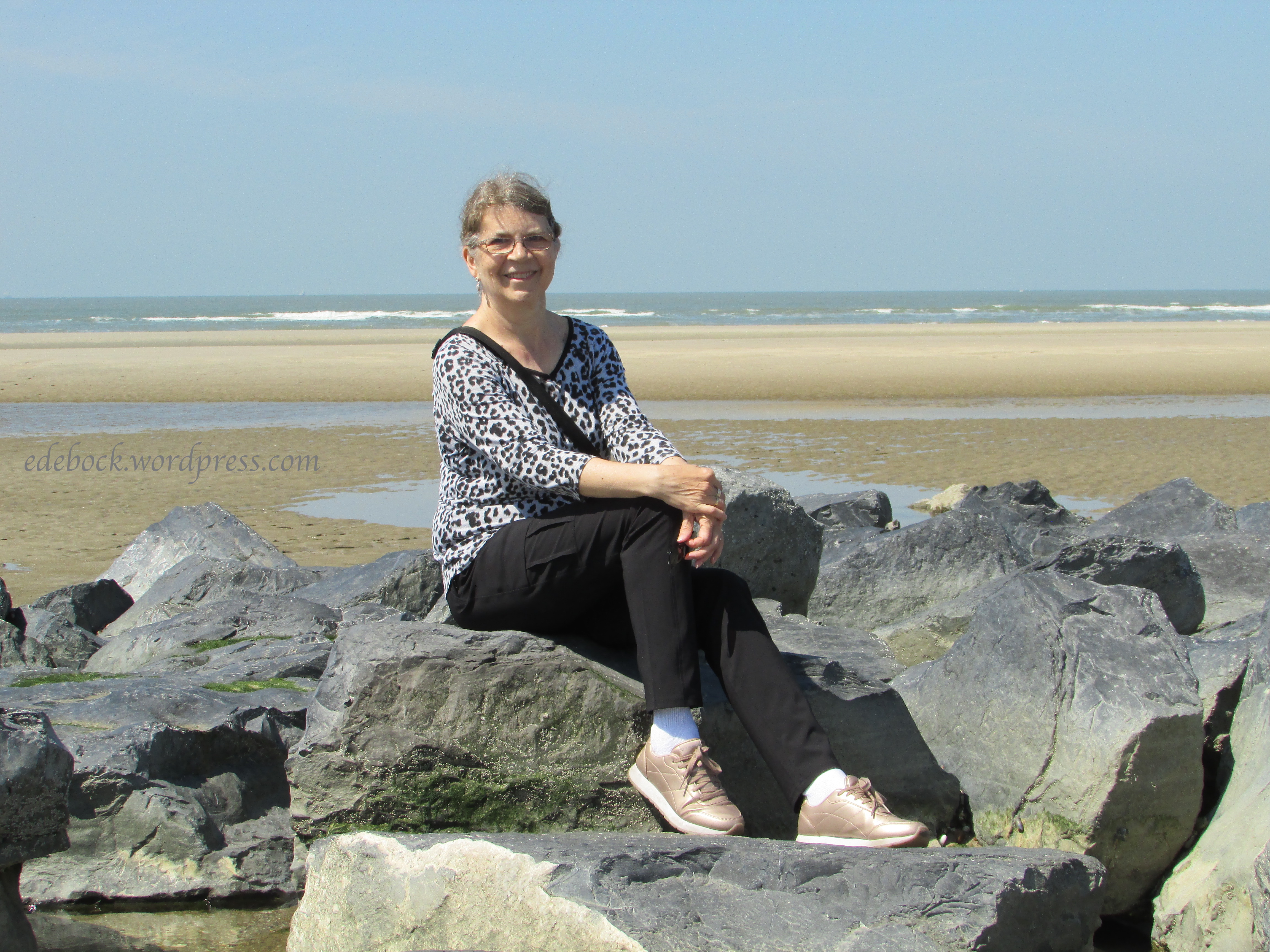
After eating lunch in a little sandwich shop in town, we set off again retracing our path partway back to Bruges and then turning toward the ocean and following the coastline. Just past Zeebrugge, we stopped to spend some time strolling on the wide expanse of sandy beach that seemed to go on forever. This misplaced coastal girl needs a bit of sea air once in awhile!

IMG_9246

IMG_9241

IMG_9238

IMG_9227

IMG_9237

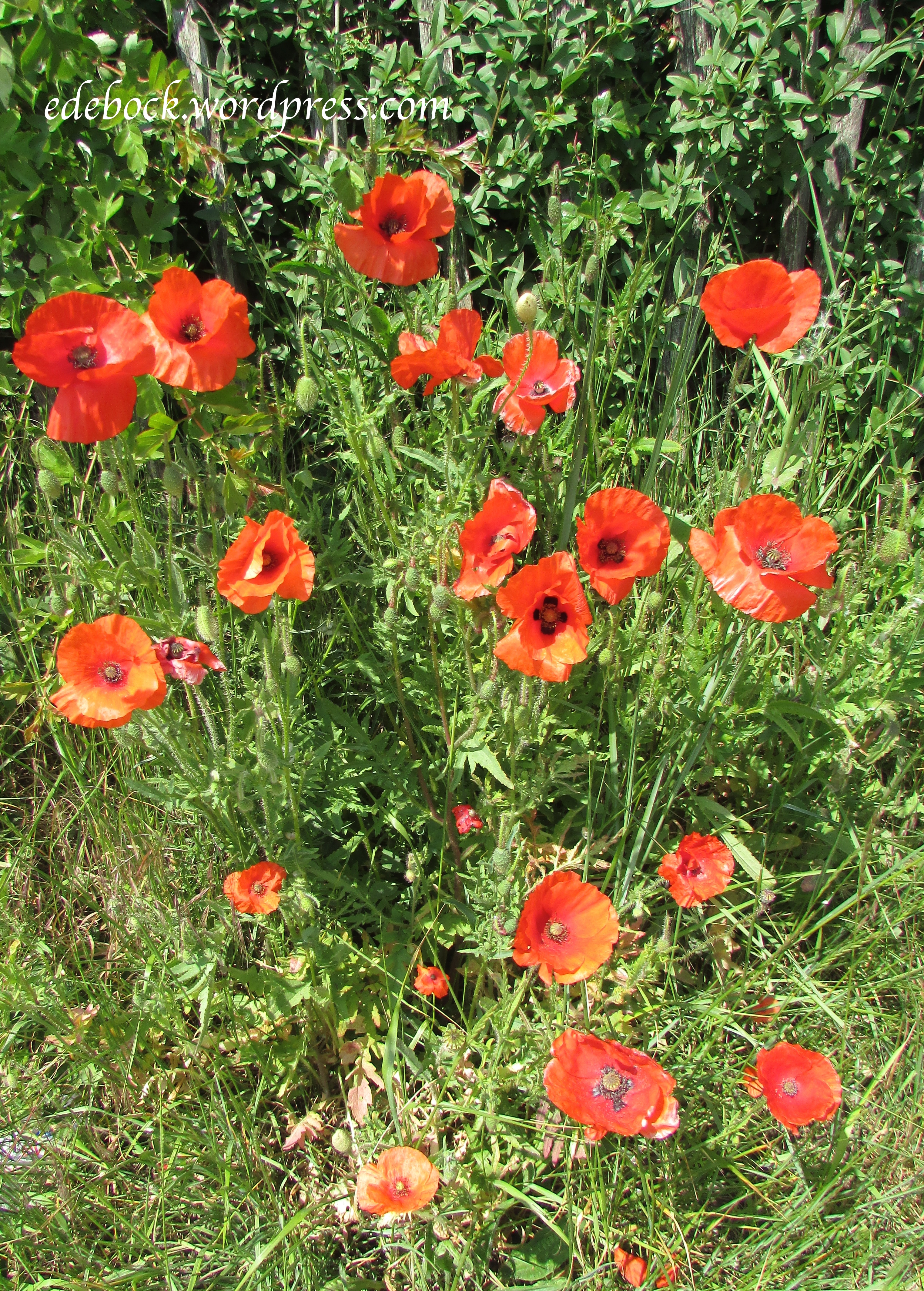
Everywhere we went in Belgium, we saw bright red poppies blowing in the breeze. I took this picture beside the road where we parked when we visited the beach. As I walked the sandy beach trail, I recited bits of John McCrae’s famous poem, In Flanders Fields. Little did I know that within a couple of hours, I’d be standing by his grave!

IMG_9220

Just past Oostende we turned inland again and headed toward Ypres. Belgium is a beautiful country; a lush coastal plain where we saw sheep, goats, and dairy cattle and small fields in every stage of growth from recently seeded to approaching harvest. The easiest crop for us to recognize was the bright yellow canola in bloom. Belgium hasn’t always been so pastoral though. Our main purpose for visiting Ypres was to see the World War I cemetery there, a sober reminder that the beautiful countryside has been torn by war on more than one occasion. We weren’t sure how to find the cemetery, but suddenly before we reached the town, there it was.

IMG_9288

IMG_9274

IMG_9256

It would take hours to read every headstone and many of them are weathered to the point where it’s difficult to make out the names, but of the ones I read, there were some that stood out to me.

IMG_9295

“A Soldier of the Great War”

Like the other unidentified soldiers in the cemetery, the inscription at the bottom of the headstone says “Known Unto God”. All that is known for sure is that this young man was a member of the 72nd Canadian Infantry Battalion. Whose son was he? Whose brother? Which family was left wondering what had become of their loved one? Where his body lay?

IMG_9271

These three newer headstones stand separately at one side of the cemetery and don’t actually mark graves. They have names on them, but the one on the left says “Known to be buried in this cemetery” across the top and the other two say “Believed to be buried in this cemetery”.

IMG_9277

This one says “Ein Unbekannter Deutscher Krieger” (an unknown German warrior). He was the enemy, but he was also someone’s son, someone’s brother. In death they’re all the same.

Visiting the cemetery and seeing the graves of so many young men was sobering, but realizing that a kilometre or so down the road, there was another one with more than 1200 more graves in it was overwhelming. This was the Essex Farm cemetery and it was in this vicinity that Doctor John McCrae penned his famous poem while working at the medical station that had been set up there. It was also here that I found his grave.

IMG_9297

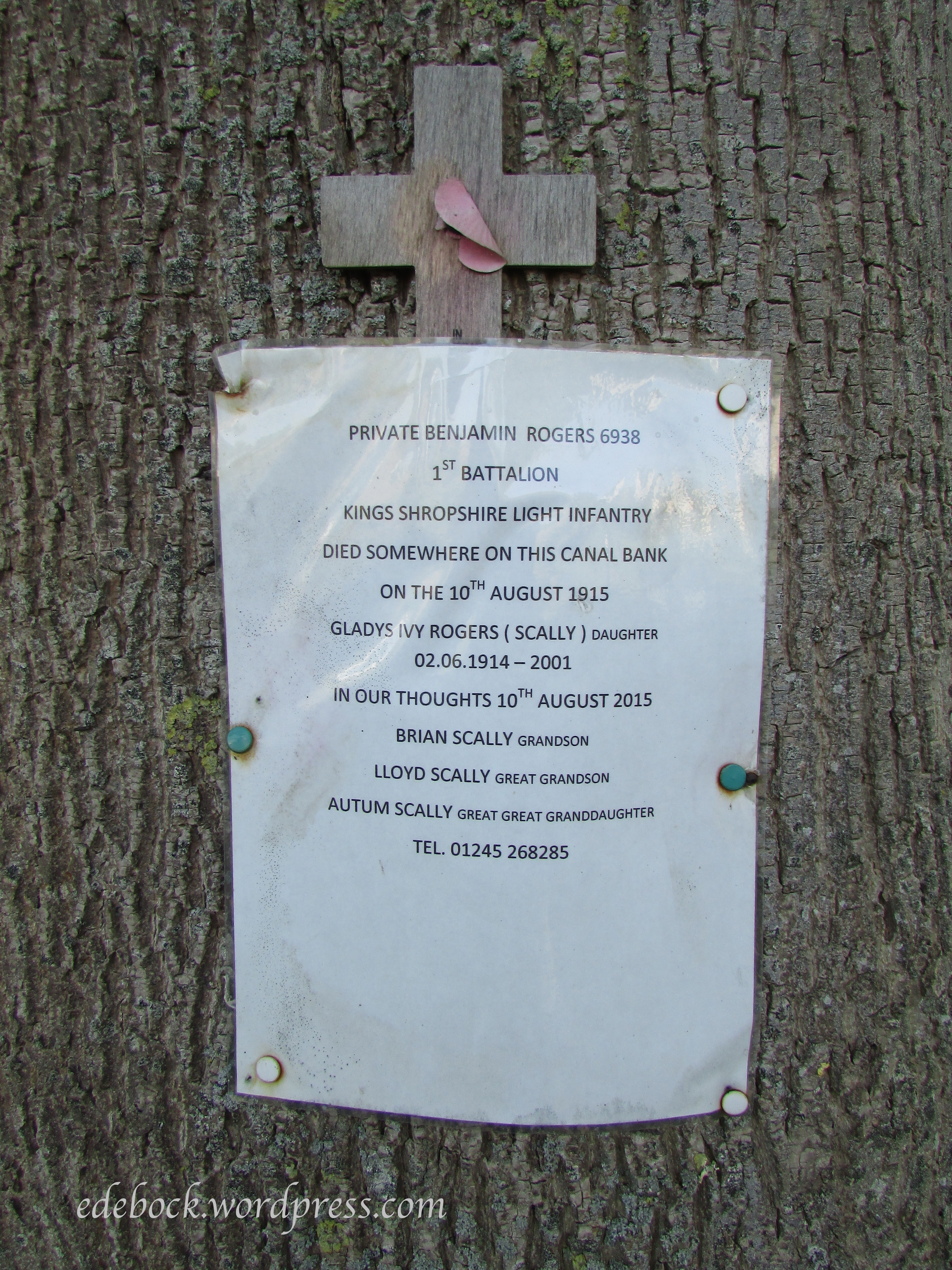
Just over the rise behind the Essex Farm cemetery is this beautiful scene, but notice the white sign on the nearest tree.

IMG_9321

Here’s what it says:

IMG_9318

When we left the second cemetery, we turned back toward Bruges. We returned the car 11 hours and 327.5 km after picking it up. With the help of a paper map and the vehicle’s navigation system which didn’t speak any English, we’d covered a significant portion of Belgium and managed not to get lost!

Onstage again!

Over my many years of involvement in community theatre one of the greatest joys for me has been sharing the stage with former students. Some of them even got their first taste of acting in my junior high drama classes. Never did I imagine, however, that I would someday act in a play written by one of them!

IMG_7316 - Version 3

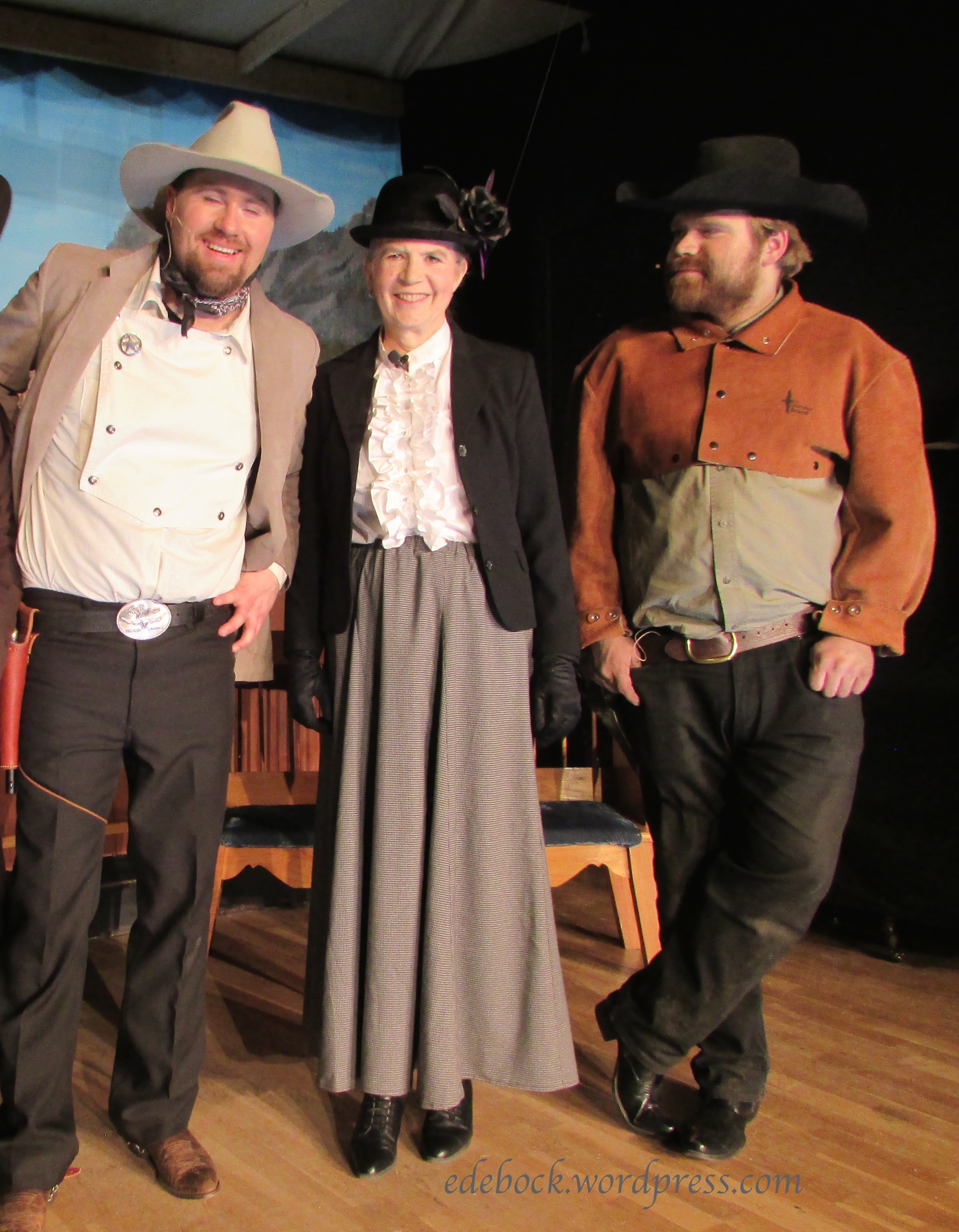
❤  This photo absolutely warms my heart. On my right, is my former student Kelly Berg, author of Silent Jim, in his lead role of Marshall Henry Jackson. Standing on my left, in the role of Jesse Longstrand, the blacksmith, is a young man I’ve known since he was a preschooler. I taught him Sunday School back in those days!

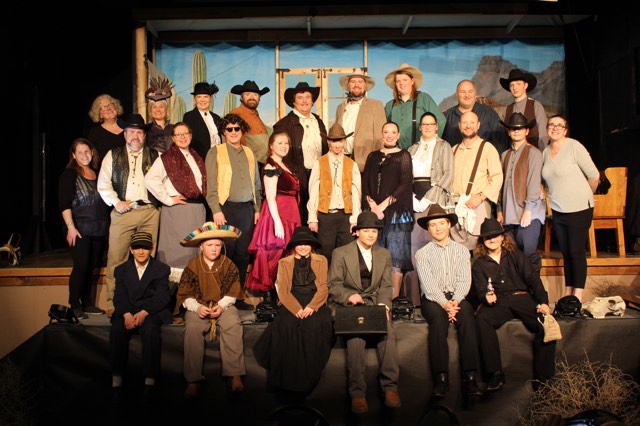
Silent Jim is a western murder mystery with a mix of intensely serious moments and hilariously funny ones. Thursday evening was opening night. We performed again on Friday and have two more shows next weekend. Our cast of 23 ranges from preteen actors trying out the stage for the very first time to seasoned veterans like myself.

Cast photo

Cast photo: Brenda Grove

I have a very small onstage role this year. In fact, I only have nine lines to deliver! Silent Jim is set in the small fictional town of Buffalo Skull in the American west in the late 1870s. In the original version, my character was a judge but, like any western, the play has a lot of roles for male actors and far fewer for females. We had to do a bit of adjusting. There were no female judges in the US in the 1870s, but the first female lawyer, Arabella Mansfield, was called to the Iowa bar in 1869. We could change our judge’s role to that of a lawyer and remain authentic to the time we were portraying. Our lady lawyer needed a name, however, and that’s an interesting side story.

One of the aspects of theatre that I absolutely love is the costuming, especially when we’re doing a period play. What would a lady lawyer have worn in the 1870s, I wondered. I turned to the internet in search of photos and as so often happens when I’m online, I ended up going down a variety of interesting and unrelated rabbit trails. One of them led me to an amazing find; my grandmother’s 1909 graduation photo from Dalhousie University in Halifax, Nova Scotia! 

Gran - Eliza Clara Walker - BA Dalhousie University 1909

Though the photo is apparently signed “Lizzie Walker. Dal. 09.” I know that Gran’s full maiden name was Eliza Clara Walker and that later in life she chose to use her middle name. Though hers wasn’t a law degree, there weren’t a lot of university educated women in her day and I thought it would be a wonderful idea to honour her memory by naming my character after her. My fellow thespians agreed and so I became Clara Walker, Esquire!

IMG_7310 - Version 2

In addition to my small onstage role, I also act as prompter for the first three quarters of the play. I was surprised to discover that I really enjoy that position as I’m fully involved in every moment of the show.

curtain call.jpg clouded creations

Curtain call photo: Caity Moore, Clouded Creations