Facebook, not Factbook!

facebook-thumbs-guardian-express

In my opinion, Facebook is a perfect example of a good thing gone very wrong. Facebook was launched on February 4, 2004 by Mark Zukerberg and his three college roommates as a social media platform meant to connect Harvard University students with one another. By the next day, over 1000 students had registered and by the end of that year, membership was open to nearly every university in the US and Canada. In September 2006, Facebook became available to anyone over the age of 13 with an email address and it rapidly ballooned into one of the most significant social media companies in history. By July 2015 half the world’s internet users were using Facebook.

On the surface, a social networking service open to everyone sounds like a wonderful idea, but people being people, it quickly morphed into something much uglier. ‘Everyone’ includes a lot of awful people who like nothing more than using the internet to be awful to as large an audience as possible. Online abuse and hate speech quickly became major issues that Facebook was ill-equipped to deal with. In no time, what was meant as a way for people to share their lives and photos with friends and family became flooded with fake news, propaganda, and false information on any and all subjects. This is particularly concerning considering the mind boggling fact that a study from the Pew Research Centre, also conducted in July 2015, found that 63% of Americans on the site were getting their news from Facebook!
Screen Shot 2020-08-10 at 11.41.42 AM

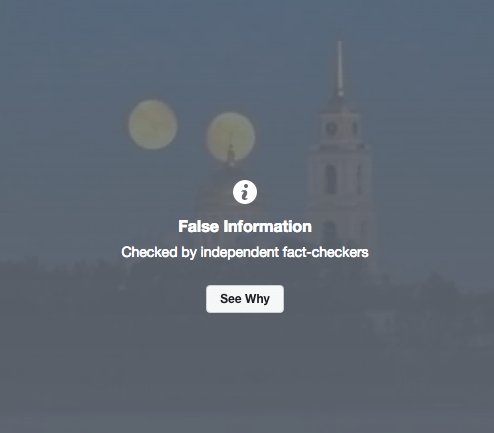
Facebook now works with third-party fact-checkers to try to identify and limit false news and I’m beginning to see more of these notifications, but so far, they’re only managing to catch the tip of the iceberg. It would help a great deal if people would do their own fact checking, but it’s a lot easier to just hit the share button than it is to do the work involved in making sure that something is accurate. The teacher in me always wants to point people toward the truth, but sadly, this sometimes gets me in trouble with those who don’t actually care if what they’re sharing is true as long as it fits their particular bias.

While there are many who are simply naive or gullible and who unintentionally share false information, there are others who are very purposeful about it. They are deliberate, sophisticated in their methods, and very devious. Take this recent post, for example.
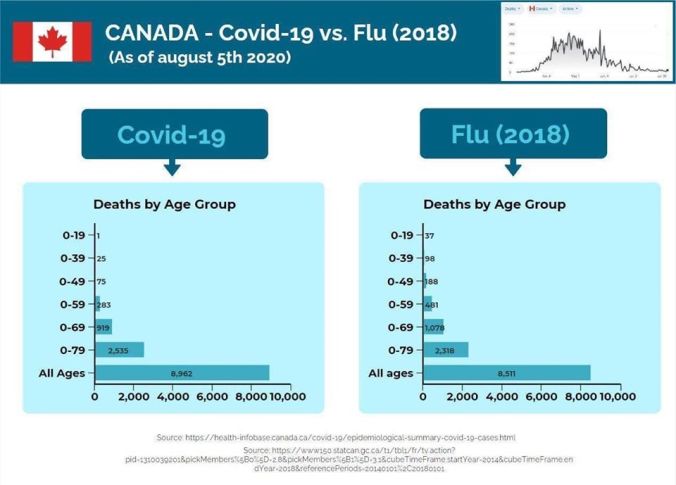
117086856_10158958329000016_7096568034737799281_o It looks legit, but it’s not. Notice that it gives sources below the graphs. They’re blurry which makes them difficult to read and they don’t actually link to the sources given, but more grievous is the fact that if a person actually checks those sites, they discover that the numbers on the graphs don’t line up with the figures that they give! Someone has gone to a great deal of effort to create a false graphic that serves their agenda, but doesn’t provide facts.

So, in light of all this, why do I still use Facebook? I use it for the purpose that it was originally created. As frustrating as it can be, it’s still a useful communication tool. The chat feature was absolutely invaluable during the many years that we dealt with the needs and care of my very elderly parents from a distance. It allowed family members scattered across North America to participate in an ongoing discussion about life and death issues and to come to some very important decisions. It also allows me to participate in the day to day lives of my grown children and grandchildren who all live some distance away. I’ve used Facebook to reconnect with some important people from my past and to keep in touch with friends in faraway places like Japan, Mexico, China, and Saipan. As a neuroendocrine cancer patient living in a rural location where I don’t have access to an in-person support group, the Facebook patient groups that I belong to have been excellent sources of information and encouragement. Linking my blog to Facebook also allows it to reach a wider audience than it would otherwise.

So what can we, who still want to use Facebook, but who care about truth, do to ensure that we don’t contribute to the spread of false information? The American Friends Service Committee (AFSC) came up with a simple four step acronym that I think is worth sharing. SCEP: Source, Confirm, Evidence, Pause.

  1. Consider the Source. Is it from an independent news source that is likely to use fact-checkers and editors to verify a writer’s claims or is it from a website with a stated political aim?
  2. Google to Confirm. Is the story being reported by more than one site or author? If you can find it in other credible sources, it has a better chance of being legit.
  3. Assess the Evidence. A solid news story will be supported by strong evidence: verified documents, peer-reviewed research and sound studies, and direct quotes from named, not anonymous, sources.
  4. Pause. Instead of instantly liking or sharing a post that hits home, pause and consider. Is the article likely real? What do I hope will happen if I share it?

Be SCEPtical! It’s Facebook, not Factbook.


Living in a frightened world

I grew up in the 1960s when the threat of a nuclear holocaust hung over our heads. The world was about to end, or so many people thought. I wasn’t more than 10 years old when we visited a colleague of my father’s and were ushered down to the basement to view the fully equipped fallout shelter that was going to save his family from annihilation. Later, I clearly remember sitting in a sixth grade classroom when a substitute teacher told us that we had no chance of growing to adulthood. A nuclear bomb would wipe us out before that could happen! There was no internet back then or the hype would probably have been even more intense than it was.

Not only did I live to adulthood, but so have my children. Throughout my lifetime, however, it seems that there has always been another doomsday looming just ahead. On a lesser scale than the nuclear threat, there was Y2K, the day when all the computers were going to shut down and the world as we knew it was going to grind to a halt. I knew people who spent months living in fear, stockpiling essentials, and preparing for the crash that never came. There have been many other similar predictions to instill fear in the masses.

Now, it’s climate change. Don’t get me wrong. Is the world’s climate changing? Of course, it is. When has it not been? Climate has never been static. In my mind, though, the latest  predictions of looming catastrophe lead to more questions than answers. How much of the climate change that is actually being observed or recorded today has been caused or escalated by human action and how much is part of the cycles and changes of nature?  Can we really make a significant difference? What extremes are the radical climate change activists actually willing to go to to make this happen? What changes are they making in their day to day lives? What comforts of life are they really willing to give up? Air conditioning? Forced air furnaces? Television? Computers? Global travel? Driving to the grocery store? How about washers and dryers? Are they really willing to go back to the back-breaking way of life of our forefathers? Legislating an end to global fossil fuel usage when green energy has not been developed to the point where it can take over and provide the benefits of modern life truly would cause a global catastrophe of enormous magnitude and it would be felt most strongly by those of us living in the First World.

Like the substitute teacher in my grade six classroom, activists like young Greta are  spouting off frightening “facts” some of which aren’t even true. “For more than 30 years, the science has been crystal clear,” she says. No it hasn’t. For example, consider this headline in the April 16, 1970 edition of The Boston Globe: “Scientist predicts a new ice age by the 21st century.” There are too many similar prophecies to begin listing them here. “People are dying. We are in the beginning of a mass extinction.” Really? Last time I checked, the world’s population was at an all time high and average lifespans were continuing to increase.

People have been prophesying the end of the world since the earliest days of recorded history. Even Christopher Columbus got into the act predicting in his Book of Prophecies (1501) that the world would end in 1656. So far, none of the apocalyptic predictions with due dates have come true and I would hazard a guess that the most recent one won’t either.

I would love it if my grandchildren could grow up in a world free from fear mongering and doomsday predictions, but perhaps that’s just not the way of mankind. Perhaps God placed within the heart of man an understanding that the world is eventually going to end. Scripture predicts it. We are told “When you hear of wars and rumours of wars, do not be alarmed. Such things must happen, but the end is still to come. Nation will rise against nation, and kingdom against kingdom. There will be earthquakes in various places, and famines.” (Mark 13:7-8) Does that sound familiar? Elsewhere, in 2 Timothy 3:1-4 we’re told, “But mark this: There will be terrible times in the last days. People will be lovers of themselves, lovers of money, boastful, proud, abusive, disobedient to their parents, ungrateful, unholy, without love, unforgiving, slanderous, without self-control, brutal, not lovers of the good, treacherous, rash, conceited, lovers of pleasure rather than lovers of God.” I believe that we are living in these times, but I wouldn’t be so rash as to try to predict how soon it will all play out and the world will come to an end. The Bible tells us that no one will know the time or the day. (Matthew 24:36) 

In the meantime, let’s send the kids back to school, seek to educate ourselves and understand the facts using reliable sources (there’s the teacher in me talking), and strive to do the small and reasonable things within our power to be good stewards of all that we’ve been blessed with. And if there’s to be another student protest, let’s see how many come out if it’s held on a weekend. That’s the teacher in me talking too!

I realize that this is a controversial topic. Some will agree and some won’t. All I ask is that we keep the dialogue respectful.

Check your facts please!

One of my pet peeves is the amount of false or misleading information that people post or repost on social media. How is it that seemingly intelligent and honest people can be so gullible, so naive, as to believe everything they read? Just because you see something on Facebook, on somebody’s blog, or in an email doesn’t mean that it’s true!

As a teacher, it was part of my job to insist that students learn to check their sources and back up their statements with fact. Perhaps that’s why it bothers me so much when I see people spreading false information like dandelion seeds on the wind. It’s more important than ever to be critical online. The amount of misinformation that is spread on the web is absolutely staggering!

mujer-soplando-una-flor

image

Some of the false information that is spread on the internet consists of ridiculous hoaxes that play on people’s fears, like the ones that are continually circulating warning us that Facebook is about to make everything we’ve ever posted public. Others are more damaging. Here’s a little video that explains this more clearly than I ever could.

In addition to scams and hoaxes, politics and religion are particularly hot topics for false information, but it goes far beyond those topics. I don’t know how many times I’ve seen people repost missing person reports only to discover when I check that the person has already been found safe and sound, sometimes many months or even years before! I can only assume that people repost these things because they simply don’t know how to distinguish fact from fiction or they don’t know how to fact check.

How to spot bogus stories

  1.  The author is anonymous. If it were true, why wouldn’t the author put their name on it?
  2. On a similar note, beware of quotes from famous people. The internet is rife with false quotes attributed to everyone from Albert Einstein to Abraham Lincoln to Adolph Hitler.
  3. The message is riddled with spelling mistakes. This is pretty much a sure sign that it’s false. Why would you trust someone who doesn’t even bother to use spellcheck?
  4. The message itself argues that it isn’t false. “THIS IS NOT A HOAX!’ likely means that it is and “THIS IS A TRUE STORY” is probably a sure sign that it isn’t.
  5. And then there’s the old adage, if something sounds too good to be true, it probably is.
  6. Perhaps above all else, be skeptical!

How to fact check

  1.  Ask the person who has posted the story if it can be verified. If they can’t offer any evidence for the claims that are being made, perhaps they aren’t true.
  2. Check the date and time that the original post was published.
  3. Consider the source. Is it reputable? For example, the internet is rife with wacky health advice. Use the search feature on the Mayo Clinic website to check for accurate information.
  4. If it’s a news item that seems questionable, check to see if other news sources are reporting it.
  5. If a news source is unfamiliar, go to their About tab. It may acknowledge the site’s bias or say that it’s satirical.
  6. Do a Google search. If you don’t find what you’re looking for right away, try other search terms. Whenever I see a missing person report on Facebook, I google the person’s name (eg. John Doe missing) and I can almost always find out immediately whether or not the person has already been located.
  7. Use one of the following fact checking sites. Again, you may have to try different search terms to find what you’re looking for. Be as specific as you can.
    • Snopes.com  Snopes is an excellent go-to for checking out hoaxes, rumours, urban legends, false quotes, etc. The number of topics that they cover is astounding and the site is constantly updated.
    • TruthorFiction.com  TruthorFiction is another excellent site that provides the truth about a wide variety of rumours, inspirational stories, virus warnings, hoaxes, scams, humorous tales, pleas for help, urban legends, prayer requests, and calls to action.
    • Hoax-Slayer.com  Hoax-Slayer is yet another recommended site that is dedicated to debunking email hoaxes, thwarting internet scammers, combating spam, and educating web users about email and internet security issues.
    • FactCheck.org  FactCheck.org is a nonpartisan, nonprofit site that aims to reduce the level of deception and confusion in American politics.

null-4

So how should you respond to someone who reposts false information? Keep it light. The goal isn’t to make anyone feel foolish. Assume that they weren’t intentionally trying to mislead anyone. Perhaps suggest a site where they can get accurate information about the topic or provide a link to the Snopes article that debunks the myth or rumour that they’ve reposted. Most people will respond well to gentle correction. The ones who boggle my mind are those who respond with something like “I know, but I thought it was interesting anyway” when I point out that they’ve posted something false. So far, I’ve managed to bite my tongue, metaphorically speaking, but in cases like that I’m sorely tempted to be less than polite!

And lastly, what do you do if you share something online and subsequently discover that it’s not true? It isn’t easy to put the genie back in the bottle, but by all means, try! Admit your mistake and do your best to correct it.