Stop exploiting Holocaust symbols!

I’m going to jump into another Covid controversy. Perhaps I shouldn’t, but sometimes there are things that just need to be said!

For several months, people protesting proposed mandatory “vaccine passports” have been comparing them to symbols that the Nazis forced Jews in occupied Europe to wear and to the numbered tattoos forced upon the prisoners who were abused and murdered in the Auschwitz concentration camp. 

Last Wednesday, US Congressman Thomas Massie of Kentucky tweeted, and then appears to have deleted, a black-and-white image of a clenched fist with a number tattooed on the wrist. “If you have to carry a card on you to gain access to a restaurant, venue or event in your own country, that’s no longer a free country,” the meme stated. That tweet echoed comments made in May by Rep. Marjorie Taylor Greene from Georgia, a conspiracy theorist and QAnon enthusiast, who compared mask mandates to the Holocaust.

One of Massie’s staffers, Andrew Zirkle, took to Twitter the morning after the objectionable tweet appeared to announce his resignation, citing it as his reason for quitting. “I quit. I wanted to let everyone who knows me personally to know that as soon as I got in to work this morning, I resigned my position in the Office of Congressman Thomas Massie because of his tweet comparing the horrors of the Holocaust to vaccine passports.” Now that’s a position I can respect!  

I have since seen the Massie meme reposted on Facebook several times. To put it bluntly, these thoughtless analogies are ignorant and incredibly offensive. They trivialize the deaths of six million Jews at the hands of the Nazis. I can only imagine how painful it must be for survivors who are still alive today to see people, including elected officials, making flippant comparisons between what we’re experiencing during this pandemic and the unimaginable atrocities that they witnessed or endured.   

What really breaks my heart is when I see Christians posting these things. Though the Bible calls us to unity, to be like-minded, it embarrasses me to be lumped together with those who so casually and thoughtlessly spread such hurtful messages and, while I probably shouldn’t, I feel a need to apologize to my Jewish friends on their behalf!

There’s nothing wrong with respectfully expressing your opinion, just stop exploiting Holocaust symbols to do it. Please, people, be a little more creative and a lot more respectful!


The last ten

When I sat down to write this evening, my initial plan had been to start working on this Friday’s fashion post, but something else has been weighing on my mind and I decided to go in that direction instead. I’ve written about the Christian and social media before, but tonight that’s where I found myself going again.

I’ve been using Facebook since December 2007. We were about to leave for a year-long teaching assignment in Japan and our daughter insisted that I had to have Facebook as a way of staying in touch. In fact, she actually created my account and chose my first password and profile picture! She was right. In those days, Facebook was a great way to connect with friends and family. We enjoyed exchanging news and posting photos of our families and our daily lives. I even reconnected with a few people that I had completely lost touch with over the years.

Over time, however, Facebook has morphed into something very different than it was in those early days. I don’t mind the proliferation of ads on my Newsfeed because I realize that very little in life is free and someone has to pay for this platform. No, it’s not the ads that bother me, it’s the negativity, the anger, and the misinformation. Gone are the days when people annoyed one another or flirted with one another by “poking” each other on Facebook. Now, many use social media to lash out at one another or to hurl insults at those who disagree with them. Instead of sharing our lives, we try to prove each other wrong.

So, what does the Christian do? Can we be salt and light on social media or would we be better to avoid it altogether? These were the questions that I was wrestling with in late January when I learned of a free 10-day challenge called Instagram for Jesus. Offered by an online women’s ministry called Well-Watered Women, the challenge is simply a series of 10 short emails designed to help users of Facebook, Instagram, Twitter, or TikTok examine their motives for using social media and the potential that it holds, as well as set life-giving boundaries. If this sounds like something that might be of interest to you, check it out and sign up here.

If I had to choose the one thing that impacted me most from the 10 short messages, it was this recommendation from Day 8, “Scroll through your last ten posts, and ask yourself what a follower would know about you through those images and words. Consider opportunities to shift that understanding to a clearer image of what it means to walk as a sinner saved by grace.” Even if you’re not a Christ-follower, that first sentence is worth considering. What do your last ten posts tell the world about you? Is that the image you want to portray? If you are a believer, is this how you’re called to represent Christ to the world? If not, what are you going to do about it? For me, the simple practice of looking at my last ten posts, which I’ve been doing from time to time since completing the challenge in February, has been an excellent way to ensure that I’m being the kind of online presence that I want to be. 

Shot of an unrecognizable young woman working on her laptop at home

So much anger!

We’re living in a very angry world, or so it seems to me. Everywhere we look, whether in person or on social media, people seem to be protesting or venting their anger. First it was the shutdowns, then masks, and now the prospect of a vaccine that isn’t even available yet.

Calgary-COVID-protest-Nov-28-20204

Calgary, November 28, 2020 – Global

What is really behind all this anger? It’s clearly a response to what’s going on in the world around us, but why so much anger? Why are so many people lashing out at one another and at those in positions of authority? I think it’s much more than being asked to wear a little piece of fabric over their mouth and nose or the thought of having to have an injection.

There are many different emotions that might result in anger, but anxiety, sadness, fear, frustration, disappointment, and worry are some of the most common triggers and who amongst us hasn’t experienced some of those feelings in recent months? Add to that the fact that we feel like we’ve lost control of our lives. Things that we’ve always taken for granted, like spending time with family, have been taken away. For many, the things that they’ve trusted in, things that have given them a sense of security, have also been swept away. Some have lost jobs, others have had to close businesses. Some are still working, but feeling isolated at home. In addition to all of this, with the incredible amount of false information and fear mongering being spread by irresponsible “news” sources and keyboard warriors, it should be no surprise that undiscerning people are being sucked into the swirling maelstrom of fear and anger that surrounds us. The virus is everywhere. There isn’t even anywhere we can go to escape!

Unfortunately, anger is one of the most divisive and destructive forces on the planet. It’s a poison that spreads with astonishing speed; faster perhaps than Covid itself. It turns crowds into mobs, inflicts deep wounds, and crushes the human spirit. Plus, it does absolutely nothing to alleviate the crisis that we all find ourselves in.

Anger itself isn’t the problem; it’s what you do with it. First of all, let’s look at what NOT to do.

Don’t be a spreader! Don’t spread the virus, don’t spread misinformation, and don’t spread anger.

Don’t spread the virus. Whether or not you fully agree with the measures that have been recommended or mandated in your area, suck it up and cooperate. Wear the mask, stay 6 feet (2 metres) from other people, and whenever possible, stay home. We’re all in this together. The sooner we really start working together to limit its spread, the sooner we’ll have any hope of reclaiming some of the things that we’ve lost. 

Don’t spread false information. The internet is awash with misinformation, much of it deliberately intended to mislead and to stir up fear and anger. Don’t add to the noise! Check your facts before passing something on. Chances are that your neighbour down the street or your friend from high school doesn’t know as much about epidemiology as the experts do. The lack of respect and support for doctors, scientists, and other health professionals during this pandemic is nothing short of astonishing. There is plenty of evidence to show that masks do make a difference and no, they aren’t harmful to your health. There are very, very few people who have legitimate reasons for not being able to wear one and those people should be staying home because they clearly have other issues that put them at high risk. Yes, the vaccines have been fast tracked, but that doesn’t necessarily mean that they’re dangerous. They’ve been through the same rigorous testing as any other vaccines, but because of the urgency of the present situation, they weren’t allowed to bog down in bureaucratic red tape the way things usually do.  

Don’t spread your anger. Denying that you’re angry or keeping it bottled up inside isn’t healthy, but taking it out on an unsuspecting cashier who’s simply attempting to do her job in trying circumstances doesn’t make the situation better. Neither does waving a protest sign or ranting on social media. 

So what CAN we do with our anger? What SHOULD we do? 

  • Think before you speak, post or repost.
  • Find constructive ways to express your concerns clearly and directly to the right people without trying to hurt or control anyone. This might include asking questions in an attempt to seek out the truth and understand the reasons behind measures that are being recommended or mandated.
  • Take a break. That might mean taking a self-imposed time out from social media or getting outside for some fresh air and exercise.  
  • Practice relaxation. Listen to music, write in a journal, do a few yoga poses or some deep breathing exercises… whatever works for you.
  • Pray. Pray for wisdom, understanding, and grace. Pray for those in positions of authority who are daily faced with making incredibly difficult decisions. 
  • Do something positive for someone else. Instead of writing that Facebook rant, why not write a note of encouragement to someone? Instead of attending a protest rally, look for an opportunity to volunteer in your community. 
  • Know when to seek help. If your anger feels out of control, reach out to a mental health professional. 

I’m as eager as the next person to see this pandemic come to an end, but I’m equally anxious to see us pull together and rise above the overwhelming flood of anger that threatens to crush us all. 

Facebook, not Factbook!

facebook-thumbs-guardian-express

In my opinion, Facebook is a perfect example of a good thing gone very wrong. Facebook was launched on February 4, 2004 by Mark Zukerberg and his three college roommates as a social media platform meant to connect Harvard University students with one another. By the next day, over 1000 students had registered and by the end of that year, membership was open to nearly every university in the US and Canada. In September 2006, Facebook became available to anyone over the age of 13 with an email address and it rapidly ballooned into one of the most significant social media companies in history. By July 2015 half the world’s internet users were using Facebook.

On the surface, a social networking service open to everyone sounds like a wonderful idea, but people being people, it quickly morphed into something much uglier. ‘Everyone’ includes a lot of awful people who like nothing more than using the internet to be awful to as large an audience as possible. Online abuse and hate speech quickly became major issues that Facebook was ill-equipped to deal with. In no time, what was meant as a way for people to share their lives and photos with friends and family became flooded with fake news, propaganda, and false information on any and all subjects. This is particularly concerning considering the mind boggling fact that a study from the Pew Research Centre, also conducted in July 2015, found that 63% of Americans on the site were getting their news from Facebook!

Screen Shot 2020-08-10 at 11.41.42 AM

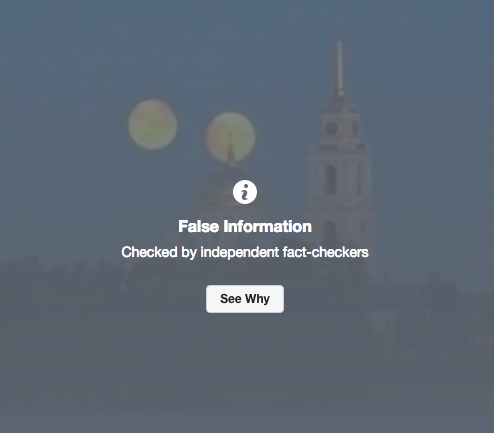
Facebook now works with third-party fact-checkers to try to identify and limit false news and I’m beginning to see more of these notifications, but so far, they’re only managing to catch the tip of the iceberg. It would help a great deal if people would do their own fact checking, but it’s a lot easier to just hit the share button than it is to do the work involved in making sure that something is accurate. The teacher in me always wants to point people toward the truth, but sadly, this sometimes gets me in trouble with those who don’t actually care if what they’re sharing is true as long as it fits their particular bias.

While there are many who are simply naive or gullible and who unintentionally share false information, there are others who are very purposeful about it. They are deliberate, sophisticated in their methods, and very devious. Take this recent post, for example.

117086856_10158958329000016_7096568034737799281_o It looks legit, but it’s not. Notice that it gives sources below the graphs. They’re blurry which makes them difficult to read and they don’t actually link to the sources given, but more grievous is the fact that if a person actually checks those sites, they discover that the numbers on the graphs don’t line up with the figures that they give! Someone has gone to a great deal of effort to create a false graphic that serves their agenda, but doesn’t provide facts.

So, in light of all this, why do I still use Facebook? I use it for the purpose that it was originally created. As frustrating as it can be, it’s still a useful communication tool. The chat feature was absolutely invaluable during the many years that we dealt with the needs and care of my very elderly parents from a distance. It allowed family members scattered across North America to participate in an ongoing discussion about life and death issues and to come to some very important decisions. It also allows me to participate in the day to day lives of my grown children and grandchildren who all live some distance away. I’ve used Facebook to reconnect with some important people from my past and to keep in touch with friends in faraway places like Japan, Mexico, China, and Saipan. As a neuroendocrine cancer patient living in a rural location where I don’t have access to an in-person support group, the Facebook patient groups that I belong to have been excellent sources of information and encouragement. Linking my blog to Facebook also allows it to reach a wider audience than it would otherwise.

So what can we, who still want to use Facebook, but who care about truth, do to ensure that we don’t contribute to the spread of false information? The American Friends Service Committee (AFSC) came up with a simple four step acronym that I think is worth sharing. SCEP: Source, Confirm, Evidence, Pause.

  1. Consider the Source. Is it from an independent news source that is likely to use fact-checkers and editors to verify a writer’s claims or is it from a website with a stated political aim?
  2. Google to Confirm. Is the story being reported by more than one site or author? If you can find it in other credible sources, it has a better chance of being legit.
  3. Assess the Evidence. A solid news story will be supported by strong evidence: verified documents, peer-reviewed research and sound studies, and direct quotes from named, not anonymous, sources.
  4. Pause. Instead of instantly liking or sharing a post that hits home, pause and consider. Is the article likely real? What do I hope will happen if I share it?

Be SCEPtical! It’s Facebook, not Factbook.


The power of the written word

The Bible has a lot to say about how we ought to use our words. The book of Proverbs is full of wise sayings about the power of the tongue.

The one who has knowledge uses words with restraint, and whoever has understanding is even-tempered. Even fools are thought wise if they keep silent, and discerning if they hold their tongues.  Proverbs 17:27-28
The words of the reckless pierce like swords, but the tongue of the wise brings healing.  Proverbs 12:18

feather-pen-vector-546939It was English novelist and playwright Edward Bulwer-Lytton who, in 1839, wrote “The pen is mightier than the sword.”

Today, when most of us are holed up at home waiting out the Covid-19 pandemic, the written word is being used more than ever. We FaceTime and we Zoom, but we also use written platforms like Facebook and Twitter to connect with one another.

For some of us, writing is our preferred method of communication. We find it easy, but others may struggle to express themselves clearly. Without the visual and auditory clues that go along with face-to-face communication, misunderstandings can happen very easily. We definitely need to cut one another a bit of slack.

For example, a friend recently responded to something that I said on Facebook with a comment that could easily have been taken in two completely different ways. I had no way of knowing whether it was written in jest or meant to be extremely hurtful. If we had been talking face-to-face, I would have been able to tell based on her body language, facial expression, volume, and/or tone of voice. To tell you the truth, I still don’t know what her actual intent was, but because I know her and I don’t think of her as a mean person, I gave her the benefit of the doubt and assumed that, even if it fell a bit flat, her response was meant to be funny. Had I concluded that she was being nasty and responded in kind, I could have easily destroyed a relationship!

I love a good online conversation where people can express their views, have them heard, and willingly listen to the views of others. Unfortunately, however, what could have been a meaningful dialogue often becomes nothing more than a battle of words. Why is that? What can we do to prevent hurt feelings and misunderstandings? I have a few suggestions. If you have others, please add them to the comment section below.

  1. If you disagree with something that someone else has written, don’t react immediately. Take time to think about it first. Is there any truth in what they’ve written? Did they actually mean what you thought they meant? If you’re not sure, ask for clarification instead of immediately going on the defensive.
  2. Avoid getting sucked into arguments. Sadly, some people are willing to go toe-to-toe online in ways they’d never dream of doing face-to-face.
  3. Understand that your sense of humour isn’t universal and that, without cues like facial expressions and tone of voice, what is intended to be funny might not come across that way.
  4. Don’t comment on someone’s spelling or grammar. Sometimes the English teacher in me wants to take a red pen to the screen, but this is just plain rude! It’s also a tactic that’s often used by commenters who simply want to belittle someone they disagree with.
  5. Edit your responses before you post them. (There’s that English teacher again!) Read over what you’ve written. Does it actually say what you want it to say? Is it clear or could it be open to more than one interpretation?
  6. Distinguish between fact and opinion. Just as we should all know the difference between a news article and an editorial, we need to be clear when we’re the writer. If you’re declaring something to be a fact, be prepared to back it up. If it’s opinion, say so and remember that everyone is entitled to have one even if it’s different from yours. What a boring world it would be if we all agreed on everything!
  7. Remember, posting online is the same as speaking in public. If you don’t want something to come back and bite you, don’t say it online!
  8. Don’t be that person who always has to have the last word.
  9. Don’t drink and tweet! If you’re impaired in any way, whether it be from lack of sleep, a fight with your partner, or one too many drinks, you run the risk of saying something that you’ll regret. Resist the urge and wait until you’re in a better frame of mind.

Extrovert, introvert or ambivert?

LogoI recently did one of those goofy quizzes that show up on Facebook with annoying regularity. Although most of them seem completely ridiculous, this one actually intrigued me. Pick some outfits and we’ll guess if you’re an introvert or an extrovert, it promised. After choosing the items that I would most likely wear from a series of photos, the results showed that I’m neither one. Apparently, I’m an ambivert!
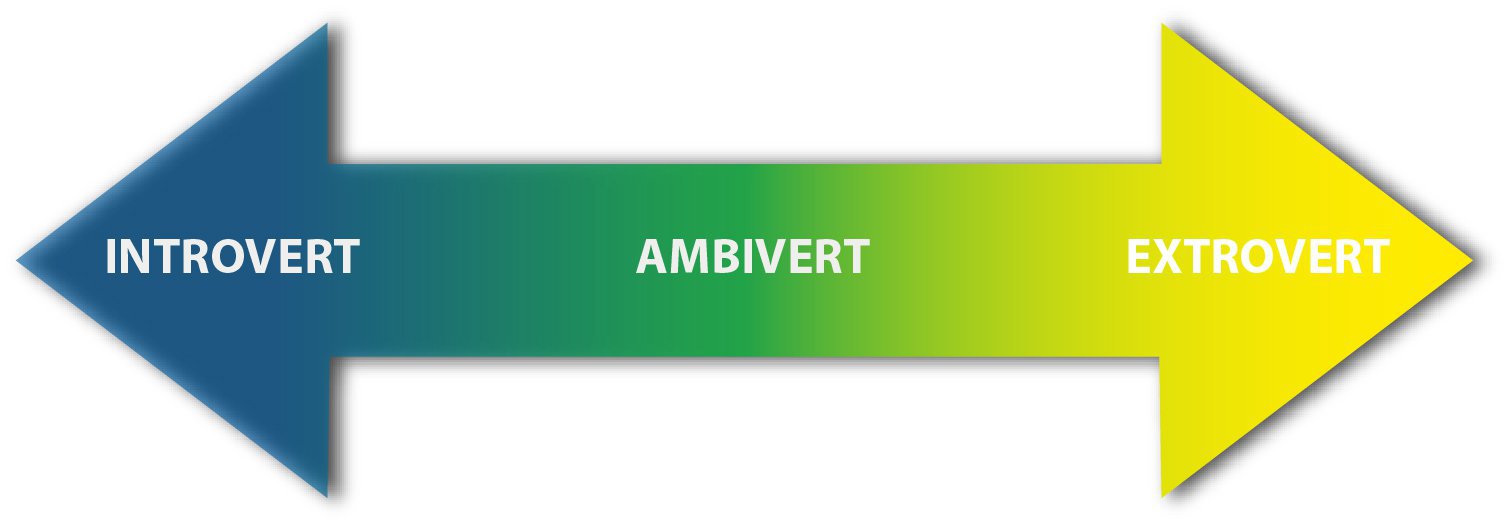
As a self proclaimed word nerd, or lover of words, I was amazed that I was being assigned a label that I’d never heard of before! Doing an immediate search to find out if it was actually a real word, I discovered that an ambivert is “a person whose personality has a balance of extrovert and introvert features.”

Ambiverts

The Facebook quiz went on to tell me “You need to have a regular hangout with friends as much as you need time to yourself. You don’t overdo it on both ends and strike the perfect balance.” It described me to a tee! I believe that I’m a natural born introvert, but that over time and with a significant amount of effort, I’ve moved toward the centre of the spectrum.

Can we really tell whether a person is an introvert or an extrovert by looking at how they dress? Should we jump to conclusions about someone’s personality based on what they’re wearing?

In my case, I think there’s truth to the idea. When I was younger, I tended to dress very conservatively. I distinctly remember that when I was in high school in the late 1960s, the “in” girls were wearing faux leather skirts and vests. I decided to spend a significant portion of my clothing allowance on an outfit like theirs, but instead of feeling great when I wore it, I felt extremely self-conscious. Anything that made me stand out, even in a good way, scared me. In my late teens and very early twenties, I went through a rebellious stage. In those days, I tended toward more extreme fashions, but even then I knew that my “who cares what anyone thinks?” attitude and clothing weren’t the real me. By the time I began my teaching career, I was back in my fashion comfort zone dressing much more conservatively. Only in recent years, as I’ve become more of an ambivert, have I also become more adventurous in what I wear, but I’ll never be someone whose clothing screams “Look at me!”

What about you? Are you an extrovert, an introvert or an ambivert? Do your fashion choices match your personality style?

Another photo challenge

I get very irritated by a lot of stuff that floats around the internet and lands on my Facebook page, especially the “pass it on” posts that are simply a newer version of the age old chain letter. Once in awhile, however, something more interesting comes along.

A couple of years ago, a friend and former student nominated me to take part in a Facebook nature photo challenge which I enjoyed very much. Over the past week, I participated in second photo challenge that was a little more difficult. The idea was to post one black and white photograph every day for seven days and to nominate one other person on each of those days to take up the challenge. The instructions were “Seven black and white photos that describe your life. No humans. No explanations.”

I found the “no humans” part of the exercise more challenging than I would have anticipated, especially given that the Canadian Thanksgiving weekend and my “Still alive at 65!” birthday party fell in the middle of it. People and relationships are really what life is all about! I was surrounded by friends and family, but I couldn’t include them in any of the photos.

I also discovered how much colour adds to my life. I rarely convert my photos to black and white. I found that some looked good while others completely lost their impact. For example, here are a couple of photos of the heavily laden Mountain Ash tree in our backyard.

Take away the vibrant green and the brilliant red of the berries and the photos are just plain drab. Needless to say, I didn’t use them in the Facebook photo challenge.

Here are the photos that I did use and since this isn’t part of the challenge, I can even add some explanation!

#1   I love this one… open Bible, laptop, a library book, a steaming cup of green tea, and sunshine streaming through the window. This is where I can typically be found in the morning.

IMG_5163

#2  I love the texture of the grass in this one taken during my last round of golf before the course closed for the season.    

IMG_5165.jpg

#3   I spend part of every day in the kitchen where there’s usually a bowl of fruit on the counter and often a fresh loaf of multigrain bread cooling.    

IMG_5192

#4   No, that’s not my house. That’s the view from our front window; the huge, unfinished house across the street. Construction started in the fall of 2008 and almost nothing has been done to it in the past five years or more. The inside is still completely unfinished and no one lives in it.  😦 

IMG_5210

#5   This is the view from our back door with the Mountain Ash on the left. Notice that you really can’t see the berries at all in a black and white photo.    

IMG_5214

#6   When my daughter saw this one, her comment was, “Yes! This is you!” I’m what’s known as an arctophile, a person who collects or is very fond of teddy bears. These are just a few of mine who spend every day sitting on our bed. I’ve had the biggest one since I worked in a toy department one Christmas season while I was a university student in the early 1970s.    

IMG_5221

#7   Travel is very much a part of our life, so this morning our suitcases were packed again!    

IMG_5226

All of these photos were taken with my easy to use Canon point and shoot camera.

Facebook blessing

I’ve been known to rant about Facebook, but sometimes it’s a wonderful blessing! Yesterday was such a day.

I was sitting in the vehicle at a gas station while Richard filled the tank when I decided to check Facebook on my cell phone. I immediately noticed that I had a friend request. I’ve recently received (and deleted) a few of those from creepy men I’ve never met, so I assumed that this was just another one of those. I couldn’t have been more wrong. I’m sure my heart skipped a beat when I saw the name of one of our sponsored children in Haiti!

We have been sponsoring Marie through an organization called New Missions since she was nine years old. Today, she is a lovely young woman of 22 with one year of high school left to complete and a dream of pursuing nurse’s training. Over the years, we’ve enjoyed exchanging letters with her, but never in my wildest dreams did it cross my mind that we might become Facebook friends!

I immediately accepted her request and we began a conversation that continued on and off throughout the rest of the day and again this morning. Her English, learned at school, is weak and my Haitian Creole is non-existent, so communication is slow and sometimes confusing, but we’re talking without the aid of a translator! What joy!

Marie, who lost her own mother shortly before we started sponsoring her and her father a few years later, has been calling me ‘mother’ in our conversation. That and her Facebook profile picture of the latest letter and photo that she received from us melt my heart.

Marie's profile pic - Version 2

For the past few years, we’ve been hoping that when Marie finishes high school and begins her nurses training through the New Missions program, we’ll be able to continue sponsoring her, but even if we can’t, now that we’re Facebook friends we won’t lose touch with her. What a blessing!

For just $33 a month, child sponsorship through New Missions provides a child in Haiti or the Dominican Republic with quality education, a daily hot lunch which for some is their primary meal of the day, and medical care. New Missions also provides a number of community development initiatives including clean water, vocational training and local employment, all vital in this poorest part of the western hemisphere.

Having the last word

I love to engage in online discussions, but when they deteriorate into pointless arguments or worse yet, absolute rudeness, I bow out. One of my pet peeves is people who always have to have the last word. Don’t they realize that having the last word isn’t the same as winning?

I have seen great discussions on Facebook and other social media end in hurt feelings and broken friendships and I’ve seen people try so hard to prove how right they are that they end up making themselves look stupid. It’s just not worth it!

As Kenny Rogers sings in his hit song, The Gambler,

You’ve got to know when to hold ’em
Know when to fold ’em
Know when to walk away
And know when to run!

I admit that I like to be right too, but I’m deliberately practicing the discipline of not having to have the last word.

As a Christian, part of my mission is to be Christ-like in what I say and do, so I’ve been looking at His example. Jesus didn’t have to deal with social media, where people often say things that they might not say face-to-face, but the principle is the same. He often said things that were controversial or misunderstood, but when He was confronted, He didn’t engage in long-winded debates. He often spoke the truth and then simply walked away. Even when He stood before Pontius Pilate and his life was on the line, He made no reply to the accusations of the chief priests and the elders. (Matthew 27:12-14)

last word

My love/hate relationship with Facebook

I have a friend who left Facebook recently (an actual friend, not just an acquaintance who “friended” me), another who has seriously curtailed her friend list by “unfriending” most of the people on it, and a third who is threatening to delete her account.

Why?

What is causing people to abandon what has become by far the world’s most popular social networking site?

Negativity! Plain and simple.

In the past year, I’ve literally seen friendships torn apart on Facebook! That’s largely due to the fact that we in Alberta have been through two very divisive elections in the past seven months; a provincial one in May followed by a national one in October. It’s long been said that there are certain subjects that ought not to be discussed in public and politics is one of them. After what I’ve seen on Facebook in the past year, I’d have to agree! Even amongst people with similar views, opinions vary. In face to face discussion, emotion often takes over and people say things that might be better left unsaid. When they’re sitting alone at their keyboard, some people seem to have no filter at all!

With the elections over, I had hoped that Facebook would return to the more peaceful place that it once was; a place where people shared what was actually happening in their own lives, but I have been sadly disappointed. Controversy seems to be the main course these days with topics like our new Canadian government’s pledge to bring 25 000 Syrian refugees into the country and Alberta’s controversial farm safety bill taking centre stage.

Perhaps it’s only here in redneck Alberta that Facebook has become a forum for speaking out in this manner. One of the reasons that I will not join my friends who are choosing to jump ship is that I have, amongst my 365 Facebook friends, 103 who live outside Canada. They represent 16 different countries or world areas such as Hong Kong, Macau and Saipan and I don’t see any of them posting the kind of angry, negative hoopla that has become the norm for many users here.

There are many things that I really like about Facebook. I’ve used it to reconnect with several people from my past including my best friend from high school, a Norwegian exchange student who shared our home for almost a year in the late 1980s and a second cousin who lived with us for awhile when she was a toddler and I was a teen. It allows me to live vicariously through the words and photos of a former student who lives in Paris and a fellow teacher from our days in China who has retired to DaLat, Vietnam. At any one time, I might be found using the chat feature to converse with my nephew in Red Deer, my daughter in Calgary, a friend in Tokyo and a group of local ladies from my church. Even my 7-year-old grandson has recently started using his Mom’s Facebook to chat with Gram and I’m tickled to discover that he’s already as literate as some of my much older friends!

I miss the days when my News Feed was filled with photos and status updates written in their own words by my friends. Now it seems that I have to scroll through reams of reposted news articles, opinion pieces and absolute trivia to find those few nuggets. As a result, I have decided to reclaim my News Feed!

How, you ask?

It’s not easy. In fact, I’m finding that cleaning up Facebook and keeping it that way is a lot like housework. The job is never done! Every time I see that one of my friends has reposted something, I go to the little v in the upper right hand corner of that post and select “Hide all from…” in the pull down menu. At first, I just hid media sites that I didn’t consider to be legitimate news sources and a few other sites that I found objectionable, but recently I’ve become much more ruthless. I already read the world, national and local news on several sites of my own choosing every day. I don’t need to see the news on Facebook where I’ll only find the articles that support other people’s points of view, so I have started blocking every single news source, mainstream or otherwise. Though some of the thousands of memes that are shared on Facebook are entertaining, I’m tired of seeing my News Feed filled with them too, so I block the source of every one of those as well. If you’re my Facebook friend and you repost something that was written by another friend of yours that I don’t know personally, there’s every likelihood that I’ll block that person too. I realize that by doing all this, I will probably miss a few things that I might have enjoyed seeing, but I’m actually seeing a lot more of what I actually want to see and taking a lot less time to do it.

There are things I dislike about Facebook that I can’t change including the growing amount of advertising that now appears in the main column of the News Feed instead of in the margins where I could more easily ignore it. I do recognize, however, that these ads are what pays for this free site,  which now boasts more than 1.5 billion users worldwide, and keep the myth that Facebook is planning to start charging subscription fees from becoming fact.

There are numerous articles on the internet listing common sense rules of etiquette for Facebook use, but here are a few of my own that I try to hold myself to:

  • Speak the truth. That includes researching a subject and making sure that I have my facts straight before I comment. It may also include refuting those things that I know are false. The endless reposting of false or seriously outdated information is one of the things that drives me crazy about Facebook.
  • Within the confines of being truthful, seek to bless and encourage.
  • Never say something to or about someone on Facebook that I wouldn’t say to their face.
  • As Kenny Rogers sings, “You’ve got to know when to hold ’em, know when to fold ’em, know when to walk away and know when to run.” In other words, know when to leave the conversation. I don’t always have to have the last word.

facebook-thumbs-guardian-express

Image: guardianlv.com