15 fashion stats

LogoTomorrow is the 8th anniversary of the collapse of the eight-storey Rana Plaza building in Dhaka, Bangladesh that housed five garment factories. More than 1,100 workers lost their lives that day and thousands more were injured. It was, to date, the worst industrial incident to hit the garment industry. The disaster drew attention to the human cost behind the clothes we wear and also inspired more people to start thinking about the broader topic of sustainability in the fashion industry.

unnamed

Here, in no particular order, are 15 statistics about the fashion industry.

  • 97% of the clothing sold in America is made overseas.
  • Garment workers are often forced to work 14 to 16 hours a day, 7 days a week in buildings with no ventilation.
  • 75% to 85% of the world’s garment workers are women and they are amongst the lowest paid workers in the world.
  • American women aged 35 to 44 spend an average of $960 on clothes each year, the highest among all age groups.
  • On average, an article of clothing in a woman’s closet is worn only seven times before being discarded.
  • The average American throws away approximately 81.5 pounds of clothing every year.
  • Approximately 10 million tons of clothes are sent to landfills every year.
  • Less than 11% of fashion brands have implemented recycling strategies for their products.
  • The fashion industry is responsible for 8% to 10% of carbon emissions globally, more than those emitted by all international flights and maritime shipping combined.
  • Solvents and dyes used in the manufacturing of clothing are responsible for 20% of the world’s industrial water pollution.
  • About 1,800 gallons of water are needed to produce the cotton in one pair jeans, and 400 gallons to produce the cotton in a shirt.
  • 23% of all chemicals produced in the world are used in the textile industry.
  • Nearly 70 million barrels of oil are used each year to make polyester fibre which is the most commonly used fibre in our clothing.
  • Polyester fibre takes more than 200 years to decompose.
  • Today, 400% more clothing is produced than 20 years ago.

I think that you’ll agree that many of these facts are disturbing. We all wear clothes, so in a sense, we’re all responsible. The hard question is what are we going to do about it? Do we care enough to do anything at all?

Thankfully, there is some good news on this front. A recent survey of 2,000 respondents from the US and the UK revealed that more than half want the fashion industry to be more sustainable and many are willing to pay more for sustainable clothing. Younger consumers in particular are seriously concerned with social and environmental causes. As they increasingly back up their beliefs with their shopping habits, countless brands are responding by doing their bit to transform the fashion industry for the better. We can also do our part by buying fewer, better quality items and wearing them longer. They may cost more to purchase, but their extended life will make them a more affordable option in the long run.
Wearable milk?

LogoI learn so much from my readers! The idea for today’s post came from one of my most recent followers, new blogger, Dhwani Ghandi, of Style Green With Dee

The fashion industry is known to be one of the world’s worst polluters. According to the United Nations, it is responsible for producing 20% of global waste-water and 10% of carbon emissions, more than that of international flights and maritime shipping combined. Clearly, there is an urgent need for more sustainable, eco-friendly alternatives. Could milk protein (casein) be one of them? 

The idea isn’t a new one. In fact, fabric made from sour milk was developed as a substitute for wool in resource-starved Italy in the 1930s and was used in many clothing and household items in America and Europe during the ’30s and ’40s. It was far from perfect, however. Chemicals such as formaldehyde were used to strength the fabric and it wasn’t as soft or durable as wool. As a result, it fell into obscurity when less expensive, more resistant synthetic options such as nylon became available. 

Today, milk fibre is once again gaining interest as manufacturers and consumers look for alternatives to synthetic fabrics. Most milk fibres today are blended with the chemical binder acrylonitrile, which is also used to make acrylic, but there are some small producers in Europe who claim that their fabrics are 100% chemical-free. At this point, they have a limited market due to cost. Milk fibre is much more expensive than polyester to produce, but cheaper than other luxury fibres like silk. 

So what is casein or milk fibre fabric like? Apparently, it is glossy and luxurious in appearance, feels much like silk, absorbs moisture well, and is antibacterial and antifungal. It blends well with other fabrics such as cotton, bamboo, and modal. What’s not to like? 

I have to wonder though, if solving one problem would cause or contribute to another. Apparently, the dairy industry worldwide dumps millions of tons of milk every year. It would be wonderful to see that go to good use in fabric production. Would it be enough, however, or would dairy herds have to be increased in order to meet the demand? It takes approximately 15 kg (33 lb) of milk to produce 1 kg (2.2 lb) of milk fibre. The amount of land and water required to raise additional cows, the unethical treatment of factory-farmed animals, and pollution caused by manure entering waterways are all factors that would have to be taken into consideration. And then there are those cow farts putting methane gas into the atmosphere! 

Who knows though? It may be a novel idea now, but maybe someday we’ll all be wearing sour milk! 


What happens to your returns?

LogoIn last Friday’s post, I shared some of the reasons why I prefer shopping for clothes in person rather than online. Today, I want to discuss what I consider to be another very big strike against online shopping.

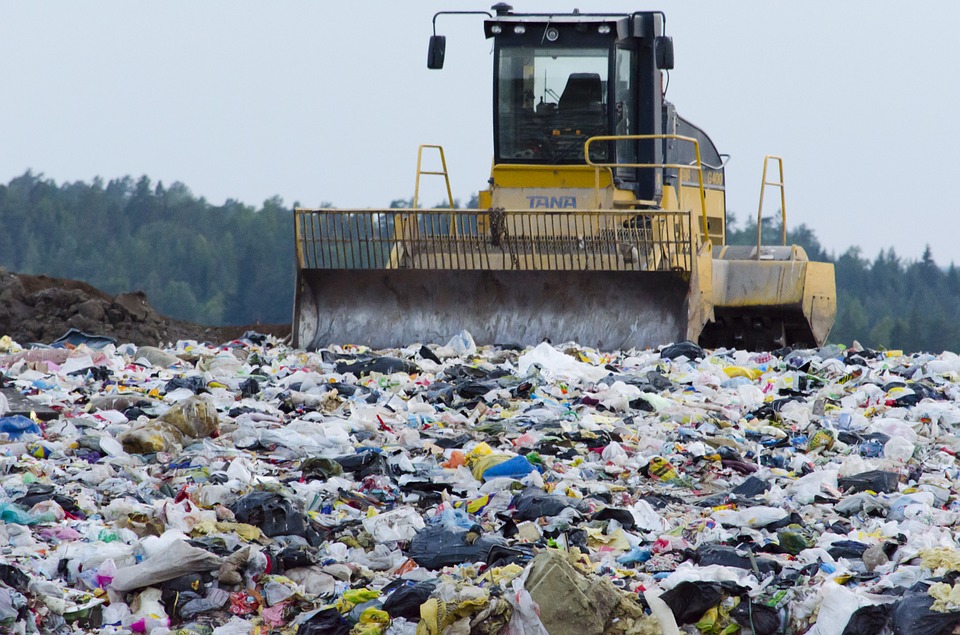
Do you know what happens to the items that you return? In far too many cases, they end up in the landfill! That’s right! It’s estimated that more than 25% of all returns go into the garbage! I was shocked and appalled when a reader brought this to my attention.

landfill-879437_960_720

In a time when people are doing more than ever before to protect the environment, consumers usually don’t realize that their online shopping habits could be undoing a lot of the good that they are doing in other areas. While it might be convenient to order a pair of jeans in two or three different sizes, keep the one that fits, and return the others, most people would probably think twice about doing that if they knew that the pairs they are returning might end up in the garbage.

So why is this happening? It’s all about money, of course. It costs companies more to employ the people required to check returns for damage and, in the case of clothing, to re-press and repackage each item than it does to simply incinerate them or throw them in the dumpster. Not only does the environment suffer, but we, the consumers, end up paying more for products because retailers have to increase their prices to recoup their losses.

So how big is this problem? In Canada alone, we are returning $46 billion worth of goods every year. In the US, over 4 billion pounds of brand new returned apparel end up in the landfills annually. That’s approximately the equivalent to every family in the country throwing one laundry load of clothing in the garbage every year. This dirty little secret isn’t exclusively an online shopping problem. About 5 to 10 percent of in-store purchases are returned, but that rises to 15 to 40 percent for purchases made online. Clothing and shoes bought online typically have the highest rates with 30 to 40 percent returned.

If I wasn’t already committed to shopping in person, I definitely would be after looking into this! I learn a lot from my readers, so please keep the comments coming. 🙂

Environmentally conscious shopping

LogoIncreasing interest in sustainability, climate concerns, and other environmental issues is having a significant impact on the fashion industry which is said to be responsible for 8 to 10 percent of global carbon emissions, more than all international flights and maritime shipping combined! It’s also a huge consumer of water. It takes approximately 1800 gallons to grow enough cotton to produce just one pair of blue jeans!

The industry has been increasingly coming under attack for what is known as fast fashion. Fast fashion, or disposable clothing as I like to call it, refers to a phenomenon that sees retailers introducing new products as often as multiple times a week. Garments are manufactured quickly and inexpensively allowing consumers to fill their wardrobes with trendy styles without spending a great deal to do so. These clothes are usually characterized by shoddy workmanship and low quality fabrics and quickly end up in the landfill.

Fast fashion’s target market, young, style-conscious shoppers on a budget, are also among those most concerned about the health of the planet. As environmental consciousness increases, their buying habits are changing. Dwindling sales forced fast fashion chain Forever 21 into bankruptcy at the end of September and is resulting in the closure of up to 350 stores internationally including all 44 locations across Canada. Some see this as signalling the end of an era in shopping.

One of the noticeable effects of this shift is a change in attitude toward second-hand clothing. The stigma that was once associated with wearing someone else’s hand-me-downs is rapidly disappearing. Now it’s the environmentally conscious thing to do!

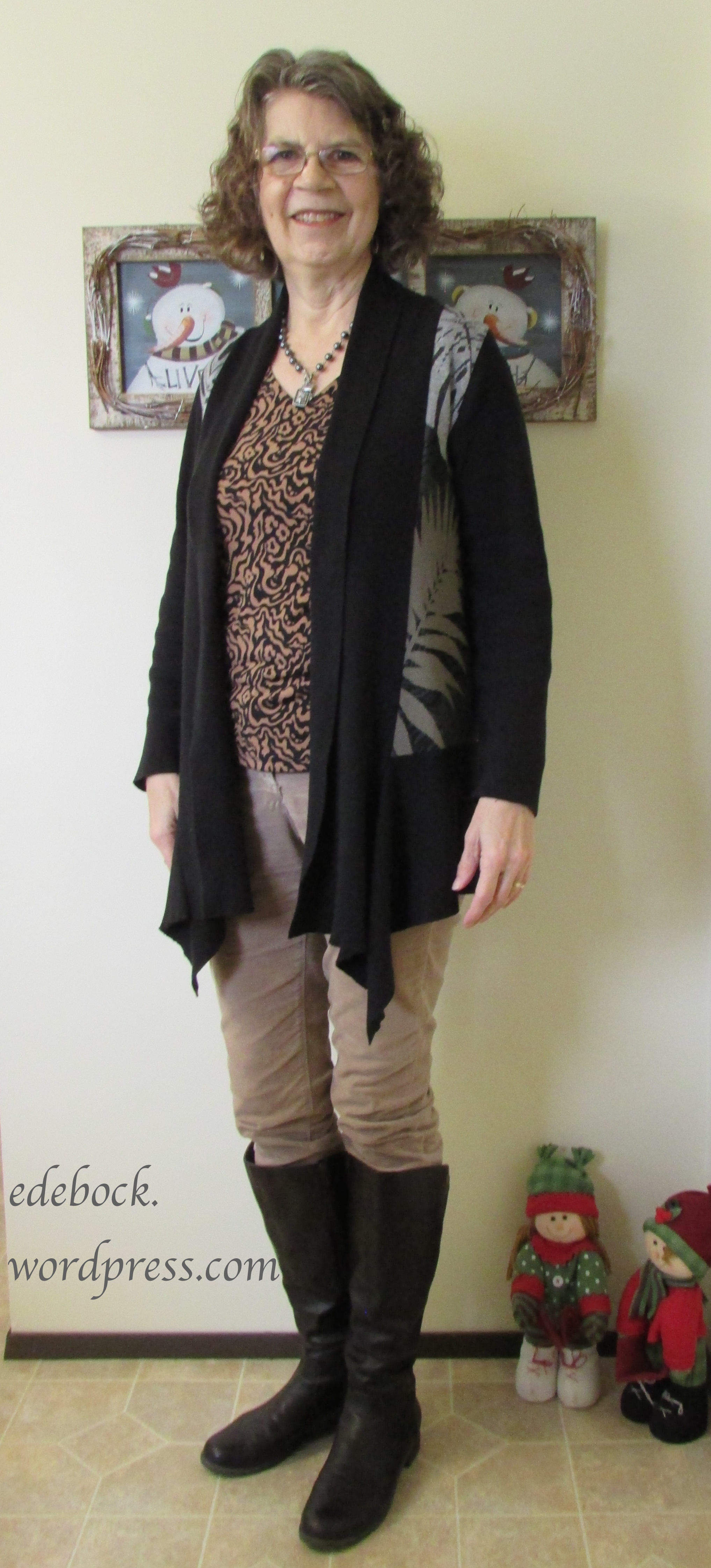
If you’ve been reading my blog for very long, you know that I’ve been an avid thrift store shopper for years. I much prefer smaller not-for-profit stores to ones like Value Village where the prices are higher and very little of the revenue goes to charity. Most of my second-hand clothing comes from two small volunteer run shops, one in the town where I live and the other just a few kilometres away. Here I’m wearing a couple of recent purchases.

IMG_0458

When I put my tall winter boots away last spring, I knew that they were nearing the end of their life, but I was hoping to get one more season out of them. The first time I wore them this winter, however, my feet got wet! Clearly they needed to be replaced, but the closest shoe store is an hour away. I decided to check out our local thrift store and luck was with me! I snagged this like-new pair for just four dollars! They’re even dark brown, one of this seasons most popular colours. I bought the cardigan for three dollars.

IMG_0460

I’m wearing the two thrifted items with the comfy corduroy pants that have been a workhorse in my wardrobe for several years, a sleeveless V-neck top recently purchased at Cleo, and a black pearl necklace from a previous cabi season. No fast fashion for this frugal fashionista!

For 18 tips on successful thrift store shopping, check out this post.

Fast fashion is not frugal!

logoI almost never buy “fast fashion”, or disposable clothing as I like to call it. Fast fashion refers to a phenomenon in the fashion industry that sees retailers introducing new products as often as multiple times a week. Garments are manufactured quickly and inexpensively allowing consumers to fill their wardrobes with trendy styles without spending a great deal to do so. These clothes are usually characterized by shoddy workmanship and low quality fabrics.
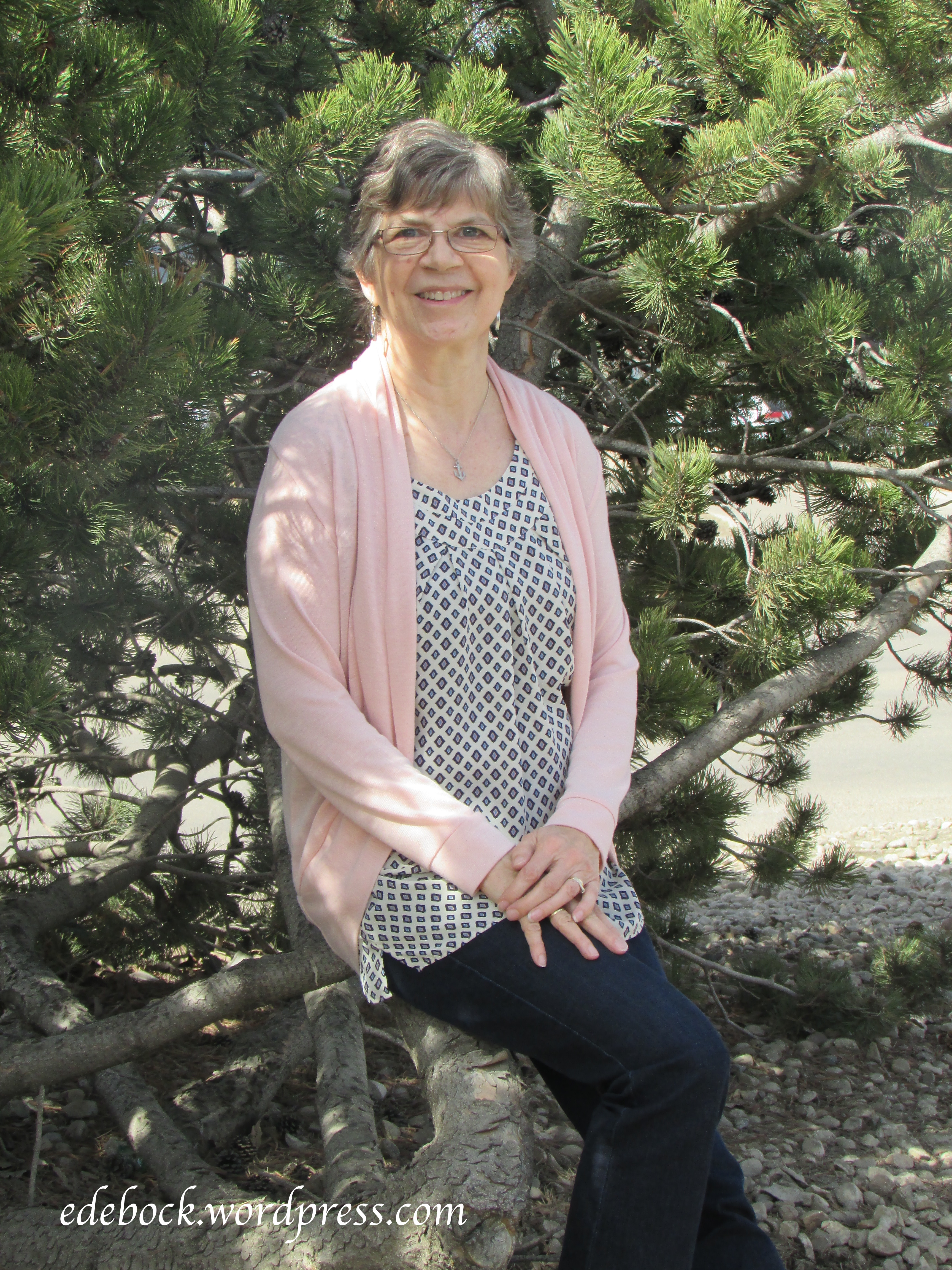
I seldom enter retailers like Forever 21, H&M and Zara that specialize in fast fashion, but I made a rare exception about three months ago. Walking through the mall, I spotted the cardigan that you’ve seen before here on a rack at the entrance to one of these stores.

IMG_4026

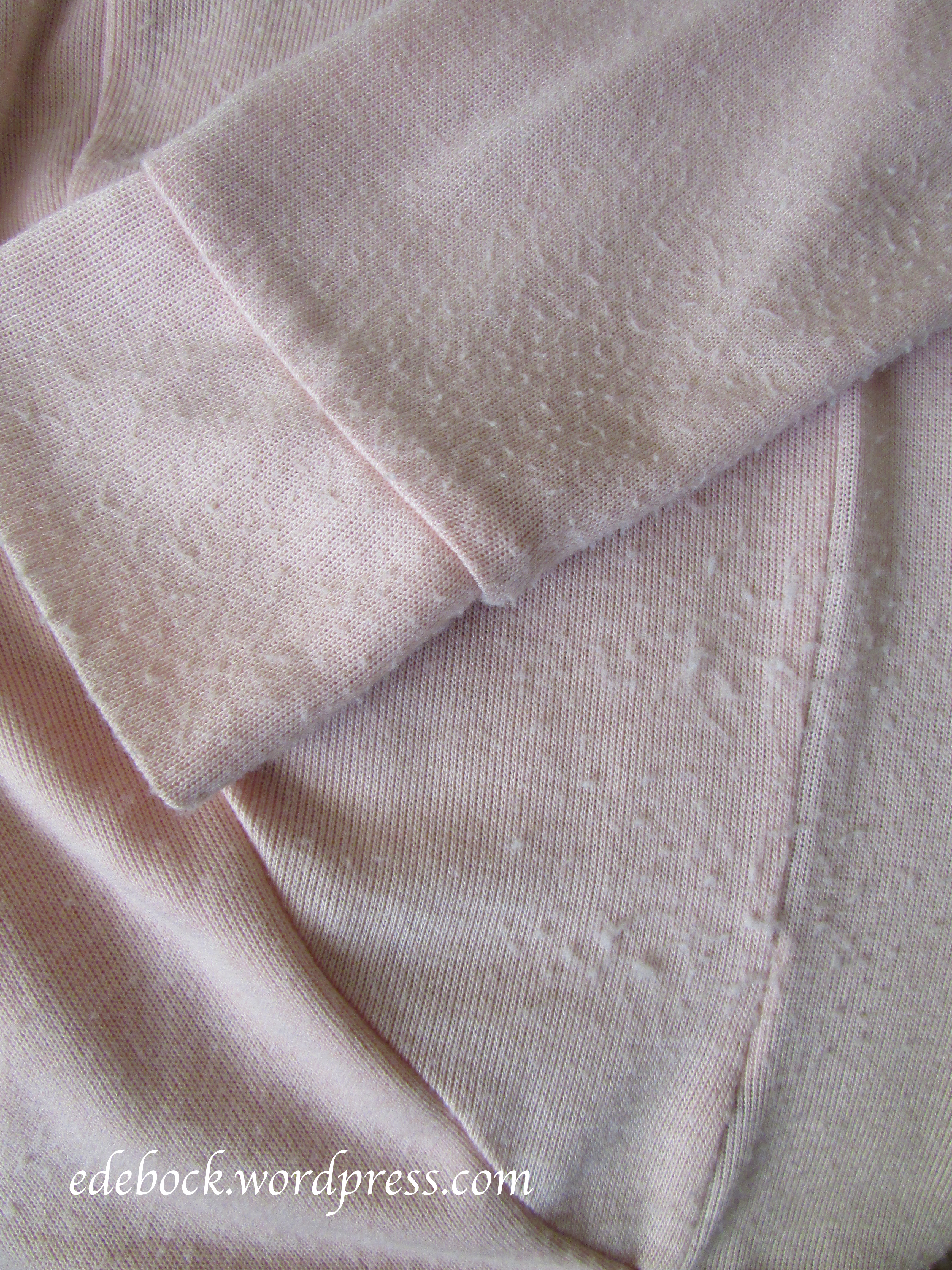
On a dreary February day, it was the blush pink colour that caught my eye and made me think of spring. At $15, it was definitely an impulse buy and one that I knew wouldn’t last long, but after just a handful of wearings, look at the way the fabric is pilling!

IMG_4236.JPG

Fast fashion has also come under criticism for contributing to poor working conditions in developing countries where these garments are churned out, not to mention the garment factory disasters that have claimed the lives of many workers. It also has a very negative impact on the environment. Producing the staggering number of fast fashion garments that are sold worldwide requires tremendous amounts of energy and releases enormous quantities of harmful bi-products into the environment. In addition there’s the problem of disposing of the used garments which, like my cardigan, don’t last long and aren’t worth passing on to the second hand market. Instead, they end up in the landfill where the mostly synthetic fibres take hundreds of years to break down.

I’m proud to refer to myself as a frugal fashionista, but frugal is not buying cheap, poorly made garments; frugal is buying quality items at bargain prices. Buying fast fashion is definitely not frugal!

Yangtze River cruise

Other than our overnight boat trip on Halong Bay in Vietnam on Christmas Day 2009, Richard and I had never been on a cruise until our recent voyage down the Yangtze River. On July 7, we flew from Xi’an to Chongqing where we were supposed to board the MV Jenna, the largest Victoria Cruises five star luxury ship to ply the waters of the mighty Yangtze. Unfortunately, the Jenna was unable to dock at Chongqing due to unusually high water levels so we were bussed an hour and a half downstream to Fuling where we boarded shortly before dusk. After settling into our cabin and exploring the ship, we sat on our little balcony enjoying the night air until everyone was on board and the ship set sail at 11:00 p.m.

There were 380 something passengers onboard. Most were Chinese but there was also a group of Taiwanese travelling together as well as a group from the University of Virginia that included retired American astronaut, Kathryn Thornton, veteran of four space flights and now a member of the UVA faculty. We were one of four couples referred to as the “independents” because we weren’t part of a larger group. The eight of us were table mates and were together on all three shore excursions because, though we represented Switzerland, France, Portugal and Canada, we shared the ability to communicate in English.

We struck up an instant friendship with Carla and Francisco, the Portuguese couple who actually reside in Macao. We shared so many values and interests in common that we could have happily spent the entire cruise sitting on one of our adjoining balconies talking! We didn’t do that though as the ship presented us with a busy schedule for each of our three days onboard.

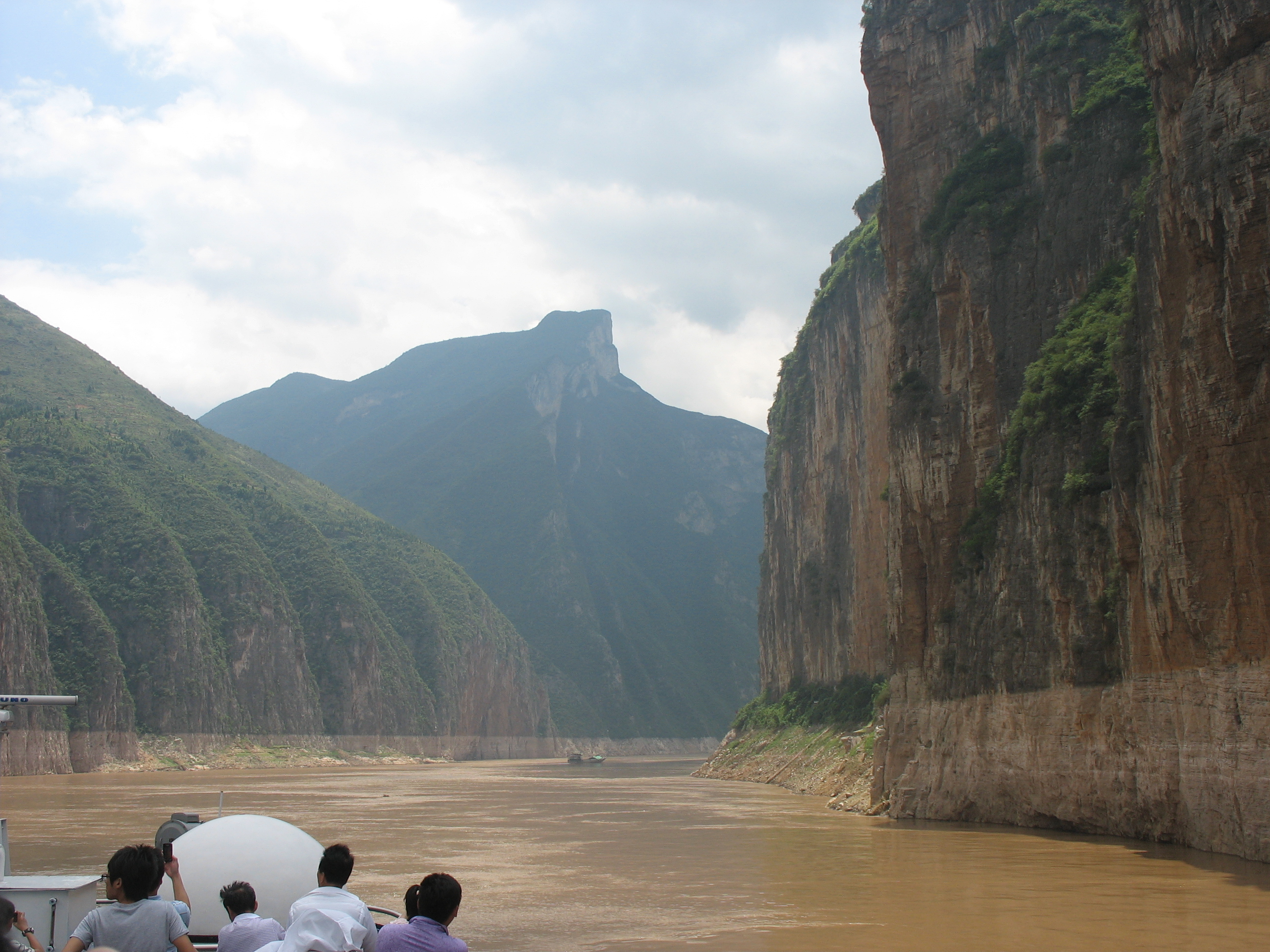
Though I thought about it, I didn’t actually make it to any of the early morning tai chi sessions and we certainly didn’t take advantage of the opportunity to watch movies in our comfortable cabin. After all, we could do that at home! We did take in two very informative sessions with our river guide, Luther Zou, who shared not only an introduction to the Yangtze and the famed Three Gorges but also a fascinating glimpse into his life as a country boy growing up on a Chinese farm. We enjoyed sumptuous meals, took in two evening shows put on by the multi-talented ship’s staff and of course, spent lots of time on deck enjoying the magnificent scenery as we passed through the gorges. We can only imagine how much more spectacular they must have been before the Three Gorges Dam caused the upstream water level to rise more than 300 feet forming a 600 km long reservoir. Above the high water line along the river’s bank, we saw many of the relocation villages built to house many of the approximately 1.24 million people whose homes were submerged by the rising water. More than 1000 archeological sites were also flooded. Some cultural and historic relics were moved to higher ground but others have been lost for all time.

The dam has had a positive impact not only as the world’s largest hydroelectric project but also providing flood control downstream and improving navigation on the river but I wonder what its long term negative impact might be. How might the astronomical weight of that much water affect the earth’s surface? We saw evidence of several landslides along the river banks and I’ve read that the dam, built in the western section of Xiling Gorge, sits on a seismic fault!

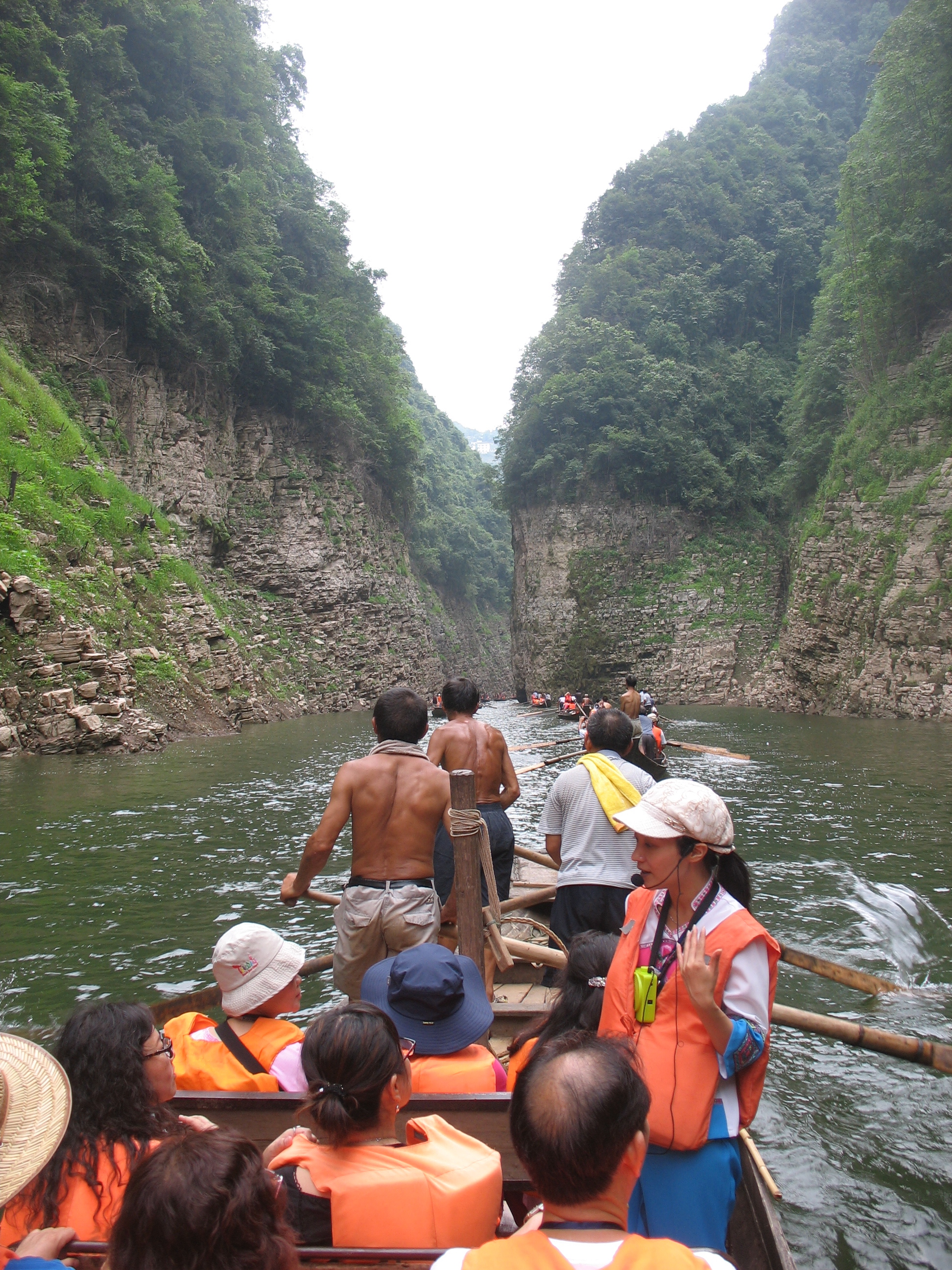
We enjoyed all three shore excursions. The first day we climbed the steep incline to the temple area on the top of Ming Mountain. Known as the City of Ghosts, it pays tribute to the King of the Underworld. Though I found that concept a bit disturbing, the outing was fun and once again I was thankful that the 67 stairs up to our fifth floor apartment in Dalian had prepared my legs well for such activities! The second day’s excursion was by far our favourite. We first boarded smaller ferries for a trip up Shennong Stream, a picturesque tributary of the Yangtze, and then downsized to smaller sampans to travel even further upstream. The scenery was truly spectacular. After staying up very late that night to watch from the deck as the Jenna passed through the first of the ship locks at the Three Gorges Dam, we rose early the next morning to visit the dam.

After returning to the ship and passing through the eastern section of the third gorge, we enjoyed a final meal onboard then disembarked at Yichang where many of us were taken to the airport to catch the same flight to Shanghai. It was there that we had to say a sad farewell to our new friends. Even when we’re surrounded by some of the world’s most stunning scenery, life is still about people and ours have definitely been enriched by our time with Carla and Fransisco!

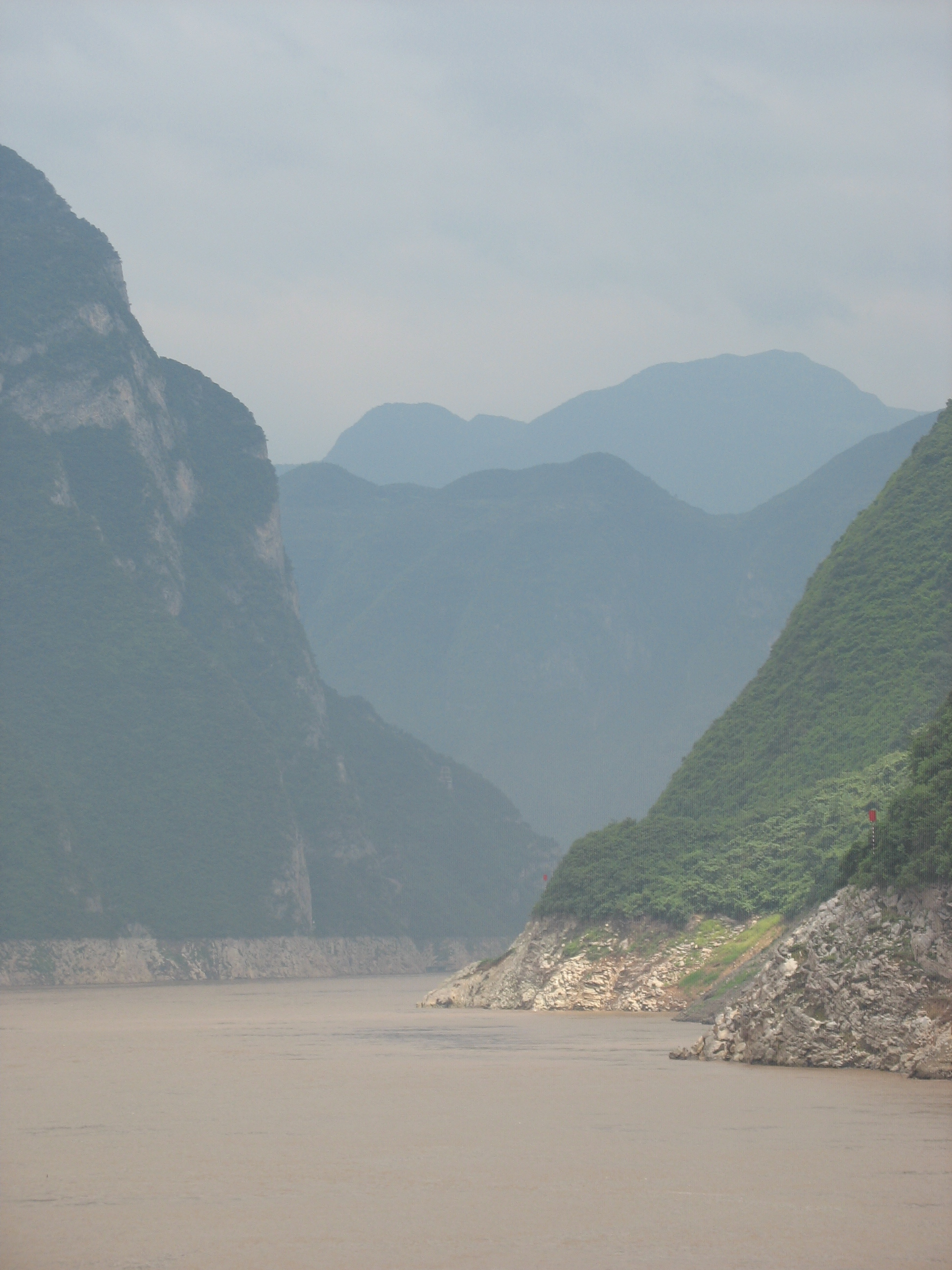
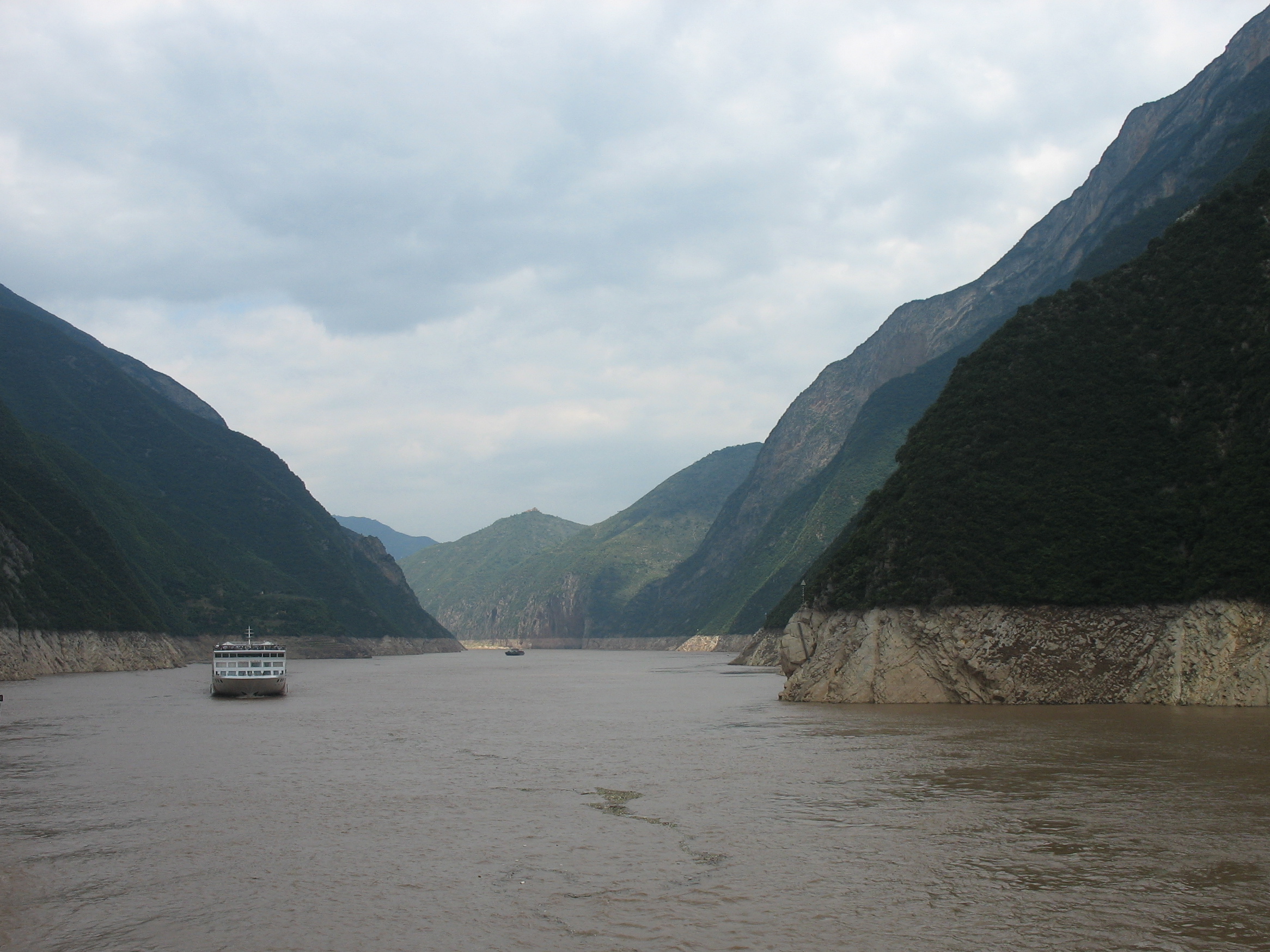
Qutang Gorge

Qutang Gorge

Wu Gorge

Wu Gorge

Pictures hardly do justice to the beauty that surrounded us!

Pictures hardly do justice to the beauty that surrounded us!

IMG_2815

Sampan on Shennong Stream

Our new friends

Our new friends

Eastern portion of Xiling Gorge

Eastern portion of Xiling Gorge

Things are different here!

We’ve spent quite a bit of time in Asia over the past few years. As a result, we haven’t really experienced culture shock since arriving in China but there have definitely been some surprises. In no particular order, here are a few random differences that we’ve noticed so far.

  • Waking up in the middle of a densely populated city and hearing a rooster crow! We haven’t figured out where the rooster resides but we did see a chicken wandering beside the street one day. I wonder if it ended up in someone’s cooking pot?
  • Two or more girls walking arm in arm or holding hands. This is extremely common amongst women of all ages and is nothing more than a sign of friendship. I quite like it.
  • Spitting! Everywhere. All the time. That I don’t like! The spitting itself is bad enough but it’s the loud hawking up of phlegm that precedes the shot that really gets me. I have to constantly remind myself that these people (men and women) aren’t being intentionally rude or gross. This is simply an accepted practice in their culture. I must admit to giving the man who nearly hit my shoe at the street market on Sunday morning a very dirty look though!
  • Using paste to attach a stamp to an envelope. I still chuckle when I think of the expression on the face of the post office clerk when I licked the back of a stamp the first time we mailed something! He hastily pointed to the pot of paste and the worn out brush that I was supposed to use to apply it to my stamps. I’ve been careful to do it the right way ever since even though it doesn’t work half as well as licking the stamp!
  • Toilet paper without a cardboard core. You can buy it with the core but it isn’t as common and since we have nothing to hang the roll on, it isn’t needed. Also, when the roll gets small it fits easily into a coat pocket or purse which is very handy considering the fact that toilet paper isn’t provided in public bathrooms including the ones at the school.
  • People burning stuff whenever and wherever they choose. I was about to hang some towels out to dry one morning last week when I noticed a group of men burning a large pile of trash directly below our window. The fire smouldered all day while the towels dried indoors!
  • I’m not sure what the law says but in practice, pedestrians DO NOT have the right away in Dalian and since parking on the sidewalks is commonplace, one needs to be constantly vigilant while walking. We take our life in our hands each time we cross a street!
  • The city employs an army of street sweepers. Dressed in green and yellow, they use straw brooms to sweep the gutters and gather up the ever present garbage. Their efforts seem somewhat futile as people think nothing of throwing more trash on the ground.
  • In an environment where cleanliness doesn’t seem to be a priority, who would have expected to find scented kleenex? I’m not sure if all the tissues here are perfumed but the ones we bought have a lovely lavender scent! Richard doesn’t particularly care for them but I think they’re great. He may suggest that we look for unscented ones next time but since we can’t read the labels, he could be out of luck!
  • Many of the vehicles on the road are made by North American, European or Japanese manufacturers and look just like the ones we’d see at home but some are also manufactured by Chinese companies. It’s the three wheeled ones that make me giggle every time I see one! They look like Mr. Bean should be behind the wheel!