The jacket!

Melania Trump jacket

I REALLY DON’T CARE. DO U?

Logo

Thursday of last week we were pulling into the central Alberta city of Red Deer to participate in a convention that I’d been preparing for since early April when I received a message from one of our daughters-in-law alerting me to Melania Trump’s latest fashion faux pas. My post for the following morning was already ready to publish and there was no time to write a new one. Though the furor has died down and I’m a week late, I still can’t help commenting.

When we lived in Japan, it wasn’t unusual to see someone wearing a t-shirt, sweatshirt, or jacket bearing a message written in garbled English. Sometimes those messages made absolutely no sense and sometimes they were extremely vulgar. The one that stands out most strongly in my memory was a young teenage girl wearing a t-shirt with PEDOPHILE BAIT boldly blazoned across her chest. Surely neither she nor her parents knew what that message meant. In fact, most of the Japanese who wear these garments have no idea what they mean. It’s simply popular to wear English.

I wish I could believe that Melania Trump didn’t know exactly what I DON’T REALLY CARE. DO U?  meant! I don’t believe in putting other women down for what they choose to wear, but Melania is a public figure whose conduct and choices have an impact far beyond herself. The message on her jacket would be completely inappropriate for the first lady of any country anytime, but it was made even worse by the fact that she was on her way to visit a few of the more than 2000 immigrant children wrested from their parents’ arms at the Mexico/US border and being held in various shelters around the country.

What was she thinking? What could possibly have possessed her when she got dressed that morning? And where were her advisors? She knew that her surprise visit to the border would attract plenty of media attention. If the intent of her trip was to demonstrate her care for the children who have been separated from their imprisoned parents, the message on her jacket seemed completely contradictory. Or was this a carefully thought out plan by Melania herself or someone behind the scenes to deflect attention away from the humanitarian crisis itself?

The president weighed in later in the day defending his wife’s choice of jacket by tweeting, “I REALLY DON’T CARE, DO U?” written on the back of Melania’s jacket, refers to the Fake News Media. Melania has learned how dishonest they are, and she truly no longer cares!” Sadly, his message made no more sense than the one on the back of her jacket and it contradicted Melania’s spokesperson, Stephanie Grisham, who said, “It’s a jacket. There was no hidden message.”

So why did she pick that particular jacket to wear? Melaina Trump has been carefully crafting her public image for decades. I can’t believe that she simply grabbed any old jacket without thinking about how it might be interpreted. She has lots of jackets and I believe that she chose this one very deliberately. I can only assume that she wanted it to send a message, but to who? And why? We can only speculate.

This isn’t the first time I’ve had something to say about one of Melania’s jackets. First there was the $51 000 Dolce & Gabbana that she wore when she arrived in Sicily last year, but my indignation over that one pales in comparison to this $39 one from Zara!
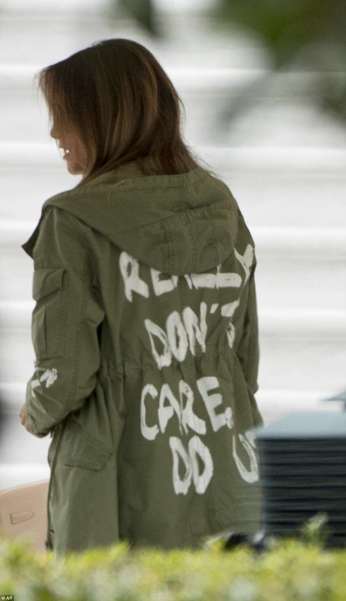
Melania Trump jacket

Charming Chinglish

Unless the weather changes dramatically in the next little while, this may be the first day in over three months that we don’t leave our little 390 square foot apartment! It’s been pouring rain and the wind has been howling all day long. Since we don’t work on Mondays and had nothing more than a trip to the supermarket to pick up a few groceries planned, it’s been a good day to stay indoors catching up on emails, reading, and playing a few games of Carcassonne. I won three in a row! It’s also a good day to reminisce about all the places we’ve explored since coming to China and to share with you some of the great examples of Engrish that we’ve found along the way!

Engrish, or Chinglish as it’s usually called in China, is what often happens when an Asian language is translated into English. You’ve probably seen some of it when you’ve tried to make heads or tails of the instructions that came with something produced in Asia. As a lover of words, I find Engrish highly amusing. I love to visit www.engrish.com, a website that posts one example of Engrish every day but I’m even more delighted when I find my own examples like the ones pictured below.

"Rain and snow carefully slip" appears beside an escalator in downtown Dalian. Richard waited patiently while I rode up and down several times trying to get the best picture possible!

The "Subsea UFO" sign is found in the aquarium that we visited with some of our students. We had no idea what it was referring to and it made absolutely no sense to any of us! Note that it includes the word harmonious which seems to be a very popular one in China. Even the students in my beginner level university class use this word frequently. The concept of harmony is clearly at the core of Chinese thought and culture. Confucius said, " Let the states of equilibrium and harmony exist in perfection, and a happy order will prevail throughout heaven and earth, and all things will be nourished and flourish."

I don’t know how well you can read the sign that we found at the entrance to Fu Jia Zhuang Park but I especially love #3 and #10. #3 reads "Pre-school age child or psychopath should be accompanied by a guardian." I’m having a hard time typing that one without laughing! #10 is longer. It reads "The tourist who suffers from heart disease, epi lepsy, cold, neuroticism, asthma, diabetes, high (low) blood pressure, rhinopharyngitis, earache or getting drunk are not allowed to dive and swim. If the tourist conceals the above-mention situation, he or she is responsible for the consequence if the accident happens."

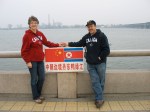
One of many signs at the North Korean border warned, "Forbidden to cross border in border area." Um… where else might we try to cross it?

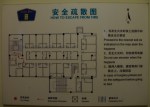
The How to Escape From Fire sign on the back of our hotel room door in Jinan also tickled my funny bone. Fortunately, we didn’t have to proceed to the nesrest exit but we did put on the safeguord before going to bed to prevent burglery from happening.

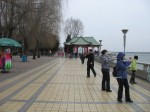
On our recent walk along the Daxishan Reservoir boardwalk there were many little wooden signs to guide our behaviour. We could figure out the intent of most of them but one was particularly entertaining. We did hold hands but it would have been pretty difficult to walk while holding our feet! The final sign was near the end of our walk. We had to look closely at the little icon to figure out what kind of nuisance people might commit. Believe it or not, though we haven’t actually seen anyone committing that kind of nuisance, we’ve definitely seen evidence of it on some of our walks!

I’m thinking about submitting a couple of these to www.engrish.com. Which ones made you chuckle?

The pattern of snack

Have you ever noticed how often we use the word usually? I hadn’t until I came to China to teach English and immediately noticed that the Chinese always say urally! I have no idea how the r sound crept in but apparently that’s the way all Chinese English teachers teach it. Wrong habits are hard to break and our students still need to be reminded once in a while but after lots of practice they do know how to pronounce it correctly now.

Though urally was one of the most common mistakes made by our students, who have never been taught by native English speakers before, we have encountered many other mispronunciations. Vowel sounds are particularly difficult. It isn’t any wonder considering the fact that one little letter like an a or an o can represent so many different sounds. Sometimes these mispronunciations lead to a complete lack of understanding but we also have a lot of fun with them.

Early in the term, one of my students told me that he liked eating snakes! I clearly remember being somewhat startled but this is China, after all! We’ve eaten bullfrog and catfish, restaurants serve silkworms and there’s one not far from here that specializes in donkey meat, so why not snakes? When I attempted to clarify, however, I discovered that he actually meant that he liked eating snacks! As it turns out, the snake/snack confusion is a common one and has led to lots of laughter in our classes!

Is it any wonder then that the headline "Snacks Dominate the Fashion World of This Early Spring" caught my eye when I picked up the April issue of Sichuan Airline’s in-flight magazine on our recent trip to Jinan. The magazine is published in Mandarin but some of the articles are translated into English. Clearly, they could use a more qualified translator but this particular article was hilarious! Here’s just one tidbit:

"It is the year of the snack, patterns of reptile animals have crawled back to the fashion world of women’s wear in spring and summer, among which the pattern of snack turns out to be the most popular. It seems like designers have already foreseen that the pattern of snack would be a fashion trend, this eye-catching animal pattern is now seen in all fashion fields."

The article was accompanied by photos of clothing with a snakeskin motif as well as snakeskin purses and shoes!

I haven’t been following most of my favourite fashion blogs lately because both WordPress and Blogspot are blocked in China. It’s also been several months since I’ve seen a fashion magazine so I don’t know whether or not snakeskin has caught on as a new fashion trend in North America. I haven’t actually seen it being worn here yet but for those who want to know, apparently the pattern of snack is the newest trend!

Dandong, gateway to North Korea

Friday’s anticipated four hour bus trip to Dandong turned into more than five when it took an hour and a half for the bus to wend it’s way through congested holiday traffic and get out of Dalian! We were riding on a modern long distance bus, however, so it wasn’t too gruelling. Once outside the city, the four lane highway was in great shape all the way so it was a comfortable ride. Signs along the highway were posted in both Chinese characters and Pinyin (the system used to transcribe Chinese characters into Roman script) with occasional signs in English as well. I found it cute that the right hand lane was labelled Carriage Way and the left, Overtaking Lane but the sign that we enjoyed the most was the one warning drivers Do not drive tiredly!

Liaoning Province is largely agricultural so we rode by many orchards, fields, rice paddies and a vast number of greenhouses. Work has just begun in the fields and everything that we saw happening was being done by hand. With the exception of one donkey and two horse-drawn carts, we didn’t see any livestock.

When we arrived in Dandong, it took awhile to figure out where and how to purchase our return tickets. It’s a good thing we did that right away though as many of yesterday’s buses were already sold out and the earliest one we could get on didn’t depart until 3:15 in the afternoon. The language barrier was a hindrance, of course, but as always, people were extremely helpful, particularly the young security guard at the bus station who, when we asked for directions to our hotel, walked us all the way there, a distance of 3 or 4 blocks!

After settling in and having a late lunch in the hotel restaurant, we set off on foot for the Yalu River which separates Dandong’s lively riverfront promenade from the more desolate looking city of Sinuiju, North Korea on the other side.

China is North Korea’s only major economic supporter and Dandong, a city of about 750 000 people and the principal gateway between the two countries, thrives on trade with North Korea. We watched trucks rumble slowly across the Sino-Korean Friendship bridge which is the official border crossing.

Pedestrians are not allowed on the bridge and we actually saw Chinese soldiers escort a couple back to the Chinese side of the bridge. Perhaps they were simply on the wrong bridge. In 1950, during the Korean War, American troops bombed the older bridge between the two countries in an attempt to cut off Chinese supplies to North Korea. The North Koreans dismantled the mangled end of the bridge leaving only a row of support columns standing in the river. The Broken Bridge stands next to the Friendship Bridge and is open to the public who want a closer view of North Korea. Admission to the bridge is normally 27 yuan but when we noticed that seniors over the age of 60 with an ID card qualify for a lower price, I decided that we should show the ticket agent our resident permits to see if they would give us the reduced rate. Sure enough, we were admitted for only 10 yuan each or approximately $1.60 Canadian!

The Broken Bridge wasn’t the nearest that we got to North Korea nor was Dandong itself our main reason for heading north on our three day break from school. Rather than making this post too long, however, I’ll be breaking it into a series. Come back tomorrow to find out the biggest reason we chose Dandong as our destination. For the moment though, let’s just say that it was Great and truly unforgettable!

Golfer’s paradise

There are two prices for a lot of things on Saipan. The advertised price is the tourist price but locals know to ask for the promo or local price. The difference is sometimes quite substantial. For example, the posted price for a round of golf on the spectacular oceanside course at Lao Lao Bay is $180 per person. That includes cart rental. The local price is $40. That’s right, $40! That’s less than 25% of the tourist price!

Since we’re not here as tourists but we aren’t long term residents, we don’t really fit into either category. Some places have happily given us the local rate but when I called to make a tee time at Lao Lao this morning, I was told that we’d only be given the local price if we could produce a Saipan driver’s license as ID. Of course, we don’t have such a thing. In the past, Dave and Helen Ann took their summer volunteers down to the Department of Motor Vehicles to get a local license as soon as they arrived on the island. That was back when a license cost $15. Now, they’re $40 which might still be worth it but you’re also required to turn in your previous license. Obviously, we’re not going to do that when we’re only here for a couple of months.

I explained our unusual situation to the girl who answered the telephone at Lao Lao Bay. Since she didn’t know what to do with me, she transferred the call to her supervisor who told me that, unfortunately, since we don’t have Saipan licenses we’d have to pay the tourist rate. When I told her that we couldn’t afford to do that and explained that we’re seniors living on a pension and working as volunteer missionaries, she offered to talk to the club manager to see if he would be willing to offer us a discount. She called back a few minutes later to tell us that we could golf at the local rate and when we arrived at the course, we were told that the offer is good for the remainder of our stay! It probably helped that tourism, the island’s main industry, is way down right now and the courses are far from busy.

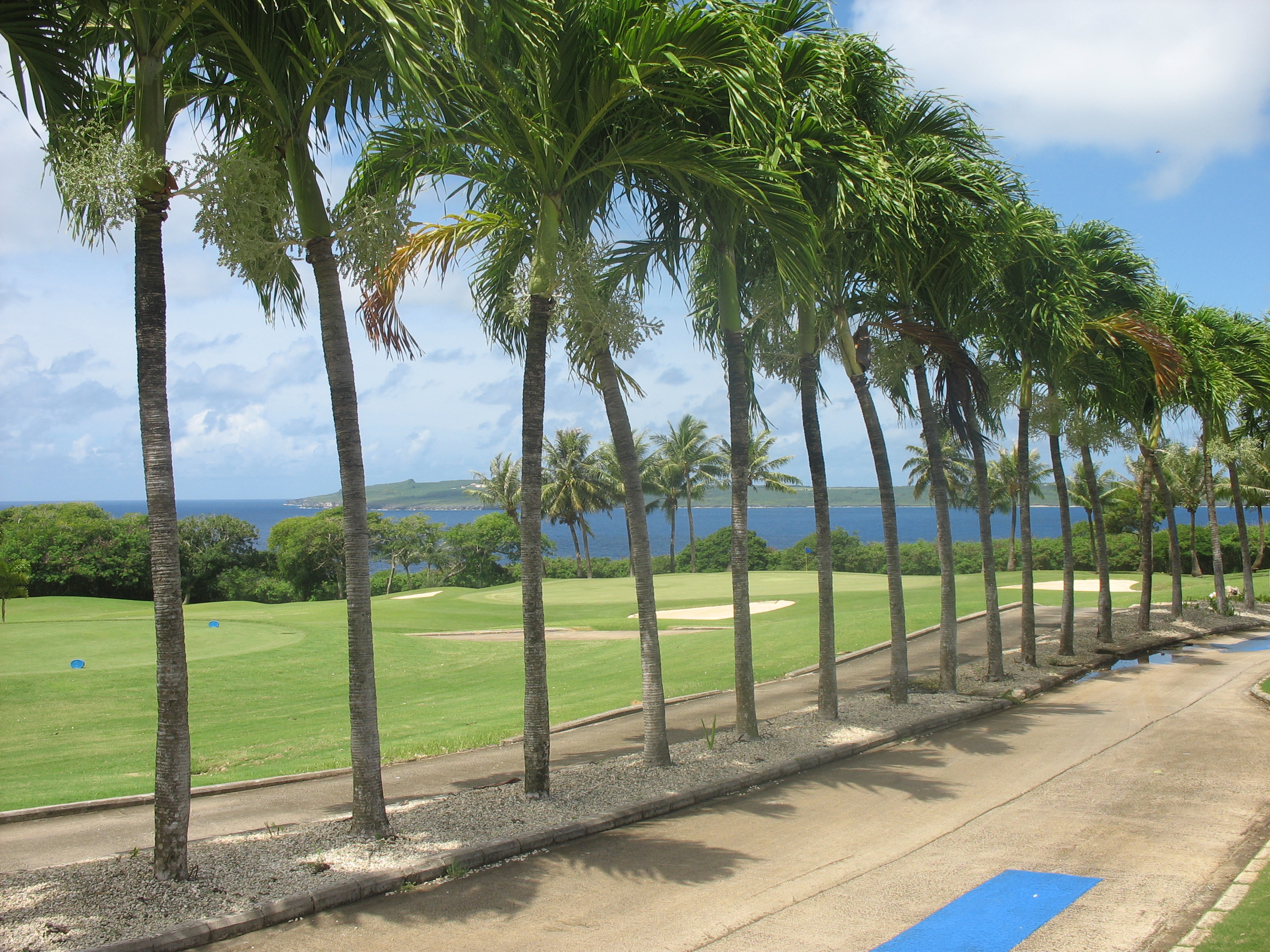
Our round actually cost us $70 each because we also had to rent clubs but that we can afford. It’s actually an amazing price given the fact that the course is absolutely gorgeous, immaculately kept and was designed by none other than Greg Norman, one of my favourite golfers of all time!

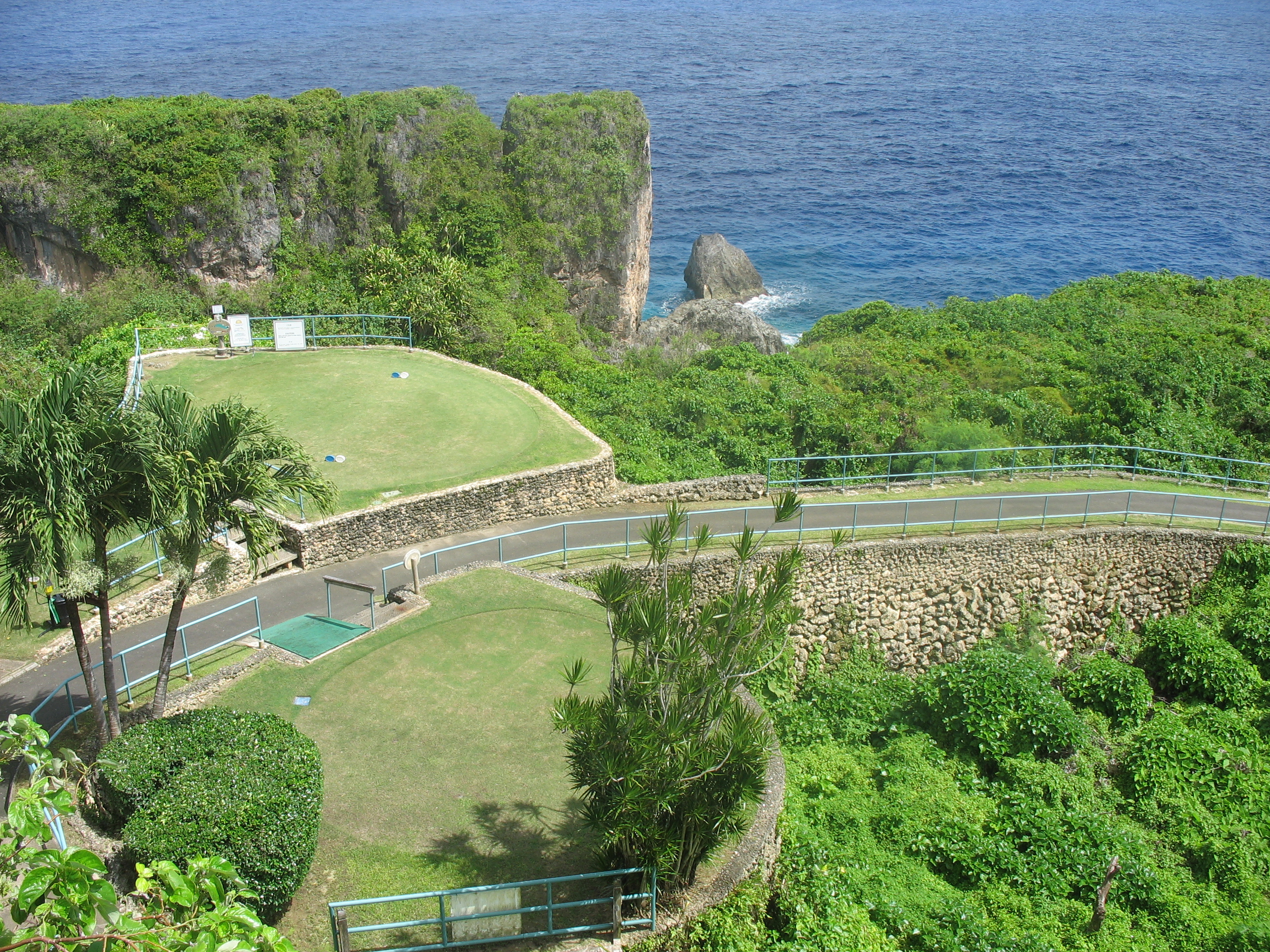
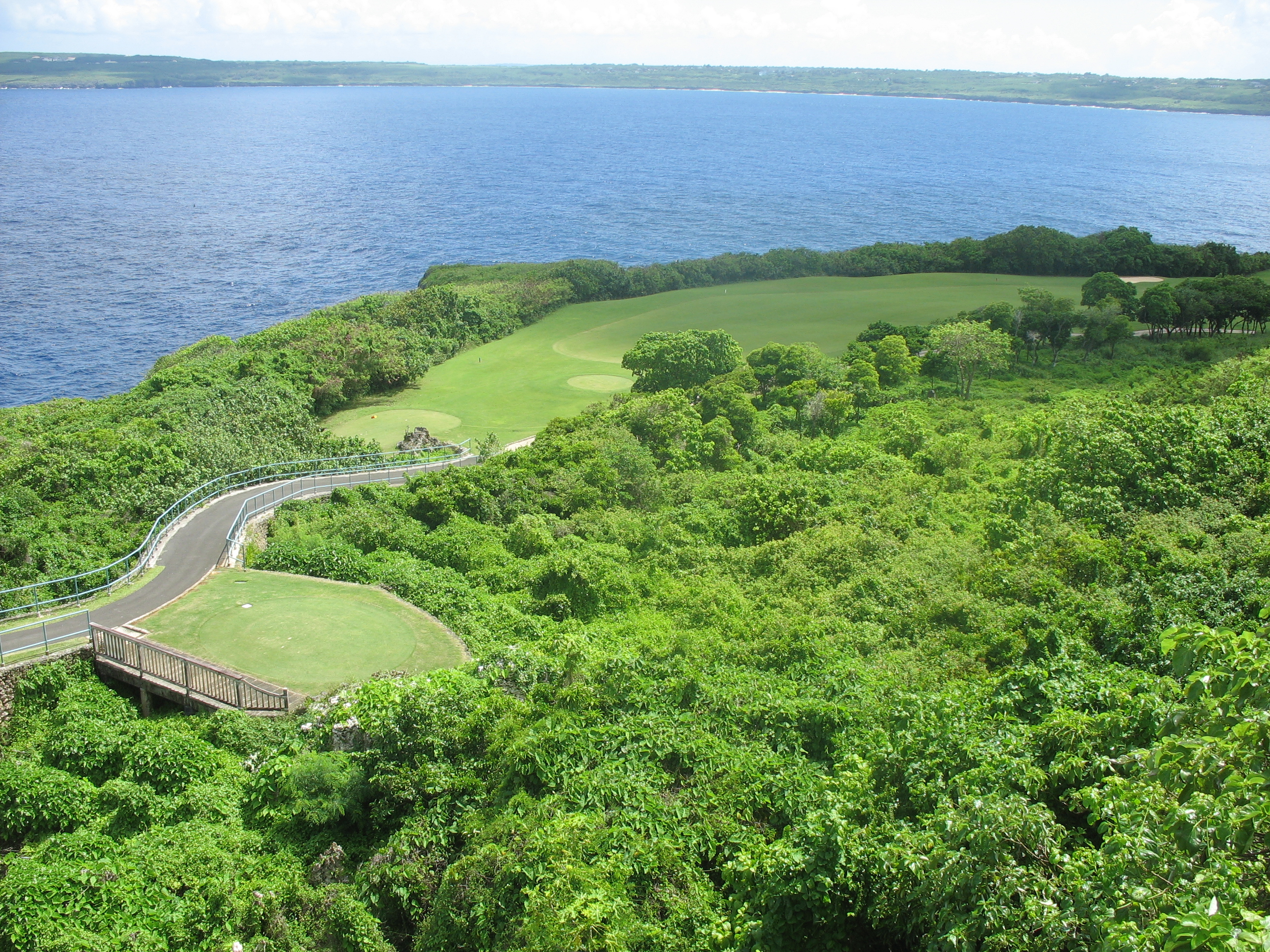
Even allowing ourselves a few mulligans, our scores were a little high but we’ll chalk that up to an unfamiliar course and the fact that we hadn’t golfed for a whole month. With hole descriptions like “out of bounds runs along the left side and there’s jungle on the right”, “you will hit your tee shot from an elevated tee box over the jungle to a green which is protected by jungle on the right, jungle to the rear and the cliff line on your left” and “from a cliff line tee box, you hit your tee shot over the crashing and thunderous ocean waves to a green which is also perched upon the cliff” I’m pretty proud to say that I only lost one ball! My tee box was practically suspended in space on a narrow peninsula jutting out over the crashing waves below. It was spectacular but while I’ve come a long way toward conquering my lifelong fear of heights, my swing was far from relaxed! The ball careened off the opposing cliff face and bounced out into the brilliant blue ocean.

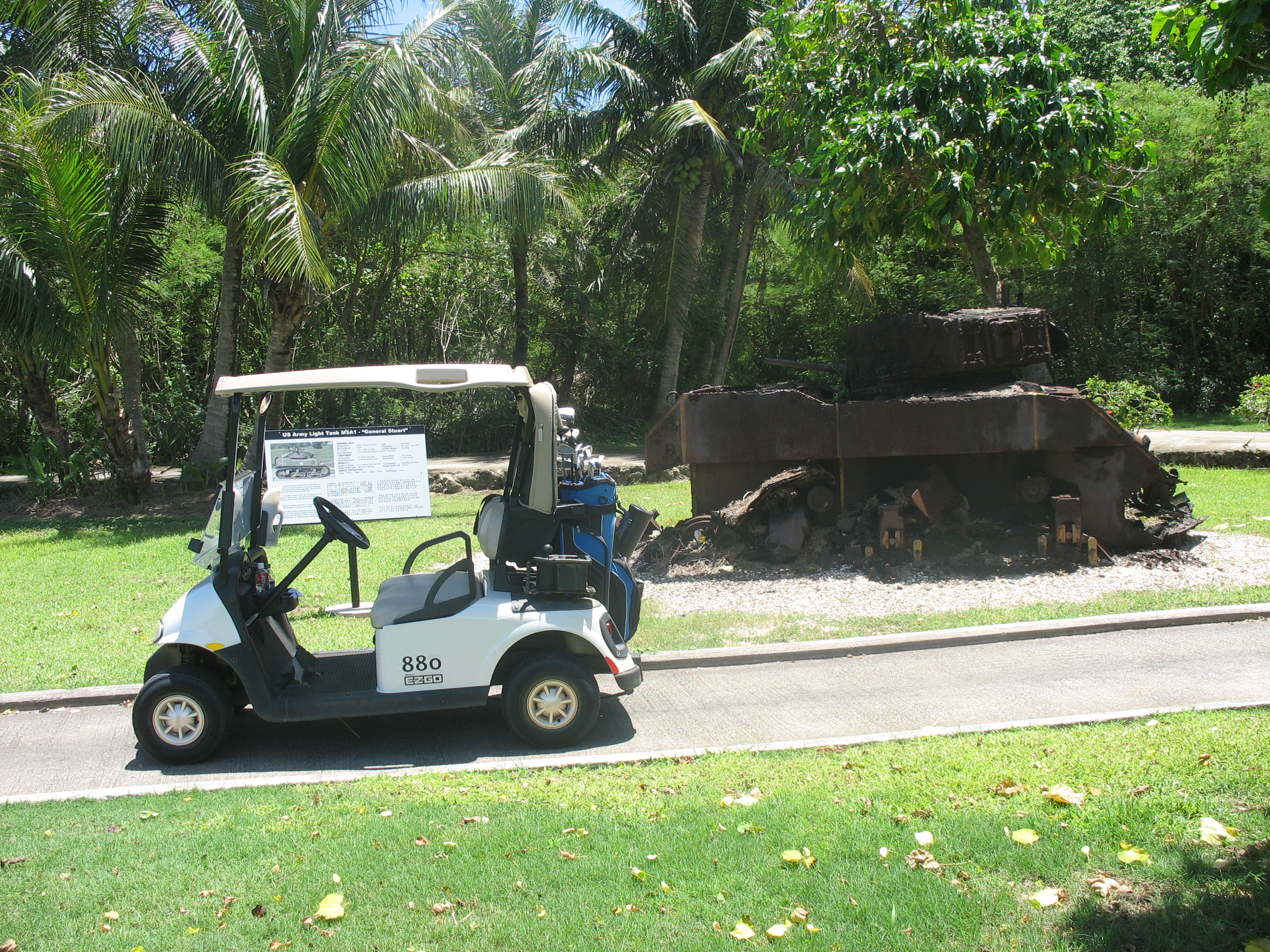
Our round of golf even included a brief history lesson. Alongside one of the fairways sits a rusted out US Army M5A1 “General Stuart” Light Tank that was knocked out of action by Japanese anti tank fire on June 25, 1944 during the battle for Saipan. It was uncovered in the late 1980’s during an archeological survey that was conducted prior to the development of Lao Lao Bay Golf Resort and has the distinction of being the only tank of it’s kind in the Mariana Islands that still sits in its original combat position. They just built the golf course around it!

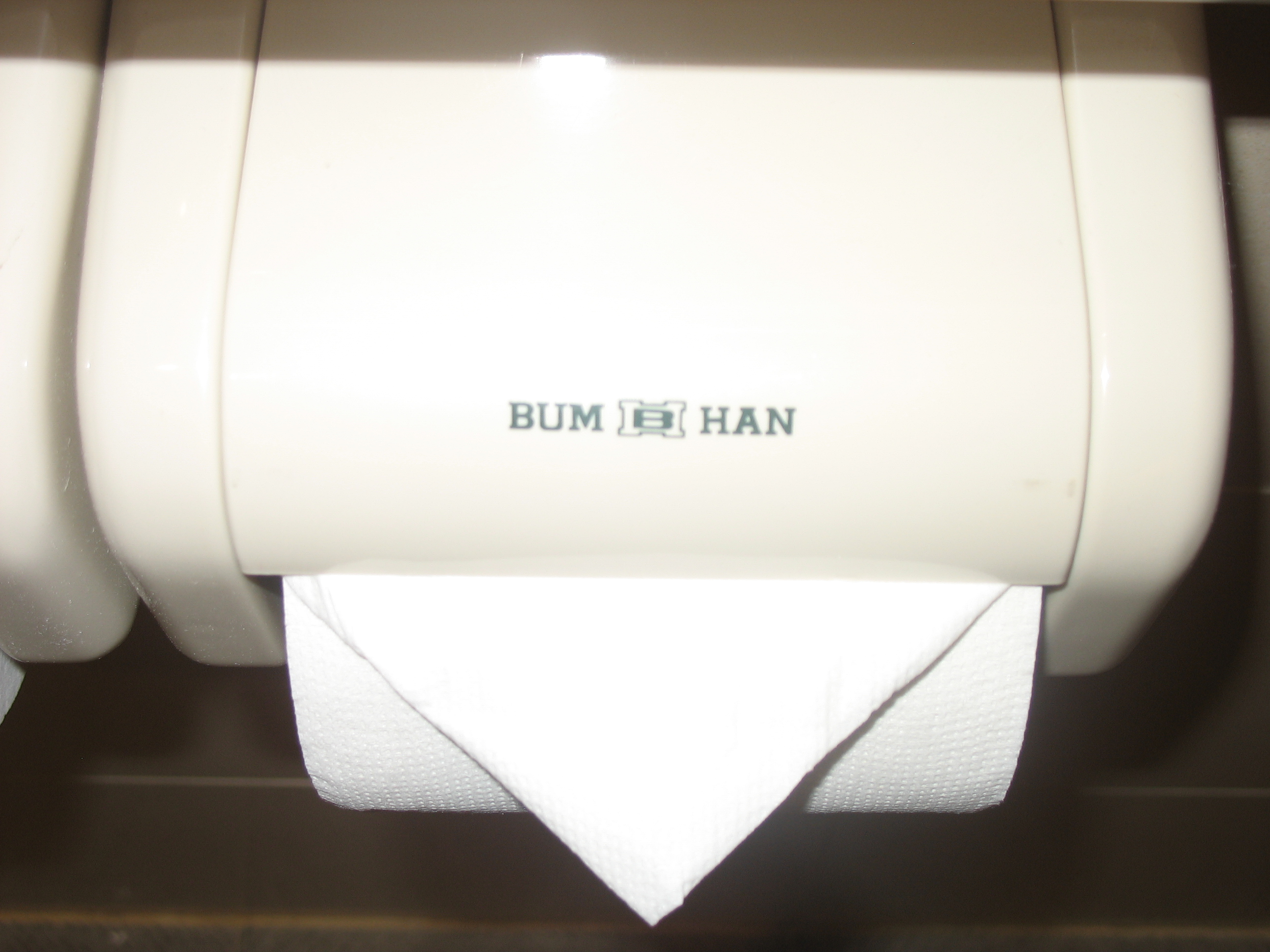
And then there’s one more photo for those of you who, like me, love Engrish, the bizarre use of the English language that is prevalent in some parts of the world. This one tickled my funny bone when I stopped to use a bathroom on the course. Needless to say, the bathrooms are a little classier than the blue plastic portables on our home course in Sedgewick!