Elbows up, Canada!

“Elbows up!” has become a rallying cry for Canadians as we face looming threats from south of our border, but what does it mean? Where did it come from? The phrase actually had its origin in hockey which seems entirely appropriate for a nation so obsessed with the sport.

Canadian-born Gordie Howe, also known as Mr. Hockey, actually had a second nickname: Mr. Elbows. Humble, generous and gentlemanly off the ice, he was known for wielding his elbows like weapons when he was battling for the puck. It’s such an enduring part of the Gordie Howe legend that a bronze statue outside Saskatoon’s SaskTel Centre portrays the hometown hero with his left elbow held high, as if fending off an invisible opponent.

In these days of punishing tariffs on Canadian exports and repeated gibes from the American president about becoming the 51st state, Gordie Howe would seem to be a good example of what it means to be Canadian. We are known worldwide for our unfailing politeness. We open doors for strangers and if you bump into us, we apologize, but clearly, when we’re threatened from outside, we respond with elbows up!

At protests across the country, Canadians have chanted the phrase and held their placards high. #ElbowsUp has been appearing all over social media, as both a call to stand against the threats and a warning to our neighbours that although Canadians might be polite, we’re not pushovers. We’re a bit like siblings on the playground. We might squabble amongst ourselves, but let an outsider threaten one of us and we come together in solidarity!

Now that we are facing a federal election, my fear is that our polarized views on who should lead the country in this current battle will divide us again. More than ever, during these unprecedented times, we need to remain unified. We need to stand together shoulder to shoulder with our elbows up. I pray that regardless of which party comes out on top and which leader is chosen, we will do exactly that.

Elbows up, Canada! 
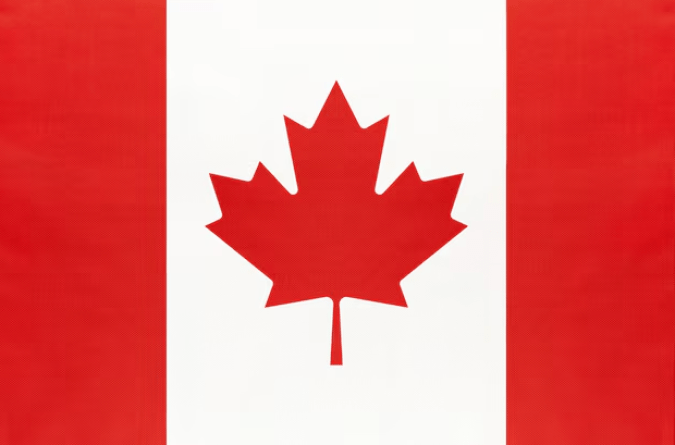
Strong and free!
When the church disappoints

building-simple-flat-black-white-icon-logo-vector-castle-church_653669-14312

This topic has been weighing heavily on my heart for the past couple of days. I don’t know whether I’ll be able to do it justice or not, but since writing is the best way I know to process heavy things and I need to get this off my chest, I’ll give it my best.

I know I’m not the only one feeling completely disheartened by the results of this week’s election in the US. There is no question that we are living in difficult times. What disturbs me most and what has prompted me to write this post is the fact that the election was won with the support of so many so-called evangelical Christians.

There was a time when I might have used that term to describe myself, but I no longer do. Don’t get me wrong. I’m not abandoning my faith. I’m still a Christian although the term that I prefer is Christ-follower. I will not, however, call myself an evangelical Christian. There is no way that I can possibly identify with the overwhelming number of evangelicals who bow down in adoration to a convicted felon, a racist, a misogynist, a liar. How is it that they can possibly believe that God is pleased with their choice? How can they have been so deceived?

Scripture tells us that, as Christians, we are to be “the pleasing aroma of Christ” (2 Corinthians 2:15-16), but frankly, something smells really bad right now!

The Christian church has a long history of going wrong. From the slaughter of Jews and the destruction of their communities during the Crusades to the devastating effect of church-run residential schools on our Indigenous population in the past century, the church has missed the mark in big ways and small.

There’s a common saying amongst believers that the reason there are no perfect churches is that there are no perfect people. That’s true, of course. The church is a collection of sinners, of failures, of flawed human beings, but I think that sometimes we like to use that truth to excuse the inexcusable.

I know that I’m painting the church with a broad brush here. Certainly there are individual congregations or individuals within congregations that are as disappointed as I am with the outcome of the recent election. So how do we respond? What do we do when the church disappoints?

Do we bail out? Do we turn our backs on the church and walk away? Hebrews 10:24-25 advises us to “consider how we may spur one another on toward love and good deeds, not giving up meeting together, as some are in the habit of doing, but encouraging one another“. If there’s ever a time when we need encouragement, it’s now!  So no, I don’t advise abandoning the church altogether. We’re living in a post Christian era. Clearly the recent election outcome is just one more sign that society is moving farther and farther away from the teachings of Jesus. Whether it’s in a formal church setting or some other kind of gathering, we need one another.

Personally, I will pray and I will continue to nurture my own relationship with Christ, the all-sufficient one. After all, the church is not the saviour of the world and whether or not he would agree, the president-elect isn’t either. That is solely Jesus’ role.

Colossians 3:15 tells us to “let the peace of Christ rule in your hearts, since as members of one body you were called to peace. And be thankful.” (italics are mine) We can fight our disappointment with gratitude remembering that even in the midst of a world that seems so wrong, we have much to be thankful for.

And finally, let’s not give in to fear. One of my favourite verses, Isaiah 41:10, says, “So do not fear, for I am with you; do not be dismayed, for I am your God. I will strengthen you and help you; I will uphold you with my righteous right hand.”

As the Jim Bailey song says, “I don’t know what the future holds, but I know who holds the future”. In days that seem dark, that gives me a glimmer of hope.