Shanghai, city of contrasts!

When we went to China, Shanghai wasn’t high on our list of places to visit. As you can probably guess by now, we’re fascinated by history and culture and I viewed Shanghai, with its population of 23.5 million people, as little more than a massive modern city. The only thing that actually drew us to Shanghai as a possible place to visit was the fact that we had friends living there. We got to know the Kawabatas when we attended the same church during our year in Japan and Itoshi was transferred to Shanghai not long after we left that country in 2009.

When we discovered that the tour that included everything we most wanted to see in China ended in Shanghai, we decided to go there after all. We timed it so that we’d finish our tour on a Friday afternoon and then spend the weekend with our friends before flying back to Canada from there.

As time went by, I became more excited about seeing Shanghai. I looked forward to seeing the contrast between the old and traditional in Beijing and the new and modern in Shanghai. Little did I know that I would see both in Shanghai. It is truly a city of contrasts!

Our Lonely Planet guidebook suggests that “Shanghai is best seen as an epilogue to your China experience” and I’m glad we saw it that way. It also refers to Shanghai as “the future that China has long been waiting for”.

Our tour began at the Shanghai Urban Planning Exhibition Hall which gave us a good overview of the city both past and present before we began to explore it. With its massive model of the city and its dizzying 3D wrap around virtual tour in which we seemed to float over the metropolis, we soon felt as if we were no longer strangers there. Historic photos, maps and dioramas gave us a picture of its colourful past. Our next stop was the 88 storey Jinmao Tower for an amazing bird’s eye view of the city.

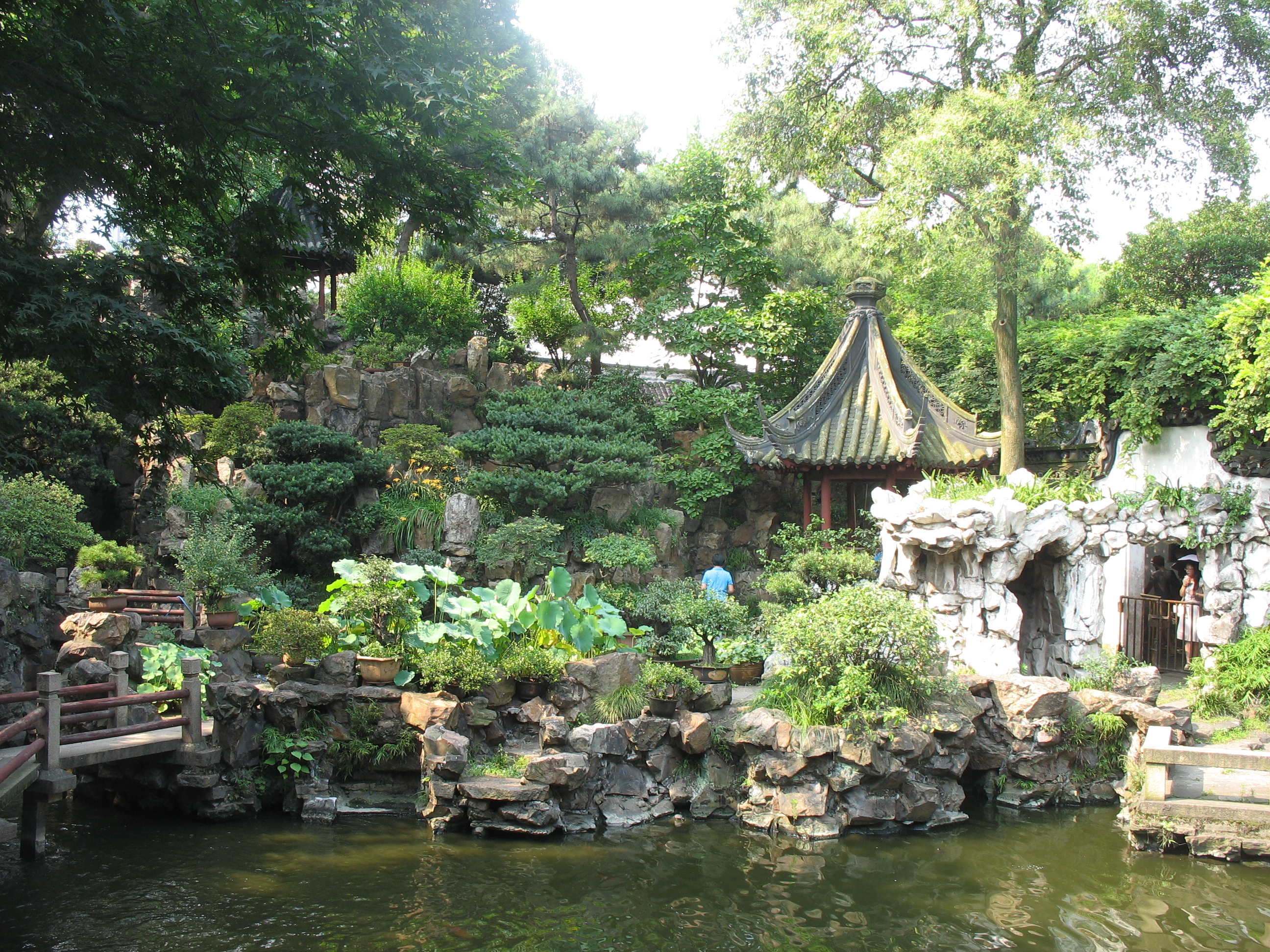
After lunch, we were off to the most traditionally Chinese part of Shanghai where we toured the classical Yu Garden, founded by the Pan family, rich Ming dynasty officials in the 1500s. Afterward, we relaxed over coffee at Starbucks in the middle of the adjacent and very crowded bazaar area with its many tacky tourist shops and outdoor vendors.
IMG_2932

IMG_2923

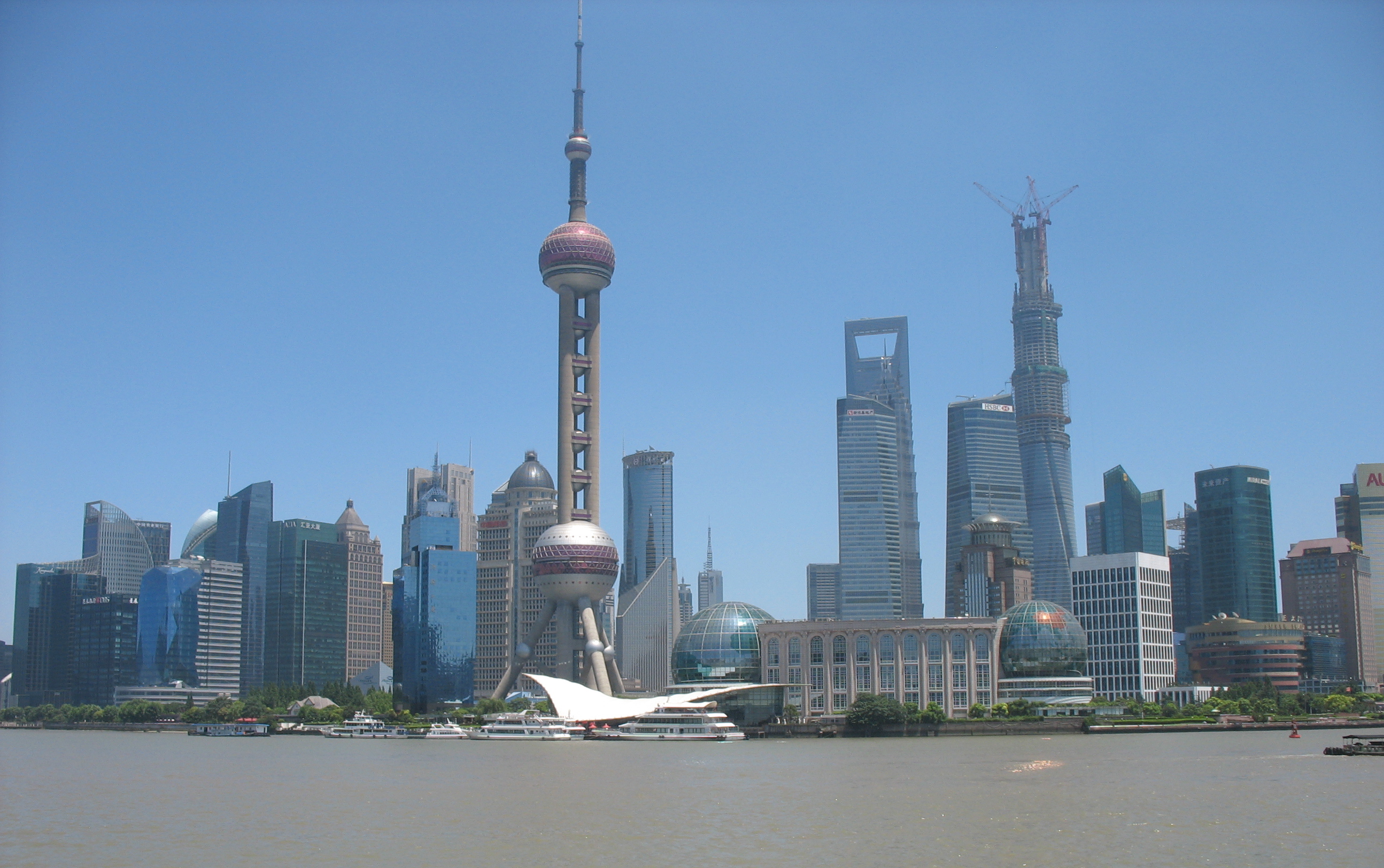
The building under construction in the background will be the world’s tallest when it’s finished.

IMG_2942

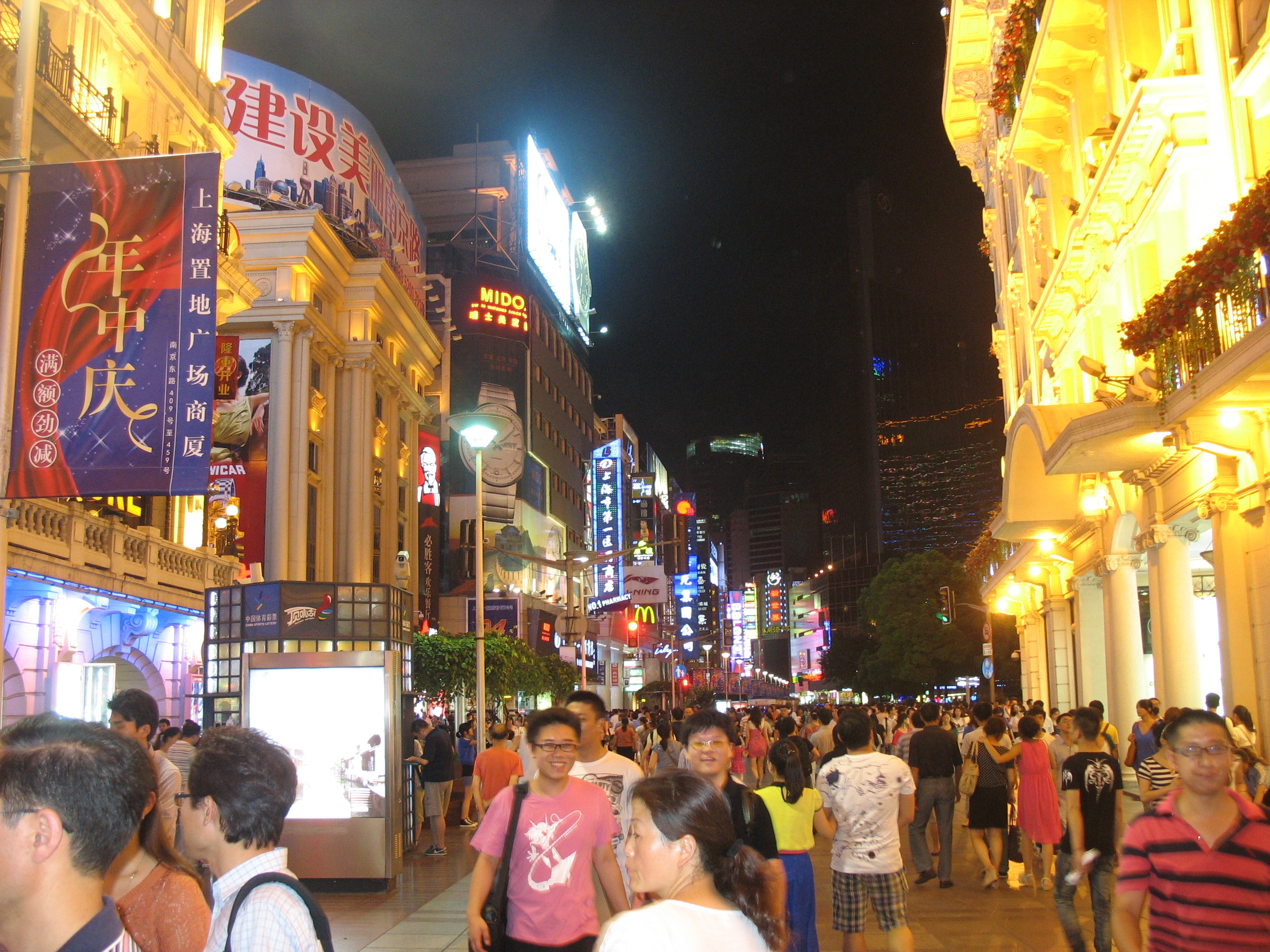
Our evening was free so we took the subway from our hotel to East Nanjing Road, one of the most famous and crowded shopping streets in China. The pedestrian street was a glowing forest of neon lights and crowded with people. It was a vibrant and noisy hub of activity with people strolling, singing, and dancing while others hawked their goods. We even joined one of the groups for an old time waltz!
IMG_2948

The next morning we were back on East Nanjing Road to see it in the daylight and do a bit of shopping. Look very closely and you’ll see the same KFC and McDonalds signs in both photos!

IMG_2950

From there, it was an easy walk to the Bund where we strolled along the riverfront in awe of the contrast between the two sides of the river. On our side stood stately very European looking buildings. Symbolic of the city’s colonial past, they once housed Shanghai’s most powerful banks and trading houses. Today, the Bund is a designer retail and dining area with some of the city’s most exclusive boutiques, restaurants and hotels. Across the river, is the futuristic skyline of the Pudong New Area looking like the set for a science fiction movie. Thirty years ago, that area was still farmland.

IMG_2958

IMG_2962

Perhaps the most amazing building we saw in Shanghai was the one where our friend, Itoshi, works where we were dropped off at the end of our tour of China!

IMG_2970

Hot nights in Xi’an

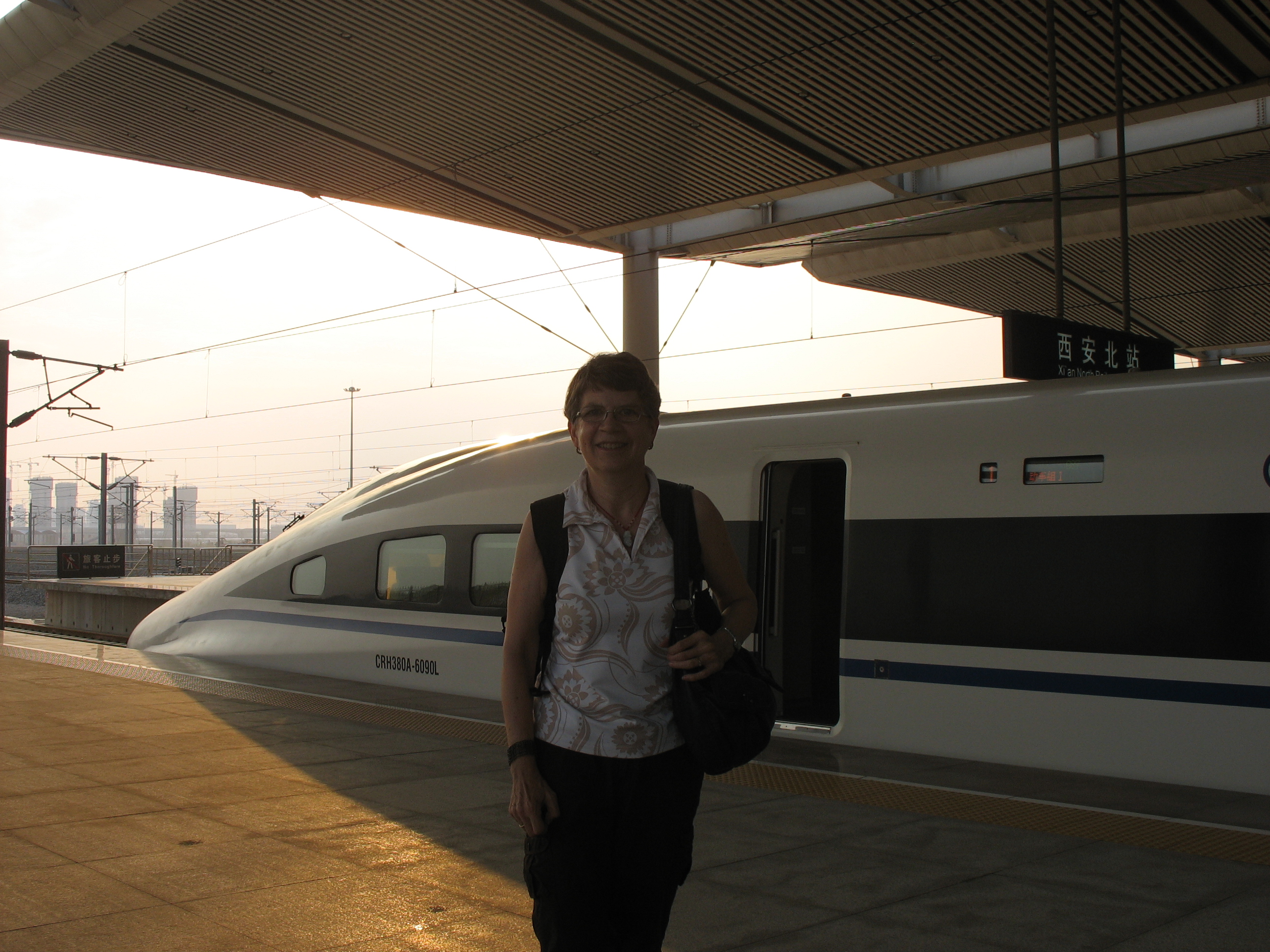
Leaving Beijing behind, we travelled southwest to Xi’an, once the eastern terminus of the Silk Road, the ancient trade route between China and the Mediterranean. We opted to travel this leg of our journey by high speed train in order to see more of the Chinese countryside. Cruising along at 300 km/hour, the ride was smooth and comfortable; like flying without ever leaving the ground.

IMG_2516

For the first part of the trip, flat farmland divided into a myriad of small fields stretched as far as we could see. At the speed we were travelling, it was difficult to identify the crops but we did see some rice and lots of corn. As we travelled further from Beijing, the flat plain gave way to more rugged terrain. The train passed through many tunnels and wherever possible, small fields were carved into the hillsides. Land that would be considered unusable here in Canada was being cultivated to help feed China’s more than 1.3 billion people.

IMG_2486

IMG_2509_2

When we reached our hotel inside the city wall in the heart of Xi’an, we were delighted to learn that we’d been upgraded to a larger room. We’re not sure if this was simply good luck or if the fact that I’d complained to our tour organizer about the Beijing guide and the unreasonable schedule that she’d planned for our first day there had something to do with us receiving special treatment. In any case, the “larger room” was actually a beautiful two room suite with a big bathroom that housed a deep soaker tub, the first bathtub I’d seen in China! As one who prefers baths to showers, I was in seventh heaven!

The hotel was within easy walking distance of both the Bell Tower and the Drum Tower which were spectacularly lit at night. As in other ancient towns across China, these structures served an important role in the days before people had clocks in their homes. The huge bell was rung at dawn while the drum marked nightfall.

Bell Tower

Bell Tower

IMG_2520

Drum Tower

It wasn’t until after we’d returned from exploring the area near our hotel and photographing the towers that we discovered that the air conditioning in our suite wasn’t working. Though someone from hotel maintenance worked on it twice and assured us both times that he’d fixed it, it never did work properly and we spent two very hot nights in Xi’an!

Hanging out in the hutongs

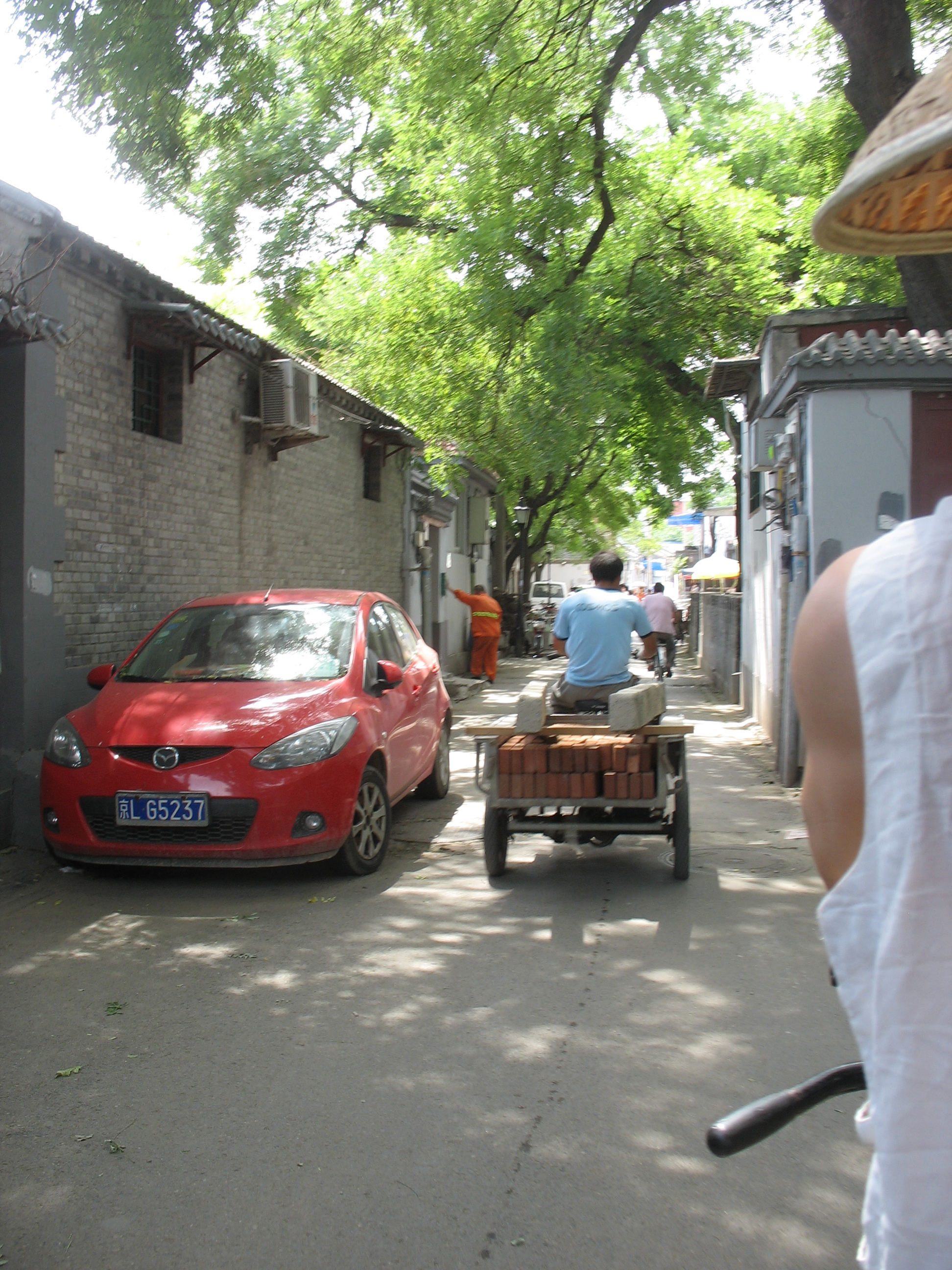
According to an old Chinese saying, “There are 3600 hutongs with names and as many without names as the hairs on an ox.” A visit to Beijing wouldn’t be complete without spending some time exploring these narrow alleyways. We spent our first evening in Beijing exploring the ones close to our hotel on foot but also enjoyed touring others by rickshaw, the most popular way for tourists to see these neighbourhoods.

IMG_2322

Some 600 years ago, while Emperor Zhu Di and his family lived in luxury within the walls of the Forbidden City, the common people of Beijing lived in the hutongs and many still do today. Hutongs are made up of rows of traditional residences, each built around a central courtyard. Joined one to another, these single storey homes form crowded but enchanting warrens where a warm sense of community abides. Though many of these residences have been modernized with the addition of electricity and plumbing, public bathrooms in each neighbourhood continue to serve the needs of those that haven’t been.

IMG_2325  IMG_2327

We had the opportunity to visit two courtyard homes, one a family dwelling and the other now a guest house. Built 300 years ago as the home of a government official, the guest house is larger than most hutong homes and its enterprising owners saw an opportunity to turn it into a thriving business when Beijing hosted the summer Olympics in 2008.

IMG_2460

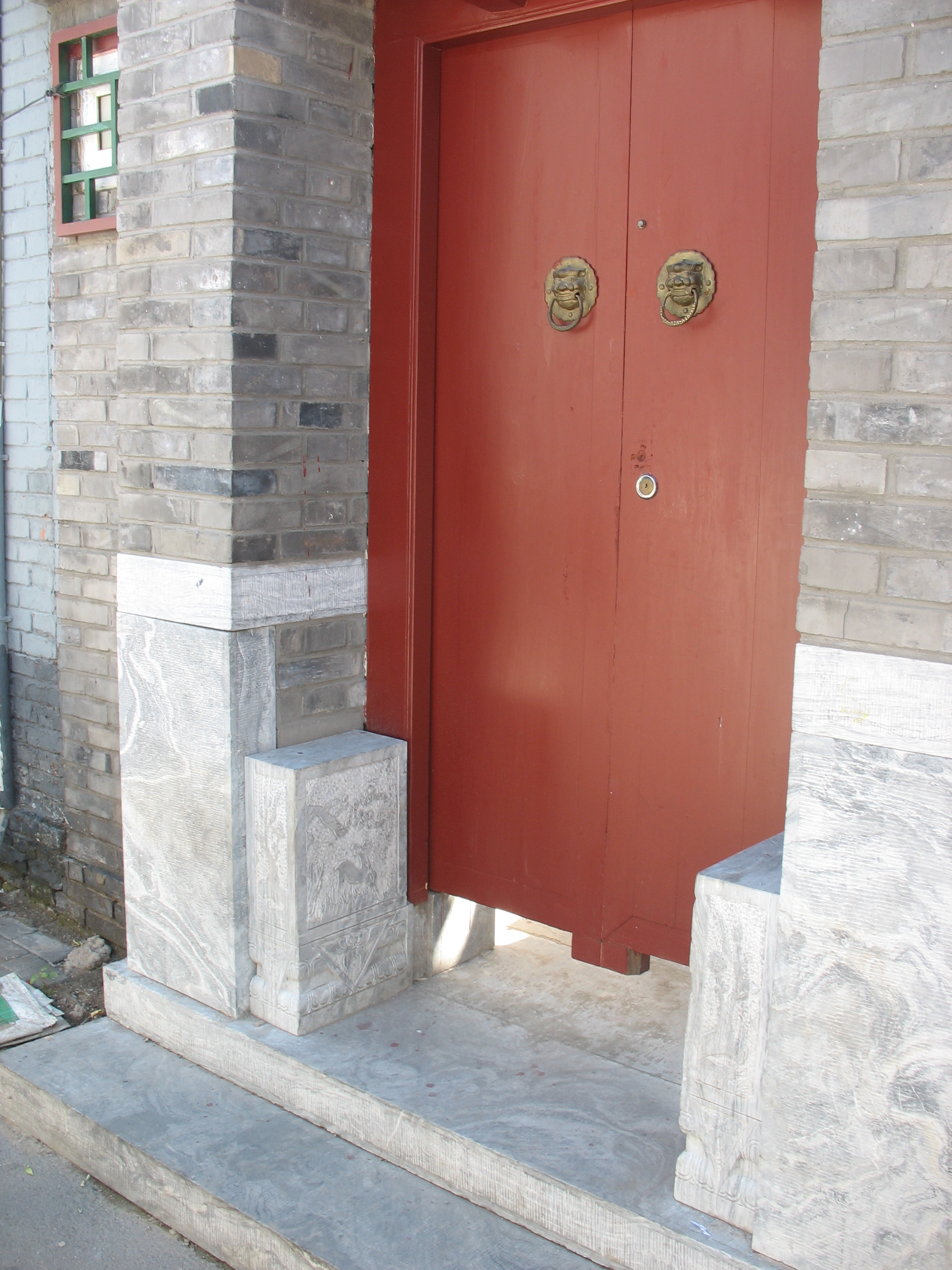
Some of the grander courtyard homes have stately looking red doors flanked by carved stones. Rectangular stones indicate that the house was originally owned by a government official while circular ones identify military homes.

IMG_2451  IMG_2466_2

Hundreds of hutongs survive but the number has dropped dramatically during recent years as Beijing rushes to become a modern city. Fortunately, some of the hutongs have been designated as protected areas by the government in an attempt to preserve this aspect of cultural history.

Burial places

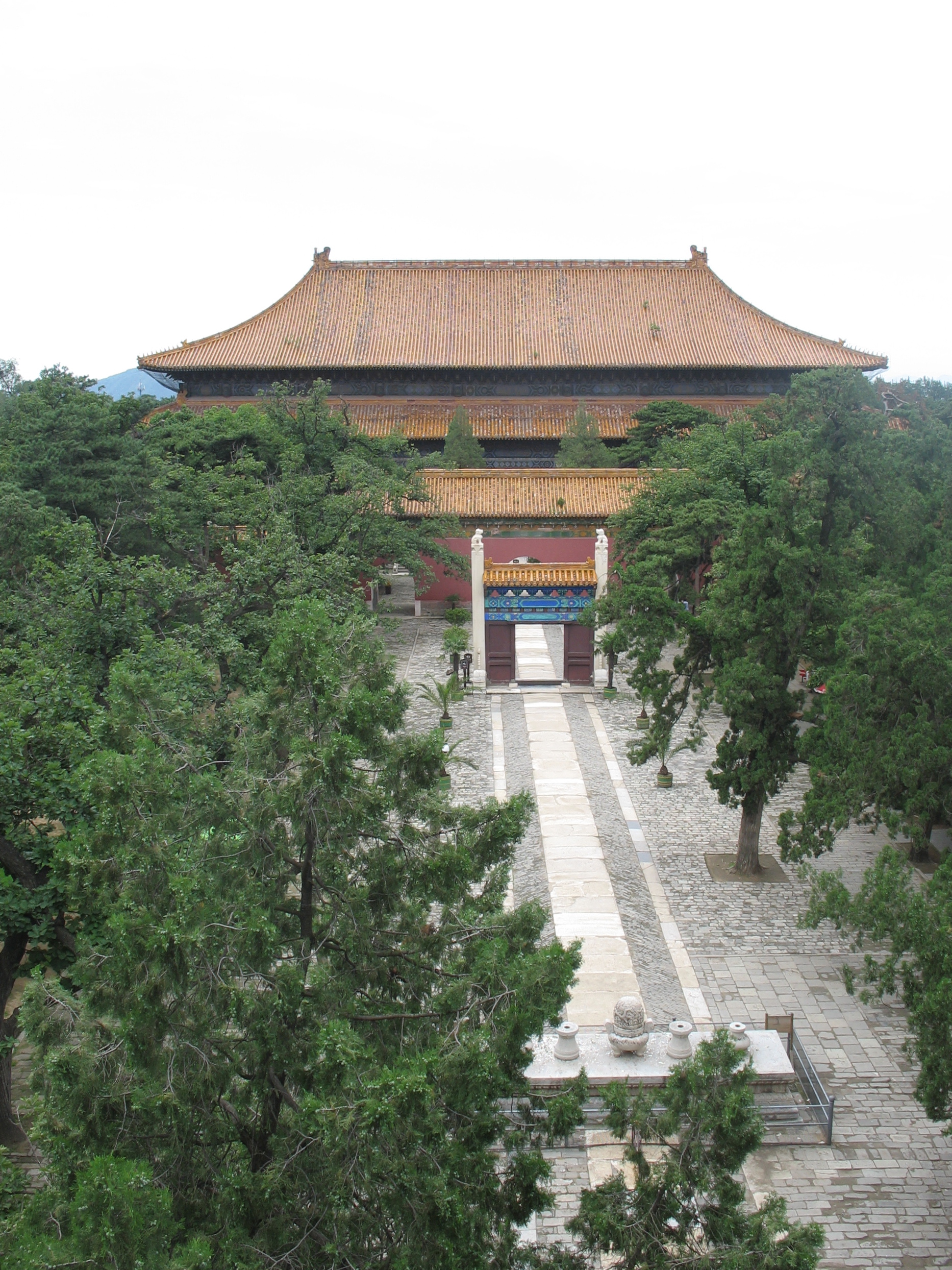
The morning following our very busy day in Beijing, we drove about 50 kilometres northwest of the city to a secluded valley that protects the burial places of thirteen emperors of the Ming Dynasty (1368 to 1644). There we walked the peaceful Sacred Way leading toward the oldest and largest of the tombs, that of emperor, Zhu Di, builder of Beijing’s Forbidden City. Twelve sets of stone animals (including the anatomically incorrect elephant pictured below) lined the first part of the road followed by enormous stone guards and officials closer to the tomb. Unlike the crowds of the previous day, we were almost alone as the Chinese tend to visit these sites only on designated days such as Tomb Sweeping Day in the early spring.

IMG_2367

IMG_2371

The tomb itself consists of a main gate, a series of courtyards, and the Hall of Eminent Favours which now houses a historical display of pictures and artifacts related to the reign of Zhu Di. Beyond the hall, through more gates and archways stands the Soul Tower which houses the largest stele in China. Much like a gigantic headstone, a stele is an upright slab of stone bearing inscriptions and serving as a monument. A well treed hill behind the Soul Tower is the actual burial mound. There the bodies of the emperor, the empress who predeceased him by several years and 16 concubines are interred.  The concubines were sacrificed at the time of Zhu Di’s death so that they would accompany him into the afterlife. It’s hard for us to get our heads around a practice like that one!

IMG_2388

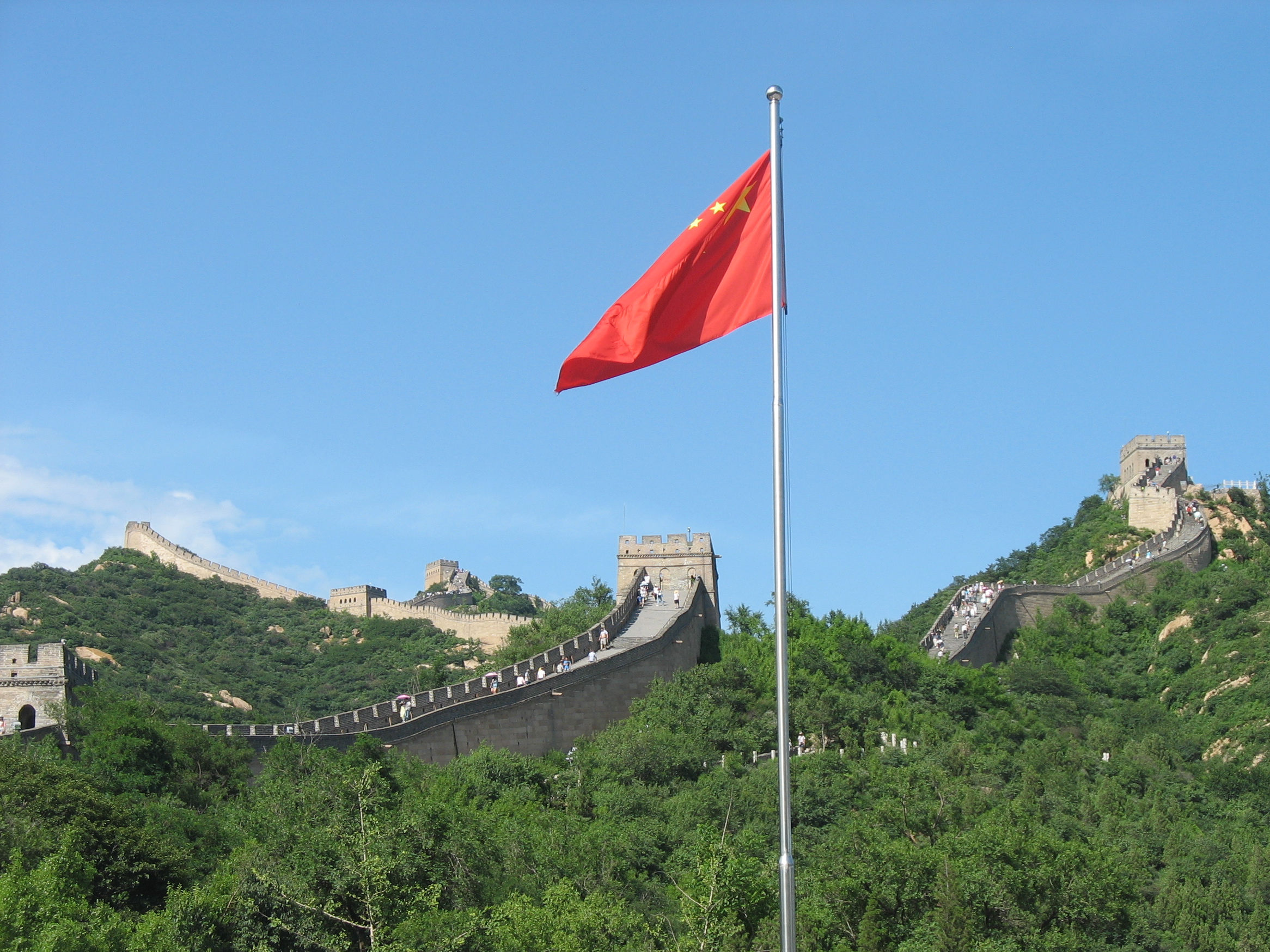
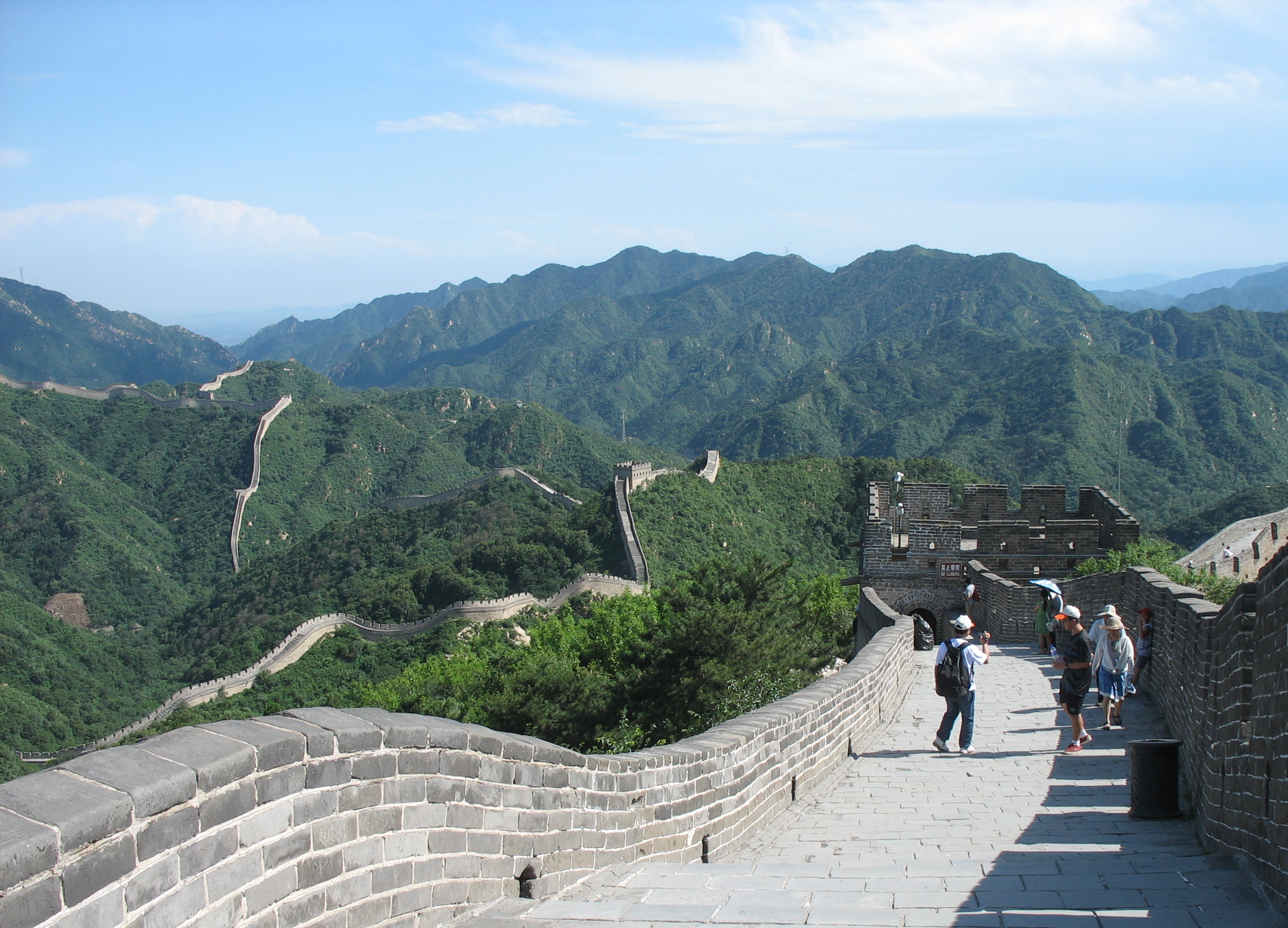
Later in the day, we continued on to Badaling, the most visited and most photographed section of China’s Great Wall which is also known as the world’s longest cemetery due to the number of lives lost during its construction. Many, many bodies are said to be buried within the wall.

After climbing a section of the wall near Dandong earlier in the year, we hadn’t planned on visiting it a second time but many of our students urged us to see the wall near Beijing as well telling us that it was much longer and much older than the portion we’d already visited. Though our climb to the eighth watchtower and highest point in the area in the hot afternoon sun lacked the Wow! factor of our first wall experience, it was definitely worth the visit if only for the fabulous views of the mountains with the wall snaking across it. Our tour package included hour long foot massages back in our hotel room when the day was over; definitely a good way to relax after the climb!

IMG_2444

IMG_2398

IMG_2426

Little Street

According to the signs,the street below our apartment is called Lanqing Jie but to English speakers in the area, it’s known as Little Street. How can I possibly put it into words that will bring it to life for you? Pictures will help but without the sounds and smells, something is missing. Little Street really must be experienced to be fully appreciated but since you can’t all come to visit, I’ll try my best to describe it.

Close your eyes and imagine the sound of a crowd such as you might hear at a sporting event. Now add intermittent horns honking, the occasional rumble of an old truck or the sound of a motorcycle passing by, and if you can hear it, the sizzle of food hitting a hot grill. As darkness falls, add music pouring from the open doors of a nearby restaurant and the sounds of bottles clinking and voices rising as some of the patrons enjoy the open air seating across the street. Little Street is usually quiet for a few hours in the middle of the night!

Then there are the smells, most of them emanating from the various food stands along the street. Barbequing skewers of meat over hot coals is very popular and usually smells pretty tasty but sometimes billows of smoke fill the air. Occasionally the smell of overheated cooking oil forces us to close our windows.

You can buy almost anything on Little Street. In addition to the restaurants and food stalls, there are several fruit and vegetable stands and lots of permanent businesses as well as the vendors who simply set out their wares along the curbs to sell. There’s a pharmacy that’s clean, bright and well organized but most of the shops selling clothing, hardware and other household items are tiny and crowded. The scene is a constantly changing one. Where fast food was being sold a few days ago, a new beverage shop called Miss Milk is now celebrating its grand opening.

Though Little Street seems pretty unique to us, there are thousands of streets just like it in hundreds of cities across this country! It’s just one of the many faces of China.

Life’s not fair!

One of the original goals of communism was to create a classless society where everyone would be equal. That might sound great in principle, but in reality, it doesn’t work. Like anywhere else in the world, China has the filthy rich and the very poor.

Most of our students come from well to do families. Our university students pay approximately $500 per semester over and above their regular tuition for 70 hours of instruction with a native English speaker instead of attending the university’s regular English classes with Chinese teachers. In China, that’s a lot of money; more than one month’s salary for many people. Then there are our full time English immersion students who are preparing to study abroad. Only the wealthy can dream of giving their child that opportunity or afford the more than $8000 that this year of preparation cost.

With a mark of 95% on the final exam, Grace ended the year at the top of one of my university English classes but she won’t be back in this program next year. Her family simply can’t afford it. Grace grew up in the countryside where her parents own a small plot of land. In addition to growing rice and oranges, they both work seven days a week in a factory.

Grace’s birth was a disappointment. She wasn’t born a boy. China’s one child law allows rural families to have a second child if the first one is a girl so her parents tried again and Grace has a younger sister! She says that her father has accepted the fact that he’ll never have a son but as the oldest, responsibility for her family falls squarely on Grace’s shoulders.

Though her parents have very little formal education, Grace excelled as a student and graduated at the top of her high school class. Unfortunately, coming from a rural school, she didn’t do well on the university entrance exam that students across the country write during their final month of high school. Once again, she was a disappointment.

Just like the people, universities in China are not all equal. Students can’t freely choose which one to attend or even which major to study. Those who do best on the entrance exam are admitted to the most prestigious universities while those who don’t do as well end up at lower tier institutions like the one where we teach.

Grace dreams of being a primary school teacher but she’s studying accounting. She’s doing extremely well. Well enough, in fact, that she’s been recommended for an upcoming exam that could win her a place at a better school of finance but her heart isn’t in it. She’s only studying accounting because her parents feel that it will lead to a better job; one that will pay a higher wage and enable her to pay off their debts and take care of them in their old age. It’s normal for Chinese parents to make these decisions for their children so she doesn’t feel that she has a choice in the matter.

How do we advise a girl like Grace? She isn’t the only one of our students who isn’t able to follow her dream. David loves the Chinese language and wanted to train to teach it but his mark on the university entrance exam was too high for that! Instead, he’s studying physics. It doesn’t help to tell these kids that life isn’t like this everywhere. It is like this in China!

What we did tell Grace was that education is never a waste and that being fluent in English will open many doors for her. Sadly, it may not open the door that she most wants to walk through. I also told her that life’s not fair but I think she already knew that. After all, if she’d been born into a wealthy family, her parents could simply buy her a good job! Yes, life’s like that in China too.

Dragon Boat Festival

Today was the first day of China’s three day Duanwu or Dragon Boat Festival holiday. The festival itself which falls on Wednesday, commemorates ancient China’s patriotic poet, Qu Yuan, who lived from 340 to 278 BC. Though stories vary somewhat, according to legend, Qu was accused of treason and banished from the ancient state of Chu for failing to support the king’s proposed alliance with the increasingly powerful state of Qin. During his years of exile, he wrote many enduring patriotic poems. When the state of Qin later captured the capital of Chu, Qu committed suicide by drowning himself in the Milou River. HIs death occurred on the 5th day of the 5th month of the Chinese lunar calendar which this year falls on June 12. Apparently the festival takes its name from the idea that people rowed their boats out into the river in an unsuccessful attempt to either save their beloved poet or retrieve his body.

At the beginning of the semester, when I saw the Dragon Boat Festival on our school calendar, I had visions of watching colourful boats filled with rowers racing on a local waterway. Sadly, that doesn’t happen in Dalian.

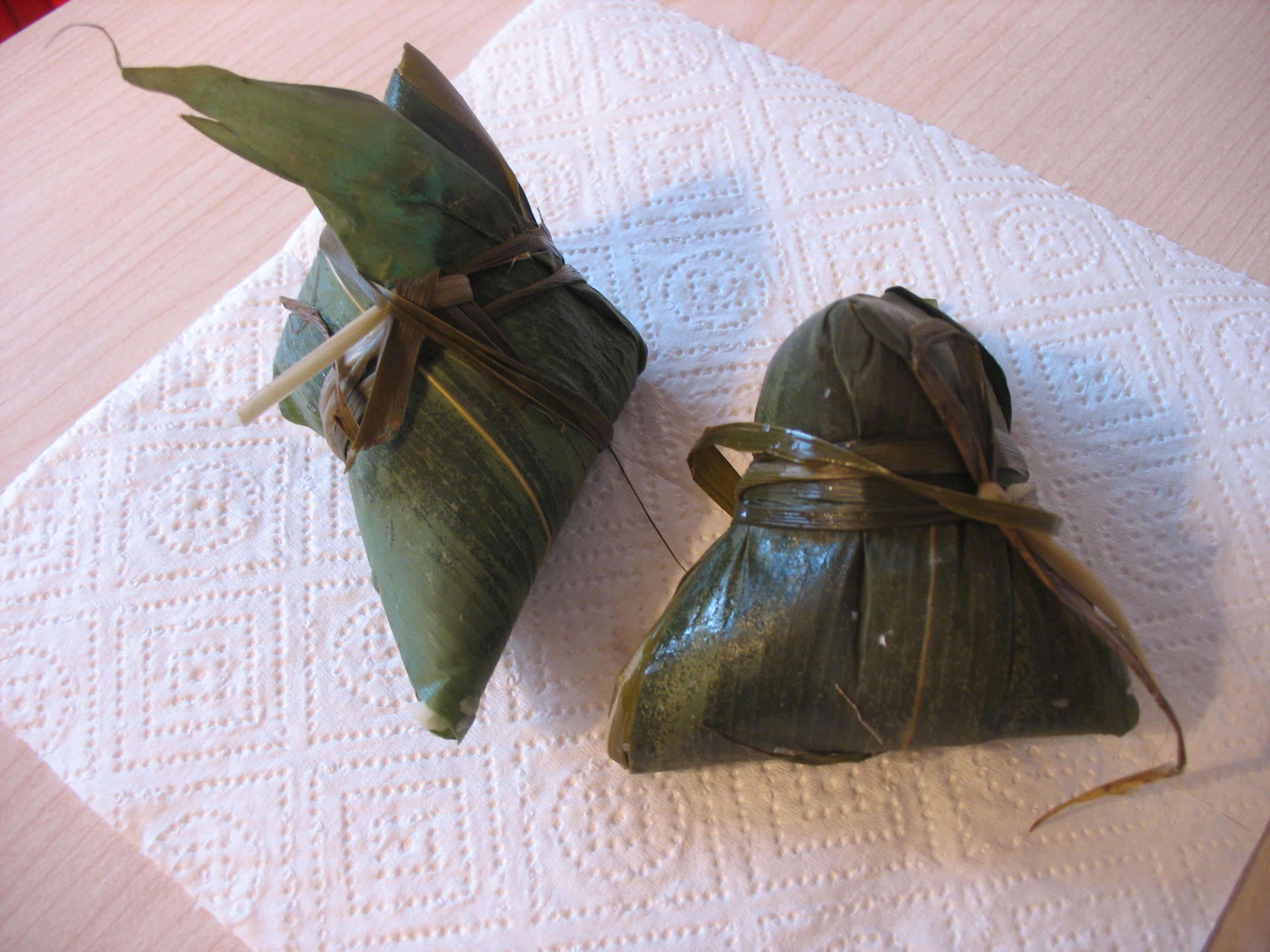
It would seem that the primary way that people here celebrate the festival is by eating zongzi, triangular packets of glutinous rice wrapped in bamboo leaves. The stores and markets have been filled with them for the past few days. It is said that this tradition originated when local people dropped sticky rice packets into the river to feed the fish and keep them from consuming Qu’s body!

We were given several homemade zongzi yesterday. Though the rice tasted okay, having taken on a mild grassy flavour from the bamboo leaves, we weren’t very impressed by its texture. For me, the word glutinous even sounds gluey and that’s exactly what it was!

A second tradition is the wearing of five-coloured silk cords around the wrists. These are being sold everywhere right now by women who have obviously been busy making them by hand. I bought mine for 1 yuan (about 17 cents) each and will wear them on Wednesday. Apparently, when the festival is over, they’re supposed to be cut off and thrown away to get rid of bad luck.

When we went down to the street market to pick up vegetables and meat this morning, we noticed lots of bundles of leaves being sold. We guessed that they too must have something to do with the festival. They didn’t look very edible and we had no idea what their purpose was until I read up on the celebration online and learned that they were mugwort leaves and calamus. Apparently, people put bundles of them over their doors to protect themselves against disease. I wonder if they have any effect on shingles? Perhaps I should have bought some! Actually, the stems and leaves of these plants are said to dispel an aroma that is thought to purify the air and discourage flies and mosquitoes so perhaps there’s something to the tradition.

Although this festival has long been part of Chinese culture, the government of the People’s Republic of China, established in 1949, refused to officially recognize it as a public holiday. It was only reinstated as a national holiday in 2008. Since it falls on a Wednesday this year, many people, including us, worked on Saturday and Sunday so that they could have today and tomorrow off and make it a three day vacation.

Since our tour of China is coming up soon, we decided not to go anywhere this holiday. Instead, we’re staying here in Dalian and being tourists in our own town but I’ll share more about that in future posts.

Charming Chinglish

Unless the weather changes dramatically in the next little while, this may be the first day in over three months that we don’t leave our little 390 square foot apartment! It’s been pouring rain and the wind has been howling all day long. Since we don’t work on Mondays and had nothing more than a trip to the supermarket to pick up a few groceries planned, it’s been a good day to stay indoors catching up on emails, reading, and playing a few games of Carcassonne. I won three in a row! It’s also a good day to reminisce about all the places we’ve explored since coming to China and to share with you some of the great examples of Engrish that we’ve found along the way!

Engrish, or Chinglish as it’s usually called in China, is what often happens when an Asian language is translated into English. You’ve probably seen some of it when you’ve tried to make heads or tails of the instructions that came with something produced in Asia. As a lover of words, I find Engrish highly amusing. I love to visit www.engrish.com, a website that posts one example of Engrish every day but I’m even more delighted when I find my own examples like the ones pictured below.

"Rain and snow carefully slip" appears beside an escalator in downtown Dalian. Richard waited patiently while I rode up and down several times trying to get the best picture possible!

The "Subsea UFO" sign is found in the aquarium that we visited with some of our students. We had no idea what it was referring to and it made absolutely no sense to any of us! Note that it includes the word harmonious which seems to be a very popular one in China. Even the students in my beginner level university class use this word frequently. The concept of harmony is clearly at the core of Chinese thought and culture. Confucius said, " Let the states of equilibrium and harmony exist in perfection, and a happy order will prevail throughout heaven and earth, and all things will be nourished and flourish."

I don’t know how well you can read the sign that we found at the entrance to Fu Jia Zhuang Park but I especially love #3 and #10. #3 reads "Pre-school age child or psychopath should be accompanied by a guardian." I’m having a hard time typing that one without laughing! #10 is longer. It reads "The tourist who suffers from heart disease, epi lepsy, cold, neuroticism, asthma, diabetes, high (low) blood pressure, rhinopharyngitis, earache or getting drunk are not allowed to dive and swim. If the tourist conceals the above-mention situation, he or she is responsible for the consequence if the accident happens."

One of many signs at the North Korean border warned, "Forbidden to cross border in border area." Um… where else might we try to cross it?

The How to Escape From Fire sign on the back of our hotel room door in Jinan also tickled my funny bone. Fortunately, we didn’t have to proceed to the nesrest exit but we did put on the safeguord before going to bed to prevent burglery from happening.

On our recent walk along the Daxishan Reservoir boardwalk there were many little wooden signs to guide our behaviour. We could figure out the intent of most of them but one was particularly entertaining. We did hold hands but it would have been pretty difficult to walk while holding our feet! The final sign was near the end of our walk. We had to look closely at the little icon to figure out what kind of nuisance people might commit. Believe it or not, though we haven’t actually seen anyone committing that kind of nuisance, we’ve definitely seen evidence of it on some of our walks!

I’m thinking about submitting a couple of these to www.engrish.com. Which ones made you chuckle?

Crossing the road Chinese style

One of the first things we learned when we came to this country was how to “cross the road Chinese style”. Coined by Chinese internet users, the term describes pedestrians who throng together to cross the street where there’s no crosswalk or at marked intersections when the pedestrian lights are against them. There’s safety in numbers was our theory as we attached ourselves to groups of locals to make our way across the busy streets.

Getting to the other side of the street often involves crossing one lane at a time, waiting on the line between lanes until the one in front of you clears. Like the locals, we often cross in the middle of a block rather than at a corner. It’s actually safer and easier than crossing at an intersection where the lights may or may not work and if they do, don’t allow nearly enough time for even an able bodied person to get across before turning red. By far the worst thing about trying to cross at an intersection, though, is the fact that you have to constantly watch for turning vehicles; not just the ones turning right but also those that are turning left! That’s right, the left turn light and the pedestrian light are often on at the same time! We joke that this must be a population control tactic. Send the pedestrians out into the street and then run over them!

Drivers share the road with conveyances of every description including modern buses, bicycles, motorcycles and three wheeled carts that are often so heavily loaded that you can barely see the driver. Some of these are pedal powered and others, fuel driven. These vehicles don’t seem to have any difficulty making room for one another but drivers NEVER give pedestrians the right of way!

Crossing the road Chinese style has been making headlines recently as cities like Beijing and Chengdu have started imposing on the spot jaywalking fines. It hasn’t happened in Dalian yet but we hear rumours that it soon will. Unfortunately, imposing fines doesn’t address the root of the problem.

Until recent years, China was a country of bicycles but automobile sales have soared at a rate of more than 20% per year since 2001 and in 2009, China overtook the United States as the world’s biggest automobile market. Infrastructure simply hasn’t kept up with the ever growing number of vehicles on the road. Here in Dalian, there are pedestrian underpasses in the downtown core
and we’re very fortunate to have a pedestrian overpass joining the north and south campuses of our university which straddles a very busy thoroughfare but many cities lack these pedestrian-friendly conveniences.

Without changes to both driving laws and infrastructure, I don’t see crossing the road Chinese style coming to an end anytime soon.

Second wind

A few days ago, I was ready to write a post called Growing Weary but it didn’t happen because I was too tired to write it! It’s probably just as well as I would likely have grumbled and complained unnecessarily.

We don’t, even for a moment, regret coming here. It’s been a fabulous experience and very good for both of us but living in a completely foreign environment where you don’t understand the language or the culture can be exhausting. China is a rapidly developing country where we see change happening all around us but the standard of living is still far below what we’re accustomed to and it’s easy to start finding fault, especially when you’re tired.

I had three goals for this month:

  • Complete and submit the annual reports that are required of me as Missions President for my church back home, a position that I’ve been filling from a distance since coming here in February.
  • Make up the final exams for my university courses.
  • Plan the trip that we want to make through China after our contract expires at the end of June and make arrangements for our return trip to Canada.

The past couple of weeks flew by as I fought with our frustratingly slow and undependable internet to send and receive emails, spent extra hours at the school photocopying, cutting and pasting (the old fashioned way with scissors and glue) and gradually crossed things off my many lists. As a result, the Missions reports have been submitted and the final exams are ready to be handed over to the office staff who will photocopy them for me.

I’m most excited about our travel plans. I usually do all our trip planning myself but this time we’ve decided on a tour. It won’t be the sort of thing where we pile off a bus and follow a flag waving tour guide through all the designated sites however. Instead, someone else is making all the travel arrangements and reservations for us and we’ll have our own driver and/or guide at each location along the way. I’ve been working closely with the travel agent to assure that the tour includes the things we most want to see and do. To date, 32 emails have passed back and forth between us! This a more expensive way to travel, of course, but in a country where there’s so little English and where we’ve discovered that doing things on your own always takes much longer than you expect, this will be a much more relaxing way to end our time here and we’ll actually be able to see and do a lot more than if we were doing it on our own. I won’t go into details at the moment but the tour begins in Beijing, includes a luxury cruise on the Yangtze River and ends in Shanghai where we’ll spend a weekend with Japanese friends who live there before we fly back to Canada. That’s definitely the icing on the cake!

I’ve discovered that even this kind of travel planning isn’t completely stress free. Most of these tours are booked by overseas travellers who pay in American dollars but we wanted to pay in Chinese currency. That meant that our money had to go into a different account than theirs but when the travel agent sent me the information that I’d need to take to our local Bank of China branch to pay our deposit, she inadvertently gave me the wrong account number. With extremely limited English, the bank clerk managed to communicate that there was a problem and that I couldn’t make the deposit. A couple of emails between the travel agent and I sorted that out and it took a second visit to the bank but the deposit has now been made and we’re waiting for final confirmation of all the travel arrangements.

Other than booking the tour, all I had to arrange were our flights from Dalian to Beijing and from Shanghai back to Canada. Even that was stressful though, especially when I discovered how much the prices have gone up since we crossed the ocean in February. Yikes! The completion bonus that we’ll receive at the end of our contract was supposed to cover the cost of our flight home but it definitely won’t. Oh well, going home isn’t optional so the tickets have been purchased anyway.

The beautiful month of May almost slipped away while I was busy with all of these concerns but now that my goals have been met, my weariness has also passed and I seem to have my second wind! Our university classes end in just over two weeks and then our not very heavy teaching schedule will be even lighter. I think the time has come to sit back, relax and coast a little as we enjoy our final weeks here!