Why traveling together is good for your marriage

I inherited my wanderlust from my parents who visited 66 countries together, mostly during their retirement years. When I was a child, we took long holidays as a family. We drove the west coast as far south as San Diego and traveled north all the way to Alaska. When I became a teacher, my plan was to spend my summers traveling, but hubby had different ideas. Growing up, his summers were spent working on the family farm. He’d only ever been on one short holiday to visit relatives. He wanted to spend his summers at home playing ball, golfing, and going to the beach.

Marriage meant compromise, but I knew that I wouldn’t be happy if I couldn’t travel. Before we tied the knot, I told him that I would be spending part of each summer traveling. It was something that I simply had to do. He was welcome to join me, but if he’d rather that I went alone and he spent that time pursuing his own interests, I was okay with that. Thankfully, he chose to join me and we have enjoyed so much of the world together! We’ve also learned that traveling together is good for a marriage.

Travel teaches you teamwork and communication skills.

While I do most of our travel planning, I always consult with hubby about major decisions like which flights to take or where we should stay, but there are also small day to day choices to make. Should we walk or take the bus? Where should we go for lunch? It’s often these little things that require clear communication and test our ability to compromise.

Travel teaches you how to work together to overcome obstacles.

When you’re travelling together, problems are shared. When we failed to get off the train at the right stop in Germany last week, we put our heads together and figured out how to get to our destination (with the help of a very kind gentleman). Having had a similar experience in Japan many years ago, I’m sure that either one of us could have dealt with this minor mishap on our own, but it’s so much better when you have someone to share the momentary panic with!

Traveling as a couple teaches you to be more patient with one another and with yourself.

When you’re together 24/7 in an unfamiliar environment, especially one where English isn’t the first language of the people around you, there are bound to be moments of frustration. Whether it’s figuring out directions, handling delays, or trying to figure out how to buy tickets for the train, we’ve learned that there’s always a solution to every problem. Sometimes finding that solution just requires a little patience.

Shared adventure adds spark to a tired relationship.

When a couple gets married, going on a honeymoon allows them time to be fully present with one another and to delight in each other’s company. In time, however, the distractions and busyness of daily life take over. Work, family, household chores, and individual interests often leave little time for one another. Traveling together offers a couple a chance to reconnect and to enjoy uninterrupted time together. The destination is less important than the simple act of spending time together and getting away from the noise of daily life. Even an occasional weekend getaway together can help reinvigorate your relationship.  

Finally, travel gives you lasting memories to share.

Some of our most cherished memories have been made while traveling together. There are big moments like our first glimpse of the terra cotta warriors in Xian, China or seeing the golden Dome of the Rock in Jerusalem come into sight for the first time, but there are others that were also amazing moments for us. Memories like staying in a very basic $12 a night guesthouse in Siem Reap and taking an early morning tuktuk ride out to Angkor Wat to watch the sun rise over the enormous temple complex. Memories of traveling the length of Vietnam on overnight buses and arriving in Saigon late on New Years Eve without a place to stay! We even love to reminisce about the time that we accepted a ride from a total stranger in the middle of rural China! Not necessarily recommended, but it was an amazing experience! You can read about it here.

With all the traveling that we’ve done together, you’d think that I’d have more photos of the two of us, but I love this one taken in Heidelberg last week, so I’ll share it again.

Facebook, not Factbook!

facebook-thumbs-guardian-express

In my opinion, Facebook is a perfect example of a good thing gone very wrong. Facebook was launched on February 4, 2004 by Mark Zukerberg and his three college roommates as a social media platform meant to connect Harvard University students with one another. By the next day, over 1000 students had registered and by the end of that year, membership was open to nearly every university in the US and Canada. In September 2006, Facebook became available to anyone over the age of 13 with an email address and it rapidly ballooned into one of the most significant social media companies in history. By July 2015 half the world’s internet users were using Facebook.

On the surface, a social networking service open to everyone sounds like a wonderful idea, but people being people, it quickly morphed into something much uglier. ‘Everyone’ includes a lot of awful people who like nothing more than using the internet to be awful to as large an audience as possible. Online abuse and hate speech quickly became major issues that Facebook was ill-equipped to deal with. In no time, what was meant as a way for people to share their lives and photos with friends and family became flooded with fake news, propaganda, and false information on any and all subjects. This is particularly concerning considering the mind boggling fact that a study from the Pew Research Centre, also conducted in July 2015, found that 63% of Americans on the site were getting their news from Facebook!

Screen Shot 2020-08-10 at 11.41.42 AM

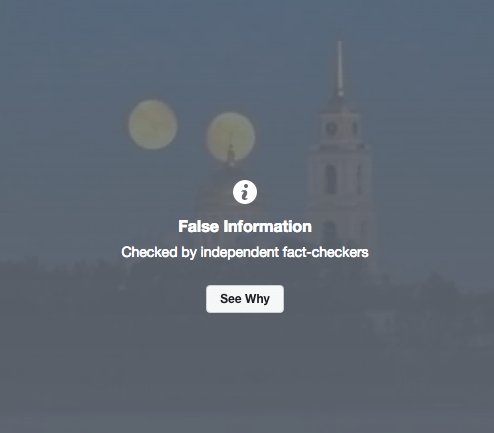
Facebook now works with third-party fact-checkers to try to identify and limit false news and I’m beginning to see more of these notifications, but so far, they’re only managing to catch the tip of the iceberg. It would help a great deal if people would do their own fact checking, but it’s a lot easier to just hit the share button than it is to do the work involved in making sure that something is accurate. The teacher in me always wants to point people toward the truth, but sadly, this sometimes gets me in trouble with those who don’t actually care if what they’re sharing is true as long as it fits their particular bias.

While there are many who are simply naive or gullible and who unintentionally share false information, there are others who are very purposeful about it. They are deliberate, sophisticated in their methods, and very devious. Take this recent post, for example.

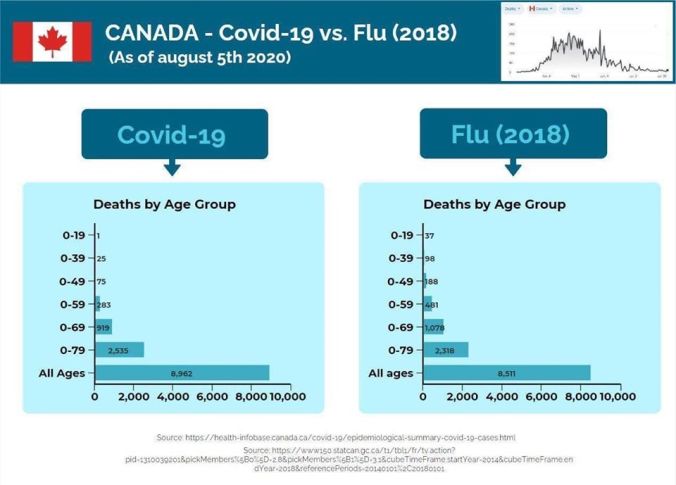
117086856_10158958329000016_7096568034737799281_o It looks legit, but it’s not. Notice that it gives sources below the graphs. They’re blurry which makes them difficult to read and they don’t actually link to the sources given, but more grievous is the fact that if a person actually checks those sites, they discover that the numbers on the graphs don’t line up with the figures that they give! Someone has gone to a great deal of effort to create a false graphic that serves their agenda, but doesn’t provide facts.

So, in light of all this, why do I still use Facebook? I use it for the purpose that it was originally created. As frustrating as it can be, it’s still a useful communication tool. The chat feature was absolutely invaluable during the many years that we dealt with the needs and care of my very elderly parents from a distance. It allowed family members scattered across North America to participate in an ongoing discussion about life and death issues and to come to some very important decisions. It also allows me to participate in the day to day lives of my grown children and grandchildren who all live some distance away. I’ve used Facebook to reconnect with some important people from my past and to keep in touch with friends in faraway places like Japan, Mexico, China, and Saipan. As a neuroendocrine cancer patient living in a rural location where I don’t have access to an in-person support group, the Facebook patient groups that I belong to have been excellent sources of information and encouragement. Linking my blog to Facebook also allows it to reach a wider audience than it would otherwise.

So what can we, who still want to use Facebook, but who care about truth, do to ensure that we don’t contribute to the spread of false information? The American Friends Service Committee (AFSC) came up with a simple four step acronym that I think is worth sharing. SCEP: Source, Confirm, Evidence, Pause.

  1. Consider the Source. Is it from an independent news source that is likely to use fact-checkers and editors to verify a writer’s claims or is it from a website with a stated political aim?
  2. Google to Confirm. Is the story being reported by more than one site or author? If you can find it in other credible sources, it has a better chance of being legit.
  3. Assess the Evidence. A solid news story will be supported by strong evidence: verified documents, peer-reviewed research and sound studies, and direct quotes from named, not anonymous, sources.
  4. Pause. Instead of instantly liking or sharing a post that hits home, pause and consider. Is the article likely real? What do I hope will happen if I share it?

Be SCEPtical! It’s Facebook, not Factbook.


The power of the written word

The Bible has a lot to say about how we ought to use our words. The book of Proverbs is full of wise sayings about the power of the tongue.

The one who has knowledge uses words with restraint, and whoever has understanding is even-tempered. Even fools are thought wise if they keep silent, and discerning if they hold their tongues.  Proverbs 17:27-28
The words of the reckless pierce like swords, but the tongue of the wise brings healing.  Proverbs 12:18

feather-pen-vector-546939It was English novelist and playwright Edward Bulwer-Lytton who, in 1839, wrote “The pen is mightier than the sword.”

Today, when most of us are holed up at home waiting out the Covid-19 pandemic, the written word is being used more than ever. We FaceTime and we Zoom, but we also use written platforms like Facebook and Twitter to connect with one another.

For some of us, writing is our preferred method of communication. We find it easy, but others may struggle to express themselves clearly. Without the visual and auditory clues that go along with face-to-face communication, misunderstandings can happen very easily. We definitely need to cut one another a bit of slack.

For example, a friend recently responded to something that I said on Facebook with a comment that could easily have been taken in two completely different ways. I had no way of knowing whether it was written in jest or meant to be extremely hurtful. If we had been talking face-to-face, I would have been able to tell based on her body language, facial expression, volume, and/or tone of voice. To tell you the truth, I still don’t know what her actual intent was, but because I know her and I don’t think of her as a mean person, I gave her the benefit of the doubt and assumed that, even if it fell a bit flat, her response was meant to be funny. Had I concluded that she was being nasty and responded in kind, I could have easily destroyed a relationship!

I love a good online conversation where people can express their views, have them heard, and willingly listen to the views of others. Unfortunately, however, what could have been a meaningful dialogue often becomes nothing more than a battle of words. Why is that? What can we do to prevent hurt feelings and misunderstandings? I have a few suggestions. If you have others, please add them to the comment section below.

  1. If you disagree with something that someone else has written, don’t react immediately. Take time to think about it first. Is there any truth in what they’ve written? Did they actually mean what you thought they meant? If you’re not sure, ask for clarification instead of immediately going on the defensive.
  2. Avoid getting sucked into arguments. Sadly, some people are willing to go toe-to-toe online in ways they’d never dream of doing face-to-face.
  3. Understand that your sense of humour isn’t universal and that, without cues like facial expressions and tone of voice, what is intended to be funny might not come across that way.
  4. Don’t comment on someone’s spelling or grammar. Sometimes the English teacher in me wants to take a red pen to the screen, but this is just plain rude! It’s also a tactic that’s often used by commenters who simply want to belittle someone they disagree with.
  5. Edit your responses before you post them. (There’s that English teacher again!) Read over what you’ve written. Does it actually say what you want it to say? Is it clear or could it be open to more than one interpretation?
  6. Distinguish between fact and opinion. Just as we should all know the difference between a news article and an editorial, we need to be clear when we’re the writer. If you’re declaring something to be a fact, be prepared to back it up. If it’s opinion, say so and remember that everyone is entitled to have one even if it’s different from yours. What a boring world it would be if we all agreed on everything!
  7. Remember, posting online is the same as speaking in public. If you don’t want something to come back and bite you, don’t say it online!
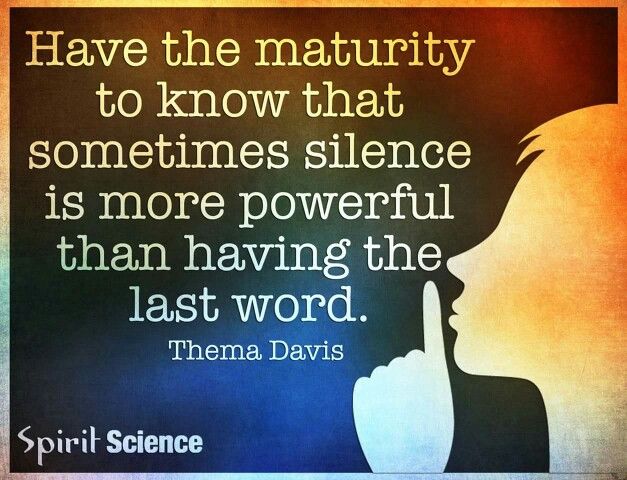
  8. Don’t be that person who always has to have the last word.
  9. Don’t drink and tweet! If you’re impaired in any way, whether it be from lack of sleep, a fight with your partner, or one too many drinks, you run the risk of saying something that you’ll regret. Resist the urge and wait until you’re in a better frame of mind.

Coping with the new normal

I was supposed to be in the city this afternoon for an appointment with Dr W concerning cancer #3 which is located in my thyroid. Unfortunately, due to the ongoing Covid-19 pandemic, that didn’t happen. Clinic visits are being restricted to only the most urgent cases while people like myself are required to make do with a phone call from the doctor. Had I been in the office, Dr W would have done an ultrasound to determine whether or not there has been any change to my thyroid since I last saw him six months ago. We both agreed that that would have been the best scenario. If I was able to have an ultrasound done in the community where I live, we might have gone with that option, but the closest place that I could do that would be the hospital located an hour away. Since we both know that a hospital is a higher risk location than his clinic would be, we agreed that that wouldn’t be a good choice. Instead, we wait. We wait until the Covid-19 threat passes and I’m able to see him in his office again. He’s predicting June or July, but no one knows for sure. We wait and we pray that the cancer doesn’t grow or spread; that the additional two or three months doesn’t make a difference.

I was also planning to stop into the University Hospital dental clinic this afternoon to pick up a supply of the fluoride gel that I use once a day to protect my teeth from harmful effects of the radiation that I received after cancer #2 was surgically removed.  Thankfully, though, that can be sent to me by mail.

As we enter the fourth week since our province declared a state of emergency and services began to shut down, we’ve all experienced many changes. Most, like accessing my fluoride, have been fairly simple to deal with, while others, like not being able to see Dr W and have my scheduled ultrasound, are more challenging and may have serious long term effects.

Thankfully, for retirees like hubby and I, the impact of Covid-19 has thus far been easier to bear than it has been for many others. We don’t have a business to close, jobs to lose, or children to teach at home. Nevertheless, the novelty of staying home 24/7 wears pretty thin and many of the frustrations that go along with the current situation affect us all. In light of this, I thought I’d share a few things that are helping me deal with our new normal.

Routine.  I like routine at the best of times, but it’s even more important in times of uncertainty. This doesn’t mean that I can’t be flexible or spontaneous, but having some structure to my day really helps keep me on an even keel.

Adequate sleep.  I try to go to bed at night and get up in the morning at about the same time each day. That takes a bit of self-discipline. I tend to be a night owl and I could easily stay up way too late, but I know that I function best if I get about 8 hours of sleep a night. Thankfully, in spite of the fact that I’ve had a couple of nights where odd dreams that probably indicate an elevated stress level have kept me from sleeping well, most nights have not been like that and I feel well rested.

Exercise.  I’m very fortunate that, unlike many people who are finding it difficult to exercise because their gyms have closed, I have everything I need here at home. Monday to Friday my day begins with a 25 minute exercise routine that focuses on core strength, flexibility, and balance. Our basement gym consists of a treadmill, two weight benches, and a large assortment of free weights. Three afternoons a week find me down there lifting weights and on the alternate days, I either walk on the treadmill or outdoors. Sunday is usually a day of rest.

Healthy diet.  If anything, we’ve been eating better than ever since the beginning of this pandemic because I’ve been a little more intentional about meal planning. That started three weeks ago when we visited five grocery stores in one afternoon and found their meat departments almost empty! Thankfully, the shortage didn’t last and I’ve since been able to add enough to the freezer to last us quite awhile. We keep very little unhealthy snack food in the house, so even with many more hours at home, we haven’t been tempted to fill up on junk food.

Spiritual nourishment.  Prayer and Bible reading are regular parts of my daily routine that help keep me balanced. We’ve been missing the opportunity to meet in person on Sunday mornings, but we’ve been enjoying church online.

News, but not too much!  I don’t want to live with my head buried in the sand, but at the same time, I don’t want to become obsessed with every detail of what’s going on. I’ve continued my habit of reading the news after breakfast every morning. We subscribe to one newspaper online. I check the world, national, and local news each day, but I very seldom read editorials. For the past couple of weeks, I’ve been watching our provincial Chief Medical Officer of Health give her daily Covid-19 update each afternoon online, but I don’t watch TV news.

Connection.  Staying in touch with friends and family by phone and online has been a vital part of staying sane. I enjoyed a lovely visit with a group of girlfriends via Zoom one evening last week and we’ve also enjoyed chats with several of our grandchildren.

Purpose.  It think one of the key ingredients to coping throughout the ups and downs of life and perhaps more than ever right now is having a sense of purpose. In addition to the usual day to day activities like meal preparation and exercising, I’ve been cleaning and reorganizing the kitchen cabinets and I’ve been using Duolingo to learn Spanish! Of course, there’s also the blog! Writing it and connecting with all of you gives me so much pleasure!

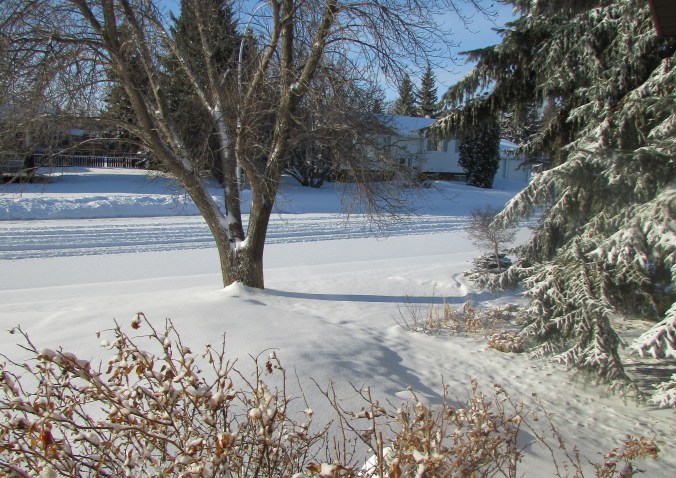
The one thing that I’d like to be doing more of these days is getting outdoors, but we seem to trapped in a never ending winter. Our snow is usually gone by the end of March, but not so this year. There’s lots of sunshine in the forecast though and our daytime temperatures are beginning to inch up over 0ºC (32ºF), so perhaps this too shall pass just as we know the pandemic will.

IMG_0911

So, my friends, how are you coping? What are some things that are helping you get through these most unusual times?


Choosing a leader

I appreciate the many responses to my last post and particularly those who chose to share it on social media. It appears that I managed to put into words what many people have been feeling. The following post may also be considered a bit controversial and I hope it will be as well received.

I don’t consider myself to be a particularly political person, but with a federal election less than three weeks away here in Canada, I definitely take an interest and occasionally express an opinion on Facebook. In recent weeks, though I managed to avoid saying anything at all about the blackface incidents, I’ve been criticized more than once for posts alluding to what I consider to be flaws in our present Prime Minister’s character. Some people have referred to this as mudslinging or political bashing. “Let’s just focus on the issues,” they say. 

While I agree that it’s important to know what each party and its leader stand for, I don’t put a great deal of faith in campaign promises. Their purpose is to garner votes and at best I think we ought to call them proposals. A recent analysis of 353 pre-election promises made by the Liberals in 2015 indicates that by March of this year Trudeau’s government had entirely followed through on only about 50 per cent of its pledges.

We may not agree on all the issues or the directions that we’d like our leaders to take, but I hope that we can agree that it’s of utmost importance to have a man or woman of character at the helm. Unfortunately, as we look around the world at the corruption and scandals involving many of our political leaders, it would seem to me that voters haven’t been giving character enough consideration.

I like what American author, John C Maxwell, says about leadership, “A leader is one who knows the way, goes the way, and shows the way.”

With all this in mind, I googled “qualities of a good leader” and discovered dozens of lists. At the top of many of them was honesty and integrity and I would certainly put these two traits at the top of my list. Although they are very closely linked, there’s actually a distinction between the two. According to the dictionary, honesty means “truthfulness, sincerity, or frankness; freedom from deceit or fraud” while integrity is “adherence to moral and ethical principles; soundness of moral character.” Sadly, I think that there are a number of world leaders, including our own, who fail to measure up in the areas of truthfulness and moral character.

Another quality of a good leader that was high on many lists was good communicator. Though a few listed good listening skills separately, I would include that as part of being a good communicator. I would love to have a national leader who was capable of speaking publicly without scattering “um” and “uh” liberally (pun intended) throughout every speech, but even more important would be one who truly listened to the voices and hearts of the people.

Confidence and humility were also high on most lists. Unfortunately, far too often, confidence and arrogance seem to go hand in hand instead. That certainly seems to be the case with our present national leader as well as the one to the south.

Though there are many other character traits that make a good leader, the last one that I’ll mention here is accountability, the willingness to accept responsibility for or account for one’s actions. Oh my, wouldn’t it be nice to see that in our next political leader!

So, fellow Canadians, on October 21 get out and vote, but please look beyond the issues and the campaign promises to the character of the individual party leaders as well as the candidates running in your local constituencies.

Canadian-election-2019

Image: Chatelaine magazine


Don’t get eaten by a bear!

We have never seen as many bears in the wild as on this trip… 18 so far! We’ve even hesitated to go hiking in some areas due to the risk of meeting a bear on the trail. In spite of the sign, we did do the 9th Avenue Trail at Dawson City though.

IMG_4476

The only wildlife we saw was this curious fellow who stopped munching long enough to watch us go by.

IMG_4464

Well, that’s not entirely true. There were also mosquitoes! Lot’s of mosquitoes! We made two errors that a hiker should never make. First, I forgot my water bottle. I filled it and left it sitting on the counter in the trailer. Fortunately, I’d packed some pop for our lunch, so we were able to stay hydrated. Second, we forgot bug spray, a big mistake, especially in the north! The mosquitoes hadn’t been bad in town, so we didn’t didn’t even think about them until we were out in the bush getting bitten. Luckily, it was a cool day and we were wearing long pants and sleeves, so we didn’t get eaten alive.

Back to the bear sign though. Notice that it says, “BE ALERT MAKE NOISE”. I’ve been giving Richard a hard time lately over the fact that throughout our many years of marriage, he hasn’t been a very open communicator. I know that some of you who know him will find that difficult to believe, but it’s true. I also read that talking works better than carrying bear bells as a way to avoid an encounter with the furry beasts. When we read the sign, I told Richard, “Today you’d better talk to me or you might get eaten by a bear!” In fact, I think a new code phrase has been born. From now on, if I think he’s being particularly uncommunicative, all I’ll have to say is, “Don’t get eaten by a bear!” and he should know what I mean!

Anyway, I digress. Back to the hike…

Beginning in 1898 when the population of Dawson City swelled with thousands of people hungry for gold, tents and then log homes were built up the steep hillside behind the present day town. Today, the uppermost avenue is 8th, hence the name of the 9th Avenue Trail that follows the perimeter of the town, but further up the hill. As the gold rush came to an end and the population dwindled, the hillside homes were eventually abandoned, but there are glimpses all along the trail that there were once people living there. The homes were often built on flat platforms with stone retaining walls. Most of these wooden structures are long gone, but a few signs of them can still be seen.

IMG_4462

IMG_4466

There was no garbage collection in Dawson’s early days. Broken and discarded items were often piled up outside the buildings. Rusty remnants can still be seen along the trail offering archaeologists plenty of information about life in early Dawson.

IMG_4478

I’m not even sure what that was, but the bed springs were obvious. I wonder who slept on them and what their story was?

IMG_4477

The hike was not a long or strenuous one. The 9th Avenue Trail itself is only about 2.5 km in length. We made it a little longer by adding the connecting Crocus Bluff Nature Trail which leads out to a viewing platform perched on a rocky bluff overlooking the highway entering Dawson and the confluence of the Klondike and Yukon Rivers.

IMG_4473

IMG_4470

Having the last word

I love to engage in online discussions, but when they deteriorate into pointless arguments or worse yet, absolute rudeness, I bow out. One of my pet peeves is people who always have to have the last word. Don’t they realize that having the last word isn’t the same as winning?

I have seen great discussions on Facebook and other social media end in hurt feelings and broken friendships and I’ve seen people try so hard to prove how right they are that they end up making themselves look stupid. It’s just not worth it!

As Kenny Rogers sings in his hit song, The Gambler,

You’ve got to know when to hold ’em
Know when to fold ’em
Know when to walk away
And know when to run!

I admit that I like to be right too, but I’m deliberately practicing the discipline of not having to have the last word.

As a Christian, part of my mission is to be Christ-like in what I say and do, so I’ve been looking at His example. Jesus didn’t have to deal with social media, where people often say things that they might not say face-to-face, but the principle is the same. He often said things that were controversial or misunderstood, but when He was confronted, He didn’t engage in long-winded debates. He often spoke the truth and then simply walked away. Even when He stood before Pontius Pilate and his life was on the line, He made no reply to the accusations of the chief priests and the elders. (Matthew 27:12-14)

last word

The Facebook conundrum


facebook-thumbs-guardian-expressImage: guardianlv.com


This morning, Ruth, at Life in the 50’s and beyond, published a post entitled Facebook Be Gone! in which she announced that she had recently deactivated her Facebook account. She cited privacy concerns and the amount of time that she found herself spending on Facebook instead of doing other things as her two primary reasons for making this decision.

Later in the day, I noticed that Leanne, at Leanne Cole Photography, had also written about social media, including Facebook. Her post has generated quite a bit of discussion.

All of this led me to write a post of my own weighing in on the the pros and cons of Facebook!

I joined Facebook late in 2007 not long before we left to spend a year teaching English in Japan. My daughter had been telling me for some time that it was something I needed to do but I’d been dragging my feet. Finally, she set up an account for me, not telling me about it until it was a fait accompli! She was right. Facebook proved to be a marvelous way to keep in touch with people back home while we were away and since returning to Canada, it’s allowed us to maintain many of the relationships that we built while we were there.

It was while we were in Japan that I used Facebook to reconnect with several people from my past including my best friend from high school, a Norwegian exchange student who shared our home for almost a year in the late 1980s and a nephew who had disappeared from our lives for several years after leaving home as a young teenager.

There are a number of things that frustrate me about Facebook but most of my exasperation is not with the website itself. It’s with the people who use it! I might be stepping on toes here but it amazes me how many seemingly intelligent people repost all sorts of myths and tall tales without checking on their validity first. It’s so easy to do using sites like snopes.com or truthorfiction.com.

I can’t help wondering about the lives of people who post what they make for supper every night. If my life was that boring, I’m sure I’d go out and do something completely audacious just to have something more interesting to write about! On the other hand, I’ve collected quite a few good recipes thanks to the people who post those.

I love the status updates that one friend writes about the crazy neighbours who live above her. I know they’re driving her around the bend but her descriptions of their antics are very entertaining! I don’t, however, need to know what happens in anyone’s bedroom other than my own!

Some of the things that people say online absolutely amaze me. Hiding behind the anonymity of their keyboards instead of talking face to face, some are downright rude. Whether intentionally or not, our “almost daughter” Chrissy, is great at initiating fascinating discussions on Facebook but, more than once, I’ve seen her and others like her remove whole conversations because they’ve degenerated into name calling and personal attacks.

Facebook has changed it’s appearance several times over the years that I’ve been using it and for the life of me, I can’t usually see why. Like everyone else, I’m frustrated when that happens and I complain but I soon get used to the new look and carry on. I suspect that the changes often have something to do with making the advertising more noticeable but if that’s the case, I don’t think it’s working very well. I, for one, rarely notice the ads at all! I do recognize, however, that they’re what pays for this free site and keep the myth that Facebook is planning to start charging subscription fees from becoming fact.

Can I live without Facebook? Yes. I had to for the five months that we were in China because it’s blocked there. Would I, like Ruth, choose to live without it? Definitely not! Used wisely, it’s a great communication tool.

Ruth is right when she speaks of the lure of Facebook and complains about the amount of time it eats up. It can definitely be a distraction and a time waster. I know I spend more time checking it than I ought to but I enjoy scrolling through my news feed several times a day looking for bits of real news. I also think it’s a fabulous way to share photos and, because I’ve linked my blog to Facebook, it also brings me readers.

Perhaps it’s greatest value to me at this point, however, is the way that it’s enabled our extended family to carry on a running conversation about the needs and care of my very elderly parents. Using the chat feature, we’ve been able to include nineteen family members scattered across North America in an ongoing discussion about life and death issues. It has been an invaluable tool in helping us come to some very important decisions as well as keeping everyone in the family informed about day to day issues.

So, in spite of the frustrations and the time that’s sometimes wasted, I give Facebook a giant thumbs up!

What about you? What’s your opinion of Facebook