Café Finca La Cañada

My Richard is a coffeeholic. Coatepec is known as the coffee capital of Mexico. Visiting a coffee growing operation seemed like a no-brainer.

Through another expat friend, Richard M was able to arrange for us to tour Café Finca La Cañada yesterday. Located just outside of Coatepec, up one of the roughest roads we’ve ever traveled, is the beautiful canyon estate owned by retired University of New Hampshire professor, Clifford J. Wirth, where he has now been producing organic, fair trade coffee for several years.

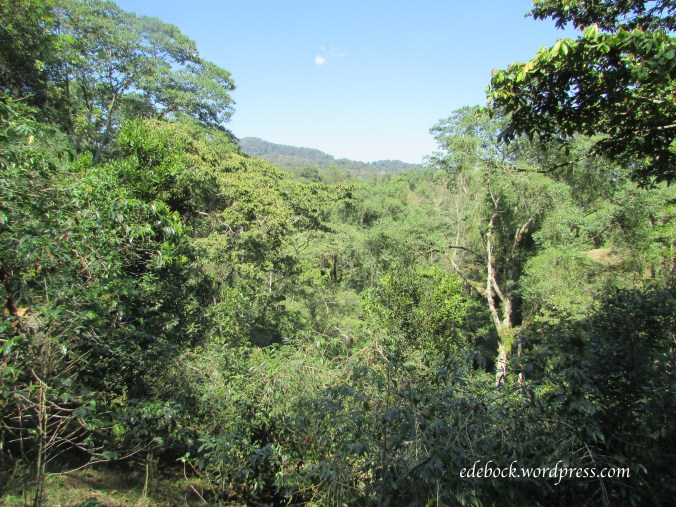
At first glance, the lush valley appears to be wild jungle, but on closer inspection one can see not only coffee trees but macadamia, banana, lemon, orange and tangerine trees growing on the steep hillside.
img_3852

img_3838

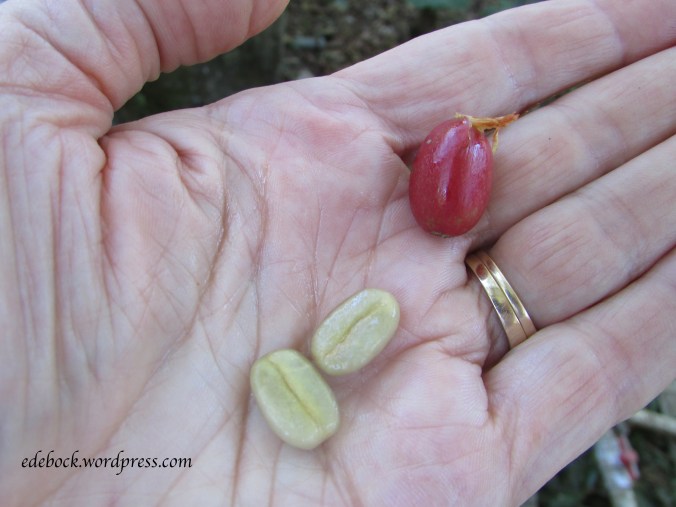
Coffee “cherries” ripening

Cliff started our very enjoyable and informative tour by walking us through the coffee harvesting process. The “cherries” are all hand picked by the Mexican family that works for him and lives on the estate. He explained the two processing methods that can be used, a wet method and a dry method. He uses the wet method. First, the freshly harvested cherries pass through a pulping machine to separate the skin and pulp from the bean.
img_3832

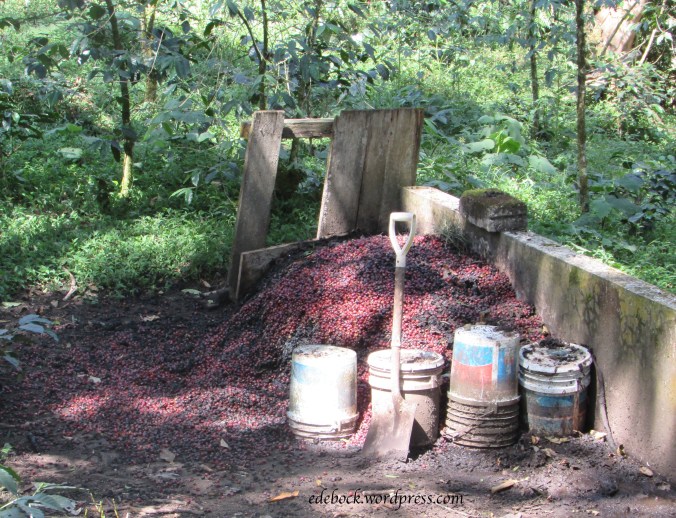
Then the beans are placed in a cement tank of water. The lighter unripe beans float to the top, while the heavier ripe ones sink to the bottom. The husks and unripe beans are  composted.

img_3829

Ripe coffee beans

img_3831

Composting the husks

After separation, the tank is again filled with water and the beans remain there for 3 or 4 days to remove the sweet gluey layer of mucilage that is still attached to the beans. While resting in the tanks, naturally occurring enzymes cause this layer to dissolve. When this process is complete, the beans feel rough to the touch.

img_3840

Drying beans

img_3843

At this point, the beans are placed on outdoor drying racks where they are turned regularly until most of the moisture has been removed. The racks are tented with plastic to protect the drying beans from rain.

Once the beans are ready, they are sent off-site for roasting and packaging. In addition to selling his coffee in a number of local shops, Cliff supplies several hotels and shops in the Cancun area. According to his Facebook page, his coffee is “Cultivated naturally below the tall trees of the Veracruz cloud forest without using agrochemicals, thus protecting the delicate ecosystem of the Suchiapa River, its flora and fauna–particularly the birds that migrate between Mexico, the United States, and Central America. The cultivation and processing methods protect the environment and workers’ welfare.”

Sadly, a fungus called coffee rust, or roya, has swept across Central America in recent years, withering trees and slashing production everywhere. Cliff told us that his trees are slowly dying and the estate now produces only 40% of the coffee that it did before the roya hit. When he took us hiking down into the beautiful canyon, he showed us examples of leaves that have been affected. He is now in the process of planting a new hybrid variety that is resistant to the blight.

I don’t drink coffee anymore because the acid bothers my stomach, but we bought a kilogram to take home and I’ll definitely be tasting it. I’ll just have to be careful to leave most of it for my coffeeholic husband!
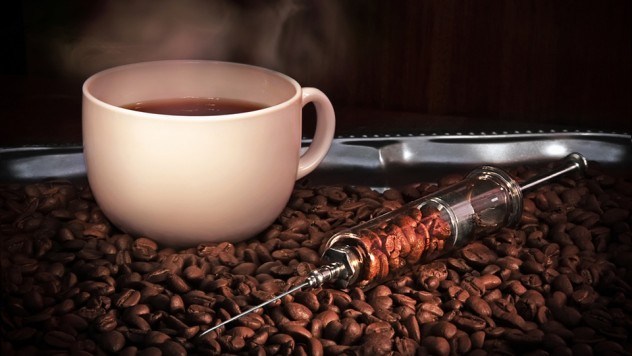
Coffee… poison in my cup

Coffee-addiction

I have no idea how many times I’ve quit drinking coffee! A better question might be, why in the world do I ever start again when I know how bad it is for me?

Coffee is known to have both positive and negative effects on health but for me, the negatives far outweigh the positives. Coffee simply isn’t my friend!

I fell off the wagon once again in August while we were on holiday. I started with just half a cup. After all, how much damage could half a cup do? The negative effects don’t show up immediately and that half cup tasted so good so that it soon became a daily habit. Before long, half a cup wasn’t enough in the morning and I started pouring myself a second one. Then my husband, who can drink copious amounts of the brew with no ill effects, started making a second pot in the afternoon. Another half cup was just what I needed to give myself a midday energy boost. Some days, I drank even more.

As usual, the side effects gradually snuck up on me and, as always, it took awhile for me to recognize what was happening. I have no idea why I didn’t immediately make the connection between the burning in my stomach and the poison in my cup, but I didn’t. Coffee is highly acidic and it can be very irritating to the gastrointestinal tract. Switching to decaf doesn’t really help. In fact, some research shows that decaf increases stomach acid even more than regular coffee.

I’ve always been extremely sensitive to caffeine. For most people it’s a mild stimulant, but for me it results in agitation and acute anxiety. Lately, my stress level has been going through the roof! After all that I’ve been through over the past 13 months, that’s hardly surprising and was easy to rationalize. Cancer, major surgery, radiation, death of a parent; all are very stressful but I’d been coping so well. Why did I suddenly feel like I’d hit a wall? I thought that my father’s stroke last month was the final straw and I have no doubt that it has contributed to my present state but I suspect that the coffee has also had a lot to do with it.

And so, once again, I have quit! Totally. Completely. Cold turkey. No more poison in my cup. I hope I have the good sense to make it permanent this time!

Coffee by the sea

China is traditionally a country of tea drinkers. According to the English language newspaper, China Daily, annual coffee consumption in this country is 3 to 4 cups per person compared to 240 cups worldwide. The majority of older adults don’t drink it at all and it isn’t available in most restaurants. Western-style coffee shops are quickly catching on with the younger crowd, however, who enjoy the aroma and the ambiance of places like Starbucks.

The recent surge in coffee consumption has pushed up the demand for coffee beans and led to a rapidly increasing number of coffee plantations in the southern China province of Yunnan. Fields that once grew corn now produce coffee, a much more lucrative crop. In addition to providing for local consumption, coffee is also becoming an important export.

Tasty is a chain of bakeries that also serve as coffee shops. Like their counterparts, they serve mochas, lattes, caramel machiattos and a variety of other hot and cold drinks. It didn’t take us long to find the Tasty that’s within easy walking distance of here. With it’s comfy couches and laid back atmosphere, it’s a great place for us to meet with students to relax and visit and it doesn’t take much to convince my poor coffee addicted husband to stop in for a treat on our way to the supermarket across the street! Since coffee makers and filters are hard to come by, he’s making do with instant coffee at home.

On Sunday, we were invited by two of our students to a coffee shop much further from home. It’s located in a quaint seaside area of Dalian called Fisherman’s Wharf. Most of our students are from fairly well-to-do families but Sissi’s is obviously wealthier than most. She has her own car which made getting there easy.

It was a cool, misty afternoon. When we arrived, the coffee shop was full so we walked around and enjoyed the sights for a bit before going back and finding a table. Time flew by as we sat and chatted. By the time we left, the lighthouse, unlike any I’d ever seen before, was lit up and it’s warning light flashing.

In addition to providing a great place to visit and serving delicious beverages, western-style coffee shops in China have something else going for them; western-style bathrooms! If you read my earlier post about bathrooms, you know that most public washrooms in China have squat toilets. It’s always a delight to find one that has a western-style one. When I went to the bathroom on Sunday afternoon, I was thankful that I’ve been carrying my camera in my purse wherever I go. Otherwise, I couldn’t have shared the hilarious sign in the bathroom with you! I can’t read Chinese but the message is unmistakable!