NET Cancer Day 2025

Once again, today is NET Cancer Day. November 10th is a day set aside to increase awareness of neuroendocrine cancer and to promote improved diagnostics, treatments, care, and research, but for those of us who live with the disease, every day is NET Cancer Day.

Here are a few alarming facts that point out why a day like today is vital:

  • Over 90% of all NET patients are incorrectly diagnosed and initially treated for the wrong disease!
  • The average time from onset of symptoms to correct diagnosis often exceeds 5 years!
  • Over 50% of NET patients are already at stage 3 or 4 when diagnosed!
  • Many primary care physicians are unfamiliar with NETS and some still falsely believe that it isn’t even cancer!

These are just some of the reasons that I have become involved in patient advocacy over the past couple of years. Once considered a rare disease, NETS has become the fastest growing class of cancer worldwide. Although the reasons for this aren’t fully understood, it’s likely due to increasing awareness and better diagnostics.

In addition to my role as a member of the CNETS (Canadian Neuroendocrine Tumour Society) Advocacy Advisory Board, I’ve become actively involved in trying to improve the patient experience in a number of other ways. I had the opportunity to participate as a patient representative in an Ipsen project to design an injection toolkit to make the experience easier for patients who are newly prescribed the medication that I receive every 28 days. Ipsen is the pharmaceutical company that produces the drug.

Also, if you’ve been reading my blog you know that I participated in this summer’s CNETS “Hoofing It” fundraiser. With the generous support of many, including some of you who read the blog, we managed to raise over $40,000 for NET cancer research here in Canada. An additional bonus for me was the fact that the “hoofing it” that I committed to as part of this initiative got me out walking almost every day. Now that the campaign is over and the weather has turned cold, daily walking has become a habit and I’ve dusted off the treadmill in the basement so that I can keep it up over the winter!

Another big opportunity came my way earlier this year when I was asked to co-lead the CNETS Alberta patient support group that meets online once a month. This really was a big step for me as I’d never been part of a support group before! Every month I hear stories from patients who were initially misdiagnosed, who feel confused or unheard, whose symptoms have been minimized or dismissed as all in their head, who feel lost trying to navigate the health care system, or who don’t know how to advocate for themselves. More than ever, I’ve come to realize how badly we need to continue raising awareness and promoting better diagnostics, treatments, care, and research. One day a year just isn’t enough!

And now, on a more personal note, you may remember that in my 12 year cancerversary post at the end of August, I mentioned the latest tumour on my liver. A week from today, on November 17th, I’ll be having a CT guided ablation to destroy it. A needle-like probe will be inserted through my abdomen and into the tumour where it will deliver microwave energy to kill the cancer. This is done as a day procedure, but I’ll be required to stay in the city overnight in case of complications. I’m not sure what the recovery will entail, but hopefully I’ll be back on the treadmill before long!


No one fights cancer alone

My cancer is on the move again and so am I. It’s been 5 years since I last participated in the annual CNETS (Canadian Neuroendocrine Tumour Society) Hoofing It fundraiser and I’m late to the party this year, but I’ve decided to get involved again.

It’s been 12 years since I was diagnosed with stage 4 neuroendocrine cancer (NETs). Once the shock of learning that I had a cancer that I’d never heard of and that I’d be living with it for the rest of my life wore off, it became important to me to do what I could to help raise awareness of this little known disease and to support fundraising efforts for research, better treatments, and patient support. If it wasn’t for the research that organizations like CNETS fund, I probably wouldn’t be here today, so this is definitely something that’s very close to my heart!

I don’t think I’ve mentioned it on the blog before, but several months ago I became co-lead of the CNETS Alberta Patient Support Group that meets online once a month. Every month I hear from patients and caregivers whose lives have been turned upside down by this disease. Some are newly diagnosed and looking for answers. Others have been battling this for longer than I have and some are ready to give up hope.

After 16 months of stability following the radioembolization treatment that I had in March of last year, my cancer is growing again. Another tumour on my liver has started to increase in size and I’m waiting to find out how we’re going to treat it. At this point, my other tumours continue to remain stable and the cancer hasn’t spread to any new locations, but this is definitely beginning to feel a bit like a game of Whack-a-Mole! We haven’t exhausted all the possible treatment options yet, but this new development has reminded me how important it is that research into new treatments continues to move forward.

In past Hoofing It fundraisers, participants kept track of how many kilometres they walked, hiked, biked, or paddled, but not all patients are physically capable of doing those things. This year points are being assigned for a wider variety of physical activities. I’m not concerned about earning points though. My goal is simply to walk or hike at least 5 days a week until the end of September & to raise a minimum of $1200.

The walking part is easy. I was already doing that before we went to Europe, but since arriving home last month, I’ve been a bit lazy. Hopefully participating in this endeavour will provide the motivation I need to keep moving.

The $1200 is where you come in! As my new t-shirt says, no one fights cancer alone. I’m hoping that I can persuade you to visit my fundraising page here and make a donation. No amount is too small! Every cent received by CNETS during this campaign will go directly to neuroendocrine cancer research. We need to know what causes this disease, we need more and better treatments, and we need to find a cure!

Time for a change

Although there’s been plenty of talk about doing away with daylight savings time here in Alberta, it hasn’t happened yet and I’m glad. Yes, we lost an hour of sleep last Saturday night, but I’m loving the extra hour of daylight every day!

Speaking of time and change, I’ve decided that it’s time for a change here on the blog. I’m finding it more and more difficult to come up with a fashion post every single week. When I introduced Fashion Friday in March 2016, I had no idea how long I’d be able to keep it going. I think 9 years and more than 400 posts has been a pretty good run! If you’re one who follows me for those Friday posts, please don’t panic though! I’m not quitting completely. I still plan to write about fashion, just not as often, and I still plan to publish a post every Friday. Some will be about fashion and some will explore other topics. I do hope you’ll continue to follow along.

So as not to be completely devoid of fashion news today, I do have a couple of things to share. Northern Reflections, one of Canada’s most recognizable fashion brands, has been acquired by Putman Investments, the same company that was responsible for revitalizing a number of other well-known retail brands including Toys “R” Us and Babies “R” Us Canada, Sunrise Records, and UK-based HMV. While customers may see a few changes over the coming months, the company is committed to maintaining approximately 105 stores across Canada. On a similar note, Ricki’s and Cleo, the two Canadian fashion retailers whose demise I previously wrote about here, have also been purchased out of creditor protection by Putman Investments. I definitely look forward to seeing what their revival looks like and I’m very happy that the rescuing company is Canadian!

On a more personal note, I’ll also share a change that took place in my life about a week ago. Considering the fact that I had never even once attended a patient support group meeting, it might seem a bit crazy, but I agreed to become co-lead of the CNETS patient support group here in Alberta! CNETS is the Canadian Neuroendocrine Tumour Society and neuroendocrine is the cancer that I’ve had for over 11 years. When I was first diagnosed back in 2013, support group meetings took place in person in Edmonton, over two hours from my home. Since I already had the support of family, friends, and prayer partners around the world, I really didn’t feel a need to get involved. Like so many other things, with the onset of COVID, the meetings went online and they’ve remained that way since except that there haven’t been very many of them in the past couple of years. The previous leader was feeling burned out and no one had stepped up to take his place. When a fellow member of the CNETS Advocacy Advisory Board who also lives in Alberta asked me to consider joining her as co-lead, I was very hesitant. I don’t need a patient support group, I told myself, but the answer I heard in my heart was “maybe the group needs you”. So here I am, jumping into something brand new. Oh well, just like Daylight Savings Time, change can be a good thing!

Image: Pixabay

World Cancer Day 2025: United by Unique

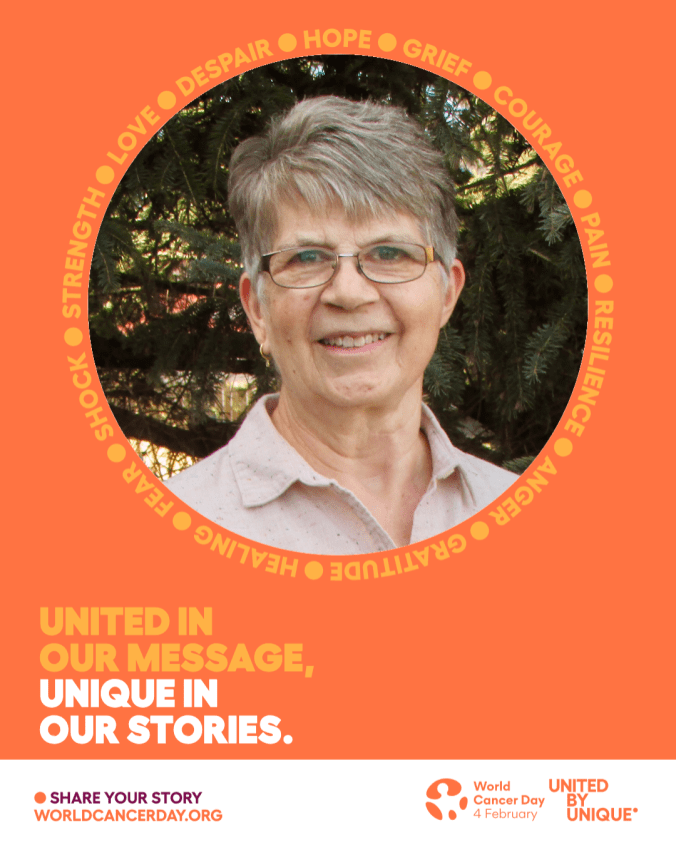
February 4 is World Cancer Day. There are more than 200 different kinds of cancer and every patient’s experience is different. That’s why the new World Cancer Day theme, United by Unique, resonates so strongly with me. While each of our stories is unique, we are united in our message and in our desire to raise awareness and see progress made in fighting this dreadful disease. 

The emphasis of the 3-year United by Unique campaign that kicks off today will be people-centred care. Behind every diagnosis lies a unique human story. These are stories of grief, pain, healing, resilience, love and so much more. A people-centred approach to care that listens to patients’ stories and fully responds to each individual’s unique needs with compassion and empathy will lead to the best possible outcomes.  

People living with cancer don’t always feel heard, seen, or understood. They are often bewildered, feeling isolated and voiceless at a time when they’re also learning to navigate an unfamiliar and confusing health care system and dealing with the emotional highs and lows of cancer diagnosis, treatment, or recovery. That’s why the first year of this campaign will focus on telling our unique stories.

I feel very fortunate to receive my cancer care at the Cross Cancer Institute in Edmonton, Alberta, Canada, a facility where it is common practice to look beyond the patient to the person as a whole and to consider the impact of their cancer on all aspects of their life. When I go for appointments, I’m routinely handed a clipboard with a questionnaire that delves into not only the physical symptoms that I might be experiencing, but also the psychosocial ones. The CCI offers a wide range of supportive services that go far beyond the patient’s physical well-being. The health care team there includes professionals in psychology, social work, spiritual care, nursing, and psychiatry and available services include individual, couple, and family counselling; professionally-led support groups; and practical supports for financial and other basic needs. While the need for these supports has not been part of my unique story thus far, I’m glad to know that they’re available should I ever need them and I wish that that was true for patients everywhere.  

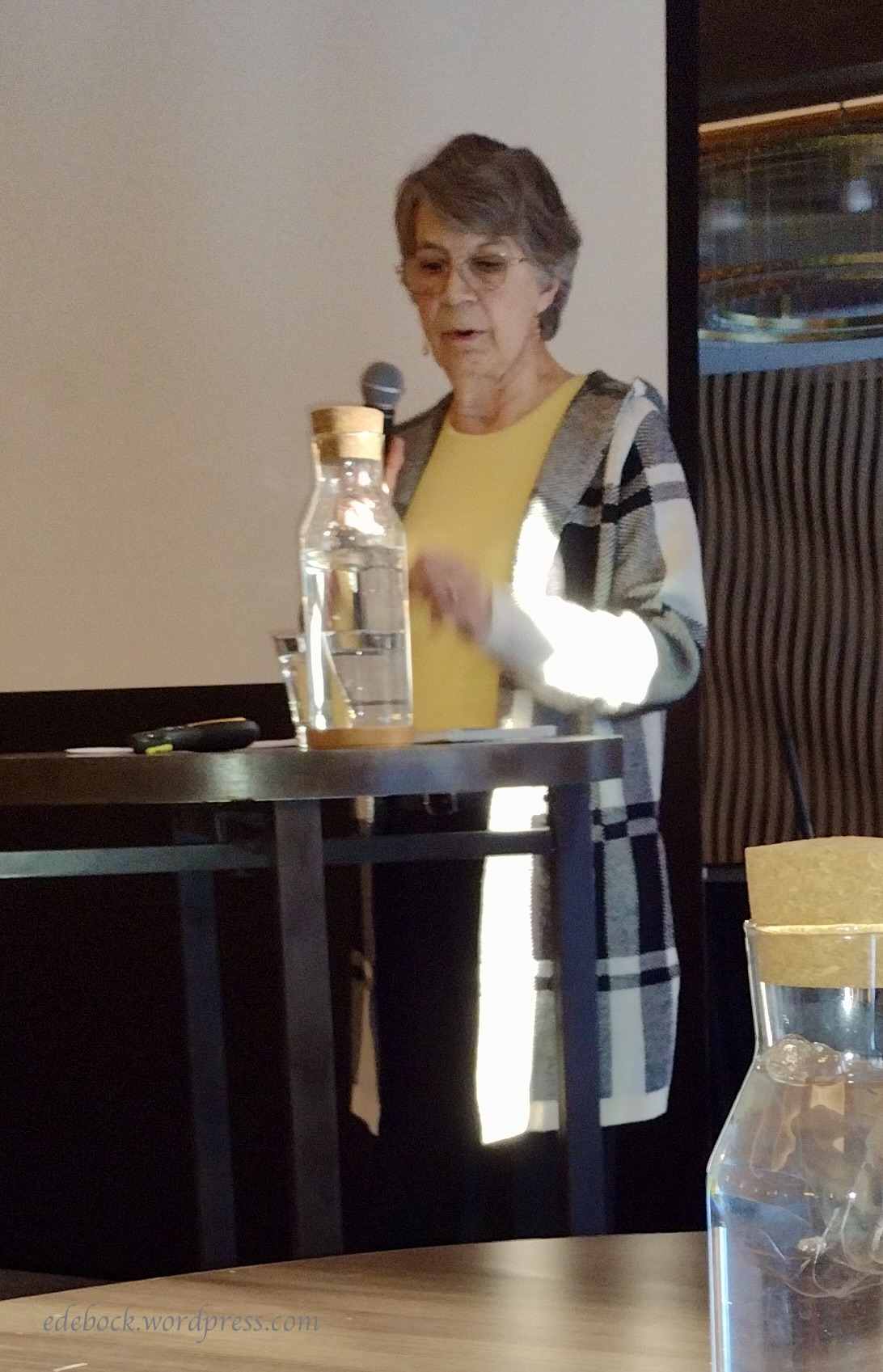
I have been invited to share my unique patient story at a Canadian Neuroendocrine Tumour Society (CNETS) conference in May. The big challenge is going to be condensing the approximately 20 years from initial symptoms to present day into a 10 minute talk that educates, encourages, and inspires those in attendance, especially those who are in the early days of their journey and who need to know that it’s possible to live long and live well in spite of their diagnosis. 

United in our goals, unique in our needs.

NET Cancer Day 2024

ncd-logo-newI wish there wasn’t a need for NET Cancer Day and that I didn’t feel compelled to write about it again this year, but there is and I do. Those of you who have been reading the blog for very long might think that I’m  starting to sound like a broken record, but it’s just so important for people to become more aware of this frequently misdiagnosed cancer.
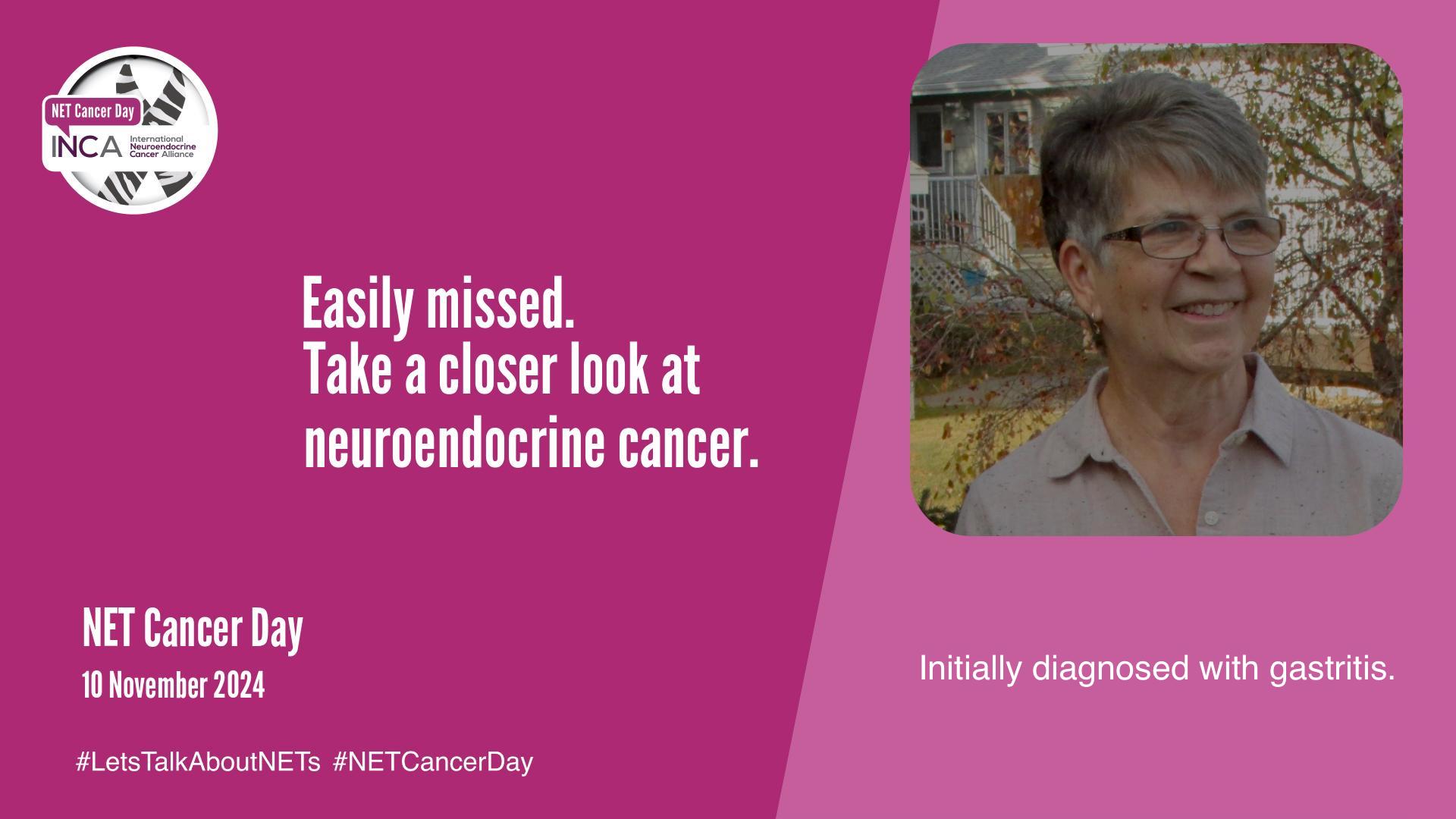
The incidence of neuroendocrine tumours (NETs) is on the rise and symptom awareness is key to earlier diagnosis and ultimately to better outcomes. Last year’s campaign slogan “Easily missed: Take a closer look at neuroendocrine cancer” was such a vital one that the NET Cancer Day campaign is reaffirming that message by using it again this year. More common than brain, ovarian or cervical cancer, neuroendocrine cancer continues to be frequently missed and misdiagnosed.

Globally, it takes an average of 5 years from initial symptoms to actual diagnosis; longer in North America. In my case, doctors estimate that I had had the disease for 7 to 10 years before it was diagnosed and based on symptoms, I’m sure they’re right. By then the cancer had already spread to distant parts of my body. Like many, many other NETs patients, my cancer was Stage 4 and no longer curable. Clearly, a greater awareness of NETs amongst the global community and especially the medical profession is needed.

The NET Cancer Day campaign has traditionally been focused on highlighting the common symptoms that are often interpreted as other conditions, but can also be signs of neuroendocrine cancer. These include facial flushing, abdominal pain, digestive problems, diarrhea, rapid heartbeat, chest pain, shortness of breath, wheezing, coughing, and/or persistent fatigue. People with NETs are often misdiagnosed with more common conditions such as anxiety, menopause, Irritable Bowel Syndrome, gastritis, or asthma.

poster

I’m not able to give you an update on my own health today as I’m presently waiting for the results of lab work that was done this past week and I’ll be going for CT scans again on Wednesday. Instead, I’ll tell you a bit more about what I’ve been involved in since last NET Cancer Day.

Since very early in my cancer journey, The Canadian Neuroendocrine Tumour Society (CNETS) has been a valuable source of information and support. When the opportunity to get involved as a volunteer member of a newly forming patient advocacy advisory board came to my attention, I knew immediately that that was something I wanted to do. It was time for me to start giving back.

After meeting in Montreal in April for an “advocacy bootcamp” with a prominent Canadian health advocate and policy consultant, we came away with a list of priorities and tactics in the areas of education and awareness, treatment and diagnostic access, and research. With two other members of the board, I’ve been working on a graphic representation of both the current and the ideal pathways to diagnosis for neuroendocrine patients in Canada which we hope to use to inform patients, medical practitioners, and health authorities. This fall, we were fortunate to have our project approved for funding by the International Neuroendocrine Cancer Alliance (INCA) which is allowing us to work with a patient-led consultancy group out of Germany to take our initial work to a higher, more professional level.

Over the past few months, in addition to the advocacy board work, I’ve also been involved in an initiative with Ipsen, the pharmaceutical company that produces the medication that I’m injected with every 28 days, to improve the patient experience with that drug.

These are baby steps in the overall work that needs to be done to improve diagnosis and treatment of neuroendocrine cancer, but I’m happy to be doing what I can to raise awareness and move the work forward.

Screenshot 2024-11-09 at 7.19.36 PM

Another cancerversary!

Eleven years ago today I was told that I had stage 4 colon cancer. Thankfully, a biopsy proved that diagnosis inaccurate or I probably wouldn’t be here to tell you about it today. According to the Canadian Cancer Society, the 5-year survival rate for colon cancer that has spread from its original location to distant parts of the body is 11%.

What I do have is neuroendocrine cancer (NETS), a slow-growing cancer that originated in my colon, more specifically in the cecum which is part of the colon. By the time it was diagnosed, I had been experiencing vague symptoms for several years. In fact, I was told that I’d probably had it for 7 to 10 years. At diagnosis, it had already spread to lymph nodes and my liver. Accurate stats and information about survival rates aren’t as readily available for neuroendocrine cancer because it isn’t as well-known or well-documented as many of the more common varieties, but I don’t really need to know those numbers. I just need to know how I’m doing right now and I found that out last week.

In response to my oncologist’s, “How are you?” as he entered the examining room, I replied, “I’m good.” Glancing at the notes in his hand, he enthusiastically responded, “Yes, yes you are!”

I wasn’t as exuberant about the results of the previous week’s CT scan as he appeared to be. I had hoped to hear that March’s TheraSphere treatment had completely annihilated the largest tumour on my liver. In fact, it had only shrunk by about 20%. The doctor hastened to remind me that shrinkage is always a good thing. That, combined with the facts that I’m not experiencing any symptoms and that the scan also showed “no progression of disease” is actually very good news!

I’ll have another CT and more lab work done in November, but in the meantime I’ve got lots of living to do. In addition to the many ways that I’ve found to stay active and busy in retirement, I’ve also become more active in patient advocacy over the past year. As a member of the CNETS (Canadian Neuroendocrine Tumour Society) Advocacy Advisory Board, I’m working with other patients and caregivers from across the country to try to increase awareness of our disease, shorten the pathway to diagnosis, advocate for equal access to treatment for patients across the country, and promote research into newer and better treatments. I’m also involved in meetings with a group of patients and health professionals around the world as part of an initiative by Ipsen, the pharmaceutical company that produces the medication that I’m injected with every 28 days, to try to improve the patient experience.

That reminds me of another recent change. Hubby is now giving me that monthly injection which frees us up to take it with us when we travel instead of having to be at home to wait for the nurse’s visit. A cancer diagnosis is life changing for a partner or caregiver as well as for the patient, so this is really his cancerversary too. We aren’t doing anything special to celebrate, but we’re thankful for another year of relatively good health; another year of life!

Ribbon Symbol

What I packed for the conference

Logo by SamLast weekend, I had the privilege of attending and participating in a three day Canadian Neuroendocrine Tumour Society (CNETS) conference in Montreal. Prior to going, I thought a lot about what to pack. Retired for more than a decade, I no longer have a professional wardrobe and I certainly wasn’t going to go shopping for clothes that I likely wouldn’t use again. Since most of my wardrobe is what I would categorize as classy casual, I shopped my closet and carefully chose outfits for each day. Most, if not all of the clothes have appeared on the blog before.
1

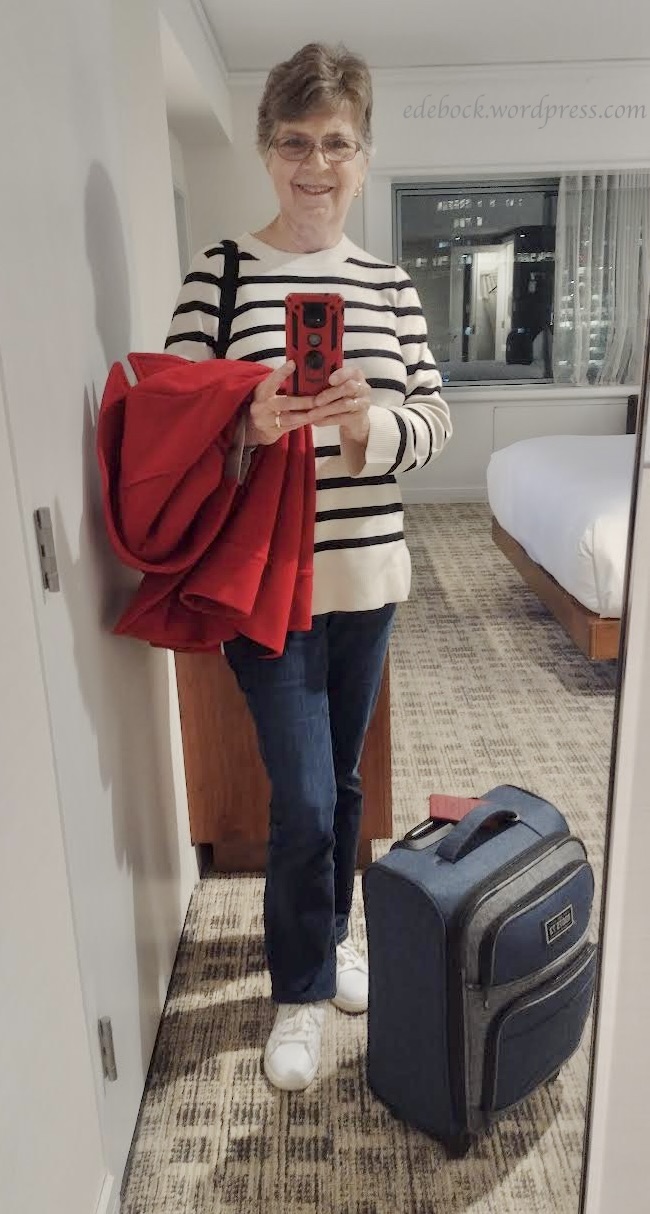
I left my photographer at home, so I had to resort to taking selfies using the full length mirror that was tucked into the corner of my lovely room in the Fairmont Queen Elizabeth hotel in downtown Montreal. I clearly should have taken all the photos after dark when the lighting worked better for photography, but I’ve done my best to manipulate the remaining photos so that you can see what I wore.

For traveling, I like to be warm and comfy, so I chose my new striped sweater, jeans, and a very comfortable pair of white sneakers. My plane was delayed for four hours by a nasty snowstorm, so it was cold, wet, and very blustery when I finally arrived in Montreal. My bright red Calvin Klein jacket served me well and while you can’t see it hidden behind my coat, I carried my favourite travel purse which is very lightweight and large enough to carry any extras that I might need while traveling or exploring.

IMG_20240405_170913854

Day 1 was a learning and working day for a small group of us from across the country who are part of a newly formed CNETS Advocacy Advisory Board. While we had already met online several times, this was our first face to face get together.

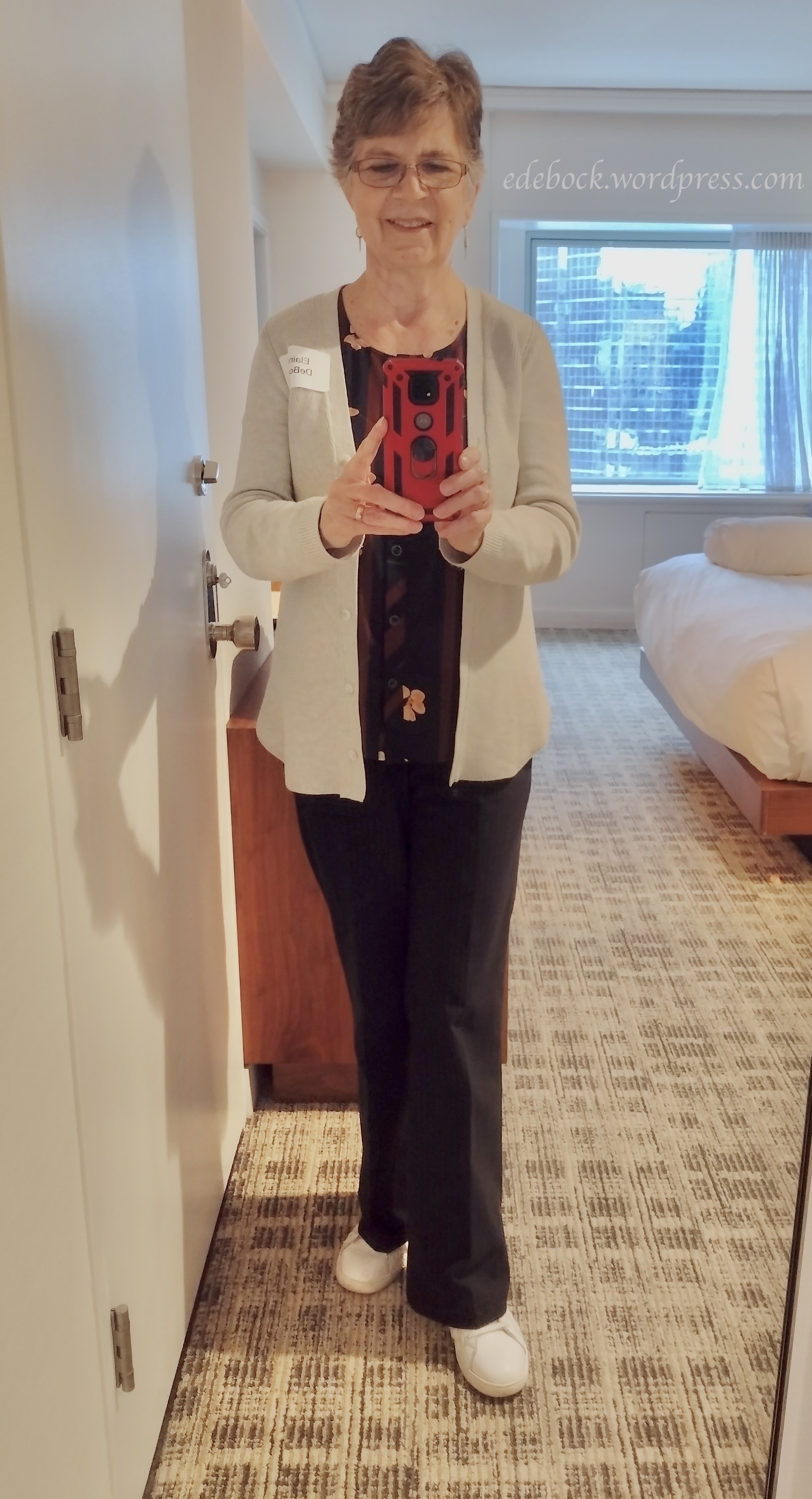
The colours in the photo above are particularly bad, so I recreated my outfit below to give you a better look. I wore a semi dressy pair of navy pinstriped pants, one of the few items in my wardrobe that are left over from my teaching days. Now that wide legs are on trend again, they’re back in style! A sleeveless cabi top and a cardigan, also from cabi, completed the outfit. I was especially glad that I’d chosen to wear the cardigan, a workhorse in my wardrobe, as our meeting room was quite chilly, especially first thing in the morning. I’m also glad that sneakers go with anything these days!

IMG_6805

Day 2 was a medical and scientific meeting. With the exception of those of us on the advocacy board who were asked to attend, this was a day for medical professionals who care for neuroendocrine patients. It took place last Saturday, so I wondered if the participants would dress professionally or, since it was a day off for them, would they dress more casually? Not having an answer to this question in advance, I wondered how I should dress.

IMG_20240406_080610918

Again, limited by what’s in my closet as well as my desire to be comfortable while sitting for many hours trying to absorb the information that was being presented, I chose carefully. I wore dark brown corduroy pants, the sleeveless animal print top that I recently featured here, and the same cardigan as the day before. As you can see, I did fit a second pair of shoes into my tiny suitcase. While most of the participants were dressed quite professionally, I didn’t feel out of place in this outfit.

Day 3 was a national patient conference available both in-person and online. For that day, I simply added a necklace to my travel outfit. It’s mostly hidden behind my phone in the photo!

IMG_20240407_075640862_HDR 2

In addition to what I’ve shown you here, another important item in my suitcase was my swimsuit. I seldom travel without one. After long days soaking up information about everything from how treatments and medications are approved and why it takes so long for them to go from being developed to becoming accessible to patients to disparities in cancer care to new developments in research to NET cancer pathology and treatment, my brain was on overload and I much appreciated the opportunity to unwind in the hotel hot tub and sauna on two of the evenings while I was there.

I would definitely give myself a high mark for packing on this trip. Everything I needed fit easily into my teeny tiny carry-on and I felt completely at ease in everything I wore. Definitely a win!

When is an accessory not just an accessory?

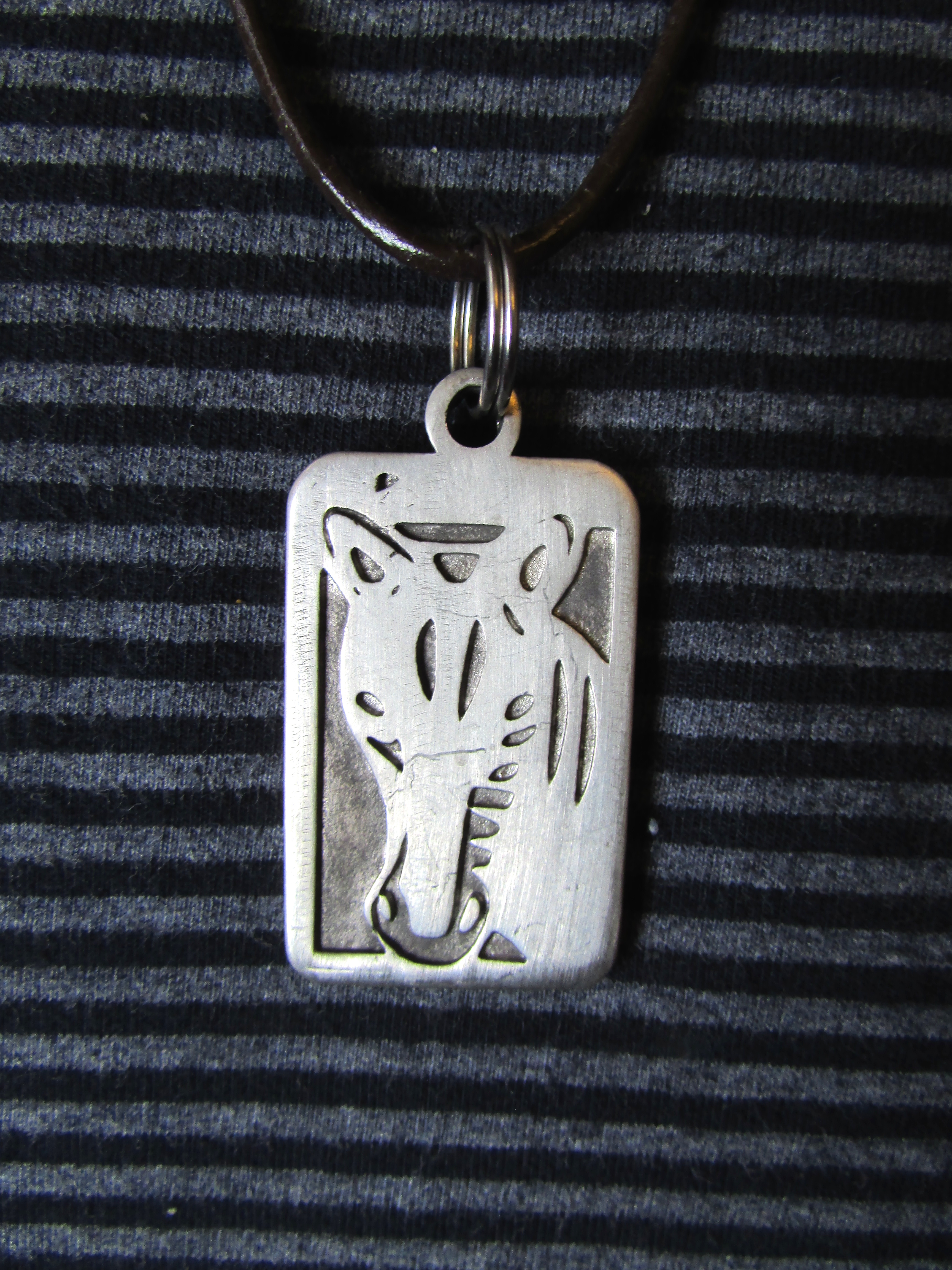
LogoAccessories are the finishing touches that can take an outfit from drab to dramatic. They also add versatility to your wardrobe enabling you to create many different looks with the same basic outfit. Accessories are also an opportunity to express your personal style, taste, and preferences, but sometimes they are even more than that. Sometimes an accessory has special meaning or significance to the person who wears it. That’s definitely the case with my new hand-crafted zebra pendant!
IMG_3007

As many of you are already aware, the zebra is a symbol of neuroendocrine cancer (NETS), the cancer that I’ve been living with for the past eight years. In medical school, doctors are taught “when you hear hoofbeats, think horses, not zebras”. NETS was previously considered rare and therefore, a zebra. However, with increasing awareness and quicker diagnosis, neuroendocrine cancers are proving not to be as rare as once thought. Another reason that the Canadian Neuroendocrine Tumour Society (CNETS) chose and continues to use the zebra as their mascot is the fact that every zebra has its own pattern of stripes. Just as each patient and their needs are unique, no two zebras are exactly alike.

Committed to improving the quality of life and the survival rate for NETS cancer patients across Canada, every year CNETS funds research initiatives that will have a direct and meaningful impact on their lives. As a little-known cancer, it falls upon patients to raise much of the money for this ongoing work.

Screen Shot 2021-09-15 at 2.45.32 PMAl Gillis is a neuroendocrine cancer patient who came up with a unique idea for both increasing awareness and raising funds; a beautiful one-of-a-kind pewter pendant/keyfob featuring the CNETS zebra logo. Made entirely of donated materials and using only volunteer labour, the first distribution sold out in less one day! I was fortunate to nab one of those. Now, a second batch is in stock and going fast. If you’re interested in purchasing one and supporting this important endeavour click here, but don’t hesitate too long or you’ll be waiting for Al and his crew to make more!

You might also be interested in watching this video in which Al demonstrates and explains how the pendants (which can also be used as keyfobs) are made. I found it quite fascinating.

Do you have any accessories that are especially meaningful to you? Please tell us about one or more of them in the comments section below.