Pray for the persecuted church

As President of our local church’s Missions Council, one of the things that I do is present a short Missions Moment during the worship service every Sunday morning. These 3 or 4 minute messages are meant to give our congregation a global perspective and a feeling of connection to what’s happening on the mission field around the world. Though the response to these messages is always positive, one occasionally resonates particularly strongly with my listeners. This morning’s message was one of those and so I decided that perhaps I should share it more widely.

This seems especially timely considering the fact that as we joined Christians around the world in praying for the persecuted church this morning, 27 of our brothers and sisters lost their lives and more than two dozen others were injured in a horrific church shooting in Sutherland Springs, Texas.

……………………………………………………………………………………………………………….

November 5 and 12 have been set aside as International Days of Prayer for the Persecuted Church.

At least 200 million Christians worldwide are being persecuted for their faith. Christian persecution is any hostility experienced as a result of one’s identification as a Christian. From verbal harassment to hostile feelings, attitudes and actions, Christians in areas with severe religious restrictions pay a heavy price for their faith. Beatings, physical torture, confinement, isolation, rape, severe punishment, imprisonment, slavery, discrimination in education and employment, and even death are just a few examples of the persecution they experience on a daily basis.

Every month an average of 322 Christians are killed for their faith and 214 churches and Christian properties are destroyed.

The number one thing that persecuted Christians ask for is prayer.

The Bible calls us to be a voice for the voiceless. Psalm 82:3-4 says, “Defend the cause of the weak and fatherless; maintain the rights of the poor and oppressed. Rescue the weak and needy; deliver them from the hand of the wicked.”

As Christians, we are called to take a stand for our persecuted brothers and sisters in Christ. Hebrews 13:3 says, “Remember those in prison as if you were their fellow prisoners, and those who are mistreated as if you yourselves were suffering.”

Praying for Christians who are being persecuted for their faith may be the easy part of what I’m asking of you today. I also want to suggest that we pray for the perpetrators; the ones who are doing the persecuting. The Bible tells us to pray for our enemies. They need to experience the unconditional love of Jesus every bit as much as we do. Remember that the apostle Paul was once the greatest persecutor of Christians. He was on his way to bring violence against believers when Jesus showed up on the Damascus Road. God used this man, known for his hatred of Christians, in mighty ways to spread His gospel and plant His church. He can still do that today, so let’s pray and ask Him to radically show up in the lives and hearts of the persecutors. Pray against the evil but for those who commit it. Pray that they would come to know God and His forgiveness.

Throughout this week, let’s focus on praying for both those who are persecuted and those who persecute them. 

……………………………………………………………………………………………………………….

For more information and resources pertaining to the persecuted church, visit https://www.opendoorsusa.org/.


I want to be a love letter!

“You yourselves are our letter, written on our hearts, known and read by everyone. You show that you are a letter from Christ, the result of our ministry, written not with ink but with the Spirit of the living God, not on tablets of stone but on tablets of human hearts.”

During my devotions one morning last week, this passage, written by the apostle Paul to the early church at Corinth (2 Corinthians 3:2-3), stood out to me as never before. In fact, it practically jumped off the page and I’ve been pondering it ever since.

What does it mean to be a letter from Christ, known and read by everyone? Am I such a letter and, if so, what does that letter say to those who read it?

I want to be a love letter from Christ! 

Writing letters is rapidly becoming a dying art, but imagine days gone by when handwritten letters carried words of love to distant sweethearts. People took time to put pen to paper and pour out their thoughts. Letters were treasured, read time and again, tied up in ribbons and kept for decades. Why? Because they made the recipient feel cherished, valued, loved.

How can I be a love letter from Christ?

How can my life have that kind of impact? How can it demonstrate God’s love for those I encounter?

Colossians 3:12 comes to mind. It’s been my theme verse for the past few years.

“Therefore, as God’s chosen people, holy and dearly loved, clothe yourselves with compassion, kindness, humility, gentleness and patience.”

Perhaps those characteristics are the ink with which to write my life, my love letter from Christ. Compassion, kindness, humility, gentleness and patience.

love letter

Reflections

IMG_5122 - Version 2

I’ve been reflecting a lot on last week’s post about what it means to be an evangelical Christian; a teller of good news.

Why? Why do we, as evangelical Christians, believe that it is our responsibility to share our faith with others? Not every faith does this. So why do we?

Well, first of all, as I mentioned last week, the Bible very clearly instructs us to. “Therefore go and make disciples of all nations, baptizing them in the name of the Father and of the Son and of the Holy Spirit, and teaching them to obey everything I have commanded you.” (Matthew 28:19-20) 

But why? Why does the Bible tell us to do that?

Is it to earn Brownie points with God? To earn our way into heaven? Sadly, there are faiths that take that approach, but that is not true Christianity.

Is it to grow our churches? To put more butts in our pews? To add dollars to our offering plates? I certainly hope not for that is not true Christianity either!

Is it to attempt to make the rest of the world more like us? Again, I hope not! Sadly, some early Christian missionaries equated evangelizing with Westernizing, but that was never God’s intent nor should it be ours.

It all comes down to that Greek word, euangelion, which means good news.

After all, if you have good news, aren’t you eager to tell someone? If you found the cure to cancer, wouldn’t you want to share it?

We believe that we have found something even better, the key to living an abundant life now and forever! Jesus said it himself. ” I have come that they may have life, and that they may have it more abundantly.” Isn’t that news worth sharing?

Is it arrogant to believe that we have found the one true way? It might seem that way, but if there is really one true God, doesn’t it make sense that he might offer one true way? Isn’t it at least worth considering? The opportunity to do that is what the true evangelical Christian is offering.

Jesus also said, “I am the way, the truth, and the life. No one comes to the Father except through Me.”


What is an Evangelical Christian anyway?

Christian terminology can be confusing even to Christians. We have a tendency to use words that aren’t part of the everyday vernacular of most people and sometimes we don’t even agree on what they mean!

When the word evangelical entered the conversation at our dinner table recently, a non-Christian guest asked what it meant. I was embarrassed to admit that I couldn’t readily come up with a clear and concise definition off the top of my head.

Then came the media reports of unprecedented flooding when Hurricane Harvey slammed into the coast of Texas forcing more than 30 000 people from their homes and leaving the area in a devastating state of emergency. When it came to light that Lakewood Church, one of the largest churches in the United States, pastored by televangelist Joel Osteen, allegedly refused to open their doors to hurricane victims seeking shelter, the media had a heyday. Mainstream and social media immediately began to paint all evangelical Christians with the same brush. Ignoring the fact that hundreds of them were, in fact, slogging through the mud and water striving to bring help and hope where it was so badly needed, evangelicals everywhere were suddenly uncaring hypocrites.

Please don’t get me wrong! If Lakewood Church did, in fact, turn a blind eye to those in dire need, they acted in a most unChristlike manner and deserve no one’s sympathy. Personally, due to conflicting news reports, I have no idea what really happened at Lakewood or why. I do know that I have problems with Joel Osteen’s theology as he preaches what is often referred to as the “prosperity gospel” or “health and wellness gospel” which teaches that that financial blessing and physical well-being will always come to those who have enough faith. This could not be further from the message of the Bible. Rather than guaranteeing them a life of ease, Christ told his followers that “In this life you will have trouble.” (John 16:33) If wealth was a legitimate goal for the Christian, Jesus would have pursued it himself. Instead, he was a poor itinerant teacher with “no place to lay his head.” (Matthew 8:20) In fact, the only disciple who concerned himself with financial wealth was Judas Iscariot.

I am not here, however, to defend or attack Lakewood Church or their pastor. I simply want to correct my own shortcoming and ensure that from now on when I use a term like evangelical, I know for sure what I’m talking about and can clearly communicate it to someone else!

So what exactly is an evangelical Christian?

Christian is the easy part. The term, first used in Acts 11:26, simply means a follower of Jesus Christ. But what makes us evangelicals?

That term comes from the Greek “euangelion” which means good news. An evangelical Christian, then, is simply a follower of Christ who believes that it is important to tell others the good news that through his death on the cross, Jesus Christ paid the penalty for our sins and that by his resurrection, he conquered death and provides everlasting life to all who follow him. It is a message of divine intervention; a message of hope for mankind who, no matter how hard we try, cannot save ourselves.

In the public arena, however, the phrase evangelical Christian is used in different ways, some of them derogatory. For some, it is simply a title used to differentiate between Christian denominations. Generally speaking, evangelical denominations are those that believe that the Bible is the inerrant word of God and that individual believers must accept Christ’s gift of salvation for themselves and enter into a personal relationship with God. For others, the term is equivalent to “wing nut”, “intolerant extremist”, or “right-wing, fundamentalist Republican”. There is no doubt that holding to the fundamentals of the Bible will result in a certain worldview, but being an evangelical Christian most definitely does not demand allegiance to a specific political party!

In reality, all Christians should be evangelical Christians; tellers of good news! The Bible very clearly instructs us “Therefore go and make disciples of all nations, baptizing them in the name of the Father and of the Son and of the Holy Spirit, and teaching them to obey everything I have commanded you.” (Matthew 28:19-20) 

Abracadabra – the Christian and social media

We spent the final week of our recent vacation with over one thousand other people at Camp Harmattan, a Church of the Nazarene camp in the valley of the Little Red Deer River. While there, I attended an afternoon session that continues to resonate with me. The topic was the Christian and social media.

We talked about whether or not we, as Christians, should be using social media and whether this is a topic that the church needs to address. I think the answer to both questions is a resounding YES!

We cannot/should not/dare not hide our heads in the sand and avoid the world around us. The Old Testament tells the story of Queen Esther who, when her people faced extermination by the Babylonians, was told by her cousin, who urged her to speak to her husband on their behalf, “Who knows but that you have come to royal position for such a time as this.” (Esther 4:14 – italics mine) We, too, have been born for such a time as this. Our place in history is not random or some accident of fate. I firmly believe that God intended each one of us to be here on earth at this exact time. In other words, we were meant to be living in the age of social media and if that’s the case, we ought to use it, but we ought to use it well.

The Bible, particularly the book of Proverbs, has much to say about how we communicate. “Reckless words pierce like a sword, but the tongue of the wise brings healing.” (Proverbs 12:18) The same might be said of the keyboard.

Though the origin of the magician’s incantation, abracadabra, is uncertain, it is thought to derive from early Aramaic or Hebrew. The Hebrew word bara means “create”, while dabar means “word” or “speak”. Together they become abracadabara, literally meaning “I create as I speak” or “I speak therefore I create”.

When we use social media, what do our words create? How do they shape the people we interact with? Whether written or spoken, our words have the power to tear down or to build up, to encourage or to destroy.

It isn’t a matter of whether we, as Christians, should use social media, but rather a matter of how. Colossians 5:6 reminds us to “Let your conversation be always full of grace”. Before we post or respond, we need to consider the possible effect of what we write. What will our words create? Will they result in conflict, pain or discouragement? Or will they be a blessing? We also need to keep in mind that the written word, which lacks the non-verbal cues of face to face conversation, such as tone of voice and facial expression, can be more easily misunderstood. What we intend to communicate and what the reader understands may be two very different things.

We should also be very careful about what we repost. Before we do, we need to ask ourselves some very important questions. How reliable is the source? What are its biases and underlying convictions? What is the motivation or purpose behind the post and why do we want to share it? Very often, we should also take the time to do some fact checking to ensure that it’s actually true.

Our session on social media also touched on its addictive nature and some of the negative effects that it can have on our lives. While there’s no official medical recognition of social networking addiction as a disease or disorder, it has become the subject of much discussion and research and some studies seem to indicate that it is as addictive as nicotine. Some suggest that spending excess time on social media networks can even trigger anxiety, depression and ironically, isolation from others. Perhaps social media addiction might simply be defined as spending so much time using Facebook, Twitter and other forms of social networking that it interferes with other aspects of daily life such as careers and relationships.

Extensive use of social media also has the tendency to place a person at the centre of their own universe. As Christians, we definitely want to guard against becoming so caught up in the “selfie” world that we find ourselves constantly wondering or checking to see how we are being admired and followed by those in our social media circles. Instead, we want to use social media to strengthen relationships and connections and to have a positive impact on our world.

Just remember, abracadabra! Our words are powerful!

powerofwords

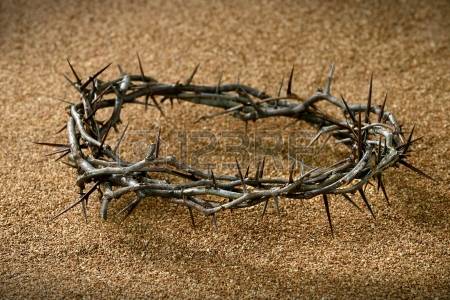
He made the thorns

Now that we’re into the holiest week of the Christian calendar, we’re surrounded by the popular images of the season, coloured eggs, bunnies and chicks, but the events of that first Easter week were anything but pretty and pastel.

On Sunday, our pastor used Maker of the Universe by master guitarist, Phil Keaggy, as part of his morning message. Do take a moment to click on the link and watch the video. I can’t get its haunting message out of my mind.

16713120-eine-dornenkrone-auf-sandigen-hintergrund

His holy fingers made the bough, 
Which grew the thorns that crowned His brow.

Not only did God create the thorn bush with its razor-sharp barbs, but He made and even yearned for a relationship with the soldier who thought to shape it into a cruel crown and ram it onto the head of our Lord.

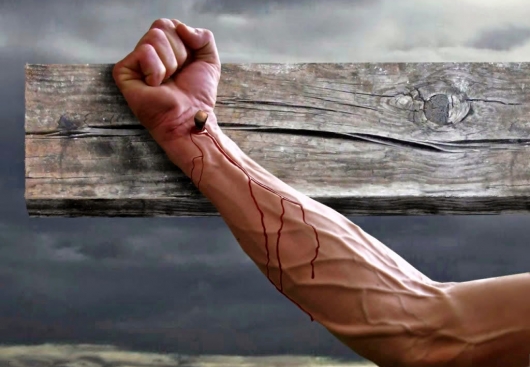
nails

jesus-crucified-2

The nails that pierced His hands were mined
In secret places He designed.

On the third day of creation, God created the land and the metals hidden within knowing  all the good and evil ways that man would put them to use; knowing that someday His body would be pierced with spikes formed from those very metals.

Cross-FS

He made the forest whence there sprung
The tree on which His body hung.

He didn’t have to do it! He didn’t have to let them nail Him to the cross. He could have walked away, just like He did three years earlier when an angry crowd in his hometown of Nazareth threatened to throw him off a cliff. (Luke 4:16-30)

This time He didn’t walk away. He let them crown Him with a crown of thorns and hammer nails through His wrists and His feet and He did it for me! He did it to take the punishment that should have been mine. He knew that I would let Him down, but He did it anyway.  He let them lay His body in a cold, dark tomb, and there He lay for three long days. Thankfully, though, that wasn’t the end of the story. As the old hymn says

Up from the grave he arose; 
with a mighty triumph o’er his foes; 
he arose a victor from the dark domain, 
and he lives forever, with his saints to reign. 
He arose! He arose! Hallelujah! Christ arose! 

And that is the wonder of Easter! Hallelujah!

Modesty and cultural sensitivity

IMG_3548

Screen Shot 2016-03-18 at 11.07.24 PM 3Visitors who dress immodestly will no longer be allowed to enter Cambodia’s famed Angkor Wat temple complex, the agency that oversees the site announced last week. Beginning August 4th, all tourists will be required to wear pants or skirts that fall below the knee and shirts that cover their shoulders.

When I read that, I immediately went back to our photos from Jan 4, 2009 to see what we were wearing the day we visited the UNESCO World Heritage Site that is also Cambodia’s biggest tourist attraction. Would we meet the new standard, I wondered.

We got up at 4:30 a.m. the day we toured Angkor Wat so that we could be there in time to watch the sun rise over it’s towers. It was still a bit chilly when we arrived and at that point, dressed in a warm fleece hoodie and capri pants, I would definitely have met the new dress code.

IMG_3507

Richard would not have, however, as he was wearing shorts and later, in the heat of the day, I wouldn’t have either.

I almost hate to post that picture because I look so frumpy, but please keep in mind that we were basically backpacking through southeast Asia. We had just traveled the length of Vietnam by night bus and we were staying in a $12/night guesthouse that wasn’t much more than a roof over our heads. I may not have looked great, but I was having the adventure of a lifetime and fashion was the farthest thing from my mind!

The question here, though, is what is modesty? My tank top may not be particularly attractive, but is it immodest?

In 1 Timothy 2:9, the apostle Paul advises women to “adorn themselves in modest apparel, with propriety and moderation” but he doesn’t give a lot of detail about what that looks like. He does go on to say, “not with braided hair or gold or pearls or costly clothing” but to understand what he was getting at, one needs to look at the culture and the context. In this passage, Paul was advising women on how to dress for church, telling them to adorn themselves in a manner that was considered appropriate for worship. In Ephesus, where his protégé, Timothy, was pastoring at the time, the elite of that culture were known for their gaudy and extravagant wardrobes, their elaborate hair styles, and their expensive clothing that communicated extraordinary wealth. Paul’s description of immodest dress conjured up a picture of someone preoccupied with appearance, fashion, luxury, and perhaps even sexual prowess. He was simply advising the Christian women of that time and place not to mimic that behaviour, but to dress in a way that showed that they desired attention to be on God, not on themselves.

Dictionary definitions of modesty include “behavior, manner, or appearance intended to avoid impropriety or indecency” and “the quality of behaving and especially dressing in ways that do not attract sexual attention.”

In discussing dress codes, it’s important to note that modesty must involve cultural sensitivity. We don’t find the wearing of shorts or sleeveless tops offensive here in North America,  but Cambodia is a completely different culture. Angkor Wat was the spiritual centre of the Khmer empire that dominated that region from the 9th to 15th centuries. It’s a symbol of great national pride and is depicted on the Cambodian flag. As such, it is worthy of utmost respect. If, to the Cambodian mind, that means a certain manner of dress, then visitors definitely need to honour that.

Though it’s unlikely that I will return to Angkor Wat (only because there’s so much world that I have yet to see), but if I do, I won’t be wearing a tank top. If you haven’t been yet, I would definitely suggest adding it to your bucket list, but make sure you pack accordingly. After August 4th, those who are not dressed appropriately will be turned away or required to change their clothes before being allowed to enter.

IMG_3496

IMG_3532

IMG_3530


Mezuzah

If you come to visit us, you’ll notice something on the doorpost at the entrance to our home that wasn’t there before our trip to Israel.

IMG_1363

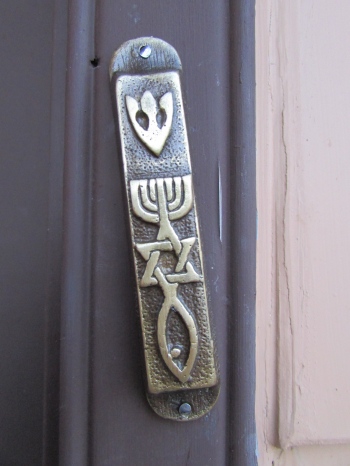
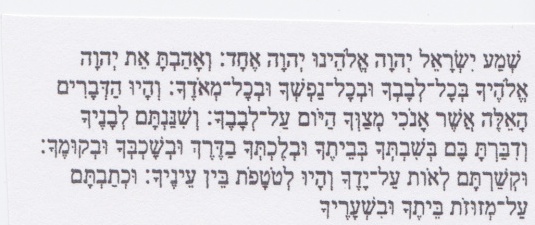
Four inches long and made of brass, it is a mezuzah container. Hidden inside are two tiny slips of paper, one in Hebrew and the other in English.

scan-1


Scan

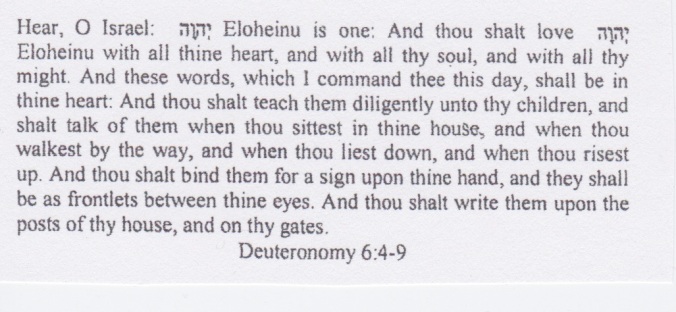
Mezuzahs are fastened to the door frames of Jewish homes to fulfill the Biblical commandment to write the words of the Shema, the command that is central to the Jewish faith, on the door frames of their houses. (Deuteronomy 6:5-9)

“Love the Lord your God with all your heart and with all your soul and with all your strength.” 

If ours were a true Jewish mezuzah, there would be just one scroll inside. It would have been handwritten by a certified scribe with specially prepared ink on kosher parchment made of thinly shaved hide. If we were a Jewish family, we would have several mezuzahs, not just the one on the outside doorpost. Every doorway that leads into a proper room, except for the bathroom, would have its own mezuzah. Each of our hotel rooms in Israel had one.

A mezuzah is permanently affixed to the right doorpost, on the lower part of the upper third. It is traditionally hung on a slant, as shown in the photo above, with the top pointing inward. A special blessing is usually read or recited prior to affixing each mezuzah.

Mezuzah cases come in a variety of sizes and materials. Ours is a Messianic mezuzah made specifically for a Christian home. The symbol at the top is the Hebrew letter “Shin”, the first letter of Shaddai (Almighty), one of the Biblical names of God. Below it is the Messianic Seal of the Church of Jerusalem which incorporates a menorah (seven branched candelabra), a distinctly Jewish symbol, and a fish, which has been used as a symbol of Christianity since its very early days. The triangular base of the candelabra and the tail of the fish tie the two symbols together and form the Star of David, the national symbol of Israel.

The mezuzah at the entrance to our home will long be a reminder of our amazing pilgrimage to Israel, but also an expression of our faith in God.

“As for me and my household, we will serve the Lord.”  Joshua 24:15

Welcome to Canada!

I spent one afternoon last week working as a volunteer in our local second hand store. As I looked around the tiny shop, I couldn’t help noticing how the face of our small community has changed. Like almost every other rural community across the Canadian prairie, the town we raised our children in, just a few short years ago, had one Chinese family running a restaurant. There was also a doctor of East Indian descent who originally hailed from Ghana. That was about it for multiculturalism. The rest of us could trace our ancestry to various parts of Europe, but that’s no longer the case. In the shop that afternoon, there was my friend, Karen, a temporary foreign worker from the Philippines and over there, a young Asian couple. I’m pretty sure they were Korean. Another Korean family lives kitty-corner from me. In the shop, there was also a young Mexican Mennonite man, one of many who have made this area home over the past few years, and two women from one of the nearby Hutterite colonies. I live around the corner from a family from South Africa and another family of newcomers bought the house at the end of our street. The wife is from Honduras and her husband, El Salvador. Yes, our community has changed. It has opened its arms and welcomed the world and I love it!

Now we’re faced with the current refugee crisis and our government’s decision to open our country’s doors to 25 000 Syrians. Sadly, many are responding in ignorance and fear.

There are fears, perhaps even legitimate fears, that terrorists may hide themselves in the masses and infiltrate our peaceful nation and fears that jobs may be lost to these newcomers, but as I watched the news last night and looked into the faces of the sixteen weary Syrians who arrived at the Calgary airport yesterday, I saw people, real people, some with fear in their own eyes. Imagine for a moment what they have been through, what they’ve sacrificed, what they’ve left behind to begin a new life in a new and very strange land. They are not here to make our lives worse, but to make their own lives better and in so doing, they can make our country richer if we give them the opportunity. Who are we, born in Canada through no effort of our own, and benefitting greatly from the hard work and sacrifice of those who came before us, who were themselves newcomers from foreign lands looking for a better life, to close our doors and our hearts to these whose very lives have been torn apart by the atrocities of war? Who do we think we are?

Sadly, I also see racism in the response of some of my fellow Canadians. Canadians like the elderly man working the till at Walmart yesterday, who, during a few moment’s conversation while checking and bagging our purchases, complained bitterly that he’d soon be out of work because “one hundred of those Syrians are coming to Camrose and they’re going to take jobs from all the good people!” Perhaps I should have asked him where his people came from. He certainly didn’t appear to be of First Nations descent!

Much of the fear stems from the fact that these newcomers are Muslims, descendants of Esau, betrayed and robbed of his birthright by his twin brother, our spiritual ancestor, Jacob (Genesis 25-27). They are Muslims, painted with the same brush as the extremists who behead Christians on the beaches of north Africa and who strap explosives to their bodies and blow themselves to smithereens in the public places of Paris, killing and maiming hundreds of innocent bystanders. Are these the Muslims who seek refuge in our country? I don’t think so! That’s like saying that all Chinese Canadians are like Vince Weiguang Li who beheaded a fellow passenger on a Greyhound bus on the way to Winnipeg in July 2008 and ate some of his flesh!

It would be naive to suggest that there won’t be any problems involved in opening our borders to such a huge influx of refugees and I join my voice with others in urging our government to use wisdom and diligence in choosing who will be allowed to come, but how much worse will the problems be if we greet these newcomers with fear and animosity instead of extending a hand of compassion? The government has promised intense and rigorous security checks of each person who arrives in Canada and there is every reason to believe that this current wave of refugees will face the same scrutiny and review as all those who have come before them. For more information on that process, you can go here. Our new Prime Minister has already delayed the December 31 deadline for allowing the 25 000 to enter the country in order to “get it right”. The three families that arrived in Calgary yesterday all escaped war-torn Syria a year ago and have been waiting in Lebanon for permission to come to Canada where they were greeted by family members already living there.

Darren 2

It is the response of some of my fellow Christ-followers that bothers me most of all. Yes, the Christian face of our country is rapidly changing, but if God has called us to reach the lost for Christ, how much easier will it be for us if they come to us? Not many of us can “go and make disciples of all nations” (Matthew 28:19) but we can reach out to the ones who move in next door to us with love and compassion and be the hands of Christ to them. It is not only immigrants of other faiths who are robbing our country of its Christian heritage, it is also those born and raised here who have become so self-sufficient and so self-centred that they see no need for a god of any kind and can only express hatred toward those they don’t understand or agree with.

Darren 3

Photos: Darren Makowichuk/Calgary Sun

No ordinary weekend

This weekend Christians around the world celebrated the death and resurrection of our Lord and Saviour, Jesus Christ, who came that we might have life, and that we might have it more abundantly. (John 10:10) It was definitely no ordinary weekend, but for our family, it was also no ordinary Easter.

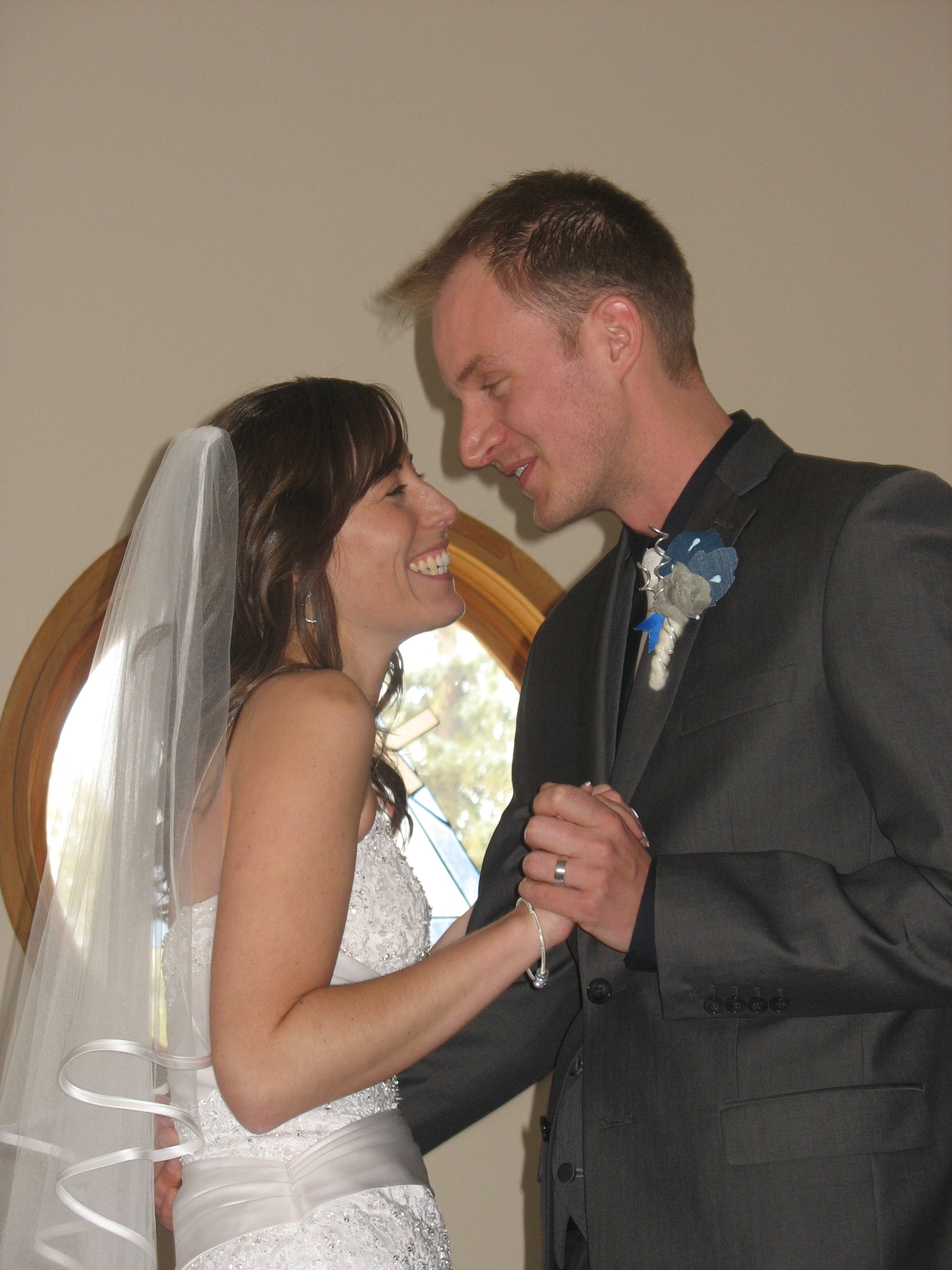
Thirty years ago, a heartbroken young grandmother placed her first grandchild in my arms and walked away not knowing if she’d ever see him again. On Saturday evening, she sat across the table from me at his wedding reception. Her daughter, Nate’s birth mom, was at the next table. This was definitely no ordinary weekend!

Nathan was just three days old when he joined our family but there was already an unmistakable twinkle of mischief in his eyes and he has found his soulmate in Colleen, a beautiful and godly young lady with a mischievous twinkle to match his own! The wedding ceremony and the reception, complete with an inflatable bouncy castle in the corner of the hall to keep the youngest guests entertained, were a perfect reflection of the fun-loving and quirky but also very classy personalities of the bride and groom.

My weekend began with a moment of panic on Friday morning when I woke to discover that the five pound block of ground beef in our hotel room’s mini fridge was still frozen solid! I had a rehearsal dinner to prepare for approximately two dozen people and only a couple of hours until I needed to begin putting it together. Where there’s a will, there’s a way they say, so tying the meat into a plastic hotel laundry bag and dropping it into a bathtub of warm water, off I went to breakfast! The novel defrosting method worked wonders and by early afternoon I had three slow cookers filled with lasagna. (No, I didn’t prepare the meal in the hotel room! We transported the meat, along with all the other ingredients, to one of the bridesmaid’s homes.) Though I never want to be a caterer, the meal was ready right on time and received rave reviews. Once that was over with, I could relax and enjoy the rest of the weekend!

From the bride and groom’s self-written vows that reflected both the sanctity of the moment and the humour that permeates their relationship to their impromptu dance on the platform during the ceremony, the wedding was, in the words of one of our dear friends, “a wonderful, classy, down to earth celebration.”

IMG_5060

For me, one of the highlights of the weekend was having all my children and grandchildren together in one place, something that doesn’t happen often. On Sunday morning, with the bride and groom off on their honeymoon, the rest of us gathered at their home to be for a relaxing brunch before having to go our separate ways. The Easter bunny somehow knew exactly where our five young grandchildren would be and ensured that there were chocolate eggs to be found!

After cleaning up and making sure that everything was ready for Nate and Colleen’s return, we headed for home stopping on the way for Easter dinner at my sister’s place. It was also a celebration of my nephew’s 22nd birthday and in his words, “a perfect end to a perfectly incredible weekend!”

Our beautiful children: Matt and his wife Robin, Nate and his lovely bride Colleen, Melaina and her husband Aaron

Our beautiful children: Matt and his wife Robin, Nate and his lovely bride Colleen, Melaina and her husband Aaron

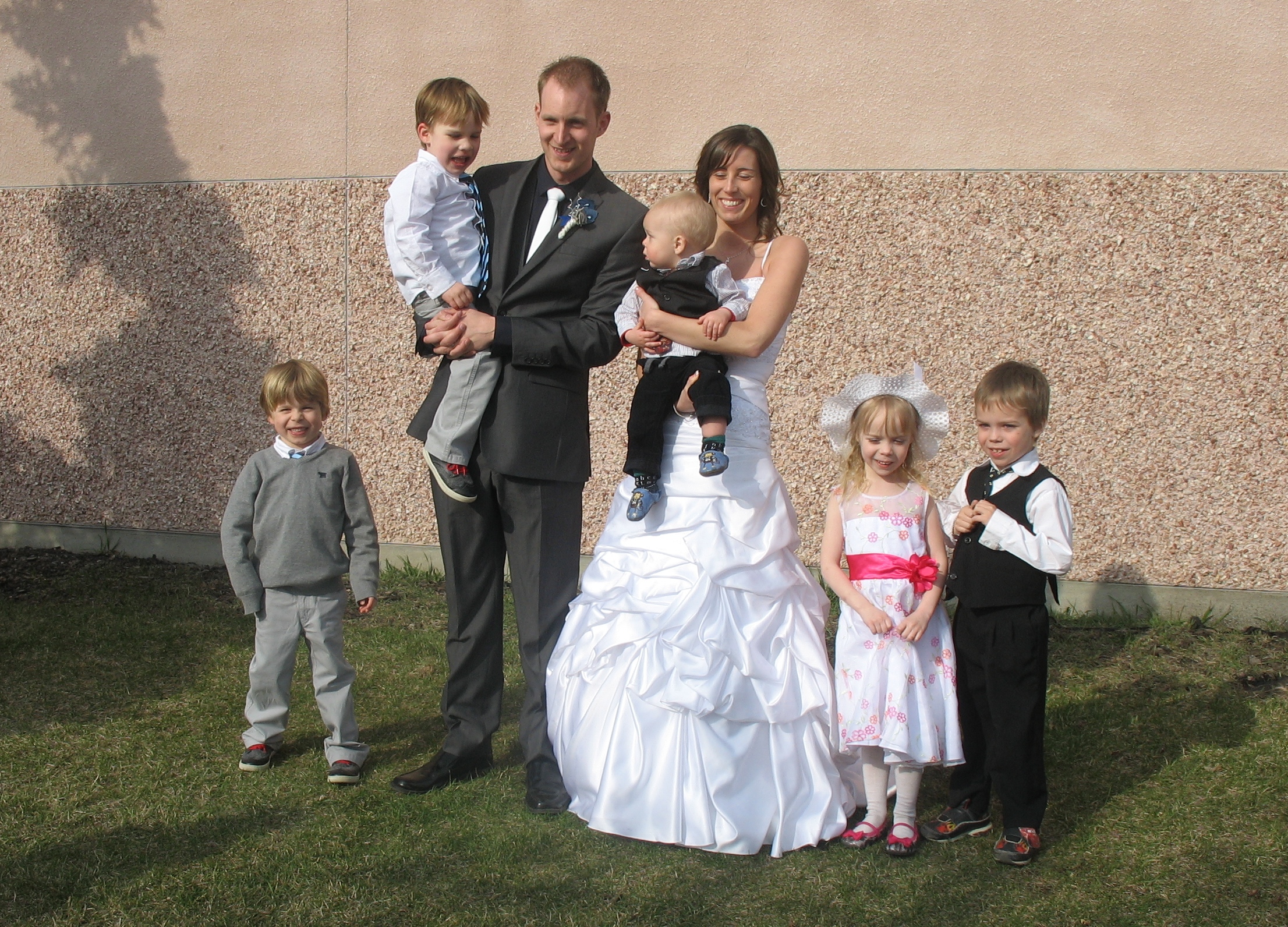
Uncle Nate and Auntie Colleen with our five grandchildren

Uncle Nate and Auntie Colleen with our five grandchildren