Feeling fabulous

Screen Shot 2016-03-18 at 11.07.24 PM 3

Can a woman have too many cute jackets? I don’t think so when fall is in the air and she can get them for $3.00 apiece at her local thrift store!

My latest acquisition is a variegated grey denim jacket from Denver Hayes, one of Canadian clothing retailer, Mark’s, popular in-house brands. The fabric is soft and the ruffle trim adds a feminine touch.

I wore it on Tuesday when I went to Edmonton for a follow-up appointment with my surgeon, the one who removed a cancerous tumour from my left parotid (salivary) gland during a delicate seven hour operation in May of 2014. (This was my second cancer, completely unrelated to NETS, the incurable cancer that I continue to live with.)

img_2484

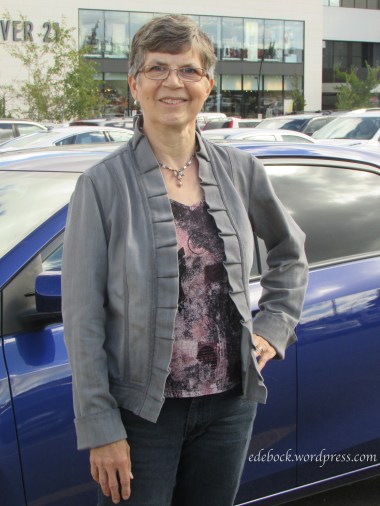
Here I am feeling fabulous after my appointment, not only because a woman feels good when she knows she looks good, but also because the appointment went so well. Not only is there no sign of recurrence, but even this long after surgery, healing is still taking place. I don’t have to see Dr. Williams again for a whole year!

On this occasion, I wore the jacket with a pair of black jeans, comfortable for the four hour round trip to the city, and a top that I’ve had for several years. I’m also wearing my comfy grey flats with their cushiony memory foam insoles, perfect for a walk through the mall after my appointment.

img_2471

img_2472

When no news is good news

It’s been quite awhile since I wrote anything about my health as there really hasn’t been anything new to report. That in itself is good news!

As many of you are aware, I was diagnosed with two completely separate and unrelated cancers in late 2013 and early 2014. Yesterday, I finally received the results of CT and PET scans and other tests done three weeks ago. The first good news was that there has been no significant change in my incurable neuroendocrine cancer (NETS) over the last year. I have only had two radioisotope (Lutetium) treatments during that time, one last October and one in April, but that has been enough to keep things stable. The tumours have not grown or spread.

Screen Shot 2016-08-09 at 4.34.33 PMSource

Neuroendocrine tumours (NETS) produce serotonin which is sometimes referred to as a happiness hormone because a deficit can to lead to depression. An excess, however, can result in carcinoid syndrome which, as in my case, results in symptoms that include abdominal cramping and diarrhea, skin flushing, and periods of rapid heart rate. It can also lead to heart disease and other complications. A 24 hour urine test is used to measure the amount of serotonin in the body. Though I don’t know what units are used to measure serotonin, at the time of diagnosis, the level in my body was 150. Now, it’s down to 40. Though still above average, it is considered borderline and indicates that my tumours, if not completely dormant, are barely functioning. Monthly injections of Sandostatin, meant to suppress this serotonin production, are obviously working and I have had none of the above listed symptoms for the past couple of years.

More good news was the fact that there is absolutely no sign of recurrence of my second cancer which was an acinic cell tumour in one of my saliva glands. It was removed surgically followed by six weeks of radiation treatments, thirty in all. I have now been free of that cancer for over two years!

The best news, however, is the fact that I feel 100% healthy! My energy level is normal and except for the monthly injections, which are given by a nurse who comes to the house, and a treatment requiring an overnight stay in hospital in Edmonton once every six months, I’m able to lead a completely normal life. We haven’t gone on any long hikes yet this summer, but I’m quite certain that I could.

If things continue to go this well over the next year, treatments will then be reduced to one every nine months. I have no idea what the long term outlook is, but then, who really does know what their future holds? I know who holds my future and that is good enough for me!

“I know the plans I have for you, declares the Lord, plans to prosper you and not to harm you, plans to give you hope and a future.”                                      Jeremiah 29:11

We’re winking again!

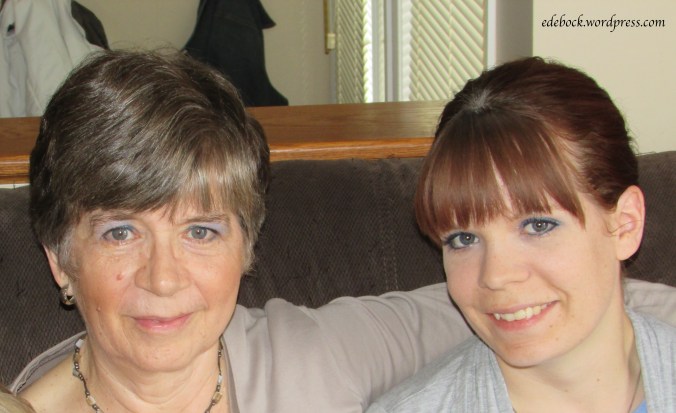
It’s hard to believe that it’s already been a year since my daughter and I put on our blue eyeshadow and participated in Wink Day 2015, but here it is again and as it turns out, I’m at her house again.

What is Wink Day, you ask? It’s a day set aside by the Canadian beauty industry, through it’s charitable foundation, Beauty Gives Back, in support of women going through the social and emotional challenges of the Cancer Blues. Women across Canada are  encouraged to post pictures and videos of themselves wearing blue eyeshadow (with the hashtag #winkday) as a way of raising awareness of the Cancer Blues. The Cancer Blues is a term, coined by Beauty Gives Back, to describe the emotional distress caused by cancer and its treatment, an often ignored consequence of the disease that can seriously affect a person’s ability to fight and thrive through the ordeal.

IMG_1898

My daughter looks great in blue eyeshadow, but me, not so much! “It ages you,” she told me as we applied our make-up and I think she’s right. For Wink Day, however, I’ll put vanity aside.

For over 20 years, Beauty Gives Back has supported tens of thousands of Canadian women through the Cancer Blues with programs such as Look Good Feel Better and FacingCancer.ca. Look Good Feel Better workshops are free of charge to all women with cancer and are designed to help them feel better about themselves and thus face their illness with greater confidence. Over 1800 volunteer cosmetic advisers and hair alternative specialists give generously of their time to bring the two hour seminars to cancer care centres across the country. I was so impressed with my own Look Good Feel Better experience that I’m now a spokesperson for the program helping promote the twice a year fundraising galas put on by Shopper’s Drug Mart, one of the program’s biggest sponsors.

Though I’ve been diagnosed with two completely unrelated cancers over the past three years, one of which is incurable, I must admit that I haven’t experienced the degree of mental distress that many victims of the Cancer Blues do. I attribute this to my faith, my wonderfully supportive family and friends, a great cancer care team and the fact that, so far, my treatment has been successful. My disease is stable and I’m able to live a reasonably normal life. I do, however, love those occasions when I’m someplace where no one knows that I’m the woman with cancer; moments when I can almost forget about it myself.

On days like Wink Day, however, I’m eager to do my part to raise awareness even if it means looking totally silly! It’s not too late to join the fun. Simply post a picture or a video  of yourself wearing blue eyeshadow on social media anytime before the end of June (with the hashtag #winkday) or visit winkday.ca to find out how else you can help.

IMG_1896


I’m a survivor!

2016-NCSD-logo-166

Today is National Cancer Survivors Day, a day set aside to celebrate the more than 32 million people around the world who have battled the disease and to raise awareness of the challenges that many of them face.

So what is a survivor? To many, the term ‘cancer survivor’ suggests a person who has beaten their cancer; perhaps one who has been cancer free for several years, but I like the definition used by the National Cancer Survivors Day Foundation. “A ‘survivor’ is anyone living with a history of cancer – from the moment of diagnosis through the remainder of life.”

In other words, I am a survivor!

I live with cancer every day. Unless a cure is found for neuroendocrine cancer (NETS) within my lifetime or God performs a miracle on my behalf, I will never be cancer free. People have a hard time grasping the idea of a chronic cancer. The usual assumption is that patients either die of their disease or they are cured, thereby becoming cancer survivors, but I look at my situation differently. I may die of my cancer or I may die with it, but either way, I am a survivor! Fortunately my disease is stable at this point and it doesn’t significantly impact my day to day life. A schedule of monthly injections and biannual treatments restricts my previous worldwide wanderings a bit, but I recognize that every day is a gift.

I’m also a cancer survivor in the more tradition sense, as in one who had the disease, but is now free of it. As many of you know, seven months after my NETS diagnosis, I was diagnosed with a second, completely unrelated cancer that was removed surgically. Six weeks of radiation followed and, since that time, there has been no recurrence. That possibility still exists, of course, but in the meantime I will continue to live life to the fullest.

I am, after all, a survivor!

Naming Lavita

Perhaps it’s just an extension of my love of words, but I find the meaning and origin of names fascinating. Long before we had our first child, Richard and I had two boys names picked out, Matthew and Nathan. Interestingly, they both mean “gift of God” and since God blessed us with two sons, we were able to use them both. We had a much harder time choosing names for our daughters. I’ve always been partial to girl’s names that end in A and, after much deliberation, we settled on Janina for our first daughter. A derivative of Jane, it too means “gift of God”! Though the spelling of our second daughter’s name is very similar to mine, Elaine means “light” and Melaina means “dark”! Like our other three, however, she is also a “gift of God” and that’s the meaning of her middle name, Jean!

In addition to naming our children, I’ve helped name a few pets along the way, but I never thought that I’d name a gastrostomy tube; a tube inserted through a patient’s abdomen to deliver nutrition directly to her stomach! Over the past few months, I’ve made contact with two other bloggers who are also neuroendocrine cancer patients and one of them, Lizbeth, recently wrote a post asking readers to help her choose a name for the tube that provides her with vital nutrition. She was tired of simply referring to it as “tube”.

I immediately began to search for girls names that meant “giver of life”, but I didn’t find one that I liked, so I changed my search slightly and began to look for names that simply meant “life”. I quickly came up with three of them and they even ended in A; Olivia, Livia and Lavita. I sent them off to Lizbeth and waited to see what would happen. Here’s what her next blog post said:

A fellow blogger, Elaine, has gave me a name that I’m rather struck on.  The name Elaine has suggested means life.  Rather apt.  For me the tube gives me a better quality of life…  It provides me with my essential nutrients and vitamins – my daily steak and chips or fresh fruit salad if you get my meaning.  For many people with a tube it is an essential lifeline and the only source of nourishment.  

The name I have chosen is Lavita.

image4

NET Cancer Day

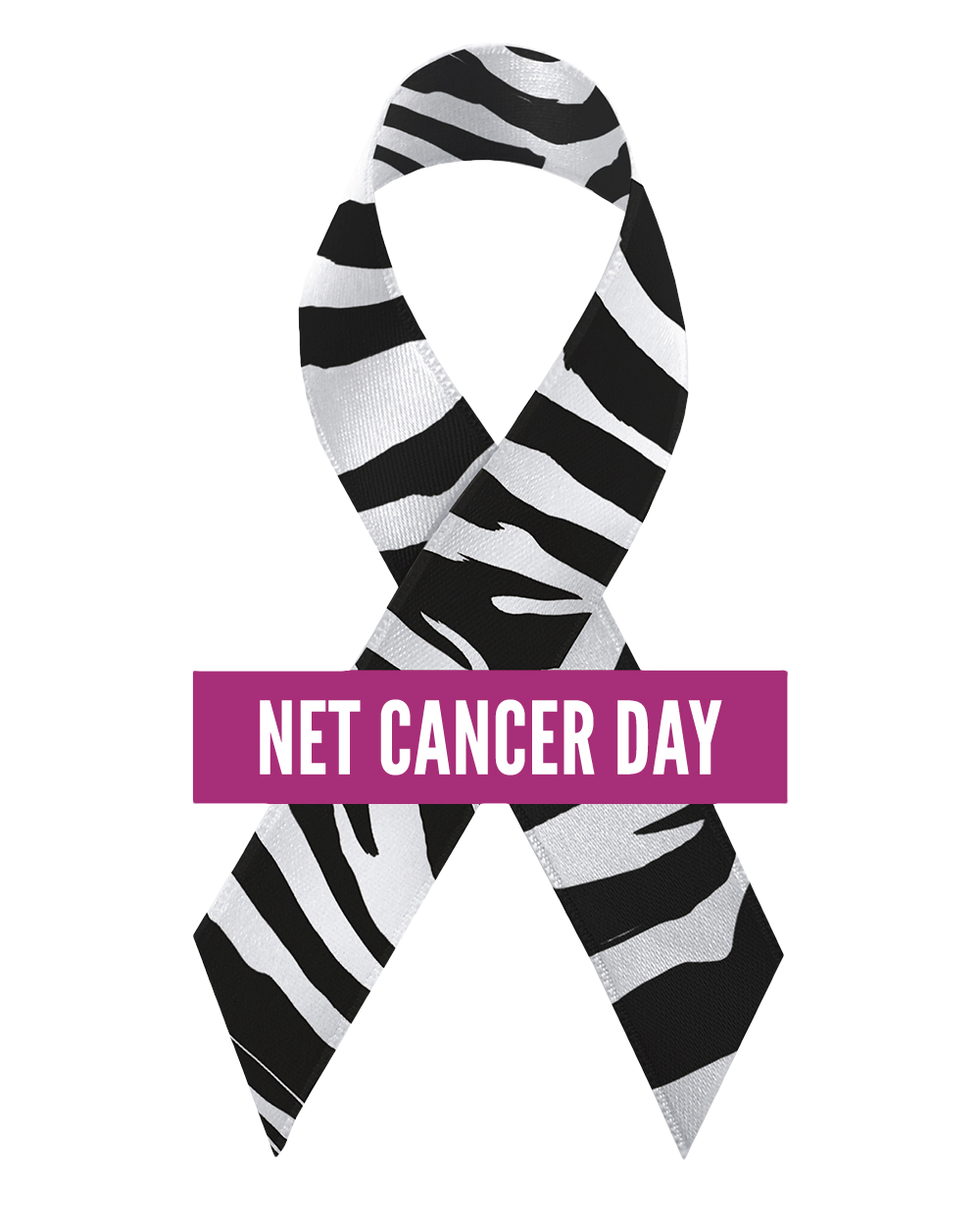
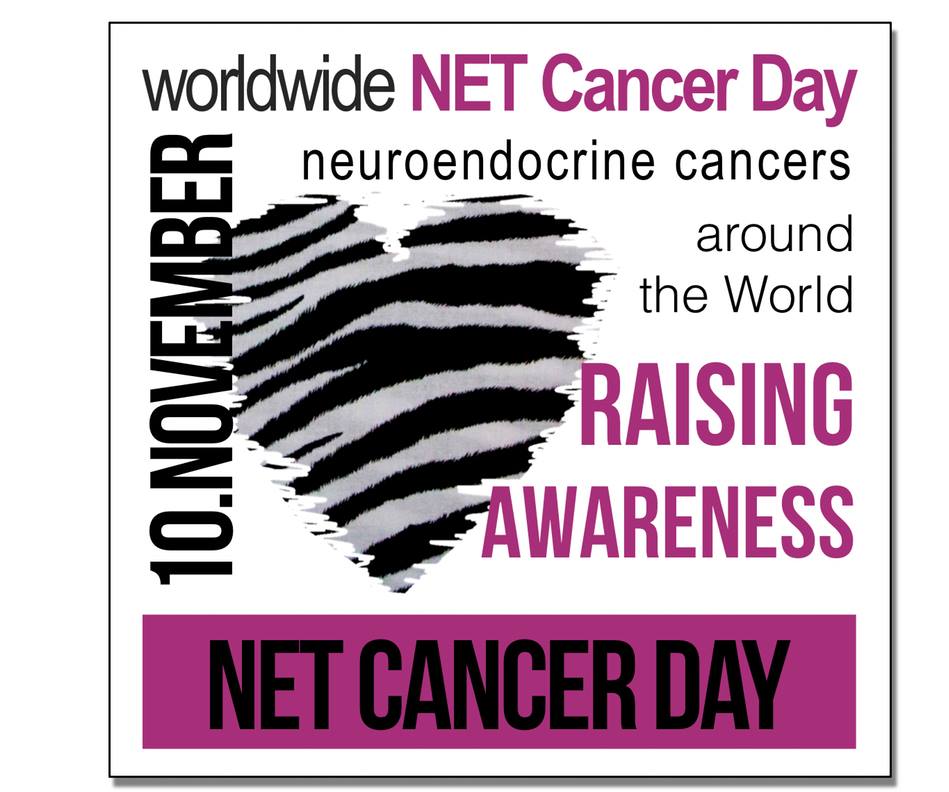
ncd-logo-newNovember 10 is Worldwide NET Cancer Day, a day for raising awareness of neuroendocrine cancer.

It’s not surprising that this disease has escaped the attention of even the medical community at large until now. Many family practitioners will never see a case. My doctor has been practicing medicine for about 20 years and I’m his first NETS patient. A locum filling in at our local hospital last spring went so far as to debate with me whether I even have cancer! He was completely unaware that neuroendocrine tumours can be malignant as most are not.

Is NET cancer really that rare? Here in Canada, specific numbers are not even reported separately, but my estimate, based on US statistics, is that there are approximately 890 new cases per year across the country with only about 106 of those residing here in the province of Alberta. In comparison, 2100 Albertan women are diagnosed with breast cancer each year and 2500 men with prostate cancer. Is it any wonder that those cancers have a much higher profile?

Since it falls upon those of us with the disease to do what we can to raise awareness, there are several key messages that we would like to highlight today. First of all, as with other cancers, early diagnosis is important. Sadly, it doesn’t happen often. If the initial tumour is found before any secondary growths occur, it can often be removed surgically and the patient is considered cured. Once it has spread, however, the disease is incurable. I had 5 tumours at diagnosis and many patients have more. I have been told that I may have had this cancer for as long as 10 years before it was detected quite by accident! Fortunately, it’s usually very slow-growing.

Awareness of symptoms is key to early diagnosis. Unfortunately, however, misdiagnosis is extremely common. On average, patients see 6 healthcare professionals at more than 12 clinical visits before receiving a correct diagnosis because symptoms of NET cancer are often very similar to more common conditions including Irritable Bowel Syndrome, asthma, diabetes, stomach ulcers and lactose intolerance. Depending on where the tumours are located, typical symptoms include abdominal pain and cramping, diarrhea, joint pain, wheezing, fatigue, and flushing of the skin. In very severe cases, there can be heart damage causing shortness of breath.

I endured stomach pain and diarrhea off and on for at least 7 or 8 years before my tumours were finally detected. At one point, a medication used to treat acid-related stomach problems was prescribed, but it had little effect. Another time, I tried a dairy free diet for an entire month to see if that would help, but it didn’t.

NET cancer can arise in any organ that contains neuroendocrine cells including the stomach, intestines, lungs, liver, pancreas and appendix. My primary tumour is located in my colon, but I also have three growths on my liver and one in a lymph node. Though it can occur at any age, the usual age of diagnosis is somewhere between 40 and 60.

So what are some of the goals of NET Cancer Day?

  • to raise awareness among decision makers, health professionals and the general public
  • to promote research aimed at improving quality of life and prognosis for NET cancer patients
  • to advocate for equity in access to care and treatment for NET cancer patients around the world
  • to bring hope and information to people living with NET cancers, their caregivers and their families

What can you do to help? You can help us spread awareness by simply reposting this on your blog if you have one or posting a link to it on your Facebook page. Thank you!

NET Cancer Awareness

Shoppers Drug Mart Beauty Gala

Shoppers Drug Mart Canada is a huge supporter of both the Canadian Breast Cancer Foundation and the Look Good Feel Better program that offers workshops for women battling cancer to help them deal with the appearance related aspects of the disease and its treatment. Yesterday, Shoppers stores across Canada hosted their annual Holiday Beauty Galas to raise funds for these two worthy causes. Galas across the prairie provinces and in the Maritimes were held in support of Look Good Feel Better while those in the rest of the country supported the Canadian Breast Cancer Foundation.

I wasn’t actually aware of the Shoppers galas until I was asked to write a brief testimonial about my experience as a Look Good Feel Better workshop participant for possible use in publicizing the events. I soon learned that half ($5) of each ticket sold is donated to the cause and the other half is actually returned to the participant in the form of a coupon that is redeemable on any purchase of cosmetics, fragrance or jewellery made during the event. Participants are able to book time with Shoppers Drug Mart beauty consultants during the event for skin analysis and/or cosmetic tips and makeovers.

When I arrived at the Camrose Cornerstone Shoppers Drug Mart yesterday morning, I was warmly greeted by three of the store’s beauty experts. When they learned that I’m a cancer patient and that I have attended a Look Good Feel Better workshop, they treated me like visiting royalty! My makeover began with Teia who started by using a BB cream to even out my skin tone and then showed me how to add contouring. Next, Sherry did my eye makeup and added a bright lipstick to finish the look. I felt pampered and came away looking great, if I do say so myself! I love the fact that I didn’t look overdone and I really appreciate the fact that there was absolutely no pressure to purchase any of the products that were used. I’m also looking forward to trying out the many product samples in the gift bag that I received!

IMG_5853   12096130_925759854126528_3111711121152960152_n

Thank you Teia, Sherry, Jocelyn and Shoppers Drug Mart! I’m already looking forward to next year’s gala.

Is it a journey or a battle?

There are many metaphors that people use to describe cancer… a dark scary cave, a parasite, an obstacle, a roadblock, a hard stroke of fate, a great burden, a marathon, a drama, a dance. Understandably, Lance Armstrong, visualized his cancer as the most important bicycle race he’d ever entered.

I entitled my very first blog post about cancer “A new journey…” using one of the most common analogies for the disease. Is it any wonder that someone like myself, struck with wanderlust, would use a travel metaphor? It seemed to come naturally to me, and I have continued to use it ever since.

Having cancer is like going on a journey without a map. We have no idea how long the trip will be or where it will take us. There are unexpected twists and turns and bumps in the road. Thankfully, I don’t travel it alone. Just as he was always by my side as we explored various parts of Asia, Richard is my traveling companion. The journey is as much his as mine and the outcome will affect him as much as me. Unlike many of our wanderings in countries like South Korea, Vietnam and Cambodia, we don’t make this trip without travel guides. We have a whole team of medical professionals showing us the way and a host of friends and family cheering us on.

This is not the only metaphor that I use to refer to my cancer, however. The military metaphor seems to have fallen from favour in recent times, but I believe that it is apt and I, for one, will continue to use it. As fellow neuroendocrine cancer warrior, Ronny Allan, recently wrote on his blog,

“I don’t like Cancer – it attacked me, it attacked my family, it attacked others I know, it has killed people I know……. it has killed millions of people and changed many lives.  I’m ‘fighting’ Cancer.  I’m in a ‘battle’ with Cancer.”

Yes, Ronny. Yes, you are. We both are. We’re fighting for our lives and cancer is the enemy!

Apparently, there are both bloggers and professionals who don’t think that we should use this kind of language. Some claim that such language is inherently masculine, power-based and paternalistic. Really? Girls can’t fight? You just watch me! Others feel that using a military metaphor suggests that if one loses the war against cancer, she must not have fought hard enough. Nonsense! If I lose this battle, it will be because the weapons of this war are not yet perfected and our understanding of the enemy is limited.

We do have weaponry, however. We fight with surgical tools and with chemical and nuclear warfare. Like soldiers, we strive to carry ourselves through battle with courage, grace, and dignity and most of us have scars to show that we’ve been engaged in battle.

Cancer-may-have-started-the-fight-but-I-will-finish-it.-380x500

Walking the third pathway: living with chronic cancer

“Have you finished having treatments yet?”

“How many more treatments do you have to have?”

These are questions that I’m asked constantly. When someone has cancer, people usually expect one of two outcomes; either you’re cured or you die. Because two years have passed since my neuroendocrine cancer was diagnosed and I’m obviously still very much alive, people automatically assume that I must fall into the first category, those who beat the disease and move on. Few are even aware that there’s a third pathway. With proper treatment, however, some cancers are considered chronic. Though incurable, they can often be controlled with proper treatment and the patient can live what appears to be a relatively normal existence. That’s the road that I’m on.

“Have you finished having treatments yet?”

No. I’ll probably have to have them for the rest of my life.

“How many more treatments do you have to have?”

That depends entirely on how long I live.

People are usually startled by my responses, but this is the reality that I live with. It’s entirely possible that I’ll eventually die of my cancer, but I could also die with it. All I can say for sure is that, at present, things are going in the right direction. I had another treatment on Tuesday morning and the follow up scans showed that my primary tumour, which is located in my colon, has continued to shrink. In fact, it’s tiny compared to the size it was at diagnosis. That, in itself, was very good news, but we also learned that the largest of the three tumours on my liver has now started to diminish in size and there are no new growths. Obviously, the treatments are working! How long that will continue to be the case, no one has any idea, but we do know that there are new treatments on the horizon and when this one stops working, there will probably be something else that we can try.

So, what’s it like walking this third pathway?

There are plenty of things that I’d still like to accomplish in life and places I’d like to go. Some I’d like to return to and others I want to see for the first time. It may sound surprising, but there hasn’t been a huge sense of urgency to try to cram these things into whatever time I might have left. Perhaps that’s because our focus for the past two years has been largely on fighting, not one, but two cancers; the neuroendocrine tumours (NETS) that put me on the third pathway as well as the completely separate and unrelated cancer that was diagnosed seven months later. With that one out of the way and my NETS well under control now, maybe we can begin to focus more on crossing things off my unwritten bucket list, but the lack of urgency may also be due to the fact that I don’t really sense that my end is imminent. You see, I really hope to be one of the ones who dies with this disease, not of it.

I still plan for the future, but I’ve also been learning to inhabit one square on the calendar at a time. Walking this pathway has definitely given me a greater appreciation for the moment and for the small things in life. I’ve always loved hiking, but the delight that it gave me this summer was greater than ever before. I was simply so thankful to be able to do it! I don’t take things like that for granted anymore.

I’ve always been one who believed in living life to the fullest; now I just have to do that within the confines of my treatment. There are limitations, of course, especially during a week like this one when I’m highly radioactive, but overall, I am blessed to be able to continue living a fairly normal life.

NETS

The colours of cancer

BreastCancerAwarenessPinkRibbonOctober is Breast Cancer Awareness Month and the world around us is turning pink. Professional football players wear pink booties and gloves, NASCAR drivers dress in pink and drive pink cars, and restaurants serve up pink drinks and even pink burgers! In October anything pink sells; everything from pink vacuum cleaners to pink tools and coveralls. Don’t get me wrong; I have nothing against increasing awareness of the disease that is one of the leading causes of death for Canadian women. It took the life of one of my dearest friends just over nine years ago, but I’m fully behind the “Think before you pink” movement that strives to draw attention to the fact that all is not what it appears to be in the world of pink.

Samantha King is the author of Pink Ribbons, Inc., a 2006 book that examined how breast cancer has become a dream come true for some companies that want to bask in the glow of corporate do-gooding. An associate professor of kinesiology and health studies at Queen’s University in Kingston, King helped popularize the term “pinkwashing” to describe campaigns that flaunt the ubiquitous pink ribbon but have negligible effects on the realities of breast cancer. Some companies use pink ribbon related marketing to increase sales while contributing only a tiny fraction of the proceeds to the cause, or use pinkwashing to improve their public image while manufacturing products that may, in fact, be carcinogenic.

Any company can put pink ribbons on its products. When purchasing cancer awareness products, be a savvy shopper. Check the label or tag and ensure that a percentage of the purchase price is actually going to a recognizable foundation or non-profit organization. Oftentimes, making a direct donation to your favourite cancer charity is actually a better way to go.

Is pink the only colour of cancer though? Absolutely not! In fact, there are awareness ribbons in practically every colour imaginable, each one representing a different cancer. Ovarian cancer is teal, uterine cancer peach, liver cancer emerald green and colon cancer dark blue. Prostate cancer is light blue, testicular cancer orchid, leukemia orange and mesothelioma royal blue.

And what of my cancers? Head and neck cancers are burgundy and white, but that one is gone, hopefully for good. This is the ribbon that I wear:

zebra ribbon

The zebra stripe represents neuroendocrine (NETS) and carcinoid cancers. It’s not surprising that we zebras don’t get as much attention as those pink people do. After all, there aren’t very many of us. In Canada, specific numbers for neuroendocrine cancer are not even reported separately, but in the US there are an estimated 8000 new cases each year. Compared to the approximately 294 500 new cases of breast cancer that are expected to be diagnosed in that country in 2015, that’s a very tiny number, but we need awareness too. There are family doctors who have never heard of neuroendocrine cancer. They have no idea what it is, how it’s treated or that it’s incurable. A locum filling in at our local hospital actually questioned whether I had cancer at all!

NETS not pink

Blogs devoted to NET cancer awareness:

https://ronnyallan.wordpress.com

http://walkingwithjane.org