The colours of cancer

BreastCancerAwarenessPinkRibbonOctober is Breast Cancer Awareness Month and the world around us is turning pink. Professional football players wear pink booties and gloves, NASCAR drivers dress in pink and drive pink cars, and restaurants serve up pink drinks and even pink burgers! In October anything pink sells; everything from pink vacuum cleaners to pink tools and coveralls. Don’t get me wrong; I have nothing against increasing awareness of the disease that is one of the leading causes of death for Canadian women. It took the life of one of my dearest friends just over nine years ago, but I’m fully behind the “Think before you pink” movement that strives to draw attention to the fact that all is not what it appears to be in the world of pink.

Samantha King is the author of Pink Ribbons, Inc., a 2006 book that examined how breast cancer has become a dream come true for some companies that want to bask in the glow of corporate do-gooding. An associate professor of kinesiology and health studies at Queen’s University in Kingston, King helped popularize the term “pinkwashing” to describe campaigns that flaunt the ubiquitous pink ribbon but have negligible effects on the realities of breast cancer. Some companies use pink ribbon related marketing to increase sales while contributing only a tiny fraction of the proceeds to the cause, or use pinkwashing to improve their public image while manufacturing products that may, in fact, be carcinogenic.

Any company can put pink ribbons on its products. When purchasing cancer awareness products, be a savvy shopper. Check the label or tag and ensure that a percentage of the purchase price is actually going to a recognizable foundation or non-profit organization. Oftentimes, making a direct donation to your favourite cancer charity is actually a better way to go.

Is pink the only colour of cancer though? Absolutely not! In fact, there are awareness ribbons in practically every colour imaginable, each one representing a different cancer. Ovarian cancer is teal, uterine cancer peach, liver cancer emerald green and colon cancer dark blue. Prostate cancer is light blue, testicular cancer orchid, leukemia orange and mesothelioma royal blue.

And what of my cancers? Head and neck cancers are burgundy and white, but that one is gone, hopefully for good. This is the ribbon that I wear:

zebra ribbon

The zebra stripe represents neuroendocrine (NETS) and carcinoid cancers. It’s not surprising that we zebras don’t get as much attention as those pink people do. After all, there aren’t very many of us. In Canada, specific numbers for neuroendocrine cancer are not even reported separately, but in the US there are an estimated 8000 new cases each year. Compared to the approximately 294 500 new cases of breast cancer that are expected to be diagnosed in that country in 2015, that’s a very tiny number, but we need awareness too. There are family doctors who have never heard of neuroendocrine cancer. They have no idea what it is, how it’s treated or that it’s incurable. A locum filling in at our local hospital actually questioned whether I had cancer at all!

NETS not pink

Blogs devoted to NET cancer awareness:

https://ronnyallan.wordpress.com

http://walkingwithjane.org

A little truth and a little common sense please!

When our daughter was suffering from leukemia in the early 1980s, we were told that if we simply boiled up some pine needles and fed her the resulting tea, she would be well. That was just one of many crazy cures that we were told about, so I expected to be inundated with similar tales when I was diagnosed with cancer two years ago. At first, I was pleasantly surprised not to be told about some magical potion or miracle fruit at every turn, but lately I’ve come to the end of my patience with all the nonsense being circulated through social media!

It absolutely astounds me how many cockamamie stories circulate on Facebook and are reposted by seemingly intelligent people who don’t bother to check the facts first. It’s so easy to do! Just plug a few key words into Snopes.com or TruthorFiction.com and voila! There you have it; the research, the facts, the truth!

These days, it’s the crazy cancer prevention and cancer cure stories that really burn me. Yesterday it was baking soda that would save my life! Really? If it was that easy, do you think there would still be thousands of people dying of cancer every day? According to Cancer Research UK, more than one person dies of cancer every four minutes in the UK alone! Would that be happening if the answer was sitting on the shelf in almost everyone’s kitchen? I don’t think so! With all the time and money that goes into medical research, does anyone really think that the cure for cancer is going to be found floating around on Facebook? Let’s use a little common sense!

Extraordinary claims require extraordinary evidence. YouTube videos and Facebook posts are most certainly not scientific evidence! Where are the clinical trials? Where are the published research papers? If only people would consider the source before choosing to repost something. If it doesn’t come from the Mayo Clinic or another reputable medical institution of that ilk, it probably isn’t true.

Of course, that brings me to my all time most loathed myth, the idea that governments, pharmaceutical companies and even charities are colluding to hide the cure for cancer because they make so much money from existing treatments. How can anyone actually believe that? There are so many ways to debunk that argument that I hardly know where to begin. First of all, it simply doesn’t make sense that pharmaceutical companies would want to suppress a potential cure. Finding a highly effective therapy would guarantee huge worldwide sales. Secondly, why wouldn’t doctors, who often prescribe less expensive generic drugs, use cheap treatments if they were shown to be effective in clinical trials? And then there’s perhaps the most obvious argument; cancer touches everyone. Even politicians, doctors and pharmaceutical executives get cancer. Their loved ones and colleagues die too. They are not exempt! Would they really withhold treatment from their own spouses, parents or children if they knew they could save their lives? Again, I think not!

Perhaps before reposting or passing on an unsubstantiated, too good to be true, miracle cure a person should ask themselves, what if one desperate cancer patient chooses to abandon conventional treatment and try this instead and what if it doesn’t work? Do I want to be responsible for that? Steve Jobs, co-founder of Apple Computer, had the same cancer that I have. He chose to ignore his doctors’ advice and sought out alternative treatments instead. By the time he discovered that they didn’t work and turned back to the doctors for help, it was too late. He was a highly intelligent man with enough money to be able to access the best of treatments available anywhere in the world and he might be alive today if he’d used a little common sense!

There ends my rant!

common_sense_cartoon_realitycheck060103-resized-600

Hope and a future!

It’s been awhile since I wrote an update about my battle with cancer which is, in itself, an indication that things have been going well. There really hasn’t been much to report which is a good thing! Yesterday, we sat down with one of my specialists to discuss the results of recent CT and PET scans. Though we weren’t expecting anything dire, I think we both walked out of his office feeling like a load had been lifted off our shoulders. Yes, the news was that good!

As many of you are aware, I have dealt with two completely separate and unrelated cancers over the past two years. The first good news was that there is absolutely no sign of the acinic cell cancer that was removed surgically and treated with radiation last summer. I have routine follow-up appointments with both the surgeon and the radiation oncologist next week, but I’m certain that they’re going to tell me that everything is fine.

We already knew that my primary neuroendocrine tumour, which is located in my colon, has been shrinking as a result of the radioisotope (Lutetium) treatments that I’ve been having. Yesterday we learned that the other four tumours, three on my liver and one in a lymph node, have not changed in size since diagnosis. That’s a glass half full / half empty kind of statement. While it would be nice to hear that they too are shrinking, the fact that they have not grown and that there are no new ones is actually very good news.

Another indication that the disease is stable, that my tumours are essentially dormant now, is hormone production. Neuroendocrine tumours (NETS) produce serotonin, a hormone that we all have in our bodies. Serotonin is sometimes referred to as one of the happiness hormones because a deficit may to lead to depression, but an excess secreted by neuroendocrine tumours results in carcinoid syndrome which, as in my case, results in symptoms that include abdominal cramping and diarrhea, skin flushing, and periods of rapid heart rate. It can also lead to heart disease and other complications. A 24 hour urine test is used to measure the amount of serotonin in the body. I don’t yet understand exactly what the numbers mean, but I was told yesterday that my level at diagnosis was 150. A year ago, it was down to 69 and now, it’s 42. Apparently, normal is around 40. That would indicate that my tumours are no longer actively producing serotonin which is definitely good news!

So what does all this mean for the future? There is no cure for NETS. Even if my tumours were to disappear completely which happens very rarely, I would not be considered cured, but I am now entering a maintenance phase. For the next two years, I will receive a Lutetium treatment every six months instead of every 9 to 12 weeks as has happened so far. Then, if things continue to go well, we’ll go to a treatment every nine months. Yesterday was the first time we were even told of that possibility!

“I know the plans I have for you, declares the Lord, plans to prosper you and not to harm you, plans to give you hope and a future.”  Jeremiah 29:11

Yesterday was definitely a day that gave us hope and a day that gave me greater confidence of a future here on this side of heaven! The battle isn’t over, in fact it never will be, but for now it’s getting easier and that’s enough for me!

Tote-ally awesome!

When I read “Crashing the Cancer Club“, Jenny Charlesworth’s story of surviving cervical cancer, in the March 2015 issue of Chatelaine magazine, I immediately responded with a letter to the editor via email. I’d completely forgotten about that until I flipped open the May issue and saw my letter in print! A bright pink tag announced that it was “This Month’s Winner”!

I vaguely remembered seeing a tiny note at the bottom corner of previous Letters pages announcing the chance to win a prize for writing a winning letter, but I didn’t give it much thought. I was just happy to see my letter in print! Sometime later, I looked back at the March issue and saw that the prize that was being offered was a blender. I already had a perfectly good blender and no real need for another one, so I wasn’t even concerned about the fact that I hadn’t included my mailing address with my letter.

Almost exactly a month ago, in the middle of June, I received a surprise email from Dominique at Chatelaine telling me that I’d won a leather tote from The Sak and asking for my address and phone number!

Leather tote or blender? Which would I rather have? I looked up The Sak website and checked out the many tote bags on offer. I love my blender, especially the fruit smoothies that I often make in it, but it was no contest. There were lots of bags that I could visualize myself carrying and I began to wonder which one would soon be mine!

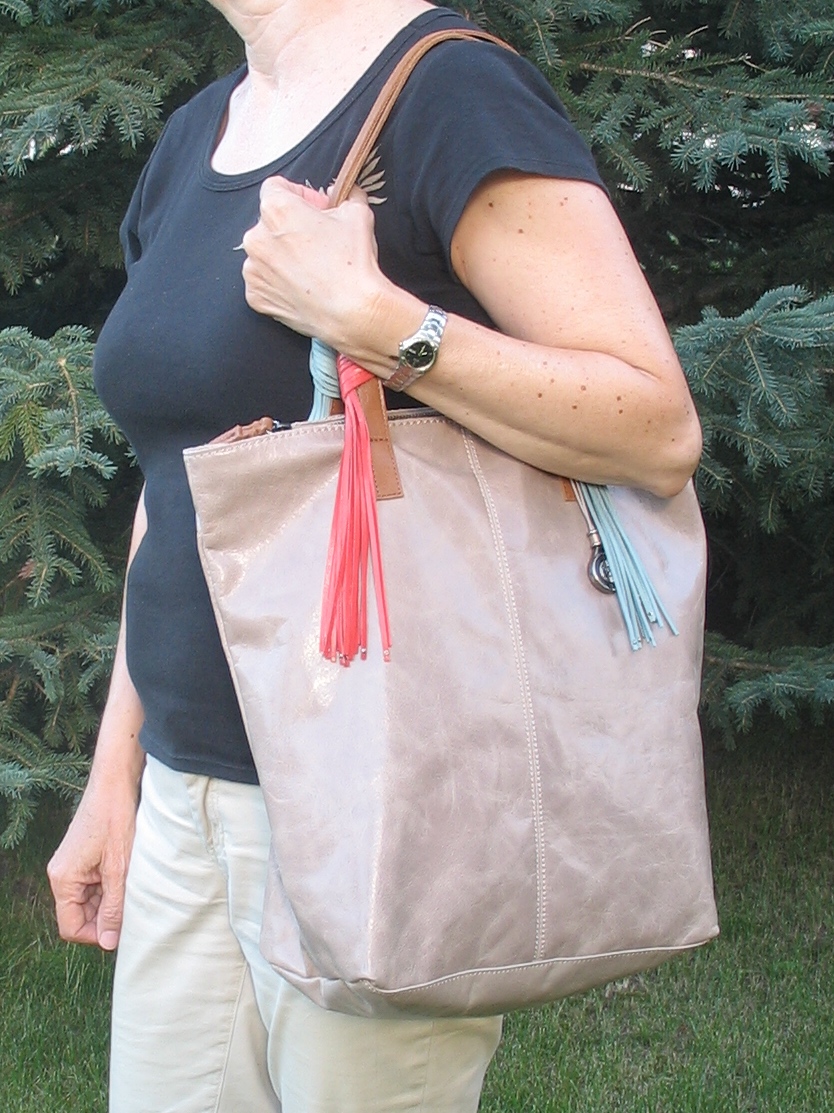
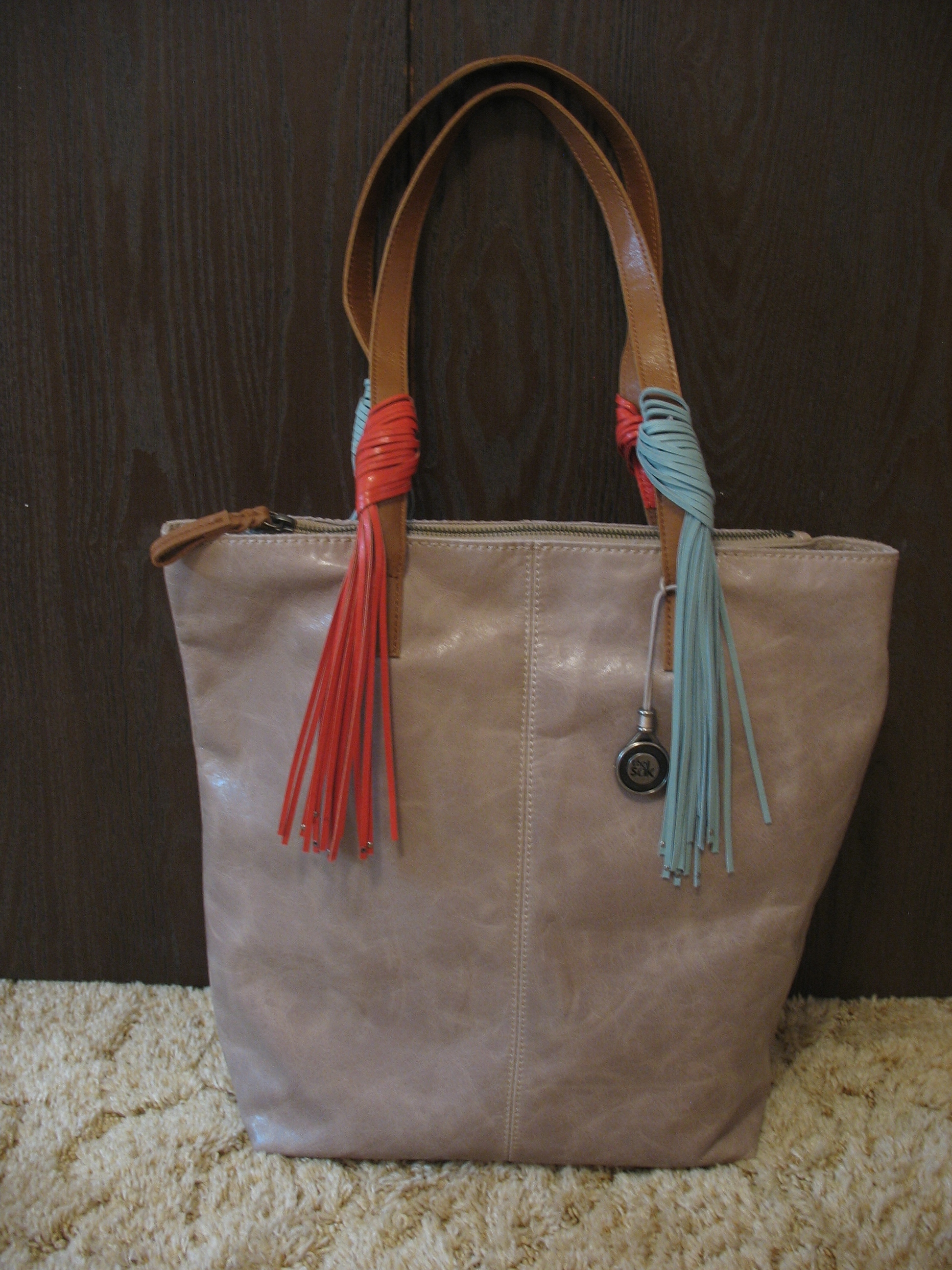
Today, it arrived by courier… the Palisades soft leather tote in the shitake tassel design. I love it’s casual, slightly bohemian look. With it’s spacious fully lined interior, zippered inside pocket and magnetic closure, it has plenty of room for essentials like my wallet, cell phone, sunscreen and camera. In fact, I have a feeling that it’s going to be an ideal travel companion! I wonder where we’ll go together?

IMG_5410  IMG_5404  IMG_5418

Born To Be Wild

Painting

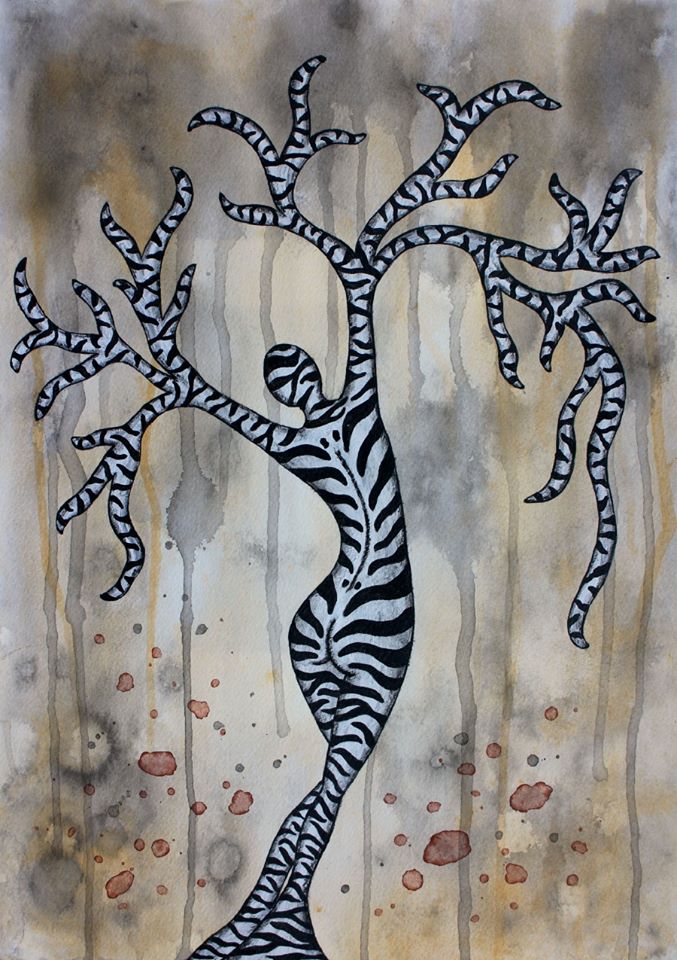
I saw the painting Born To Be Wild by Norwegian artist, Sylvia Sotuyo, for the first time the day before yesterday on the NET Cancer Day Facebook page and it immediately spoke to me in a way that art seldom does. I looked at it over and over again, each time asking myself what it is about that figure that inspires me so. I even posted it as my Facebook profile picture. Why? Because I see it as a picture of me! I may not look like this to you and it isn’t what I see in the mirror, but I know it’s me!

I contacted the artist and she graciously gave me permission to share her painting here and to try to explain what it means to me, but first, let me share her description of it:

The dynamic human tree represents the strength and stamina of the tree, combined with the power and intelligence of the human being. The human tree stands proudly, well grounded to earth, and reaches towards the sky to achieve all it`s hopes and dreams…

I, too, see it as a symbol of strength and hope, but I see other things that the artist may not have had in mind. First of all, the zebra is the symbol of neuroendocrine tumours (NETS), the incurable cancer that I was diagnosed with almost two years ago. Neuroendocrine tumours are difficult to diagnose. The symptoms are usually vague and similar to more common health problems. Many family doctors have never encountered a NETS patient. When presented with symptoms like stomach pain and diarrhea, they naturally think of things like Irritable Bowel Syndrome, Crohn’s Disease or lactose intolerance. Medical students are taught “when hearing hoofbeats, think of horses, not zebras.” Neuroendocrine tumours are very rare and therefore they are considered to be zebras.

Since my diagnosis, I’ve noticed zebra stripes everywhere! In recent years, the fashion world has been inundated with animal prints and the zebra is definitely a popular motif. I’ve seen zebra t-shirts, zebra leggings, zebra pjs and even zebra bras. I’ve tried on zebra jeans and a sexy looking zebra dress, but I didn’t buy either one. I’ve also seen zebra handbags and zebra luggage. One of the ladies I occasionally play golf with has a zebra golf bag. Obviously, it was the zebra stripes on the figure in Sotuya’s painting that prompted the NET Cancer Day organization to post it on their Facebook page and that initially caught my eye, but there’s more than that to my fascination with it.

Like the tree, I’m more firmly rooted to one place than I was before my diagnosis. I receive a monthly injection to alleviate the symptoms mentioned above that has to be administered by a specially trained nurse. Fortunately, I can arrange to have the injection given anywhere in Canada. In fact, plans are already in place for me to have my next one in Vancouver, but arranging to have it given outside the country would be much more complicated. There likely won’t be any more long term stints teaching English or doing missionary work overseas in my future.

I’m also firmly rooted in my faith, however. It’s my absolute confidence that my life is in God’s hands that gives me the freedom and joy that I see represented by the outstretched arms or branches of the figure in the painting. I see strength and purpose in those arms as well as exuberance.

The figure is also graceful, possessing an elegance that I would like to think is true of me. I often pray that I might be a woman of grace, one who doesn’t allow the circumstances of life to define who I am. When I was diagnosed with cancer, I fervently prayed that God would enable me to endure whatever lay ahead with grace.

As the title of the painting implies, there’s also a wildness in her. I, too, am a little bit wild at heart. It’s not a loud or out of control sort of wildness, but I believe in living life to the fullest and I’m always ready to try something new. I don’t like to follow the crowd and I don’t always see eye to eye with the people who love me. I speak my mind, but I don’t fly off the handle. I love nothing more than a hike in the wilderness or a walk on a beach and just because I’m in my 60s doesn’t mean I can’t climb a tree! Yes, I’m a little bit wild; a little bit unconventional and I think this is a picture of me!

Painting

You can see other examples of Sylvia Sotuyo’s work and even purchase prints here.

It’s Wink Day!

IMG_5248

June 18, 2015 is Wink Day! The Canadian beauty industry, through their charitable foundation, Beauty Gives Back, has been encouraging women to post pictures and videos (with the hashtag #winkday) of themselves wearing blue eyeshadow today in support of women going through the emotional trauma of the Cancer Blues. The Cancer Blues is a term, coined by Beauty Gives Back, for the emotional distress caused by cancer and its treatment and is an often ignored consequence of the disease that can affect a person’s ability to fight and thrive through the ordeal.

IMG_5244

For over 20 years, Beauty Gives Back has supported tens of thousands of Canadian women through the Cancer Blues with programs such as Look Good Feel Better and FacingCancer.ca. “We are a ‘feel good’ industry – colourful, sexy and fun. We use colour to make women look good and feel better every day, so no one knows more about how women feel about themselves than we do,” says the Beauty Gives Back website. “We count over 95% of Canadian women as customers in their lifetime. And we cannot, and will not, abandon those same women when they are fighting for their lives against cancer. Therefore, the mandate of Beauty Gives Back is clear, real and relevant: We dedicate ourselves to treating the emotional fallout from cancer. Using the sum total of our knowledge, experience, expertise and resources, we do what women trust and rely on us to do – to make them feel human again in the face of the ravages of cancer and its treatment. In doing so, we help restore their confidence, and the confidence of those around them, to continue fighting with conviction and living with dignity.”

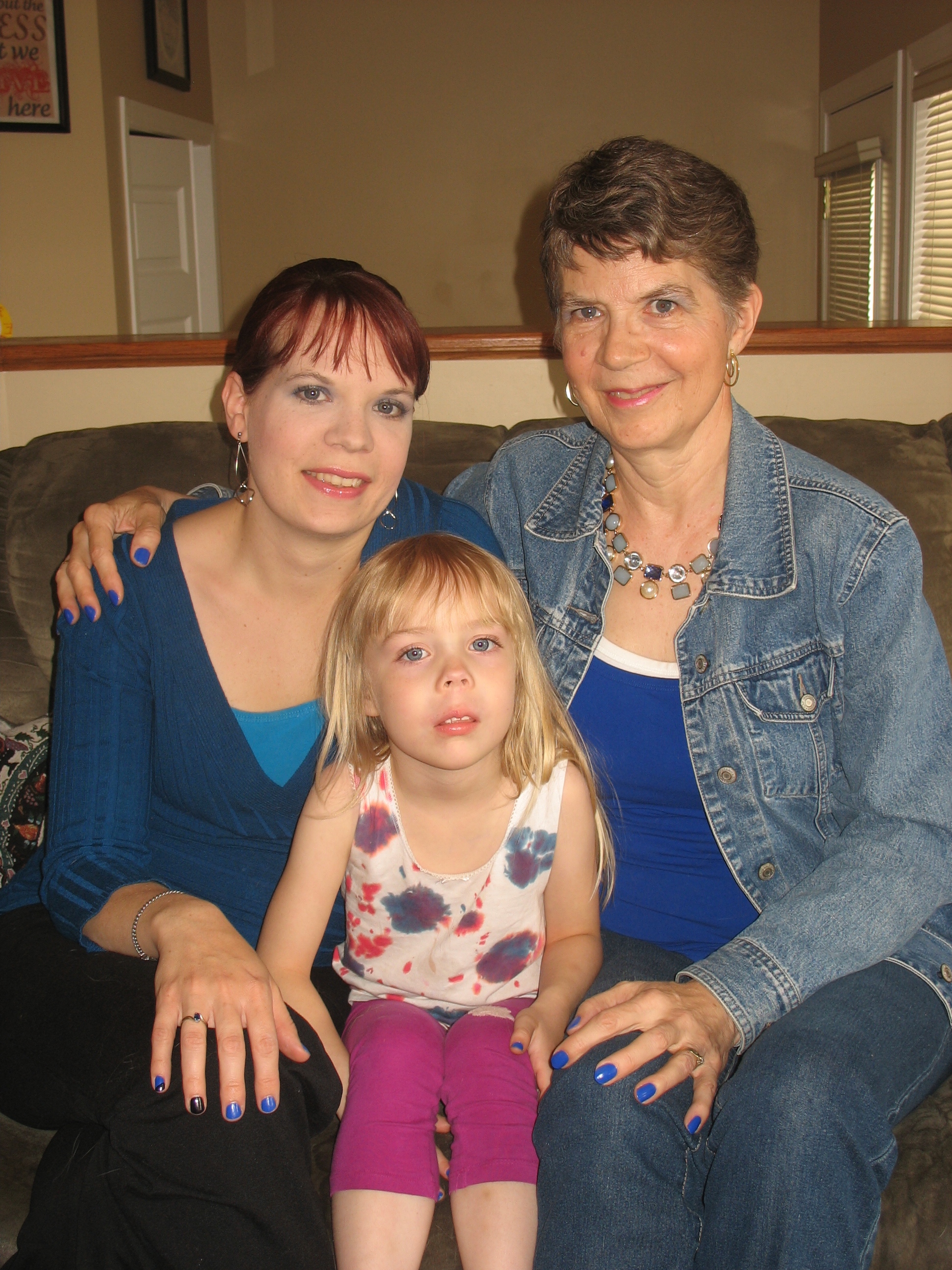
That’s definitely a cause that I could get behind, especially when all it took was a bit of blue eyeshadow, a camera and social media! Since we’re visiting in Calgary, daughter, Melaina, and granddaughter, Jami-Lee, joined in the fun. Even Jami’s cat, Duncan, with his blue collar, had to get in on the action!

IMG_5241

In spite of dealing with two completely separate cancers over the past two years, one of them incurable, I can honestly say that, though I have, of course, faced some emotional symptoms, I have not really suffered from the Cancer Blues. I can easily understand how it could happen though. I feel blessed to have had the amazing support of family, friends and a fantastic medical team. I have the good fortune of living just two hours away from the Cross Cancer Institute in Edmonton, Alberta, a world class treatment centre that is truly dedicated to treating the whole person. A Look Good, Feel Better workshop early last year was fun and a very helpful diversion from the more serious sides of dealing with my illness, but above all, I attribute my lack of mental distress to my undying faith in God who assured me the day after I learned that I had cancer, “I’ve got this in my hands. I know what’s going on. I’m going to take care of you!”

It’s not too late to get in on the Wink Day action! Photos and videos can be posted throughout the month of June. Why not wink with us?

IMG_5246

The best thing about pain

I’ve often said that the best thing about pain is how good it feels when it stops! Yesterday was my first completely pain free day in the last three weeks and so far, today is going just as well.

Though I didn’t realize it at first, I was suffering a nasty reaction to the cancer treatment that I received on April 14th. The first few days after the treatment were fine; just the normal tiredness that I’d experienced after each of the previous ones. Then, I woke at about 3:30 one morning with excruciating stomach pain. I had no idea what was going on and neither did my family doctor. He ordered an x-ray and when that came back looking normal, he suggested an enema to ensure that there was no blockage anywhere. For a little while, I felt a bit better, but soon the fire in my belly was back. Pain filled days and sleepless nights followed, eventually prompting me to phone the cancer clinic and describe my symptoms to Brent, the nurse who coordinates the team that provides my care.

“I hate to tell you this, but I’m pretty sure we did that to you,” he told me!

Gee, thanks Brent!

Discovering that what I was experiencing was actually a fairly common reaction, especially in patients with dead and dying tumour cells in their system (that’s definitely the good part!) didn’t lessen the pain at all, but it did give me peace of mind. Brent also assured me that I should soon begin to feel better. Apparently, this kind of reaction usually occurs within a two week window following treatment and I was nearing the end of that. We discussed the fact that the lining of my stomach and intestines was likely badly inflamed and I made the decision to eat a very bland diet of apple juice, applesauce, toast, crackers, tea and broth for a few days to give my insides a chance to rest and heal. That seemed to help and sure enough, right at the two week point, things improved significantly. I was even well enough to spend a few days in Calgary celebrating two very special birthdays. Our granddaughter, Jami-Lee, had her fifth birthday on April 28 and her brother, Drew, turned seven on May 1.

IMG_5123   IMG_5109

I continued to experience intermittent pain until two days ago, but that too seems to have finally passed. Obviously, all of this has made it impossible for me to begin following the dietary and exercise recommendations related to my recent pre diabetes diagnosis. I had no choice but to put that on hold until I got this under control, but I’m eating well again and I’ve just returned from a brisk 20 minute walk. That’s a far cry from the recommended 30 minutes five times a week, but it’s a start. I also felt well enough to play my first round of golf of the season yesterday!

My real hope in all of this is that the treatment has been as hard on my tumours as it has been on the rest of me! We’ll know more about that when I go for CT and PET scans on July 24. These will provide the baseline for my next phase of therapy which won’t involve another treatment until sometime in the fall. I’m very thankful for that too! If I was facing another one in just a few weeks, as I have done until now, I think I’d be tempted to slink away and hide in a deep, dark cave!

Instead, I’m going to enjoy the summer… sunshine, camping, golfing, geocaching, time with family… !

A new diagnosis!

Yes, that’s right! Apparently two different cancers in 20 months wasn’t enough. This time I’ve been told that I’m pre diabetic.

In this regard, I’m following in the footsteps of my grandmother, my mother and my aunt. Fortunately, Nana lived to 83, Mom to 92 and my aunt is an amazingly active 91. None of them developed full blown diabetes. Hopefully, I won’t either but if I do, it’s manageable. I’ve already spoken with my doctors at the Cross Cancer Institute and they’ve assured me that it wouldn’t change anything as far as my cancer treatment is concerned.

There are 3 lifestyle changes that are usually recommended for a diabetic (or pre diabetic):

      • Lose weight. Umm… no! At 5’8″ tall and 135 to 140 pounds, I don’t have any extra weight to spare!
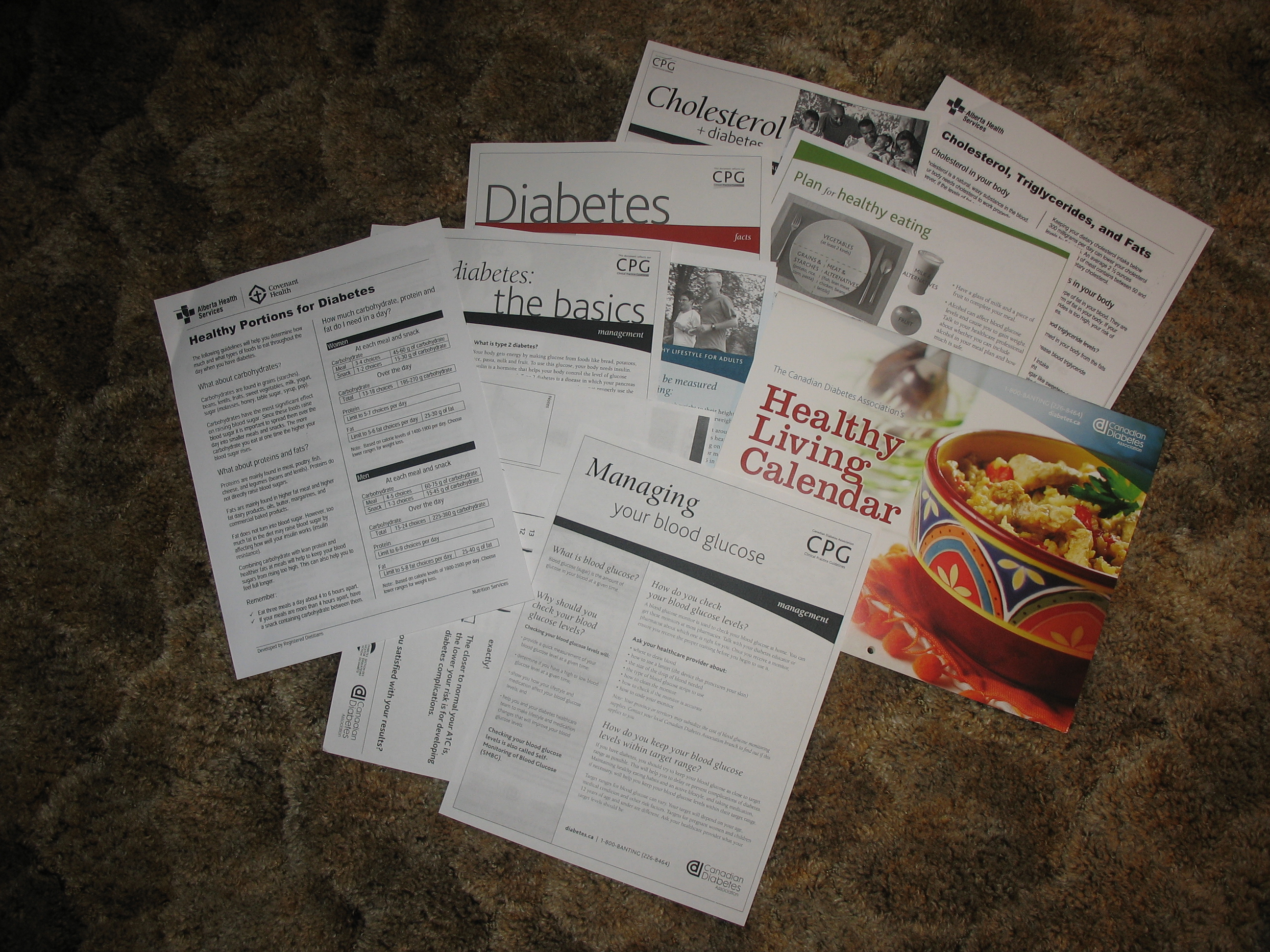
      • Make dietary changes. Again, not an easy one for me as we already eat an extremely healthy diet, but we met with a nurse this morning and I have a bunch of reading to do on this subject. Apparently, I don’t have to eliminate sugar. Moderation is the key. That means that I don’t have to completely cut chocolate out of my life. After all, would life without chocolate be worth living? It looks like I have a lot to learn about carbs though; which ones to choose and how much of them to eat. I might also be wise to cut out my morning glass of orange juice even though it’s almost as essential to me as most people’s first cup of coffee! A couple of common slogans for diabetics are “Don’t drink your fruit” and “Don’t drink your sugar”.
      • Exercise. Again, exercise has already been a vital part of my life, but I do admit to getting rather lax about it over the past few months. 30 minutes of aerobic exercise 5 days a week is recommended. The half hour of yoga like exercise that I do 5 mornings a week doesn’t count as it doesn’t elevate my heart rate. Sadly, golf doesn’t either, except maybe in those moments when it frustrates the heck out of me! No, it’s time to get back in the habit of going for a brisk walk every day.


IMG_5090

Well, I’d love to be curling up with a good novel this evening, but I guess I’d better start reading this stuff instead!

Milestone!

I reached a medical milestone today!

Yesterday, I completed my initial round of four radioisotope treatments and this morning’s scans showed that my primary neuroendocrine tumour (located in my colon) is shrinking! The other four tumours appear not to have grown and there are no new ones. As a result, my cancer treatment will now go into a maintenance phase. I will continue to be treated with Lutetium-Octreotate, but instead of a treatment every nine to twelve weeks, I will now have one every six months!

While I was sitting on my hospital bed yesterday afternoon while the Lutetium was being administered via IV drip, I flipped open my new issue of Chatelaine magazine and was in for a surprise. When I read “Crashing the Cancer Club”, Jenny Charlesworth’s story of surviving cervical cancer, in the March 2015 issue, I immediately responded with a letter to the editor via email. I’d completely forgotten about that until I saw my letter in print yesterday! Here’s what it said:

Thank you for pointing out, in “Crashing the Cancer Club,” that every cancer story is different and that each of us who has cancer, or who has had it in the past, is a survivor in our own right. Since August 2013 (a misprint in the magazine says 2014), I have been diagnosed with two different cancers. One was removed by surgery followed by radiation; but the other is a rare, slow-growing cancer for which there is no cure. People have a hard time grasping the idea of a chronic cancer. The usual assumption is that patients either die of their disease or are cured, thereby becoming cancer survivors. I’ve learned to look at my situation differently. I may die of my cancer or I may die with it, but either way, I am a survivor.

It may sound silly, but I was encouraged by my own words. Written two months ago, they reminded me that though mine is an incurable disease and, barring a miracle of God, I will have it for the rest of my life, I am indeed a survivor!

Reaching today’s milestone was a great reminder of that!


Blogging is good for my health!

Seven years ago, when I started blogging, my husband and I were preparing to spend a year teaching English in Japan. Following Augustine was born to share that experience with friends and family back home in Canada. I’ve always enjoyed writing so it was no surprise to me that when the year came to an end, I’d fallen in love with blogging and I wasn’t ready to let it go.

Over the years that followed, my blog became an eclectic collection of posts on a wide variety of topics including faith, family, and travel with a bit of food, fashion, fitness and even history thrown in. In essence, it chronicled our life and interests as an active retired couple.

Then came cancer!

When my first cancer was diagnosed a year and a half ago, the blog became an avenue for sharing vital information about my health with concerned friends and family around the world. I soon learned that it had an added benefit. As I dealt with the diagnosis of a second unrelated cancer, surgery, radiation, multiple tests and scans, new treatments, a clinical trial, and the emotional ups and downs that accompanied them all, I found that writing about the journey helped me process what was going on. It seemed that blogging was good for my mental health.

Now I’ve discovered that there’s actually scientific evidence to support that! Studies have shown that expressive writing leads to physical and mental health benefits such as long-term improvement in mood, stress levels and depressive symptoms. People with asthma who write have been shown to have fewer attacks than those who don’t and cancer patients who write tend to have more optimistic perspectives and improved quality of life.

So what is it about writing that makes it so good for us?

Apparently, the act of expressive writing allows people to take a step back and evaluate their lives. It can help them find meaning in a stressful event, manage their emotions better, talk to other people about the situation more easily and reach out for support more willingly. Instead of brooding or obsessing over a diagnosis or a catastrophic event, they are able to focus on moving forward. By doing so, stress levels go down and health goes up.

Remarkably, researchers found that just 15 to 20 minutes of writing three to five times over the course of a four-month study was enough to make a difference. That was good news to me. Though I try to blog more often than that, I’ve never had any desire to post every day. I’ve seen too many daily bloggers burn brightly for a short period of time then flicker and burn out. I try to post at least once a week but I’ve even fallen short of that lately.

Cancer is only one of the topics that I continue to write about. Blogging will never be a cure but it’s nice to know that really is good for my health!