Elbows up, Canada!

“Elbows up!” has become a rallying cry for Canadians as we face looming threats from south of our border, but what does it mean? Where did it come from? The phrase actually had its origin in hockey which seems entirely appropriate for a nation so obsessed with the sport.

Canadian-born Gordie Howe, also known as Mr. Hockey, actually had a second nickname: Mr. Elbows. Humble, generous and gentlemanly off the ice, he was known for wielding his elbows like weapons when he was battling for the puck. It’s such an enduring part of the Gordie Howe legend that a bronze statue outside Saskatoon’s SaskTel Centre portrays the hometown hero with his left elbow held high, as if fending off an invisible opponent.

In these days of punishing tariffs on Canadian exports and repeated gibes from the American president about becoming the 51st state, Gordie Howe would seem to be a good example of what it means to be Canadian. We are known worldwide for our unfailing politeness. We open doors for strangers and if you bump into us, we apologize, but clearly, when we’re threatened from outside, we respond with elbows up!

At protests across the country, Canadians have chanted the phrase and held their placards high. #ElbowsUp has been appearing all over social media, as both a call to stand against the threats and a warning to our neighbours that although Canadians might be polite, we’re not pushovers. We’re a bit like siblings on the playground. We might squabble amongst ourselves, but let an outsider threaten one of us and we come together in solidarity!

Now that we are facing a federal election, my fear is that our polarized views on who should lead the country in this current battle will divide us again. More than ever, during these unprecedented times, we need to remain unified. We need to stand together shoulder to shoulder with our elbows up. I pray that regardless of which party comes out on top and which leader is chosen, we will do exactly that.

Elbows up, Canada! 

Strong and free!

Simple skin care

What’s the one thing that every human being wears every single day? Their skin, of course! Unlike our clothing, we can’t buy a new skin when the old one starts to show signs of wear and tear. An effective skin care routine is the only way to protect this most important “garment” and keep it looking and feeling its best.

There are a myriad of products available, but skin care doesn’t have to be complicated. The important thing is to choose the right products for your skin type… oily, dry, or combination… and then use them consistently.

My daily routine involves just three products; a cleanser, a day lotion, and a night cream. Morning skin care should focus on prevention and protection, so I simply wash my face, neck, and decolletage with warm water and apply a moisturizing day lotion with SPF. Nighttime is about cleansing and repair, so that’s when I wash with the cleanser before applying my night cream. When I was younger my face was oilier and I also used a toner, but as skin tends to get drier with age, I eventually found that I didn’t need it anymore.

I’ve been using Olay products for years and have always been happy with them, but unfortunately they’re made in the United States. In light of the current president’s reprehensible behaviour toward my country, I felt the need to find an affordable made in Canada alternative. Yesterday I spent over an hour in a very informative free online consultation with a Beauty Advisor from Marcelle, a company that has been caring for Canadian skin for 150 years. While the products are available in most London Drugs and Shoppers Drug Marts as well as Walmart, I plan on placing an online order to take advantage of the International Women’s Day sale that’s on until March 16. Once I’ve used the products for awhile, I’ll let you know what I think.

I would be remiss if I didn’t also mention sunscreen. As much as I love sunshine, it isn’t friendly to our skin. In fact, in spite of the fact that I’ve always been diligent about using sunscreen when I spend time outdoors, I’m presently healing from a treatment of liquid nitrogen to a spot under my right eye where the rays of the sun, intensified by the lens of my glasses, did some damage. Unfortunately, I’m also going to have to search for a replacement for my favourite sunscreen as it, like so many other things, is produced in the States. I’d better do that soon before the last of the snow disappears from the golf course and the hiking trails!

The Canadian shopping conundrum

For the most part, I try to avoid mentioning politics on the blog, but as a Canadian I can’t sit by and say nothing when our closest neighbour, ally, and trade partner decides to become a bully and starts threatening our sovereignty. There might not be a lot that I can do about the situation, but I can’t do nothing. There’s too much at stake!
If there’s one thing that the present crisis has done, it has drawn Canadians together. We are seeing a kind of collective nationalism that goes far beyond cheering for the right hockey team. Canada is not for sale! We are not interested in becoming the 51st state and thousands of us are saying so with every grocery item we buy. Since money seems to be what the individuals behind the bullying understand best, I have joined an informal movement of fellow Canadians in boycotting products made in the United States. It’s first and foremost a shop Canadian movement, but beyond that, it’s about buying anything except American.

It’s not easy. Grocery shopping takes a lot longer these days as we squint at the small print on labels and try to figure out where the products we’re used to buying come from. Sometimes, as in the case of Campbell’s soups and some Kellogg’s cereals, the label reads “Product of USA” and we put the item back on the shelf, but it’s not always that straightforward. There’s “Made in Canada” which means that at least 51% of the total cost of the product’s creation had to have occurred in Canada. “Product of Canada” indicates that at least 98% of the total cost was incurred in Canada. But then there’s “Made in Canada with imported ingredients” or “Made in Canada from domestic and imported ingredients” with no indication where those imported ingredients came from. There’s also “Imported for _______” but again, nothing to say where the item is imported from.

I tried to do a bit of “investigative journalism” in preparation for writing this post and to help with my personal shopping decisions, but I wasn’t very successful. I already knew from reading the labels that Green Giant frozen vegetables are grown and packaged in Canada, but that the packaging is printed in the United States. When I emailed the company to ask why the printing wasn’t done in Canada, I received a very generic sounding response telling me that Green Giant is a brand that originated in the United States and that it has facilities in both Canada and the US, but that didn’t answer my question. Probing a bit further, I received a second reply assuring me that the company is proud to source their vegetables from farmers in Alberta, Ontario, and Quebec, but still no answer to my original question.

The label on my Kraft Peanut Butter jar says nothing about where it was made, but the KraftHeinz website told me that it was “proudly prepared in Canada”. While there’s a limited amount of peanut farming in southern Ontario, I know that it doesn’t produce enough to provide thousands of Canadian households with peanut butter. When I emailed KraftHeinz to ask where the peanuts are imported from, I was told all about how peanut butter is prepared and packaged and assured that “all ingredients used in Kraft products comply with our rigorous food safety standards” but after inquiring more than once, I still wasn’t told where the peanuts come from. I finally wrote, “I can only assume that your reluctance to give me this information is due to the fact that they are American grown and you realize that I, like many Canadians, am refusing to buy American products due to the fact that our closest neighbour and trade partner is now threatening our sovereignty. If I am wrong about this, please let me know.” I received no response to that, so Kraft Peanut Butter will no longer be on my grocery list. I had a very similar experience with Mondelēz International when I tried to find out where Triscuit crackers are imported from. 

Finding fresh produce is especially problematic in a country with long winters and a very short growing season, but I’ve been able to buy Canadian grown potatoes and carrots as well as tomatoes, lettuce, cucumbers, peppers, and mushrooms. I’ve been enjoying bananas from Guatemala and blueberries from both Mexico and Peru, but the only nice looking oranges that I’ve been able to find were grown in California, so they stayed in the store.

Of course, boycotting American products goes far beyond the grocery store. My favourite toothpaste is made in Mexico, but it’s a product of Colgate-Palmolive, a huge U.S. corporation, so where do we draw the line? The flouride gel that I’ve had to use every day since I lost one of my parotid glands to cancer over ten years ago, is made in Canada, but my skin care products, shampoo, and conditioner are all imported from the States. Obviously, I’ll have to look for other brands to try. I’ve already found a replacement for the Tide laundry detergent that I’ve used for years. I’ll be trying Canadian-made Tru Earth laundry strips.

Shopping ethically is further complicated for me by the fact that I try to avoid buying products from China which is notorious for its human rights abuses. Given the present situation, however, if forced to choose, I would probably buy a Chinese product over an American one.

Before I close, I want to assure my American readers that I fully understand that many of you are as dismayed as I am about what is happening in your country and our hearts go out to you at this difficult time. We also know that the tariffs that your leader is threatening to impose will be as hard on you as consumers as they are on us.

Museum of Aboriginal Peoples’ Art & Artifacts

We spent a few days this week camping, hiking, and kayaking in Sir Winston Churchill Provincial Park near the small town of Lac la Biche, about two and a half hours northeast of Edmonton, Alberta. When I read that the Portage College campus in Lac la Biche is home to the Museum of Aboriginal Peoples’ Art & Artifacts, I knew that we had to go into town to see it. I recognized the names of well-known artists like Bill Reid, Alex Janvier, and Norval Morrisseau and was eager to see their work.

Arriving at the college, I expected to find a gallery showcasing the works of these and other Indigenous artists. Instead, the extensive collection of traditional and contemporary works lines the hallways of the school and we were free to wander and enjoy them. With only one class in session while we were there, it was as quiet and serene as any traditional gallery would have been.

IMG_5793

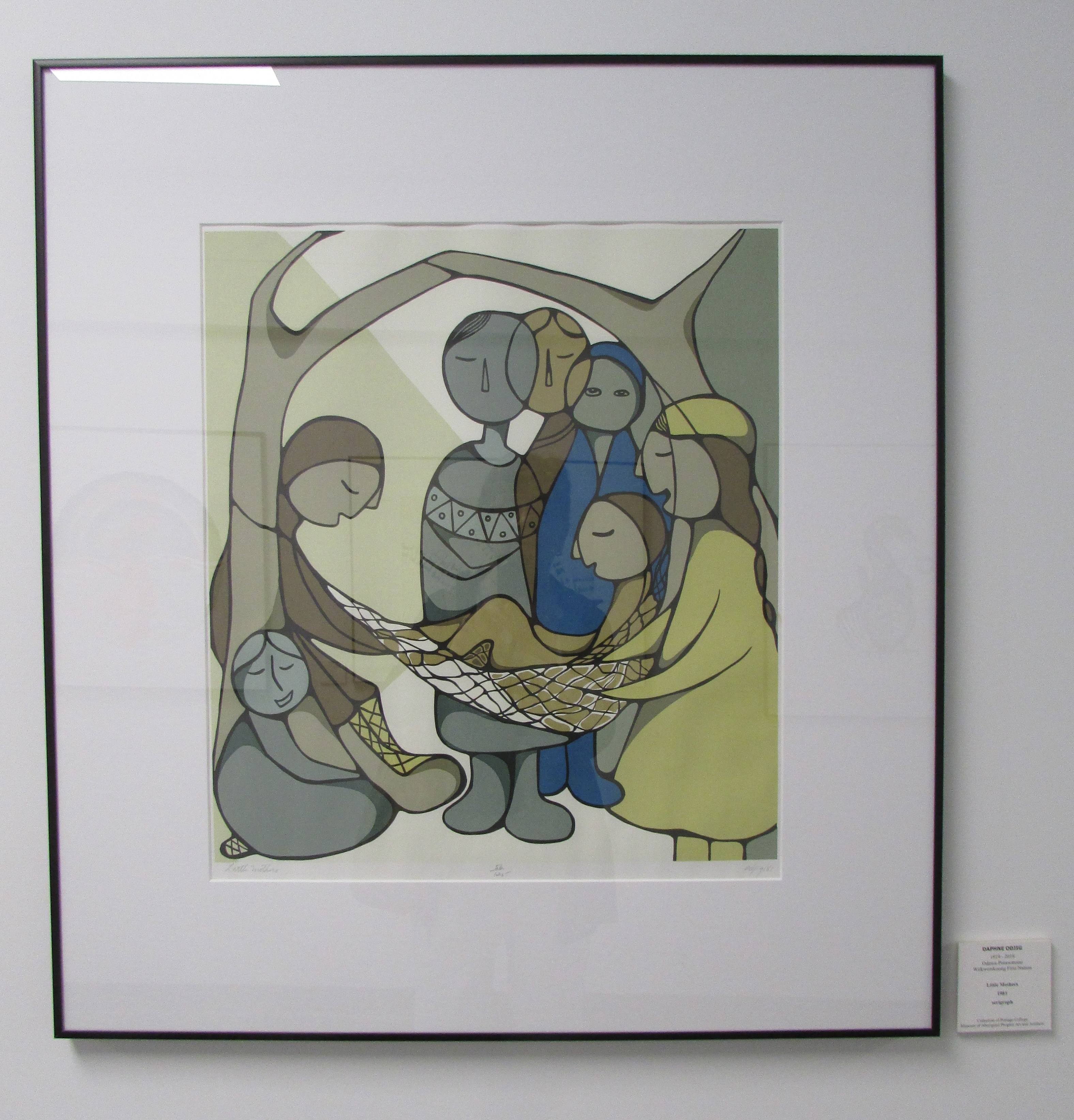
Little Mothers – Daphne Odjig

The Portage College museum features the world’s only permanent collection of works by the Professional Native Indian Artists Inc., also informally known as the Indian Group of Seven. The group was formed in 1972 after a series of gatherings in Daphne Odjig’s craft store and gallery in Manitoba and later incorporated as an attempt to be taken seriously as professional artists and to advocate for Indigenous art to viewed as fine art and to be included in galleries across the nation. The museum on the Portage College campus began in 1978 as a teaching collection for the college’s Native Arts and Culture programs and grew from there.

IMG_5783

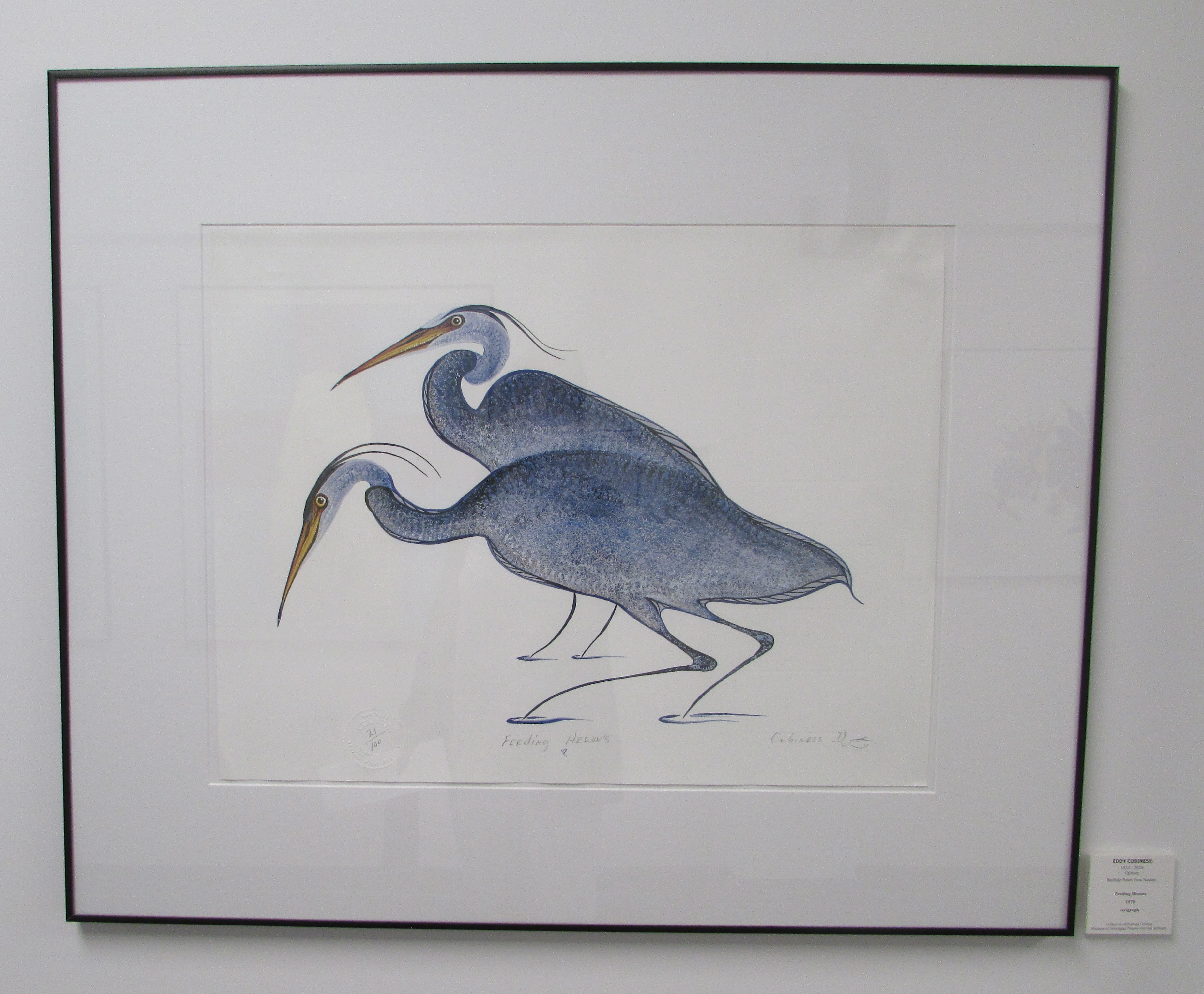
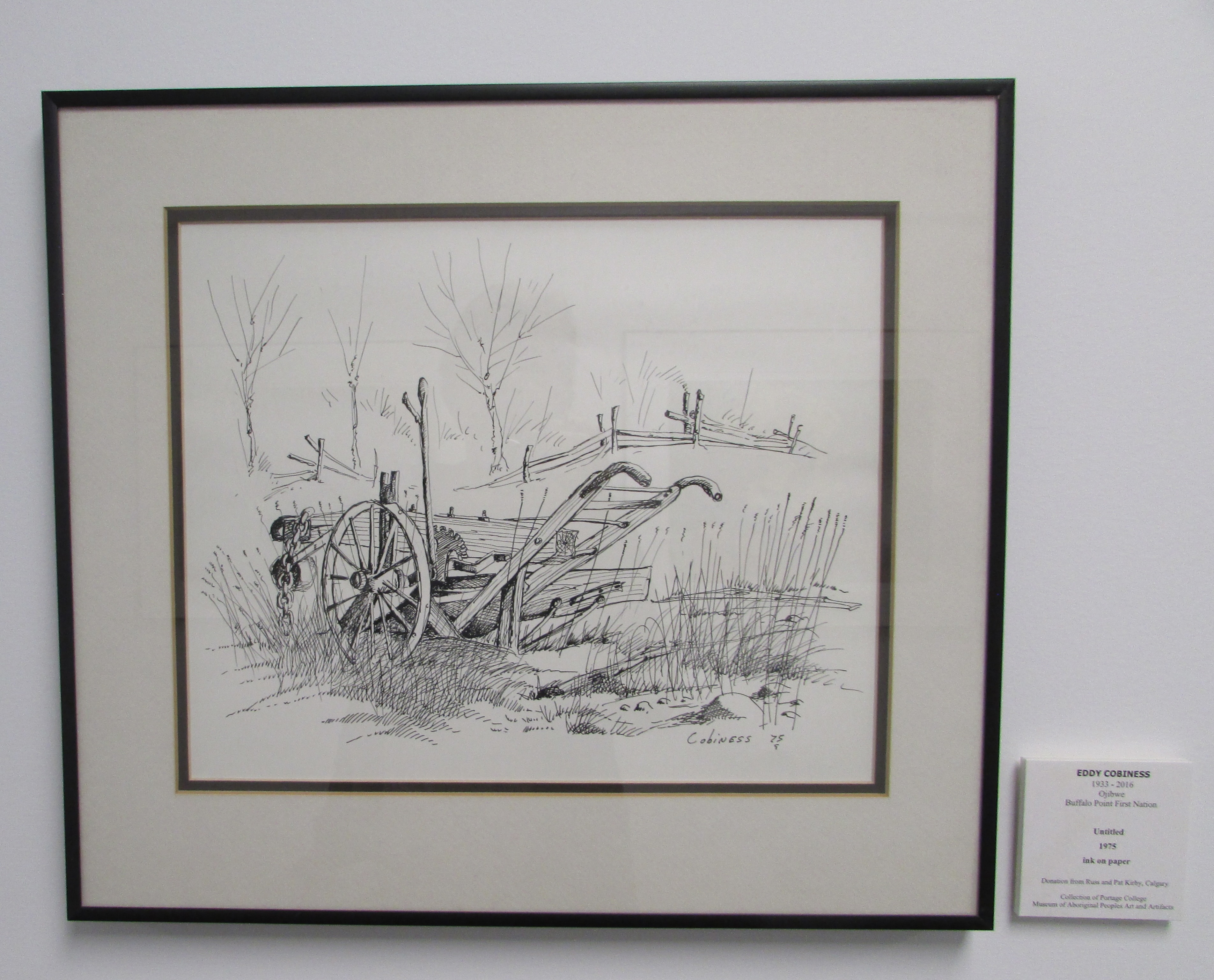
While I was impressed by most of what we saw, amongst the Group of Seven it was the work of Eddy Cobiness (1933-1996) that really stood out to me. Cobiness, of Ojibway descent, was born in Minnesota and raised on a reserve in Manitoba. Though I had not heard of him before, his art is held in many prominent private and public collections.

IMG_5777

Hoop Dancers – Eddy Cobiness

IMG_5805

Feeding Herons – Eddy Cobiness

IMG_5795

Mother Muskrat – Eddy Cobiness

IMG_5797

Untitled – Eddy Cobiness

These three colourful designs by Jackson Beardy also caught my attention, probably because their style is somewhat similar to that of the Indigenous artists of the Northwest Coast that I love so much.

IMG_5788

Thunder Dancer / Metamorphosis / Thunderbird – Jackson Beardy

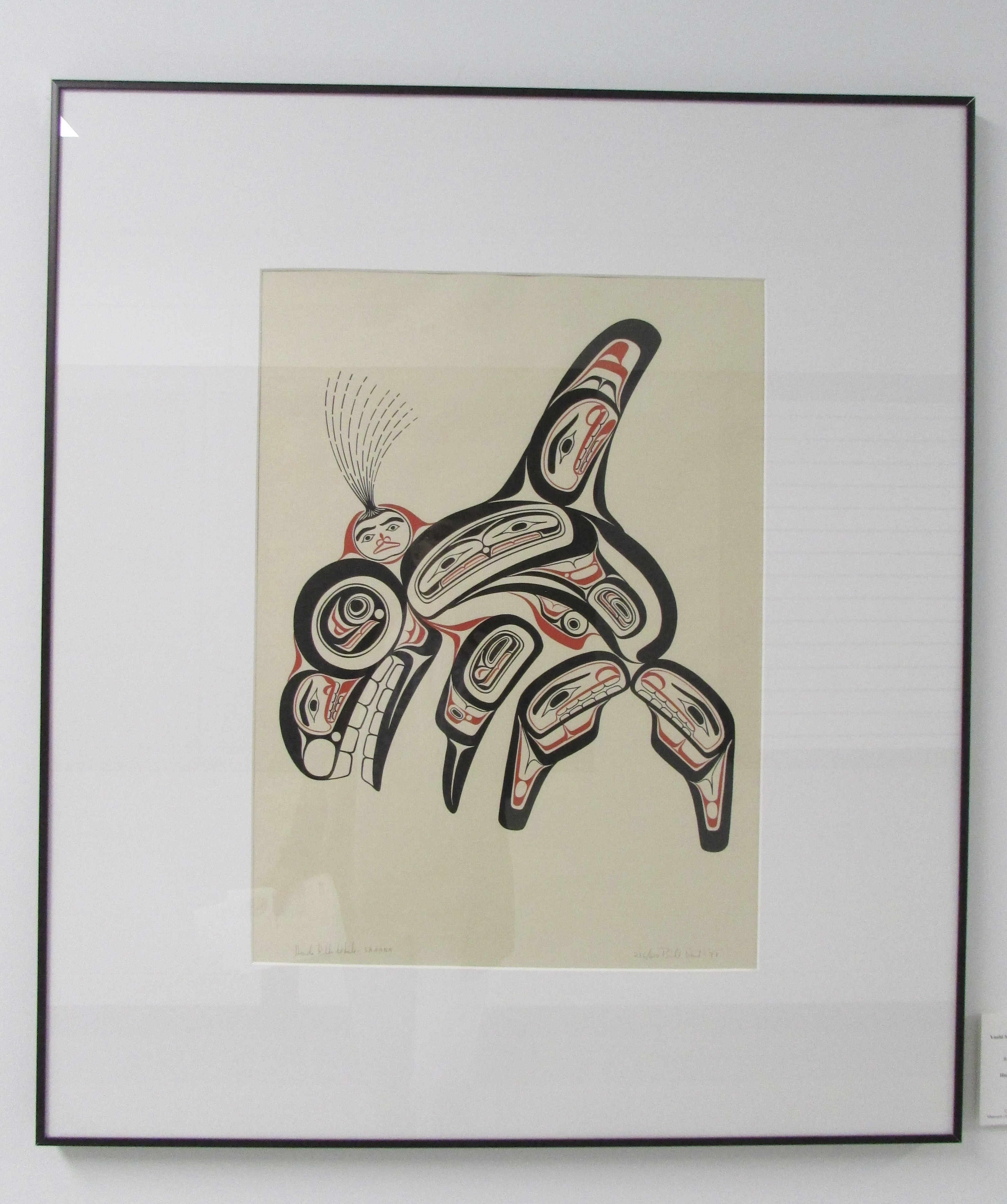
In addition to showcasing the work of the Professional Native Indian Artists Inc., the museum also features Northwest Coast and Inuit art. Bill Reid (1920-1998), was a prolific Haida artist, perhaps best known by many for his giant sculpture “Spirit of Haida Gwaii” on display in the international departures area of the Vancouver airport.

IMG_5821

Haida Killer Whale – Bill Reid

IMG_5819

Haida Bear – Bill Reid

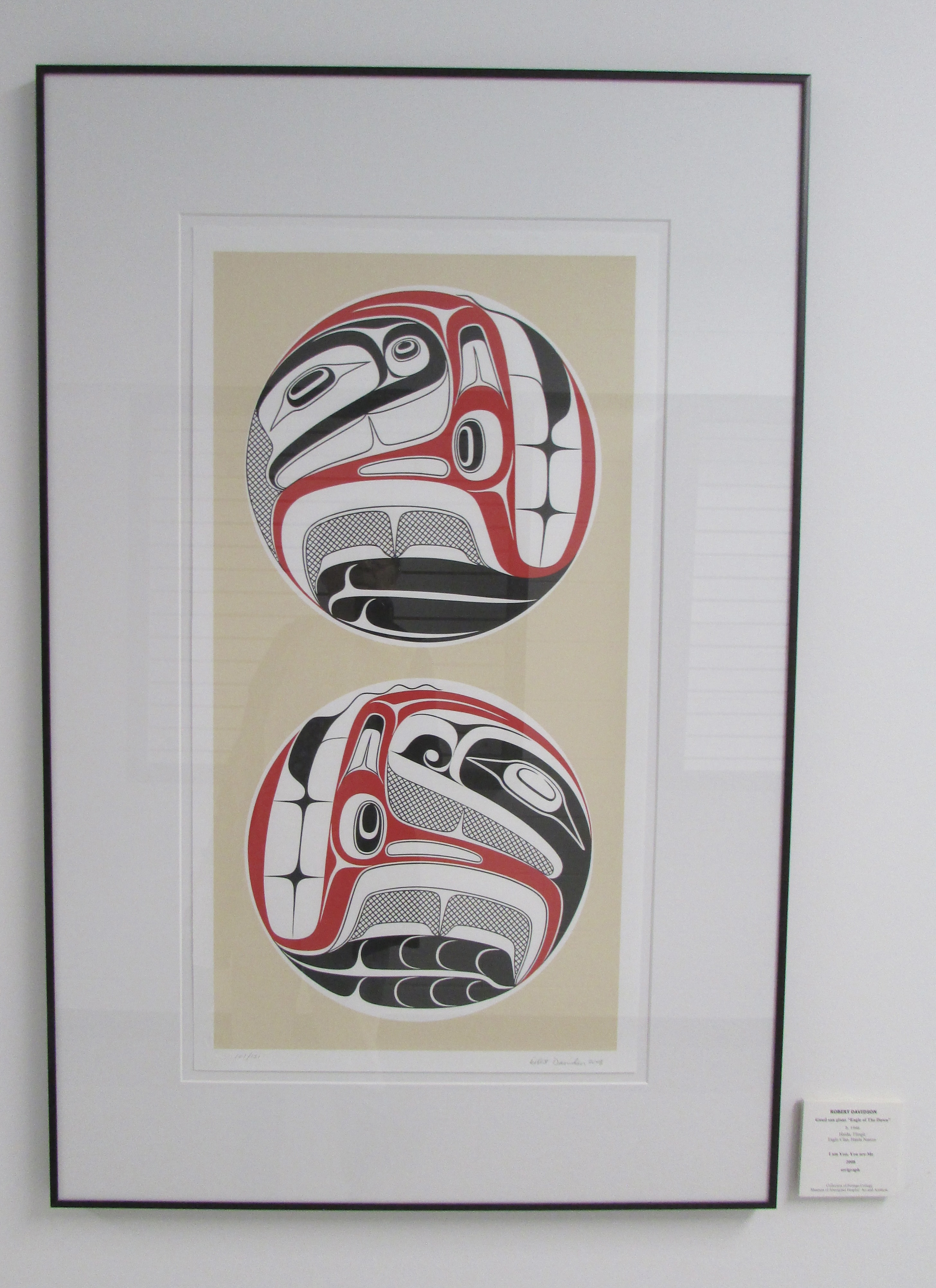
Other coastal artists whose work is on display in Lac la Biche include Tony Hunt Sr. (1942-2017) who was the hereditary chief of the Kwa-Gluth people and Robert Davidson who is of Haida and Tlingit descent.

IMG_5830

Southern Kwa-Gulth Moon – Tony Hunt Sr

IMG_5824

I am You, You are Me – Robert Davidson

I thought this piece by Richard Shorty of the Tuchone Kwanlin Dun First Nation in the Yukon was absolutely exquisite. According to Northwest Coast tradition, the hummingbird represents love and beauty.

IMG_5833

Lily of the Valley / Song of Solomon – Richard Shorty

In addition to the framed work lining the corridors of Portage College, there are numerous glass cases containing carvings, baskets, beadwork, ceremonial clothing, moccasins and mukluks, headdresses, masks and more. Due to the reflective quality of the glass, it was difficult to get good photos, but I did manage to get one of this perfectly preserved Mi’kmaq porcupine quilled basket from the late 1700s or early 1800s.

IMG_5813

While I was thrilled to be able to spend a couple of hours enjoying this amazing collection of Indigenous art and artifacts, it saddens me that it’s hidden away in a remote location where few Canadians or visitors to our country will ever have the opportunity to see it.

Canadian tuxedo

Are you hooked on Wordle yet? According to the New York Times, over 300,000 people play the online game daily. I confess to being one of them. I also play Hurdle and Canuckle every day. If you’re not Canadian, you might not be familiar with Canuckle. Created by an Ottawa resident, it’s basically Wordle with a Canadian twist. Every word is related to Canada in some way. Yesterday’s word even gave me an idea for today’s fashion post!

Screen Shot 2022-04-21 at 10.11.16 AM

Logo by SamWhat’s so Canadian about denim, you ask? Each day, the Canuckle solution comes with a fun fact that explains the Canadian connection. Yesterday’s explanation said, “The Canadian tuxedo is an outfit consisting of a denim jacket or jean shirt worn with denim jeans, or denim-on-denim.”


The term originated in 1951 when American singer and actor, Bing Crosby, was almost denied entry into a posh Vancouver hotel because he was dressed completely in denim. Hotel management eventually recognized who their famous guest was and made an exception to their dress code allowing him to enter. When Levi Strauss & Co. heard the story, their designers immediately produced a custom made denim tuxedo jacket for Crosby.

bing-crosby-1951 2

In 2014, Levi’s reproduced Bing’s famous outfit with a limited run of 200 Canadian Tuxedo jackets.

jacket-side-by

Fifty years after the Bing Crosby incident, celebrity couple, Britney Spears and Justin Timberlake, created a stir when they attended the 2001 American Music Awards wearing a matching Canadian tuxedo or double denim look. I would agree with those who thought the look was a little over the top!

rs_500x1024-160108075340-634.Britney-Spears-Justin-Timberlake-Double-Denim.jl.010816

But what about ordinary mortals like you and I? Would we, could we, should we wear denim-on-denim? Here are a few ways to style the Canadian tuxedo in case you decide to give it a try.

  • Instead of going full dark or light wash, mix things up with different denim shades. Go darker on top and lighter on the bottom or vice versa.
  • Swap the jeans for a denim skirt.
  • Add some contrast with a white or brightly coloured top under your denim jacket.
  • Keep accessories to a minimum and definitely don’t add denim accessories.
  • Stay away from cowboy boots and cowboy hats. You’re not trying to look like a cowboy caricature. For footwear, try a pair of white sneakers, ballet flats, strappy sandals, or even statement heels.
  • Cropped jean jackets are on trend this year. To give your double denim an up-to-date look, you could even cut off a longer jacket and fray the bottom edge for a DIY distressed look.

And now, here’s my take on the Canadian tuxedo using pieces that have been in my wardrobe for a long time… dark wash jeans, a lighter denim jacket, white sneakers, and since stripes are on trend for spring this year, a black and white striped tee.

IMG_3892

Comfy, casual, and very Canadian!

100 butt darts!

Every 28 days, without fail, a visiting nurse pulls up in front of our house and comes in to give me an injection of Sandostatin LAR. Today was the 100th of those butt darts!

185522421_4133815289994653_3767392803849794568_n

Sandostatin LAR is a long-acting treatment meant to reduce or eliminate the symptoms associated with neuroendocrine cancer (NETS) and for me it has been an absolute life changer! No longer do I live with the stomach pains and diarrhea that plagued me off and on for several years prior to diagnosis. Though the effect of Sandostatin on tumour size, rate of growth, and development of metastases has not yet been determined, it is thought that it might also be of benefit in those areas.

Sandostatin comes as a powder and a diluent solution that must be mixed and administered according to very precise instructions which is why I haven’t been taught to inject it myself. Once the diluent is added to the powder, it must be allowed to stand for a minimum of 2 minutes and not more than 5 to ensure that the powder is fully saturated. Then, after gently shaking the syringe for about 30 seconds to ensure that the powder is completely suspended, the nurse has to administer it without delay to avoid sedimentation. Even following these guidelines carefully and using a fairly large needle (19 gauge), it sometimes plugs. On those occasions, she has to quickly change the needle and try again. On a couple of occasions it has taken 4 jabs to get the medication into me! My 100 butt darts has actually involved about 130 pokes altogether.

In addition to the benefits that the drug offers, getting it into me and not wasting it is of vital importance because every one of those butt darts costs $2358.52 CAD! In other words, over the past almost 8 years, we have pumped more than $235,000 into my posterior! You could buy a nice house in our small town for that much.

This is where I’m really glad to be Canadian. I pick up the Sandostatin at my local pharmacy every 4 weeks and don’t pay a cent! The cost is fully covered by the government and that includes the cost of having the nurse come to my home. A Mobile Administration Program even enables me to have my injection administered by a trained nurse anywhere else in Canada. A simple phone call is all it takes to make the arrangements. I have to take the medication, which has to be refrigerated, with me but I’ve found that an insulated lunch bag and a mini freezer pack do the job as long as I can put it in a fridge overnight. So far, I’ve had butt darts administered at all 3 of my children’s homes. Arranging to have it done outside the country would be more complicated and isn’t something I’ve tried at this point.

So, is getting my monthly Sandostatin a pain in the butt? Not really. As a child, I was terrified of needles, but I lost that fear a long time ago. Only once in awhile does really hurt going in. Today was one of those occasions, but it went in on the first try, so I’m not complaining! The injection site often feels bruised for a couple of days and a lump often forms that gradually dissipates over the next few weeks, but these minor inconveniences are well worth it when I consider the benefits. So, 100 butt darts down and here’s hoping that I can have 100 more! Or 200. Or more!

Anniversary getaway

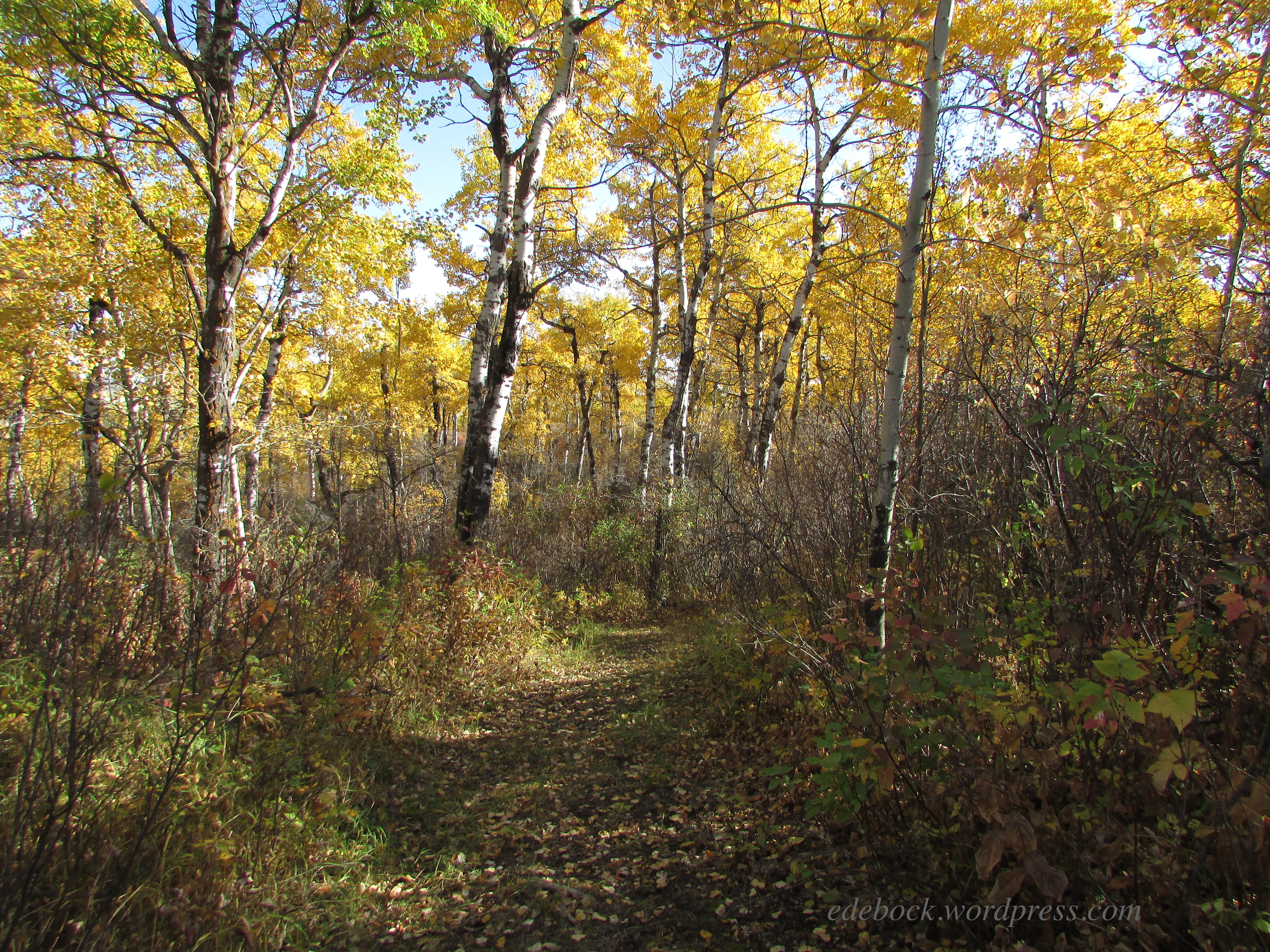
Hubby and I celebrated our 44th anniversary on Friday with an overnight getaway to Wapasu Lake, a tiny dot on the map just an hour north of home. We started our day with a hike at Wapasu Conservancy Park. While our wedding day was cool and blustery, Friday was a perfect fall day. The trail was absolutely gorgeous with the sun shining through the canopy of golden leaves. 

IMG_1557

We started our hike with a climb to a high point that offers a view of the lake and surrounding area. 

IMG_1553

Wapasu is a Cree word meaning white swan. When the trail took us back down to the lakeside, there was a large flock of Canada geese and one pair of swans swimming some distance from the shore. While I didn’t get a very clear photo of the swans, I did manage to capture some of the geese taking flight.

IMG_1558

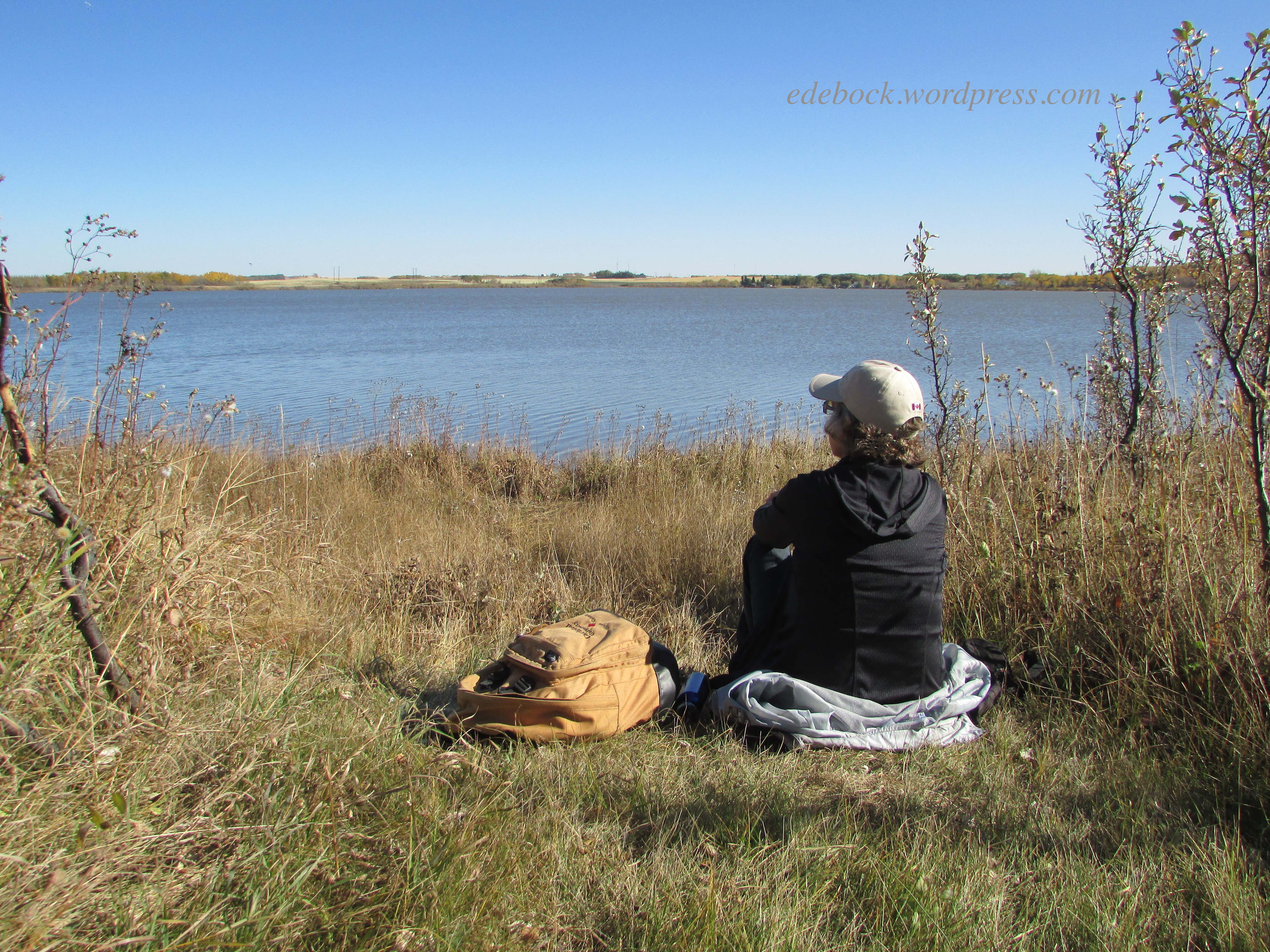
Further along, we enjoyed a peaceful picnic lunch overlooking the lake.

IMG_1570

After about two and a half hours on the trail, we returned to our starting point and took the kayak out on the lake. There was a strong breeze blowing that whipped up some significant waves. I got pretty wet when the occasional one broke over the bow of the boat, but it was fun! The lake is small so even contending with the waves, it took less than an hour to paddle our way around it.

IMG_1577

After changing into dry clothes, it was time for the next part of our anniversary getaway and we didn’t have far to go. Beachside Bed and Breakfast is located just outside the park boundary. Though the B&B has three guest rooms, occupancy has been reduced to one family group at a time to ensure safe distancing during the Covid pandemic, so we had the entire guest portion of the house to ourselves. After settling into our lovely room, we relaxed with a glass of wine on the deck overlooking the lake until it was time to go for dinner.

IMG_1579

The only restaurant in the vicinity is a truck stop at the nearby village of Innisfree, but it’s located on a hilltop with a beautiful view and, as is typical of truck stops, the food was tasty and plentiful. The sun was setting over the lake as we returned to the B&B. After another glass of wine on the deck, we went for a walk along the sandy beach in the fading light. 

IMG_1584

IMG_1587

That brought the outdoor portion of our beautiful anniversary day to an end, but there was still a jacuzzi tub and a king size bed awaiting our return to the B&B! 

IMG_1588

It’s Canada Day and Day 1 of HOOFING IT Across Canada!

a-canadian-zebra-mens-premium-t-shirt

Today is Canada Day, the 153rd anniversary of our country’s birth as a nation. It’s also Day 1 of the HOOFING IT Across Canada fundraising campaign for neuroendocrine cancer research. Today I begin counting the kilometres that I walk and/or hike between now and September 7th. Joining with participants from the neuroendocrine cancer (NETS) community across the country, we hope to record 5,514 kilometres, the distance from Newfoundland and Labrador to the Yukon! We also hope to raise $100,000!

I’m very grateful to those who made donations following Saturday’s post. Thanks to their generosity, I’ve already raised slightly more than 20% of my goal. There’s still a long way to go though!

If you haven’t already, I hope that you’ll consider going to my fundraising page and making a donation. No amount is too small! Every cent received will go toward neuroendocrine cancer research and hopefully bring us closer to understanding what causes this disease and to ultimately finding a cure.

I’ve been asked several questions regarding making a donation, so I’ll answer those here:

  1. What methods of payment are accepted?  You can make your donation using a credit card (VISA, MasterCard or American Express), PayPal, or a CanadaHelps gift card. 
  2. Can I donate from outside Canada?  Yes! Absolutely! Research conducted in Canada will benefit patients around the world. Many of my readers live in the US or elsewhere and some have already made donations. Your credit card statement will automatically show the value of your donation in your local currency.
  3. Will I receive a tax receipt?  Again, the answer is yes. When you make a donation, you’ll be asked for your email address and a tax receipt will be sent to that address immediately. Only Canadian tax receipts are issued however, so if you’re donating from elsewhere, you might want to check your country’s income tax policies to see whether or not you can use a Canadian tax receipt when you file your tax return.
  4. Can my business make a donation?  Yes. Simply select the “Corporate/Group” option under Donor Type when filling out the Donor and Tax Receipt Information section.

I hope that helps. If you have any other questions, please let me know and I’ll do my best to answer them. In the meantime, I’m off to watch a Canada Day parade later this morning and then it’s time to start walking!

Canada’s going black and white for NET Cancer Day!

November 10 is World NET Cancer Day, a day set aside to raise awareness of neuroendocrine cancer, the uncommon disease that I’ve been fighting for the past six years. It’s our day to be heard by decision makers, health professionals and the general public. In addition to raising awareness, we want to encourage more funds for research, treatments, and patient support; and to advocate for equal access to care and treatment for NETS patients around the world.

ncd-logo-new

Zebra stripes symbolize how this rare cancer can go undetected for many years. Medical students are taught when hearing hoofbeats, to think of horses, not zebras. Neuroendocrine tumours are difficult to diagnose. Though they are the fastest growing class of cancers worldwide, their symptoms are usually vague and similar to more common health problems.  Many family doctors have never encountered a NETs patient. When presented with symptoms like stomach pain and diarrhea, they naturally think of things like Irritable Bowel Syndrome, Crohn’s Disease or lactose intolerance. They think of horses, not zebras. As a result, NETs is frequently misdiagnosed.

unnamed

It would appear, however, that through the tireless efforts of NETs patients and advocates, we’re beginning to be heard. This year on November 10, the following landmarks across Canada are lighting up in black and white for NET Cancer Day!

  • City Hall  –  Vancouver, British Columbia
  • High Level Bridge  –  Edmonton, Alberta
  • Calgary Tower  –  Calgary, Alberta
  • City Hall  –  Lethbridge, Alberta
  • CN Tower  –  Toronto, Ontario
  • City Hall Towers  –  Toronto, Ontario
  • Niagara Falls  –  Niagara Falls, Ontario
  • Hamilton Signature Sign  –  Hamilton, Ontario
  • Tower of Olympic Stadium (Parc Olympique)  –  Montreal, Quebec

If you’re near one of these locations on Sunday, I hope you’ll stop, take a photo, and post it on social media with the hashtag #LetsTalkAboutNETs @cnetscanada. Every bit of exposure helps raise awareness and may contribute to someone getting a quicker diagnosis.


Choosing a leader

I appreciate the many responses to my last post and particularly those who chose to share it on social media. It appears that I managed to put into words what many people have been feeling. The following post may also be considered a bit controversial and I hope it will be as well received.

I don’t consider myself to be a particularly political person, but with a federal election less than three weeks away here in Canada, I definitely take an interest and occasionally express an opinion on Facebook. In recent weeks, though I managed to avoid saying anything at all about the blackface incidents, I’ve been criticized more than once for posts alluding to what I consider to be flaws in our present Prime Minister’s character. Some people have referred to this as mudslinging or political bashing. “Let’s just focus on the issues,” they say. 

While I agree that it’s important to know what each party and its leader stand for, I don’t put a great deal of faith in campaign promises. Their purpose is to garner votes and at best I think we ought to call them proposals. A recent analysis of 353 pre-election promises made by the Liberals in 2015 indicates that by March of this year Trudeau’s government had entirely followed through on only about 50 per cent of its pledges.

We may not agree on all the issues or the directions that we’d like our leaders to take, but I hope that we can agree that it’s of utmost importance to have a man or woman of character at the helm. Unfortunately, as we look around the world at the corruption and scandals involving many of our political leaders, it would seem to me that voters haven’t been giving character enough consideration.

I like what American author, John C Maxwell, says about leadership, “A leader is one who knows the way, goes the way, and shows the way.”

With all this in mind, I googled “qualities of a good leader” and discovered dozens of lists. At the top of many of them was honesty and integrity and I would certainly put these two traits at the top of my list. Although they are very closely linked, there’s actually a distinction between the two. According to the dictionary, honesty means “truthfulness, sincerity, or frankness; freedom from deceit or fraud” while integrity is “adherence to moral and ethical principles; soundness of moral character.” Sadly, I think that there are a number of world leaders, including our own, who fail to measure up in the areas of truthfulness and moral character.

Another quality of a good leader that was high on many lists was good communicator. Though a few listed good listening skills separately, I would include that as part of being a good communicator. I would love to have a national leader who was capable of speaking publicly without scattering “um” and “uh” liberally (pun intended) throughout every speech, but even more important would be one who truly listened to the voices and hearts of the people.

Confidence and humility were also high on most lists. Unfortunately, far too often, confidence and arrogance seem to go hand in hand instead. That certainly seems to be the case with our present national leader as well as the one to the south.

Though there are many other character traits that make a good leader, the last one that I’ll mention here is accountability, the willingness to accept responsibility for or account for one’s actions. Oh my, wouldn’t it be nice to see that in our next political leader!

So, fellow Canadians, on October 21 get out and vote, but please look beyond the issues and the campaign promises to the character of the individual party leaders as well as the candidates running in your local constituencies.

Canadian-election-2019

Image: Chatelaine magazine