Small talk

After a two week hiatus, I’m finally back in the blogosphere! We spent part of that time enjoying Family Camp at Camp Harmattan, the Church of the Nazarene campsite  located between Olds and Sundre in southern Alberta. Down in the valley of the Little Red Deer River, we had no access to internet and I must admit that it was a nice break.

While telling his story, one of the speakers at camp made a statement that startled me. Dr. John Seaman and his wife, Linda, served on the mission field for 27 years. The last 17 of those years were spent in West Africa. John said that when he was elected to his present position of district superintendent of the Michigan District of the Church of the Nazarene, he felt completely overwhelmed. West Africa had become his comfort zone and Michigan was not!

That got me thinking. Over the past several years, we’ve stretched our comfort zones until, at times, it feels as if they have no boundaries. As I’ve thought about this over the past few days, however, I’ve come to the conclusion that my comfort zone has nothing to do with geography. I feel completely at home walking the streets of Asia but there are times right here at home when I struggle to step outside my comfort zone.

That’s where the book that I’m currently reading comes into play. I can stand in front of a class of any age in any part of the world and feel at home. I have no problem with public speaking as long as I’ve had time to prepare and I can put on a costume, even a very skimpy one, and act on stage before a full house but I dread social events where I’m required to mix and mingle. I’ve worked hard to overcome my incredibly shy nature but I still feel tongue tied and wish that I could disappear into thin air when I’m in a situation that requires conversation with people I don’t know well. I’m sure I often come across as a total snob! That’s why I’m hoping that The Fine Art of Small Talk by Debra Fine will help me stretch my comfort zone in a new direction.

booksFine begins her book with a “Winning at Small Talk” worksheet. If you find yourself responding no to more than a few of the questions, this book is for you, she says. I answered every question with a no!

“If you generally wait for someone else to take the initiative in a conversation, you have been self-centered,” she says in Chapter 2. Ouch! That would definitely be me.

The book is an easy read but putting it’s principles into practice will likely take a lot more effort. Fine suggests having a repertoire of icebreaking questions to use to engage someone else in conversation. I can’t actually see myself using many of the ones she suggests but maybe I should try “Have you ever read The Fine Art of Small Talk by Debra Fine?”

Do you have any favourite conversation starters?
Banned Books Week

It seems that there is a day, a week or a month for almost everything these days. October is Breast Cancer Awareness Month in Canada and the US. October 1 was International Day of Older Persons as well as World Vegetarian Day. Tomorrow is World Teachers’ Day. Though some of these are well publicized, most come and go unnoticed by the majority of us. I wouldn’t have known that this was Banned Books Week had my online friend, Sarah, who is both a librarian and originator of the Awesomeday movement, not mentioned it on Facebook today.

As an avid reader, that definitely caught my attention and I began to do a bit of digging. I was absolutely astonished at what I discovered! Though the practice of governments banning books in Canada and the United States is a thing of the past and there are no books currently banned by either country, specific titles are frequently challenged and sometimes banned by individual school jurisdictions and public libraries.

I was flabbergasted by the books that have been challenged and in some cases, banned. Here are just a few that are considered controversial and are often banned in American schools:

Pulitzer Prize winning To Kill a Mockingbird by Harper Lee which addresses issues of class,  courage, compassion and gender roles in the American South during the Great Depression has been challenged over the years for its use of profanity and racial slurs. Thankfully, not everyone agrees. In fact, in 2006, British librarians ranked the book ahead of the Bible as one “every adult should read before they die”.

Mark Twain’s Adventures of Huckleberry Finn, another American classic, is one of the most frequently banned books in American schools because Twain used the word “nigger” throughout. Surely teachers of American literature can be trusted to explain the reason behind the word; that Twain was trying to reveal the plight of the slave in America and that he was using the vernacular of the time.

Lord of the Flies by Nobel Prize winning author, William Golding, tells the story of a group of British schoolboys stranded on an uninhabited island who try to govern themselves with disastrous results. In 2005, the novel was chosen by Time magazine as one of the 100 best English language novels published between 1923 and 2005 but it is often criticized and in many cases banned from schools because of its use of profanity, sexuality, racial slurs and violence. It is perhaps the book I remember most vividly from high school English class more than 40 years ago. It’s not a pleasant read but do we learn and grow if we read nothing but entertaining fluff?

The Diary of a Young Girl by Anne Frank, the ever-hopeful true story of a young teenager who eventually died in the Holocaust has been banned for being “too depressing”. Unbelievable!

I was perhaps most shocked to find Katherine Paterson’s novel, Bridge to Terabithia, on several lists of most commonly challenged and banned books! As a teacher, I had absolutely no qualms about reading this beautiful book about two lonely children who create a magical forest kingdom to my upper elementary school students year after year. The inspiration for the book, in which one of the main characters dies, came from a tragic event in the author’s own experience when a close friend of her son’s was struck by lightning and died. Death is a reality, even for children, and this book handles it exquisitely.

I could go on and on about books that have been banned from schools but I literally had to laugh out loud over a few of the children’s books that have at one time or another been challenged or banned from public libraries. Librarians must roll their eyes at some of the criticisms parents bring forth!

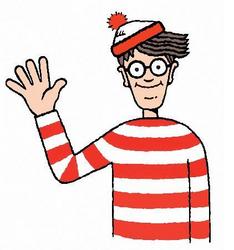
Believe it or not, in at least one location, the first Where’s Waldo book was banned because in one of the drawings a beach is shown where a woman lying on the sand has part of a breast exposed! This in a nation where pornographic magazines are readily available on news stands! Imagine someone poring over the thousands and thousands of tiny characters featured in a Waldo book and singling out this one “offensive” character! I would have needed a magnifying glass to see her!

Then there’s I Have to Go! by beloved children’s writer, Robert Munsch. What parent hasn’t bundled a tiny tot into a snowsuit or a car seat with a five point harness only to have them announce almost immediately, “I have to go PEE!” If that’s offensive, we might as well ban Thomas’ Snowsuit too. After all, aren’t the teacher and the principal cross-dressers?

I can’t even begin to imagine why anyone would object to Al Perkin’s Hand, Hand, Fingers, Thumb! The story line is a little thin (okay, non-existent) but young children love the madcap band of dancing, prancing monkeys and the book’s rhythmic cadence. I think I might still have a copy of it in the bookshelf in the basement.

Certainly it is the responsibility of every parent to be aware of what their children are reading and in some cases, even to limit those choices. There are books that I’d rather not see on a library shelf and books that I choose not to read. There are books that probably aren’t worth the paper they’re printed on or the time and brain cells required to read them but, as honorary chairman of this year’s Banned Book Week, Bill Moyers, has been quoted as saying, “censorship is an enemy of the truth”. The more widely read we are, the better we will know and understand the world we live in and the people we share this planet with.