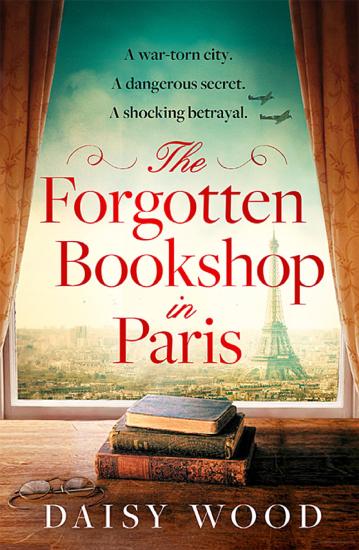
The Forgotten Bookshop in Paris
Daisy Wood
 Until the end, when the two finally come together, this is really two completely different storylines connected only by a specific location.
In 1940, war is closing in on the city of Paris. When the Germans take over the city, Jacques and Mathilde have only been married for a short time. Itching to resist in whatever way she can, Mathilde soon puts herself at risk and must flee to safety in the south of France while Jacques stays behind and continues to operate his beloved bookstore, La Page Cachée. Hiding first banned books, and then people seeking refuge and a way to escape the city, in a hidden storeroom in his shop, Jacques too becomes involved in the resistance.
In 2022, Juliette, whose deceased grandmother was born in Paris, and her husband, Kevin, take a long awaited trip to the city of love. Armed only with a photograph of a painting that used to hang in her grandmother’s house in America, Juliette searches for and locates the small city square depicted in the painting. Discovering that her husband has been having an affair, she decides to stay behind in Paris and forge a new life for herself. There she finds passion and purpose in purchasing a small abandoned bookstore on the square that appeared in her grandmother’s painting, renovating it, and opening The Forgotten Bookshop.
I loved this book! Partially, perhaps, because I’ve always thought that if I was ever to open a business, it would be a bookstore, but also because I became completely engrossed in both storylines. Each time the book switched from past to present or vice versa, I was almost disappointed because I was so captivated by whichever story I was reading at the moment! Both heartwarming and heartbreaking, the well-researched wartime story with its very believable characters could easily stand alone. The modern story was a little more cliched, but until the very end, it kept me wondering how the two storylines would come together.
Daisy Wood has written several works of historical fiction for children and this is her second adult novel. As soon as I finished it, I ordered her first, The Clockmaker’s Wife, from the library. While The Forgotten Bookshop in Paris is my favourite of the two, I enjoyed that one too.
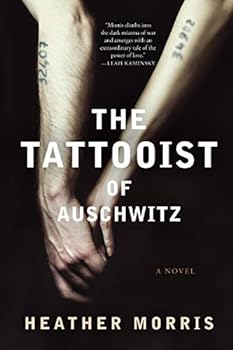 In 2003, Morris, was introduced to Lale Sokolov, an elderly gentleman who “might just have a story worth telling”. As their friendship grew, Lale entrusted her with the innermost details of his life during the Holocaust. She originally wrote his story as a screenplay before reshaping it into her debut novel, The Tattooist of Auschwitz.
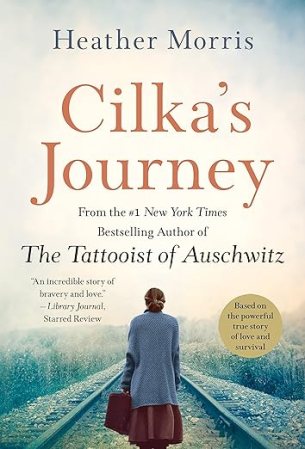 In The Tattooist of Auschwitz, we are introduced to Cilka, a beautiful young prisoner who is forcibly separated from the other women by Johann Schwarzhuber, camp commandant, for his exclusive use. Quickly learning that her survival depends on it, she does what she has to do to stay alive. Although both books are historical novels, Cilka, like Lale, was a real person and at one point, he credits her with saving his life.
 The subtitle of this short, but intriguing memoir, My Life as a Woman Living as a Man in Afghanistan, tells much about the content of the book, but it could also be misleading to those of us living in western cultures. This is not a book about living a trans experience.
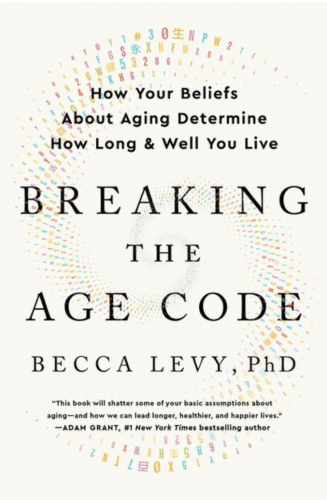 How would you like to extend your life by 7.5 years? According to Dr. Becca Levy, Yale professor and leading expert on the psychology of successful aging, you might be able to do just that!
 After reading Rohinton Mistry’s A Fine Balance, a 713 page novel about life in India in the 1970s and 80s, and then Timothy Keller’s The Reason for God: Belief in an Age of Skepticism, I was looking for something light to read! Something frivolous and entertaining.
 Rachael English is a novelist and a presenter on Ireland’s most popular radio programme, Morning Ireland. In her most recent novel, inspired by true events, the lives of three remarkable women are interwoven across time.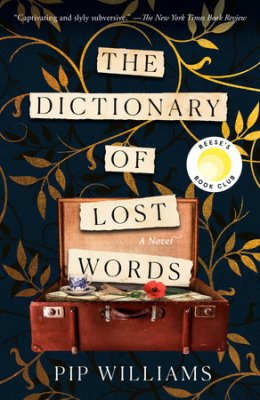
 This month’s book was a difficult read because of the content, but at the same time, it was difficult to put down!

 Nadia Hashimi’s second adult novel is the gripping story of a mother and her children fleeing Afghanistan after the brutal murder of her husband by the Taliban. Their one hope is to find refuge with her sister’s family in London, England. It’s also the story of Fereiba’s teenage son, Saleem, who becomes separated from the family as they make their perilous journey into Iran, Turkey and across Europe.
  The first book in the series, My Name is Lucy Barton, reads like a memoir to such an extent that when I finished it, I actually researched the author to find out whether or not it was autobiographical. Though there are parallels, particularly in the facts that, like Strout, Lucy Barton is a writer and both were raised in rural areas somewhat isolated from other children, the similarities end there.