Alaska cruise: Exploring Juneau, Skagway, and Ketchikan

As I mentioned in my last post, our 7-Day round trip Alaska cruise from Vancouver stopped at Juneau, Skagway, and Ketchikan and also included a side trip up Endicott Arm to see Dawe’s Glacier.
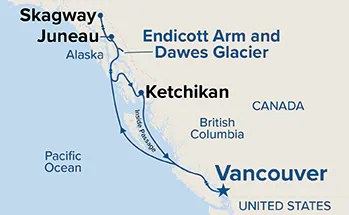
There were a vast number of possible shore excursions to choose from at each location, but we chose only one, the White Pass Scenic Railway at Skagway. Rather than purchasing other shore excursions, I did what I usually do when we travel. I researched each location and planned our own self-guided tour.

Juneau, Skagway, and Ketchikan all depend heavily on tourism in the summer and each has what my sister-in-law refers to as “trinket alley”, a street close to the cruise ship wharf that’s lined with shops selling souvenirs. We wanted to go beyond those areas to see more of each community.

Juneau  
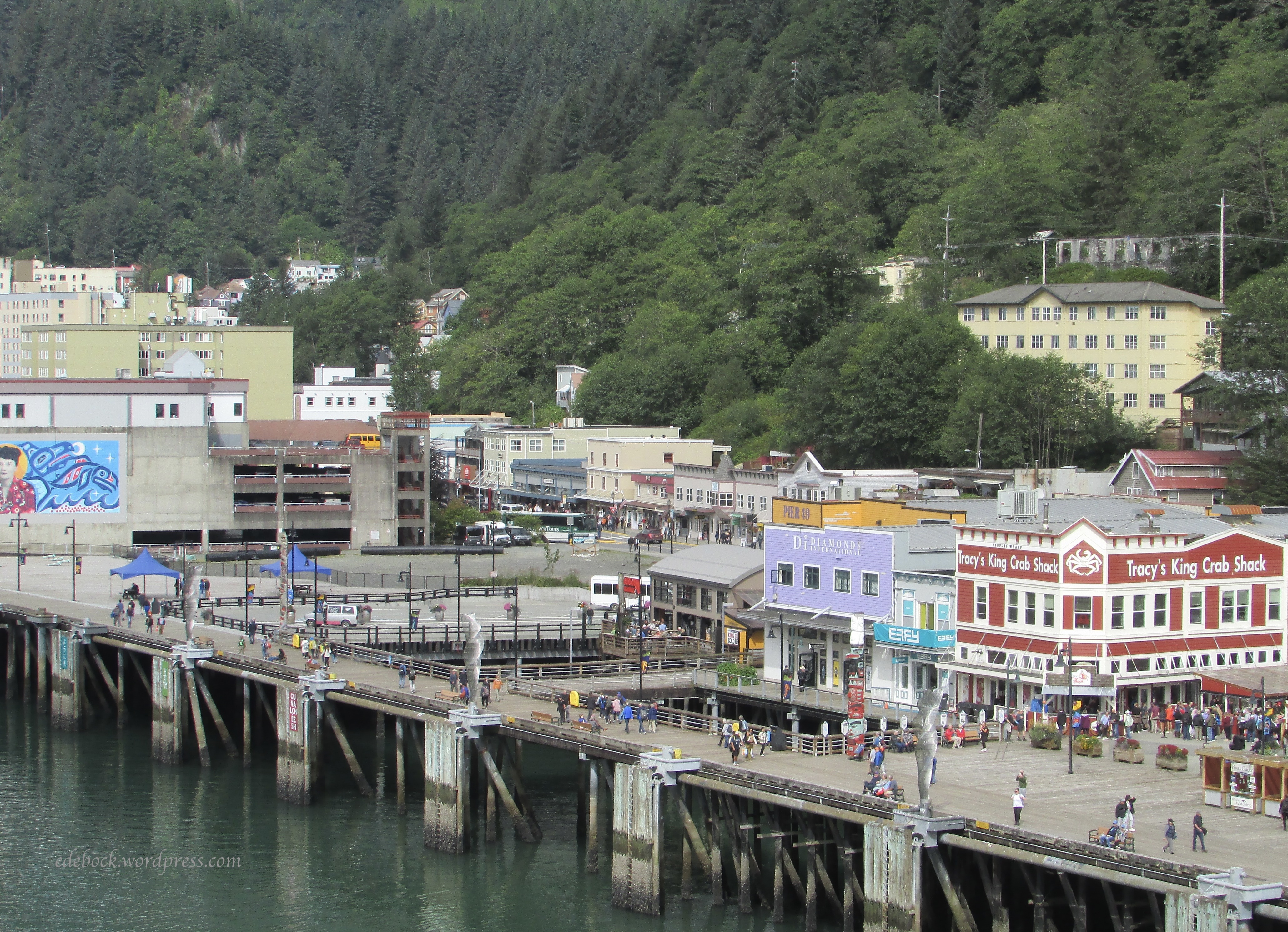
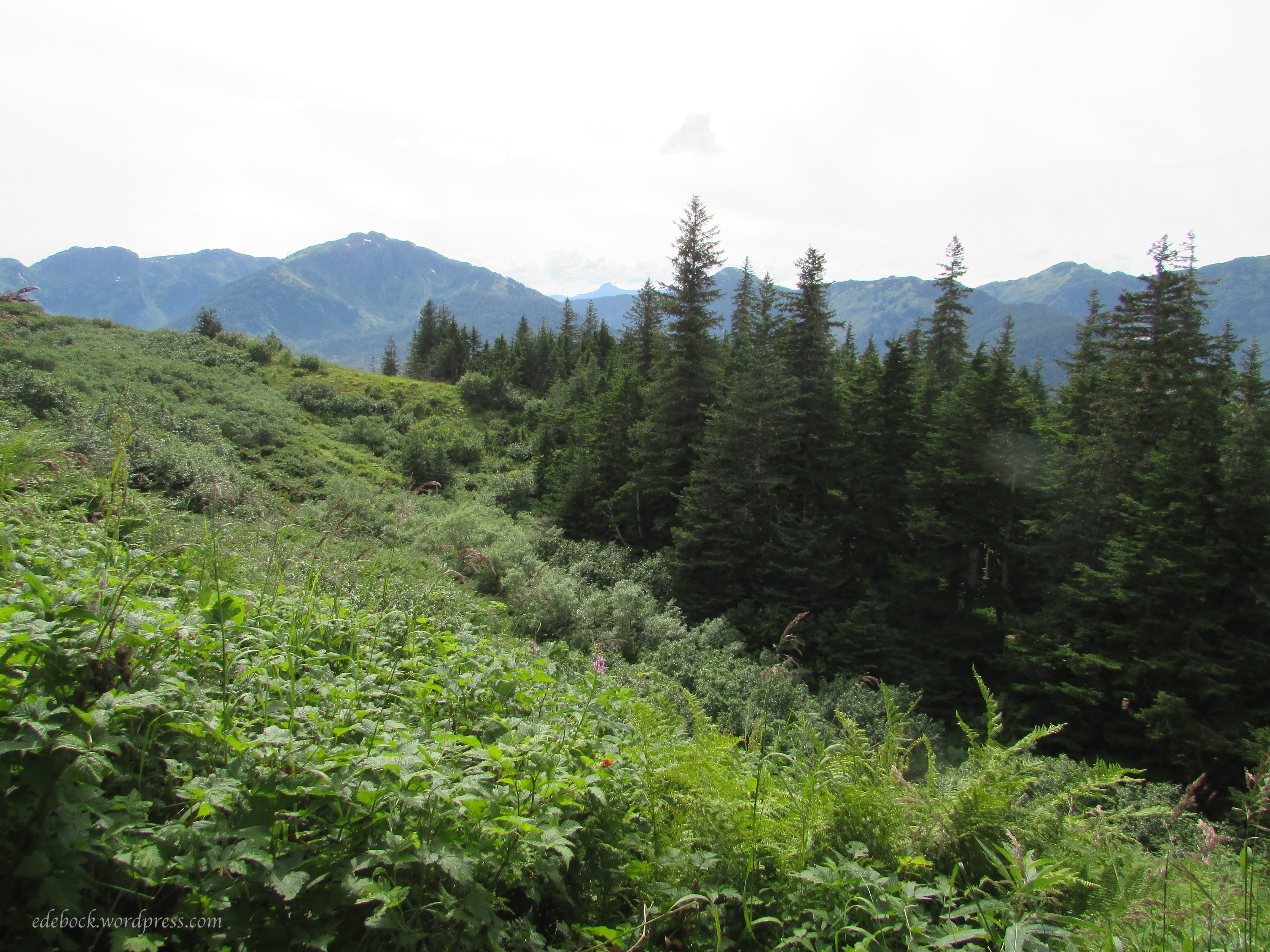
After 48 hours at sea, we docked at Juneau, the capital city of Alaska. As soon as we disembarked, we headed for the Goldbelt Tram, just steps from the cruise ship dock and took a six minute ride up Mount Roberts to a height of about 550 metres (1800 feet).

There we did a short hike and enjoyed the spectacular views. That’s our cruise ship, the Grand Princess, in the bottom left corner of the first photo. She didn’t look as big from up there!

Before descending and beginning to explore the town, we watched Seeing Daylight, an 18-minute award-winning film on Tlingit history and culture, in the Chilkat theatre. The Tlingit are one of three Indigenous people groups living in Southeast Alaska. The other two are the Tsimshian and the Haida. I was particularly interested in the fact that these groups are matrilineal societies. 

In the heart of downtown Juneau, we visited the Sealaska Heritage Institute. Dedicated to perpetuating and showcasing the Tlingit, Tsimshian, and Haida cultures, it houses a cedar clan house and an exhibit gallery. I love Northwest Coast Indigenous art and was amazed by the stunning glass screen at the front of the clan house. Made by Tlingit glass artist Preston Singletary, it is apparently the largest glass screen in the world. 

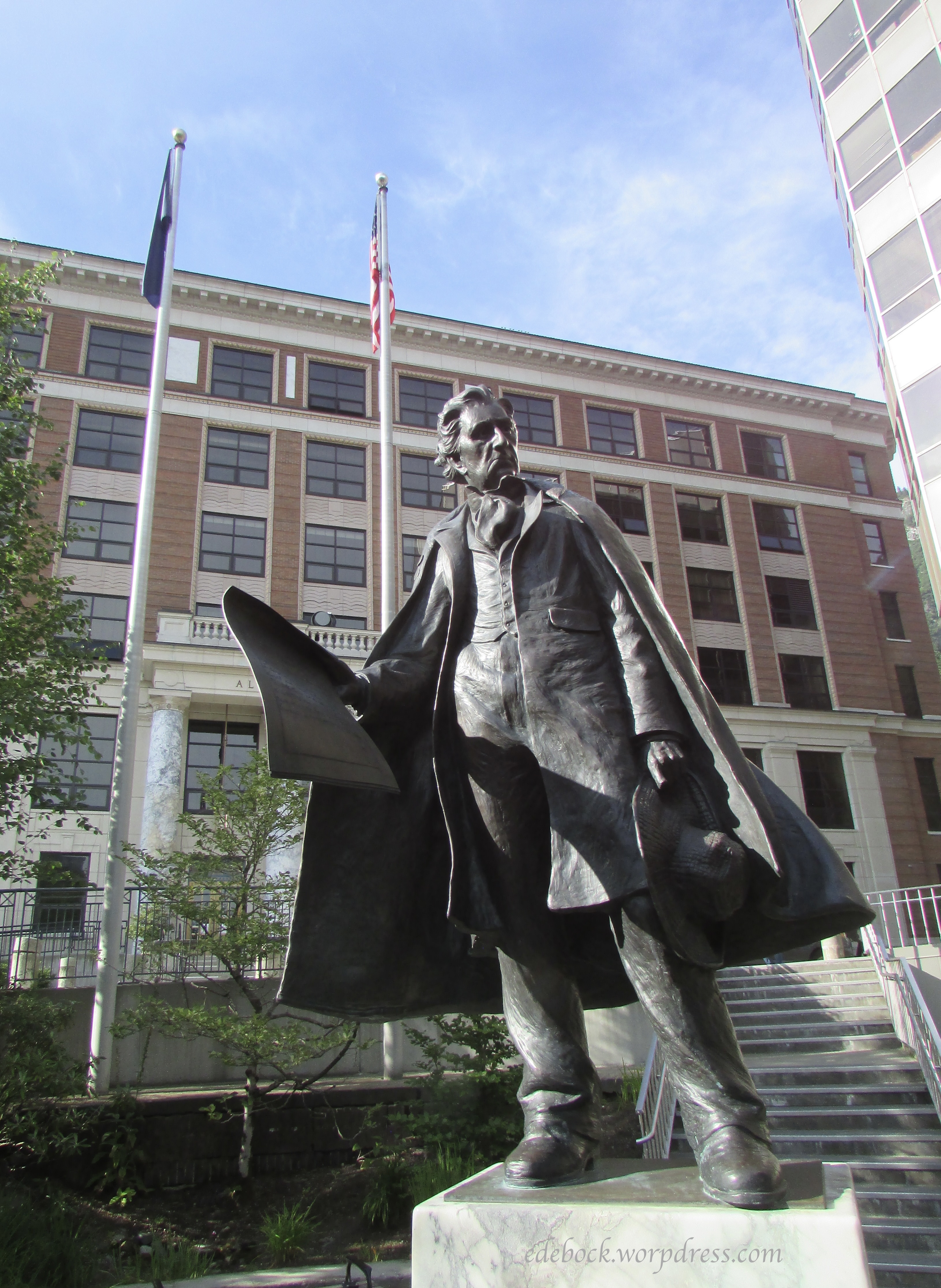
Like most coastal towns, Juneau is built on a hillside. We walked up a few steep blocks to see the Alaska State Capital building and the nearby statue of U.S. Secretary of State William Henry Seward who orchestrated the purchase of Alaska from Russia in 1867.

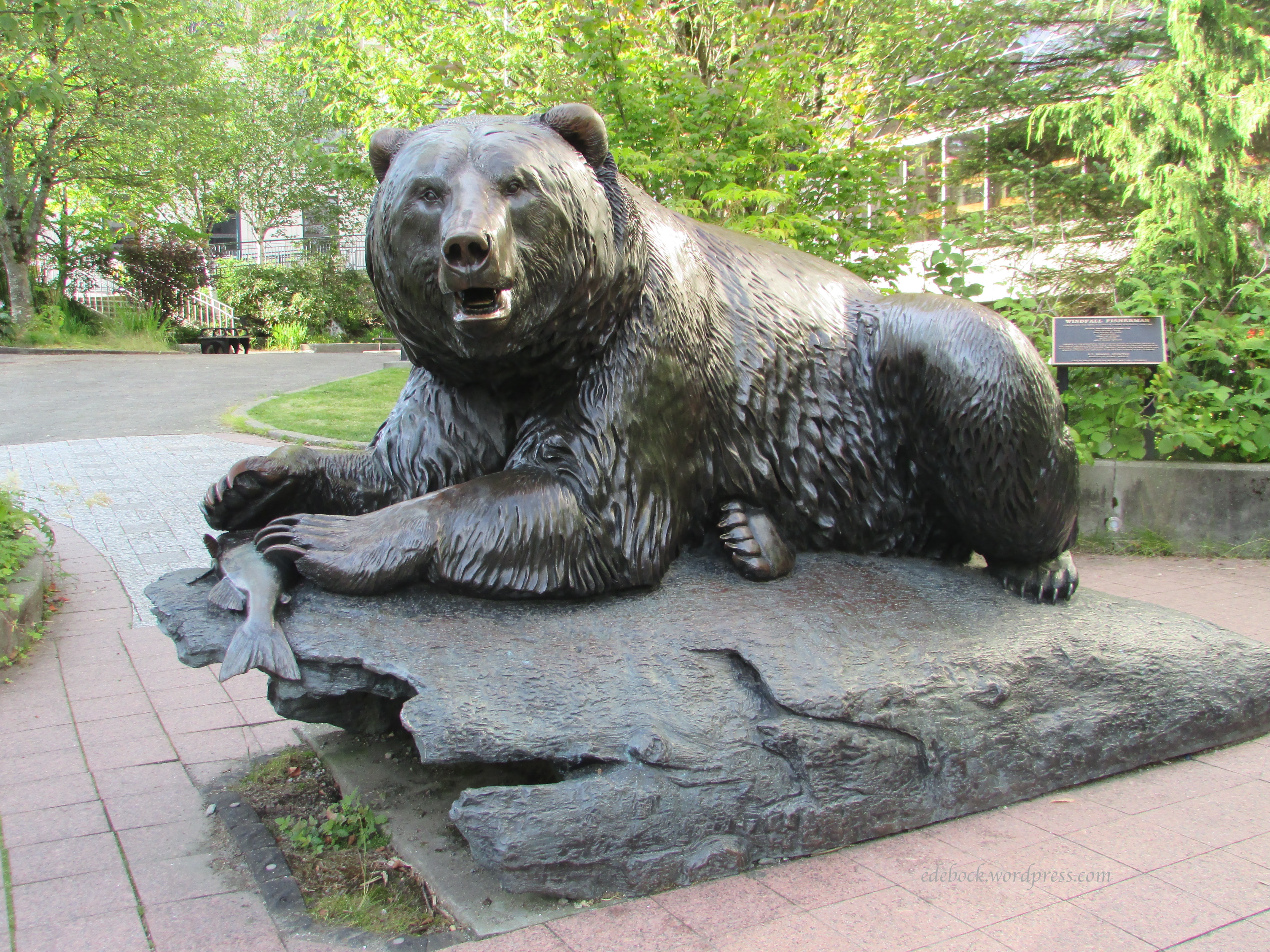
Close by was another bronze statue called Windfall Fisherman, a life-sized and very realistic brown bear by artist R.T. Wallen. 
Hubby’s feet were getting sore by this point, so we headed back downhill toward the waterfront and the seawalk where many of the city’s totem poles are found. Here’s just one example, the Ishkahittaan pole by Tlingit carver, Jon Rowan. At the top is Raven with the Box of Daylight. According to oral tradition, Raven opened the box and released the sun, bringing daylight to the world. Below Raven, you can see Frog and Sea Lion. 

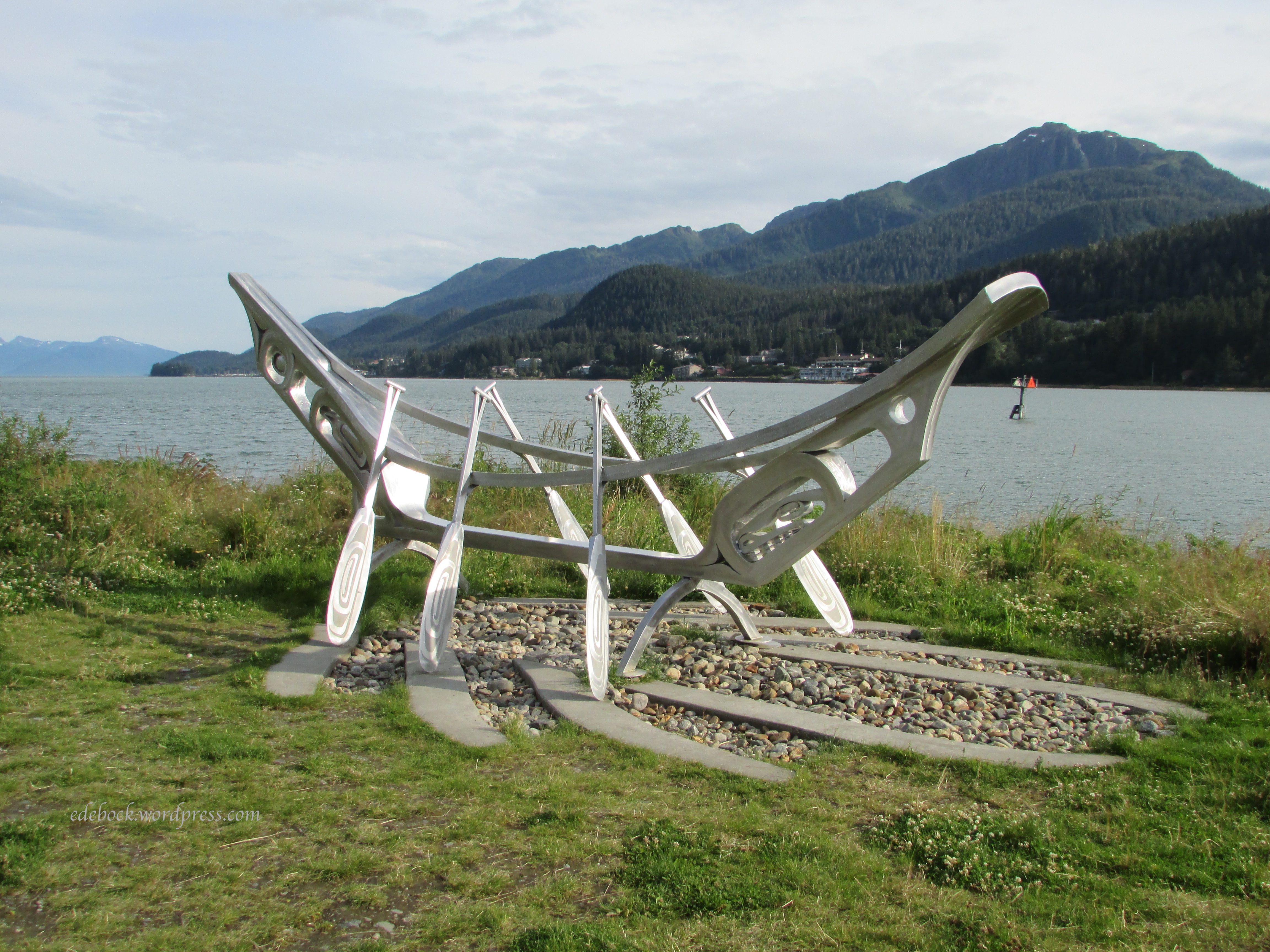
I loved the aluminum sculpture of a 20-foot 9-inch canoe, Yaadachoon, by native artist Robert Mills. The name means “straight ahead” in the language of the Tlingit. 
Although we didn’t see any whales close up while on our cruise, we did see Tahku, the life-sized bronze sculpture depicting a breaching humpback whale, also by artist R.T. Wallen, at the end of the seawalk. 

Skagway

I awoke very early the next morning to the haunting sound of the ship’s horn warning others of our presence. Standing on our stateroom balcony breathing in the heavy fog that surrounded us, I was transported back to my childhood on the waterfront. Crawling back into bed I fell back to sleep to the familiar sound of the foghorn. Later, when I woke again, the sky had cleared, the sun was shining, and we were docking at Skagway. 

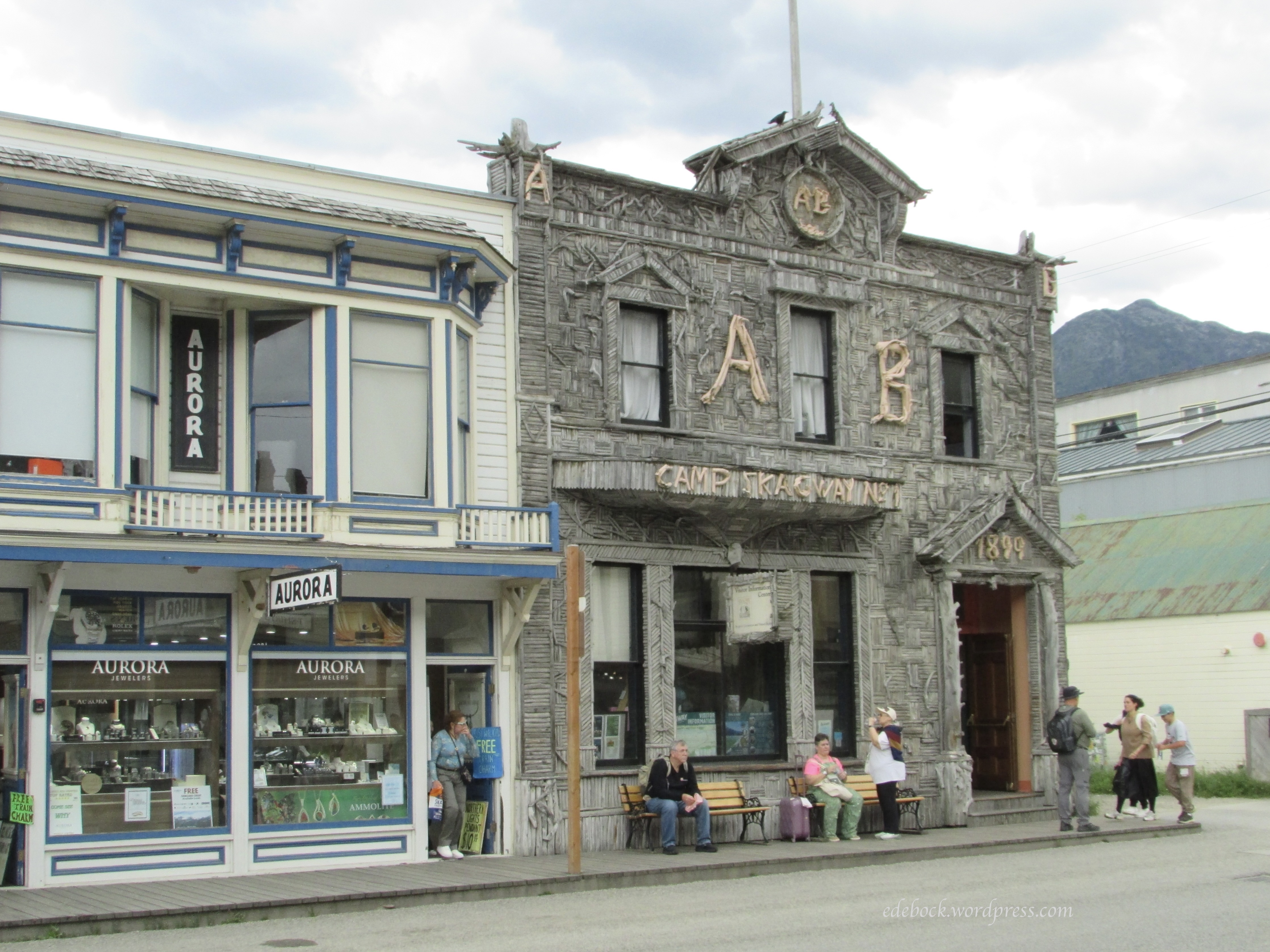
Skagway is rich in Klondike Gold Rush history. 1897 and early 1898 saw tens of thousands of fortune-seekers pile off steamships, eager to head overland to the Yukon gold fields via the White Pass Trail from Skagway or the Chilkoot Trail from nearby Dyea.

It was from Skagway that we took the scenic White Pass rail excursion, a 40 mile, 2 hour and 45 minute round trip to the White Pass summit. Considering how long this post is becoming and how much I still have to share, I’m going to save that for a separate post. 

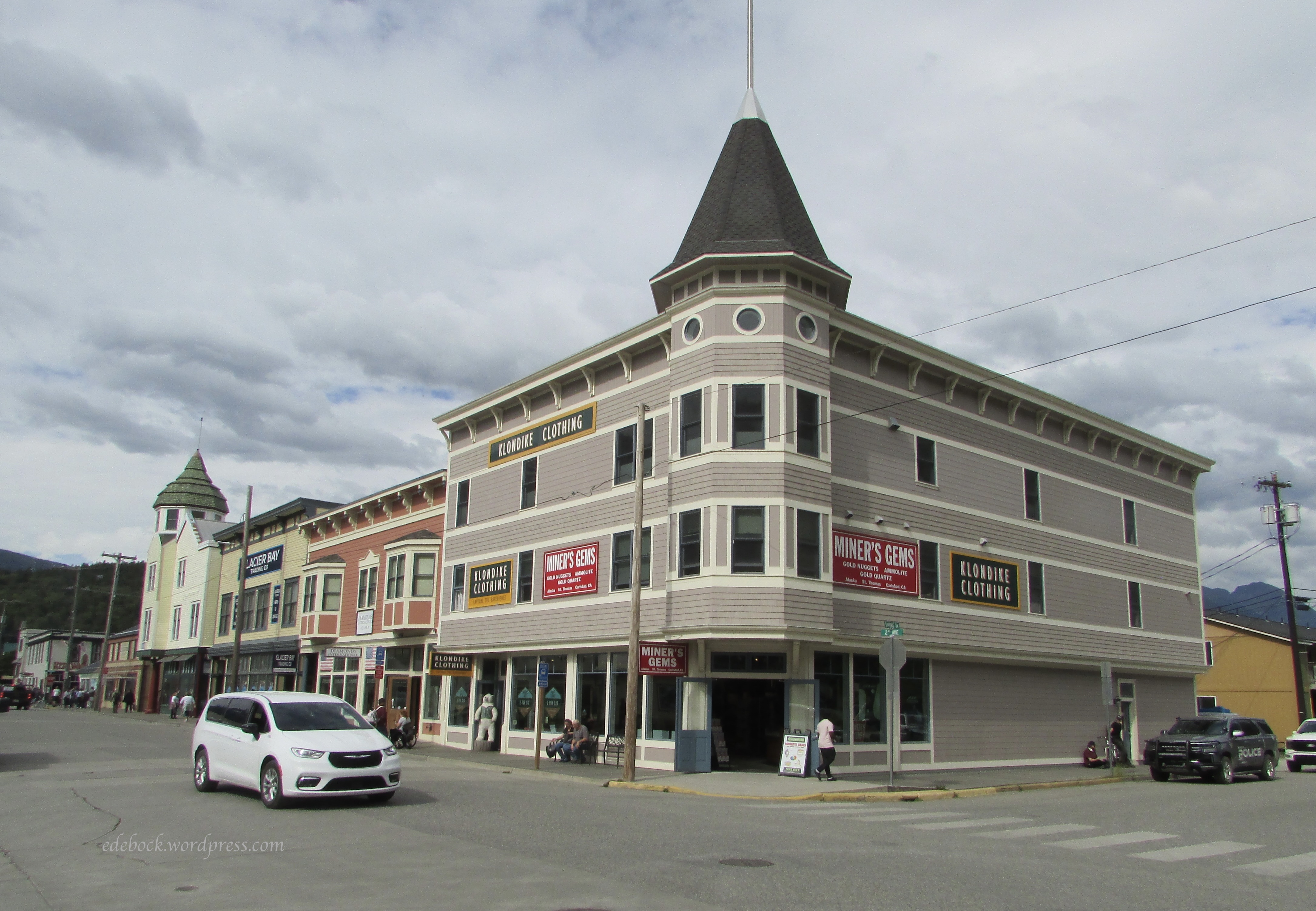
When we disembarked from the train, we were met by hubby’s sister and her husband who live across the Canadian border near Whitehorse in the Yukon. They drove about two hours each way to spend the afternoon with us. They took us to their favourite fish and chips restaurant for lunch and then we just walked around town while we visited. Hubby and I had been to Skagway by road many years ago and were well versed in gold rush history from our previous visits to the Yukon, so I didn’t take very many photos. Here are just a few to show you what the town, which has a year round population of about 1200, looks like. Most of the shops that cater to tourists are closed during the winter months. 
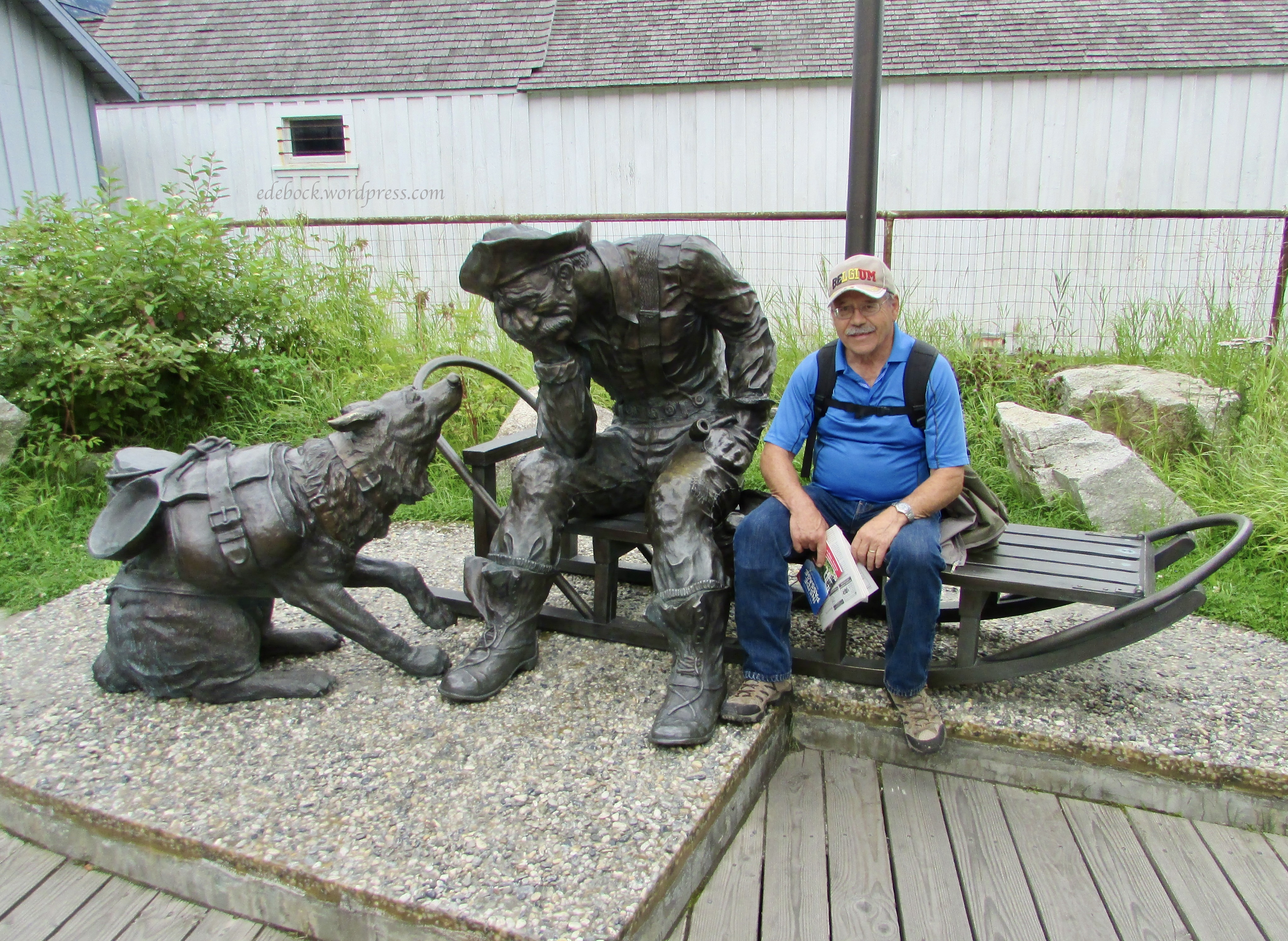
Here’s hubby hanging out with an exhausted gold seeker and his dog. 
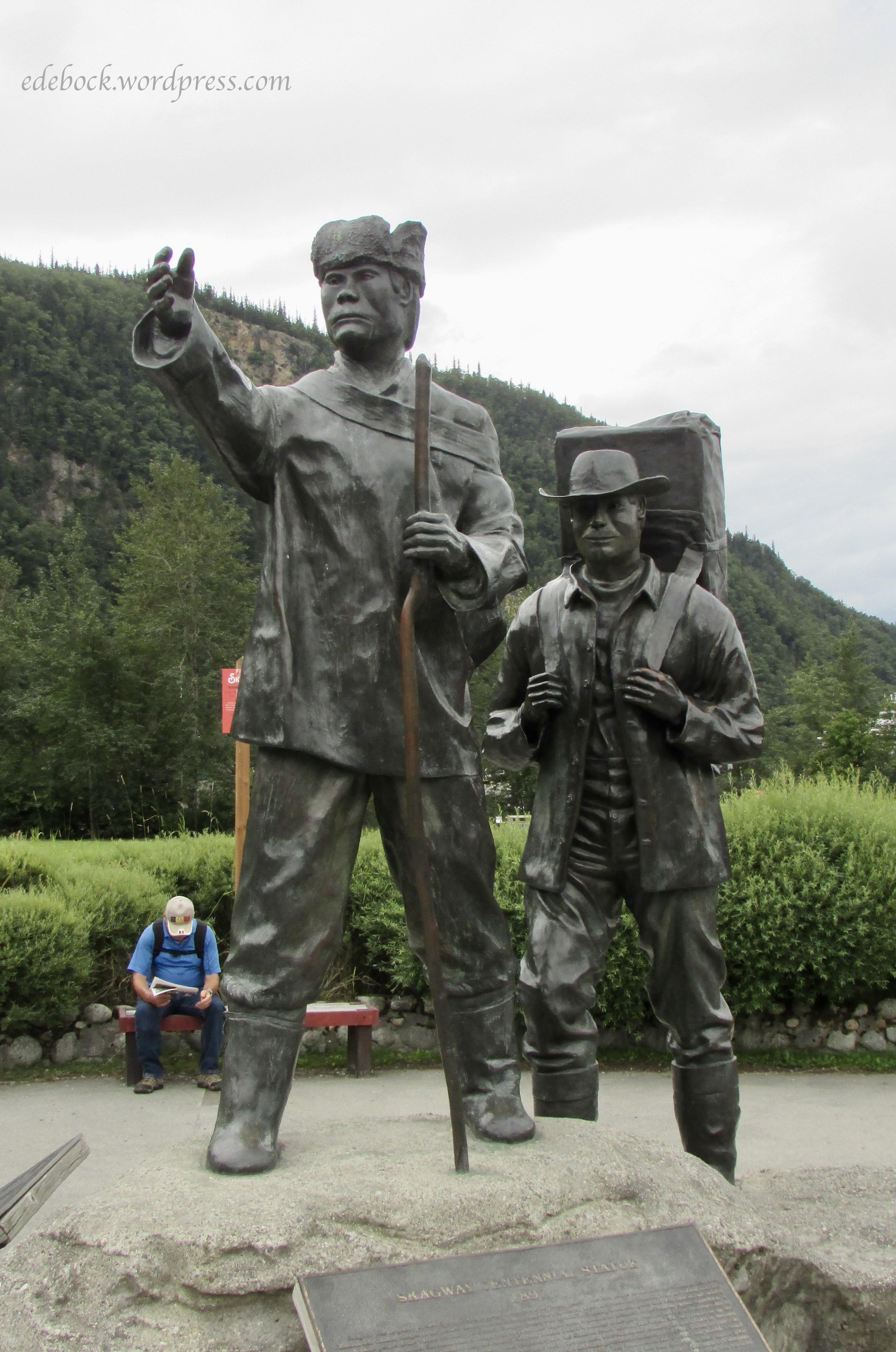
And perhaps you can spot him in this photo too. This is the Skagway Centennial Statue erected in 1997 in a park close to the train station.  
Endicott Arm and Dawes Glacier

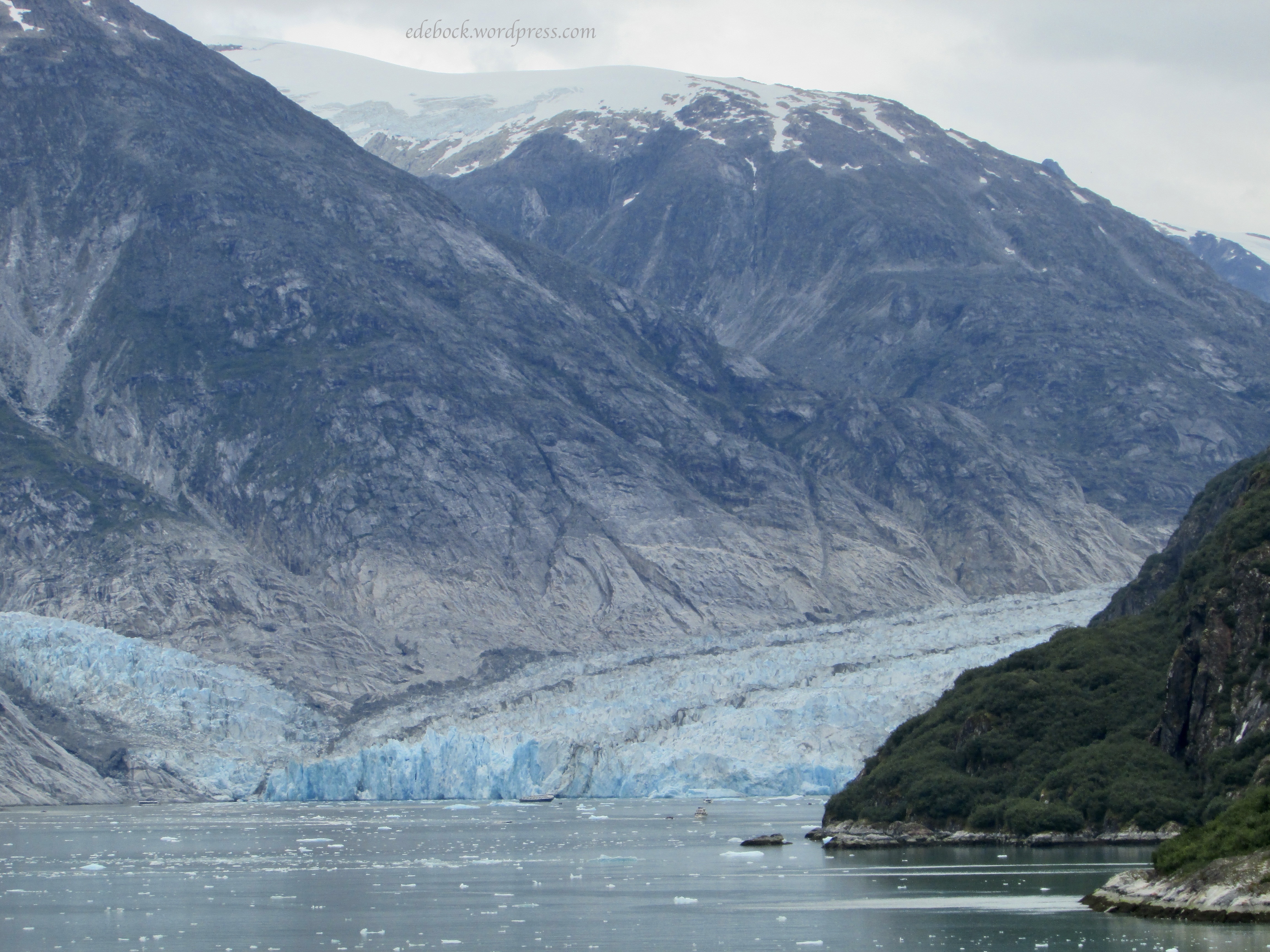
Next on our itinerary was a scenic cruise up Endicott Arm to view the Dawes Glacier. The further up the beautiful Arm we cruised, the more and bigger chunks of ice we began to see in the water. 

There were other glaciers like this one along the way, but they were high in the mountains and far from the shore. 
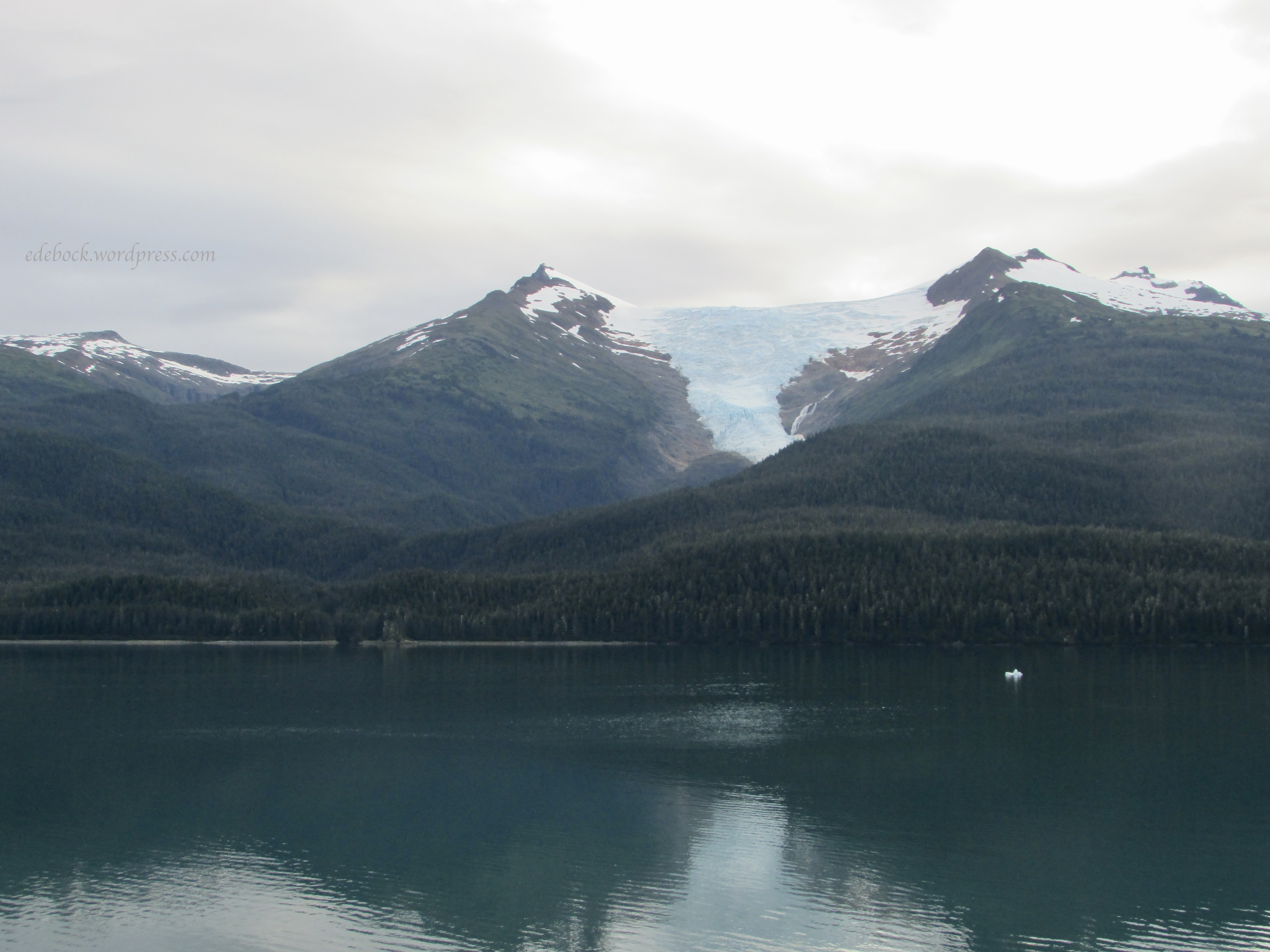
Eventually Dawes came into view. 

Because of the enormous size of our ship, we couldn’t get as close to the glacier as smaller ones could, so this was one of the times that we were very happy to have binoculars with us. The captain turned the ship in a complete slow circle so that everyone on either side could get a good view and lots of photos. 
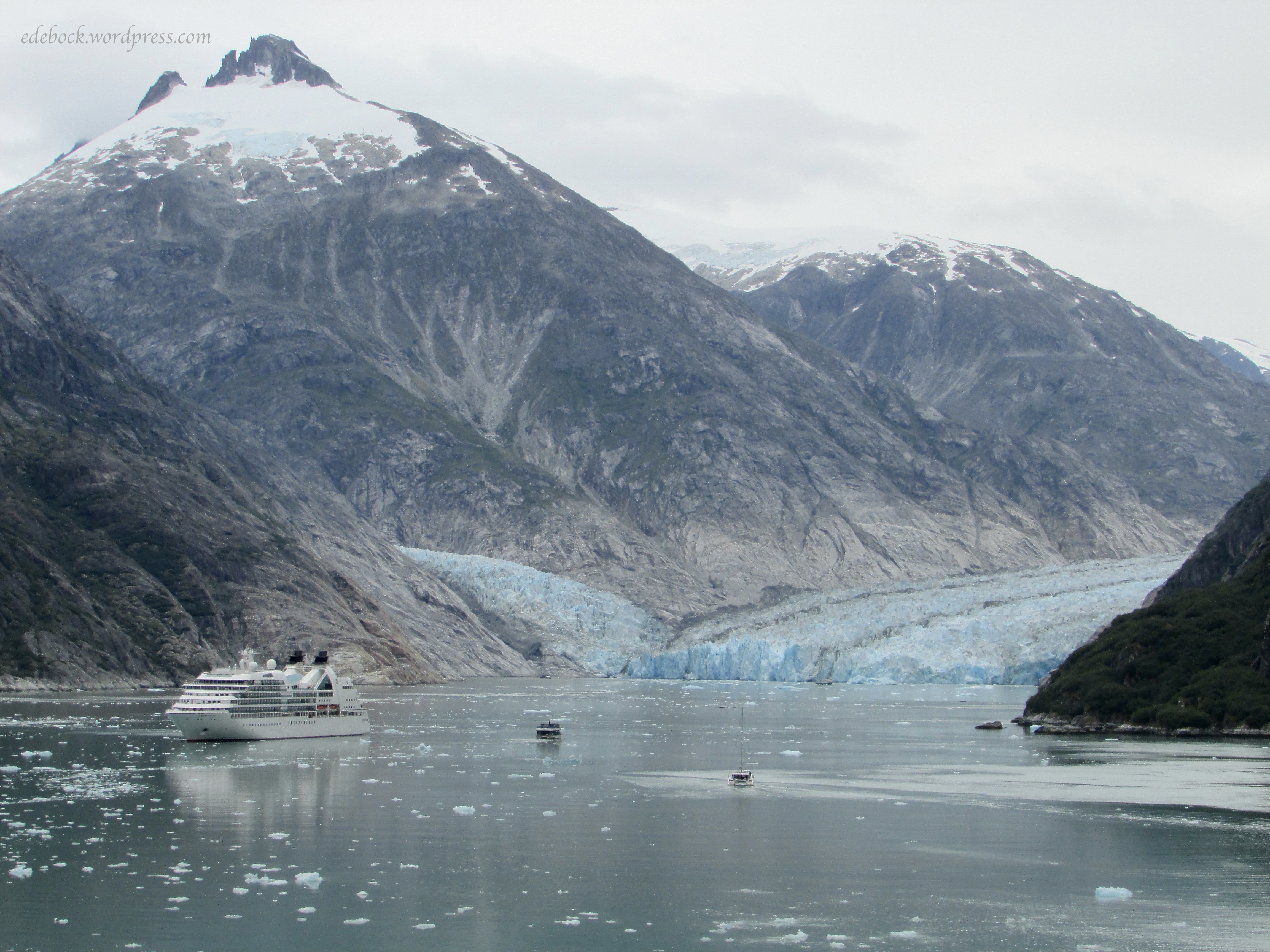
Why is the glacier blue, you ask? The naturalist on board explained that that’s because the ice is incredibly dense, having lost almost all of its air over time due to the immense weight of snow that compacted it. This dense ice absorbs most of the long-wavelength colours of white light, such as red and green, while allowing the short-wavelength blue light to pass through or scatter, which is what we see.

Ketchikan
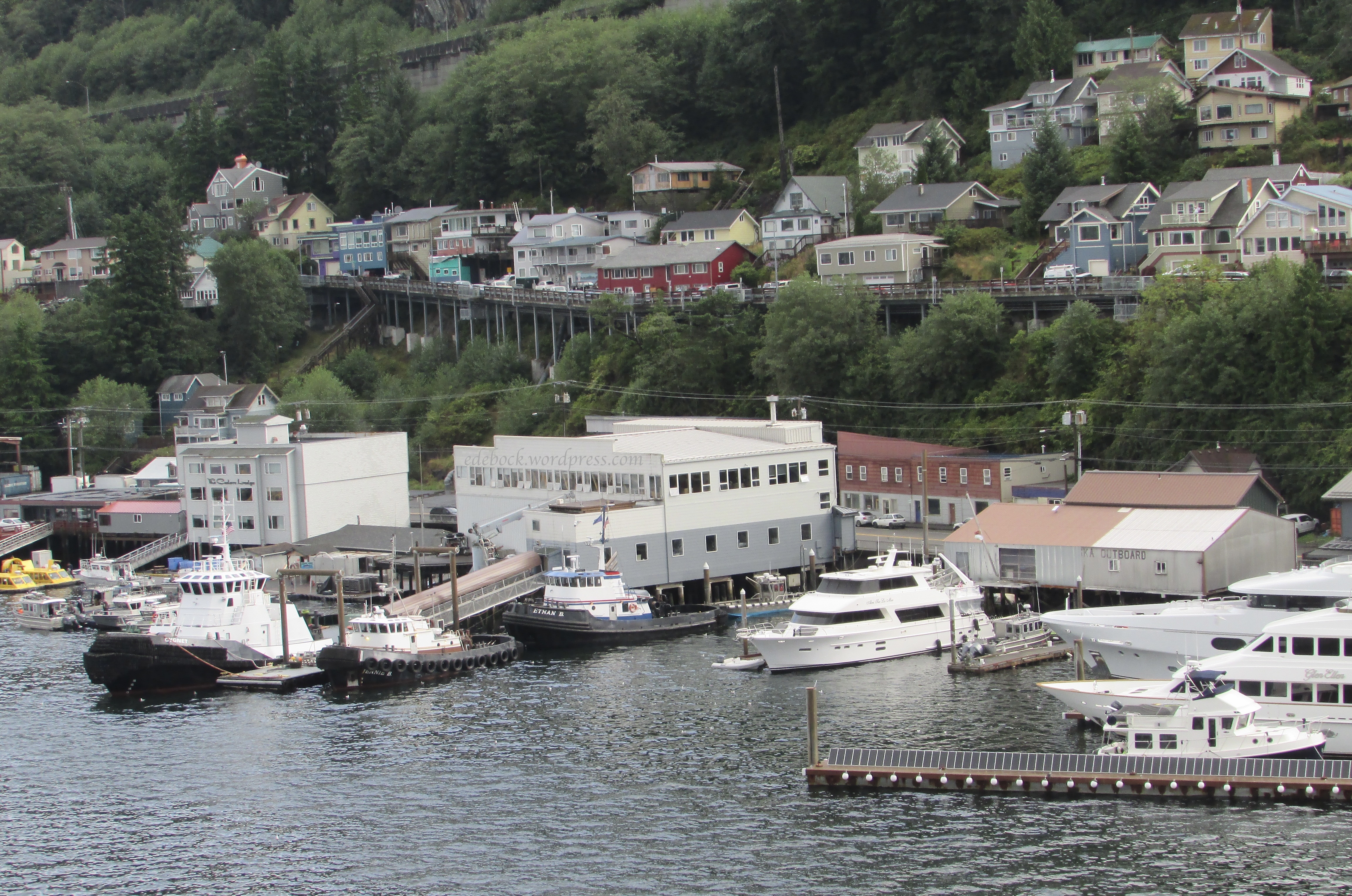
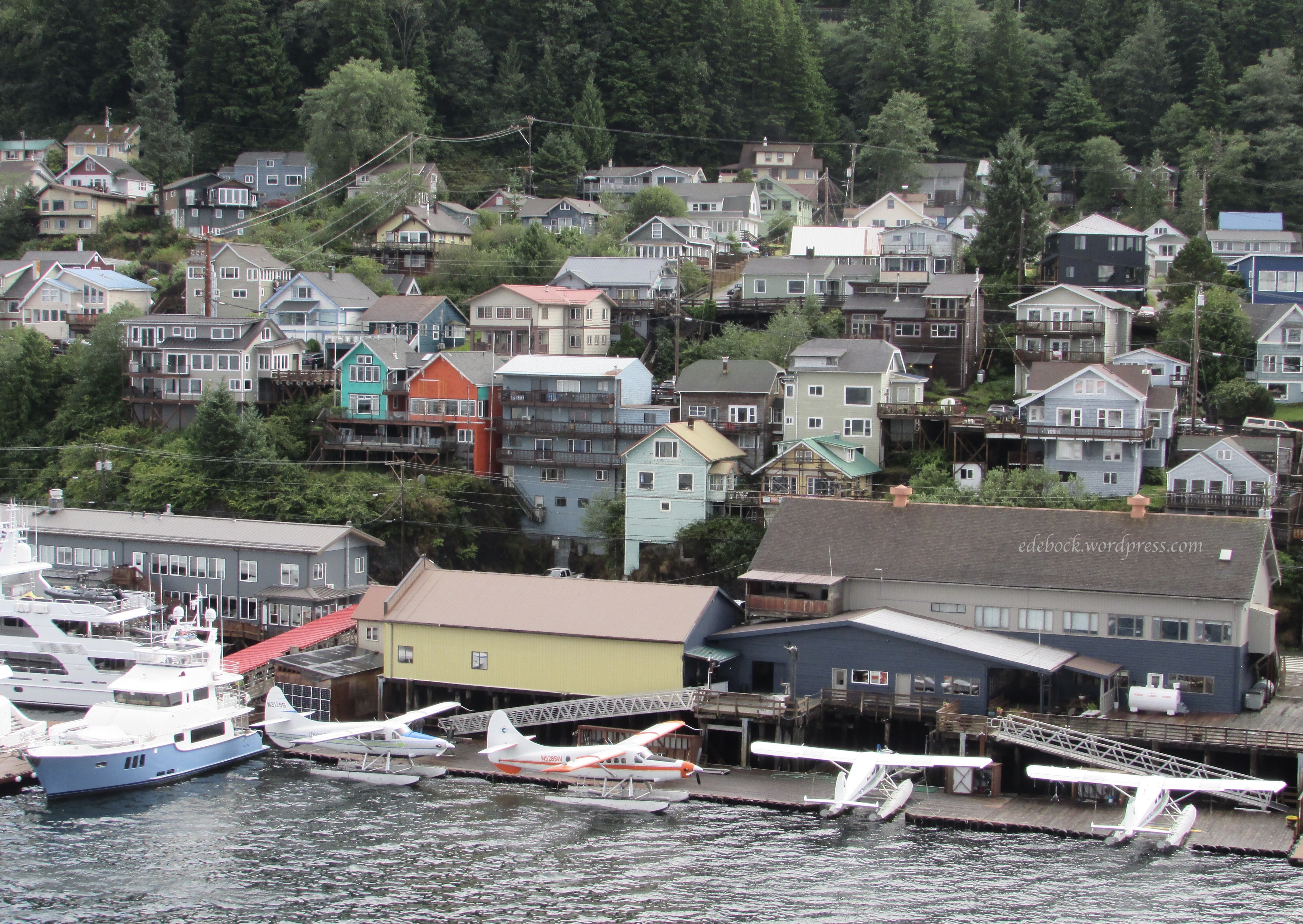
Ketchikan, with a permanent population of about 8000, was our last port of call. Like Juneau, it is inaccessible by road. It receives an average of approximately 150 inches of rainfall a year. Some of that fell while we were there, but we didn’t let that put a damper (pun intended) on our once in a lifetime opportunity to be there and see the sights.

We started by walking the 1.5 mile (2.4 km) Salmon Walk which is dedicated to the importance of salmon to the area and to encouraging good stewardship of the fish and their habitat. The walk upstream along Ketchikan Creek  in the direction that the salmon swim took us past a fish ladder and a hatchery, then along a forest trail before continuing back into the downtown area. 
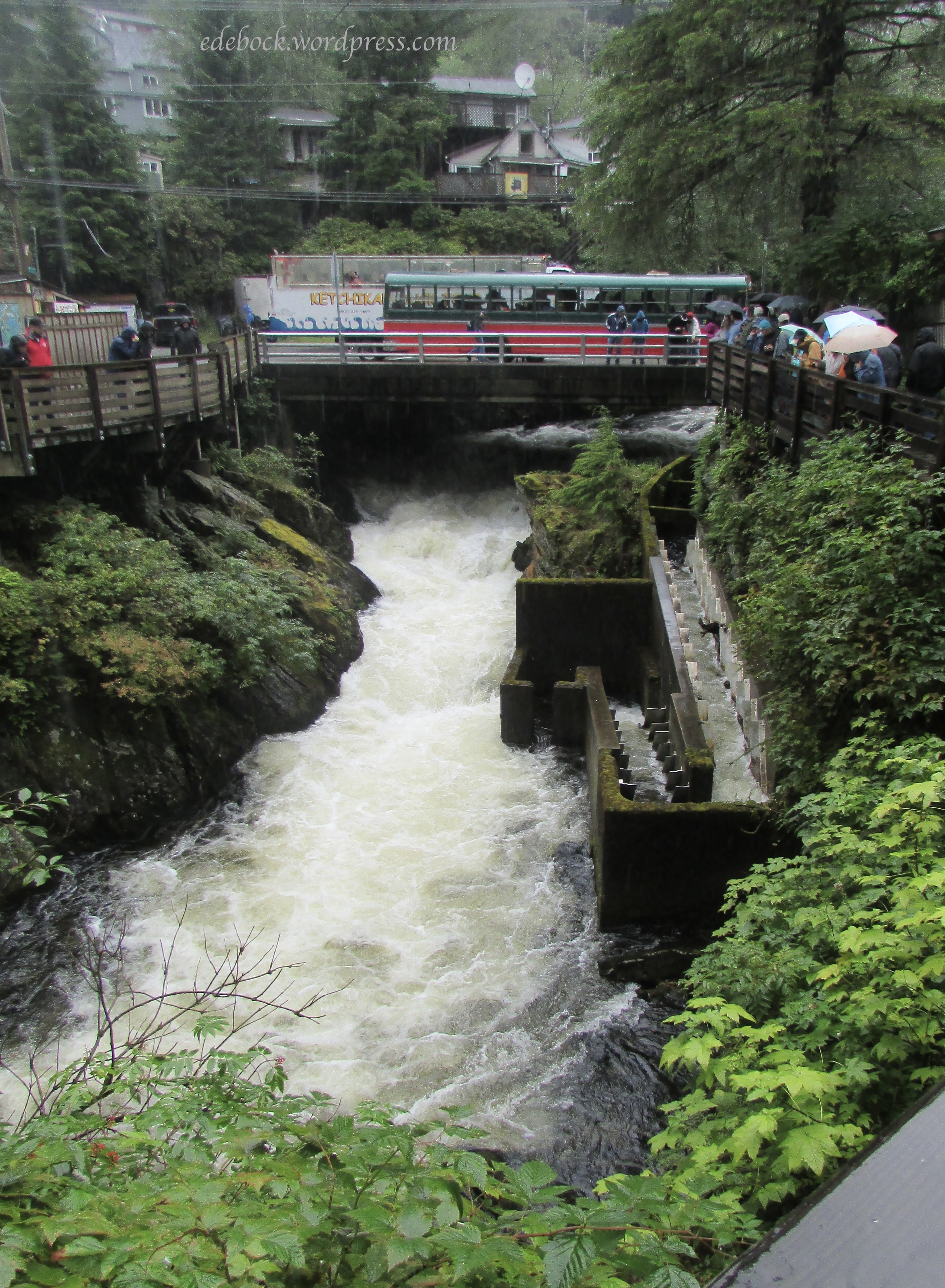
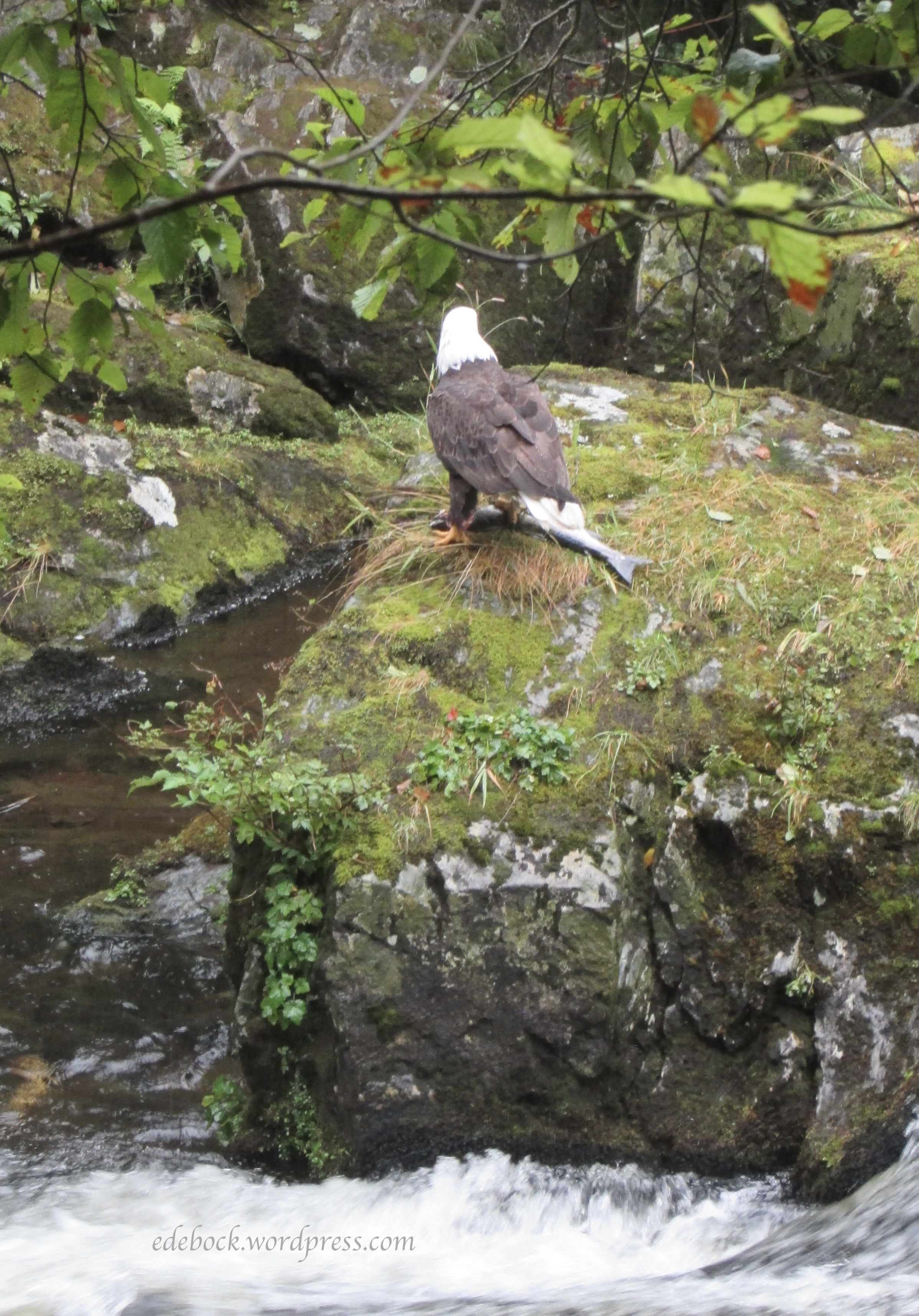
Along the way, we stopped to watch a bald eagle eating a freshly caught salmon. Unfortunately, it wouldn’t turn around and pose for me!
Halfway through the walk, we stopped at the Totem Heritage Center which houses an invaluable collection of 19th century poles retrieved in the 1970s from some of the nearby islands. It was a good place to escape the rain for a little while! 

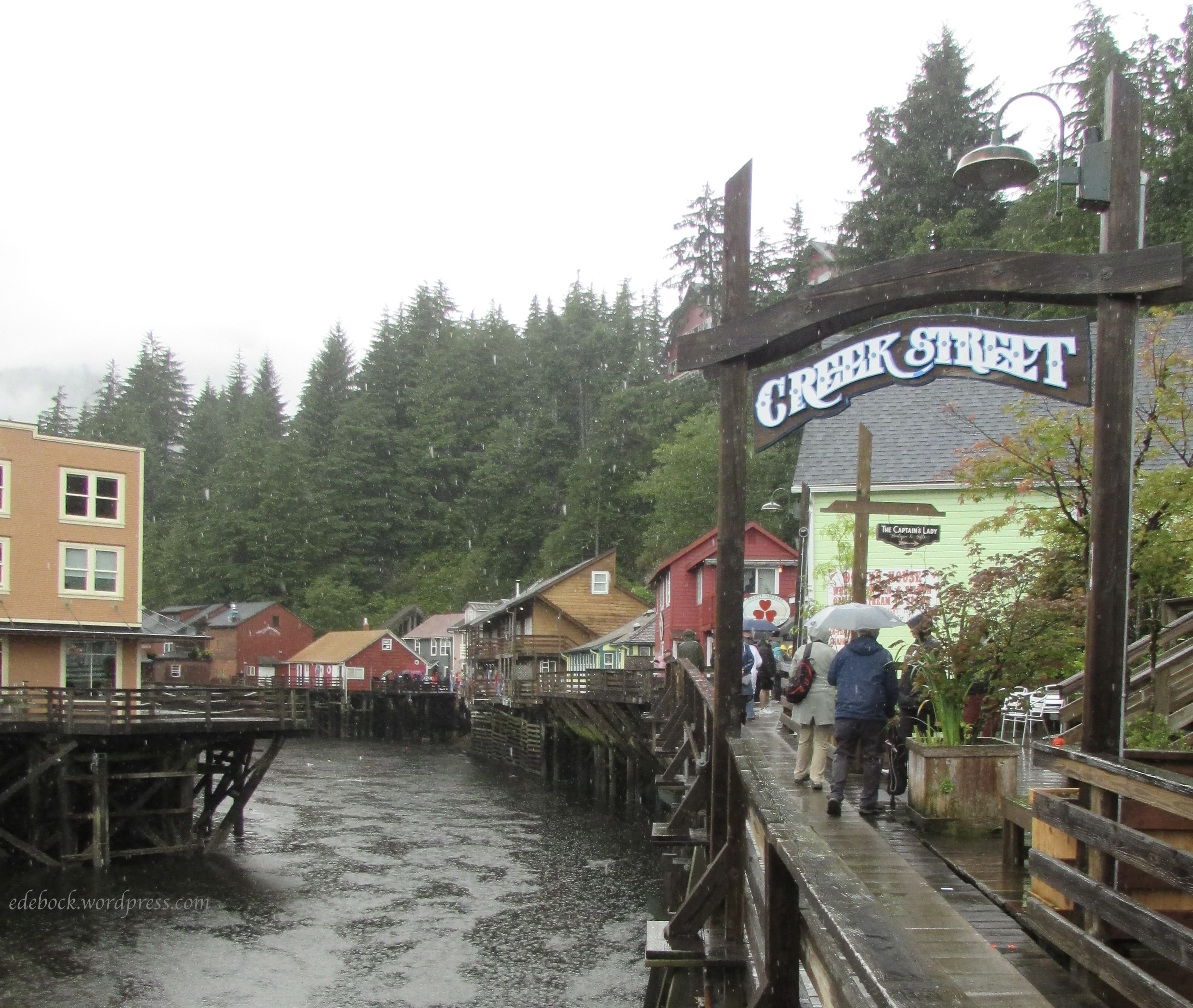
Our walk ended with a stroll along Creek Street, once the town’s red light district, but now a charming historic area known for it’s picturesque boardwalk built over the creek. We watched a couple of seals cavorting in the water there. 
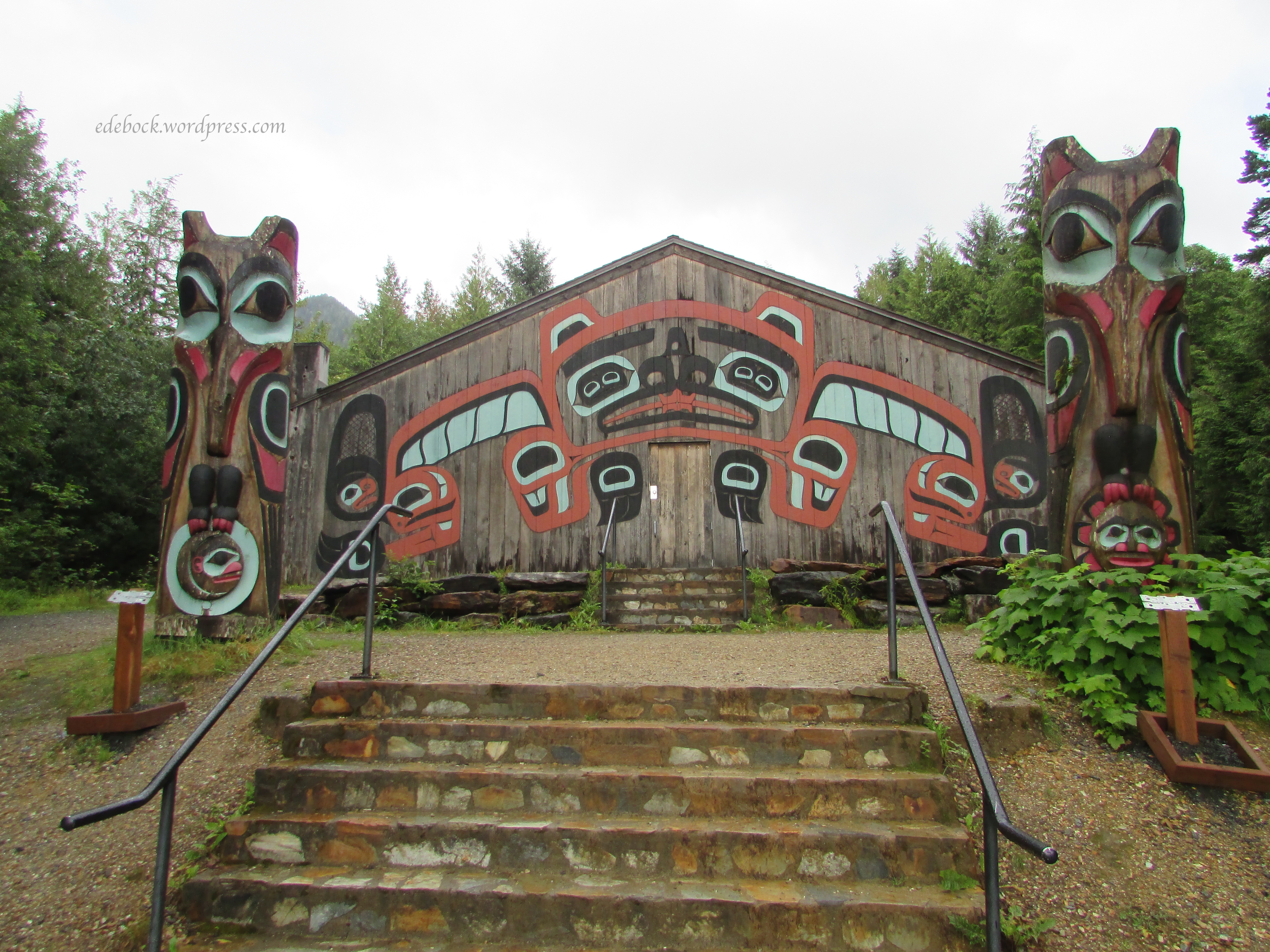
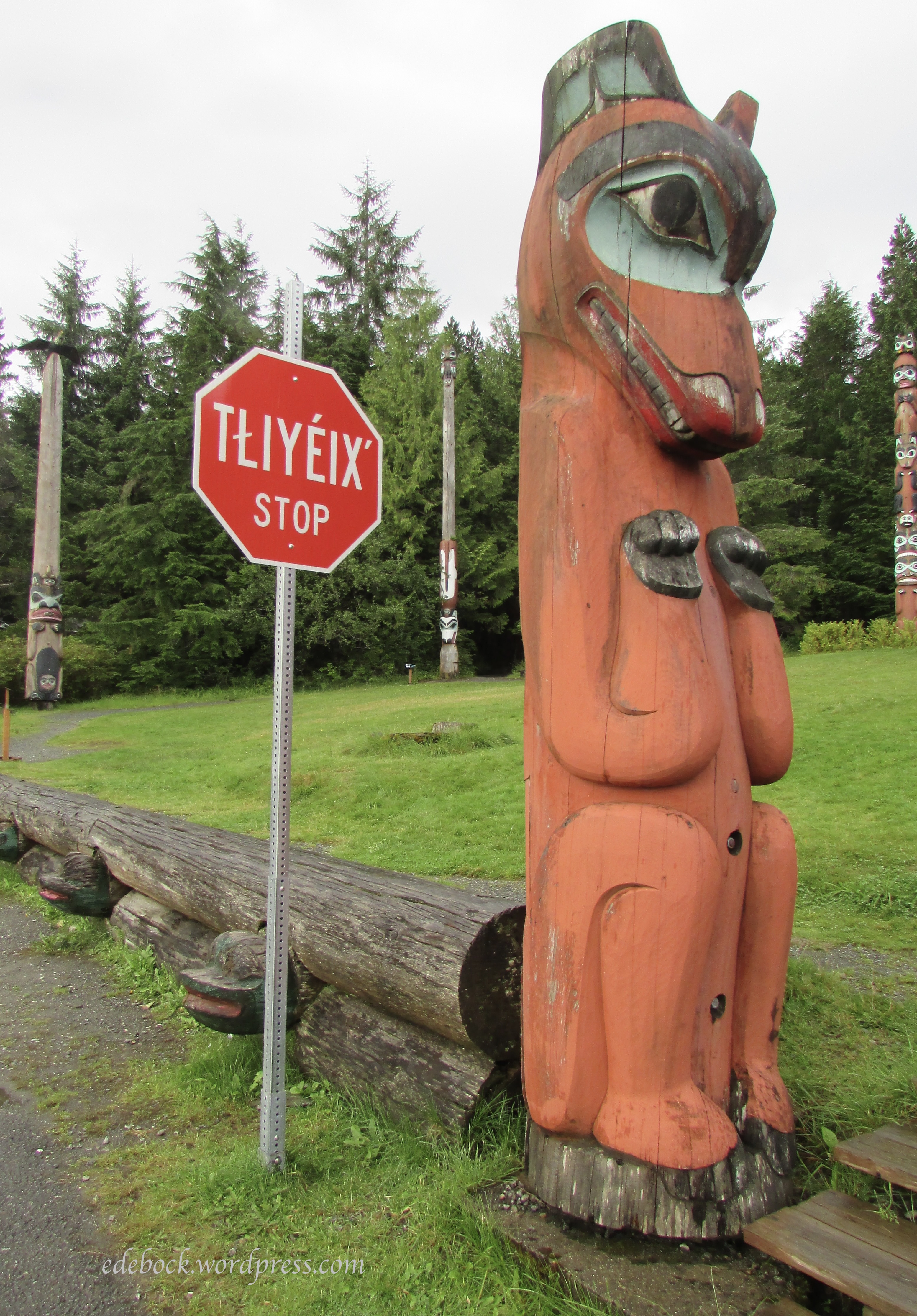
After returning to the ship for lunch, we took a taxi to Saxman Totem Park about 2.5 miles (4 km) south of Ketchikan because we didn’t want to walk that far in the rain and the city bus only goes once an hour. Of all the things we saw and did on this this trip, Saxman was the only one that we considered to be a bit of a rip off. We were charged $8 USD apiece to walk around and look at the collection of totem poles, authentic replicas of original poles that were left in abandoned villages in the past. There was no map available to guide us and most of the descriptive signs were missing. The traditional clan house and the carving centre were closed and all that was open was the gift shop!  We did manage to tag along with a tour group that made a very quick stop there and heard the stories of a few of the poles from their guide. 
And that brings this very long post to a full STOP. If you’ve stuck with it and read this far, you are to be commended! 
 

Mexico City’s Palacio de Bellas Artes

We’re home from Mexico now, but we’re living in the middle of a construction zone while renovations continue in our house. Considering how much trouble I had just finding a pair of pants to wear our first morning home, I’m nowhere near ready to consider writing a fashion post just yet. I do have one more travel post to share with you though.

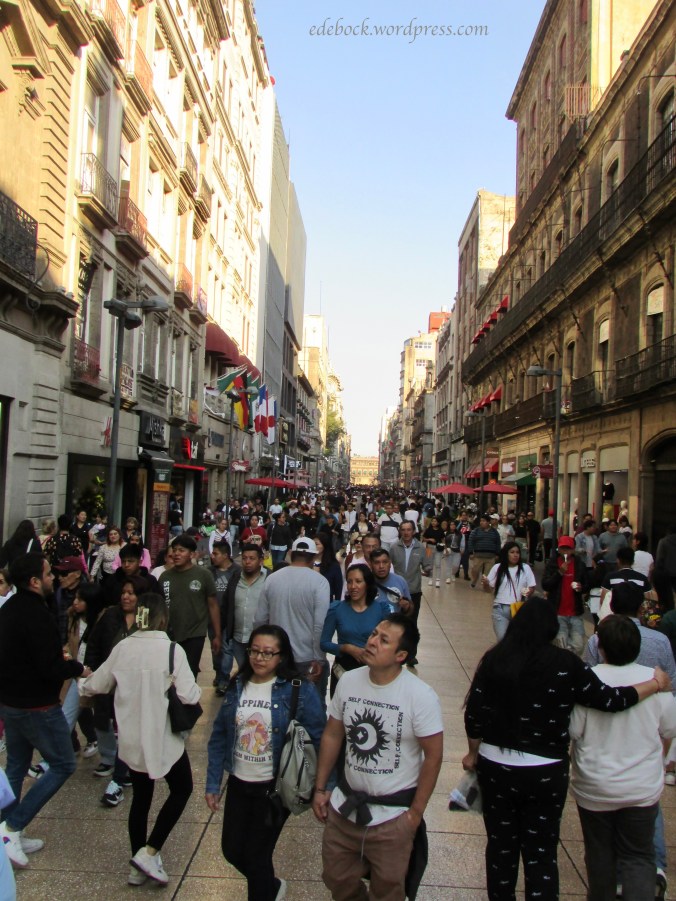
After checking into our hotel in Mexico City’s Centro Historico, we made our way to Francisco I. Madero Street, the busy pedestrian street that we have enjoyed on previous visits. Always busy, it was even more crowded than usual on a sunny Sunday afternoon!

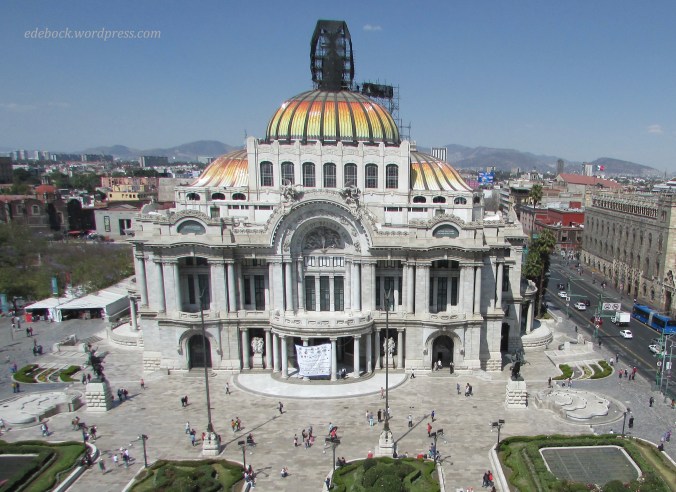
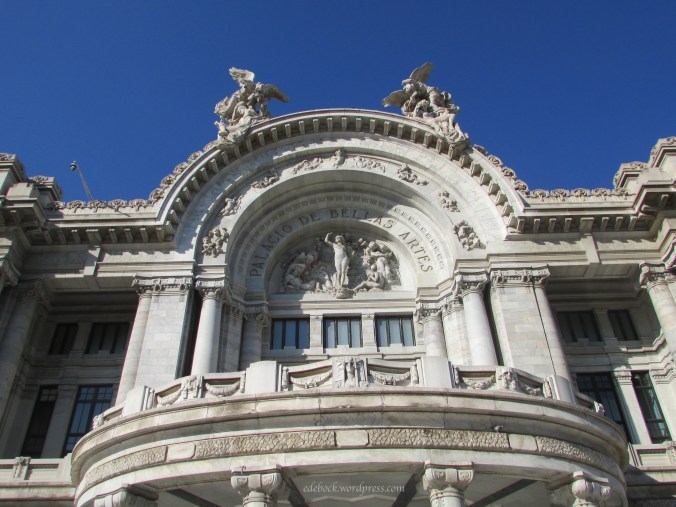
Our destination, the Palacio de Bellas Artes (Palace of Fine Arts), was at the far end of the street. Two years ago, we enjoyed this spectacular view of the prominent cultural centre from the balcony of the 8th floor coffee shop in the Sears department store directly across the street.

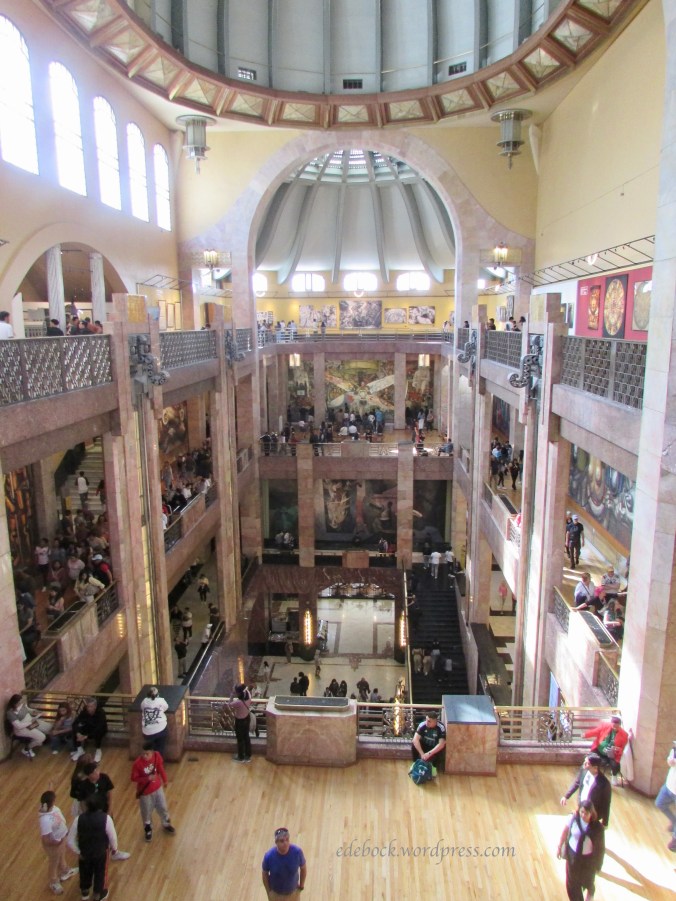
Unfortunately, on that occasion, the Palacio de Bellas Artes was closed, but this time I was determined to see the inside. It definitely didn’t disappoint. While I enjoyed seeing some of the art work on display, it was the building itself that amazed me!

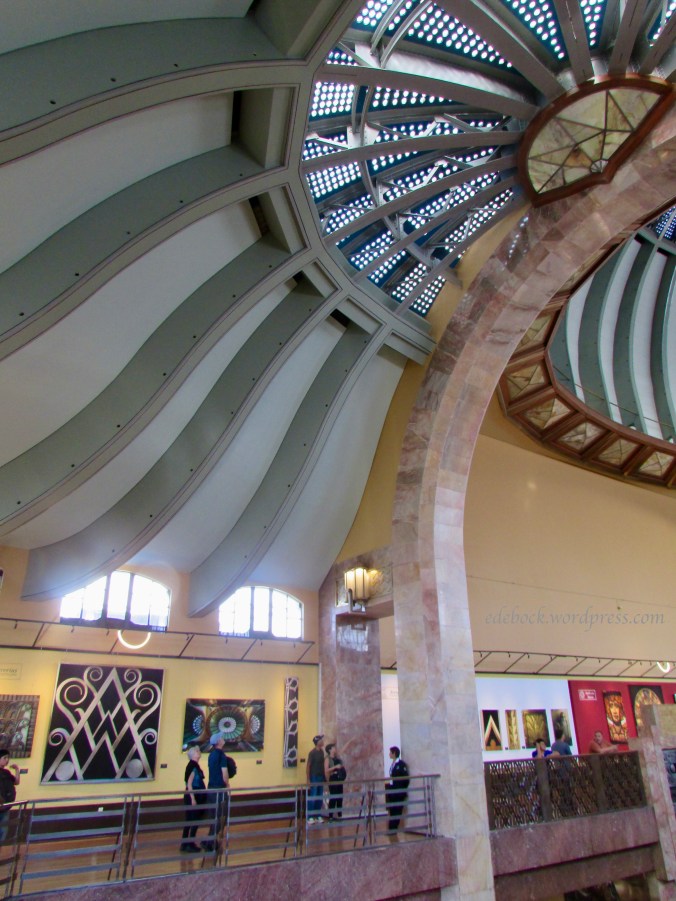
This photo was taken from the centre of the main floor looking up into the domes.

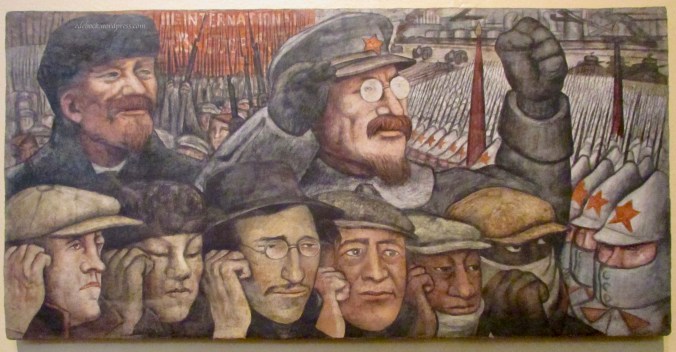
As far as the art work was concerned, it was the murals by famed Mexican artist, Diego Rivera, that I liked best. The first two panels shown here are part of his Carnival of Mexican Life series.

This one, painted in 1933 is called Russian Revolution or Third International.

I wasn’t able to get a photo of his entire The Man Who Controls The Universe mural partly because of the large tour group standing in front of it, but also because of the sheer magnitude of the piece which was painted specifically for the Palacio de Bellas Artes. It’s actually a replica of the original work which was painted in the lobby of the Rockefeller Center in New York City. The inclusion of Lenin’s face led to the destruction of the controversial piece.

Back outside, we also enjoyed the art on the exterior of the beautiful building.

In addition to the art museum housed in the front portion of the enormous marble structure, the Palacio is also home to Mexico’s largest concert hall. Unfortunately, that part wasn’t open while we were there.

Downtown Montreal

I’m back from a whirlwind trip to Montreal where I attended a three day Canadian Neuroendocrine Tumour Society (CNETS) conference. More about that in Friday’s post, but today I want to share a bit of that beautiful city with you. 

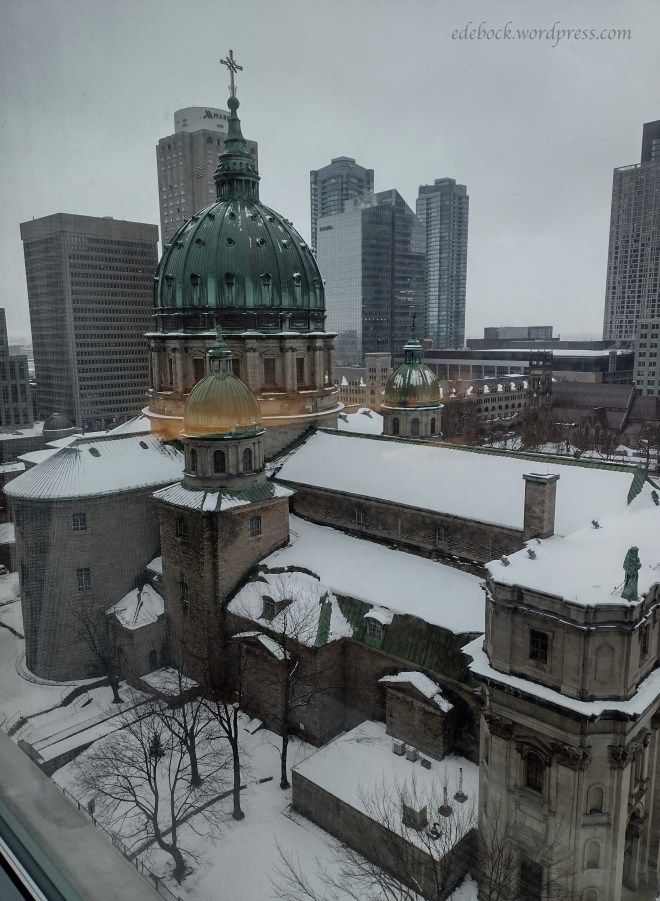
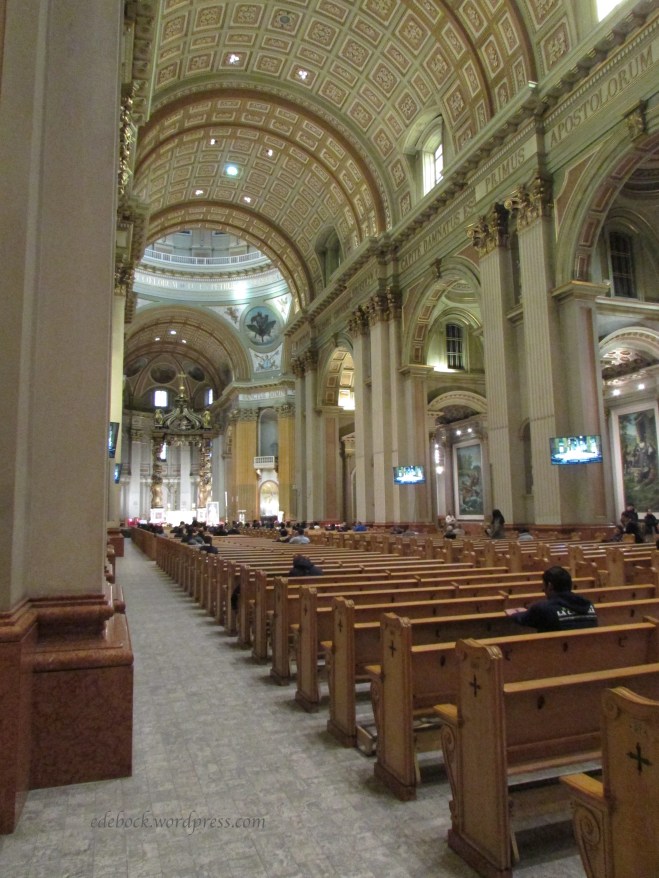
After my plane was delayed for four hours by a major snowstorm, I finally arrived late in the evening and checked into the downtown Fairmont Queen Elizabeth Hotel where the conference was being held. Entering my hotel room, I was awestruck by the view from my window overlooking the ornate Basilique Marie-Reine-du-Monde (Mary Queen of the World Basilica), a smaller replica of St. Peter’s Basilica in Vatican City. 

IMG_20240405_073719691_HDR

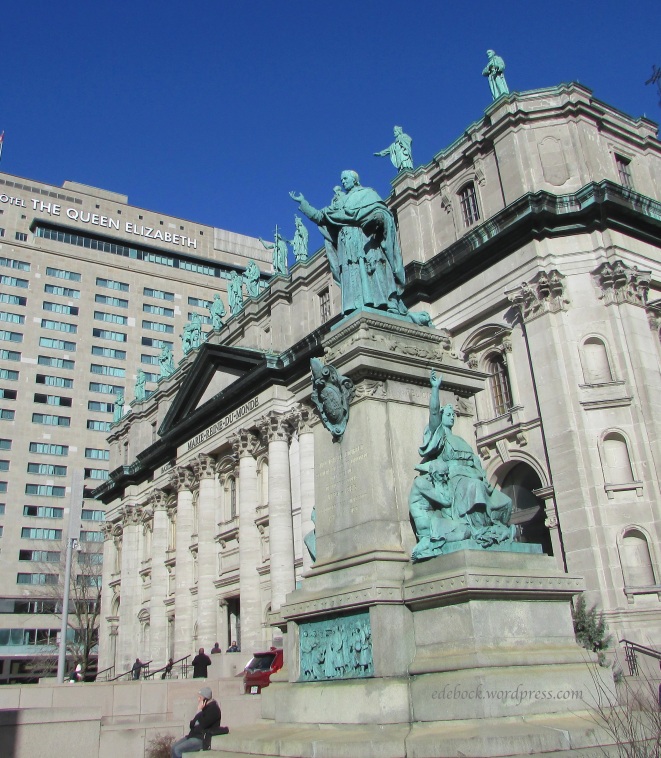
The following pictures of the basilica were taken on one of my walks after the weather cleared. 

IMG_6721 2

While the statues on the facade of St. Peter’s depict the twelve apostles, at Mary Queen of the World thirteen statues represent the patron saints of the parishes that form the diocese of Montreal.  Carved of wood and clad with copper, each statue is 9 feet tall. They were completed between October 1892 and October 1900 by Quebec native, Joseph Olindo-Gratton.

I was thankful to able to slip inside the basilica for a quick photo of the interior. 

IMG_6723

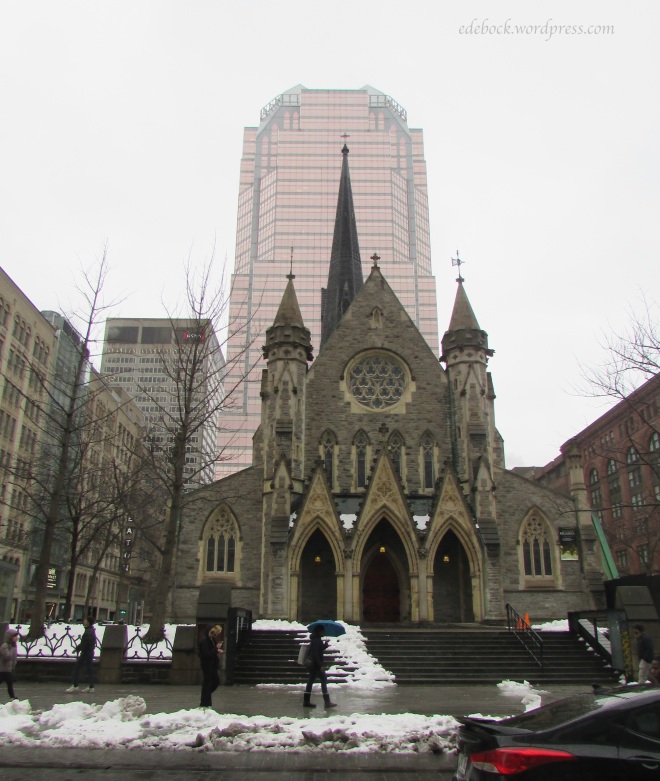
Downtown Montreal is home to many old stone churches. This one is Christ Church Cathedral and has been designated a National Historic Site of Canada.

IMG_6697

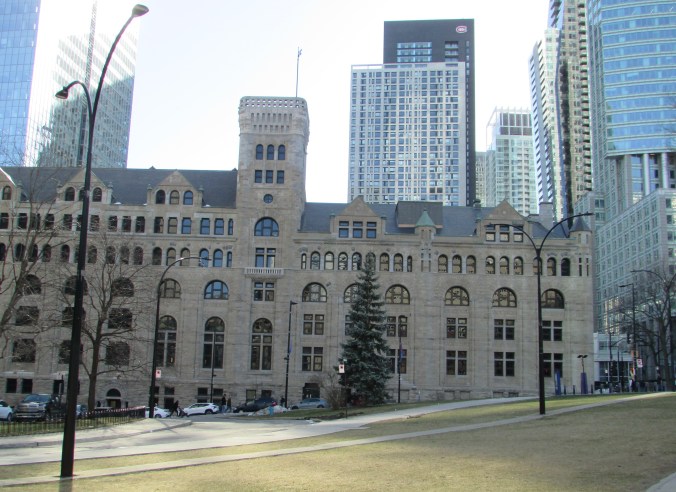
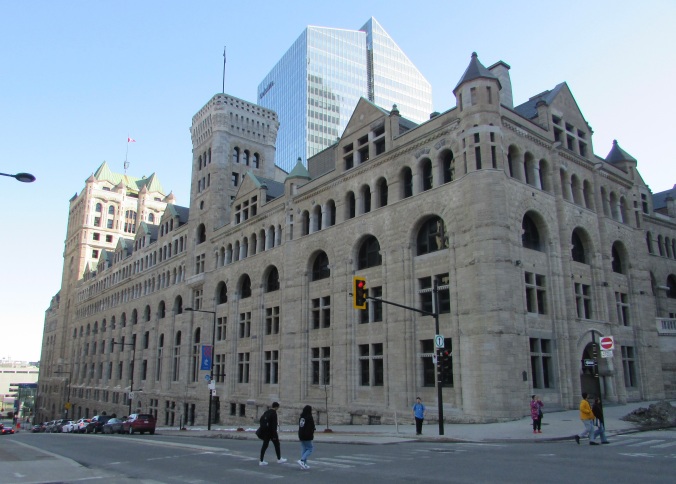
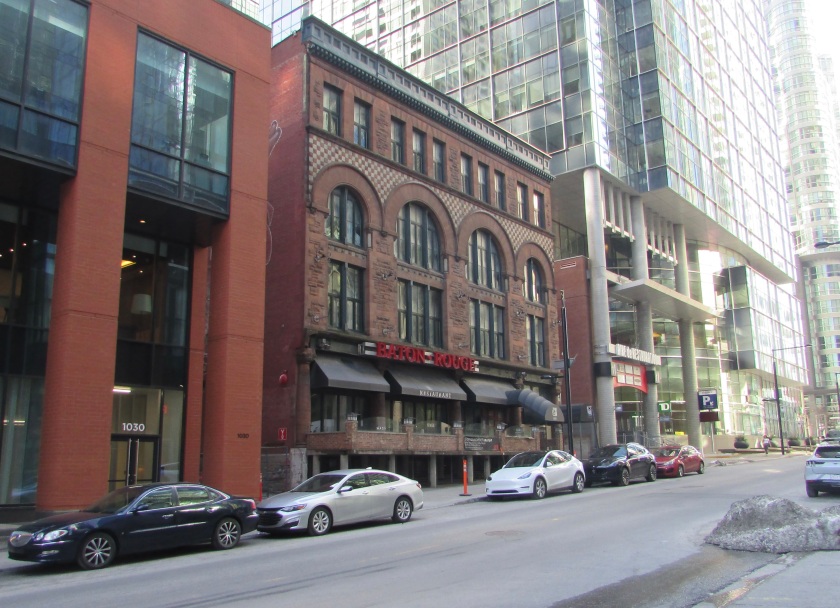
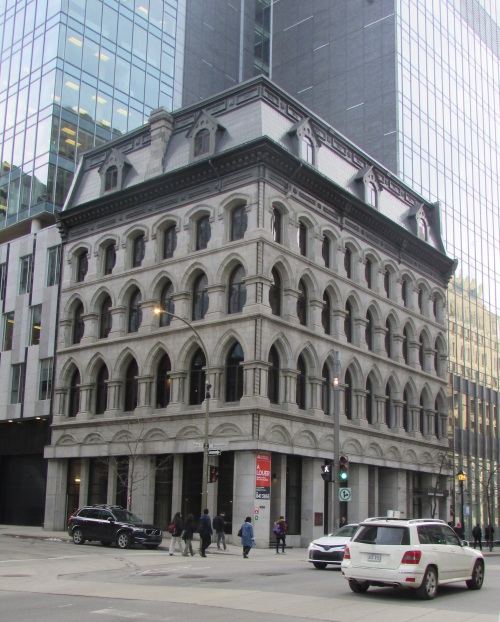
As always, I love the juxtaposition of old architecture and new. Here are a few other structures that caught my eye as I walked. The first is Windsor Station. Formerly the city’s Canadian Pacific Railway station and headquarters of the CPR from 1889 to 1996, it has been redeveloped into an office complex that also houses some restaurants and cafés. I can’t tell you anything about the others. 

IMG_6714

IMG_6708

IMG_6712

IMG_6716

IMG_6804

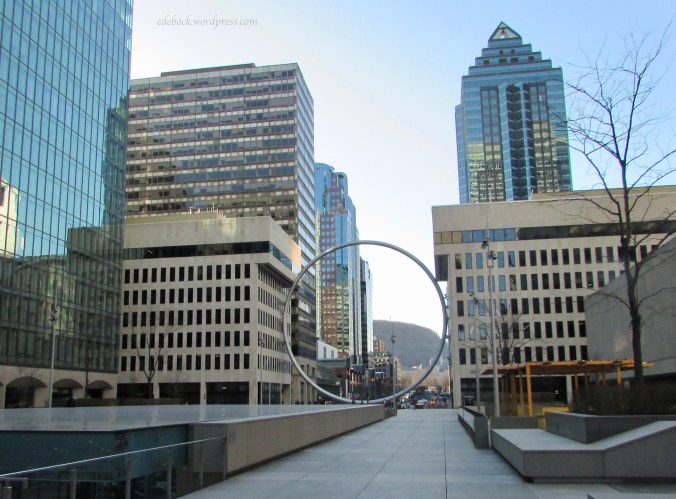
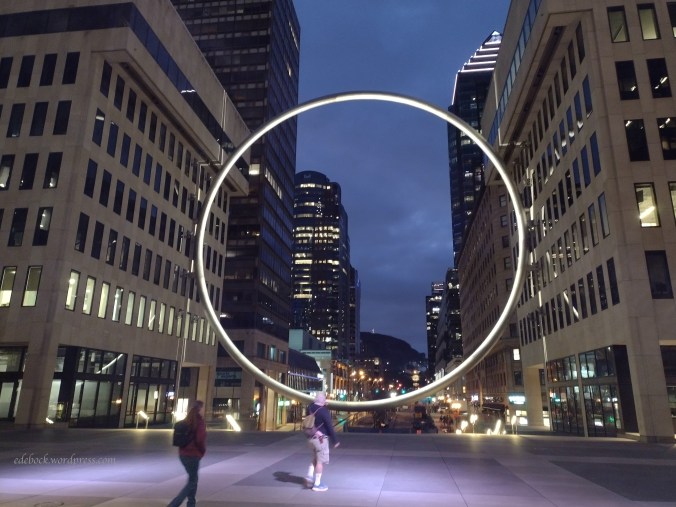
Though there is no end of old architecture to enjoy in Montreal’s downtown area, there’s also something new to see. Suspended between two buildings, 30 metres in diameter and weighing some 23,000 kilograms, The Ring hovers over the staircase of Place Ville Marie’s Esplanade directly across Rene Levesque Boulevard from the Queen Elizabeth Hotel. Installed in June 2022, The Ring serves as a window to more than 200 years of history, establishing a direct line of view from the hotel and Place Ville Marie to McGill University, the former Royal Victoria Hospital, and the illuminated cross on Mount Royal.

IMG_6744

IMG_20240406_195749629

Museum of Aboriginal Peoples’ Art & Artifacts

We spent a few days this week camping, hiking, and kayaking in Sir Winston Churchill Provincial Park near the small town of Lac la Biche, about two and a half hours northeast of Edmonton, Alberta. When I read that the Portage College campus in Lac la Biche is home to the Museum of Aboriginal Peoples’ Art & Artifacts, I knew that we had to go into town to see it. I recognized the names of well-known artists like Bill Reid, Alex Janvier, and Norval Morrisseau and was eager to see their work.

Arriving at the college, I expected to find a gallery showcasing the works of these and other Indigenous artists. Instead, the extensive collection of traditional and contemporary works lines the hallways of the school and we were free to wander and enjoy them. With only one class in session while we were there, it was as quiet and serene as any traditional gallery would have been.

IMG_5793

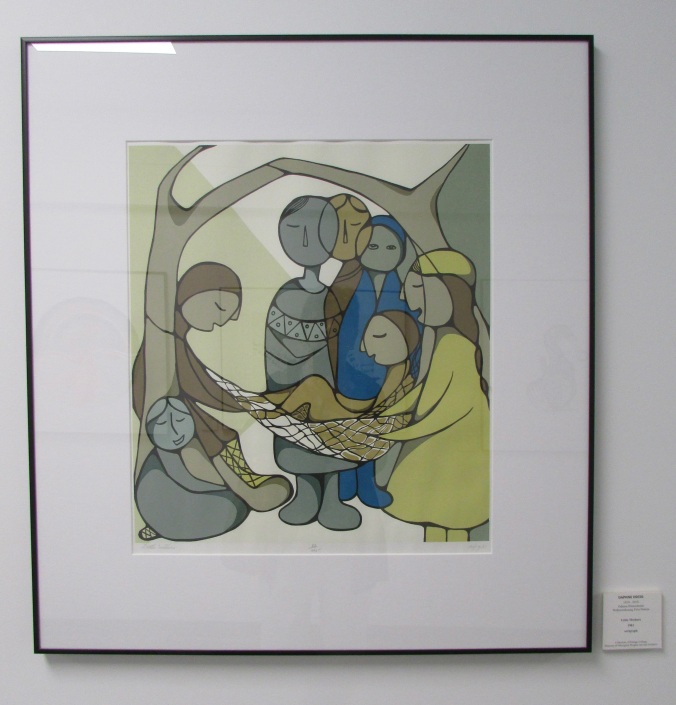
Little Mothers – Daphne Odjig

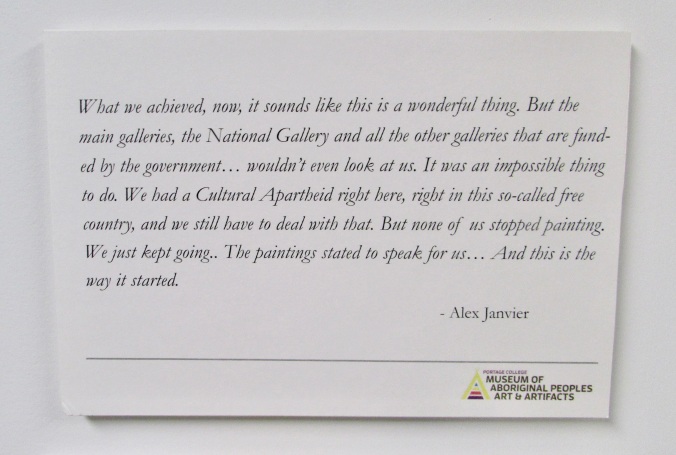
The Portage College museum features the world’s only permanent collection of works by the Professional Native Indian Artists Inc., also informally known as the Indian Group of Seven. The group was formed in 1972 after a series of gatherings in Daphne Odjig’s craft store and gallery in Manitoba and later incorporated as an attempt to be taken seriously as professional artists and to advocate for Indigenous art to viewed as fine art and to be included in galleries across the nation. The museum on the Portage College campus began in 1978 as a teaching collection for the college’s Native Arts and Culture programs and grew from there.

IMG_5783

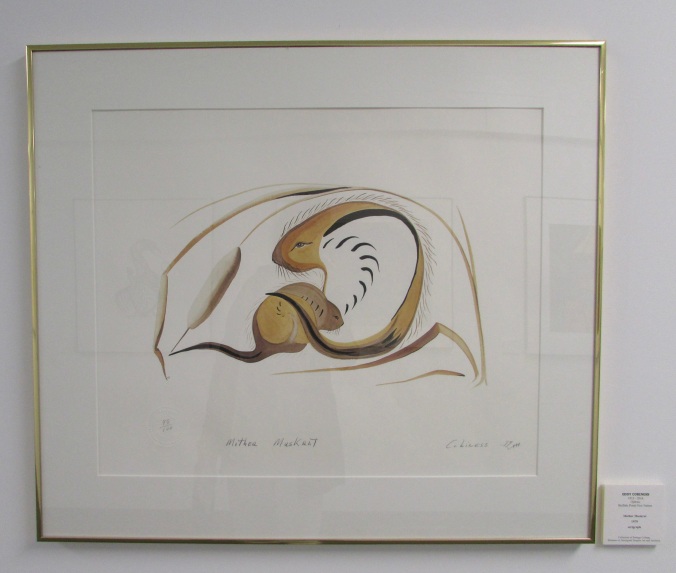
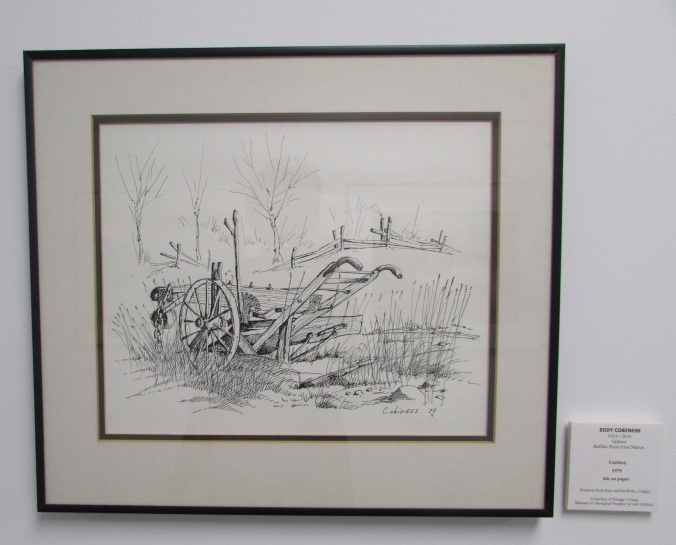
While I was impressed by most of what we saw, amongst the Group of Seven it was the work of Eddy Cobiness (1933-1996) that really stood out to me. Cobiness, of Ojibway descent, was born in Minnesota and raised on a reserve in Manitoba. Though I had not heard of him before, his art is held in many prominent private and public collections.

IMG_5777

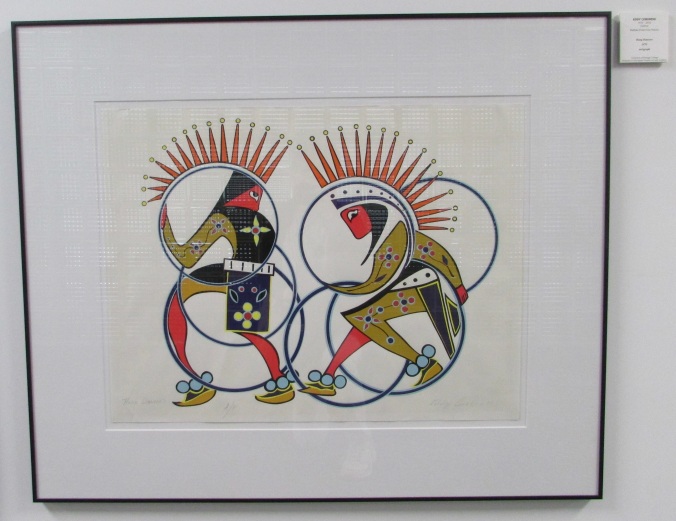
Hoop Dancers – Eddy Cobiness

IMG_5805

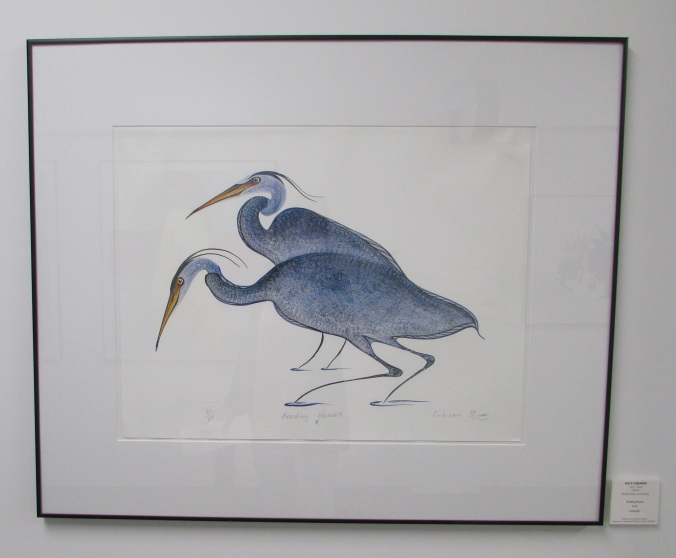
Feeding Herons – Eddy Cobiness

IMG_5795

Mother Muskrat – Eddy Cobiness

IMG_5797

Untitled – Eddy Cobiness

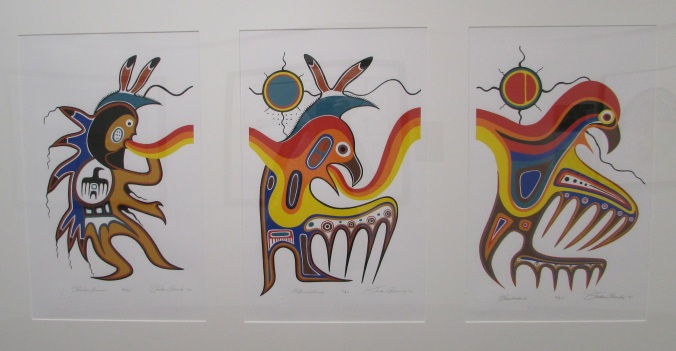
These three colourful designs by Jackson Beardy also caught my attention, probably because their style is somewhat similar to that of the Indigenous artists of the Northwest Coast that I love so much.

IMG_5788

Thunder Dancer / Metamorphosis / Thunderbird – Jackson Beardy

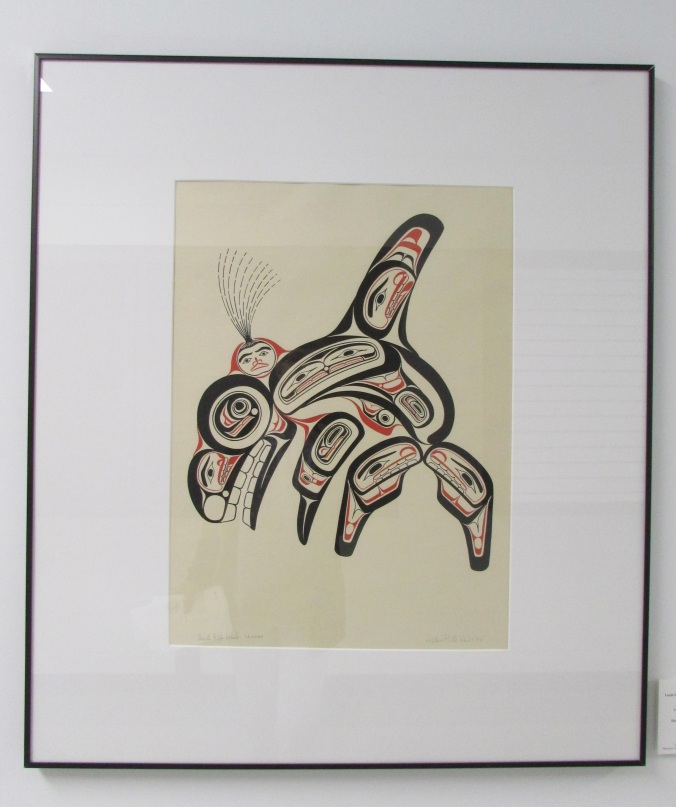
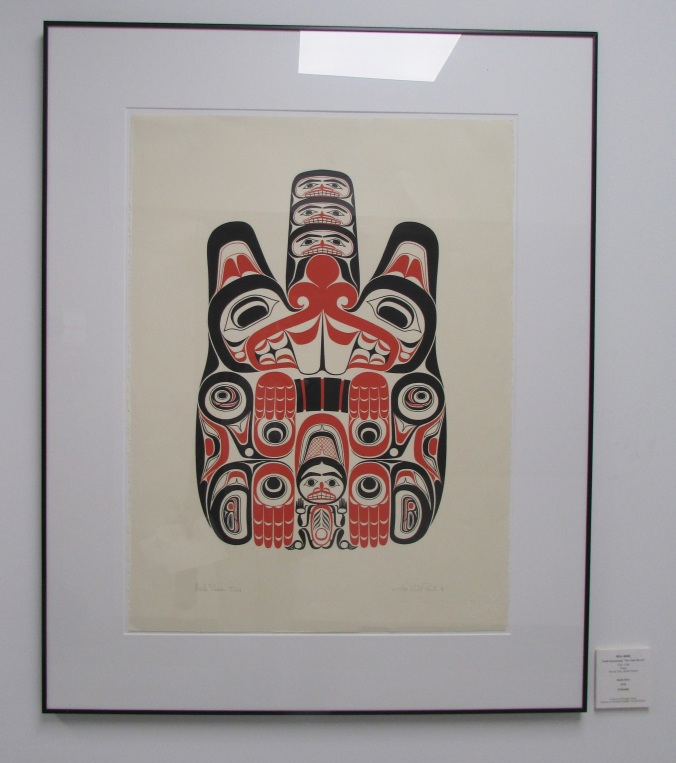
In addition to showcasing the work of the Professional Native Indian Artists Inc., the museum also features Northwest Coast and Inuit art. Bill Reid (1920-1998), was a prolific Haida artist, perhaps best known by many for his giant sculpture “Spirit of Haida Gwaii” on display in the international departures area of the Vancouver airport.

IMG_5821

Haida Killer Whale – Bill Reid

IMG_5819

Haida Bear – Bill Reid

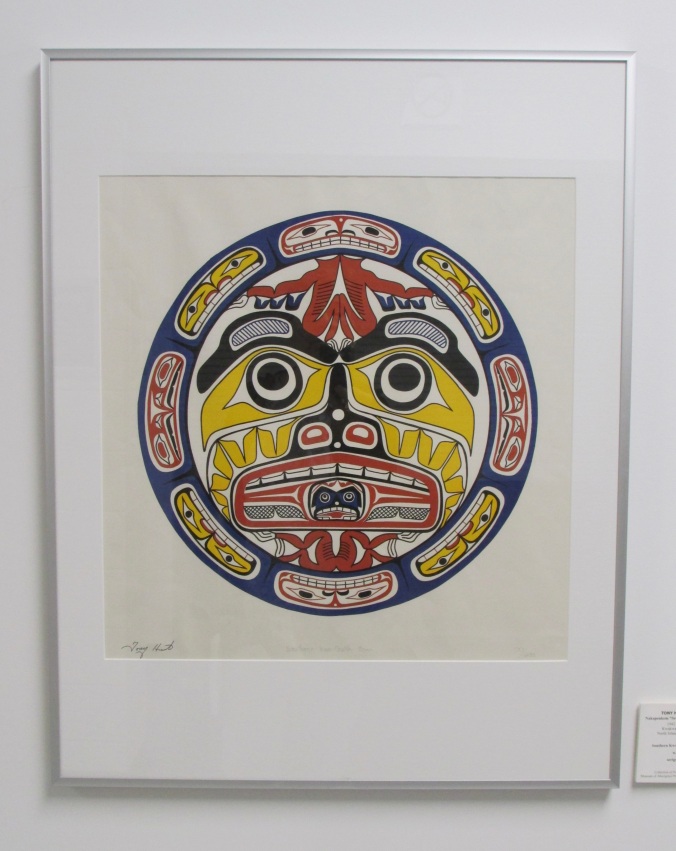
Other coastal artists whose work is on display in Lac la Biche include Tony Hunt Sr. (1942-2017) who was the hereditary chief of the Kwa-Gluth people and Robert Davidson who is of Haida and Tlingit descent.

IMG_5830

Southern Kwa-Gulth Moon – Tony Hunt Sr

IMG_5824

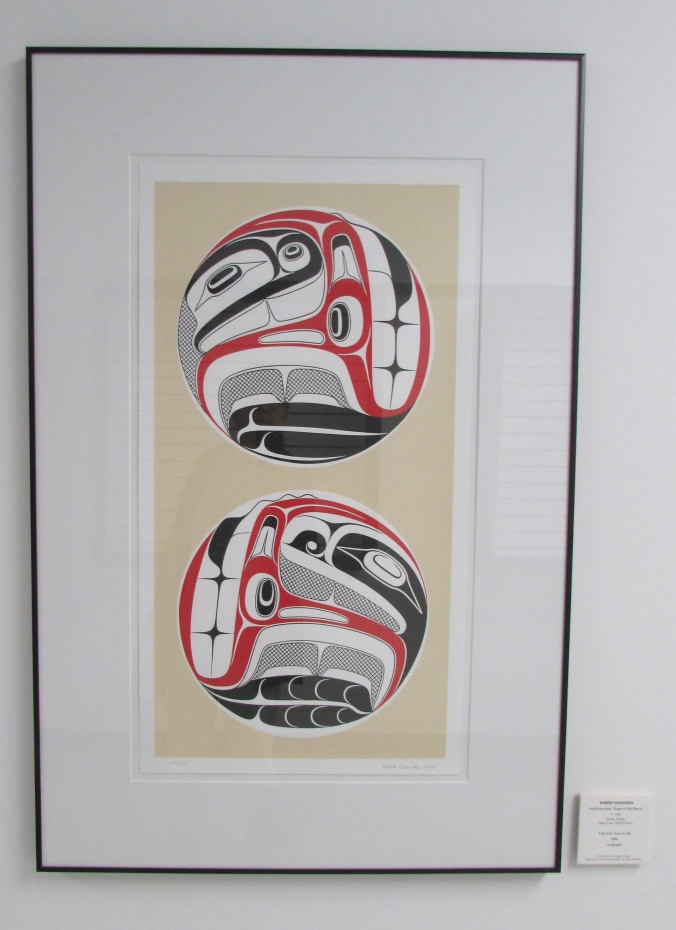
I am You, You are Me – Robert Davidson

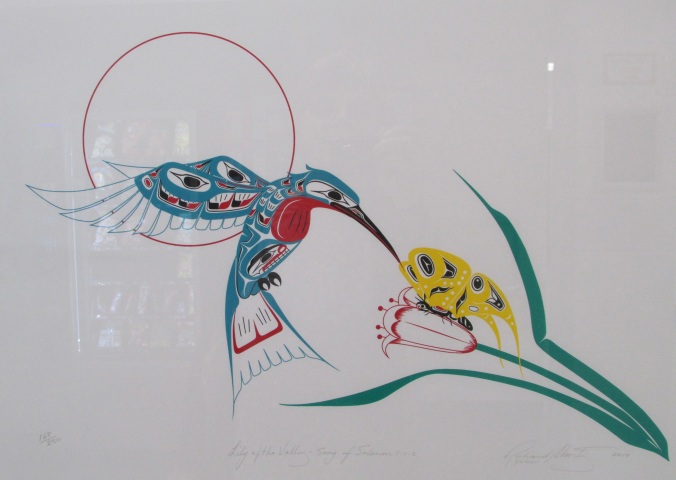
I thought this piece by Richard Shorty of the Tuchone Kwanlin Dun First Nation in the Yukon was absolutely exquisite. According to Northwest Coast tradition, the hummingbird represents love and beauty.

IMG_5833

Lily of the Valley / Song of Solomon – Richard Shorty

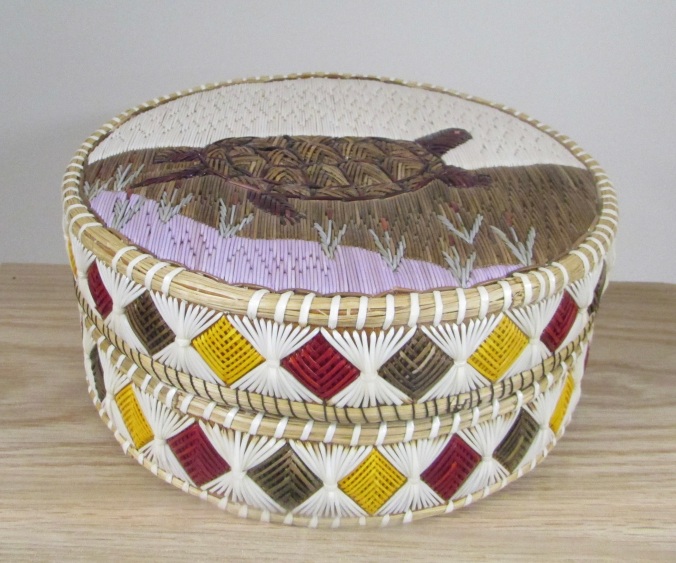
In addition to the framed work lining the corridors of Portage College, there are numerous glass cases containing carvings, baskets, beadwork, ceremonial clothing, moccasins and mukluks, headdresses, masks and more. Due to the reflective quality of the glass, it was difficult to get good photos, but I did manage to get one of this perfectly preserved Mi’kmaq porcupine quilled basket from the late 1700s or early 1800s.

IMG_5813

While I was thrilled to be able to spend a couple of hours enjoying this amazing collection of Indigenous art and artifacts, it saddens me that it’s hidden away in a remote location where few Canadians or visitors to our country will ever have the opportunity to see it.

Downtown Calgary walking tour

Over the years, we’ve been to Calgary about a bazillion times. That’s because our daughter moved there immediately after graduating from high school 22 years ago to go to college and ended up staying. It had been many, many years, however, since we’d spent any time in the downtown core. Yesterday, however, we had a few hours to kill before picking up a friend who was traveling with us. We took a self-guided walking tour to see some of the weird and wonderful outdoor sculptures that add to the vibrant life of the city’s downtown. It was a cool, blustery morning, but thankfully, it rained very little. 

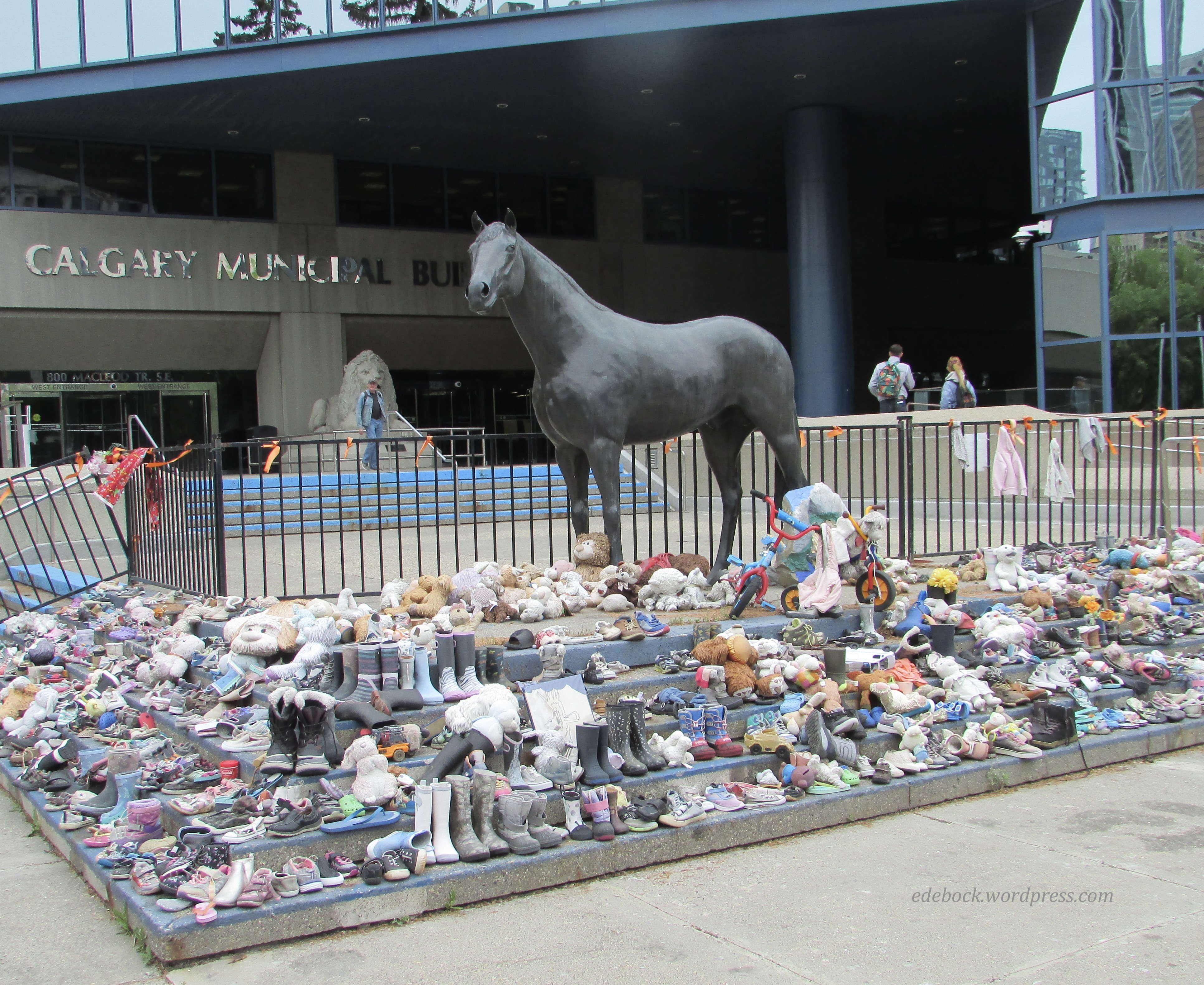
Our morning started at the somewhat pricey, but conveniently located City Hall Parkade and our first stop was just around the corner of the building. The Family of Horses, consisting of three statues, was donated to the City of Calgary by Spruce Meadows, a multi-purpose equestrian facility located near the city. The stallion shown in my photo is positioned in such a manner that he overlooks the foal and mare (not shown). At present, however, he stands guard over a temporary memorial to honour Indian Residential School survivors. The city intends to create a permanent memorial elsewhere once a location and design have been chosen. 

IMG_5682

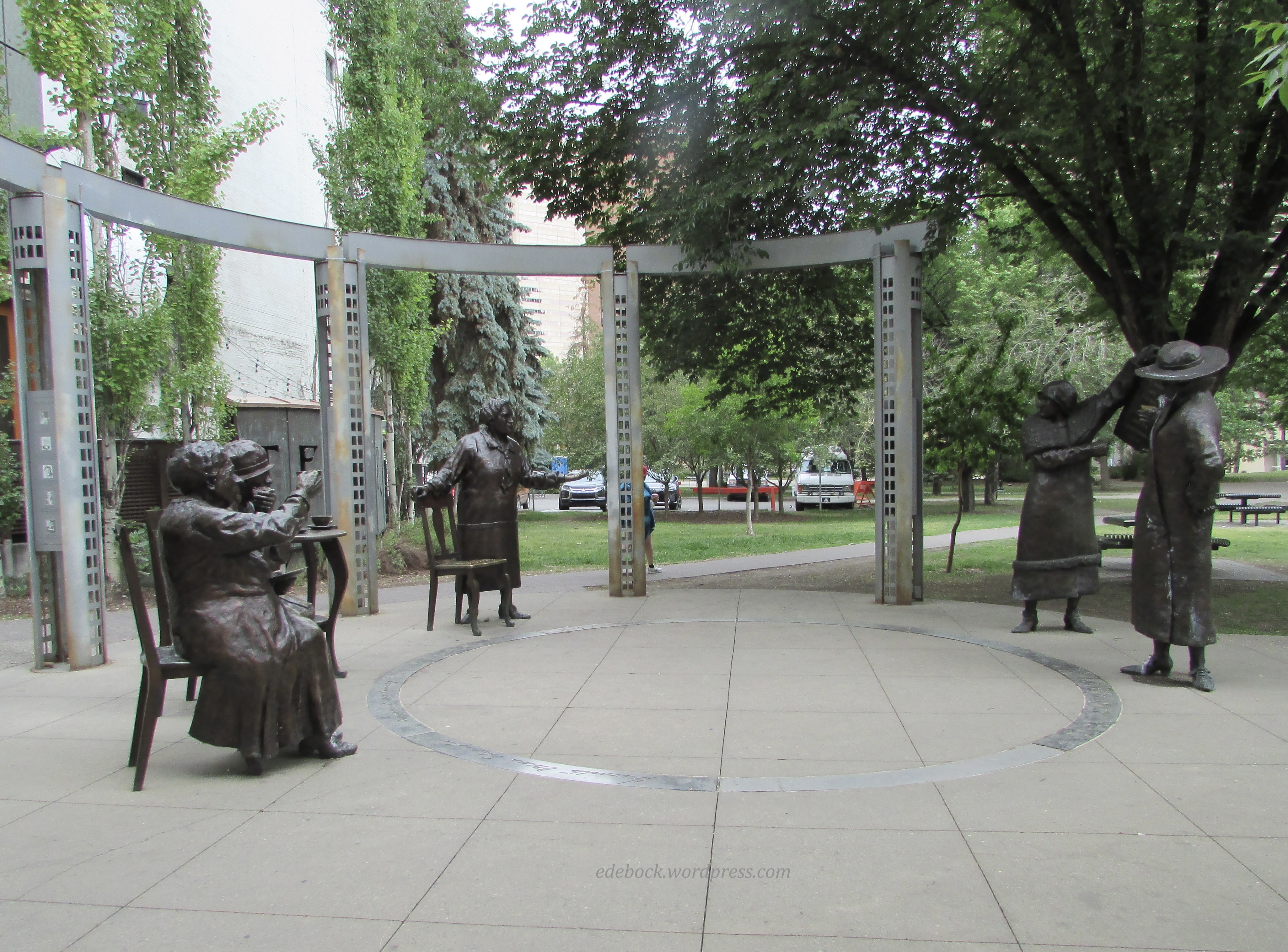
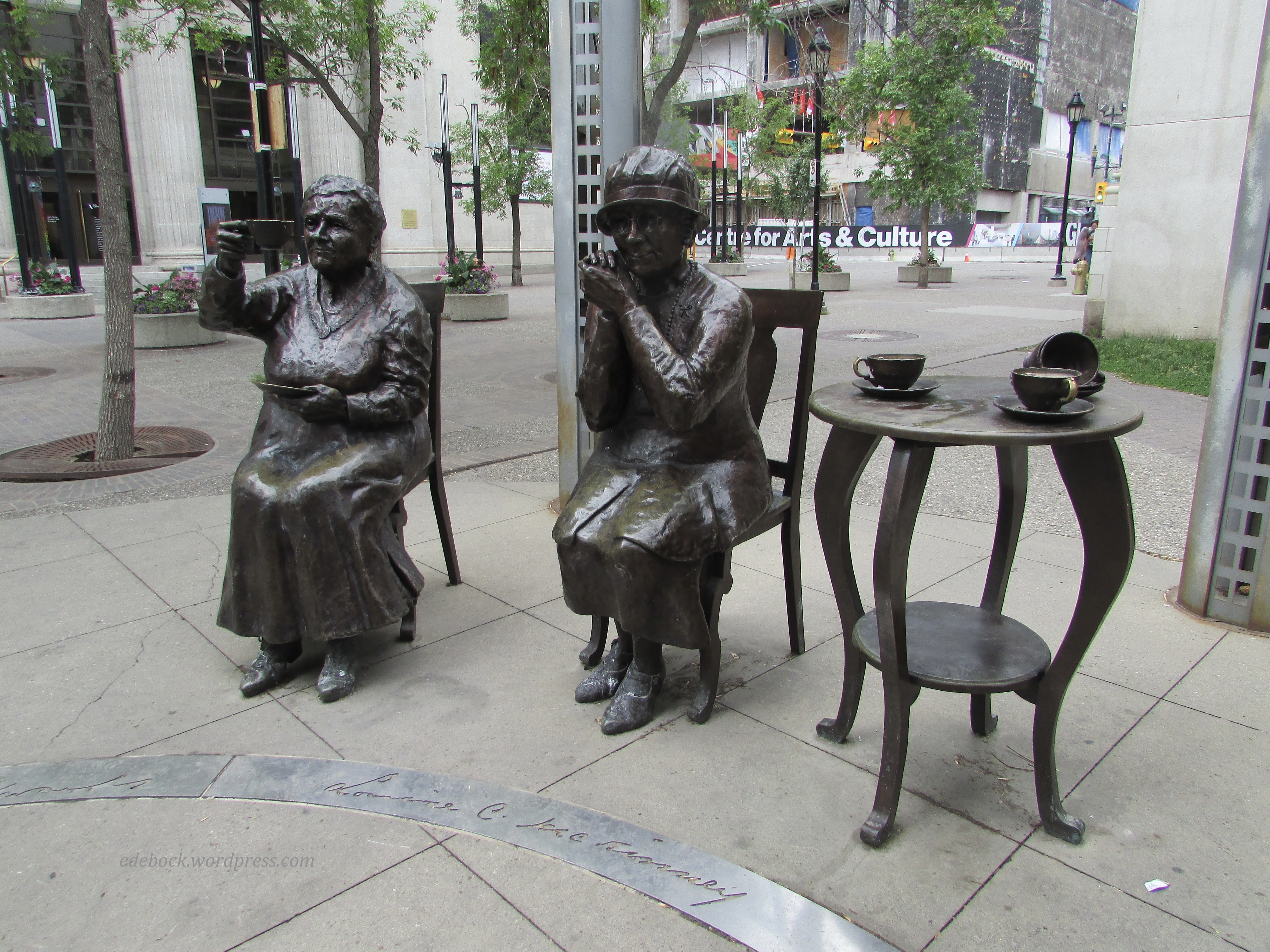
Next, the Women are Persons statues are located at the corner of Olympic Park. The monument recognizes the role played by Canadian women in the growth of the country and specifically honours the Famous Five, five persistent Alberta women — Emily Murphy, Nellie McClung, Irene Parlby, Louise McKinney and Henrietta Muir Edwards. Through their efforts, Canadian women were legally declared persons and given the right to vote on October 18, 1929. Seventy years later, the Calgary monument was unveiled on October 18, 1999 by then Governor General Adrienne Clarkson. Exactly one year later, a similar monument was unveiled on Parliament Hill in Ottawa. 

IMG_5686

IMG_5689

Of course I had to stop and sit with the famous ladies for a bit! 

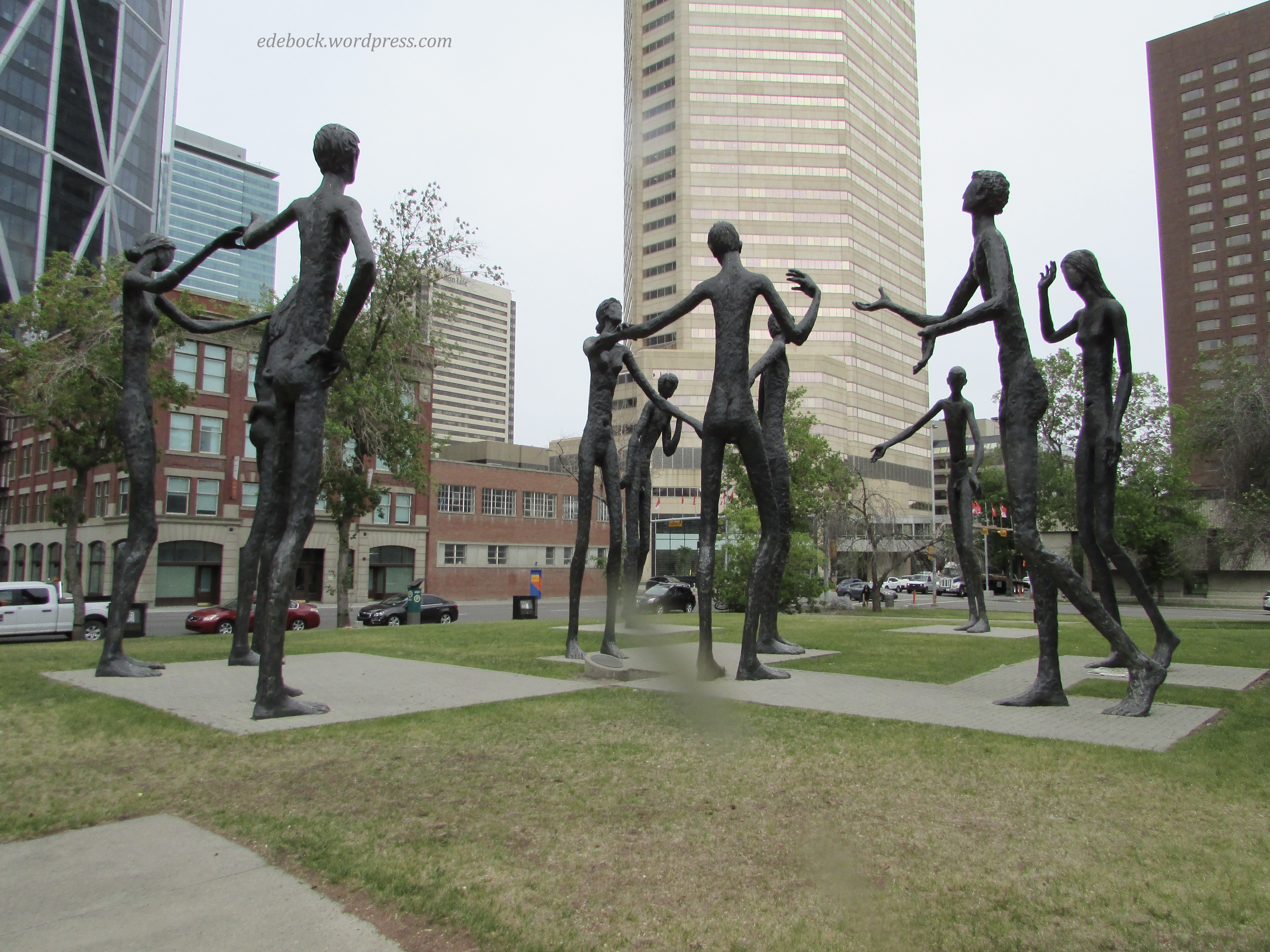
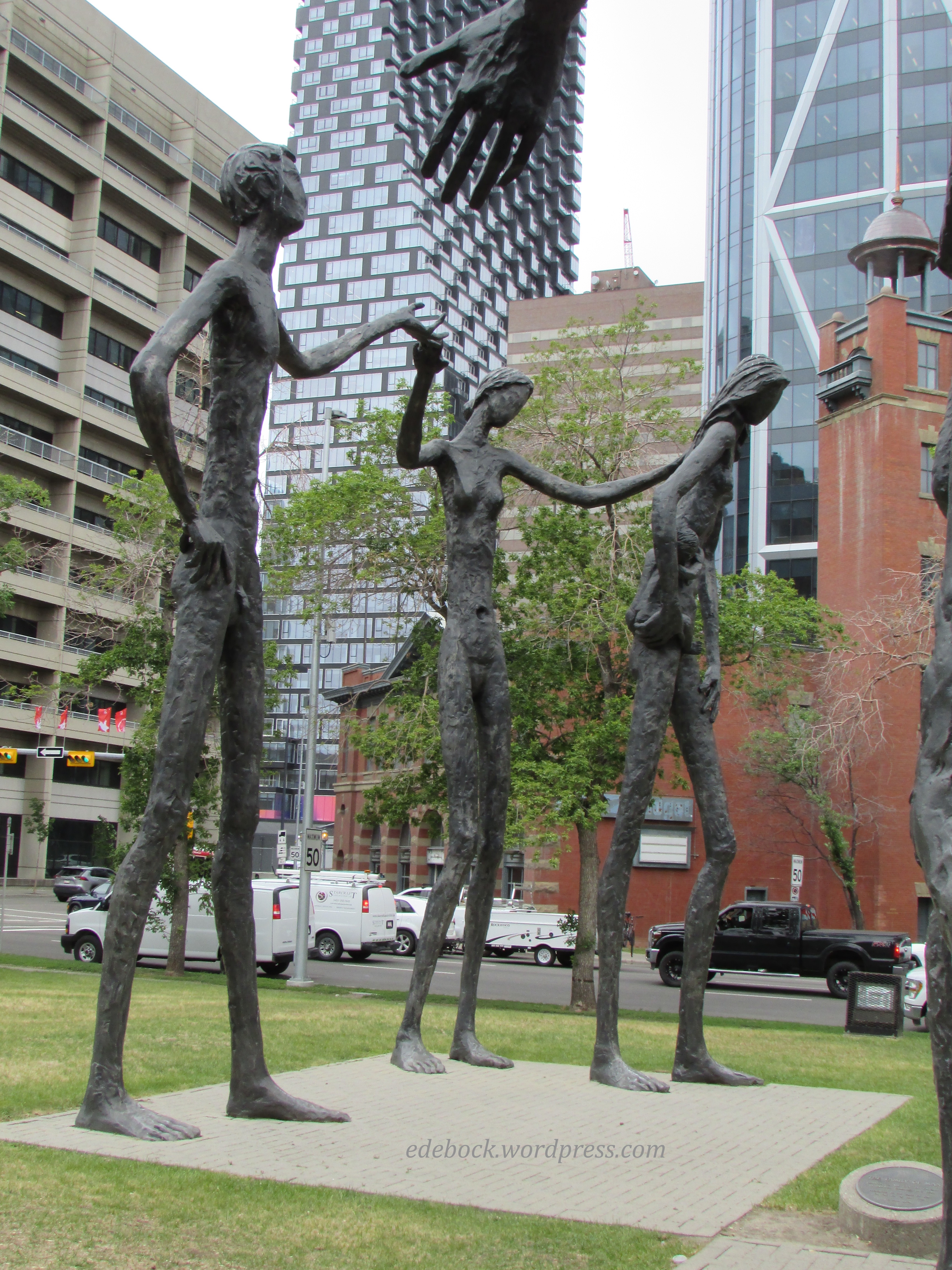
I remembered the 21-foot-tall Family of Man sculptures from my university days in Calgary in the early 1970s. Designed by Mario Armengol to be displayed at the British Pavilions at Expo 67, they were bought on behalf of Maxwell Cummings and Sons by Robert Cummings and later donated to the City of Calgary. The sculptures depict naked and faceless men and women, devoid of expression, but extending their hands in gestures of goodwill and fellowship. I’m sorry about the streak of rain across the first photo! The weather was at its most blustery at this point in our morning.

IMG_5695 

IMG_5697

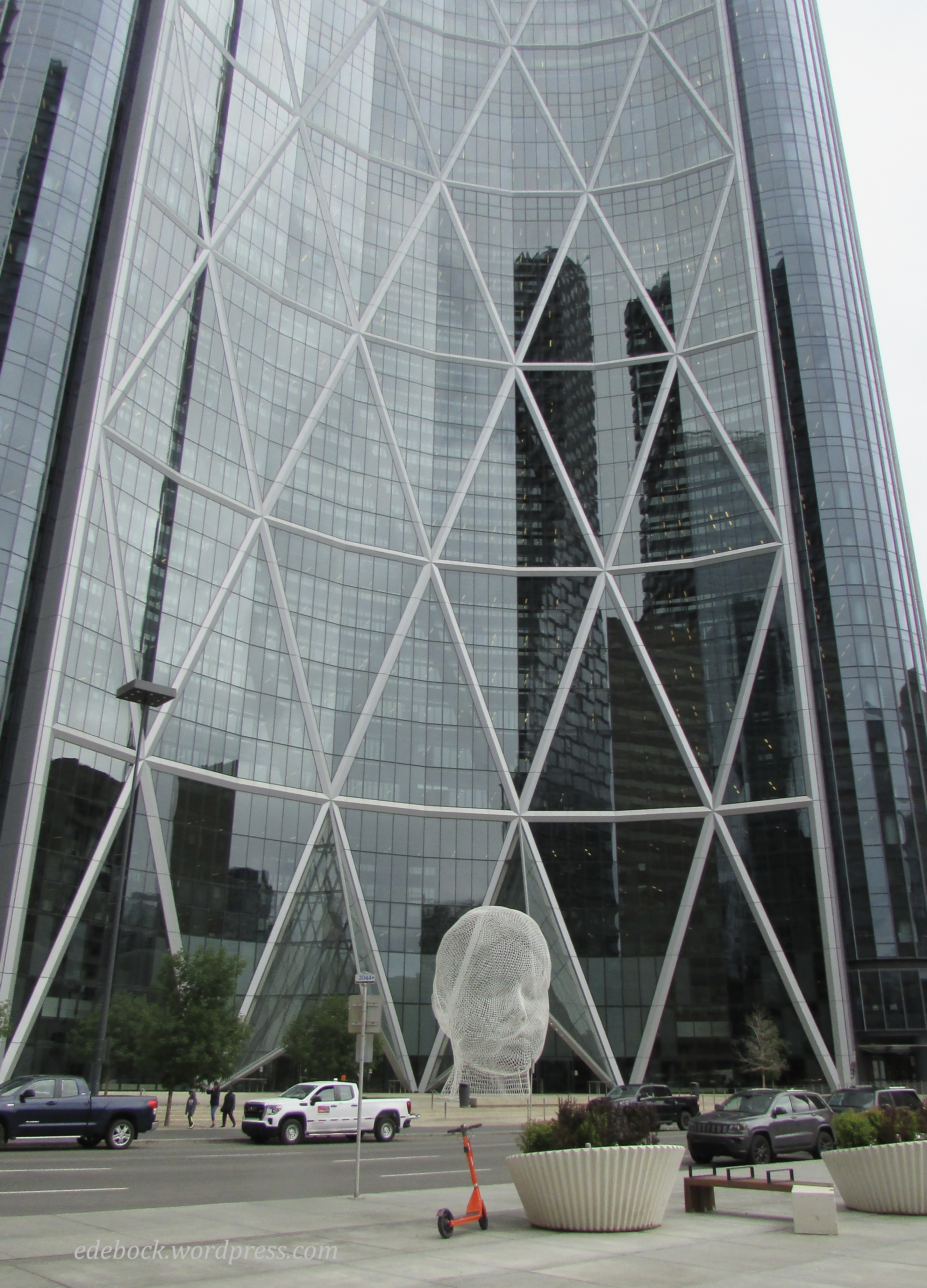
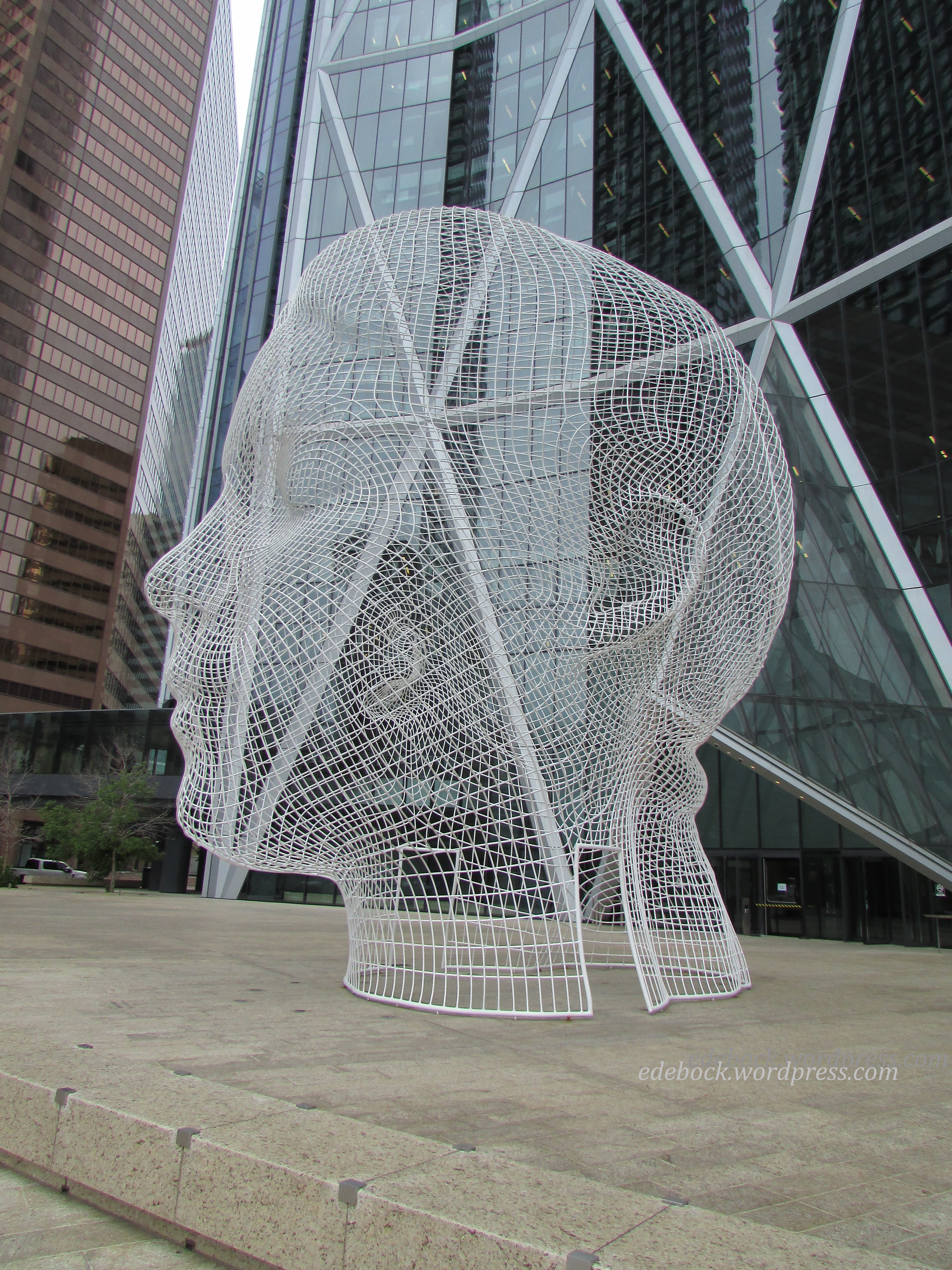
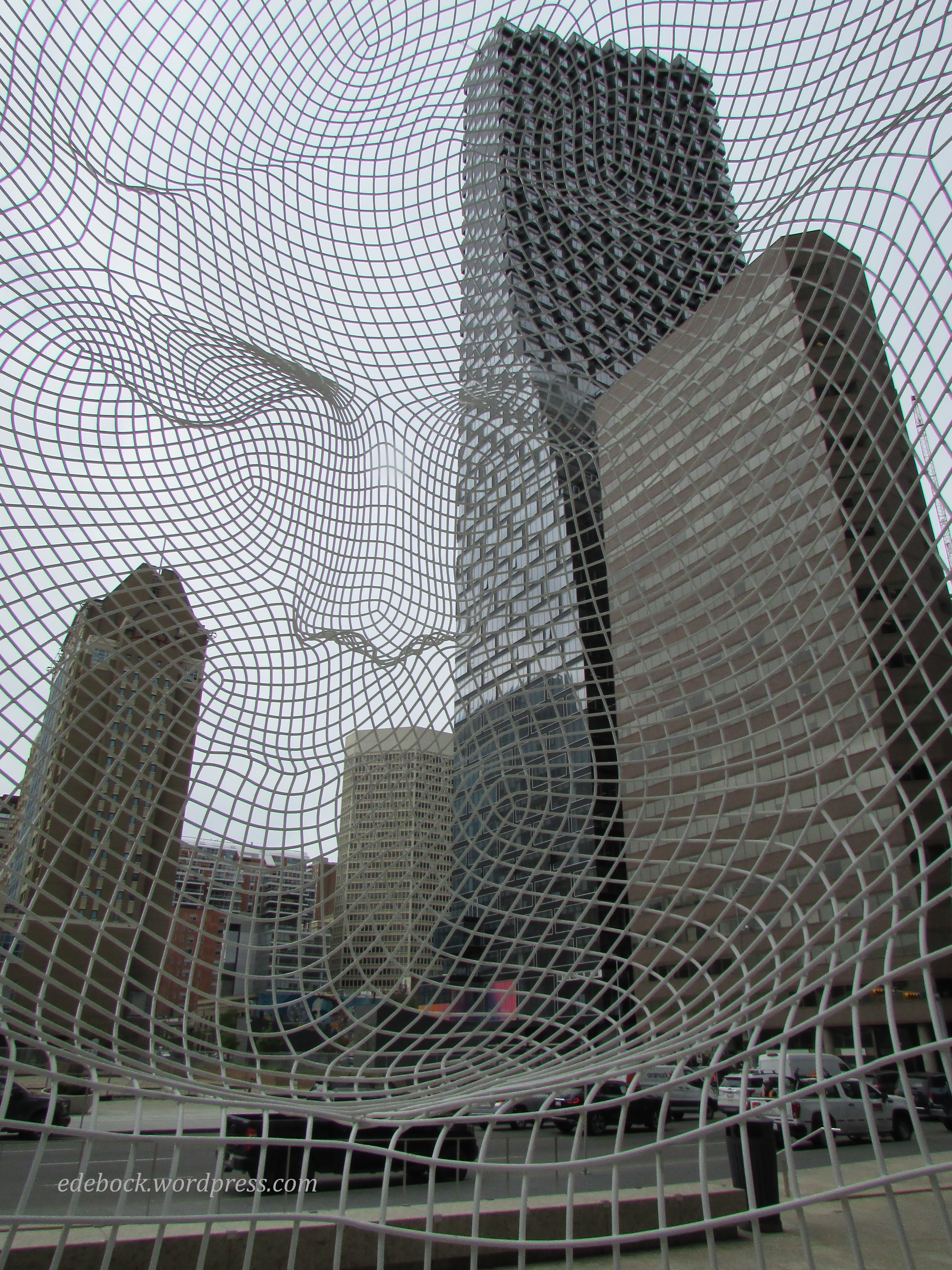
When Wonderland, a 39-foot-tall bent wire sculpture of a young girl’s head came into view, hubby’s comment was, “Look! It’s a giant radiation mask!” It did bear an uncanny resemblance to the fitted mask that I wore for every one of the 30 radiation treatments to my neck and jaw back in the summer of 2015. Thankfully, the statue has a much happier meaning. Located in front of the Bow, a crescent shaped skyscraper, it’s meant to represent the dreams of the young people of the province.

IMG_5704

IMG_5698

Unlike most sculptures, Wonderland allows visitors to view the artwork from the inside as well as out. This is definitely one of the most interesting looking photos I’ve ever taken! 

IMG_5702

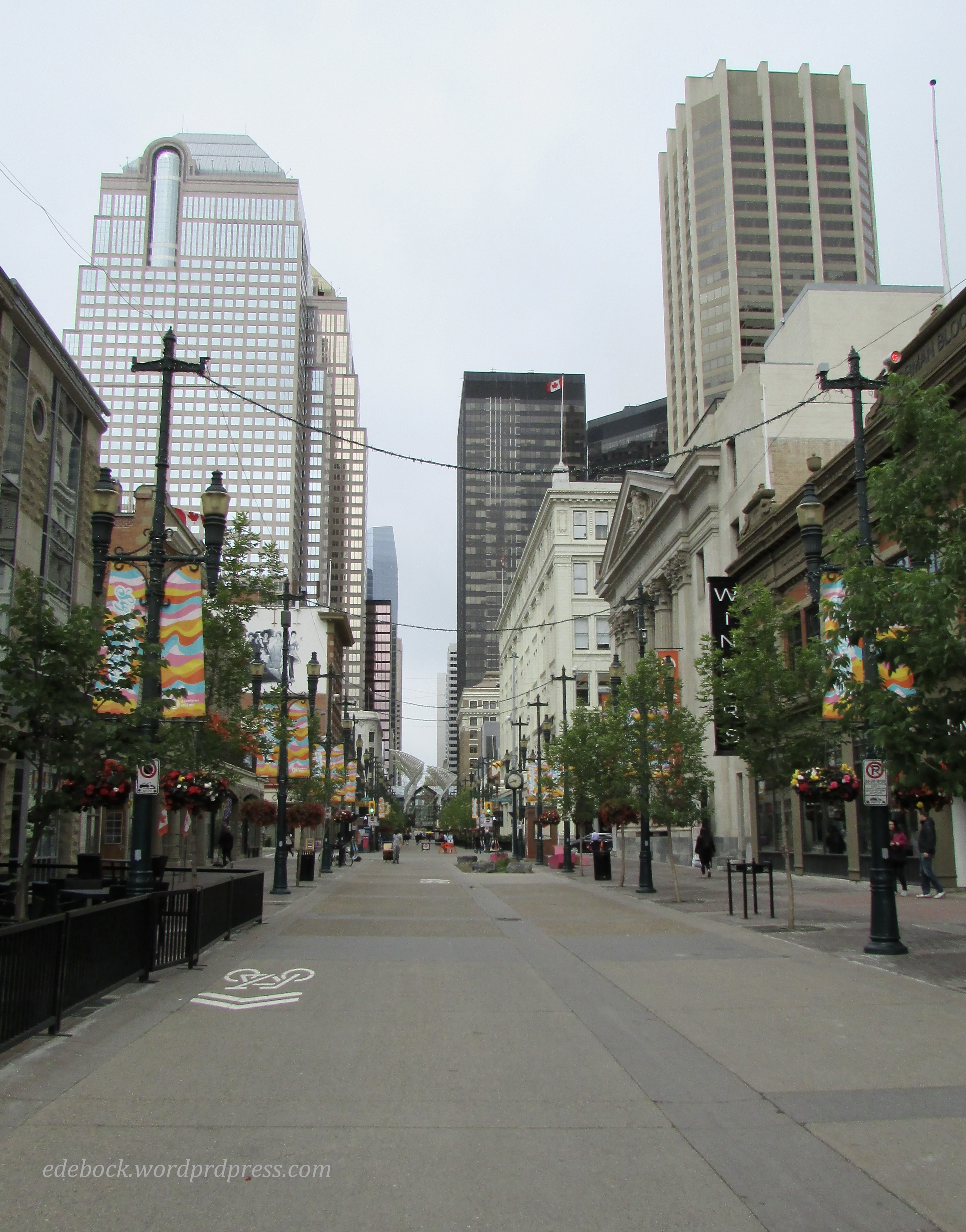
Lined with an eclectic mix of boutiques, high-end retailers, restaurants, cafés, pubs, and bars, as well as two hotels and the Telus Convention Centre, Stephen Avenue is a major pedestrian street stretching along 8th Avenue SW from 4th Street SW to 1st Street SE. 

IMG_5705

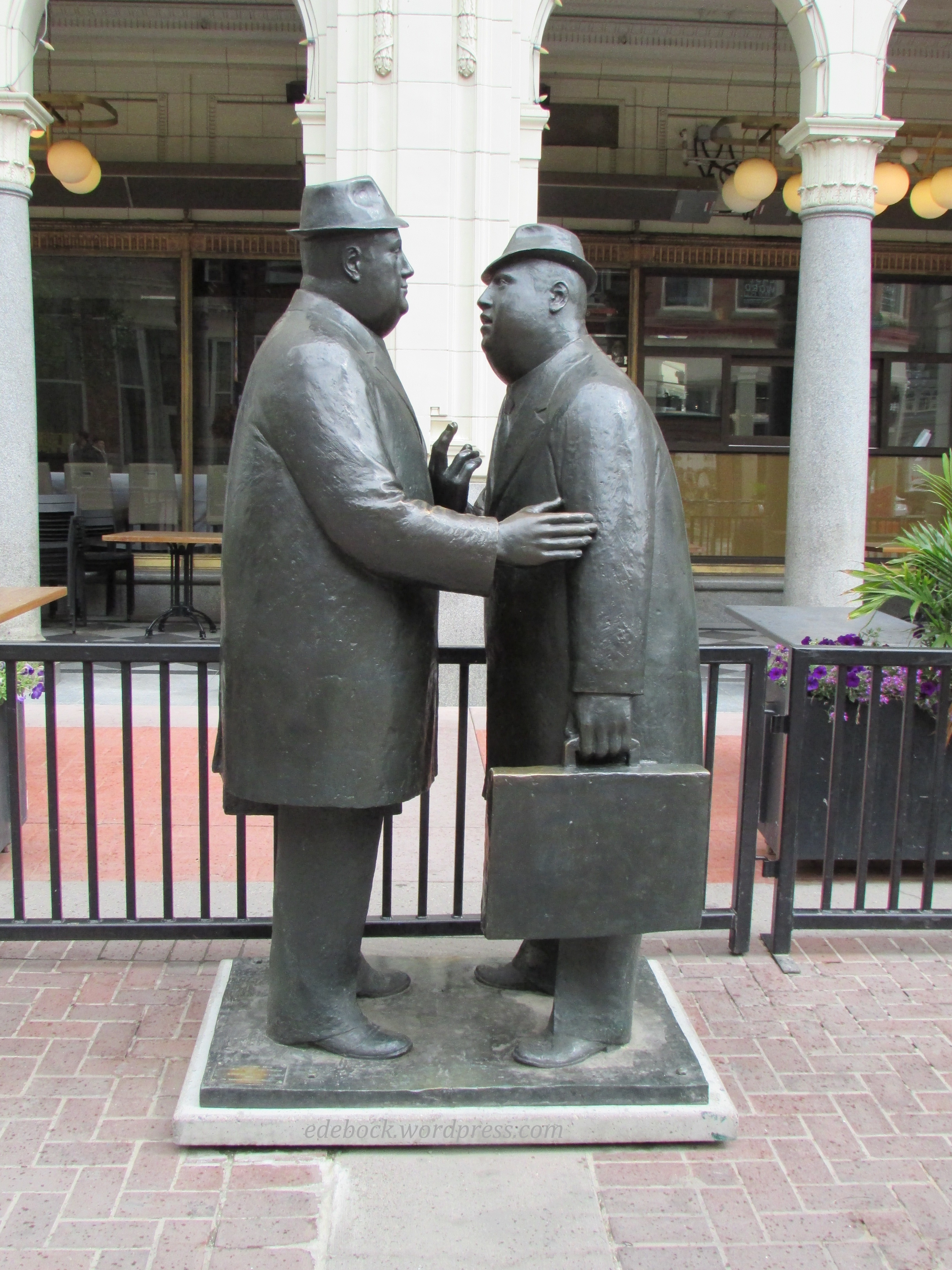
Usually a happening place, the avenue was quiet on a cool morning, but busier close to lunch time when we were headed back to the vehicle. It was along Stephen Avenue that we stopped to see The Conversation, a life-sized bronze statue of two businessmen deep in conversation. Created by William Hodd McElcheran, the popular sculpture originally belonged to Norcen Energy Resources who donated it to the City of Calgary in 1981. It has stood on Stephen Avenue ever since. 

IMG_5708

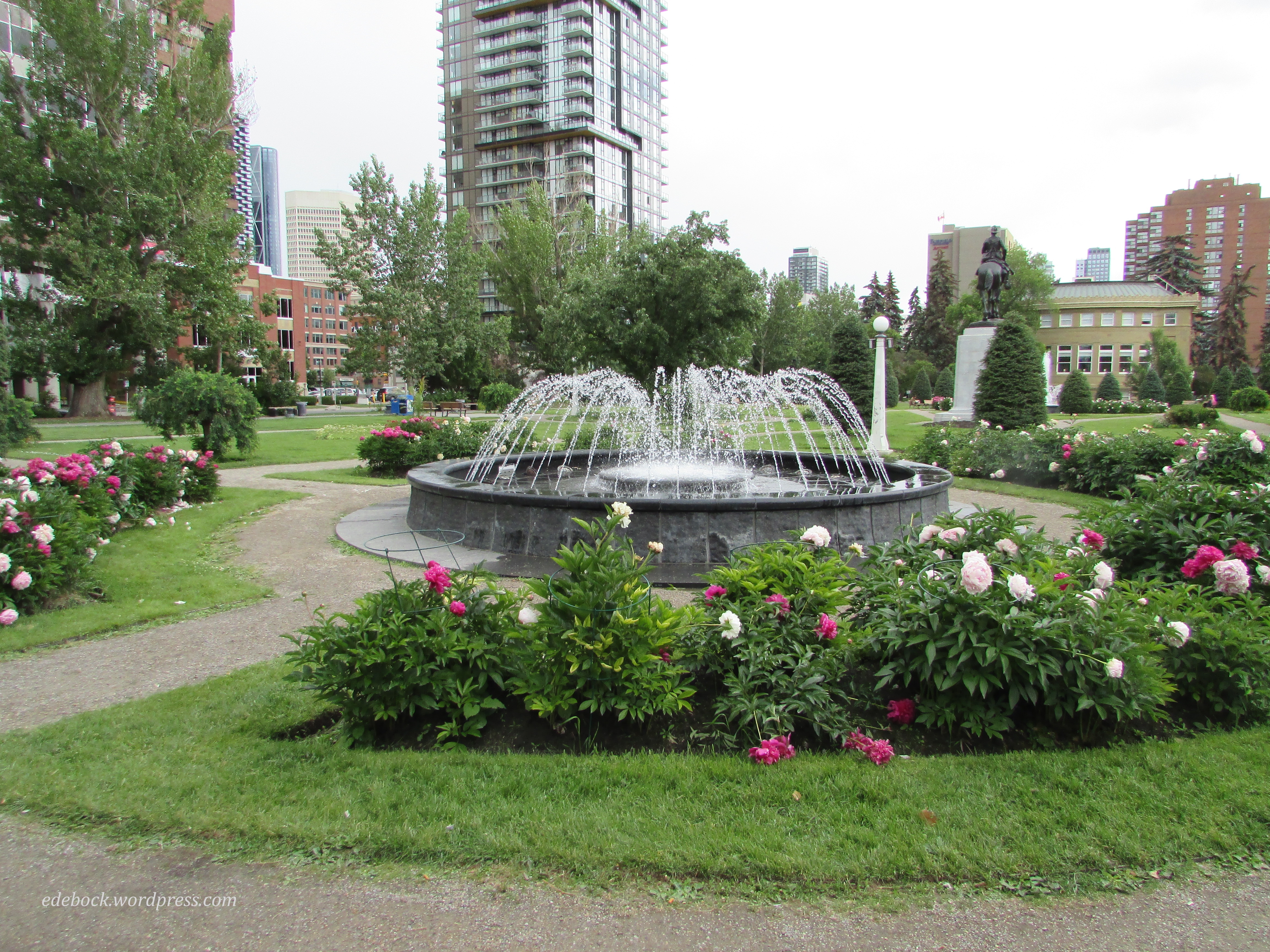
A little further in our walk, we came to Central Memorial Park. With the peonies in full bloom, it was a beautiful and peaceful spot.

IMG_5716

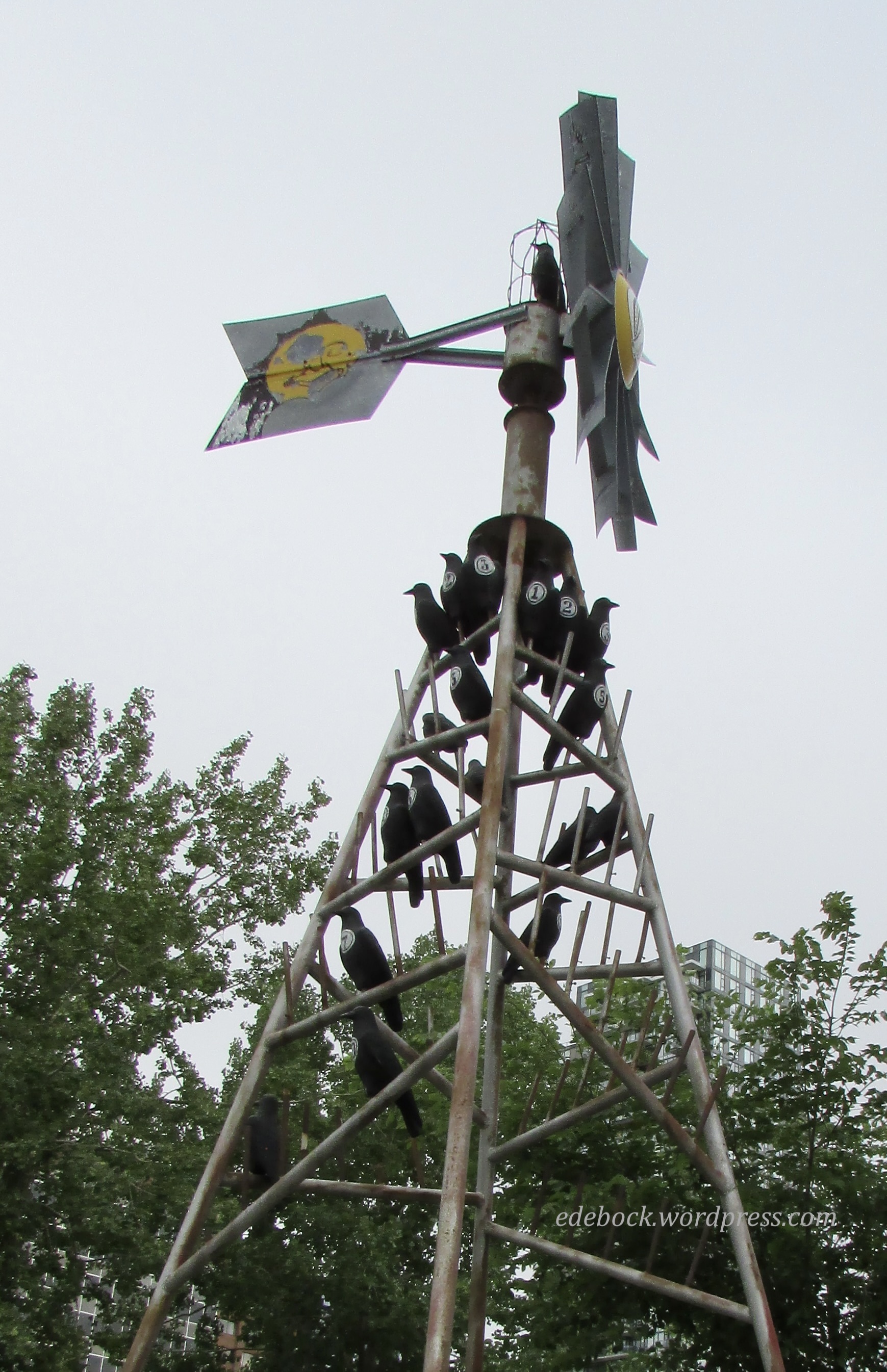
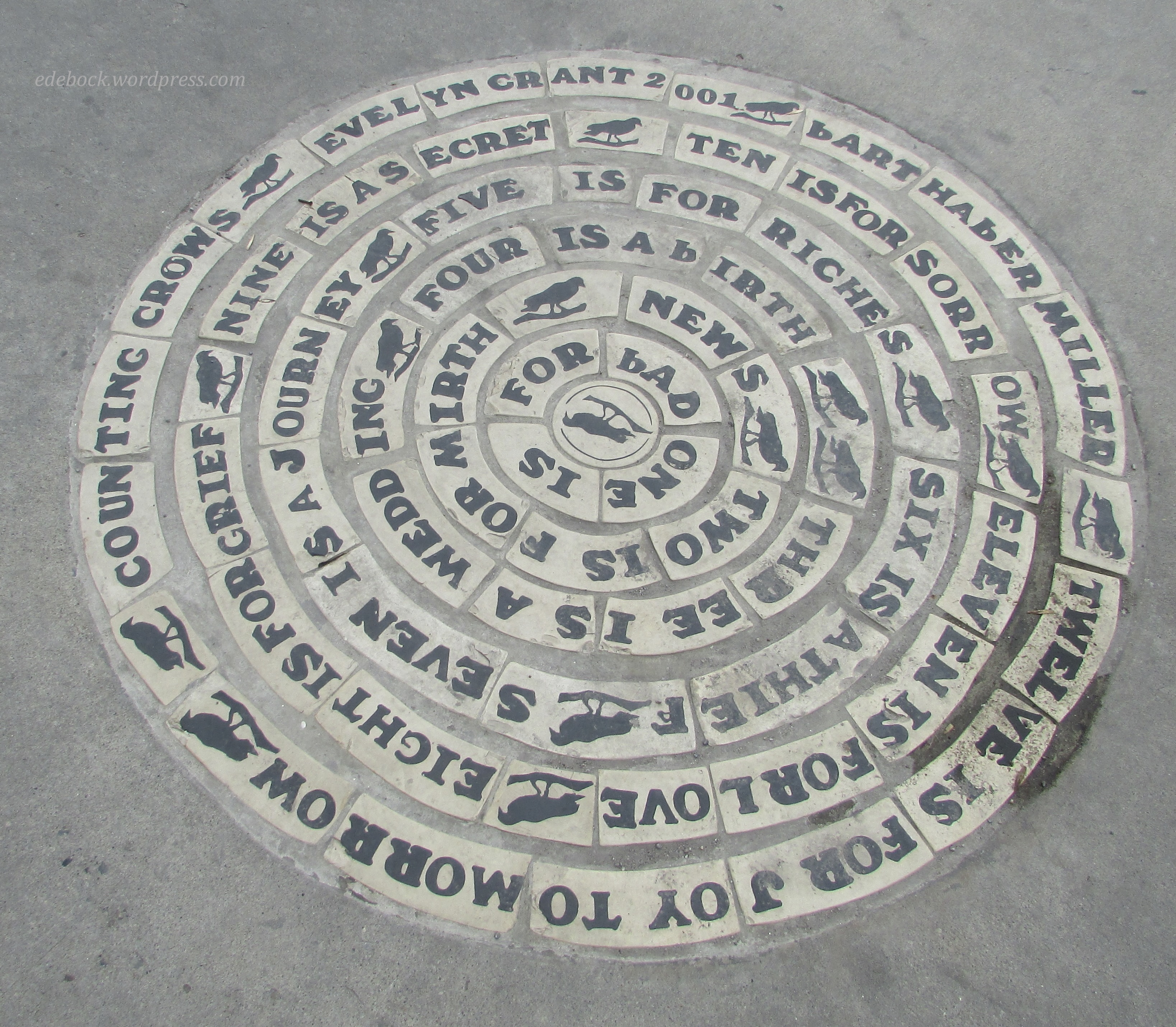
Across the street from the park at the corner of 4th Street SW and 13th Avenue SW stood what was definitely one of the strangest sculptures that we saw. Counting Crows was created by Calgary artist Evelyn Grant who handed it over to the city in 2001. Inspired by a traditional English rhyme that appears on the sidewalk below it, the sculpture resembles a windmill such as those that were once seen across the prairie. If you look closely, you’ll see that each realistic looking crow bears a number on its chest. 

IMG_5720

IMG_5723 2

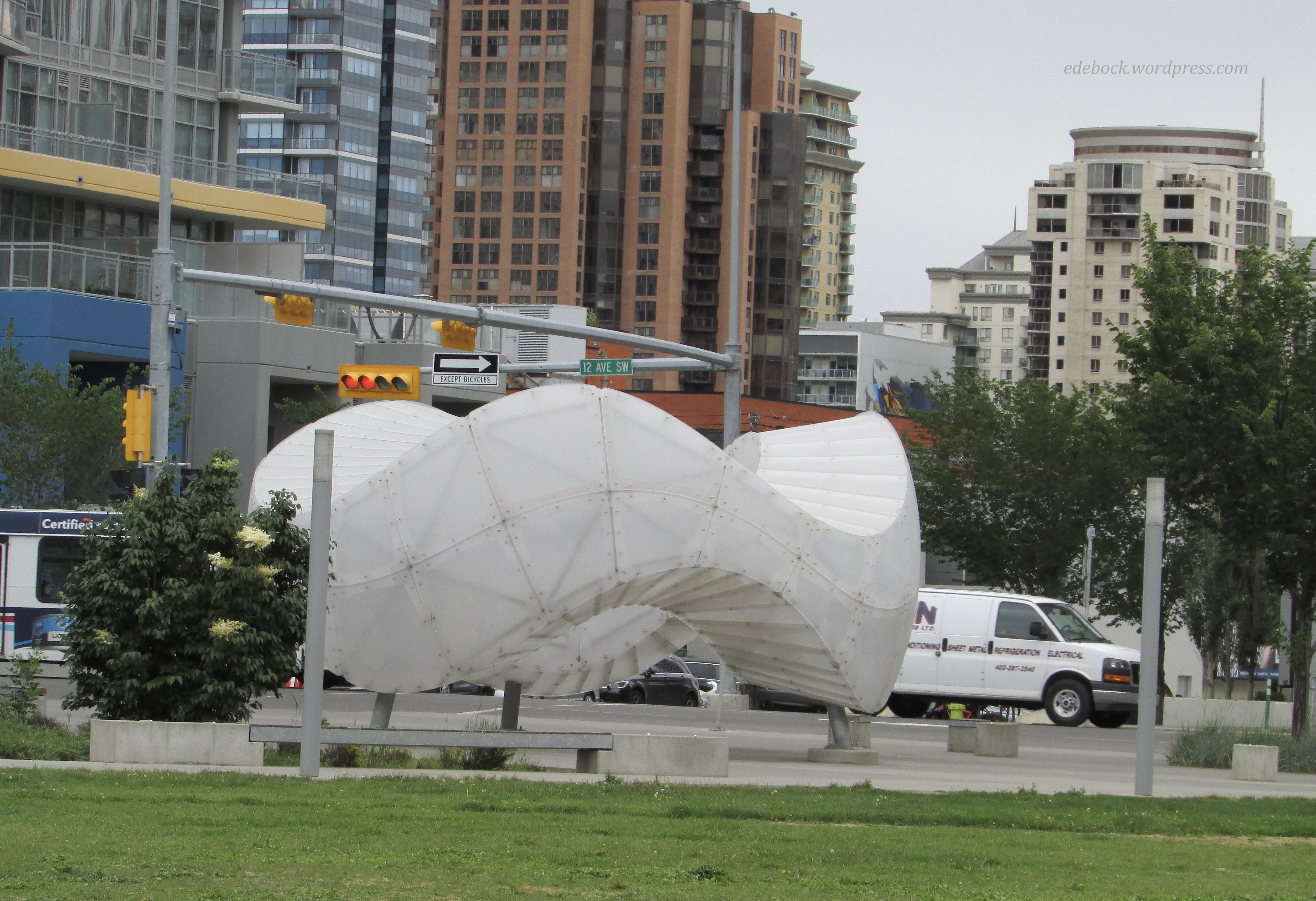
By this time we realized that we weren’t far from the Calgary Board of Education building where our daughter works, so we stopped in for a very quick visit before beginning the long trek back to our vehicle. Across the Barb Scott Park, next to her building, I spotted the last piece of public art that we’d see. The shape of Chinook Arc drew it’s inspiration from the historic Beltline Streetcar loop that once encircled the neighbourhood, as well as the Chinook arch, a unique cloud formation that occurs along the eastern slopes of the Rocky Mountains. Though we didn’t get close enough to investigate, I’ve since learned that it’s an interactive and illuminated installation that would likely be quite something to see lit up after dark. 

IMG_5731

As it was, we had to hoof it to meet our friend and get back to the parkade before our three hour time limit expired. We walked a total of 8.72 km (5.42 miles) and proved to ourselves once again that walking is the best way to see a city! 

The murals of Coatepec

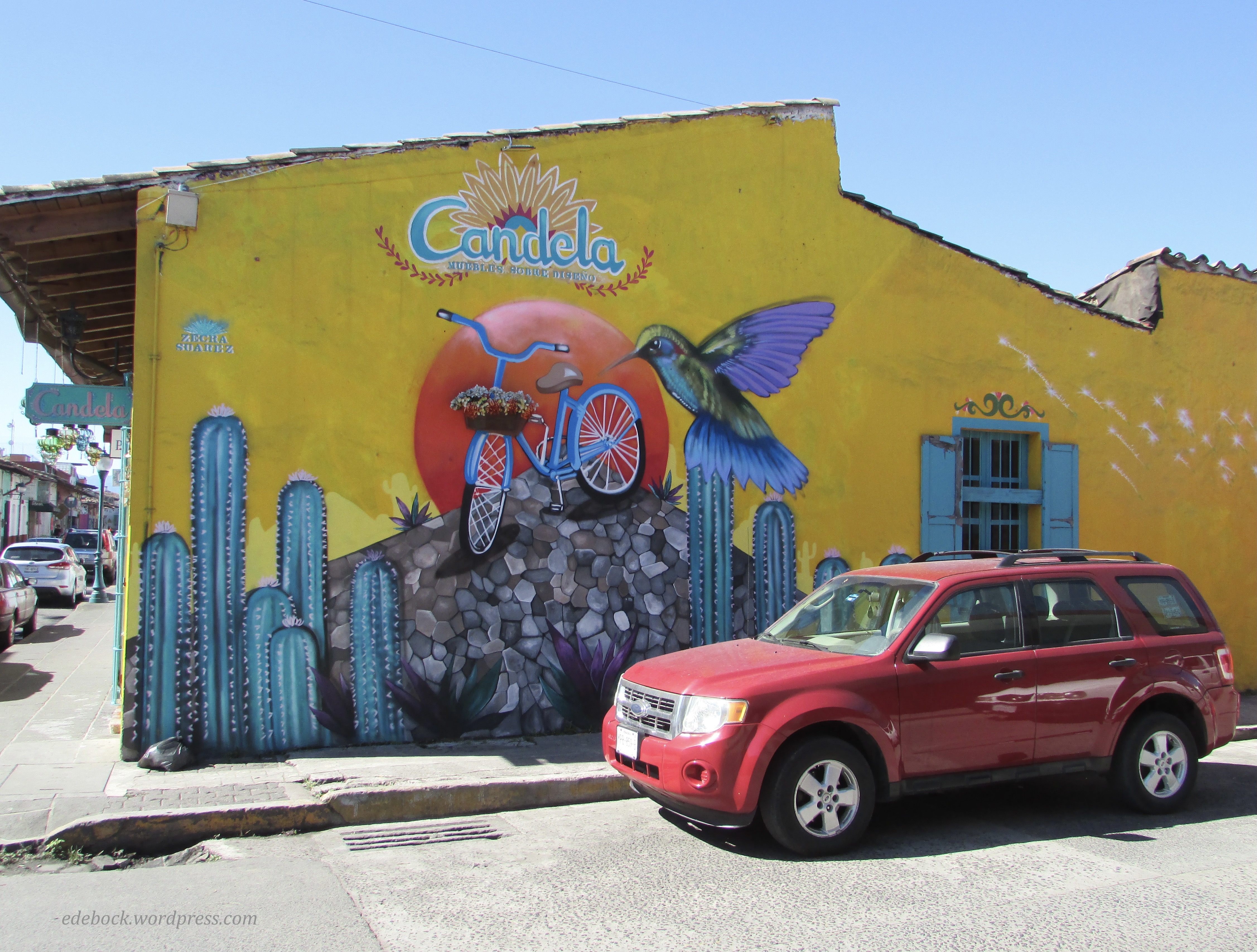
Each time we come to Coatepec, Mexico to visit our friends who live here I fall in love with the vibrant colours again. Maybe that has something to do with coming from a place that is covered with snow for many months of the year and where buildings tend to be mostly neutral in colour.

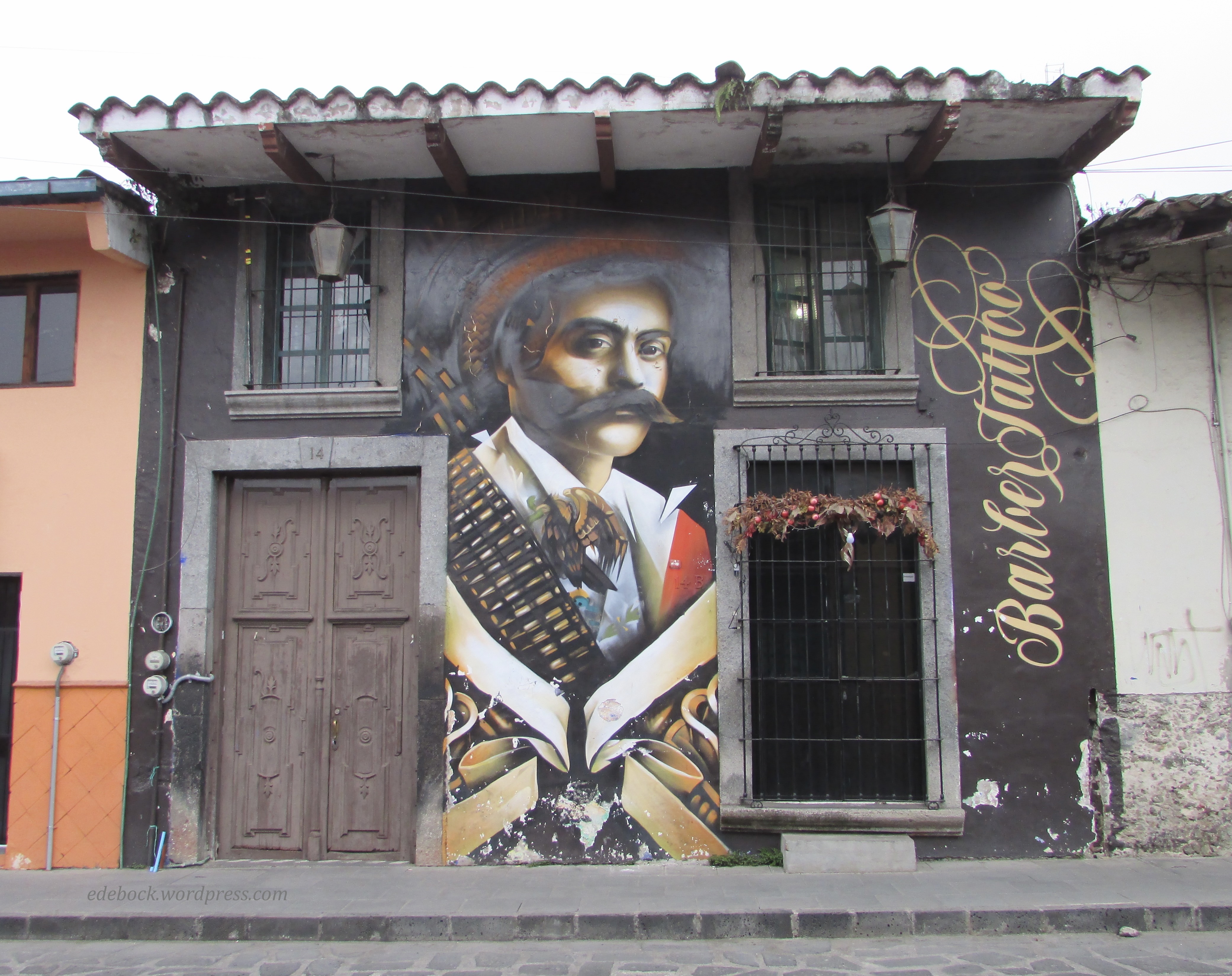
This visit, it’s the murals that have really caught my attention and so I thought I’d share a few of them with you. All of these are within walking distance of our friends’ house. The first is one of my favourites.

IMG_5102

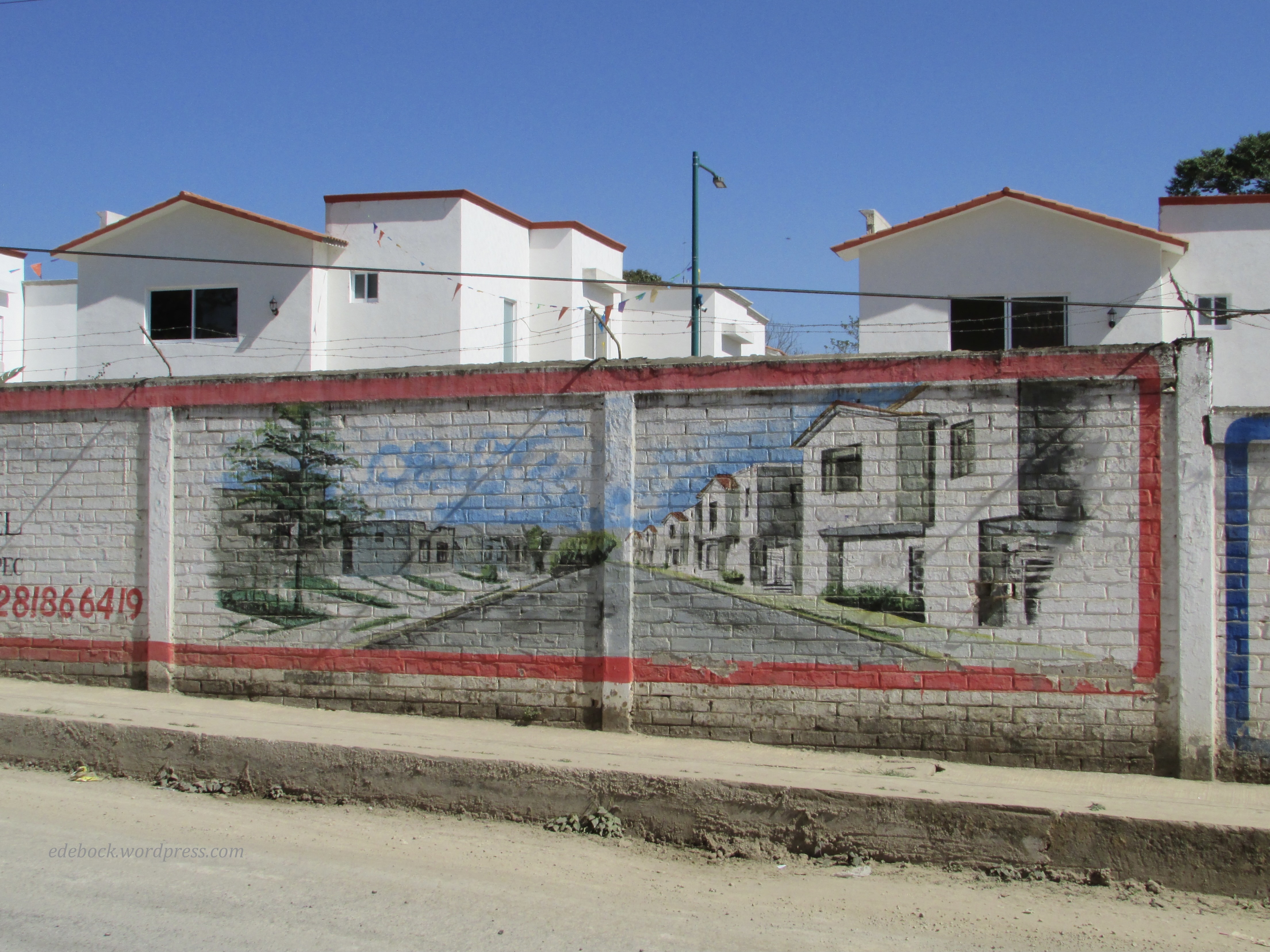
I’m guessing that the next one is real estate advertising, but I’m not sure. It’s located at the end of the street where we’re staying.

IMG_5123

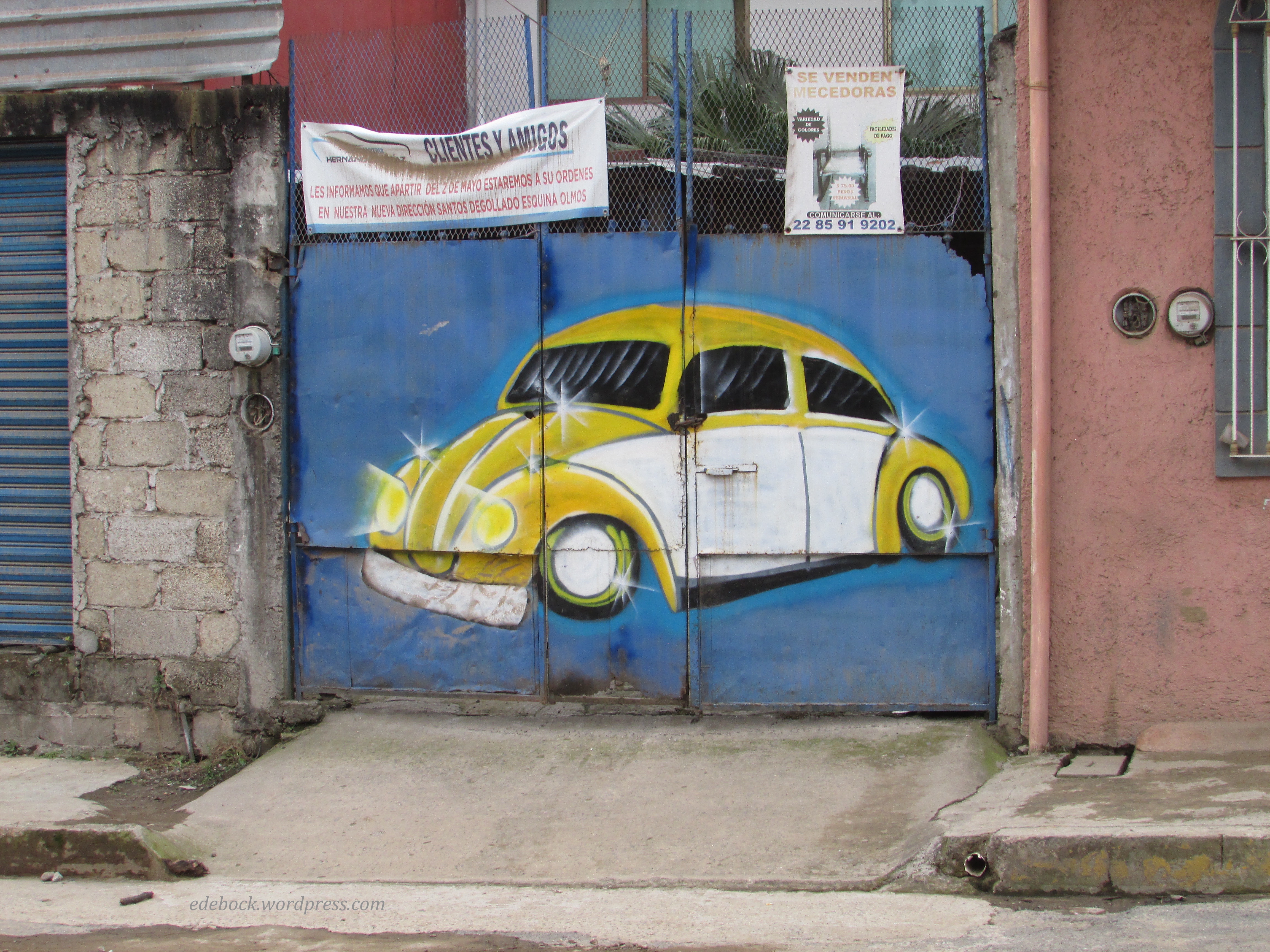
This gate, just down the hill from here, is very fitting for Coatepec as I’m sure there are more old style Volkswagen Beetles here than anywhere I’ve ever been! I like the way that the artist made the handle of the gate look like it was the door handle on the vehicle.

IMG_5130

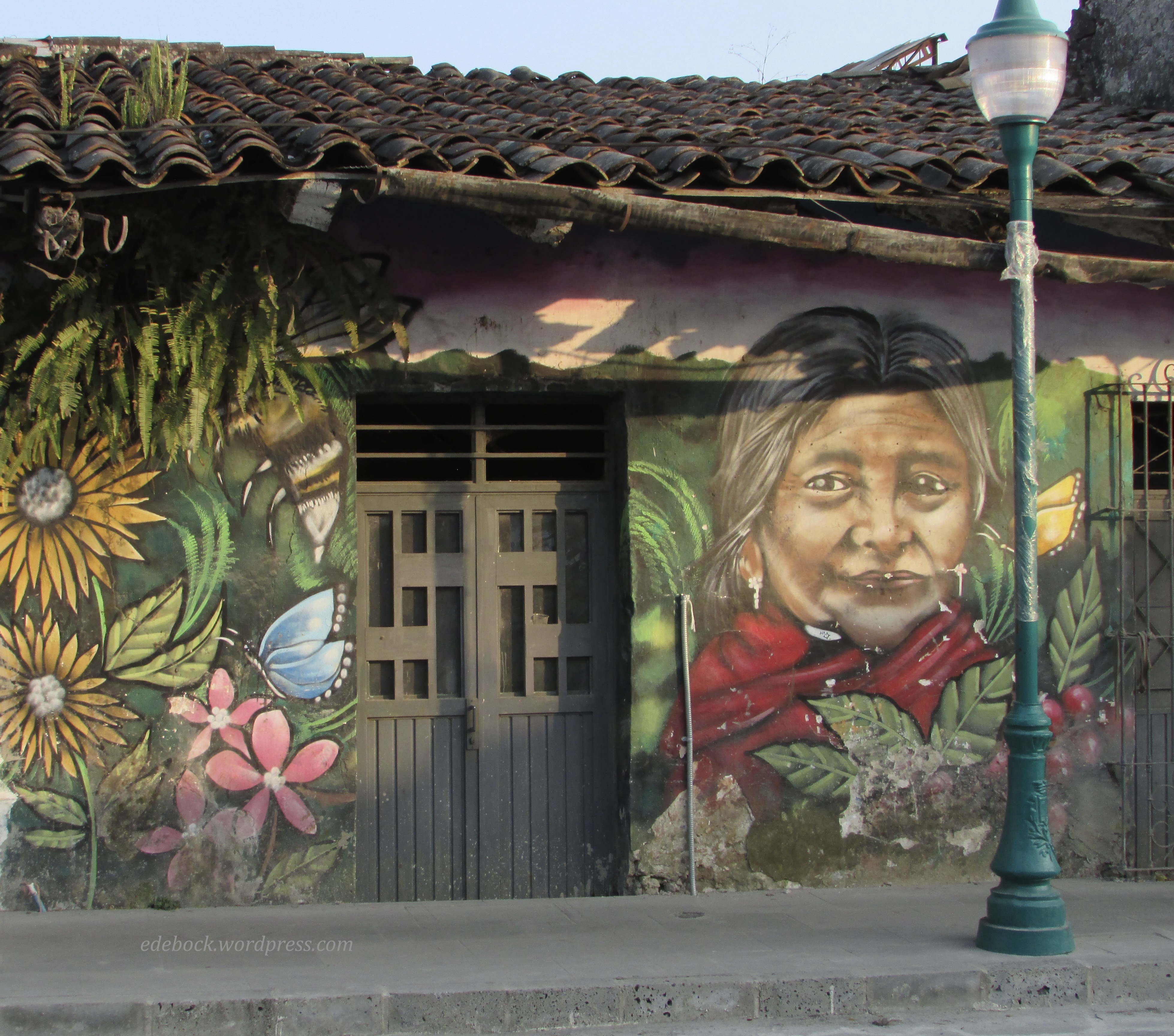
I don’t know who the people in the next two murals are, but I think they’re gorgeous.

IMG_5124

IMG_5136

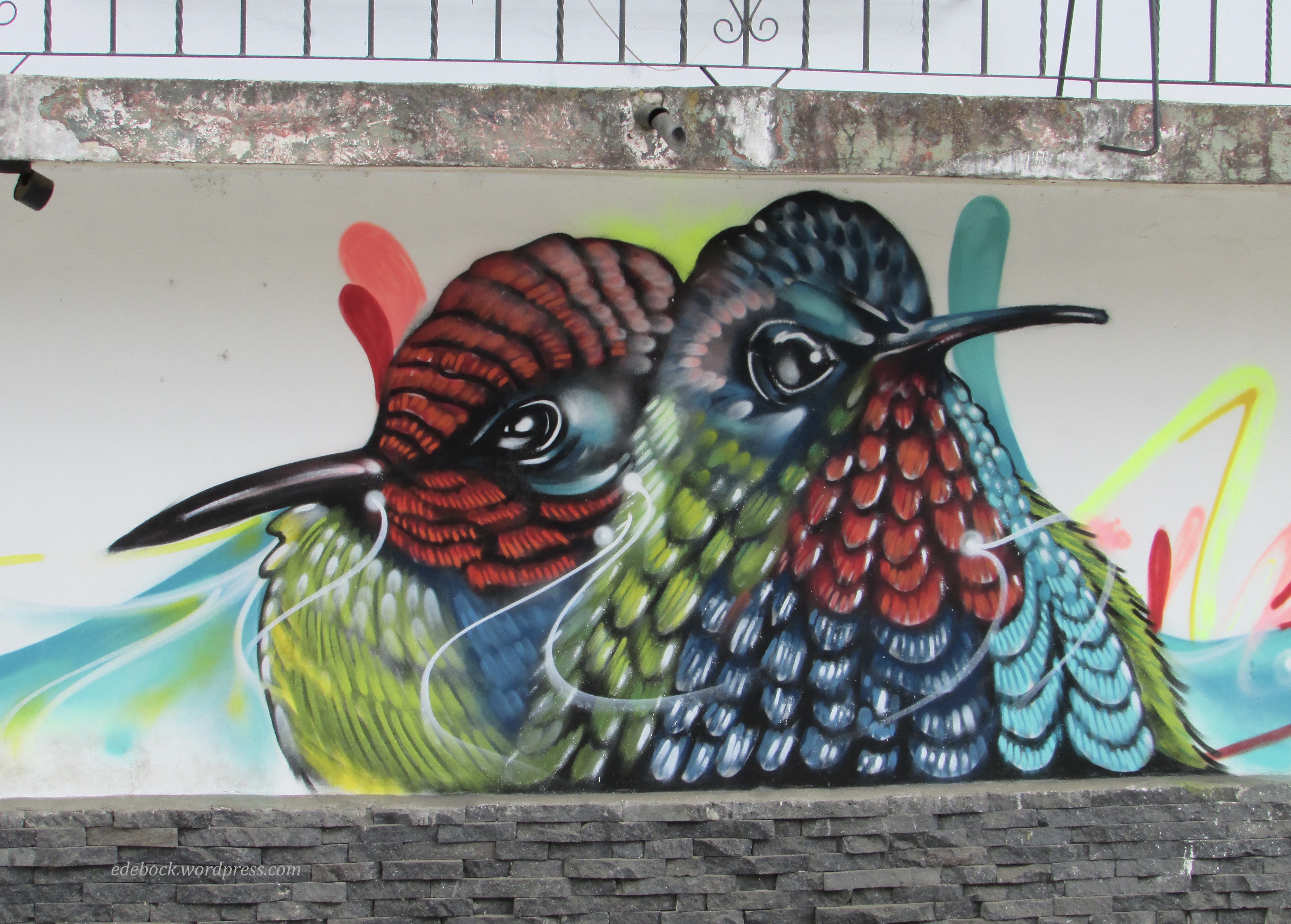
These birds caught my eye on a walk down to the centre of town today.

IMG_5135 2

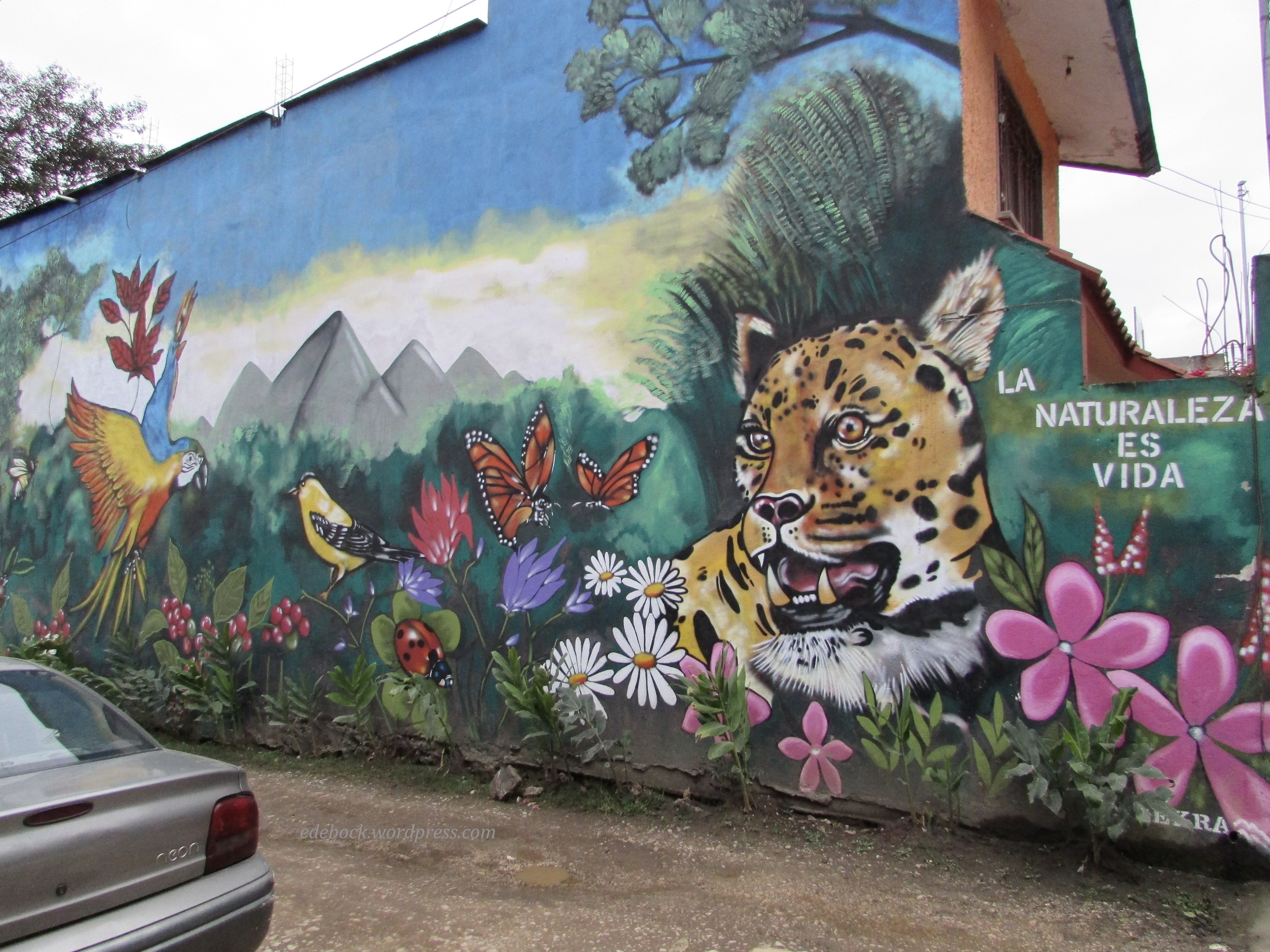
And finally, here’s another of my favourites. I can’t believe the amount of work that must have gone into this one which is located on the side of a building at the entrance to a small alley. The caption “La Naturaleza es Vida” means “nature is life”.

IMG_5133

I’m going to continue photographing murals as I come across them. Perhaps I’ll even find enough for another post!

What I wore to travel

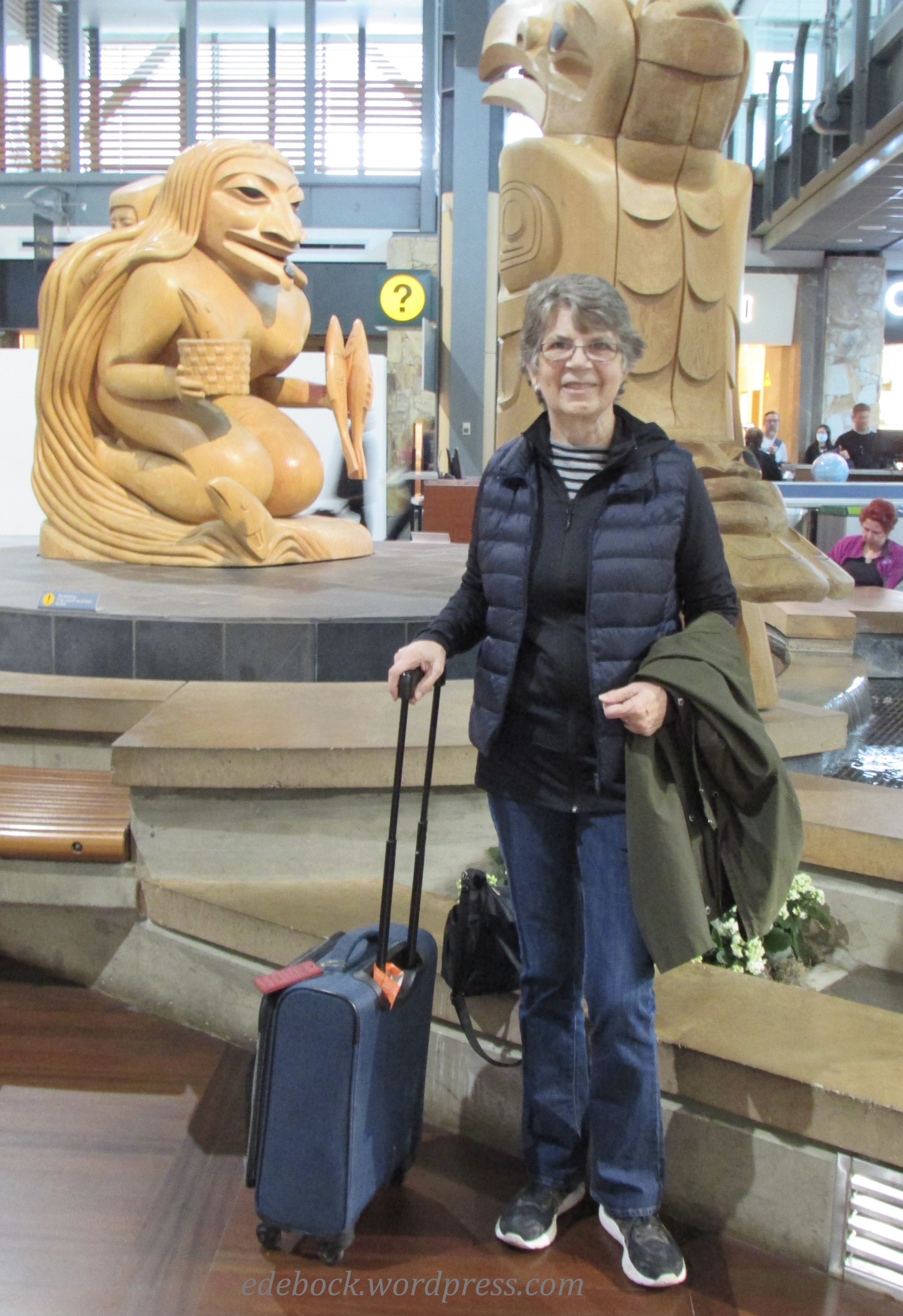
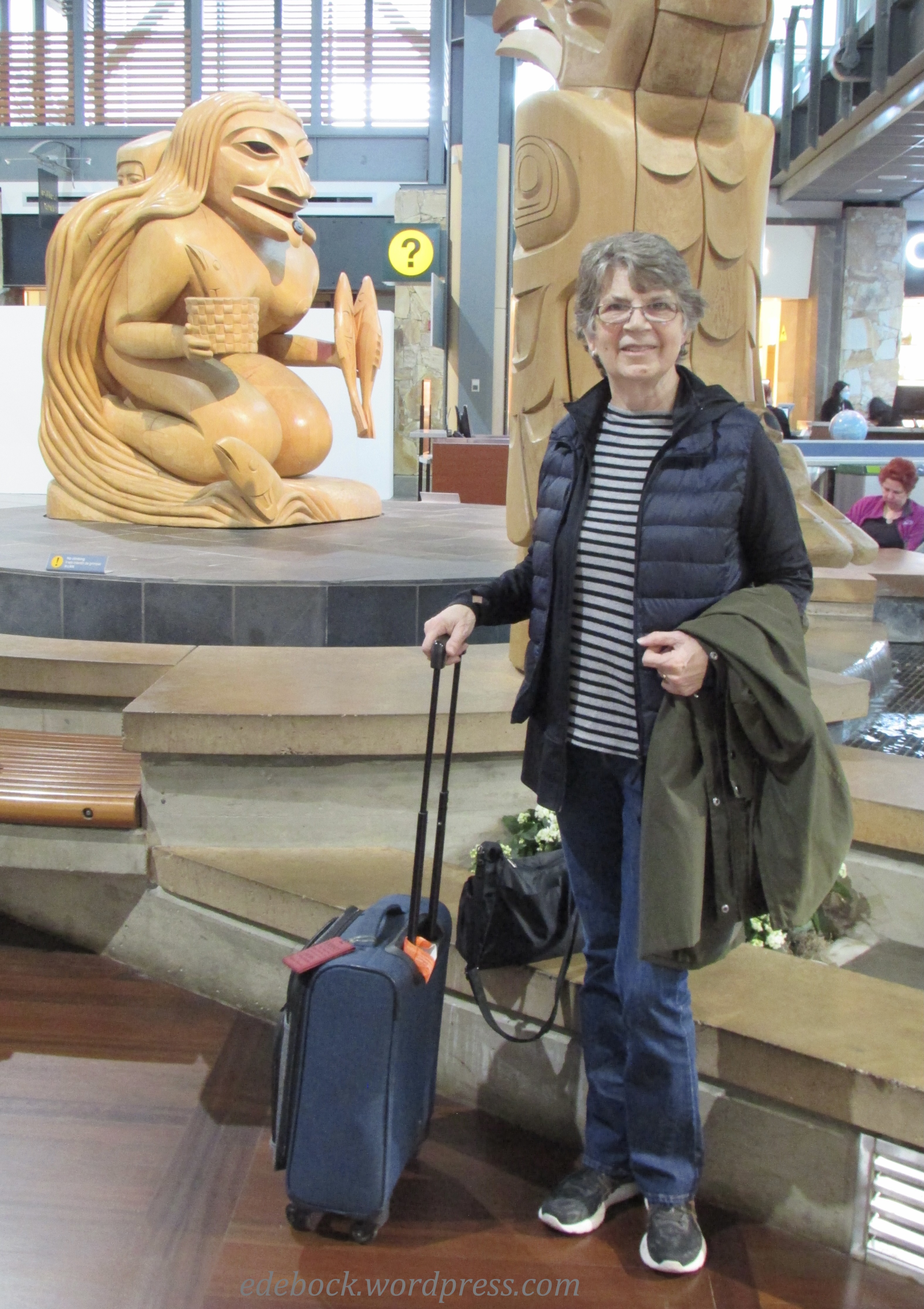
Logo by SamIt was unseasonably warm when we boarded a plane in Calgary on Sunday morning, but even -1ºC (30ºF) is chilly. When we left the airport in Mexico City at almost midnight it was +19ºC (66ºF). How do you dress for a day with that kind of temperature variation?

The answer, of course, is layers.

IMG_5092

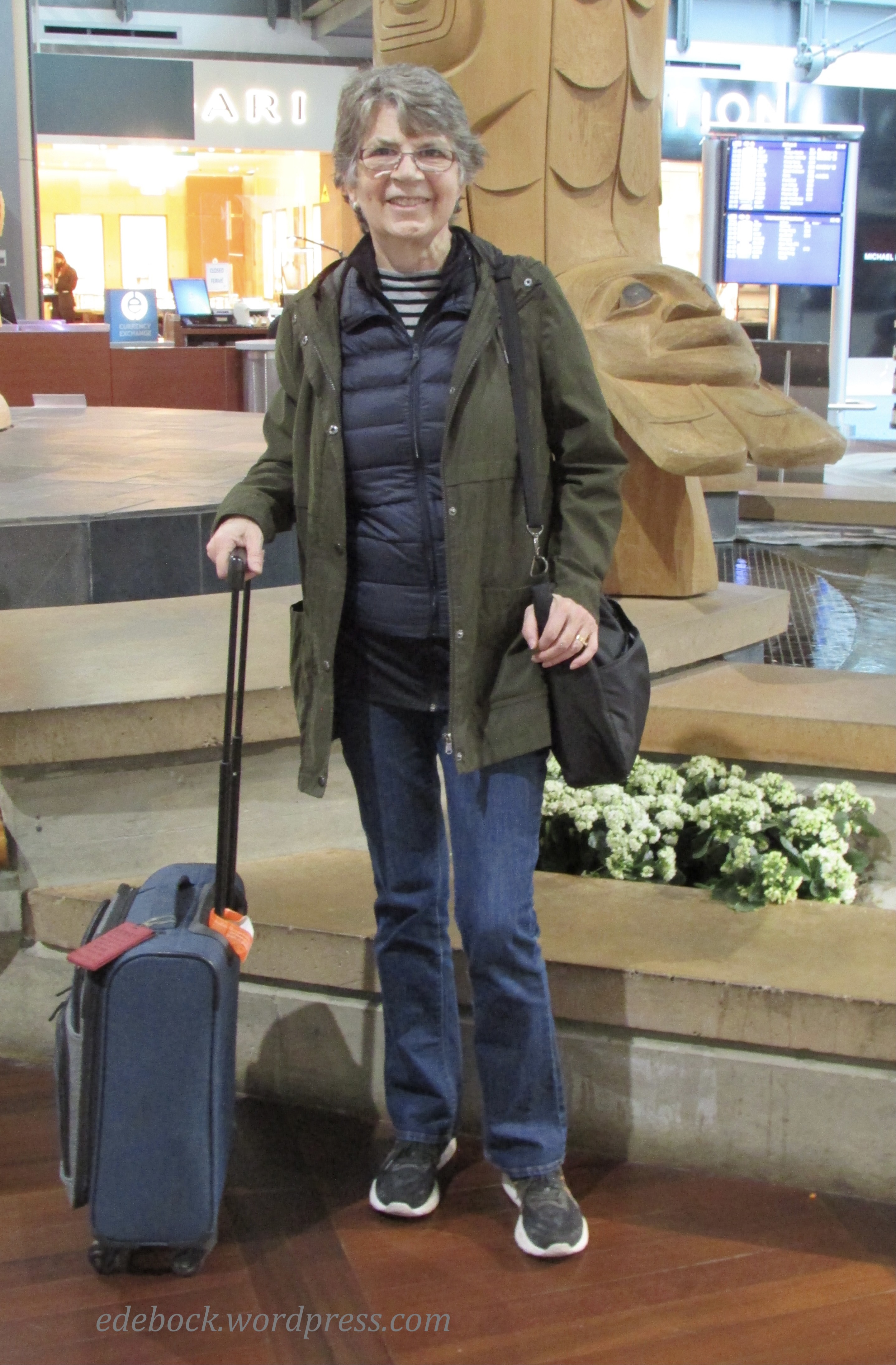
My base layer was a long-sleeved, striped sweater. Next came a hoodie and then my ultralight down vest from Uniqlo. The final layer was a spring jacket that is both wind and waterproof. While each layer was very lightweight, together they provided ample warmth on a chilly Alberta morning. After the photos were taken during a layover at the Vancouver airport, the vest came off and was tucked into an outer pocket of my tiny suitcase. Some people find jeans uncomfortable for long days sitting on a plane, but I practically live in them and find them very comfortable. A pair of good walking shoes completed my ensemble.

IMG_5095

Not only is YVR Vancouver’s international airport, but it’s also home to a permanent collection of more than 210 pieces of art, much of it work of British Columbia’s indigenous artists. The pieces behind me represent The Story of Fog Woman and Raven. Carved of cedar wood in 2007 by Dempsey Bob, they tell the story of how the annual salmon run originated to benefit the people of the northern coast of BC and the southern coast of Alaska. Immediately behind me, Raven perches on the side of a pool, beak uplifted, smiling and well fed, while to the side, Fog Woman kneels at the head of a stream.

IMG_5099

Once we reached our destination, the clothing that I wore to travel in was set aside and won’t be worn again until our return trip unless we have a really chilly day while we’re here.

Trying a new hobby

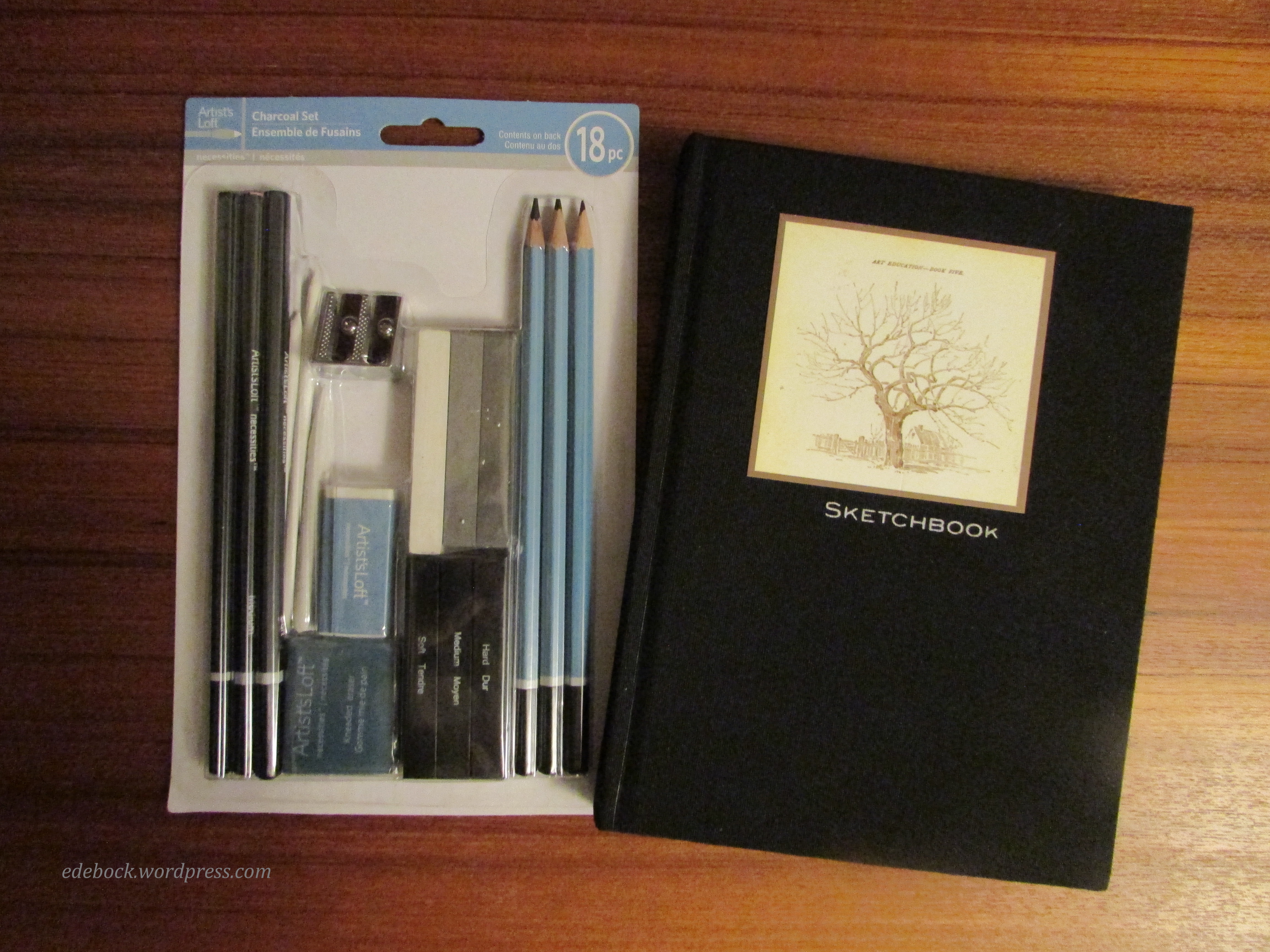
Inspired by a fellow blogger who sometimes shares sketches with her readers, and perhaps by the young artists in my family, I recently decided that I wanted a sketchbook. I’ve always enjoyed art, but never really pursued it as a hobby. Perhaps now was the right time?

IMG_3912

In addition to the sketchbook, I also bought a basic set of sketching pencils, charcoal pencils, charcoal sticks, soft pastels, erasers, a sharpener, a couple of stumps, and a tortillon. At the time, I didn’t even know what the last two items were!

When I brought my purchases home, did I crack them open and start drawing right away? No, not me! I was always that little girl who, at the beginning of each September, loved getting new school supplies; the little girl who hated to make the first mark in that brand new, spotless notebook. So, before I started sketching, I simply savoured the idea for a few days. Then I got started.

IMG_3914

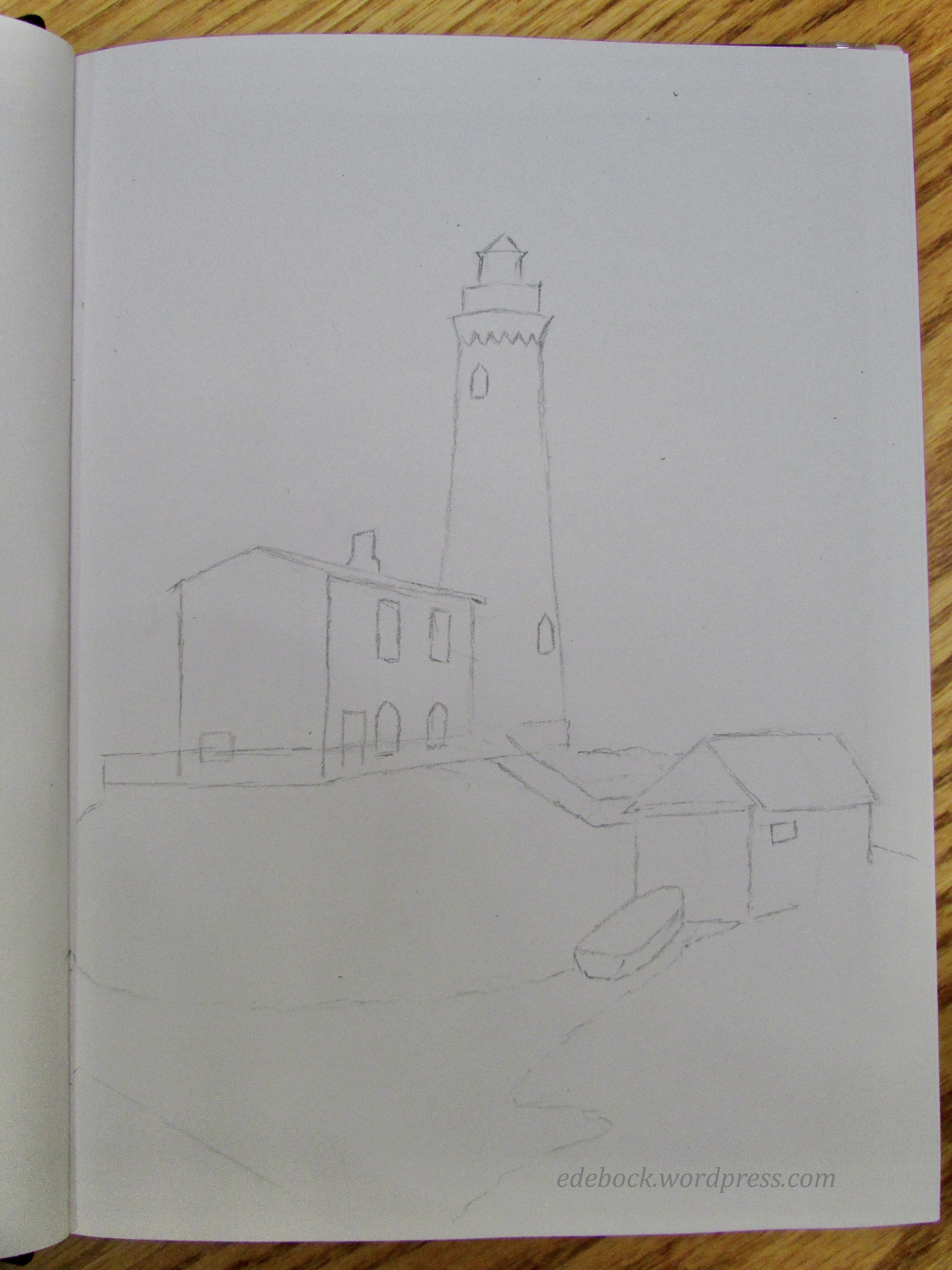
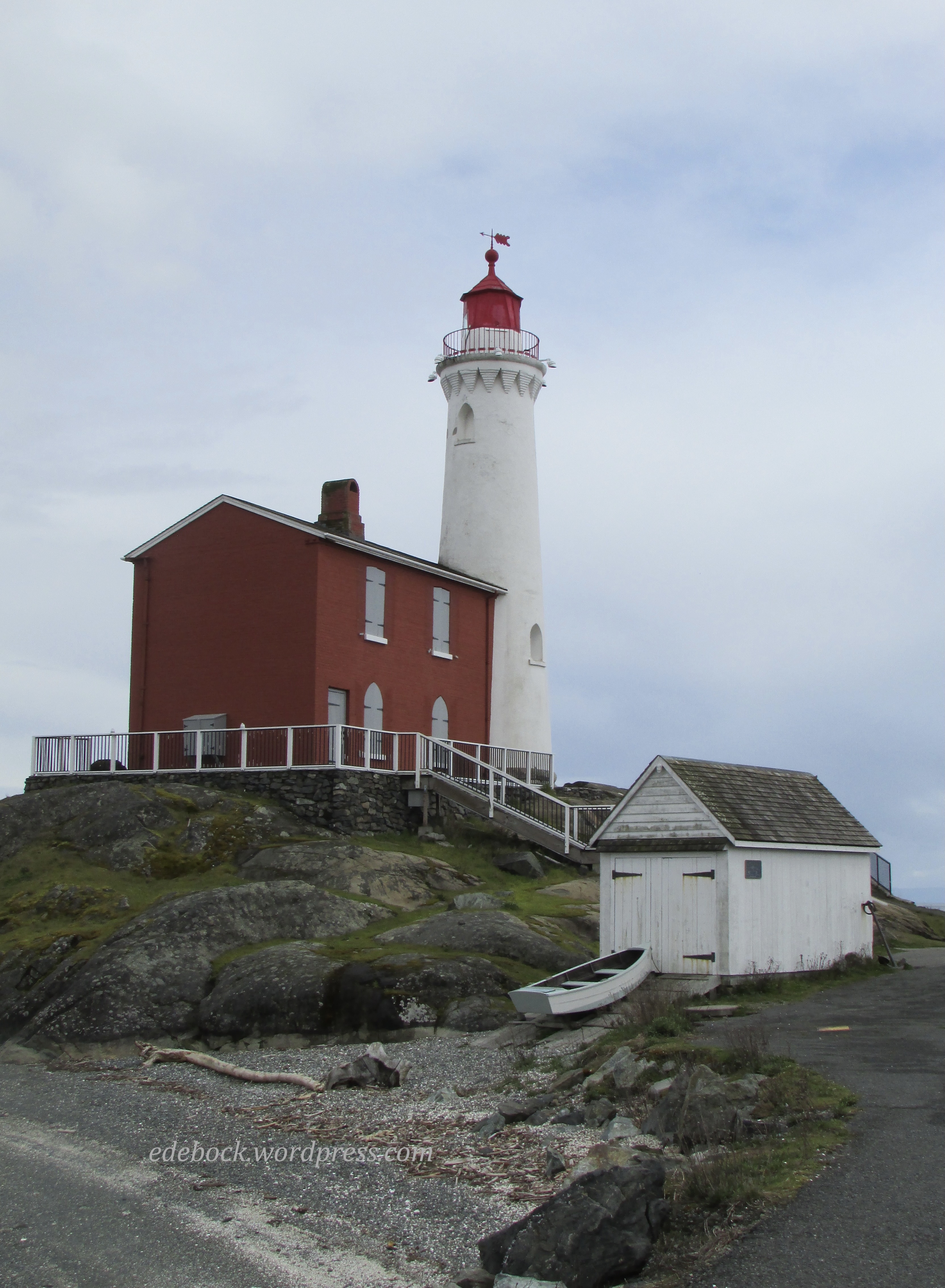
I knew exactly what I wanted to draw, one of my favourite sights from our recent trip… Fisgard Lighthouse at Victoria, BC.

IMG_3856

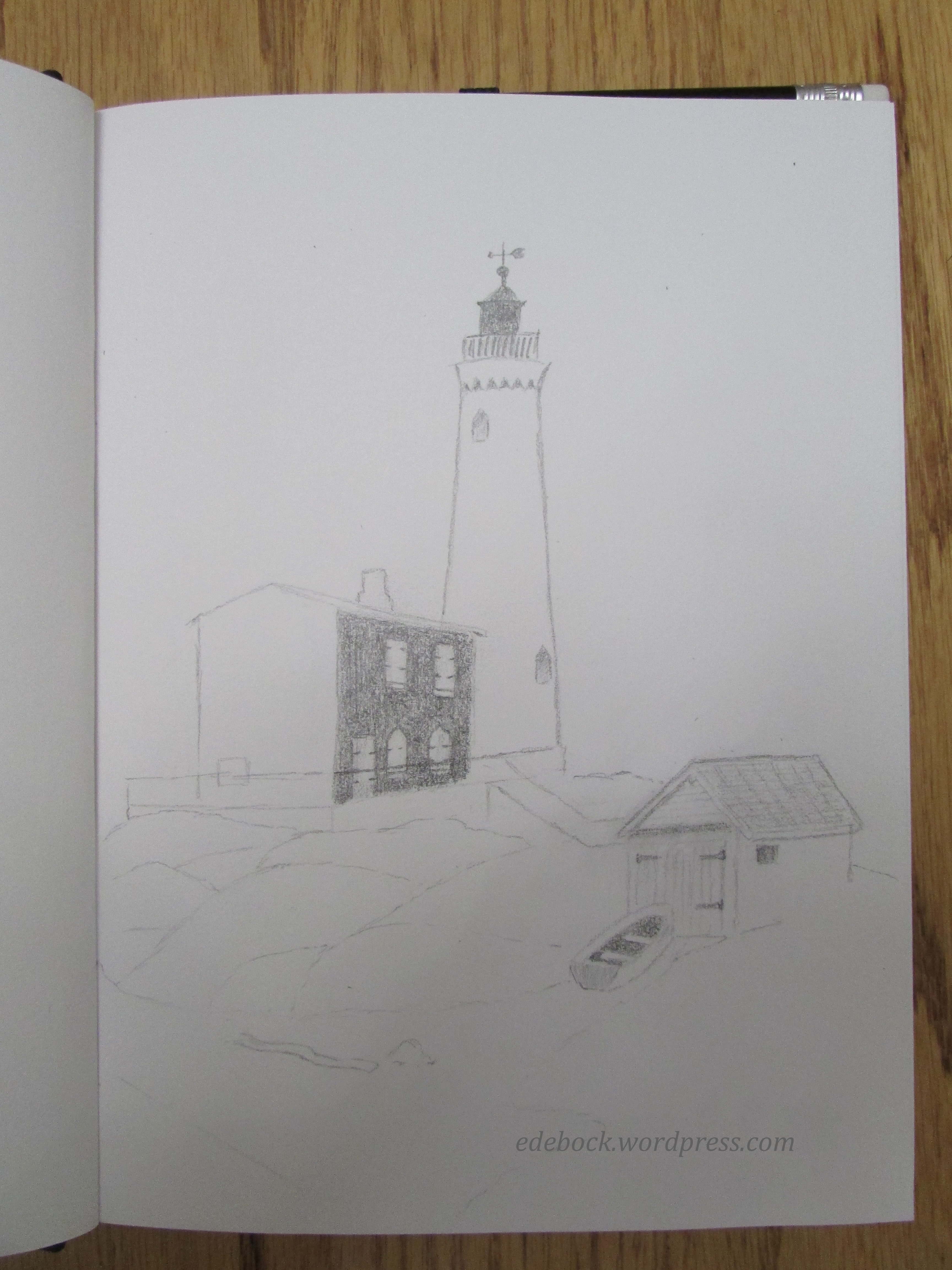
I worked on it a little at a time. First, just an outline, then gradually adding details. With my mind focused on nothing but what I was doing, I found it very relaxing.

IMG_3916

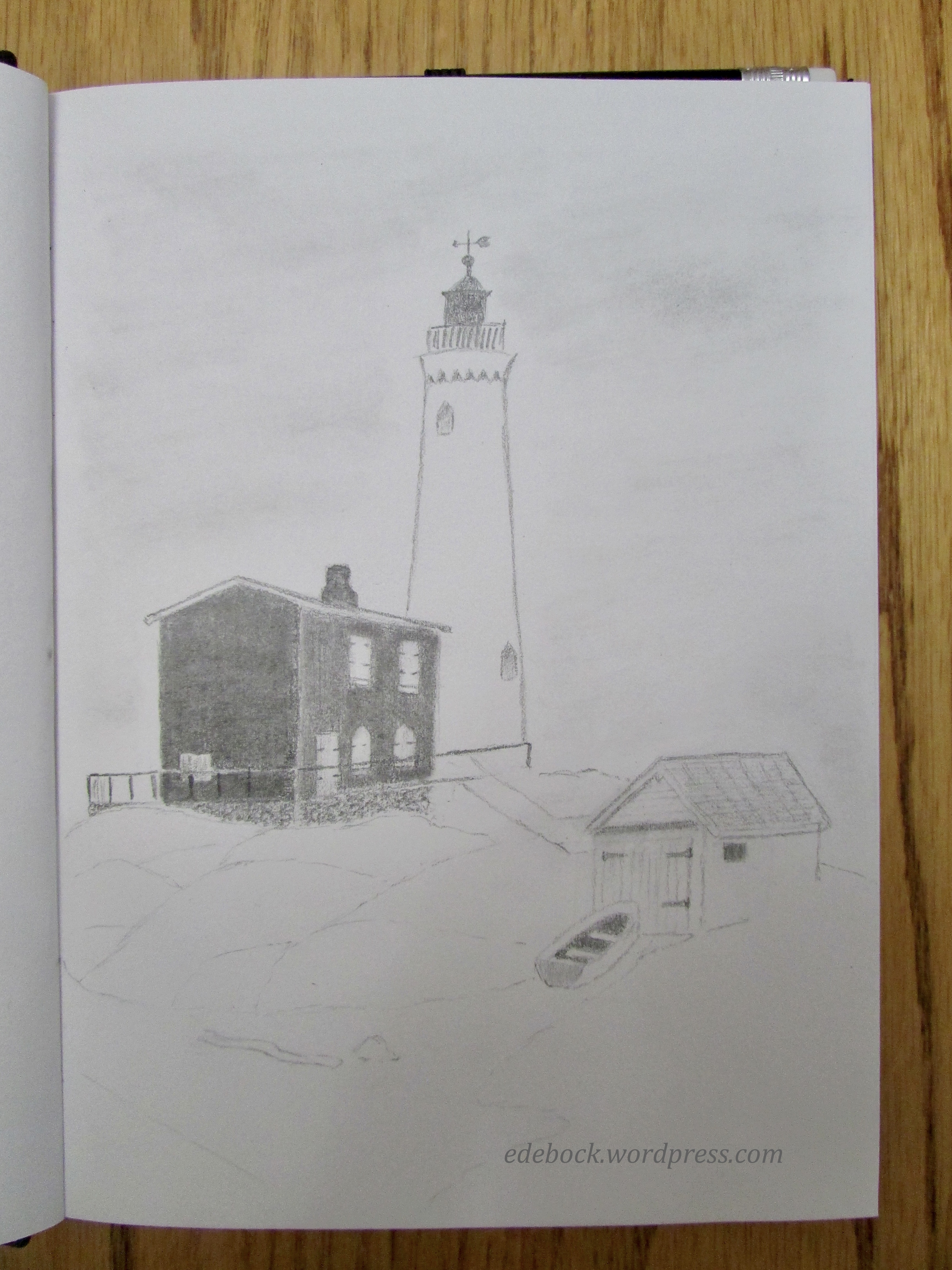
After awhile, I figured out that I could use one of the stumps to smudge, blend, smooth, and maybe even add depth.

IMG_3918

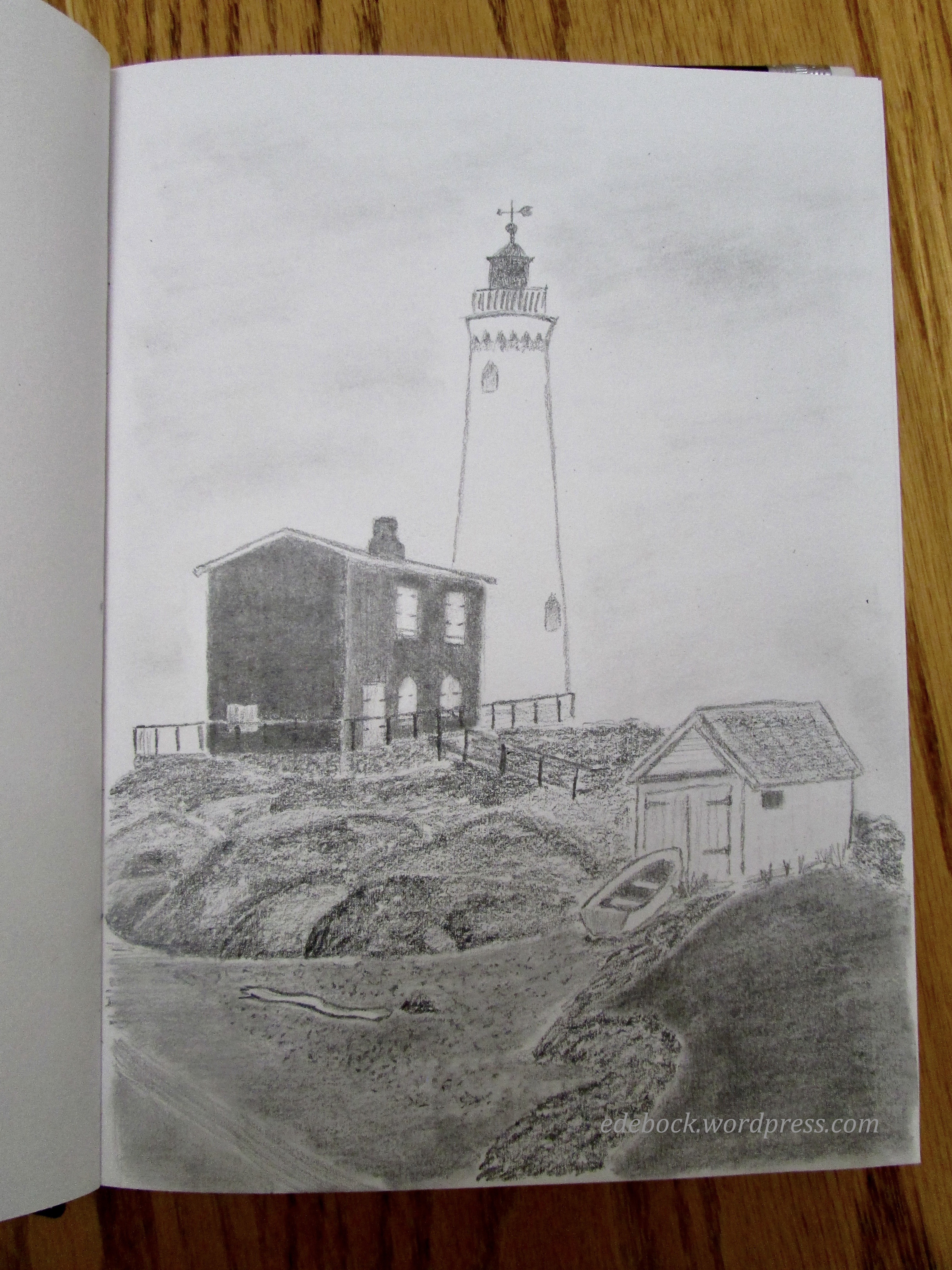
I’m pretty happy with the finished result!

IMG_3920

For my first drawing, I only used one of the sketching pencils, an eraser (quite a lot!), and one of the stumps. Now I’m eager to turn the page and experiment with some of the other supplies.

I think I’ve found a new hobby!

Inspired by art

LogoFashion inspiration can come from anywhere. If the colours of nature inspire you, perhaps you can incorporate some of them into an outfit. My OOTD (outfit of the day) was inspired by a piece of art.

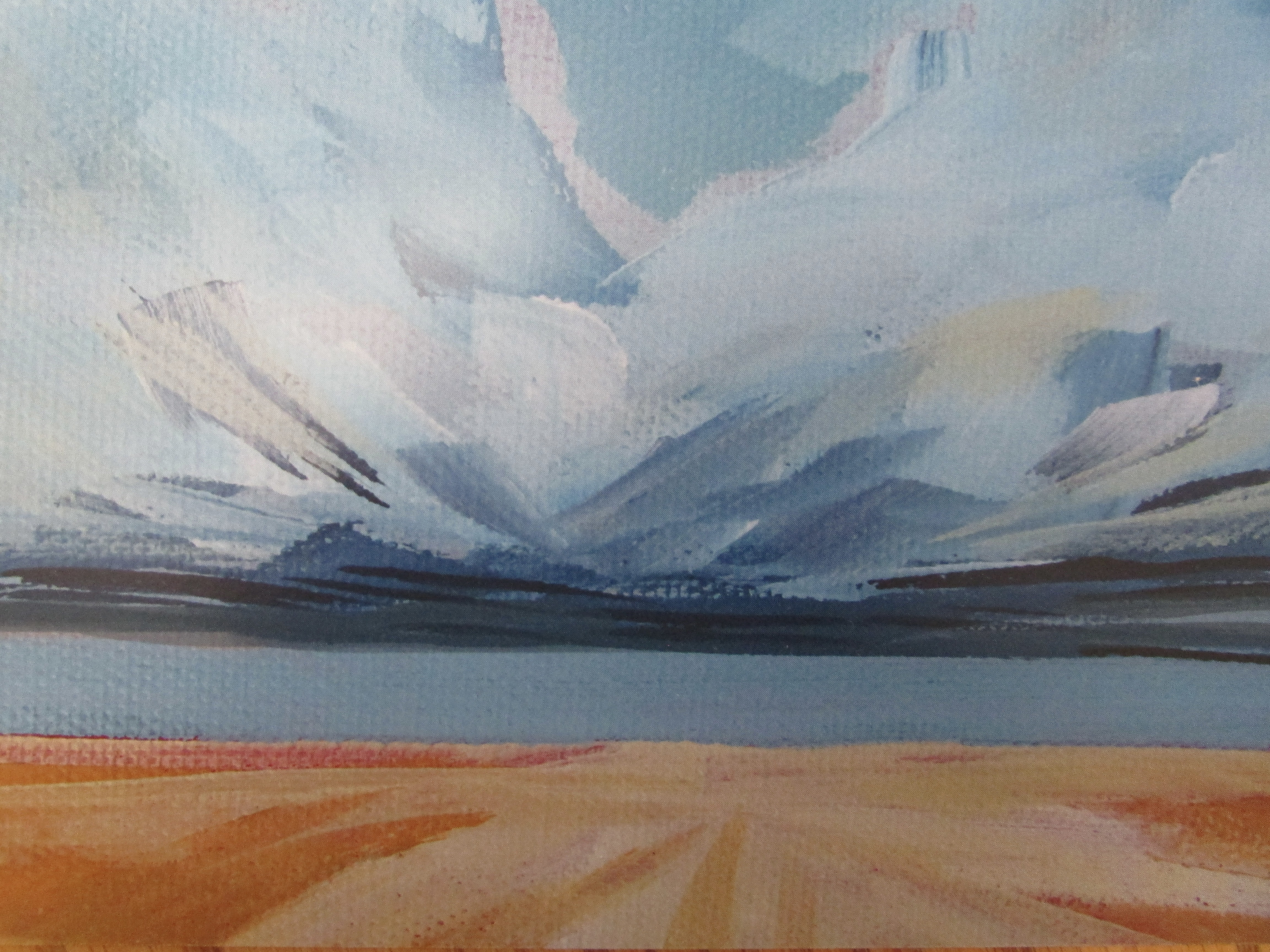
My niece is an Indigenous artist and photographer who draws inspiration for her work from nature, particularly her early childhood years living in the Northwest Territories and later years growing up on the Canadian prairie. Though I grew up at the coast, I love the big prairie sky and this painting from Esta’s Prairie Landscapes collection reminds me of my harvest days operating a combine.

IMG_3649

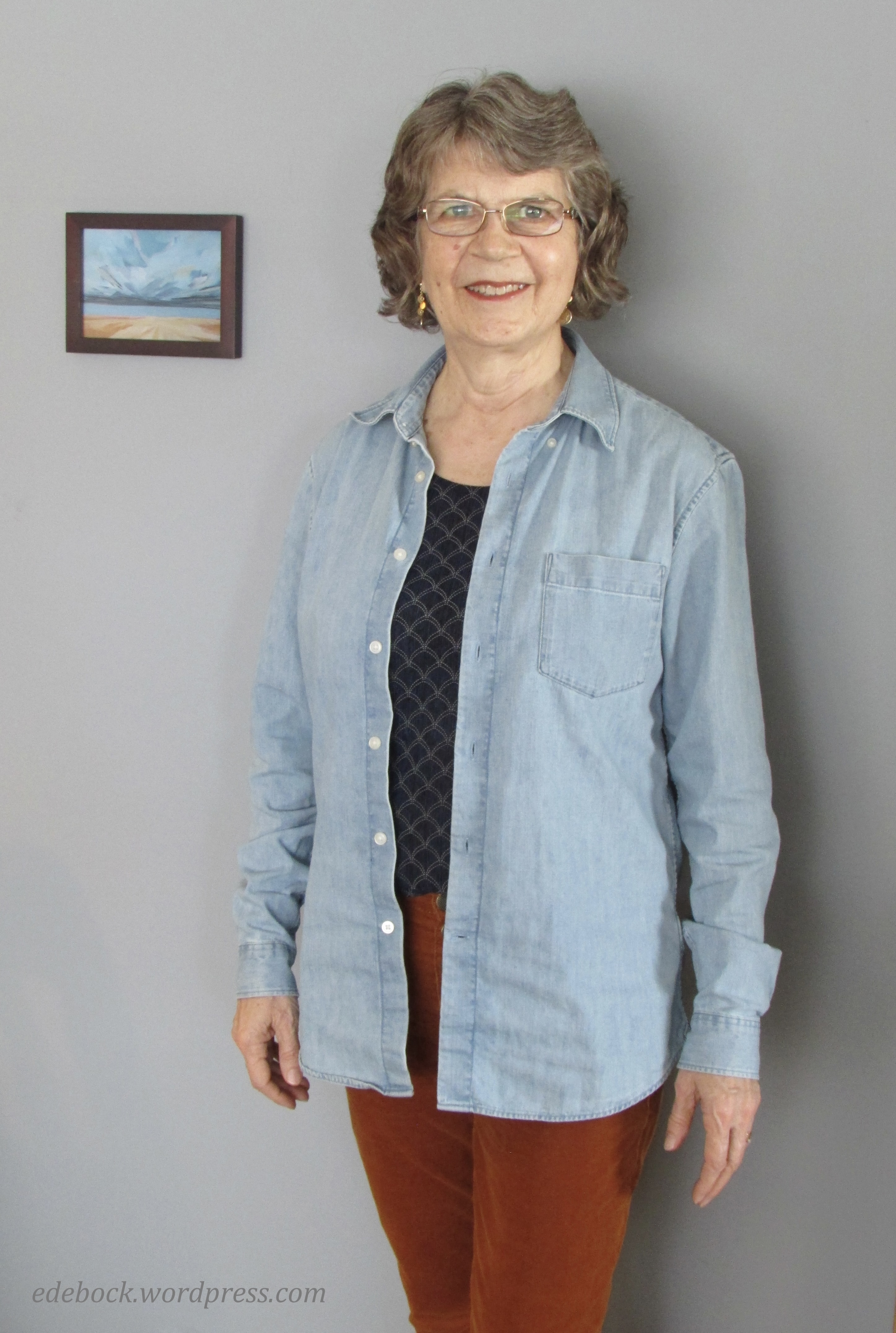
I absolutely love the colours in the small print which has a place of prominence in our living room. Recently, I’ve felt inspired to try putting together an outfit using those colours, so I went to my closet to see what I could come up with.  

IMG_3658 

The pants may be more reminiscent of caramel or cognac than wheat, but they come as close as I could to picking up the darker bits in Esta’s field. They’re the soft corduroy Button Fly Skinny from cabi’s Fall 2020 season. I found the blues of the sky in the Scallop Top from cabi’s Fall 2019 collection and the light denim shirt from Uniqlo that you’ve seen on the blog several times before. I finished the outfit with a pair of gold earrings that I won in a golf tournament several years ago. 

I wonder if I can find anything else around the house that might inspire an outfit? Stay tuned and I’ll let you know! 


Young artists in the family

My mother was a gifted artist. Unfortunately, a frightening incident in her early 30s caused her to put down her brushes and refuse to pick them up again. Though I wasn’t more than four at the time, I clearly remember the day it happened. I was playing with some of the neighbourhood children in the yard across the street from our house when my mother flew out the door with my toddler sister in her arms and ran across the street. Never in my life had I seen my mother run anywhere, so it was obvious that something was very wrong. Then, she barged into the neighbour’s house without even stopping to knock. Even at my young age, I knew that that was something you just didn’t do! What I and the other wide eyed children didn’t know was what had just happened. Mom had been painting at the kitchen table while I was outside playing and my sister napped. When the baby woke, Mom left her painting and went to lift her out of the crib, stopping to do something in the bedroom while the little one toddled out to the kitchen. The next thing Mom heard was choking and gagging. My sister had reached for the glass of turpentine that Mom used to clean her brushes and, thinking that it was juice, had drank it! Mom rushed her across the street because the neighbour was a nurse and would know what to do. Fortunately, our doctor’s wife happened to be visiting and, unlike many people in our small isolated town, she had a car! She rushed Mom and the baby to the hospital where a stomach was pumped and everything turned out fine. Everything, that is, except Mom’s love of painting. She blamed herself and didn’t paint again for many decades. Even then, though she dabbled at it a bit, the passion was gone.

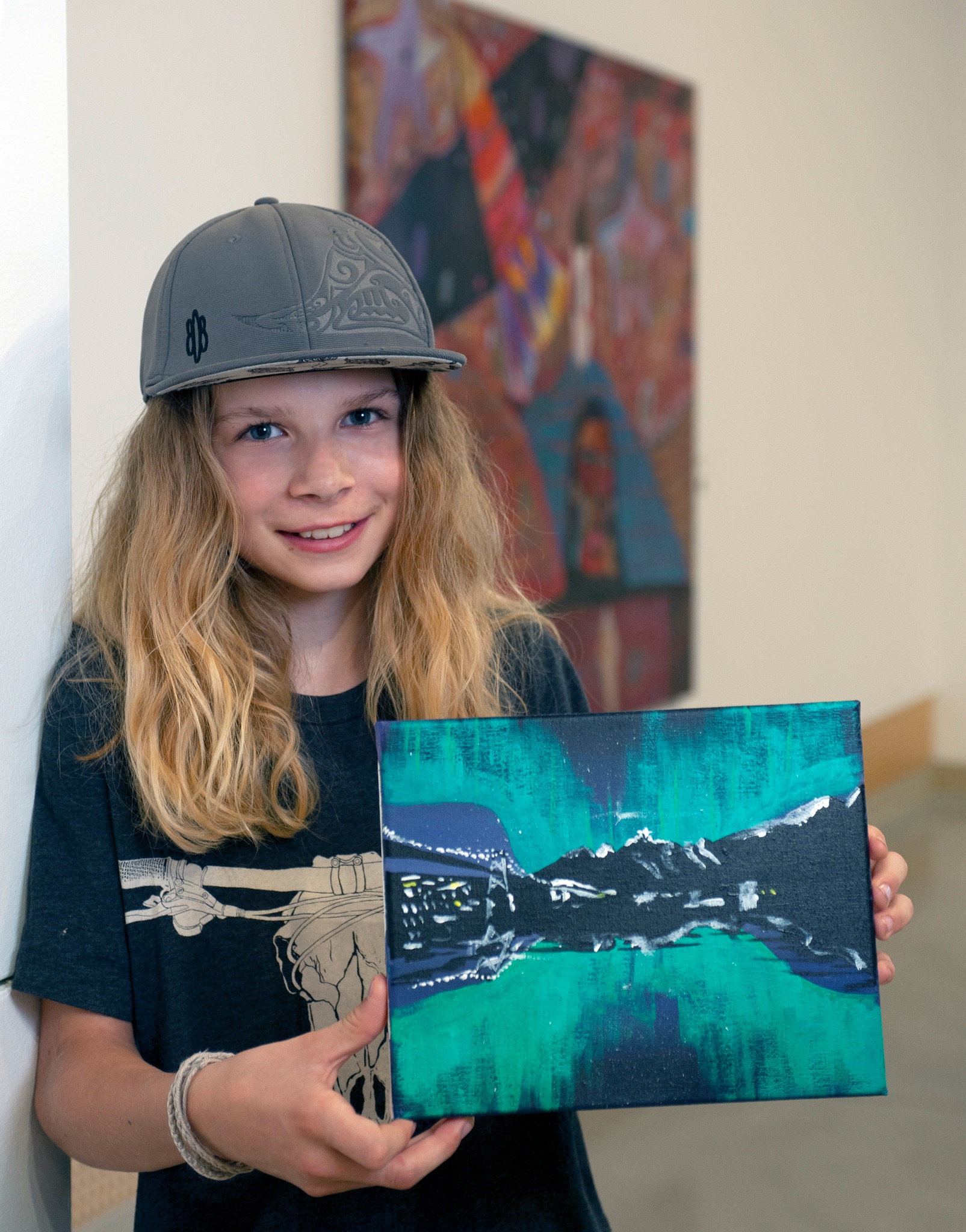
I think Mom would have been thrilled to know that some of her great grandchildren have inherited her gift. This week, 12-year-old Sam was honoured as Young Artist of the Week by North Vancouver’s Artists for Kids and Gordon Smith Gallery.

Sam - Young Artist of the Week

Sam painted the picture that he’s holding while we were visiting in October and it was a delight to watch it unfold layer by layer. If you’re familiar with Vancouver, and look closely, you’ll know that you’re looking toward the north shore and will see the Lions Gate Bridge on the left.

Sam’s teacher had this to say, “Sam finds peace and joy through drawing. He loves adding his own unique flair and extra details into his class art projects. He is inspired by his surroundings, as well as his imagination. He is constantly trying new techniques to achieve a desired effect in his art. He adds incredible details into his creations that are admired by his teacher and peers.”

Yes, Great Grandma would be very proud!

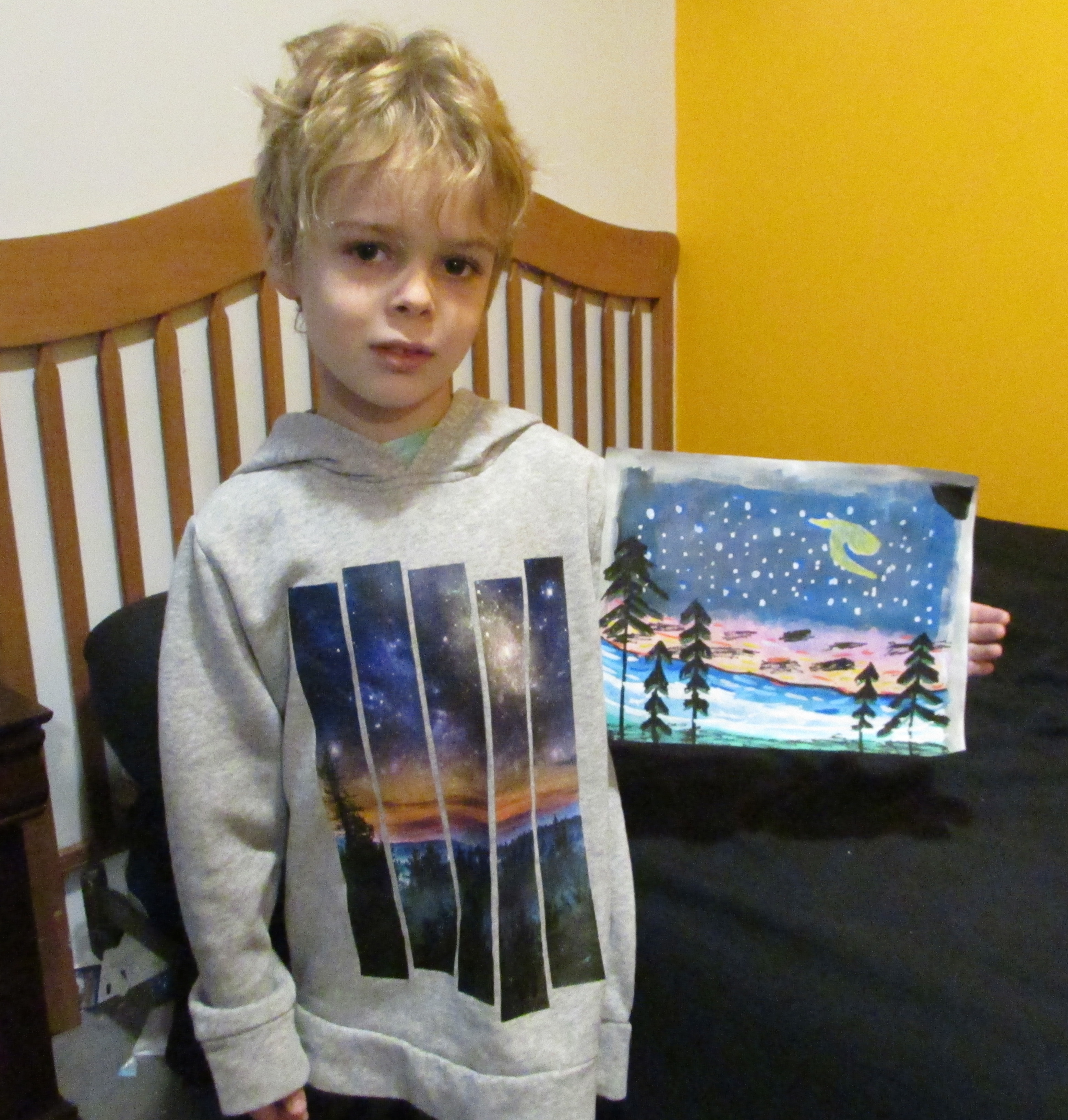
On our way home from Vancouver in October, we stopped in Calgary to visit more grandchildren. On a trip to Goodwill, our daughter and I found a hoodie for 7-year-old Simon. As soon as he saw it, his response was, “I want to paint that!”

IMG_3282

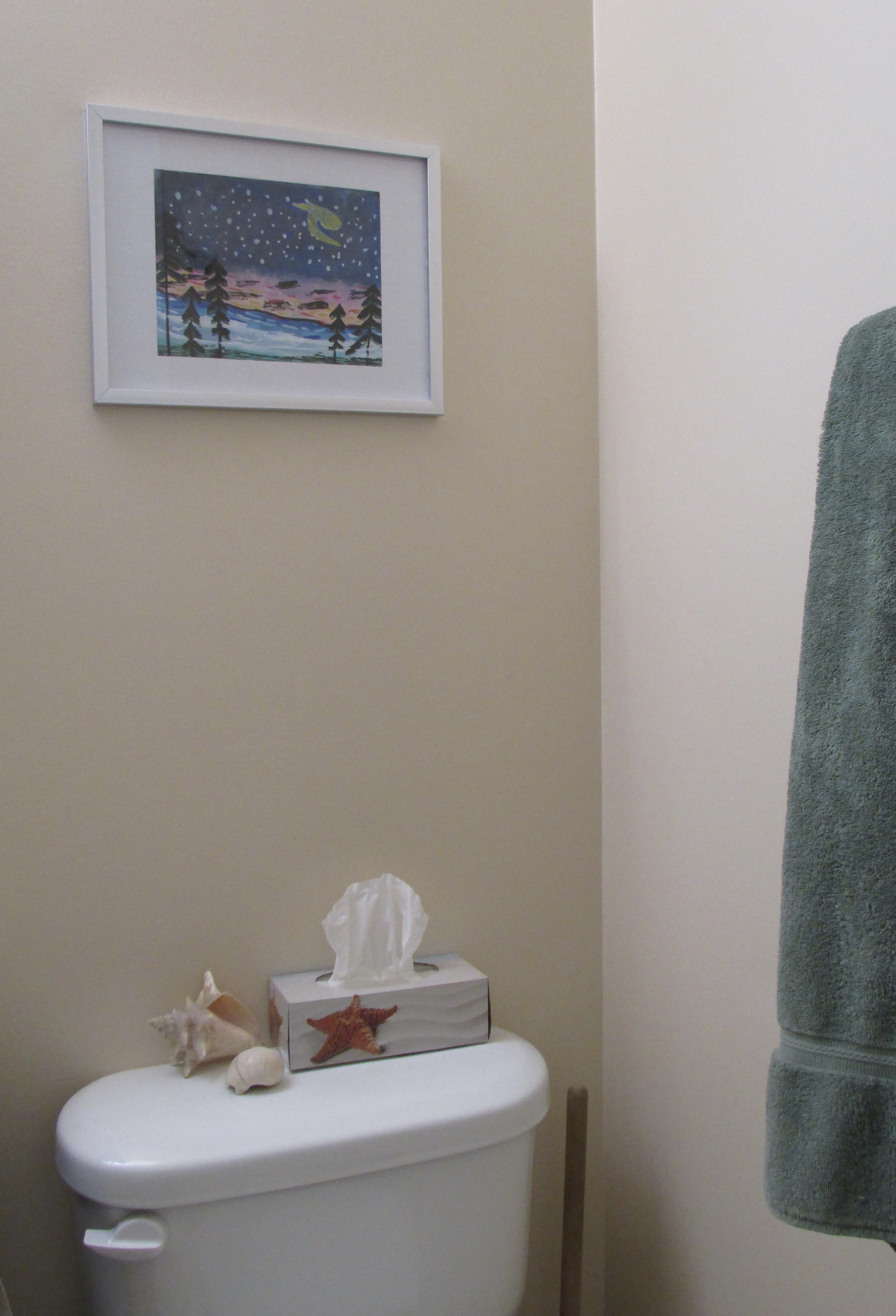
I watched in awe as his picture took shape. Simon had recently been diagnosed with ADHD, but he was completely focused! I held my breath as he added more and more details fearing that he was going to ruin the painting and become frustrated, but he knew exactly what he was doing! When he finished, he told me that it was for me and that he wanted me to hang it in my bathroom! I thought that was an odd request, but I followed his wishes and I’m so glad I did. I see it multiple times a day and it warms my heart every time! I only wish my Mom could see it too. She would be so proud!
IMG_3606

Sam and Simon aren’t the only young artists in the family. We have several grandchildren who seem to have inherited some of Great Grandma’s talent! Whether this becomes a passion that stays with them throughout their lives or whether they pursue other interests as they get older, art has so many benefits for children. It promotes creativity, encourages neural connections, and builds fine motor skills. It helps develop problem-solving abilities and helps kids understand themselves and their world. Most of all, I think Sam and Simon would tell you that art is fun!
Clemens-Art's role in education