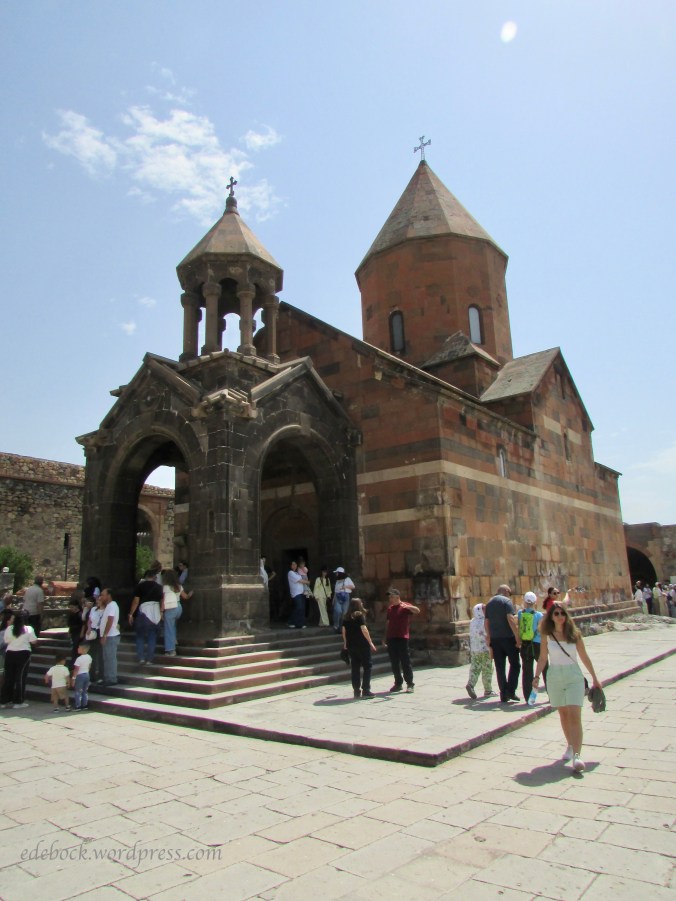
Geghard Monastery

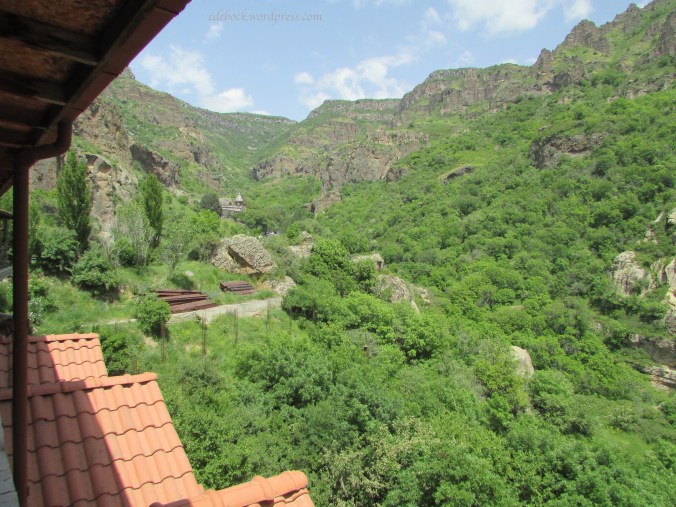
Geghard Monastery, declared a World Heritage Site in 2000, is nestled into the dramatic Azat River Gorge, approximately 35 km (22 miles) east of Yerevan, the capital city of Armenia. Can you spot it in this photo taken from the open air restaurant where we stopped for a delicious lunch.
Here’s a closer look.

Views of the gorge from the restaurant were absolutely spectacular. We could hear the river in the bottom of the canyon, but lush growth obscured our view of it.
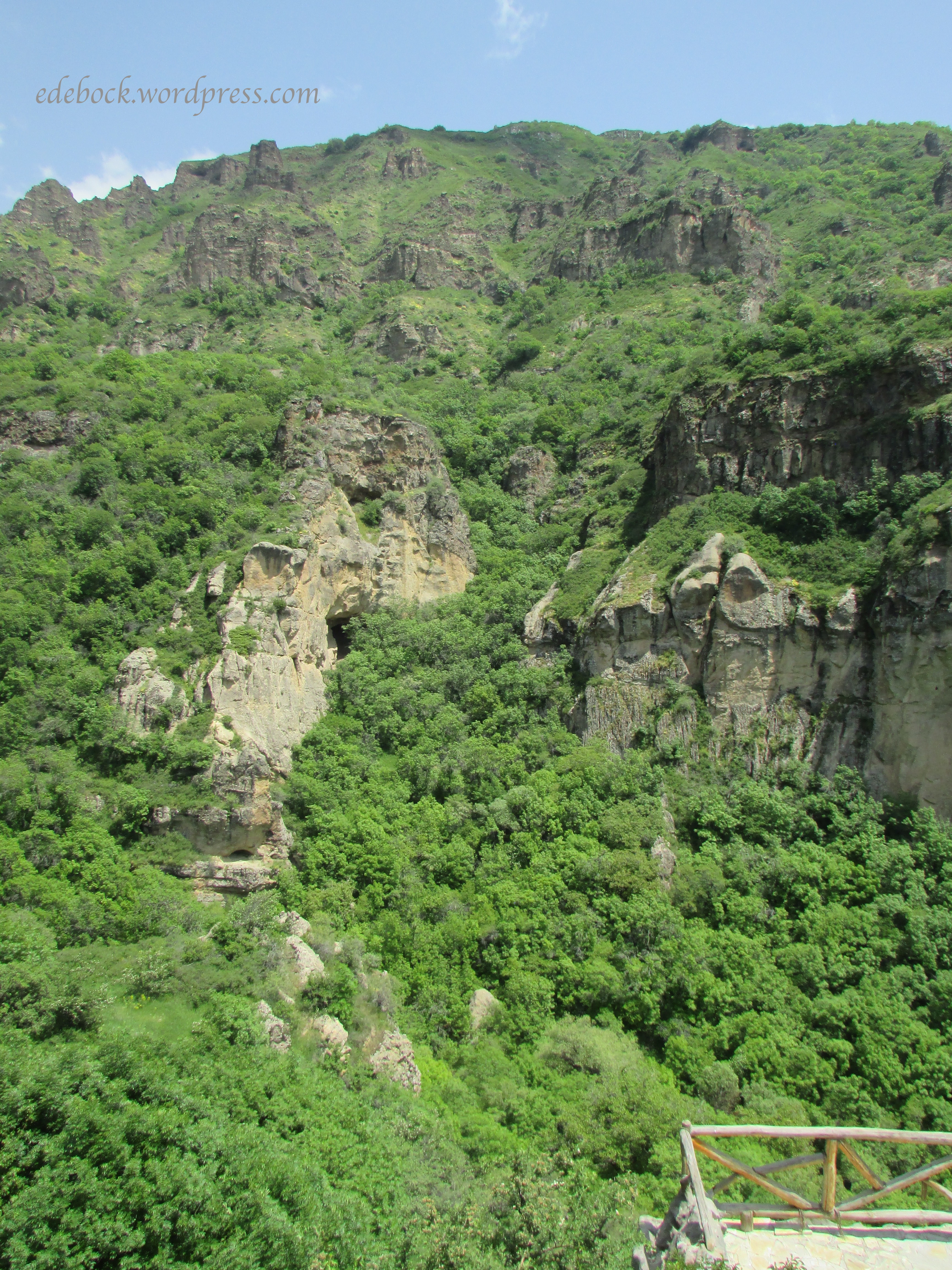
One of the oldest Christian monasteries in the world, Geghard is one of the country’s most visited tourist destinations. It is believed to have been founded in the 4th century by Saint Gregory the Illuminator, following Armenia’s adoption of Christianity in 301 AD. Until the 13th century, the monastery consisted of churches, chapels, and chambers cut into the rock. 
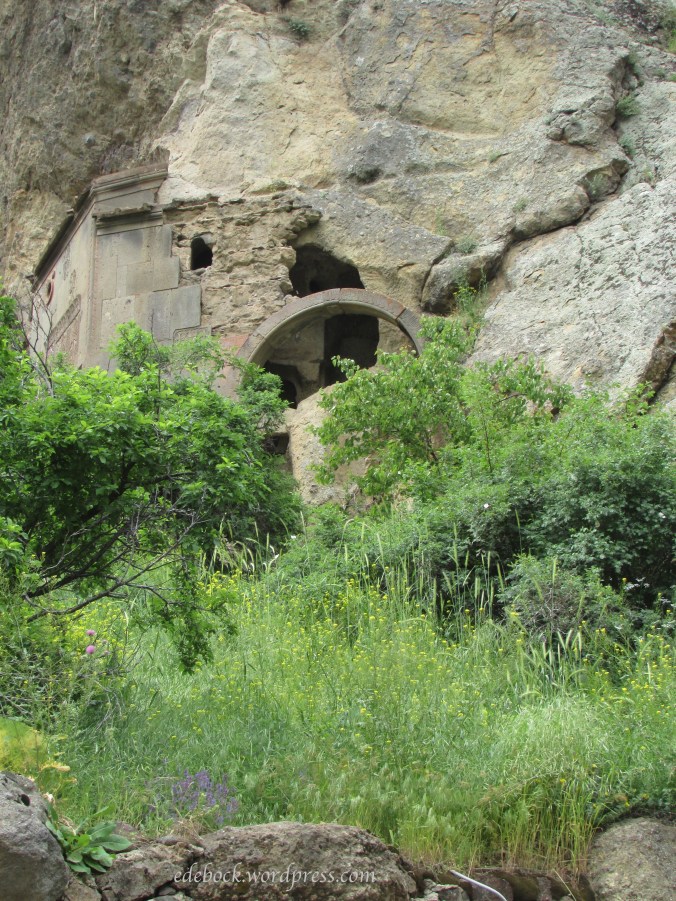
The main cathedral was built during the 13th century and is an exceptionally well-preserved example of medieval Armenian architecture. The entire complex blends seamlessly into the surrounding mountainous terrain.  

Geghard Monastery was an important spiritual and cultural hub during the Middle Ages housing numerous monks and scholars. It also became a destination for pilgrimages because it was believed that the spear that pierced the side of Christ during His crucifixion was stored there for a period of time. Geghard means “spear” or “spearhead” in Armenian. 

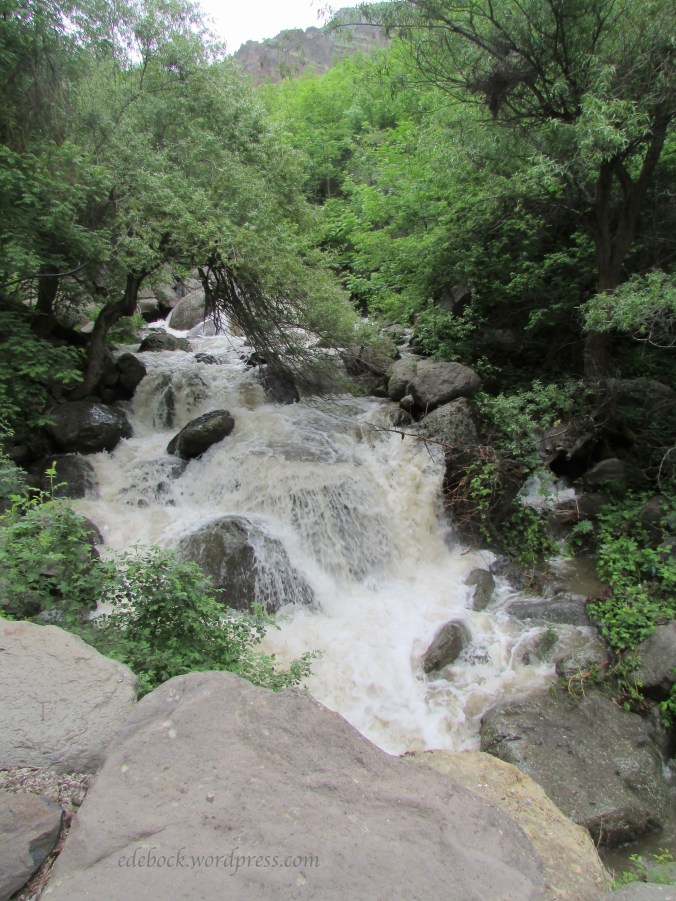
A unique feature of monastery is a spring flowing from the rock inside the church. Believed to be holy water, it has worn a groove into the rocky floor over many hundreds of years. Outside, a very short walk from the main church takes one to a stream tumbling down the rocky mountainside. 
Tomorrow we depart for an undisclosed location where we will engage in the ministry that is the main reason for this trip. The blog will continue when we complete that work and resume travelling as tourists. 
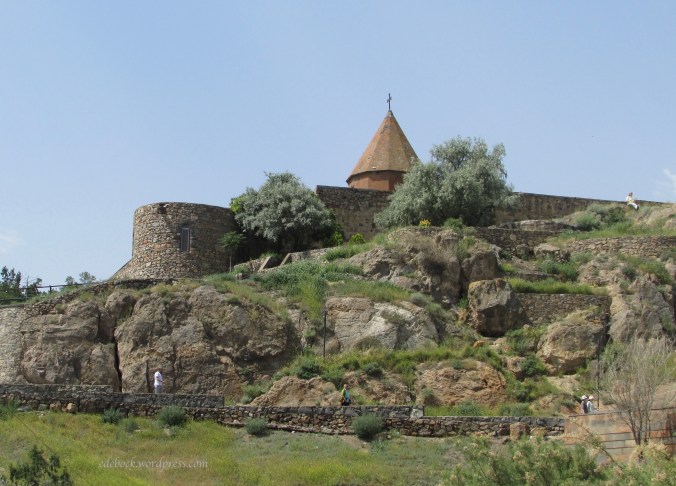
Khor Virap: The Birthplace of Armenian Christianity

Although I’m not sleeping particularly well yet, I think I’ve sufficiently recovered from jet lag to begin sharing some of the things we’ve seen since arriving in Armenia.

In 301 AD, Armenia became the first country in the world to officially adopt Christianity and it all started here at Khor Virap, one of the country’s most sacred and visited sites. During the reign of Tiridates III, Saint Gregory the Illuminator (originally known as Grigor Lusavorich) angered the king by refusing to participate in pagan rituals and instead preaching Christianity. The king had him imprisoned in Khor Virap which literally means “deep pit” or “dungeon” in Armenian. There in the depths of the earth, he languished for 13 years, surviving only because of the kindness of a local woman who provided him with food and water. Eventually, when Tiridates fell ill with a form of madness, his sister is said to have had a dream that the imprisoned Gregory could heal him. Pulled from the dark pit, Gregory was washed, dressed and taken to the king where he prayed urgently for his healing. When Tiridates recovered, he became a loyal and dedicated supporter of Christianity and officially declared it the state religion.

A chapel was initially built at Khor Virap in the 5th century and the present St. Astvatsatsin (Holy Mother of God) church was constructed in 1662. The 6 metre (19.7 feet) deep pit where Gregory was held is still present at Khor Virap and tourists can descend into the dungeon on a narrow ladder. While hubby was brave enough to do that, I declined!

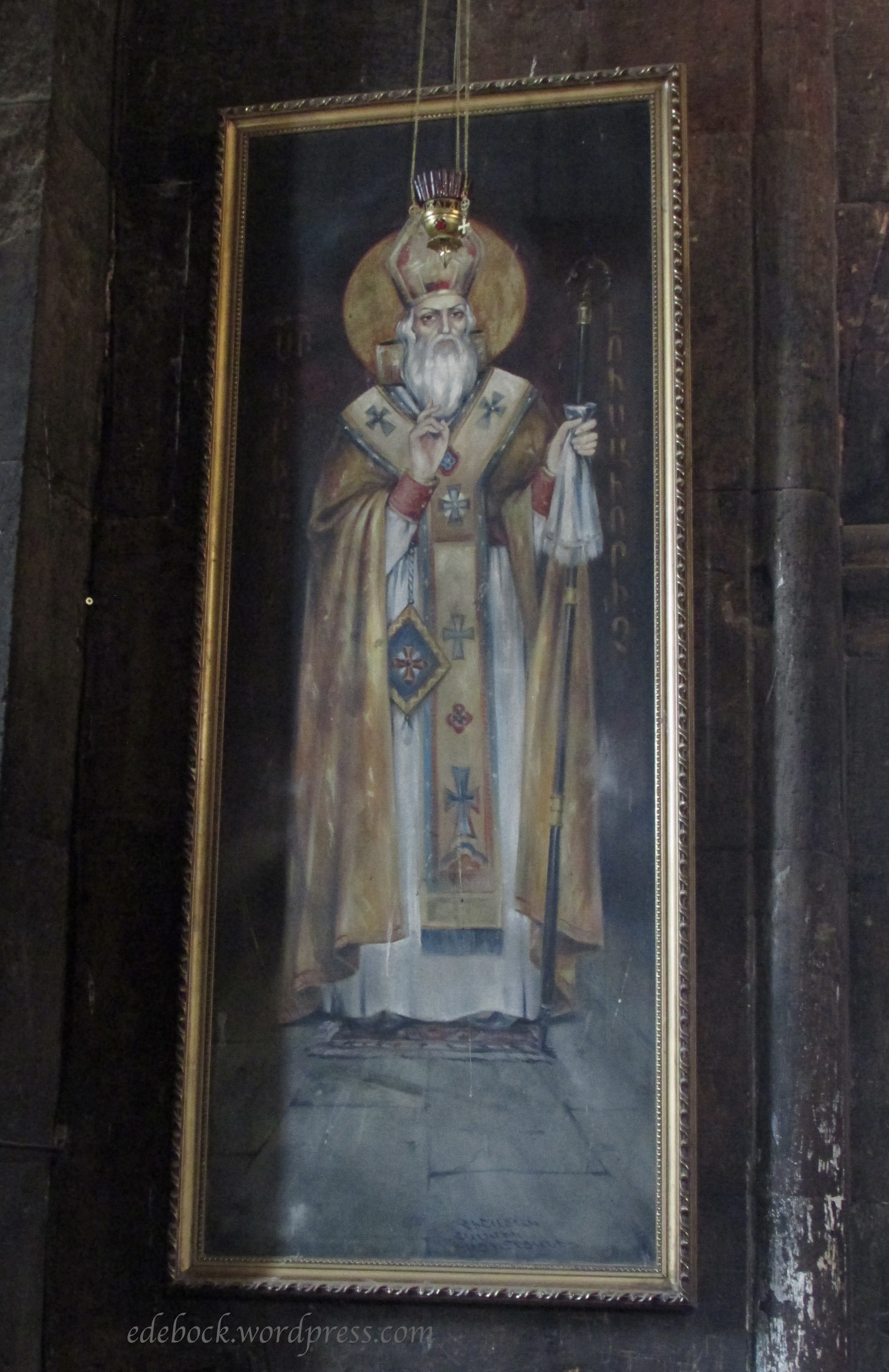
Images of Saint Gregory are found both in and outside the church.   


Khor Virap is located on the Ararat plain about a 45 minute drive from Yarevan, the capital city of Armenia. While the monastery was well worth the visit, part of the excitement of being there was looking out across the border between Armenia and Turkey at Mount Ararat where Noah’s ark is said to have come to rest! There are actually two volcanic cones, Greater Ararat on the right and Little Ararat on the left. Greater Ararat, known as the “Holy Mountain” of the Armenian people was actually in Armenia until the 1921 Treaty of Moscow and Kars officially made it part of Turkey following the Turkish-Armenian war of 1920. If you look closely at the photo, you can see the fence that marks the border between the two countries.