Ribstones in the rain

On the top of a hill about half an hour northeast of here, is a collection of rocks with a long history and a story to tell. The Viking Ribstones are quartzite boulders carved by the nomadic First Nations people who inhabited the prairie in years gone by. The stones stand as a monument to Old Man Buffalo, the spirit protector of the herds that provided them with food, hides, utensils, tools, and so much more. Grooves carved in the two largest rocks in ancient times are thought to represent the ribcage of the buffalo and circular holes may represent arrow or bullet holes.

IMG_9919

IMG_9918

We weren’t too keen on spending a cool rainy afternoon cooped up in the house with three restless grandchildren who are visiting for the Labour Day weekend and Drew, the oldest, has been wanting to see the Ribstones since he first heard about them, so off we went. Thankfully, the rain was nothing more than a light drizzle as we approached the hill, the highest point for miles around.

IMG_9936

Historically, natives in the area left offerings to Old Man Buffalo at the Ribstones before hunting and after a successful hunt. Today, this is still a sacred and revered site to the First Nations people who continue to visit and leave offerings that include braided sweetgrass, tobacco or cigarettes, and other small trinkets. Five-year-old Simon was naturally curious and wanted to play with some of these objects, but in an attempt to teach him respect for the sacred nature of the place, we explained that it was something like a church and that the objects were similar to what we put in the offering plate at church.

Ribstone sites are very rare and this one has been designated a provincial historic resource. Only nine have been found in Alberta and this one is particularly significant because the stones remain in their original setting.
IMG_9927

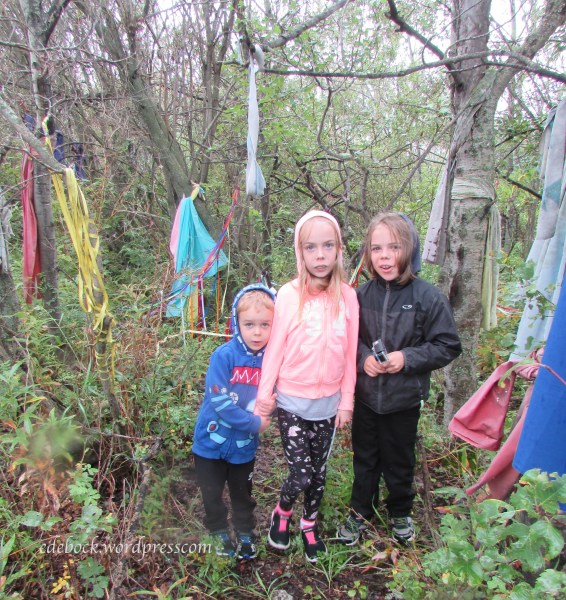
Colourful ribbons and prayer cloths hang from the fence enclosing the site and trees in a nearby grove. Some have clearly been there for a long time, while others are newer.

The hilltop is a peaceful spot overlooking fields of grain in every direction. Hopefully the rain will let up and harvest can begin soon.

IMG_9924


Museo de Antropología de Xalapa

When I registered for my first year of university I intended to take a sociology course, but it was already full. I had to find something else that would fit into my timetable, so I registered for introductory anthropology. The study of human societies and cultures sounded interesting enough, but I didn’t anticipate it capturing my attention to such an extent that I would take as many anthropology courses as I could over the next four years and if money had been no object, I would have gone back to school after earning my education degree to get a second one in anthropology!

When I learned, after our first visit to this part of Mexico, that nearby Xalapa is home to the second largest museum of anthropology in the country, seeing it immediately took first place on my list of things to do on a return visit. With more than 25 000 pieces, the Museo de Antropología de Xalapa, also known as MAX, houses the world’s largest collection of artifacts from the ancient cultures of the Mexican Gulf Coast including the Olmec, the Huastec, and the Totonac.

The most notable amongst these pieces are the colossal Olmec heads that date back to at least 900 BC. That’s hundreds of years before Alexander the Great! Sculpted from huge basalt boulders, 17 of these heads have been discovered to date and 7 of them are housed in the MAX. The heads vary in height from 1.47 to 3.4 metres and weigh between 6 and 50 tons. All of them depict mature men with flat noses and fleshy cheeks.

img_6866

There are also tiny heads like this one depicting a newborn baby.

img_6876

Also Olmec in origin, this 55 cm tall sculpture is thought to depict a priest holding a limp child, either sleeping or dead.

I won’t bore you with all of the 80+ photos that I took today or too many details about ancient culture, but as a lover of anthropology, I was absolutely amazed by the collection.

A few pieces even reminded me of the masks carved by the natives of the Pacific Northwest.

MAX is also noted for a series of small Totonic faces, called “caritas sonrientes” (little smiling faces) in Spanish. The first one shown here makes me laugh!

img_6903

In contrast to the little smiling faces, this poor fellow looks terribly sad.

img_6908

For Mesoamerican people childbirth was considered a form of battle, therefore, women who gave birth were revered as heroes and great warriors. Losses on any battlefield are inevitable, so women who died as a result of childbirth were given the same honour as men who fought and died in conflict. I was very impressed with the sculptures, like this one, representing these women.

img_6910

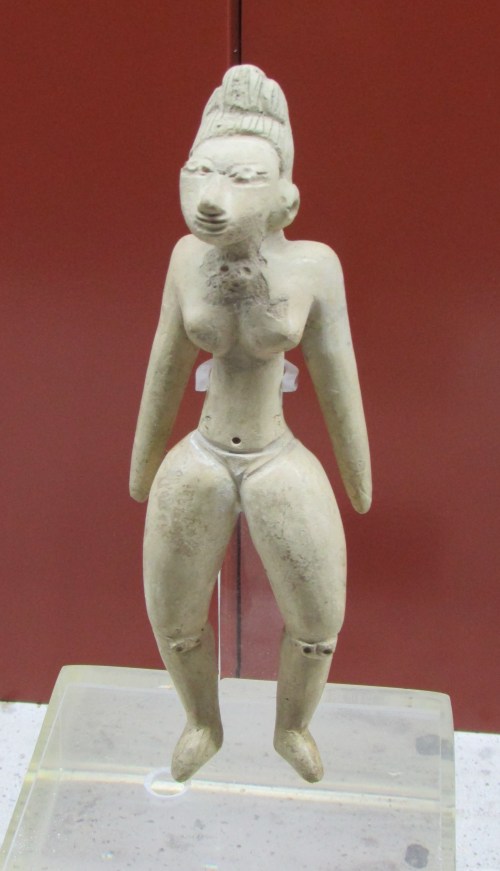
Here’s one of a series of tiny sculptures showing an ancient culture’s concept of the ideal female form; tiny waist, abundant hips, and voluptuous breasts. Clearly, with my boyish figure, I’d have been one of the ugly ones!

img_6922

The Hazeltons

After six weeks in the trailer, we are home! Though it was our plan from the beginning to arrive home today, I really wasn’t ready to end our gypsy wandering and I would have happily extended our travels indefinitely. Real life issues beckoned, however, and so it seemed wise to follow through on our original plan. As much as I loved being away from home, I did miss having access to wifi and being able to update the blog on a regular basis. Now that I’m connected again, I’ll do my best to share the remainder of our travels with you over the next few days.

The Hazeltons, a collection of small communities, located around the confluence of the Skeena and Bulkley Rivers in northwestern British Columbia, have been home to the Gitxsan people for centuries. The Gitxsan are a matrilineal society made up of the Frog, Eagle, Wolf, and Fireweed clans. Though their territory is inland, their villages with intriguing names like Kispiox, Gitanmaax, and Hagwillget as well as Hazelton, New Hazelton, and South Hazelton, are a centre of Northwest Coast native culture and, as such, are a place that I’ve long dreamed of visiting. My love for the art and the culture of the native peoples of the Pacific Northwest began as a child growing up on the coast of British Columbia and grew as a student of anthropology during my university years.

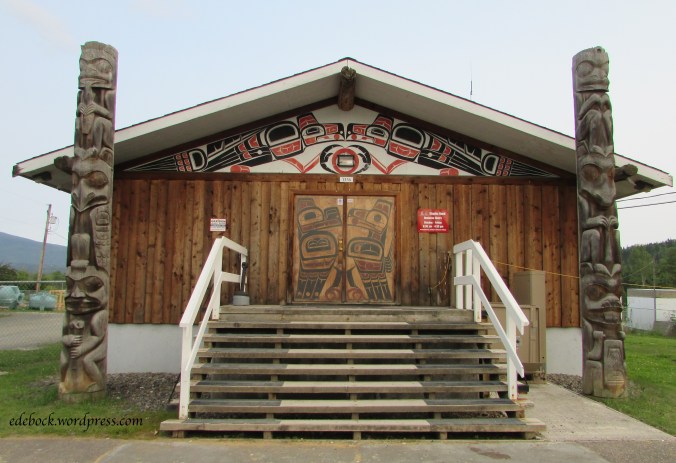
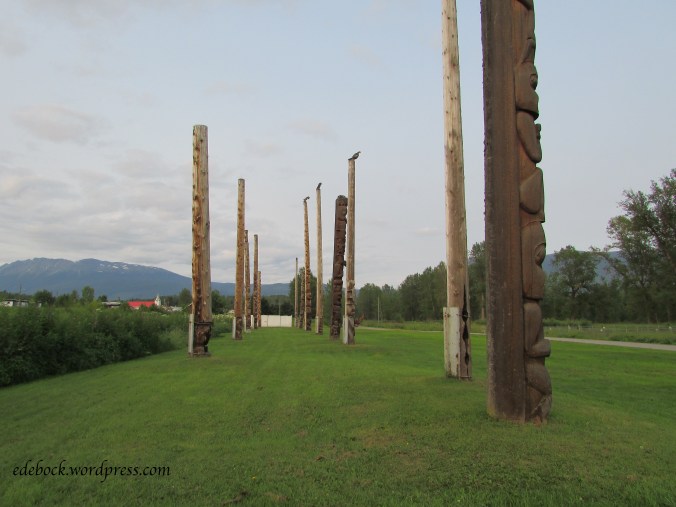
After settling into our campsite, we drove a few miles north to Kispiox, best known for the 15 totem poles, some dating back to 1880, that stand in the village alongside the Kispiox River. On the way into the village, we stopped to look at the art work decorating the band office.

IMG_4723

IMG_4732

IMG_4729

IMG_4733

IMG_4730

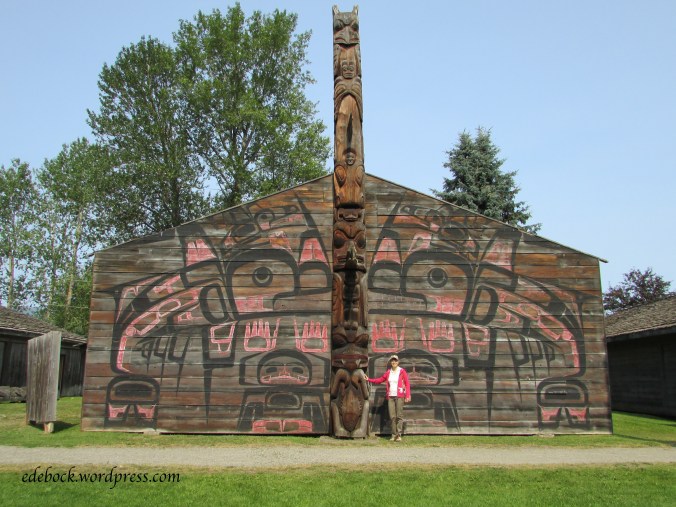
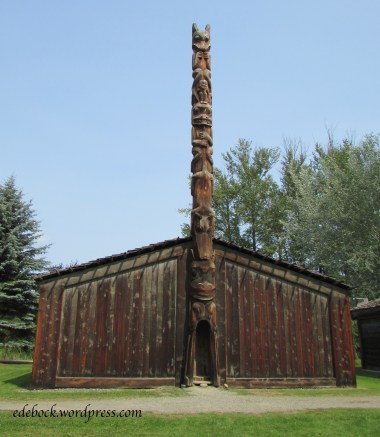
The following morning, we took a fascinating interpretive tour of the ‘Ksan Historical Village adjacent to our campground. It consists of seven replica cedar longhouses. One of the longhouses contains a small museum and a gift shop that are open to visitors who are also free to enjoy the grounds and photograph the buildings and totem poles. Only the guided tour, available in several languages, allows entrance into the three of the longhouses that contain an abundance of artifacts. The price is nominal and was well worth it! Aside from the Museum of Anthropology at the University of British Columbia in Vancouver, I have not seen such an extensive collection of Northwest Coast history anywhere! Unfortunately, photography was not allowed inside the longhouses, so I’m not able to share that part of the experience with you.

IMG_4774

IMG_4759

IMG_4763

IMG_4762

The small, narrow door in the last photo was designed to prevent enemies from entering in full armour.

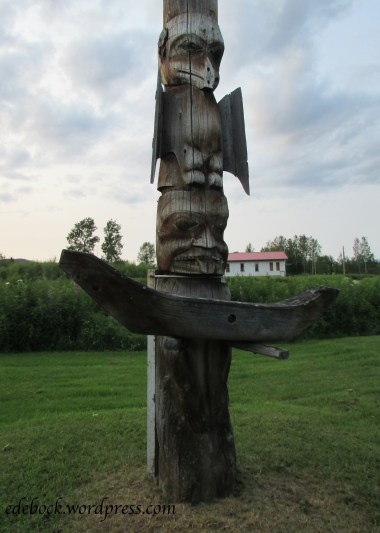
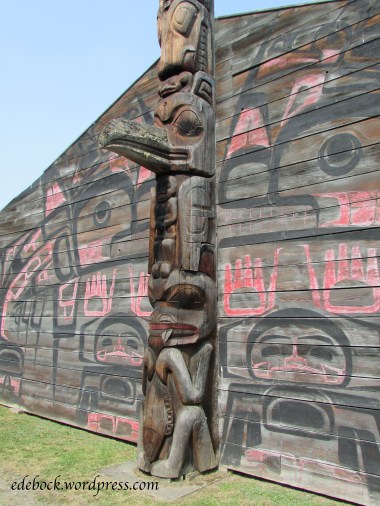
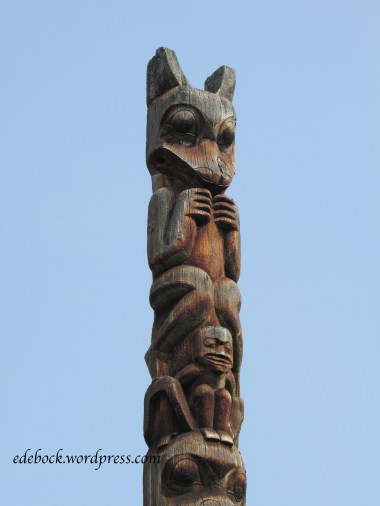
As always, the totem poles fascinated me. Here’s a closer look at a few of them.

IMG_4767

IMG_4776

IMG_4761

IMG_4760

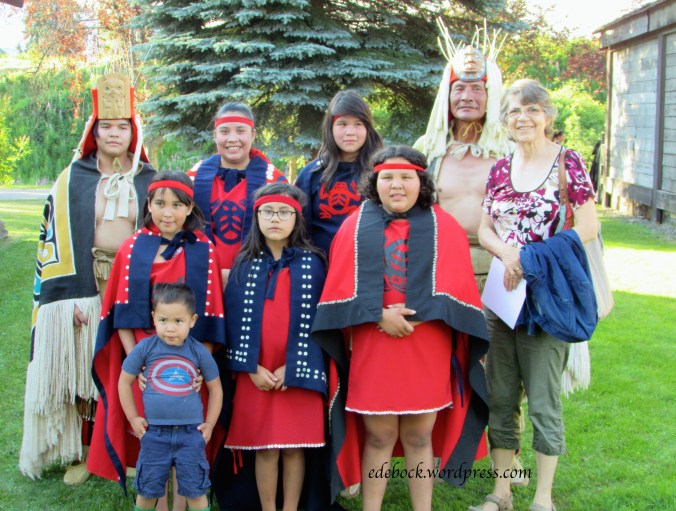
We were especially fortunate to be in the area on a Wednesday. Every Wednesday evening during the summer months, a local group offers a traditional song and dance presentation in the Wolf House, one of the historical village’s longhouses. Again, for a nominal fee, I was thrilled to have the unique opportunity to see and experience this aspect of the Northwest Coast culture. I was especially delighted to see that the group included all ages; that the traditional songs and dances are being passed on to the younger generations.

IMG_4799

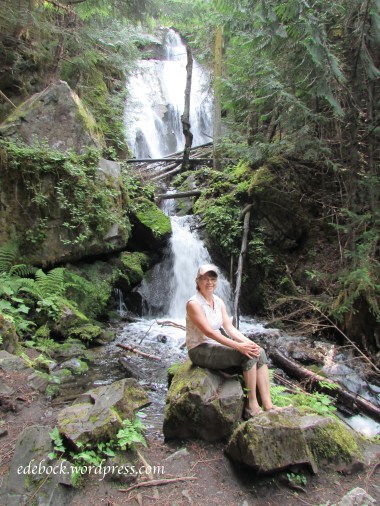
As we explored the various villages that make up the Hazeltons, we were especially impressed with how welcoming the First Nations residents were. While we were strolling around the historical section of Old Hazelton a local woman stopped to chat and told us about an easy 10 minute hike from New Hazelton to a beautiful waterfall. Had she not been willing to share with us, we would never have known about it!

IMG_4792

Going back to school!

If money had been no object, I’d have gone straight back to university after earning my education degree. I would have pursued a second bachelor degree, this time in cultural anthropology, simply because I loved it. At the time, however, that wasn’t an option. My first degree was paid for by a grant from the Government of the Northwest Territories but that had run out and it was time to find a job and begin supporting myself.

Since retiring from teaching seven years ago, I’ve often thought that if I lived closer to a college or university I’d probably enroll in a few courses just for fun. Although anthropology still interests me, at this point I’d probably choose women’s studies. I’ve never considered myself a feminist because I’m adamantly opposed to abortion (except when continuing a pregnancy places the mother’s life in grave danger). By definition, I suppose I’m a pro-life feminist as I’m keenly interested in the plight of women worldwide, believing that girls and women should have equal rights and opportunities to men. It pains me to know that, in this day and age, girls and women in many parts of the world continue to be denied access to education and to endure obscene cruelties such as female genital mutilation and forced marriage.

Okay, let me climb down off my soapbox and continue what I started off to say!

Though I don’t regret the fact that I didn’t go to Bible college as a young person and I didn’t encourage my own children to do so, in recent years I’ve also thought that I wouldn’t mind taking a few Biblical studies courses. Recently, I learned of an opportunity to combine all three of my academic interests and audit a course entitled Biblical Theology of Womanhood: Old Testament online for free!

The women’s studies course, offered by Southwestern Baptist Theological Seminary in Fort Worth, Texas, is described as “an amplified and comprehensive study of womanhood in the Old Testament which overlaps in a general way and is supplementary to systematic theology, especially as concerns the doctrine of anthropology.”

Auditing the course means that I’m not taking it for university credit. I get to enjoy all the lectures and do as many of the readings as I want, but I don’t have to write any of the papers or take the final exam. There are also online discussion groups that I can participate in. I must admit that I felt a tingle of excitement when I received the email with my student ID number! It’s been 39 years since I had one of those!

The course actually started on August 21 but since I was on vacation, I chose to wait until I was back home to begin. As an online student, I’m not tied to the regular Thursday evening schedule. Instead, I can watch the two and a half to three hour lectures whenever I choose. The first one, which I watched this evening, was an introduction to the course and laid the groundwork for what lies ahead. I’m not sure that I’ll agree with everything that’s taught but I do know that I’ll be challenged to dig into scripture and to seek a better understanding of what God’s Word says to and about women. I also know that I’m excited to be going back to school even if it is in the comfort of my own living room!