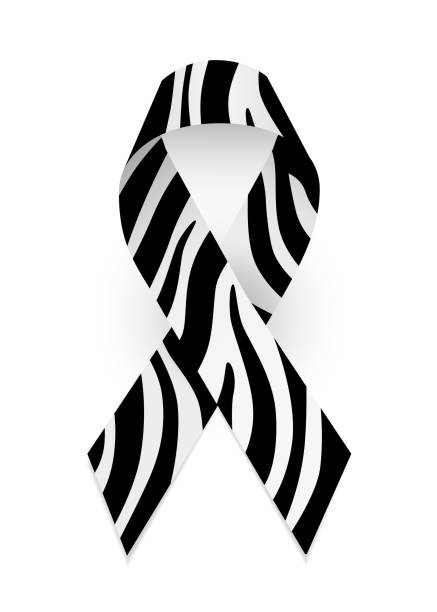
The great zebra debate

There’s a great debate in neuroendocrine cancer circles over the use of the zebra as our symbol. At one extreme are patients, usually women, who show up at meetings and conferences decked out from head to toe in zebra stripes and who refer to one another as fellow zebras. On the other side of the debate, the world’s best known and most highly revered patient advocate is so opposed to the idea that he doesn’t allow anything zebra on his social media sites. He thinks that it’s an infantile gimmick that trivializes the grave nature of our disease and that it’s actually detrimental as an awareness tool.

So, how did the zebra become our symbol in the first place? In North America, medical students are taught “when hearing hoofbeats, think of horses, not zebras.” Neuroendocrine tumours (NETS) are very difficult to diagnose. The symptoms are usually vague and similar to more common health problems. Many family doctors have never encountered a NETS patient so when they’re presented with symptoms like stomach pain and diarrhea, they naturally think of things like Irritable Bowel Syndrome, Crohn’s Disease or lactose intolerance. They think of “horses”, not “zebras”.

When it comes to the great zebra debate, I stand somewhere in the middle. I think we need to take advantage of every available opportunity to draw attention to our cause and if that includes zebra stripes, I’m fine with that. After all, branding works. For example, the pink ribbon and the colour itself have become highly recognized symbols of breast cancer. While you’ll never see me wearing zebra stripes from head to toe, partly because I think it looks silly and partly because I don’t look good in black and white, I do have a zebra striped top in cream and brown and on occasion, wearing it has led to a conversation about my cancer.

Although within weeks of learning that I had neuroendocrine cancer, I wrote a blog post entitled I’m a zebra!, I’ve now joined the ranks of those who cringe at being called that. Referring to ourselves as zebras makes it sound like we’re part of an exclusive club or a cult! Zebra refers to a diagnosis, not a person. While I have NET cancer, I am not my disease.

In my advocacy role and as a support group leader, I work with patients on both sides of the great zebra debate. I would really like to know your opinion. Do you think that symbols like the zebra and the striped ribbon can be effective in spreading awareness of a disease? Or do you think that they’re silly and make light of an important topic? Please leave a comment and let me know.

And, in closing, although it has very little to do with today’s topic, I can’t resist sharing the cover of the January 15, 1926 issue of Vogue magazine!

NET Cancer Day 2025

Once again, today is NET Cancer Day. November 10th is a day set aside to increase awareness of neuroendocrine cancer and to promote improved diagnostics, treatments, care, and research, but for those of us who live with the disease, every day is NET Cancer Day.

Here are a few alarming facts that point out why a day like today is vital:

  • Over 90% of all NET patients are incorrectly diagnosed and initially treated for the wrong disease!
  • The average time from onset of symptoms to correct diagnosis often exceeds 5 years!
  • Over 50% of NET patients are already at stage 3 or 4 when diagnosed!
  • Many primary care physicians are unfamiliar with NETS and some still falsely believe that it isn’t even cancer!

These are just some of the reasons that I have become involved in patient advocacy over the past couple of years. Once considered a rare disease, NETS has become the fastest growing class of cancer worldwide. Although the reasons for this aren’t fully understood, it’s likely due to increasing awareness and better diagnostics.

In addition to my role as a member of the CNETS (Canadian Neuroendocrine Tumour Society) Advocacy Advisory Board, I’ve become actively involved in trying to improve the patient experience in a number of other ways. I had the opportunity to participate as a patient representative in an Ipsen project to design an injection toolkit to make the experience easier for patients who are newly prescribed the medication that I receive every 28 days. Ipsen is the pharmaceutical company that produces the drug.

Also, if you’ve been reading my blog you know that I participated in this summer’s CNETS “Hoofing It” fundraiser. With the generous support of many, including some of you who read the blog, we managed to raise over $40,000 for NET cancer research here in Canada. An additional bonus for me was the fact that the “hoofing it” that I committed to as part of this initiative got me out walking almost every day. Now that the campaign is over and the weather has turned cold, daily walking has become a habit and I’ve dusted off the treadmill in the basement so that I can keep it up over the winter!

Another big opportunity came my way earlier this year when I was asked to co-lead the CNETS Alberta patient support group that meets online once a month. This really was a big step for me as I’d never been part of a support group before! Every month I hear stories from patients who were initially misdiagnosed, who feel confused or unheard, whose symptoms have been minimized or dismissed as all in their head, who feel lost trying to navigate the health care system, or who don’t know how to advocate for themselves. More than ever, I’ve come to realize how badly we need to continue raising awareness and promoting better diagnostics, treatments, care, and research. One day a year just isn’t enough!

And now, on a more personal note, you may remember that in my 12 year cancerversary post at the end of August, I mentioned the latest tumour on my liver. A week from today, on November 17th, I’ll be having a CT guided ablation to destroy it. A needle-like probe will be inserted through my abdomen and into the tumour where it will deliver microwave energy to kill the cancer. This is done as a day procedure, but I’ll be required to stay in the city overnight in case of complications. I’m not sure what the recovery will entail, but hopefully I’ll be back on the treadmill before long!


My 12 year cancerversary!

Yesterday was my 12th cancerversary. Twelve years have passed since I heard those dreadful words, “It’s cancer and it has already spread.” At the time, that sounded like a death sentence, but two weeks later we learned that I have neuroendocrine cancer (NETS) which, while not curable, can be treated and usually grows more slowly than most other cancers.

One of the things that I learned early on was how important it is for patients to advocate for themselves. Last Friday proved that point. When I saw my oncologist in mid July to discuss the results of my latest CT scan which showed that a small tumour on my liver had started to grow, he referred me back to the interventional radiology specialist who did my radioembolization in March of last year. He expected that I would hear something within a couple of weeks, but when we returned from our recent trip, more than a month had passed and I’d heard nothing. On Friday morning, I called and left a message asking for confirmation that the referral had been received and, if possible, an update on what was happening. In less than half an hour, I had an appointment to see the doctor during her noon hour on Monday! I can’t help wondering how long I would have had to wait if I hadn’t called.

We actually had to wait quite awhile to see the doctor on Monday because she was tied up in a procedure that took much longer than expected. When we finally got in, she did an ultrasound and wasn’t able to find the tumour. Unfortunately, that doesn’t mean that it isn’t there. It simply means that it’s in a location that isn’t easy to see. After discussing the fact that the tumour is quite small and that I don’t have any symptoms, we decided on a tentative treatment plan, but we aren’t actually going to do anything until after my next CT scan on September 26. This battle is really a balancing act. We don’t want to treat too soon because that can limit what we might be able to do in the future, but we also don’t want to wait too long and let the tumour get too large.

After twelve years of living with this, I’ve become much more comfortable with waiting. Rather than worrying about what might or might not be happening inside me or about what the future might hold, I’m simply going to go on living my best life right now!

Image: Surya Ali Zaidan

If you would like to help, I’m still fundraising for neuroendocrine cancer research. Click here to visit my fundraising page. Although I’m nearing my $1200 goal ($100 for each of the 12 years that I’ve been fighting this disease) the campaign is still far short of what we need to fund research grants for the coming year. We could really use your help!

NET Cancer Day 2024

ncd-logo-newI wish there wasn’t a need for NET Cancer Day and that I didn’t feel compelled to write about it again this year, but there is and I do. Those of you who have been reading the blog for very long might think that I’m  starting to sound like a broken record, but it’s just so important for people to become more aware of this frequently misdiagnosed cancer.
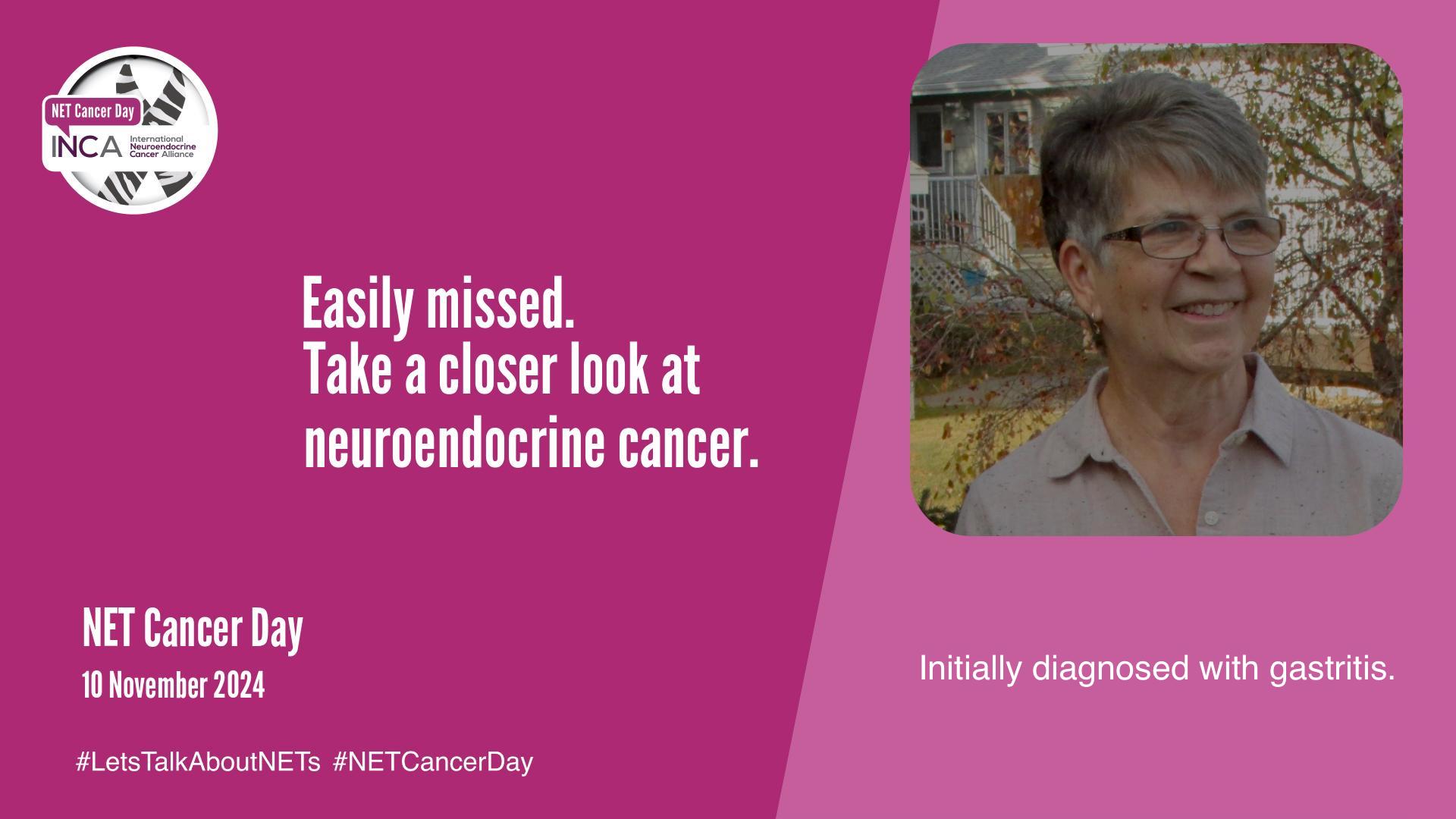
The incidence of neuroendocrine tumours (NETs) is on the rise and symptom awareness is key to earlier diagnosis and ultimately to better outcomes. Last year’s campaign slogan “Easily missed: Take a closer look at neuroendocrine cancer” was such a vital one that the NET Cancer Day campaign is reaffirming that message by using it again this year. More common than brain, ovarian or cervical cancer, neuroendocrine cancer continues to be frequently missed and misdiagnosed.

Globally, it takes an average of 5 years from initial symptoms to actual diagnosis; longer in North America. In my case, doctors estimate that I had had the disease for 7 to 10 years before it was diagnosed and based on symptoms, I’m sure they’re right. By then the cancer had already spread to distant parts of my body. Like many, many other NETs patients, my cancer was Stage 4 and no longer curable. Clearly, a greater awareness of NETs amongst the global community and especially the medical profession is needed.

The NET Cancer Day campaign has traditionally been focused on highlighting the common symptoms that are often interpreted as other conditions, but can also be signs of neuroendocrine cancer. These include facial flushing, abdominal pain, digestive problems, diarrhea, rapid heartbeat, chest pain, shortness of breath, wheezing, coughing, and/or persistent fatigue. People with NETs are often misdiagnosed with more common conditions such as anxiety, menopause, Irritable Bowel Syndrome, gastritis, or asthma.

poster

I’m not able to give you an update on my own health today as I’m presently waiting for the results of lab work that was done this past week and I’ll be going for CT scans again on Wednesday. Instead, I’ll tell you a bit more about what I’ve been involved in since last NET Cancer Day.

Since very early in my cancer journey, The Canadian Neuroendocrine Tumour Society (CNETS) has been a valuable source of information and support. When the opportunity to get involved as a volunteer member of a newly forming patient advocacy advisory board came to my attention, I knew immediately that that was something I wanted to do. It was time for me to start giving back.

After meeting in Montreal in April for an “advocacy bootcamp” with a prominent Canadian health advocate and policy consultant, we came away with a list of priorities and tactics in the areas of education and awareness, treatment and diagnostic access, and research. With two other members of the board, I’ve been working on a graphic representation of both the current and the ideal pathways to diagnosis for neuroendocrine patients in Canada which we hope to use to inform patients, medical practitioners, and health authorities. This fall, we were fortunate to have our project approved for funding by the International Neuroendocrine Cancer Alliance (INCA) which is allowing us to work with a patient-led consultancy group out of Germany to take our initial work to a higher, more professional level.

Over the past few months, in addition to the advocacy board work, I’ve also been involved in an initiative with Ipsen, the pharmaceutical company that produces the medication that I’m injected with every 28 days, to improve the patient experience with that drug.

These are baby steps in the overall work that needs to be done to improve diagnosis and treatment of neuroendocrine cancer, but I’m happy to be doing what I can to raise awareness and move the work forward.

Screenshot 2024-11-09 at 7.19.36 PM

How to dress for an online meeting

logo-by-samIn an era when online meetings have become the norm for many people, I’m about four years late to the party with this week’s topic, but as a retiree, it’s one that I haven’t had to deal with until quite recently. Of course, I was chatting online with family and friends long before Covid shut the world down and forced us to begin interacting virtually, but those were informal chats. I could have worn pyjamas and no one would have cared!

Now, however, since becoming more and more involved with patient advocacy, I’m beginning to find myself talking with professional people on a somewhat regular basis. As a patient representative, there’s no set dress code, but I’m convinced that what I say will be taken more seriously if I present myself well. I also know that I’ll feel more confident. At the same time, I want to look natural, not like I’m trying too hard. After all, I’m meeting from home, not in a formal boardroom.

Here are a few of the tips that I’ve learned:

  • choose solid colours or subtle prints – bold patterns and prints can be distracting and take attention away from your face
  • overly bright or extremely dark colours don’t look good on camera and solid white can make your face look washed out (it does that to mine in real life too)
  • choose uncomplicated necklines – a classic collar, crew neck or v-neck works well
  • wear clothes that fit well – not slouchy or loose fitting
  • avoid logos and graphics
  • choose simple accessories that won’t be a distraction
  • good grooming matters – make sure your hair and makeup (if applicable) are done
  • if you wear glasses, make sure they have non-reflective lenses
  • don’t wear sunglasses or hats
  • dress from head to toe, not head to waist – you never know when you might have to stand up!
  • keep comfort in mind – being at ease in your outfit will be a natural confidence booster

Even though I don’t have a professional wardrobe, I can easily follow these guidelines and pull items from my closet that will work well for the meetings I attend.

And finally, a couple of other pointers to improve your online appearance:

  • avoid fluorescent lights and overhead lights if possible – ideally, the light should come from behind the camera and shine on your face
  • position the camera at or slightly above eye level and situate yourself so that you fill most of the screen
  • keep the background uncluttered or blur it if the online tool you’re using allows
video-conference-5964262_1280

Image by Alexandra Koch from Pixabay

Another cancerversary!

Eleven years ago today I was told that I had stage 4 colon cancer. Thankfully, a biopsy proved that diagnosis inaccurate or I probably wouldn’t be here to tell you about it today. According to the Canadian Cancer Society, the 5-year survival rate for colon cancer that has spread from its original location to distant parts of the body is 11%.

What I do have is neuroendocrine cancer (NETS), a slow-growing cancer that originated in my colon, more specifically in the cecum which is part of the colon. By the time it was diagnosed, I had been experiencing vague symptoms for several years. In fact, I was told that I’d probably had it for 7 to 10 years. At diagnosis, it had already spread to lymph nodes and my liver. Accurate stats and information about survival rates aren’t as readily available for neuroendocrine cancer because it isn’t as well-known or well-documented as many of the more common varieties, but I don’t really need to know those numbers. I just need to know how I’m doing right now and I found that out last week.

In response to my oncologist’s, “How are you?” as he entered the examining room, I replied, “I’m good.” Glancing at the notes in his hand, he enthusiastically responded, “Yes, yes you are!”

I wasn’t as exuberant about the results of the previous week’s CT scan as he appeared to be. I had hoped to hear that March’s TheraSphere treatment had completely annihilated the largest tumour on my liver. In fact, it had only shrunk by about 20%. The doctor hastened to remind me that shrinkage is always a good thing. That, combined with the facts that I’m not experiencing any symptoms and that the scan also showed “no progression of disease” is actually very good news!

I’ll have another CT and more lab work done in November, but in the meantime I’ve got lots of living to do. In addition to the many ways that I’ve found to stay active and busy in retirement, I’ve also become more active in patient advocacy over the past year. As a member of the CNETS (Canadian Neuroendocrine Tumour Society) Advocacy Advisory Board, I’m working with other patients and caregivers from across the country to try to increase awareness of our disease, shorten the pathway to diagnosis, advocate for equal access to treatment for patients across the country, and promote research into newer and better treatments. I’m also involved in meetings with a group of patients and health professionals around the world as part of an initiative by Ipsen, the pharmaceutical company that produces the medication that I’m injected with every 28 days, to try to improve the patient experience.

That reminds me of another recent change. Hubby is now giving me that monthly injection which frees us up to take it with us when we travel instead of having to be at home to wait for the nurse’s visit. A cancer diagnosis is life changing for a partner or caregiver as well as for the patient, so this is really his cancerversary too. We aren’t doing anything special to celebrate, but we’re thankful for another year of relatively good health; another year of life!

Ribbon Symbol

Living my cancer life out loud

This post was inspired by an interesting discussion that took place awhile ago on one of the online neuroendocrine cancer patient groups that I’m a member of. It started with a younger patient asking for advice about when to tell the person she was going on a first date with about her cancer. I was surprised to learn that most of the patients who responded to her question had told very few people outside their immediate families about their diagnosis. I’m quite the opposite. Though I’m naturally an introvert, I’ve been living my cancer journey out loud since the very first day I heard that fateful C word!

In the summer of 2013, when my doctor called and told me that I had cancer, I’m sure that I was in shock. One of the first things I did was sit down and make a list of who I needed to call and then I started. I called our pastor, several close friends, and of course, our family. Just three days later, I wrote the blog post that shared my diagnosis with the rest of the world. At that time, we didn’t even know what kind of cancer I had. I shared that news a couple of weeks later in this post.

Why? Why did I choose to share my diagnosis so openly?

Learning that you have cancer is overwhelming and I knew that this wasn’t something I could handle on my own. As a Christian, my first instinct was to call the people I knew would pray for me. Without realizing it, I was beginning to build an invaluable support system that would make the journey so much easier.

There were two reasons for sharing my diagnosis on the blog. Writing helps me process things and boy did I need to process! Since I’d already been blogging for several years, that seemed like the logical place to start writing about what I was going through. Secondly, posting updates on the blog was an easy way to communicate what was happening with our large extended family and with friends who are literally spread around the world. It meant that I didn’t have to repeat myself over and over again which would have been mentally and emotionally exhausting.

As time went by, however, sharing my journey openly and online also became a way to educate people about neuroendocrine cancer. Ten years ago, NETS was considered a rare cancer, but the number of people diagnosed with this type of tumour has been increasing over the years and it’s no longer fair to say that it’s rare. Sadly, however, it’s still not well-known, so education and advocacy are extremely important. Like any other cancer, early detection means more likelihood of successful treatment and long-term survival. Family doctors need to know that when a patient presents with symptoms such as abdominal pain, diarrhea, shortness of breath, wheezing, heart palpitations, high blood pressure, and/or flushing, neuroendocrine cancer is a possibility. Patients need to know that when their symptoms persist after a more common diagnosis is made, they need to persevere until they get a correct one. It could be NETS. Patients with neuroendocrine cancer, particularly the newly diagnosed, need to know that there is hope. More research is needed to find better treatments and ultimately a cure. Until these things happens, I’ll continue living my cancer life out loud!

Ribbon Symbol